

The aim of the present study was to assess the cumulative radiographic periodontal attachment loss (CRPAL) and annually radiographic periodontal attachment loss (ARPAL) of different disease groups over 5 years or more. A total of 53 subjects, who had taken two sets of full-mouth standarized paralleling radiographs with separated periods of 5 years or more in teaching hospital during 1981-2001, were collected for the past 20 years. The radiographic periodontal attachment levels at mesial and distal surfaces of teeth were assessed by measuring the distance between cement-enamel junction and the bone crest using an electronic digital caliper (EDC) under a 10X magnified radiographs. The results revealed that mean CRPAL was highest in the generalized aggressive periodontitis (GAgP) group (-5.523.27 mm), then the chronic periodontitis (CP) group (-4.823.47 mm), and the localized aggressive periodontitis (LAgP) group (-4.473.47 mm) followed, and lowest in the periodontal healthy (PH) group (-1.050.59 mm). The mean ARPAL was highest in the LAgP group (-0.260.25 mm/yr.), then the GAgP group (-0.200.13 mm/yr.), and the CP group (-0.120.09 mm/yr.) followed, and lowest in the periodontal healthy group (0.070.06 mm/yr.). Conclusions showed that mean CRPAL was highest in the generalized aggressive periodontitis group, then the CP group, and the LAgP group followed, and lowest in the periodontal healthy group. In addition, there existed a strong statistical significance (p<0.0001) in both CRPAL and ARPAL (mm) among individuals affected GAgP, LAgP, CP, and PH groups among mild, moderate, and severe periodontitis using paired t-test.
Clinical evaluation of periodontitis types affected cumulative and annually radiographic periodontal alveolar bone loss using the treatment of Sandwich’s technique
March 24, 2024
May 10, 2024
May 21, 2024
May 22, 2024
This is an Open Access article, distributed under the terms of the Creative Commons Attribution 4.0 International License (http://creativecommons.org/licenses/by/4.0/), which permits unrestricted use, distribution and reproduction in any medium or format, provided the original work is properly cited.
Abstract
1. Introduction
The accuracy of radiograph measurements involves the chosen taking method, the angle of radiographic illumination, the measurement method, and the amount of alveolar bone destruction. The bite-wing method (long cone, 16 inches or more target film distance) is generally considered more accurate than other methods [1]. In addition, Hou et al. [2] randomly sampled eight upper and lower incisors, canine teeth, premolars, and molars, and measured them with a parallel periapical radiographs with a magnifying glass magnification of 3.5 times with a micrometer, comparing the reliability and reproducibility of the measured values of the actual tooth length and the tooth length measured on the radiographic image, showing that the two were highly correlated (r = 0.9817). The standard parallel root tip radiographic irradiation angle should be simultaneously perpendicular to the long axis of the tooth and the radiographs. Schei [3] found that when the irradiation angle deviation was 10°, the effect on the bone score in the anterior tooth area was small, but the difference was more than 20% on the posterior tooth area. In addition, Henrikson's [4] study showed that radiographic-beam angle deviations in the range of 10 -15° did not cause a change in the bone score. Hausmann's study showed that when the irradiation angle deviation reached 20° [5], it would cause radiographic crest changes (especially the molar area), resulting in a 18% difference in bone height to root length, or a direct measurement of CEJ-crest distance difference of up to 2.35 mm. Pepelassi found that direct measurement is more accurate for smaller amounts of alveolar bone destruction.[6] But when Albander & Abbas [7] assessed the changes in alveolar bone height over a two-year period, it found that the indirect Schei method was better at detecting. Therefore, the appropriate measurement method should be selected depending on the purpose of the study, and the direct measurement method is suitable for calculating and evaluating the amount of alveolar bone destruction; the law of indirect proportions is suitable for assessing future prognosis [6].
The cross-sectional and longitudinal studies employing techniques, relating to measuring the rate of clinical attachment lose in individuals with healthy periodontium (HP), aggressive periodontitis (AgP), [7] and chronic periodontitis (CP), were documented in the majority of investigators. There is little or no reports regarding studies related to the annually radiographic periodontal bone loss rates among the individuals with periodontal health, chronic periodontitis and aggressive periodontitis with secondary trauma from occlusion using digital scanning radiographic image analysis [8, 9, 10, 11, 12]. The reduction in periodontal bone height with increasing age in healthy, and in those CP (Figure 1), GAgP (Figure 2), LAgP (Figure 3), and however, wide variations were noted at the different grades of disease stages, and among different types of periodontitis [7, 9, 10, 11, 12].
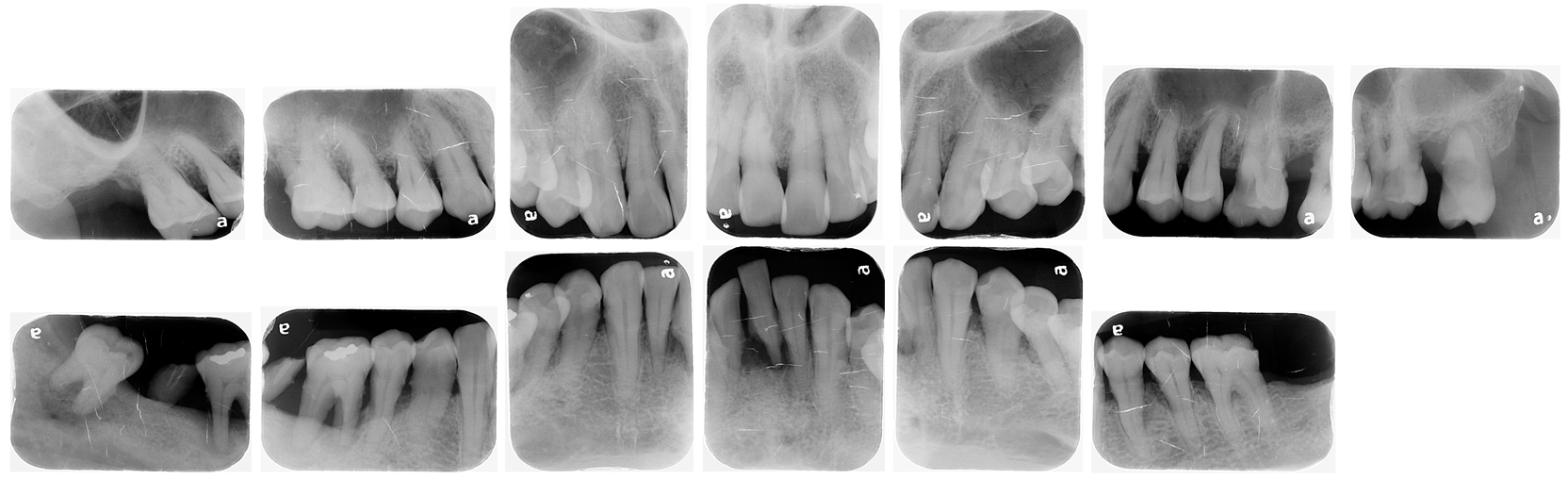
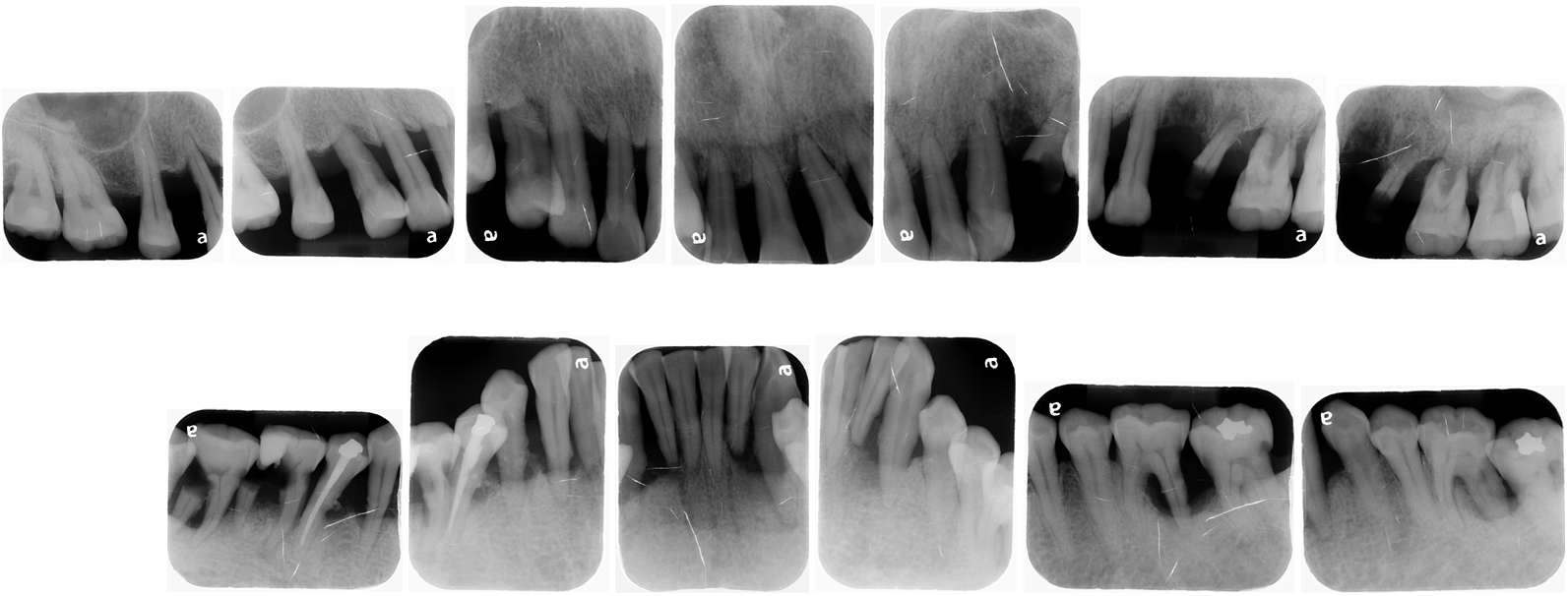
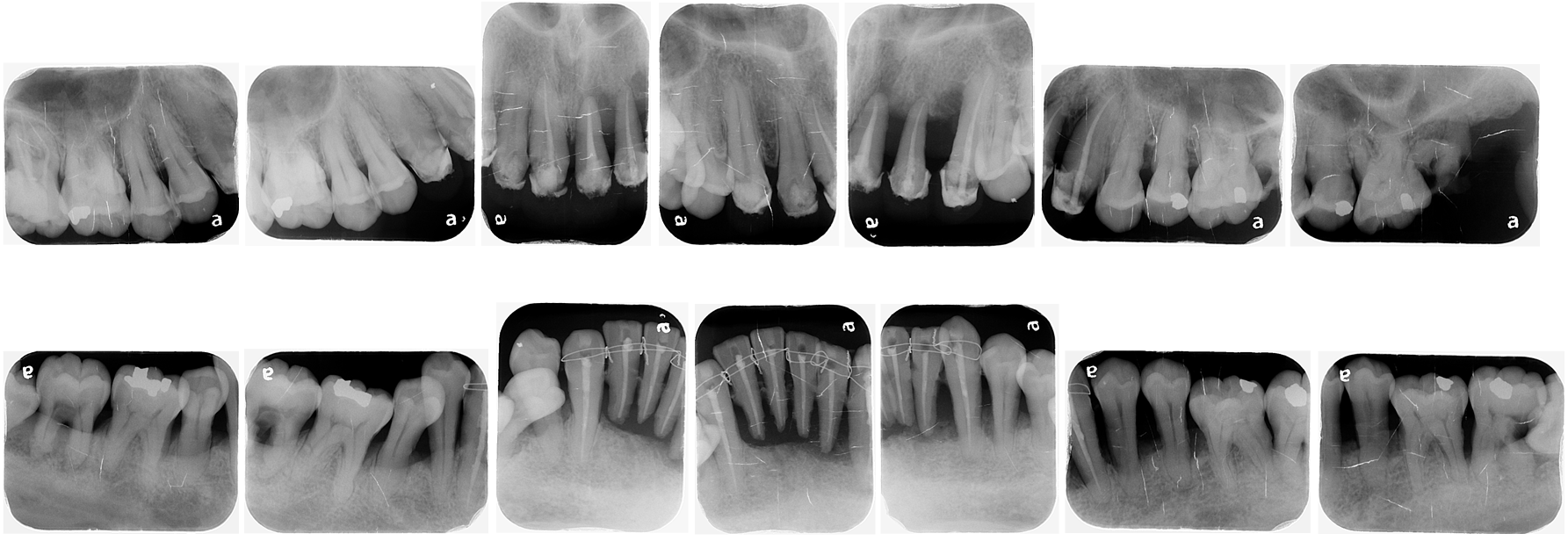
Little or limited data concerning annually alveolar bone loss rates in the long-term studies among the individuals with CP, LAgP, and GAgP with mild, moderate, and severe cases at the baseline, treatment stage, and final periods. The purpose of this study was to analysis the differences of ARABL rates among individuals affected CP, GAgP, and LAgP with mild, moderate and severe RPAl after periodontal treatment, respectively.
2. Materials and Methods
The 53 patients collected were reclassified according to the classification criteria for periodontal diseases and Periodontology 1999 (Annals of Periodontology 1999), which was established by the International workshop for a classification of periodontal diseases and conditions. Characteristics such as patient age, alveolar bone loss, type of bone loss, number of teeth involved, location of teeth involved, etc., are diagnosed in patients with generalized aggressive periodontitis (GAgP), chronic periodontitis (CP), and periodontal health (HP). A total of 53 individuals (29 males and 24 females) who reported or referred to the Periodontal Clinics of Dental School, Kaohsiung Medical University from 1981 to 2001. A total 29 patients who were diagnosed with GAgP group in the study population and had received two routine full-mouth periapical radiographs with an interval of more than five years, except for periodontitis, were clinically healthy, had no systemic diseases, and had periodontal tissue destruction, including periodontal attachment loss and alveolar bone destruction.
According to the type and number of teeth affected, it is further divided into: a total of 9 LAgP (at least 2 permanent teeth on the first molar and incisors with attached loss, one of which is the first molar. and no more than 2 teeth were violated except for the first molars and incisors); and the total 20 individuals affected GAgP (loss of at least 3 non-first molars and permanent teeth of the incisors). A total 14 patients were diagnosed with CP were selected from the study parent population who had received two routine full-mouth periapical radiographs with an interval of more than five years. According to the treatment plan periods, the treatment stages were classified into stage A (baseline data), stage B (treatment follow-up stage), and stage C (the end of study), respectively.
After measurement and analysis, the patients in the experimental group were classified into three types of damage according to the percentage (%) of radiographic periodontal attachment loss (RABL) to tooth root length, mild: RABL is less than <30%, moderate: RABL is between 30%~50%, severe: RABLis more than 50%, and the average radiographic periodontal attachment loss and rate of each disease classification were calculated.
Point A: The cementoenamel junction (CEJ) of the tooth bone is designated as point A.
2) Point B: Periapical radiographic bone level.
3) Point C: Root apex, designated as point C. The molars need to select the proximal root and the root tip of the distal tooth respectively, which are point CM and point CD. Set the AB distance as CRPAL; Set the AC distance to radiographic root length.
3. Results
Table 1 indicated the CRPAL (mm) and ARPAL (mm) with the mean (SD) at the treatment stages A, B, and C, respectively. The mean (SD) of CRPAL and ARPAL at the stage A (baseline, before periodontal therapy) was -5.06(3.40) mm and -0.19(0.16) mm. There is a mean (SD) of -0.37(1.58) mm and -0.06(0.24) mm at the stage B in both of CRPAL and ARPAL. The mean (SD) of CRPAL and ARPAL at the stage C was -4.24(2.48) mm and -0.12(0.08) mm, respectively. The results demonstrated a significant difference (p<0.0001) in CRPAL and ARPAL following periodontal treatment and at the conclusion of the study, as determined by statistical analysis.
Table 2 illustrated the differences of mean ARPAL in the CP disease type affected mild, moderate, and severe cases at the stages A, B, and C. The differences of mild, moderate, and severe bone loss of ARPALs affected CP disease type were -0.08±0.03 mm, -0.15±0.04 mm, and -0.26±0.09 mm at the stage A. The differences of mild, moderate, and severe bone loss of ARPALs affected CP disease type were -0.06±0.14 mm, +0.02±0.16 mm, and -0.06±0.47 mm at the stage B. The differences of mild, moderate, and severe bone loss of ARPALs affected CP disease type were -0.07±0.07 mm, -0.12±0.04 mm, and -0.19±0.05 mm, at the stage C.
Results also showed that the prominent improvement of the ARPAL from the difference of ARPAL indicated a remarkable and revealed statistical significance (p<0.0001) in the CP disease type affected with mild, moderate and severe conditions irrespective from the stage A, stage B, and stage C. In addition, Result revealed that the bone fills of ARPAL of CP group with the moderate condition (+0.02±0.16 mm) was greater than those of mild (-0.06±0.14mm), and severe (-0.06±0.47 mm) disease types after periodontal treatment. (Table 2)
Results also showed the differences of mean ARPAL in the CP disease type affected mild condition at the stages A, B, and C were -0.08±0.03, -0.06±0.14, and -0.07±0.03. There existed a statistical difference (p<0.05) in the difference of mean APRAL in the CP disease type. In addition, the differences of mean ARPAL in the CP disease type indicated a remarkable improvement and both also revealed a statistical significance of moderate (p<0.0001) and severe (p<0.001) conditions at stages A, B, and C. (Table 2)
Table 3 indicated the differences of mean ARPAL in the LAgP disease type affected mild, moderate, and severe cases at the stages A, B, and C. The differences of mild, moderate, and severe bone loss of ARPALs affected LAgP disease type were -0.11±0.04 mm, -0.21±0.06 mm, and -0.36±0.11 mm at the stage A. The differences of mild, moderate, and severe bone loss of ARPALs affected LAgP disease type were -0.09±0.23 mm, -0.08±0.39 mm, and +0.02±0.31 mm at the stage B. The differences of mild, moderate, and severe bone loss of ARPALs affected LAgP disease type were -0.10±0.05 mm, -0.18±0.09 mm, and -0.25±0.10 mm, at the stage C.
Results also showed that the improvement of the ARPAL from the difference of ARPAL indicated a prominent and revealed statistical significance (p<0.0001) in the LAgP disease type affected with mild, moderate and severe conditions irrespective at the stage A and stage C. There was a statistical non-significance (p= 0.0538) at the stage B of the difference of mean ARPAL of the LAgP disease type with mild, moderate and severe conditions. The differences of mean ARPAL in the LAgP disease type with moderate and severe conditions indicated a remarkable improvement and also revealed a statistical significance of moderate (p<0.0001) and severe (p<0.0001) conditions at stages A, B, and C. (Table 3)
Table 4 revealed the differences of mean ARPAL in the GAgP disease type affected mild, moderate, and severe cases at the stages A, B, and C. The differences of mild, moderate, and severe bone loss of ARPALs affected GAgP disease type were -0.13±0.06 mm, -0.26±0.10 mm, and -0.63±0.28 mm at the stage A. The differences of mild, moderate, and severe bone loss of ARPALs affected GAgP disease type were -0.05±0.20 mm, +0.02±0.13 mm, and -0.25±0.38 mm at the stage B. The differences of mild, moderate, and severe bone loss of ARPALs affected GAgP disease type were -0.10±0.05 mm, -0.17±0.07 mm, and -0.33±0.08 mm, at the stage C.
Results also showed that the improvement of the ARPAL revealed statistical significance (p<0.0001) in the GAgP disease type affected with mild, moderate and severe conditions irrespective at the stages A, B and stage C. In addition, the differences of mean ARPAL in the GAgP disease type with mild, moderate and severe conditions indicated a remarkable improvement and also revealed a statistical significance of moderate (p<0.0001) and severe (p<0.0001) conditions at stages A and C. (Table 4) Only a minor improvement of mean ARPAL in the GAgP disease type with mild, moderate, and severe condition and indicated a statistical significance (p<0.01) at the stage B.
4. Discussion
In this experiment, the micrometer of an electronic digital cursor (EDC) is used, with a minimum indication of 0.01 mm and an accuracy of ±0.02 mm, which greatly improves the sensitivity of the measurement. Coupled with a concept similar to the Schei ruler was also known as image magnification analysis reported by investigators. [13, 14, 15] It is an indirect proportional method that represents the loss of periodontal attachment height by the percentage (%) of the total root length of the alveolar bone loss height, and the root length of the tooth as a reference for the loss of the alveolar bone. In this way, the continuous change of the proportion of alveolar bone loss can be measured, the accuracy of this method is high, and the error is also small, and it is believed that the long-term assessment of the height change of the alveolar bone in patients with periodontal disease can provide a more objective observation. Therefore, using the radiographic analysis method with permanent data source characteristics and using a more accurate EDC and digital scanning radiographic image analysis (DSRIA) measurement, [16, 17, 18] it is possible to record the linear length (mm) of radiographic periodontal attachment loss (RPAL) and calculate the ratio of RPAL to root length (%). Due to the high accuracy and small error, the long-term assessment of the percentage of periodontal destruction can obtain more objective results, and it is believed that long-term epidemiological studies of periodontal disease destruction can provide a more accurate method.
Changes in the loss of periodontal attachments in radiographs from Ramfjord et al. studies [19] have shown that patients who receive 3 to 4 recalls per year over a five-year observation period have a buccal attachment loss rate of 0.09 to 0.14 mm/yr. Rosling et al. [20] pointed out that patients with advanced periodontal disease who had undergone periodontal surgery were scheduled to return to preventive treatment every two years and found that the loss rate was 1 mm/yr., nearly ten times the general statistical value.
In the above results, we found that the mean ARPAL of teeth at the radiographic Period A> Period C> Period B, and even during Period B, ARPAL sometimes increased (bone gain). It is speculated that some patients in this sample were regular return patients who had a real improvement in their periodontal condition after diagnosis and treatment, and that the alveolar bone fills appeared on the second dental radiograph. The rate of ARPAL shown during periodontal treatment (Period B) is small. After reviewing the medical records, it was calculated that there were 27 people who were treated regularly (about 3 to 4 months), accounting for 62.79% of the total sample size.
During the Period B, except for no difference in the CP group (p=0.9270), the average annual mean in the remaining patients who returned to the clinic was less than that of the non-returning patients. Based on the analysis of the above results, we can find that the ARPAL in those who returned to the clinic during Period B and Period C was significantly (p<0.01) smaller than that of those who did not return, especially in the moderate, and severe cases affected with GAgP and LAgP groups was the most obvious (p<0.001), which may indicate that those with a more severe degree of radiographic attachment loss in the first diagnosis have a better treatment effect after receiving regular treatment. The conclusion revealed differences of mean ARPAL in the GAgP disease type with mild, moderate and severe conditions indicated a remarkable improvement and also revealed a statistical significance of moderate (p<0.0001) and severe (p<0.0001) conditions at stages A and C. (Table 4) Only a minor improvement of mean ARPAL in the GAgP disease type with mild, moderate, and severe condition and indicated a statistical significance (p<0.01) at the stage B.
References
- Sugarman MM, Sugarman EF. Precocius periodontitis: A clinical entity and treatment responsibility. J Periodontol 1977; 48; pp. 397-409.[CrossRef] [PubMed]
- Hou GL, Hung CC, Yang YS, et al. Radiographic alveolar bone loss in untreated Taiwan Chinese subjects with adult periodontitis measured by the digital scanning radiographic image analysis method. Dentomaxillofac Radiology 2003; 32; pp. 104 -108.[CrossRef] [PubMed]
- Schei O, Wauhaug J, Lovadal A, et al. Alveolar bone loss as related to oral hygiene and age. J Periodontol 1959; 30; pp. 7 - 16.[CrossRef]
- Henrikson AO, Lavstedt S. Precision and accuracy in intraoral roentgenolo- gical determination of proximal marginal bone loss. Acta Odontol Scand, Suppl 1975; 67; pp. 26-49.
- Hausmann E, Allen K, Christersson L, et al. A reliable computerized method to determine the level of radiographic alveolar crest. J Periodontol 1989; 24; pp. 368 - 369.[CrossRef] [PubMed]
- Pepelassi EA, Diamanti-Kipioti A. Selection of the most accurate method of conventional radiography for the assessment of periodontal osseous destruction. J Clin Periodontol 1997; 24; pp. 557- 567.[CrossRef] [PubMed]
- Albander JM, Abbas DK. Radiographic quantification of alveolar bone level changes. Comparison of 3 curently used methods. J Clin Periodontol 1986; 13; pp. 810- 813.[CrossRef] [PubMed]
- Hou GL. Annually RPBL rates of tooth affected SAP with SOT. Inter J Dent and Oral Health 2020; Vol. 6, Issue 6; pp. 1-5.[CrossRef]
- Hou GL. Digital scanning Radiographic image analysis of bone loss in individuals with untreated adult periodontitis and aggressive periodontitis: A cross-sectional study. Advances in Dent & Oral Health 2020; 13(4); pp. 68-75.[CrossRef]
- Hou GL. Annually and cumulative RABL rates using digital scanning image for the periodontal disease group before and after periodontal treatment. European J Dent and Oral Health 2021; Vol. 2, Issue 3; pp. 23-27.[CrossRef]
- Hou GL. Difference of annual radiographic alveolar bone loss rates of anterior and posterior teeth of individuals affected with secondary occlusal traumatism between with and without perioprosthetic therapy. Advances in Dent & Oral Health 2021; Vol. 14, Issue 4; pp. 1-6.[CrossRef]
- Hou GL. Clinical evaluation of radiographic periodontal attachment loss using DSRIA among periodontal disease groups before and after periodontal therapy. Advances in Dent & Oral Health 2023; Vol. 16, Issue 5; pp. 1-7.
- Jasson LE, Ehnevid H, Lindskog SF, et al. Radiographic attachment in periodontitis. Prone teeth with endodontic infection. J Periodontol 1993; 64(10), pp. 947-953.[CrossRef] [PubMed]
- Ehnevid H, Jasson LE, Lindskog SE, et al. Periodontal healing in relation to radiographic attachment and endodontic infection. J Periodontol 1993; 64 (12), pp. 1199 - 1204.[CrossRef] [PubMed]
- Blomlof LB, Jasson LE, Appelgren R, et al. Prognosis and mortality of root-resected molars. Int J Perio Rest Dent 1997; 17(2), pp. 191-201.
- Hou GL. Differences of annual radiographic alveolar bone loss rates of anterior and posterior teeth of individuals affected with secondary occlusal traumatism between with and without perioprosthetic therapy. Advances in Dent & Oral Health 2021a; Vol. 14, Issue 4, July, pp. 1 - 6.[CrossRef]
- Hou GL. Annually and cumulative radiographic alveolar bone loss rates using digital scanning image for the periodontal disease groups before and after periodontal treatment. European J of Dental and Oral Health 2021b; Vol. 2, Issue 3, pp. 23 - 27.[CrossRef]
- Hou GL. Clinical evaluation of radiographic periodontal attachment loss using DSRIA among periodontal disease groups before and after periodontal therapy. Advances in Dent & Oral Health 2023; Vol. 16, Issue 5, November, pp. 1 - 7.
- Ramfjord SP, Knoeles JW, Nissle RR, et al. Results following three modalities of periodontal therapy. J Periodontol 1975; 46(9): 522 - 526.[CrossRef] [PubMed]
- Rosling B, Nyman A, Lindhe J. The effect of systematic plaque control on bone regeneration in infra-bony pockets. J Clin Periodontol 1976; 3, pp.38 - 53.[CrossRef] [PubMed]