

Architectural frameworks for large-scale Electronic Health Record (EHR) data platforms are described. Existing EHR data platform architectures often leverage multiple cloud-based solutions blended with institutional infrastructures to manage and analyze clinical data at scale. Key design principles governing the scale of existing EHR data architecture include model design, governance structure, data access management, data security/policy/protection, data-information-language-based standardization, and analytics tool alignment, among others. The rapidly evolving technology landscape and the unprecedented volume of incident and retrospective clinical data being collected and generated within healthcare organizations have led to the emergent need for a dedicated architectural framework to support large-scale computing in the health informatics domain. The application areas of large-scale computing in health informatics include real-time predictive analytics, risk stratification, patient cohort analytics, development of predictive models for specific institutions or population groups, and many more. The use of EHR data for a multitude of decision-making processes in both clinical and non-clinical settings has prompted the establishment of policies prescribing the conditions of access and use of EHR data for non-employed individuals in the organization. Consequently, the demand for accessing, using, and managing EHR data at scale has impacted the over.
Architectural Frameworks for Large-Scale Electronic Health Record Data Platforms
September 22, 2021
November 06, 2021
December 21, 2021
December 26, 2021
This is an Open Access article, distributed under the terms of the Creative Commons Attribution 4.0 International License (http://creativecommons.org/licenses/by/4.0/), which permits unrestricted use, distribution and reproduction in any medium or format, provided the original work is properly cited.
Abstract
1. Introduction
Installing, configuring, and deploying electronic health record (EHR) systems are hard problems that health care organizations have tackled for better part of the last three decades, but there have been at best limited discussions on the architecture of the data produced by these systems. By data architecture, it is not meant the physical design of tables based on the logical data model of the EHR system, but rather the design and underlying technology supporting the ingestion, storage, analytics and dissemination of EHR data. The growing number of research studies using EHR data highlights the emerging role of EHR data platforms. This emerging technology space is suggested to include EHR databases along with supporting infrastructure to facilitate large-scale access and use of EHR data. The provident architecture and principles governing the design of scalable EHR data platforms are examined, with implications for policy makers, organizations establishing platforms, platform consumers, and EHR vendors.
The promise of cloud-based infrastructures that can be consuming by the hour has triggered the creation of a data analysis plate committed the provision of EHR access, to a varied set of users, in a cost-effective and efficient manner. By opposed to traditional solutions like wiretaps, a cloud EHR platform is designed to leverage the support of health information exchanges go fulfill data acquisition forwarding. EHR data provides the appetite, allowing for the platform to bake-in advanced cloud computing ability, device a financial strategy that minimizes user costs (while tracking detailed usage), and auto-discover new sources of data as fresh cohorts arrive at the hosting organization.
1.1. Background and Significance
Large-scale platforms based on Electronic Health Record (EHR) data have been recognized as critical infrastructure for health informatics research and the delivery of population-scale healthcare services. Several use-case domains—including genomics, artificial intelligence/machine learning, predictive analytics, cancer surveillance, and public health monitoring—rely heavily on such platforms. However, these platforms are very challenging to design and implement, possessing complex data models that must be set up for interoperability in communications, yet capable of supporting applications with very diverse requirements. Demands for funding to create large-scale EHR data platforms at state or national levels have been issued by such governments as the United States and Canada.
Despite Big-data architecture technologies capable of supporting high-throughput, low-latency workloads, such systems have still been perceived as monolithic in nature, the data-management subsystems possessing inherent architectural limitations with respect to continuity of service, scalability of deployment, fault isolation, and simplicity of redundancy and failover. The interplay between different architectural choices for such platforms and their subsequent effect on scalability has thus been the main focus of investigation, articulated through two sets of questions: What are the boundary conditions for employing a microservices-based architecture for large-scale EHR data platforms? What other architectural paradigms such as event-driven or data-streaming design impact on horizontal and vertical scalability?

1.2. Research Design
Many architectural frameworks exist for building large-scale data platforms, yet little investigation has sought to determine suitable frameworks for electronic health record (EHR) data platforms. Addressing the question required examination of the unique characteristics and requirements of EHR data platforms and comparison of a broad spectrum of common architectural alternatives. The results inform decision-making processes for future implementations. Evidence suggests that EHR data platforms should be realized as a set of cohesive components that can be independently developed, deployed, and scaled; that utilize a fast-enough-and-frequent-enough event-driven pattern; that include mechanisms for secure and controlled access; and that support the complete lifecycle of machine-learning assets.
Large-scale EHR data platforms are designed to accommodate a long-term and continuously evolving collection of data emanating from multi-domain, multi-organization clinical information systems. Such infrastructures typically support data analysis, data-driven research, and machine-learning algorithm development. The distinct evolution and lifelong engagement of these systems set them apart from other large-scale data platforms. Consequently, specific frameworks and design principles emerge that can guide the implementation of EHR data platforms in a scalable fashion so that the associated data can fulfill their desired utility [1].
2. Foundations of EHR Data Platform Architecture
The conversation around data architecture for large-scale electronic health record (EHR) data platforms often centers on two aspects: the data models that represent patient records and the supporting technologies that enable data exchange. However, a range of different factors must be considered when designing a reliable, scalable, and secure architecture for the management of EHR data across the entire data lifecycle. These factors encompass data models and semantics, data governance and provenance, accessibility and security, and capacity for analytics and advanced computing [2].
The underlying conceptual or logical model that defines the structure of the patient records tends to be top-of-mind among stakeholders, especially researchers and developers. Perspectives on whether EHR data should be stored in a highly normalized or more denormalized format—some form or variant of the tables that populate a relational database—and the importance of harmonizing and aligning the semantics across data from different sources are often the core aspects of the discussion. Other aspects of the architecture, such as the support for operating on an EHR data platform in a manner similar to how applications exploit the services of an EHR, the presence of temporal and non-temporal data-provenance support, and the cognitive workload needed to facilitate the efficient use of EHR data for analytics and machine learning, may be even more essential for successfully establishing and operating an EHR data platform [3].
Equation 1: Scalability and throughput equations (microservices + event-driven)
Assume:
- Each instance can handle requests/second (service rate).
- We run identical instances behind a load balancer.
- Ideal load distribution and no shared bottleneck.
Step-by-step
- One instance capacity:
- Two instances:
- In general:
2.1. Data Models and Interoperability
Examination of common EHR data models reveals a spectrum of design patterns that support different forms of data analytics. Designing uniform data structures and formats facilitates FHIR and CDA exchanges, but linchpin-event and transactional approaches differ in timing of data exchange [4]. Grounding data transfers and storage in semantic ontology supports cross-publisher integration, governance, and provenance, but engineering effort and model drift present challenges. Normalized and denormalized storage approaches reveal trade-offs in the complexity, performance, and consistency of analytics [5].
Data exchange and integration among different stakeholders (vendors, publishers, users) necessitate an understanding of various infrastructures. Four levels of interoperability decompose the problem: technical, syntactical, structural, and semantic levels [6]. Low-level technical interoperability deals with the establishment of physical channels for the exchange of health data. FHIR and CDA operate at the syntactical and structural levels by defining standard types, codes, values, and structures to be used in health information exchanges. Finally, semantic interoperability focuses on the meaning of the exchanged contents and requires the dynamic alignment of intended meaning (semantic annotation) with the definition of terminologies (ontologies) [7].
2.2. Data Governance and Provenance
Data governance comprises the roles, responsibilities, and policy frameworks that define how data is acquired, transformed, protected, and utilized within an organization [8]. All operations in a sophisticated data platform inevitably introduce risks affecting one or more of the attributes related to data quality, lineage, auditability, and compliance. Thus, a data governance framework should address these four attributes within the data lifecycle and have mechanisms to keep track of data lineage (i.e., where data comes from and its journey through the data platform), ensure consistent monitoring of data quality through established quality metrics, audit the data lifecycle and usage for compliance with regulations and policies, and ensure that dismissed data records cannot be retrieved contrary to the governing policies [9].
Data governance must cover both analytical and clinical data. For long-term analytics, sufficient provenance needs to be recorded during data extraction and transformation to support the needs for quality, lineage, auditability, and compliance. In production using machine learning at scale, governance is a well-established discipline in the cloud provider analytics environments and risk should be managed through formalized aspects of these cloud-provider capabilities [10]. When the data platform is analyzed through the lens of production ML, the need to monitor for model accuracy drift due to changes in the source data is an additional component of good governance in this active area of AI regulation [11]. The clinical data streams and the shortened analytical requirements enable some relaxation of the typical strong external quality guarantees that would be mandated for production-ready ML outputs [12]. However, suitable external ML model-quality monitoring for unintended consequences such as demographic bias based on protected characteristics, similar to accessibility requirements in other high-stakes decision-making systems, remains sound practice [13].
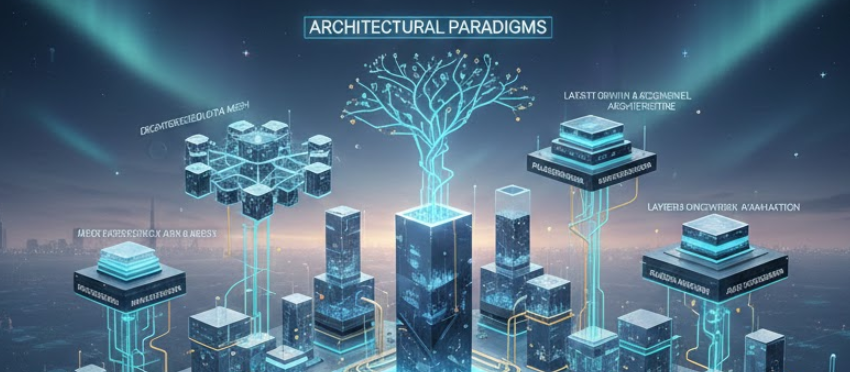
3. Architectural Paradigms for Scale
Broadly speaking, the architecture of a software system can be categorized into two paradigms: monolithic and microservices. The primary distinction lies in the separation of functionality. In a monolithic architecture, all functionality is tightly coupled, whereas in a microservices architecture, functionality is split into separate modules that are loosely coupled through APIs [14]. Architectural decisions are often framed in terms of trade-offs, and, in particular, the degree to which an architecture supports continuous deployment, horizontal scalability, and fault isolation [15].
Monolithic architectures lend themselves to straightforward deployment and continuous operation. A change to any part of the system requires the entire system to be packaged and deployed, increasing the effort and risk of change [16]. Historically, these constraints have led to long intervals between required functional enhancements, and organizations have compensated by streamlining resources to deliver larger changes [17]. The combination of these trends has resulted in increasingly complex systems that may take large teams months to deploy. Such teams often span multiple geographies [18]. Therefore, the opportunity for agility is diminished; such systems cannot react to sudden changes in operational priorities, and the longer the interval between these changes, the greater the likelihood that circumstances have changed or new issues have arisen [19].
The microservices approach seeks to overcome these challenges by separating a system's functionality into independently deployable services. This separation reduces the size and complexity of each service and allows changes to be designed and delivered by smaller teams with more focused expertise. The participating teams can therefore operate in a more agile fashion, continuously deploying small, incremental changes to production [20]. The opportunity to deploy individual services at any time reduces the need for team coordination and promotes architectural evolution as business requirements change. Any system can be understood as a set of secure, reliable, and authenticated network calls between the individual services. These advantages allow organizations to utilize resources elastically and efficiently [21].
3.1. Monolithic versus Microservices
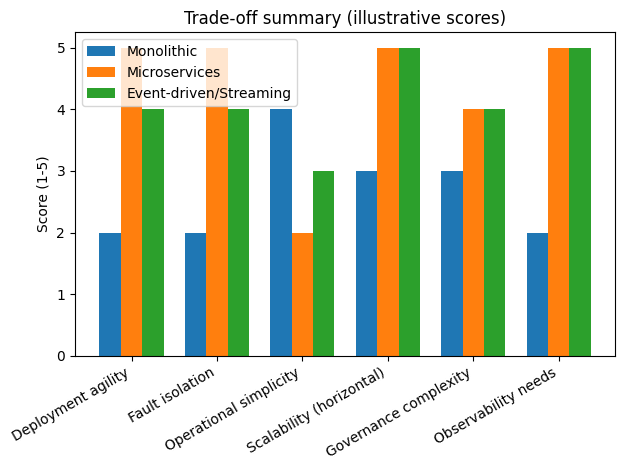
Monolithic architectures support continuity by bundling applications as integrated codebases with singular deployment. Microservices, in contrast, offer isolated deployment, scalable-leverage capability, and resilience through fault isolation [22]. These advantages, however, must be balanced against several architectural trade-offs. Notably, independent deployment demands resilient interfaces; seamless deployment requires high change-frequency technology alignment; and fine-grained pathway control through extensive lateral-agent properties needs heavy management effort. In large, healthcare-orientated business domains, however, sufficient boundary conditions can favour microservices [23].
Two factors, in particular, challenge the predominance of monolithic architectures in healthcare environments. One factor is continuity economics: as the addressable market scales, the chance of successful continuity execution diminishes. In clearing that threshold, even small changes, such as pioneering a research or teaching effort in a new tourist-activity area, tip deployment economics into the microservices zone [24]. The other factor is the rise of containers: now that deployment complexity can be mastered economically, any advantage from such mastering can be sought [25]. For external services, such as foreign-exchange-travel services, limiting risk is paramount. Hence, leveraging a geographically-distributed cloud infrastructure of independent services with guaranteed service-level agreements is virtually mandatory [26].
3.2. Event-Driven and Data-Streaming Architectures
Event-driven architectures facilitate building scalable applications around the production, detection, consumption of, and reaction to events. Events contain relevant information about the occurrence of an action, often within a specific context. Event processing generally concerns ingesting events through a data stream, performing analysis and transformations, storing the results, and exposing appropriate interfaces. Often there is a back-and-forth interaction during event processing, such that streaming platforms archive incoming data and act as an extensible directory for lazy-pulling by consumers. Furthermore, analytics performed at scale can provide signals that trigger actions through rules [27].
Clinical data is naturally event-driven, with constant sources of updates (e.g., new patient inquiries, sample collection and assess results, medication prescriptions, etc.). It is therefore ideal to act in an event-driven way. Moreover, these updates can be very frequent, triggering significant throughput requirements for reading plus writing data. The upfront cost of a streaming solution can often appear high, but it fits architectural and usage patterns that pay off within a certain threshold. Application and data-science latency may also be satisfied by letting updates propagate through the system before being aggregated by a topical service. However, care must be taken to avoid large and small events that add noise with little information gain [28].
Equation 2: End-to-end latency decomposition (event-driven pipeline)
For an event-driven EHR update:
- Ingestion time
- Stream processing
- Storage write
- Serving/cache refresh
4. Data Storage and Management for EHR Platforms
Data retention policies determine the duration for which EHR data should be stored, guiding the design of long-term storage and archival procedures. For compliance and performance reasons, the storage required for classic healthcare data can typically be expected to grow rapidly in the years following the cessation of data generation but subsequently stabilize. Systems should therefore be designed so that aged data can be moved to increasingly cost-effective long-term storage solutions [29]. For such data, the projected access pattern is typically low-frequency access during medical data retrieval operations—perhaps low-frequency access when running analyses incorporating the complete history of past data and quite possibly, no access at all [30]. When such data do have to be retrieved, the cost can be a significant concern. Data retrieval procedures need to be prepared for by closely monitoring the access patterns as the dataset ages—if, say, it becomes apparent that retrieving much of the aged data for EHR response operations is becoming frequent, then migration of such data to a higher-performance storage system can be considered. The accessibility requirements of data that have been active for some parts of the healthcare lifecycle can also be a consideration before, during, and after compliance [31].
The data lake and data warehouse paradigms have different functional roles with respect to the management of EHR data within an EHR Data Platform Lifecycle framework. The data lake is typically centered around non-operational datasets generated by events that occurred much earlier in time than when the analysis itself is being run [32]. These datasets, disorders, or phenomena have no required level of preventive data access by any phase in any of the healthcare lifecycles. Any such requirement that does arise is rare enough that both cost and performance considerations mean that a cost-optimized retrieval solution is a sufficient one [33]. Although such per-use optimizations are vital, they also mean that for the majority of the time, such data are best being stored as cheaply as possible, with data detection, staging, preparation, and cleanup being done in a form that optimizes cost when such costs are incurred [34].
4.1. Long-Term Storage and Archival Strategies
Long-term storage and archival strategies aim to minimize storage costs while ensuring regulatory compliance and maintaining adequate retrieval performance. Retention policies that designate cold storage for seldom-accessed data limit retrieval costs and reduce the need for continuous operational readiness [35]. Nevertheless, the data stored in cold storage must comply with specific regulations and data-availability requirements, including, for example, requirements to restore data for legal processes. Automatic data aging policies can migrate data to cold storage when they no longer meet the specified operational recovery performance [36].
When stored in a cold state, unfrequently accessed data are usually compressed and reside on large-capacity disks or magnetic tapes. These data are retrieved if required, stored in high performance storage resources, and can then be accessed interactively. Cold-storage systems typically offer long-term archiving capabilities [37]. They take into consideration the durability, accessibility, security, and privacy of the information stored. Compliance data-retention policies specify by law or normative regulation the time data must be kept available for legal processes. For any EHR system serving external customers, keeping strong retrieval performance for compliance data is key [38].
Equation 3: Queueing view (why “fast enough and frequent enough” matters)
Let:
- Arrival rate of events events/sec
- Processing capacity events/sec per worker
- workers → total service rate
Stability condition
If arrivals exceed capacity, backlog grows forever:
Step-by-step
- Net “drain” rate = capacity − arrivals =
- If , backlog trends down.
- If , backlog does not clear.
This is the simplest math explanation for “frequent enough.”
4.2. Data Lake versus Data Warehouse for HER
A clear distinction exists between the concepts of data lake and data warehouse, mirroring the aforementioned operational data store versus archives dichotomy [39]. Whereas a data warehouse predominantly caters to structured and multidimensional data management for analytical operations, a data lake is engineered for cost-efficient storage of diverse types of data. As a result, data lakes tend to be less governed than data warehouses, lacking structured and integrated metadata—without which analytic work cannot be easily interpreted and replicated [40].
Despite these differences, healthcare organizations are increasingly establishing hybrid architectures, storing large volumes of historic data in a less-structured data lake or cold-storage area while the data warehouse accommodates more recent data earmarked for immediate analytic tasks [41]. Furthermore, the construction and management of metadata are vital since data lake optimism is diminishing and clues for reproduction diminish over time [42].
The conceptual separation between data lakes and data warehouses, much like the earlier distinction between operational data stores and archival systems, reflects fundamentally different philosophies in how data is collected, organized, governed, and ultimately used within an organization, particularly in data-intensive domains such as healthcare [43]. A data warehouse is traditionally designed around a schema-on-write paradigm, in which data is cleansed, transformed, and modeled before being loaded, resulting in highly structured, curated, and semantically consistent datasets that support complex analytical queries, reporting, and business intelligence [44]. This structure enables strong governance, standardized definitions, and reproducibility of results, all of which are essential for regulatory compliance, clinical quality reporting, and longitudinal outcome analysis. In contrast, a data lake typically follows a schema-on-read approach, allowing raw or minimally processed data—structured, semi-structured, and unstructured—to be ingested rapidly and stored at relatively low cost, thereby accommodating high-volume sources such as clinical notes, imaging metadata, genomic sequences, device telemetry, and streaming data [45]. While this flexibility provides powerful opportunities for exploratory analytics, machine learning, and future use cases that may not yet be fully defined, it also introduces significant challenges related to discoverability, data quality, lineage, and semantic consistency [46]. Without robust and actively maintained metadata—covering technical, business, and operational dimensions—data lakes can quickly devolve into so-called “data swamps,” where assets are difficult to locate, poorly understood, and nearly impossible to reuse or reproduce analytically [47]. Recognizing both the strengths and limitations of each paradigm, many healthcare organizations are moving toward hybrid architectures that intentionally combine data lakes and data warehouses, using the lake as a scalable, economical repository for vast amounts of historical or raw data while reserving the warehouse for curated, high-value datasets that support immediate operational and analytical needs. In this model, older or less frequently accessed data may reside in cold or nearline storage tiers within the lake, whereas recent, high-demand data is promoted into the warehouse through governed pipelines. The success of such hybrid environments, however, hinges on disciplined metadata management, standardized vocabularies, and automated data cataloging that preserve institutional knowledge over time [48]. As enthusiasm for purely “store everything and analyze later” strategies fades, organizations increasingly recognize that metadata is not merely a supporting artifact but a foundational asset that enables transparency, trust, reproducibility, and sustained analytic value across evolving technological landscapes [49].
5. Data Access, Security, and Privacy
A comprehensive Enterprise Architecture framework for large-scale Data Platforms based on Electronic Health Records enriches generic Cloud/System/Vernacular Architecture resources. A design purpose ushers four canonical pillars—Data Models, Interoperability Layers, Data Governance, Data Provenance—and an architecture viewpoint that analyze an EHR platform’s scaling continuity and approaches based on Microservices, Event-Driven, or Data-Plug paradigm [50]. The Analysis viewpoint covers Long-Term Storage strategies, lifecycle-oriented Data Lake and Data Warehouse roles, and Management for Privacy-sensitive, Confidentiality, Integrity, Availability dimensions [51].
An Identity and Access Management section canvasses Authentication, Authorization, Privilege Enforcement, Federation Services, Multi-domain access, and Auditing features. Following a Data Access management theme, Confidentiality IV-Integrity-Availability assembles Encryption, Integrity encoding, Backing, Disaster-recovery, and Resilience aspects, while risk mitigations, incident-response processes, and decision-support-facilitating Compliance round off the portrait [52]. Further discussion examines Medical-Semantic-Content, represented by Terminologies and Leaning-p Instituion, Data Exchange, pertinent Standards and Dedicated APIs, Exponential Security measures shaping a prospective “Aura,” and an Enterprise Data Platform adding to the Cone of Indifference Logic [53].
A steely, machinery-centric perspective unearths resource-optimization synergies across distinct Systems of Record (typically EMRs) and Systems of Insight (notably analytic platforms) by connecting their Data Warehouse and Data Lake luminelles and engineering-in their Light channels—assimilating the Data-Lake’s Base-Cross Economy and prudently exploiting its mk/EC-Ret Startup [54].
Equation 4: Availability (CIA “A”) and redundancy
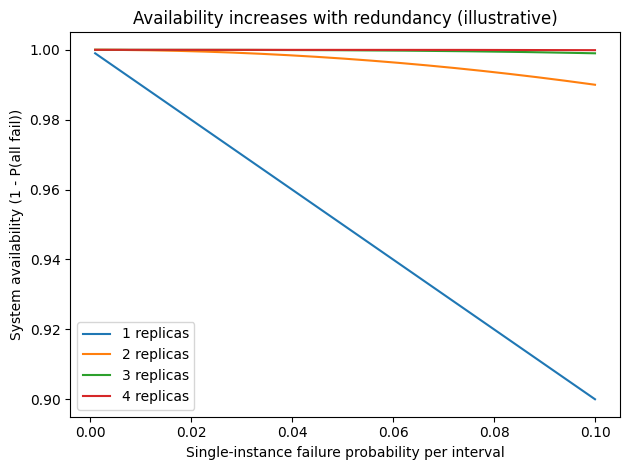
Assume:
- A single instance fails during an interval with probability .
- Replicas fail independently.
- System is “available” if at least one replica is up.
- Probability all replicas fail:
- Probability system is up:
5.1. Identity and Access Management
Effective identity and access management (IAM) is crucial for ensuring the right levels of access to an enterprise system. Authentication defines the identification of a user while authorization determines whether the authenticated user has permission to perform the requested action [55]. Different types of IAM systems exist: for instance, a system using email address and password for authentication is referred to as Identity and Access Management system, and possibly Identity Provider system in a federated SSO context. Roles for users can represent specific business areas, processes, or functions [56].
IAM systems should generally support the principles of least privilege, ensuring that users are granted only the access that they require. Similarly, APIs should be protected by strong authentication and authorization mechanisms. Federation can make IAM for dynamic environments simpler: the users of multiple organizations share a unique identity, using SSO as a means to authenticate into the service provider's domains with the use of trusted credentials [57]. Identity providers communicate to other trusted parties (Self-Identified and Federation Services) that these individuals are indeed who they say they are. A typical use case for federated identity management is the joint usage of a web service by a big healthcare company and an insurance company. A user under both organizations would authenticate only once. Auditing is critical to ensure accountability for important actions by users in the system, and needs to be supported, stored, integrated, and retained so it can be useful in context of business continuity [58].
Effective Identity and Access Management (IAM) is a foundational component of enterprise security, ensuring that only the right individuals and systems can access specific resources at the appropriate times [59]. Authentication establishes the identity of a user, while authorization determines what actions that authenticated user is permitted to perform. Modern IAM systems commonly rely on credentials such as email addresses and passwords, and in more advanced architectures, they function as Identity Providers within federated Single Sign-On (SSO) environments. By organizing users into roles that align with business functions, processes, or organizational units, IAM enables scalable and manageable access control [60]. Adhering to the principle of least privilege, IAM systems minimize risk by granting users only the access necessary to fulfill their responsibilities. APIs must also be protected through strong authentication and fine-grained authorization to prevent unauthorized system-to-system interactions. Federation further simplifies IAM in dynamic, multi-organization environments by allowing users to authenticate once with a trusted Identity Provider and seamlessly access services across partner domains [61]. This approach is especially valuable in scenarios such as shared services between healthcare providers and insurance companies, where users may operate across organizational boundaries [62]. Finally, comprehensive auditing and logging are essential to ensure accountability, support compliance, and provide reliable records for incident response and business continuity, making IAM not only a security control but also a critical governance mechanism [63].

5.2. Confidentiality, Integrity, and Availability
Architectural tendencies converge on creating a secure infrastructure: information is protected against unauthorized disclosure (confidentiality), corruption or alteration (integrity), and failure to respond (availability). Encryption satisfies confidentiality needs for data at rest and in transit with key management and protection against unauthorized access by privileged administrators, while backup and recovery processes negate the threat of data loss due to hardware/network failures or malicious actors [64]. The ultimate effectiveness relies on the underlying risk management process, which allocates resources for preventive–detective–corrective actions. Sound incident response procedures complement preventive capabilities by minimizing risk damage and redirecting efforts towards potential threats [65].
Compliance with varied, evolving regulations extends beyond implementing strict technical measures; in fact, it focuses on implementing robust processes capable of dealing with future threats. A recent example of a regulatory agency considering explicitly risk levels associated with data is the U.S. Department of Health & Human Services. Its Office for Civil Rights proposed amending the Health Insurance Portability and Accountability Act (HIPAA) Security Rule by incorporating explicit risk management and a risk-based controls approach, while the Federal Trade Commission seeks to improve data security and plaint resolutions with the implementation of a generalized risk-based framework [66].
6. Interoperability, Standards, and Semantic Infrastructure
Interoperability ensures EHR systems communicate and share data effectively across different software solutions. It depends on how data elements are consistently defined within and among systems. Although EHR data use diverse medical terminologies, thorough semantic mapping is required for effective use. The mapping can enable semantic interoperability, which means applying the same treatment to data retrieved from EHRs recorded in different medical terminologies. Data exchange standards, APIs, and semantic-enrichment ontologies support these processes [67].
A medical terminology defines the vocabulary that describes the components of healthcare and medicine. SNOMED CT is the most comprehensive clinical terminology and the primary source for snapshot medical coding, where coded clinical free-text representations must be retrieved quickly. Associated codes facilitate accurate billing, making other coding examples essential: ICD supports diagnostic billing; and LOINC provides diagnostic test-oriented codes [68].
An ontology provides a comprehensive description of a domain by establishing classes, properties, relations, and rules. Japanese healthcare-specific ontologies derive relations among biomarker ontology, clinical data, disease ontology, drug, and pharmacological classifications to enable the semantic interoperability of clinical and omics data and support health AI research. Emerging healthcare-specific analytical platform construction employs ontologies to support query formulation and process design [69].
Equation 5: Data retention, aging, and storage tiering cost (data lake/warehouse)
Let access frequency decay exponentially:
- initial relative frequency
- decay rate
- time in years
Step-by-step
- Start with “proportional decay”:
- Separate variables:
- Integrate:
- Exponentiate:
- Set at :
6.1. Medical Terminologies and Ontologies
Four fundamental medical terminologies are commonly used in EHR interoperability: SNOMED CT, LOINC, ICD, and RxNorm. In addition, ontologies such as the Gene Ontology, the Foundational Model of Anatomy, or the Ontology for Biomedical Investigations serve to encode top-level domain knowledge that can be linked with specific terminologies in the process of data consumption and utilization. Furthermore, groups working with large-scale health record databases are increasingly finding value in the use of such ontologies to help achieve semantic interoperability within their natural language processing pipelines and across the data produced by the various components of those pipelines. Such semantic mappings help to facilitate schema-level statistical analysis of those data products, including the statistical analysis of mentions for specific found conditions or concepts [70].
Beyond simply facilitating the analysis of results produced by various components of a natural language processing pipeline, the explicit construction of raw data in a semantically mapped manner is also seen to improve the performance of various components [71]. Such ontologies are also useful for ranking the resulting mentions for specific concepts within these data products and performing concept normalization [72]. Indeed, as researchers are beginning to understand how the choice of natural language corpus can affect the predictive power of natural language models in general, there is a natural progression toward constructing task- or domain-specific corpora grounded in ontological semantics [73].
6.2. Data Exchange Standards and APIs
A broad spectrum of data exchange standards and protocols exist in the domain of health informatics, operating at application-level or lower within the OSI reference model. The predominant standards developed by Health Level 7 (HL7) include the HL7 Fast Healthcare Interoperability Resources (FHIR) standard for RESTful APIs, and the HL7 Version 2 and Version 3 standards for messaging and document exchange, respectively [74]. The application of FHIR and HL7 V2, as well as respective RESTful and event-driven APIs built upon these standards, has been recommended or mandated in multiple settings. In addition to these, various other standards are utilized in healthcare data exchange, including the Clinical Document Architecture (CDA) for formatting the exchange of clinical documents, Digital Imaging and Communications in Medicine (DICOM) for exchanging image data, and IHE profiles for specifying the use of various standards in specific contexts [75].
Governance of data exchange using these standards can be addressed in a manner similar to that described for data access. The overarching objective is to enable security-assured data sharing while avoiding unnecessary data duplication, granting participating systems only the access required to satisfy a federation request or fulfill an event condition [76]. Considering HL7’s emphasis on interoperability, these standards play a pivotal role in facilitating supported access patterns across organisational and domain boundaries. The requirements for information security and access auditing noted earlier should therefore also be supported and enforced for exchange governed by these standards [77].
7. Analytics and Advanced Computing
Advanced analytics—referring to the collection, development, and analysis of a large-scale clinical data set in support of clinical information production—play an important role in large-scale high-performance EHR data architectures. Data preparation, statistical analysis, visualization, and reproducibility are key parts of the analytical process [78]. Effective preparation often requires specialized automated tools to detect outliers, identify and correct for missing data, and recode items into useful categories, while graphical inspection of these aspects remains an important part of exploratory data analysis when attempting to understand relationships among sets of variables [79].
Built-in and user-defined functions in R, Python, and other programming languages provide many common analytical capabilities, but during periods of heavy workload, the use of parallelized community toolsets is essential. In such cases, production-grade environments with interfaces that support batch processing of commands and jobs are extremely important [80]. Environments for running applications such as R and Matlab need to be provided on an as-needed automated basis (including software license management), while dedicated industrial-strength statistical crackers with multiple MPI GPUs, collaborating in matrix-vector form-limited parallelism, can provide extreme scale and speed, with performance delivery rapidly determined by the size of the statistical library used [81]. When machine learning methods replace simple regression or survival analysis, the focus shifts toward user-friendly visualization tools. Monitoring and post-model validation automated environments complete the fundamental analytics requirements [82].
Advanced analytic scale and speed pose challenges for external environments. Clouds remain the easiest solution, but dedicated on-premise production systems servicing data discovery-and-export requests deliver superior speed when run against an appropriately sized data warehouse. Proper user access security controls are essential in cloud or blended implementations, especially if shared environments are being accommodated. Automated backups, adequate alerting mechanisms, and acceptable incident-response planning afford adequate resilience to meet the RTO and RPO business-continuity service-level agreements [83].
Key challenges facing production machine learning demand-care models running against real-time operational data include addressing the risk that training/machine-learning phase dataset bias will not conserve. Fairness, a concept developed to identify and minimize algorithmic discrimination against subsegments of the population while meeting necessary operational clinical demand, is becoming essential. In the distributed compute-cycle environment, using an operations-model-co-resident programming function that performs a shuffling-and-group-information-analysis task for each key is a production-strength method to satisfy fairness. Full and real integration of ready-to-serve models with operational decision-support systems constitutes the optimum approach [84].
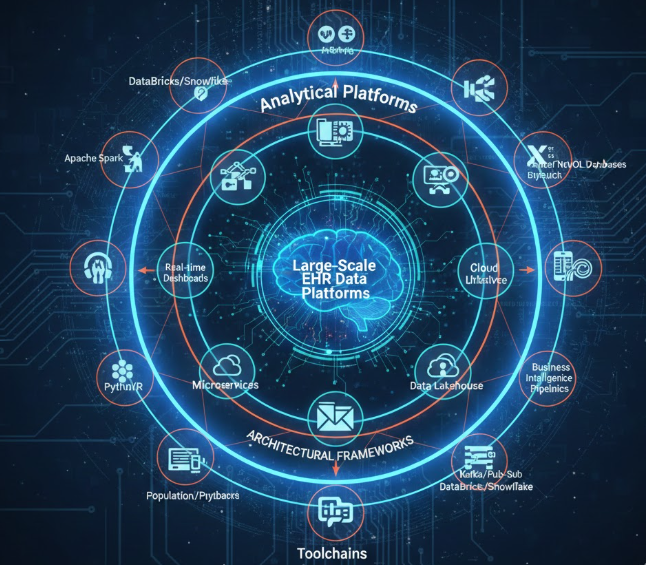
7.1. Analytical Platforms and Toolchains
The larger-scale analytics to be performed on both real-time and archived data require suitable tools and environments supporting the analytical lifecycle. These tools address the end-user requirements of data preparation, statistical analysis, data visualization, and workflow reproducibility. They can be implemented as on-premise, cloud-based, or hybrid systems; the latter often using industry-standard “bring your own license/models” cost models [85].
Data preparation is a frequent and often underappreciated activity in the data analytics lifecycle. Analytic results for an apparently simple dataset can require hours or days of data manipulation and preparation, requiring a significant investment in both effort and time. Many of these problems could be addressed through a deeper integration between the analytical platform and the underlying EHR data platform, coupled with an appropriate governance framework and technological support defined within the EHR data platform architecture [86].
7.2. Machine Learning Lifecycle in EHR Contexts
An EHR data platform must support the end-to-end lifecycle of machine learning applications. This comprises careful curation, preparation, and exploration of data, followed by training and evaluation of predictive models, and finally deployment and monitoring of in-production solutions. Governance practices are also important. Reproducibility is a key consideration for any empirical analysis and, hence, particular attention should be given to the traceability of data, algorithms, parameters, and execution environments [87].
Machine learning tools and platforms are somewhat divided between traditional on-premises solutions like R and SAS, and cloud-based environments that leverage the power of scalable frameworks such as Tensorflow and are provided in a Software-as-a-Service model, like DataRobot and H2O.ai. On-premises tools are crucial for certain analytical considerata, such as data quality and wrangling, exploratory analysis, and graphical representation of results, while cloud-based solutions provide a degree of automation, speed, and scalability without requiring investment in infrastructure and expertise. Consequently, both types of environments should be included in a healthcare analytic toolchain [88].
8. Conclusion
Scalable EHR data platforms remain complex to implement, and many groups struggle to realize the desired benefits. The overarching implications of the architectural discussions span all large-scale EHR platforms and underline key considerations for the ongoing development of monolithic platforms centered on increasingly rich data lakes [89].
Platform architectures must balance the conflicting requirements of operational systems, analytics, and advanced computing. Nevertheless, the trade-offs for these components remain poorly understood, leading to poorly informed decisions in many projects. These architectural principles also reveal the underlying factors that enable groups to successfully implement dramatically larger and more capable systems when compared with classical large-scale EHR platforms. It is only by acknowledging these principles and the space of costs and benefits that groups can embark on platform development by making clearly evaluated choices guided by an appropriate set of objectives. Such work will aid the mission of enabling a more responsive and efficient investigation of the most pressing questions in clinical and health services research through the rapid accumulation and analysis of information from hundreds of millions of patients’ records and the deployment of machine learning systems [90].
8.1. Emerging Trends
A confluence of evolving technologies and practices is exerting significant influence on the pace and direction of EHR platform design and implementation. The forces behind the conceptual models and architectural frameworks discussed previously are neither static nor isolated: they are interrelated and developing in concert. This section identifies roots of influence—technologies and standards—for which current and projected evolution warrants special attention [].
Cloud computing and software-as-a-service (SaaS) models lower the barrier to adopting a range of technologies and functionalities. Platforms dedicated to visualizing trends in the use and outcomes of healthcare services are expected to become important resources for healthcare managers and policymakers. Support for Spanish funding priority areas that do not provide sufficient healthcare services, as well as the ILIAD (Integrated Location Analysis for Decision Support for Regional Health Care Systems) project, which promotes cloud-based research resources for data collection and integration in the healthcare sector, illustrate this well. Cloud providers serving multiple organizations can reduce the costs of storage, processing, and analysis resources as well as provide access-control solutions, monitoring, auditing, and incident response capabilities [91].
The speed of innovation in artificial intelligence (AI) is outstripping the research community's ability to assess its implications for clinical practice and public health. The harvest is both rich and varied; machine- and deep-learning models are added daily to the repository of the Biomedical Informatics Research Network Model Evaluation Service. Automated content generated by unsupervised learning of large language models promises to revolutionize the relationship between humans and machines. The challenge of reducing bias so that AI can support every patient equally and fairly remains paramount. Increased use of AI and machine learning for similar purposes can promote standardization and thus facilitate multicentric studies [92].
References
- Abadi, M., Barham, P., Chen, J., Chen, Z., Davis, A., Dean, J., … Zheng, X. (2016). TensorFlow: A system for large-scale machine learning. Proceedings of the 12th USENIX Symposium on Operating Systems Design and Implementation, 265–283.
- Yandamuri, U. S. (2021). A Comparative Study of Traditional Reporting Systems versus Real-Time Analytics Dashboards in Enterprise Operations. Universal Journal of Business and Management.[CrossRef]
- Allen, M. R., & Stott, P. A. (2003). Estimating signal amplitudes in optimal fingerprinting, Part I: Theory. Climate Dynamics, 21(5–6), 477–491.[CrossRef]
- Dwaraka Nath Kummari, Srinivasa Rao Challa, "Big Data and Machine Learning in Fraud Detection for Public Sector Financial Systems," International Journal of Advanced Research in Computer and Communication Engineering (IJARCCE), DOI: 10.17148/IJARCCE.2020.91221.[CrossRef]
- Babcock, J., Bekkerman, R., & Bilenko, M. (2018). Machine learning and data mining for climate science. ACM Computing Surveys, 50(3), 1–36.[CrossRef]
- Goutham Kumar Sheelam, Botlagunta Preethish Nandan, "Machine Learning Integration in Semiconductor Research and Manufacturing Pipelines," International Journal of Advanced Research in Computer and Communication Engineering (IJARCCE), DOI: 10.17148/IJARCCE.2021.101274.[CrossRef]
- Kolla, S. H. (2021). Rule-Based Automation for IT Service Management Workflows. Online Journal of Engineering Sciences, 1(1), 1–14. Retrieved from https://www.scipublications.com/journal/index.php/ojes/article/view/1360[CrossRef]
- Nandan, B. P., Sheelam, G. K., & Engineer Sr, I. D. Data-Driven Design and Validation Techniques in Advanced Chip Engineering.
- Easterbrook, S. M. (2014). Climate science: A grand challenge for scientific software. IEEE Software, 31(3), 14–16.
- Meda, R. End-to-End Data Engineering for Demand Forecasting in Retail Manufacturing Ecosystems.y. Proceedings of the National Academy of Sciences, 110(30), 12219–12224.
- Gebbie, G., & Huybers, P. (2019). The mean age of ocean waters inferred from radiocarbon observations: Sensitivity to surface sources and data sparsity. Journal of Physical Oceanography, 49(4), 997–1016.
- Meda, R. (2019). Machine Learning Models for Quality Prediction and Compliance in Paint Manufacturing Operations. International Journal of Engineering and Computer Science, 8(12), 24993–24911. https://doi.org/10.18535/ijecs.v8i12.4445.[CrossRef]
- Giorgi, F., & Gutowski, W. J. (2015). Regional dynamical downscaling and the CORDEX initiative. Annual Review of Environment and Resources, 40, 467–490.[CrossRef]
- Inala, R. Designing Scalable Technology Architectures for Customer Data in Group Insurance and Investment Platforms.
- Grolinger, K., L’Heureux, A., Capretz, M. A. M., & Seewald, L. (2016). Energy forecasting for event venues: Big data and prediction accuracy. IEEE Access, 4, 7419–7430.[CrossRef]
- Aitha, A. R. (2021). Optimizing Data Warehousing for Large Scale Policy Management Using Advanced ETL Frameworks.[CrossRef]
- Hegerl, G. C., Zwiers, F. W., Braconnot, P., Gillett, N. P., Luo, Y., Marengo Orsini, J. A., … Zhang, X. (2007). Understanding and attributing climate change. In S. Solomon et al. (Eds.), Climate change 2007: The physical science basis (pp. 663–745). Cambridge University Press.
- Segireddy, A. R. (2021). Containerization and Microservices in Payment Systems: A Study of Kubernetes and Docker in Financial Applications. Universal Journal of Business and Management, 1(1), 1–17. Retrieved from https://www.scipublications.com/journal/index.php/ujbm/article/view/1352.[CrossRef]
- [19] Horel, J. D., Skokan, C., Xu, Q., & Snyder, C. (2002). Mesoscale data assimilation for prediction. Bulletin of the American Meteorological Society, 83(2), 195–212.
- Segireddy, A. R. (2020). Cloud Migration Strategies for High-Volume Financial Messaging Systems.[CrossRef]
- IPCC. (2013). Climate change 2013: The physical science basis. Cambridge University Press.
- Gottimukkala, V. R. R. (2021). Digital Signal Processing Challenges in Financial Messaging Systems: Case Studies in High-Volume SWIFT Flows.[CrossRef]
- Kalnay, E. (2003). Atmospheric modeling, data assimilation and predictability. Cambridge University Press.[CrossRef]
- Pamisetty, A. (2021). A comparative study of cloud platforms for scalable infrastructure in food distribution supply chains.
- LeCun, Y., Bengio, Y., & Hinton, G. (2015). Deep learning. Nature, 521(7553), 436–444.[CrossRef] [PubMed]
- Keerthi Amistapuram , "Energy-Efficient System Design for High-Volume Insurance Applications in Cloud-Native Environments," International Journal of Innovative Research in Electrical, Electronics, Instrumentation and Control Engineering (IJIREEICE), DOI 10.17148/IJIREEICE.2020.81209.
- Overpeck, J. T., Meehl, G. A., Bony, S., & Easterling, D. R. (2011). Climate data challenges in the 21st century. Science, 331(6018), 700–702.[CrossRef] [PubMed]
- Rongali, S. K. (2021). Cloud-Native API-Led Integration Using MuleSoft and .NET for Scalable Healthcare Interoperability. Available at SSRN 5814563.
- Ribes, A., & Terray, L. (2013). Application of regularized optimal fingerprinting to attribution. Climate Dynamics, 41(9–10), 2747–2765.
- Burugulla, J. K. R. (2020). The Role of Cloud Computing in Scaling Secure Payment Infrastructures for Digital Finance. Global Research Development (GRD) ISSN: 2455-5703, 5(12).
- Shortridge, A., & Messina, J. (2011). Spatial structure and landscape associations of climate extremes. International Journal of Climatology, 31(2), 171–186.
- Kummari, D. N. (2021). A Framework for Risk-Based Auditing in Intelligent Manufacturing Infrastructures. International Journal on Recent and Innovation Trends in Computing and Communication, 9(12), 245-262.
- Taylor, K. E., Stouffer, R. J., & Meehl, G. A. (2012). An overview of CMIP5 and the experiment design. Bulletin of the AGoutham Kumar Sheelam, Botlagunta Preethish Nandan, "Machine Learning Integration in Semiconductor Research and Manufacturing Pipelines," International Journal of Advanced Research in Computer and Communication Engineering (IJARCCE), DOI: 10.17148/IJARCCE.2021.101274merican Meteorological Society, 93(4), 485–498.[CrossRef] [PubMed]
- Botlagunta, P. N., & Sheelam, G. K. (2020). Data-Driven Design and Validation Techniques in Advanced Chip Engineering. Global Research Development (GRD) ISSN: 2455-5703, 5(12), 243-260.
- Zscheischler, J., Westra, S., van den Hurk, B. J. J. M., Seneviratne, S. I., Ward, P. J., Pitman, A., … Leonard, M. (2018). Future climate risk from compound events. Nature Climate Change, 8(6), 469–477.[CrossRef] [PubMed]
- Meda, R. (2020). Data Engineering Architectures for Real-Time Quality Monitoring in Paint Production Lines. International Journal Of Engineering And Computer Science, 9(12).[CrossRef]
- Inala, R. (2021). A New Paradigm in Retirement Solution Platforms: Leveraging Data Governance to Build AI-Ready Data Products. Journal of International Crisis and Risk Communication Research, 286-310.
- Alexander, L. V., Zhang, X., Peterson, T. C., Caesar, J., Gleason, B., Klein Tank, A. M. G., … Vazquez-Aguirre, J. L. (2006). Global observed changes in daily climate extremes of temperature and precipitation. Journal of Geophysical Research: Atmospheres, 111(D5), D05109.[CrossRef] [PubMed]
- Inala, R. (2020). Building Foundational Data Products for Financial Services: A MDM-Based Approach to Customer, and Product Data Integration. Universal Journal of Finance and Economics, 1(1), 1-18.[CrossRef]
- Awange, J. L., Ferreira, V. G., Forootan, E., Khandu, Zhang, K., & Andam-Akorful, S. A. (2016). Understanding climate change signals from satellite gravimetry: A review of the GRACE mission. Earth-Science Reviews, 135, 129–150.
- Aitha, A. R. (2021). Dev Ops Driven Digital Transformation: Accelerating Innovation In The Insurance Industry. Available at SSRN 5622190.
- Bell, G., Hey, T., & Szalay, A. (2009). Beyond the data deluge. Science, 323(5919), 1297–1298.[CrossRef] [PubMed]
- Annapareddy, V. N. (2021). Transforming Renewable Energy and Educational Technologies Through AI, Machine Learning, Big Data Analytics, and Cloud-Based IT Integrations. Machine Learning, Big Data Analytics, and Cloud-Based IT Integrations (December 30, 2021).
- Chen, T., & Guestrin, C. (2016). XGBoost: A scalable tree boosting system. Proceedings of the 22nd ACM SIGKDD International Conference on Knowledge Discovery and Data Mining, 785–794.[CrossRef]
- Amistapuram, K. (2021). Digital Transformation in Insurance: Migrating Enterprise Policy Systems to .NET Core. Universal Journal of Computer Sciences and Communications, 1(1), 1–17. Retrieved from https://www.scipublications.com/journal/index.php/ujcsc/article/view/1348[CrossRef]
- Emanuel, K. (2013). Downscaling CMIP5 climate models shows increased tropical cyclone activity over the 21st century. Proceedings of the National Academy of Sciences, 110(30), 12219–12224.[CrossRef] [PubMed]
- Vadisetty, R., Polamarasetti, A., Guntupalli, R., Raghunath, V., Jyothi, V. K., & Kudithipudi, K. (2021). Privacy-Preserving Gen AI in Multi-Tenant Cloud Environments. Sateesh kumar and Raghunath, Vedaprada and Jyothi, Vinaya Kumar and Kudithipudi, Karthik, Privacy-Preserving Gen AI in Multi-Tenant Cloud Environments (January 20, 2021).[CrossRef]
- Davuluri, P. S. L. N. (2021). Event-Driven Compliance Systems: Modernizing Financial Crime Detection Without Machine Intelligence. Journal of International Crisis and Risk Communication Research , 339–354. https://doi.org/10.63278/jicrcr.vi.3636
- Gelaro, R., McCarty, W., Suárez, M. J., Todling, R., Molod, A., Takacs, L., … Wargan, K. (2017). The Modern-Era Retrospective Analysis for Research and Applications, Version 2 (MERRA-2). Journal of Climate, 30(14), 5419–5454[CrossRef] [PubMed]
- Varri, D. B. S. (2020). Automated Vulnerability Detection and Remediation Framework for Enterprise Databases. Available at SSRN 5774865.[CrossRef]
- Goodfellow, I., Bengio, Y., & Courville, A (2016). Deep learning. MIT Press.
- Yandamuri, U. S. (2021). A Comparative Study of Traditional Reporting Systems versus Real-Time Analytics Dashboards in Enterprise Operations. Universal Journal of Business and Management, 1(1), 1–13. Retrieved from https://www.scipublications.com/journal/index.php/ujbm/article/view/1357[CrossRef]
- Vadisetty, R., Polamarasetti, A., Guntupalli, R., Rongali, S. K., Raghunath, V., Jyothi, V. K., & Kudithipudi, K. (2021). Legal and Ethical Considerations for Hosting GenAI on the Cloud. International Journal of AI, BigData, Computational and Management Studies, 2(2), 28-34.[CrossRef]
- Davuluri, P. N. (2020). Improving Data Quality and Lineage in Regulated Financial Data Platforms. Finance and Economics, 1(1), 1-14.[CrossRef]
- Reichstein, M., Camps-Valls, G., Stevens, B., Jung, M., Denzler, J., Carvalhais, N., & Prabhat. (2019). Deep learning and process understanding for data-driven Earth system science. Nature, 566(7743), 195–204.[CrossRef] [PubMed]
- Hersbach, H., Bell, B., Berrisford, P., Hirahara, S., Horányi, A., Muñoz-Sabater, J., … Thépaut, J. N. (2020). The ERA5 global reanalysis. Quarterly Journal of the Royal Meteorological Society, 146(730), 1999–2049.[CrossRef]
- Koppolu, H. K. R. (2021). Data-Driven Strategies for Optimizing Customer Journeys Across Telecom and Healthcare Industries. International Journal Of Engineering And Computer Science, 10(12).
- Huang, H., Chen, F., & Zhang, X. (2015). Spatiotemporal data mining for climate change studies: A review. International Journal of Geographical Information Science, 29(9), 1543–1562.
- Gadi, A. L. The Role of Digital Twins in Automotive R&D for Rapid Prototyping and System Integration.
- James, G., Witten, D., Hastie, T., & Tibshirani, R. (2013). An introduction to statistical learning. Springer.[CrossRef]
- Meinshausen, N., McCandless, S., & Bühlmann, P. (2009). Stability selection. Journal of the Royal Statistical Society: Series B, 72(4), 417–473.[CrossRef]
- Pandiri, L. Data-Driven Insights into Consumer Behavior for Bundled Insurance Offerings Using Big Data Analytics.
- Rolnick, D., Donti, P. L., Kaack, L. H., Kochanski, K., Lacoste, A., Sankaran, K., … Bengio, Y. (2019). Tackling climate change with machine learning. arXiv, 1–96.[CrossRef]
- Vadisetty, R., Polamarasetti, A., Guntupalli, R., Rongali, S. K., Raghunath, V., Jyothi, V. K., & Kudithipudi, K. (2020). Generative AI for Cloud Infrastructure Automation. International Journal of Artificial Intelligence, Data Science, and Machine Learning, 1(3), 15-20[CrossRef]
- Stonebraker, M., Brown, P., Poliakov, A., & Raman, S. (2013). The architecture of SciDB. Proceedings of the 19th International Conference on Scientific and Statistical Database Management, 1–12.[CrossRef]
- Chava, K., Chakilam, C., & Recharla, M. (2021). Machine Learning Models for Early Disease Detection: A Big Data Approach to Personalized Healthcare. International Journal of Engineering and Computer Science, 10(12), 25709–25730. https://doi.org/10.18535/ijecs.v10i12.4678[CrossRef]
- Trenberth, K. E., Dai, A., van der Schrier, G., Jones, P. D., Barichivich, J., Briffa, K. R., & Sheffield, J. (2014). Global warming and changes in drought. Nature Climate Change, 4(1), 17–22.[CrossRef]
- Sriram, H. K., ADUSUPALLI, B., & Malempati, M. (2021). Revolutionizing Risk Assessment and Financial Ecosystems with Smart Automation, Secure Digital Solutions, and Advanced Analytical Frameworks.[CrossRef]
- Zscheischler, J., Westra, S., van den Hurk, B. J. J. M., Seneviratne, S. I., Ward, P. J., Pitman, A., … Leonard, M. (2018). Future climate risk from compound events. Nature Climate Change, 8(6), 469–477.[CrossRef] [PubMed]
- Paleti, S. (2021). Cognitive Core Banking: A Data-Engineered, AI-Infused Architecture for Proactive Risk Compliance Management. AI-Infused Architecture for Proactive Risk Compliance Management (December 21, 2021).[CrossRef]
- Abadi, M., Barham, P., Chen, J., Chen, Z., Davis, A., Dean, J., Devin, M., Ghemawat, S., Irving, G., Isard, M., Kudlur, M., Levenberg, J., Monga, R., Moore, S., Murray, D., Steiner, B., Tucker, P., Vasudevan, V., Warden, P., Wicke, M., Yu, Y., & Zheng, X. (2016). TensorFlow: A system for large-scale machine learning. Proceedings of the 12th USENIX Symposium on Operating Systems Design and Implementation, 265–283.
- Kaulwar, P. K. (2021). From Code to Counsel: Deep Learning and Data Engineering Synergy for Intelligent Tax Strategy Generation. Journal of International Crisis and Risk Communication Research, 1-20.
- Alessandrini, S., Delle Monache, L., Sperati, S., & Nissen, J. N. (2018). A novel application of deep learning for short-term wind forecasting. Renewable Energy, 133, 496–504.
- Singireddy, S., & Adusupalli, B. (2019). Cloud Security Challenges in Modernizing Insurance Operations with Multi-Tenant Architectures. International Journal of Engineering and Computer Science, 8(12). https://doi.org/10.18535/ijecs.v8i12.4433.[CrossRef]
- Barnes, E. A., Hurrell, J. W., Ebert-Uphoff, I., Anderson, C., & Anderson, D. (2019). Viewing forced climate patterns through an AI lens. Geophysical Research Letters, 46(22), 13389–13398.[CrossRef]
- Sathya Kannan, "Integrating Machine Learning and Data Engineering for Predictive Maintenance in Smart Agricultural Machinery," International Journal of Innovative Research in Electrical, Electronics, Instrumentation and Control Engineering (IJIREEICE), DOI 10.17148/IJIREEICE.2021.91215.
- Bauer, P., Stevens, B., & Hazeleger, W. (2021). A digital twin of Earth for the green transition. Nature Climate Change, 11(2), 80–83.[CrossRef]
- Challa, K. (2021). Cloud Native Architecture for Scalable Fintech Applications with Real Time Payments. International Journal Of Engineering And Computer Science, 10(12).[CrossRef]
- Bean, A., Williams, J. N., & Barnes, E. A. (2020). A comparison of machine learning approaches for detecting climate variability. Journal of Climate, 33(12), 5121–5140.
- Rongali, S. K. (2020). Predictive Modeling and Machine Learning Frameworks for Early Disease Detection in Healthcare Data Systems. Current Research in Public Health, 1(1), 1-15.[CrossRef]
- Benesty, J., Chen, J., Huang, Y., & Cohen, I. (2018). Pearson correlation coefficient. In Noise reduction in speech processing (pp. 1–4). Springer.[CrossRef]
- Gottimukkala, V. R. R. (2020). Energy-Efficient Design Patterns for Large-Scale Banking Applications Deployed on AWS Cloud. power, 9(12)
- Chen, X., Wang, J., & Huang, G. (2021). Big data analytics for climate change research: Challenges and opportunities. Environmental Modelling and Software, 142, 105071.
- Pamisetty, V. (2021). A Cloud-Integrated Framework for Efficient Government Financial Management and Unclaimed Asset Recovery. Available at SSRN 5272351.
- Chen, Y., Lv, Y., Wang, F. Y., & Wang, S. (2019). Long short-term memory networks for traffic flow prediction. IEEE Transactions on Intelligent Transportation Systems, 20(2), 755–764.
- Pandugula, C., & Yasmeen, Z. (2019). A Comprehensive Study of Proactive Cybersecurity Models in Cloud-Driven Retail Technology Architectures. Universal Journal of Computer Sciences and Communications, 1(1), 1253.[CrossRef]
- Dong, S., Xu, Z., & Liu, Y. (2021). Distributed big data processing for climate modeling using Apache Spark. Journal of Big Data, 8(1), 1–19.
- Kalisetty, S. Leveraging Cloud Computing and Big Data Analytics for Resilient Supply Chain Optimization in Retail and Manufacturing: A Framework for Disruption Management.
- Ebert-Uphoff, I., & Hilburn, K. (2020). Evaluation, tuning, and interpretation of neural networks for environmental science applications. Bulletin of the American Meteorological Society, 101(12), E2149–E2163.[CrossRef]
- Polineni, T. N. S., & Ganti, V. K. A. T. (2019). Revolutionizing Patient Care and Digital Infrastructure: Integrating Cloud Computing and Advanced Data Engineering for Industry Innovation. World, 1(1252), 2326-9865.[CrossRef]
- Gagne, D. J., Haupt, S. E., Nychka, D. W., & Thompson, G. (2019). Interpretable deep learning for spatial analysis of severe hail storms. Monthly Weather Review, 147(8), 2827–2845.[CrossRef]
- Varri, D. B. S. (2021). Cloud-Native Security Architecture for Hybrid Healthcare Infrastructure. Available at SSRN 5785982.[CrossRef]