
Abstract
Background: Propranolol is a non-cardio-selective beta-blocker, commonly used in patients with hyperthyroidism to treat the hyperadrenergic symptoms but also for its additional effect of blocking the peripheral conversion of inactive T4 to active T3. However, propranolol has many side effects, one of them being secondary Raynaud phenomenon. Case presentation: S.K., 55 years old was hospitalized in the Endocrinology Department as an untreated hyperfunctioning goiter with typical clinical manifestations such as fatigue, anxiety, palpitations, heat intolerance, difficulties in swallowing and breathing. Unimazole 5 mg (2-2-2 tb) and Propranolol 40 mg (¼ -0- ¼ tb) were prescribed. Thirty minutes after taking Propranolol (the dose 40 mg), she had difficulties breathing, was agitated, sweating and had nausea. Her face was hyperemic and edematous and her extremities were getting blue and cold. Her vitals remained stable and her airways were opened, as evaluated from laryngoscopy and CT-scan of the neck. 8 hours later, her clinical manifestations got worse: her facial edema spread in her lips and submandibular region. On both cases, she clinically improved after prednisolone administration. 12 hours after taking propranolol, she showed no more signs of cyanosis or edema. Propranolol was replaced by Nebivolol, with no side effects. Conclusion: Secondary Raynaud phenomenon is a common side effect of beta-blockers and should be taken in consideration in very patient presenting with cold and cyanotic peripherals. In these cases, propranolol should be stopped and replaced. Further studies on beta-blockers side effects in patients with hyperthyroidism should be made.
1. Introduction
Hyperthyroidism induces a hyperadrenergic state characterized by an exaggerated sensitivity to circulating catecholamines. This is due to an increased number of beta- adrenergic receptors, responsible for many of the symptoms related to this disorder such as palpitations, tachycardia, tremor, anxiety and heat intolerance. Propranolol, a non-cardio-selective beta-blocker is used not only to impede this hyperadrenergic myriad of symptoms but also for its additional effect of blocking the peripheral conversion of inactive T4 to active T3. Despite its benefits, propranolol has many well-known side effects such as hypotension, bradycardia, dyspnea, fatigue, nausea, abdominal pain and peripheral vasoconstriction (secondary Raynaud phenomenon). Assessing the importance of these side effects, we present to you this case from our patient hospitalized in Mother Teresa University Hospital for further evaluation and treatment of her hyperfunctioning goiter.
2. Methods
Laboratory investigations, imaging studies, clinical course and management outcomes were documented prospectively during the patient’s hospitalization.
3. Case presentation
S.K., 55 years old was hospitalized in the Endocrinology Department as an untreated hyperfunctioning goiter. She had a 10-year history of goiter, which was gradually increasing in size. The last two months, she experienced fatigue, anxiety, palpitations, heat intolerance, difficulties in swallowing and breathing. Hormone values were as noted: TSH < 0.001 mU/l (normal range 0.35- 4.94), fT3 20.0 pg/ml (normal range 1.88- 3.18), fT4 4.80 ng/dl (normal range 0.7-1.48).
Upon physical examination, she was tired and anxious. Her thyroid was nodular and enlarged, without distinct inferior borders, painless on palpation. Her heart rate was 130 bpm with rhythmic tones, BP 130/70 mmHg, her respiration was normal bilaterally and her abdomen not painful on palpation. There was no peripheral edema or cyanosis. Unimazole 5 mg (2-2-2 tb) and Propranolol 40 mg (¼ -0- ¼ tb) were prescribed.
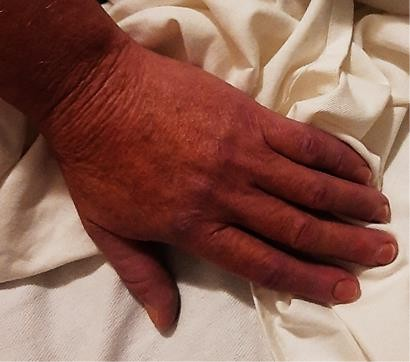
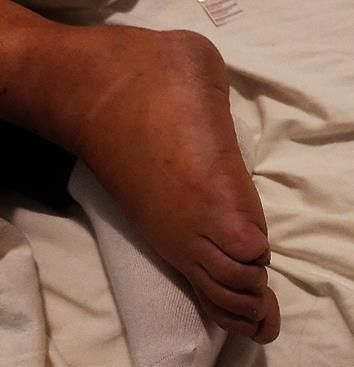
Thirty minutes after taking 1tb of Unimazole 5 mg and 1 tb of Propranolol 40 mg (not accordingly), our patient referred of feeling unwell. She had difficulties breathing, was agitated, sweating and had nausea. What seemed noteworthy in her physical examination, were her hyperemic and edematous face and her fingers and toes getting blue and cold (Figure 1 and Figure 2). Her vitals were stable (rhythmic tones, HR 74 bpm, BP 120/70 mmHg, SatO2 98%, T 36.6°C), despite her clinical manifestations. An ECG, an ABG were done with the results:
- ECG: normal sinus rhythm
- HGA: pH 7.345, HCO3 24.3 mmol/l, BE 9.5 mmol/l, PCO2 28.8 mmHg, PO2 41.0 mmHg, Na 146.2 mmol/l, K 4.06 mmol/l
She was consulted by the otorhinolaryngologist and a laryngoscopy was performed. Her rima glottidis and vocal cords were opened. An urgent CT scan of the neck was required to evaluate the goiter extension.
CT scan of the neck: Thyroid gland enlarged, partially compressing and displacing trachea on the left
The patient was given Prednisolone 25 mg 2 ampules IV and Metoclopramide. Also, she received a perfusion of normal saline 0.9% with electrolytes. Her cyanosis and facial edema improved. Her vitals remained stable for the next 5 hours.
Around 8 hours after propranolol administration, our patient experienced the same clinical manifestations as previously. She reported dyspnea, abdominal pain and nausea. On physical examination, she was sweating, her peripheral cyanosis and her facial edema worsened. In addition, her edema spread in her lips and submandibular region.
Her vitals continued to be stable (BP 120/70 mmHg, FC 80 bpm, SatO2 97%, T 36,8°C). No diuresis was present. Her HGA showed a mild acidosis.
10 ampules of NaHCO3 were infused slowly intravenously. Also, the patient was given Furosemide 1 ampule and 2 Ampules of Prednisolone. In half an hour, her clinical manifestations improved, her diuresis began on urinary catheter. She was stable and quite for the rest of the night. 12 hours after the administration of propranolol, she showed no more signs of facial edema or peripheral cyanosis.
The following day, a thyroid ultrasound, a scintigraphy scan was performed with the following results:
3.1. Thyroid ultrasound
- Right lobe: heterogenous isoechoic structure transformed into a nodule with dimensions: 3.00 x 3.39 x 3.11cm and Volume 18.51cm3
- Left lobe: homogenous, with no nodules or cysts, with dimensions: 1.25 x 1.40 x 1.94 cm and Volume 1.82 cm3
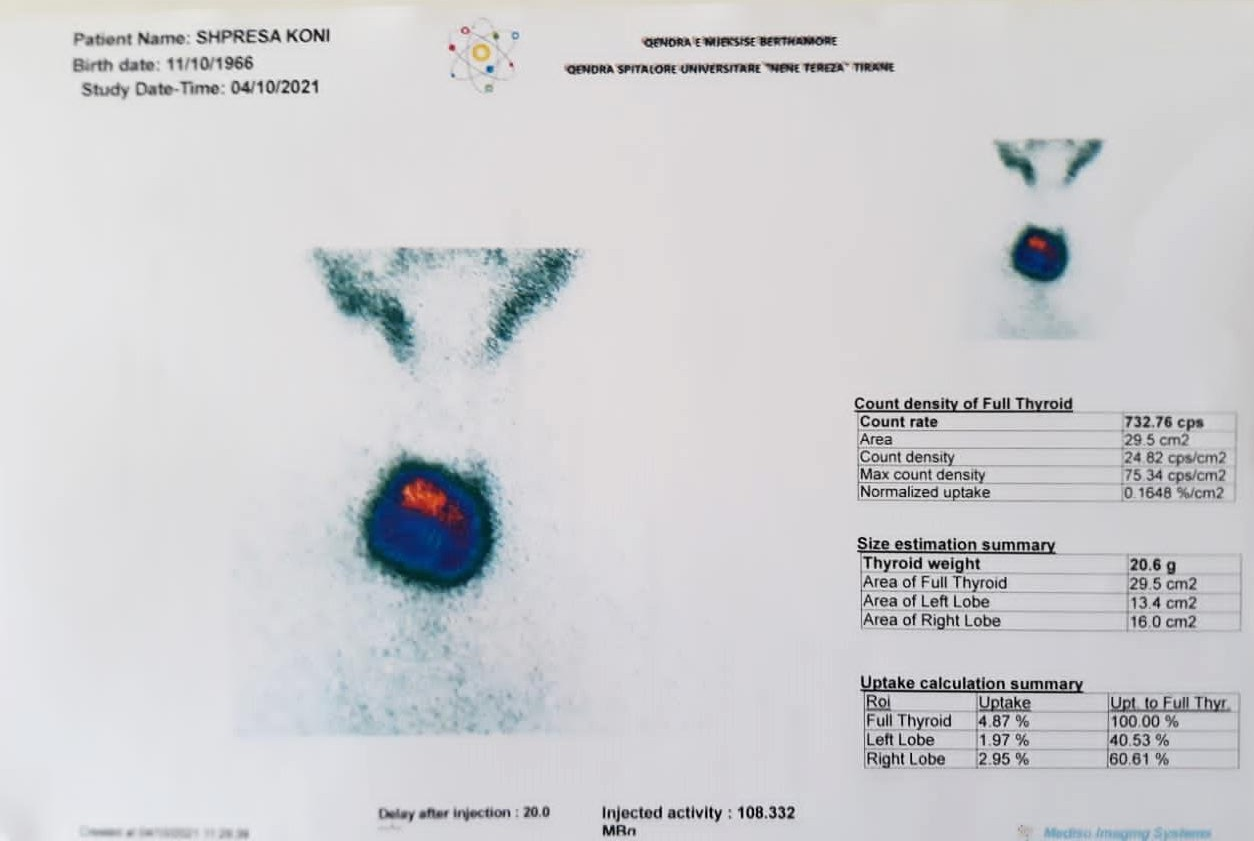
A complete blood count (table 1) and biochemical analysis (table 2) were taken and cardiac ultrasound was performed with the following results:
3.2. Cardiac ultrasound
Left ventricle with LviD D 42 mm, EF 50%, Diffuse mild hypokinesia. Mitral valve calcifications, without stenosis, Mean gradient 8 mmHg, Maximum gradient 16 mmHg. Moderate to severe mitral regurgitation. Left atrium Volume 21 cm3. Aortic valve with normal gradient, without stenosis. Severe aortic regurgitation. Aortic ostium 20-21 mm. Severe tricuspid regurgitation. sPAP 70-80 mmHg, No pericardial effusion.
What was noteworthy, was the elevation of liver transaminases compared from the ones on admission (ALT 28 U/L and AST 38 U/L), despite the patient taking only 1 tablet of Propranolol and two tablets of Unimazole. Both medications were interrupted and liver transaminases taken regularly over the next week. Also, there was a gradual decrease of fT3 and fT4 the following days, even without medication (fT3 10.60 pg/ml and fT4 1.92 ng/dl), still remaining above the reference range.
After the stabilization of liver transaminases (ALT 38 U/L and AST U/L), Unimazole 5 mg 2tb/day was restarted.
Our patient was consulted by the cardiologist and Furosemide 40 mg 1 tb/day and Spironolactone 25 mg 1 tb/day were added. Propranolol was replaced by Nebivolol 5 mg 1tb/day. Heart rate was within the normal range. No side effects were noted.
It was arranged for her to receive 131- Iodine therapy the following weeks.
4. Discussion
Propranolol is a non-selective beta blocker, commonly used in patients with hyperthyroidism to reverse the hyperadrenergic symptoms but also due to its peripheral effect in T4 to T3 conversion. A well-known side effect of beta blockers is drug-induced peripheral vasoconstriction, especially Raynaud phenomenon, described firstly by Marshal and colleagues in 1976 in British Medical Journal [1]. They compared patients treated with propranolol, atenolol, oxprenolol and methyldopa for hypertension and concluded that the incidence of this side effect was more commonly observed with propranolol. According to the Framingham Study [2], beta blockers use is the most common cause of secondary Raynaud phenomenon (34.2% of the cases).
The precise mechanism of peripheral vasoconstriction induced by beta blockers remains incompletely understood. Antagonism of β2-adrenoceptors, which are responsible for peripheral arteriolar vasodilatation, has long been thought to be the main mechanism. However, various studies showed that Raynaud phenomenon was also observed in patients using beta blockers with higher affinity for β1-adrenoreceptors [3].
Another hypothesis that tends to explain peripheral vasoconstriction due to beta-blockers is the vasoconstrictor sympathetic reflex mediated by baroreceptors in response to the decrease in cardiac output following the drug intake [4]. β-adrenoceptor blockers with intrinsic sympathomimetic activity (ISA) would have a lesser effect on cardiac output and may also decrease peripheral resistance, therefore inducing less peripheral vasoconstriction. For example, pindolol is the β- adrenoceptor blocker with the highest ISA. In a 1992 study, comparing pindolol and propranolol, pindolol showed a decreased risk of peripheral vasoconstriction, confirming this hypothesis [5]. However, there is conflicting evidence regarding this differences in peripheral symptoms such as cold extremities among beta-blockers [6].
On the other hand, our patient showed no signs of peripheral cyanosis or cold extremities when switched from propranolol to nebivolol (β1- adrenergic receptor blocker), so she continued using this medication after discharge from the hospital.
The second issue, we would like to emphasize, is facial edema that our patient manifested 30 minutes after taking the medication and approximately 8 hours later. What we noticed was the worsening of edema and its spreading to the lips and submandibular region, without affecting our patient’s vital parameters. On a careful review of the literature, there is little evidence regarding adverse reactions such as facial edema and severe angioedema in patients taking beta-blockers.
A study conducted from March 2007 to March 2014, comparing angioedema in patients of different races taking ACEI, ARB, or beta-blocker treatment, confirmed that ACE-I had the highest risk of inducing angioedema, especially in the first 30 days after admission [7]. On the other hand, another study suggested that even patients receiving drugs less likely associated with angioedema such as beta-blockers, do have a measurable risk. In this study, the incidence of serious angioedema was higher with beta-blockers than ARBs [8].
5. Conclusion
Propranolol is a non-selective beta blocker associated with many side effects including secondary Raynaud phenomenon, common among patients taking beta blockers. When this happens, a change of beta-blocker should be considered. Future studies would be valuable to access to incidence of side effects of these drugs in patients with clinical hyperthyroidism.
Declaration of patient consent
The authors certify that they have obtained all appropriate patient consent forms.
Conflict of interest
There are no conflicts of interest.
References
- Marshall AJ, Roberts CJ, Barritt DW. Raynaud’s phenomenon as side effect of beta- blockers in hypertension. Br Med J 1976; 1: 1498.[CrossRef] [PubMed]
- Brand FN, Larson MG, Kannel WB, McGuirk JM. The occurrence of Raynaud’s phenomenon in a general population: the Framingham Study. Vasc Med Lond Engl 1997; 2: 296–301[CrossRef] [PubMed]
- Steiner JA, Cooper R, McPherson K, Riley AJ. Effect of beta-adrenoceptor antagonists on prevalence of peripheral vascular symptoms in hypertensive patients. Br J Clin Pharmacol 1982; 14:833.[CrossRef] [PubMed]
- Heintzen MP, Strauer BE. Peripheral vascular effects of betablockers. Eur Heart J 1994; 15 (suppl C): 2–7.[CrossRef] [PubMed]
- Lithell H, Pollare T, Vessby B. Metabolic effects of pindolol and propranolol in a double- blind cross-over study in hypertensive patients. Blood Press 1992; 1: 92–101[CrossRef] [PubMed]
- Feleke E, Lyngstam O, Råstam L, Rydén L. Complaints of cold extremities among patients on antihypertensive treatment. Act Med Scand 1983; 213: 381–5.[CrossRef] [PubMed]
- Reichman ME, Wernecke M, Graham DJ, Liao J, Yap J, Chillarige Y, Southworth MR, Keeton S, Goulding MR, Mott K, Kelman JA. Antihypertensive drug associated angioedema: effect modification by race/ethnicity. Pharmacoepidemiol Drug Saf. 2017 Oct;26(10):1190-1196. doi: 10.1002/pds.4260. Epub 2017 Jul 19. PMID: 28722207.[CrossRef] [PubMed]
- Toh S, et al. Comparative risk for angioedema associated with the use of drugs that target the renin-angiotensin-aldosterone system. Arch Intern Med 2012;172:1582-1589.[CrossRef] [PubMed]