
Abstract
This essay explores how AI can enhance clinical research and, particularly, its pivotal role in the development of medical devices. A data-driven approach to medical device development that can streamline regulatory compliance and quality assurance is discussed. Methods that generate insights from pre-stage data and utilize it during development are detailed. The effectiveness of this approach in compliance audits, 510(k) submissions, and quality system audits - reducing time, effort, and risks is analyzed. The findings are illustrated with practical examples and takeaway recommendations. When reading a scientific article, how many times have you judged the quality of the research by looking at the methodology section? Artificial intelligence algorithms can be developed with the most robust and innovative technology, but if they are not properly validated, they will be worthless in the eyes of regulatory authorities. Conversely, outdated and simplistic models can still gain regulatory clearance if robustness is effectively demonstrated. For better or worse, ethics, economics, and robustness are often sacrificed in the constant government struggle to keep up with the technological edge of AI development. The slow crawl of lawmakers is constant in every field. Automating small tasks can save time and reduce risks when playing catch-up with a changing regulatory framework so the rest of the AI development can continue uninhibitedly. This dives into using FDA open data to collaborate with a food and drug law company and develop several bottom-up initiatives that supply knowledge needed for regulatory compliance and quality systems development. Methods that input pre-stage data and output actionable insights as models are provided. By sharing these resources and advice as academic researchers, efficiency in streamlining processes is maximized, thereby letting more time and resources be allocated to the actual development [1].
1. Introduction
The rapid development of med-tech industries and sophisticated connected devices produce large quantities of health data. Many of the stakeholders are patient-specific and fully digitized, but these data are often proprietary and incompatible with existing standards. Conventional forms of reviewing and evidence assessment are unable to follow the development and validation of this vast, dynamic source of evidence on a meaningful scale, where viable products learn from data generated from real-world use. As clinical efficacy becomes better understood, methods, tools, techniques, and technologies ensure that development processes continually adapt to knowledge emerging from real-world application. However, clinical efficacy is contingent on the integrity and security of corresponding patient data [2]. The rollout of new data standards addresses the need to maintain and prove integrity, but in so doing increases the challenge of ensuring viable systems remain secure throughout the entire lifecycle. Patient identity must be decoupled with other identifying features while the safety and effectiveness of these systems cannot compromise. Many see AI as a potentially revolutionary panacea that could bridge these gaps and drive the needed transformations across the entire healthcare landscape. AI technologies rooted in the treatment of health data have shown considerable promise in bridging some of these divides and there are ongoing experimental regulations on their use [3].
Artificial intelligence (AI)-enabled technologies in the MedTech sector hold the promise to democratize access to healthcare services on a global scale. This innovation has the potential to transform healthcare delivery by improving access, quality, and outcomes. Such innovative technologies include the use of digital companions to monitor and manage personal health, cloud-based services that detect adverse events in medical images, and mobile applications that analyze the user’s voice to provide an indication of a disease or mental illness. Healthcare stakeholders strive to adopt, regulate, and evolve such innovative technologies, while favouring safety and efficacy. Regulators are primarily concerned about the safe and effective performance of AI-enabled technologies and must carefully evaluate whether their performance meets clear regulatory standards. At the same time, stakeholders in the healthcare ecosystem want to ensure access to such innovative solutions and consider how national regulatory practices might be tailored to stimulate the development and deployment of AI [4].
1.1. Background and Significance
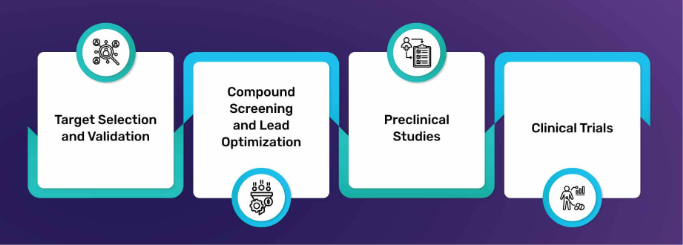
This article examines how a combination of data-driven approaches can enable clinical trial data to meet the standards of the 21 CFR Part 312. A brief historical account is given of AI’s role in healthcare leading up to the present advances. This contextualizes the current spiral in AI technologies and stresses on its potential evidence improvement on currently current clinical research methodologies and Technology. It also provides an overview of the historical background of the medical device development and the challenges to meet regulatory standards, with a special focus on the difficulty for the small and medium size enterprises (SMEs) [5]. Thus the Medical Device Single Audit Program (MDSAP) has been discussed as an alternative means for quality assurance. A comprehensive discussion follows to provide the evidence of input and output requirements to meet the standards of 21 CFR Part 312 and align with the good clinical practices. This section can benefit not only innovation stakeholders in healthcare but also wider audiences’ interest in the robustness of clinical evidence. Lessons from history show that AI advances triggered hopes and fears over future job markets and the ways in which humans could be replaced in routine data driven jobs [6].
Equation 1: Clinical Trial Efficiency (Optimization through AI)
Where:
- = Efficiency of clinical trial
- = Number of patients enrolled
- = Average time for patient recruitment and monitoring
- = AI driven insight multiplier (reflects the improvement)
- = Optimized trial duration after AI intervention
2. AI in Clinical Research
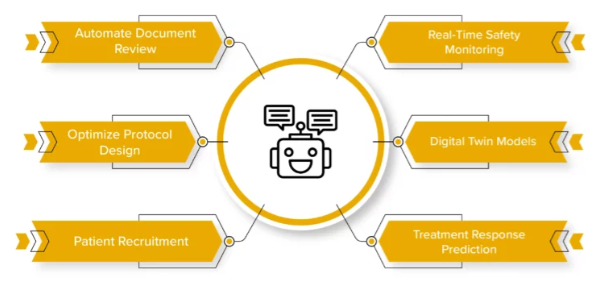
The clinical research community is examining how AI can be more effectively utilized to increase the speed and accuracy of research, so that decisions can be made faster, and resources are used more efficiently. This comprehensive examination encompasses after-investment clinical research programs and research that generates evidence used in the development of medical products [7].
There are a number of AI technologies that are being utilized to enhance the efficiency and accuracy of the research process and to improve its quality. Various tools are available to facilitate the rapid, accurate examination of large datasets, allowing for high-level observations to be made quickly [8]. As a result, the turnaround time for study initiation and site initiation visits and other important milestones can be much faster [9]. Automated data quality and monitoring systems can also be used to ensure the high quality of the data being collected in research programs. AI can also assist in site selection by identifying patient populations for trial candidates or determining the best places to conduct studies based on treatment or cost metrics. Additionally, some AI technologies are being developed that have the potential to streamline the capture of data directly from an electronic health record or transfer data from one electronic format to another. These tools can decrypt physician notes, scan forms and reports, and extract relevant information needed to complete a case report form [10].
2.1. Overview of AI in Healthcare
Artificial intelligence (AI) is artificially stimulating intelligently (or rationally) behaving entities for making decisions or dealing with certain tasks. AI applications in intelligent agents currently include expert systems, natural language, and speech recognition and synthesis, and vision. Though it is hyped that AI could substitute for human intelligent diagnosis and clinical treatment, these algorithms may never replace clinicians because they are not living creatures that have the power of intelligence; "prescriptive" AI methods lead to difficult-to-interpret results [11]. For lack of adequate visualization of AI, how to trust it or improve its acceptance is the challenge being faced. Meanwhile, AI in related concentration fields of healthcare is steadily growing [12].
The following is a detailed breakdown of diverse AI application in healthcare: Machine learning (supervised, unsupervised, semi-supervised, reinforcement learning, and active learning) Deep learning (convolutional neural networks, recurrent neural networks, generative adversarial networks, and long-short term networks) Natural language processing (named entity recognition, text mining, information extraction, understanding, and generation, artificial conversational agents, and sentence structure) Robotics and intelligent agents (agents modeling human cognitive architectures, and deep reinforcement learning) Image generation and speech recognition, automatic diagnosis accuracy and opportunity, treatment prescription and outcome evaluation optimization cybersecurity and encryption protocols [13]. The following issues are emerging on AI: artificial sweeteners, or real preservatives? different ethical problems concerning real-world trials of AI, and its use in the development of surveillance technology by state or private behavior, political, or speech manipulation, cyber warfare, and autonomous weapons [14].
3. Medical Device Development Process
The process of developing a medical device is composed of several stages: design, manufacturing, and regulation. To ensure patient safety and effectiveness, a series of standards and protocols have been established which must be followed during the development. These standards can be applied to the design, applied to the manufacturing, and provide a risk management framework. Before putting the device on the market, a substantial amount of evidence needs to be collected. This includes but is not limited to verification that the process of development and the product design follow the aforementioned protocols and that the product is built of appropriate quality parts, information about harmful effects that may arise from the usage of the device and mitigation efforts, and results of clinical studies demonstrating that the product has the intended effect and is safe [15]. Common challenges during the development and market uptake are the unintended identification, delays in regulatory approval, and unstable or difficult-to-use algorithms. Clinical research plays a significant role in all of the above, providing evidence that the design fulfills patient and operator requirements [16].
The development guidelines assume that the first stage of product design is a detailed description that can be shared with clinicians. This is done to better understand the requirements and shorten the long iteration time for setting these requirements. Releasing such documentation allows for a more informed decision on the selection of device parameters [17].
3.1. Regulatory Compliance and Quality Assurance
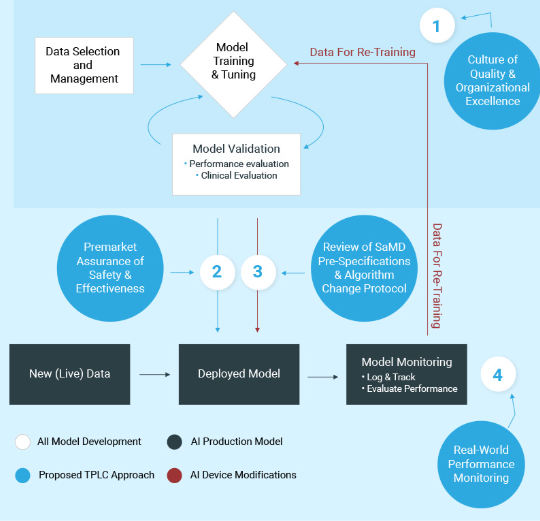
Regulatory compliance is arguably the most critical aspect of medical device development; it defines the framework by which regulatory bodies ensure both patient safety and product efficacy. Both compliance and quality assurance (QA) are often overlooked in research and development (R&D), due to the overwhelming nature of inventing a new technology. Compliance and quality objectives must be defined early in the process, and should be updated over the course of a project’s timelines. Compliance efforts exist at constantly changing targets as regulatory agencies are very active in the medical devices space. The enhancements to both compliance and QA that can aid early-stage R&D and prevent future issues in phases 2 and 3 as development progresses are explored [18]. Numerous strategies and successful practices are provided in the text, based on the combined insights and experiences of with a focus on work done in the past 5 years in the electrophysiology division. It is important to recognize that medical devices are defined as a broad number of objects under the FDA, and compliance requirements will vary by device type [19]. Some important characteristics of the device must be pre-specified before conduct: target condition, patient population and patient sampling location, the output of the algorithm and relevant thresholds, device workflow, and success metrics.The first scrutinizes the historical performance of AI-based monitoring device outputs on physiological data collected in a smart home, while the second develops an adaptive strategy for a clinical treatment device for neurological disorders and benchmarks the performance of adaptive models against established uncontrolled designs [20].
Equation 2: Quality Assurance via AI-Driven Data Monitoring
Where:
- = AI-driven quality assurance score
- = Risk factor for the -th device characteristic
- = Accuracy of the AI’s assessment for the -th characteristic
4. The Intersection of AI and Medical Device Development
Artificial intelligence (AI) technologies, generally leveraging big data-based computational models, are having transformative effects on healthcare delivery by better supporting clinical practice. AI is being applied to areas such as clinical-decision-making and precision medicine, where early diagnoses or targeted therapies become feasible given large-scale clinical data. Adoption of AI technologies in the clinical research phase will also transform medical device development. By harvesting the data-driven power of AI technologies, the methodologies and quality of the clinical studies of medical devices are expected to be substantially improved, which will enhance the safety and effectiveness of new devices [21]. Furthermore, given that major carriers recover costs via patient care programs, the increasing amount of clinical and usage data from medical devices will allow AI to optimize service models [22]. Digital data generation from medical devices is envisioned to provide an opportunity for AI-driven innovative approaches to both clinical research of medical device development and real-world clinical application. Importantly, the implementation considerations of these AI-driven approaches are scrutinized, and their potential requirements are analyzed [23].
The product development of a health technology coheres with a set of predefined standards and regulatory requirements that are prevalent in the respective target markets. An optimized product lifecycle can be assured by adopting AI technologies at each step, including predictive analytics to determine the performance of a device via simulation or surrogate outcomes. AI-based monitoring can detect health anomalies in patients at an early stage, further improving the treatment process and care safety. Clinical uses can be further individualized by combining AI recommendations with adaptive clinical trials. A challenge for this paradigm shift would be to assess how well AI-driven recommendations align with empirical knowledge of medical practice [24].
4.1. Advantages and Challenges
Medical device development is an innovative and complex process, and it is challenging to assure regulatory compliance on each node. To date, this issue respects the adaptive nature of artificial intelligence (AI). AI-driven clinical research and development of medical devices offer the possibility to think about regulatory conformance at the data level. Therefore, a data-driven approach to control regulatory compliance on the protocol, execution, and analysis of clinical trials is introduced and shown into practice. To this end, 6007 clinical research studies of medical devices are tracked and analyzed – a battery-operated device composed of 12 electrodes and located on the patient’s forehead is used. Applications to project management and auditing of clinical research in medical device development are discussed and publicized [25].
Medical devices embody a wide range of products as simple as wands used during examinations and as complex as pacemakers. Consequently, patients are profited in various ways such as the early exposure of diseases. As an example, the battery-operated device is employed. It records 30 seconds of electroencephalogram (EEG) data of a patient interested in resting awake in 10 minutes. Clinicians analyze the EEG data and disclose that – under certain circumstances – the device detects neuro-degenerative diseases before symptom onset. This scientific evidence studies the basis to elucidate the efficacy and safety of the device for this new indication. Regulatory approval is granted after three years [26].
5. Case Studies and Applications
5.1. Simultaneous Convolutional Neural Networks on Color Fundus Images and Structural Optical Coherence Tomography Images for Classifying Diabetic Macular Edema
Diabetic macular edema (DME) is one of the leading causes of blindness in eye diseases worldwide. In recent years, the wide use of color fundus images and optical coherence tomography images have provided an effective way to assist doctors in diagnosing retinopathy diseases. This case paralleled the study of a deep learning algorithm that can classify whether the DME exists from color fundus images and its derived structural optical coherence tomography images. The algorithm applies two convolutional neural networks and can process color fundus and optical coherence tomography images simultaneously. The classification sensitivity for DME against control has reached 78.2% in color fundus images and 81.7% in optical coherence tomography images [27]. It is 3.8% and 7.4% higher than the state-of-the-art work for color fundus and optical coherence tomography images, respectively.
5.2. Patient-Specific Machine Learning Algorithms in the Individualization of Dialysate Sodium Concentrations for Hemodialysis
Hemodialysis is a common method for patients with chronic kidney diseases [28]. The dialysate sodium concentration plays an important role in the treatment and it can regulate patients’ fluid changes. A machine learning algorithm was developed, and it can generate a patient-specific algorithm that prescribes the suitable dialysate sodium concentration for individual patients to minimize the fluid changes. The proposed algorithm could reduce the fluid changes from 324.78 to 205.06 mL, while the effectiveness was maintained. It demonstrates that the proposed algorithm can generate a patient-specific machine learning algorithm and change the dialysate sodium concentrations for individual patients effectively [29]. The improvement of fluid change is 36.7% compared with the traditional method.
5.3 Clinical Evaluation of a Machine Learning Algorithm for the Detection of Atrial Fibrillation at the Time of Emergency Call for Ambulance Services
5.4. Real-world Examples
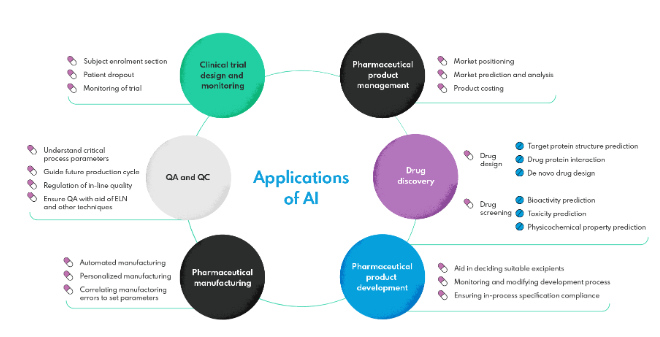
There are numerous real-world examples in which AI and advanced computing can substantially accelerate, democratize, and improve clinical research or can broadly address medically relevant questions [30]. While statistically-driven drug discovery is a presently prominent use of AI in the life sciences, more routine clinical research activities often involve the processing and evaluation of patient data, tasks that have also long used AI. Indeed, some of these AI-based tools have recently matured to offer a broad and integrated platform for data-driven clinical research. These platforms support and improve numerous processes in the conception, deployment, and management of studies [31]. Beneficiaries include both central study designers and operators, as well as front line care providers operating studies in hospitals. Realization of the full potential of this technology, however, requires an integrated aligning of the regulatory landscape, requisite data resources and computing infrastructure, and the scientific, medical, and patient stakeholders that operate the tools. An illustrative portfolio of such tool applications, as they are currently leveraged or are in mature development at some individual sites, is presented here, with special emphasis on active collaborations with U.S. national cancer research networks [32].
Compelling metrics are given support that the modern tools greatly amplify human efforts in involved processes, enhance the democratization of involvement in studies across the healthcare landscape, can significantly improve study diversity and multi-institutional engagement, and can appreciably increase the speed and broad utility of study deployment. As the growth of available biomedical data has increased prodigiously in recent years, the utility of these tools only stands to increase further, provided that the more prosaic but critical infrastructure and operational elements are also properly sedimented [33].
Equation 3: Post-Market Surveillance and Feedback Loop (AI in Monitoring)
Where:
- = Feedback score from AI monitoring
- =Frequency of failure or adverse event in the -th surveilla
- = Severity level of the failure or adverse event
- = Total number of reports being analyzed by the AI system
6. Future Directions and Conclusions
In conclusion, AI-driven clinical research methodologies are vital to mediate the rapidly changing landscape of AI technologies and their applications in medical device development for regulatory compliance and maintain quality assurance. Robust research in AI methodologies and use case implementation for clinical research is essential to address challenges faced by manufacturers and regulators to keep pace with technology progress and address high stakes in public health. Development of AI technologies, information integration, and quality improvement efforts by medical professionals play pivotal roles for both smart patient care interventions and medical device development and usage monitoring workflows within the healthcare system environment. Intelligence augmented, AI-driven approaches redefine paradigms for aggregating and synthesizing health-related data leading to a new approach in designing health delivery models. The broad use and purpose of data and AI is reflected in the creation and modification of collaborative models that optimize the use of both methods in a medical context. The assumptions made and areas where big data and machine learning algorithms have an advantage over classical Bayesian methods are outlined [34].
At the same time, the legislature cannot keep up with technological advances - and this is normal and absolutely legitimate. For this reason, constant research and proof-of-concept studies are required to help answer unresolved questions and possibly suggest new approaches to ensure regulation in the field of quality in AI algorithms. There are several considerations and best practices for applying AI algorithms in accordance with the principles of Good Clinical Practice and ISO 14155 for Institution clinical investigations. With the increasing interspersion of artificial intelligence tools in both the design and operation of medical devices, it is necessary to consider the Performance Evaluation process required by MDR. During this process, the Clinical Investigations must prove not only the accuracy and precision of the device but also its suitability to the defined state of health [35].
6.1. Potential Impact and Recommendations
AI technologies, particularly but not exclusively machine learning, and big data possess the potential to profoundly disrupt existing market configurations and distributional relationships of capital and labor. Their penetration is occurring during a phase of stagnation and restructuring, when the dynamic is increasingly financial, and market power is strongly concentrated or, in periods of acute flux like the transition to a new digital economy, remade. AI-driven healthcare research is expected to encompass pre-clinical tests, clinical trials, post-market surveillance, and ongoing monitoring. Such expectations relate to new approaches that originated during recent years, expanding classical biomedical research with the systematic analysis of patient-generated health data. AI-driven insights, especially in the explanatory and predictive domains, come with large sets of features and complex analytic procedures [36].
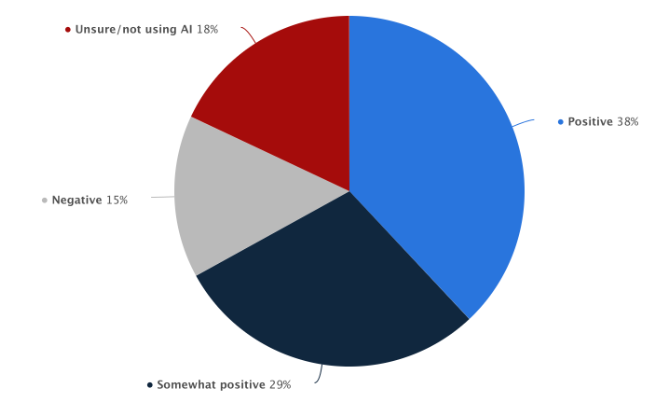
The thought of being managed with artificial intelligence (AI) still incites both hope and fear among the general public. This is true for AI-based clinical research as well. While AI has the potential to lead to long overdue breakthroughs in healthcare research by improving regulatory compliance, quality assurance, and data analytics, continuous advocacy is necessary to ensure that these benefits are indeed realized and that carefully thought out safeguards are put in place along the way. It will promote ongoing research in the area, and changes in policy and practice might call for a follow-up review later on. Policies need to be responsive to these barriers, especially through facilitation of interdisciplinary collaborations among computer scientists, healthcare researchers, and stakeholders at the intersection of healthcare and computer science, such as developers of health applications and medical device companies. Preparation of a leading international healthcare journal, such as peer-reviewed letters, could help boost the visibility of AI-driven healthcare applications. Similarly, there is a need for journals focusing specifically on computer-science approaches in healthcare [37].
References
- Syed, S. (2022). Breaking Barriers: Leveraging Natural Language Processing In Self-Service Bi For Non-Technical Users. Available at SSRN 5032632.
- Kothapalli Sondinti, L. R., & Syed, S. (2021). The Impact of Instant Credit Card Issuance and Personalized Financial Solutions on Enhancing Customer Experience in the Digital Banking Era. Universal Journal of Finance and Economics, 1(1), 1223. Retrieved from https://www.scipublications.com/journal/index.php/ujfe/article/view/1223[CrossRef]
- Dilip Kumar Vaka. (2019). Cloud-Driven Excellence: A Comprehensive Evaluation of SAP S/4HANA ERP. Journal of Scientific and Engineering Research. https://doi.org/10.5281/ZENODO.11219959
- Nampally, R. C. R. (2022). Neural Networks for Enhancing Rail Safety and Security: Real-Time Monitoring and Incident Prediction. In Journal of Artificial Intelligence and Big Data (Vol. 2, Issue 1, pp. 49–63). Science Publications (SCIPUB). https://doi.org/10.31586/jaibd.2022.1155[CrossRef]
- Vankayalapati, R. K., Edward, A., & Yasmeen, Z. (2021). Composable Infrastructure: Towards Dynamic Resource Allocation in Multi-Cloud Environments. Universal Journal of Computer Sciences and Communications, 1(1), 1222. Retrieved from https://www.scipublications.com/journal/index.php/ujcsc/article/view/1222[CrossRef]
- Rajesh Kumar Malviya , Shakir Syed , RamaChandra Rao Nampally , Valiki Dileep. (2022). Genetic Algorithm-Driven Optimization Of Neural Network Architectures For Task-Specific AI Applications. Migration Letters, 19(6), 1091–1102. Retrieved from https://migrationletters.com/index.php/ml/article/view/11417
- Syed, S. (2022). Integrating Predictive Analytics Into Manufacturing Finance: A Case Study On Cost Control And Zero-Carbon Goals In Automotive Production. Migration Letters, 19(6), 1078-1090.
- Subhash Polineni, T. N., Pandugula, C., & Azith Teja Ganti, V. K. (2022). AI-Driven Automation in Monitoring Post-Operative Complications Across Health Systems. Global Journal of Medical Case Reports, 2(1), 1225. Retrieved from https://www.scipublications.com/journal/index.php/gjmcr/article/view/1225[CrossRef]
- Sondinti, L. R. K., & Yasmeen, Z. (2022). Analyzing Behavioral Trends in Credit Card Fraud Patterns: Leveraging Federated Learning and Privacy-Preserving Artificial Intelligence Frameworks.[CrossRef]
- Patra, G. K., Rajaram, S. K., Boddapati, V. N., Kuraku, C., & Gollangi, H. K. (2022). Advancing Digital Payment Systems: Combining AI, Big Data, and Biometric Authentication for Enhanced Security. International Journal of Engineering and Computer Science, 11(08), 25618–25631. https://doi.org/10.18535/ijecs/v11i08.4698[CrossRef]
- Reddy, R. (2022). Application of Neural Networks in Optimizing Health Outcomes in Medicare Advantage and Supplement Plans. Available at SSRN 5031287.
- Vaka, D. K. (2020). Navigating Uncertainty: The Power of ‘Just in Time SAP for Supply Chain Dynamics. Journal of Technological Innovations, 1(2).
- Danda, R. R. (2022). Telehealth In Medicare Plans: Leveraging AI For Improved Accessibility And Senior Care Quality. Migration Letters, 19(6), 999-1009.
- Nampally, R. C. R. (2022). Machine Learning Applications in Fleet Electrification: Optimizing Vehicle Maintenance and Energy Consumption. In Educational Administration: Theory and Practice. Green Publication. https://doi.org/10.53555/kuey.v28i4.8258[CrossRef]
- Tulasi Naga Subhash Polineni , Kiran Kumar Maguluri , Zakera Yasmeen , Andrew Edward. (2022). AI-Driven Insights Into End-Of-Life Decision-Making: Ethical, Legal, And Clinical Perspectives On Leveraging Machine Learning To Improve Patient Autonomy And Palliative Care Outcomes. Migration Letters, 19(6), 1159–1172. Retrieved from https://migrationletters.com/index.php/ml/article/view/11497
- Kumar Rajaram, S.. AI-Driven Threat Detection: Leveraging Big Data For Advanced Cybersecurity Compliance. In Educational Administration: Theory and Practice (pp. 285–296). Green Publication. https://doi.org/10.53555/kuey.v28i4.7529[CrossRef]
- Chintale, P., Korada, L., Ranjan, P., & Malviya, R. K. (2019). Adopting Infrastructure as Code (IaC) for Efficient Financial Cloud Management. ISSN: 2096-3246, 51(04).
- Ravi Kumar Vankayalapati , Chandrashekar Pandugula , Venkata Krishna Azith Teja Ganti , Ghatoth Mishra. (2022). AI-Powered Self-Healing Cloud Infrastructures: A Paradigm For Autonomous Fault Recovery. Migration Letters, 19(6), 1173–1187. Retrieved from https://migrationletters.com/index.php/ml/article/view/11498
- Vankayalapati, R. K., & Rao Nampalli, R. C. (2019). Explainable Analytics in Multi-Cloud Environments: A Framework for Transparent Decision-Making. Journal of Artificial Intelligence and Big Data, 1(1), 1228. Retrieved from https://www.scipublications.com/journal/index.php/jaibd/article/view/1228[CrossRef]
- RamaChandra Rao Nampally. (2022). Deep Learning-Based Predictive Models For Rail Signaling And Control Systems: Improving Operational Efficiency And Safety. Migration Letters, 19(6), 1065–1077. Retrieved from https://migrationletters.com/index.php/ml/article/view/11335
- Korada, L. (2022). Using Digital Twins of a Smart City for Disaster Management. Journal of Computational Analysis and Applications, 30(1).
- Harish Kumar Sriram. (2022). AI Neural Networks In Credit Risk Assessment: Redefining Consumer Credit Monitoring And Fraud Protection Through Generative AI Techniques. Migration Letters, 19(6), 1237–1252. Retrieved from https://migrationletters.com/index.php/ml/article/view/11619
- Syed, S. (2022). Leveraging Predictive Analytics for Zero-Carbon Emission Vehicles: Manufacturing Practices and Challenges. Journal of Scientific and Engineering Research, 9(10), 97-110.
- Sarisa, M., Boddapati, V. N., Kumar Patra, G., Kuraku, C., & Konkimalla, S. (2022). Deep Learning Approaches To Image Classification: Exploring The Future Of Visual Data Analysis. In Educational Administration: Theory and Practice. Green Publication. https://doi.org/10.53555/kuey.v28i4.7863[CrossRef]
- Syed, S. (2022). Towards Autonomous Analytics: The Evolution of Self-Service BI Platforms with Machine Learning Integration. Journal of Artificial Intelligence and Big Data, 2(1), 84-96.[CrossRef]
- Vaka, D. K. " Integrated Excellence: PM-EWM Integration Solution for S/4HANA 2020/2021.
- Venkata Narasareddy Annapareddy. (2022). Innovative Aidriven Strategies For Seamless Integration Of Electric Vehicle Charging With Residential Solar Systems. Migration Letters, 19(6), 1221–1236. Retrieved from https://migrationletters.com/index.php/ml/article/view/11618
- Nampally, R. C. R. (2021). Leveraging AI in Urban Traffic Management: Addressing Congestion and Traffic Flow with Intelligent Systems. In Journal of Artificial Intelligence and Big Data (Vol. 1, Issue 1, pp. 86–99). Science Publications (SCIPUB). https://doi.org/10.31586/jaibd.2021.1151[CrossRef]
- Sathya Kannan. (2022). The Role Of AI And Machine Learning In Financial Services: A Neural Networkbased Framework For Predictive Analytics And Customercentric Innovations. Migration Letters, 19(6), 1205–1220. Retrieved from https://migrationletters.com/index.php/ml/article/view/11617
- Venkata Nagesh Boddapati, Manikanth Sarisa, Mohit Surender Reddy, Janardhana Rao Sunkara, Shravan Kumar Rajaram, Sanjay Ramdas Bauskar, Kiran Polimetla. Data migration in the cloud database: A review of vendor solutions and challenges . Int J Comput Artif Intell 2022;3(2):96-101. DOI: 10.33545/27076571.2022.v3.i2a.110[CrossRef]
- Nimavat, N., Hasan, M. M., Charmode, S., Mandala, G., Parmar, G. R., Bhangu, R., ... & Sachdeva, V. (2022). COVID-19 pandemic effects on the distribution of healthcare services in India: A systematic review. World Journal of Virology, 11(4), 186.Nimavat, N., Hasan, M. M., Charmode, S., Mandala, G., Parmar, G. R., Bhangu, R., ... & Sachdeva, V. (2022). COVID-19 pandemic effects on the distribution of healthcare services in India: A systematic review. World Journal of Virology, 11(4), 186.[CrossRef] [PubMed]
- Vaka, D. K. “Artificial intelligence enabled Demand Sensing: Enhancing Supply Chain Responsiveness.
- Chandrakanth Rao Madhavaram, Eswar Prasad Galla, Hemanth Kumar Gollangi, Gagan Kumar Patra, Chandrababu Kuraku, Siddharth Konkimalla, Kiran Polimetla. An analysis of chest x-ray image classification and identification during COVID-19 based on deep learning models. Int J Comput Artif Intell 2022;3(2):86-95. DOI: 10.33545/27076571.2022.v3.i2a.109[CrossRef]
- Syed, S. (2021). Financial Implications of Predictive Analytics in Vehicle Manufacturing: Insights for Budget Optimization and Resource Allocation. Journal Of Artificial Intelligence And Big Data, 1(1), 111-125.[CrossRef]
- Aravind, R., Shah, C. V., & Surabhi, M. D. (2022). Machine Learning Applications in Predictive Maintenancefor Vehicles: Case Studies. International Journal of Engineering and Computer Science, 11(11), 25628–25640.https://doi.org/10.18535/ijecs/v11i11.4707[CrossRef]
- Danda, R. R. (2022). Deep Learning Approaches For Cost-Benefit Analysis Of Vision And Dental Coverage In Comprehensive Health Plans. Migration Letters, 19(6), 1103-1118.
- Reddy, R. (2020). Predictive Modeling with AI and ML for Small Business Health Plans: Improving Employee Health Outcomes and Reducing Costs. Available at SSRN 5018069.