

Street vending is a vital part of global urban life and not a local phenomenon. It can be found in various countries and forms; stationary and mobile. In Egypt, street vendors’ activities are considered illegal, an image of backwardness, blocking investors and tourism. This study aims at monitoring and investigates the female street vendors' role in placemaking in Heliopolis, Cairo. Challenging the authoritarian illegality aspect, literature review, observational walks, and spontaneous interviews are adopted in obtaining data and evaluating the female street vendors’ role in constructing a sense of place and identity. Female street vendors' expression, displaying arrangement, socio-cultural identities and chancy events create livable public places, territorial identities and a sense of place.
Women and Places; Female Street Vendors, Territorial Identity and Placemaking
April 16, 2022
May 16, 2022
May 24, 2022
May 26, 2022
This is an Open Access article, distributed under the terms of the Creative Commons Attribution 4.0 International License (http://creativecommons.org/licenses/by/4.0/), which permits unrestricted use, distribution and reproduction in any medium or format, provided the original work is properly cited.
Abstract
1. Introduction
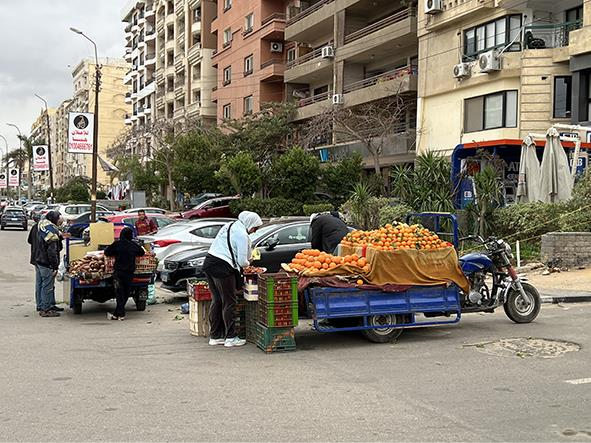
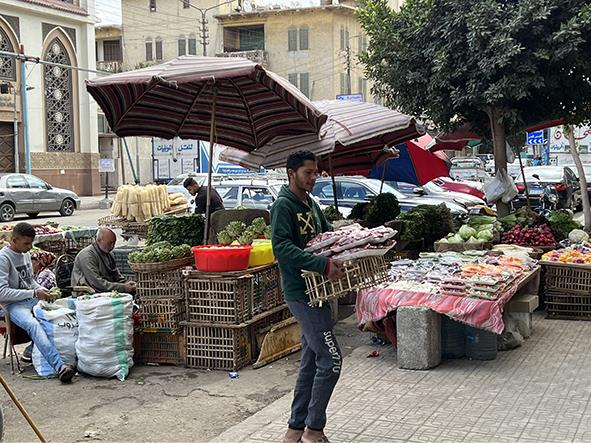
Onyango et al. [1] identify street vendors as ‘informal traders who sell goods or services outside of an enclosed premises or covered workplaces.’ They are people with a low degree of education and techniques, finding small scale businesses as means of living. Street vendors are visible worldwide; however, their volume is notoriously hard to come by [2]. Despite there being no reliable information for most countries, it is estimated that the informal sector accounts for more than half of total employment [3]. They are stationary on the pavements and other public spaces or mobile, carrying their items for sale (Figure 1 and Figure 2). The notion of considering street vending an obsolete phenomenon versus the emergence of supermarkets and shopping malls is inaccurate. They have become an integral part of urban life all over the globe [4], and there has been a substantial increase in their number around the world [5]. The Supreme Court of India, for example, declared that street vendors add to the ‘comfort and convenience of the general public, by making available ordinary articles of everyday use for a comparatively lower price’ [6].
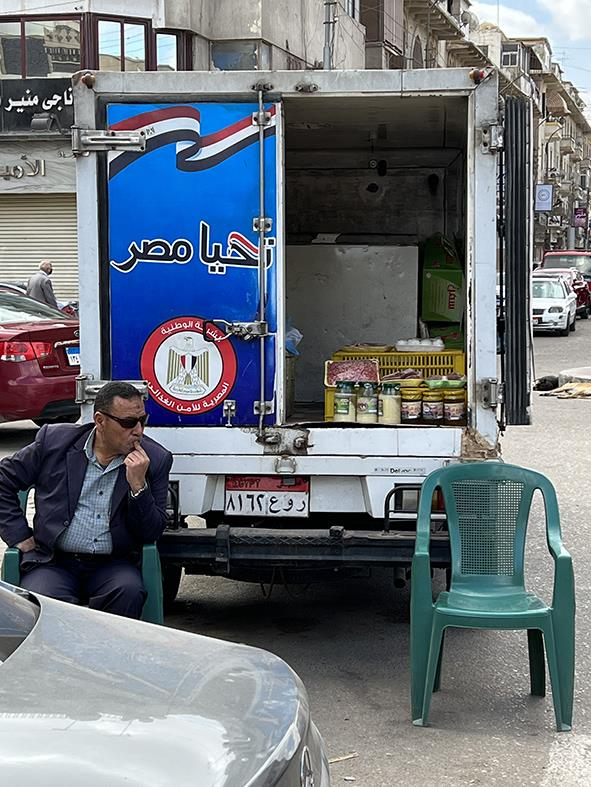
Street vendors are negatively perceived by other stakeholders, including the media, shopkeepers, and authorities, resulting in their harassment [7]. Despite their institution’s illegality, they pursue various ways to reduce their occupation hazards [2]. Bhowmik and Saha [8] declare that their life is uncomfortable since trading in the streets is full of uncertainties [9]. It can be argued that street vendors occupy pavement and create circulation problems. However, influential authoritarian parties such as the Egyptian Defense Ministry's and Interior Ministry's commercial companies also occupy public spaces and street lanes, and the municipality turns a blind eye (Figure 3).
Despite such negative perceptions, street vending remains a structural feature of cities [3]. Considering the female street vendors' activities allows us to rethink their role in placemaking, not the authorities' legality aspects. Their daily existence produces outcomes of solidarity, social relations and customer friendly behaviour. Alongside their vulnerability in facing the municipalities and shopkeepers’ power, they expect some sort of empathy from the public.
2. Study Hypothesis, Aim and Methods
The escalating levels of socio-economic inequality and segregation [10] should draw our attention to the bottom-up community placemaking [11]. The street vending role in constructing places is discussed in various pieces of literature, but limited attention is paid to breadwinner women engaged in street vending’s placemaking role [12]. The author argues that female street vendors contribute to placemaking significantly by creating territorial identities and a sense of place. By monitoring and describing female street vendors' settings and their contribution to place image, this study investigates the meanings associated with their narratives and representations.
The article challenges the common thought about street vending regarding legal institutions' and formal media's definitions. Focusing on the female street vendors’ experience as ordinary, everyday activities, this study monitors current Egyptian breadwinner women's role in creating place identity. Since every practice is part of place identity and sense of place, attempting to document female street vending contribution to Cairo's urban image and placemaking should be significant. Drawing on literature review, qualitative data, observational walks and spontaneous interviews, this article explores the impact of female street vendors’ role in identifying the place and creating a territorial identity.
Heliopolis is chosen for its residents' socio-cultural patterns and its proximity to low-income housing. Heliopolis harbour medium- to high income and intellectual classes, with medium to high consumerism attitude. This study was conducted from 2020-to 2022, with an in-depth field survey from January-March 2022.
3. Female Street Vendors, Self-expression and Selling Arrangement in Heliopolis
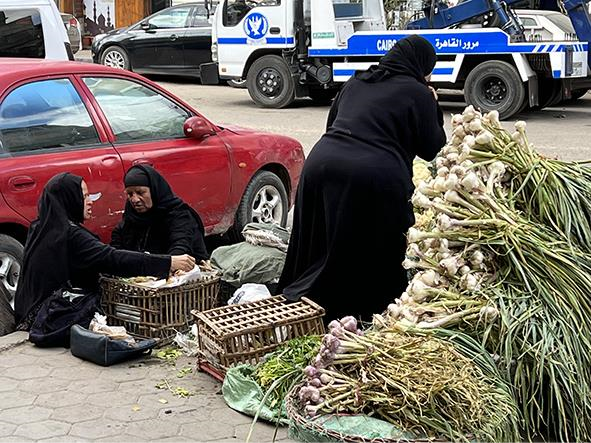
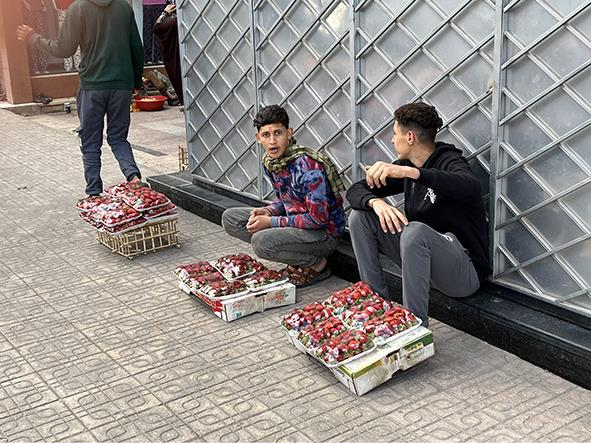
Cairene female street vendors in Heliopolis are generally stationary and occupy the same place during the daytime (Figure 4). They are known for their early start in the morning (around 8 AM) versus shop opening hours (around 10 AM). On the other hand, male street vendors might change location and mainly occupy street intersections or move along the street offering their merchandise (Figure 5).
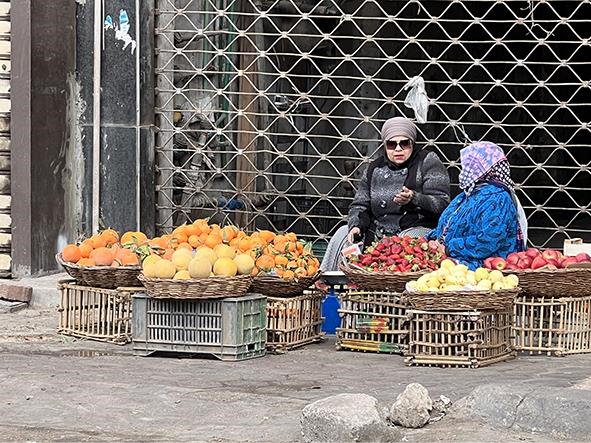
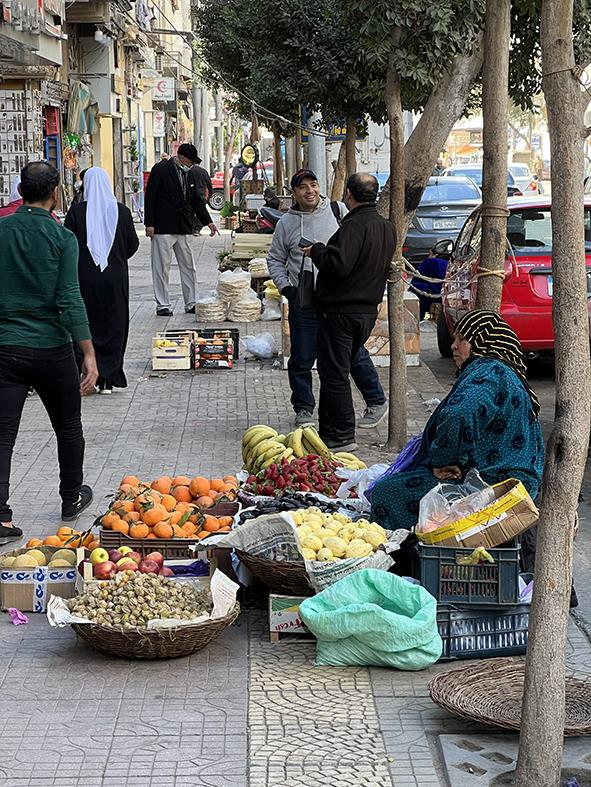
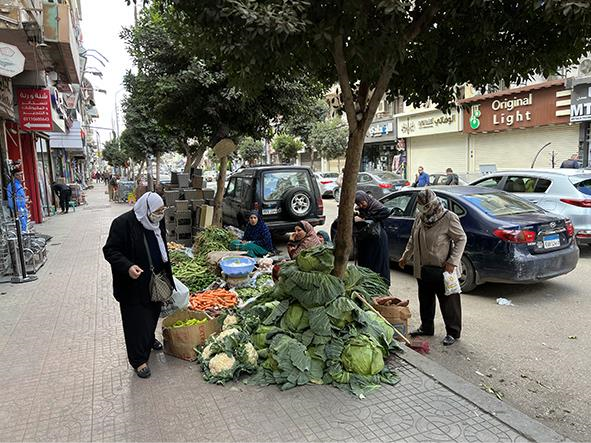
Cairene female street vendors can be identified in Heliopolis streets in various arrangements and settings; scattered, grouped and individual. They find locations in various residential streets and central zones, grouped in the central zone and scattered in an individual pattern in low-density residential sectors. They are to be found in a group setting and high density in Heliopolis’s traditional central area, known for its diversity in seasonal goods such as lighting features, paints, kitchen, and bath accessories. Female street vendors present similarities in displaying arrangement and personal self-expression (Figure 6 and Figure 7). To build a comfortable home feeling, they adopt a rural attitude in sitting on the ground, displaying the goods in baskets, and their behavioural manners.
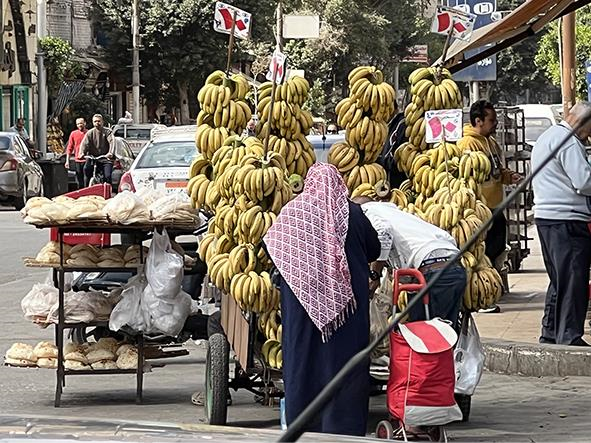
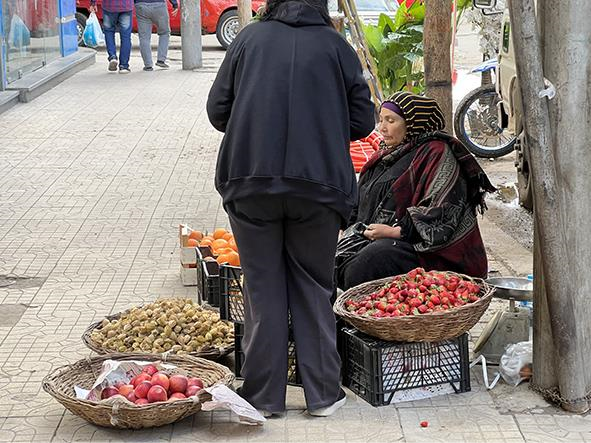
Female street vendors attract shoppers due to their simple lifestyle, rural image and socioeconomic status. They sustain a rural expression for socio-cultural ground or to attract shoppers' empathy. Femal street vendors mainly, sell rural and dairy products, herbs, vegetables and fruits (Figure 8). Occupying a part of the pavement forces both types of traffic, pedestrians and vehicles, to slow down, encouraging shoppers to browse and bargain. Barging is an ordinary activity in street vending in Cairo; it is entertaining and creates a personal bond and social relationship.
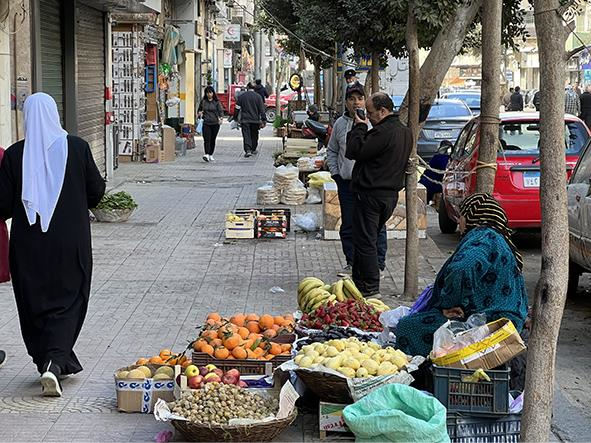
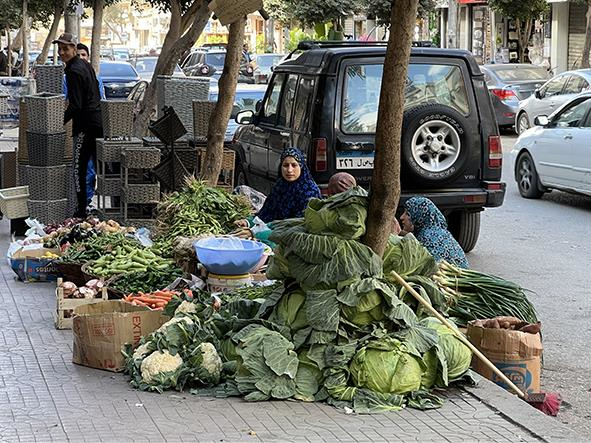
Ordinary Egyptians favour street vendors above supermarkets for their prices, types of goods, selling and location flexibility. Emotional solidarity with street vendors was also given as arguments from passing-by shoppers. During their working hours, female street vendors get engaged in various conversations with each other and with their regular customers. Drinking tea, eating, socialising, arranging and rearranging their goods are common activities (Figure 9).
4. Female Street Vendors and the Informal Economy
The Africa Center for People Institutions and Society [13] referred to the economic vulnerability in Nairobi, for example, to socio-economic and political neglect. Bearing in mind that improving governance should be an urban priority [14], street vendors' right to access the city's economic resources is a vital part of their right to the city [15]. Street vending is the urban poor means of earning a livelihood as it requires little financial input and a low volume of skills [5]. Trying to solve their livelihood problems through their meagre financial recourses, female street vendors start small scale businesses connecting homemakers, small scale farmers and shoppers into a supply network. They do not require overwhelming capital speculation and critical passage boundaries [9]. They contribute, with self-employment, to the informal economy and provide affordable and convenient commercial experiences for shoppers. However, their contribution to urban life goes beyond their self-employment; they generate working opportunities for other informal sectors and supply chains [2]. Shoppers expect to pay lower prices by buying from street vendors than from a grocery store or supermarkets as shop rent, taxation and expensive service are expected to increase the prices.
Numerous literature documented the informal economy's vulnerability [16, 17, 18], and street vending faces competing interests between individuals and local authorities. Choosing a location can be problematic; a central commercial location introduces more potential customers but might present stronger place contestation. On the other hand, choosing a high-income residential area presents higher purchase power; street vendors in high-income residential areas are more exposed to product seizure by the municipality official and have a lower degree of competition. During the field study, the author could not accurately determine the number of municipality assaults in both cases (central and high-income residential areas); however, female street vendors in Sheraton Residence, for example, tend to hide from the authorities in specific locations.
5. Female Street Vendors and Territorial Identity
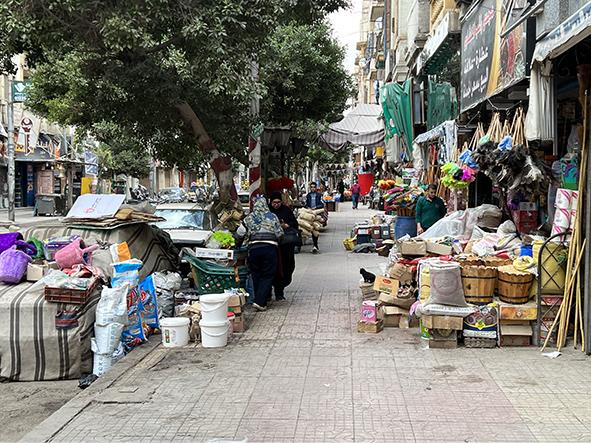
Promoting street vendors as 'supporting activities' [19] in terms of city design and placemaking can be supported if their role in creating a livable place is considered. Street vendors utilise Heliopolis's traditional central sector’s significant value and high pedestrian density by practising mobile and stationary activities. They avoid the western pavement along Haron Street and sit along with its Eastern one. Pedestrians presented arguments for walking along the Eastern pavement, such as 'wider', ‘shady’, 'filed with street vendors', 'livable and entertaining.' However, occupying the street does not means rejecting other activities; the pavement is shared among the street vendors, pedestrians and the shop's display window’s front area.
Territorial identities merge as they are triggered by self-expression, and they are significant aspects in creating place and territorial borders [20, 21, 22]. Since the person's existence defines the individual identity in a particular place [23], female street vendors' routinised activities imprint the place with territorial identity. Female street vendors' locations can be easily identified thanks to their territorial identities. Inquiring about a specific vendor from doorkeepers or genitors and walking along a street for shopping specific items does not require any navigation application. Constructing territorial identity is vital for urban sustainability, long-term development stability and economic growth [24].
Multiple identities require multiple borderlines, and Nail [25] argued that we live in a world of borders, in which territoriality defines every aspect of our socio-economic life. Borders should not be understood in terms of inclusion and exclusion but as a derivative product of movement and activities. Female street vendors redirect the movement and create activities due to constructed territorial borders (Figure 10). The application of territorial borders protect them from pedestrian movement and identify their territories. Pedestrians move by avoiding those borders and the shoppers gathering.
Shared territorial identity contributes to community social capital, which is a fundamental resource for urban resilience and governance [26]. Social capital is active, open and dynamic [23] and might trigger conflicts or place contestation. On the other hand, equitable placemaking initiatives should promote representation and participation from local communities to take advantage of shared territorial identity, amplifying the voices of marginalised residents [11]. Due to socio-economic and cultural inequality and injustice, the informal economy is practised in our streets [22]. Inequality is produced through urban development policies [10, 11], creating conflict between street vendors, shopkeepers and the municipality.
6. Female Street Vendors and Placemaking
What makes a space public? It is not the laws' or discourse's recognition; instead, the individuals' practice, actions, movement and self-expression [22]. However, the relationship between the public space and human activities is not straightforward, as transforming the space into a place requires social movement limiting non-recognition and exclusion [27]. Female street vendors do not present social movement per se; they tend to face their exclusion indirectly.
The concept of public place presents a set of criteria, among which the ‘right to the city’ [28, 29] can be introduced. Moving along significant commercial streets in Heliopolis's traditional central area (such as Haron Street) forms our experience in place, as E2Praxis [30] argued, and such experience ‘is often referred to as our sense of place’ [31]. ‘Chancy events' are created due to female street vendors' daily activities, as defined by Fincher et al. [32]. Female street vendors’ behavioural characteristics create a collective identity and an intimate social feeling. While promoting their sense of identity, they maintain friendly communication with the public (see Figure 4). Shifting from selling vegetables only to cleaning them too in a public place (Figure 11), for example, indicates their flexibility in meeting demands and creating chancy events. By constructing a territorial shared identity, street vendors, shopkeepers and pedestrians collaborate in creating multiple identities and a sense of place (Compare Figure 12 and Figure 13).
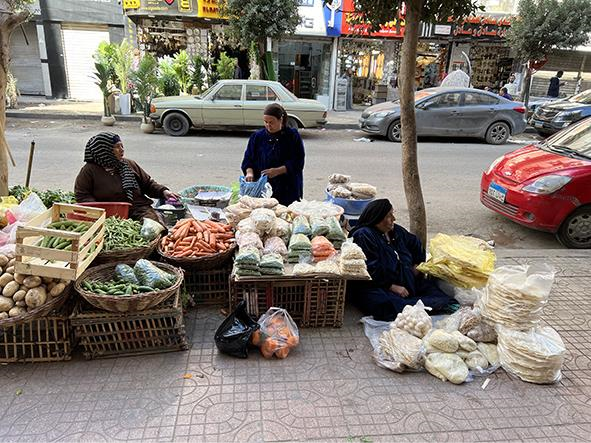
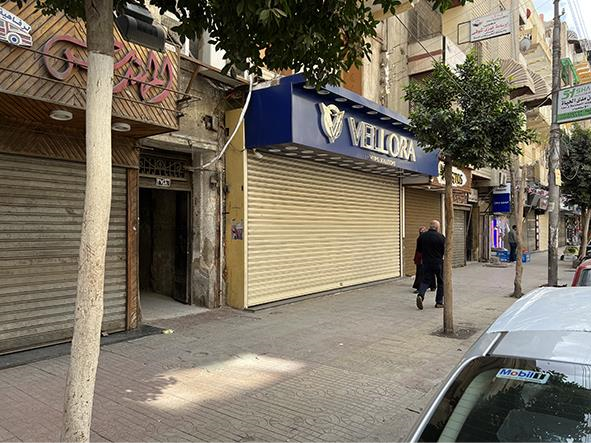
The importance of street vendors' relationship to the urban landscape has a central role in giving them the right to a better urban life. Banini and Ilovan [20] argued that citizen empowerment is paramount for urban development and leads to grassroots initiatives for conserving and promoting liveable urban landscapes. As public places should be seen as an arena of deliberation and collaboration, 'whereby different groups assert their rights to the city' [33], female street vendors’ territorialities might be part of such deliberation. Female street vendors contribute to placemaking creating territorial identity and borders. Female street vendors’ self-expression, socio-cultural behaviour, displaying arrangement, and personal image transform public space into place (see Figure 13). Female street vendors' contribution to placemaking is not only limited to creating livable public places but also in attracting activities, encouraging human gathering and sharing socio-cultural experiences.
7. Female Street Vendors, Place Contestation and Deliberation
If power is considered the ability to make decisions and act upon, urban phenomena reflect power practising in a specific manner [34, 35, 36, 37, 38]. In Hambleton's article; Why cities must confront place-less power, he explained the relationship between disempowering the public and handing it to place-less decision-makers [39]. Considering place-less decision-makers are, at root, unconcerned about the impacts of their actions on communities living in particular localities [40]. Place contestation, and territorial conflict might be produced due to power application and authoritarianism. Each party attempts to disempower others or find a pivotal position in the urban power network.
Most of the time 'on the run' to escape the municipality harassment, street vendors developed various tactics related to gender, age and display arrangements. While female street vendors mainly adopt stationery vending, offering daily uses, rural and small-sized products, male street vendors adopt mobile vending such as carts, selling vehicles and foot vending. However, the general assumption that females are more subjected to harassment than male street vendors in Heliopolis is questionable. Occupying road junctions by male street vendors expose them more to municipality assaults. Moreover, their displaying arrangement, vending methods, and goods qualities make them more vulnerable than females.
Excluding street vending from accessing the urban place is an authoritarian contribution to placeless making and negatively affects the local and informal micro-economy. Municipalities' harassment of street vendors is part of an ongoing place contestation. Because controlling the urban space is a form of 'shaping power' for certain parties, it undermines or limits the individual right to the place [41]. Nevertheless, to minimise or eliminate the place contestation and allow street vending’s contribution to placemaking, conditions for accessing the urban resources must consider the public's right to the place [14].
Finding the right location, amount of goods and practising self-expression can be related to place contestation and deliberation. However, negotiating the place and female vendors’ gathering nature come with specific barriers and expectations. Place contestation between female street vendors and shopkeepers can be identified as shopkeepers might display their goods outside their shops on the pavement (Figure 14), preventing female street vendors from creating territory. However, place contestation transformed into deliberation as female street vendors avoided sitting next to the shop entrance and display window. Instead, they sit at the pavement fare-end or before shop opening hours (reviw Figure 13 and see Figure 15). Their familiar places are known to the public; thus, place contestations rarely take place among each other.
As action requires power to deliver decisions, female street vendors empower themselves by occupying places and claiming their right to access the public space. Place and territorial identities were practised by female street vendors as tools for self-empowerment and gaining the right to the public place. Sharing territorial identities with other players by deliberation with shopkeepers and other street vendors is a common characteristic of placemaking in Heliopolis commercial streets. The voices of the inhabitants of places/territories are fundamental in building sustainable and participatory societies and places [20]. However, in a state where dictatorship comes in various forms and levels, the weak voice is quickly suppressed, and female street vendors adopt the silent method of delivering their voices to the public. Despite the simplicity of female street vendors’ displaying arrangement and daytime place occupation as a defence mechanism, their territorial identity remains fragile in facing the authority's power. The author's attempt to gather female street vendors’ points of view about the authority's definition of illegality and municipality harassment did not work out; no comment was presented in answering the question about their right to claim the place. Female street vendors chose to be silent in the matter of authoritarian confrontation. Nevertheless, observing them during the municipality assaults concluded adapting actions such as bribing officials, displaying arrangements, location choice, monitoring and alarming each other from the municipality’s assault, and paying ransom to shopkeepers to prevent them from addressing the authorities.
8. Conclusions
The issue of street vending and its relation to place contestation, discussed in this study, is one of many street vending cases in Cairo and other Egyptian cities. For many poor, vending in the public space might be the only financial avenue available. Female street vendors' self-expression, displaying arrangements, and competitive prices attracted customers to shopping and harvesting urban experiences.
Female street vendors contributed to placemaking, creating a sense of place and place identity by imprinting the place with self-expression and activities.
Female street vendors practice indirect stirring mechanisms such as deliberation and silent contestation. Deliberation is practised with other players, and contestation is practised with the municipality. Location choice minimised competitiveness and negotiation among female street vendors and with shopkeepers.
Female street vendors orchestrated their silent actions in placemaking by facing the municipality's barriers to the public place. Bribing officials and alarming each other were tactics adopted by female street vendors as a defence mechanism for claiming the place. The confrontation between the authorities and the street vendors can be characterised as a pendulum motion; wining the struggle for the place seems interchangeble.
As the action reflects the power of implementing decisions, female street vendors proved their ability to practice power in public. As long as the power contestation between street vendors and the authorities is in action, female street vendors' voices will be suppressed. Granting female street vendors the right to access the Cairo urban resources contribute to placemaking by creating territorial and borders identities.
Street vending should not be considered in terms of institution illegality, as it proved to be a supporting urban activity in creating livable places. Sharing territorials among female street vendors, shopkeepers and pedestrians proved to be a sign for a successful collaboration and delibration in placemaking in Cairo.
References
- O. J. Onyango, W. L. Olima, and L. Onyango, ‘Dynamics of street vending Phenomenon in the Kisumu Municipality, Kenya’, Int. J. Arts Commer., vol. 1, no. 4, pp. 107–120, 2012.
- S. Roever and C. Skinner, ‘Street vendors and cities’, Environ. Urban., vol. 28, Aug. 2016, DOI: 10.1177/0956247816653898.[CrossRef]
- L. Thangluah and B. Saitluanga, ‘Vulnerability of Street Vendors in Aizawl City, India’, Indian Geogr. J., vol. 96, no. 1, pp. 31–44, Jun. 2021.
- H. Hoang et al., Street vendor management-Why not? 2019.
- A. C. Karunaratna and N. C. Tjandra, ‘Empowerment of street vendors: An untapped resource in the informal economy’, Colombo Bus. J., vol. 12, no. 1, pp. 187–207, 2021, DOI: http://doi.org/10.4038/cbj.v12i1.75.[CrossRef]
- Supreme Court of India, ‘Sodan Singh v. New Delhi Municipal Corporation’, 1989. http://indiankanoon.org/doc/1767433/. (accessed Nov. 10, 1990).
- M. G. Donovan, ‘Informal Cities and the Contestation of Public Space: The Case of Bogotá’s Street Vendors, 1988—2003’, Urban Stud., vol. 45, no. 1, pp. 29–51, 2008.[CrossRef]
- S. K. Bhowmik and D. Saha, ‘Street Vending in Ten Cities in India’, School of Management and Labour Studies, Tata Institute of Social Sciences, Mumbai, 7018, 2012. Accessed: Mar. 10, 2013. [Online]. Available: https://www.wiego.org/publications/street-vending-ten-cities-india
- V. Selvi and V. Veilu, ‘The Plight of Street Vendors in Kovilpatti City’, Test Eng. Manag., vol. 82, pp. 9383–9388, Nov. 2021.
- S. Saad, ‘Urban Injustice, Socio-economic Neglect and Segregation in Cairo’, Int. Res. J. Eng. Technol. IRJET, vol. 7, no. 8, pp. 2796–2804, Aug. 2020.
- E. Toolis, ‘Restoring the Balance between People, Places, and Profits: A Psychosocial Analysis of Uneven Community Development and the Case for Placemaking Processes’, Sustainability, vol. 13, p. 7256, Jun. 2021, DOI: 10.3390/su13137256.[CrossRef]
- L. C. Platt, ‘Crafting Place: Women’s Everyday Creativity in Placemaking Processes’, Eur. J. Cult. Stud., vol. 22, no. 3, pp. 362–377, 2019, DOI: http://10.0.4.153/1367549417722090.[CrossRef]
- ACEPIS, ‘Exploring Vulnerability among Small Scale Traders in the Informal Sector’, Nairobi, 2018. Accessed: Feb. 12, 2022. [Online]. Available: https://www.tisa.or.ke/images/uploads/Draft_Report_Exploring_Vulnerability_of_Informal_ Traders_ in_Nairobi.pdf
- G. Günlük-Şenesen, ‘Common Framework for Indicators of Human Rights Cities’, in In Ryan, Colm Kelly (edi) Human Rights Cities Indicators, Ankara: Turkey Human Rights Capacity Development Programme, 2021.
- B. Z. Coşgun, ‘Introduction’, in In Ryan, Colm Kelly (ed) Human rights Cities Indicators, Ankara: Turkey Human Rights Capacity Development Programme, 2021, pp. 10–18.
- N. Dasgupta and T. Lloyd-Jones, ‘Heterogeneity and vulnerability in the urban informal economy: Reworking the problem in the current context. The case of Uganda’, World Dev. Perspect., vol. 10–12, pp. 64–72, 2018.[CrossRef]
- B. Etzold, ‘Selling in Insecurity – Living with Violence: Eviction Drives against Street Food Vendors in Dhaka & the Informal Politics of Exploitation’, in in Ha, N. & K. Graaf (Ed.): Street Vending in the Neoliberal City: A Global Perspective on the Practices & Policies of a Marginalized Economy, New York: Berghahn Books, 2015, pp. 164–190.
- T. C. Nzeandibe and P. O. Mbah, ‘Beyond Urban Vulnerability: Interrogating the social sustainability of a livelihood in the informal economy in Nigerian Cities’, Rev. Afr. Polit. Econ., vol. 42, no. 144, pp. 279–298, 2015.[CrossRef]
- E. P. Akbar, Y. Ratih, and C. Destria, ‘The Concept of Street Vendors Arrangement in the Waterfront’, in Earth and Environmental Science 780, 2021, pp. 1–8. DOI: 10.1088/1755-1315/780/1/012026.[CrossRef]
- T. Banini and O. Ilovan, ‘Introduction: dealing with territorial/place identity representations’, in Ilovan O.-R. (ed), Representing Place and Territorial Identities in Europe, vol. 127, Springer, 2021, pp. 1–19.[CrossRef]
- S. Saad, ‘Whose Place is this? Places, Publicness and Authoritarian Power in Cairo during the 25th of January Revolution’, Int. Res. J. Eng. Technol., vol. 8, no. 11, pp. 1025–1031, Nov. 2021.
- S. Saad, ‘Claiming the Place; Informal Placemaking, Power and Territorial Identity in Heliopolis, Cairo’, J. Art Des., vol. 1, no. 1, pp. 46–60, Feb. 2022, DOI: https://doi.org/10.31586/jad.2022.246.[CrossRef]
- T. Banini, ‘Towards a Methodology for Constructing Local Territorial Identities’, in in Banini, Tiziana and Ilovan, Oana-Ramona (eds) Territorial Identities in Action, Cluj-Napoca, Romania: Presa Universitară-Clujeană, 2021, pp. 13–39. Accessed: Nov. 30, 2021. [Online]. Available: https://www.researchgate.net/publication/355982153_Towards_a_Methodology_for_Constructing_Local_Territorial_Identities?_iepl%5BactivityId%5D=1442068845178884&_iepl%5BactivityTimestamp%5D=1638257208&_iepl%5BactivityType%5D=service_add_recommendation_publication&_iepl%5Bcontexts%5D%5B0%5D=homeFeed&_iepl%5BrecommendationActualVariant%5D=collaborated_referenced_cited_overlap%3Ecollaborated_referenced_cited_overlap&_iepl%5BrecommendationDomain%5D=citations&_iepl%5BrecommendationScore%5D=20.465627670288&_iepl%5BrecommendationTargetActivityCombination%5D=&_iepl%5BrecommendationType%5D=cited_cited&_iepl%5BfeedVisitIdentifier%5D=&_iepl%5BpositionInFeed%5D=4&_iepl%5BsingleItemViewI
- M. Istrate and O.-R. Ilovan, ‘Guest Editorial Territorial Identities and Sustainable Development. Challenges and Solutions’, J. Settl. Spat. Plan., vol. SI (8), pp. 1–4, Jun. 2021, DOI: 10.24193/JSSPSI.2021.8.01.[CrossRef]
- T. Nail, Theory of the Border. London and New York: Oxford University Press, 2016.[CrossRef]
- G. Basile and A. Cavallo, ‘Rural Identity, Authenticity, and Sustainability in Italian Inner Areas’, Sustainability, vol. 12, no. 3, pp. 1–22, 2020, DOI:10.3390/su12031272.[CrossRef]
- I. Bantekas and L. Oette, International human rights law and practice, 2nd ed. Cambridge: Cambridge University Press, 2016.[CrossRef]
- L. Barnesmoore, ‘The Right to Assert the Order of Things in the City’, CITY Anal. Urban Trends Cult. Theory Policy Action, vol. 22, no. 2, pp. 183–200, 2018.[CrossRef]
- H. Lefebvre, ‘Le droit a la ville.’, in Kofman, E and Lebas, E (Eds.) Writings on Cities, Oxford: Blackwell Publishing, 1968.
- E2Praxis, ‘The Importance of Storytelling in Placemaking’, Jan. 22, 2022. Publishttps://www.linkedin.com/pulse/importance-storytelling-placemaking-e2praxis/?trackingId=M97zxuYE1V02bHbdtTYnZA%3D%3D (accessed Feb. 02, 2022).
- P. J. Ellery, J. Ellery, and M. Borkowsky, ‘Toward a Theoretical Understanding of Placemaking’, Int. J. Community Well-Being, vol. 4, no. 1, pp. 55–76, 2020, DOI: https://doi.org/10.1007/s42413-020-00078-3.[CrossRef]
- R. Fincher, M. Pardy, and K. Shaw, ‘Placemaking or Place-masking? The Everyday Political Economy of “Making Place”.’, Plan. Theory Pract., vol. 17, no. 4, pp. 516–536, 2016.[CrossRef]
- R. Koch and A. Latham, ‘Inhabiting Cities, Domesticating Public Space: Observing Change in the Public Life of Contemporary London’, 2021, pp. 374–383. DOI: 10.4324/9781351202558-56.[CrossRef] [PubMed]
- J. Allen, ‘Powerful City Networks: More than Connections, Less than Domination and Control’, Urban Stud., vol. 47, no. 13, pp. 2895–2911, Jan. 2010, DOI: 10.1177/0042098010377364.[CrossRef]
- T. Mitchell, Colonising Egypt. Berkeley: University of California Press, 1991.[CrossRef]
- P. Panerai, J. Castex, J. Depaule, and I. Samuel, Urban Forms: The Death and Life of the Urban Block. Oxford: Architectural Press, 2005.
- P. Routledge, ‘Introduction: Cities, Justice and Conflict’, Urban Stud., vol. 47, no. 6, pp. 1165–1177, Jan. 2010, DOI: 10.1177/0042098009360240.[CrossRef]
- S. Saad, ‘Cairo in The Age of Great Urban Transformations. Changes in Street Patterns Only, or a Shift in Power Networks as Well?’, in The Future and the Built Environment, Istanbul, Aug. 2019, pp. 389–408.
- R. Hambleton, ‘Why cities must confront place-less power’, Eurocities. https://eurocities.eu/latest/why-cities-must-confront-place-less-power/ (accessed Jan. 03, 2022).
- R. Hambleton, ‘Enhancing the power of place’, Eurocities, Mar. 25, 2021. https://eurocities.eu/latest/enhancing-the-power-of-place/ (accessed Jul. 28, 2021).
- P. Jones, ‘Economic and Social Rights and the City’, in in Young, K. and Langford, M (ed) Oxford Hand Book on Economic and Social Rights, Oxford, England: Oxford University Press, 2021, pp. 1–27. Accessed: Feb. 26, 2022. [Online]. Available: https://www.researchgate.net/publication/349427619_Economic_and_Social_Rights_and_the_City