
Abstract
Progress in the development and adoption of technological innovations is instrumental in enhancing the efficiency of production systems across the globe. Through the introduction of cost-efficient and high-performing technologies, countries can both reduce the resource use intensity of their economies and boost the global supply of essential products. The focus of this study is to analyze the application of advanced machinery and mechanisms within the agricultural sector, a primary industry that acts as a major contributor to the gross domestic product (GDP) of many nations. Specifically, this paper provides an in-depth review of the latest impact assessments based on analytical and modeling tools conducted on agricultural machinery and production technologies. Our findings highlight the positive role played by scientific progress and innovation in driving the competitiveness, growth and improved sustainability of the agricultural sector. Over the years, advanced technologies have accelerated the development and modernization of machinery, equipment, and processes in farming. Typically, modern machinery and equipment have enabled large-scale production on farms, enhancing the cost-efficient use of both land and labor, as well as the capacity and timeliness in performing essential agricultural operations. The rapid diffusion of technical advancements has further contributed to resource savings, productivity growth, and the overall transformation of agricultural value chains. Accordingly, the implementation of appropriate enabling conditions is of vital importance in encouraging the widespread integration of technologies in agriculture, not only boosting productivity along the agri-food chain but also yielding widespread social, economic, and environmental benefits.
1. Introduction
The agricultural machinery industry serves an important role in modern society, providing farmers with the tools required to feed and clothe an ever-increasing population. The technologies that these machines represent not only serve to improve agricultural productivity but also make a major contribution in subsequently reducing poverty and addressing widespread malnutrition factors. Moreover, these technologies encourage the sustainable use of land, water, and other vital resources such as fertilizer and crop protection chemicals. The successful development of advanced machines, set against a background of increasing world population and an ever-increasing shortage of land and water, presents significant challenges for the agricultural engineering community. The development cycle for any new technology or machine in agriculture can be long and complex, although it is often criticized for failing to deliver practical, workable solutions in a timely fashion. This topic presents a major challenge in maintaining and indeed growing an affordable, abundant, high-quality food supply. As a consequence, research project funding for the development of advanced machines with improved performance, environmental or ecological balance, safety, and security is important to affect the longer-term societal, economic, global health and well-being, environmental conservation, and related economic imperatives [1].
1.1. Background and Significance
This article presents estimates of the economic impact of agricultural innovations arising from the application of advanced technologies. New technologies emerged as the result of various technological programs. Advanced technologies are being adopted by many sectors of the economy. The technologies occupy a special status in agriculture because modern agricultural machines embody advancements that are developed for other sectors and are adopted very rapidly, thus contributing to the modernization of agriculture, stimulating structural change, and enhancing its competitiveness. A well-structured and efficient agricultural sector supports the well-being of both rural and urban populations and enhances the security and flexibility of the national economy. Consequently, measurement of the economic impact of advancements in agricultural machinery is of interest to policymakers, agribusiness firms, and research funding institutions, which appropriate funds to support the development of technological advancements and monitor the effectiveness of research programs [2].
While economic studies related to farm size and scale have been previously reviewed and meta-analyzed, the impact of advancements in agricultural technology on farm efficiency has not been addressed in any great detail. New technologies have been developed from breakthroughs in agricultural machinery, computer science, communications equipment, and software, but also, to a large degree, are derived from advances made in areas unrelated to agriculture. Major parts of these advancements come from machinery and machine systems that are in commercial use, and these new technologies are adopted at an extremely rapid rate. Hence, the number of years between research and development of new machine systems and market introduction is very short. Therefore, the economic impact of technological advancement in agriculture can be measured directly using observed yields and farm mechanization or via judgmental procedures [3].
Equation 1: Farm Efficiency (E) Equation
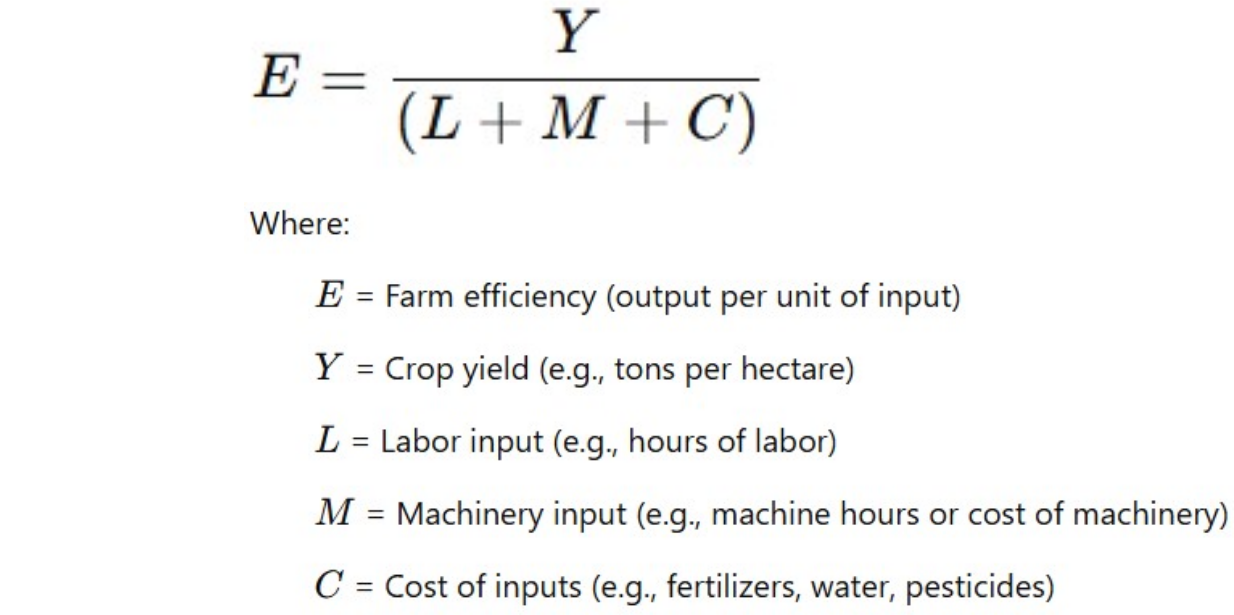
Farm efficiency is a composite measure that accounts for multiple factors such as labor, energy consumption, machinery use, and crop yield. A simple equation could be:
As technology improves, both the labor input (L) and machinery input (M) can decrease, which improves the overall farm efficiency.
1.2. Research Objectives
This paper uses a unique worldwide data set made up of cross-sectional figures on several thousand farm machinery products and country-based agricultural machinery databases to assess the determining factors of innovation and the relation between the diffusion of machinery innovation and agricultural productivity. Our research aims at evaluating different types of machinery innovations and tracing the pathways through which these are initiated to customers and markets, analyzing the roles of different types of company-linked theories, and providing quantitative evidence of the adoption effects of advanced technology in income-led economic institutions. In particular, our objectives are to relate machinery innovation to corporate research investments and the results of technology development, to contribute to the supply-side theories of machinery innovation, and to show how European machinery manufacturers innovate today; demonstrating the positive correlation between machinery technology and differences in agricultural productivity and income levels among various countries; exploring the available innovation-related cross-country data sources; and introducing a method for the comparison of demand and supply perspectives. This research offers current state-of-the-art technology aiming to fill the gap between machinery technology innovations and the weak prediction of economic theories of international trade and growth by using internationally significant databases of innovative machinery products, inventions, and companies on the supply side and farm productivity data on the demand side. The approach will provide insight into the workings of modern economic theory by explaining how technological advancements occur, the potential impediments to technological development and adoption, and the market incentives that fuel company-specific R&D decisions and factor allocations, ultimately leading to differential income growth in open economies [4].
1.3. Scope and Structure of the Paper
This paper provides a summary of the results from a comprehensive assessment of agricultural machinery innovations, including statistical evidence, simulation results, and policy implications. The scope of this project is the development, availability, and utilization of advanced technologies in the field of agricultural machinery. The approach is to consider the primary functions of machinery used in crop production. Functions determine the type, power, and size, as well as the requisite performance characteristics of row crop equipment. The paper focuses attention on the instruments of production and explores the determinants of advanced technology use and its impact on efficiency [5].
The structure of the paper is as follows. The next section traces the major trends in innovation, most of which are of recent origin. Section 3 considers the consequences of these new technologies in terms of their impact and proposes a framework for considering some of the important questions. The penultimate section identifies the major determinants of advanced technology use and its impact on farm efficiency. The final section outlines some policy implications related to increased concern with research and development, the organization of research, market intervention policies, and rural development strategies that enhance the benefits associated with machinery innovations [6].
2. Historical Development of Agricultural Machinery
The need to mechanize production so that an industry could maintain or increase the output of a labor force engaged in producing essential foodstuffs was the principal reason for the development of available equipment for most modern crops. The basic operations of forest clearing and cultivation using simple tools and implements used with human and animal power have evolved over many centuries, and today much of the motivated traditional basis for agricultural machinery design, development, and operational practice is still generally applied. Concerning mechanical aid for specific operations: human and animal fineness has been overtaken by the power of the wind, water, and internally fired stationary steam engines at the station; and then the pull of the mobile steam traction engine and, eventually, internal engine power, providing at least the net now being made available in remote areas and at the time it is most inclined. Machines in the industry at hand [7].
One of the earliest and, subsequently, most vital operations was to clear forests for the growth of food in crop production areas, both in new regions and established agricultural areas. Timber had both temporary and permanent uses in many stages of clearing operations, and annual ring counts on some hardwoods suggested that a 300- or 400-year-old tree in the 19th century had begun its growth long before the battles of Salamis, and long before the unrecorded events of the dying tropical civilizations. If a craftsman need not manufacture furniture, tables, or door frames, timber was a basic product that made it possible to pioneer new regions [8].
2.1. Evolution of Farming Tools
At any age, the human alone can do so much, for human limbs are weak. As society develops, agricultural revolution also reaches amiably high peaks. In olden times and some villages in the present day, the farmer and his animals work together. Most of the process of farming is very hard and time-consuming. To those who are capable of performing tasks that are physically demanding, but are performed daily in the operation of larger, modern farms, some farm jobs even tend to be dangerous since the energy source of agriculture of yore was one from the natural environment: the wind, the sun, water, or even the clouds electrified by lightning. For little work, the yield was even less, roughly proportional to the energy used by the farmer. The harvested food was not sufficient to satisfy most hunger. In the course of events in time, the name agricultural machinery was established and became operative [9].
The first tool made by man, which has given rise to the known term farm machinery, is the plow. It is a primary point of ancient civilization, pointing in various directions, even at the same time. Until now, it is uncertain to ascertain who the original inventor of this machine was, but it is known that it is a very old and very important invention from around 1400 BC. Since it started being used, it has had success, especially on hard soils, for which it is indicated, but not only. Even on light soils, it does its duty, turning them over. The violence used on this tool is voluntarily high. Its work consists of cutting and turning the complexion of the earth: it is vital to ensure that the work of the plow is successful. When the tool fails to achieve this, the work of sowing will be unsuccessful, with subsequent negative consequences in terms of yield and crops. A blade has to be created in a position that can be registered with the plowman's skill, since any wrong movement fails, leading to an inaccurate execution of its primary function. In the Middle Ages, a seed dropper was introduced, which replaced the act of sowing in the laboring primitive manual way. During the 1600s, the period of better inventions came, and it received even more developments in the 1700s when the first agricultural machinery appeared, along with some primitive threshing machines and the sulfur spout, which desperately tried to free old plants from malicious powdery mildew. There have been so many machines inroads in these last three centuries, making them self-made and allowing all farming procedures. However, today, it feeds a lot of people thanks to the use of farm machinery and targeted changes [10].
2.2. Mechanization in Agriculture
Currently, between 70% and 80% of all energy used in the developing world for agricultural production comes from human or animal muscle power. Developed countries use higher levels of mechanized power, but even these nations rely on human labor as well. This reliance on human labor and, to a lesser extent, animal energy for primary agricultural production has been constantly changing. Improved mechanization of work in agriculture is widely viewed as an important component in increasing agricultural productivity, just as mechanization of work in manufacturing and other sectors has contributed to increased productivity and strong economic growth. Many countries are concerned with the displacement of agricultural workers that may result from introducing machines into agriculture. Producers of labor-intensive crops, such as those in developing countries that produce grain using hand labor, find that it costs less to use human muscle power on the farm than it costs to use animal muscle power. Furthermore, there has been a loss of crop income for many who have invested capital in full or partial adoption of animal drought power due to inadequate animal welfare and unavailability of replacement animals. The loss in agricultural income resulting from wage employment or rural migration entails a risk of increased food insecurity and poverty. Furthermore, severe environmental constraints in some countries and regions limit the availability and application of animal draught power. Decreasing availability of high-quality animals and increasing animal prices themselves limit the use of animal draught power on the farm [11].
3. Advanced Technologies in Agricultural Machinery
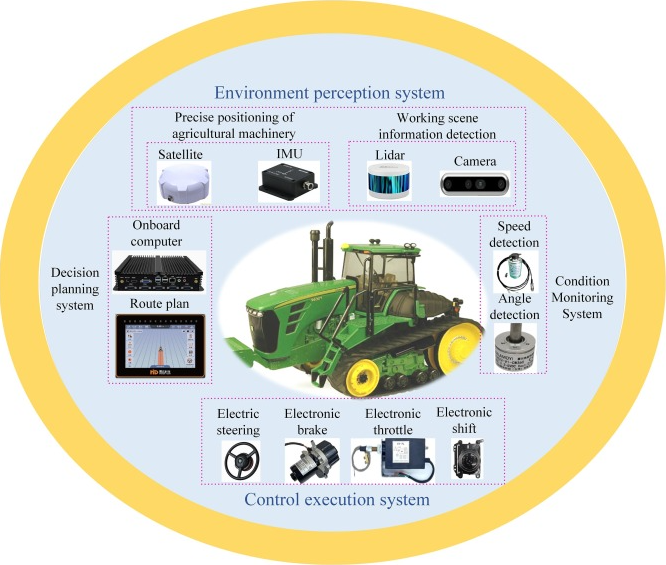
Advanced technologies related to mechanical, hydraulic, electrical, electronic, computer, chemical, and biological processes, or a combination of structural or process changes, are being incorporated into new agricultural machines to improve production efficiency. The new technological innovations targeted for agricultural machinery are related to cost-efficient, environmentally friendly agricultural production that increasingly requires customization to meet farmers' specific needs. By adopting the new advanced machinery, farmers can achieve lower operational costs and use the machines on increasingly larger acreage without sacrificing production output or dependability. Agricultural machine manufacturers are trying to meet the challenge posed by the increasingly specific needs of farmers and the complex crop management requirements through new machinery specifically designed to reduce crop production costs and the requirement for labor and management inputs. Advanced technologies such as GPS, GIS sensors, wireless data transfer, variable-rate controls, and decision-making models with forecasting are capable of optimizing work assignments, and operating parameters, and providing real-time monitoring for farmers. Continued exploration of how these technologies influence farm production, management decisions, and reliance on labor is needed and timely. Although many case studies from various locations assessing the immediate impact of implementing these tools are available, there are still limited studies investigating the effects provided by easily available data and technologies, and evaluating the long-term sustainability and the expected future price of these services and their dependence on wireless service [12].
3.1. Precision Agriculture
Precision agriculture has become possible through the development of global positioning systems, geographic information systems, sensor technologies, and advanced devices. It utilizes all the technological tools to improve the efficiency and precision of agricultural production. It can be used for decision-making and can help to identify areas needing attention and to minimize resource use. Techniques can be used to test the physical and biological environment in a specific location and to identify relationships among geographic position and observed parameters. A favorable interaction between variable-rate technology and precision agriculture could quickly increase the economic returns of variable-rate technology [13].
Technologies can increase farm efficiency through site-specific management, allowing farmers to practice a 'variable rate' approach to facing the variability of natural resources and the potential yield of a specific location. Site-specific management often deals with spatial variations in farming and environmental data to increase farm inputs and outputs. The components can encompass various technical tools that identify and manage the spatial variation within farm agriculture and geography. It can also play an increasingly important role in micro-environmental harvesting, soil sampling, precision planting, pesticide application, and irrigation scheduling. Not only can it improve farm efficiency and consumer welfare using site-specific management, but it can also promote sustainable farming practices that contribute positively to the natural environment by limiting the application of nonrenewable resources and limiting the soil and water impacts associated with such application, reducing the average level of chemicals in the environment, and adding to farm income by cutting fertilizer costs [14].
3.2. Robotics and Automation
The potential magnitude of the impacts of the new robotics and automation for producers is substantial. On the one hand, higher efficiency, consistent performance, and faster working speed of robotic devices can be emphasized. In this context, robotics and automation are suitable for exact tasks in many crops. Robots are not subject to physical and psychological fatigue and, when equipped with computer vision systems and other sophisticated sensing devices, can work in adverse weather conditions. Some commercial robots are being sold that can perform several exact tasks in vineyards, such as robotic leaf removal, robotic selective vine harvesting, and robotic mechanical vine shoot trimming. Such information could be easily expanded by increasing the processing speed of the computer vision and robotic arms of the robots [15].
On the other hand, one of the main questions is the cost of implementing these machines in farm operations, although the technology for some of them already exists. However, especially in this smart era, it is important to increase the confidence in robots among farmers. Then, some optional ways include great assistance and subsidies from the government and robotic companies, and ensuring quality control, education, and training are implemented at the optimal plant and tree growth stages. Currently, farm machines are operated by experienced human workers. In the future, skilled employees need to know how to train optimal working programs to ensure the workload is maintained to increase working speed and reduce working costs in each field at the right moment. Also, increased research efforts on developing energy-autonomous robotic and intelligent solutions, and maintaining work organization and quality control will be essential to precision farming. In addition to the potential advantages of farm robotics, the wider implementation of robots in agriculture can also lead to a revolution in the farming system, providing attractive job opportunities for technically skilled people and thus contributing to improving the level of knowledge and education, allowing farmers to respond to the technological challenges of the near future in the farming sector [16].
3.3. Internet of Things (IoT)
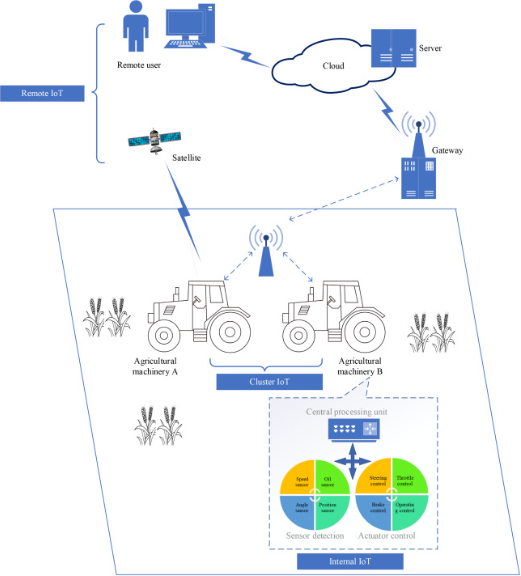
IoT refers to the growing number of devices and their capability to connect to the Internet and to communicate. These devices include consumer electronics, appliances, physical objects, and specialized equipment in factories, smart grids, and other parts of infrastructure. They are a category of what are called embedded devices or microcontrollers, operating in a myriad of systems. The features and capabilities of industrial embedded devices are critical to the operation of businesses and commerce, supporting processes to deliver products and services to customers, and working behind the scenes to manage these activities in an optimized manner. The subject of the IoT is currently a popular focus, and it has been integrated into educational, research, and industry/commercial fields. The IoT fosters the ability of businesses to capture real-time data, manage inventories and service supply chains, streamline business operations, increase profitability, and produce new products and services that improve customer experience [17].
IoT has a significant role in transforming data collected from a myriad of special-purpose applications. The most promising IoT technology is based on pervasive intelligence gained by embedding communication, network, and sensing systems into a plethora of physical objects so that they may be monitored and controlled more effectively. In terms of device function, the majority of IoT sensor systems are designed for security applications within a household or a building. They are used to detect motion, temperature, humidity, and light levels, control doors and windows, and serve as security cameras or baby and pet monitors. In terms of data interpretation, IoT has the potential to be integrated with other technology systems to enable big data analyses. The applications of IoT in agriculture could include making use of soil monitoring to establish ideal conditions for planting seeds, monitoring crop health and consumable safety properties, checking soil moisture and irrigation, monitoring field conditions to assist in specific plant care methods, gathering data for crop research, corresponding with selectable weather parameters, and harvesting data [18].
4. Impact of Advanced Technologies on Farm Efficiency
Advanced technology can greatly reduce the number of human hours in farm labor and mitigate the consequences of labor shortages. It can also reduce variability and improve precision to better match inputs with crop requirements as crops change throughout the growing season, thus resulting in reduced input use, thereby reducing costs and environmental damage. Thus, it should come as no surprise that advances in machinery technology have already played a significant role in the evolution of farm structure and productivity and will continue to do so in the future. The timing of the impact of new technology on farm structure and productivity is often influenced by factors that have little to do with economic fundamentals.
The evolution in the structure of farms as well as changes in their productivity and competitiveness have long been influenced by innovations in machinery. Many believe that the application of the internal combustion engine provided the most profound advances. Without question, the development of the tractor and its application to plowing, harrowing, planting, cultivating, and harvesting resulted in significant productivity increases. Its application led to fewer, but larger, farms with limited adverse environmental consequences. The continuing consequences of the farm machinery revolution are explored in the discussion that follows [19].
Equation 2: Productivity Improvement with Technological Investment
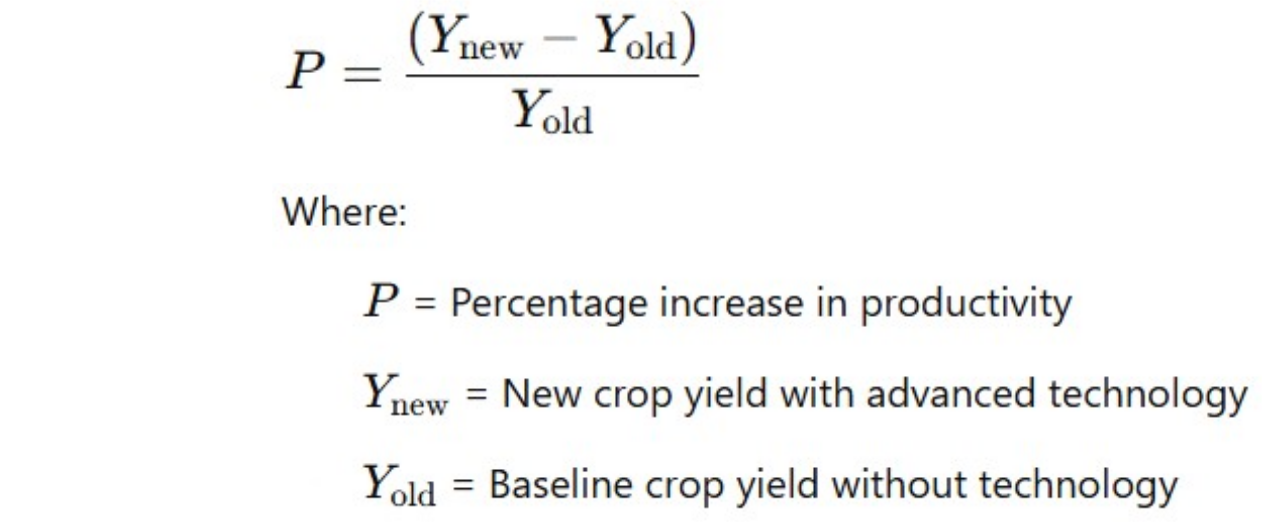
Technological advancements such as precision farming, autonomous machinery, or AI-driven optimization can lead to productivity improvements. The productivity improvement (𝑃) due to technology can be modeled as:
Alternatively, you could also factor in a technology efficiency factor 𝜂 to represent the percentage increase in productivity:

Where:
𝜂 = Efficiency improvement coefficient due to new technology (e.g., 0.10 for a 10% improvement)
4.1. Increased Productivity and Yield
One of the stated benefits of AM is the prospect of increasing productivity and yields. This may be achieved through improved mechanization quality stemming from AM use. Precision and timeliness in seeding, applying agrochemicals, and irrigating, improved soil coverage, harvested crop handling, and shorter harvesting windows have great potential to influence crop productivity and yields. Automated field operations, using GPS systems equipped with advanced interfacing and remote sensing systems and digital data analysis, provide the key technology for precision planting and creating digital soil maps for applying site- and variety-specific agrochemicals as well as monitoring machine operation quality. High tractor and machine performance, coupled with reduced tillage, can reduce the impact of bad weather, reduce precipitation and evaporation losses, improve soil health, and thereby increase the number of high-cycle crops by using low-resistance tires. However, reduced tillage does not necessarily lead to higher crop yields. Rather, it is the joint action of no-till with planting equipment that has the potential to achieve positive effects [20].
It is not easy to evaluate the potential impact of AI technologies on crop yields, as their interactions with a cornucopia of operational practices and environmental factors guarantee a major role for contingencies. Thus, conclusions about yield impacts must be hypothesized. By 2017, following overwhelming scientific consensus, yield was already established as the goal of any farming system, and seeding is the most critical process. However, it seems that, as a rule, AM is not utilized to the extent one would expect. For over 68% of the drills studied, field performance was found to be inadequate, while the percentage of singulated or dropped seed metering units was less than 88%, and seeds were placed in an acceptable position with depth variations greater than 12.5 mm. Moreover, production variability was also high. Furthermore, previous multi-cultivar planting technology was not sensitive to isolated field conditions such as variability of organic matter, depth changes, or moisture content that act either on a row or between rows, further degrading performance. The poor adoption of site-specific commutator state switching technology or stellar evolutionary drilling technology led to losses of up to 7% in normalized differential vegetative index and larger CD values, together with characteristic areas of CD that could be used to estimate yield. A study suggests that the percentage of plant population emergence outside the recommended range could be as high as 48.51%, leading to significant yield gaps. The conclusion is that the current commutator technological management system still cannot meet the demands for the development of precision agriculture, and we should expect both push and pull when applying this system in commercial agriculture. Mindful of such questions, employers seem to have outsourced leadership in optical sensors/field operations and current contemporary data analysis to producers or crop consultants who have no standards for such knowledge. Nor do they possess the numbers or depth of specialists in big data analysis. In short, many findings emphasize that AM producers are struggling to control both capacity and competence and that such problems might relate to practical adoption challenges. Such challenges are likely to remain dominant for the next few years while the potential benefits of implementing AM lag behind the frontiers of current technology. While yield response is not an extensive consideration during the portion of sowing coverage tools and independence packages, it is inactive in the fertilizer application and crop harvesting packages. Indeed, no self-propelled forage harvester that uses AM technology is known to have realized the potential to deliver improved sugar recovery either on the farm or following transportation to the sugar mill [21].
4.2. Resource Conservation and Environmental Sustainability
Growing public concern about environmental problems has ignited a variety of interest groups to promote particular environmental goals in agriculture, and these groups are trying to shape agricultural policy accordingly. Resource conservation advocates, on the one hand, want to minimize soil erosion. Organic farmers' associations, on the other hand, favor policies to discourage input use such as herbicides, pesticides, and synthetic fertilizers. Many argue that more efficient machinery and specific process technologies will help resolve these conflicts between farm output and environmental goals. It is claimed that no-till farming will reduce soil erosion, that precision herbicide applications can reduce herbicide use, and that genetically modified plants will greatly reduce the load of pesticides applied to fields. Whether one can design the right kind of technology to exploit these ideas depends on an understanding of resource constraints faced by farm operators who are trying to avoid resource damage. There may be no point in designing technologies in the absence of such understanding [23].
Economics research has offered only a partial understanding of the resource problems encountered in agricultural production. Extensive literature has focused on the issue of whether factor demand by profit-maximizing farm operators responds to factor prices and legislative or program-related policy changes but has largely ignored the point that the derived demand for factors is conditional on particular types of production technology. Economists have looked little at the question of whether efficient technologies exist, often taking functional forms as given, perhaps except a choice between alternative managed technologies. Remarkably little work is available on the question as to whether production technologies that are available to farmers avoid resource damage where such damage is perceived to exist and at what cost. With an understanding of the resource problems facing producers in hand, we can propose research on the design of process technologies that solve the problem most cost-effectively [25].
4.3. Economic Benefits for Farmers
A prevalent theme running through many discussions on new machinery is the question of who gains from such innovations. Do the developers gain from the money invested in research and development? Do the machinery companies gain from the increased sales? Or do the farmers, who can improve the performance of the machinery and who buy it, gain the most economically? This paper looks at the issue of who gains from the use of new technology primarily from the perspective of crop farmers, recognizing that contractors and custom operators also account for an increasing share of the machinery market. Some difficulties have been encountered in pinpointing the extent of any cost savings of technology for tractor operation. While it has been argued that the machinery can be operated more quickly because drivers are less stressed while trying to stay on track, the time savings have been slight, particularly in smaller fields where much time is still spent on turning. While some use of technology can be justified purely on the social basis of enabling large machinery to be operated more safely, the higher costs of technology are not likely to be used by primary producers to expand the operation of the machinery. Costs are reduced, and benefits amplified, if the use of technology in precision farming is linked to tractor simulation research aimed at developing the most efficient depth control systems for subsoiling and cultivation [24].
5. Challenges and Barriers to Adoption of Advanced Agricultural Machinery
This section discusses some of the major challenges to the greater adoption of advanced machinery on the farm. Barriers can be technological, informational, or economic and may influence the probability that a type of machinery will be adopted. The higher acquisition costs of advanced machinery relative to basic machinery must be compensated for by productive advantages. Not only the characteristics of advanced machinery itself but also the surrounding infrastructure and the institutional framework are important preconditions for its diffusion. In general, the application of advanced machinery requires the availability of the necessary infrastructure, e.g., fast internet and digital cellular systems for the application of online systems like the automatic section control of seed drills [26].
For information technologies, there is also a lack of confidence in the reliability and flexibility of the applications due to fast technological change and the resulting lack of long experience with such systems. Thus, adapting farm management to advanced machinery is a must for successful technology diffusion. Investment costs and returns must surely be weighty criteria for investment acceptance by farmers for precision farming machinery. If farmers do not own, nor have the financial capacity for such investment, they may decide to ask several machinery contractors to provide specific farming services [27].
5.1. Cost of Technology
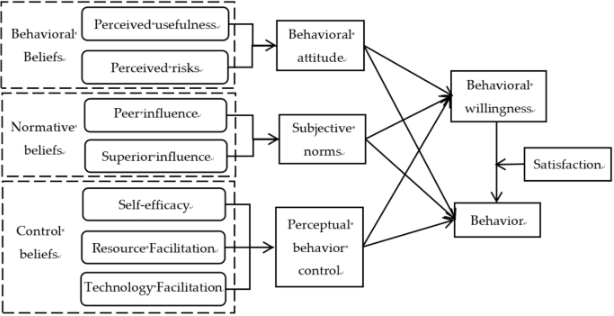
Ideally, all farmers would have access to the latest technological innovations in farm machinery. In reality, however, it is unlikely that any agricultural industry will be quick or entirely successful in the replacement of existing machines with new ones because of the cost of such a transition. This is particularly true in farm economies, where the demand for primary produce is inelastic and the supply of technology is often concentrated in a small number of industrial and trading companies seeking to maximize profits from large capital investments in research and development. The economics of agricultural technology are defined not only by increasing rates of change in physical science, electronics, and engineering but also by the need for farmers to adopt innovations at the local farm level, which can result in higher and better-quality production and reduced labor input. Understandably, these are at odds with the more immediate concerns of input costs and the fragmented physical structure of the farm business. It is not only the acquisition cost of the new technology that concerns the primary producer but also how it will pay for itself over its useful productive life. Even with relatively low interest rates and generous tax concessions, government incentives can help reduce the net cost of adopting new technologies; but they cannot eliminate it. Consequently, no matter how attractive a new technology appears to be, the primary producer, acting rationally, will weigh its acquisition and operational costs against its expected benefits before making a final commitment to use it in their farm operation. The economic criteria that are relevant in a technology acquisition decision are the capital cost, the annual operating cost, and the expected value of the benefits it can generate, capitalized over its useful life and/or over the owner's farm-specific accounting period. The still-experimental leap forward in intelligent machinery, whether powered or plumbed, poses an interesting question for mechanization specialists [28].
5.2. Lack of Technical Skills and Training
The importance of improving the knowledge and skills of individuals operating and repairing agricultural machinery was mentioned earlier in this study. These skills are required to maximize the technical efficiency of any agricultural machinery installed on a farm. Changes in the technical characteristics of all machinery make training programs an important element of innovations. Not enough attention is paid to the continued training of equipment operators in schools or the agricultural equipment departments of schools. All representatives of the manufacturers' centers of equipment maintenance and repair speak about this problem constantly. It is primarily this gap in technical skills and training that defines the main direction of collaboration between the farming companies on one side and the leaders in the sphere of assembling and storing large sets of information on the other.
Simultaneously, the manufacturers started paying great attention to a new service of systems setting and control over the development of the situation. Given that the need for such a service is urgent now, its effect is insignificant. It has become an affordable training improvement measure to be included in the final cost of purchasing new machinery. This, in return, also brings a substantial profit to the manufacturers of machinery. Finally, it is practically unlimited in perspective and can be offered to every new customer.
5.3. Infrastructure and Connectivity Issues
One of the promises of ICT in production, as well as in society at large, is that further integration, coordination, and networking of various economic agents becomes possible even at spatially large scales. Such network effects can be particularly transformative in rural areas with a large number of single, even small businesses, and at the same time are less likely to evolve according to purely market-driven allocation processes. In this context, advocating and successfully implementing some basic level of broadband infrastructure development in rural areas is a central political challenge. For information ecosystems, the presence of high-quality information technology infrastructure and human capital combines with a society's ability to use it to increase economic growth, create jobs, and support trade, education, health, and skills.
High-quality broadband Internet connections can encourage entrants, technological progress, and diversification at the farm level. Market access for several million businesses and households in rural areas is promoted, partly also simply by Internet sales and financing, and contributes to the environment as online information and communication may provide a high order of joint production and spatial specialization by offering certain local public goods over a broader area than before. Finally, these investments also comply with the sustainable development targets of reducing energy needs for long transportation paths and avoiding the exhaustion of agglomeration diseconomies in urban areas. In this context, there may be calls for providing public subsidies on the bandwidth costs of rural households as long as the costs of excluding non-rural inhabitants from benefiting are not prohibitive [29].
6. Case Studies and Examples
We considered evidence of the impact of current and emerging technologies in the agricultural machinery sector around the world. In Table 1, we provide a summary of available studies that have analyzed the impact of a variety of machinery and process innovations. Most of the field-based case study work comes from developed regions of the world, such as Turkey, the United States, Japan, the Netherlands, Spain, the United Kingdom, and Australia.
The overwhelming focus was on robotic systems, often in a university-based context. Robotic systems have been devised for many crops and processes including strawberry harvesting, citrus fruit picking and pruning, lettuce thinning, vegetable planting and weeding, forestry planting, tomato picking, vine pruning and tying, nursery stock handling, and Christmas tree grafting. Only a few in-field evaluations took place, mainly under controlled environmental conditions. There were also systems developed for autonomous fruit transportation, workpiece recognition, and robot calibration, and overcoming the challenges when developing a mechanical harvesting mechanism. GPS and GNSS location systems were utilized for guidance in two of the systems. The work primarily used simulation or laboratory testing. There were also examples of robotic systems for fertilizing and mowing orchards. One study looked at labor participation on a farm during the twinning season, utilizing remote sensing-satellite field mapping, and the development and utilization of a worksheet on a smartphone [31].
6.1. Successful Implementations of Advanced Technologies
The increasing number and sophistication of the many existing and new farm technologies, such as precision agriculture, continue to challenge the capacity of farmers to efficiently manage their adoption and their impacts on farm profitability. The larger farm size and the substantial investments made by producers to use these technologies often require the use of both technical and analytical skills, as well as a new management approach that takes more advantage of experts. Farm profitability also depends on how effectively these technologies are integrated within a farm’s particular economic and natural resource climates. By simultaneously solving multiple equations that account for multiple innovations relative to farming using low-input, organic, or commercial-level farming technology attitudes, the implications of estimation methods are discussed [30].
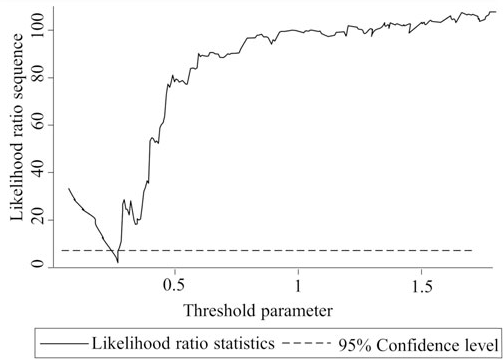
The survey data suggest that the technologies that have had a relatively large positive impact on farm performance are computers, GPS receivers, auto steering, and GPS-guided section control implements. Computers have often been integral to precision farming through program linkage of geographical information systems and global positioning systems hardware and software, which assist in the gathering of important farm data such as maps of soil properties, yield, or crop stress. GPS receivers and auto guidance have substantially simplified the practice of precision farming production, but they are costly to use, and markets must be established to accommodate those who can afford to use them and those who can supply these technologies. Providing increased and more accurate monitoring and control of field inputs has been a significant motivation for the increased use of these devices. GPS guidance has also been important when driving tractors across the field, as parallel to prior wheel marks needs to be avoided to improve field results such as better plant emergence and to impede overall soil compaction. Despite the direct crop production benefits from these implements, overall profitability will be difficult to improve if actual total control and maintenance costs do not provide more realistic internal management budget numbers. GPS has also been used to correctly position and space sowing seeds to achieve more even crop establishment and higher forage yields. GPS positioning has been used to fill in missing data to make more complete topographical surface elevation maps to help direct water flow and avoid soil erosion. Additionally, micro-positioning system technology has been used to monitor important on-farm events for better decision-making, such as pooled subsurface drainage tile drainage density impacts. The consideration of the size and natural spatial distribution of soil resources has had significant impacts on the use of control pricing and policies, as well as the consumption and allocation of farm labor, as the high farm costs from long-term commercial use suggest.
6.2. Real-world Applications in Different Agricultural Sectors
The equipment utilized in the foreword and main body of this paper were just several examples of existing research conducted to date. The research represents merely the tip of the iceberg regarding the potential opportunities available in the agricultural machine sector. However, these demonstrations provide a snapshot of the current trends in development and industrial applications. The impact of technological developments on various agricultural sectors is highly significant. Innovation may imply a solution for an existing problem or create completely new development paths for the entire industry. Deriving the greatest value from the latest technology may be in the interests of manufacturers, suppliers, farmers, end consumers, or the environment as a whole. The continued development of agricultural technologies is aligned with agricultural problems that are not yet solved or have been solved only partly. In this chapter, we have introduced and analyzed several of the most recent technologies in the agricultural machinery sector. We have also discussed the challenges identified during the application of these technologies developed at the industrial research level. We have focused on four main agricultural sectors: arable farming, fruit production, vineyard management, and forest management. We have identified one common problem: biodiversity and character have been loosening. In some cases, this process is faster than we would be able to coordinate with our current knowledge. The use of chemicals cannot rise forever, not only because of their price but also due to the environmental and health tensions they generate. The opportunities lie in this area. Finding a solution for these problems can result in an accelerating development path for participation in the development and distribution of agricultural technologies. Providing healthy, tasty, and clean agricultural products and anticipating future problems for less advanced farms are also achieved by the use of the latest in engineering and artificial intelligence.
7. Future Trends and Innovations in Agricultural Machinery
In recent years, significant research and investment have been dedicated to the development of land-based unmanned aerial vehicles (UAVs) and their ability to carry diverse kinds of sensors. Agricultural applications are varied, ranging from precision aerial fertilization to plant disease detection. The interest in the use of such technology has been fueled, among other factors, by the fact that it is one of the few technologies that can be immediately and easily accessed following exemptions from several existing regulations. Given that UAVs are unmanned systems, this condition slightly affects the current competition regarding licensing regulations, among other issues. Such a high level of interest has also led to some confusion, resulting in the delivery of erroneous information or oversimplification of statements on the legal and ethical use of UAVs in agriculture. Regulatory agencies at various levels are constantly updating their guidelines to address the specifics of these aircraft, and the true level of user-friendliness of UAVs in agriculture will ultimately be determined by how different aviation authorities regulate their use [32].
7.1. Emerging Technologies
Emerging autonomous and remote piloted machinery, also known as drones or unmanned aircraft, are becoming a reality in commercial and hobby applications, as lightweight cameras and sensor technologies that can support simple machine algorithms are now capable of being installed in small packages and powered by built-in small-sized solar panels. Several applications of unmanned aircraft include uses in precision agriculture, crop scouting, weed detection, and in-orchard disease detection in tree fruits and vegetables, providing potential opportunities for small and medium-sized family farms to have lower-cost access to the new technology to reduce operating costs and increase productivity. Additionally, the recent introduction of private labels or new small brand-niche companies that use home-assemblable techniques with off-the-shelf electronic devices exemplifies the initial stage of the decentralized technological revolution that is already happening and that will feature the post-research revolution in the same analogy as the industrial revolution more than 200 years ago.
The recent introduction of electronic components has the potential to contribute to a more productive rural life in low-income agricultural regions where the purchase of expensive and not easily maintained robust technology machines is difficult. By enabling small-scale rural production, co-marketing activities, or training curricula for the use of this technology, potential increases in product waste due to diseases and pest outbreaks could be avoided. Products that can be easily adapted to different tasks for different crops or management typically raise the standard of living for farmers. In addition, in a globalized world where most countries compete in the quality and technology of mechanical products, educational investments in a myriad of rural centers could help designers, builders, and users alike to better understand high-technology items, such as electronic devices that control the most expensive and prestigious modern machines. However, at this moment, the limitations and current technological barriers still constrain the proliferation of autonomous robotic solutions, and in the new industrial era where research investments are scarce compared to the early 2000s, most likely revolutionary changes will occur in many applied research sectors involving agricultural robotic operations.
7.2. Potential Impact on Future Farming Practices
Despite the demand for increased total factor productivity, there is a pushback towards unsustainability when technology is not available. Research and development in sensor technology, information technology, and mechatronics will provide the basis for new technologies that will enable future farming to keep up with food security and sustainability demands without the need to continue to expand farming into other ecosystems or to use unsustainable resources. Some of these technologies can be classified as enabling technology, which does not provide direct value but opens the opportunity for new value-added products. Such impacts are difficult to assess quantitatively in a rigorous scientific way. The estimations rely on the perception of trend-setting experts. If the perception is convincing, though, the cumulative impact of several such initiatives can be immense.
Enabling technology development has a long-standing tradition, and many spin-offs of public investments in this field are the foundation for a high quality of life in modern societies. Achievements in research and development in microelectronics, sensors, and microsystems, as well as communication technology, are now addressing specific sectoral challenges. The global markets in the agricultural machinery sector will require convincing business cases for innovative product solutions to make the best use of the unrealized potential. These business cases will be based on productivity and quality enhancements, as well as on sustainability improvements related to the products and their manufacturing. The market for such technology solutions is expected to grow rapidly, especially in the recovering world markets. The agricultural machinery industry should drive innovation, and the boundaries for what can be invented should be set by the desired farm implementation. The conclusion is that future farming can indeed harness the potential offered by advanced technology. However, no automatic trickling down into the farm is likely. An informed understanding of the potential seems to be key.
Equation 3: Net Return (NR) from Technological Investment
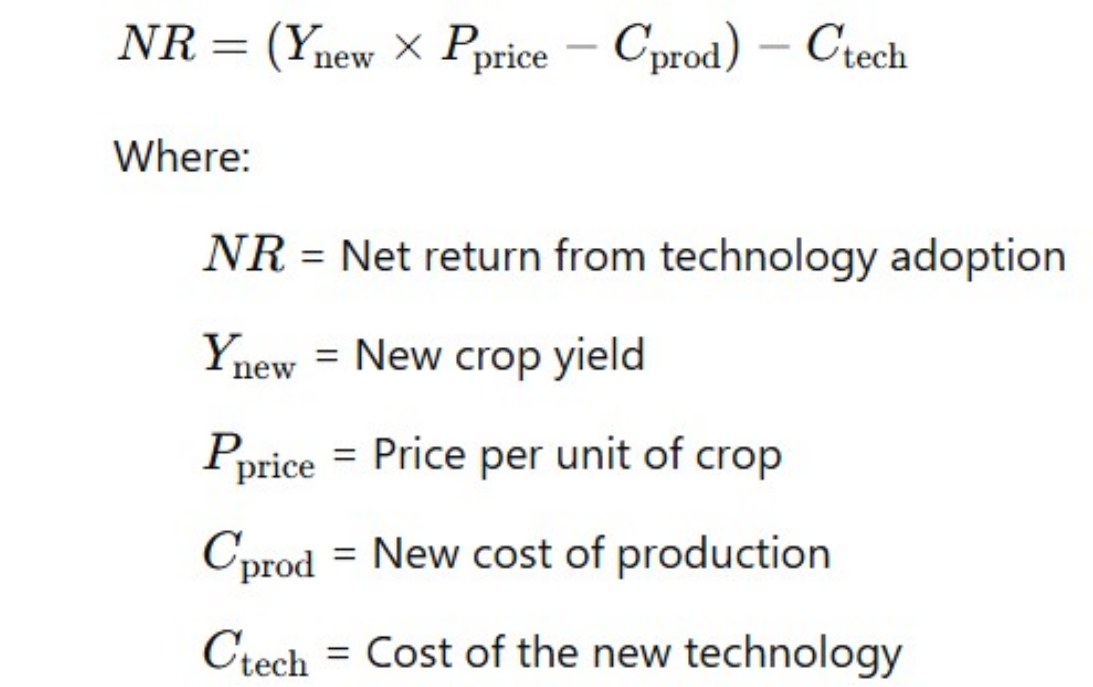
The return on investment (ROI) from adopting new technology can be expressed as the net return, considering the additional yield and cost savings relative to the cost of new technology:
8. Conclusion
Conclusions: The agriculture sector, and specifically the machinery manufacturing sector, is evolving. Total factor productivity studies show that agriculture is a growing sector thanks to the use and application of innovation. Patents, in addition to illustrating priority technologies, can be indicators of the sector’s innovation capacity. The literature on machinery patents shows that companies are highly innovative. Moreover, companies are seen to concentrate on certain innovations based on applied knowledge. Relating public R&D investment to companies through agreements can influence innovation results. This demonstrates the close collaboration that the public and private sectors should have.
Companies are highly innovative through their specific sectors, origin, and thematic content sections. Companies are seen to concentrate on certain inventions: farm management, agricultural tractors, farm vehicles, plowing, digging, and hilling, rotary cultivators, seeders, planters, etc., and sprayers or dusters used in agriculture. The importance of collaboration between the public and private sectors should be emphasized. No company obtained patents without these collaboration arrangements. This, along with the high proportion of companies that do have these arrangements, favors the importance of knowledge in the upstream and downstream sectors of the agricultural machinery industry. This observed close collaboration between companies, universities, and individuals suggests the existence of a high level of knowledge transfer.
8.1. Summary of Key Findings
Consolidation is mostly driven by the push forces, with larger enterprises adopting big data and precision agriculture. Market concentration and power have important implications beyond market performance, in terms of influence over research programs, training, etc. Being widely diffused, the digitalized tools and technologies of Big Data and Precision Agriculture are the most likely to have spill-over effects on small farms that do not own directly or use these tools. Such technologies are expected to be more widely diffused in the medium and long term. However, this anticipated diffusion of the current technology suite is only an assumption, as the much higher costs of such tools compared to Precision Agriculture and Big Data technologies for small farms could make this diffusion challenging.
8.2. Implications for the Agriculture Industry
Consulting companies have applied techniques using tractor data collected at the output in recent decades. In some cases, this approach can help better observe multi-output production. A measurement of diesel oil consumption, for instance, may be indicative of a certain usage of fuel and lubricants among those machines that are not tractors. Incorporating the labor and capital associated with operating those machines in the analysis would help shed more light on the drivers of productivity. Furthermore, the attempt to assess production potential helps managers evaluate the technology’s practical abilities at low levels.
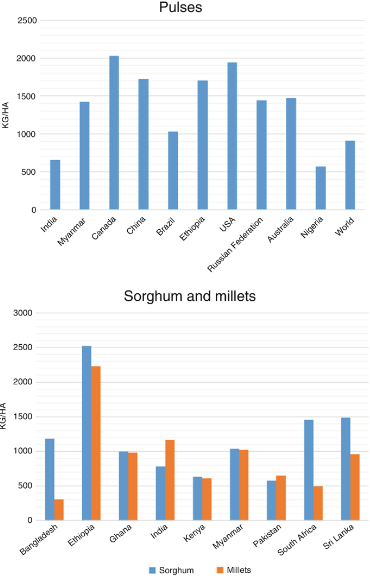
For instance, suppose a manager is curious about the potential bias in her line of tractors after purchasing GPS complements. Theory often tells us that when mistakes are present in the data, an estimate should not differ much between low and high levels of production. If instead, a drastic uptick is observed after crossing a certain production threshold, the manager should be alerted about a potential technology change. If technological change in agriculture is indeed underway and old-fashioned assumptions at the machine level won’t apply, machinery companies could adjust their product lines and increase the BHP of future models accordingly.
8.3. Recommendations for Future Research
There are several areas where future research can be undertaken. This report discussed the impact of innovations in real-time precision agricultural machinery on farm and industry output. The standardization of classification standards for innovation will need to be set at national, regional, and sub-region levels. An impact assessment of precision farming adoption alternatives and related policy measures will need to be packaged for the plenary and format for decision-making. An agreement will need to be reached on a long-term evaluation framework and stable, agreed methodology suitable for ex-post analyses and support for final compliance by farmers and policymakers of the measurement and verification of the impact assessments. Establishment of a standardized system of monitoring data in administrative records and transferring these between regions. Support policies will need to be designed to align member states' economic and environmental goals and to assist actors in driving analyses that involve the agri-industry. This is a new area for the design of support.
Research on policies and technologies with these objectives will be necessary. In promoting innovation and technology adoption, the following recommendations are put forward: Researchers are encouraged to adopt business processes and approaches that help mitigate perceived risks to new precision farming adopters, such as concerns about technical capabilities, use and sharing of data, and cost benefits. Verification of impact assessments on technologies or management practices likely to be adopted by farmers will be essential. This will require substantial investment in standardizing statistics and developing remote sensing data. Researchers and funding bodies should capitalize on the potential of big data and other new sources of information to support policy actions and monitor the impact of policies over a medium to longer-term period. Promote interdisciplinary cooperation between stakeholders and encourage dialogue across the industry. Fill research gaps in developing new policies that focus on market performance, impacts on producers, and the wider environment.
References
- Mandala, V., & Mandala, M. S. (2022). ANATOMY OF BIG DATA LAKE HOUSES. NeuroQuantology, 20(9), 6413.
- Aravind, R., Shah, C. V., & Surabhi, M. D. (2022). Machine Learning Applications in Predictive Maintenancefor Vehicles: Case Studies. International Journal of Engineering and Computer Science, 11(11), 25628–25640.[CrossRef]
- Kommisetty, P. D. N. K. (2022). Leading the Future: Big Data Solutions, Cloud Migration, and AI-Driven Decision-Making in Modern Enterprises. Educational Administration: Theory and Practice, 28(03), 352-364.
- Perumal, A. P., Deshmukh, H., Chintale, P., Desaboyina, G., & Najana, M. Implementing zero trust architecture in financial services cloud environments in Microsoft azure security framework.
- Pamulaparthyvenkata, S. (2022). Unlocking the Adherence Imperative: A Unified Data Engineering Framework Leveraging Patient-Centric Ontologies for Personalized Healthcare Delivery and Enhanced Provider-Patient Loyalty. Distributed Learning and Broad Applications in Scientific Research, 8, 46-73.
- Avacharmal, R. (2022). ADVANCES IN UNSUPERVISED LEARNING TECHNIQUES FOR ANOMALY DETECTION AND FRAUD IDENTIFICATION IN FINANCIAL TRANSACTIONS. NeuroQuantology, 20(5), 5570.
- Korada, L., & Somepalli, S. (2022). Leveraging 5G Technology and Drones for Proactive Maintenance in the Power Transmission Industry: Enhancing Safety, Continuity, and Cost Savings. In Journal of Engineering and Applied Sciences Technology (pp. 1–5). Scientific Research and Community Ltd. https://doi.org/10.47363/jeast/2022(4)260[CrossRef]
- Bansal, A. Advanced Approaches to Estimating and Utilizing Customer Lifetime Value in Business Strategy.
- Vaka, D. K. “Artificial intelligence enabled Demand Sensing: Enhancing Supply Chain Responsiveness.
- Mandala, V., Premkumar, C. D., Nivitha, K., & Kumar, R. S. (2022). Machine Learning Techniques and Big Data Tools in Design and Manufacturing. In Big Data Analytics in Smart Manufacturing (pp. 149-169). Chapman and Hall/CRC.[CrossRef]
- Perumal, A. P., & Chintale, P. Improving operational efficiency and productivity through the fusion of DevOps and SRE practices in multi-cloud operations.
- Avacharmal, R., & Pamulaparthyvenkata, S. (2022). Enhancing Algorithmic Efficacy: A Comprehensive Exploration of Machine Learning Model Lifecycle Management from Inception to Operationalization. Distributed Learning and Broad Applications in Scientific Research, 8, 29-45.
- Vaka, D. K. " Integrated Excellence: PM-EWM Integration Solution for S/4HANA 2020/2021.
- Pamulaparthyvenkata, S., & Avacharmal, R. (2021). Leveraging Machine Learning for Proactive Financial Risk Mitigation and Revenue Stream Optimization in the Transition Towards Value-Based Care Delivery Models. African Journal of Artificial Intelligence and Sustainable Development, 1(2), 86-126.
- Korada, L. (2022). Low Code/No Code Application Development - Opportunity and Challenges for Enterprises. In International Journal on Recent and Innovation Trends in Computing and Communication (Vol. 10, Issue 11, pp. 209–218). Auricle Technologies, Pvt., Ltd. https://doi.org/10.17762/ijritcc.v10i11.11038[CrossRef]
- Bansal, A. (2022). Establishing a Framework for a Successful Center of Excellence in Advanced Analytics. ESP Journal of Engineering & Technology Advancements (ESP-JETA), 2(3), 76-84.
- Chintale, P., Korada, L., WA, L., Mahida, A., Ranjan, P., & Desaboyina, G. RISK MANAGEMENT STRATEGIES FOR CLOUD-NATIVE FINTECH APPLICATIONS DURING THE PANDEMIC.
- Avacharmal, R. (2021). Leveraging Supervised Machine Learning Algorithms for Enhanced Anomaly Detection in Anti-Money Laundering (AML) Transaction Monitoring Systems: A Comparative Analysis of Performance and Explainability. African Journal of Artificial Intelligence and Sustainable Development, 1(2), 68-85.
- MULUKUNTLA, S., & VENKATA, S. P. (2020). AI-Driven Personalized Medicine: Assessing the Impact of Federal Policies on Advancing Patient-Centric Care. EPH-International Journal of Medical and Health Science, 6(2), 20-26.
- Laxminarayana Korada, Vijay Kartik Sikha, & Satyaveda Somepalli. (2022). Importance of Cloud Governance Framework for Robust Digital Transformation and IT Management at Scale. Journal of Scientific and Engineering Research. https://doi.org/10.5281/ZENODO.13348757
- Vaka, D. K. (2020). Navigating Uncertainty: The Power of ‘Just in Time SAP for Supply Chain Dynamics. Journal of Technological Innovations, 1(2).
- Bansal, A. (2022). REVOLUTIONIZING REVENUE: THE POWER OF AUTOMATED PROMO ENGINES. INTERNATIONAL JOURNAL OF ELECTRONICS AND COMMUNICATION ENGINEERING AND TECHNOLOGY (IJECET), 13(3), 30-37.
- Chintale, P. SCALABLE AND COST-EFFECTIVE SELF-ONBOARDING SOLUTIONS FOR HOME INTERNET USERS UTILIZING GOOGLE CLOUD'S SAAS FRAMEWORK.
- Mulukuntla, S., & VENKATA, S. P. (2020). Digital Transformation in Healthcare: Assessing the Impact on Patient Care and Safety. EPH-International Journal of Medical and Health Science, 6(3), 27-33.
- Laxminarayana Korada. (2022). Optimizing Multicloud Data Integration for AI-Powered Healthcare Research. Journal of Scientific and Engineering Research. https://doi.org/10.5281/ZENODO.13474840
- Dilip Kumar Vaka. (2019). Cloud-Driven Excellence: A Comprehensive Evaluation of SAP S/4HANA ERP. Journal of Scientific and Engineering Research.
- Bansal, A. (2021). OPTIMIZING WITHDRAWAL RISK ASSESSMENT FOR GUARANTEED MINIMUM WITHDRAWAL BENEFITS IN INSURANCE USING ARTIFICIAL INTELLIGENCE TECHNIQUES. INTERNATIONAL JOURNAL OF INFORMATION TECHNOLOGY AND MANAGEMENT INFORMATION SYSTEMS (IJITMIS), 12(1), 97-107.
- Korada, L. (2021). Unlocking Urban Futures: The Role Of Big Data Analytics And AI In Urban Planning–A Systematic Literature Review And Bibliometric Insight. Migration Letters, 18(6), 775-795.
- Bansal, A. (2021). INTRODUCTION AND APPLICATION OF CHANGE POINT ANALYSIS IN ANALYTICS SPACE. INTERNATIONAL JOURNAL OF DATA SCIENCE RESEARCH AND DEVELOPMENT (IJDSRD), 1(2), 9-16.
- Mandala, V. (2022). Revolutionizing Asynchronous Shipments: Integrating AI Predictive Analytics in Automotive Supply Chains. Journal ID, 9339, 1263.
- Bansal, A. (2020). An effective system for Sentiment Analysis and classification of Twitter Data based on Artificial Intelligence (AI) Techniques. International Journal of Computer Science and Information Technology Research, 1(1), 32-47.
- Chintale, P., Korada, L., Ranjan, P., & Malviya, R. K. ADOPTING INFRASTRUCTURE AS CODE (IAC) FOR EFFICIENT FINANCIAL CLOUD MANAGEMENT.