

Digital therapeutics (DTx) is an evidence-based treatment that makes use of high-quality software. As many healthcare systems confront increasing expectations for quality results, the need for digital medications is steadily growing in the clinical arena. To ensure that patients are supported during chemotherapy and that needless hospital visits are avoided, digital therapeutics must be integrated into the cancer care pathway. Oncology patients are usually immunocompromised die to their disease and treatment, rendering them more susceptible to infection than the general population. As a result, visiting to a hospital might endanger their health. In addition, when cancer patients and survivors return home after treatment, digital health interventions provide them with the tools they need to manage their illness and its side effects in the privacy of their own homes. Considering the increasing prevalence of cancer patients and the solution that digital therapeutics has to offer in oncology, its future looks promising. This review article aims to summarize the existing companies in this domain, while evaluating the prospects as well.
Digital Therapeutics in Oncology: A Better Outlook for Cancer Patients in the Future
May 31, 2022
June 30, 2022
July 08, 2022
July 10, 2022
This is an Open Access article, distributed under the terms of the Creative Commons Attribution 4.0 International License (http://creativecommons.org/licenses/by/4.0/), which permits unrestricted use, distribution and reproduction in any medium or format, provided the original work is properly cited.
Abstract
1. Introduction
Worldwide, the cancer burden is increasing, putting enormous physical, emotional, and financial pressure on people, families, communities, and health systems. Many health systems in low- and middle-income nations are unable to handle this load, and many cancer patients throughout the world lack timely access to high-quality diagnosis and treatment. According to WHO [1], Cancer is the second most common cause of death worldwide, accounting for 10 million fatalities in 2020, or one in every six deaths. Researchers project that by 2040, low- and middle-income nations would account for more than two-thirds of all cancer cases worldwide [2].
Bladder cancer, breast cancer, colon and rectal cancer, endometrial cancer, kidney cancer, leukaemia, liver cancer, melanoma, non-Hodgkin lymphoma, pancreatic cancer, prostate cancer, and thyroid cancer are among the most common cancer forms, according to the National Cancer Institute [3]. Men are more likely than women to get lung, prostate, colorectal, stomach, and liver cancers, whereas women are more likely to develop breast, colorectal, lung, cervical, and thyroid cancers [4]. According to the Cancer Statistics Report [5], 2020, the majority of cancer patients were diagnosed at a locally advanced stage for breast (57 percent), cervix uteri (60 percent), head and neck (66.6 percent), and stomach cancer (50.8 percent), whereas males (44 percent) and females (44 percent) had distant metastasis in lung cancer (47.6 percent). It was revealed that the expected incidence for men was 94.1 per 100,000 people, while for women it was 103.6 per 100,000 people.
The National Programme for Prevention and Control of Cancer, Diabetes, Cardiovascular Disease, and Stroke, which includes screening for breast, cervical, and oral cancer, was started by the Indian government in 2016 as a broad screening programme for noncommunicable diseases [6]. The cancer burden in India has risen considerably in the last decade, with COVID-19 expanding the screening gap as a spreading pandemic hampered thorough cancer screening amongst the population as it involved the physical examination. Furthermore, as per a May 2021, Lancet report [7], cancer services in India, including new patient registrations, outpatient treatment, hospital admissions, and major procedures, decreased between March and May 2020 compared to the same time in 2019. It was discovered that over the following two years, these interruptions might result in significant increase in number of people seeking cancer care for more advanced conditions. The analysis also estimates an increase in cancer-related deaths in the upcoming five years.
In fear of receiving a positive result, many people are hesitant to meet the doctors and schedule their cancer screening appointments. People may prefer to live in denial rather than admit the disease's existence in their body. However, ignorance does not make the condition go away; the only way to solve the problem is to take efforts to eliminate the disease from the body. The goal of early cancer detection is to identify symptomatic individuals as soon as possible so that they can receive the best therapy available. There is a decreased likelihood of survival, more complications with cancer related therapies, and higher expenses for the quality care when cancer treatment is delayed or inaccessible. Due to advancements in early detection and treatment, the number of cancer survivors has increased greatly. Physical activity and diet, for example, can prevent recurrence and mortality, as well as mitigate the detrimental effects of cancer and treatment [8]. However, an integrated approach in cancer management is missing.
2. Materials and Methods
We performed comprehensive, structured literature searches in PubMed, Google Scholar and print media using key words digital therapeutics in cancer/oncology, digital health, Software as a Medical Device (SaMD), healthcare digitization and technology in healthcare. Subsequently, the relevant articles published till May 2022 were fully reviewed and their findings were noted.
3. Current Market Scenario of Digital Therapeutics in Oncology
Patient-facing technologies that improve patient experience, safety, and patient-clinician interactions; clinician-facing technologies that improve clinicians' ability to diagnose pathology and predict adverse events; and quality of care and research infrastructure to improve clinical workflows, documentation, decision support, and clinical trial monitoring are all examples of opportunities for digital health innovation in oncology [9]. Patients may use the Digital Therapeutics (DTx) solution to identify their symptoms, determine when they should contact their care team, and learn more about their condition. Currently, there are several digital therapeutics that are developed. Some of the salient ones have been summarized in Table 1.
Moovcare, a symptom reporting web tool for cancer patients, was created by SIVAN Innovative, an Isareali firm. Moovcare is a digital therapeutic that use a simple weekly questionnaire to detect relapse or complications in lung cancer patients who are being followed up on. It is a Class I medical device that has demonstrated a 7.6-month overall survival rate. It has even been approved for reimbursement by the French insurance system [10, 11]. The Untire app aids cancer patients and survivors in reducing fatigue and improving their quality of life. It employs theories and practises from cognitive behaviour therapy, mindfulness-based cognitive therapy, positive psychology, and physical exercise therapies, all of which have been empirically validated [12]. Patients with lung cancer who were randomised to weekly symptom self-reporting via a Web application intervention for early identification of recurrence were compared to a retrospective group of control patients in prospective research. When compared to the historical control arm, the intervention patients had a better median one-year survival i.e., the early diagnosis of relapse and the early implementation of palliative treatment may enhance survival when a Web tool is used [13].
Breast cancer is the most prevalent malignancy among Indian women, with a prevalence of 25.8 per 100,000 women and a fatality rate of 12.7 per 100,000 women [14]. The inclusion of real-time integrated information on advanced cancer patients' symptoms, relevant clinical syndromes, and medicines in oncologists' daily workflow can result in improved symptom management [15]. Globally, digital therapeutics apps such as Optimune for cancer related emotional distress, Mika for symptom monitoring, Oleena by Voluntis- an FDA-approved DTx mobile app, MyCognition- an NHS-approved DTx mobile app, and eCO by AstraZeneca for metastatic breast cancer help patients make better lifestyle choices and manage the symptoms and side effects of cancer treatment.
While digital therapeutics gain traction throughout the world, Germany has been at the forefront of digital therapeutics regulations. Berlin based Mika [16] company has recently established itself as Germany's premier oncological DTx platform, demonstrating its benefit to cancer patients and the healthcare system in clinical studies. In 2021, it became the first and only 'digital health application' (DiGA) to be certified for all cancer patients. It offers tailored and comprehensive cancer therapy support, integrating the most recent cancer research findings with 24/7 hands-on assistance in a user-friendly and engaging digital tool. Mika incorporates AI-assisted monitoring and coaching, as well as scientifically proven methodologies and therapeutic management strategies. Daily check-ins, also known as ePROs (electronic patient-reported outcomes), allow for continuous monitoring of distress levels and symptoms, while a tailored coaching programme offers scientifically verified multi-media components and psycho-oncological therapies. Over 800 articles, videos, and coping skills training courses – ranging from dietary advice to physical exercise training and mindfulness coaching – have been extensively evaluated.
Blue Note [17] is collaborating with Curebase on a trial that will enrol roughly 350 cancer patients and will be conducted entirely online, without the need for clinic visits. The trial will look at the benefits of adding two DTx products that targets mental and physical wellness to the traditional cancer treatment. The FDA has given BNT200, one of Blue Note's DTx products, a breakthrough designation. BNT200 is used to treat anxiety and depression in people with acute myeloid leukaemia (AML) who are hospitalised for a regimen of high-intensity induction chemotherapy. Blue Note is also developing a variety of cancer medicines, including BNT200 and BNT100. Blue Note is developing a range of medicines for particular cancer scenarios, including BNT200 and BNT100. It created an agreement with Memorial Sloan Kettering Cancer Center in the United States in 2020 to build an app that may be used by people who, for example, are living in fear of cancer. Other DTxs are kept in focus for individuals who are being treated for cancers of the breast and lungs.
Kaiku Health [18,19], a digital cancer care company, has collaborated with Novartis to track and control melanoma, a kind of skin cancer. It has previously worked with Amgen to offer digital symptom-tracking for multiple myeloma, a kind of bone marrow cancer, before being bought by Swedish oncology company Elekta in 2020. Recently, Kaiku Health has established a strategic agreement with Roche to increase the reach of digital patient monitoring and management for a rising number of patients, both in terms of geographical and across new medicines and cancer types. Long-term plans for the organization include developing and offering new digital health products through a multi-partner ecosystem, as well as advocating for reimbursement choices.
MayaMD.AI is an artificial intelligence (AI) based programme application that can assist patients and survivors of cancer by benefitting them greatly from early cancer screening at their convenience by scheduling visits, and digital behaviour modification programmes that will aid survivors in achieving maximum quality of life. It is a comprehensive patient engagement platform that offers suitable recommendations depending on the patient's state, which is continually monitored using artificial intelligence (AI) and machine learning (ML).
4. Importance of Digital therapeutics platform for Cancer Patients
A medical oncologist is a key part of the multidisciplinary team (MDT) who provides a holistic and systemic approach to cancer therapy and care, assuring evidence-based, safe, and cost-effective cancer medication usage and protecting cancer patients' quality of life throughout the 'patient’s cancer journey.' Oncologists are frequently the primary care providers, however their professional duties can vary significantly between health-care systems, depending on the availability of nurses and other staff [20]. The ageing population is steadily expanding, which is leading to an increase in chronic diseases like cancer. As a result, physicians, nurses, and other healthcare professionals are dealing with increasing demand, higher expenses and longer wait times. There aren't enough medical personnel to care for all the patients all of the time, and many patients might benefit from continuing personal support to help them manage their ailments and stay healthy.
To tackle these healthcare constraints, it's only reasonable that digital therapeutics app like Maya.MD AI should be brought in the use with an increasingly innovative, user-friendly interface and technologically advanced digital tools. Telemedicine-based post-treatment follow-up visits for patients with brain, breast, prostate, endometrial, bladder, and colorectal cancer have been shown to be beneficial & acceptable in studies [21, 22, 23] including a variety of cancer subtypes. Such post follow-ups are even beneficial, particularly in rural locations where cancer patients may have to travel considerable distances for medical appointments and for individuals who have restricted mobility.
A digital application platform can also be utilised to raise awareness and debunk some common misconceptions about cancer and cancer treatment. Several myths, such as 'Will a biopsy cause the cancer to spread?' and 'Does every occurrence of breast cancer result in breast removal?' can be debunked in a compassionate and educational manner, ensuring that patients receive the correct facts further making them feel empowered and controller of the disease.
5. Role of COVID-19 in bringing about change
During the pandemic, organisations such as the US Food and Drug Administration and the European Medicines Association developed recommendations for cancer research. The main recommendations were to restrict the usage of immunosuppressive drugs and to limit hospital visits purely for studies. As a result, numerous cancer centres have halted enrolment in current studies, postponed the start of new programmes, and altered protocols to reduce participant risk [24,25].
Cancer has a well-known psychological impact which has been further triggered because of the pandemic, with estimates indicating that more than 5 out of every 10 cancer patients experience some sort of depression while receiving treatment [26]. The cancer support group sessions have now gone virtual, and they continue to assist patients improve their mental health and feel safe and connected. By keeping the lines of communication open, they essentially hold the patient's hand while they go through the therapy, its side effects, and the impact on their lives.
6. Role of Digital Therapeutics app in connecting clinicians and patients to make cancer care more patient-centric
With the purpose of maximising value to evidence-based clinical outcomes, digital therapeutics use algorithms based on best medical practices and standards that synthesizes acquired data into actionable insights (from clinical studies or real-world evidence). This can drastically improve and assist medical therapy. It can either be used alone or in the combination with medications and other required cancer therapies. The patient can access the information before consulting with a doctor since a well-informed person is more likely to comprehend and follow the therapist's instructions. Additionally, this data can also be utilised for the second opinions or shared across the disease management group for chronic cancer cases.
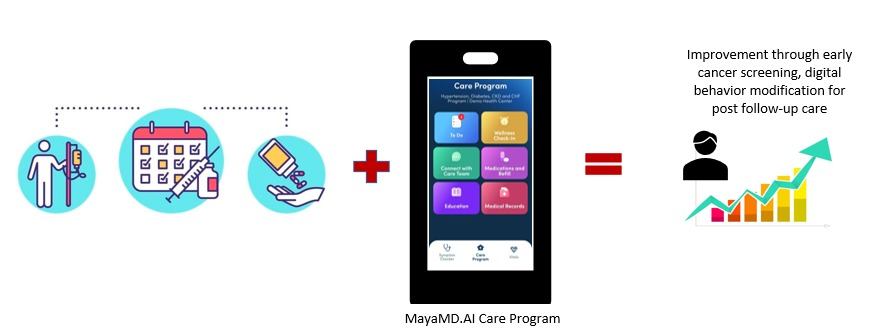
In the digital age, therapeutics (software as a medical device) like MayaMD.AI provides artificial intelligence based and therapeutically driven behavioural, psychological, and disease self-management therapies to improve Cancer Care Management therapy outcomes. It can help with prevention, early diagnosis, cancer care management and support to survivors and chronic patients.
The MayaMD.AI application includes a curated 'Care Program' that is personalised and evidence based. The Symptom Checker feature is designed to help patients identify their medical symptoms and offer them with credible information to aid in their health maintenance. Patients with advanced, incurable cancer who are undergoing anticancer treatment may have a variety of symptoms. Hence, the real-time monitoring of both symptoms and clinical syndromes will help oncologists better control symptoms and enhance patient outcomes [27].
The Connect with Care team feature is composed of a group of skilled professional doctors who can help with both pharmacological and lifestyle interventions. It contains a part dedicated to medical records that allows individuals to keep and retrieve their health information, allowing them to follow their own progress or health journey.
7. Conclusion
In the future years, oncology will undergo substantial changes, with new IT and health-care technology enhancing the potential to customise cancer therapies to unique individual patient profiles and provide more personalised cancer care. Given that some components of healthcare will likely never be totally replaced by technology, DTx is likely to be used in tandem with other treatments to improve patient outcomes.
References
- Cancer. (2022, February 3). World Health Organization. https://www.who.int/news-room/fact-sheets/detail/cancer
- Shah, S. C., Kayamba, V., Peek Jr, R. M., & Heimburger, D. (2019). Cancer control in low-and middle-income countries: is it time to consider screening?. Journal of global oncology, 5, 1-8.[CrossRef] [PubMed]
- Common Cancer Types. (2022, May 10). National Cancer Institute. https://www.cancer.gov/types/common-cancers
- Sung, H., Ferlay, J., Siegel, R. L., Laversanne, M., Soerjomataram, I., Jemal, A., & Bray, F. (2021). Global cancer statistics 2020: GLOBOCAN estimates of incidence and mortality worldwide for 36 cancers in 185 countries. CA: a cancer journal for clinicians, 71(3), 209-249.[CrossRef] [PubMed]
- Mathur, P., Sathishkumar, K., Chaturvedi, M., Das, P., Sudarshan, K. L., Santhappan, S., ... & ICMR-NCDIR-NCRP Investigator Group. (2020). Cancer statistics, 2020: report from national cancer registry programme, India. JCO Global Oncology, 6, 1063-1075.[CrossRef] [PubMed]
- Khanna, D., Khargekar, N. C., & Khanna, A. K. (2020). Implementation of early detection services for cancer in India during COVID-19 pandemic. Cancer Control, 27(1), 1073274820960471.[CrossRef] [PubMed]
- Ranganathan, P., Sengar, M., Chinnaswamy, G., Agrawal, G., Arumugham, R., Bhatt, R., ... & of India, N. C. G. (2021). Impact of COVID-19 on cancer care in India: a cohort study. The Lancet Oncology, 22(7), 970-976.[CrossRef]
- Roberts, A. L., Fisher, A., Smith, L., Heinrich, M., & Potts, H. W. (2017). Digital health behaviour change interventions targeting physical activity and diet in cancer survivors: a systematic review and meta-analysis. Journal of Cancer Survivorship, 11(6), 704-719.[CrossRef] [PubMed]
- Parikh, R. B., Basen-Enquist, K. M., Bradley, C., Estrin, D., Levy, M., Lichtenfeld, J. L., ... & Shulman, L. N. (2022). Digital Health Applications in Oncology: An Opportunity to Seize. JNCI: Journal of the National Cancer Institute.[CrossRef] [PubMed]
- First health app in the French LPPR list for add-on reimbursement. (2020). Med Tech Reimbursement Consulting. https://mtrconsult.com/news/first-health-app-french-lppr-list-add-reimbursement
- Real Impact of Digital Health (ePROS). (2018). Healthxl. https://www.healthxl.com/blog/real-impact-of-digital-health-epros
- Untire App, beating cancer fatigue together. (2021, October 27). Untire. https://untire.me/
- Denis, F., Yossi, S., Septans, A. L., Charron, A., Voog, E., Dupuis, O., ... & Letellier, C. (2017). Improving survival in patients treated for a lung cancer using self-evaluated symptoms reported through a web application. American journal of clinical oncology, 40(5), 464-469.[CrossRef] [PubMed]
- Popescu, R. A., Schäfer, R., Califano, R., Eckert, R., Coleman, R., Douillard, J. Y., ... & Piccart, M. (2014). The current and future role of the medical oncologist in the professional care for cancer patients: a position paper by the European Society for Medical Oncology (ESMO). Annals of oncology, 25(1), 9-15.[CrossRef] [PubMed]
- Center for Drug Evaluation and Research. (2020, June 1). Clinical Trial Conduct During the COVID-19 Pandemic. U.S. Food and Drug Administration. https://www.fda.gov/drugs/coronavirus-covid-19-drugs/clinical-trial-conduct-during-covid-19-pandemic
- Debiopharm International SA. (2022, May 9). Series A financing round lays foundation for international growth of digital cancer therapeutics Mika [Press release]. https://www.prnewswire.com/in/news-releases/series-a-financing-round-lays-foundation-for-international-growth-of-digital-cancer-therapeutics-mika-892245462.html
- Taylor, P. (2022, January 11). Blue Note leukaemia DTx gets FDA breakthrough tag [Press release]. https://pharmaphorum.com/news/blue-note-leukaemia-dtx-gets-fda-breakthrough-tag/
- Press Releases. (2020b, March 22). Kaiku Health. https://kaikuhealth.com/insight/press/
- Editor. (2022, May 12). Kaiku Health, Roche ink partnership deal to deploy digital cancer management tools. HealthCare Africa Magazine. https://www.healthcareafrica.info/kaiku-health-roche-ink-partnership-deal-to-deploy-digital-cancer-management-tools/
- Beaver, K., Tysver-Robinson, D., Campbell, M., Twomey, M., Williamson, S., Hindley, A., ... & Luker, K. (2009). Comparing hospital and telephone follow-up after treatment for breast cancer: randomised equivalence trial. Bmj, 338.[CrossRef] [PubMed]
- Strasser, F., Blum, D., Von Moos, R., Cathomas, R., Ribi, K., Aebi, S., ... & Koeberle, D. (2016). The effect of real-time electronic monitoring of patient-reported symptoms and clinical syndromes in outpatient workflow of medical oncologists: E-MOSAIC, a multicenter cluster-randomized phase III study (SAKK 95/06). Annals of Oncology, 27(2), 324-332.[CrossRef] [PubMed]
- Sardell, S., Sharpe, G., Ashley, S., Guerrero, D., & Brada, M. (2000). Evaluation of a nurse-led telephone clinic in the follow-up of patients with malignant glioma. Clinical Oncology, 12(1), 36-41.[CrossRef] [PubMed]
- Smits, A., Lopes, A., Das, N., Bekkers, R., Kent, E., McCullough, Z., & Galaal, K. (2015). Nurse-led telephone follow-up: improving options for women with endometrial cancer. Cancer Nursing, 38(3), 232-238.[CrossRef] [PubMed]
- Guidance to sponsors on how manage clinical trials during the COVID-19 pandemic. (2020, June 19). European Medicines Agency. https://www.ema.europa.eu/en/news/guidance-sponsors-how-manage-clinical-trials-during-covid-19-pandemic
- Niedzwiedz, C. L., Knifton, L., Robb, K. A., Katikireddi, S. V., & Smith, D. J. (2019). Depression and anxiety among people living with and beyond cancer: a growing clinical and research priority. BMC cancer, 19(1), 1-8.[CrossRef] [PubMed]
- Wang, Y., Duan, Z., Ma, Z., Mao, Y., Li, X., Wilson, A., ... & Chen, R. (2020). Epidemiology of mental health problems among patients with cancer during COVID-19 pandemic. Translational psychiatry, 10(1), 1-10.[CrossRef] [PubMed]
- Lizán, L., Pérez-Carbonell, L., & Comellas, M. (2021). Additional Value of Patient-Reported Symptom Monitoring in Cancer Care: A Systematic Review of the Literature. Cancers, 13(18), 4615.[CrossRef] [PubMed]