

The purpose of the study was to examine teachers’ intrinsic and extrinsic motivation in leadership for learning (LfL) in Aboabo Educational Circuit (AEC) in the Ashanti Region of Ghana. The study employed an explanatory correlational quantitative research approach. The population of the study consisted of ten (10) headmasters and forty-two (42) teachers in public Junior High Schools (JHS) of Aboabo Educational Circuit. Convenience, purposive and quota sampling techniques were used to select schools, headteachers and teachers for the study. The main instrument used for data collection was questionnaire. Spearman’s rank order correlation was used to analyse research hypotheses 1 and 2; Wilcoxon test was also used to analyse research hypothesis 3. The study revealed that intrinsic teachers’ motivation is negatively related to Leadership for Learning within the AEC. The study also indicated that extrinsic teachers’ motivation has an insignificant positive association with Leadership for Learning within the AEC. The study also concluded that there is a significant difference between Intrinsic Teacher Motivation (ITM) and Extrinsic Teacher Motivation (ETM) in AEC. Therefore, ITM and ETM plays minimal or no role within AEC. It is recommended that the officers within AEC must not focus only on high pupils’ academic achievement at the detriment of taking appropriate steps to make classroom teaching interesting and attractive. It is also recommended that School Management Committees within AEC must in their small way do their best to boost the extrinsic motivation of teachers within the circuit.
An Appraisal of Teachers’ Intrinsic and Extrinsic Motivation in Ghana: Leadership for Learning
May 03, 2022
June 02, 2022
June 10, 2022
June 12, 2022
This is an Open Access article, distributed under the terms of the Creative Commons Attribution 4.0 International License (http://creativecommons.org/licenses/by/4.0/), which permits unrestricted use, distribution and reproduction in any medium or format, provided the original work is properly cited.
Abstract
1. Introduction
The growth of every economy is reliant on human resource development, to which education plays a vital role. Education is the fundamental drive of a knowledge economy [1]. It is the greatest investment that a nation can make for quick development of its economic, political, sociological and human resources [2]. The reason being that lack of it, especially appropriate education, partly accounts for the conflicts, distraction and confusion in many parts of the world [2]. Learners at all levels of education, primary, Junior High School (JHS), Seniour High School (SHS), Tertiary, constituting the human resource base of the country therefore need quality training which truly ought to be spearheaded by teachers.
In the view of UNESCO (2006), teachers are the most important factor in determining the quality of education that learners receive. In other words, the teacher is seen as the ultimate key to educational change and school improvement. Subsequently, the inability of teachers to function both as instructors and real leaders to give out their superlative service will amount to waste of time and national resources. This idea is truly in conformity with the thoughts of some other researchers [3, 4]. Studies explained that indeed the quality of the school and that of the teaching personnel so permeate each other that a vicious circle is created in analysis of their inter-relationships for we cannot have good schools unless we have good teachers [5]. Similarly, a researcher argued that one of the major constraints that account for the seemingly low standard of education in developing countries is inadequacy of quantity and quality qualified teachers [4]. “As the axiom goes ‘The blind cannot lead the blind’, thus, good teachers would, other things being equal, help provide good quality education” [3]. Meanwhile, Voluntary Service Organisation (VSO) also maintained that Teachers’ Motivation (TM) is fragile and on its last legs though teachers’ performance in contributing to learning is strongly influenced by TM [6]. It is worth mentioning that TM encompasses Intrinsic Motivation (IM) and Extrinsic Motivation (EM).
To this effect, the issue of IM and EM becomes central because of its correlation with the quality of education [7]. Quality of education includes teachers’ success in influencing pupils to learn, thus, Leadership for Learning (LfL). Leadership for Learning involves teachers engaging themselves in various leadership roles such as making use of resource persons from the community and other schools and promoting initiative by allowing pupils to experiment. However, government, being the largest stakeholder of education in Ghana seems not to be doing much to solving the problem of quality education by sustaining and or improving LfL which is primarily focusing on the teacher related factors (ITM and ETM) of education. No wonder a survey by the Ghana National Association of Teachers (GNAT) in conjunction with Teachers and Educational Workers Union (TEWU) to determine teacher attrition rate showed that out of 190000 teachers on the field, 10,000 leave annually [3].
Previous studies investigating why Ghanaian teachers leave the profession cited inadequate salary, low prestige for teachers and lack of opportunities for promotion as the major factors [8]. In addition, more recent studies have found poor or non-implementation of conditions of service and deplorable socio-economic conditions in rural areas where most teachers work [9]. Teachers’ pay and other material benefits were too low for individual and household survival needs to be met in developing countries, such as Ghana [10]. Education for All (EfA) report of 2005, revealed that teachers in developing countries such as Ghana often receive earnings that are insufficient at providing them with a reasonable standard of living. An observation made by the researcher is that the situation at AEC seems to be a direct reflection of the account given [9, 10]. The government of Ghana as much as other stakeholders of AEC to a larger extent has a responsibility to ensuring that teachers are motivated to lead learning to the best of their abilities.
Motivation, is the arousal, intensity, direction, and persistence of efforts directed towards job tasks over a period of time [11]. It is that which induces a person to act in a certain way, thus, the driving force behind every activity [12, 13]. Therefore, TM refers to all that is done by interest groups to make teachers happy, satisfied, dedicated and committed in such a way that they bring out their best at their places of work so that parents, students and the society will greatly benefit from their services. Motivation can also be defined as the propelling force behind the activation or energisation of goal-oriented behaviours. In this context, the goal of teachers within AEC is to be producing pupils with a high sense of LfL, therefore, making the issue of IM & EM a vital subject to be investigated.
1.1. Motivational Theories
Expectancy Theory and Equity Theory have bearing on this study. Broadly, these two theories belong to two categories, content and process theories:
1.1.1. Expectancy theory
Expectancy Theory suggests that motivation depends on two things: how much we want something and how likely we think we are to get it. Thus, persons are able to calculate expectancies and instrumentalities, and will behave accordingly. A study pointed out that the following factors influence individual’s expectancy perception: self- esteem, self-efficacy, previous success at the task, help from supervisors and subordinates alike, information necessary to complete the task and good materials and equipment to work with [14]. Expectancy theory rests on four basic assumptions. They are:
- It assumes that behaviour is determined by a combination of forces in the individual and the environment.
- That people make decisions about their own behaviour in organisations.
- That different people have different types of needs, desires and goals.
- That people make choices from among alternative plans of behaviour based on their perceptions of the extent to which a given action will lead to desired outcome.
A researcher, referring to the works of some other indicated that Vroom based his theory outcomes, according to Galbraith and on three important concepts or variables, namely, expectancy, instrumentality and valence [15]. They are derived from the relationship between efforts, performances and outcomes or rewards [16]. Expectancy is perceived action-outcome relationship that can vary in strength from the certainty that the act will result in the outcome. Outcomes can be classified as either direct or indirect. Direct outcomes also known as first level outcomes are the immediate results of actions, the intents of the action. Indirect outcomes (second level outcomes) are the remote or incidental results of actions. Instrumentality refers to the perceived relationship between performance direct outcome and outcomes or reward (indirect outcomes) [15]. A researcher observed that the instrumentality construct highlights the notion that direct outcomes of action can be viewed as a means toward the accomplishment of goals or ends. That is, direct outcomes are the ends of particular action but may also be the means (instrumentalities) for attaining other ends. Whether an outcome is an end in itself or a means toward other ends is solely a matter of individual perception. Valence simply means a person’s preference for something. Technically, it refers to the perceived positive or negative value, worth, or attractiveness that an individual ascribes to potential outcomes, rewards or incentives for working in an organisation” [15].
1.2. Equity Theory (Inequity Theory)
This theory suggested that people are motivated to seek social equity in the rewards they receive for performance. The theory is based on the thesis that a major factor in job motivation, performance and satisfaction is the individual’s evaluation of the equity or fairness of the rewards he or she is receiving [17]. The theory holds that in order to be motivated, individuals must believe that the rewards they are receiving are fair. Fairness over here is as to whether their salaries (rewards) commensurate with the work they are doing and is fair when compared to the salaries (rewards) others are receiving for the work they are doing [15]. Verily, the researcher accepted that the feeling of inequity could stimulate motivation. However, the concern is the bases upon which the employees make such comparisons. For instance, Equity Theory fundamentally considers pay as its basis of comparison at the neglect of others such as differences in company policies and job description, which the researcher speculated is a great limitation [15].
1.2.1. Ways of restoring equity
When employees feel or perceive that inequity exists, a state of tension develops within them. The existence of perceived inequity creates tension that motivates most people to react to restore equity. In the work of Jones & George, it was mentioned that when people experience underpayment inequity, they may be motivated to lower their input by reducing their working hours or may increase their outcome by asking for promotion or a rise in pay. However, per this research, the researcher postulate that people in trying to restore equity react either physically or by thinking (thought), all in the area of either positive or negative reaction. Below is the detail [18].
1.2.2. Positive Reaction
Physical Action- when people experience underpayment inequity, they may be motivated to increase their inputs by increasing their working hours, putting forth more effort on the job, being punctual and regular, etc. so that their employers will realise and appreciate their performances. They will react similarly in the case of overpayment inequity. Thought- when people experience underpayment inequity, they may change their perceptual comparison by believing that their areas of work or input of their “rivals” is of much importance or greater impart.
1.2.3. Negative Reaction
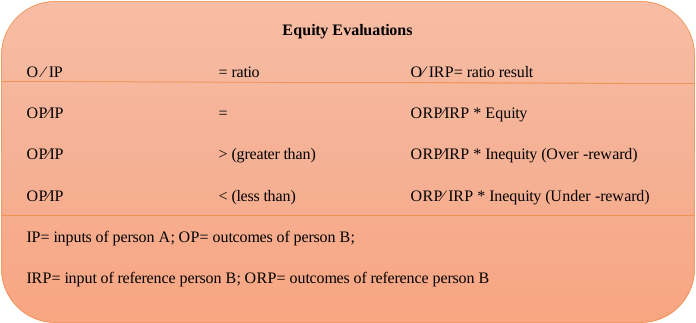
Physical Action- when people experience underpayment inequity, they may be motivated to lower their inputs by reducing their working hours, putting forth less effort on the job, absenteeism, lateness, quitting the job, increased dissatisfaction and attempt to get compensation raised. Thought- when people experience underpayment inequity, they may change their perceptual comparison by thinking that their areas of work or input are less important or their basis of comparisons are wrong. Consequently, they will end up being content and restore equity thereof [18]. A study provided the Figure 1 to mathematically explain how inequity is restored [15].
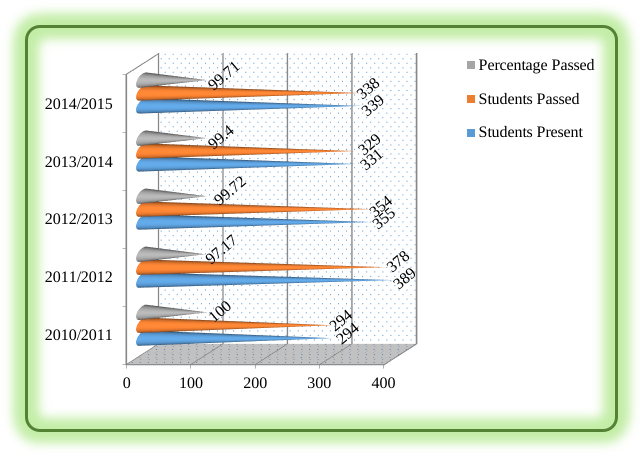
Teachers play significant role in pupil’s life even beyond academic success by way of being influential regarding character, values and moral molding, more especially, when the teacher is enthusiastic or motivated about the job that he does or is doing, even as a leader or instructor. It is to this effect that the assertion that improving the quality of primary education in Ghana is crucial to the nation’s quest for improved living conditions, increased economic development and hope for a better future was made [19]. The last report, 2015/2016 academic year when Metropolitan, Municipal and District Assemblies in Ghana were rated and ranked based on Basic Education Certificate Examination (B. E. C. E.) performance, Adansi-North district emerged forth (4th); she was just next to Obuasi Municipal [20]. A similar report is given about Aboabo Educational Circuit (AEC) despite her rural characteristics. In the area of education, there has been an appreciable trending success per the measure of West African Examination Council (WAEC). Precisely, archival records pulled depict such goodwill to cover the past 5 years, 2010-2015 academic years [20]. Figure 2 shows this.
The view of the researchers is that, at a round table where directional decisions or policies are tailored by stakeholders, being it educational administrators/ officers, chiefs & elders, opinion leaders, School Management Committees, they are likely to be persuaded, if not deceived by intuition or at best, available literature to consider and believe that the AEC is motivationally healthy due to the high academic performance though there is non-existence of first-hand research report; a situation which is best to be described as managerially/ administratively problematic. Since in such a case, the sustenance and or furtherance of AEC’s academic prospect would be in serious jeopardy, especially, in this turbulent leadership era where leaders/administrators/officers are whisked and poured every now and then. Second to this, a study investigated the influence of extrinsic and intrinsic motivation on employees’ performance [21]. A research indicated that there existed a relationship between extrinsic motivation and the performance of employees, while no relationship existed between intrinsic motivation and employee’s performance, a contradiction of the findings [22]. Supportively, most studies find that teachers believe financial rewards to be appropriate and that they believe them to have a positive impact on motivation which translates into effective performance as in LfL [23, 24].
Considering these two problems, it is unmistakably propelling that the researcher embark on an investigation such as this, if nothing all, for “desiring to get a research degree along with its consequential benefits, all coupled with the desire to face the challenge in solving the unsolved problems, i.e., concern over practical problems initiates research; desire to get intellectual joy of doing some creative work; desire to be of service to society and desire to get respectability” [25]. There is therefore the need to study the Role of Intrinsic and Extrinsic Motivation in Teachers’ Leadership for Learning within Aboabo Educational Circuit (AEC).
The purpose of the study was to examine teachers’ intrinsic and extrinsic motivation in leadership for learning in Ghana. The study was guided by these hypotheses: H0 1 the more teachers within AEC are motivated intrinsically, the higher LfL. H02: among teachers within the AEC, there is no positive significant correlation between extrinsic motivation and LfL. H0 3: there is no significant difference between AEC teachers’ intrinsic and extrinsic motivation in terms of LfL
2. Materials and Methods
This study, therefore, employed an explanatory correlational quantitative research approach which was intended to examine the role of intrinsic and extrinsic teacher motivation in Leadership for Learning (LfL) within AEC. The population of the study consisted of ten (10) headmasters and forty-two (42) teachers in public Junior High Schools (JHS) of Aboabo Educational Circuit.
Convenience, purposive and quota sampling techniques were used to select schools, Headteachers and teachers for the study. The purposive sampling technique is a method where based on a decided sample size, respondents are selected from among total potential respondents with regard to some specific criterion [26]. The condition was that, teachers and headmasters to be selected might have worked within the circuit for a minimum of one academic year. For the schools selected, they had the JHS at least, three (3) academic years ago. This was done to ensure that schools that were eventually selected, likewise, respondents who are teachers and headmasters have in the past contributed (whether positively or negatively) to the overall students’ Academic Achievement, thus, Basic Education Certificate Examination (BECE) within the AEC, which for evidential purposes of learning, is operationalised by the researcher to be LfL. Again, all female teachers, numbering 5 were purposively included to give a feminine voice to the research report.
With respect to the convenience sampling, it was so done to achieve an objective of having a statistically relatively large sample size which befits a correlational design. “In convenience sampling, the researcher selects participants because they are willing and available to be studied” [27]. ‘Convenience sampling, or as it is sometimes called, accidental or opportunity sampling involves choosing the nearest individuals to serve as respondents and continuing that process until the required sample size” of 50 respondents was to be obtained [26]. At another end, a researcher suggested that approximately 30 participants were enough for a correlational study that relates variables [27].
Quota sampling technique was fallen on to ensure representativeness in terms of public schools within the educational circuit in perspective. “Quota sampling has been described as the nonprobability equivalent of stratified sampling [28]. Like a stratified sample, a quota sample strives to represent significant characteristics (strata) of the wider population” [26]. Owing to the fact that all communities within the circuit, except Aboabo No. 2, have equal number of public school (1), equal quota of approximately 13% (5 respondents = ((52 (population)-2 (unqualified schools based on criterion) = (50 (sampling frame/sample) -5 (female respondents)) / 8)) served as a basis for selecting male teachers whom the researcher was opportune to have as respondents from respective schools. However, only one school, Aboabo No. 2 Methodist, met this criterion. The main instrument used for data collection was questionnaire. The questionnaire, predominantly closed ended (Likert-type scale) was alienated into three sections (A - C). The closed-ended items were largely likert-type scale, thus sections ‘A’ being 7-point (ranging from ‘Entirely Agree’- ‘Entirely Disagree’) and ‘B’ being 5-point (also, ranging from ‘Not at all’- ‘Frequently, if not always’). Such a comparatively huge-ranged-options Likert-type scale was allowed respondents in partly to ensure validity and reliability of the instrument. Out of 64 items: Section ‘A’, measuring Intrinsic Motivation (IM) and Extrinsic Motivation (EM) had 30 items; Section ‘B’, measuring Leadership/Leadership for Learning had 21 items while Section ‘C’ had 13 items. Apart from items ‘C4’, part of ‘C6’ and ‘C12’, the researcher made use of closed-ended items to facilitate completion rate, to restrict respondents' responses, and to facilitate coding and analysis [29]. SPSS, version 22 was used to analyse the data. The responded questionnaires were firstly sorted/ edited from the perspective of completeness, accuracy and uniformity; coded and entered into the SPSS computer software for analysis [27]. The statistical tools employed for the data analyses were all non-parametric, namely, Spearman’s rank order correlation for the first 2 hypotheses and lastly, Wilcoxon test for hypothesis 3.
3. Results and Discussion
3.1. Relationship between Intrinsic Teachers’ Motivation and Leadership for Learning
One of the key assumptions of this study is that the intrinsic motivation of teachers within Aboabo Educational Circuit has an influence on their ability and willingness to lead pupils to learn. This assumption is tested with one research hypothesis formulated at the beginning of the study. Table 1 presents the results.
3.1.1. Hypothesis 1: The more teachers within AEC are motivated intrinsically, the higher LfL.
Table 1 shows results of the statistical test for Hypothesis 1. The data show the results of spearman’s rho correlation on the intrinsic motivation of teachers within AEC and their leadership for learning. From the Table 1, it could be seen that the correlation between ITM and LfL was not significant at 0.05 level of significance (r= -.038, p < .05). Meaning, there was no indication that the more teachers within AEC are motivated intrinsically, the higher LfL is (r= -.038, p < .05). The evidence, therefore, shows that ITM within AEC is negatively related to LfL. Thus, the null hypothesis is not confirmed, despite the acceptance of it. This is very interesting, if not unique, as the disconfirmation of the researcher’s hypothesis implies that a rise in ITM is likely to reduce LfL within AEC. The practical interpretation is that taking the leadership for learning contribution of say, a hundred teachers within AEC into perspective, only about 4 of them has an association with the teachers’ ITM, even negatively. That is to say that these teachers, though they are leading learning, are more probable to end up:
- teaching things that are not fun to do,
- not looking for another job though they are not enjoying teaching,
- choosing to be a teacher not because of its interesting activities and tasks,
- not spending time with those who are the most fun to be with,
- making decisions that do not reflect those high standards they have set for themselves,
- not seeing the importance that their skills impact positively on their organisation’s (GES) success
- not believing in a course though they work hard to achieve it
- working hard though they do not believe in the course
- working hard without GES’ mission speaking to their values
- not being concerned about they being responsible for GES’ success after believing in GES’ mission and meeting it.
It must be discussed that this phenomenon manifesting at AEC uniquely contravenes literature in all directions, thus both theoretically and empirically. When people are motivated to accomplish certain kinds of work or to engage in certain types of behavior for the sheer fun of it, then intrinsic motivation is befalling [30]. Similarly, it is contradictory to the assertion that “interest” is one of the elements of ITM that influence people to behave in a particular way or to lead pupils in a particular direction [31]. Again, this result presented is a disconfirmation to the preposition made to motivate the needs related to the nature of the work itself and how challenging it is and that outcomes such as interesting work, autonomy, responsibility, recognition, achievement, being able to grow and develop on the job help to satisfy motivator needs [30]. In addition, even though studies suggested that motivation is a determinant of productivity, being in this study considered LFL, the results as ascertained here is in contravention [32, 33]. This may not even inspire pupils to emulate the behavior of teachers which is that enjoyment of their work environment could inspire pupils to emulate the teachers’ behavior and incorporate enjoyment into their learning [30].
3.2. Relationship between Extrinsic Teachers’ Motivation and Leadership for Learning
One of the key assumptions of this study is that the extrinsic motivation of teachers within Aboabo Educational Circuit has almost no influence on their ability and willingness to lead pupils to learn. This assumption is tested with a research hypothesis formulated at the beginning of the study. Table 2 presents the results.
3.2.1. Hypothesis 2: Among teachers within the AEC, there is no positive significant correlation between extrinsic motivation and LfL.
Table 2 shows results of the statistical test for hypothesis 2. The data show the results of spearman’s rho correlation on the extrinsic motivation of teachers within AEC and their leadership for learning. From the Table 4.2, it could be seen that the correlation between ETM and LfL was insignificant at 0.05 level of significance (r= .033, p < .05). The evidence therefore shows that ETM within AEC is weakly related to LfL. Thus, the null hypothesis is rejected indicating there is a positive relationship between ETM and LfL within AEC though weak and insignificant.
This result is somehow not surprising due to the reason that the researcher’s hypothesis was rejected. It only implies that ETM is almost independent of LfL. The practical interpretation is that out of say, every hundred teachers who lead learning within AEC, about three of them are motivated extrinsically. That is to say that those insignificant three (3) teachers, as they lead learning acknowledge that:
- job requirements will dictate how much effort they give at work.
- it is important to them that others approve of their behavior.
- they strongly believe in “A day’s work for a day’s pay.”
- they make decisions based on what others will think of my choice(s).
- they would work harder if they knew that their efforts would lead to higher pay.
- they would work harder on a project if its completion would earn them praise or recognition.
- when choosing to be a teacher, they choose the job because of the best financial package.
- when choosing the teaching profession, they choose the job because it is most visible or prestigious.
- at work, their favourite day is payday.
- those who make the most friends in their lifetime have lived the fullest life.
- People should always keep their eyes and ears open for better job opportunities.
- they give their best effort when they know that the most influential people will notice.
As a matter of discussion, this phenomenon revealing within AEC, conforms to a number of literature, thus, both theoretically and empirically except that it is insignificant. For instance, a previous study made the proclamation that those with high levels of extrinsic motivation are driven to perform the work because of an incentive or contingent reward [30]. Individuals with high levels of extrinsic motivation desire to enhance their reputation or image. Also, studies provide a similar support with the suggestion that Ghanaian teachers leave the profession because of inadequate salary, low prestige for teachers and lack of opportunities for promotion as the major factors [34]. Again, the results agree with other studies which found poor or non-implementation of conditions of service and deplorable socio-economic conditions in rural areas where most teachers work as additional extrinsic teachers’ motivation factors [9].
3.3. Intrinsic Teachers’ Motivation as against Extrinsic Teachers’ Motivation
As part of the assumptions of this study, it was hypothesised that there is no significant difference between AEC teachers’ intrinsic and extrinsic motivation in terms of LfL. This hypothesis was tested using Wilcoxon Sign- Rank Test at a p-value of 0.05. Tables 3 and 4 present the results.
3.3.1. Hypothesis 3: There is no significant difference between AEC teachers’ intrinsic and extrinsic motivation in terms of LfL.
From the tested statistics, Tables 3 and 4, a result of z= -3.696, N=23, p<0.05 is observed. This suggests that there is a significant difference between ITM and ETM of teachers within AEC with ITM being predominant. Consequently, teachers are more likely to find enjoyment and pleasure in the work they do than they see the value in a reward system for employees [35]. This is to suggest that teachers within AEC are likely to be exhibiting transformational leadership style as they lead pupils to learn. This is supported by the assertion made by a previous study that those qualities of intrinsic teachers’ motivation like fun and self-worth are similar to those needed for transformational behaviours [30]. It therefore follows that, comparatively, the teachers could inspire pupils to emulate the teachers’ behavior and incorporate enjoyment into their learning.
4. Conclusions and Recommendations
The study revealed that intrinsic teachers’ motivation is negatively related to Leadership for Learning within the AEC. The study also indicated that extrinsic teachers’ motivation has an insignificant positive association with Leadership for Learning within the AEC. The study also concluded that there is a significant difference between ITM and ETM in AEC. Therefore, ITM and ETM plays minimal or no role within AEC. It is recommended that the officers within AEC must not focus only on high pupils’ academic achievement at the detriment of taking appropriate steps to make classroom teaching interesting and attractive. It is also recommended that School Management Committees within AEC must in their small way do their best to boost the extrinsic motivation of teachers within the circuit. It is recommended that moreover, education officers must begin to formulate policies relating more especially to intrinsic teachers’ motivation and consider them in their daily interaction with teachers.
Author Contributions: Conceptualization CTA; methodology, CTA and PDQ, and MFM; validation, CTA, PDQ, and MAD; formal analysis, CTA.; investigation, CTA, PDQ, and MAD; resources, CTA, PDQ, and MAD.; data curation, CTA, PDQ, and MAD; writing—original draft preparation, CTA; writing—review and editing, CTA.; visualization, CTA, PDQ, and MAD; supervision, CTA and MAD.; project administration, CTA, PDQ, and MAD ; All authors have read and agreed to the published version of the manuscript.
Funding: “This research received no external funding”
Data Availability Statement: Data is available on request from the corresponding author.
Acknowledgments: we acknowledge the participants in this study.
Conflicts of Interest: “The authors declare no conflict of interest.” “No funders had any role in the design of the study; in the collection, analyses, or interpretation of data; in the writing of the manuscript, or in the decision to publish the results”.
References
- Teferra, D. & Greijn H. (2010). Higher education and Globalisation Challenges. Threats and opportunities for Africa. First published in the Netherlands
- Ekundayo, O. (2010). International journal of educational leadership. Accra-Ghana. Yamens Press.
- Adentwi, K. I. & Baafi-Frimpong, S. (2010). Principles, practices and issue in teacher education. Kumasi: Eben Press.
- Koomson, A. K. (1998). Distance education as a strategy for training teachers in Ghana: Problems and prospects. Journal of the Institute of Education. 4 (I), 59-68.
- Ukeje, O. (1976). Nigerian needs and Nigerian education: A study of the needs of an emergent nation and the role of education in meeting them. Unpublished Ph. D. Thesis, University of Ibadan
- Voluntary Service Overseas (VSO), (2002). What makes teachers tick? A policy research report on teachers’ motivation in developing countries. London SW15 2PN, UK: VSO
- Javaid, N. (2009). Teacher Motivation: An Area of Neglect. CIDA. Pakistan Programme.
- Godwyll, E. F., & Ablenyie, P. (1996). Assessment of factors of motivation among teachers in selected schools in Cape Coast: University of Cape Coast. Unpublished dissertation.
- Cobbold, C. (2007). Induction for teacher retention: a missing link in teacher education policy in Ghana. Post-Script: Postgraduate Journal of Education Research. 8 (1), 7-18.
- Bennell, P. (July, 2004). Teacher motivation and incentives in sub-Saharan Africa and Asia. Knowledge and Skills for Development. Brighton: Sage Publications
- Futrell, C. M. (1998). Teamwork, leadership and technology. New York: The Dryden Press.
- Afful- Broni, A. (2004). The theory and practice of educational leadership in Ghana. Accra-Ghana. Yamens Press.
- Turkson, J. K. (2007). Business management for secondary and tertiary students. (2nd Ed.). Kumasi, Ghana: Jakentee Management Research Centre.
- Vroom, V. (1964). Work and motivation. Malaba. Florida: Robert E. Kriegner Publishing
- Peretomode, V. F. (1991). Education administration: Applied concepts and theoretical perspective for students and practitioners. Lagos: Joja Educational Research and Publishers Ltd.
- Kreitner, R . & Kinicki, A. (1998). Organisational behaviour. (4th Ed.). Burr Ridge, ILL: Irwin/McGra w-Hill.
- Adams, J. S. (1965). Injustice in social exchange: Advances in experimental and social psychology. McGraw-Hill: Academic Press.[CrossRef]
- Jones & George (2008) Jones, G. R., & George, J. M. (2008). Contemporary management (5th Ed). New York: Avenue of the Americas: McGraw-Hill/Irwin.
- Ghana poverty reduction strategy, (2003). Annual Report. Retrieved: 12th July, 2015 from www. worldbank.org.
- Adansi North District Education Service, (2015). Adansi North District Annual Report. Dompoase. Adansi North District Education Directorate.
- Akanbi, P. A. (2012). Influence of extrinsic and intrinsic teacher motivation on employees’ performance. Retrieved on 5th March, 2022 from http:///public/English/iira/documents/congresses/regional/lagosdoll/3rdparallel/session3b/motivtionalworkers.pdf
- Akuoko, K. O, Dwumah, P & Wahab, M. A (December, 2012). Teacher motivation and quality education delivery: a study of public basic schools in tamale metropolis in Ghana. International Journal of Social Science & Interdisciplinary Research. Vol.1 Issue 12, ISSN 2277 3630 Online available at .
- Mustafa, M., & Othman, N. (2010). The effect of work motivation on teacher‟s work performance in Pekanbaru senior high schools, Riau Province, Indonesia. Journal of Education and Practice, 3(2), 259-272.
- Adjei, H. & Musah, A. (December, 2013). Teacher motivation in selected senior high schools in the cape coast metropolis. Research journali’s Journal of Human Resource. Vol. 1 (2) pp. 1 – 10.
- Kothari, C. R (2004). Research methodology: methods & techniques (2 Ed.). New Age International Publishers.
- Cohen, L., Manion, L, & Morrison K. (2007). Research methods in education, (6th Ed.). USA and Canada: Routledge.[CrossRef]
- Creswell, J. W. (2012). Research planning, conducting and evaluating quantitative and qualitative research, (4th Ed.). London: SAGE Publications, Inc.
- Bailey, K. D. (1978). Methods in Social Research. New York: Free Press
- Fraenkel, J. R., & Wallen, N. E. (2000). Educational research (7th Ed.). Mahwah, NJ: Lawrence Erlbaum Associates.
- Barbuto, J. E. (2005). Motivation and transactional, charismatic, and transformational leadership: a test of antecedents. Journal of Leadership and Organisational Studies, 11(4), 25-40.[CrossRef]
- Armstrong, M. (2007). Employee reward management and practice. London and Philadelphia: U.K Kogan Page Limited
- Ajayi, I. A. & Ayodele, J. B. (2002). Fundamentals of educational management. Ado- Ekiti: Green Line Publishers.
- Sansone, C., & Harackiewicz, J. M. (2008). Intrinsic and extrinsic motivation: The search for optimal motivation and performance. San Diego: Academic Press.
- Salifu, I., & Agbenyega, J. S. (2013). Teacher motivation and identity formation: Issues affecting professional practice. Journal of Educational Studies, Trends & Practices, 3(1), 58-74
- Barbuto, J. E., Fritz, S. M., & Marx, D. (2002). A field studies examining two measures of work motivation for predicting leaders’ influence tactics used. Journal of Social Psychology. 142(5), 601-616.[CrossRef] [PubMed]