

This paper brings to light efforts of male institutional leaders in the University of Education, Winneba in promoting the gender equality agenda and effects of their efforts in bridging the gender gaps in staff and students’ levels. It sheds further light on involving men in the gender mainstreaming efforts. Both primary and secondary data on gender equality and equity measures were used in this study. The study found that male Vice-Chancellors have over the years been devoted to promoting gender equality agenda in the University. The effects of their efforts are largely seen in the increase in the number of females that have benefited from the institutional mentorship and scholarship programmes, which has impacted positively on addressing the gender gaps in the University. It is recommended that new strategies be adopted in promoting gender equality agenda. These strategies include revision in gender policies to involve men as agents of change in gender mainstreaming activities; gender training for male staff and students of all levels and categories for effective gender work, offering specific trainings and interactive discussions on gender issues for men as volunteers for gender mainstreaming. The study further suggests among other things, the need to engage the university community in entertaining activities like cycling for the equality agenda to be made more real to men and court their interest to promote men’s involvement in gender work.
An Evaluation of Gender Mainstreaming Efforts in a Public University in Ghana: A Case Study of University of Education, Winneba (UEW)
January 28, 2022
May 27, 2022
June 29, 2022
November 29, 2022
This is an Open Access article, distributed under the terms of the Creative Commons Attribution 4.0 International License (http://creativecommons.org/licenses/by/4.0/), which permits unrestricted use, distribution and reproduction in any medium or format, provided the original work is properly cited.
Abstract
1. Introduction
1.1. Gender Equality
Gender equality is a term introduced by the United Nations development circles and launched during the Beijing Platform for Action in 1995 as an end goal for Gender Mainstreaming. It refers to the goal of achieving equal rights, responsibilities and opportunities of women, men, boys and girls [1, 2]. Equality does not mean that women and men will become the same, but that their rights, responsibilities and opportunities will not depend on whether they are born male or female. Gender equality is not a woman’s issue, but should concern and fully engage men as well as women. Equality between women and men is both a human right issue and a precondition for and indicator of sustainable, people-centered development [1, 3]. Achieving gender equality requires that the interests, needs, priorities and contributions of both women and men are taken into consideration, while fully recognizing the diversity of different groups of women and men. It is important to keep in mind that the distribution of power between women and men through the system of gender relations interacts with other systems of power relations and privilege. There are significant differences in power among men (and among women) based on other determinants of inequality for example, class, race, ethnicity and age [3]. It is quite unfortunate that some people still regard Gender Equality as a women’s issue and a strategy adopted by ‘feminists’ to undermine the role of men at home, work and in the society as a whole. The struggle for women empowerment would have been one of the world’s historic failures, if men were ignored in the process and constantly regarded as perpetrators of discrimination and subordination of women [2, 4]. Increasing the responsibilities and inputs of men on campuses across the length and breadth of the globe will make men serve as agents of change for gender equality and equity issues.
Promoting gender equality and equity gives women increased access to decision-making but does not in any way suggest an increase in the work burden of women and a decrease in the decision-making power of men. Men cannot be disengaged from the equality and equity process because they play a key role in promoting a just society where all genders can unleash their full potentials and make inputs into decision-making processes and outcomes. By the mid-1970s, experts working on a United Nations Gender Mainstreaming global programmes were pointing to the fact that it is not possible to work with women’s advancement in a vacuum [2, 5]. Many examples from work in development cooperation in the 1980s and 1990s illustrated the need to increase the focus on men as well as women [5]. The achievement of reproductive health goals which was an area involving intimate relations between women and men engaged men in the implementation of its programmes to culminate in the success achieved ([2, 5].
Studies in countries across the globe find that men consistently show less support than women for equal treatment of men and women and their access to resources. This sentiment carries over into the workplace, with research showing that men are not as receptive as women to organizational efforts to eliminate gender bias. A research conducted by the Diversity Council revealed that Australian men are less supportive of their organisation taking action to create a more diverse and inclusive workplace, yet they benefitted just as much as women from their organisation doing so [6]. The research found that inclusive initiatives boost male employees’ job satisfaction, success and security as much as, and sometimes even more than, female employees [6]. According to the Diversity Council men, especially Anglo, older and without caring responsibilities, show less support for inclusion. While the majority of surveyed men (69%) supported diversity and inclusion, according to the survey, their level of support was lower than that of women’s (82%) and other demographic groups. This relatively lower level of support was more evident among men from Anglo-cultural backgrounds (65%), men who were older (66%) and men who had no caring responsibilities (68%). In general, the research revealed that men are less supportive of diversity programmes and more likely than women to respond with backlash: moreover, some men say they support gender equality but do not live up to this in practice rather their support for gender equality is partial or contradictory. The research further indicated that men at the higher levels at workplaces may take for granted their privileged positions of leadership and fail to act to eliminate masculine establishments that do not promote gender equality to become public champions of gender equality [6]. Those men who do advocate on behalf of gender equality often are perceived positively, while the reverse is true for female champions of gender equality [6].
1.2. Men and Gender Equality in Contemporary Societies
The World Economic Forum Report expresses concern about ways of improving situational conditions of men and women in organisations and countries around the world. Efforts are made to think through policies and programmes to ensure that the end goal promotes gender equality. Nations have instituted special budgets and increase funding for gender work [7]. In spite of all these efforts, the literature indicates that there are regional variations in the support for gender equality globally. The literature showed that even in the advanced countries, variations existed within them [8]. Countries that had strong feminist movements in the early years of the twentieth century, which led to the female suffrage before World War I, older women and men are likely to be more supportive of gender equality than in countries which lacked strong feminist movement [8]. Again, religion had been touched on as a strong barrier to feminism and gender equality. Countries such as Belgium, France and Italy were less supportive of gender equality in the early years of the twentieth century, primarily because of the religious doctrines and beliefs which were against feminist orientations [8].
Highlighting the positive roles of men as partners or allies in building a more gender-responsive and just society which simultaneously tends to empower women as well as focusing on the well-being of men, change is slowly taking place, and men are increasingly working alongside women to support gender equality and the empowerment of women and girls. Contemporary gender roles are seen as conferring on men the ability to influence and or determine the reproductive health choices made by women - whether these choices are about the utilization of health care services, family planning, condom usage or sexual abstinence [9]. Also, contemporary gender roles are viewed as also compromising men's health by encouraging men to equate a range of risky behaviours - the use of violence, alcohol and substance abuse, the pursuit of multiple sexual partners, the domination of women - with being 'manly', while simultaneously encouraging men to view health-seeking behaviours as a sign of weakness [10]. Such gender roles leave men especially vulnerable to all kinds of infections and diseases [10].
A growing body of research related to men and gender equality has emerged. Academic journals have been established, research conferences have been held, and there is a rapidly growing international literature on the topic of men, masculinities and gender equality. Initial efforts to understand the role of men and boys and to increase their involvement in the promotion of gender equality focused largely on men as perpetrators of discrimination and subordination of women. Advocacy and programmes emphasized the need for men to change their attitudes and behaviours to improve the situation of women, especially, in the areas of violence against women, sexual exploitation in armed conflict and trafficking. The focus was on the criminal activity of men and their prosecution and punishment. These strategies have not yielded many results because men were viewed as perpetrators of violence or discrimination practices. The strategies did not view the issue of inequality or discrimination comprehensively where men were also victims of socio-cultural norms and values that gave more power to men and less power to women.
1.3. Men in Gender Work
Gender-conscious work with men and boys is an increasingly visible aspect of the activities of the community, health, social service, and government sectors, as well as voluntary networks in men’s movements [10]. While men should support gender equality because it is the right thing to do, research shows men also have much to gain from a more gender-equal world. Men will benefit personally, that is in their intimate and family relations (Russell, 2017)[14]. In almost all known societies of human existence, most men receive more privileges by virtue of being male. Men have an ethical obligation to address that privilege, to make things fair. More of these forms of privileges which are accorded to the male gender is unfair or unjust because it works to the detriment of the females. For instance, certain socio-cultural beliefs and attitudes deprive females of schooling in instances where their families are impoverished [11]. Socialisation is therefore deemed as a strong precursor to women’s low level of educational attainment, reducing in females the desire to aspire for higher heights. They tend to consider themselves inferior and vulnerable [12, 13]. When women are not making the needed progress in their personal and professional lives as a result of socialisation influences, men are affected. Men themselves tend to benefit from the progress towards gender equality and equity. Men benefit personally, in their intimate and family relationships, and in their workplaces and communities. Huge responsibilities and burdens gravitate towards men, which could have been borne by both genders, if females were empowered to make an impact. To make real progress towards gender equality, masculine tendencies and constructions enshrined in societal norms and ideals will have to be deconstructed and redefined. Society will have to redefine the notion of according absolute power to one gender to the detriment of the other. Men, in essence, will have to share economic power and political power with women. Men will lose unfair privileges and unearned advantages. Scholars assert that the loss that will occur to men is not unfair but it is about doing what is right [14]. By so doing, the feminine gender will be empowered to make meaningful contributions towards societal growth and development.
Further to the above, a study indicated that work with men began as a form of a commitment to social justice and human rights. In the late 1970s in response to requests from battered women’s movement activists and in support of the women’s liberation movement, men in cities across the United States began to set up activist projects such as Men Overcoming Violence (MOVE) in San Francisco [10]. A researcher revealed that the early men’s programmes were linked to other social justice movements and were dedicated to ending men’s violence against women and argued that men had a particular responsibility to end men’s violence [15]. These organisations often described themselves as pro-feminist. Pro-feminist men sought to work in support of feminism and feminist goals, adopting processes of partnership rather than colonization and espousing an activist sensibility oriented towards social change and gender justice [15].
The above examples of male involvement in gender mainstreaming fetched from other countries shows the level of proactiveness in engaging men to achieve positive results. Another study concluded that, male involvement in promoting gender equality that shares views on gender issues in education touched on the views of male teachers in Alaska. For instance, an extract from the research suggested that male teachers were assumed to be stronger than the female teachers and so were better placed to discipline difficult students [16]. The narration indicates that “…as a male elementary teacher, I was often given the ‘tough kids’ because they felt a male figure would do better with the kids” – Male Elementary Teacher [16]. This research shows stereotypical notions and norms held by most people in educational institutions, which calls for ways of redefining those notions through role-play in classrooms in Alaska. Another example of a research, which showed eighty-five (85) evaluations undertaken by bilateral and multilateral agencies from 1992 to 2002, revealed that participatory strategies, which involved both women and men in the design and implementation of projects were effective strategies that can be adopted to redefine ways of dealing with gender issues [17].
1.4. UEW and Gender Mainstreaming Practices in Focus
The University of Education, Winneba has been in existence since 1992. The University is charged with the responsibility of teacher education and producing professional educators to spearhead a new national vision of education aimed at redirecting Ghana’s efforts along the path of rapid economic and social development [18]. The University is expected to play a leading role in Ghana’s drive to produce scholars whose knowledge would be fully responsive to the realities and exigencies of contemporary Ghana. UEW has a total full-time staff strength of 1,983 comprising 502 research and teaching staff and 1,481 non-teaching staff. Out of the total staff strength, 28% are females. At the end of the 2014-2018 Strategic Plan Period, student enrollment had increased to 61,711. Out of the total enrollment, 24,293, representing 39% were females [18]. Theme five of the Strategic Plan (2019-2023) touched on enhancing access, equity and inclusion in the University. Specifically, objective 17 seeks to strengthen gender mainstreaming by institutionalizing the gender policy of the university and also increase the female representation in the University.
Sustainable Development Goals (SDGs) lay emphasis on quality education and promoting gender equality as its fourth and fifth goals of the 17 Sustainable Development Goals established by the United Nations in 2015. Key targets of these goals are to ensure that by 2030 all persons of school going age have means to complete a free, equitable and quality education as well as end all forms of discrimination against all women and girls in all spheres of society. Likewise, Agenda 2063 adopted in 2015 by the African Union calls for an Africa whose development is people driven, relying on the potential offered by African people, especially its women and youth, and caring for children. It stresses on the need to promote women and girl’s empowerment and end violence and discrimination against women and girls [20]. The Ghana Education Sector Analysis Report indicates that females are still less visible than males in the institutions of higher learning. It shows that between 2013/14 and 2014/15 academic years, less than 50% of students in public universities and polytechnics as well as public colleges of education were females [20]. Evidences reveal that females are underrepresented in senior positions, staffing, natural sciences disciples and management levels primarily due to socio-cultural factors and organisational cultures which are unfavorable to mainstreaming efforts in higher education [12, 21]. The late 1990s and early 2000s saw massive rise in the number of Ghanaian universities and expansion in student numbers of the already existing ones [12]. Statistics reveal that there are ten (10) public universities in Ghana, 91 private tertiary institutions, eight (8) technical universities, two (2) public polytechnics, one (1) private polytechnic university, 43 public colleges of education, four (4) private colleges of education, 30 public nursing colleges and 16 private nursing colleges [22]. There is the need to endorse gender mainstreaming in the education sector as this marks a significant improvement in the educational arena [23].
Historically, university education has been dominated by men [24]. Thus, gender inequality characterizes higher educational institutions globally. Even in the developed nations where gender gaps have been bridged to a larger extent, the global trend reveals that female underrepresentation exist in key decision-making positions in higher educational settings. Few females are found in senior management positions and a lot more females found at the low-ranking positions [13, 25]. The literature further reveals that females, as compared to males, have represented a lower percentage of college professors and administrators in the United States and these percentages are spread across continents across the globe [24]. The situation of underrepresentation runs through the tertiary education sector in Africa and Ghana for that matter. The case in the University of Education, Winneba is not different. The UEW Gender Policy advocates for a 50:50 ratio parity for male and female representation in the University. However, statistics available in the UEW Basic Statistics reveals a lack of 50:50 parity at staffing and students’ levels [18]. This percentages and ratios show that female underrepresentation exist in the University in spite of what the Gender Policy dictates. That, notwithstanding gender mainstreaming programmes in the University of Education, Winneba have been fronted by male leaders in laying the foundational blocks of promoting gender equality and equity within the University. Despite few accounts and documented reports on the significant role of men in promoting gender equality in higher educational settings, it is important to examine the role of male leaders and the effects of gender mainstreaming efforts in a Ghanaian University using the University of Education, Winneba as a case. The sought to answer these research questions (1) How has past Vice-Chancellors in UEW contributed to the gender discourse? (2) What are some of the effects/ impacts of gender mainstreaming activities in UEW?
2. Materials and Methods
The study used both primary and secondary sources of data. Primary data were gathered from interviews held with 20 selected staff and students who were beneficiaries of both scholarships and mentoring programmes implemented by the Gender Mainstreaming Directorate. Purposive sampling was used in selecting the sample size for the interviews. Interactions were held with people who had seen the various phases of gender mainstreaming efforts in UEW (since the 2006 first project on gender- phase I of the Carnegie project) in the University and few others who had spent about five years or more in the University system as well as students who had benefitted from the scholarship schemes of the Gender Mainstreaming Directorate. Secondary data were gathered from content analysis of policies and reports on gender equality and equity measures in the University including the Gender Mainstreaming Newsletters published in 2006 onwards and scholarly materials on the subject.
3. Results
3.1. The Role of Past VCs in Promoting Gender Mainstreaming
This section presents results on the research question - How has past Vice-Chancellors in UEW contributed to the gender discourse? The finding revealed that it has always taken a man to be at the fore to drive the gender mainstreaming agenda in the University of Education, Winneba (UEW). The University of Education, Winneba has had four substantive Vice-Chancellors, since its autonomy in 2004. Remarkable strides have been made since the investiture of the first Vice-Chancellor. In 2003/4, the gender statistics revealed the underrepresentation of females at all staffing and student levels. The first Vice-Chancellor having sensed the danger of the institution not having statistics on gender put in place structures to ensure a gender-friendly institution. His desire for gender statistics was further heightened as a result of the institution having to meet the requirement of NCTE norms and ethics. The first measure put in place, with funds from Carnegie Corporation of New York, was to commission a team to research into the gender situation of the University, which put in perspective prevailing gender issues in UEW. It was established from the research that the proportion of female senior members was very low and that there were few role models for women in the system. A mentoring system was instituted to provide an opportunity for the young staff to progress. As part of the UEW’s strategy to bridge the representation gap at the student level, the first Vice-Chancellor called for the review of the university’s admission processes, to prioritize first the admission of female students who have passed and qualify to be admitted. Also, with the support from Carnegie Corporation of New York, a scholarship scheme was instituted for female students especially those enrolled in science- based programmes. Preference is given to females in the sciences because as at 2005, the male/ female representation gap at the student level was 5:3 in the social sciences and 1:7 in the sciences [26]. There were other programmes aimed at supporting the growth of female staff through scholarship schemes for female students to pursue masters and doctorate programmes to join faculty upon completion of their studies. Funds were set aside to sponsor women for capacity building and enhancing the leadership and research skills of women in UEW. Appointment of females into leadership positions were done. The first acting Pro-Vice-Chancellor appointed was a female. Training sessions, workshops, seminars fora etc. were organised regularly to help educate and empower the university community on gender issues. The Gender Mainstreaming Directorate has been at the fore organising series of workshops and trainings such as curricula transformation workshops, gender sensitisation training, and sexual harassment awareness programmes.
The second Vice-Chancellor (2007-2015) continued to build solid foundations for gender mainstreaming. He intensified the drive and campaign to involve as many women as possible in his administration by creating the administrative supportive structures for women to make progress in the university. A budgetary allocation was given to the Directorate to carry out the core function of sensitization of the University community and spearheading the process of mainstreaming gender into the University. His proactive efforts led to the development of the Gender Policy and Anti-Sexual Harassment Policy in 2009. Further to the policy documents, the Directorate was tasked to develop interventions to address gender programmes and organise a series of training programmes to make the campus community embrace gender equality issues. The mentoring and scholarship schemes were therefore continued for qualified female staff and students. This, to a large extent, created a gender-friendly atmosphere in the University.
The third Vice-Chancellor in 2015-2018, continued the gender mainstreaming efforts of the previous administrations by continuing to allocate funds to the gender office to ensure the running of its activities. Females were appointed into various headship positions to bridge the under-representation gap in leadership scenery. Scholarship Schemes and Mentoring Programmes were carried out for staff and students to address the gender underrepresentation gap.
The fourth Vice-Chancellor in 2018, intensified progress and growth for gender mainstreaming work in the university. There was an increase in the budgetary allocation for the Directorate’s activities. This led to the running of more workshops and training programmes. An unprecedented number of females were appointed into various headship positions, making decision making processes more gender-responsive. More capable and hard-working women were put in positions of influence to form role models for younger faculty, administrators and students. The second acting Pro-Vice-Chancellor was a female. The interviews shed more light on the evidences provided in the secondary data. A Dean revealed that:
Management has supported these gender activities immensely. The VC himself even attending or asking his representatives to attend. I think there has been immense support from the University management.
We ensure in our admission process that somehow; we try to get women on board. We have an affirmative measure to bring in more women. In the sciences we hardly even get the females. Sometimes in some courses the applicants who have submitted the applications are all males, example physics. If we want to bring in more women, we try to make them more comfortable.
Well to the best of my knowledge, I know our university management have so much interest in gender issues and they always show support for gender programmes. I think they are really supporting the gender issues.
3.2. Efforts and Impact of Gender Mainstreaming Gender Work in UEW (GAINS)
This sub-section presents results on the research question - What are some of the effects/ impacts of gender mainstreaming activities in UEW? In the University of Education, Winneba, where the majority of the nation’s teachers are trained, it is essential that efforts are made to incorporate gender in all its core operations. UEW has made lots of progress in promoting gender mainstreaming. Some of the statistics to prove this include the following activities and data that correspond to the efforts made (as shown in Table 1).
This information shows an increase in the number of female teaching staff strength from 72 (2009/10) to 115 (2018/19) and their equivalent positions of female non-teaching staff strength. This increase could be attributed to the massive activism campaign which swept across the face of the UEW institution from 2006 to 2009 and upwards. The chart below shows the graphical representation of the increase in female teaching staff trend (as shown in Figure 1).
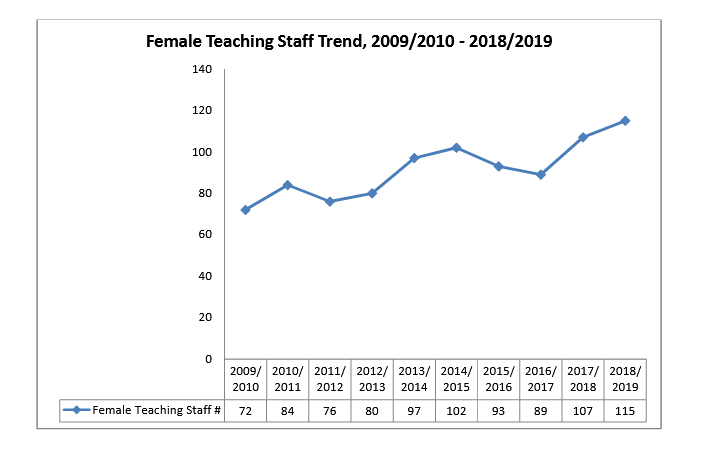
From 2009 to 2019, Female teaching staff trend has improved from 72 to 115, whiles female non-teaching staff improved from 21 to 37 within the same space of time.
3.2.1. Scholarships
- Specifically, the Carnegie Corporation grants, from 2006 to 2012 awarded scholarships to:
- One hundred and thirty-six (136) female undergraduate students to pursue courses in various fields from 2006 to 2013 when the contract period ended.
- Fifty-four (54) female postgraduate students also benefited from the Carnegie Scholarship including four (4) PhD students (all females).
- Similarly, the Vodafone Scholars Award has so far benefited:
- Forty (40) female undergraduate students in various science disciplines in the University since 2012.
- Moreso, Pent Asset and Wealth Management awarded seven (7) scholarships to needy but brilliant male (4) and female (3) students from 2018 -2020.
3.2.2. Statistics on Mentoring Programme in UEW
With the support from the Carnegie Corporation of New York in 2006 through to 2012, mentoring programmes were instituted to support female senior members in the University. Female Senior Members in all Departments were supported by the funds to professionally seek an upgrade. The statistics below depicts the various departments in the University that benefited from the support from Carnegie Project. These statistics captured both male and female mentees in those departments. On the whole, the majority of participants on the programme were females (as shown in Table 2, Table 3, Table 4 and Table 5).
Evidences from the interviews revealed that:
In the past, we used to have the Carnegie funding. That finding helped us to do our MPhil programmes. We also had females going through mentorship. We were assigned to some professors to help us go through our career. That one too was very good which emanated from the university to help us to settle into our career.
Institutionalizing mentorship has greatly helped but we can start from the students, the undergraduate. If there is a policy on mentorship, then the heads will be compelled to identify brilliant females to be mentored through various programmes and from that end will be brought up to join faculty. They will be encouraged to complete their M.Phils and pursue PhDs.
4. Discussions of Results
4.1. Efforts of male leaders in promoting gender-responsive environment
The finding that suggests that male leaders in UEW have been committed to addressing gender equality issues in the University is in line with the literature that touches on the positive roles of men as partners or allies in building a more gender-responsive and just society which simultaneously tends to empower women as well as focusing on the well-being of men and women to support gender equality and the empowerment of women and girls [9]. Similarly, these male leaders can be term as Pro-feminist who work in support of feminism and feminist goals, adopting processes of partnership rather than colonization and espousing an activist sensibility oriented towards social change and gender justice; to ensure that all sexes are involved in all institutional activities [15]. However, this finding of male support in promoting gender equality agenda is not supported by the research that indicated that men at the higher levels at workplaces may take for granted their privileged positions of leadership and fail to act to eliminate masculine establishments that do not promote gender equality to become public champions of gender equality. The male leaders of the University of Education, Winneba have played key roles in fronting gender work in the institution.
4.2. Improvement in female visibility in UEW through Mentorship and Scholarships
The finding that there has been lot of gains in the gender mainstreaming efforts in the University as a result of the instrumentality of male leaders is supported by a research, which showed eighty-five (85) evaluations undertaken by bilateral and multilateral agencies from 1992 to 2002, revealed that participatory strategies, which involved both women and men in the design and implementation of projects were effective strategies that can be adopted to redefine ways of dealing with gender issues (Hunt, 2004). Likewise, the World Economic Forum Report advocates for a more determined ways to improve and develop human capital for both women and men. In respect of this, all countries around the world are working tirelessly to bridge the gender gap in higher education through the institutionalization of strategies such as increase in financial resources and special budgets for gender work [7]. The University of Education, Winneba devoted external and internal funds to promote gender mainstreaming efforts. Carnegie funds and institutional budgetary allocations are set aside to provide mentorship and scholarship packages for both staff and students, aiding to address the gender representation gaps within the institution at faculty and staffing levels.
5. Conclusion
Based on the findings, the study concludes that:
- Gender equality requires proactiveness in the implementation of policies and strategies that seeks to promote gender friendly environment within higher educational institutions. Therefore, institutional Vice-Chancellors are to lead in this direction of ensuring the creation of an equitable society where men and women are free to pursue their academic and learning interests without hindrances and discriminations.
- Incentive packages such as mentorship and scholarship schemes are essential ways of promoting gender equality and addressing gender imbalances in educational delivery.
6. Recommendations
On the basis of these conclusions, the study therefore recommends that there is the need for:
- Revision in Gender Policies of Higher Educational Institutions
The present policies on gender in higher educational institutions focus on addressing the gender representation gap for staff and students levels without clear indicators for male involvement. Current policies on gender do not directly touch on ways of involving men as agents of change in the gender dialogue. There is therefore the need to reflect on the essence of involving men as agent of change for equality purpose. The policy on gender must promote human rights: the rights of women and men. There is the need to include sections in the policy which seeks to court the interest of men in gender work on our campuses, be more inclusive and more responsive to diversities among men/ women.
- Promoting gender equality through men’s groups on campuses of Higher Education
There is the need to promote men’s groups in higher education institutions in solving everyday gender equality problems. Example of a more specific activity to be implemented will be the need to involve male staff (teaching and non-teaching), male students and male teaching assistants in the drive to engage men in promoting gender equality.
- Male representatives should be trained on gender issues and how to be effective as male activists for promoting gender work. Gender Offices in collaboration with the Division of Human Resource will organise gender training for male representatives in the various faculties and departments within the institution. Specific dates and activities will be fixed in consultation with the Deans and Heads of Department to promote gender equality advancement in the University.
- For example, In Zimbabwe, UN Women’s He for She campaign has been branded as the Men to Men Campaign against Gender-Based Violence by its local implementing partner, SAYWHAT. Since its inception in November 2014, more than 150 young men have been trained as advocates and community leaders, Men to Men Campaign clubs have been established in 37 tertiary institutions across three districts, and more than 10,000 young men have been reached through various forms of media in Zimbabwe.
- Again, on April 5, 2015, the World Peace Centre Youth Mission and UN Global Youth Advocate organizers brought together more than 700 cyclists for a ‘He for She’ bicycle rally in Pune, India. The concept behind the rally was simple: for our society to move forward, they needed a balance of genders, just like one need balance to ride a bicycle. Prior to the rally, a week-long signature drive was organized in Pune to raise awareness about the need for a gender-equal society, and commit people to sign up for the campaign and the event.
- New educational and entertainment programmes, campaigns and alliances that focus on men championing gender issues
- These programmes should be introduced by the Gender Offices in higher educational institutions. All male senior members, senior staff and junior staff would be automatic members of the campaign and alliance group for championing gender issues. To facilitate this process, policy and programmes with men in focus to promote human rights, including women’s rights should be introduced to members of this group. The notion is to have a group of men who will fast track the incorporation of gender issues into their personal strategies and ways of doing things that have an equality and equity agenda in focus. These men will devise ways of incorporating gender equity issues at their departmental, union and faculty levels.
- The training of young men as volunteers to give interactive presentations on gender issues
There is the need to train young men to serve as volunteers to give presentations on gender issues. Areas to be touched on would include ending all forms of bullying and gender-based violence. Radio discussions and youth events on the role of men in ending sexual harassment and promoting an equal campus environment will be helpful.
- Male students should be informed during orientation programmes at various institutions of higher learning to avail themselves to be trained as volunteers to promote gender work on campus.
Author Contributions: Conceptualization; methodology; formal analysis; investigation; Resources; data duration; writing-original draft preparation; writing-review and editing; visualisation; supervision; project administration; Author has read and agreed to the published version of the manuscript.
Funding: “This research received no external funding”
Data Availability Statement: Data is available on request from the corresponding author.
Acknowledgments: We acknowledge respondents for their time with us.
Conflicts of Interest: “The author has declared no conflict of interest.” “No funders had any role in the design of the study; in the collection, analyses, or interpretation of data; in the writing of the manuscript, or in the decision to publish the results”.
References
- United Nations Women (2010). Gender mainstreaming. Retrieved from: https://www.un.org/womenwatch/osagi/pdf/e65237.pdf
- Phumzile, M.-N. (2014). Step it up for gender equality . UN WOMEN.
- Kucian, K., Loenneker, T., Dietrich, T., Martin, E., & von Aster M. (2005). Gender differences in brain activation patterns during mental rotation and number related cognitive tasks. Psychology Science, 47(1), 112-131.
- Commonwealth of Learning (2000). Theoretical perspectives of gender and development. International Development Research Centre.
- United Nations Women (2002). Gender mainstreaming: An overview. Retrieved from: https://www.un.org/womenwatch/osagi/pdf/e65237.pdf.
- Diversity Council (2018) Inclusion at work index, Australia, retrieved from: https://www.dca.org.au/research/project/inclusion-index
- World Economic Forum (2018). Global Gender Gap Report. World Economic Forum. Retrieved from: http://www3.weforum.org/docs/WEF GGGR_2018.pdf
- Hausmann, R., Tyson, L. D., & Zahidi, S. (2012). The Global Gender Gap Report, 2012. World Economic Forum.
- Connel, R. (2005). Change among the gate keepers, men and masculinities and gender equality in the global arena. Sage.[CrossRef]
- Peacock, D., & Irons, A. (2017). Gender inequality in cybersecurity: Exploring the gender gap in opportunities and progression. International Journal of Gender, Science and Technology, 9(1), 25-44.
- Dube, T. (2015). Gender disparities in educational enrolment and attainment in sub-Saharan Africa. Journal of Educational and Social Research, 5(3), 13-21.[CrossRef]
- Maanu, P. (2008). Gender gap in access to higher education in Ghana. Published Master’s Thesis, Institute of Educational Research, University of Oslo.
- Prah, M (2001). Gender issues in Ghanaian tertiary institutions: Women Academics and Administrators at Cape Coast University. Cape Coast University.
- Russell, D. M. (2017). Men make a difference engaging men for gender equality. UN Org.
- Flood, M. (2002). Frequently asked questions about pro-feminist men and pro-feminist men’s politics. XY Online.
- Connel, R. (2003). The Role of Men In Achieving Gender Equality. New York.
- Hunt, Juliet. (2004). Effective Strategies for Promoting Gender Equality. DAC Gender Net Tipsheet.
- UEW Strategic Plan (2019). The Strategic Plan of the University of Education, Winneba. UEW Press.
- Baumann, S., Renker, M., Schoepf, U. J., De Cecco, C. N., Coenen, A., De Geer, J., & Tesche, C. (2019). Gender differences in the diagnostic performance of machine learning coronary CT angiography. European Journal of Radiology, 119, 108657.[CrossRef]
- Takyi, S. A., Amponsah, O., Asibey, M. O., & Ayambire, R. A. (2021). An overview of Ghana’s educational system and its implication for educational equity. International Journal of Leadership in Education, 24(2), 157-182.[CrossRef]
- World Bank Report (2005). Gender mainstreaming in Ghanaian Universities. World Bank.
- National Accreditations Board (2020). Public Universities. National Accreditations Board.
- Yang, H. (2016). Transforming concepts into practices: Mainstreaming gender in higher education. Asian Journal of Women’s Studies, 22(4), 392-413.[CrossRef]
- Guo, J., Marsh, H. W., Parker, P. D., Morin, A. J., & Yeung, A. S. (2015). Expectancy-value in mathematics, gender and socioeconomic background as predictors of achievement and aspirations: A multi-cohort study. Learning and Individual Differences, 37, 161-168.[CrossRef]
- Apusigah, A. A. (2008). Is gender yet another colonial project? African Journal of Philosophy, 20, 23-44.
- Gender Newsletter (2007). Gender issues. Vol.3. UEW Press.