

The purpose of this study was to examine the Free Sanitary Pad Intervention Programme for Girls’ Education and School Retention in Tolon District in the Northern Region of Ghana. Quantitatively, a descriptive cross-sectional research design was adopted for the study. The study population consist of female menstruating school adolescent girls from these five St, Monica’s R/C, Nyankpala D/A, Nizamia E/A, Islamia E/A and Nawaria E/A junior high schools between the ages of 10 to 22 years who were beneficiaries of CAMFED intervention programmes in the Tolon district. A homogeneous purposive sampling technique was used to select the five junior high schools and the one-hundred and fifty (150) adolescent girls in their menstrual cycle stage. The main instrument for data collection was a semi-structured questionnaire. The data entry and analysis were done by using the SPSS version 20 software package. The data was edited, coded and analysed into frequencies, percentages with interpretations. The study concluded that, there were frequent distribution of free sanitary pads among the beneficiaries’ schools. The study also indicated that the education given to the respondents during the distribution of the free sanitary pads led to improved menstrual hygiene management practices. It is recommended that, schools within the Tolon district should put in place the necessary and adequate toiletry and disposal systems to ensure menstrual hygiene among students especially, girls, during that time of the month. It is also recommended that, Government should make it a priority to provide every school with some sanitary products and drugs to cater for the female student taken by surprise with her monthly flow or the pain associated with mensuration not interfering with her academic work.
Assessment of Free Sanitary Pad Intervention Programme for Girls’ Education and School Retention in Tolon District in the Northern Region of Ghana
May 20, 2022
July 24, 2022
August 11, 2022
November 03, 2022
This is an Open Access article, distributed under the terms of the Creative Commons Attribution 4.0 International License (http://creativecommons.org/licenses/by/4.0/), which permits unrestricted use, distribution and reproduction in any medium or format, provided the original work is properly cited.
Abstract
1. Introduction
The girl child’s schooling has become a well-known fact that has crucial value for national development. The rate of girl participation in formal schooling is one of the indicators of quality and content of academic programs. The benefits of girls’ education increase with each level of education [1]. Education enables girls to participate in development of the household and the community because educated women exercise their personal rights to take part in political and economic decision making both in the household and the community [2]. Adolescents comprise 20% of the total world population, 85% of whom live in developing countries [3]. Majority of secondary school girls in Ghana are adolescents and they represent a significant segment (44.8%) of the country’s population according to the United Nations Development Programme [4]. Menstruation is a natural process that occurs monthly in healthy adolescent girls and premenopausal adult women. During her lifetime, a woman manages menstruation on an average of 3,000 days. Menstruation is a phenomenon unique to females. The first menstruation (menarche) occurs between 11 and 15 years with a mean age of 13 years. Menstruation is still regarded as unclean or dirty in most societies [5]. Hygiene during the period of menstruation is fundamental to the dignity and well-being of girls. However, there is a stigma around menstruation. Some evidence indicates that, the lack of education and traditional beliefs surrounding menstruation contributes to girls missing school during menstruation [6].
A study reported that, girls who do not receive premenstrual training are likely to report that menstruation has an effect on their schooling [7]. Females everywhere understand what it is like to get their first period. Millions of girls living in developing countries like Uganda, Nigeria and Ghana skip up to 20% of the school year simply because they cannot afford to buy mainstream sanitary products when they menstruate [8]. AFRIpads Foundation also stated that, a girl who is absent from school for 4 days is due to her monthly menstrual flow. These facts have been quoted in the media with claims such as; “it is estimated that a girl loses more than a full month of classes in a school Year” [9]. In Ghana, research reported that, girls miss school as many as five days a month due to menstruation [10].
1.1. Menstrual Hygiene Management and Practices
Insufficient knowledge regarding menstruation and menstrual hygiene management results to none preparation for onset of menarche, misconceptions about disposal of soiled or used absorbent feminine sanitary pad and improper management of menses among adolescent girls at school [11]. Equipping the girl child with the necessary knowledge and skills needed to safely, confidentially and effectively manage menstrual hygiene is paramount. In a study on menstrual hygiene management (MHM) in Ghana, it was shown that parents and teachers were poorly equipped to improve child knowledge on menstrual hygiene management especially schools with gender mainstream [11]. Poor menstrual hygiene in developing countries like Ghana has been an inadequately recognized problem and has not received adequate attention [12, 13, 14]. Menstrual Hygiene Management refers to the practice of using clean materials to absorb menstrual blood that can be changed privately, safely, hygienically, and as often as needed for the duration of the menstrual cycle [15]. Menstrual Hygiene deals with the special health care needs and requirements of women during monthly menstruation or menstrual cycle [12]. It could also be said to be the all-inclusive articulation, awareness, information and confidence to manage menstruation with safety and dignity using safe hygiene materials together with adequate water, soap and space for changing, washing, bathing and disposal with privacy and self-worth. In agreement with the above, the Water Supply and Sanitation Collaborative Council (WSSCC) reiterate that menstrual hygiene management is not the production and distribution of sanitary pads or hygiene education only [16]. Menstrual hygiene management has always been an issue that is to be dealt by women of reproductive age and adolescents in particular. The level of hygiene required during menstruation had remained an issue that need to be addressed, however, there is limited literature available to address this aspect of MHM. These areas of special concern include choice of the best “period protection” or feminine hygiene products, how often and when to change the feminine hygiene products and bathing care of the vulva. Provisions for good menstrual hygiene include home-made remedies like pieces of cotton cloth which are either placed on a woman’s undergarment or on a homemade belt that wraps around the waist. These cloths can be washed, dried and used again. Commercially made menstrual hygiene products for women’s hygiene during menstruation include pads, tampons and cups may be available but not easily accessible or affordable especially in rural communities [17]
Menstrual hygiene management is a neglected aspect of public health especially reproductive health [14]. Water, Sanitation and Hygiene (WASH) sector in developing countries including India and its relationship and impact on achieving the Millennium Development Goals (MDGs) is rarely acknowledged [14]. The above assertion was supported by another research that, adolescence is a transition of the girl child from girlhood to womanhood thus there is a need for good menstrual hygiene which is important for their health, education and self-esteem [18]. Menstrual hygiene is crucial in the reproductive life of every woman. It is remarkable that poor menstrual hygiene contributes extremely to reproductive and urinary tract infections; therefore, adolescent girls should have sound knowledge on menstrual hygiene and improve their menstrual hygiene practices [19]. Menstrual hygiene is an issue that needs to be addressed at all levels [19]. One of the numerous issues identified by the findings from the review of menstruation hygiene management among School girls in West Africa revealed that, about 95% of respondents used reusable clothes as a result of inaccessibility, inadequacy and non-affordability of sanitary pads [20]. This study further buttressed that a very small proportion of girls used tampons and menstrual cups while the majority used other feminine products which included cotton, wool, socks, toilet paper, pages torn from school exercise books, and additional clothing worn as menstrual protection [20]. A study conducted in West Africa showed that, the most commonly used feminine hygiene products are reusable cloths and sanitary pads among schoolgirls [21]. Girls made reusable cloths using scraps from shirts, dresses, old towels, or blankets [20]. The empirical evidence indicates that, though adolescence is a healthy period of life, many adolescents are often less informed, less experienced, less comfortable and very reluctant to discuss issues around MHM. In many parts of developing countries, a culture of silence surrounds the topic of menstruation and related issues, as a result, many young girls lack appropriate and sufficient information regarding menstrual hygiene. This may result in incorrect and unhealthy behaviour during their menstrual period [22, 23]. Subsequently, lack of appropriate WASH facilities has been identified to be affecting MHM including disposal of menstrual hygiene materials, inadequate sanitation and hygiene facilities, and no disposal systems for menstrual materials [22]. This does not vary by age, indicating that across the reproductive years, the majority of women were unable to adequately meet their MHM needs. This then give us an idea of what fate befalls adolescent girls across Ghana.
Based on the research findings and evidence from MHM research conducted by UNICEF, the study revealed a strong correlation between the lack of gender-separated latrines in schools and absenteeism among girls 9–14 years old [6]. Only a third of schools surveyed had latrines, and just 6.9 per cent of girls said that their schools had water available in a private area to wash themselves. Almost none (0.7 per cent) of the schools surveyed offered sanitation facilities that enabled girls to change their sanitary cloths while at school, nor did any of these schools make sanitary cloths available in the case of an emergency [6].
1.2. Importance of Adequate Menstrual Hygiene Management
Disease outbreaks in a geographical location could be influenced by human attitudes resulting from hygiene practices which could cause various health problems or may even lead to death [24]. Absence or poor menstrual hygiene management especially among adolescent girls have significant consequences, with proven association between it and reproductive, urinary tract infections and diseases which can be assessed in terms of sanitary protection [7]. This is because for example the use of unclean sanitary cloth to absorb blood flowing from the cervix during menstruation exposes the individual to infection [25]. The impact of this practice on the society at large is the fact that poor negated efforts targeted at achieving goals 2 and 5 of the erstwhile Millennium Development Goals (MDGs) which were the achievement of universal primary or basic education and the improvement of maternal health respectively before the end of year 2015 [25]. On the strength of the foregoing, it is obvious that if is not put in the front burner of discourse, efforts at achieving goal 3 (good health and wellbeing), goal 4 (quality education) and goal 6 (clean water and sanitation) of the newly adopted Sustainable Development Goals (otherwise known as the Global Goals which builds on the MDGs), would also be frustrated [4]. Thus, learning about menstrual hygiene management among adolescents is very important so as to know and tackle various health issues associated with it. This is because, a girl child has a right to education which is an intelligent asset that yields long term gains for her immediate family, nation and enhances sustainable development for future generations [26].
Increase in the education of girls in developing countries is associated with a number of important positive health, social, and economic outcomes for a community. Hence, the event of menarche tends to coincide with girls’ transition from primary to secondary education and may constitute a barrier for continued school attendance and performance. The intervention that has positively affected girls’ enrolment and retention is the distribution of sanitary materials for free [8]. Adolescents face numerous challenges which could be hostile to their health including menstruation is considered important, as it has health implications especially in terms of increase vulnerability of the reproductive tract (Reproductive Tract Infections; RTI) [27]. Poor women and girls in many countries could not afford purpose made sanitary pad, instead, the vast majority of women and girls used rags. Once used, these rags were washed quickly and used several times with no safe water and soap to wash them properly. World Health Organization and United Nations Internal Children’s Fund defines menstrual hygiene materials this way; “they are products used to catch menstrual flow such as pads, cloths, tampons or cups [29].” Some interventions have been carried out by the following organizations; United Nations Children’s Fund (UNICEF), Campaign for Female Education (CAMFED), Water, Sanitation and Hygiene (WASH). These interventions are meant to prevent school absenteeism among menstruating girls who cannot buy sanitary materials while improving menstrual hygiene and increasing girls’ education.
1.3. Absenteeism Associated with Menstruation
Menarche attainment or onset of menstruation is associated with MHM issues and this could become a barrier to the adolescent girls’ education [30]. This is because they have the fear of staining their school uniform with menstrual blood, abdominal cramps and loss of concentration during school lessons [25]. Research has shown that, about 95% of Ghanaian girls do not attend school during menstruation, while 53% of girls in Nairobi, Kenya, and 51% of Ethiopian girls absent themselves from school mostly as a result of absence of sanitary resources in schools [31]. Another research revealed that, the fear of stigmatization as a result of complaining about lack of or insufficient sanitary materials or soiled uniforms also led to absenteeism from schools for the total days of her menstruation [32]. These findings therefore prove that, MHM has a significant influence in improving school attendance [33]. For example, a 9 – 14% improvement in school attendance due to provision of sanitary products has been recorded in Ghana [25]. This implies that, enhancing MHM is important to the actualization of the MDG goal 3: “Eliminating gender disparity in primary and secondary education, preferably by 2005 and in all levels of education no later, as well as attaining the sustainable development goals (SDG) [34].
1.4. Socio-Economic Factors
Adequate menstrual hygiene management can be linked to socioeconomic factors underlining the adolescent girls’ hygiene behaviour especially good hand washing practices and prevention of dirt and smell into menstrual blood [35]. Socio-economic factors are the most influential in determining MHM, in that, when using unsanitary or low standard menstrual absorbent materials, which are common among adolescent girls from poor or low-income backgrounds, they tend to be at higher risks of infection exposure compared to girls from middle class or high socio-economic status [30]. Wearing of torn or blood-stained clothes during menses increases vulnerability and insecurity of the girl child. Poverty and poor financial status therefore play major roles in determining the type of sanitary products girls use. There is therefore the need for improved access to menstrual resources including menstrual information before menarche [36]. More so, adolescent girls from low socioeconomic class have a higher disease burden associated with inadequate MHM which may further increase their vulnerability to HIV, Human Papillomavirus Infection and adverse pregnancy outcomes [37]. This implies that, menstrual hygiene management of girls should be promoted to avoid risk of infection in the menstrual cycle.
1.5. Risk of Infection in the Menstrual Cycle
There are health risks adolescent girls are predisposed to as a result of improper hygiene practices during menstruation, sometimes even leading to stigmatization because menstrual blood has a bad odour which can spread all through the body when proper hygiene practices are not exhibited by the girl child. These outcomes are commonly due to unhygienic practices such as use of dirty sanitary facilities, absence or poor hand washing skills, improper genital washing during menstruation, and cultural practices such as the cutting of the genitalia popularly known as female circumcision, with pain experienced during menstruation (dysmenorrhea) causing discomfort and increasing susceptibility to acquiring further health related issues [32]. The risk of infection seems really high during menstruation because at this time, the mouth of the cervix is open and allows blood to come out into the vagina and out of the body [32, 38]. This process creates a passageway for bacteria to travel back into the uterus and pelvic cavity. Poor hygiene practices during menstruation have also been noted to increase female infertility and morbidity due to reproductive tract infections [39].
There are many studies on menstruation and menstrual hygiene [21]. However; there is limited research specifically on the assessment of the free sanitary pad intervention programmes for girls’ education and school retention. Most adolescent girls are vulnerable because of lack of sanitary materials and as a result there are increases in school absenteeism by menstruating girls [38]. There are health risks to which adolescent girls are predisposed as a result of improper hygiene practices during menstruation. Menstrual blood has a bad odour which can spread through the body when proper hygiene practice is not exhibited by the girl child. These outcomes are commonly due to unhygienic practices and use of inappropriate materials. Therefore, this study sought to assess the influence of the free sanitary pad intervention programme currently running in some schools and how it relates to the girls’ education and school retention in the Tolon district. The purpose of this study was to examine the influence of the free sanitary pads intervention programme in improving girls’ education and school retention in Tolon district in the Northern Region of Ghana. The study sought to answer these research questions – (1) what is menstrual hygiene and its related challenges in schools? (2) How has school absenteeism affected adolescent girls in their menstrual days? (3) How frequent are the sanitary materials given serves as an intervention of adolescent enrollments in junior high school?
2. Methods and Materials
Quantitatively, a descriptive cross-sectional research design was adopted for the study. The study population consist of female menstruating school adolescent girls from these five schools; St. Monica’s R/C, Nyankpala D/A, Nizamia E/A, Islamia E/A and Nawaria E/A junior high schools between the ages of 10 to 22 years who were beneficiaries of CAMFED intervention programmes in the Tolon district. A homogeneous purposive sampling technique was used to select the five junior high schools and the one-hundred and fifty (150) adolescent girls in their menstrual cycle stage. A homogeneous purposive sampling method was used to attain the targeted number of beneficiaries to achieve a sample whose units (e.g., people, cases etc.) share the same (or very similar) characteristics or traits (e.g. a group of people that are similar in terms of age, gender, background etc.). To enable researchers to get information when dealing with a sample that has similar characteristics [40]. The main instrument for data collection was a semi-structured questionnaire. The data entry and analysis were done by using the SPSS version 20 software package. The data was edited, coded and analysed into frequencies, percentages with interpretations.
3. Results
3.1. Menstrual Hygiene and Its Related Challenges in Schools
This section presents results on the research question - what is menstrual hygiene and its related challenges in S schools? Maintaining healthy menstrual practices is of great benefits as it prevents infections and contributes towards self-esteem of the girl child. The most important of a hygiene practice is the use of appropriate menstrual hygiene products. When respondents were asked in respect to the practices they commonly used, all of the respondents indicated that they used sanitary pads during menstruation. This implies that, all of the respondents benefited from the sanitary pad intervention regularly. The number of times a pad is changed is also a key hygiene practice. The frequency with which a female changes her pad depends on many factors including the type of pad, the flow, how comfortable they are, among others. According to the findings, majority of the respondents (82%) indicated that they changed their pads at least three (3) times every day (after every 8 hours) whiles 13.3% indicated changing their pads at least two (2) times daily. Only 4.6% of the respondents reportedly changed their pad more than three times daily. This could suggest that, more than half of the respondents changed a fresh pad every 8 hours (3 times daily) which is the general recommended range. Taking frequent baths during that time of the month is also among the recommended practices. The data revealed that, at least, more than half (52%) of the respondents took their bath at least 3 times daily whiles 14.6% took their bath more than 3 times. Only 33.3% took their bath two times every menstruating day. This indicates that, this particular hygiene practice is largely observed by the female students.
Menstrual pain is sometimes associated with the flow, which can sometimes be unbearable for the female. Students were asked whether they usually felt the associated pain of menstruation. A few (10%) responded in affirmation whiles the majority (90%) indicated otherwise. Of those who felt the associated pain, 13.3%, resorted to taking pain killers whereas the remaining (2.6%) used hot water. This is represented in Table 1 below.
3.2. School Absenteeism and Its Related Factors Affecting Respondents
This sub-section presents results on the research question – How has school absenteeism affected adolescent girls in their menstrual days? Absenteeism among students is identified as one of the consequences female students who menstruate face. This is especially the case where young girls are not exposed to hygiene practices during that time of the month. When asked the number of days in a month students missed school, about 98.7% indicated they did not miss school whereas 4.7% indicated only a day or two days in a month. As to whether their absence from school was related to menstruation, 1.3% responded in affirmation whilst 98.7% indicated otherwise. The two respondents who reportedly missed school as a result of menstruation further indicated that, they were out of school only a day or two in a month. It is also worth noting that, respondents occasionally missed school due to other reasons, some of which include sickness (143, 95.3%) and house chores (7, 4.7%). This finding reveals that, the free sanitary pad intervention has greatly reduced absenteeism among female students. This is depicted in Table 2 below:
The study also found out from respondents whether there were some school related factors inimical to menstrual hygiene practices and health in their schools. Majority (90%) of the responding girls indicated that, there were some school related factors that negatively affected their hygiene practices during menstruation. The concerns tabled by students included the absence of adequate toiletries and washrooms, inadequate sanitary materials in schools’ dispensary, and lack of adequate waste disposal systems. A handful (2, 1.3%) disagreed and 8.7% could not express their stance that is, they did not know whether there are adequate toiletries and washrooms, as well as inadequate sanitary materials in schools’ dispensary. This indicates that, the schools do not have proper systems in place to make female students comfortable during menstruation.
3.3. Distribution of the Free Sanitary Pads in Schools
This sub-section presents results on the research question - How frequent does the sanitary materials given serves as an intervention of adolescent enrollments in junior high school?
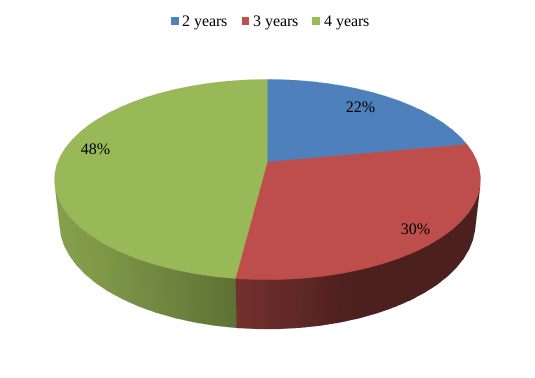
This was to enable the researchers to ascertain whether the intervention influenced school attendance of the respondents. The study respondents affirmed that they had benefited from the free sanitary pad intervention programme. They indicated that prior education was given on how to use the sanitary pads for their monthly menstrual period. When asked the number of years the respondents had been beneficiaries of this intervention, 48% (72) indicated being beneficiaries for about 4 years whereas 30 % (45) indicated 3 years. The remaining 22% (33) however, indicated they benefited from this intervention for the past two years. This revelation suggests that, the respondents started to benefit from the intervention as at when they attained puberty. Therefore, young adults who had just started menstruating were not expected to be beneficiaries for long as compared to their peers who experienced puberty a couple of years ago.
As to whether the intervention improved students’ school retention, all the respondents (100%; 150) agreed in affirmation. Half of the respondents 75 (50%; 75) however cited that, they were now able to afford sanitary pad and 35 (23.3%) indicated that they no longer stained their dresses. The remaining (26.7%; 40) indicated that, people were no longer able to tell when they menstruated. This finding did not only reveal the importance of how the intervention made the respondents feel comfortable in school hence, leading to school retention among female students. Stigmatisation during menstruation, especially among colleagues is also of great concern for young female adolescents. According to the participating students, the intervention has really reduced stigmatization among their colleagues since people hardly notice that they were in that period of their cycle. In respect to the intervention and its related benefits, it is worth noting that, 90% (135) of the respondents affirmed that, the free sanitary pad intervention has had a positive impact on school retention and has improved menstrual hygiene since these hygiene products were enough to take them through their cycle. Only 1.3% (2) disagreed while the remaining 8.7% (3) were not sure. The results are shown in figure 1 below.
4. Discussion
The importance of educating the girl child cannot be over emphasised. Just as in the case of the male, educating the girl child enables them to participate in economic and political decisions both in the household and community levels [10]. However, among the many things that disadvantage the adolescent girl, especially in developing countries is lack of access to basic menstrual hygiene products. In response to the growing concern of this menace in the less privileged communities in the country, several international organisations have intervened with free sanitary pad programs. These programs seek to among other things, give unconditional access to sanitary pads for all girls in deprived communities to ameliorate the impact of this natural phenomenon that could debar them from access to education.
This study, in an attempt to assess the impact of the free sanitary pad intervention among female students, targeted girls between the ages of 12 and 22 years in five selected Junior High Schools in the Tolon district. In total, 150 female students were sampled from the five (5) schools comprising of students from JHS 1, JHS 2, and JHS 3. From the data gathered, it was revealed that, the free sanitary pad distribution program had been ongoing since its implementation in the targeted schools. Once a female student reached menarche, she automatically became a beneficiary of this intervention. It is also worth noting that, the least number of years a female student had been a beneficiary was 2 years. This indicates that the intervention has been on-going for a long time.
The study found that, the respondents were not just given these sanitary materials but most importantly, they were educated on how to use them appropriately. This finding is in line with the definition of menstrual hygiene [16]. They recognised menstrual hygiene management beyond the distribution of sanitary products, but also, had a lot to do with awareness, information and confidence to manage menstruation with safety and dignity using safe hygiene materials. This intervention has changed the narrative in the Tolon district as adolescent girls no longer made use of reusable cloths made from shirts, dresses, old towels, or blankets as is the case in some other West African countries [20].
Among the positive effects of the free sanitary pad intervention was that, it resulted in an increment of girls’ enrolment and increased school retention. This finding confirms a previous study that found MHM had significant influence on school attendance [33]. The study was supported by earlier research that, the provision of free sanitary pads improved upon school attendance [25]. Another worry for the girl child that contributed to abstinence from school had to do with the stigma attached to them by their colleague boys and the community at large. This practice, as noted by UNESCO can seriously undermine girls’ confidence and self-esteem, particularly when they become the target of teasing [2]. The study found that, the free sanitary pad intervention led to a reduction in the stigma attached to female students among the respondents. Hygiene practices during menstruation have been identified as key in MHM among adolescent girls. Menstrual hygiene management is a neglected aspect of public health especially reproductive health [14]. The findings revealed that, there was an improvement in hygiene practices among the responding students within the Tolon district. This intervention as evidenced through this research has ensured that young adolescent girls do not use unhygienic materials in managing their menstrual flow. The sanitary pads used by the respondents were changed at least every 8 hours. Further, taking regular baths were common among the young adolescent girls as it was a highly recommended practice during menstruation. In managing the accompanying pain of menstruation, painkillers and the old tradition of using hot water, were the largely used practices among the adolescent girls. This improved MHM among the respondents is was an indication that, there was a very low likely risk of exposure to reproductive health, urinary tract infections and diseases due to poor sanitary protection [7].
Abstinence from school is regarded as one of the consequences of lack of access to hygiene products in deprived communities. This is a great concern as some studies have confirmed that, insufficient sanitary materials or soiled uniforms also lead to absenteeism from school for the total days of menstruation [32]. However, this was partly attributed to abstinence from school by girls in developing countries to lack of mainstream sanitary products to use when they menstruate [8]. The study however revealed that, with this intervention, almost none of the students ever missed school as a result of mensuration. Though students did miss school in some instances, the reasons were largely attributed to ill health or attending to house chores. This indicates that, the intervention reduced, if not eliminated, menstrual-related abstinence from school.
Institutional factors, and how it contributed towards MHM were also ascertained. It is worth noting that, MHM is the responsibility of all and sundry including the schools. Having appropriate facilities to cater for the need’s female students before, during and after the time of the month is very critical to ensure her uninterrupted attention and school retention for effective learning. The study thus revealed that, the sampled schools in the Tolon district woefully lacked the necessary systems to support the responding students when they were menstruating. The concerns indicated by the respondents included lack of adequate toiletries and washrooms, lack of sanitary pads in school dispensary, and inappropriate/ malfunctioning disposal systems for used sanitary pads. This revelation is indicative of the inadequate support by the schools in the Tolon district towards ensuring appropriate MHM.
5. Conclusions and Recommendations
The study concluded that, there were frequent distribution of free sanitary pads among the beneficiaries’ schools. Other accompanying souvenirs, including books and pens, were also received by the beneficiaries. School attendance significantly improved with this intervention, which saw many young girls free of the associated stigma that accompanied menstruation. The fear of being teased by their colleagues or staining their school uniforms became a thing of the past with the inception of this program. The study also indicated that, the education given to the respondents during the distribution of the free sanitary pads led to improved menstrual hygiene management practices. Although the schools in the district lacked adequate systems in place to ensure appropriate hygiene practices, while in school, the respondents, personally found ways to observe these practices including changing their pads within the recommended intervals, taking regular baths when menstruating, among others.
It is recommended that Schools within the Tolon district should put in place the necessary and adequate toiletry and disposal systems to ensure menstrual hygiene practices among students. This will go further to augment the efforts of CAMFED, UNICEF among other non-governmental organizations working tirelessly to improve MHM among adolescent girls in less privileged communities. It is also recommended that; School authorities should keep emergency sanitary pads and painkillers in the dispensary for use in case a student is taken by surprise with her monthly flow or the pain associated with mensuration is interfering with her academic work. It is further recommended fa holistic approach towards MHM by government should be taken into serious consideration. Sanitary products are necessities of every adolescent girl and should be considered as a pre-requisite for effective teaching and learning. Government should therefore make it a priority to provide every school with some sanitary products to cater for the female students.
Author Contributions: Conceptualization FYL, NKN and SHS; methodology, FYL, NKN and SHS; validation, FYL, NKN and SHS; formal analysis, FYL, NKN and SHS investigation, FYL, NKN and SHS.; resources, FYL, NKN and SHS.; data curation, FYL, NKN and SHS; writing—original draft preparation, FYL, NKN and SHS ; writing—review and editing, FYL, NKN and SHS.; visualization, FYL, NKN and SHS ; supervision, FYL, NKN and SHS .; project administration, FYL, NKN and SHS; All authors have read and agreed to the published version of the manuscript.
Funding: “This research received no external funding”
Data Availability Statement: Data is available on request from the corresponding author.
Acknowledgments: We acknowledge the participants in this study.
Conflicts of Interest: “The authors declare no conflict of interest.” “No funders had any role in the design of the study; in the collection, analyses, or interpretation of data; in the writing of the manuscript, or in the decision to publish the results”.
References
- Rugh, N. (2010). Girl Education, Menstrual practices and reproductive problems: a study of adolescent girls in Rajasthan. Journal of health management, 7(1),, 91-107.[CrossRef]
- UNESCO. (2010). Goog policy and practices in health education: Puberty Education & Menstrual Hygiene Management. http://doi.org/10.1007/springerReference 69942.[CrossRef]
- Kumbeni, M. T., Otupiri, E., & Ziba, F. A. (2020). Menstrual hygiene among adolescent girls in junior high schools in Rural Northern Ghana. Pan Afr Med J., 29, 37: 190. doi: 10.11604/pamj.2020.37.190.19015. PMID: 33447345; PMCID: PMC7778209.[CrossRef] [PubMed]
- United Nations Development Programme, S. (2010). Human development reports (2001). New York, NY: Oxford University Press.
- Yesmin, K. (2008). Menstrual hygeine management and school absenteeism among female adolescent school student in North east Ethopia. BMC Public Health,14(1), 1118.
- UNICEF. (2012). Assessment of Menstrual Hygiene Management (MHM) in secondary schools in Katsina state of Nigeria. Journal of Clinical and Diagnostic Research, 5(5), 1027-1033.
- Aniebue, U. U., Aniebue, P. N., & Nwankwo, T. O. (2009). The impact of premenarcheal training on menstrual practices and hygiene of Nigerian school girls. The Pan African Medical Journal, 2, 9. http//doi.org/10.4314/pamj.v2i1.51708, 30-35.[CrossRef]
- Crofts, T., & Fisher, J. (2012). Menstrual hygiene in Ugandan schools: an investigation of low-cost sanitary pads. J Water Sanitation Hyg Dev, 2, 50–8. 10.2166/washdev.2012.067[CrossRef]
- Afripad. (2012). Menstrual hygeine among adolescent school girls: an urban community. Int Health Sci Res, 4(11),, 15-21.
- Scott, E. (2010). Menstrual hygeine among school girls in Tano West. Journal of Water Sanitation and Hygeine for Development, 2(1),, 50-58.
- UNICEF. (2015). Menstrual hygiene management in Indonesia: understanding practices, determinants and impacts among adolescent school girls. Clinical and Experimental Reproductive Medicine,38(2),93. http://doi.org/10.5653/cerm.2011.38.2.93.[CrossRef] [PubMed]
- Senthil, J. (2013). Determinants of menstrual hygiene practices among unmarried women in India. Applied Science Research,5(4), 137-145.
- Kansel, N. (2016). Menstrual hygeine practices in context of schooling; A community medicine;. official publication of Indian Association of Preventive and Social Medicine, 4(1), 39.[CrossRef] [PubMed]
- Yasmin, S., Manna, N., Malik, S., Ahmed, A., & Paria, B. (2013). Menstrual hygeine among adolescent school students: An in-depth cross-sectional study in an urban community of West Bengal,India. IOSRJ Dent Med Sci, 5(6),, 22-26.[CrossRef]
- Monitoring, P. (2016). Accountability 2020, snapshot of indicators, 2016. Nigeria. BMC Public Health, 12(1), 192. http://doi.org/10.1186/1471-2459-12-192.
- WSSCC. (2014). Menstrual hygiene management, behaviour and practices in Lounge, Senegal. Retrieved September 4, 2014, from http://wsscc.org/wp-content/upload
- Lawan, U. (2010). Menstruation and menstrual hygiene among adolescent school girls in Kano Northwestern Nigeria. African journal of reproductive health, 14(3),, 201- 207.
- Juyal, R. K. (2012). Practices of menstraul hygeine among adolescent girls in a district of Uttarakhand. Indian Journal Association of Preventive & Social Medicine, 4(1),, 39.
- Rajakumari, A. (2015). A study on knowledge regarding Menstrual Hygeine among Adolescent School Girls. Global journal of current research vol, 3(4),, 111-116.
- Vaughn, J. G. (2013). A Review of Menstrual Hygiene Management among Schoolgirls in Sub-Sahara Africa. The Pan African Medical Journal,2,9., 93-96.
- Blessing, E. (2016). A study on menstrual hygiene management among basic school girls in Legon, Accra. http://ugspace/ug.edu.gh.
- Onyegegbu, N. (2015). Improvement of Menstrual Hygeine Management among Girls in School and Communities in Nigeria;. Retrieved october 22, 2015, from A Case for Active Contribution of various stakeholders 4th Annual Virtual Menstrual Hygeine Management in Schhols. Conference: https//www.unicef.org/wash/schools/files/Nigeria
- Garg, S., Sharma, N., & Sahay, R. (2001). Socio-cultural aspect of menstruation in an urban slum in Delhi, India. Reproductive health matters, 9(17),, 16-25.[CrossRef]
- Assefa, M., & Kumie, A. (2014). Assessment of factors influencing hygiene behaviour among school children in Mereb-Leke District, Northern Ethopia: a cross sectional study . BMC Public Health, 14(1), 1000. http://doi.org/10.1186/1471-2458-14-1000.[CrossRef] [PubMed]
- Chin, L. (2014). The effect of menstrual hygeine management on rural women and girls quality of life in Savannakhet, Laos,(May). Period of Shame.
- Boosey, R., Prestwich, G., & Deave, T. (2014). Menstrual hygeine management among school girls in Rukugiri District of Uganda and the impact on their education: a cross sectional study. Pan African Medical Journal, 19, 1-13. http//doi.org/10.1186/1742-4755-11-77., 1-13.[CrossRef] [PubMed]
- U.S. Department of Health and Human, S. (2003). Retrieved october 2, 2006, from Health status of adolescents: http://mch.hrsa.gov/chusa03/pages/status adolescents-htm
- Ahmed, R., & Yesmin, K. (2008). Menstrual hygiene. Breaking the silence Water Aid Bangladesh intiative, 1-5.
- WHO/UNICEF (2012). Consultation on draft long list of goal, target and indicator options for future global monitoring of water, sanitation and hygiene. Available at https://washdata.org/sites/default/files/documents/reports/2017-06/JMP-2012-post2015-consultation.pdf.
- Ribeiro, S. K., Kobayashi, S., & Beuthe, M. (2013). Transport and its infrastructure. Climate change 2007: Mitigation. Contribution of working group IIIto the Fourth Assessment Report of the Intergoverment Panel on Climate Change, 627 (Apirl 2013), 324-386. http//doi.org/10.1002/jid.
- Yagnik, A. S. (2015). Knowledge (K), Attitude (A), and Practices (P) of women and men about Menstrual and Menstrual practices in Ahamedabad India:. Implications of Health Communication Campagns and Interventions, (August).
- Kirk, J., & Sommer, M. (2006). Menstraution and body awareness: linking girls' health with girls' education. . Retrieved from ... Tropical institute (KIT), Special on Gender and Health, 1-22.
- Sommer, M. (2010) Putting menstrual hygiene management on to the school water and sanitation agenda. Waterlines, 29(4), 269-278[CrossRef]
- Parker, A. H., Smith, J. A., Verdemato, T., Cooke, J., Webster, J., & Carter, R. C. (2014). Menstrual Management: a Neglected Aspect of Hygeine Interventions Postgraduate Medicine, 125(3), 33-46. http/doi.org/10.3810/pgm.2013.05.2650.
- Assefa, M., & Kumie, A. (2014). Assessment of factors influencing hygiene behaviour among school children in Mereb-Leke District, Northern Ethopia: a cross sectional study . BMC Public Health, 14(1), 1000. http://doi.org/10.1186/1471-2458-14-1000.[CrossRef] [PubMed]
- Omidvar, S., & Begum, K. (2010). Factors influencing hygenic practices during menses among girls from South India- A cross sectional study Factors infleucing hygenic practices during menses among girls from South India- A cross sectional study,2(12),411-423.
- Sumpter, C., & Torondel, B. (2013). A Systematic Review of the Health and Social Effects of Menstrual Hygeine Management 8(4). http://doi.org/10.1371/journal.pone.006 2004.[CrossRef] [PubMed]
- Abajobir, A., & Seme, A. (2014). Reproductive health knowledge and service utilisation among rural adolescents in east Gojjam zone, Ethopia: a community based cross-sectional study. BMC Health Services Research, 14(1), 138. http://doi.org/10.1186/1472-6963-14-138.[CrossRef] [PubMed]
- Ramaswamy, D. (2011). Indian institute of biotechnology in collabration with soothe health care "relationship between poor menstrual practices and cervical cancer". Reproductive health matters, 9(17),, 19-22.
- Akinde, O. (2009). A Pilot of students learning outcomes using didactic and socractic instructional methods. Educational Resaerch and Review 10(21), 2821-2833,2015.[CrossRef]