

Green cloud computing is part of endeavors to develop sustainable data center ecosystems and, more importantly, nurtures a mindful alignment between environmental considerations and our cloud computing practices. This view is reinforced with the requirements of resource and energy minimization, as well as clean computing. This paper surveys the current practices, strategies, and significant aspects involved in moving towards green cloud computing, providing energy-efficient data centers. The energy efficiency criteria call for unified strategies in power-proportional components, big data storage, server systems, and power supply units to save holistic energy. In addition, there are significant challenges in moving towards green cloud computing for service providers and data center operators. We address various energy-conscious resource management technologies and discuss the importance of developing innovative, effective green management solutions. Data centers are ubiquitous but inherently more conspicuous to begin to see the urgency of making them sustainable in our ecological environment. With this in mind, this paper encapsulates the multidimensional issues and increased complexities of bringing up green solutions in cloud computing practices and provides guidance and potential strategies. We outline, realign, and insist on adopting strategies in practice not only from the technical aspect but also in strengthening partnerships and investigating strategies to further dissect challenges, converge solutions, and consider our impact in even more areas of study.
Green Cloud Computing: Strategies for Building Sustainable Data Center Ecosystems
October 16, 2020
November 29, 2020
December 14, 2020
December 26, 2020
This is an Open Access article, distributed under the terms of the Creative Commons Attribution 4.0 International License (http://creativecommons.org/licenses/by/4.0/), which permits unrestricted use, distribution and reproduction in any medium or format, provided the original work is properly cited.
Abstract
1. Introduction
Cloud computing is a rapidly expanding enterprise computing model that a growing number of service providers are adopting as part of their corporate ecosystem strategy. As a result, the core service infrastructure facilities that support data center operations are responsible for a significant and increasing proportion of the world’s total energy and water use and, in turn, contribute to harmful emissions of heat-trapping gases and hazardous waste. In current usage, "cloud" is a common metaphor that refers to the utility, scalability, and manageability features that data centers are expected to provide to their users. No longer simply a metaphor, "The Cloud" is the newest and most immediate data center technology undergoing rapid growth in interest from a rapidly increasing client base.
When sized for mainstream adoption, efficiency features frequently take years to fully integrate and must be prioritized during new facility construction or major infrastructure refurbishments in existing data center operations. Just as server cluster computing has led to Internet cloud computing services, "Green IT" is catalyzing the development of both locally optimized and remote cloud computing technology. Now rapidly expanding, the cloud computing ecosystem offers innovative service improvement opportunities that can simultaneously exploit and promote green operations of data center services. As the information technology ecosystem grows and evolves, energy costs and regulatory pressures will converge to create an information-based energy information infrastructure focused on green technology strategies that will enable or leverage sustainable practices in commercial, enterprise, and data center operations, and perhaps cloud computing ecosystems. Green cloud computing will use advanced ecosystem practices to shape an environment that is inherently designed to further green computing while others will focus on enabling green IT. This work is directed toward practical engineering solutions for those responsible for building new data center ecosystems.
1.1. Background and Significance
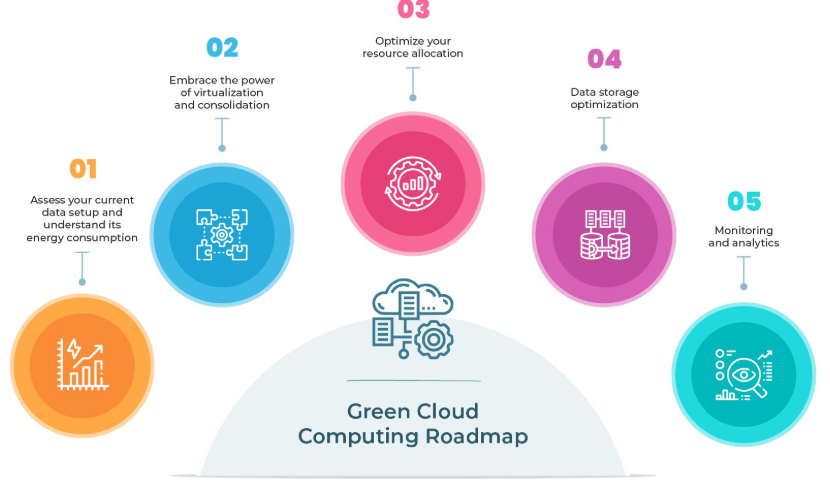
Background and Significance: Cloud computing, a model for enabling ubiquitous, convenient, and on-demand network access to a shared pool of configurable computing resources, has greatly expanded in recent years. With the support of advances in networking and virtualization technologies, cloud services have come to play prominent roles in both business and everyday life, thus contributing to the rapid growth of data centers. In turn, this development has produced a variety of negative environmental impacts, leading numerous researchers to argue the need to develop green cloud computing strategies that can help protect the environment. Nowadays, taking action for sustainable environmental practices, including the adoption of a low-carbon economy, can influence technological and industrial restructuring, promote efficient use of resources, and have positive effects in the fight against climate change.
Data centers represented about 1% of electricity consumption in 2005 in the United States; this percentage has increased to 2% for both electricity and energy consumption in data centers in 2016. Traditional computing consumes considerable power and, as a consequence, results in unwanted emissions. Technological advancements such as the advent of multicore processors, reduced instruction sets, and the availability of massive memory together with low-latency access to secondary storage and advances in networking capabilities make this model of computing different and efficient. Fortunately, an offshoot of this computational model permits providers to run one or more types of virtual machines on top of a hypervisor. Applications running inside the VMs are oblivious to the physical infrastructure of the data center, such as machine allocation and physical distribution of CPU and memory devices. Consequently, unsophisticated applications may have the capability to share and use high-performance computing facilities. Also, system developers and large software companies can rent VMs on a one-time basis depending on their needs.
1.2. Research Objectives
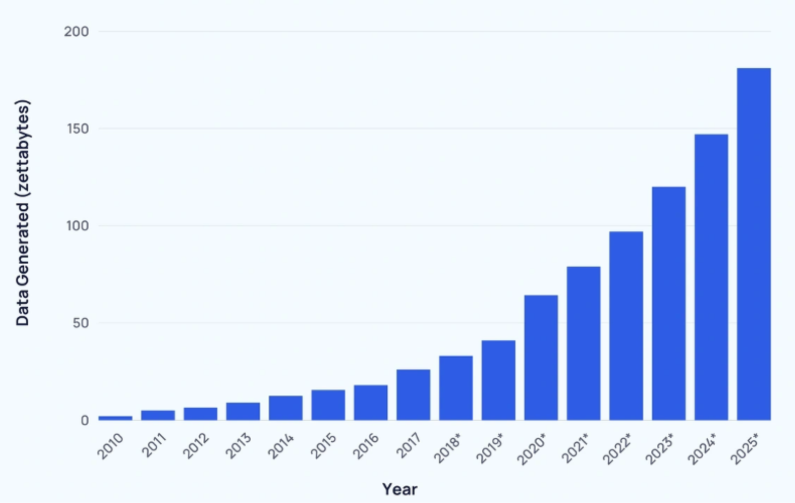
The objectives of the paper are to identify the current situation where cloud computing converges with the concepts of sustainability, and further to discuss some new strategies that can be used to overcome the challenges existing in newer technologies and to build sustainable ecosystems of data centers. Many people and companies are contending with increased use of Information Technology (IT) resources in the last few decades. The increasing pattern of such demands is quite sustainable as many organizations across the world continue to move to the cloud, as cloud technology supports numerous services through large-scale data centers. A major portion of this technology is consolidating the existing data centers and migrating the running application workloads physically to the cloud.
Existing data centers consume about 3% of the entire electricity generated worldwide, and this is continuously growing. In this paper, we focus particularly on the improvements to data centers. This paper first introduces the current situation and then presents possible solutions and strategies to integrate cloud computing and data center usage that accelerate the decision-making process without affecting any performance parameters as well as the environmental resources. We primarily push the concept of 'prosumer' where 'prosumers produce data.' A prosumer behavior also minimizes the response and round-trip latencies when an application is using some of the cloud computing services. Then we discuss how to effectively remove the term 'customer DC' from the cloud computing environment. Presently, renewable energy sources are providing energy to data centers indirectly or in a distributed way by many organizations. The existence of green data centers has been well-established many years ago in many companies, as well as in human technology. We discuss these best practices in advance. To use renewable energy sources to the fullest, we need to focus on the aforementioned terms and address the demerits at a decisive rate. We apply some best case studies and discuss a few points for designing optimal data center design and implementation at the end of the paper.
Equation 1: Energy Consumption Optimization
1.3. Structure of the Paper
This paper is organized as follows. Section 2 defines the key concepts associated with green computing and cloud computing and introduces green cloud computing. Section 3 discusses strategies for achieving green cloud computing through demand-side energy management. Section 4 outlines a series of supply-side strategies for creating green cloud computing infrastructures. Section 5 illustrates how a portfolio of green computing cloud strategies can be designed to suit particular application requirements. Section 6 uses a sample case study as a way to begin to understand how both sustainable data centers and green cloud computing can be achieved. Finally, Section 7 presents the conclusion to this paper.
The flow of the paper is designed to progress from foundational principles to previous concepts so that readers can work through an argument from the beginning. At the same time, Chapter 6 uses the case study previously set out to work through the implications of the strategies for green cloud computing that have been set out in the portfolio optimization model. This will illustrate how these various strategies can be combined into an optimal combination for any given application, and importantly, will demonstrate how sensitive the final results can be to various shades of green in the final paper. Section 7 presents the conclusion to this paper.
2. Understanding Green Cloud Computing
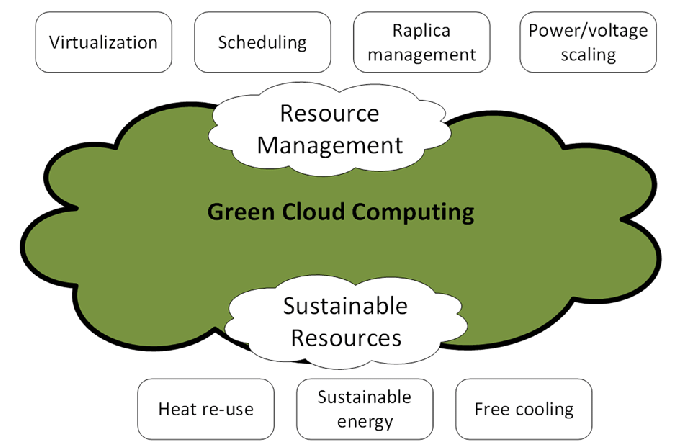
Green Cloud Computing, which encompasses various dimensions including energy-efficient data centers, carbon-aware job scheduling, smart grids, e-waste recycling, and sustainability as a service, is emerging as a serious topic of discussion and investigation. Green Computing can broadly be defined as the study and practice of designing, manufacturing, using, and disposing of computers, servers, and associated subsystems such that they have minimal to no impact on the environment due to both direct and indirect energy use. Sustainable computing, which has been equated with a broader view of technology in general, seeks to integrate a balance of economic, environmental, and social considerations in the design and use of ICT technologies, or infrastructural technologies. A synthesis of the possible complementary activities that might be included in a definition of sustainable technologies yields the following points: development of requirements and best practices in system design and operation that are sensitive to the environment, use of software in support of systems designed to be low-impact, and development of programmatic initiatives to influence power switching and generate less pollution. Popular green cloud metrics include power usage effectiveness, level of efficiency, and sustainability in terms of hardware exploitation and waste, promoting coherent reporting of operating carbon footprints, and selling carbon offsets and renewable power as 'carbon-neutral hosting.' Cloud computing customers exhibit significant concerns about data center CO2 emissions, with a significant percentage stating that cloud computing has to be considered environmentally friendly. This paper explores how cloud computing can play a major role in supporting CO2 reduction policies as well as environmental responsibility in general. CO2 policies are expected to drive the need for new services and IT solutions, thus leading to a demand for data centers. Site operators and cloud service providers, on the other hand, are urged to contain power consumption and carbon footprint for reasons of both carbon tax and corporate responsibility. These views lead to a relationship between cloud computing and CO2 emissions management that, at first sight, might look in contrast and is essentially driven by specific market drivers that, while not mutually exclusive, lead to the adoption of different strategies by data center users. The market, which is under the joint influence of emission trading schemes and international policies aimed at limiting CO2 emissions, is fostering the adoption of data centers and cloud computing, often though not exclusively, contracted by non-IT companies, to help lower the local carbon footprint, possibly with a reduction in the energy bill offered by the cloud service provider when green services are being used. Furthermore, government facilities need green data centers and they are likely to outsource IT solutions to a cloud service provider, more or less green according to the clauses of the service level agreement. The IT facility manager knows that he should care about the holistic SLA, which includes many KPIs such as the carbon footprint. In such a context, new data centers, often characterized by heterogeneous distributions of low heat density equipment, particularly suitable to be migrated to a cloud, given business sustainability and saving on costs, are required.
2.1. Definition and Scope
While common practice is now to refer to sustainable, eco-friendly, and energy-efficient computing resources generally as "green," green cloud computing is not identical to green enterprise computing or green data centers. Enterprise computing refers to the access, storage, and computing capabilities provided by corporate IT environments, and green enterprise computing typically implies more efficient corporate IT practices. Green data centers refer to the design, building, and operation of very large facilities dedicated to servers and data storage, typically serving enterprise computing needs. The interest in green data centers seems in part to be driven by energy cost savings for the data center operator.
Cloud computing refers to services, applications, and storage capabilities built atop abstracted, elastic, shared, and managed resources, offered through the network by data centers. Currently, the key growth sector in the technology field is in cloud computing services provided to customers by a data center. Potentially, green cloud computing practices may be adopted by cloud service providers or cloud service users as a cloud computing "value add" to reduce greenhouse gas emissions. A range of interpretations of the term green data center and dimensions of sustainability exist to define it, and we consider a "green" initiative to aggregate sustainable data center practices to achieve at least 10% reductions in emissions, cumulative over 5 years. In most data centers, energy consumption and consequently GHG emissions for powering and cooling the hardware are inextricably linked to the design and operation of the computing hardware, networking, storage, and facilities that host the hardware, and the computing software stack that runs on the hardware. Factors contributing to energy use include hardware inefficiency, hardware underuse, hardware replacement practices, software inefficiencies, software decisions that cause hardware to be replaced, insufficient or improper tuning of hardware and software stacks to the operational workload, and inefficient or otherwise undesirable data center facility practices.
2.2. Importance of Green Cloud Computing
There is an increased urgency in today’s world about developing solutions and strategies that are environmentally responsible, particularly as nations and companies continue to debate and work towards mitigating the effects of climate change. For the increasing number of cloud service customers, the cloud allows companies, small and big, to focus on building services without concerning themselves with hardware. Due to cloud computing’s reliance on massive data centers, service providers must minimize capital and operational expenses. Striving towards environmentally friendly cloud computing will serve the dual function of reducing energy costs and protecting the environment by minimizing resource consumption and waste. Companies with eco-friendly data centers advertise themselves as responsible cloud computing providers to individuals and corporations with corporate social responsibility initiatives. Indeed, the public’s push has been to pull regulators to formally require companies to comply with one of the many environmental guidelines. Governments have attempted to get their considerable data center services accounts set aside by green cloud providers. The first step toward eco-friendly cloud computing is to comprehend to what extent a cloud data center must be green. In this case, the infrastructure of the data center, which includes HVACs, servers, and network equipment, as well as the costs incurred to power and support it, would be the only areas of concern.
3. Challenges in Building Sustainable Data Center Ecosystems
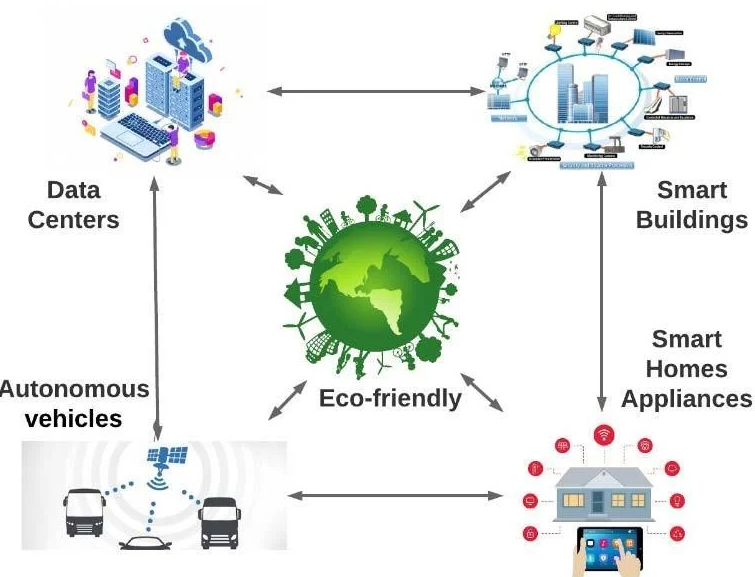
Challenges in Building Sustainable Data Center Ecosystems. Many cloud applications are hosted by data centers, and these data centers are today some of the largest consumers of available power. Together with growing costs in terms of energy prices and carbon offset, the stakeholders of data center operation, both in public and private enterprises, find it increasingly important to optimize their energy consumption. Building an energy-efficient data center ecosystem is not only a necessity but also a market differentiator for service providers. Hence, the term "green cloud" has been coined to refer to any enterprise, public or private, that has placed any policy or mechanism in place to eliminate waste in data centers or IT delivery facilities to be more responsible citizens or simply to reduce operational costs. Nevertheless, building a green cloud is not straightforward because there are several challenges to overcome. Many stakeholders manage large data centers that have been operational for at least a decade. These stakeholders have huge capital investments in the existing physical infrastructure. They are taking incremental steps towards transforming their predominantly physical server and switching fabric to incorporate virtualization. These organizations are also confronted with the challenge of mapping the abstraction function of systems into physical constructs. This is a further hurdle to creating an efficient resource management framework to optimize energy efficiency. Moreover, the server and network management staff in these centers are not particularly experts in energy management paradigms in data centers at a sufficient scale to make an efficient model of operation feasible using currently available energy management tools. In addition, the requirements of the novel energy management system from the energy management software might necessitate a heavy overhaul of the existing infrastructure absent compatible hardware and communications protocols. In recent times, several large companies have developed hardware to overcome this barrier so servers, storage, and switches can signal their energy management systems of the current instantaneous energy consumption. The energy management staff are also not equipped to manage power, the ability to distinguish between power and energy, at the performance required by the data center, along with fears, both valid and exaggerated, that they may not receive operational permissions to turn off switches and clad properly. Finally, even if the IT division at hosting facilities can address the energy management issues, they have only a certain degree of control since such virtualized managed infrastructures are shared hosting facilities. It is therefore also the facilities group that needs a policy to adhere to concerning making servers available to IT for deployment without the need to configure and tune resource pools first. As a consequence, it is advantageous to defer considerations of the power management problem in energy management. In addition, the measurement of power and heat in data center operations may also lead to dissimulation prototypes. In summary, it is therefore not only hard to outline individual e-research challenges in the area of operational energy management in data center systems today, but it is also hard to outline potential research directions.
3.1. Energy Consumption and Efficiency
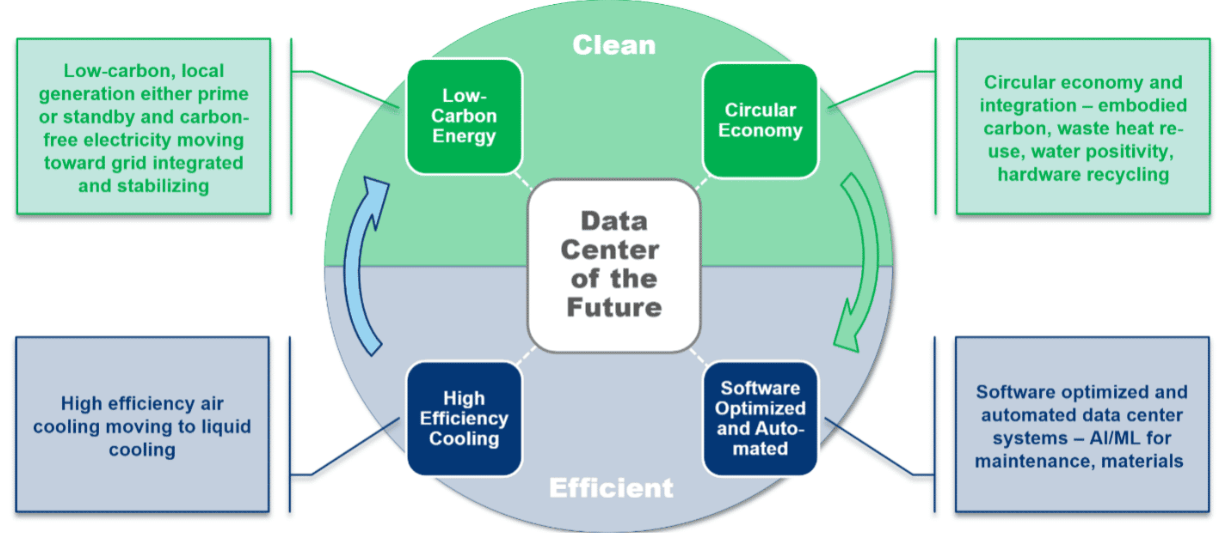
Cloud services are growing rapidly as they provide significant computational resources and a large amount of data storage capacity. Consequently, services can handle a variety of tasks that support scientific computing, video streaming, TV on demand, and other services. To provide these services to a large number of users, data centers are being built to house cloud services with many servers and infrastructure components that consume large amounts of energy. There may be significant environmental consequences due to the use of fossil fuels and water in areas where coal is commonly used to generate electricity to power a large number of cloud data centers around the world. Greater efficiency in using data center energy is one of the key challenges to building a more sustainable data economy and mitigating the effects of digital services.
The two primary challenges to improving energy efficiency in data centers are the stability of power usage at the server component level and the physical constraints on energy efficiency in infrastructure components. The data center has a variety of performance indicators. Also, data centers can have different standards for performance based on the specific customer and specific use case the data center serves. Power usage effectiveness is a primary metric based on the energy efficiency of the infrastructure and utilities, as well as the useful performance provided by the data center infrastructure and computational technology. Exercising data centers has been a common practice for many years as an international standard for data centers. Cooling in the data center consists mainly of functions and is responsible for a significant percentage of all other costs. Cooling has a significant impact on energy usage and can be adjusted to reduce cooling costs in different climate regions. To decrease energy consumption in large enterprise computing facilities and data centers, people have sought diverse tactics and models to reduce the data center's energy footprint. While it is not the only model for helping prevent energy costs, people emphasize the potential for savings in the Balancing Model.
Equation 2: Carbon Emission Calculation
3.2. Resource Management and Optimization
Resource management and optimization: Regarding the complexity and rapid change associated with managing resources in the data center, it is known that in massive data center management, the issue is twofold; one issue is resource allocation whereas the other is how efficient the power utilization is. The aim is for the data center to allow for reliable data or resource uptime and still do that in the most energy-efficient way. The trend toward the automation of data center management points to a burgeoning need to manage resources reliably, efficiently, and sustainably. Fundamental to this resource management, virtualization technologies allow for the optimal use of physical resources, disaggregating the use of a server’s hardware and computing resources from its physical hardware, which is connected using hypervisor software. By doing so, virtualization allows for far better resource allocation since managers can fully utilize hardware and move logical functions around facilities almost at will. As a result, managers can reallocate said resources to more fully utilize them, which also has a benefit for the optimization scenario under discussion [1].
It has been demonstrated that the centralization of data centers in the cloud limits demand, which allows for economies of scale to develop. Among the strategies, inefficient data center operations are those associated with provisioning and management. Put simply, provisioning refers to the act of forecasting at what level to supply a data center’s resources, whereas management is the act of controlling those resources in the face of demand. Meeting demand when resources are limited by supply is a function of load management; load management is akin to forecasting demand. Meeting demand through the simplest of physical, non-temporal load management thus requires that long and short-term forecasts can be made. For example, we need to know how to provision future resources at the data center. To meet these ever-shifting loads, data centers endlessly proportion or upscale system resources in the face of ever-changing demand. Provisioning thus seeks to predict future demand for resources in the system and provision or de-provision resources to meet that demand. Forecasting is hard yet, although approximating demand is the goal, forecasting is rarely ever an exact science. The data is dynamic and trends and demand change, meaning a real-time system approach to load management is required. In an environment with so many unknowns, it is a fitting analogy for IT infrastructure management.
The basic motivation behind the drive to optimize resource management and remove resources from a system that are not required is one of waste reduction. Although it might not be the driver behind resource management optimization to have built-out resources that are wasted, there is room for significant movement in resource allocation and management moving forward. In the cloud, managing resources and provisioning resources are both needed for data center operations. When we speak of provisioning, we are dealing with an aspect of service-level agreements. The commodity supply and uptake in cloud computing make it generally infeasible for a user who purchases computing time, storage, or data transfer via a cloud service can always do this in advance since the costs of overestimation are not necessarily outweighed by the lost potential for extra capacity. Demand forecasts are made but, due to the cloud’s on-demand service delivery, the pre-set demand estimates can be met inside the cloud by easily scaling computer provisioning up or down so it meets with actual demand of the resource as closely as possible. When we have two efficiency points, one based on resource over-provisioning and the ability to scale as demand permits, and one based on just the efficiency of the resources used such as in a bare metal deployment, the move to an adaptable over-sell is an innovation in the optimization of data center operations.
4. Strategies for Sustainable Data Center Design
Green cloud computing aims to design data centers that are sustainable and, at the same time, able to function without interruptions. Today, a considerable part of the data processing and storage is included in complex software environments called clouds. This fact underlines the importance of fighting climate change by improving the energy efficiency of data centers' operations. In the digital age, reducing the carbon footprint is an indispensable way of achieving green computing systems. Various strategies are proposed for the design of green data centers that can lead to a sustainable cloud environment. All strategies must have at their core the reduction of the carbon footprint and increase the percentage of renewable energy integrated into the data center operations.
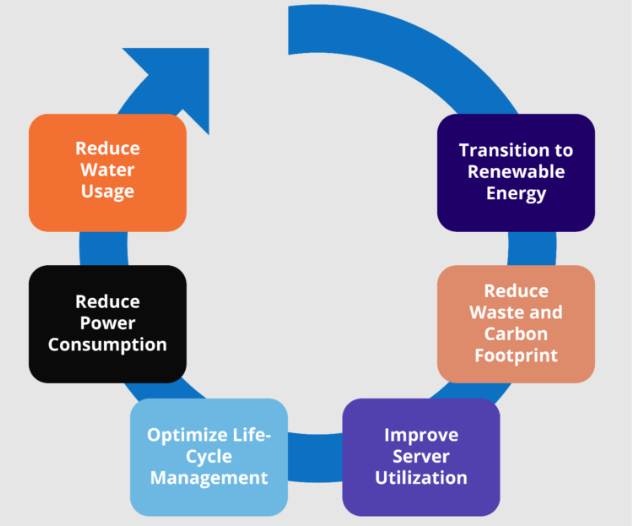
The use of renewable energy in data centers is a natural choice for a green cloud environment. Energy is, in many locations, the main operational cost of the data center. Moreover, data center infrastructure setup involves a high investment in information technology equipment. Therefore, part of the energy budget invested in data center operations should return to 'free energy savings' even without subsidies. It is important to note that the availability of renewable energy is very dependent on location and the type of renewable energy. The reduction of data centers' power usage can range from 10% energy savings for process-based data centers. Several technological options reduce power usage, but they create a high cost to the data center's operational cost or decrease the infrastructure availability. For that reason, the funders should evaluate both the additional benefits of reducing the power usage effectiveness and the reduction of increasing the costs of the data center construction and operational activity. An overview of strategies for innovative cooling systems and highly efficient energy designs is found, and a focus on both technological and architectural strategies is also researched. Resource management strategies and operational practices are also proposed. We aim to provide strategies that can be implemented, demonstrating successful case studies of implementation. We propose the green data center ecosystem model to support the design of sustainable data center ecosystems and to facilitate the ability of end-users to actively participate in this ecosystem [2].
4.1. Renewable Energy Integration
As the major part of non-renewable fossil fuel-generated electricity currently is used for powering data centers, a strategy to source electricity from more sustainable sources in data center operations is evolving. Around the world, renewable energy sources for data centers, such as solar and wind, are available and are increasingly being used. The development of renewable energy strategies for data center power utilization will be an essential step for building sustainable data center ecosystems. To curtail the dependence on non-renewable energy sources, businesses and governments are attempting to shift towards eco-friendly alternatives. An intriguing development is the transition away from a single source of power to an amalgamation of electricity generated from renewable resources.
This is advantageous for the following reasons: it reduces dependence on a single commodity, providing a hedge against a range of risks because they are more secure than fossil fuels. Singapore, for example, lacks natural resources, and increasing the use of renewable sources will make for a more sustainable future. Currently, solar and wind are the only significant renewable sources of energy available in Singapore, making them sustainable options; they are gaining popularity as the prices of technological materials drop. There are numerous challenges to incorporating renewable energy sources into the data center infrastructure, including infrastructure requirements, modernization, and expansion that may increase costs. Many corporations that have gone this route have cited not only their sense of environmental responsibility but also the financial benefits of using clean energy. The establishment of regulatory frameworks, that can offer tax benefits, will fill in these infrastructural gaps even further.
4.2. Cooling Systems Innovation
Data centers traditionally rely on large, power-hungry refrigeration-based cooling systems, but the efficiencies of such a large-scale cooling solution are low. Even if there exists a uniform hardware exhaust in any server room, the cooling loads are much higher than the direct uncovered area cooling solutions. The upper limit of the temperature for the cold aisle should be between 20°C to 25°C, which is not a cold mark and wastes energy for air conditioning. Most of the cooling systems in data centers have been installed since 2008. Therefore, many data centers are suffering from aging and low-efficiency cooling systems.
There is a growing interest in using chilled-water systems and liquid cooling methods such as direct-to-chip or recirculating mid-plane liquid cooling as potential solutions. Many data centers in leading IT industries are implementing free cooling by adopting outdoor air. Typical examples include floating nodes and free-air cooling racks accessing outside air, which are increasing in industrial application sectors as well. For a medium or large-scale data center, what is more important, in addition to superior energy efficiency and sustainability, is the construction of relevant networking with the structures of the buildings instead of just cold aisle isolation due to high heat transfer density. The potential for savings in carbon emissions, operational energy costs, and capital costs is a good incentive. A recent report claims that in the DH/PC, the power consumed for cooling could be reduced from 60% to 30-35%, assuming free-air cooling systems [3].
5. Case Studies and Best Practices
The failure to enact green cloud computing is often a result of either a lack of political will, a lack of financial resources, or both. To date, providing appropriate strategies is within the scope, capabilities, and duties of the IT and data center industry. Nonetheless, many equipment manufacturers, particularly in the server space, are making limited strides in pushing up their devices' Energy Efficiency Ratio (EER) year in and year out. By moving to a liquid cooling model, they have increased EER by 30%. Some manufacturers are taking steps in this direction.
Some firms have produced documentation that outlines the energy efficiency of their facilities. In addition, common server power reductions of 30 percent were the norm. Furthermore, some leading-edge gear utilizes next-generation renewable batteries. Such developments can help establish evidence-based best practices. These case studies can demonstrate the desired techniques and strategies. They must demonstrate adaptation to satisfy social, technical, political, and economic goals. To date, there have been a variety of energy-efficient, cost-saving, and restrictive approaches proven in studies. This information offers the mass market and establishes the notion among data center owners and operators that progress is feasible. Set yourself apart from your competition and take it to the next level. This kind of information can move discussions beyond the theoretical and into realistic answers. Lessons learned in terms of strategy and goal achievement, as well as enduring best practices, are also presented in situations [4].
5.1. Google's Data Center Sustainability Efforts
Despite our conceptual exploration and the developed framework, it may be helpful to examine the approaches of organizations that have already operationalized a more sustainable cloud computing model. One organization operates many data centers, and the investments, expertise, and followings of a market leader in the contemporary cloud computing industry can reveal many relevant insights. The company claims to have achieved a 100% annual carbon offset for all its energy use and has a net zero emissions investment strategy for all its operations. The organization has also set a 24/7 carbon-free energy goal that, among other purposes, seeks to drive investment in new technologies. Many of the same details shared here are portions of this overall effort. Although not dispositive of feasibility, the public actions of this organization can be helpful for the development of our positive discourse on the topic, toward the enthusiastic end of our constructed normative balance.
The organization has strategically implemented in-house renewable energy sources and planned for consistent 24/7 carbon-free energy. Many of its data centers also tap renewable integration strategies to reduce their environmental impact. For example, its sites are capable of reducing data center cooling costs by up to 95% via the cooling power of wind power purchased from the grid during cold, off-peak times that traditionally displace air conditioners. In one location, a wave-powered pump is expected to produce sustainable energy capacity for use in its adjacent data center. In an advanced installation, the organization utilizes the water from the sea rather than expensive, energy-intensive air conditioning via an innovative process to cool down the cooling system itself: this process conveniently uses an already necessary input that displaces the lion’s share of the electricity to run this portion of the cooling system. This dependence significantly reduces the marginal cost, particularly if your analysis is in wind production fraction of renewable purchase avoided. Additionally, the organization has stated that it develops and deploys sustainability efforts unique to each of its data center locations, which are also artificial intelligence-driven. Despite these efforts, the organization faces challenges such as scarcity of certain low-impact energy sources, requiring patience and flexibility to obtain, and the potential need for policy solutions to reduce costs. Given the success of resource optimization in the data center, the opportunity for sustainable processing is promising. The ice tank reduces the air handler’s costs.
5.2. Amazon Web Services Green Initiatives
Amazon Web Services has implemented several green initiatives in its data centers. In designing and updating data centers, strive to make decisions that will have the highest impact. Prioritizes reliability and performance, but also works to minimize environmental impact and meet customer expectations through supply chain efficiency and resource utilization. Has announced two goals in the context of its green initiatives: using renewable energy to power each global infrastructure region and achieving net zero carbon. Strategies for meeting the renewable energy goal include building highly energy-efficient facilities, improving infrastructure, and using advanced technologies to optimize and cool facilities. Existing renewable projects vary by data center location, as do plans for future projects.
The issues faced in implementing green strategies included an unfavorable energy price market in some locales and the need to directly negotiate the availability of some energy sources to show that they wanted to consume them. The challenges faced in the markets included the preference for "green" collars in power delivery but the limited availability of those that can be negotiated in the short term or on a block and index product. Scaling down, sizing down the data center, and building only one of the three available in each new region until the customer base requires it to fit biomethane and stop flaring was a significant shift in both technology and business direction. Has shown leadership in moving towards green technologies by promoting their importance and developing solutions to implement them. By implementing green technologies and taking sustainable development into account, cloud computing technology can achieve its full potential. Being environmentally friendly helps other major cloud service providers convince customers that going online is in the best interest of all parties, the global environment, and can also bring in millions in additional revenue from governments and NGOs.
For future work, can focus on standardizing hardware across the data center as well as minimizing electronic waste, developing a centralized electronic waste data clearing function, and implementing closed-loop recycling. Especially for data centers, because the majority of the hardware they use is built directly to their specifications by OEMs, can have its hardware and use completely recyclable materials. With their managed services, can recycle the maximum amount of discarded customer-owned materials, including racks and parts, to new data center infrastructure and reduce the manufacture of new racks and components to reduce the waste currently being sent to landfills. Due to the rapid pace of innovation in the IT industry, server setups and cooling needs will continue to change dramatically in the next few years. Another project that can be implemented in the future to make its data center more sustainable is to create a framework for data centers to modularize the physical design of data centers and server facilities so that new servers and racks can be switched over time. This will ensure that all older servers and racks are repeatedly recycled into the design of the new data center as space becomes available, rather than accumulating as waste for the entire duration of the server's lifespan.
6. Conclusion and Future Directions
This study conducted a systematic and quantitative investigation to understand the development of green cloud computing practices and their implications for building a sustainable data center ecosystem. The effort that went into making this essential infrastructure of the digital revolution and Industry 4.0 more sustainable is already considerable. Still, endeavors have to be expedited even further since a lot of work lies ahead. As described, several issues were handled in the course of scholarly publication. However, two pressing problems need further exploration: the consequences of green computing on data center infrastructure resilience since the interdependencies between sustainability and resilience are basic properties of operating and planning topologies. Furthermore, energy consumption needs clarification to include power-intensive digital currency, blockchain, IoT, and especially their relation with campus IoT energy handling features.
Sustainability plans and strategies have to be innovative enough to keep pace with the constantly progressing information society, data center technology, and industry evolution. Future research aims to address open issues. The major objective is to prepare for Industry 4.0, a solid background for the upcoming Industry 5.0 cloud-based solutions. Accelerating the development of Industry 4.0 ecosystems is a great opportunity to surpass such goals. Agreements are in place between prominent industry stakeholders to forecast the implementation of such technological innovations shortly. We suggest widespread data exchange and understanding of the Sustainability Summary as third-party interest will be limited in a highly competitive, prestige-seeking industrial market. Such practices allow stakeholders to decide if and how they want to engage with the topic. If they are keen, more details can be shared, empowering stakeholders to make further decisions.
6.1. Key Findings and Implications
6.1.1. Research Findings
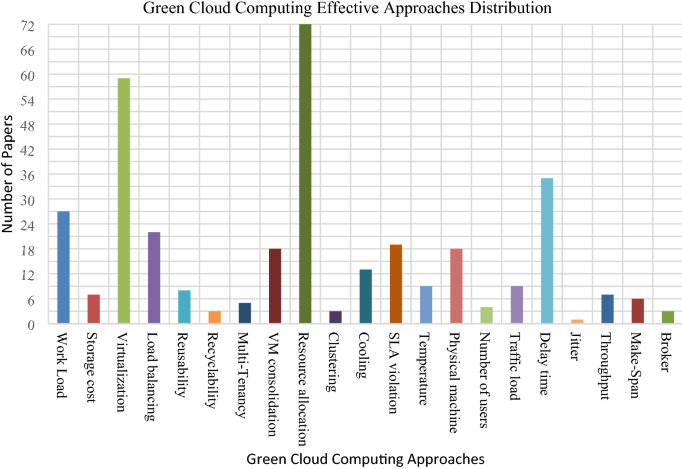
Cloud providers need to adapt energy-efficient strategies for sustainable data center ecosystems that capitalize on the potential for reuse and recycling of resources and the use of renewable energy sources. In existing infrastructure, consolidating resources and dynamically allocating them using virtualization technology remains a dominant strategy for building energy-efficient cloud and software wireless access networks. In general, the main objective is to provide efficient schemes for virtual machine consolidation and content distribution strategies. This involves computationally hard problems of resource and traffic management that, in most cases, decompose the investigated problem into subproblems and use heuristic or metaheuristic methods for solving instances in practical time.
6.1.2. Academic and Practical Contributions
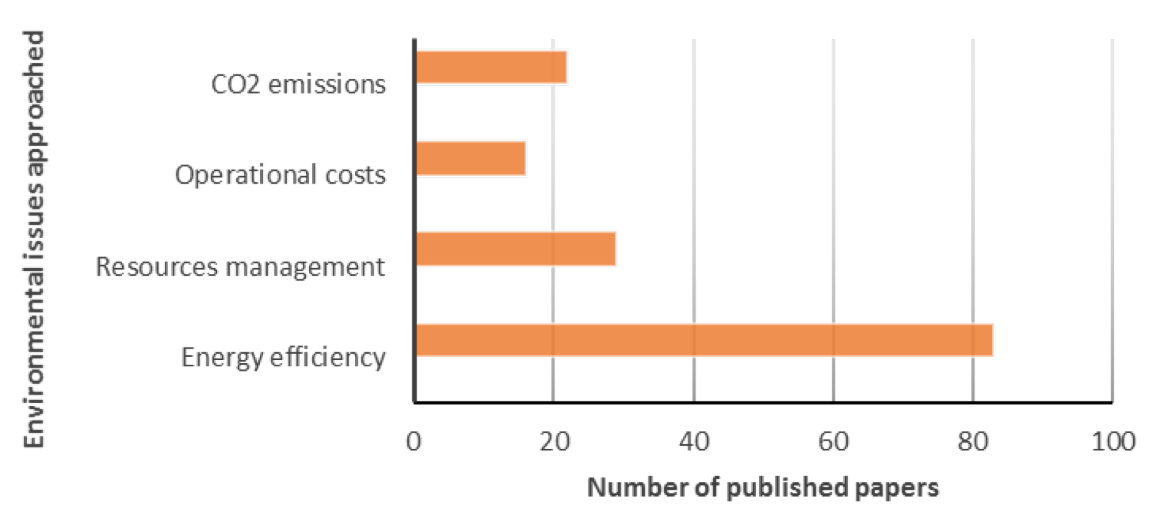
The provided detailed literature review shows that the existing literature pays limited attention to developing environmental or sustainability preferences in cloud and edge computing, while the potentially explored hosting practices are generally very basic, such as radio frequency coverage, interference, and energy efficiency. We describe a variety of current and potential strategies for addressing some of the common goals in the field of sustainable cloud computing and networking, including reduction in energy use, e-waste, CO2 emissions, environmental and resource efficiency; experimental work in real measurement environments which have taken into account environmental parameters, including temperature, carbon, and cost modeling in resource management strategies, incentives from the use of renewable energy; fair share splitting with renewable energy; reusing waste energy both at the data center and radio access network of fixed and mobile edge networks for backhauling traffic and localization strategies of apps or content distribution. Measurements indicate that the proposed strategies produce significant savings in terms of energy use while providing service continuity, which are critical steps in building green sustainable cloud ecosystems. Recycling practices and the identification of ways to promote the idea of cloud computing to bring actual environmental benefits are important aspects of this study. It will involve the development of appropriate economic models, policies, and regulations at the industry and governmental levels to encourage the promotion of long-term sustainability rather than being driven purely by economic benefit. From this perspective, a comprehensive economic and payoff analysis remains for future research. In the next few years, we must develop green cloud ecosystems that will deliver a range of performance and capacity at a significantly reduced cost, with the same environmental impact. Policymakers will need to introduce regulations that encourage the industry to transition to a green cloud ecosystem where IT is better positioned to contribute to the design of policies and regulations that are relevant, and from a long-term perspective. This will require a collaborative approach, not just between academics, but also policymakers and industry. By doing so, we will minimize the overall emissions and energy usage and promote a sustainable communications future.
Equation 3: Resource Allocation Efficiency
6.2. Recommendations for Future Research
Based on the review, we suggest several directions for future research on green cloud computing. They include: ● The development of quantitative and empirical studies evaluating the utility and trade-offs associated with specific "green" strategies for data centers. For instance, increased investment in virtualization technology may reduce energy consumption but increase the overall cost of hardware and maintenance (as well as the embodied environmental impact associated with deployment). Other areas where further empirical studies would be useful include evaluations of the net energy savings associated with the different software and hardware upgrade strategies, and the potential for different virtualization management strategies (note that data center system management would have significant impacts on the facility's overall energy consumption). ● The exploration of the potential of alternative, emerging computing technologies with greatly reduced energy requirements. Current studies tend to focus on changes in existing hardware, form factors, or facility design. In contrast, many maintain it may be more effective to focus on research into future technologies that are designed from scratch to be "energy efficient". ● More cross-disciplinary research collaborations between academia and industry, and a body of assessment metrics and studies are needed to support the development of the targeted metrics. Coordinated research is needed to plan for viable, end-to-end solutions for sustainable data centers. With the above in mind, the development of a community that thinks about green data centers driven by best practices, up-to-date data, and an active, well-informed community can help us identify promising research areas. In general, the field of green computing and green data centers has taken a more reactive perspective: we have not seen a broad theoretical research agenda that lays out the studies that need to be done, the various issues, and the trade-offs of different systems and combinations, the kind of designs that are likely to be most productive, and a set of directions several of the leading authors in the field might be cautiously optimistic about. Indeed, the main complaint of the strongest "skeptics" was that they did not have very good data. To date, we feel the community has not been aggressive enough in defining the questions, protocols, or metrics that will improve the data landscape. As one more example, the development of site-specific energy factors for assessments could help planners judge whether an individual data center is going to be effective, and could also guide the formation of general criteria for accrediting better or worse technologies in an efficiency-centric frame.
References
- Dilip Kumar Vaka. (2019). Cloud-Driven Excellence: A Comprehensive Evaluation of SAP S/4HANA ERP. Journal of Scientific and Engineering Research. https://doi.org/10.5281/ZENODO.11219959
- Vaka, D. K. (2020). Navigating Uncertainty: The Power of ‘Just in Time SAP for Supply Chain Dynamics. Journal of Technological Innovations, 1(2).
- Syed, S. (2019). Roadmap for Enterprise Information Management: Strategies and Approaches in 2019. International Journal of Engineering and Computer Science, 8(12), 24907–24917. https://doi.org/10.18535/ijecs/v8i12.4415[CrossRef]
- Mandala, V., & Surabhi, S. N. R. D. (2020). Integration of AI-Driven Predictive Analytics into Connected Car Platforms. IARJSET, 7 (12).[CrossRef]