
Abstract
This study aims to achieve a new understanding of how, why, and when consumer behavior is shaped, enacted, and experienced inside and across integrated digital ecosystems related to large-scale trackable goods, all in service of helping marketers optimize their business performance in the new economy. The pioneering understanding begins by exploring what motivates the choices of a homogeneous group of consumers to organize their consumption of national and store brand varieties of consumer package goods in a certain manner. Thereafter, the essay explores how, if at all, the other digital activities of consumers across various product-related digital spaces and on various platforms build expertise and interest in these products such that they exert an effect on the purchase choices for these products. The essay then advances to asking how online information seeking, in various product-related digital spaces, on various platforms, and from various sources, and taking place at various points in the purchase journey affects online-offline dynamics in purchasing these products. Thereafter, the research examines how paid digital communication in various product-related digital spheres and forms, enabled by consumer advertising engagement on various platforms, boosts the offline sales of these products. Finally, by employing a new methodology that combines consumer scanning data, self-reported online activity data, and transaction data collected from an ad-tech partner, the research presents a fresh set of marketing action levers and performance outcomes on chosen products. Along the way, progress is made on four under-investigated topics in the advertising literature – the role of consumer actors and their expertise in the online-offline purchasing dynamics for ads, advertising engagement, consumer digital spaces, and consumer digital activity investment.
1. Introduction
Consumer behavior is undergoing an unprecedented transition. Factors such as innovation, accessibility, and affordability of digital touchpoints have caused the traditional fragmented non-digital touchpoints to converge with digital touchpoints, powering sudden digitalization across markets and industries. The pandemic has accelerated this digitalization. Businesses that have adopted cloud-based services leverage four times more cash flow than their non-adopting competitors. The number of people using digital device services globally has increased from 1.9 billion in 2010 to 4.9 billion in 2021, with active social media users surging to 4.2 billion in 2021. The age groups most likely to adopt digital touchpoints are Gen Z, millennial, and Gen X. These groups spend an average of 4 hours and 15 minutes on their smartphones every day. The pandemic has also increased active online digital service subscriptions to 564 million globally in 2021, a 25% increase since 2019. Companies that are leveraging personalized and artificial intelligence (AI)-based digital services on these touchpoints have evidently gained upper hand over their competitors. Such data indicate that we are entering a new era where digital-based business models and personalized digital-based value propositions through AI-assisted technologies are becoming engines of growth for companies. In this era, personalized services become indispensable for all types of consumers. They expect what they want when they want it.
However, even as the transformation from traditional touchpoints to integrated digital ecosystems is undergoing, a high number of companies appear unprepared for this new cerebral consumerism fueled by demand-based ecosystems. Increasingly, there appears to be a misalignment between a company's practice and these rapidly evolving consumer expectations. A survey among executives and consumers found that approximately 73% of consumers who responded are willing to pay a premium of at least 5% for services tailored to their specific preferences. Yet, on the whole, less than 48% of executives, who reported their companies have the ability to offer tailored services, concurred. Such data signal continued growth for the relatively young economy of data-driven ecosystem-based business models.
2. Theoretical Framework
Consumer shopping behavior in integrated digital ecosystems can be investigated through two perspectives. Under the consumer behavior perspective, such behavior is determined by the interaction of the consumer’s characteristics, the stimuli available, and other internal and external conditions. Such understanding helped develop marketing strategies targeting specific behavioral segments. How to rethink such determinants when consumers engage in online shopping by sending requests to non-human actors, the recommendation algorithms, and by receiving automated responses, the offers by advertisers? Will such behavioral segmentation enrich the conventional models? Consider when consumers make non-human actors, especially algorithms, the center of their decision process and perform shopping by simply placing requests on a platform. We will answer these questions by describing the buyers’ online buying decision process and its stages thereafter.
Reinforcing our insights of the above buyer internal and external determinants and their interaction with the digital ecosystem components and functions, we will conduct an overview of digital ecosystems. A digital ecosystem comprises a mesh of interconnected digital and IT services, supporting a well-defined business goal. Each service sends and receives data to and from several other services, through all the usual protocols. The goal of the integration of all the services is to have seamless end-to-end processes automation across the digital ecosystem. Not all businesses are necessarily multichannel. However, if multichannel, they have to know how to exploit the synergies of all available touchpoints at each decision phase and along the path to purchase. Each digital service involved in companies offering services to buyers in the path-to-purchase and fulfillment process will be described, as well as its role in the entire integrated digital ecosystem.
2.1. Consumer Behavior Theories
Marketing academics and practitioners have long sought to understand consumer behavior towards products, brands, and services. This task is complex, as it includes the ongoing predictions of intent, choice, purchase, and post-purchase processes. In real life, these various stages of consumer behavior are not distinct. In fact, they may happen almost simultaneously due to a consumer’s involvement level in the purchase. For example, choices and purchases can be reshaped by digital traces even after a purchase in the form of customer reviews or other forms of electronic word-of-mouth. This is especially the case if these digital traces are created by a community widely perceived as an expert or someone who is similar to the user.
However, describing but not explaining these behaviors is not enough for companies to understand their customers and strategically deploy their resources. Consumer behavior encompasses a vast field, making specific predictions of substantial use to marketing managers difficult. For researchers, dimensionality reduction is crucial for discoverability of cross-domain and very fragmented reviews and something previously hypothesized. The goal is to distill the multitude of consumer behaviors into a few standard types that can be tested in a single process in various domains. Although predicting that dimensionality reduction is the holy grail of consumer research in demand for products and branding has been around for some time, achieving this has, to a large extent, remained elusive.
2.2. Digital Ecosystems Overview
Digital ecosystems consist of interrelated products and services from companies in different sectors that form a consumer-driven ecosystem. They create greater value for consumers than discrete offerings and enable the orchestration of the complex interactions between value-creating modules. Successful digital ecosystems capture and shape demand, facilitating and multiplying the intermodule transactions that result in value creation and sharing. Digital ecosystems differ from conventional ecosystems since they involve digital technologies. Digital technologies and data foster demand-side economies of scale. They also create self-reinforcing consumer behavior patterns, which means that small competitive advantages in demand-facing components can become magnified and ultimately generate immense differences in actual outcomes.
Digital ecosystems have some unique features. They form around enabling consumers to search for and select modules from different providers producing distinctive functions. The use of a digital interface permits consumers to access modules remotely and creates a marketplace that enables interactions among modules, which anticipates that greater volume will generate a lower cost per interaction. Consumers often depend on a few relations in many ecosystems to construct a complete service product. Digital technologies reduce the cost of transaction processes internal to the firm and external transactions, creating a shortage of modules that are the basic building blocks for providing attractive and complete services. This shortage increases the bargaining power of companies offering the most sought-after modules. The demand for some of these modules remains relatively inelastic for some time, enabling makers to earn temporary rents.
3. Research Methodology
This study adopts a qualitative exploratory research design to enhance our understanding of consumer behavior and the key drivers of personal SMART device usage experiences in integrated digital ecosystems. An attribute-driven purpose sampling method is applied, and data from 17 in-depth semi-structured interviews are collected and analyzed. Snowball sampling was initiated by approaching individuals who were willing to share their experiences and recommend additional participants. Recruitment was finalized based on theoretical saturation, whereby there is no new information that could add to the findings. Non-student adults were targeted based on two criteria: (1) being experienced users of either a personal PC or smartphone integrated with digital ecosystems and (2) using the devices regularly for more than two years. Given the delicate nature of the subject, candidates are also pre-screened to ensure their willingness to participate in the interview.
Interviews were conducted in the respondent's preferred language, either Mandarin or English, and each lasted around 60-90 minutes. Respondents' demographics are reported in a table. A semi-structured protocol was used to provide consistency while allowing for in-depth discussions of key concepts. Questions were open-ended to uncover fundamental and underlying thoughts related to respondents' choices and support for device integration in digital ecosystems. The protocol began by asking about the recruit's demographic factors and the types of devices they used before gradually moving on to discuss their integration experiences and key drivers of the SMARTEST attribute. Posting verification interviews were conducted a few days later with several participants.
3.1. Data Collection Techniques
This section outlines the data collection techniques needed to elicit quantitative, qualitative, predictive, and prescriptive data. First, we describe the Data Mining (DM) and Machine Learning (ML) techniques and techniques related to opinion, behaviour, involvement, attitude, and sentiment.
Data mining (DM) uses data-driven extraction techniques such as clustering and segmentation to better understand the goals and values of stakeholders, identify patterns in their changing behaviours, and determine the market groups in which they are grouped according to the DM exploratory analysis. Market segmentation predicts market responses based on automatic clustering techniques that segment markets and consumers into categories where distinct model structures explain differences in behaviour. DM prescriptive analysis then tests consumer behaviour models to understand consumer decisions and allows marketers to make decisions about involving the right stakeholders at the right time.
Machine learning (ML) models run structured algorithmic analyses that can make predictions, conduct prescriptive analyses, and validate or invalidate models that can answer a wider range of advanced questions. Supervised ML retrieves values associated with prediction functions that include asked attributes about stakeholders' values and specific attitudes, which enable us to discriminate between market clusters. These prediction functions include stakeholder data on willingness to pay (WTP), interest-free loan uptake, positive ecotourism attitude, and adoption of sustainable energy in residential buildings. Often, in-demand predictive functions such as the willingness to pay for action to combat the effects of climate change and attitude towards popular organic foods come from stakeholder surveys.
3.2. Analytical Tools and Technique
We employed multiple analytical techniques in this work, including Exploratory Data Analysis, Social Network Analysis, Sentiment Analysis, Latent Dirichlet Allocation, and Machine Learning methods. EDA helped us understand the data better and sharpened our research questioning. We adopted a package to implement several SNA techniques, since consumer participation in DMOs-mediated ICT platforms generate different types of networks. We implemented several SNA techniques during our work, including degree count, betweenness, closeness, and eigenvector centrality measures.
To perform Sentiment Analysis, we trained several supervised and unsupervised machine learning methods on original datasets and employed a Sentiment Analysis tool as baseline. It helped us compare parameterized probabilistic methods with deterministic rule-based unsupervised approaches on performance accuracy, generalization across various datasets, and runtime aspects. LDA helped us perform Topic Modeling of Data Dimension 4.
Equation 1: Linear Regression (Simple)
Where:
- = dependent variable
- =independent variable
- =intercept
- =slope
- =error term
We also used different machine learning methods to create models to classify multimedia posts in various topic classifier levels. We used classifier performance accuracy metrics to compare the implementations of the aforementioned classifiers, such as Precision, Recall, F1-score, Area Under the Curve, Receiver Operating Characteristic, and log loss, among others. In the case of multiclass classifiers, we applied Stratified K-Folds Cross-Validation when needed. For hyperparameter optimization, we relied on a method that Cross-Validates Across Classifier Hyperparameter Values.
4. Consumer Behavior in Digital Contexts
Consumer research has permeated all areas of scientific inquiry and has provided insight into how consumers think, feel, act, and interact in the marketplace. Different theoretical lenses have been adopted, gradually addressing the core question of CE research: why, how, and when do consumers interact with a brand and to what consequence? Traditionally, consumer behavior research regularly drew on insights from different fields, using data consistently across various contexts. Research data mostly originated from questionnaires; however, these neurocognitive insights supplemented existing survey-based insights. The digital disruption has leveled the playing field between consumer behavior and managerial research. CE research has taken the lead in empirical research, phrased new questions, and advanced managerial guidance when responding to these questions. In summary, CE framework has enabled digital scholarship to become established as an integrated sub-field of marketing. Since the inception of marketing as a management-oriented discipline within the social sciences almost a century ago, and for consumer behavior research even longer, it has retained a bias toward investigating the behavior of consumers using chemicals, tangible goods, and services in physical settings.
Now, however, with the rapid rise of the digitalization and ubiquitous connectivity of virtually all consumers worldwide, marketers, agencies, corporations, and public goods providers have expanded the consumer experience beyond physical interactions in tangible settings, onto digital spaces such as websites, social media platforms, or metaverse environments. This dual specialization of CE framework is also evident in the relationship of CE research with other adjacent digital subspecializations. The concept of customer engagement has been borrowed by other disciplines studying digital contexts. A variegated collection of studies in adjacent disciplines uses the concept of CE to categorize, explain, or describe their research domain. When addressing online-specific phenomena, it typically refers to customer engagement, while the concept of consumer engagement research describes the consumer-centered specialization.
4.1. Factors Influencing Online Behavior
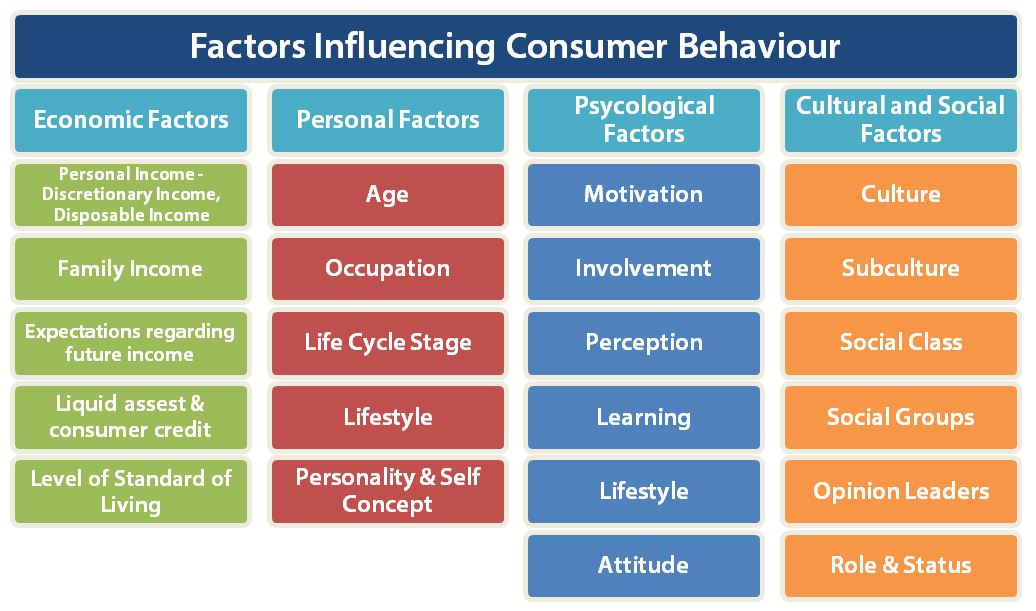
Over the past two decades, the proliferation of digital technology has brought an increasing number of consumers online, affecting traditional purchasing decisions and, more importantly, forcing marketers to alter the way in which they communicate with potential customers. However, information is easy to create and significantly less costly to produce, which combines to increase brand noise. In this regard, it is essential to better understand all the factors influencing online consumer behavior as it is an ongoing debate amongst both academic researchers and practitioners. Major theories have been used to explore consumer behavior in digital contexts. Theory of reasoned action, theory of planned behavior, technology acceptance model and diffusion of innovation are some of the most frequently used theories in this space. In fact, antecedents of online consumer behavior were explored using these theories, conceptualizing online behavior as either intention to behavior, actual behavior or acceptance of online technology – often without distinguishing between the use of various digital communication channels. Therefore, consumer behavior is explained using only demographics, attitudes, and perceived costs and risk, focusing on predicting particular aspects of online shopping/surfing.
The reviewed studies reveal that there are likely to be several antecedents of general online behavior that can theoretically be linked with more specific aspects of digital communication. Demographics have a direct impact on general digital behavior, which presents challenges for selection of a target consumer segment and explain access to technology. Attitudes and motivations influence consumers' willingness to search for information online and even the type of information searched. Perceived values can also influence specific intentions to adopt dedicated digital communication tools. While there are also conflicting views in the development of intention, the technology acceptance model typically focuses on perceived ease of use and usefulness, in addition to attitudes and beliefs.
4.2. Emotional Engagement in Digital Spaces
There has been an increased focus on the notion of engagement in the context of digital interactions. The importance of engagement in the consumer–brand relationship is evident. The marketing literature is increasingly reporting on various aspects of engagement. This is not least due to the interactional paradigm shift that has its roots in interactional service-dominant logic. Furthermore, the communication between brands and consumers is an important factor in the establishment of brand relationship quality, and as a central means by which this communication occurs, emotional engagement is integral to digitally enabled communication. Emotional branded engagement describes the emotional connection consumers feel toward a brand as the result of online interactions.
Scholars have posited differing views on the concepts included in the engagement concept. Four qualities that prior engagement studies have addressed include the intensity/frequency of interaction characteristic of engagement; the valence of interaction; the type or nature of interaction; and the reciprocity of communication. The consumer who engages in financial brand engagement has an emotional, friendly feeling towards the brand. The consumer who engages in contribution engagement shares their private experiences regarding the use of a product/service in the past with the company and market. The consumer who engages in social brand engagement applies social pressures toward the brand, but with friends or family in mind. The consumer who engages in informational engagement seeks to acquire, or to give up, information from/to the brand.
5. Data-Driven Insights
Consumer experience and outcomes are largely generated in EMS, yet there is not yet a verified methodology or source of knowledge about how those outcomes are affected by a business's digital presence and business design strategies. There is no shortage of consumer-generated reviews, networked interactions, and conversations around brand names. These content and behavioral signals provide new opportunities for marketers to gain better predictive capabilities. Because company performance outcomes, such as sales, responsiveness, and overall sentiment, can now be collected in real-time, a data-driven approach can add to the long-held view of the importance of understanding consumer behavior. There is no better way to validate the importance of a relationship than by measuring that consumer-business relationship directly, rather than inferring it from a quantitative measure through self-reported survey responses that frequently suffer from central tendency bias.
A multitude of data sources from online and offline systems can provide both the frequency and type of digital engagements by consumers over the course of their purchase journey. What makes this new approach so compelling, relative to more traditional hypothesis-driven methods, is that the tools and resources to track, visualize, measure, and predict key behaviors are now widely accessible to marketers. While many sophisticated analytical services are available, new data-comes-first technologies allow marketers to drive insights needed to shape brand strategy, product launches, and value propositions based on private words, opinions, and micro-interactions to, from, and within categories, product attributes, sensory engagement, and opinions about the competitive set.
Chapter 4 introduces the models for connecting consumer action and sentiment data to survey-based identity, emotion, cognition, and attitude approaches to understanding the brand-consumer relationship. The concepts are then applied to two companies — the luggage company and the health systems company. The example illustrates that real-time measurement and experience influence modeling can be scaled up to large data sizes and systems that biometrically drive attentional measures of brand-consumer engagement.
5.1. Quantitative Analysis of Consumer Data
Understanding consumer behavior in integrated digital ecosystems calls for a careful review and analysis of generated transactional data to produce meaningful behavioral insight into motivations, incentives for purchase or withdrawal, communication style and needs, and value perception. While access and availability of internal transactional data is limited to digital businesses, in many business models consumers operate in both physical and digital interfaces, and it is possible to observe interactions in both environments. Transactional data from physical shopping can generate very interesting insight into temporal digital journeys, shaping their behavior in a physical store. In the case of e-commerce, data are abundant and include interaction telemetry, browsing behavior, past purchases, items in the shopping cart, need for assistance signalized via chats, emails, and social media or by interruptions to the checkout process, purchase conversion and postponement.
Equation 2: Customer Lifetime Value (CLV)
Where:
- =revenue from customer at time
- =cost to serve at time
- =discount rate
- =customer lifetime in periods
The heart of recent advances in consumer understanding, and consequently of business value creation, is how to model and produce information, in an actionable form, from digital traces. Large amounts of consumer data in thin and reduced localizations can be interpreted using causation analysis, for which many machine learning and econometric/inferential modeling techniques are currently available, both in terms of quantitative modeling and exploitation of high-frequency, sometimes real-time, data updates. Yet previously cited limitations in modeling variable selection demand in many situations an underlying general, theory-based structure with a few empirically estimated parameters. Moreover, handling correctly space and time correlation and dependence among cross-sectional and panel data is a complex issue still to be solved by researchers and practitioners. Structured approaches from data science can now be generalized to all consumer-related areas of interest for which data availability is currently not a limitation.
5.2. Qualitative Insights from Consumer Interactions
In addition to quantitative analysis, the ethnoculars framework also allows for the gathering of qualitative insights from consumer data. Through unsupervised clustering techniques applied to state-of-the-art topic modeling algorithms, we can segment consumer conversations and label clusters with key topics. This allows marketers and researchers to better support lifecycle strategies for products while addressing consumer needs in their respective purchase journeys. Access to real-time insights enhances decision-making at all organizational levels, ultimately impacting the marketing ecosystem. Diverse chatbot plugins and accessible AI technology harness brand-powered user data to deliver first-party solutions.
Cluster labeling is the key to data interpretation in practice. While finding the label that best summarizes a content cluster is commonly an iterative process, we offer a framework that combines pre-trained language models with clustering algorithms. We further regularize the topic extraction embedding stage through Contrastive Learning techniques, adding a supervised step in the pipeline that leverages cluster information. Our solution guarantees relevant and accurate labels of content clusters, transforming unsupervised clusters into interpretable insights for actionable business strategies. Our framework has clear implications for businesses, allowing organizations to better target product and service development, as well as their advertising strategies. It associates cluster content with labels deemed optimal by domain experts and gives marketers clear key insights about business-critical clusters.
In terms of businesses externally, our solution can help in using chatbot technology to provide better-targeted answers to consumer queries. Interest in using Chatbots by consumers has exploded due to their utility in fast travel planning or fast order completion. However, brands need to provide optimal issue solutions and answers for broad consumer categories in real time to improve the consumer Chatbot experience and capitalize on it. Thanks to AI technology, brands can tailor answers to respond to consumer needs in real time. If Chatbots are to continue adding consumer value, consumption and brand interaction data need to be incorporated to train Chatbot algorithms.
6. Case Studies
The consumer behavior paradigm presented herein is key to understand the inner workings of integrated ecosystems, enabling the development of digital interfaces that are better integrated into individuals' daily lives, and also the implementation of ecosystems that offer consumers real benefits. However, theory alone does not suffice; it needs to be complemented with empirical examples that illustrate what works and what does not work in practice. This section presents the second part of this work. The first area to be graced with one of those case studies is the domain of well-known successful digital ecosystem implementations.
The most cited successful example of a digital ecosystem is the Apple ecosystem, which spans the hardware and software layers with the computer operations system and the applications development layer. It combines the interdependence mechanisms of the attribute completeness, hub functioning as a launch pad, hub controlled product quality, and hub developer/company binding. Google also has a successful ecosystem in the form of the Android OS and its routed devices. The available services layer is the service provider support services, including search, maps, and email, among others. In this case, the hub company is a service provider that is maintaining free product use, thanks to advertising. Fewer successful cases of digital ecosystems are that of Microsoft and the Windows OS, set-top boxes, and computer games. There have also been failed initiatives [1].
6.1. Successful Digital Ecosystem Implementations
The travel industry is one of the first sectors to digitalize, building distributed operational setups that allow customers to book services from hundreds of suppliers from the palm of their hands. They do so through the use of meta-search engines owned by large firms. These engines, also called travel aggregators, have the advantages of being convenient and familiar to customers. However, they come at a price due to blusterous commission rates. In an effort to alleviate the cost of intermediaries, digital ecosystem integrations have arisen. For instance, one platform aims to minimize commission rates by creating a travel ecosystem in which hotels, airlines, tours operators, and potential customers engage directly. Other platforms are also emphasizing micro-service binding, turning to the user for bundle and personalization decision.
Continuing the travel industry integration through digital ecosystems, a framework allows us to develop a set of general guidelines to define a successful operation setup. Thus, since "the best" and "the fastest" system and its support services already exist for the air travel branch, it is in the user's advantage not to include intermediary resources in the chain of actions to use any of these systems. This leads us to consider that the entire offer for a trip is searched, planned, and booked in a single step, using a single system, constituting a travel digital economic ecosystem that binds user decision with each product supplier selling conditions. It is the local supplier who directly handles item delivery, making their offer available to the user on its own. No intermediary is involved, and absolutely no suppliers' contractual conditions are modified, constituting a convenient and low-cost way to travel.
Equation 3: Platform Network Effect Value
Where:
- =potential value of the network
- =number of active users or participants
6.2. Failures and Lessons Learned
The goal of our research was to discover more about how companies use digital ecosystems to understand consumer behaviors or trends. Although we indeed found sixty-eight companies applying some form of a digital ecosystem data-driven model, most were unsuccessful in their attempts. A few were making real progress and even fewer had established a viable business out of it. The point of this chapter is to share what we learned from the companies that were not successful and what they found difficult about the process. Memoization centered on creating useful consumer-related products and such companies typically applied for only one or two quarters at a time or never … with one very notable exception. Yet, they all offered some great insights on how digital ecosystems enable understanding behavioral motives.
For all of the companies interviewed, understanding how people were motivated to do things – or not do things – was a problem that was pretty high on their “to do” lists. Each of the firms offered some different specialized route or activity specialization. For example, one company offered travel and outdoor-related products, another was in the business of navigating consumer information services and certifications across platforms, one had an interest in advertising placements and strategy, and another focused on online purchases conversion. In brief, all of the company participants had their own specialized areas of activities and partnerships, so we asked them for insights on what they had learned through the insights teams. In this chapter, we take the position that the best teachers of how to understand consumers better is to listen to those that have tried and learned lessons along the way.
7. Challenges in Understanding Consumer Behavior
Despite advances in data-driven and experimental techniques across disciplines, there are still certain fundamental issues in understanding consumer behavior that are difficult to address. First, the digital ecosystem gives rise to privacy issues and citizen data protection rights; and second, technology is evolving very rapidly, leading to uncertain value demands from consumers. In the following subsections, we examine these two challenges to acknowledge some hurdles in understanding consumer behavior.
The ability to collect consumer data across different digital platforms provides precious value information to companies. Not only is their seeking behavior recorded in search engines, but also their purchasing behavior is tracked in e-commerce websites. Besides the consumers’ individual value persona, the interconnectedness of platform strategies needs also to be captured to understand consumer preferences. This is the definition of a digital ecosystem. Personal data protection laws offer consumers more control over how companies use their data, allowing only specific data use that serves the actual, legitimate, and stated company purpose. Marketers are now forced to rethink their data-driven techniques and face some challenges due to the lack of consumer data access, and for the sake of consumer trust, should now rethink how to operate in the digital space with ethical AI techniques.
The digital ecosystem is always evolving, hence consumer demands corresponding to the underlying value are not constant, making predicting behavior outcomes difficult. Digital giants continuously launch new services with superior benefits that disrupt existing ecosystems. Consumers are always at the risk of being limited outward to superapp concepts that are embedded into digital eco habits. Yet such disruptive events remain unpredicted. This turns understanding consumer behavior about when consumer demand disrupts value demand into an art in marketing decisions.
7.1. Privacy and Data Protection Issues
Consumer behavior has undergone a fundamental change in relation to technological advances. Yet, most existing consumer research studies were conducted before the rise of the online world and social media networks. Therefore, an essential feature of consumer behavior research in integrated digital ecosystems is that consumers are much less willing to share their personal data. Concerns about privacy and data protection issues are influencing consumer behavior in integrated digital ecosystems. Consumers are increasingly aware of the new privacy and data protection options available to them, and the negative consequences of not using them. Privacy is generally understood as a right to exercise control over our personal and sensitive data. Important technological adjustments that allow consumers to regain control over their data and to keep their private lives private include Intelligent Tracking Prevention, browser plug-ins, as well as built-in privacy options in web browsers. Giving consumers data control arms consumers with the means to resist intrusive attributions and engage in offline, in-store shopping. Privacy is a stated concern for fairly large consumer groups, and they are motivated to protect their privacy by changing their consumption and usage modes and adopting privacy protective measures, such as simply switching off devices, using browsers with inactive cookies, using VPN software, or using the incognito mode of their browser.
Moreover, consumers develop a cost-benefit intuition regarding their data behavior, with costs described by potential violation of privacy and benefits described by utility produced by trustful companies. They are also aware of the privacy paradox where they do not necessarily act in accordance with their stated concerns because their actions are driven by habit and social norms. Thus, it is essential to investigate changes in consumer behavior across integrated digital ecosystems times.
7.2. Adapting to Rapid Technological Changes
Technological changes happen rapidly and impact consumers' behavior in integrated digital ecosystems. While consumers are slow to adapt to technological changes, a business must quickly adapt its strategy to keep up with rapid technological changes to keep consumers engaged and gain a competitive edge in the market. Technological changes can help businesses grow faster or crash their business if not adapted to in time. Malware, virus, and ransomware attacks hinder how different integrated digital ecosystem actors communicate and share information. If consumers feel their data is not safe in the digital ecosystem, they move away.
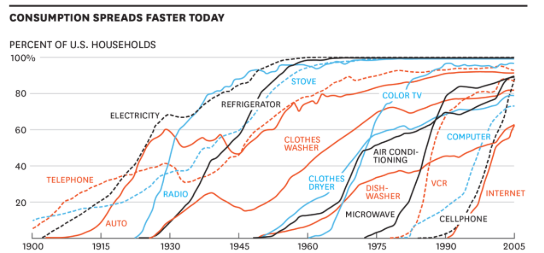
Technological changes are projected to significantly influence the development of new applications, with a growing emphasis on AI. The influence of AI in businesses is becoming more pronounced, with various AI tools gaining popularity and integration with applications. Integrated digital ecosystem technology in the business plan must include technology advancement and rapidly changing consumer behavior due to technological changes, such as by implementing a data-driven approach. Businesses can also use predictions by using Machine Learning and AI technology to understand consumers' behavior in integrated digital ecosystems when it comes to technological changes. Businesses can then focus on winning strategies for growth based on how various customers and competitors react to ongoing technological changes.
8. Future Trends in Consumer Behavior
Digital ecosystems have been constantly evolving over the past years, and so has consumer behavior within these ecosystems. This evolution has accelerated recently thanks to the democratization of Artificial Intelligence (AI) services publicly available, and marks the emergence of a new consumer model. We believe several trends will disrupt consumer behavior paving the way toward new organic and integrated digital ecosystems. On the next subsections, we elaborate on two of these trends, namely: the impact of AI, and the evolving consumer expectations for tailored, immediate experiences.
The major transformation currently going on in how consumers find information and buy products stems from the fact that AI is becoming part of their daily lives. AI applications are giving consumers superpowers in terms of knowledge accessibility, pre-purchase decisions support, and price comparison. A whole new generation of consumers will be capable of exploring the virtual world with just a prompt, and companies will be using AI-based models and techniques such as dynamic pricing to attract them. In this sense, retailers may have to rethink the way they conduct their business in digital ecosystems through strategies such as becoming part of the AI conversation chain. We can also envisage a customer support environment totally driven by AI, where consumers will demand products be delivered before they finish typing their messages. The immediacy of such requests may call for operational constraints never faced before. Consumer companies will have to establish partnerships with logistics companies to provide smooth and fast delivery of products with very short notice.
8.1. Impact of Artificial Intelligence
Artificial intelligence (AI) is poised to be one of the key new evolvers shaping future consumer ecosystems. Firms of all types are currently employing or testing the utility of some form of generative AI, either for adding value to ongoing work, or serving as a replacement for traditional work activities. The intention is to move full speed ahead, using whatever advantages of scale, competence, or first-mover will be available to them as they compute the various opportunities that will grow from this current bout of technological innovation. Consumer brand firms are intent on using AI to increase their understanding of consumer preferences and behaviors, and how best to manage the presentation of their brands and devise promotional programs and pricing to enhance purchases. Consumer agencies are working with an untried combination of AI and team-based creative support to reshape promotional content. These early forays into creative destabilization have met with mixed success, but those that have proven at least partially successful seem to suggest that the creative agility and additional expertise available from consumer firms when allied with consumer agencies using AI-based content generation tools may be able to reshape thought-sequencing and the content of promotional support. This collaboration would not seem to suggest a bleak future in which human-based creative capabilities are left utterly decimated. It would appear to be a development that is more in line with previously discussed structure-of-production shifts, which integrate knowledge-based qualification with machine-provided capacity. In consumer behavior terms, the combination of integrated ecosystems, relief from the burden of mundane work activity, and the higher consumer purchasing likelihood from increased reaction-to-promotional content sophistication may be poised to majorly impact ongoing patterns of consumer buying motivations and activities.
8.2. Evolving Consumer Expectations
Consumer expectations are rapidly evolving, and marketers must stay ahead of the curve to avoid falling behind. It was found that consumers still believe there is a gap between how companies market to them and what they expect, especially when it comes to engagement. 73 percent of consumers expect companies to understand their needs and expectations, 71 percent want companies to offer personalized interactions, 66 percent expect companies to be helpful by anticipating their needs, and 65 percent want companies to offer knowledge and expertise that reflects an understanding of their business and industry. The market, however, is not in sync with consumer expectations. Only 49 percent of companies that market directly to consumers believe they truly understand their needs and expectations, and only 42 percent have taken steps to provide helpful experiences [2].
Expectations among consumers for a personalized, meaningful online experience are high and keeping pace with emerging technologies that support personalization and analytics is difficult for marketers. Consumers employ new criteria for selecting companies to do business with that are more far-reaching than simply making the best products at reasonable prices and offering convenience. As technology enables companies to track consumers’ behavior and understand their needs better, companies are expected to deliver more personally relevant experiences. If they fail to take advantage of what new technology enables, brands come across as impersonal or even worse, intrusive—and risk alienating shoppers. Instant gratification is central to consumers’ new expectations. Speed has become the new currency, and consumers believe they deserve ultra-fast personalized service at all times from brands.
9. Implications for Marketers
Our findings lead us to conclude that brands can mostly influence a group of vulnerable users with low conductance seeking for entertainment-oriented products. For brands displayed in the SMB, specific strategies should be developed searching for trial of the product accompanied by a strengthening of brand awareness through different messages on distinct touchpoints. Moreover, these types of brands should at the same time increase their share of voice on WoM channels and seek organic WoM with positive messages to generate trust in the brand. However, the advertising cannot lead to conversion in this segment.
On the other side, easy-influencing occasions for platforms in the LMB should not be wasted. Special Promotions around a particular event can trigger an impulse buying allowing brands to be spontaneously bought by this segment. In addition, the ad campaigns of a product should focus on the platforms with low loyalty on the lower part of the funnel increasing the possibility of interaction/discussion with the user.
The HMB is constantly seeking for new stimuli either by searching for news on WoM platforms or by clicking ads related to products they show interest in. Therefore, they are more sensitive to personalized messages based on accurate profiling. The risk of captivity of this consumer is high so brands should measure the results in terms of loyalty and branding with extreme caution. Since the share of voice in the relevant touchpoints should be small and permanent as the products must constantly be present, this is particularly relevant during purchase facilitation campaigns.
9.1. Strategies for Engagement
Understanding consumer behavior is never easy, since consumers have many factors driving their behavior, but if companies are capable of recognizing those themes and want to be successful, integrated digital ecosystems must track almost all the factors in order to propose profitable and attractive offers to the consumers. In fact, in our current era, data is the fuel of our economy. The relationship between brands and customers is a two-way street that creates value for both parties. Brands need to apply concepts such as brand purpose and customer experience to offer something more than just a product. Companies with a clear purpose develop branded touchpoints easily recognized for consumers. Touchpoints create new experiences that are cumulative over time, and that become part of the company's brand assets. Therefore, data translates consumer feedback into information for brands to fine-tune their strategies. Implementing integrated digital ecosystems helps companies to maximize the learning experience in their communication with customers, detecting likes and dislikes, which generates relational, functional, and emotional benefits.
Once the stages are generated, the brand will determine the engagement strategy that best suits the interest of those customers. The analytic capabilities must create landing strategies that capture this consumer search in the second stage. Of course, the landing strategies will change over time, and the relevance of the touchpoints will also be changing. Search retargeting is a crucial part of the marketing process, as it allows marketers to reach consumers in the early stages of product interest and influence their choice. The distribution of search queries at the first stage of the path to a purchase will change with time. Seasonality affects the timing of consumer awareness and interest. Marketers willing to spend resources to measure when that first-stage interest occurs should consider a landing strategy that focuses advertising on the search engines [3].
9.2. Personalization and Customization Approaches
Beyond mass personalization, which was kindled back to life by recommender systems, there are many other possibilities for personalization and customization for marketers looking for the unexplored possibilities within integrated digital ecosystems. One possibility lies in generating customer-specific product lines, creating personalized variations of existing products by searching customer choices over time. In a narrow sense, such customer rules are usually created by data gleaned from the consumption history, state, and preferences on each individual item and other specific variables such as item attributes, giving information about product varieties, temporal and regional characteristics, and possible customer segments.
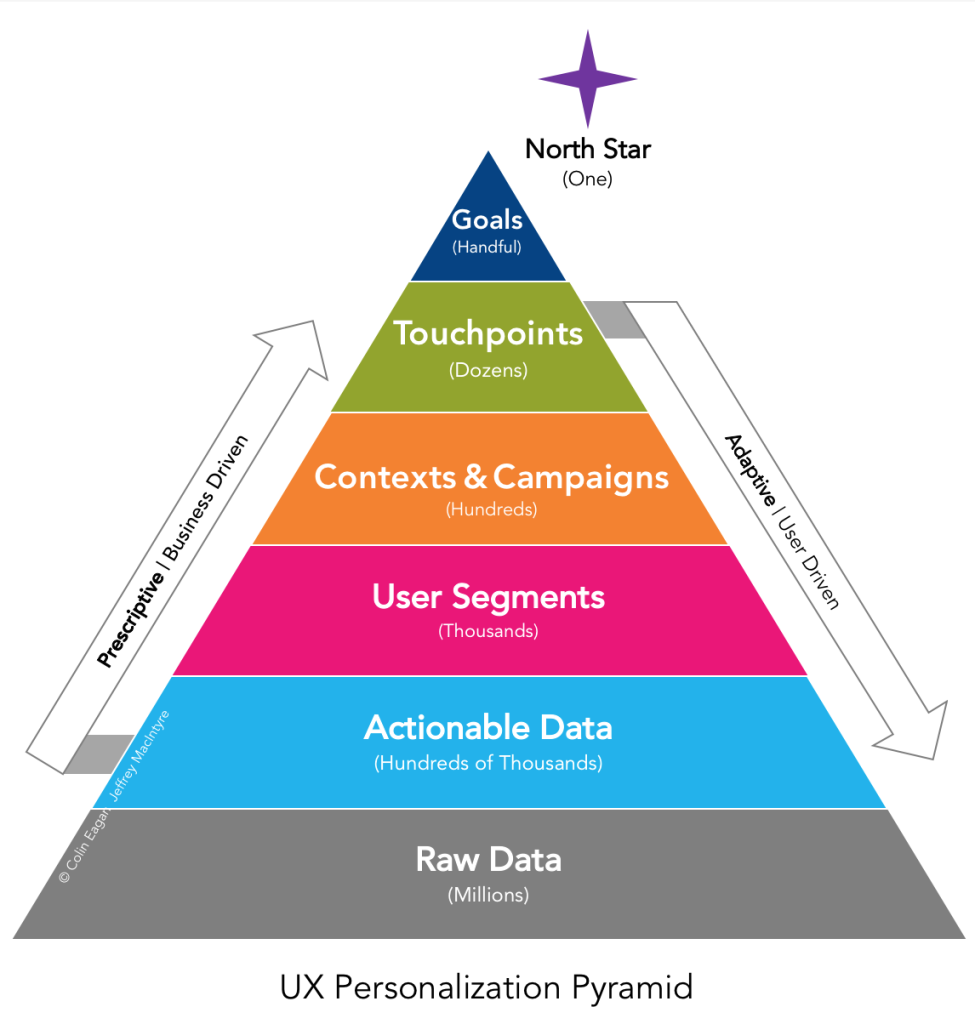
Still, other more innovative marketers have their customers compose product lines directly, or let them choose the configurations for a held competition for designing shoe models to sell. Even mass customization efforts could benefit from being made more personalized through massively enhanced AI-feedback and recommender systems driving personalization in the front-end of the value chain, suggesting configurations of customizable products for each individual customer.
Several other possibilities for personalization are inherent in the virtuality of the digital world: the virtual identity, location and pathway layout; and the engagement within the ecosystem, i.e., the responses you cause your customers to have when subconsciously guided by design elements and features and actors within the integrated ecosystem of a product and the participating marketing environment. In the real world, we can only gaze at fleeting glimpses of what stage lighting and color, costumes, decoration, and dynamic actors are drawing into the performance. The collective character of integrated ecosystems will usually allow us to capture engagement data only of large groups, and we have methods at hand only for very few of the characteristics reflecting how the ecosystem of a product affects engagement.
10. Policy Recommendations
Through a data-driven approach, both marketing practitioners and researchers can gain deeper insights into consumer motivations, needs, emotions, and future behaviors in integrated digital ecosystems. However, along with the many benefits of digital data collection and analysis, risks do exist - risks of misrepresentation and misinterpretation of consumer data; consumer privacy infringements; unethical data usage; manipulation of consumer perception and opinion which can lead to mistrust and radicalization; and exacerbation of the digital divide. In this light, we outline regulatory as well as ethical considerations that might guide marketing practice as well as future consumer research in digital environments and integrated digital ecosystems.
We suggest the establishment of regulatory frameworks for digital marketing that help govern the careful and considered collection, storage, and analysis of digital consumer data. Digital consumers are perpetually engaged as a consequence of the integrated digital ecosystems they inhabit. Digital consumption data are readily available to marketers, yet, policy recommendations need to assure that such data are utilized to offer benefits to consumers instead of harming them. Therefore, policies need to assist marketers in their ethical intent to gain consumer trust and ensure that consumers benefit from digital marketing activities - directly by experiencing relevant marketing stimuli and indirectly, by receiving anticipated products and services that are worthwhile their investment of time and resources. Similar to other industries, policies could suggest certification systems for marketing companies who comply to ethical guidelines. Moreover, the establishment of regulatory bodies may assure the protection of consumers from predatory marketing behavior such as price discrimination, recommended manipulation, or participation in socially harmful business models.
10.1. Regulatory Frameworks for Digital Marketing
The importance of regulation in digital marketing is complicated. In business literature, regulation is often regarded as something bad. For example, regulations are frequently claimed to hinder firms’ entrepreneurial actions, consumer choice, and innovation. Preferences for less regulation are also often used to justify the absence of regulation in global finance markets. On the contrary, in the marketing literature we can find theoretical debates referring positive effects of regulation on competition and supply chain coordination, discussion of the effectiveness of judicial regulation of marketing practices, reflections on symbolic product attributes and regulation, and appeals for the regulation of business influence on consumer well-being. It thus seems that marketing researchers argue for many different regulatory approaches to marketing [4].
The complexity of opinions about marketing regulation makes it necessary to be very careful when advising on policy positions. In this chapter, we focus on regulatory frameworks at the level of industrial sectors and markets specifically for digital marketing. We adopt a positive view, meaning that our recommendations are more in line with suggestions for regulation in the marketing and business literature and should not be confused with the usual negative stance on regulation in business literature. Our recommendations are built on the observation that marketing research is well positioned to inform policy positions on regulatory frameworks for digital marketing. The research questions discussed in this book, and additional questions raised therein, can help governments and the private sector with addressing problems related to the digital revolution.
10.2. Ethical Considerations in Consumer Research
The fear of being penalized or banned from a platform by its terms of service has created a culture of silence and a hefty impact on researchers who rely on data from various user-generated content platforms. This is a double-edged sword, as the opportunity to access easily available data enhances disciplines with limited external reliability checks, such as marketing, while also creating an academic no-go zone for the collection of user data from - and therefore research into - multiple exploitative digital ecosystem types. With the omnipresence of social media and big data, consumers have lost most of their privacy while providing an unprecedented source of publicly available data. This raises questions about at what point data collection techniques so completely violate consumer privacy that they become unethical.
In addition, not only traditional market research techniques such as surveys are affected by the recent regulatory changes, but also new developments in automated big data consumer research face ethical implications. In this vein, two questions deserve closer attention: At what point is data collection unethical, and how should researchers deal with ethical challenges during the data collection and analysis stage? Various companies grant access to APIs and, depending on the setup, may allow for the collection of certain private data. However, little guidance is provided on how far exploitation can go. Here, the goal is mainly to shed light on ethical gray zones, and provide guidelines to navigate them. In addition, our recommendations will contrast with different cultures in ethics, to provide an inclusive guidance.
11. Conclusion
This book investigates the relationships between integrated digital ecosystems' different layers and consumer behavior. First, relevant literature is reviewed and three major consumer behavior-related research areas within the domains of economics, psychology, and marketing are identified. Subsequently, a consolidated set of consumer behavior dimensions is derived from these research areas, and the major consumer behavior drivers within integrated digital ecosystems are identified in terms of the activity types and activity processes. Then, after laying the foundations of integrated digital ecosystems, a systematic exposition of the different layers and some of the components at these different layers, as well as their relationships, is provided. The insights on consumer behavior provided by this research result in a researchers' consumer behavior-oriented analysis toolbox. Subsequently, consumer behavior in integrated digital ecosystem patterns are developed based on the analysis toolbox, and empirical patterns of different types of consumer behavior in the digital ecosystem formed by LinkedIn and its four major niches are identified. These empirical patterns are critically and systematically analyzed. Subsequently, the above explorations are recapitulated, and some major contributions of this book within the fields of consumer behavior, digital ecosystems, and the nexus between the two fields are outlined. Implications for marketers are discussed, and avenues for future consumer behavior research and for practitioners are suggested, based on the major insights and limitations of this research.
This book contributes to the field of consumer behavior from two perspectives. First, we develop a researchers'-consumer behavior-oriented analysis toolbox that provides rich insights on consumer behavior based on the expository and exploratory analyses of a digital ecosystem's different layers and its components' relationships. Then, we systematically investigate the consumer behavior patterns in a digital ecosystem and its four major niches and provide marketers in various industries, across the globe with a multi-faceted framework to understand the consumer behavior in their ecosystem, and discuss four key significant themes of consumer behavior based on our insights. The former contribution is by capitalizing insights from the exploration aspect of our analysis toolbox, while the latter is enabled by our insight on the exposition aspect.
References
- Patra, S. K. (2018). Library and information science research in Indian universities: Growth, core journals, keywords and collaboration patterns. Library Philosophy and Practice, 2018. https://digitalcommons.unl.edu/libphilprac/15782
- Kar, P., & Sharma, R. (2018). Publication performance of Indian authors in high-impact anesthesiology journals. Indian Journal of Anesthesiology, 62(4), 301–307. https://doi.org/10.4103/ija.IJA_787_17[CrossRef] [PubMed]
- Singh, M., & Gupta, L. (2018). Retracted publications by Indian authors: A systematic examination. Journal of the Association for Information Science and Technology, 69(9), 1179–1191. https://doi.org/10.1002/asi.24042[CrossRef]
- Gudavarthy, A. (2018). Bharat mein Rajneetik Andolano ka Samkaleen Itihaas: Nagrik Samaj ke baad ki rajneeti. SAGE Publications India.