
Abstract
The processes of technical and technological development are unequivocally linked to increasing energy consumption, with a significant portion of energy being produced from fossil fuels worldwide. The reserves of natural energy sources such as petroleum, gas, coal, and turf are finite. The transition to renewable energy sources has been ongoing for a long time, but share in global energy consumption remains lower than desired. The main limitations include limited availability, inability to operate continuously throughout the year, high costs, and a lack of materials and devices capable of withstanding high temperatures and pressures. The goal of our research is to create a device that generates electricity using a new type of renewable energy source based on the thermal expansion and contraction of materials. This paper presents the construction, details, and working principles of the new device. The primary focus is on utilizing materials and components that are readily available. The proposed method has own advantages, addresses some of the aforementioned limitations, and can be particularly beneficial for providing electrical energy in remote areas. Calculations indicate that the device built using this new method will be competitive with appliances that utilize other renewable energy sources in terms of features and efficiency.
1. Introduction
Globally, industry and production are advancing every year, directly correlating with energy consumption. Currently, a considerable percentage of consumed electrical energy is generated using non-renewable fuels. For instance, in 2022, 70.9% of electricity was generated from fossil fuels and nuclear energy, while only 29.1% was produced from renewable sources [1]. Comparing this to data from 2011, when the shares of non-renewable and renewable sources were 81% and 19% respectively [2], we observe a growth in the share of renewable sources. Total electricity generation has increased by 2.4% annually since 2011, with renewables contributing at a rate of 6.1%, while non-renewables showed a growth rate of 1.3%. Several advanced countries are already generating a major part of their electricity from renewable resources. The leading countries include Norway (98.5%), Brazil (89.2%), New Zealand (86.6%), Colombia (75.1%), Canada (68.8%), Sweden (68.5%), and Portugal (61%) [3]. These countries primarily utilize three types of renewable energy: hydro, wind, and solar. According to the 2023 renewable energy record, hydro energy accounts for 14.2%, followed by wind energy at 7.8% and solar energy at 5.4% [4]. The contributions of the remaining renewable energy sources remain minimal, with some still in development (e.g., sea wave energy). Even with the inclusion of all these sources, we cannot completely abandon natural fossils. This reality drives the need to develop and enhance the technology for harnessing existing renewable sources and discovering new ones.
There are several definitions of renewable energy. Renewable energy is derived from natural resources that are continually replenished, such as sunlight, wind, biomass, water, and geothermal heat [5]. A similar definition is presented in [6], which describes renewable energy as originating from natural processes that are constantly replenished. It includes energy forms such as solar, wind, ocean tides, biomass, and geothermal energy from heat generated deep within the Earth. According to [7], renewable energy is defined as “energy obtained from natural and persistent flows of energy occurring in the immediate environment.” A clear example is solar energy, where “repetitive” refers to the 24-hour cycle. The concept of renewability in energy is fundamentally complex, encompassing very different forms of energy production [8]. According to [9], renewable energy is typically defined as an energy source that is inexhaustible and will not be depleted by continued use. In summary, up to seven types of renewable energy are identified in these works; hydropower remains the largest source of renewable electricity, followed by wind, solar, biomass, geothermal, tidal, and marine energy.
One more type of renewable energy – energy derived from thermal expansion and contraction – is proposed in the paper. According to [10], an increase in temperature results in an increase in the kinetic energy of individual atoms. In solids, closely packed atoms or molecules experience increased kinetic energy, which pushes neighboring atoms or molecules apart. This neighbor-to-neighbor pushing results in a slightly greater average distance between neighbors, leading to an overall increase in size for the entire body. This phenomenon can also be observed in liquids. In certain situations, the large forces generated by a rapid increase in the kinetic energy of atoms in solids or liquids can lead to undesirable consequences. Therefore, these phenomena are considered in the construction of railways, buildings, bridges, the manufacture of containers, and many other applications. The idea is to harness these large forces to generate electricity.
The energy generated using this phenomenon may soon contribute to the growth of renewable energy, as it meets all the aforementioned definitions: it is derived from natural processes of environmental temperature changes and can be replenished at a higher rate than consumed; materials continuously expand and contract due to environmental temperature fluctuations caused by day and night, direct sunlight, wind, and weather changes; it is inexhaustible and will not be depleted by continued use; it is naturally replenished and sustainable. The results of our ongoing research on this new type of renewable energy based on the thermal expansion and contraction of materials are presented in this paper. The remainder of the paper is organized as follows: Section II describes related work; Section III provides the methods and materials; Section IV presents results and discussion; Section V highlights the conclusion; and Section VI lists the references.
2. Related Work
Thermal expansion has various real-life applications, including liquid-in-glass thermometers, metal bimetallic strips in thermostats, and expansion joints in bridges. This phenomenon is also accounted for in railway tracks, power supply wires, thermos flasks, and pendulum clocks [11, 12]. By utilizing thermal expansion, parameters can be measured, temperatures controlled, unwanted effects mitigated, and desired material behaviors achieved. In this work, we highlight another aspect of this phenomenon: proposing a new and alternative source of renewable energy—generating electricity from the expansion and contraction of materials caused by natural temperature fluctuations.
Initially, it can be stated that bodies would expand and contract in response to ambient temperature changes, generating substantial physical forces in nature. If unaccounted for, these forces can lead to negative consequences. The proposed idea is that useful energy could be obtained from these forces. A virtual model of equipment operating based on the expansion and contraction of liquid under temperature fluctuations was developed, and preliminary theoretical studies indicated that it is possible to achieve the coefficient of nearly 60% efficiency. Specific shortcomings of this model were analyzed, particularly the need for a large reservoir capable of operating in a stable manner under extremely high pressures. Meeting these two opposing requirements at the same time is not easy task today. Additionally, it is essential to choose liquids with high expansion coefficients, which are often flammable and require costly precautions. It was demonstrated that the hybrid model could offer several advantages in addressing these issues [14]. In subsequent research, the proposed method, leading to the acquisition of a patent for the invention titled “The method of obtaining electrical energy due to thermal expansion and contraction of substances (options)” in 2018 [14].
It was necessary to practically demonstrate that electricity could be generated using the proposed method. For this purpose, the coefficients of thermal expansion of solids and liquids were analyzed, focusing on the potential to harness their linear and volumetric expansion and contraction phenomena. A liquid was selected as the working substance, with ordinary pure water chosen among the available options. A project for a small-scale device was developed, as the primary goal was to qualitatively demonstrate the feasibility of generating electricity from the expansion and contraction of materials. Affordable materials and equipment readily available in the local market were used. Practical experiments confirmed that electricity could be generated from liquid expansion. The experimental results were theoretically explained, leading to relevant conclusions [15]. A computer-aided design (CAD) model for a large-capacity device operating via a combined method—utilizing both solid and liquid materials—was analyzed in the following article. The relationship between the size of the high-pressure reservoir and liquid pressure and volume was examined for three different devices with power outputs of 10, 100, and 1000 kW/h [16].
Given that constructing large liquid reservoirs capable of withstanding high pressure involves expensive materials and complex technology, research is also being conducted on methods to obtain energy using only the thermal expansion and contraction of solid bodies. In this case, the primary challenges are selecting materials that can endure significant mechanical stress and accelerating motion caused by the slow thermal expansion or contraction. The potential for solving this problem using a steel compound gear was analyzed in [17].
Creating a mathematical model of the device will enable virtual experiments and qualitative and quantitative performance analysis under real weather conditions. Consequently, the next steps involved modeling the fluid handling device in MATLAB. The actual temperature changes in Jizzakh, Uzbekistan, over a 24-hour period from midnight on April 1, 2023, were input into the model. The resulting changes in the volume of the working liquid in response to temperature fluctuations during the day and the night, mechanical work performed, and instantaneous power graphs of the equipment were obtained and analyzed. The results indicate that the hybrid model utilizing materials consisting of both liquid and solid bodies with high coefficients of thermal expansion has several advantages [18, 19].
The aforementioned MATLAB model, primarily focused on liquid, was improved, and simulation results were analyzed for a case where the initial volume of liquid was 1000 m³. Delays in the transmission of temperature from the external environment to the liquid through the device’s body, losses due to liquid viscosity, friction loss in the pipe through which the liquid is driven, energy loss in the converter that transforms the linear motion of the liquid into rotary motion, and losses in transmitting motion to the generator and within the generator itself were evaluated. An attempt was made to theoretically determine the effectiveness of the device in subsequent work [13]. Calculations indicate that if the challenge of creating a sufficiently large reservoir capable of withstanding high pressure is addressed using cheap and convenient methods, the proposed device could compete with conventional types of renewable energy sources in terms of efficiency coefficient.
3. Materials and Methods
Here, in this part it will be elucidated the method of producing electricity using the thermal expansion and contraction of materials. First, we will decompose the mechanical power generated during the thermal behavior of materials, as electricity will be obtained by transforming this power. It is evident that mechanical power Pm is defined as the mechanical work W performed over a certain time t:
In turn, the mechanical work W can be obtained using a cylinder-piston system as the product of the magnitude of force F and displacement ΔL [20]:
To achieve a device power output of 1 MW, it must perform 106 joules of work per second according to Equation (2), where the force F arises in solid material due to environmental temperature changes, and the distance ΔL represents the linear expansion of the material. It is possible to construct a graph of force as a function of displacement or vice versa in MATLAB to obtain a power of 1 MW (Figure 1).
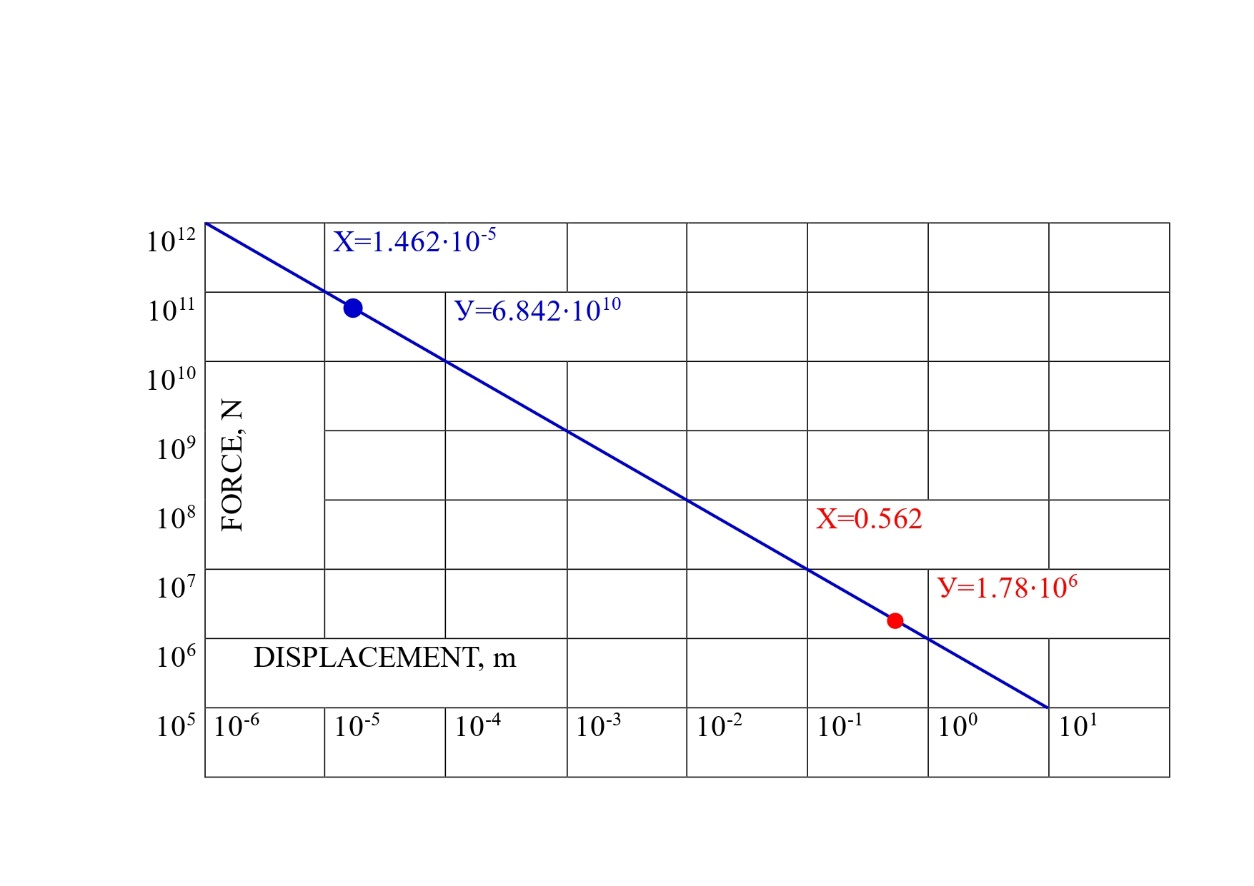
As seen in Figure 1, each point on the line corresponds to a specific value of force and displacement, allowing us to achieve 106 joules of work for each case in one second. Theoretically, the diapason can be extended indefinitely by increasing or decreasing both force and displacement. How will this manifest in reality? What amounts of force and displacement can we realistically achieve? Let us select a steel rod as the working body and evaluate the forces generated due to temperature changes and the elongation of the material.
3.1. Compressibility of steel
To understand the origin of the force, we should consider the principle of operation of our device, the main component of which is the steel rod. One end of the rod is fixed securely using a sufficiently strong tower. To the other end, we attach a load that will resist the rod’s expansion, as illustrated in Figure 2 [16].
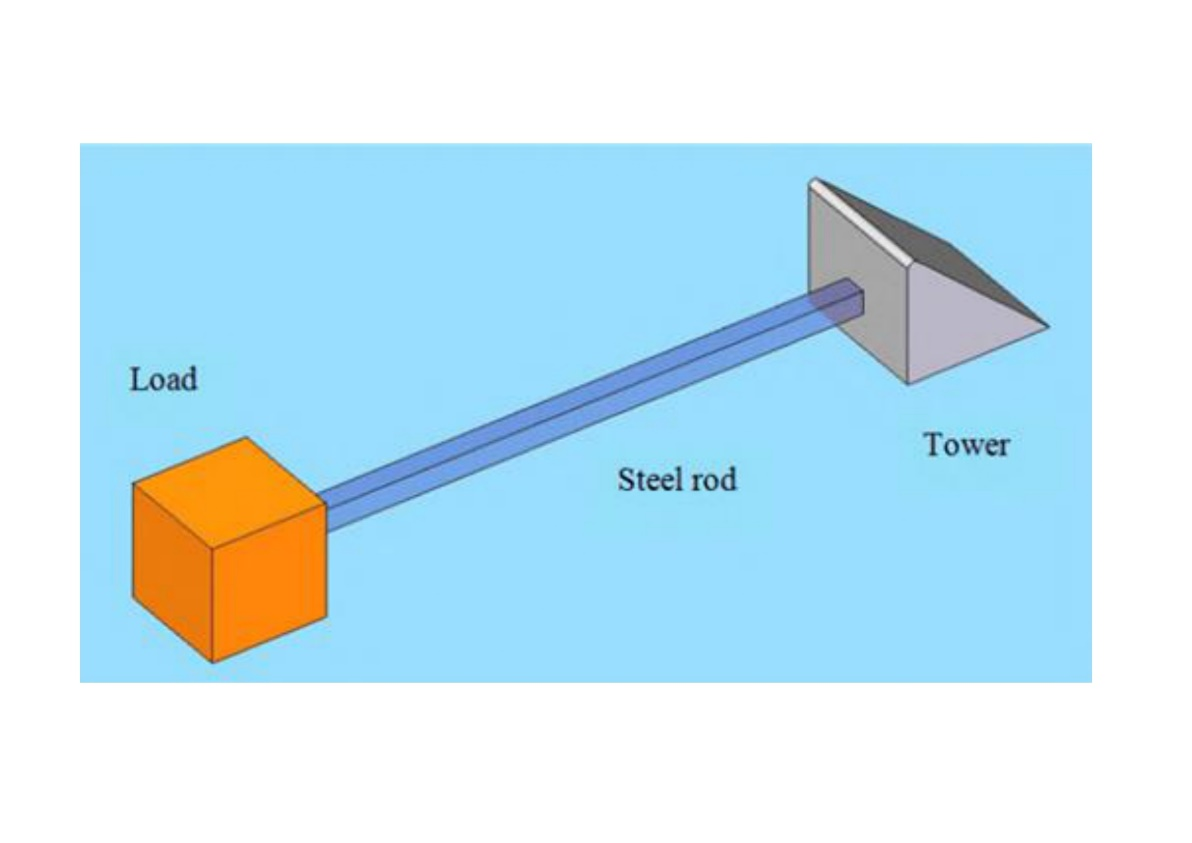
The load consists of a piston, which must perform work by moving in a hydraulic cylinder and displacing the liquid. It is evident that the resistance acting on the piston is directly related to the power of the device. As the steel rod expands, it experiences compressive forces from both the load and the tower. The magnitude of the load depends on the power generated. Now, it is needed to evaluate how much compressive force the steel rod can withstand.
There are numerous cross-sectional shapes and sizes of steel columns used in engineering, each with unique characteristics and purposes. The steel rod we select must withstand compression and resist compressive force as effectively as possible. However, the longer the rod, the lower its compressible resistance. To enhance compressive strength, the rod’s length should be reduced, and its diameter increased. Based on these considerations and assembly requirements, we decided to use multiple steel disks of a specific diameter and thickness instead of a long steel rod to achieve the required compressive strength. By assembling these disks in series, we can construct a hollow-shaped steel column. We will not attempt to prove why a hollow cylindrical column is stronger than a solid cylinder, as sufficient data supporting this is readily available in open sources.
It was utilized data on allowable concentric loads for steel pipe columns, which present allowable concentric loads for standard and extra-strong steel pipes, from [21]. The diameters and length of pipes vary from 0.0762 m to 0.305 m and from 1.83 m to 6.1 m, respectively. It is evident from the data that allowability increases with increasing diameter and decreases with increasing length. If we select the extra-strong pipe with the largest diameter (0.305 m), the shortest length (1.83 m), and a wall thickness of 0.0127 m as a steel rod, the allowable concentric load is 1.78·106 N. Then, to support a power output of 1 MW, the second end must displace for 0.562 m per second according to Equation (2). This is also illustrated in Figure 1 (red point). However, such displacement ∆L is not feasible under real conditions, as the change in temperature ∆T (°C) per second is very small, and the initial length of the steel pipe Li should be several kilometers [13]:
here, °C-1 is the linear expansion coefficient of steel [15], and ∆T is the change in temperature of steel (°C). Next, it will be demonstrated how to obtain the real diapasons of working parameters such as force and displacement, by moving left and up along the line in Figure 1.
3.2. Buckling of columns
Our discussion will follow around Equations (2) and (3), and we will define the initial conditions. In our case, we can assume that the linear expansion coefficient α is constant because the temperature span is not large [22]. The temperature change of the steel rod (∆T) depends on environmental temperature and direct sunlight. As indicated in [13], the average hourly change in environmental temperature from early morning until midday in our region is approximately 1°C. The hourly temperature change of the steel rod under direct sun lights may be considerably greater and will vary from summer to winter. To be more reliable, we assume that the temperature of the steel rod will rise from 0°C up to 60°C from midnight until midday. Therefore, we can calculate that the hourly temperature change consists of 5°C. In our calculations, we consider instantaneous changes, and for one second, the change in temperature will be approximately °C. Substituting Equations (3) and (2) into Equation (1), we can express the instantaneous power as follows:
For a given power, we can achieve the required value of force F by changing the initial length Li. Decreasing in displacement should be accompanied by an increase of force to maintain constant power. To evaluate the maximum applicable value of loading force and minimum displacement, we must analyze the strength of steel. There is limited information available regarding the strength of horizontally compressed steel rods. Therefore, we will utilize Euler’s column buckling theory of solid columns. The allowable load, F (N) [23]:
here, is the factor accounting for the end conditions (both ends are fixed); is the modulus of elasticity of steel; is the length of the column (this value is chosen arbitrarily, and with this length, it resembles a disk more than a column); and
is the moment of inertia; is the outer diameter of the disk; is the inner diameter of the disk, and is the thickness of the wall of the disk.
To achieve a work of 106 joules per second with an allowable force of , the displacement (elongation) is approximately per second according to Equation (2), and about per hour correspondingly. If we accept that temperature change ∆T during one second is about °C, as mentioned above, the initial length of the steel column required to achieve this displacement, according to Equation (3), should be . In reality, ∆T can increase more effectively on sunny days, allowing for the use of an even shorter column. By assembling a column of 870.24 m in length using steel disks of 0.12 m thickness in series, we can maintain the allowable force along the entire length of the column. This configuration results in a total of 7,252 disks, each operating independently. The allowable force for each disk equals the force exerted by the steel rod over the entire length, ensuring consistency across all disks.
3.3. Stacking factor
When using multiple steel disks assembled in series, it is essential to consider the so-called stacking factor. This phenomenon is commonly observed in the assembly of transformers and electric machines: the stacking factor of the core refers to the thickness of the lamination. In electric machines, particularly alternating current (AC) machines, the core is constructed from a series of laminated steel sheets, resulting in a greater actual thickness than the calculated one. Lamination is employed to prevent losses due to eddy currents [24]. In our case, we observe a similar phenomenon: the actual length of the steel rod may exceed 870.24 m. The reason is the roughness of the contact surfaces of the steel disks. If the cumulative roughness of the entire column will be comparable to the thermal displacement, the device will be unable to produce useful energy, resulting in zero thermal displacement. To mitigate this negative effect, we can adjust the steel column by pre-compressing it. This can be easily achieved by altering the position of the supporting rocks after the initial expansion before commencing the experiment.
4. Results and Discussions
Linear thermal expansion of steel is minimal, necessitating the use of a long steel column to achieve sufficient displacement. This column is the primary component of our device, which will perform the required task. Based on the desired power output, we can manipulate the final displacement of the piston mounted at the end of the steel column. This can be regulated in two ways: by altering the length of the steel column and by employing levers. We will utilize both methods in combination.
The steel column requires appropriate conditions for installation in a straight line, which may pose challenges in uneven terrain. While the length of the column can be shortened, it is crucial to recognize that the length is directly related to the transmission of n, the lever system: if one wishes to shorten the length by a factor of the lever system’s, the transmission must be increased by the same factor to maintain the same displacement of the piston.
To amplify thermal displacement several times, multiple levers connected in series can be employed. However, the issue of the long steel column remains unresolved. The column length, which may reach up to 1000 meters or more, should be placed horizontally in a straight line, necessitating a suitable area. Furthermore, installing multiple levers in series in one location may lead to construction difficulties and additional costs. This problem can be addressed by distributing the multiple levers along the length of the column. By utilizing levers, the long steel column can be transformed into a zigzag configuration of shorter columns. The length of each zigzag step can be determined based on the power of the device.
The upper working point of the 1 MW device, according to Equation (2), is shown in Figure 1 (blue point). Additionally, this work can be expressed using pressure and volume [25]:
where Pr is the pressure in the cylindrical volume V, ΔV is the volume of the displaced working liquid, and ΔL is the moving distance of the piston in the cylinder. If assume that this work is completed in one second, the calculated value of work will correspond to the power of the device. The last expression can be combined with Equation (2) as follows:
where R is the inner radius of the cylinder. The device’s configuration is presented in Figure 3.
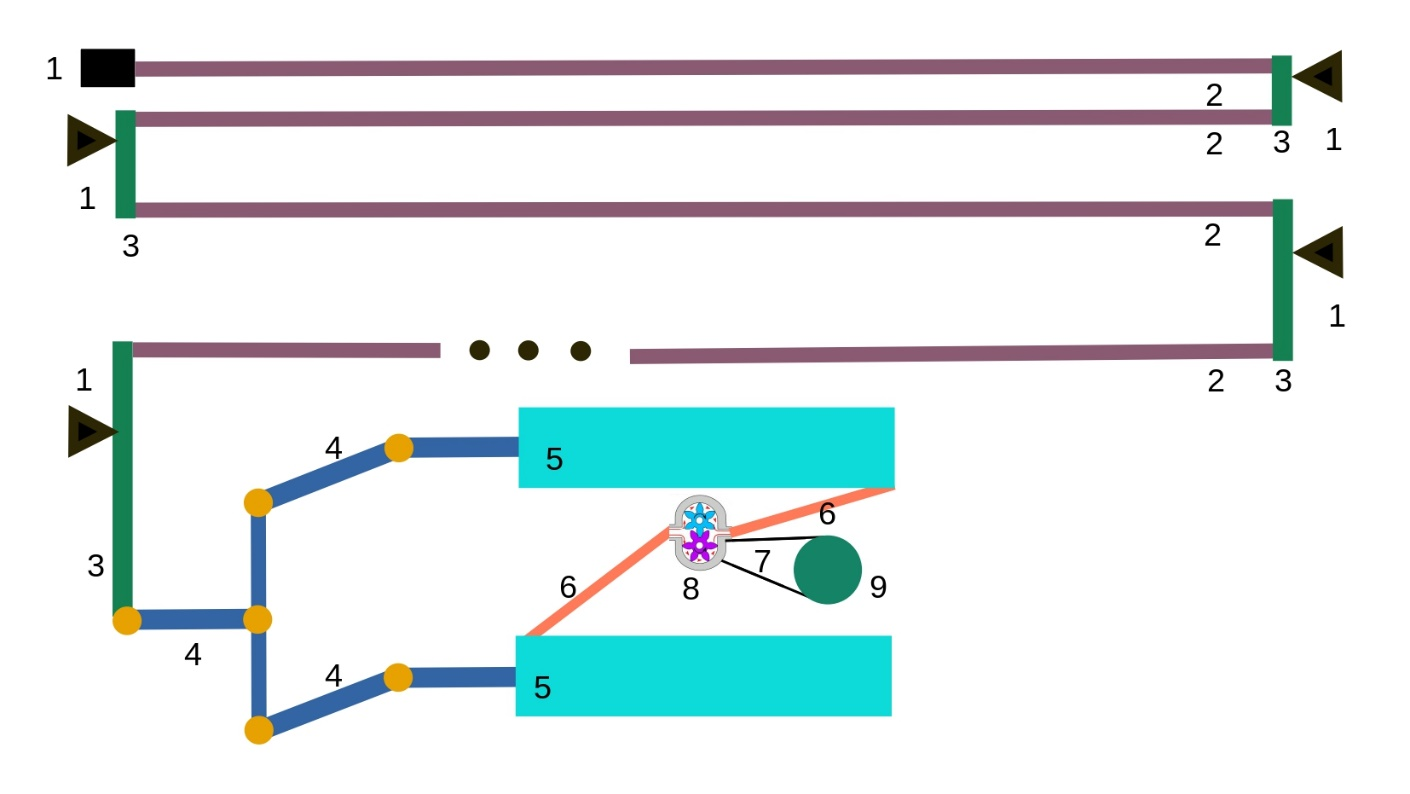
The device operates as follows: as environmental temperature rises, the steel columns (2), fixed to the buttresses (1), begin to elongate. The elongation of each column is amplified by the levers (3) and transmitted to the next column. The final column is connected to the pistons with articulated joints (4). The upper piston moves the liquid from the upper cylinder (5) into the lower one through the high-pressure pipes (6) and transducer (8). The transducer, functioning like a positive flow meter, converts the linear displacement of the liquid into rotational motion (e.g., clockwise) and transfers this motion to the generator via the chain or belt drive (7). The generator (9) then produces electricity. The liquid that passes through the transducer collects in the lower cylinder, where the lower piston creates a vacuum, moving to the right and similarly supporting liquid motion.
To ensure the device operates when the temperature decreases, the disks comprising the steel columns and the columns themselves are mechanically affixed to each other and to the levers. This way, when the columns shorten, the pistons will retract, and the upper piston will create a vacuum in the upper cylinder. Due to the vacuum, liquid from the lower cylinder will be drawn into the upper one through the transducer. Additionally, the lower piston in the lower cylinder will push the liquid backward. The transducer will operate in reverse, resulting in counterclockwise rotation being transmitted to the generator.
To design a device with the required power, we can manipulate four parameters: the length of the steel column; the pressure supported by the piston-cylinder system; the radius and length of the cylinder, which will determine its volume. Two of these parameters, the holding pressure and the radius of the cylinder, are constrained by technical possibilities. Moreover, the length of the cylinder should not be shorter than the maximum displacement of the piston.
According to Equation (8), when the work ( joules per second) and distance traveled in one second ( meters) are constant, varying the radius of the piston (the inner radius of the cylinder) allows us to seek an affordable value of the pressure that the cylinder must withstand to the power output of 1 MW. Calculations show that for small inner radii of the cylinder, the pressure becomes excessively high, and we cannot find the cylinder capable of withstanding such pressure. To reduce the pressure, we must increase the inner radius of the cylinder. A more manageable pressure, approximately 100 bars, can be achieved with a cylinder radius of about 46.67 m and length of approximately 0.53 m. However, a cylinder with such a radius that can withstand 100 bars does not exist.
The largest diameter of a high-pressure vessel we found in industry is 4 m [26]. This 29.1 m long hydrocracker operates at a pressure of 145.5 bars. If we want to adapt it for our 1 MW device and install a suitable piston, the displacement ΔL for 1 second can be defined as approximately . The piston will move about 19.69 m in one hour, and for several hours of operation, we need to connect multiple vessels in series, which makes the device very bulky, inefficient, and costly. These vessels could also be arranged in parallel, but this approach does not resolve the aforementioned issues. Note that in both cases, we require such number of additional vessels to collect the working liquid (Figure 3).
Consequently, we considered the possibility of designing a device using only two vessels. If assume that the total stroke of the piston is 28 m for 10 hours of operation, the displacement ΔL for 1 second will be approximately , allowing the device to produce power of 142.21 kW. To achieve the calculated displacement of the piston per second, we adjust the length of the steel column using multiple levers. The zigzag scheme consists of eight horizontal columns, each 100 m long (834 disks of 0.12 m). The thermal elongation of the first column ΔL1 is calculated using Equation (3), where and °C. The elongation lengths of columns from 2 to 8 are calculated as:
here, is the transmission coefficient of the levers from 2 to 8. The final movement of the piston Lf is calculated as where is the adjusted coefficient of the lever 8.
Another possibility is to use even smaller diameter cylinders. For example, a hydraulic cylinder with the following parameters: max bore diameter of Ø1200 mm; max stroke of 12 meters; max test pressure of 50 MPa (500 bars) [27]. If assume a working pressure for safety reasons of 400 bars and define displacement ΔL based on a 12-meter stroke for 10 hours as , we can calculate that a device based on such cylinders can provide 15 kW of power per second. The number of steel columns will be reduced to seven according to the zigzag scheme presented in Figure 3. The final displacement Lf1 is calculated as , where is the adjusted coefficient of the last lever.
5. Conclusions
This paper presents the results of pioneering efforts to create a new type of device capable of producing electricity using daily variations in environmental temperature. Forces generated in solid and liquid materials during their expansion or contraction due to temperature changes will perform specific mechanical work. The construction and operational principles of the proposed device are straightforward. Due to the absence of fast-moving parts, its reliability is relatively high. The device addresses three critical challenges: 1) obtaining sufficient force (work), 2) accelerating very slow motion, and 3) converting linear motion into circular motion. Notably, in the case of solid materials, the upper limit of attainable force is not restricted. It is possible to achieve any value of force by increasing the radius and decreasing the length of the steel disks. The sluggish movement is accelerated using lever systems in series, and a positive displacement transducer is employed to get circular motion.
The pressure of the working liquid plays a crucial role and determines the power of the device. Consequently, the power of the device is directly proportional to the pressure supported by the cylinder and thus, developing such vessels can significantly contribute to energy supply.
The main features of the device include: universal availability, the ability to operate continuously throughout the year, minimal moving parts, and the absence of waste and noise. These characteristics make it particularly useful for providing electricity to small farms in remote areas.
Future plans include modeling the device using both solid and liquid materials. This development can be achieved in the coming years by leveraging the latest advancements in high-pressure vessels and materials science.
Patent: A. Parsokhonov, “Method for obtaining electrical energy due to thermal expansion and contraction of substances (variants)”, Patent 6(206) UZ, IAP 05611, May 15, 2018.
Author Contributions: Conceptualization, A.Parsokhonov; methodology, A. Parsokhonov and O.Nurullayev; software, A.Parsokhonov and A.Akhmedov; validation, A.Parsokhonov, O.Nurullayev and and A.Akhmedov; formal analysis, A.Parsokhonov and A.Akhmedov; investigation, A.Parsokhonov; resources, A.Parsokhonov, O.Nurullayev and A. Akhmedov; data curation, A.Akhmedov; writing—original draft preparation, A.Parsokhonov; writing—review and editing, A.Parsokhonov; visualization, O.Nurullayev and a.Akhmedov; supervision, A.Parsokhonov; project administration, A.Parsokhonov; funding acquisition, A.Parsokhonov, O.Nurullayev and A. Akhmedov.
Funding: This research received no external funding
Conflicts of Interest: The funders had no role in the design of the study; in the collection, analyses, or interpretation of data; in the writing of the manuscript, or in the decision to publish the results.
References
- Whiteman, A., 2024. Renewable energy highlights - 11 July 2024 - Electricity generation by energy source, International Renewable Energy Agency. https://policycommons.net/artifacts/12752038/renewable-energy-highlights/13649710/ (28 July 2024, date last accessed).
- https://www.ren21.net/wp-content/uploads/2019/05/KeyFindings_2013_lowres.pdf (1 August 2024, date last accessed).
- Share of renewables in electricity production. https://yearbook.enerdata.net/renewables/renewable-in-electricity-production-share.html (19 February 2024, date last accessed).
- Renewables. https://www.iea.org/energy-system/renewables (19 February 2024, date last accessed).
- O.C. Okeke et al. “Renewable Energy: Concept, Technology and Uses”, Journal of Advance Research in Mechanical and Civil Engineering, Vol. 3 No. 4, 2016, pp. 13–25. DOI: https://doi.org/10.53555/nnmce.v3i4.319, Publication URL: http://nnpub.org/index.php/MCE/article/view/319.[CrossRef]
- Javid Mohtasham, “Review Article-Renewable Energies”, Energy Procedia, Vol. 74, 2015, pp. 1289–1297, https://doi.org/10.1016/j.egypro.2015.07.774. (https://www.sciencedirect.com/science/article/pii/S1876610215015428)[CrossRef]
- John Twidell and Tony Weir. “Renewable Energy Resources”, Second Edition. 2006 by Taylor & Francis 2 Park Square, Milton Park, Abingdon, Oxon OX14 4RN, pp. 1(24)–7(30).
- Harjanne, A. and Korhonen, J. M., “Abandoning the concept of renewable energy”. Energy Policy, Vol. 127, 2019, pp. 330–340. https://doi.org/10.1016/j.enpol.2018.12.029[CrossRef]
- Milton L. Holloway, “The oil and gas state adds renewable wind and solar”. Academic Press, 2021, ch. 11, pp 249–262, ISBN 9780128238134, https://doi.org/10.1016/B978-0-12-823813-4.00011-7[CrossRef]
- Paul Peter Urone and Roger Hinrichs, “College Physics”, Second Edition, Jul 13, 2022 by OpenStax, Houston, Texas. https://openstax.org/books/college-physics-2e/pages/13-2-thermal-expansion-of-solids-and-liquids
- Real Life Applications of Thermal Expansion. https://www.geeksforgeeks.org/real-life-applications-of-thermal-expansion/ (8 November 2024, date last accessed).
- Takele Teshome Somano, “The Physical Properties of Thermal Expansion of Solid Matter”. American Journal of Modern Physics, Vol. 11 No, 5, 2022, pp. 79–84. https://doi.org/10.11648/j.ajmp.20221105.11
- A. Parsokhonov, “Renewable Energy Source from Natural Thermal Expansion and Contraction of Matters”. Am. Sci. Res. J. Eng. Technol. Sci., 23(2016), pp. 121–130. https://asrjetsjournal.org/
- A. Парсохонов, “Способ получения электрической энергии за счет температурного расширения и сужения веществ (варианты)”, Patent 6(206) UZ, IAP 05611, May 15, 2018.
- A. Parsokhonov and Kh. Iskanov, “A New Type of Renewable Resource: The Natural Thermal Expansion and Contraction Energy of Matter”, International Journal of Innovative Science and Research Technology, Vol. 4 No. 5, 2019, pp. 83–88. www.ijisrt.com.
- A. Parsokhonov et al. “A device for electricity generation using alternative renewable energy sources”. Acta of Turin Polytechnic University in Tashkent, 30, 12(2), 2022, pp. 39–44. https://www.acta.polito.uz/index.php/journal/article/view/66
- A. Parsokhonov et al. 2022 IOP Conf. Ser.: Earth Environ. Sci. 1076 012010. Available: https://iopscience.iop.org/article/10.1088/1755-1315/1076/1/012010[CrossRef]
- A. Parsokhonov, O. Nurullaev, and A. Akhmedov, “Modeling a renewable energy source using MATLAB”, Materials of International Scientific-Practical Conference “Prospects for the development of digital energy systems, problems and solutions for obtaining renewable energy-2023” Jizzakh, Uzbekistan. pp 344–348.
- A. Parsokhonov, O. Nurullaev, A. Akhmedov, “Qayta tiklanuvchan energiya manbalari: muammolar va yechimlar”. Materials of International Scientific-Practical Conference “Innovative Technologies in The Digitalization Environment of Higher Education: Problems and Solutions-2024” Jizzakh, Uzbekistan. Volume 1, pp. 596–600.
- Hugh D. Young, Roger A. Freedman, and A. Lewis. “Sears and Zemansky’s University Physics”, with Modern Physics. 13th Edition. Copyright ©2012, 2008, 2004 Pearson Education, Inc., publishing as Addison-Wesley, 1301 Sansome Street, San Francisco, CA, 94111, ch.6, pp. 176–196.
- The Engineering ToolBox (2008). Steel Pipe Columns - Allowable Loads. https://www.engineeringtoolbox.com/load-steel-pipe-columns-d_1348.html (27 October 2024, date last accessed).
- T. Kompan, “Thermal expansion of solids: recent research and standard materials”. International Scientific Journal “Machines. Technologies. Materials”. No. 10, 2016, pp. 34–36. Web ISSN 1314-507x; print ISSN 1313-0226.
- P.D. Pattillo, Chapter 10 - Column Stability, Elements of Oil and Gas Well Tubular Design, Gulf Professional Publishing, 2018, pp. 273–313, https://doi.org/10.1016/B978-0-12-811769-9.00010-4. (https://www.sciencedirect.com/science/article/pii/B9780128117699000104)[CrossRef]
- H. Shokrollahi and K. Janghorban, “Soft magnetic composite materials (SMCs)”, Journal of Materials Processing Technology, Vol. 189, Nos. 1–3, 2007, pp. 1–12, https://doi.org/10.1016/j.jmatprotec.2007.02.034. (https://www.sciencedirect.com/science/article/pii/S0924013607001756)[CrossRef]
- McGovern, J, “Chapter 4. Hydrostatic Work and Power Transmission”, Applied Energy Systems: Hydrostatic Fluid Power Transmission and Flow in Pipes, 2012 Edition, Dublin Institute of Technology, http://www.fun-engineering.net/aes
- Large-scale equipment for your high-pressure process. https://www.man-es.com/oil-gas/products/high-pressure-vessels (19 July 2024, date last accessed).
- Long Stroke Hydraulic Cylinder in Hot Sale. https://eternaloilequipment.en.made-in-china.com/product/twAaWrjTVxcY/China-Long-Stroke-Hydraulic-Cylinder-in-Hot-Sale.html (22 July 2024, date last accessed).