

Costus afer is a well-known medicinal plant abundant in the Niger Delta region of Nigeria. The successful growth of Costus afer plant on crude oil contaminated soil adds to the list of plants that has potential to get rid of harmful chemical compounds to save human life as well preserve the environment. This study investigates the remediation potential of Costus afer plant at different ages (7, 14, 21, 28, 35, and 42 days old) to decontaminate petroleum hydrocarbon-contaminated soil. To achieve this, contamination of sandy-loam soil was simulated by mixing T0.5, 1.0, and 1.5 L of Bonny-Light crude oil with 48 kg of the soil in three separate reactors to achieve conditions of low, medium, and high contamination, respectively. The reactor with medium-level contaminated soil served as the control. The plants were nursed and transplanted at the stated ages to each reactor except the control. Controlled irrigation was applied, and the setups were housed to shield them from rainfall. After 90 days of treatment, results showed that the 7 days old plants produced the highest amounts of total polycyclic aromatic hydrocarbon (TPAH) reduction of 99.71, 90.10, and 84.06 % in the soil with low, medium, and high contamination, respectively. Furthermore, the sequence of TPAH reduction by the plants was 14 days old > 21 days old > 28 days old > 35 days old > 42-days old. Thus, in addition to its medicinal value, Costus afer plant also has the potential to restore crude oil-contaminated soils.
Bioremediation of Total Polycyclic Aromatic Hydrocarbon in Crude Oil-Contaminated Soil using Costus afer Plant
March 08, 2023
August 24, 2023
September 20, 2023
September 22, 2023
This is an Open Access article, distributed under the terms of the Creative Commons Attribution 4.0 International License (http://creativecommons.org/licenses/by/4.0/), which permits unrestricted use, distribution and reproduction in any medium or format, provided the original work is properly cited.
Abstract
1. Introduction
The importance of soil is enormous as it provides a growing medium for plant roots with nutrients and mineral, exchange of oxygen and gases, protection from erosion that speeds up natural decomposition process of organic matter. Thus, any nation that destroys its soil has destroyed itself. Soil in most parts of the world, is directly or indirectly polluted including the Niger Delta region of Nigeria. Soil contamination with petroleum hydrocarbon poses significant threat to the environment and to humans worldwide. Petroleum hydrocarbon fills soil pore spaces and inhibits effective soil aeration; thereby suffocating plants that need effective air circulation in the soil for their growth and development [1].
Oil spills in Nigeria are caused by the corrosion of pipelines due to a lack of adequate maintenance and vandalization of pipelines [2, 3]. Petroleum contamination of soil is a common type of soil contamination within the region [4]. Petroleum consists of thousands of organic materials, most of which are hazardous hydrophobic compounds. Petroleum hydrocarbons account for 50 – 98 % of crude oil and are considered an important component depending on the source of the petroleum [5]. The chemical composition of crude oil contains the following four main compounds such as aromatics, resins, and asphaltenes [6]. Oil spillage results in contamination of the environment with aliphatic and aromatic hydrocarbons including polycyclic aromatic hydrocarbon (PAH), total petroleum hydrocarbon (TPH) as well as heavy metals [7].
The origin and geochemistry of PAHs revealed that anthropogenic PAHs can be categorized as pyrolytic and petrogenic. Pyrolytic PAHs results from incomplete fuel combustion, wood and coal burning, car emissions, tobacco related activities and meat grilling [8]. This type of PAHs is also found in coal tar, creosote, roofing tar and parking lot seal coats [9]. Many PAHs are reasonably expected to be carcinogenic and suspected to cause birth defects [10]. Some PAHs are considered potential carcinogens, mutagens, and teratogens by the Environmental Protection Agency [11], and the Agency for Toxic Substances and Disease Registry [9].
These components can alter the soil physical, chemical, and biological quality and when exposed to, it can cause carcinogenic and immunotoxic effects, thereby posing serious threat to human health and environment [12]. Due to the impact of petroleum hydrocarbon in the soil, concerns on hydrocarbon in the environment have increased. Among them, polycyclic aromatic hydrocarbon is of great interest as accumulation of these compounds in the soil might pose serious threat to human and other living organisms through different pathways [13]. Detoxification of TPAH-contaminated soils has long been a worldwide challenge and has been addressed in various ways in recent years. Therefore, physical-chemical methods have been widely used and are still applied, including incineration, disposal in landfills, excavation, desorption, thermal destruction, soil washing, soil flushing, stabilization, soil vapor extraction, and many others [14, 15]. These traditional methods have the advantage of solving the problem in a short amount of time, but costs could be high, and the environmental matrices are usually compromised. However, a group of biological technologies capable of degrading hydrocarbons is currently emerging [15, 16, 17]. Biological treatment, commonly referred to as bioremediation involves the breakdown of contaminants into non-toxic forms through the activities of micro-organisms. It has been canvassed and adopted over chemical treatment methods because it is cost- effective and eco-friendly [18].
Phytoremediation is an environmental- friendly and cost-effective technique that utilizes the genetic potential of plants to remove, degrade, metabolize, or immobilize a broad range of organic and metallic contaminants [19]. The contaminants are removed through one or more of several phytoremediation mechanisms. These include phytostimulation /rhizodegradation (degradation by rhizosphere microbes), phytodegradation (uptake, storage, and degradation within plant tissues), phytostabilization (immobilization/binding into soil matrix), phytovolatilization (transformation and volatilization), and phytoextraction (absorption, translocation, and storage in root and shoot tissues) [20]. This study adopted phytostabilization, which involves the use of contaminant-tolerant plant species to immobilize pollutants in the soil and decrease their bioavailability [21].
Several plants have been reported to remediate crude oil- contaminated soil such as Cordia myxa [22], Abelmoschus esculentus, Moench, Corchorus Olitorius L [23], spear grass, guinea grass, elephant grass, and gamba grass [24], corn and elephant grass [25], etc. These studies have shown that some of the plants have more remediation potential than others. Literatures also confirms that plant age and type are among factors that affects phytoremediation of contaminated soils, which when properly selected would enhance the remediation of contaminated soil. [26] suggested that exploiting the natural biodiversity by recognizing suitable natural species that grow in the contaminated sites and the native plant (plate 1) is a dominant crop within the Niger Delta region of Nigeria.
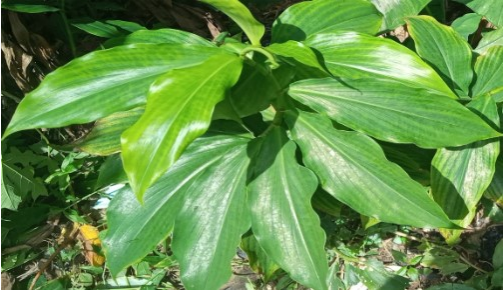
It grows like weed, despite its usefulness in the pharmaceutical industry. The plant is still in great quantity in the region and yet to be utilized for phytoremediation of total polycyclic aromatic hydrocarbon, in crude oil contaminated sites. Therefore, this study seeks to investigate the potential of different ages of Costus afer plant in the removal of total petroleum aromatic hydrocarbon in different petroleum hydrocarbon-contaminated levels.
2. Materials and Methods
2.1. The Study Area
The study was carried out at the research farm of the Rivers State Institute of Agricultural Research and Training (RIAT), which is situated in the Rivers State University, Port-Harcourt, Nigeria. The global positioning system (GPS) coordinate of latitude 4. 8020E and longitude of 6.9770N, with a predominance of oxisols according to the United States Department of Agriculture (USDA) soil taxonomic order and its soil texture is Sandy loam [27]. Rivers state is characterized by tropical rainforest vegetation with rainfall ranging from 2000 – 2484 mm per annum of which 70% occurs between the months of May and August with an average temperature of 27oC [25, 28].
2.2. Experimental Design and Setup
The experimental design used in this study was the group-balanced block design (GBBD). The procedure used by [29] was adopted to arrive at the three working concentrations (low, medium, and high) of crude oil in the soil used in this study. To do this, about 48kg of sandy-loam soil was placed in four separate reactors. Then, three of the reactors were contaminated with 0.5, 1.0, and 1,5 litres of Bonny-Light crude oil, in turn, to achieve conditions of low, medium, and high-level contaminations, respectively. The medium-level contamination was duplicated to create a fourth reactor, which was used as the control. The two main variables were crude oil concentration (C) as factor A having 3 levels including low concentration (C1) medium concentration (C2), and high concentration (C3); and age of Costus afer plant (T) as factor B with 6 levels including 7 days old (T1), 14 days old (T2), 21 days old (T3), 28 days old (T4), 35 days old (T5), and 42 days old (T6).
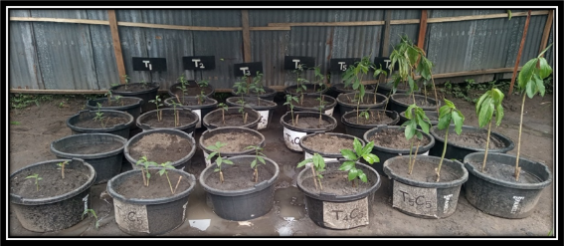
Wide-mouth black plastic basins (reactors) with 0.5 m top diameter and 0.3 m depth were employed to accommodate the mixture of soil and crude oil used as planting medium (Plate 2). The reactors were kept in an open barn to shield them from direct rainfall for moisture control. Before transplanting the nursed Costus afer plants, the contaminated soil in the reactors was allowed for a three-day incubation period. Each reactor was irrigated with 0.5 L of water at three days intervals until the cessation of remediation. This water application rate was in line with the application rates used by [29], which showed its effectiveness in the remediation of crude oil-polluted soils. Costus afer plants were nursed for 7, 14, 21, 28, 35, and 42 days. Thereafter, they were transplanted to the planting medium. The experimental layout is shown in Plate 2.
2.3. Sampling and Analytical Methods
Aliquots were collected from the uncontaminated soil before mixing with crude oil. Samples were also collected from the soil-crude oil mixtures. The samples were collected from different spots and bulked together for analysis. The physicochemical characteristics of the uncontaminated soil tested include pH, particle size distribution (PSD), moisture content (MC), electrical conductivity (EC), organic carbon (OC), organic matter (OM), and total polycyclic aromatic hydrocarbon (TPAH). The TPAH of the contaminated soil was also determined at intervals of 30 days for a period of 90 days. A handheld H198331 multimeter (Hanna instrument, USA) was used to conduct an in-situ measurement for EC and pH. Soil MC was determined by the 24-hour oven-drying method. The hydrometer method was used to determine the PSD while the soil texture was determined by the USDA soil textural classification scheme using TAL for Windows v. 4.2 computer software by Christopher Tech Boon Sung, China. The OC and OM were determined by the Walkley-Black combustion method. TPAH compounds were extracted by dichloromethane as the extraction solvent. Then, TPAH was determined by [30] method 8270B using a gas chromatograph (GC) coupled to a 5977-mass selective detector (MSD) (Agilant Technologies Inc, USA). Then, TPAH removal (%) was deduced using equation 1.
Where IC is the initial concentration of TPAH (mg/kg) and FC is the final concentration of TPAH (mg/kg) [21]
2.4. Statistical Analysis
The mean, standard deviation, and standard error using AVERAGE, STDEV, and Standard Error functions, respectively in Microsoft Excel 2016, as well as simple percentages, were determined. Data were analyzed using a one-way analysis of variance following the method of [31] to determine if there were statistically significant differences within and among treatments at the 5 and 1% significance levels based on the F-test. Differences were considered significant if the calculated F-value was greater than or equal to the tabular F-value, and nonsignificant if otherwise.
3. Results
3.1. Physicochemical Properties of the Uncontaminated Soil
Table 1 shows the key properties of the uncontaminated soil used as the planting medium. The uncontaminated soil is composed of 27.4% silt, 60% sand, and 12.6% clay; and is classified as sandy loam as shown in Figure 1. The soil was slightly acidic with an EC of 15.6 µS/cm. TPAH was below the limit of quantitation.

3.2. Total Polycyclic Aromatic Hydrocarbons of the Untreated Crude Oil-Contaminated Soil
Figure 2a shows the TPAH characteristics of the untreated petroleum hydrocarbon-contaminated soil. The crude oil-contaminated sandy-loam soil contain polycyclic aromatic hydrocarbon (PAH), as corroborated in several pieces of literature including [32].
It is also important to note the variations of TPAH content, after contaminating soils with crude oil at different levels (low, medium, and high) as low contamination level resulted in lower amount of TPAH, next to medium and the highest was high contamination level. It was further observed in Figure 2a the TPAH content of the untreated soils including the control was well below the 40 mg/kg intervention value spelt out by [33] for all levels of crude oil contamination except for high contamination (See Figure 2a). Although, it is still higher than the target limit of 1 mg/kg as prescribed by [33], suggesting that the soil is unsafe for agricultural purposes. This, therefore, justifies the need for remediation of petroleum hydrocarbon-contaminated soils before they can finally be utilized for agricultural or other purposes. This therefore entails that TPAH content are present in the crude oil contaminated soil, implying that they are carcinogenic. [32] studies revealed that TPAH concentration that is less than 0.02 mg/kg is carcinogenic, which is unsafe for human and environmental health.
3.3. Total PAH Degradation over time
As observed in Figure 2b, after 30 days of treatment with the Costus afer plant, there were varying levels of TPAH reduction across the treatment reactors. The drop in TPAH concentration in the low contaminated soil (C1) treated with the 7 days old plants was faster as it reduced the contaminant from 27.76 to 8.7 mg/kg. Although the values was less than the intervention value of 40 mg/kg, but still above the target value of 1 mg/kg [33]. This means that, apart from agricultural purposes the remediated land could still be put to other forms of use like building construction, etc. The TPAH reduc-tion was highest (68.66 %) in the soil treated with the 7 days old plants (T1), followed by T2, T3, T4, T5 and T6. The same trend was observed across all other contamination levels (medium and high). These findings agree with [34] and [35] who reported that phytoremediation can be effectively used to manage soil contaminated with petroleum hydrocarbon. The degradation of TPAH increased with time, proceeding at a fast rate in the first 30 days, and becoming slower afterwards. This agrees with the findings of [36, 37]. The control was far beyond the Nigeria upstream petroleum regulatory com-mission (NUPRC) target limit.
At 30 days after planting, Costus afer plants were characterized by leaf chlorosis (yellowing of leaves) but as time progressed the leaf burn decreased to a minimum across the various treatments. This observation, according to some studies [27, 38, 29], was typical of the adaptation mechanisms of some plants to crude oil contamination arising from the uptake of hydrocarbons from the contaminated soils by plants (phytoaccumulation) and the transfer of volatile fractions of the contaminant to the atmosphere through the leaves (phytovolatilization). This was observed more in the older plants than the younger plants in the medium- and high-contaminated soils. The leaf chlorosis may be due to stresses from the hydrocarbon contamination. Perhaps, the total nitrogen of the soil may be low because a deficiency in nutrients may contribute to the leaf chlorosis observed [40].
At 90 days after planting, further decrease in the TPAH concentration ranged from 0.08 – 2.21 mg/kg for the low-contaminated soils for which 99.71, 99.56, 96.21, 95.38, 94.25, and 93.10 % TPAH reduction was recorded for T1, T2, T3, T4, T5, and T6, respectively (Figure A1). A similar trend was observed for other contamination levels. Overall, the TPAH concentration in all the treatment reactors were below the NUPRC intervention value of 40mg/kg but were above the target value of 1mg/kg except for low contaminated soil treated with 7 days old plant (Figure 2d). However, the TPAH reduction level in the control reactor was very low (2.94 - 16.04 %) for all the treatment reactors.
It is important to note that the ability of Costus afer to thrive and grow in a crude oil contaminated soil may be attributed to its nitrogen fixing ability. It could also be because of the development of extensive fibrous root system by Costus afer plant, which may be an adaptation to aid its tolerance and survival strategies to cope with water stress imposed by the crude oil [41]. The variations in the reduction of TPAH, agrees with the findings of [42, 43] suggesting that the influence of microorganism varies with plant age as well as plant type. It was further revealed that remediation of Arsenic is higher in younger plants than in the older plants, possibly due to higher metabolic activities of young plants [43], which corroborates the findings of this study that 7 days old Costus afer plants had higher phytoremediation potential than the older Costus afer plants. As there was a gradual reduction of TPAH in the reactor without treatment (C4) across all levels of crude oil contamination, this natural attenuation may be occasioned by atmospheric influence [35]. The ANOVA result (Table A1) showed that there was a significant difference (calculated F-value > tabular F-value) in the treatment means at the 1 and 5% significance level. Thus, it can be concluded with 95 and 99% confidence that the observed difference in the treatment means was because of the treatment applied.

4. Conclusions
The phytoremediation potential of petroleum hydrocarbon-contaminated soils using Costus afer plant at different ages over a period of 90 days was investigated with a view to ascertain their suitability in the removal of polycyclic aromatic hydrocarbon content of the crude oil-contaminated soil. From the results obtained, it can be concluded that the 7 days old Costus afer plant was the most suitable for remediating low-, medium-, and high-level contaminations in soils, accounting for a TPAH reduction of 99.71, 90.1, and 84.06 %, respectively. The sequence of TPAH reduction by the plants was 14 days old > 21 days old > 28 days old > 35 days old > 42-days old. Thus, Costus afer plant has the potential to remove total PAH in petroleum hydrocarbon-contaminated sandy loam soils.
Author Contributions: Conceptualization, C.E.; methodology, C.E. and R.N.O.; formal analysis, A.O., and C.E.; investigation, C.E. and R.N.O.; resources, C.E. and A.O.; writing—original draft preparation, C.E. and R.N.O.; writing—review and editing, C.E. and A.O.; supervision, R.N.O.
Funding: This research received no external funding
Conflicts of Interest: There is no conflict of interest.

References
- Igoni, A.H. Understanding the Niger Delta environment for sustainable agricultural mechanization. Conference: 13th Annual Lecture and Awards Ceremony of the Nigerian Society of Engineers, Port-Harcourt Branch 2018, 1-40.
- Okparanma, R.N. Rapid measurement of polycyclic aromatic hydrocarbon contamination in soils by visible and nearinfrared spectroscopy. PhD Thesis. Cranfield University, UK. 2013.[CrossRef] [PubMed]
- Nigerian National Petroleum Corporation. Annual Statistics Bulletin, Nigeria, First edition, 2020; pp. 1-27.
- Fayiga, A.O., Ipinmoroti, M. O., Chirenje, T. (2018). Environmental Pollution in Africa. Environmental Development and Sustainability. 20 (4).[CrossRef]
- Al-Dhabaan, F.A. (2019) Morphological, biochemical and molecular identification of petroleum hydrocarbons biodegradation bacteria isolated from oil polluted soil in Dhahran, Saud Arabia. Saudi Journal of Biological Science. 26, 1247–1252[CrossRef] [PubMed]
- Al-Hawash, A.B.; Dragh, M.A.; Li, S.; Alhujaily, A.; Abbood, H.A.; Zhang, X.; Ma, F. Principles of microbial degradation of petroleum, Journal of Aquatic Resource. 2018, 44, 71–76.[CrossRef]
- Nwaichi, O.E.; Chukwuere, C.; Abosi, P.J.; Onukwuru, G.I. Phytoremediation of crude oil impacted soil using Purple Nutsedge. Journals of Applied Sciences and Environmental Management 2021, 25(3): 475 - 479.[CrossRef]
- Farhadian, A.; Jinap, S.; Abasand, F.; Sakar, Z. Determination of polycyclic aromatic hydrocarbons in grilled meat. Food Control 2010, 21: 606-610.[CrossRef]
- Agency for Toxic Substances and Disease Registry.Polycyclic Aromatic Hydrocarbons (PAHs), 2010. http://www.atsdr.cdc.gov/toxfaqs/index.asp.
- Agency for Toxic Substances and Disease Registry (2014). “Toxic Substance Portal.” USA.gov. .
- United States Environmental Protection Agency. Integrated Risk Information System (Environmental Protection Agency) 2011.
- Sales da Silva, I.; Gomes de Almeida, F.C.; Padilha da Rocha e Silva, N.; Casazza, A. Soil bioremediation: overview of technologies and trends. Energies 2020, 13:1–25.[CrossRef]
- Denys, S.; Rollin, C.; Guillot, F.; Baroudi, H. In-situ phytoremediation of PAHs contaminated soils following a bioremediation treatment. Water Air Soil Pollution 2006, 6: 299-315.[CrossRef]
- Vidonish, J. E.; Zygourakis, K.; Masiello, C. A.; Sabadell, G.; Alvarez, P. J. J. Thermal treatment of hydrocarbon-impacted soils: a review of technological innovation for sustainable remediation. Engineering 2016, 2, 426–437.[CrossRef]
- Ossai, I. C.; Ahmed, A.; Hassan, A.; Hamid, F. S. Remediation of soil and water contaminated with petroleum hydrocarbon: a review. Environmental Technology Innovation 2020, 17:100526.[CrossRef]
- Guarino, C.; Spada, V.; Sciarrillo, R. Assessment of three approaches of bioremediation (natural attenuation, landfarming and bioagumentation – assisted landfarming) for a petroleum hydrocarbon contaminated soil. Chemosphere 2017, 170, 10–16.[CrossRef] [PubMed]
- Wang, C.; Gu, L.; Ge, S. Remediation potential of immobilized bacterial consortium with biochar as carrier in pyrene-Cr (VI) co-contaminated soil. Environmental Technology 2019, 40: 2345-2353.[CrossRef] [PubMed]
- Muttaleb, W. H.; Ali, Z. H. Bioremediation and eco-friendly method for administration of environmental contaminants. International Journal of Applied Sciences and Technology 2022, 4 (6)22-32.
- Singh, T.; Singh, D.K. (2017). Phytoremediation of organochlorine pesticide pesticides: Concept, method and recent developments. International Journal of Phytoremediation 2017, 19(9),834-843.[CrossRef] [PubMed]
- Thijs, S.; Sillen, W.; Weyens, N.; Vangronsveld, J. Phytoremediation: state-of-the-art and a key role for the plant microbiome in future trends and research prospects. International journal of phytoremediation 2017, 19, 23-38.[CrossRef] [PubMed]
- Okparanma, R. N.; Emeka, C.; Igoni, A. H. Phytoremediation of Petroleum Hydrocarbon- Contaminated Soil using Costus afer Plant. Journal of Newviews in Engineering and Technology. 2022, 4(3), 27 – 38.
- Rad, K.V.; Motesharezadeh, B.; Alikhani, H.A.; Dadrasnia, A. The potential use of Cordia myxa in the remediation of crude oil pollution, International Journal of Phytoremediation, 2020, 5(23), 445-453.[CrossRef] [PubMed]
- Njoku,K. L.; Oboh,B.O.; Akinola, M.O.; Ajasa, A.O. Comparative Effects of Abelmoschus esculentus (L) Moench (Okro) and Corchorus olitorius L (Jew Mallow) on Soil Contaminated with Mixture of Petroleum Products. Research Journal of Environmental and Earth Sciences 2012, 4(4): 413.
- Kogbara, R. B.; Badom, B. K.; Ayotamuno, M. J. Tolerance and phytoremediation potential of four tropical grass species to land applied drill cuttings, International Journal of Phytoremediation 2018, 20 (14), 1446-1455.[CrossRef] [PubMed]
- Ayotamuno, M. J.; Kogbara, R. B.; Taleat, M. O. Bioremediation of a petroleum hydrocarbon polluted agricultural soil at different levels of water application, Nigeria, Journal of Food, Agriculture & Environment 2006, 4 (3 &4): 214 – 217.
- Kathi, S.; Khan, A.B. Phytoremediation approaches PAH contaminated soil. Indian Journal of Science and Technology 2011, 4(1), 56-63.[CrossRef]
- Ayotamuno, M.J.; Kogbara, R.B. (2007). Determining the tolerance level of zea mays (maize) to a crude oil polluted agricultural soil. Africa Journal of Biotechnology 2007, 6(11):1332–1337.
- Fubara-Manuel, I.; Emeka, C.; Ikrang, E.; Davis, D. D.; Princewill, O. P. Performance of Cassava on Soil Amended with Spent Mushroom Substrate Under Varying Levels of Tractor Compaction. The Journal of Middle East and North Africa Sciences 2021, 7(02), 6-13.
- Ayotamuno, M.J.; Kogbara, R.B.; Agele, E.A.; Agoro, O.S. Composting and phytoremediation treatment of petroleum sludge. Soil Sediment Contamination International Journal 2010, 19(6):686–695[CrossRef]
- United States Environmental Protection Agency. Semi volatile organic compounds (SVOCS) by gas chromatography/mass spectroscopy (GC/MS): Capillary Column Technique (Method 8270B), Washington D.C. 1994
- Gómez, K.; Gómez, A. Statistical Procedures for Agricultural Research. 2nd Edition, John Wiley & Sons, Hoboken, 630.1983
- Okparanma, R.N.; Mouazen, A.M. Determination of total petroleum hydrocarbon (TPH) and polycyclic aromatic hydrocarbon (PAH) in soils: a review of spectroscopic and non-spectroscopic techniques. Applied Spectroscopy Reviews 2013, 48(6):458–486.[CrossRef]
- Nigerian Upstream Petroleum Regulatory Commission (NUPRC). Environmental guidelines and Standards for the petroleum industries in Nigeria Department of Petroleum Resources, Ministry of Petroleum and Mineral Resources, Abuja, Nigeria, 2018.
- Efe, S. I.; Okpali, A. E. Management of Petroleum Impacted Soil with Phytoremediation and Soil Amendments in Ekpan Delta State, Nigeria, Journal of Environmental Protection 2012, 3 (5). 386-393.[CrossRef]
- McClutchen, S.; Schnoor, J. Phytoremediation Transformation and Control of Contaminants,” John Wiley and Sons Inc., Hoboken, 2003.[CrossRef]
- Ehirim, O.E.; Walter, C.; Ukpaka, C.P. Mix model formulation for TPH prediction during bioremediation of hydrocarbon contaminated soils. American Journal of Engineering Research 2020, 9(4), 01-11.
- Okparanma, R.N.; Orisa, F.T.; Ukoha-Onuoha, E. Synthesis and application of water treatment residuals from fishpond effluent for remediation of hydrocarbon contaminated soil. NIEE, Port Harcourt Branch conference, Transforming Solid Waste to Renewable Energy, Port-Harcourt, Nigeria. 2021.
- Schwab, A.P.; Su, J.; Wezel, S.; Pakarek, G.; Banks, M.K. Extraction of petroleum hydrocarbon from soil by mechanical shaking. Environmental Science and Technology 1999, 33:1940-1945.[CrossRef]
- Witse, C.C.; Rooney, W.L.; Chen, Z.; Schwab, A.P.; Banks, M. K. Greenhouse evaluation of agronomic and crude oil phytoremediation potential among alfalfa genotypes. Environmental Quality 1998, 27:169 – 173.[CrossRef]
- Lemus, R. Nutrient deficiencies in forage crops. Forage News 2012, 5(11),1-3.
- Okonwu, K.; Mensah, S.I.; Sam, S.M. Growth of Calopogonium mucunoide Desv in crude oil contaminated soil: A possible phytoremediation agent. Asian Journal of Agricutural Research 2013,1-4.[CrossRef]
- Abdel-Rahim, A.A.; Baghadami.P; Abdalla, M.H. Studies on fungus flora in the rhizosphere of sugar cane plants. Mycopathologia 1983, 81: 183-186.[CrossRef]
- Gonzaga, M.I.S.; Ma, L.Q.; Santos, J.A.G. Effects of plant age on arsenic Hyperaccumulation by Pteris vittata L. Water Air Soil Pollution 2007, 186 (1), 289–295.[CrossRef]