

Biodiversity is related to a global problem: its destruction, a fact supported by scientific authorities. It is not trivial that educational dimension has been contemplated as one of the strategies for its conservation. Since 1992 global initiatives such as the Convention on Biological Diversity postulates concepts that linked education and nature conservation. The main objective of this research work is to test the level of assimilation of extracurricular scientific knowledge by primary school pupils. The method chosen for the content was, on the one hand, a master class intervention with an interactive presentation on a digital whiteboard. Third cases were chosen. Each case consisted of a presentation of the current status of a species of fauna present in Spain. On the second part, students were asked to write an essay and to illustrate the experience during the presentation. Regarding the essays, students showed that they were more attracted to the first species that was presented (Iberian lynx) in a proportion of over 45% of cases. The “Endangered species” concept appeared in more than 77% of the texts reviewed. In terms of drawings, almost 55% of the responses seem to devote more attention to the second species described (Testudo graeca). An attempt was made to offer rigorous, structured information related to different aspects of natural reality in order to contemplate the broadest possible vision. The example of an instructional intervention presented here aims to be an alternative to other transmissive teaching models. Likewise, the linking of abstract concepts with socio-cultural reality proved to be a successful strategy to reinforce knowledge about natural biodiversity, endangered species or threat factors.
Threatened Wildlife for an Instructional Approach about Biodiversity Conservation
April 21, 2023
August 24, 2023
December 10, 2023
December 12, 2023
This is an Open Access article, distributed under the terms of the Creative Commons Attribution 4.0 International License (http://creativecommons.org/licenses/by/4.0/), which permits unrestricted use, distribution and reproduction in any medium or format, provided the original work is properly cited.
Abstract
1. Introduction
Since the 1980s, the term biodiversity, popularized by Professor Edward O. Wilson [1], has gained worldwide recognition and acceptance. Biodiversity is closely related to a fundamental problem: its destruction, a fact supported by scientific authorities [1, 2]. The biodiversity crisis in the planet is one of the biggest difficulties we face, and as Ceballos and Ehrlich [3] point out that the future of life on Earth, including the well-being of humans, depends directly on actions taken over the next two decades to reduce the disappearance of populations and the extinction of species. Biodiversity conservation is a well-known and established concern in the international scientific community, and the International Union for Conservation of Nature Red List represents the most comprehensive, objective and global tool for assessing the conservation status of plant and animal species [4]. It is not trivial that education has been contemplated as one of the strategies for biodiversity conservation. In 1992 the Convention on Biological Diversity [5] postulates the concept of "Education and Public Awareness". Other global organizations such as UNESCO link this concept to that of "Education for Sustainable Development", highlighting the inherent dimension of sustainability [6]. For this reason, the European Commission, in the approach of the Biodiversity Strategy for 2030, proposes among the different actions to be developed in this plan, the improvement of knowledge, education and competences in biodiversity, through the integration in educational centers, both in Pre-school, Primary and Secondary education stages, as well as in higher education and vocational training. To achieve this goal, it establishes the promotion of cooperation and support in education for the development of environmental sustainability, between the different schools and teaching staff [7]. In Spain nature preservation and the knowledge of biological diversity are fundamental topics within the education curriculum. In fact, the Spanish Organic Law 2/2006 on Education, modified by the Organic Law 3/2020, on 29 December, mentions among its principles the need to work on knowledge of environmental values, habitats and nature.
On the other hand, one of the goals of scientific literacy should be to empower people to exercise informed, responsible and critical citizenship [8, 9], and for biodiversity-related content, an education that considers the conceptual, procedural and axiological dimensions in the school environment should be considered [10]. The necessary competence in species knowledge goes beyond simple recognition of species; it also involves knowledge of their origin and evolution, as well as understanding the relationships between species and their environment, observing them and applying this knowledge. Knowledge of species helps to recognize the richness of biodiversity, the need for its conservation and the fact that humans are totally dependent on nature [11, 12, 13]. However, the school atmosphere often offers an oversimplified, fragmented treatment, centered on the simple description of living beings, sometimes lacking an ecosystemic vision and often disconnected from the socio-cultural reality [14, 15, 16, 17]. These factors can lead to a general societal disaffection with science [18]. If teachers are unaware of the complexity of the concept of biodiversity, it is difficult for them to promote scientific and ecological competence among their pupils [19].
The instructional proposal presented is based on the premise proposed by Lindemann-Matthies et al. [20] about the need to strike a balance between teachers' development of basic knowledge, information of the pedagogical content to be taught and the implementation as teachers of meaningful and innovative sequences of activities that increase their confidence. So, the main objective to be achieved with the development of this curriculum evaluation study is to propose and test an activity to test an activity to engage primary school students in learning conservation science. New concepts are introduced in the classroom, such as the international institutions for the conservation of nature, the global biodiversity crisis, invasive species or Global Change [21]. Through the analysis of the results obtained in the test, the degree and perception of these concepts is measured.
The key competences to be worked on during the experience will be:
- Linguistic communication competence, essential to interpret all the oral and written information of the activity, as well as to express opinions, doubts, etc.
- Digital competence, using computer resources for scientific purposes.
- Social and civic competence, necessary for exercising democratic citizenship in defense of environmental values.
2. Materials and Methods
2.1. Sample population
The sample population group consisted of 46 pupils aged between seven and eight years old. From the third year of primary school of the CEIP (primary and secondary school) Nuestra Señora del Milagro in the city of Almería, located at Plaza Virgen del Mar nº 2, p.c. 04001. The activity took place on 3rd and 4th April 2013 as part of another series of school activities held to mark the commemoration of the year of endangered wildlife, and each session lasted six hours.
2.2. Presentation of the content of the explanation
The method chosen for the content was a master class intervention with an interactive presentation on a digital whiteboard. The irruption of new digital technologies in the teaching-learning process is postulated as an effective tool in the cognitive process [22]. The digital whiteboard was chosen in order to make the presentation of the contents more dynamic and attractive and to capture the curiosity of the group of students to a greater extent.
The presentation consisted of a speech lasting approximately 45 minutes. The speech was supported by a presentation consisting of photographs of the cases explained, maps and diagrams to clarify and make the explanation more visual. Special consideration was paid to the aesthetic details of the exhibition. Few texts were shown and a very large font size was chosen, up to 72 points in some sections. The backgrounds of the slides were white with touches of soft blue (Figure 1). The images shown tried to be very clear. Concept maps were very simple and illustrative photographs took up most of the explanation.

2.3. Content of the presentation
The presentation was basically divided into two sections. The first part was introductory, and the second part dealt with specific examples of Iberian fauna, through which the aim was to explain several concepts, so that each case used has its own idiosyncrasies.
1- Introduction: where some very basic concepts about threatened biodiversity, the main causes of global biodiversity loss and the methods for assessing and cataloguing this threatened biodiversity were presented [23, 24, 25]. As an introductory case and to illustrate an environmental issue, a peculiar case was explained: A species of which the students had probably never heard, but which has represented a serious environmental problem, very close to home, in terms of the location of the damage caused by this species. The red palm weevil (‘picudo rojo’ in Spanish) (Rhynchophorus ferrugineus Olivier) was chosen, which has been a devastating plague in South and East of Spain and specifically in the province of Almería. The example was illustrated with images of infected palm trees in the Nicolas Salmeron Park, an urban park very close to the primary school where the activity took place.
Item 0: Introduction to the concept of invasive species and the effects that an allochthonous species can have on an ecosystem.
2- Selection of the cases: Three cases were chosen. The first covered the group of large mammals. The second focused on herpetofauna. The third case showed an example of avifauna. Each case consisted of a presentation of the current status of a species of fauna present in Spain. Data were shown on the conservation status, the threat factors that exert pressure on their populations, the IUCN category with which they are catalogued, how the distribution of their populations has changed, management and/or conservation plans for these species. Each slide was illustrated with images, graphs or maps to support the explanation (Figure 2).
a.First case: A flagship species for the conservation of endangered fauna in Spain. The concept of flagship species has been used in environmental education [26]. The ‘Iberian lynx’ (Lynx pardinus Temminck) was chosen as a flagship species because of its special role for nature in Spain and Andalusia. This species was chosen on the premise that it could be particularly interesting for the group of students as the vast majority of the students would be familiar with this species.
Item 1: Concept of endangered species: through the existence of the most endangered feline on the planet, declared by the IUCN, and which is becoming almost extinct in Andalusia. At present, the recovery plans for this feline are still very active and specimens of this species have recently been reintroduced in the province of Granada [27, 28].
b.Second case: The ‘spur-thighed tortoise’ (‘tortuga mora’ in Spanish) (Testudo graeca L.) was chosen because it is an endangered species of fauna present in the province of Almería [29] and with which they would surely have had some kind of relationship. Either because they had seen specimens in captivity or in the field.
Item 2: Since the populations of the ‘spur-thighed tortoise’ are in serious decline in the Iberian Peninsula, an attempt was made to raise awareness of the negative aspects of certain anthropic activities, such as the breeding of wildlife as pets in private homes. In addition to the fact that nature protection legislation penalizes the capture of endangered wildlife.
c.Third case: A species not as well-known as the two previous ones, but brought up because of the attractiveness of its appearance and its scientific and common name, the ‘bullfinch’ (‘camachuelo trompetero’ in Spanish) (Bucanetes githagineus Lichtenstein).
Item 3: This species also served as a hinge to introduce the concept of Global Change into the explanation, through that of Climate Change, since, unlike the two previous ones, bullfinch populations are progressively spreading in the Iberian Peninsula, going from being a migratory bird, which only spent the summer period in Spain, to a bird with stable populations in south-eastern Spain.
3.- Presentation: In order to make the exhibition more attractive, each slide displayed had at least one large photograph. The same structure was followed for each species presented: brief introduction, scientific name, where they live, what they eat and their threats to be considered endangered. In addition, an attempt was made to avoid a single slide design, which helped to make the explanation more dynamic and capture the students' interest.

2.4. Activities carried out after the presentation and analysis of data
During the second part of the activity, students were asked to write an essay on the previous day's presentation. In this case the activity was carried out under the supervision of their teacher.
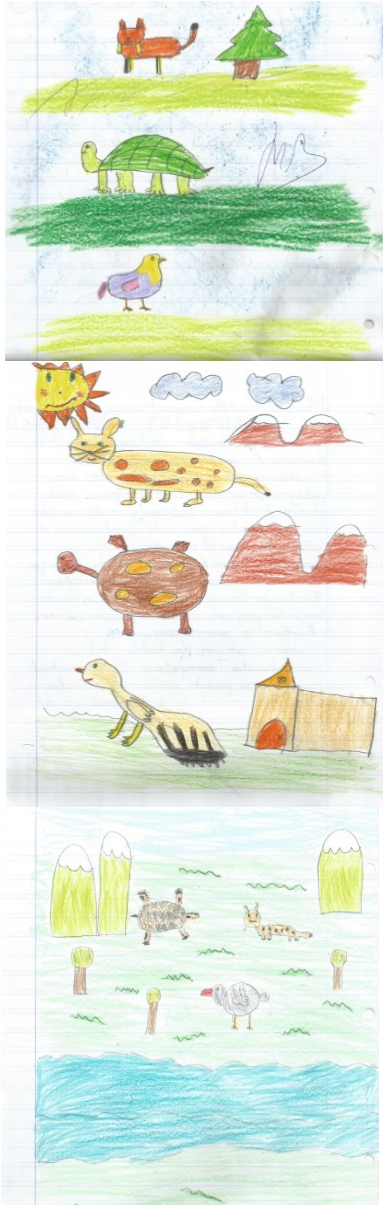
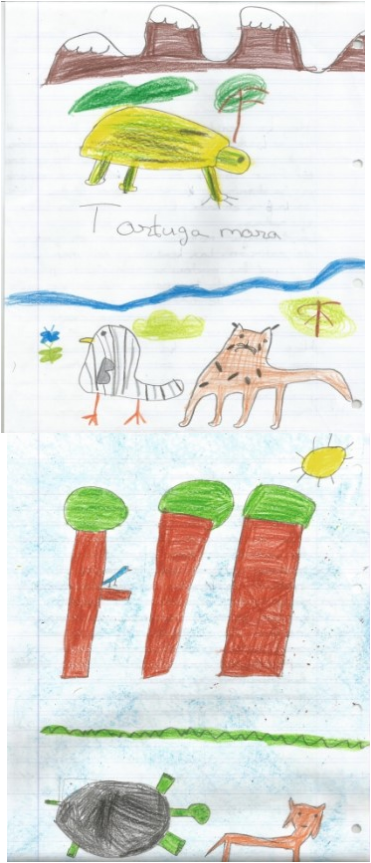
Writing and drawing of each of the students was reviewed in order to obtain a set of data that would allow the analysis of the effectiveness of the instructional intervention. Particular attention was paid to various parameters described in the exercises carried out: (1) descriptions of all the species and cases, any reference to the items explained above was recorded: Item 0. Invasive species; Item 1. Endangered species; Item 2. Species in captivity; Item 3. Global Change; (2) the species to which most interest was devoted in the text. In addition to the text, they were asked to include children’s drawings of the examples seen in the previous day's session through children's drawings there is an interpersonal communication, voluntarily or involuntarily, and it is transmitted through a non-verbal language that can be hidden and silent, therefore children's drawings give information not only about their maturity, and they has been used to determine conceptions about environmental issues and perceptions in several studies [30, 31]. The results of the analysis were organized according to their level of presence in all iconographic representations: (3) mention of the species to which most curiosity was devoted in the drawing; (4) whether plants or vegetation are also depicted in the drawing. Finally, emotional aspects experienced during the activity were assessed: (5) descriptions of the duration of the activity and what kind of emotions were experienced during the activity.
3. Results and discussion
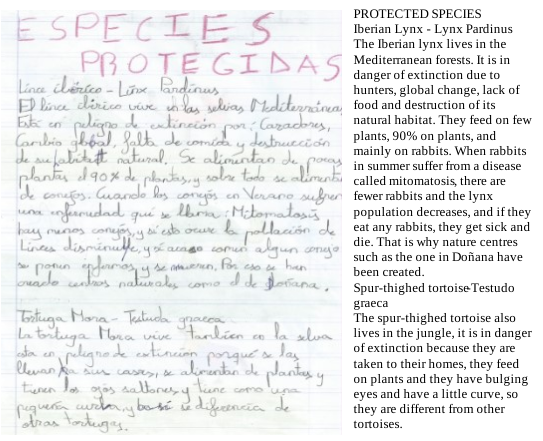
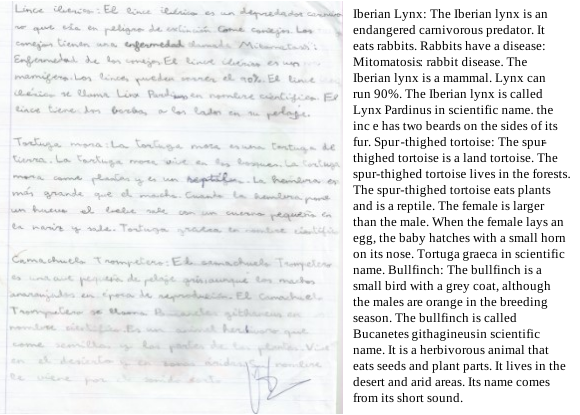
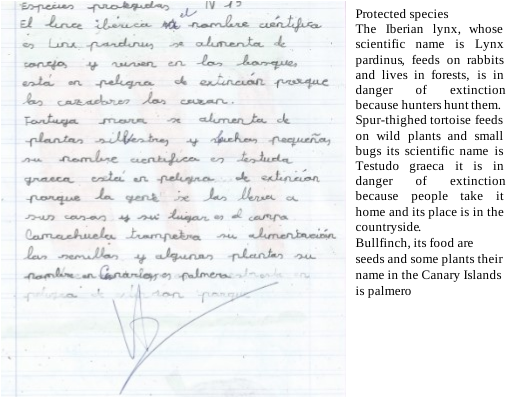
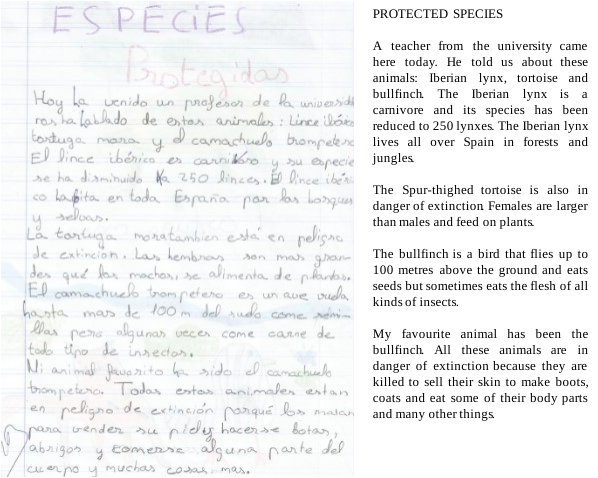
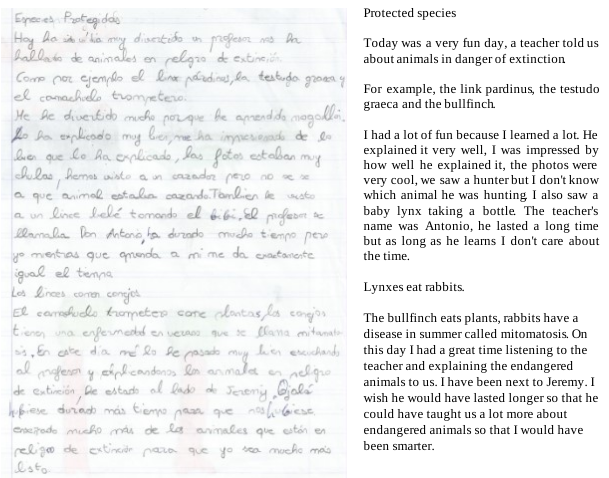
Regarding the length of the text devoted to each of the species described during the writing process, students showed that they were interested to the first species that was presented (Iberian lynx) in a proportion of over 45% of cases, slightly over 40% in the case of the second species, and over 13% in the case of the last species (Figure 3). The concept `Endangered species´, which appeared in more than 77% of the texts reviewed, was the item evaluated that clearly prevailed over the others. In fact, the term `protected´ was mentioned in almost all the titles of the texts. This result makes sense since throughout the intervention, ideas related to this dimension were reiterated: Red Lists, degree of threat, risk factors, etc... On the other hand, the references to the risk factor involved in practices related to `Species in captivity´ were also very interesting. These references represented the second most cited item in the texts but with 18% of mentions. It seems that pupils may have little connection with the risk to nature posed by depriving a wild species of its freedom. The concepts "Global Change" and "Invasive species" appeared in 4% each of them on students' answers. These terms could have introduced the two more abstract ideas presented in the presentation. It is quite complicated to explain them on their own, and they could be diluted when linked to the explanation of the risks to biodiversity (Table 1, Appendix A).
Moreover, in terms of drawings, almost 55% of the responses seem to devote more interest to the second species described (Testudo graeca). These results may be due, on the one hand, to the order in which the contents of the presentation were presented, which was the same as the order in which the essays were structured, which would explain why the majority of students devoted more effort to writing about the lynx. On the other hand, the proximity of a species of fauna found in the province of Almería, and which in many cases formerly can form part of the group of domesticated fauna, would explain the greater dedication to the drawings about the tortoise. It was also surprising that more than 90% of the drawings showed plants or vegetation of a similar size or entity to the fauna depicted. This is significant data and could support the connection between the concept of natural space and the presence of plants. It should be noted that no reference was made to flora or vegetation, except in cases where this was part of some of the aspects dealt with for animals described (Where do they live? How do they feed? etc.) (Appendix B).
Only 12.5% of the students included in their summary that the presentation was too long, but that it was nevertheless worthwhile. In terms of the emotions experienced during the intervention 50% of the students expressed that they found the activity was fun, 37.5% found it interesting and 12.5% were also impressed.
In terms of understanding the biological world, the concept of biodiversity has a structuring character, so that it forms the framework on which other relevant content is built and can enable learners to acquire new knowledge coherently [32]. It is necessary to be aware of the fundamental reasons why it is essential to ensure the conservation of biodiversity. In this sense, environmental education is an extremely useful tool in the training of students, and a subject of exceptional relevance for all citizens in a changing environment such as the one in which we are immersed [33]. The transmission of knowledge about threatened biodiversity, not only about large macro-vertebrates - flagship species for conservation - but also about the natural wealth that exists in areas close to urban areas, can be considered an optimal educational resource for personal development and for raising public awareness of nature conservation. In addition, instructional activities about environmental education allow students to become more aware about the responsibility linked to the conservation of environmental heritage of a region [34, 35].
According to this experience, instructional sequences of activities related to the natural environment are probed as a good resource for motivating students and as a complement of science subjects; and at the same time, they are able to lay the foundations for nature-protective behavior [36, 37, 38].

4. Conclusions
The example of an instructional intervention presented here aims to be an alternative to other transmissive teaching models that use the textbook as a fundamental resource. Although the group with which the proposal was tested is at primary school level (eight years old), an attempt has been made to offer rigorous, structured information related to different aspects of natural reality in order to contemplate the broadest possible vision.
Likewise, the linking of abstract concepts with socio-cultural reality proved to be a successful strategy to reinforce knowledge about natural biodiversity, endangered species or threat factors. This didactic transposition covers aspects related to animals, bearing in mind the use of examples of fauna in contextualized environments, close to the students and in line with their reality.
Author Contributions: Conceptualization, A.M. and C.C.; methodology, A.M., L.A., and C.C.; validation, A.M.; formal analysis, A.M.; investigation, A.M. L.A., and C.C.; resources, L.A., and C.C.; data curation, A.M.; writing—original draft preparation, A.M.; writing—review and editing, A.M., L.A., C.C. and J.M.S.R.; visualization, C.C., J.M.S.R. and F.M.H.; supervision, A.M. All authors have read and agreed to the published version of the manuscript.
Acknowledgments: This research was developed by the teaching innovation groups Botánica y Fisiología vegetal en los jardines de la UAL, (Biennium 2021 and 2022), and Sensociencia (Biennium 2022 and 2023) granted by the University of Almería, within the program innovation and good teaching practices.
Conflicts of Interest: The authors declare no conflict of interest.
Appendix A
Students' essays after the instructional intervention. Several concepts about en-dangered species (threat level) and the potential risks on each species are cited.
Appendix B
Examples of the students' drawings after the essay’s writings.
References
- Wilson E.O. The Diversity of Life: College Edition. New York, W. W. Norton. USA, 1993.
- Eldredge N. La vida en la cuerda floja. La humanidad y la crisis de la Biodiversidad. Tusquets, Barcelona, Spain, 2001.
- Ceballos G.; Ehrlich P.R. The misunderstood sixth mass extinction. Science 2018, 360(6393). https://doi.org/10.1126/science.aau0191.[CrossRef] [PubMed]
- IUCN. The IUCN Red List of threatened species. Version 2012. 2012. http://www.iucnredlist.org. Accessed 16 January 2023.
- CBD. Convention of Biological Diversity (s.f.). COP 6 Decision VI/26. Strategic plan for the CBD. 1992. Available on: http://www.cbd.int/decision/cop/?id=7200
- Escobar A. Whose Knowledge, Whose Nature? Biodiversity Conservation and Social Movements’ Political Ecology. Journal of Political Ecology 1998, 5, 53-82.[CrossRef]
- European Commission. COM (2020) 380 final. Communication from the Commission to the European Parliament, The Council, The European economic and social committee and the Committee of the regions. EU Biodiversity Strategy for 2030. Bringing nature back into our lives. Brussels, 2020.
- Cañal P.; García Carmona A.; Cruz Guzmán M. Didáctica de las Ciencias Experimentales en Educación Primaria. Ediciones Paraninfo, Madrid, Spain, 2016.
- Rivero A.; Martín del Pozo R.; Solís E.; Porlán R. Didáctica de las ciencias experimentales en educación primaria. Editorial Síntesis, Madrid, Spain, 2017.[CrossRef]
- Fernández Díaz M.; Ayuso Fernández G.E.; Robles Moral F.J. La biodiversidad en la formación inicial del profesorado de Educación Primaria: análisis de propuestas didácticas. Educatio Siglo XXI 2022, 40(2), 71-92.[CrossRef]
- Lindemann-Matthies P.; Martin R.; Eija Y.P. Professional competence of student teachers to implement species identification in schools - A case study from Germany. CEPS Journal 2017, 7(1), 29-47.[CrossRef]
- Cano-Ortiz A.; Musarella C.; Piñar Fuentes J.C.; Quinto Canas R.; Igbareyeh J.; Laface V.; Cano E. The Teaching of Environmental Sciences in Secondary Education, High School and University to Fight Against Climate Change. In: Calabrò F.; Della Spina L.; Piñeira Mantiñán M.J. (eds) New Metropolitan Perspectives. NMP, Lecture Notes in Networks and Systems 2022, 482. https://doi.org/10.1007/978-3-031-06825-6_162[CrossRef]
- Mackenzie, J.S.; Jeggo, M. The One Health Approach—Why Is It So Important? Tropical Medicine and Infectious Disease 2019, 4, 88. https://doi.org/10.3390/tropicalmed4020088[CrossRef] [PubMed]
- Hooykaas M.J.D.; Schilthuize M.; Aten C.; Hemelaar E.M.; Albers C.J.; Smeets, I. Identification skills in biodiversity professionals and laypeople: A gap in species literacy. Biological Conservation 2019, 238, 108202, 1-10, https://doi.org/10.1016/j.biocon.2019.108202[CrossRef]
- Bermúdez G. ¿Cómo tratan los libros de texto españoles la pérdida de biodiversidad? Un estudio cuali-cuantitativo sobre el nivel de complejidad y el efecto de la editorial y año de publicación. Revista Eureka sobre Enseñanza y Divulgación de las Ciencias 2018, 15(1), 1102. https://doi.org/10.25267/Rev_Eureka_ensen_divulg_cienc .2018.v15.i1.1102[CrossRef]
- Caurín Alonso C.; Martínez Penella M.J. Análisis del concepto de biodiversidad en los libros de texto de segundo ciclo de primaria en la Comunidad Valenciana (España). Perfiles Educativos 2013, XXXV(141), 97-114. https://doi.org/10.1016/S0185-2698(13)71837-3[CrossRef]
- García J.; Martínez F.J. Cómo y qué enseñar de la biodiversidad en la alfabetización científica. Enseñanza de las Ciencias 2010, 28(2), 175-184. https://doi.org/10.5565/rev/ec/v28n2.212[CrossRef]
- Montañés S.; Jaén M. ¿Qué características presentan los contenidos relacionados con las problemáticas ambientales propuestos en los libros de texto de 3º de la eso? Revista Eureka sobre Enseñanza y Divulgación de las Ciencias 2015, 12(1), 130-148. https://doi.org/10.25267/Rev_Eureka_ensen_divulg_cienc.2015.v12.i1.09[CrossRef]
- Robles A.; Solbes J.; Cantó J.R.; Lozano O.R. Actitudes de los estudiantes hacia la ciencia escolar en el primer ciclo de la Enseñanza Secundaria Obligatoria. Revista Electrónica de Enseñanza de las Ciencias 2015, 14(3), 361-376.
- Wolff L.A.; Skarstein T.H. Species Learning and Biodiversity in Early Childhood Teacher Education. Sustainability 2020, 12, 3698, 1-19, https://doi.org/10.3390/su12093698.[CrossRef]
- Lindemann-Matthies P.; Constantinou C.; Lehnert H.J.; Nagel U.; Raper G.; Kadji-Beltran C. Confidence and perceived competence of preservice teachers to implement biodiversity education in primary schools. Four comparative case studies from Europe. International Journal of Science Education 2011, 33(16), 2247-2273.[CrossRef]
- Kolb D. Experience as the Source of Learning and Development. Prentice Hall. New Jersey, USA, 1984.
- Aguaded S.; Díaz-Guerra A. Valores y riesgos ambientales: una propuesta para la enseñanza secundaria. Revista Alambique 2001, 30, 9-18.
- Gómez Galán J. Valores medioambientales en la educación. Ministerio de Educación, Subdirección General de Documentación y Publicaciones, D.L., Spain, 2010.
- Domínguez F. ¿Qué sabes sobre biodiversidad? Preguntas y respuestas en torno a la Biología de la Conservación. Madrid: MundiPrensa, Spain, 2019.
- Kauil K.J. Propuesta de Educación Ambiental para la Conservación de Ecosistemas que son hábitat de especies bandera de la Reserva de la Biósfera Calakmul, Campeche, México. Tesis de Maestría, Universidad de Quintana Roo, Mexico, 2015. http://hdl.handle.net/20.500.12249/177
- https://www.lynxexsitu.es/programa.php
- https://www.europapress.es/esandalucia/granada/noticia-sueltan-cinco-linces-sierra-arana-nueva-zona-reintroduccion-especie-granada-20221219172859.html
- Pérez Ibarra I. Aspectos sociales y culturales de la conservación de especies: el caso de la tortuga mora en el Sureste Ibérico. Ecosistemas 2008, 17(1), 160-165. http://www.revistaecosistemas.net/articulo.asp?Id=527
- Borgues F.; da Conceicao M. Ideas y actitudes ambientales: Un estudio con un grupo de alumnos portugueses del 4º año de escolaridad. Tópicos en Educación Ambiental 2006, 14(5), 23-35.
- Cánchica A.; Moncada J.A. La reina en la escuela. Unidad Didáctica sobre humedales costeros a partir del análisis de dibujos infantiles. Revista de Investigación 2013, 78(37), 51-74.
- Bermudez G.; De Longhi A.L. Curricular proposal of progression hypothesis for ecological structurant concepts. Campo abierto 2006, 25(2), 13-38.
- Cano Ortiz A.; Pinar Fuentes J.C.; Quinto Canas R.; Cano E. Botanical education for vocational training students and primary and secondary teacher. Research Journal of Ecology and Environmental Sciences 2022, 2(2), 1-10. https://doi.org/10.31586/rjees.2022.183[CrossRef]
- Caruso G. Calabrian Native Project: Botanical Education Applied to Conservation and Valorization of Autochthonous Woody Plants. Research Journal of Ecology and Environmental Sciences 2022, 2(2), 47-59. https://doi.org/10.31586/rjees.2022.387[CrossRef]
- Mendoza-Fernandez A.J.; Martínez-Hernández F.; Salmerón-Sánchez E.; Pérez-García F.J.; Merlo E.; Mota J. Proposal for Didactic Innovation through the Monitoring of Threatened Biodiversity. Research Journal of Ecology and Environmental Sciences 2023, 1(1), 9-17. https://doi.org/10.31586/rjees.2023.495[CrossRef]
- Kals E.; Schumacher D.; Montada L. Emotional affinity toward nature as a motivational basis to protect nature. Environment and Behavior 1999, 31(2), 178-202. https://doi.org/10.1177/00139169921972056[CrossRef]
- Richardson M.; Passmore H.; Barbett L.; Lumber R.; Thomas R.; Hunt A. The green care code: How nature connectedness and simple activities help explain pro-nature conservation behaviours. People and Nature 2020, 2, 821-839 https://doi.org/10.1002/pan3.10117[CrossRef]
- Torrejos C.B.; Israel G.F.G. Pro-Environmental Behavior of Undergraduate Students as a Function of Nature Relatedness and Awareness of Environmental Consequences. International Journal of Humanities Social Sciences and Education (IJHSSE) 2022, 9(1), 147-156. https://doi.org/10.20431/2349-0381.0901012[CrossRef]