
Abstract
Costus afer, a known medicinal plant used in the removal of total monocyclic aromatic hydrocarbon (TMAH) in crude oil-contaminated soil add to the list of plant that has the potential to restore the soil quality. This study investigated the potential of Costus afer plant at various ages (7, 14, 21, 28, 35, and 42 days old) to biodegrade crude oil-contaminated soil. The group-balanced block design (GBBD) was used in establishing the experiment. TMAH was quantified by the standard method, according to USEPA method using gas chromatography-mass spectrometry (GC-MS). The contamination of 48kg of sandy loam soil was simulated by mixing 0.5, 1.0, and 1.5L of Bonny-Light crude oil with the soil in three separate vessels to achieve conditions of low (C1), medium(C2), and high(C3) contamination, respectively. An additional vessel with medium-level contaminated soil but no treatment (C4) served as the control. The Costus afer plants were nursed and transplanted at the stated ages to each vessel except the control. Controlled irrigation was applied, and the setups were housed to shield them from rainfall. After 90 days of treatment, results showed that the 7 days old Costus afer plants produced the highest amount of TMAH reduction of 96.5, 39.8, and 32.1%, for C1, C2 and C3, respectively, while the control (C4) was 9.45%. Furthermore, the sequence of TMAH reduction by the plants was 7 days old, 14 days old, 21 days old, 28 days old, 35 days old, and 42 days old. Thus, in addition to its medicinal value, Costus afer plant also has the potential to biodegrade TMAH in crude oil-contaminated sandy loam soil.
1. Introduction
Crude oil is a complex mixture of hydrocarbons and other constituents that may be in the form of either natural gas or liquid depending on composition, condition of pressure and temperature, reservoir rock depth, and type [1]. The mixture of hydrocarbons includes natural gas, crude oil, condensates, nitrogen, carbon dioxide, hydrogen sulphide, or sulphur [1]. Hydrocarbons are generally divided into four groups, namely, paraffins, olefins, naphthenes, and aromatics. Aromatic hydrocarbons are important series of hydrocarbons found in almost every petroleum mixture from any part of the world. Aromatics are cyclic but unsaturated hydrocarbons with alternating double bonds [2]. All monocyclic aromatic hydrocarbons (MAHs) have one aromatic ring. Benzene, toluene, ethylbenzene and xylenes are well-known environmental pollutants which are the most volatile and water-soluble aromatic hydrocarbons [3]. Benzene is classified as a very hazardous chemical and is also a human carcinogen. A nontarget organism can be cytotoxically affected by benzene, toluene, and xylene. [4]. These hydrocarbons can bio-accumulate through the food chain and hence, they constitute a major public health and ecological concern [5]. Aromatic hydrocarbons in the agricultural soil causing health risks, because they may accumulate in plants and further bioaccumulate in human tissues [6]. Thus, the remediation of soil polluted by MAH-contaminated soil is of great importance.
The removal of contaminants in crude oil-polluted soils has actually been a global problem that is recently addressed in various ways such as physical and chemical remediation techniques including soil vapour extraction, soil washing, thermal desorption, excavation, incineration, stabilization/solidification, disposal in landfills, etc. have been utilized in remediation of contaminated soil. However, the aforementioned techniques are relatively costly and environmentally unfriendly [7].
The biological, chemical, and physical approaches have been used in the biodegradation of the MAH-polluted soil [8, 9]. Bioremediation, is a safe, environmentally friendly, and economical option to clean up the MAH-contaminated soil compared with physical and chemical methods, which are expensive and may cause potential secondary pollution [10, 11]. Biological treatment technologies (bioremediation) for the remediation of hydrocarbon-contaminated soils has been demonstrated to be effective [12, 13, 14, 15]. Bioremediation, entails the use of microorganisms and other soil conditioners to break down pollutants into non-toxic forms [16]. It has been advocated and chosen over chemical technologies since it is less expensive and more environmentally friendly [17]. Some well-known biological treatment technologies includes phytoremediation, bioaugmentation, and biostimulation. Phytoremediation is a low-cost, ecologically friendly technology that employs plants to remove a variety of organic and inorganic contaminants from soil [18]. One or more of the various phytoremediation methods, includes phytodegradation, phytostabilization, phytovolatilization, and phytoextraction, that are utilized to remove contaminants [19]. In this study, the phytoremediation approach used in this study was phytostabilization, which entails using contaminant-tolerant plant species to immobilize pollutants in the soil and reduce their bioavailability. This prevents the migration of pollutants into the ecosystem and reduces the likelihood of the pollutants finding their way into the food chain [20, 21]. A study suggested that exploiting natural biodiversity by identifying appropriate native species that can absorb contaminant through the interactions of the root mechanism thereby stabilizing the soil [22]. Some plants have been reported to have the potential to facilitate the remediation of petroleum hydrocarbon-contaminated sites such as spear grass, guinea grass, elephant grass, and gamba grass [23], corn and elephant grass [24], etc. These studies showed that some of these plants have more potential to remediate contaminated soils than others. Studies have shown that plant type and age are among the factors that affect the phytoremediation of contaminated soils [25] which if appropriately selected would efficiently remediate the contaminated soil as well as reduce cost. The need for phytostabilization study on costus afer Ker Gawl. (Costaceae) plant is due to its dominance in the Niger Delta region of Nigeria. C. afer plant (See Plate 1) commonly called bush sugarcane or monkey sugarcane [26].
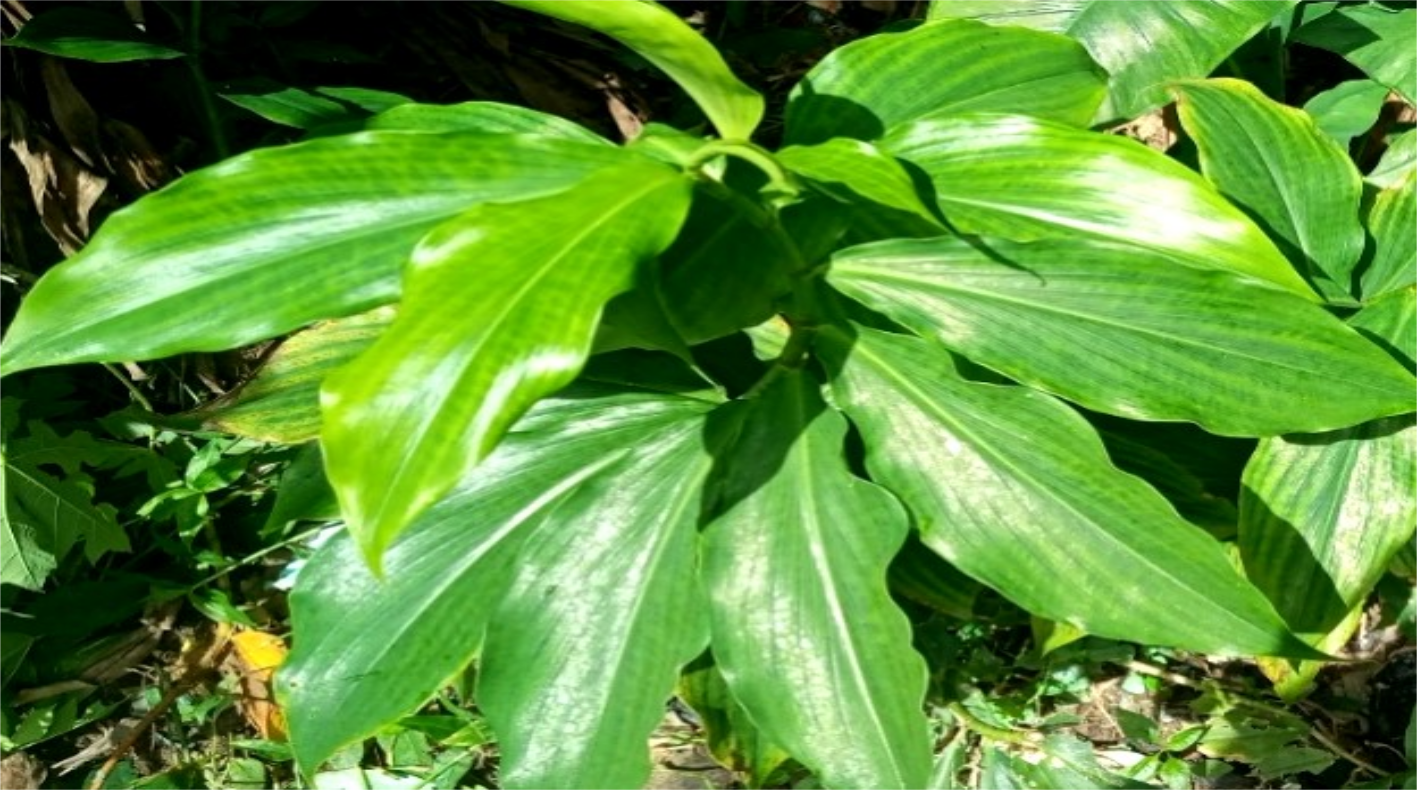
Plate 1. Costus afer Ker Gawl Plant
However, there is no information in the literature yet on the use of C. afer plant for phytostabilization of targeted residual total MAH. As a result, this research needs to provide information on hydrocarbon interactions with different ages of C. afer plant to enhance the remediation process of oil spill sites, to remove harmful organic compounds in the environment.
2. Materials and Methods
2.1. The Study Area
The research was conducted at Rivers State University's research farm, Port-Harcourt, Nigeria (latitude 4.800482oE and longitude 6.97702oN). The soil in the area is largely Oxisols, according to the United States Department of Agriculture (USDA) soil taxonomic order. [27]. Rivers State has tropical rainforest flora, with annual rainfall ranging from 2000 to 2484mm, with 70% falling between May and August and an average temperature of 27℃ [24, 28].
2.2. Experimental Design
The group-balanced block design (GBBD) was employed in this work as the experimental design. The approach employed by [24] was used for oil spill prediction to arrive at the three working concentrations of crude oil (low, medium, and high). To achieve this, about 48kg of sandy-loam soil was placed in four separate vessels. Then, three of the vessels were contaminated with 0.5, 1.0, and 1.5 litres of Bonny-Light crude oil, in turn, to simulate conditions of low, medium, and high-level contaminations, respectively. The medium-level contamination was repeated to make a fourth vessel that served as the control. The two main variables were crude oil concentration (C), which had three levels: low concentration (C1), medium concentration (C2), and high concentration (C3); and the age of the C. afer plant (T), have six levels: 7 days old (T1), 14 days old (T2), 21 days old (T3), 28 days old (T4), 35 days old (T5), and 42 days old (T6).
2.3. Experimental Setup
As indicated in Plate 2, the purposely contaminated soil used as planting medium was deposited in wide-mouth black plastic basins (vessels) with a depth of 0.3m and a top diameter of 0.5m. For moisture control, the vessels were maintained in an open barn to protect them from direct rains. Before transplanting the nursed C. afer young plants, the contaminated soil in the vessels was allowed to incubate for three days. Each vessel was watered with 0.5L of water every three days until the remediation ended. This water application rate complied with the rates utilized by [29], who demonstrated its efficacy in the restoration of crude oil damaged soils. Plants were nurtured for 7, 14, 21, 28, 35, and 42 days, respectively. Following that, they were transplanted to the planting medium. The experimental layout is shown in Plate 2.
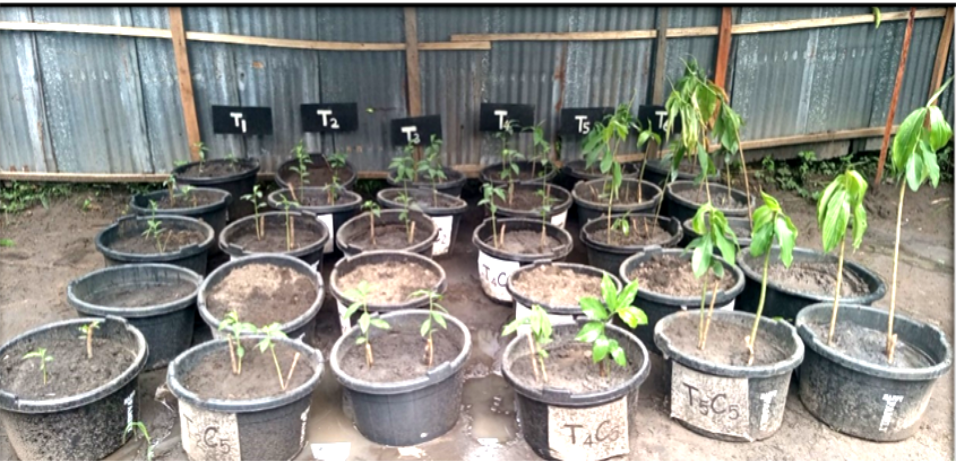
Plate 2. Experimental Setup
2.4. Analytical Methods
Prior to and after artificial contamination, composite soil samples were collected for physicochemical analysis. The uncontaminated soil was examined for pH, moisture content (MC), electrical conductivity (EC), organic matter (OM), particle size distribution (PSD), organic carbon (OC), and TMAH. The TMAH of the polluted soil was also tested at 30-day intervals throughout a 90-day period. The 24-hour oven-drying procedure was used to evaluate soil MC. In-situ pH and EC measurements were performed using a handheld H198331 multimeter (Hanna Instruments, USA). The PSD was determined using the hydrometer method, and the soil texture was evaluated using the USDA soil textural classification scheme. The Walkley-Black combustion method was used to calculate the OM and OC. Benzene, toluene ethylbenzene and xylene (TMAH) Compounds were extracted using methanol as the extraction solvent utilizing the sonication water bath technique. Then, TMAH was quantified by the standard method, according to USEPA method using gas chromatography-mass spectrometry (GC-MS)
Where, i = initial concentration of TMAH (mg/kg), and f = final concentration of TMAH (mg/kg)
2.5. Statistical Analysis
The AVERAGE, and Standard Error functions, respectively in Microsoft Excel 2016, as well as simple percentages, were determined. Data were analyzed using a one-way analysis of in accordance with procedure of [30] to determine if there were statistically significant differences within and among treatments at the 5 and 1% significance levels based on the F-test. Differences were considered significant if the calculated F-value was greater than or equal to the tabular F-value, and non-significant if otherwise.
3. Results and Discussion
3.1. Physicochemical Characteristics of the Uncontaminated Soil
Table 3 shows the features of uncontaminated soil utilized as the planting medium are shown. The uncontaminated soil is sandy loam and is made up of 27.4% silt, 60% sand, and 12.6% clay is shown in Figure 1. The soil was slightly acidic with an EC of 15.6 µS/cm and TMAH was below the limit of quantitation.

3.2. TMAH Characteristics of the Untreated Crude Oil-Contaminated Soil
Figure 2 shows the TMAH properties of untreated petroleum hydrocarbon-contaminated soil. According to literature, the crude oil-contaminated sandy-loam soil includes TMAH [7, 15, 20, 31]. It was also discovered in Figure 2 that the TMAH content of the untreated soils including the control were far above the 0.05mg/kg target value spelt out by the Nigerian regulatory framework, which indicates the necessity need for remediation of crude oil-contaminated soils before they can finally be utilized for agricultural or other purposes.
3.3. TMAH Degradation over Time
As shown in Figure 2, after 30 days of treatment with the C. afer plant, there were varying levels of TMAH reduction across the treatment reactors. The drop in TMAH concentration in the low contaminated soil (C1) treated with the 7 days old plants was 0.38mg/kg. Although this value is above the target value of 0.05mg/kg but the 7 days old C. afer plant was able to reduce the TMAH level compare to other treatment but still above the target value [32]. This indicates that, beside from agricultural applications, the remediated land could be used for other purposes such as building development. The soil treated with 7-day-old plants (T1) reduced TMAH the most (55.81%), followed by T2, T3, T4, T5, and T6. All other contamination levels (medium and high) showed the same pattern. These findings are consistent with the findings of [33, 34], who found that phytoremediation can be utilized effectively to control soil contaminated with petroleum hydrocarbons. Petroleum hydrocarbon degradation increased with time, starting quickly in the first 30 days and slows down thereafter. This is consistent with the findings of [35, 36]. Despite this, the control was far higher than the other treatments and greatly exceeded the specified [33] target value.
C. afer plants had leaf chlorosis (yellowing of the leaves) 30 days after planting, but as time read, the leaf burn diminished to a minimum across all treatments. According to studies [37, 38], this observation was typical of some plants' adaptation mechanisms to crude oil contamination, which involved the uptake of hydrocarbons from contaminated soils by plants (phytoaccumulation) and the transfer of volatile fractions of the contaminant to the atmosphere through the leaves (phytovolatilization). Nonetheless, this was noticed more in older plants than in younger plants. The leaf chlorosis could be caused by stress from hydrocarbon contamination. The total nitrogen of the soil may be inadequate, as a nutritional deficiency may have contributed to the observedleaf chlorosis [39].

At 90 days after planting, further decrease in the TMAH concentration ranged from 383.67–1,114mg/kg for the low-contaminated soils for which reductions were 96.51, 70.93, 56.63, 45.12, 25.0, and 23% (as shown in figure 3). TMAH reduction was recorded for T1, T2, T3, T4, T5, and T6, respectively. A similar trend was observed for medium and high contamination levels. Generally, the TMAH concentration in all the treatment reactors dropped but still above the target value of 0.05mg/kg as prescribed by [33] except for 7 days old plant (T1) at low-contamination level that reduced to 0.03mg/kg which is below the target value of 0.05mg/kg. However, the TMAH reduction level in the control reactor was very low (0.79 – 10.2%) for all the treatment reactors.

In comparison with other plants, results obtained in this study revealed that the phytoremediation potential of C. afer after 90 days of treatment in the various reactors at all levels of contamination except the control (C4) exceeded those of Barley, Guinea grass, and Purple nutsedge plants. Barley (Hordeum Vulgare) plant reduced TMAH in a petroleum hydrocarbon-contaminated soil by 83% from an initial concentration of 75,000mg/kg within a remediation period of 90 days [40]. In the same vein, Guinea grass (Megathyrsus maximus) plant reduced TMAH in a petroleum hydrocarbon-contaminated soil by 58% from an initial concentration of 4,805mg/kg after 90 days of treatment [19]. Again, Purple nutsedge (Cyperus rotundus) plant remediated petroleum hydrocarbon contaminated soil by 66% from an initial concentration of 5,726.34mg/kg at 90 days remediation period [41].
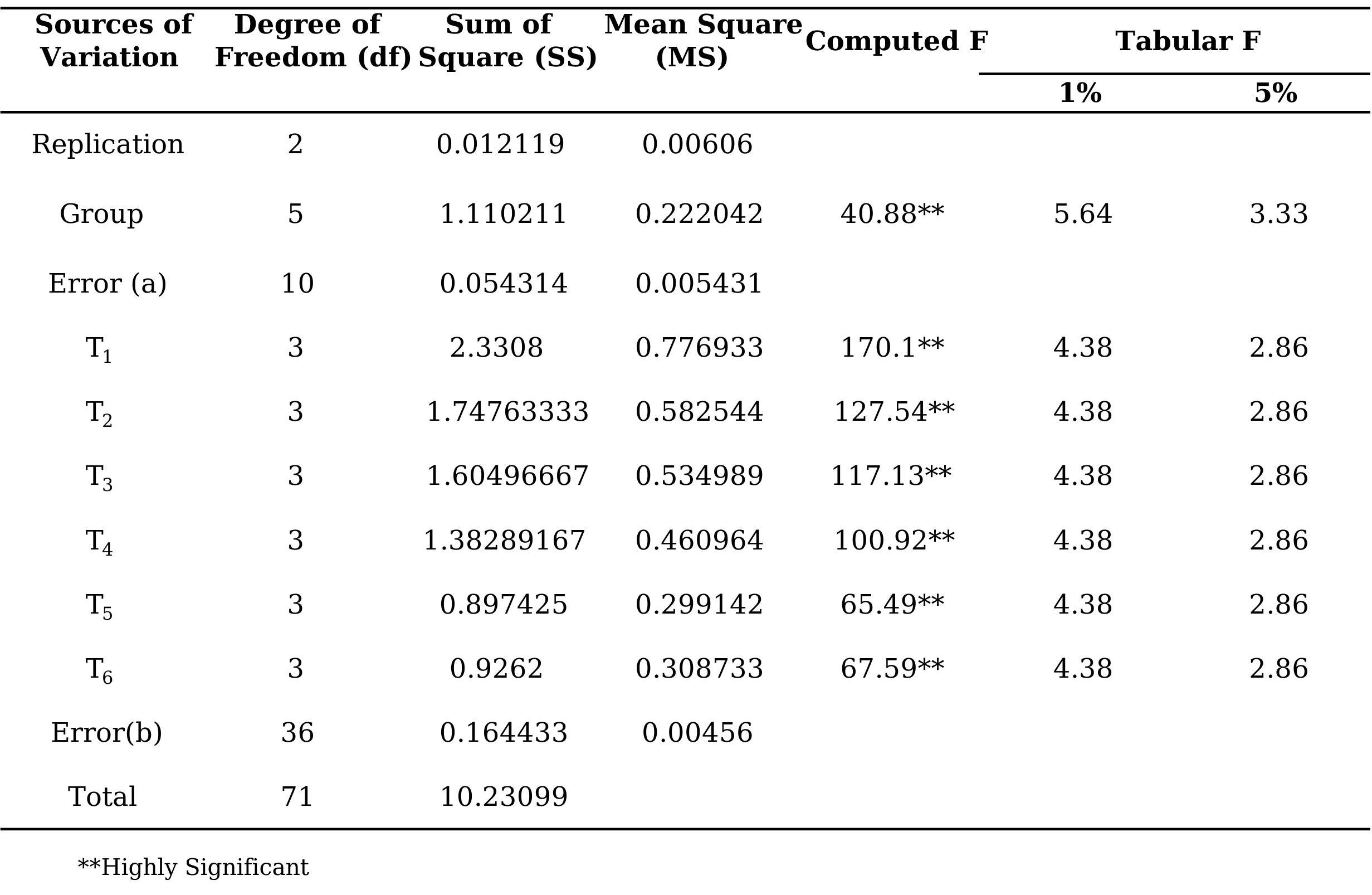
It is important to note that the ability of C. afer to thrive and grow in a crude oil contaminated soil may be attributed to its nitrogen fixing ability. It could also be as a result of the development of extensive fibrous root system of C. afer plant, which may be an adaptation to aid its tolerance and survival ability to cope with water stress imposed by the crude oil [42]. The variations in the reduction of TMAH, agrees with the findings of [43, 44] suggesting that the influence of microorganism varies with plant age as well as plant types. It was further revealed that remediation of arsenic is higher in younger plants than in the older plants, possibly due to higher metabolic activities of young plants [44], and this corroborates the findings of this study that 7 days old C. afer plants had higher phytoremediation potential than the older C. afer plants. As there was a gradual reduction of TMAH in the reactor without treatment (C4) across all levels of crude oil contamination, this natural attenuation may be occasioned by atmospheric influence [34]. The ANOVA result showed that there was significant difference (calculated F-value > tabular F-value) in the treatment means at the 1 and 5% significance level (as shown in Appendix 1). Thus, it can be concluded with 95 and 99% confidence that the observed difference in the treatment means was because of the treatment applied.
4. Conclusion
The phytoremediation potential of C. afer plant at different ages over a period of 90 days was investigated with a view to ascertaining their suitability for decontaminating petroleum hydrocarbon-contaminated soils. From the results obtained it can be concluded that the 7 days old C. afer plant was the most suitable for remediating low-, medium-, and high-level contaminations in soils, accounting for a TMAH reduction of 96.5, 39.8, and 32.1%, respectively. The sequence of TPH reduction by the plants was 14 days old > 21 days old > 28 days old > 35 days old > 42-days old. Thus, C. afer plant has the potential to remove TMAH in crude oil -contaminated sandy loam soil.
Appendix
Appendix 1. Analysis of Variance of TMAH Concentration at 90 Days after Phytoremediation Using Group Balanced Block Design
References
- Oyeneyin, B. (2015) Chapter 2 – Introduction to the Hydrocarbon Composite Production System, Developments in Petroleum Science, Elsevier, 63; 11-128[CrossRef]
- John, A. (2024) Dutton Institute for Teaching and Learning Excellence, learning design unit of the College of Earth and Mineral Sciences, Pennsylvania State University.
- Macaya, C.C., Duran, R.E., Hermandez, L., Rodríguez-Castro, L., Barra-Sanhueza, B., Dorochesi, F. & Seeger, M. (2019) Bioremediation of Petroleum, Reference Module in Life Sciences, Elsevier,[CrossRef]
- Singh, M.P. & Himalian, R. (2018). Monocyclic Aromatic Hydrocarbons (MAHs) Induced Toxicity in Drosophila: How Close How Far? In Trends in Insect Molecular Biology and Biotechnology; Springer: Cham, Switzerland, 978(3) 319.[CrossRef]
- Olukoya, E. O., Ana, G. R. E. E., & Oloruntoba, E. O. (2016). Assessment of Soil Contamination with Monocyclic Aromatic Hydrocarbons and Heavy Metals in Residential Areas Sited Close to Fuel Filling Stations in Ibadan Metropolis. Journal of Environment Pollution and Human Health, 4(3), 60-65.
- Bao, H., Wang, J., Zhang, H., Li, J., Li, H & Wu, F. (2020) Effects of biochar and organic substrates on biodegradation of polycyclic aromatic hydrocarbons and microbial community structure in PAHs-contaminated soils. Journal of Hazardous Materials 385:121595.[CrossRef] [PubMed]
- Emeka, C., Okparanma, R. N., & Okogbule-Wonodi, A. (2023). Bioremediation of Total Polycyclic Aromatic Hydrocarbon in Crude Oil-Contaminated Soil using C. afer Plant. Research Journal of Ecology and Environmental Sciences, 3(1), 26–36.[CrossRef]
- Kusmierz, M., Oleszczuk, P., Kraska, P., Pałys, E. & Andruszczak, S. (2016). Persistence of polycyclic aromatic hydrocarbons (PAHs) in biochar-amended soil.[CrossRef] [PubMed]
- Xiao, N., Liu, R., Jin, C. & Dai, Y. (2015) Efficiency of five ornamental plant species in the phytoremediation of polycyclic aromatic hydrocarbon (PAH)-contaminated soil. Ecological Engineering 75:384–91[CrossRef]
- Redfern, L. K., Gardner, C.M., Hodzic, E., Ferguson, P.L., Hsu-Kim, H., & Gunsch, C.K. (2019) A new framework for approaching precision bioremediation of PAH contaminated soils. Journal of Hazardous Materials 378: 120859. doi: 10.1016/j.jhazmat.2019.120859.[CrossRef] [PubMed]
- Wolf, D. C., Cryder, Z., Khoury, R., Carlan, C. & Gan. J. (2020. Bioremediation of PAH-contaminated shooting range soil using integrated approaches. The Science of the Total Environment 726:138440.[CrossRef] [PubMed]
- Wang, C., Gu, L., & Ge, S. (2019) Remediation potential of immobilized bacterial consortium with biochar as carrier in pyrene-Cr (VI) co-contaminated soil. Environmental Technology 40: 2345-2353.[CrossRef] [PubMed]
- Guarino, C., Spada, V., & Sciarrillo, R. (2017). Assessment of three approaches of bioremediation (natural attenuation, landfarming and bioagumentation – assisted landfarming) for a petroleum hydrocarbons contaminated soil. Chemosphere 170, 10–16.[CrossRef] [PubMed]
- Ossai, I. C., Ahmed, A., Hassan, A., & Hamid, F. S. (2020). Remediation of soil and water contaminated with petroleum hydrocarbon: a review. Environmental Technology Innovation 17:100526.[CrossRef]
- Okparanma, R. N., Emeka, C. & Igoni, A. H. (2022). Phytoremediation of Petroleum Hydrocarbon- Contaminated Soil using C. afer Plant. Journal of Newviews in Engineering and Technology. 4(3), 27 – 38.
- Riser-Roberts, E. (1998). Remediation of Petroleum Contaminated Soil: Biological, Physical, and Chemical Processes. CRC Press LLC, Boca Raton, FL.[CrossRef]
- Muttaleb, W. H., & Ali, Z. H. (2022). Bioremediation and eco-friendly method for administration of environmental contaminants. International Journal of Applied Sciences and Technology, 4 (6)22-32.
- Singh, T., & Singh, D.K. (2017). Phytoremediation of organochlorine pesticide pesticides: Concept, method and recent developments. International Journal of Phytoremediation, 19(9), 834-843.[CrossRef] [PubMed]
- Thijs, S., Sillen, W., Weyens, N., & Vangronsveld, J. (2017) Phytoremediation: state-of-the-art and a key role for the plant microbiome in future trends and research prospects. International journal of phytoremediation, 19, 23-38.[CrossRef] [PubMed]
- Wong, M. H. (2003). Ecological restoration of mine degraded soils, with emphasis on metal contaminated soils. Chemosphere. 50: 775 – 780.[CrossRef] [PubMed]
- Marques, A. P., Rangel, A. O. & Castro, P. M. (2009). Remediation of heavy metal contaminated soils: phytoremediation as a potentially promising clean-up technology. Critical Revolution. Environmental Science. Technology. 39: 622–654.[CrossRef]
- Kathi, S., & Khan, A.B. (2011). Phytoremediation approaches to PAH contaminate soil. Indian Journal of Science and Technology 4(1), 56-63.[CrossRef]
- Kogbara, R. B., Badom, B. K., & Ayotamuno, M. J. (2018). Tolerance and phytoremediation potential of four tropical grass species to land applied drill cuttings, International Journal of Phytoremediation, 20 (14), 1446-1455.[CrossRef] [PubMed]
- Ayotamuno, M. J., Kogbara, R. B., & Taleat, M. O. (2006). Bioremediation of a petroleum hydrocarbon polluted agricultural soil at different levels of water application, Nigeria, Journal of Food, Agriculture & Environment, 4 (3 &4): 214 – 217.
- Gonzaga, M.I.S., Ma, L.Q., & Santos, J.A.G. (2007). Effects of plant age on arsenic Hyperaccumulation by Pteris vittata L. Water Air Soil Pollution, 186 (1), 289–295.[CrossRef]
- Nyananyo, B. L. (2006) Plants from the Niger Delta. International Journal of Pure and Applied Sciences. 3(5):21-25.
- Okparanma, R.N. (2013). Rapid measurement of polycyclic aromatic hydrocarbon contamination in soils by visible and nearinfrared spectroscopy. PhD Thesis. Cranfield University, UK.
- Fubara-Manuel, I., Emeka, C., Ikrang, E., Davis, D. D. & Princewill, O. P. (2021). Performance of Cassava on Soil Amended with Spent Mushroom Substrate Under Varying Levels of Tractor Compaction. The Journal of Middle East and North Africa Sciences, 7(02), 6-13. .
- Ayotamuno, M.J., Kogbara, R.B., Agele, E.A., & Agoro, O.S. (2010). Composting and phytoremediation treatment of petroleum sludge. Soil Sediment Contamination International Journal. 19(6):686–695.[CrossRef]
- Gómez, K. & Gómez, A. (1983) Statistical Procedures for Agricultural Research. 2nd Edition, John Wiley & Sons, Hoboken, 630.
- Ekemube, R., Emeka, C., Nweke, B., Temidayo Atta, A., & Nwuzoma Opurum, A. (2022). Evaluation of Simulated Petroleum Hydrocarbon on the Physicochemical Properties of Soil. Research Journal of Ecology and Environmental Sciences, 2(4), 195–210.[CrossRef]
- Okparanma, R.N., & Mouazen, A.M. (2013) Determination of total petroleum hydrocarbon (TPH) and polycyclic aromatic hydrocarbon (PAH) in soils: a review of spectroscopic and non-spectroscopic techniques. Applied Spectroscopy Reviews, 48(6):458–486[CrossRef]
- Nigerian Upstream Petroleum Regulatory Commission (NUPRC) (2018). Environmental Guidelines and Standards for the Petroleum Industries in Nigeria. Department of Petroleum Resources, Ministry of Petroleum and Mineral Resources, Abuja, Nigeria.
- Efe, S. I., & Okpali, A. E. (2012) “Management of Petroleum Impacted Soil with Phytoremediation and Soil Amendments in Ekpan Delta State, Nigeria,” Journal of Environmental Protection, 3 (5). 386-393.[CrossRef]
- McClutchen, S., & Schnoor, J. (2003) “Phytoremediation Transformation and Control of Contaminants,” John Wiley and Sons Inc., Hoboken[CrossRef]
- Ehirim, O.E., Walter, C., & Ukpaka, C.P. (2020). Mix model formulation for TPH prediction during bioremediation of hydrocarbon contaminated soils. American Journal of Engineering Research, 9(4), 01-11
- Okparanma, R.N., Orisa, F.T. & Ukoha-Onuoha, E. (2021). Synthesis and application of water treatment residuals from fishpond effluent for remediation of hydrocarbon contaminated soil. NIEE, Port Harcourt Branch conference, Transforming Solid Waste to Renewable Energy, Port-Harcourt, Nigeria.
- Schwab, A.P., Su, J., Wezel, S., Pakarek, G., & Banks, M.K. (1999). Extraction of petroleum hydrocarbon from soil by mechanical shaking. Environmental Science and Technology. 33:1940-1945[CrossRef]
- Witse, C.C., Rooney, W.L., Chen, Z., Schwab, A.P., & Banks, M. K. (1998). Greenhouse evaluation of agronomic and crude oil phytoremediation potential among alfalfa genotypes. Environmental Quality. 27:169 – 173.[CrossRef]
- Lemus, R. (2012) Nutrient deficiencies in forage crops. Forage News. 5(11),1-3
- Azeez, N.M., & Qasims, D. A. (2021). The efficiency of Barley Hordeum Vulgare in Phytoremediation of crude oil-contaminated soil. Pollution Restoration. 40 (4): 1376
- Nwaichi, O.E., Chukwuere, C., Abosi, P.J., & Onukwuru, G.I. (2021). Phytoremediation of crude oil impacted soil using Purple Nutsedge. Journals of Applied Sciences and Environmental Management, 25(3): 475 – 479[CrossRef]
- Okonwu, K., Mensah, S.I., & Sam, S.M. (2013). Growth of Calopogonium mucunoide Desv in crude oil contaminated soil: A possible phytoremediation agent. Asian Journal of Agricutural Research. 1-4.[CrossRef]
- Abdel-Rahim, A.A., Baghadami., & Abdalla, M.H. (1983). Studies on fungus flora in the rhizosphere of sugar cane plants. Mycopathologia, 81: 183-186.[CrossRef]