

Seamless integration of information in organizations promotes not only the operational efficiency but also the quality of decisions made by managers. Real-time decision support systems enable organizations to evaluate organizational changes immediately and ideally gives a hint of problems before they even appear in the organization. Such real time systems are nowadays regarded as the front-line solutions for managing organizations effectively. The technological possibilities seem not to conquer management. For most companies the data is still dealt with traditional solutions, data is collected and reports are generated to evaluate the past occurrences which only gives information on what has happened in the organization. The problem with these non-real-time systems is the reflection of organizational condition very late. These are the common rear-mirror descriptions for what already has been. Managers are receiving information from their organizations too late and often too little to make optimal decisions. Is it not possible to manage operations in real-time? Is real-time decision support really needed? If so, why most organizations still rely on traditional reporting systems.
A Comparative Study of Traditional Reporting Systems versus Real-Time Analytics Dashboards in Enterprise Operations
October 11, 2021
November 23, 2021
December 15, 2021
December 18, 2021
This is an Open Access article, distributed under the terms of the Creative Commons Attribution 4.0 International License (http://creativecommons.org/licenses/by/4.0/), which permits unrestricted use, distribution and reproduction in any medium or format, provided the original work is properly cited.
Abstract
1. Introduction
Many of the critical issues affecting modern-day enterprises, such as financial distress and business failures, can be traced to decisions and actions that were based on too little or faulty information. Consequently, the importance of enterprise reporting cannot be overstated. For hundreds of years, enterprises have maintained key performance indicator (KPI) and financial reporting information systems based on standard reporting (also known as traditional reports). In recent years, however, the demand for business intelligence (BI) dashboards has surged because of advances in. The widespread adoption of real-time reporting by many enterprises around the globe is also apparent.
This study compares the two methods of reporting. The objective is to assist those responsible for enterprise operations in understanding the differences between traditional reporting systems and real-time analytics dashboards so that they may select the option that is more appropriate for their enterprises. Several dimensions of the two reporting systems are examined, including data latency, speed of insight, ease of use, ease of implementation, impact on decision-making, and effect on enterprise performance. The discussion is grounded in primary field research that identifies, assesses, and explains the key differences between the two reporting systems. Implications for theory and practice are described and evaluated [1].
1.1. Overview of Study Objectives and Significance
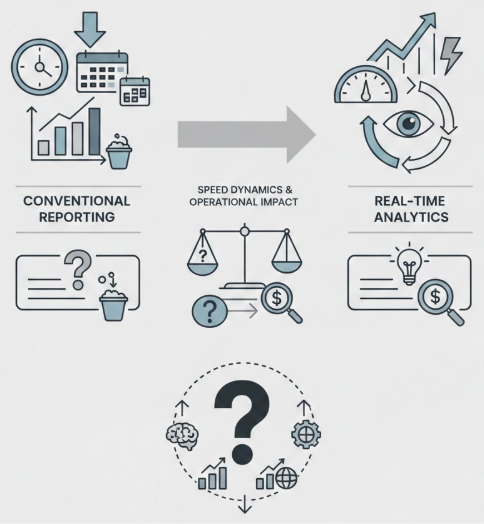
Reporting is indispensable for enterprise operations: it supports operational processes and strategic decision-making, guides resource allocation, measures performance, and ensures internal and external compliance. While timely data availability has long presented challenges, many organizations’ reliance on conventional data-reporting systems continues. Such systems, characterized by fixed schedules, provide insights based on “old” data and only address issues that have already occurred [2]. Consequently, users are generally unable to determine how, where, and when operational issues arise, limiting problem-solving capability. Speed of reporting, however, can give organizations a competitive edge; thus, real-time analytics dashboards designed for operational performance management are increasingly replacing traditional reporting systems. Unlike conventional systems, dashboards facilitate an understanding of “what is going on now or very soon in the enterprise” and provide insights into “how best to operate, manage, or control” the enterprise.
However, the important question of whether these technologies really enhance enterprise operations compared to traditional systems has received little empirical attention. Reporting and business intelligence are key focus areas of academic research, yet relatively few studies have analyzed real-time analytics or directly addressed their differences from conventional reporting systems [3]. The issues surrounding real-time decision-making and the challenges organizations face in establishing effective real-time analytic capabilities remain under-explored. The speed dynamics outlined by operational management researchers specifically warrant further inquiry. Such a gap is critical, as real-time analytics dashboards are a costly investment for organizations. Empirical exploration of reporting-system dynamics therefore provides value both academically and practically [4].
2. Theoretical Foundations of Enterprise Reporting
The efficient and effective use of data through reporting systems underpins an organization’s decision-making. While the deployment of real-time analytics dashboards has become increasingly popular, the effect of such systems on the users, organizations, and their data is uncertain [5]. The use of dashboards requires a different way of thinking about data from the perspective of the user and of the organization. The goal of this paper is to contribute to the discourse on the efficacy of real-time analytics dashboards—for decision-making/scanning processes for which they are designed—by comparing them to traditional reporting systems designed for different purposes.
Organizations have a complex web of reporting systems. Consolidation into management information systems can obscure the purpose and usage of these systems. These systems can be thought of as different types of lenses allowing users to view the organizational data from different perspectives [6]. Most systems have user-controlled scheduling to tailor the information to their needs and scan the data at selected frequencies. In addition, some specialized systems, such as real-time analytics dashboards, quickly focus attention on crucial changes in key data. However, time stamps on the data are frequently not zero. Hence, for some types of decisions, these reporting systems provide historical, rather than “real-time” insight, and dashboards are examined in this light [7].
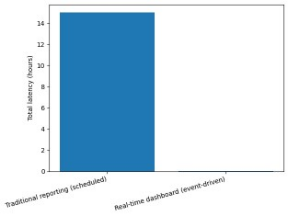
Equation 1: Time-latency model for traditional scheduled reporting
Define the reporting timeline
Let:
- = time the business event occurs (sale, defect, payment, etc.)
- = time the report becomes available to a user
Then the data latency is:
Break latency into components (additive model)
A traditional pipeline usually has:
- extraction/collection time
- transformation/cleansing time
- loading/publishing time
- distribution/access time
- plus the big one: waiting for the schedule
So:
2.1. Conceptualization of Reporting Systems
A reporting system—an orchestra with a soloist required for appropriate stimuli or one offering versatile insights when connected appropriately to a data pipeline? Normally, the final vision of the enterprise thus becomes a plan long realized by routines recognized at the enterprise level, and they are able to understand that they already have nearly everything required to make the final vision theirs. After all, the end normally represents an accumulation of events so distinctive that they are able to change their behaviour patterns. Until that moment, the end can be reached as other routines that must only be properly conceived if they want to reach their timed ideal. However, since they are under the watchful eye of their supporting mother routine, it is a temporary internal bridge, which is also necessary to keep the voices in tune while allowing the soloist to shine when the opportunity presents itself, without bringing the performance down to a tumbling level [8].
Reporting in real time enables operational decisions to improve the performance of the automatically supported processes, though the end itself remains a lagged vision because the team disbanded after the finishing activity had been delivered. One easy way to see what is happening is to follow the executives of the enterprise. No one follows this team more closely than their bosses, and they can be the first to notice that something is going wrong. Since their activity usually involves taking the pulse of the entire enterprise and they have a monitoring mind-set, the demand for the last list of activities will appear before the usual receipt. Besides, if something surprising appears, there are all indications that a quick action is required to avoid losses [9].
3. Methodology
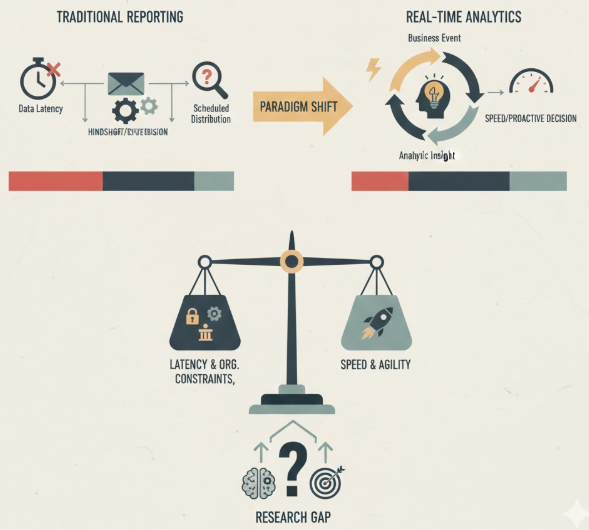
Research was designed to examine the properties of enterprise reporting systems through a comparative analysis of traditional reporting systems and real-time analytics dashboards. The study focused on the components of a traditional reporting system that impose data latency, such as data preparation, scheduling, distribution, and decision- and action-oriented use. Performance, usability, and outcome characteristics were identified and compared [10]. The analysis highlighted a fundamental difference in how traditional reporting systems and real-time analytics dashboards address the latency imposed by a data-pipeline and integration-oriented approach to data management. Whereas real-time analytics dashboards derive their degree of real time from the speed of the business event-to-analytic insight cycle, traditional reporting systems remain bound by data latencies and cycles originating from sources external to the reporting systems themselves [11].
The comparative analysis has implications for research and practice. In particular, it illuminates the effects of data latency on enterprise operations and highlights a quasi-political aspect of traditional reporting that can reduce speed of insight and decision-making and thereby limit organizational strategy and operational effectiveness. Practitioners involved in the analytic design of enterprise reporting systems or in reporting from real-time analytics dashboards will therefore find these insights particularly relevant [12].
3.1. Research Design and Scope
As enterprises strive to address proliferating data needs, operational dashboards are gaining traction alongside traditional reporting systems. Dashboards align visual representation with real-time analytics, fulfilling decision-makers’ demand for instantaneous insights into changing operational conditions. While intuitively appealing, difference-in-means testing reveals slower development, suboptimal usability, and less favorable outcomes compared with established reporting systems. Leading organizations therefore remain invested in traditional reporting, where structured processes and inherent data pipelines underpin expedited insight generation and fact-based decision-making [13].
Theoretical foundations frame the two reporting approaches, identify the speed reduction in dashboards and their dependency on latencies in the data pipeline, probe the speed of insight—and associated implications for decision latency—before exploring broader usability and outcome dimensions [14]. The results provide insights to both practitioners and theorists. Dashboards are rapidly soaring in popularity, yet the commitments of both resources and organization to drive the success expected from this technology, seem—to date—limited. While intuitive, such investments may prove misplaced. Much remains unclear about the specific areas in which dashboards, as deployed today, demonstrate superior capability. Indeed, the impact on data- and decision-latency performance may be deteriorating over time; a growing concern is that usability is not keeping pace with adoption [15].
4. Traditional Reporting Systems: Characteristics and Limitations
Traditional enterprise reporting systems are commonly scheduled rather than continuously updated, causing critical business performance indicators to lag behind reality. With each successive data latency period, organizations lose critical insight into the current state of their need-to-know KPIs and subsequent decision-making, resulting in even greater operational, market-facing, and strategic latency delays. Although traditional reporting systems can be streamlined and improved through various usability enhancements, they are only partially effective in creating a symbiotic view of operational activity, analysis, and automated decision-making, and a universal view of all-important KPIs [16].
Speed of insight and speed of decision-making are two of the most important components of quality reporting. For organizations using an enterprise reporting system that runs on a scheduled cycle defined by the longest data pipeline, the quality of the reporting is diminished because the data is late, and often by minutes, hours, days, weeks, or sometimes even months. By the time an organization receives key insights to make a key decision, those decisive insights are not longer decisive at all, making it both difficult and unproductive to manage operations, shape market-facing decisions, or steer the organization’s longer-term game plan. The practitioner community is continuing to advocate increased speed of insight, integrating operational decision support and business rules into analysis, and sourcing data from the full operations pipeline to deliver reporting dashboards that truly meet the needs of the organization [17].
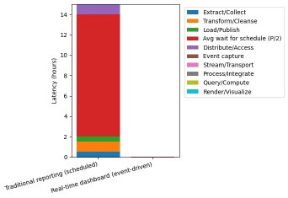
Equation 2: Deriving the “schedule waiting time” term
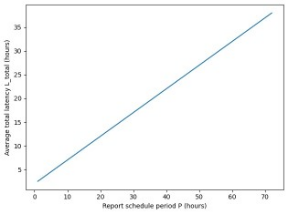
Assuming the event time is uniformly distributed over the interval :
Expected waiting time (average “staleness”)
For a uniform random variable:
Worst-case waiting time
Average total latency becomes a simple equation
Let:
Then:
4.1. Data Latency and Scheduling
Latency is a characteristic that can undermine the utility of traditional reporting systems for companies engaged in fast-moving activities like manufacturing, trading, and retailing. Such organizations need frequent insights into the state of operations in order to make decisions that enable them to maintain an advantageous position in swiftly evolving markets. Users typically require knowledge of operational performance and expected outcomes that are as close to the current time as possible and, in any case, not more than a few hours old—much less than the elapsed time associated with the formal reporting process. Hence, many organizations have replaced or supplemented traditional reporting systems with real-time analytics dashboards, which use a data pipeline architecture to eliminate the batch-style data loading and scheduling requirements that characterize traditional reporting systems [18].
These dashboards use either a number of independently maintained data marts, updated at an appropriate frequency, or a fully integrated data warehouse that is kept current using an event-driven incremental data-loading mechanism, such as those made possible by change-data-capture technologies [19]. Successful implementation of a data pipeline architecture at the data warehouse level is, however, nontrivial, since it requires moving away from the batched data integration processes associated with traditional ETL tools, which tend to use relational databases as the source and destination for all data movement. A well-managed information system cannot have its decision-making processes fully supported by a computer-based reporting and presentation facility without the presence of real-time technologies at the data-presentation end of the process [20].
5. Real-Time Analytics Dashboards: Capabilities and Challenges
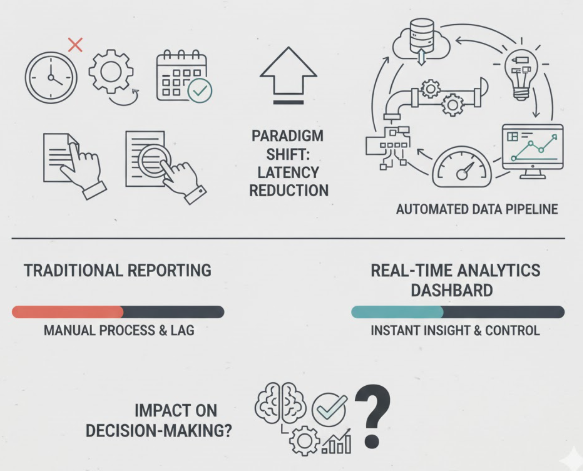
Unlike traditional reporting systems, real-time analytical dashboards are intended to provide insights without noteworthy latency. Their purpose is to help decision-makers respond to events as they happen instead of relying on operational reports, which are often based on scheduled data extractions. Insights from dashboards are refreshed as frequently as possible, subject to the availability of underlying data pipelines and data integration processes. When a business analyst or a decision-maker chooses to view a dashboard, the data underlying that dashboard is actually pulled from the appropriate data sources, ready for use in the dashboard’s graphs and visualizations.
Data latency and integration, although important areas of traditional reporting, take on renewed urgency in the context of dashboard design. Key performance indicators and underlying datasets are checked on a frequency commensurate with underlying developments in the business. The ability to facilitate automated data pipelines that pull, cleanse, enhance, and integrate data is no longer optional business infrastructure; it is central to demonstrating the control necessary to make insights available on a dashboard basis. Dashboards requiring heavy recommissioning of traditional data sources can prove cumbersome and time-consuming to maintain. In the absence of a data pipeline, the insight available on the dashboard may in fact reflect a lag in the insight capture. Manual data preparation continues to be an impediment to valuable dashboard use cases [21].
5.1. Data Pipeline and Integration
Despite their capabilities, real-time analytics dashboards are not without disadvantages. Their information needs to be consolidated into a single view to support fast decisions, linking all relevant data across functions and time. Building such a pipeline can be a complex and time-consuming task, often involving extracting data from multiple operational systems and modelling it in dimensional structures for fast retrieval, as is the case for data warehouses. A major additional burden is that pipelines for real-time dashboards usually are not able to simply retrieve stored data but instead require a constant process that assembles all relevant data from multiple systems on a fine temporal scale [22].
Several features of a real-time dashboard’s data integration need to be adjusted so that the pipeline is as lightweight and simple as possible. If pressing questions and decisions typically arise in an operational area, it can make perfect sense to place more of the information-processing load on that area rather than on the supporting areas. Operational information systems, such as bank transaction systems or insurance policy systems, typically keep up an experience database of all events chronologically ordered. Yet they are usually not very skilled at more complex processing on a larger scale as a secondary purpose [23].
6. Comparative Analysis: Performance, Usability, and Outcomes
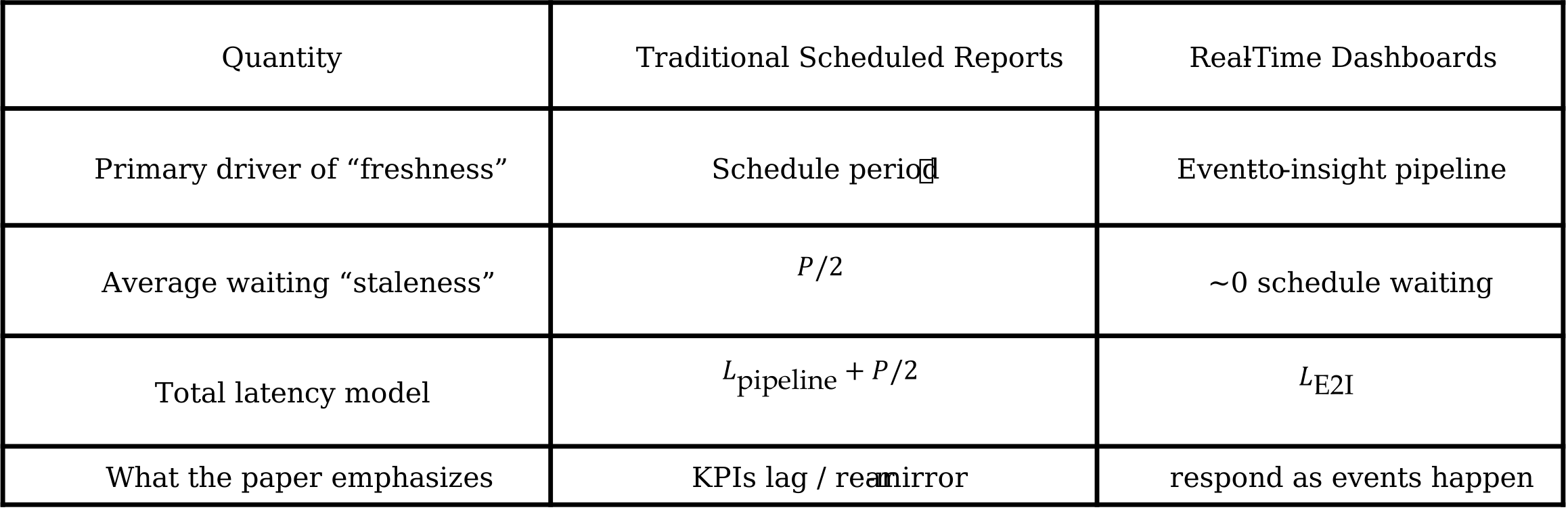
A study of enterprise reporting systems compares traditional monthly and quarterly reports with real-time analytics dashboards. Through assessment of three key characteristics—speed of insight and decision-making, user access and interaction with the information delivery system, and impacts on organizational strategy and operational effectiveness—the focus narrows to the data latency dimension of periodic systems and the data pipeline characteristics of corresponding dashboard systems. While traditional reporting systems introduce delays into the insight and decision-making of enterprise operations, the integration of real-time analytics dashboards into the very fabric of a data-centric organization accelerates this process [24].
Periodically scheduled reports reflect a concept of analysis, presentation, and delivery of consolidated information that preserves data and process integrity by locating analytics in computing environments controlled by the enterprise. Despite their inherent latency, the period of data "staleness" may be a mere vanishingly small fraction of the gestation period of the decision to deploy the insight, yet such crashes-in-the-dark insights affect an organization's capability to execute its strategy. When similar analytics appear in dashboards, however, speed becomes an argument, dominating not only usability but even solution design, giving rise to approaches such as "answering the questions nobody is asking yet", "nudging" and "strategic analytics" [25].
Equation 3: Real-time dashboards: event-to-insight cycle equation
Define the Event-to-Insight cycle:
- : capture time (sensor/app emits event)
- : transport/stream time
- : processing/integration time
- : query/compute time
- : render/visualize time
Then:
6.1. Speed of Insight and Decision-Making
Rapid cycles of insight and decision-making occupy center stage in contemporary organizations. A host of drivers—competition, the knowledge economy, technological change, and customer demand for instant service—compel organizations to engage in the perennial cycle of a question (or idea) that demands an answer (or rejoinder) as swiftly as possible. In some cases, with the emergence and growth of business analytics, the demand for speed has accelerated dramatically. Organizations flaunt offerings that boast real-time, or even on-the-fly, capabilities. New products—aircraft engines, long-haul delivery systems, washing machines—are in the design phase before the previous model has reached the customer or the company has delivered the services promised [26].
In order to keep pace, invest in materials, allocate building resources, hire new staff, or reroute aircraft, knowledge users require direct access to answers from systems and databases. They want the underlying transactions and informational resources, plus the skills required to use the flexible products practicably and meaningfully, but they do not want to program the databases nor discover the intelligence hidden within for themselves. They simply want a question answered and an intelligent choice made. They want to receive insightful, actionable answers to their business questions in the least possible time. Such immediacy may serve to reinforce daily or weekly operations for time-sensitive requirements, offer snapshots of business situations for planning purposes, or enable strategic analyses for the future [27].
7. Discussion: Implications for Practice and Theory
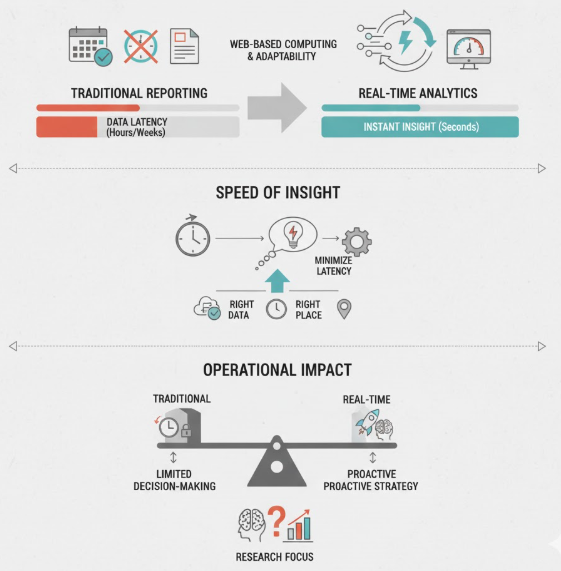
The rapid advancement of web-based computing has enabled speedier such decisions and led to enterprises adopting new strategies that emphasize always being in motion with a flexible and adaptable business. Key enablers of such strategy are the real-time analytics dashboards consisting of real-time and near-real-time business intelligence data-processing. The advanced capabilities of real-time or near-real-time data processing with respect to operational effects of supporting speed of decision-making for daily routine operational decisions based on lower-quality or lower-risk information are compared to the traditional reporting systems. The advantages of the advanced systems compared to the traditional operational reporting environment are: Speed of Insight Speed of Decision Making.
Speed of insight, defined as time duration required for business users to see the information (at any level) and translate it into action after determining to make a specific decision, affects the speed of decision-making. Speed of insight can be minimized by having the right data, at the right moment, at the right place. Any business analytical decision-making requires data, and there is usually a multitude of different data sources. Business users are, therefore, dependent on technical data processing. Traditional scheduling-based operational reporting systems produce insight with data latency, which can vary from hours to weeks depending on business needs, business rule filters, and the processing latency of the technical data processing function [28].
7.1. Impacts on Organizational Strategy and Operational Effectiveness
While impact on organizational strategy is the most-studied benefit of dashboards, real-time analytics capabilities may also enhance decision-making across levels and support quicker response to changing business conditions. For top executives, speed and agility of analyses rely on designers and vendors ensuring real-time data is visualized within a coherent strategic context. Dashboard-supported lower-level decision-making frequently benefits from shorter data latency, but the earlier insight communicated by conventional reports and possible preview of integrated data may outweigh any latency disadvantages [29]. Ultimately, however, dashboards held an edge on speed generally.
Nonetheless, uncritical reliance on speed may actually inhibit organizational responsiveness. Real-time analytics offer lower-level decision makers near-instant access to current data, but many choose not to employ dashboards. Report frequency, distribution processes, and decision review cycles can mitigate any latency disadvantage for traditional systems and enhance responsiveness overall. Greater accessibility of real-time pipelines, combined with decision heuristics developed through repeated practice, may be expected to support notably faster responses when responses are required. However, dashboard-supported lower-level decision-making is often more susceptible to technological prior-itisms and habitual behavior patterns, suggesting the possibility of misleading conclusions even when decision latency is minimal [30].
8. Conclusions
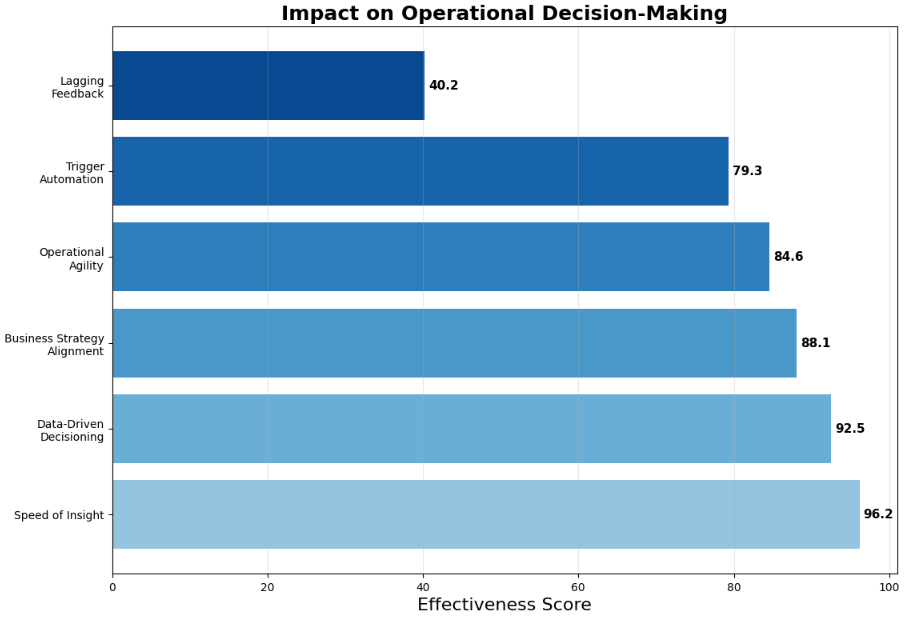
The two definitions of a reporting system presented in this analysis differ fundamentally; rather than complementing each other, they may actually be at odds and can reinforce the systems’ limitations. The Analytics-Driven Enterprise framework as defined by John von Neumann (1966) and Thomas A. W. Synnott (2005) models a reporting system as a lagging indicator whose insights are delivered to the operation long after the actual decisions have been made and the events have taken place. Real-Time Analytics can indeed be viewed as two separate systems: a Datastore and a Data Pipeline/Adapter. The Analytics-Driven Definition of reporting, based on a Scheduling System, should also be applied to Business Intelligence Dashboards.
The latency of time-sensitive, real-time dashboards, such as vehicle-tracking applications, is always near-zero (although the latency for the monitoring side of Automatic Trigger should also be eliminated). Other Latencies on the Data Pipeline can vary from hours or days up to weeks or months, depending on the latency of the Data Connector on the Data Pipeline and the scheduling frequency of the Data Feeding (or Data Ingestion) system. Speed of Insight takes on a more immediate time dimension and affects Decision-Making in the operation, and therefore, the overall Business Strategy operation becomes truly Analytics-Driven and enables Data-Driven Decision-Making [31].
8.1. Final Reflections and Future Directions
The present study highlights the pros and cons of traditional reporting systems and real-time analytics dashboards. Traditional reporting systems are slow in generating insights, which in turn hampers time-sensitive decision-making and, as the study shows, can undermine results. Real-time analytics dashboards speed up decisions but are not always easy to use. The research suggests that the choice between the two systems should depend on the particular situation in which they are deployed [32]. Organizations should also aim to combine the two systems.
Scholars have viewed enterprise reporting as a specialized information system designed to deliver relevant, timely, and reliable information for decision-making. As these decision-support systems are under the constant jurisdiction of both information technology and the users of the reporting information, future research would benefit from further elucidation of the relationship between the two.
References
- Agarwal, R., Dhar, V., & Lucas, H. C. (2010). The information systems identity crisis: Focusing on high-visibility and high-impact research. MIS Quarterly, 34(4), 647–652.
- Sateesh Kumar Rongali. (2021). Cloud-Native API-Led Integration Using MuleSoft and .NET for Scalable Healthcare Interoperability. Journal for ReAttach Therapy and Developmental Diversities, 4(2), 181–192. https://doi.org/10.53555/jrtdd.v4i2.3797.
- Babaei, M., & Beikverdi, A. (2015). The impact of business intelligence systems on organizational agility. Journal of Intelligence Studies in Business, 5(2), 33–45.
- Vadisetty, R., Polamarasetti, A., Guntupalli, R., Raghunath, V., Jyothi, V. K., & Kudithipudi, K. (2021). Privacy-Preserving Gen AI in Multi-Tenant Cloud Environments. Sateesh kumar and Raghunath, Vedaprada and Jyothi, Vinaya Kumar and Kudithipudi, Karthik, Privacy-Preserving Gen AI in Multi-Tenant Cloud Environments (January 20, 2021).[CrossRef]
- Chaudhuri, S., Dayal, U., & Narasayya, V. (2011). An overview of business intelligence technology. Communications of the ACM, 54(8), 88–98.[CrossRef]
- Cloud-Native Security Architecture for Hybrid Healthcare Infrastructure. (2021). African Journal of Biomedical Research, 24(3), 496-503.
- Davenport, T. H., & Harris, J. G. (2007). Competing on analytics: The new science of winning. Harvard Business School Press.
- Davenport, T. H., Harris, J. G., & Morison, R. (2010). Analytics at work: Smarter decisions, better results. Harvard Business Press.
- Inala, R. (2020). Building Foundational Data Products for Financial Services: A MDM-Based Approach to Customer, and Product Data Integration. Universal Journal of Finance and Economics, 1(1), 1–18. Retrieved from https://www.scipublications.com/journal/index.php/ujfe/article/view/1342.[CrossRef]
- Elbashir, M. Z., Collier, P. A., & Davern, M. J. (2008). Measuring the effects of business intelligence systems: The relationship between business process and organizational performance. International Journal of Accounting Information Systems, 9(3), 135–153.[CrossRef]
- Aitha, A. R. (2021). Optimizing Data Warehousing for Large Scale Policy Management Using Advanced ETL Frameworks.[CrossRef]
- Golfarelli, M., & Rizzi, S. (2009). Data warehouse design: Modern principles and methodologies. McGraw-Hill.
- Gottimukkala, V. R. R. (2021). Digital Signal Processing Challenges in Financial Messaging Systems: Case Studies in High-Volume SWIFT Flows.[CrossRef]
- Hazen, B. T., Boone, C. A., Ezell, J. D., & Jones-Farmer, L. A. (2014). Data quality for data science, predictive analytics, and big data in supply chain management. International Journal of Production Economics, 154, 72–80.[CrossRef]
- Segireddy, A. R. (2021). Containerization and Microservices in Payment Systems: A Study of Kubernetes and Docker in Financial Applications. Universal Journal of Business and Management, 1(1), 1–17. Retrieved from https://www.scipublications.com/journal/index.php/ujbm/article/view/1352.[CrossRef]
- Jourdan, Z., Rainer, R. K., & Marshall, T. E. (2008). Business intelligence: An analysis of the literature. Information Systems Management, 25(2), 121–131.[CrossRef]
- Amistapuram, K. (2021). Digital Transformation in Insurance: Migrating Enterprise Policy Systems to .NET Core. Universal Journal of Computer Sciences and Communications, 1(1), 1–17. Retrieved from https://www.scipublications.com/journal/index.php/ujcsc/article/view/1348.[CrossRef]
- LaValle, S., Lesser, E., Shockley, R., Hopkins, M., & Kruschwitz, N. (2011). Big data, analytics and the path from insights to value. MIT Sloan Management Review, 52(2), 21–32.
- Pandiri, L. Data-Driven Insights into Consumer Behavior for Bundled Insurance Offerings Using Big Data Analytics.
- March, S. T., & Hevner, A. R. (2007). Integrated decision support systems: A data warehousing perspective. Decision Support Systems, 43(3), 1031–1043.[CrossRef]
- Chava, K., Chakilam, C., & Recharla, M. (2021). Machine Learning Models for Early Disease Detection: A Big Data Approach to Personalized Healthcare. International Journal of Engineering and Computer Science, 10(12), 25709–25730. https://doi.org/10.18535/ijecs.v10i12.4678.[CrossRef]
- Power, D. J. (2007). A brief history of decision support systems. DSSResources.COM.
- Gadi, A. L., Kannan, S., Nandan, B. P., Komaragiri, V. B., & Singireddy, S. (2021). Advanced Computational Technologies in Vehicle Production, Digital Connectivity, and Sustainable Transportation: Innovations in Intelligent Systems, Eco-Friendly Manufacturing, and Financial Optimization. Universal Journal of Finance and Economics, 1(1), 87–100. Retrieved from https://www.scipublications.com/journal/index.php/ujfe/article/view/1296.[CrossRef]
- Sharda, R., Delen, D., & Turban, E. (2018). Business intelligence, analytics, and data science: A managerial perspective (4th ed.). Pearson.
- Singireddy, S., & Adusupalli, B. (2019). Cloud Security Challenges in Modernizing Insurance Operations with Multi-Tenant Architectures. International Journal of Engineering and Computer Science, 8(12). https://doi.org/10.18535/ijecs.v8i12.4433.[CrossRef]
- Speier, C., Valacich, J. S., & Vessey, I. (1999). The influence of task interruption on individual decision making. Decision Sciences, 30(2), 337–360.[CrossRef]
- Balaji Adusupalli, Sneha Singireddy, Lahari Pandiri, "Implementing Scalable Identity and Access Management Frameworks in Digital Insurance Platforms," International Journal of Advanced Research in Computer and Communication Engineering (IJARCCE), DOI: 10.17148/IJARCCE.2020.91224.[CrossRef]
- Watson, H. J., & Wixom, B. H. (2010). BI-based organizations. International Journal of Business Intelligence Research, 1(1), 13–28.[CrossRef]
- Kaulwar, P. K. The Impact of Early Automation Tools on Efficiency in Enterprise Financial and Risk Advisory Services.
- Yigitbasioglu, O. M., & Velcu, O. (2012). A review of dashboards in performance management. International Journal of Accounting Information Systems, 13(1), 41–59.[CrossRef]
- Koppolu, H. K. R. Beyond the Bedside: Examining the Influence of Family-Integrated Care Practices on Patient Outcomes and Satisfaction in Diverse Clinical Settings.
- Zhu, K., Kraemer, K. L., Xu, S., & Dedrick, J. (2004). Information technology payoff in e-business environments. Information Systems Research, 15(1), 22–44.