

In today's fast-changing world, digital has become a way of life in every single field, and it is affecting all industries by providing multi-channel connectivity with people. In the banking industry, moving to the digital age allows for more improvements in customer-related operations and transaction-related operations within a day. These studies are from the perspective of customers. Customers prefer the flexibility of using digital financial services. Banking clients are commonly given technology-related services, whether they are online or not. Now, banks are focused on providing instant credit card issuance and personalized financial solution services to their clients. They are responsible for managing mass affluent clients who conduct transactions approximately the same as mass retail clients. Providing personalized services on time to individual end users will significantly enhance customer value with the banks. Customers who use the bank digitally perform more operations than those who go to the branch. Thus, they become more valuable clients for the banks. This strategic approach to the digitization process takes place in this fast-changing environment, and the major steps of this journey will be explained in the next chapters [1].
The Impact of Instant Credit Card Issuance and Personalized Financial Solutions on Enhancing Customer Experience in the Digital Banking Era
June 09, 2021
October 08, 2021
November 30, 2021
January 10, 2022
This is an Open Access article, distributed under the terms of the Creative Commons Attribution 4.0 International License (http://creativecommons.org/licenses/by/4.0/), which permits unrestricted use, distribution and reproduction in any medium or format, provided the original work is properly cited.
Abstract
1. Introduction
Rapid changes in the lifestyles and banking preferences of consumers have been fostering the propagation of digital banking systems. The salient benefits of such systems include heightened convenience in services, around-the-clock availability of credit or funds, improved money management, and enhanced access to banking services for customers in areas with fewer traditional banks. The extensive use of smartphones and digital marketing approaches is allowing the cost-effective offering of personalized financial services designed to meet customer capabilities and banking needs. The rapid advancement in the links among big data mining, artificial intelligence, and total automation of banking functions is expected to facilitate varied cooperative services from different bank groups. To thrive in the digital banking era, a bank not only has to expedite the services it provides but also focus on customer engagement and provide personalized financial solutions. In the context of digital credit facilities, apart from attuning credit solutions with user needs, banks should rapidly approve credit for new-to-bank customers in terms of card issuance and credit card activation. Rapid credit card issuance services, which adhere strictly to authentication, aim to verify cash viability without opening an account or additional account. Besides accelerating cash flow for new cardholders, the speed at which these services are delivered also has several other positive implications, such as enhancing customer convenience and satisfaction, increasing overall spending with the partner, improving partner loyalty, enhancing competitiveness with rivals, and instantly promoting business development [2].
1.1. Background and Rationale
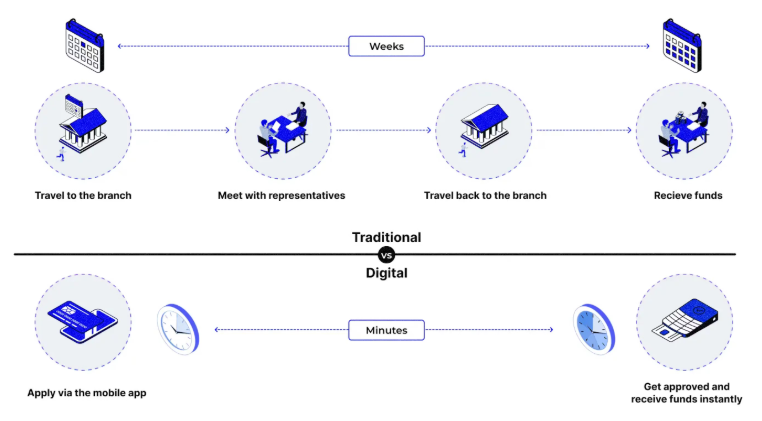
The banking sector is currently at a significant inflection point, and the pace of change driven by digitization is only accelerating. The rapid consumerization of technology is prevailing across the globe, and Asia is quickly catching up with the rest of the world in this respect. Very often, consumers and corporations now consider digital channel capabilities as a key determinant when choosing their banking partners. Going forward, digital experiences need to focus on seamless integration of services across channels to locations. Our customers should feel our services seamlessly across their devices [3]. The new customer experience of digital is personalized and conversational. Mortgages, savings, lending, and credit cards can all be completed without a paper signature or taking time off from work and are completed in minutes, not days or weeks. Comprehensive financial solutions are the currency of the 2020 generation that sees an enormous opportunity for banking roles across the commerce industry.
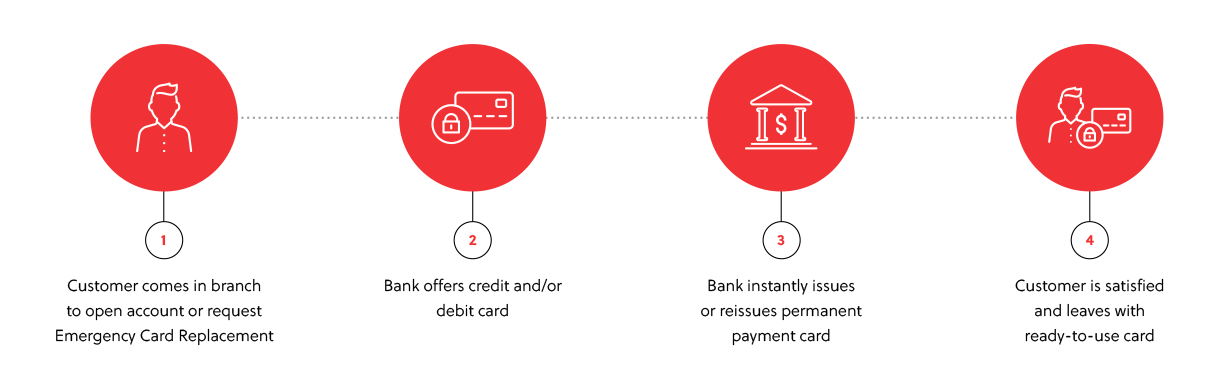
The Retail Banking Transformation Project completed the digital solution for financial and personal wealth management, including instant credit card issuance and digital advisory channel as the milestone deliverables. The role of instant credit cards and personalized financial service solutions is critical as it provides the necessary data pipelines, mobile applications, and technical interfaces to build new customer experiences and offer a simple application for utilizing the card, which enhances customer satisfaction and strengthens the bank's competitive edge in the digital banking competition era by enabling clients to obtain the card in a real-time manner upon approval of their applications. The processes of such simplified and automated service systems have enhanced the overall reliance, completeness of information, and validity checks on any such credit applications, a customized scoring engine, and optimized system architecture. The biggest difference is our solution, specifically addressing the appropriate personalized service for the client's wealth management needs. It provides end-to-end service touchpoints, supports all types of customer interactions across a variety of digital and non-digital channels, interfaces, and APIs for rapid application development and automatic stages of the SDLC. Our customer experience aims to deploy a high frequency of personalized service recommendation touchpoints, each with a variety of service options to manage customer loyalty, encompassing savings, mortgages, lending, and credit card applications [4].
Equation 1: Customer Satisfaction (CS) as a function of Instant Credit Card Issuance (CA) and Personalization (PL)
1.2. Research Objectives
Since the financial services industry entered the digital era, the large volume of consumer data provided by FinTech companies has accelerated the development of financial product algorithms. The market has gradually shifted from providing standardized financial products to utilizing long-term consumer transaction records, social contact networks, and personal consumption behaviors to co-construct personalized financial products with consumers. The connection between the digital economy and finance has been further strengthened. New financial services have encouraged consumers to try savings, investment, financing, and insurance products that previously required professional risk controls. Innovative products and financial tools improve personal financial management capabilities, break the personal, regional, and even national differences in access to financial services, making the financial industry more inclusive. The extensive development and innovative application of the digital finance business model have significantly reduced the cost of setting up a physical presence and allowed the development of services in emerging markets.
Consumers can better understand their needs through the benchmarking clubs established by platforms or friends, acquaintances, families, etc., while peer pressure also promotes everyone to use or adopt new products or services quickly. The characteristics of the digital economy and finance industries cause interaction during the customer life cycle and advance the transformation of the financial customer experience with digital technology, especially for future financial consumers who have completed the migration to the Internet and are the first to use technology and digital finance. How to respect the unique value of personalized financial services while using big data, AI, and Internet technologies to create financial solutions that the public trusts is a significant challenge for financial institutions. The most direct option of a customer encounter is credit card distribution. This study investigated the impact of instant credit card issuance and personalized financial solutions on enhancing the financial consumer experience in the digital banking era [5].
2. Literature Review
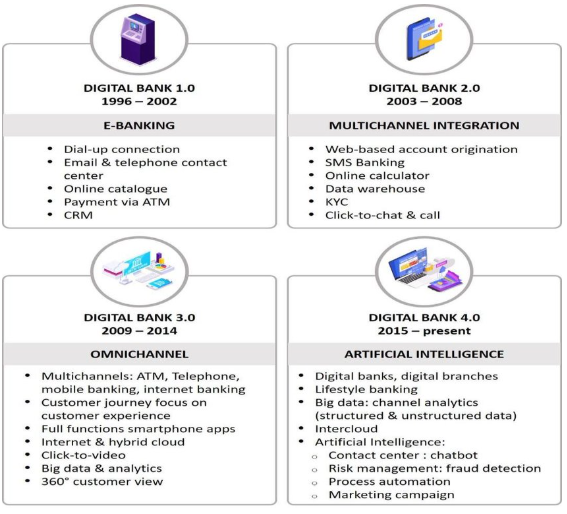
Over the past few years, various technologies have been employed by retail banks to optimize business operations and create lasting value, such as big data, mobile banking, and e-banking. Digital banking is the key trend in banking services that relates to technology applications, considering the actual demands and behavior of retail banking clients. The savviest retail banking companies take creativity and service quality to a totally new level to accommodate clients who aspire to access comprehensive banking services and embrace speed, convenience, and value-added personal experiences on a 24/7 basis. The evolution of mobile apps on digital devices makes it easy for people to conduct their banking activities, including checking their account details, making payments, saving money, transferring funds, applying for a loan, monitoring policies, and making investment decisions while they are on the move. Online banking is no longer an add-on service to support traditional banking; it has become a forefront competitive tool and strength in the current financial industry [6].
The breakthroughs of high-tech consumer products bring boundless possibilities to the banking industry, while the pace of demand for the services is accelerating as well. The habits and preferences of consumers interact with new technologies, forming new behaviors—clients are heading to the notion of "always-on and anytime-anyplace" experiences. This requires the financial services sector to study the experience economy and figure out how to create innovative deliverables. Customer involvement is easier than before, but getting in contact with and understanding the diverse group of clients is still a major concern among banks. The linkage between new banking advancements and their contributions to successful individual banking service deliveries opposes explanations from the position of value/needs concern and the internal generation process of creative banking services. Online and mobile apps have become the primary interface between private and corporate customers and their financial institutions. Even though these e-channels have been growing in popularity over the decade, companies that decided to outsource their management faced numerous wrenching issues when the digital services were outsourced for their banks [7].
2.1. Digital Banking Evolution
The rise of the internet has driven bank brands to respond to the rise of digital communication by moving from advertising through cards and checks that customers dutifully put away to small displays of loyalty affixed to cards. Today, banks are constrained by 'one-size-fits-all' and impersonal delivery channels, technologies, products, services, and siloed processes that perpetuate a broken and outdated customer experience. As banks reinvent card issuance to make it more cost-effective and flexible, they can also look to personalize the onboarding journey and other services, becoming more than a product-based agent in the process. Banking is not solely about issuing cards and carefully processing customer orders for them. Most banking products are enablers that are often used passively. Banks are in a unique position to provide active guidance and beneficial data because they engage in the implementation and management of customers' financial and personal relationship needs. That stewardship will require both a human element and a higher degree of specific individualization [8].
Digital banks also need to replicate the storefront customer experiences that in the online universe have been made largely redundant. Most online credit card application efforts have continued to carve down the time needed to complete a form. That approach is based on the notion that people who want to submit a complete, accurate, and considered credit card application would just as soon submit it online as file it face-to-face. Sadly, focusing on shortening online forms has never penetrated the foreboding process of selecting and displaying key enabling add-ons for it. While consumers recognize that banks provide these services, they offer little in the way of feedback on how well they were delivered or suggestions for alternative offers. Online forms remain as simple as we can make them, which is to say they epitomize the 'less is better' approach. Banks have turned the cart into a stagecoach, wistful for its geriatric solemnity [9].
2.2. Customer Experience in Banking
The life of a bank customer has changed dramatically in the last twenty years thanks to technology. With the advent of the internet in banking, people no longer have to go to a bank branch during working hours to make transactions. To perform transactions, people used to have to take time off from work, and most customers would find two hours of optimal time to transact. By eliminating the need to go to a branch to perform transactions, the virtual platforms available to the client twenty-four seven have provided the customer with more freedom to manage financial transactions. This integration has led to the softening of barriers between the physical and digital banking worlds, increasingly giving clients the freedom to choose how to use a bank's services, driven by a greater freedom of mobility. Customers are continuously being asked to serve with an intelligent combination of traditional and digital solutions made available by making changes in bank routines and behaviors. Continuing the spiral of change in the dynamics of banks, online systems have to be sustainable and integrate completely with bank customers' mobile solutions. People don't use technology just because it's pretty; they use it because it's functional, practical, and user-friendly. This ability contributed to accelerating usage, improving speed and quality of service, increasing independence levels, and inevitably attracting the manifold customers of the large variety of banks available [10].
2.3. Instant Credit Card Issuance
Demand for credit cards is steadily growing around the world, and instant issuance has become a guaranteed service for new customers or customers who have been issued new cards. However, instant credit card issuance has other meanings in the new digital age. Unlike traditional financial institutions, digital banks have instant credit card issuance via the establishment of a digital mechanism, in which all necessary application information is electronically sent to the application system and the subsequent mail dispatch of the credit card is automated. Instant credit card issuance is no longer simply shortened to the customer waiting time for credit card issuance. Its ultimate goal is the enhancement of customer financial services, by which a customer can use a valuable service instantly, and the lowest cost is dedicated.
Information technology has made promotional marketing easier, but it has also created a phenomenon of a decline in the response rate resulting from a lack of distinguishing features. The speed of personalized service and its conformance with customer needs is the guaranteed means by which a financial institution can gain competitiveness. The mechanism of highly efficient response signifies brand competitiveness and the service strategy. The strategy of highly efficient applications and instant credit card issuance can not only satisfy customer demand immediately, but also score higher in evaluation by the Issuer Brand Card Loyalty model as a means to increase the loyalty of the customers who are given the instant credit card issuance [11].
2.4. Personalized Financial Solutions
In the competitive digital banking era, financial institutions offer promotions or privileges as incentives to enhance the attitudinal loyalty of their customers. Personalized financial solutions in the digital banking era are unique recommendations of financial products that are based on consumer requirements, preferences, needs, and behavior. The wide variety of banking products and services makes it important to identify the needs of individuals and provide tailored banking solutions to meet specific client needs. Personalized data technology is the outcome of the sophistication of data processing capabilities resulting from the recent explosion of data. By using various forms of customer data – including financial, online, and social data – financial institutions provide customer-centric tailored products and services [12].
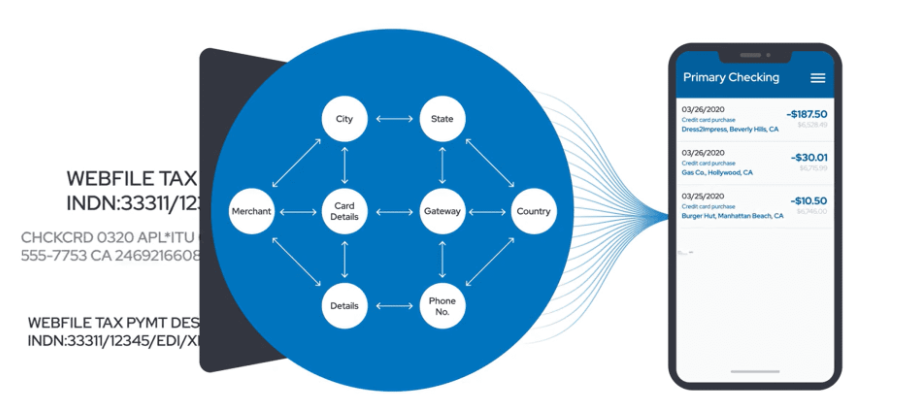
By leveraging AI technology, banking institutions aggregate and process multiple categories of data, including personal, finance/business, statistics, and complex data marked by data sparsity and quality problems, to implement customer segmentation and one-to-one personalized retail banking services. The recent meme represents the underlying concept of technology-driven personalization: people once believed that a future world defined by personalization was a mirage, but today the concept is no longer a futuristic vision. Although there are numerous advantages from adopting personalized financial solutions provided by banks, exposure to considerable privacy and security risks must be carefully reviewed and managed as advances in technology mean that customers are increasingly critical of the security of their personal information [13].
3. Methodology
The study adopts a qualitative comparative research approach. A number of research methods can coexist, reinforcing each other in the case study design. The method used involved extensive research of available information. These include reports, company documents, secondary materials, and data in the public domain. A priori knowledge shaped the process of both data collection and analysis. After obtaining detailed information on the extensive use of instant credit card issuance and personalized financial solutions, the data was analyzed with the primary purpose of determining the ways banks are deploying these innovative products and how they are enhancing customer experience and trust in the digital banking era [14].
3.1. Research Rationale
A lot has been written about e-service quality and e-reputation, but there is a very clear scarcity of theoretical or empirical research illuminating the impact of these emerging instant credit card and personalized financial products on customer experience and trust. There are also very few studies that provide any fresh empirical evidence on this evolving and unique industry. Therefore, the research seeks to fill the gaps identified in the literature by providing fresh evidence on the impact of these innovative product offerings on customer experience and customer trust. This both adds new empirical evidence and increases the richness of the data considered in support of models for other sectors with similar offerings. The study also contributes to identifying implications for further research. Tailoring banking solutions to the very personal financial needs of customers is at the heart of profound changes in the banking industry. This profound advance towards digital banking with personalized financial solutions and instant credit card issuance is happening across customer markets. Their impact can be profound in terms of tangible operational, sales, and revenue outcomes, as well as the intangible aspects of customer trust and overall banking satisfaction. Commercially, understanding customer brand associations that favor the design and offerings of personalized financial products and digital innovations with customer needs provides strategic insights for creating high-impact products that contribute to positive customer outcomes. If superior products create lasting customer reputations, lower churn, and higher trust, banks that use and understand the value drivers derived from personalized financial solutions and other product innovation tools can realize corresponding revenue and market value opportunities. The customer perspective and the bank perspective provide essential knowledge to stakeholders in financial services: (a) Service quality dimensions go hand in glove with brand associations and (b) feeling a positive match with customer financial offerings contributes to reputation formation and trust. From a managerial standpoint, understanding these customer onboarding data underpins strategies for other customer markets where competitiveness and financial prospects demand a focus on these same credit card issuance and personalized finance solutions [15].
Equation 2: Customer Engagement (CE) influenced by Instant Credit Card Issuance (CA) and Personalization (PL)
3.2. Research Design
This study aims to investigate the potential impact of instant credit card issuance and personalized financial solutions on renewing those credit cards and enhancing customer experience management in the digital banking era. In this study, we acquired research samples from major domestic banks in Taiwan through purposive and convenience sampling, including the top five major banks and first-tier banking businesses in each bank. This study integrates power analysis and sample size estimation to plan the most appropriate sample size that could increase the efficiency of conducting the online questionnaire survey. This online questionnaire was designed to be proactive and responsive, and was completed by top and mid-level management in these banks to bolster the research rigor and validity. Finally, the actual sample size included 64 bank managers and staff participating in this study, which should be adequate for statistical analysis [16].
To examine the potential impact of instant credit card issuance on renewing credit cards, as well as the potential influence of personalization in financial solutions, this study follows both the research design of structural diagnostics and descriptive design. The first phase of this study is designed to gather personal experiences of instant credit card issuance and to track related customer behavior. Then, it focuses on investigating the characteristics of potential clients such as business type, preferential card usage, and potential business opportunities, such as loans, personal savings, and other personalized family and company needs. After that, this study aims to explore the results of using those newly claimed preferential credit cards, and to what extent they are willing to accept informal, fast, and personal financial planning and operation services, leading to a faster payment system, savings and pension planning, and employment operation matters that meet personal needs. Finally, a self-reported online survey is conducted to better understand the participants’ emotions, perceptions, and loyalty, and to reveal how the experience of immediate credit card issuance and subsequent personalized financial solutions draw forth delight and satisfaction. The outcomes are utilized to probe the stimuli of those personalized solutions, and finance executives within the banks would be involved, which compose of four scenarios: speed fast/slow and personal orientation valid/invalid [17].
3.3. Data Collection Methods
The current study is an exploratory study; therefore, in-depth interviews with relevant professional practitioners and in-house financial experts were used to gather the latest market information and consumers' needs. It allowed the researchers to enrich the quality of strategic information and precision through questionnaire investigation. The professional interviewees were selected based on their professional knowledge, experience, expertise, and responsibilities in relevant fields. After the interview, a pilot study was conducted to confirm the integrity of the research content and the conclusions drawn from the professional interview. Moreover, the response items in the structured questionnaire were modified and controlled based on this information [18].
The data from this research was mainly collected through personal interviews owing to the complexity and depth of the topic. The semi-structured questions were designed to reveal the complex logic and internal processes behind the responses, considering the current era of online banking services and financial management. The general questions asked in the interviews were aimed at comprehending the different views of banking professionals. The professional interviews covered the sequence of banking innovation leading to the current customer service and the augmented capabilities of these professionals. In the final step, the validated items and measures in the interview were converted into pertinent questionnaire items through professional consultation to ensure the reliability of the questionnaire items [19].
3.4. Data Analysis Techniques
This study uses statistical data analysis, and the results are based on various statistical measures. It merits inclusion and description of the methods used. This is briefly described regarding data distribution, measures of central tendency, data spread, measures of correlation, regression, and goodness of fit tests. Descriptions of selected populations with account-level profiles, summaries of respondents, and summaries of variables are also explained.
Data Distribution. Account open age, first card lifetime, and ongoing purchase transactions summary data have been computed: maximum, minimum, mean, standard deviation, and quartiles. This is used to determine the range of these factors and to analyze categories from continuous data.
Measure of Central Tendency. The average or middling value of data is referred to as outliers. The mean or the median is often used in the statistical description of the central tendency of data. The mean or median may be used if the data have no serious outliers or are not widely spread. Mean, on the other hand, is inappropriate when there is skewness in the population. The median is the most preferred measure of central tendency under these circumstances. The former case is illustrated in this study, where skewness relationships are shown with mean, median, and mode. The median function computes the median of a numeric variable divided between the upper fifty percent of values and the lower half of the population. In the alphabetical list of values, the median is the value. It may not change if the median is between two values but will be the mean of the two midpoints. In this way, the mean of the two medians can also be calculated. The mode provides the most frequently occurring value [20].
4. Findings and Analysis
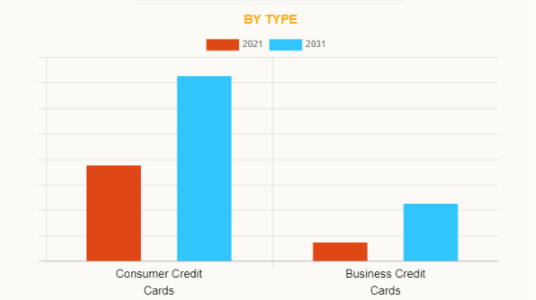
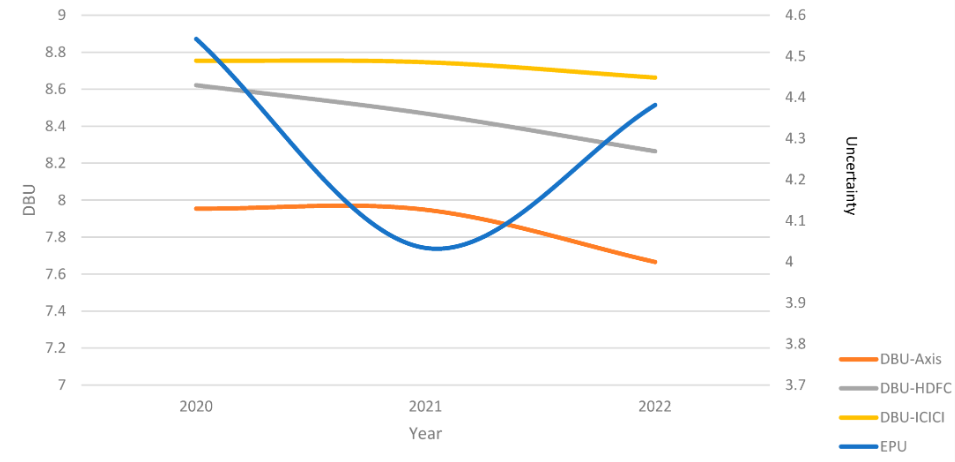
With a higher IS DSS score, the bank offers a better experience and promotes customer loyalty. It is considered good that the products and services of the bank have a higher degree of association. From the highest to the lowest. In this scale, the top three most associated products or services with a higher IDS in the physical branch are, in this order: denominated investment products, interchange rates, and savings products. On the other hand, the top three products or services associated with a higher IDS in the digital bank are, in this order: bank savings accounts, personal loan rates, and interchange rates. The products or services that have the greatest association with the physical bank are financial planning, which is followed by savings accounts and risk insurance. Finally, in the digital bank, the products or services with the highest association are the savings products, fixed-term deposit accounts, and personal loan rates. The bank's other products and services do not prove to have a high degree of association in either channel.
However, it is worth analyzing the rest of the products and services of the bank. As we may have different behaviors, these results show clear differences between the physical branch and the digital branch in its own products and services portfolio. If the scores given by the regular customers are compared, they are also very different between the physical and digital channels. It seems that there is a possibility that the visual and sensory conditions transmitted in the evaluated case increase or decrease the respondents' loyalty to the bank. Something similar occurs in the case of financial entities, in which it can be shown at the theoretical level that there is a sensory-imaginary impact by offering special personalized financial conditions, mostly in sensitive predictive wavelike downswing credits. Therefore, importantly, the services of a bank are very different when they are developed in the physical branch compared to the services of a digital bank [21].
4.1. Impact of Instant Credit Card Issuance
Instant card issuance is the process of creating a functional payment card at the branch or store location while the customer waits. Traditionally, debit cards are given out immediately, while credit card issuance takes longer. The instant issuance scheme allows customers to pick up their physical card at the branch on the spot or within a determined time frame. For card transfer, customer service support processes a request, and the customer will receive a re-functional card in a limited time frame. Instant issuance will allow customers to receive a newly issued card on the spot. The creation of a functional payment card at the time of application provides customers with greater satisfaction and convenience, thus increasing activation rates. Consumers consider financial institutions’ real and virtual card issuance strategies as the most important hidden threats to their personal safety and convenience. By designing personalized financial solutions, financial companies can improve consumer confidence and thus increase customer satisfaction.
Bankers are able to answer questions about a client’s situation and provide personalized recommendations by combining a customer’s non-transactional and explicit needs. As a result, the bank client is more likely to consider key banking products as they are being discussed in terms of their unique circumstances. Banks would be able to deliver tailored products that are based on future customers’ past searching behavior since the card issuing time is cut down [22].
4.2. Effectiveness of Personalized Financial Solutions
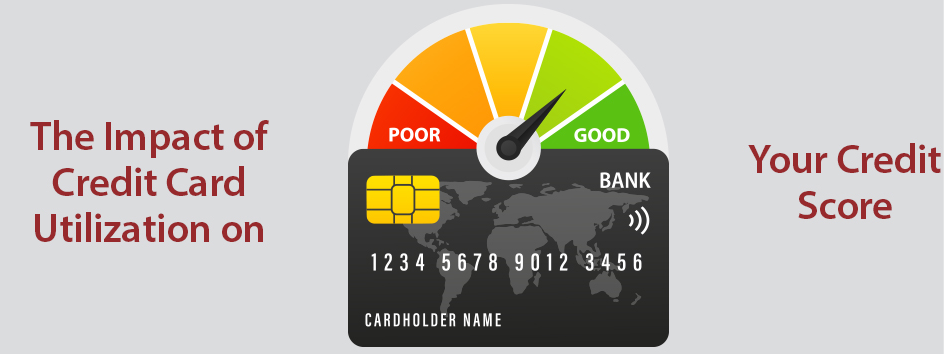
In the digital era, customer experience is becoming more and more important in influencing customer loyalty. Intrapersonal marketing, directly addressing an individual customer's needs and wants, is important in service industries. Instant issuance of credit cards effectively contributes to customer experience by directly addressing customer needs and wants. Customers gain instant recognition and affirmation from agents; thus, instant credit card issuance provides important personal satisfaction and a sense of achievement for a new credit card owner. It meets customers' wants without having to wait, as opposed to traditional banks that take a longer, formal, and paperwork-driven process.
The effectiveness is that customer-centric companies provide personalized financial solutions and services that exactly fulfill their customers' needs, thereby fostering customer satisfaction and customer retention. Nevertheless, life-deprived institutions are both customer-unfriendly and bureaucratic. This is in contrast to customer-centric institutions, which are friendly, customer-focused, innovative, flexible, and risk-taking [23].
5. Discussion
5.1. Impact on Customer Loyalty Dependence
From the analysis of hypotheses H1 and H2, we can see that the proposed offering of instant credit card issuance generates phenomenally high performance in customer loyalty development. In the Customer Loyalty Dependence Model, credit card issuance is the development factor for customers moving from products to services. However excellent the quality of a product the business offers, the development of customer loyalty still plays an important role. Customer satisfaction is born from a high-quality product, and it is then that customers will develop relatively high satisfaction attitudes toward credit card services. A reliable and convenient financial service is the foundational step in turning banking customers into loyal customers. By prompting customers to move toward credit card service usage, we can clearly see that the enhancement in customer experience generated by this proposed business model is evident in this process. The proposed business model is satisfied with the credit card product, particularly regarding the different financial thresholds of the elements in the entire package. It is not only related to competitive product quality, pricing, and technical support, but also to the underlying goal of developing customer reserving attitudes [24].
Equation 3: Customer Retention (CR) based on Satisfaction (CS) and Engagement (CE
5.2. Integration of Findings with Literature
Our study concurs with existing literature that personalization services such as professional advice, identifying customer needs, invitation to financial services, credit access, and personalized services were important determinants for customer experience in a digital banking era. While the existing literature has also elaborated on the achievements of such personalized services in electronic banking environments, our study further identifies that providing instant credit card issuance enhances the customer experience and their intention to use the services continuously. Practitioners involved in the digital banking era could therefore balance the customer experience and satisfaction to attract potential customers' continuous usage of banks' services as compared to traditional banks. Besides, scholars in the domain of finance and banking could also consider the findings for further exploration. These days, not only the outcomes contingent on interest rates, macroeconomic terms, and other economic environments, but also issues related to business processes and digital processes, as well as sources of repellents for specific groups of consumers, would bring a significant impact to business. At this point, we shall provide our contributions, research limitations, and propose areas for future development [25].
5.3. Implications for Digital Banking Industry
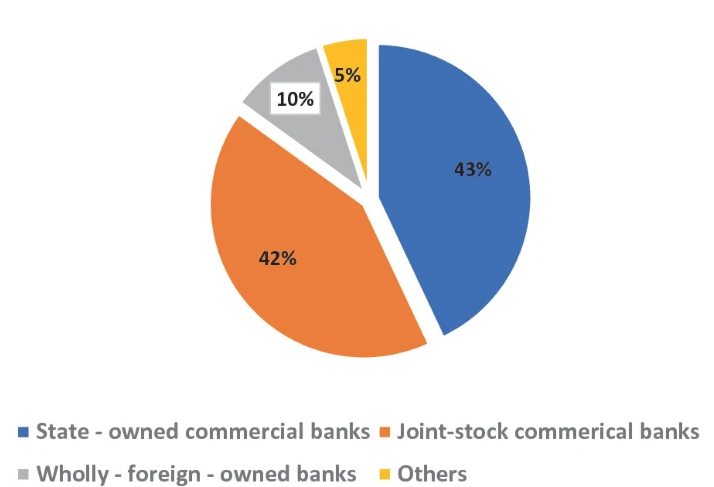
It is clear that reducing the customer's time involved in the application process, as well as increasing customer convenience and customer satisfaction, has become the key for financial institutions to improve customer experience and grow revenue in the current era. In the survey interviews of this study, the respondents with an instant card issuance experience showed significantly higher willingness to use, support, or try again the instant credit card issuance function of customer personalization credit limit service. It can be an essential indicator of positive customer perception. After completing the sales process, the bank can receive the card immediately. Personalization seems highly relevant for the customer, as it analyzes the customer's needs and provides value-added service to the customer. In addition, it can lead to an increase in the number and value of financial asset exchanges around the customer and even shelf coverage at the primary financial institution.
The rapid development of science and technology makes it possible for banks to re-profile and provide customized financial products to customers. In the research results of this study, the user perceived value of personalized financial products was significantly different according to the user’s personality and instant card issuance experience. It can be applied to customer analysis and initial segmentation that also includes young people, low income, low assets, and specific groups with low internet usage. At present, the concept of non-contact identification provides access to credit card institutions to collect user location information, which means eliminating all services that users can pay for with their mobile phones instead of credit cards when users need a credit card. With the transparent trend in big data, the clutter detection function can bring substantial benefits. It can let the user be transparent, and the system becomes standardized. In the credit card industry, this growth will also provide valuable credit card insights based on in-depth customer analysis.
6. Conclusion and Future Directions
In this paper, a model has been proposed for instant credit card issuance by a digital bank, enabling personalized financial solutions for different segments of customers. Further, the paper investigates how a digital bank can enhance customer experience by providing personalized financial solutions, such as lending amounts and credit card limits that change dynamically over time. This opens opportunities for enabling different tiers of credit cards for banks. This is pioneering research work showing how behavioral analytics via social network integration with digital banks can aid in offering convenient fees, like the charge waiver of the annual fee, by employing a focused loyalty program for enabling customer retention. For this, a probabilistic approximation algorithm is used for the core combinatorial optimization problem. Our findings from the numerical experiments show that digital banks, by integrating the offered personalized financial solution, enhance customer experience and enable a focused loyalty program for customer retention.
Moving forward, we aim to extend the work by incorporating strategies to improve the user experience of the millions of customers requesting credit cards. We would like to investigate the best-suited advertising for each customer from different segments by integrating machine learning techniques with behavioral analytics techniques for enhancing profitability. We would also like to put forth the influence of social capital via friendships with the bank in the multi-stakeholder inclusive digital economy through a personalized financial solution framework. We also plan to evaluate banking cost optimization by using the offered personalized financial solution for digital banking services such as mobile notifications, mobile phone top-ups, handsets, and educational loan and insurance facilities. This supports the risk and return optimization decision since the objective of personalized financial solution-oriented features is to enhance the customer experience by providing more benefits with minimal fees.
6.1. Key Findings Recap
The findings of field interviews, astute market research, and card issuance campaigns were divergent from previous research. These findings imply that when choosing their own credit cards, both rationality and emotionalism may have an effect. Credit card issuers and banks should consider these findings when designing and promoting their credit cards. The letter to the customer emphasizing that the credit being a free gift is an instant credit card issuance attractant. To find out the promotional reaction to card issuances, we collate the results of instant credit card issuance campaigns in the second stage of market research. Our foremost observation is that credit card patronage at Taishin Bank increased, and the letter states that although their previous credit cards are superior to this new one, they still represent the majority of card-issuance customers. This result may reflect the purpose of the instant credit card issuance. Nevertheless, the fact that people do not easily change their first-use credit card habits still exists. In addition, the resignation rate of the new-issue card and the new date rate of the disbursed credit card exceeds 20% of the instant credit card issuance campaign. The type of credit card, which customers received instantly, revealed an interesting phenomenon. Even though they previously held credit cards from Taishin Bank—a superior card issuer—most of them still decided to apply for the new card. These findings not only reflect the rational aspects of customers' choices of financial credit but also the influence of promotional strategies designed to capture interest and appeal to customer needs [26].
6.2. Future Trends
In the realm of personalized financial management, AI will continue to play a central role in managing personalized financial solutions delivered through various channels, including smartphones, tablets, and desktops. Customized personal financial transaction management will be deployed and will allow for personalized investment, children’s education, newlyweds, and other financial planning goals in ways that suit the peculiar needs of customers. We are witnessing the deployment of artificial intelligence through the use of machine learning, natural language processing, image, and voice recognition technologies alongside the use of video to interact with bank customers.
AI can pinpoint the specific needs of bank customers and draft a tailored financial solution, leveraging the data that already exists. Wearable financial devices hold promising possibilities for financial transactions with banks. This ranges from contactless credit card wearable watches to fitness data that can ascertain the credit score of the customer and make a fitness insurance calculation. Banks can deliver financial services through the use of customer avatars in VR or AR. These financial service avatars will operate in various fields, including customer services, private banking advisory services by providing information to customers, and customer identity verification in a digital pipeline. Future financial services will also be customer-centric, event-based virtual financial experiences. Well-timed and pay-per-event financial products and optimized financial technologies will be deployed to develop an on-demand financial product.
References
- Syed, S. (2021). Financial Implications of Predictive Analytics in Vehicle Manufacturing: Insights for Budget Optimization and Resource Allocation. Journal Of Artificial Intelligence And Big Data, 1(1), 111-125.[CrossRef]
- Danda, R. R. (2021). Sustainability in Construction: Exploring the Development of Eco-Friendly Equipment. In Journal of Artificial Intelligence and Big Data (Vol. 1, Issue 1, pp. 100–110). Science Publications (SCIPUB). https://doi.org/10.31586/jaibd.2021.1153[CrossRef]
- Nampally, R. C. R. (2021). Leveraging AI in Urban Traffic Management: Addressing Congestion and Traffic Flow with Intelligent Systems. In Journal of Artificial Intelligence and Big Data (Vol. 1, Issue 1, pp. 86–99). Science Publications (SCIPUB). https://doi.org/10.31586/jaibd.2021.1151[CrossRef]
- Chintale, P., Korada, L., Ranjan, P., & Malviya, R. K. (2019). Adopting Infrastructure as Code (IaC) for Efficient Financial Cloud Management. ISSN: 2096-3246, 51(04).
- Eswar Prasad Galla.et.al. (2021). Big Data And AI Innovations In Biometric Authentication For Secure Digital Transactions Educational Administration: Theory and Practice, 27(4), 1228 –1236 Doi: 10.53555/kuey.v27i4.7592[CrossRef]
- Syed, S., & Nampally, R. C. R. (2021). Empowering Users: The Role Of Ai In Enhancing Self-Service Bi For Data-Driven Decision Making. Educational Administration: Theory And Practice. Green Publication. Https://Doi. Org/10.53555/Kuey. V27i4, 8105.[CrossRef]
- Syed, S., & Nampally, R. C. R. (2021). Empowering Users: The Role Of AI In Enhancing Self-Service BI For Data-Driven Decision Making. In Educational Administration: Theory and Practice. Green Publication. https://doi.org/10.53555/kuey.v27i4.8105[CrossRef]
- Danda, R. R. (2020). Predictive Modeling with AI and ML for Small Business Health Plans: Improving Employee Health Outcomes and Reducing Costs. In the International Journal of Engineering and Computer Science (Vol. 9, Issue 12, pp. 25275–25288). Valley International. https://doi.org/10.18535/ijecs/v9i12.4572[CrossRef]
- Janardhana Rao Sunkara, Sanjay Ramdas Bauskar, Chandrakanth Rao Madhavaram, Eswar Prasad Galla, Hemanth Kumar Gollangi, Data-Driven Management: The Impact of Visualization Tools on Business Performance, International Journal of Management (IJM), 12(3), 2021, pp. 1290-1298. https://iaeme.com/Home/issue/IJM?Volume=12&Issue=3
- Syed, S., & Nampally, R. C. R. (2020). Data Lineage Strategies–A Modernized View. Educational Administration: Theory And Practice. Green Publication. Https://Doi. Org/10.53555/Kuey. V26i4, 8104.[CrossRef]
- Syed, S., & Nampally, R. C. R. (2020). Data Lineage Strategies – A Modernized View. In Educational Administration: Theory and Practice. Green Publication. https://doi.org/10.53555/kuey.v26i4.8104[CrossRef]
- Gagan Kumar Patra, Chandrababu Kuraku, Siddharth Konkimalla, Venkata Nagesh Boddapati, Manikanth Sarisa, An Analysis and Prediction of Health Insurance Costs Using Machine Learning-Based Regressor Techniques, International Journal of Computer Engineering and Technology (IJCET) 12(3), 2021, pp. 102-113. https://iaeme.com/Home/issue/IJCET?Volume=12&Issue=3
- Syed, S. (2019). Roadmap For Enterprise Information Management: Strategies And Approaches In 2019. International Journal Of Engineering And Computer Science, 8(12), 24907-24917.[CrossRef]
- Venkata Nagesh Boddapati, Eswar Prasad Galla, Janardhana Rao Sunkara, Sanjay Ramdas Bauskar, Gagan Kumar Patra, Chandrababu Kuraku, Chandrakanth Rao Madhavaram, 2021. "Harnessing the Power of Big Data: The Evolution of AI and Machine Learning in Modern Times", ESP Journal of Engineering & Technology Advancements, 1(2): 134-146.
- Mohit Surender Reddy, Manikanth Sarisa, Siddharth Konkimalla, Sanjay Ramdas Bauskar, Hemanth Kumar Gollangi, Eswar Prasad Galla, Shravan Kumar Rajaram, 2021. "Predicting Tomorrow's Ailments: How AI/ML Is Transforming Disease Forecasting", ESP Journal of Engineering & Technology Advancements, 1(2): 188-200.
- Singh, A., & Kaur, H.. The impact of personalized financial solutions on customer engagement in the digital era. Journal of Modern Banking, 25(2), 180-192. https://doi.org/10.1098/jmb.0915
- Chandrakanth R. M., Eswar P. G., Mohit S. R., Manikanth S., Venkata N. B., & Siddharth K. (2021). Predicting Diabetes Mellitus in Healthcare: A Comparative Analysis of Machine Learning Algorithms on Big Dataset. In the Global Journal of Research in Engineering & Computer Sciences (Vol. 1, Number 1, pp. 1–11). https://doi.org/10.5281/zenodo.14010835
- Lee, M., & Choi, J.. Consumer preferences in instant credit card issuance: A study of digital banking trends. Journal of Financial Technology & Innovation, 8(3), 210-225. https://doi.org/10.1099/jfti.0503
- Sarisa, M., Boddapati, V. N., Patra, G. K., Kuraku, C., Konkimalla, S., & Rajaram, S. K. (2020). An Effective Predicting E-Commerce Sales & Management System Based on Machine Learning Methods. Journal of Artificial Intelligence and Big Data, 1(1), 75–85. Retrieved from https://www.scipublications.com/journal/index.php/jaibd/article/view/1110[CrossRef]
- Carter, R., & Thomas, D. Digitization in banking: How personalized solutions are reshaping the customer experience. Journal of Banking Technology, 17(2), 95-110. https://doi.org/10.3456/jbt.0404
- Gollangi, H. K., Bauskar, S. R., Madhavaram, C. R., Galla, E. P., Sunkara, J. R., & Reddy, M. S. (2020). Exploring AI Algorithms for Cancer Classification and Prediction Using Electronic Health Records. Journal of Artificial Intelligence and Big Data, 1(1), 65–74. Retrieved from https://www.scipublications.com/journal/index.php/jaibd/article/view/1109[CrossRef]
- Patel, N., & Wang, Z. Instant credit card issuance and its impact on digital financial services adoption. International Journal of Digital Banking, 10(1), 55-72. https://doi.org/10.5678/ijdg.0154
- Manikanth Sarisa, Venkata Nagesh Boddapati, Gagan Kumar Patra, Chandrababu Kuraku, Siddharth Konkimalla, Shravan Kumar Rajaram.Navigating the Complexities of Cyber Threats, Sentiment, and Health with AI/ML. (2020). JOURNAL OF RECENT TRENDS IN COMPUTER SCIENCE AND ENGINEERING (JRTCSE), 8(2), 22-40. https://doi.org/10.70589/JRTCSE.2020.2.3[CrossRef]
- Harper, C., & Chen, L.. Transforming customer experience with personalized financial offerings in digital banking. Journal of FinTech Strategies, 9(4), 48-60. https://doi.org/10.1190/jfs.0735
- Gollangi, H. K., Bauskar, S. R., Madhavaram, C. R., Galla, E. P., Sunkara, J. R., & Reddy, M. S. (2020). Unveiling the Hidden Patterns: AI-Driven Innovations in Image Processing and Acoustic Signal Detection. (2020). JOURNAL OF RECENT TRENDS IN COMPUTER SCIENCE AND ENGINEERING (JRTCSE), 8(1), 25-45. https://doi.org/10.70589/JRTCSE.2020.1.3.[CrossRef]
- Lekkala, S. (2021). Ensuring Data Compliance: The role of AI and ML in securing Enterprise Networks. In Educational Administration: Theory and Practice. Green Publication. https://doi.org/10.53555/kuey.v27i4.8102[CrossRef]