

With the current sources of US supply chains being more diversified than before, China’s share in US goods imports is declining while Mexico becomes the largest exporter to the US market in 2023. However, can Mexico use this trade diversion to successfully outweigh China in US supply chains? This paper thus investigates whether the Mexico manufacturing sector is competitive enough to completely replace its Chinese counterparts and rise to a strategically vital supplier for the US economy. Based on multiple empirical evidence, we find that although US supply chain sources are shifting from China to Mexico, the major part of the value added of Mexican exports to the US market is generated in China. Moreover, our evidence shows that Mexico’s exports to the US concentrate on low-skill sectors, while China’s mainly consists of high-skill goods. Further discussion shows that the current US trade shift is highly likely due to China’s FDI inflows to Mexico’s traditionally strong export sector, motor vehicles. However, this shift is not significant enough for Mexico to become a capable substitute for China in the US supply chains. We conclude that the trade diversion strategy alone cannot support Mexico’s role in reducing the US supply chain dependence on China. Therefore, the US should better consider how to establish a sustainable trade framework that fosters stable cooperation with China.
Is a Mexico-China Competition Emerging in US Supply Chains? A Comparative Perspective
October 12, 2023
November 17, 2023
December 11, 2023
December 13, 2023
This is an Open Access article, distributed under the terms of the Creative Commons Attribution 4.0 International License (http://creativecommons.org/licenses/by/4.0/), which permits unrestricted use, distribution and reproduction in any medium or format, provided the original work is properly cited.
Abstract
1. Introduction
In the field of trade theory, trade diversion often implies welfare deteriorating (Dai et al., 2014; Mattoo et al., 2022; Viner, 1950) [1, 2, 3]. The reason for this is that free trade agreements often require that a significant portion of the value-added in traded goods must come from the countries signing the agreement. This “regional origin rule” compels trade to shift from third countries to the signatory countries. However, if the third country has higher production efficiency and superior product quality and technological levels, such a trade diversion would ultimately impose higher economic costs on the signatory countries.
The theory of trade diversion seems to explain Mexico’s recent rise to the largest import source of the US under the US-Mexico-Canda Agreement (USMCA), while China has been paying extra tariffs imposed by the Trump administration since 2018 1. However, could Mexico take advantage of the US trade diversion strategy to outweigh China in US supply chains?
The effect of the trade diversion strategy depends not only on the US strategy on how to compete with China but also on Mexico’s capability to generate high-skill value added to global value chains. This paper thus investigates whether the Mexican manufacturing sector is competitive enough to completely replace its Chinese counterparts and rise to a strategically vital supplier for the US economy. From a comparative perspective, our analysis focuses on the value-added sources of the Mexican exports to the US and the Chinese counterparts. We also compare the domestic value-added content of Mexico's exports to the US with the counterpart of China’s. Moreover, we examine how Mexico's exports to the US might be driven by its traditionally advantageous trade sector, that is, motor vehicle manufacturing, and China’s recent large investment in this sector. With both a strong value-added dependence on China and many institutional obstacles, as will be shown, Mexico needs to promote its industrial upgrading to further replace China’s importance to US supply chains.
This paper proceeds as follows. Section 2 investigates the diversification trend of US supply chains. Section 3 examines Mexico’s reliance on Chinese suppliers in its exports to the US. Section 4 further discusses why Mexico’s motor vehicle manufacturing increasingly draws investments from Chinese motor makers interested in entering the US market, China’s policy support in facilitating its overseas investment, and the institutional obstacles jeopardizing the Mexico-China trade relation. Section 5 investigates the trade effect of “nearshoring” by the US, which calls for the relocation of overseas supply chains to Mexico and other Latin American countries, and its implications for Mexico and China. Section 6 concludes.
2. The Diversification Trend of US Supply Chains
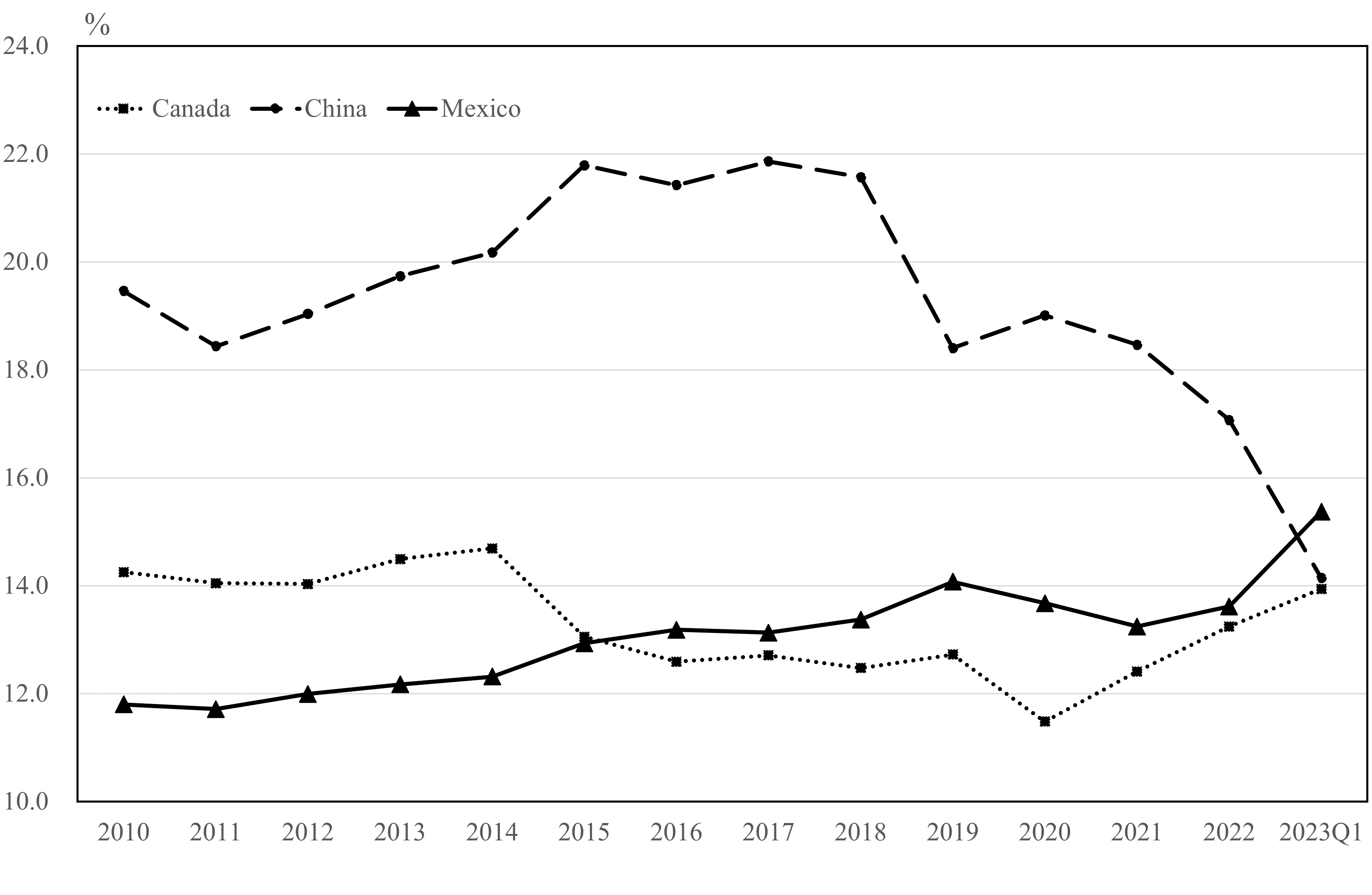
To investigate whether the USMCA leads to the diversion of US imports from China to Mexico, we first evaluate the trade diversification of the US. If such trade diversion occurs, we should observe that the US is undergoing a more diversified trade partnership, which could be measured by the shift in its import source structure. As shown in Figure 1, although reaching 21.9% in 2017, China’s share in the US goods imports has plunged to 14.1% in 2023Q1. By comparison, Mexico’s share gradually increased over the last decade, from 11.7% in 2011 to 15.4% in 2023Q1, which is 1.3 percent point greater than China’s current position.
The shift that the US purchases more from Mexico than from China might roughly support the diversification of the US imports, while empirical evidence comes from the evaluation by Dahlman & Lovely (2023) [4]. They used data from CEPII’s BACI dataset to calculate a measure of import concentration, the Herfindahl-Hirschman index (HHI), for the US in both 2010 and 2021. Table 1 reveals changes in import concentration, measured by the HHI differences, for the US in each type of manufactured good. While the concentration in low-skill goods imports increased by 9% from 2010 to 2021, the other three types of manufactured goods imports have become more diversified, with the concentration level decreasing by 37% for labor-intensive goods, by 4% for medium-skill goods and by 20% for high-skill goods. As argued by Dahlman & Lovely (2023) [4], the diversification of sources for labor- and resource-intensive manufactures was due to a shift away from China, which provided the US with 43% of these imports in 2010 and only 31% in 2021. Moreover, US sources of high-skill and tech-intensive manufactures also diversified, mostly away from China. As a result, from 2010 to 2021, the US diversified its imports by 14.5%, primarily due to the diversion away from China, which occurred after 2018, when the Trump tariffs were levied.
3. Mexico Relies on Chinese Suppliers to Export to the US
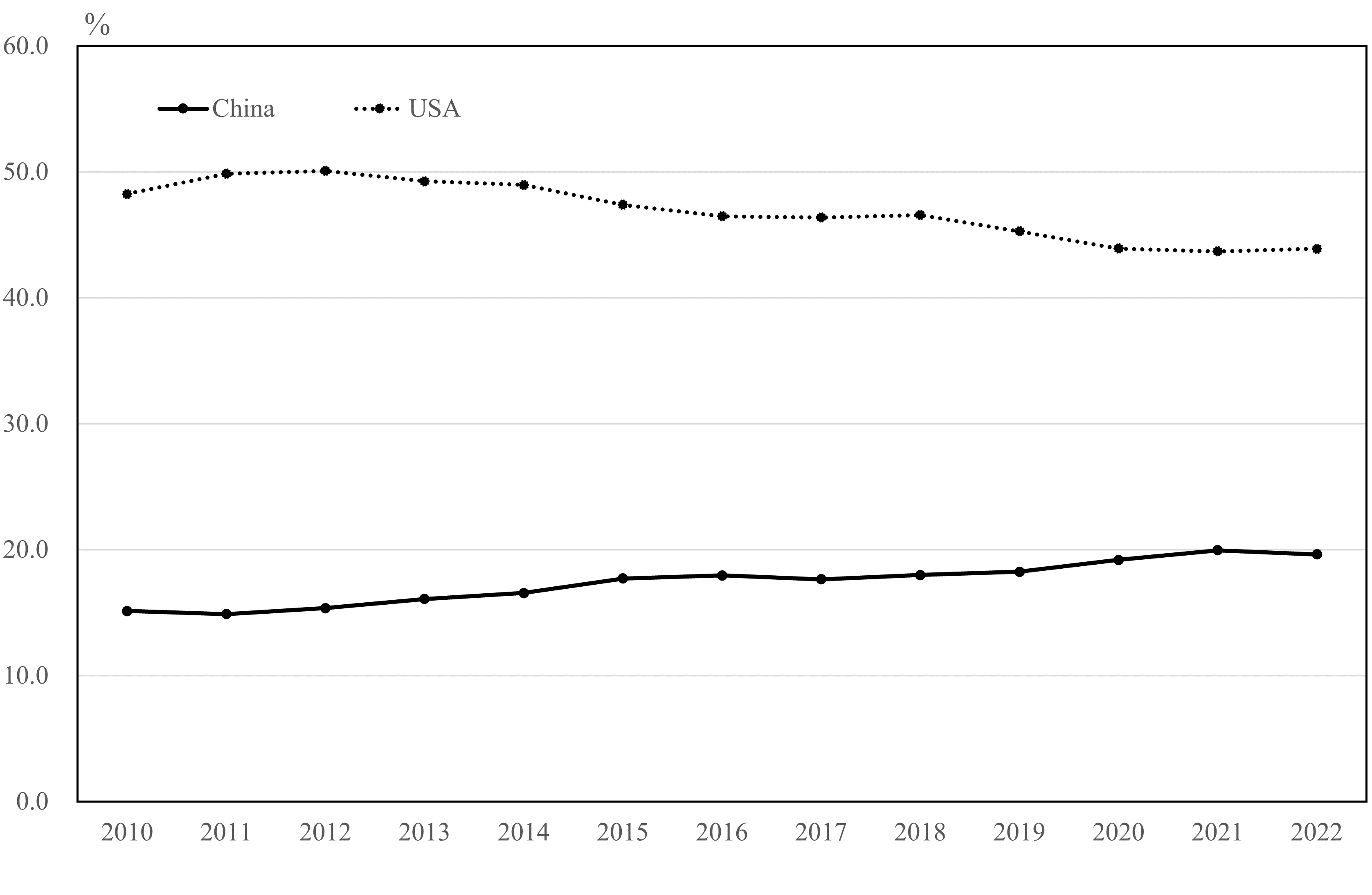
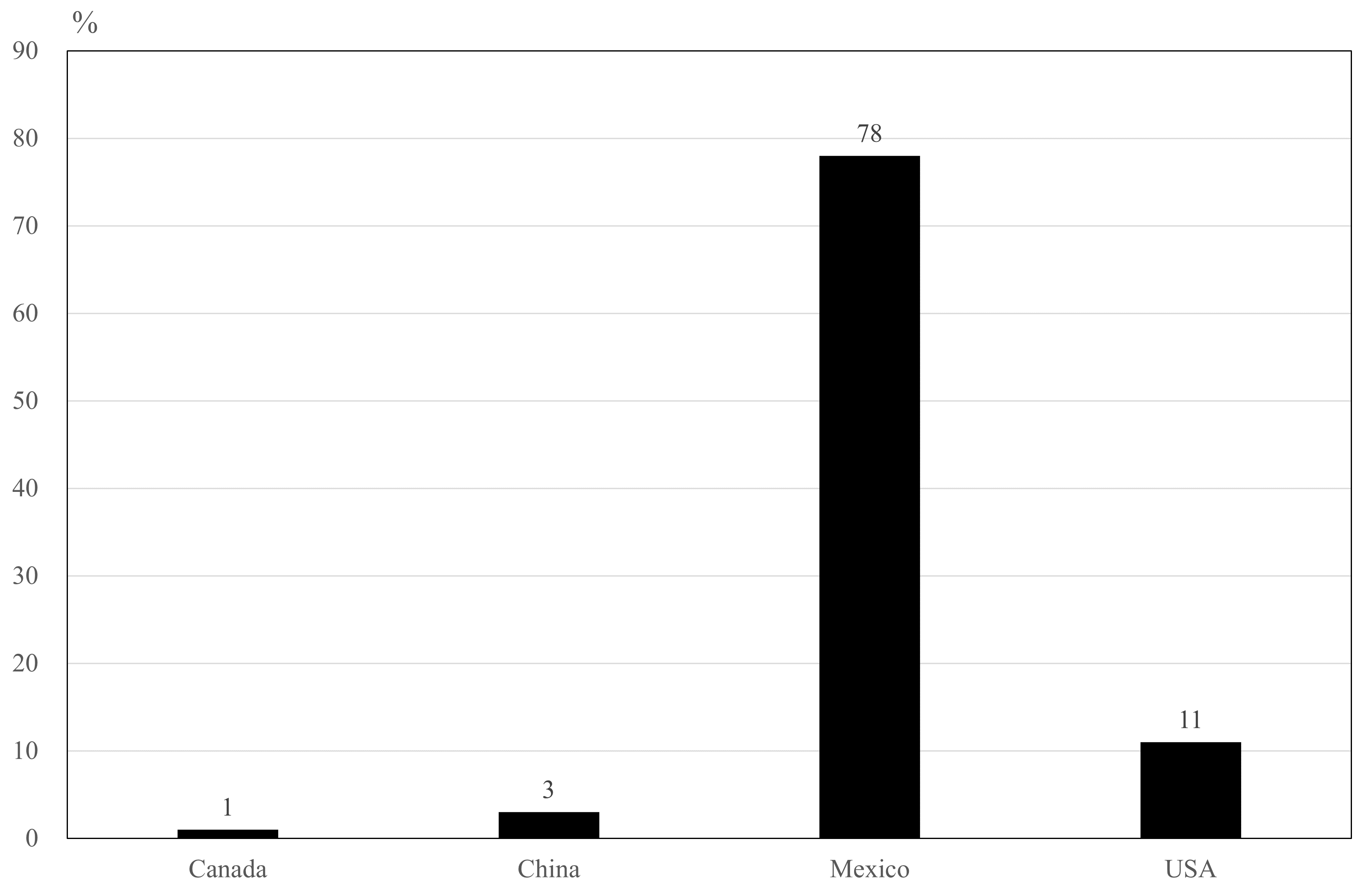
The US import diversion away from China might create a historic chance for Mexico to fill in China’s role in US supply chains. Notably, China’s share in Mexico’s total goods imports has increased from 14.9% in 2011 to 19.9% in 2021 and 19.6% in 2022, as shown in Figure 2. Moreover, Mexico’s domestic consumption is exceedingly independent of the value added originated in China when we look closely at the data from the Trade in Value Added (TiVA) Database by the OECD.Stat. As shown in Figure 3, in terms of the value-added share of Mexico’s total consumption in 2022, China only accounted for 3%, while Mexico generated 78% of the value added generated by itself, suggesting that Mexico can use most of the Chinese value added for the country’s exports.
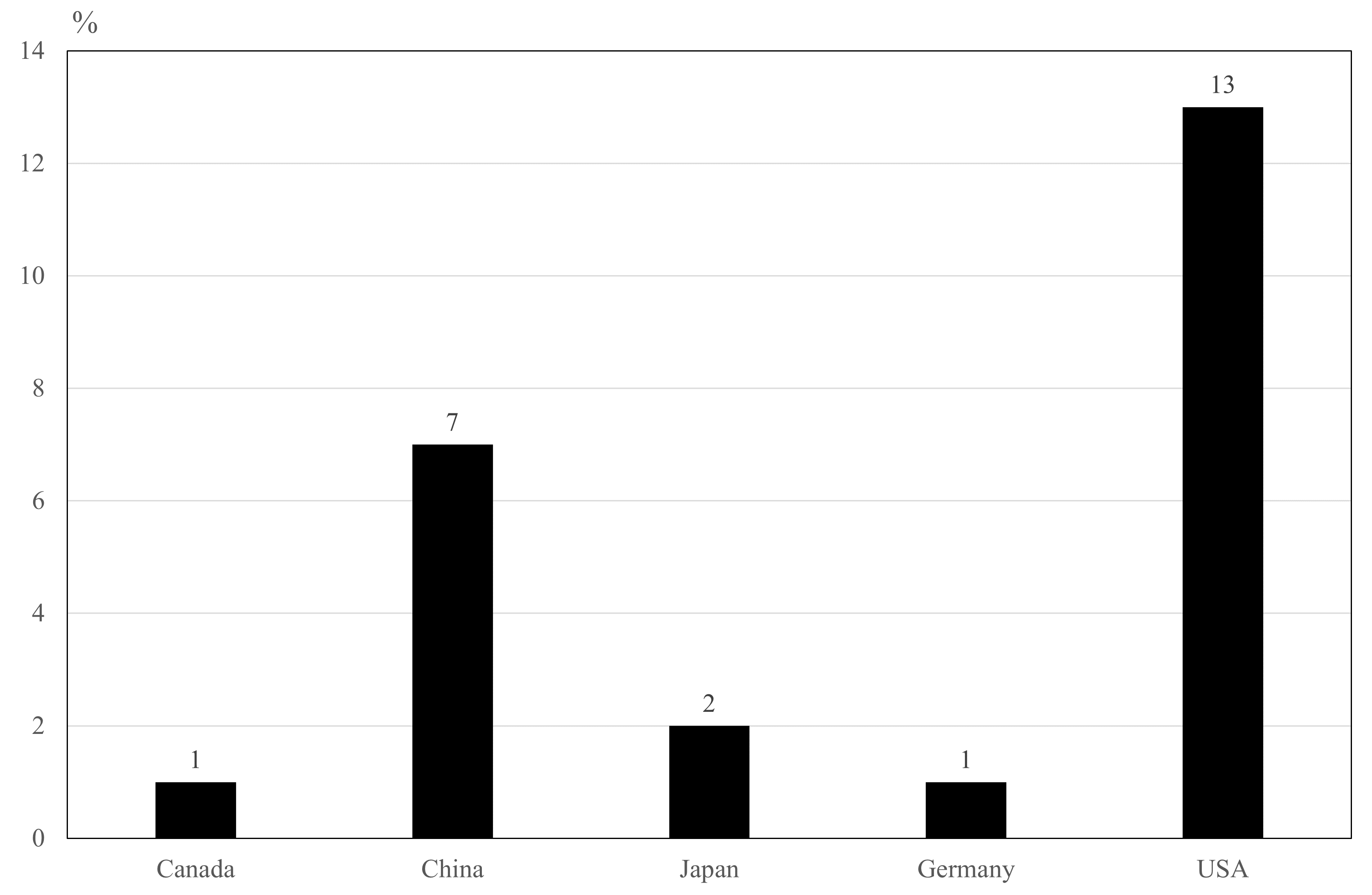
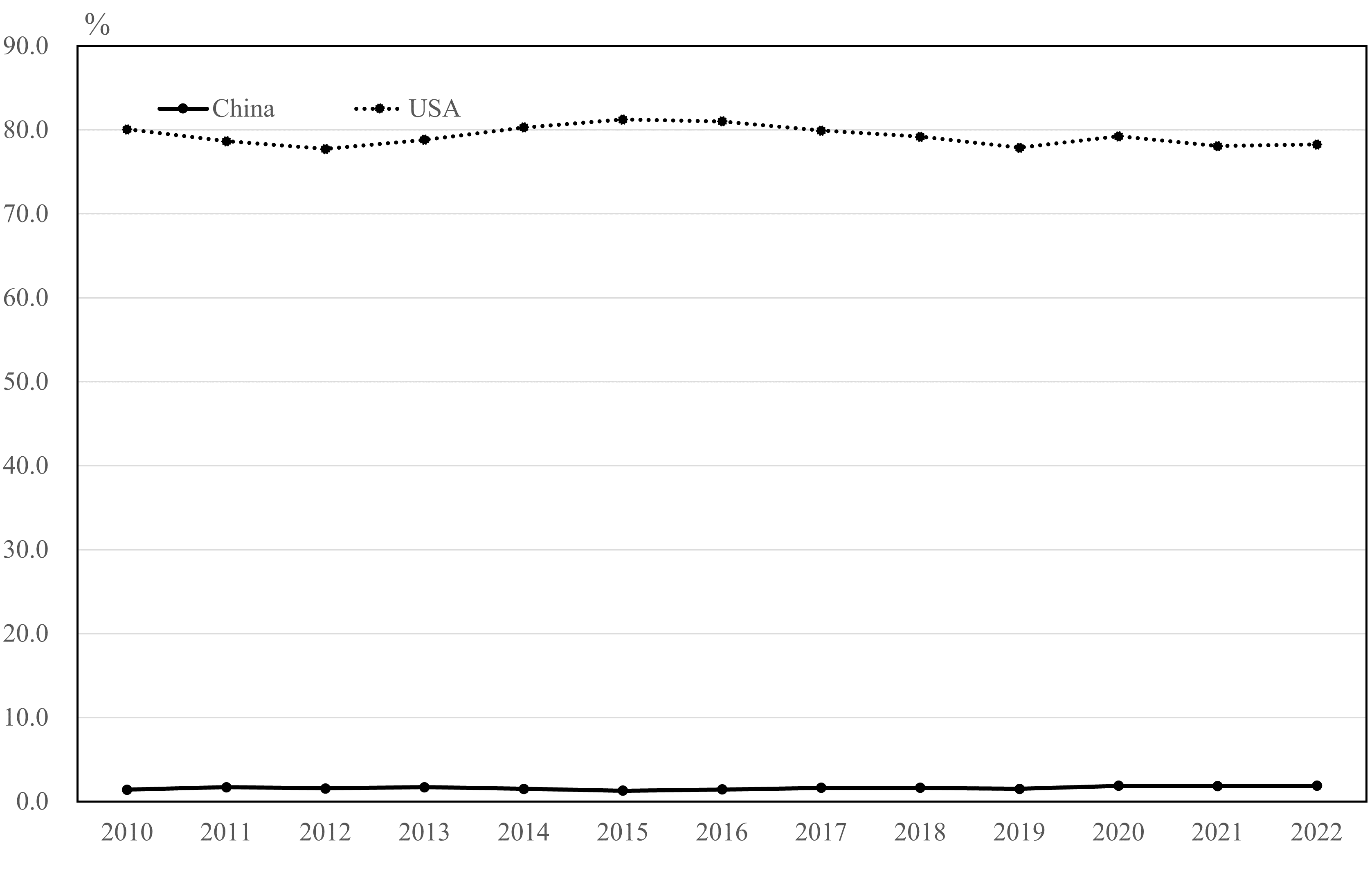
Indeed, Mexico’s global value chains depend highly on value-added from China. As shown in Figure 4, China contributed 7% of the total value added to Mexico’s gross exports. China’s share is only smaller than America’s share of 13% but more significant than the share of Canada, Japan, and Germany. Besides, Mexico has a limited number of exports to China. As shown in Figure 5, China’s share in Mexico’s gross exports ranges from 1.3% in 2015 to 1.9% in 2022. By comparison, the US has been taking up almost 80% of Mexico’s exports before and after the USMCA came into effect in 2020. In sum, by exploiting Chinese value-added, Mexico can maintain its large exports to the US and expand its role in the disrupted China-US value chains.
However, is Mexico’s manufacturing capable of replacing the role of their Chinese counterparts in the US supply chains? The answer is far from positive. Table 2 shows the domestic value-added content of China’s and Mexico’s gross exports to the US in 2020. In gross manufacturing exports, Mexico is smaller than China by 57.2%. Mexico also plays a severe laggard role in most of the medium-skill and high-skill manufacturing sectors, such as chemicals, computers, electronic and electrical products, and machinery, while surpassing China by 46.1% in food products, beverages, and tobacco, a low-skill sector. Therefore, Mexico is now yet to function as a capable and technology-intensive supplier, which role China has played for the US.
4. Chinese Automakers Invest in Mexico to Enter the US Market
Nevertheless, Mexico has its strong suit over China regarding car exports to the US. As shown in Table 2, it is noteworthy that Mexico is 3.6 times as large as China in transportation equipment, most of which comes from Mexico’s substantial exports of motor vehicles, trailers, and semi-trailers. Indeed, Mexico has been a critical car exporter to the US, which explains why China is becoming more interested in investing in Mexican car manufacturing.
Since the beginning of 2023, Chinese auto firms have followed Tesla to Mexico and from there to the US. In February, Mexican President Andrés Manuel López Obrador announced that a new Tesla factory would be built near Monterrey in the northern state of Nuevo León. Investment in the plant will exceed $5 billion and have an annual production capacity of 1 million electric vehicles (EVs). The Mexican government also allows Telsa to sidestep steep tariffs imposed on imports from China and unfavorable fluctuations in logistics costs.
Currently, at least 26 Chinese auto firms already have a presence in Mexico or have announced plans to expand their presence in the auto sector, mainly in the Monterrey area. Table 3 shows parts of investment projects by Chinese Automotive OEMs in Mexico. Based on the estimation by Yi (2023) [5], those Chinese projects can lead to 418 million USD of FDI inflows to Mexico. Larger manufacturers, such as Xusheng Group, set up in Mexico in 2015, while smaller OEMs recently began to establish subsidiaries, such as Zhejiang Yinlun Machinery and Joyson Electronics, in 2021 and 2022.
Foreign automakers’ internationalization efforts are poised to face substantial headwinds from the political climate in the US Since March 2023, US IRA consumer tax credits for EVs mandate that at least 50% of the components of an EV battery must be made in North America, and 40% of minerals used to make the batteries must come from domestic sources or countries with Free Trade Agreements with the US Both hurdles will rise incrementally through 2029, effectively shutting out Chinese carmakers that source Chinese batteries and minerals.
However, Chinese automakers could technically still qualify for IRA credits if they choose to lease their EVs to US consumers, even if the vehicles contain non-IRA-compliant materials. This loophole means Chinese automakers could pursue a leasing strategy in the US market going forward. Moreover, to Chinese auto firms, Mexico’s tariff rate, VAT, and DTA on parts and accessories of the motor vehicles imported from China is much lower than the total customs charged by the US government. Hoods, lithium batteries, and electrical motor cars do not pay any import duties into Mexico. Chinese companies that have moved to Mexico need to source upstream materials and equipment from China, further strengthening Mexico’s reliance on Chinese supply chains.
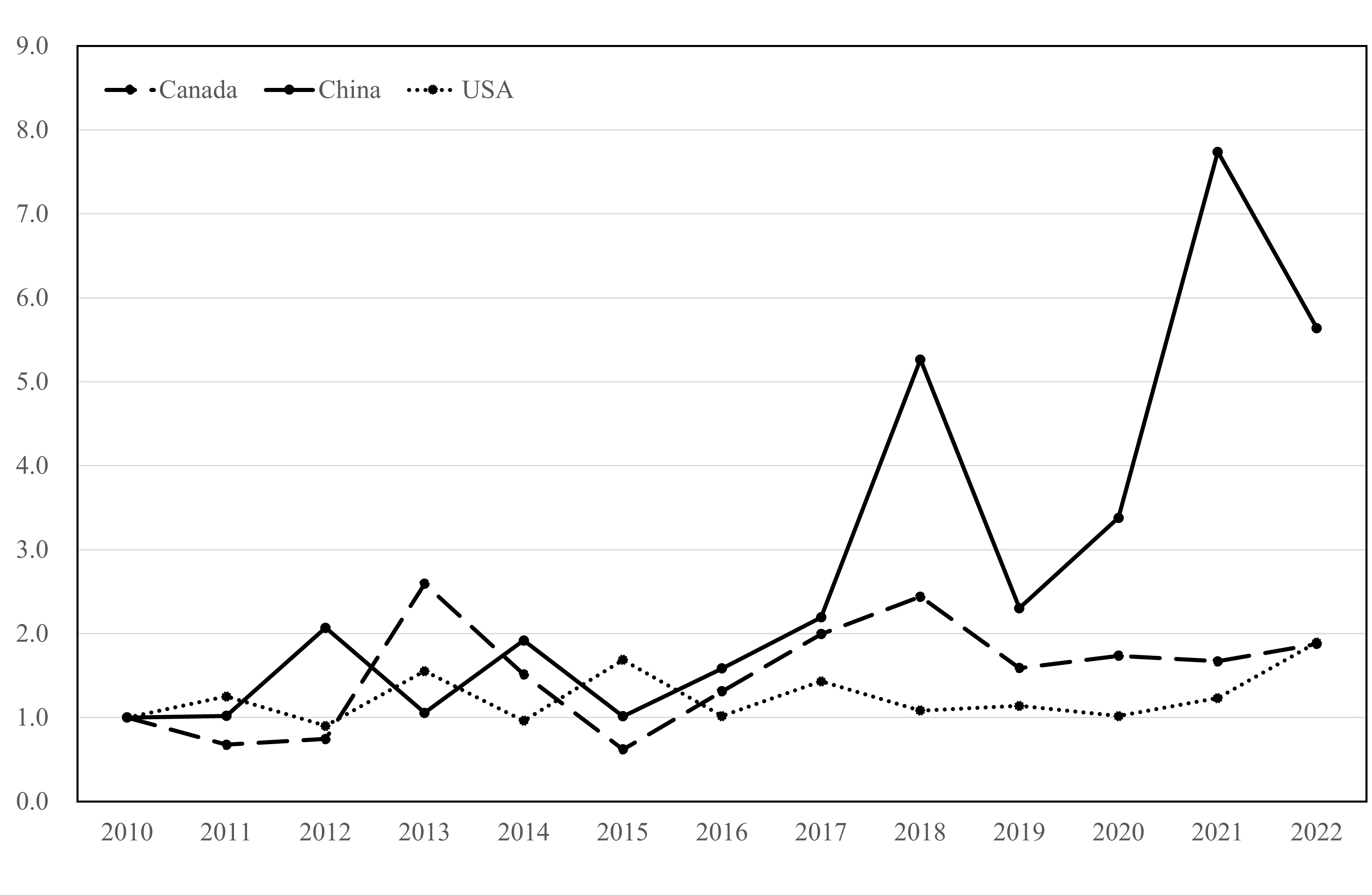
To facilitate Chinese auto firms’ going out, the Chinese government offers financial incentives that reduce risk and lower cost hurdles for Chinese firms to expand overseas, as shown in Table 4. These include favorable loans and overseas investment insurance, tax breaks, and simplified regulations that create a conducive environment for internationalization. These measures suggest that reshoring to Mexico and other locations is at least sanctioned, if not actively encouraged, by China’s central government. With the help of those policy efforts, Chinese FDI inflows in Mexico have been at a faster pace than Canada’s and the US counterparts, as shown in Figure 6.
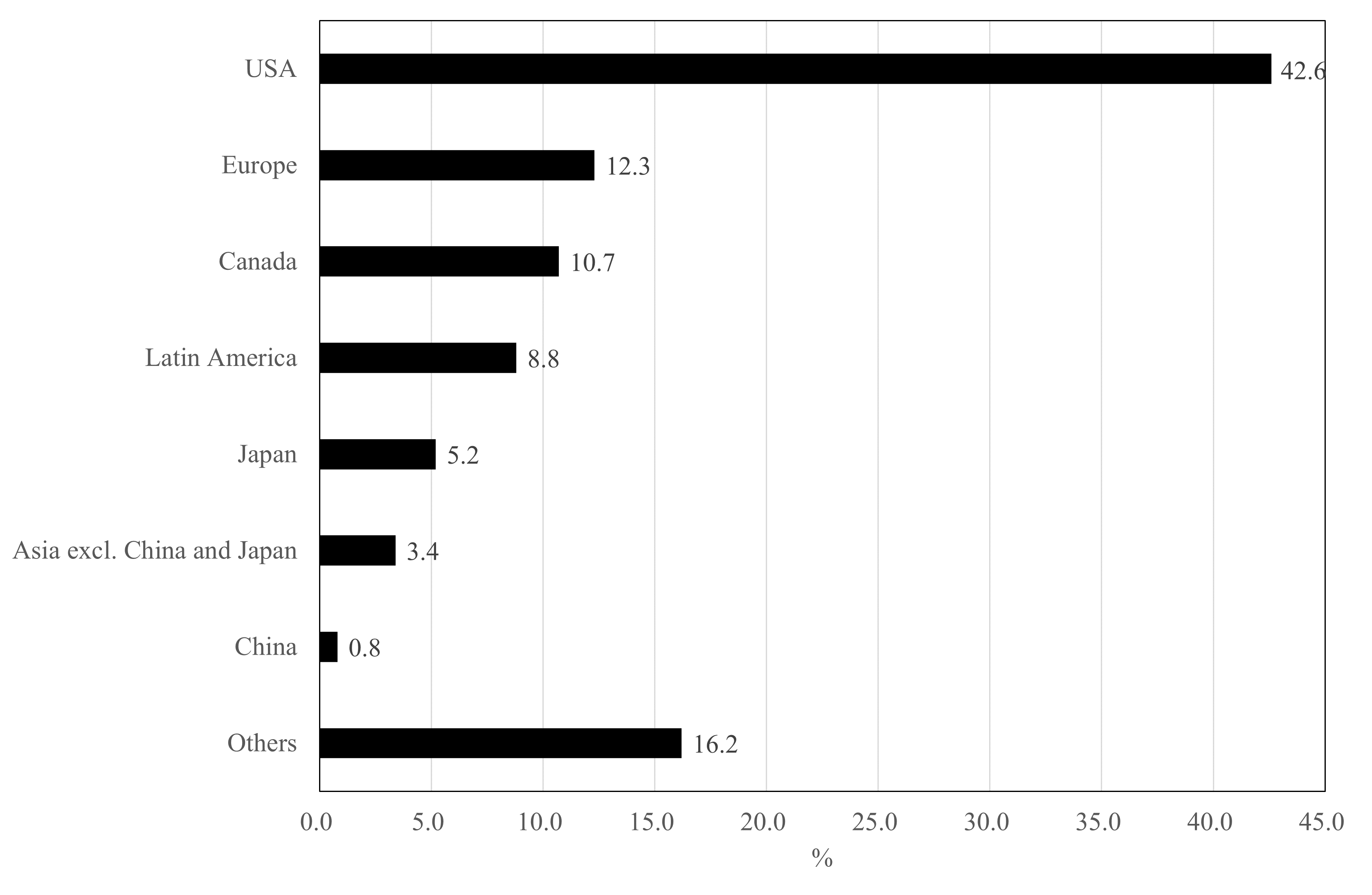
Although China and Mexico have developed a stronger trade and investment relationship, the two countries have no free trade agreements. It is fundamentally because of Article 32.10 of the USMCA, also known as the “Poison Pill”. As demonstrated in Table 5, this article is intended to deter the signatories from entering into a free trade agreement (FTA) with any "non-market country." The United States introduced the Poison Pill in the wake of the US-China trade war and was most likely directed at deterring Canada from entering into an FTA with China. However, the Poison Pill is an institutional obstacle for Mexico to negotiate an FTA with China, while China remains open to a free-trade agreement with Mexico 2. Without an FTA, China’s share in total FDI inflows to Mexico is likely to stagnate, accounting for only 0.8% in 2022, while the US is the largest FDI source for Mexico, accounting for 42.6% in the same year, as shown in Figure 7.
Furthermore, on August 16, 2023, Mexico raised import duties between 5-25 percent for goods under its 392 tax codes from countries without free trade agreements (FTA) with Mexico 3. These codes include steel, aluminum, bamboo, rubber, chemical products, oils, soap, paper, cardboard, ceramic products, glass, electrical materials, musical instruments, furniture, and more. Mexico’s hiking of import duties comes as China-Mexico trade and investment ties have continued to accelerate, which is very likely to result in China’s loss.
5. USMCA Benefits Mexico or China?
Under the trade framework of USMCA, the United States is promoting “nearshoring,” encouraging the relocation of overseas supply chains to Latin American countries in the western hemisphere to reduce dependence on supply chains from China. Mexico seems to benefit substantially from the nearshoring strategy of the US. In both 2022 and 2023, the Western Hemisphere Nearshoring Act was introduced in the US House of Representatives, aiming to legislatively drive the reshoring of supply chains to nearby countries such as Mexico. In August 2023, the Biden administration announced restrictions on US companies investing in China's advanced semiconductor industry. In the high-level economic dialogue held in the following September, the United States declared a bilateral cooperation in the semiconductor supply chain with Mexico, including establishing and integrating a regional semiconductor supply chain, improving the investment environment for regional semiconductor, and enhancing semiconductor engineer training 4. The United States hopes to elevate Mexico's industrial and technological capabilities through these measures and expedite the pace of replacing China.
However, for the United States, the USMCA may prove to be counterproductive in replacing China with Mexico. One prominent issue arises from the rules of origin stipulated in the USMCA, with a notable focus on the automotive sector. Reinsch (2022) [6] indicates that Mexican manufacturers must comply with the rules of origin to enjoy the tariff-free benefits of the USMCA, but this compliance also raises administrative and production costs for automotive manufacturers. While non-compliance with origin value rules would result in tariff payments, the trade facilitation policies of the USMCA might still keep actual tariffs lower than the additional costs incurred through compliance. In such cases, some Mexican manufacturers might reasonably reduce the production of components in North America and opt for cheaper components produced in China. Additionally, the USMCA has led to ongoing disputes between the United States and Mexico regarding labor treatment, energy industry regulations, and the business environment.
Moreover, even after the US imposition of tariffs on imports from China in 2018, the scale of US-Chinese trade not only did not see a significant reduction but instead grew against the trend. According to the UN Comtrade Database, the total value of US goods trade with China was $579.1 billion in 2019 and increased to $729.5 billion in 2022, with both imports and exports to China experiencing growth. Furthermore, the growth momentum of US-Chinese trade is not expected to weaken in the near future. Hogan & Hufbauer (2023) [7] predict that conservative estimates for US-Chinese trade in 2025 will reach $789 billion, and China's share of imports into the United States will remain stable. Additionally, Mexico's share of imports into the United States is gradually stabilizing and is expected to be 13.2% in 2025, even a 0.4 percentage point decrease from 2022. In contrast, by 2025, China's share of imports into the United States will reach 17.1%, close to the level in 2022. In other words, Hogan & Hufbauer's research indicates that whether it's imposing tariffs, nearshoring, or providing more trade facilitation to Mexico under the framework of the USMCA, these measures may bring short-term impacts to US-Chinese trade but are unlikely to change the high dependence of the two countries' industrial chains. At least until 2025, China’s share in US imports is expected to maintain an overall upward trend despite Mexican export growth to the US in terms of value under the USMCA.
6. Conclusion
A Mexico-China competition in US supply chains is more a myth than a fact. The US trade diversion from China to Mexico is still yet to come under the USMCA, although the sources of US supply chains have become more diversified.
This paper shows that the current shift in the US supply chains is very likely due to the growth in Mexico’s traditionally strong export sector, namely motor vehicles, and China’s increasing investment in such a fast-growing Mexican manufacturing sector in recent years. However, this shift is not significant enough for Mexico to become a capable substitute for China in the US supply chains. Moreover, Mexico’s exports to the US concentrate on low-skill sectors, while China’s mainly consists of high-skill goods. Mexico therefore has a long way to go to update its industry if it would like to expand its role in US supply chains. Therefore, the “trade diversion” strategy alone is insufficient to support Mexico’s role in reducing the US supply chain dependence on China.
Therefore, if the United States wishes to further expand Mexico's footprint in the supply chain, it needs to support Mexico in achieving industrial upgrading. Thus, strengthening the US-Mexico cooperation in the semiconductor field is a case in point. However, for Mexico, the more significant opportunity may lie in how to fully leverage direct investments from China to drive the overall development of technology-intensive industries and value chains, rather than confining itself to the few cutting-edge areas of interest to the United States. This approach may align more closely with Mexico's national development interests. However, the industrial upgrading driven by Chinese investment will, in turn, reinforce Mexico's dependence on the supply chain in China, indirectly weakening a sense of security in the “trade diversion” strategy that the United States seeks for its supply chain.
Notes
1 Jourdan, Adam, (2017). "China open to a free-trade agreement with Mexico: Xinhua.”Reuters. https://www.reuters.com/article/us-china-mexico-trade-idUSKBN19K01Z.
2 For details, refer to “Remarks by President Trump at Signing of the U.S.-China Phase One Trade Agreement.” https://trumpwhitehouse.archives.gov/briefings-statements/remarks-president-trump-signing-u-s-china-phase-one-trade-agreement-2/
3 Global Times. (2023). “China calls on Mexico to exert caution in raising import duties on non-FTA economies.”Global Times. https://www.globaltimes.cn/page/202309/1298191.shtml.
4 On September 29, 2023, senior government officials from the United States and Mexico held the third meeting of the "2023 U.S.-Mexico High-Level Economic Dialogue" in Washington. The joint statement following the dialogue is available on the U.S. Department of Commerce's website under Joint Statement Following the 2023 U.S.-Mexico High-Level Economic Dialogue. For details on the collaboration plan regarding the semiconductor supply chain discussed at the meeting, please refer to the U.S. Trade Representative's “FACT SHEET: 2023 U.S.-Mexico High-Level Economic Dialogue.” Relevant links: https://www.commerce.gov/news/press-releases/2023/09/joint-statement-following-2023-us-mexico-high-level-economic-dialogue; https://ustr.gov/about-us/policy-offices/press-office/fact-sheets/2023/september/fact-sheet-2023-us-mexico-high-level-economic-dialogue
References
- Dai, M., Yotov, Y. V., & Zylkin, T. (2014). On the trade-diversion effects of free trade agreements. Economics Letters, 122(2), 321-325.[CrossRef]
- Mattoo, A., Mulabdic, A., & Ruta, M. (2022). Trade creation and trade diversion in deep agreements. Canadian Journal of Economics/Revue Canadienne D'économique, 55(3), 1598-1637. http://doi.org/https://doi.org/10.1111/caje.12611[CrossRef]
- Viner, J. (1950). The Customs Union Issue. Carnegie Endowment for International Peace.
- Dahlman, A., & Lovely, M. E. (2023). US-led effort to diversify Indo-Pacific supply chains away from China runs counter to trends. Washington, DC: Peterson Institute for International Economics.
- Yi, O. T. J. (2023). Chinese auto firms follow Tesla to Mexico, and from there to the U.S. The China Project. Accessed on 2023.11.2. https://thechinaproject.com/2023/07/03/chinese-auto-firms-follow-tesla-to-mexico/
- Reinsch, W. A. (2022). USMCA Automotive Rules of Origin: Economic Impacts, Competitiveness Effects, and Relevance. Statement before the United States International Trade Commission. Accessed on 2023.11.2. https://www.csis.org/analysis/usmca-automotive-rules-origin-economic-impacts-competitiveness-effects-and-relevance
- Hogan, M. & Hufbauer, G. C. (2023). Despite disruptions, US-China trade is likely to grow. Peterson Institute for International Economics Policy Briefs 23-14. Accessed on 2023.11.2. https://www.piie.com/sites/default/files/2023-10/pb23-14.pdf