

There is an ongoing debate regarding how to feed Sub-Saharan Africa's fast rising population in the long run, as well as the implications for food security. To maintain food security, various strategies have been recommended, including a focus on the significance of diversifying and improving people's diets. Proposals have been tabled elsewhere with a primary focus on enhancing agricultural inputs and technology adoption in order to increase agricultural production and productivity, hence strengthening food security. The current opinion piece attempts to contribute to this debate by examining smallholder agriculture and its role to African food security. This discussion proposes a future paradigm shift toward a gendered climate-smart smallholder agriculture and food production and security conceptual framework based on the promotion and development of smallholder agriculture and food production and security. Therefore, it's predicated that the micro-livestock-centered approach can remodel smallholder agrarian households and communities toward a gender-inclusive global climate change adaptive smallholder agriculture to strengthen production, supply, and food security in Sub-Saharan Africa. For Africa, today’s predicament is to ensure food security for the anticipated rapid population expansion, while on the other hand handling an overall net adverse effect of worldwide global climate change, and increased socio-economic ills associated with gender inequality in smallholder agriculture and ensuring long-term agriculture sustainable development. The failure to address gender inequality in smallholder agriculture and food production and pontificate of global climate change effect has thrown Sub-Saharan Africa into a state of perpetual food scarcity and insecurity because of low agricultural productivity and food supply, and by force of circumstances exposing the agricultural communities and its people to extreme poverty and nutrition and food insecurity. Therefore, it's predicated that the micro-livestock-centered approach can remodel smallholder agrarian households and communities toward a gender-inclusive global climate change adaptive smallholder agriculture to strengthen production, supply, and food security in Sub-Saharan Africa. For this purpose, this discussion proposes a future paradigm shift towards a gendered climate-smart smallholder agriculture and food production and security conceptual framework hinged on the promotion and development of the micro-livestock and/or unconventional animal species sub-sector to strengthen food security on the continent. Overall, the discussion emphasizes the importance of taking immediate action to alleviate the negative effects of climate change and address gender inequality through promotion of micro livestock to assist in the development of long-term adaptation measures to maintain smallholder agricultural productivity.
It’s time for reimagining the future of food security in sub–Saharan Africa: Gender-Smallholder Agriculture-Climate Change nexus
September 25, 2022
December 18, 2022
December 26, 2022
December 28, 2022
This is an Open Access article, distributed under the terms of the Creative Commons Attribution 4.0 International License (http://creativecommons.org/licenses/by/4.0/), which permits unrestricted use, distribution and reproduction in any medium or format, provided the original work is properly cited.
Abstract
1. Introduction
Food security describes the character, quality, food access, and security of the food supply [1]. While on the other hand food insecurity is categorized as inadequate food consumption, inadequate food access, and vulnerability to subsistence mechanisms that produce sufficient food regularly and are not resilient in shock [2]. Sub-Saharan Africa's food insecurity has surged amid the rapid population increase including global climate change adversity effect on agriculture, while prevalent gender-based inequalities have negatively affected agriculture productivity and compromised communities’ climate resilience aspirations hence spurring the continent further into severe food insecurity. Food insecurity, climate and environmental changes, and gender inequality in agriculture, coupled with rapid population growth, low food supply, and a complex link to development, dominate the global sustainability debate. At present food insecurity, gender inequality, and global climate change appear to be the foremost deeply interlinked socio-economic and environmental conundrums encountering Sub-Saharan Africa [3]. These relentless challenges exacerbate food insecurity in the small-scale farming sector of most developing countries due to lack of resources to deal with and adapt. However, the big picture is clear: About 2 billion people are food insecure because they fall short of one or several of FAO’s dimensions of food security [4]. And to make sure food security within the future on the continent, there must be an inquiry for brand spanking new ways during which these effects might be mitigated and where current food production levels will have got to be increased by a minimum of 70% [5] to sustain population food demand.
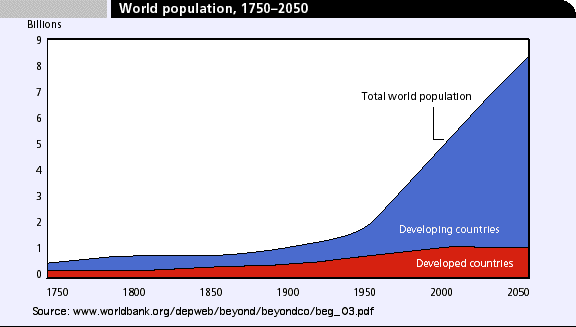
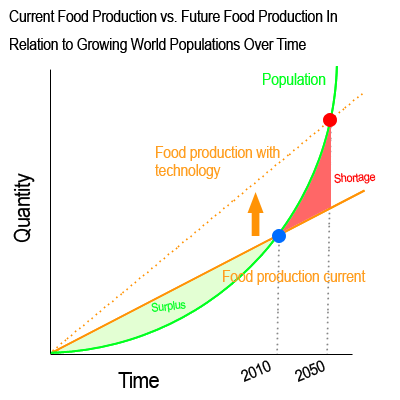
Population pressure is anticipated to be the primary driver of agricultural food demand, hence the necessity to spice up food production to match the rapid increase on the continent. By 2050, Africa is going to be forced to deal with the most important population surge, which is approximated at 1.3 billion, believed to be highest with reference with other regions [6]. The population is predicted to continue growing up to 4.5 billion by 2100, hence the food demand, supply, and security look calamitous. Population demographic trends point towards surpassing both the standard and quantity of food supply to nourish the population (Figure 1) and this has been one of the main causes of food disparities on the continent.
Sub-Saharan Africa food insecurity is more likely to worsen because the continent is very vulnerable and has a low adaptive capacity to climate change [7], while the prevalence of gender inequality in agriculture has been the main explanation for low agricultural productivity on the continent. This scenario has been compounded by the fact that there's a gender dimension in agriculture and global climate change response and adaptation hence gender is the key unifying variable linking the varied facets of agriculture and climate change management. Understanding gender climate differentials and integrating diverse gender roles and specific dynamics into smallholder agriculture can significantly improve their food production outcomes and effectiveness [8] as a result strengthening food security status.
The smallholder agricultural sector plays a critical role in enhancing the availability of food and achieving food security in sub-Saharan Africa [9]. Nearly 95% of Africa’s agriculture is rain-fed; therefore, developing and promoting rain-fed small-scale farming may be a worthwhile approach for strengthening the food security apparatus in rural areas in Africa. More often than not, the majority of small-scale farmers struggle to cope and adapt to challenges associated with global climate change on agriculture and food security successively perpetual food insecurity. For this purpose, this discussion proposes a future paradigm shift towards a gendered climate-smart smallholder agriculture and food production and security conceptual framework supported the promotion and development of the micro-livestock and/or unconventional animal species sub-sector to strengthen food security on the continent.
2. Drawing a distinction of major factors in the proposed food security conceptual framework and their interrelationships
The major components of interest which influence the future status of food security in sub-Saharan Africa will include demographic changes in population, the gender dimension in agriculture and climate change, the direct and indirect effect of climate change on agriculture and lastly the agricultural specific activities to address gender bias and impart resilience in small holder agriculture in order to strengthen food security. The discussion will attempt to expound how these issues are important in future examination of food security on the continent.
2.1. Population dynamics, agriculture and food security
The growth in global population is approximated to have increased from 6.9 billion in 2010 to 8.3 billion in 2030 and to 9.1 billion in 2050, while food demand is expected to follow the same trend with a 50% increase by 2030 and a further 70% by 2050 [10]. However, the argument is that there is no much ado on the 70% increase in food supply as such for the 40-year duration, but much more of 70% being the increase in food supply to feed the explosive population growth globally. Differentiated population growth of developing countries with reference to developed countries is shown in Figure 1. There is no doubt that emerging economies will experience faster population growth than developed countries.
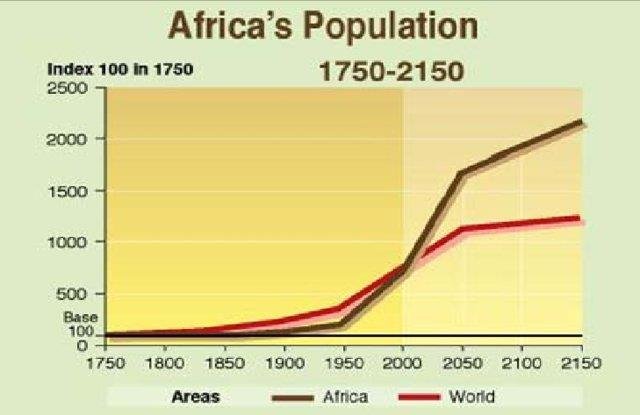
The world’s population is growing, but it is in Africa where this challenge is particularly serious. Sub Sahara’s is experiencing a 2.7 percent annual population growth rate, doubling the South Asia and Latin America of 1.2 and 0.9 percent, respectively [11]. The United Nations predicted the sub Saharan Africa’s population will hit a 1.16 billion mark in 2015, while doubling by 2050 [5]. For SSA population growth is predicted to continue to be the primary driver of overall agricultural food demand. Figure 2 shows the population trend in Africa which is expected to double through 2050.
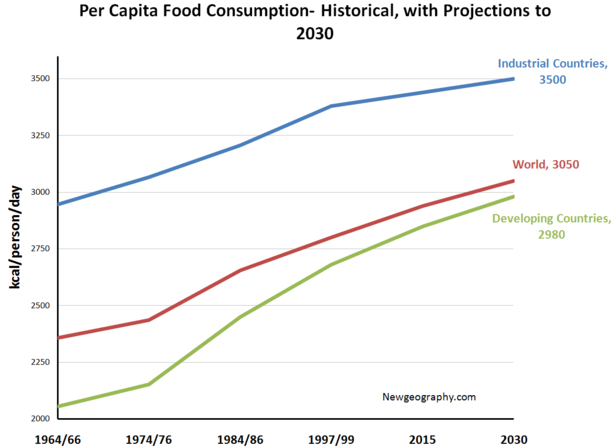
The projected large world population through 2030 up to 2050 discussed above has received a great deal of attention in line with implications on world food demand [5]. Food demand is expected to increase in response to rapid population growth [12]. Figure 3 shows the projected increase in per capita food consumption in developed and underdeveloped countries. However, this is on the background that food production in most of SSA has been on the decline (Figure 4). Africa seem not to produce adequate food to feed the growing population. Africa’s rapid population growth and decline in food production has translated into perpetual food insecurity, impacting negatively on the region’s targeted sustainable development. Figure 4 shows the most likely scenario of food security status in Africa. At present 20 percent of all residents in Sub Saharan Africa are considered and 277 million people out of the continent’s 1.28 billion population faces [13], while in 2019, 21.3 percent of the Sub-Saharan Africa population experienced severe food insecurity [14].
While rapid population growth is a challenged, the disturbing fact is that food production on the continent is already under the risk from a couple of multiple stressors, namely, scarcity of fresh water, soil depletion, and climate change. Over the past 30 years, the area of agricultural land has increased (from 166 million ha in 1970 to 202 million ha in 1999) at top notch value to the environment. But those efforts had been absorbed through fast population increase. During the equal period, the number of undernourished people has doubled (202 million people in 1999- 2001 [15].
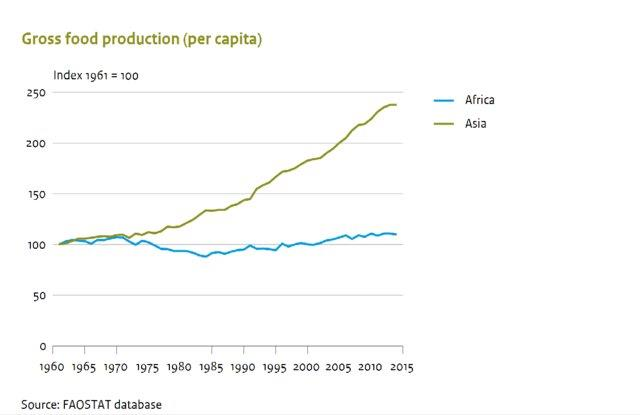
Africa's agricultural productivity is low, averaging three hundred to 500 kg / ha in comparison to 2.5 tons / ha in the United States, for example. To a first extent, sunken yields are an end result of poverty and food insecurity [16]. Figure 5 indicates how Africa features in the world according to capita food production; it's been the least in the worldwide food productiveness landscape.
Because of low agricultural productivity, Africa holds the biggest percentage of food -insecure population, with one in 4 persons being undernourished and sixteen percentage of the populace stays undernourished [17]. It is expected that if modern-day food insecure tendencies continue, the share of hungry population within the continent might be 13% - shy of the focused 11.8% mark (1/2 of the anticipated 23.6% discerned from 1990-1992. Latin America and East and Southeast Asia have made dramatic upgrades to reduce their local starvation rates, as Sub-Saharan Africa lags [18]. Roughly one-sector of all of us in sub-Saharan Africa stays undernourished. For years, many pundits have puzzled why Africa appears an increasing number not able to feed itself, no matter having lots of the world final utilized arable land. With the aforementioned state of affairs farmers on the continent are going to be pressured to provide more food as an end result setting putting pressure on already static natural resources – land, water, and biodiversity. The approximates that farmers should have produce 70 percent more food through 2050 to fulfill the food needs of the [19].
Besides population growth becoming an important driver of food demand, it has been noted that population growth will decimate the size of arable land capita in Africa as a result compromising agricultural productivity which is s already in dire stress. According to [20], the world's per capita cultivated land was 0.42 hectares in 1960 and is expected to decline to 0.19 hectares by 2050. In Africa, land sizes are expected to shrink further, reducing arable land per capita by 0.33 to 0.14 hectares. Therefore, there is really no possibility that a small farmer will cultivate more land. The use of available farmland is a burden of population growth. [21] rapid population growth is likely to be expected in densely populated rural areas. Small-scale farm entities are declining gradually, and this trend is inversely proportional to rural population density. Since the 1970s, the size of small-scale farm entities of rural areas of sub-Saharan Africa has declined by 30-40 percent [22]. Given the limited static supply of cultivable small scale farmland on the continent, the pure dynamics of the concentration of cultivated rural populations point to a reduction in average farm size [23]. This is how smallholder agriculture can benefit from micro livestock animal species.
Smallholder farming productivity is affected by on-farm drivers such as farm size, management skill and the financial capacity to invest in new technology. However, the scope for lifting productivity varies across agro-ecological regions depending on how well farmers are currently performing and how they respond to changes in the external environment. Productivity is also affected by external factors that are not under the control of farmers. These factors include seasonal conditions, technological progress, government policy, market conditions and access to infrastructure. An argument has been posed that large farms benefit from economies of size, where the average cost per unit of output declines as the size of the operation increases because fixed costs are spread more thinly. On the other hand, large farms may also be relatively efficient because the of new technologies investment is more likely to direct their efforts towards satisfying the needs of larger farms, and because large farms typically have the greatest financial capacity to invest in innovation.
With the increase in population densities in rural areas reducing farm size to sustain agriculture production obvious they will be severe decline of natural resources (soils, water, land, biodiversity, and many other ecosystem services) if not sustainable agriculture is practiced. Shrinking farms are associated with increasing land intensification. With the compelling food situation to meet food demand on the continent, declining small-scale farm sizes have been associated with the overuse of available agricultural land resulting in environmental degradation. For Africa, this may additionally mean sustainable intensification directed towards reduced land size with no expansion of land which is limited by population. Only small sized animal in a mixed agricultural production system this way, food self-sufficiency can be increased in the longer term.
Due to the pressing need to meet food demand on the continent, land shortage may be a straining broader structural food security transformation challenge in small-scale farming. Arable land size reduction, insufficient yield, and growing population is all the threats to attainment of food security. The sharp decline in farm size has occurred at a time when the sub Saharan Africa’s call for boost in food production is swiftly increasing. Agricultural productivity has declined in recent years, and one of the reasons for the imminent environmental problems in the region is the deterioration of land or the condition of natural resources, leading to the loss of its production capacity [24]. Over population accelerating over use of land resulting in rapid degradation has reduced agricultural and rangeland production, significantly damaged biodiversity and water resources, interrupted the smooth functioning of ecosystem services, and raised carbon emissions and climate change susceptibility. Due to limitations in the amount of cultivable land, [25] believed that the population's intrinsic capacity to grow exceeds the world's capacity to generate increases in food. In this case, the discussion proposes that promotion of small-sized animals’ (micro-livestock and/or unconventional animal species) are going to be a viable option on small-sized farms within the rural areas for sustainable smallholder agriculture and food production towards achieving food security. In this context micro-livestock and /or unconventional animal species refers to small indigenous vertebrates (goats, sheep, rabbits, guinea pigs, poultry (chickens, ducks, guinea fowls), etc.) and invertebrates (snails, rodents, lizards, insects, etc.) both domesticated and wild genetic animal resources which may be produced on a sustainable basis for food.
In this case, the discussion proposes that promoting of small-sized animals (micro-farm animals and/or unconventional animal species) is a feasible choice for small-sized farms inside the rural areas for sustainable smallholder agriculture and food production closer to reaching food security. In this context, micro-farm animals and /or unconventional animal species refer to small indigenous vertebrates (goats, sheep, rabbits, guinea pigs, poultry (chickens, ducks, guinea fowls), etc.) and invertebrates (snails, rodents, lizards, insects, etc.) each domesticated and wild genetic animal resources which can be produced on a sustainable foundation for food supply. In this case, the proposition that promoting of small-sized animals (micro-cattle and/or unconventional animal species) is going to be a possible preference on small-sized farms in the rural areas for sustainable smallholder agriculture and food production inside the course of maintaining in food security.
2.2. Smallholder farming sector and food production in sub Saharan Africa
There has been an acknowledgment that the smallholder farming sector could be a key component of the continental agriculture developmental agenda [26], besides its promotion of local food crops and animal species which impact resilience within the African food systems. Irrefutably climate change has been a menace to the sustainability of smallholder agriculture and food production and security because it worsens an already precarious condition through climatic stressors like heat stress, droughts, and flooding phenomenon. On the opposite hand, there has been the under-performance of agriculture and food production partly because women, who are often an important resource in agriculture and food production face constraints that reduce their productivity hence Africa’s perpetual food insecurity. With the aforementioned facts, this proposition tries to contribute to the controversy on possible novel ways to tackle food insecurity in Africa by advocating for the promotion and development of smallholder micro-livestock farming as a pathway to handle food insecurity.
Smallholder farms constitute approximately 80% of all farms in SSA and use about 175 million people directly [27]. World Rural Strategy describes smallholder farmers as those with a marginal asset base, farming on but 2 hectares of arable land [28] which can be even smaller by 2050. Of significance, SSA typifies the worldwide most rural region, where over 60 percent of the population has inhabited rural areas since 2014 [5]. This is often on the background that the smallholder farmers and their entities remain the powerhouse of agriculture and food production producing the bulk of agriculture and food products and acting as a social safety net in absence of other livelihood security [29]. There's a consensus that a smallholder-led agriculture and food production strategy could also be a viable option for agricultural development in Africa [30] hence later alone attainment of food security. A rush to determine “brobdingnagian-farms” with government discretionary allocation of vast tracts of land is unlikely to be the .
2.3. How do micro-livestock fit in the food security matrix for sub–Saharan Africa?
Micro-livestock as a subsector of animal agriculture that can strengthen food security in rural areas. Both macro and micro- livestock are an integral component of smallholder mixed production systems in Sub-Saharan African (SSA) countries, owing to the many livelihoods benefits they offer to smallholder farmer [31]. Smallholder agriculture is characterized by mixed crop-livestock systems; however, herd sizes are small and numbers of macro-livestock (i.e. beef and dairy cattle, buffaloes etc.) have declined, thanks to high population density in rural areas which has reduced land size [32]. The absolute role of livestock to rural livelihoods and food security for the rural majority has been clearly defined in Africa [33]. Livestock production acts as a core sector to unravel the present challenges on food shortage and insecurity to bring future sustainability to the continent. However, the adverse effect of global climate change on livestock production has been considerable. Meanwhile, global climate change may be a threat to livestock production due to the impact on the standard of feed crop and forage, water availability, animal and milk production, livestock diseases, animal reproduction, and biodiversity. Hence the promotion of micro-livestock into a broad picture of livestock development, seem to possess a promising future in addressing food insecurity, especially in Africa where land continues to be scarce, thanks to population expansion and therefore the adversity of global climate change.
Micro-livestock refers to small-sized animals that are reared for food. Sub Saharan Africa is well-endowed with a profusion of micro-livestock, and in the context of this discussion micro-livestock and /or unconventional animal species refers to small indigenous vertebrates (goats, sheep, rabbits, guinea pigs, poultry (chickens, ducks, guinea fowls), etc.) and invertebrates (snails, rodents, lizards, insects, etc.) both domesticated and wild genetic animal resources which may be produced on a sustainable basis for food. They're mostly reared in rural areas and want to be considered as a venture for lower-income and marginalized populations. Micro-livestock has a variety of appealing qualities compared to traditional livestock. Thanks to their numerical population advantage and deep embedment in rural communities, micro-livestock have continued to play a big role in smallholder farmers' livelihoods and food security. to not mention the requisite water and land, micro-livestock are often reared on less feed and use organic byproducts like corn leaves and stalks. Micro-livestock like chickens, rabbits, and guinea pigs take up little space and need little water. Most species during this class are often sourced locally and reared at very minimal costs. If any inputs are purchased could also be acquired, and their feed resources are easily accessible and low-cost. Also, micro-livestock are related to high productivity rates as a result of their small-sized bodies hence yielding prompter returns to the smallholder farmer.
Through survival, most micro-livestock are selected for genetic adaptation responses in additional marginal environments since time out of mind. Micro-livestock could also be a sustainable sort of animal production within the pending climatic adversity that has significant potential for alleviating malnutrition and food insecurity in Africa. Given the considerable hardy characteristics of micro- livestock, their promotion will go an extended thanks to facilitating livestock production dealing with the stressful environment as a result of limited resources. Micro-livestock can make a crucial contribution to increased food security due to its small scale, indigenous and versatile nature and since women are likely to be considerably involved within the routine management of the animals [34]. Rearing micro-livestock is a reasonable solution for ladies, children, and landless farmers since it generally requires little space - it can even be practiced within the corner of an area - and only needs basic equipment (a few cages) which is reasonable and straightforward to form for resource-poor farmers. the traditional large ruminants’ production has been facing multiple challenges as a result of rising human population, urbanization, and global climate change.
Micro-livestock keeping is central within the preclusion of widespread barriers that hamper from equal participation in agriculture and food production, by advancing their socio-economic opportunities, hence, taking a big role in smallholder agricultural and food production value-chain. The micro-livestock rearing is a sustainability concept that is predicated on establishing and maintaining the circumstances under which individuals and nature can subsist in productive harmony, that allow fulfilling the social, economic, and environmental demands for future generations. there's minimum gas emission in micro-livestock rearing. Micro-livestock rearing could become appropriate within the circumstances of smallholders and a valuable asset, especially for the poorest households for or her food security needs. Overall, micro-livestock present a promising entry-point for gender-balanced development initiatives, due to their potential to decrease poverty and improve human nutrition and food security in marginalized rural areas. The capacity of micro-livestock to convert feed to body mass exceeds that of huge traditional livestock like beef and buffaloes by orders of magnitude.
Livestock production has been given an overriding emphasis as one of the core sectors to solve the current challenges on food shortage and insecurity to bring future sustainability to the world over, however the negative impact of climate change on livestock production has been considerable. Meanwhile, climate change is a threat to livestock production because of the impact on quality of feed crop and forage, water availability, animal and milk production, livestock diseases, animal reproduction and biodiversity. Hence the promotion of micro-livestock into broad picture of livestock development, seem to have a promising future in addressing food insecurity, especially in Africa where land continue to be scarce due to population expansion and the adversity of climate change.
For micro livestock, through natural selection have been selected for genetic adaptation responses in more marginal environments since time immemorial. Micro-livestock may be a sustainable form of animal production in the pending climatic adversity that has significant potential for alleviating malnutrition and food insecurity in Africa. Given the considerable hardy characteristics of micro- livestock their promotion will go a long way to facilitate livestock production coping with stressful environment as a result of limited resources. Micro-livestock can make an important contribution to increased food security because of its small scale, indigenous and flexible nature and because women are likely to be very much involved in the routine management of the animals [34]. Rearing micro-livestock is an affordable solution for women, young people and landless farmers, since it generally requires little space - it can even be practiced in the corner of a room - and only needs basic equipment (a few cages) which is cheap and easy to make for resource poor farmers. However, the level of women’s participation at each stage of the livestock value chain is affected by a host of factors, which vary across countries and cultures, and include their access to resources like capital; their skills, capacities and ability to organize; and constraints on their mobility to access markets and information [35]. The conventional large ruminants’ production has been facing multiple challenges as a result of rise in human population, urbanization and climate change.
2.4. Climate change, agriculture and food security
[36] defines climate change as a differential state of the climate characterized by changes in the mean and/or the variability of its properties, and that persists for an extended period, typically decades or longer. Climate change is likely to contribute substantially to food insecurity in SSA, through an increase in temperatures, rainfall variations, and the frequency and intensity of extreme weather events, which may cause sudden reductions in agricultural productivity, leading to food insecurity [37]. There is uncertainty surrounding SSA agriculture and food production capacity to service population food demand through an expansion within the food supply and availability thanks to rapid population growth and adverse effect of climate change.
The SSA’s rural majority is poor operating on small farmer, as a result of this reason, too, smallholder agriculture will necessarily remain at the center of development strategies and programs for many decades to come on the continent. The consequences of global climate change on agriculture and food production are already evident on the continent. The adverse effects of climate change on agriculture and food production have had both directly and indirectly impact [7]. SSA saddled with rapid population growth inter-fused with the increased intensity of such environmental accounts as floods, droughts, extreme variability in temperature or rainfall often jeopardize food security. The sub-Saharan continent is as diverse because due to differentiated natural resources endowment, namely geography, cultures, and social/economic status – yet all still continue to experience the adversities associated with to climate change that has threatened their agriculture and food production capacity. Their captivated with agriculture a climate sensitivity sector has made them liable to global climate change [] observed that the vulnerability of African countries is aggravated to an oversized extent by dearth of adaptation resources, poor governance, lack of data and information, and therefore the already precarious hot and dry climatic climate.
Climate change is probably going to worsen food insecurity in Africa, through a rise in temperatures, rainfall variations, and also the frequency and intensity of maximum weather events, which can cause sudden reductions in agricultural productivity resulting in food insecurity [37]. Gender inequality notably limits the resilience and adaptive capacity of women, families, and communities to climate change [5]. Given the interrelationships between gender, climate change and agriculture, the response to climate change vis-à-vis the agricultural sector should therefore take into consideration gender dynamics and be gender-responsive. For Africa, today’s predicament is on the way to ensure food security for the projected population expansion while handling an overall net adverse effect of climate change, and increased socio-economic ills related to gender inequality and ensuring long-term sustainable development.
Understanding gender climate differentials and integrating diverse gender roles and specific dynamics into projects and programs can significantly improve their outcomes and effectiveness [8] in addressing food security. [3] proposed that gender, global climate change, agriculture food production and food security are interrelated and their dynamics are conglomerate, interlaced, and rooted in social, economic, and institutional factors. Their association contains a pertaining to the resultant outcome of smallholder agriculture and food security in Africa. Hence they should be understood as interrelated for the optimization of agricultural productivity. For this purpose, the current discussion proposes a future paradigm shift towards addressing food security in geographic region which is predicated on gendered climate-smart smallholder agriculture and food production conceptual framework that targets micro-livestock production in rural communities.
2.5. Gender, agriculture and food security
Gender dimension plays a key role in stimulating small-holder farming growth, especially in rural areas of developing countries where manual labour dominates production [40]. Gender can be described as the socially established roles in terms of individuals in a society. Poor agriculture performance, increased poverty also as malnutrition and food insecurity, are partly thanks to gender inequality in agriculture [28]. Traditional in smallholder agriculture labour gender division shows that women are in charge of food production. But women do not enjoy the same sociocultural status as men with reference to access to economic resources available during food production. For example, credit, input, advisory services, access to land or ownership is male-oriented. This variation and unequal gender participation has had implications for agricultural development, especially in sub-Saharan Africa where farm productivity is still low compared to other countries in the world [28].
Women are involved in over half the farm activities in many developing countries, bear most of the responsibilities for household food security, and contribute to household well-being through their income-generating activities [42]. Sub-Saharan African women produce up to 80% of agriculture and food products for household consumption and even selling in local markets. Predictions are that crop yields might increase by 20–30% and hunger reduced by 12–17% if there was no gender bias in access to agricultural resources [28]. Despite women farmers essentially feeding the African continent, they have remained largely in the background. The elemental question is how can we address this gender bias to boost the capacity of African countries to satisfy their food demand and offset the food insecurity.
Boosting of agriculture food production are positively influenced by uninterrupted participation of women to produce and supply enough food to meet the needs of fulfill the requirements of the rapid population food demand. Equitable access to and control over the land, credit facilities, extension services, and gender-sensitive agricultural technologies are a part of the holistic demand to think about for gender equity [43]. Inherent gender bias (such as lack of access to land, financing, markets, agricultural training, and education) in smallholder agriculture could be a major gender-specific obstacle that puts women at a major disadvantage to contribute to agriculture and food production for sustainable development.
Regards for gendered roles and relations is critical in boosting agriculture and food production and agricultural development initiatives, where gender equity is crucial for sustainable development and climate change adaptation [44]. This is often on the background that women play major role in smallholder agriculture providing a very important opportunity to positively impact food production and security during a changing climate [45]. Rural women specifically are reported to be at high risk of negative impacts from global climate change [46, 47, 48]. They have less access to agricultural resources like land, extension services, and inputs with which to adapt to climate variability, and since gendered social norms and roles can inhibit women's adaptive capacity [49, 50, 51, 52]. The assertion was that addressing gender inequality in agriculture requires major paradigm shift at institutional, policy, organizational, and resource allocation levels.
Despite the importance of livestock in smallholder livelihood, gender inequalities continue to persist. Considerable evidence from the literature on women’s roles in smallholder agriculture points to the very fact that gender inequality slows agriculture and food production hence eventually decelerating sustainable development. [52] argued that augmenting women’s empowerment by scaling women’s competencies to form decisions and exploitation of opportunities in agriculture is crucial for broad-based sustainable agricultural development in Africa. Also, overwhelming evidence points to the very fact that gender, climate change, agriculture food production, and food security are interrelated and their dynamics are heterogeneous, complex, and rooted in social, economic, and institutional factors [3].
Because of the critical role of women in the livestock sub-sector in agriculture, there have been more and more development programs tailor-made to address the gender-based constraints to achieve their intended goals. The process starts with the identification of the roles played by men and women in different livestock activities, and to what extent do men and women own different types of animal species. Access, control, and management of animal genetic resources in the micro-livestock category such as small ruminants and chickens, empower women and lead to an overall positive impact on the welfare of the household food security. The changes to societal attitudes and cultural beliefs around gender roles, norms and female empowerment at the community and household levels have been slow especially due to systemic gender barriers fueled by deeply held and persistent stereotypes [54]. The modifications to societal attitudes and cultural ideals round gender roles, norms and women empowerment on the network and family levels were gradual particularly because of systemic gender boundaries fueled with the aid of using deeply held and chronic stereotypes.
In many poor resource communities, as an example cattle and larger animals are owned by men, while smaller animals – like goats, sheep, pigs, and backyard poultry kept near the house – are more a woman's domain. Understanding gender climate differentials and integrating diverse gender roles and specific dynamics into projects and programs can significantly improve their outcomes and effectiveness [8] in addressing food security. Generally, women and men’s involvement in different types of agricultural work depend mainly on the local customs as well as the social, cultural, and religious influence in most African communities [].
Gender integration across national policy processes is critical to ensure effective implementation of climate change adaptation intervention in smallholder agriculture. Gender disparities in climate knowledge and livestock production adversely affect sustainable food security hence addressing inequalities will promote food security. For rural communities to be able to adapt to climate change is dependent on their perception and knowledge of climate change among men and women. If there is knowledge differential on climate change its implications will be felt in food security. The current Food Security Conceptual Framework is an abandonment of the previous assumptions on addressing gender inequality, food insecurity, and climate change adversity where these factors were taken as isolated socioeconomic and environmental variables. This approach has posed challenges because the aspects of the socio-cultural, economic and environmental nature of communities are interdependent hence the requirement ascertain a holistic approach in addressing these adversities on how they influence food security. The micro-livestock as a sub-sector of animal agriculture-centered approach can transform smallholder agrarian households and communities toward gender-inclusive climate change adaptation in agriculture to reinforce food security in Sub-Saharan Africa.
3. Proposed Food Security Conceptual framework for sub–Saharan Africa
Figure 6 depicts the major 4 components of food supply sources that sustain food security, while Figure 7 presents the proposed Conceptual Framework diagram defining the gender-micro-livestock-climate change nexus in enhancing food security. The proposition is predicate on the understanding that smallholder farmers are the foremost stakeholders in agriculture and food production on the continent. Most rural households rely on agriculture within the bounds of their livelihood and micro-livestock commonly constitutes an indispensable part of their agriculture and food production system. It should be noted that the proposed food security conceptual framework’s emphasis on micro-livestock does not imply that the opposite sources of food security aspects or diversification are not important. The perspective is that small-sized animal species are seldom considered within the broad picture of animal agriculture and food production but they appear to possess a promising future, especially where land is continued to be decimated as a result of high population density in rural areas.
Factoring micro-livestock species together of the foremost components of the African food security conceptual framework raises awareness of the potential of those small species, and on the opposite hand, may stimulate their introduction into animal research and economic and agriculture and development agenda on the continent. Three significant factors distinguish this conceptual framework from other food systems frameworks, orienting it more precisely toward the link of smallholder agriculture and food production, gender, and climate change and their influence on food security. The three – gender, climate change, and micro-livestock as a sub sector in animal agriculture. The proposed Food Security Conceptual Framework for sub-Saharan Africa (Figure 7) reflects a complex, interwoven set of factors (gender, climate change, and micro-livestock) that operate collusively to influence food security outcomes. Within the proposition of this framework, a trial is formed to explain the interrelationship of those factors in a simplified way. The most focus must get on the smallholder farming system as an entity: the determinants, their interrelationships, and therefore the incentives that guide them have to be understood to optimize food security. This food security conceptual framework does not ultimately depict all components of a food security, rather it prioritizes the component of the relationships and interactions between gender, climate change, and agriculture as are vital components that where ignored during previous food security framework.
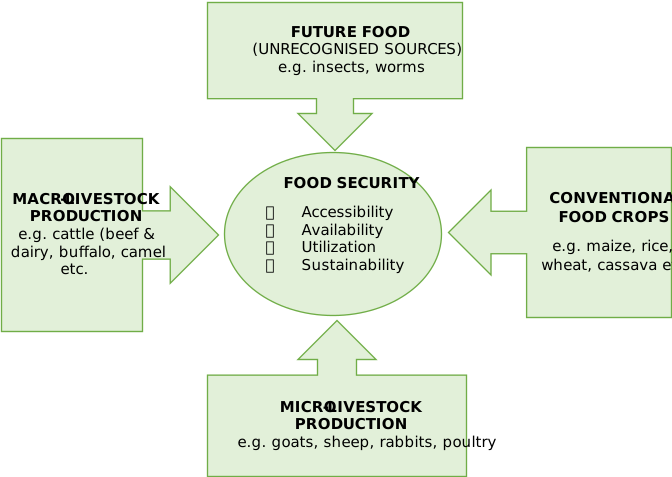
The proposed conceptual framework brings on board the less recognized micro-livestock species which has the potential to spruce food production and supply-side considering the long run fragmented land sizes, thanks to rural population densities in Africa. Due to population pressure and climate change, sub-Saharan Africa's agriculture and food production landscape is experiencing reconfiguration. With this in mind, it is time for a re-imagining of the longer term of food security in sub-Saharan Africa. Development of a novel framework that imparts stability and volatility in agriculture and food production systems on the continent through provisions of assessment tools which to seem at the actors and actions in the smallholder agriculture and food production system, which is that the major supplier of bulk of food on the continent.
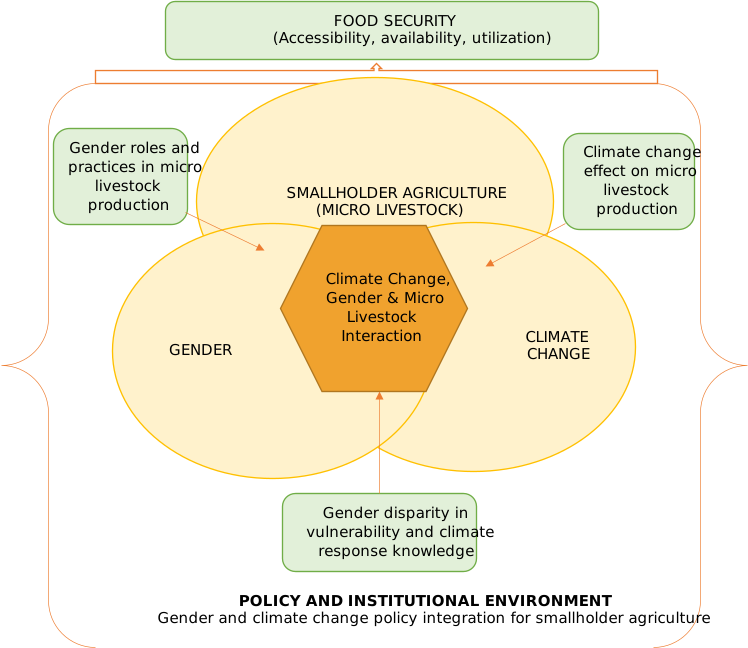
Taking under consideration the vulnerability, marginalization, and gender inequality that have stalled agricultural productivity, institutional support is critical to spruce agricultural food production and achieving food security on the continent. In most cases, women are often under-represented in conceding policy and have more limited access to technology, financing, employment, and productive assets. This is often on the background that women are more often have differentiated roles and responsibilities in agriculture and food production, while at the identical nonce the foremost vulnerable group to climatic shocks and stresses. Women still be more vulnerable than men to the impacts of climate change, primarily because they epitomize the bulk of the continent's poor and are relatively more contingent threatened natural resources. Household dynamics and decisions about agriculture and food production and livelihoods, what livestock they keep, features a direct effect not just on family nutrition, but also on food security and nutrition outcomes. Household dynamics and decisions about agriculture and food production and livelihoods, what livestock they keep, contain a direct effect not just on family nutrition, but also on food security and nutrition outcomes.
The contributory role of livestock to rural livelihoods and food security, as an agricultural sub-sector especially those of the poor, is well-known and indisputable [33]. Livestock production has been given an overriding emphasis joined as one of the core sectors to unravel the present challenges on food shortage and insecurity. However, the awful outcome of climate change on livestock production has been noticeable. Climate change impact on the quality of range-land and forage, water availability, animal and milk production, livestock diseases, animal reproduction, and biodiversity. Hence the support of micro-livestock rearing as a key component of broader picture of smallholder agriculture food production agenda, seem promising in addressing food insecurity, especially in Africa where land continues to be fragmented, thanks to rapid population densities in rural areas and climate change challenges.
The Food Security Conceptual Framework for geographic area (Figure 1) is predicated on the belief that smallholder livestock rearing has the potential to simultaneously play a critical role of cushioning the risks of food insecurity and promote gender equity while acting as an avenue to offset adversities posed by climate change. The most important assumption is that gender differential in smallholder livestock production and climate change impact knowledge and also the response gender gap is that the basis of vulnerability and food insecurity in the smallholder farming sector. On the opposite hand, agriculture could be a key livelihood activity – but it is prone to global climate change []. Overall, low productivity in smallholder livestock rearing as a results of gender disparities in livestock production and adverse effect of climate change implies less availability of and access to food and ultimately high levels of malnutrition. However, it is important to notice that any intervention that takes into cognizance gender disparities in livestock production and therefore the adverse effect of climate change to handle smallholder livestock productivity can increase food security. The failure to pander to gender inequality and deal with the climate change effect has thrown Sub-Saharan Africa into a state of perpetual food scarcity because of compromised food production, consequently condemning the agricultural rural communities and their people to extreme poverty and nutrition insecurity.
For micro-livestock sub-sector, the major point is that almost all rural household and even the poorest of them all, own some form of micro-livestock. Hence a boost in agriculture activity in this sub sector as the sum of all individual and household changes will have a grave impact on agriculture and food security on the continent. Micro-livestock rearing is central within the addressing the issue of gender bias in agriculture and food production that hinders women from equal participation in smallholder agriculture and food production, by broadening their socioeconomic opportunities, hence, enhancing their critical role in agricultural and food systems. This framework serves are a key component of a holistic approach to deal with food insecurity through a gendered climate-smart smallholder agriculture and food security.
Gender, climate change, agriculture food production, and food security are interrelated and their dynamics are conglomerate, interlaced, and rooted in social, economic, and institutional perspectives. Their relationship incorporates a collectively profound influence on the end result of smallholder agriculture and food production and security in SSA. Hence, they must be understood as an entity for optimization of agricultural productivity-enhancing the provision of food and achieving food security. The lack of progress in addressing food insecurity over the past two decades, deepened by adverse impacts of climate change and gender inequality in smallholder agriculture has illuminated the requirement for brand spanking new approaches for addressing food insecurity in Africa.
4. Policy and institutional environment in boosting smallholder agriculture and food production to strengthening food security
Governments in Sub-Saharan Africa are under pressure to improve performance in the fight against food insecurity. Governance is shown to be a highly influential factor and, paradoxically, it is suggested that current self-sufficiency may increase future potential vulnerability because trade networks are poorly developed. This may be relieved through freer trade of food products, which is also associated with improved governance. Policy decisions, support and interventions will need to be targeted at the most vulnerable nations, but given the strong influence of governance, to be effective, any implementation will require considerable care in the management of underlying structural reform.
The support for the smallholder farming sector to improve agriculture and food production is widely driven by the general public sector, which has established institutional support mechanisms in type of agricultural research, extension, commodity marketing, input supply, and land use legislation, to fast-track development of agriculture. Despite what preceded the interrelationship between gender, climate change, and agriculture and the way this association influences food security, the institutional support systems play a critical role in improving agriculture and food production within the smallholder farming sector. Gender-sensitive policies in agriculture promote and make sure the adoption of gender-sensitive and responsive approaches towards engendering agriculture plans and programs in such the simplest way that men and women have access to and control productive resources and facilities to bridge gender gaps. The framework includes mainstreaming gender in extension services and improving gender responsiveness within the delivery of agricultural services. On the opposite hand, mainstreaming gender into climate change, mitigating and adapting strategy for smallholder farmers against global climate change.
It is worth mentioning that integrative multi-sectoral partnerships as essential to improving smallholder agriculture and household food security. Given the above, smallholder farmers doubtless warrant special attention through agricultural policies that may suffice as incentives to extend agriculture and food production and achieve food security on the continent. By way of explanation, efforts directed towards agricultural research, extension, commodity marketing, input supply, and land use legislation can assist smallholders to increase the productivity of their farms, particularly, financial institutions can play a key role during this scenario since the opposite support institutions such as research and extension are already working closely with farmers. The knowledge and skills, therefore, exist as far as production is concerned and what farmers lack are the resources to support production. Hence, efficient agricultural extension targeted at smallholder farming sector for their effective gendered climate-smart agriculture and food production technologies adoption will increase agricultural productivity. For Sub-Saharan Africa, it seems most existing extension models have ignored smallholder resource-poor farmers, especially those in less productive and heterogeneous agroecological areas.
Before addressing the precise factors of low productivity and food insecurity, gender inequality, and global climate change through research agenda and extension, it must be understood that many African countries are confronted with an amazing setback to their agriculture research capacity, which has translated to the problems aggravating food insecurity. Setting in motion a process to confirm adequate resource allocation and knowledge base in smallholder agriculture could be worthwhile for the integration of food security concerns in the research agenda and extension on the continent. The agricultural extension will be viewed broadly as a multipurpose, educational, and technical consulting service designed to induce about broad-based smallholder agricultural and food production for achieving food security. While it is recognized that ensuring food security calls for the intervention of and interaction among a good range of stakeholders, the individual governments will need to continue playing a key leadership role in facilitating collaboration between disciplines, institutions, and sectors as well as coordination of research efforts that benefit smallholder farming sector. Their ability to satisfy this role is contingent upon certain levels of infrastructure and financial resources, human resource capacity, and also the existence of an enabling institutional environment.
While the heterogeneity of smallholder agriculture and food production necessitates a substantial and more manifold institutional structure, the present research structure and therefore the ancillary extension systems to spread smallholder farmers and rural innovations are inadequate to support agriculture and food production systems hence the perpetual food insecurity on the continent. It is recommended that for the continental government agricultural policies to attain its target of rural development through sustainable smallholder agriculture food production, there is need an adequate level of strategically targeted investment in smallholder agriculture, upgrade rural agriculture infrastructure, boost crop and livestock productivity, and increase the competitiveness of the farm output, additionally to fighting climate change and gender inequality.
5. Implications
Food security has been a hot content topic of debate in recent times’, especially in sub–Saharan Africa. Sub Saharan Africa is facing multiple challenges in its move toward improvement in food access, availability and utilization. Food insecurity has surged amid the rapid increase and global climate change effect, while gender-grounded inequalities have adversely affected agriculture productivity and compromising communities’ climate resilience aspirations hence spurring the continent further into severe food insecurity. Meeting the food demand for a rapidly growing population is already a significant challenge for Africa. Given the rapidly growing population, ensuring food security requires an increasingly innovative approach. Moreover, global climate change is already affecting agriculture and food security, and without urgent action, many people are going to be in danger of hunger and food insecurity. Africa is predicted to grow fastest and already has the world's biggest food insecurity problem. At an equivalent time, it's the region with rock bottom per capita agricultural productivity per hectare and doubtless the foremost vulnerable to global climate change. Although there are many major smallholder farm entities with favorable food growing conditions that are already producing sufficient food, many parts of the continent are nevertheless experiencing ongoing food insecurity.
Food security is suffering from a special impetus to different degrees by different agricultural and ecological factors in Africa. Global climate change negatively impacts the supply and stability of food security, but gender inequality and neglect of gender-friendly policies in agriculture have negative consequences for agriculture and food production, hence perpetuating food insecurity. The plight of undernourished people needs to be addressed through pro-active implementation of food-security strategies that takes into account the impact of climate change in smallholder agriculture. Necessary policy adjustment through integration of climate and gender policies into smallholder agriculture sector should be tailored to ensure that smallholder can apply their initiative and ingenuity to access food and establish a livelihood. Gender based vulnerability in climate change and gender in equality in agriculture are dominant factors that have impinged on agriculture and food production, hence strengthening food security should start with identification of the most vulnerable categories of population and consider their assets and constraints in order to emerge from poverty and food insecurity. So as to realize food security goal and understand food-security challenges, the SSA will got to take an objective check out the approaches to shed light on the simplest path forward in building a food-security strategy in smallholder agriculture. During this case, food insecurity, gender inequality, and global climate change effect are in substance the foremost deeply connected socio-economic and environmental conundrums impacting on food security in Sub-Saharan Africa. To make matters worse smallholder agriculture and food production which is the backbone of continent’s agriculture have endured low agrarian productivity over the past decades, contending with global climate change effects and prevailing gender disparities in agriculture.
Climate change and variability are recognized as major threats to smallholder agricultural sustainability, affecting agricultural production and farmers' livelihoods, especially in developing countries. Smallholders, Africa's main food production sector, are more vulnerable because they mostly depend on rain, thrive naturally, and have inadequate coping mechanisms. Adaptation and mitigation strategies to climate change and variability which account for the gender-climate change and variability –smallholder agriculture nexus will enhance agriculture productivity, contributing to resilience and mitigation in rural areas. Adaptation and mitigation options are context-specific and smallholder agricultural productivity prioritization should be based on sociocultural, biophysical environment, and smallholder resource endowments. The approach is to promote gender equality in agriculture, maintain productivity of smallholders by coping with climate stress, maximize production under favorable conditions, and the magnitude of the increase in agricultural productivity is dependent on the understanding of sociocultural, biophysical environment, and smallholder resource endowments.
In this discussion the argument is based on the supposition that among the livestock species, micro-livestock class got to be the first focus for ensuring the food security and livelihood of resource-poor and marginal smallholder farmers who are the main stakeholder in agriculture and food production in sub–Saharan Africa. The idea is that promoting micro-livestock rearing in rural economies will simultaneously curtails the danger of food and nutrition insecurity by acting as an entry point of gender equality, while leveraging on the opportunities that tiny animals rearing will effectively offset adversities posed by the global climate change effect as a results of the survival on limited feed and water resources and also produced sustainably on reduced farm size due to increased population densities in rural areas. within the smallholder agriculture sector, micro-livestock rearing already embedded within the socio-cultural, economic and environmental rural community fabric and are tipped to play a big role in ensuring food security to satisfy the increased food demands of the rapid growing human population by 2050. Despite the compelling need for farmers on the continent to supply more food, smallholder farm size is going to be reduced due to increased population density within the rural areas, while on the opposite hand animal feed resources will dwindle and water becoming scarce because of global climate change. While both farm size and farmland are in decline within the smallholder farming sector, efforts should be made to stop an outsized drop by smallholder agriculture and food production. Therefore, it's predicated that micro-livestock-centered approach can remodel smallholder agrarian households and communities toward a gender-inclusive global climate change adaptive smallholder agriculture to strengthen production, supply and food security in Sub-Saharan Africa. Overall, the discussion emphasizes the importance of taking immediate action to alleviate the negative effects of climate change and address gender inequality through promotion of micro livestock to assist in the development of long-term adaptation measures and full participation of women to maintain smallholder agricultural productivity.
Competing interests: None to disclose.
References
- Iram, U. & Butt, M.S. 2004. Determinants of household food security: An empirical analysis for Pakistan. Intern J Social Econ, 31(8), 753 – 766.[CrossRef]
- Samim, S.A., Hu, Z., Stepien, S., Amini, S.Y., Rayee, R., Niu, K. & Mgendi G. 2021. Food Insecurity and Related Factors among Farming Families in Takhar Region, Afghanistan. Sustainability, 13,102-11.[CrossRef]
- Assan, N. 2021. Goat - a Sustainable and Holistic Approach in Addressing Triple Challenges of Gender Inequality, Climate Change Effects, Food and Nutrition Insecurity in Rural Communities of Sub-Saharan Africa. In: Kukovics, S., editor. Goat Science - Environment, Health and Economy. London: IntechOpen.[CrossRef]
- Wheeler, T. & von Braun, J. 2013. Climate change impacts on global food security. Science, pp 341:508.[CrossRef] [PubMed]
- UN, 2015. Department of Economic and Social Affairs, Population Division. World Population Prospects: The 2015 Revision. New York: United Nations; 2015.
- Lazuta, J. 2013. Africa to Record Largest Population Growth over Next 40 Years. Voice of America, September 12; 2013.
- IPCC, 2013. Climate change 2013: The physical science basis. In T. F. Stocker, D. Qin, G.-K. Plattner, M. Tignor, S. K. Allen, J. Boschung, P. M. Midgley (Eds.), Contribution of Working Group I to the Fifth Assessment Report of the Intergovernmental Panel on Climate Change (pp. 17–29). Cambridge: Cambridge University Press, UK.
- FAO, IFAD, World Bank. 2007. Gender in Agriculture Sourcebook. Food and Agriculture Organization of the United Nations, Rome, Italy.
- Wegren, S.K. & Elvestad C. 2018. Russia’s food self-sufficiency and food security: An assessment. Post-Communist Economy, 30, 565–587.[CrossRef]
- Alexandratos, N. & Bruinsma J. 2012. World agriculture towards 2030/2050: the 2012, revision. ESA Working Paper No. 12-03. Food and Agriculture Organization of the United Nations, Rome, Italy.
- UN, 2004. World Population to 2300; 2004.
- Tilman, D., Balzer, C., Hill, J. & Befort, BL. 2011. Global food demand and the sustainable intensification of agriculture. PNAS, 108(50), 20260–20264.[CrossRef] [PubMed]
- B. 2020. Solving Africa’s hunger challenge, Fair Observer, June 1; 2020.
- , D.D. 2015. Food insecurity in Sub-Saharan Africa 2019, by level/ Feb 2. UN, Department of Economic and Social Affairs, Population Division. World population prospects: The 2015 revision, key findings and advance tables. In: Working Paper No. ESA/P/WP.241; 2015.
- FAO, IFAD, UNICEF, WFP & WHO. 2019. The State of Food Security and Nutrition in the World 2019. Safequarding against economic slowdowns and downturns. FAO Rome, Italy.
- World Bank. World Development Report 2008: Agriculture for Development. Washington, DC: World Bank; Blas, J. 2009. Number of Chronically Hungry Tops 1bn. Financial Times, 26 March; Food and Agriculture Organization of the United Nations, Rome, Italy.
- OECD, 2016. Agriculture in Sub-Saharan Africa: Prospects and challenges for the next decade. In: OECD-FAO Agricultural Outlook 2016-2025, OECD Publishing, Paris. France.
- IFPRI, 2009. Global Hunger Index: The challenge of hunger: Facts, determinants, and trends. Welthungerhilfe, International Food Policy Research Institute (IFPRI), Concern Worldwide; 2009.
- Ritchie, H., Roser, M., Mispy, J. & Ortiz-Ospina E. 2018. Sustainable Development Goal 2: End hunger, achieve food security and improved nutrition and promote sustainable agriculture. In: Measuring progress towards the Sustainable Development Goals UN;2018.
- Silva, G. 2018. Feeding the world in 2050 and beyond – Part 1: Productivity challenges. - December 3; 2018..
- Jayne, T.S., Yamanob, T., Weber, M.T., Tschirley, D., Benfica, R., Chapoto, A & Zulu, B. 2003. Smallholder income and land distribution in Africa: Implications for poverty reduction strategies. Food Policy, 28(3), 253-275.[CrossRef]
- Headey D. & Jayne T.S. 2014. Adaptation to land constraints: Is Africa different? Food Policy. 48.[CrossRef]
- Gollin, D. 2018. Farm size and productivity Lessons from recent literature. 38: The IFAD Research Series; 2018.
- UN, 2021. The state of the world’s land and water resources for food and agriculture – Systems at breaking point (SOLAW 2021), 2021.
- 1766–1834. In: The Continuum Encyclopedia of British Philosophy.
- AfDB, 2011. Inclusive Growth: A Definition, unpublished, Tunis, Tunisia, African Development Bank.
- Alliance for a Green Revolution in Africa (AGRA), 2014. Climate Change and Smallholder Agriculture in Sub Saharan Africa. Africa Agriculture Status Report 2014:
- World Bank, 2008. World Development Report 2008: Agriculture for Development. World Bank;2008, Washington, DC.
- Giller, K.E., Delaune, T., Silva, J.V., van Wijk, M., Hammond, J., Descheemaeker, K., van de Ven, G., Schut, A.G.T., Taulya, G., Chikowo, R. & Andersson, J.A. 2021. Small farms and development in sub-Saharan Africa: Farming for food, for income or for lack of better options? Food Security, 13, 1431–1454.[CrossRef]
- Hazell, P., Poulton., C., Wiggins, S. & Dorward, A. 2007. The Future of Small Farms for Poverty Reduction and Growth. 2020 Discussion Paper 42, International Food Policy Research Institute, Washington, D.C.
- Ayantunde, A.A., Duncan, A.J., van Wijk, M.T. & Thorne, P. 2018. Review: Role of herbivores in sustainable agriculture in Sub-Saharan Africa. Animal, 12(2), 199-209.[CrossRef] [PubMed]
- Klapwijk, C.J., Schut, M., van Asten, P.J.A., Vanlauwe, B., Giller, K.E. & Descheemaeker K. 2020. Micro-livestock in smallholder farming systems: the role, challenges and opportunities for cavies in South Kivu, eastern DR Congo. Trop Anim Health Prod, 52(3), 1167-1177.[CrossRef] [PubMed]
- Upton, M. 2004. The role of livestock in economic development and poverty reduction. Pro-Poor Livestock Policy Initiative. PPLPI Working Paper No. 10; 2004.
- Hardouin, J., Thys, E. & Joiris, V. 2003. Fielding D, Mini-livestock breeding with indigenous species in the tropics. Liv. Res. Rural Dev., 15(4).
- Gatti, D.D., Gallegati, M., Greenwald, B.C.G., Russo, A. & Stiglitz, J.E. 2012. Mobility constraints, productivity trends, and extended crises. J Econ Behav Organ., 83(3), 375-393.[CrossRef]
- Hegerl, G.C., Zwiers, F.W., Braconnot, P., Gillett, N.P., Luo, Y., Marengo Orsini, J.A., Nicholls, N., Penner, J.E. 2007. Stott PA. Understanding and Attributing Climate Change. In: Climate Change 2007: The Physical Science Basis. Contribution of Working Group I to the Fourth Assessment Report of the Intergovernmental Panel on Climate Change [Solomon, S., D. Qin, M. Manning, Z. Chen, M. Marquis, K.B. Averyt, M. Tignor and H.L. Miller (eds.)]. Cambridge University Press, Cambridge, United Kingdom and New York, NY, USA.
- Porter, J.R.L., Xie, A.J., Challinor, K., Cochrane, S.M., Howden, M.M., Iqbal, D.B. & Lobell, T.M.I. 2014. . In: Climate Change 2014: Impacts, Adaptation, and Vulnerability. Part A: Global and Sectoral Aspects. Contribution of Working Group II to the Fifth Assessment Report of the Intergovernmental Panel on Climate Change; 2014.
- Nyasimi, M., Amwata, D., Hove, L., Kinyangi, J., Wamukoya, G. 2014. Evidence of Impact: Climate-Smart Agriculture in Africa. CCAFS Working Paper no. 86. Copenhagen, Denmark: CGIAR Research Program on Climate Change, Agriculture and Food Security (CCAFS).
- IPCC, 2007. Summary for Policymakers. p. 7-22. In M.L. Parry, O.F. Canziani, J.P. Palutikof, P.J. van der Linden and C.E. Hanson (eds.). Climate Change 2007: Impacts, Adaptation and Vulnerability. Contribution of Working Group II to the Fourth Assessment Report of the Intergovernmental Panel on Climate Change. Cambridge University Press, Cambridge, UK.
- FAO, 2014. Livestock and Climate Change. Food and Agriculture Organization of the United Nations, Rome, Italy.
- FAO, 2011. The state of food and agriculture 2010–2011: Women in agriculture, closing the gender gap for development. Food and Agriculture Organization of the United Nations, Rome, Italy.
- Drafor, I.A. & Puplampu, K.P. 2013. Women in Agriculture: An Assessment of the Current State of Affairs in Africa. Economics, 28 February 2013
- Winrock International, 1992. Assessment of Animal Agriculture in Sub-Saharan Africa. Winrock International for Agricultural Development. Morrilton Arkansas, USA.
- FAO, 2012. Gender and climate change research in agriculture and food security for rural development – training guide. Food and Agriculture Organization of the United Nations, Rome, Italy.
- Carvajal-Escobar, Y., 2008. Quintero-Angel M, Garcıa-Vargas M. Women’s role in adapting to climate change and variability. Adv Geoscience, 14, 277–280.[CrossRef]
- Goh A. 2012. A literature review of the gender-differentiated impacts of climate change on women's and men's assets and well-being in developing countries (CAPRi Working Paper No. 106). CGIAR Systemwide Program on Collective Action and Property Rights (CAPRi), Washington, DC.
- Kakota, T., Nyariki, D., Mkwambisi, D. & Kogi-Makau, W. 2011. Gender vulnerability to climate variability and food insecurity. Climate Dev., 3, 298–309.[CrossRef]
- Nellemann, C., Verma, R. & Hislop, L. 2011. Women at the frontline of climate change: Gender risks and hopes: A rapid response assessment. United Nations Environment Program, GRID-Arendal. 2011.
- Doss C, 2011. If women hold up half the sky, how much of the world's food do they produce? (ESA Working Paper No. 11-04). Food and Agriculture Organization of the United Nations, Rome, Italy.
- Nelson, V. & Stathers, T. 2009. Resilience, power, culture, and climate: A case study from semi-arid Tanzania, and new research directions. Gender & Development, 17(1).[CrossRef]
- Peterman, A., Behrman, J. & Quisumbing A. 2010. A review of empirical evidence on gender differences in nonland agricultural inputs, technology, and services in developing countries (IFPRI Discussion Paper No. 00975). International Food Policy Research Institute, Washington, DC.
- Wright, H. & Chandani, A. 2014. Gender in scaling up community-based adaptation to climate change. In L. Schipper, J. Ayers, H. Reid, S. Huq, & A. Rahman (Eds.), Community based adaptation to climate change: Scaling it up, New York, NY: Routledge; pp. 226–238.
- Kassie, M. & Ndiritu, S.W. & Stage, J. 2014. What determines gender inequality in household food security in Kenya? Application of exogenous switching regression. World Dev., 56, 153–71.[CrossRef]
- UNCTAD, 2014. Conference on Trade and Development (UNCTAD): Trade and Gender: Unfolding links. Geneva, Switzerland.