

The purpose of the study was to investigate the impact of stress and burnout on the quality of life of pastors in Assemblies of God Church in the Ashanti Region, Ghana. A descriptive survey design was adopted for the study. A sample of 254 out of a population of 744 was used for the study using stratified and simple random sampling procedures. Data were collected using a questionnaire and analysed using means and standard deviations, linear multiple regression, independent samples t-test, and one-way Analysis of Variance. Results showed that the pastors often experienced stress and frustrations due to a lack of resources such as money and infrastructure, different roles competing for their attention (ministry and family), delays in reaching their ministry goals, and carrying out a lot of activities the same time. The study also found that the pastors felt emotionally drained by their work and felt burned out. The study revealed that the relationship between stress level and quality of life was statistically significant. Similarly, the relationship between burnout level and quality of life was statistically significant. It was recommended that the leadership of Assemblies of God Church, Ghana should organise intermittent workshops for their pastors in all their branches on how to cope with the emotional drains of pastoring.
Impact of Stress and Burnout on Quality of Life of Pastors
April 12, 2022
July 22, 2022
July 30, 2022
August 01, 2022
This is an Open Access article, distributed under the terms of the Creative Commons Attribution 4.0 International License (http://creativecommons.org/licenses/by/4.0/), which permits unrestricted use, distribution and reproduction in any medium or format, provided the original work is properly cited.
Abstract
1. Introduction
People all over the world have increasingly been confronted with stress and burnout particularly in the course of their work [2, 3]. The clergy like any other individual experience various psychosocial stressors in their line of work. The “Clergy are Christian men and women ordained as religious ministers like Pastors, Reverend Ministers, Apostles, Prophets and Moderators” [3]. The clergy are leaders and “shepherds” of individual souls and the collective body of a local church (1 Peter 5:1-4). They are accountable to God for the care of those whom they have been entrusted in their congregation. The clergy do not only conduct worship services, prepare weekly sermons and teachings, but as well aid in counselling church members and assist in emergency situations [4]. The clergy engage in a myriad of duties, including spiritual nourishment of their members, psychological engagements, pastoral care and their family responsibilities [5, 6]. They are also required to officiate special services such as confirmations, baptisms, weddings, funerals and cater for their homes [7, 8]. These seem to be a lot for the clergy.
Several reports have shown that pastors cannot live like normal people because of their ‘holy calling’ and as such may find themselves in uncomfortable situations which they may not be able to talk about or seek help for. In spite of this, pastors are supposed to always be concerned with other people. The thoughts and motivations of pastors should be concerned with the welfare of others, with no regard for self [9]. This means that pastors may have to ignore their own worries and focus on helping other people. There is evidence that pastors mostly put the needs of others above their own needs [10]. This self-sacrificing mindset may play an important role in the deterioration of a pastor’s wellbeing. In working diligently to serve and worship God as their primary goal, pastors may prioritize the daily needs, as well as crises, of their congregation, and fail to engage in caring for oneself through appropriate work-family balance, time management, exercise, and healthy eating habits. In essence, the clergy unlike other category of professionals, experience life in different ways [11]. The experiences subsequently, impact their psychological well-being either negatively or positively [12]. Further, the irregular and unplanned nature of the work of the clergy predisposes them to a number of physical, social and psychological challenges [13]. Some of the challenges are battling with stress, anxiety, burnout, competition, conflicts, intrusion from family members, frequent relocations, work-family conflicts and emotional labour [7]. Significant among these challenges in the literature is the experience of stress and burnout.
Stress is the adverse reaction people experience in response to excessive pressure or other types of demands placed on them. In other words, stress describes situations that people perceive to be overwhelming and difficult to cope with [14]. The experience of stress is therefore founded on an encounter with some event or stimulus which is referred to as stressor [15]. Stressors can either be positive or negative and the interpretation given to the stressor is what makes a situation stressful or not. When people perceive situations to be negative, it becomes stressful to them and vice versa. Stress is universal in the sense that all people are inevitably exposed different situations on daily basis irrespective of their unique demographic characteristics as all people try to adjust to the ever-changing human society [16, 17, 18]. For the clergy, stress can result from rigid work schedules, bureaucracy, denominational structures, conflicts between personal and congregational needs, high congregational expectations and conflicted personal relationships [19]. Although religion has been known to be a major source of coping during adverse situations, it is surprising to note that most religious people like the clergy go through diverse form of stressors on a daily basis which affects their well-being [9]. The import from the views expressed is that the clergy go through varied stressors which have the tendency to affect their lives. What is significant to note is that extended and long periods of stress and exhaustion can lead to burnout.
Burnout is considered to be a psychological response to chronic work stress, a state of mental weariness and, most commonly, characterized by emotional exhaustion, depersonalization, and lack of personal accomplishment [20, 21, 22]. Pastoral work is riddled with an incredible amount of work-related stressors and pressures. Potential for burnout is increased when there is little time to recover from the strains of workload and emotional distress. Several authors have therefore claimed that burnout is a common condition among pastors [23, 24]. This is because pastors are subject to work-related pressures that are typical of other human service occupations. Research has shown that there is a strong and consistent relationship between stress and burnout and job demands [21]. For the clergy, there is no room for failure [25]. There is no space for unethical behaviour. All Christians are given a pass when it comes to offending and committing sin except the pastor. Pastors are charged to balance expectations placed on them by both God and man. Living up to these expectations may cause a pastor to suffer silently as they simultaneously battle with their own challenges. Irrespective of their daily hassles the clergy are expected to have a large heart to contain and accommodate all [26, 27]. However, the more stressed the clergy are, the more the stress begin to take a toll on them.
In Africa, the clergy play an enormous role in the society such as providing social services, generating economic development projects, and engaging in community development in Sub-Saharan countries such as Kenya, Nigeria, Ghana, and many others [28, 29]. In spite of this, there are several reports of high stress and burnout levels among the clergy which affect the health and overall quality of life of the clergy [30, 31]. In Ghana, the situation is no different as there have been reports of high stress and burnout among the clergy [9, 32]. The detrimental effects of stress and burnout on the lives of pastors as already established make such as study relevant.
1.1. Quality of Life among the Clergy
Quality of life is a measure of a person’s subjective well-being, fulfillment, or happiness. People with a high quality of life also tend to make decisions more easily [33]. Perhaps this is why an individual’s subjective well-being can predict the level of ability to function in social and life roles such as work [34]. Research indicates that an individual’s overall quality of life may predict job performance and satisfaction with work up to 5 years in advance [35]. In general, individuals who rate high in subjective well-being also tend to be more generous and helpful to others and exhibit more compassion for those around them [36]. Higher levels of subjective well-being are also linked to valued leadership attributes, such as collaborative decision-making and conflict resolution [37].
1.2. Factors affecting quality of life of the Clergy
There are some factors which are influential in the study of quality of life among the clergy. Historically, a number of issues have been studied for their contribution to well-being or quality of life, including age, gender, and education level [38]. Aside these demographic variables, there are other significant factors that can affect the quality of life of the clergy.
1.2.1. Income
Income of the clergy varies widely and there seems to be no consistent approach in determining this pay among churches or across denominations. There is a wide variance in ministerial pay, but adequate compensation remains a consistent issue for ministers [38]. This implies that for most pastors there is a struggle in terms of finances. Correlations between income and quality of life are moderate to low, for those living in developed nations [39]. This is probably because for pastors in developed nations, finances may not be a problem. In developing countries, the situation is different. Most pastors have struggles in terms of their finances, particularly full time pastors. In the Assemblies of God Church, Ghana, the situation is not different. The decentralized nature of paying the clergy significantly affects their financial power. This can affect their quality of life.
1.2.2. Social support
Several studies have shown that both the quantity and the perceived quality of relationships significantly relate to quality of life [40, 41]. Measures of quality of life in young adults correlate with a number of dimensions of social support, including the size of the individual’s social network, frequency of social contact, satisfaction with friendships, instrumental support, and helping others [42]. Active membership in clubs, churches, and associations correlates with higher levels of subjective well-being [43]. Although the type or system of social support may differ for individuals of different ethnicities or cultures, communion or social support is essential for most individuals for perceptions of high quality of life [44].
Poor-quality relationships are linked to low levels of subjective well-being in cases such as unhappy marriages [45]. Cultural mistrust and lack of social support contribute to lower levels of well-being for members of minority groups [46]. Negative relationships and lack of community in work environments are associated with low levels of life satisfaction [47]. The considerable amount of research in this area leads some to conclude that the need to belong or to maintain relationships may be an essential factor for quality of life [48]. Although the happiest people spend the most time socializing and have the highest ratings on good relationships, researchers caution that social support alone is not sufficient for ensuring high levels of quality of life [49]. This implies that even though social support is connected to quality of life, it is not the only factor. Among the clergy, having a strong sense of social support can be fundamental. This is because there are times pastors may feel lonely and in those times, the support of friends and other significant others may be very vital.
1.3. Statement of the Problem
Research studies from over 30 years have shown that pastors continue to struggle with stress and burnout due to the nature of their work [50]. A study reports that globally, 1,700 pastors leave the ministry each month, citing depression, burnout, or being overworked as the primary reasons. In terms of workload, Fickel indicated that 90% of pastors report working 55 to 70 hours a week with 50% of them unable to meet the demands of the job. Global estimates of the prevalence of burnout vary widely, ranging from 10% to 47% of pastors according to either subjective ratings of burnout or Maslach Burnout Inventory (MBI) criteria [51]. Based on all these, it is evident that stress and burnout are common for most pastors.
In spite of this, global research on stress and burnout among pastors has been minimal [23]. Most of the existing research has focused almost exclusively on individual and job-related variables in the experience of stress and burnout [24, 52, 53]. How stress and burnout affect the quality of life of pastors have been largely ignored especially in Africa. The limited studies conducted in African countries have mostly found that pastors suffer stress and burnout to a high degree [54]. The situation in Ghana is not very different as the extent to which stress and burnout affect Ghanaian pastors have not gained much research interest. Most studies on stress and burnout have usually focused on bankers, teachers, nurses, police, and students, exploring how stress and subsequent burnout affected their lives and families [55, 56, 57, 58].
There have been some few studies in Ghana which focused on the stressful experiences of pastors [9, 32, 33, 34, 35, 36, 37, 38, 39, 40, 41, 42, 43, 44, 45, 46, 47, 48, 49, 50, 51, 52, 53, 54, 55, 56, 57, 58, 59]. Anyetey’s study focused on the sources of stress and management strategies of pastors in the Cape Coast Metropolis and showed that pastors experienced stress due to inadequate financial support. Bonsu explored the lived experiences of Ghanaian Pentecostal clergy and found that the clergy-congregation relationship and clergy self-care greatly affected their experiences. Nortey also revealed that exhaustion, work-family conflict, family-work conflict, efficacy and job satisfaction excluding cynicism significantly predicted psychological wellbeing among pastors. From these studies, there seem to be no study has specifically focused on how stress and burnout affected the quality of life of the clergy in Ghana. This creates a gap in the literature. On the basis of this, this study is considered necessary.
1.4. Purpose of the Study
The purpose of the study was to investigate the impact of stress and burnout on quality of life of pastors in Assemblies of God Church in Ashanti Region, Ghana.
Specifically, the study sought to:
1.5. Research Questions
The study sought to answer these research questions:
- What is the level of stress among pastors in Assemblies of God Church in the Ashanti Region of Ghana?
- What is the level of burnout among pastors in Assemblies of God Church in the Ashanti Region of Ghana?
1.6. Hypothesis
H0: There is no significant impact of stress and burnout on the quality of life of pastors in Assemblies of God Church in the Ashanti Region of Ghana.
HA: There is a significant impact of stress and burnout on the quality of life of pastors in Assemblies of God Church in the Ashanti Region of Ghana.
2. Materials and Methods
This section presented the procedures in carrying out the study. Descriptive survey design was adopted for the study. Descriptive survey design describes the characteristics of a selected phenomenon that involves the collection of data without manipulation of the variables involved. Descriptive survey research design therefore helps in studying a particular phenomenon [60]. Descriptive survey focuses on obtaining information which concerns the current status of a phenomenon [61]. A sample of 254 was used for the study selected via stratified and simple random sampling procedure from a population of 744 clergies in the Assemblies of God Church in the Ashanti Region of Ghana. Data were collected using questionnaire. The questionnaire was adapted from the Standard Stress Scale, The Maslach Burnout Inventory; The Dutch Educators Survey (MBI-NLES), the Source of Stress Scale by, and the Quality of Life Scale (QOLS) of Flanagan [32]. The reliability co-efficient of the adpted instrument was 0.84 which implied that the instrument was reliable for the study. Data was analysed using both descriptive and inferential statistics specifically, Mean and Standard Deviation and Multiple Regression.
3. Results
This section presents results on the research questions that guided the study.
Research Question One: What is the level of stress among pastors in Assemblies of God Church in the Ashanti Region of Ghana?
This research question sought to identify the level of stress among pastors in Assemblies of God Church in the Ashanti Region of Ghana. The questionnaire was on a scale of “1 = never, 2 = seldom, 3 = occasionally, 4 = often, and 5 = most of the time”. The data were analysed using mean and standard deviation. On the basis of the scale, mean scores of 3.0 and above were deemed to be high implying that respondents often had that experience. Mean scores less than 3.0 implied that respondents rarely had that experience. The results are shown in Table 1.
Table 1 shows the stress levels experienced by the respondents in the past few weeks leading to the study. It can be seen that the statement ‘I have experienced frustration due to lack of resources (money and infrastructure)’ recorded the highest mean of 3.31 and a standard deviation of 1.24. This means that the respondents often had the experience of being frustrated due to lack of resources such as money and infrastructure. Also, it can be seen that the respondents often experienced frustrations due to different things competing for their attention (ministry and family) (M=3.11, SD=1.25).
Further, Table 1 reveals that the respondents often experienced frustration due to delays in reaching their ministry goals (M=3.08, SD=1.21). The respondents also indicated that they often experienced frustrations doing so many things at the same time (M=3.05, SD=1.25). From the results in Table 1, it can be seen that the respondents often experienced stress and frustrations in the past few weeks due to lack of resources (money and infrastructure), different things competing for their attention (ministry and family), delays in reaching their ministry goals, and doing so many things at the same time.
Research Question Two: What is the level of burnout among pastors in Assemblies of God Church in the Ashanti Region of Ghana?
This research question was meant to identify the level of burnout among pastors in Assemblies of God Church in the Ashanti Region of Ghana. The data were scored as: “1=Never, 2=Rarely, 3=Sometimes, 4=Frequently and 5=Always”. The data were analysed using mean and standard deviation. On the basis of the scale, mean scores of 3.0 and above were deemed to be high implying that respondents frequently had that experience while mean scores less than 3.0 implied that respondents rarely had that experience. The results are shown in Table 2.
The level of burnout of the respondents in the past few weeks are shown in Table 5. In Table 5, the respondents indicated that they felt emotionally drained by their work in the past few weeks (M=3.05, SD=1.03). Also, the respondents indicated that they felt burned out from their work in the past few weeks (M=3.05, SD=1.11). It can also be seen from the respondents that they felt fatigued when they had to get up in the morning to face another day on the job (M=3.03, SD=1.08). In spite of all these, the respondents indicated that they dealt very effectively with the problems of their church members (M=3.11, SD=2.34). This implies that no matter how difficult their work got, the respondents were able to help their church members in terms of their difficulties.
3.1. Hypothesis
H01: There is no significant impact of stress and burnout on the quality of life of pastors in Assemblies of God Church in the Ashanti Region of Ghana.
HA1: There is a significant impact of stress and burnout on the quality of life of pastors in Assemblies of God Church in the Ashanti Region of Ghana.
This hypothesis aimed at finding out the impact of stress and burnout on the quality of life of pastors in Assemblies of God Church in the Ashanti Region of Ghana. In testing this hypothesis, linear multiple regression was used. In using linear multiple regression, the main assumptions for doing linear multiple regression were tested.
3.1.1. Testing Nonlinearity
Linear regression is based on the assumption that the relationship between the response variable and the predictors is linear. Linearity implies that the relationships between the predictors and the outcome variable should be linear. In doing this, a scatterplot was obtained. The researcher fitted a non-linear best fit line known as the Loess Curve through the scatterplot to see if he can detect any nonlinearity.
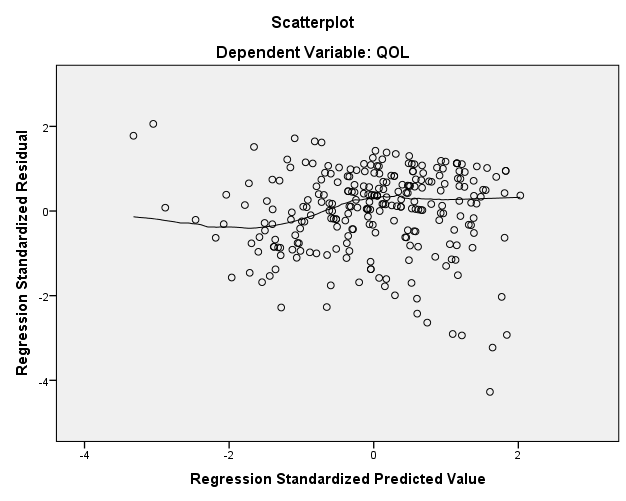
From the Loess curve in the figure, it is evident that the relationship of standardized predicted to residuals is roughly linear around zero. Based on this it can be concluded that the relationship between the response variable and predictors is zero since the residuals seem to be randomly scattered around zero implying that a linear relationship exists.
3.1.2. Normality Testing
This assumption is based on the view that the values should be normally distributed. To do this, the output from the P-P Plot obtained after regression analysis is inspected. This is shown in Figure 3.
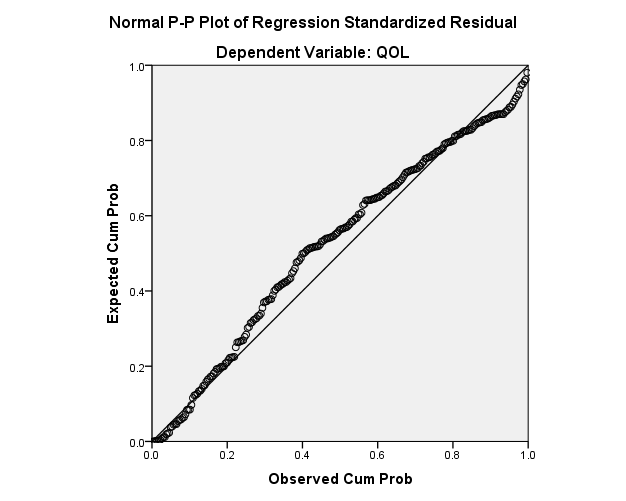
It can be seen from the Q-Q Plot that normality assumption is met. This is because the points cluster around the horizontal line. This means that the data is normal.
3.1.3. Independence of Observations
In this assumption, it is expected that the errors associated with one observation are not correlated with the errors of any other observation. In checking this assumption, the Durbin-Watson Statistic was used. This statistic can vary from 0 to 4. It is expected that the test statistic values be in the range of 1.5 to 2.5. Values outside of this range could be cause for concern. Field (2009) suggested that values under 1 or more than 3 are a definite cause for concern and may render the analysis invalid. The results are shown in Table 8.
It can be seen in the model in Table 3 that this assumption is met since the Durbin-Watson statistic is 1.835. Thus, there is independence of the observations. This implies that there is autocorrelation in the data.
3.1.4. Multicollinearity
Multicollinearity implies that predictors are highly related to each other and both predictive of the outcome, can cause problems in estimating the regression coefficients. When there is a perfect linear relationship among the predictors, the estimates for a regression model cannot be uniquely computed. VIF and Tolerance statistics are to test this assumption. For the assumption to be met the VIF scores should be well below 10 and tolerance scores should be above 0.2. The output is shown in Table 9.
In this study, it can be seen in Table 4 that VIF scores are well below 10 and the Tolerance scores are all above 0.2. This implies that there is no multicollinearity in the data and as such Linear Multiple Regression can be done.
3.1.5. Homoscedasticity
Homoscedasticity implies a situation where the variances along the line of best fit remain similar as you move along the line. It is expected that the residuals (errors) should not vary systematically across values of the explanatory variable. This can be checked by creating a scatterplot of the residuals against the explanatory variable. The distribution of residuals should not vary appreciably between different parts of the x-axis scale – meaning there should be chaotic scatterplot with no discernible pattern.
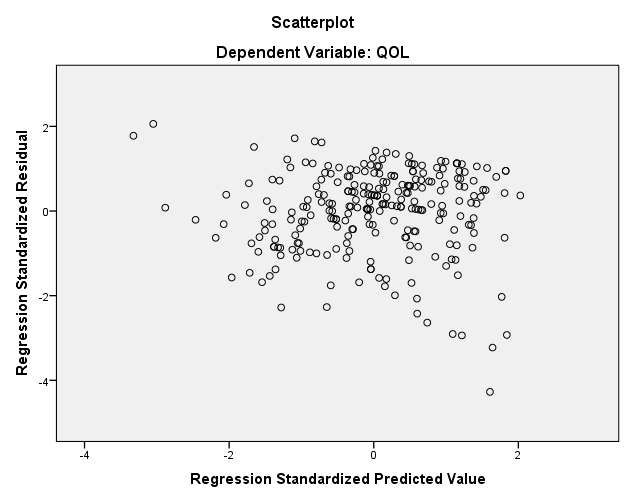
In this study, it can be seen from Figure 4 that the data points generally appear more random and as such this assumption can be deemed to have been met. This means that there is no homoscedasticity in the data.
Since the assumptions were met, the linear multiple regression analysis was done. The correlations among the variables were tested as part of the linear multiple regression analysis. The results are shown in Table 5.
Table 5 shows the relationships that exist between the independent variables (stress level and burnout level) and the dependent variable (Quality of Life). It can be seen that the relationship between stress level and quality of life is statistically significant (r=-.219, p=.000). Similarly, the relationship between burnout level and quality of life is found to be statistically significant (r=-.240, p=0.000).
The implication of these is that there is negative relationship between stress level and quality of life as well as burnout level and quality of life. The negative relationship implies that as stress levels and burnout levels increase, quality of life reduces. Based on the Pearson correlation values, it can be inferred that the relationship was weak for both stress levels and (-.219) and burnout levels (-.240). The implication is that even though a relationship exists between these variables and quality of life, the relationship is not strong.
The model summary for the regression model is seen in Table 6.
It can be seen in the model summary in Table 6 that the regression model is statistically significant (p<.05). It is seen in the model that, the predictor variables (Stress levels and burnout levels) predicted 6.6% of the variances in the dependent variable (quality of life).
Table 7 presents the results of the overall significance test assessing whether the group of independent variables when used together reliably predict the dependent variable.
The ANOVA results show that the model tested was statistically significant [F(253)=8.811, p<.05]. Therefore, the model is accepted for the study. By implication, it can be said that the independent variables put together significantly predict the dependent variable.
The coefficients of the independent variables in predicting the dependent variable are shown in Table 8. The regression co-efficients for the independent variables as well as their Beta values are presented in Table 8.
The results in Table 8 show that the impact of the variables stress level (t=-1.448, p<.05) and burnout level (t=-2.176, p<.05) were statistically significant. In terms of the predictive ability, the Beta values indicate that burnout level significantly predicts quality of life (-.170) more than stress level (-.113). The implication of the results is that the burnout levels of pastors can impact on their quality of life more than the stress levels of pastors.
4. Discussion
4.1. Level of Stress among Pastors
The results revealed that the pastors often experienced stress and frustrations in the past few weeks due to lack of resources (money and infrastructure), different things competing for their attention (ministry and family), delays in reaching their ministry goals, and doing so many things at the same time. For most pastors in Ghana, lack of resources is a major issue. Church like the Assemblies of God use internally generated funds mostly through offerings and tithes. This means that the churches are mostly limited in funds. As a result, pastors are usually frustrated by the lack of financial resources. In terms of infrastructure, it is always a huge task for pastors when they want to build structures and facilities for church activities.
Also, paying attention to both families and ministries can be a struggle and thus present stress to pastors. Ministry takes a great deal of time but ignoring families can be disastrous in the long run. Maintaining the balance is thus crucial. Pastors also have the task of doing so many things at the same time. They have to preach, visit church members, attend meetings and other issue that may come up in the running of the church. All these make the work of pastors stressful. There are also times when pastors may feel like their ambitions are being delayed. This could be stressful.
The findings are in line with the outcomes of previous study on sources of stress and management strategies among ministers of the gospel in the Cape Coast Metropolis of Ghana that pastors mostly experienced stress due to inadequacy in financial resources [32]. In a similar vein, a researcher conducted a qualitative study using phenomenological methodology to gain insight into the lived experiences of Ghanaian Pentecostal clergy and how their work-related stress influences their work and family life and revealed that the clergy play several roles for their congregation, community, and family and these varied roles can be stressful for clergy [62].
Findings of the current study confirm the findings of Liang (2009) that high ministry demands may increase stress among pastors. Liang suggested that cultural interpretation and perception may contribute to this phenomenon [63]. This means that in some contexts, pastoral and ministry work is seen to be demanding. A survey of the ordination class of 1994 in the North Georgia Conference of the United Methodist Church revealed that the stressors that drive the clergy to depart full-time ministry seem to revolve around three problematic areas: unrealistic expectations from church members, perceived pressure to produce numerical results from judicatory officials and, ongoing congregational conflict with no support from judicatory officials [64]. From the results, the researcher concluded that the clergy doing so many things at the same time without support was stressful and ultimately led them to leave full time ministry. The general similarities observed among the findings discussed give the indication that pastors in different contexts experience stress in the course of their ministerial work. The stress experienced is mostly due to lack of resource and demanding nature of doing ministerial work along with several other expected tasks on a personal level. This is a general situation for most pastors and not just Assemblies of God pastors as confirmed in the studies discussed.
4.2. Level of Burnout among Pastors
The study showed that the pastors felt emotionally drained by their work and felt burned out from their work in the past few weeks. Also, the pastors in the study indicated that they felt fatigued when they had to get up in the morning to face another day on the job. In spite of all these, the pastors indicated that they dealt very effectively with the problems of my church members. This implies that no matter how difficult their work got, the pastors were able to help their church members in terms of their difficulties.
The findings are in with practical and real life since for most pastors, they are required to share happiness and sorrows of their church members. This task can be emotionally draining. The need to also be available to assist all church members can also be very demanding and as such can cause pastors to experience burnout. In the Assemblies of God Church, Ghana, pastors are solely responsible for their church members and all church activities or events. Even though there are other church leaders to help, these leaders may not always be available to help and this may burden the pastors. As a result, it is not surprising that pastors are fatigued almost all the time.
An interesting to point to note, however, is that in spite of all the emotional drain, burnout and fatigue, pastors are still committed to helping their church members when they are in difficulties. This implies that the pastors have given their all to the ministry work and it does not matter their experiences, they would still make time to assist their church members.
The findings support a study on burnout among Seventh-day Adventist (SDA) clergy and found that the clergy experienced emotional Exhaustion, Depersonalization, Personal Accomplishment [65, 66]. A similar study on Pastors in the Netherlands revealed that clergy frequently suffered from emotional exhaustion and experienced depersonalization as they [67] assisted church members with their problems. Evers and Tomic revealed also that the clergy reported a feeling of accomplishment particularly in terms of being supportive to church members.
A research on the effects of job-demands and job-resources on ministers' burnout and engagement found that the clergy experienced burnout in the course of their duties [68]. A related study examined whether satisfaction in ministry can mitigate the effects of emotional exhaustion in ministry and revealed that the clergy reported some levels of emotional exhaustion. Also, as ministers become more emotionally exhausted, their sense of burnout increases [69]. These have been confirmed in the current study. Fatigue was major experience of most pastors [70]. Another researcher also explored on the roles and responsibilities of Black pastors and how these factors might contribute to burnout and found that pastors served in various roles (e.g., spouse, counsellor) and had many ministerial responsibilities (e.g., teaching Bible study, visiting sick members) and these mostly made them experience burnout [71]. From the discussion, it can be seen that there is a similarity among the findings of the current study and those of the other studies mentioned. This similarity gives the indication that among pastors, burnout is a major experience regardless of the context.
4.3. Impact of Stress and Burnout on Quality of Life of Pastors
The study revealed that the relationship between stress level and quality of life was statistically significant. Similarly, the relationship between burnout level and quality of life was found to be statistically significant. The relationships were all negative. The implication of these is that there was negative relationship between stress level and quality of life as well as burnout level and quality of life. The negative relationship implies that as stress levels and burnout levels increase, quality of life reduces and vice versa. Based on the Pearson correlation values, it was indicated that the relationship was weak for both stress levels and burnout levels. The implication is that even though a relationship exists between these variables and quality of life, the relationship is not strong.
In terms of their predictive impact, it was revealed that stress level and burnout level statistically significant impacted the quality of life of the respondents. In terms of the predictive ability, the Beta values indicate that burnout level significantly impacted quality of life more than stress level. This implies that the burnout levels of pastors can impact on their quality of life more than the stress levels of pastors. These findings are understandable since burnout is usually considered in the literature to be an extreme form of stress.
The findings of the current study are consistent with the findings of previous study that stress and exhaustion predicted somatic symptoms and depression which were all connected to the quality of life of pastors [68]. The implication is that stress and burnout can impact the quality of life of pastors. Findings on relationships between pastor job burnout and the health and wellbeing of pastors indicated that pastors’ job burnout was negatively related to pastor physical health, mental health, and turnover intentions [23]. This clearly showed that the effects of burnout among pastors affect the health of the pastor as well as the church as a whole.
A research examined the outcomes of job-related stress experienced by the Seventh-day Adventist pastors in Hong Kong, Singapore, and Taiwan and revealed that higher ministry demands would reduce pastor's personal wellbeing and stressors would correlate with the outcomes of the pastors' wellbeing [63]. This finding was supported in the current study. Exhaustion significantly predicted psychological wellbeing among the clergy [9]. A scientific study on burnout, its associated factors and its effect on self-care among critical care nurses at Buraydah Central Hospital at Qassim Region in Saudi Arabia concluded that burnout and quality of life score had a significant negative correlation. The study has shown clearly that both stress and burnout significantly impact the quality of life of pastors [72]. This means that the experience of stress and burnout among pastors can reduce their overall wellbeing.
5. Conclusions and Recommendations
The study revealed that Assemblies of God Church pastors in the Ashanti Region experience stress due to lack of resources and having a lot do in achieving all their ministerial goals. The study also indicated that pastors experience burnout in the sense of fatigue and emotional drain as they go about their ministerial duties. This means that the work of pastors can be emotionally draining. Finally, the quality of life of pastors in the Assemblies of God Church in the Ashanti Region of Ghana is affected negatively by the experience of stress and burnout. It is recommended that Heads of Assemblies of God Church, Ghana should ensure that their pastors are supported with financial and material resources to organise intermittent workshops for their pastors in all their branches on how to cope with stress as it lead to burn out and negatively impact quality life. It is also recommended that Pastors should take stress and burnout issues with all seriousness and seek for personal help in dealing with stress and burnout so that their quality of life will not be affected negatively.
Author Contributions: Conceptualization SDF, CFA, and BK; methodology, SDF, CFA, and BK; formal analysis SDF, CFA, and BK; investigation; SDF, CFA, and BK; Resources, CFA; data curation SDF, CFA, and BK; writing-original draft preparation, SDF, and CFA; writing-review and editing, CFA; visualisation, SDF, CFA, and BK; supervision SDF, and CFA; project administration, CFA. Authors have read and agreed to the published version of the manuscript.
Funding: “This research received no external funding”
Data Availability Statement: Data is available on request from the corresponding author.
Acknowledgments: We acknowledge respondents for their time with us.
Conflicts of Interest: “The authors declare no conflict of interest.” “No funders had any role in the design of the study; in the collection, analyses, or interpretation of data; in the writing of the manuscript, or in the decision to publish the results”.
References
- Randall, K. (2011). Clergy burnout: Two different measures. Pastoral Psychology, 62, 333–341. [CrossRef]
- Tomic, W., Tomic, D. M., & Evers, W. J. G. (2004). A question of burnout among Reformed church ministers in the Netherlands. Mental Health, Religion & Culture, 7, 225-247.[CrossRef]
- Novieto, E. E. (2013). Women leaders in Ghanaian Pentecostal/Charismatic Churches. [Doctoral dissertation, University of Ghana, Legon].
- Comello, M. L. G., & Farman, L. (2016). Identity as a moderator and mediator of communication effects: Evidence and implications for message design. The Journal of Psychology, 150(7), 822-836.[CrossRef] [PubMed]
- Grosch, W. N., & Olsen, D. C. (2000). Clergy burnout: An integrative approach. Journal of Clinical Psychology, 56(5), 619-632.[CrossRef]
- Turton, D. W., & Francis, L. J. (2007). The relationship between attitude toward prayer and professional burnout among Anglican parochial clergy in England: Are praying clergy healthier clergy? Mental Health, Religion and Culture, 10, 61-74.[CrossRef]
- Chandler, D. J. (2009). Pastoral burnout and the impact of personal spiritual renewal, rest-taking, and support system practices. Pastoral Psychology, 58(3), 273-287.[CrossRef]
- Kinman, G., McFall, O., & Rodriguez, J. (2011). The cost of caring? Emotional labour, wellbeing and the clergy. Pastoral Psychology, 60(5), 671-680.[CrossRef]
- Nortey, P. N. (2019). Psychosocial correlates of psychological wellbeing among clergy of the Presbyterian Church and the Church of Pentecost in Accra. [Unpublished master’s thesis, University of Ghana, Legon].
- Proeschold-Bell, R. J., LeGrand, S., James, J., Wallace, A., Adams, C., & Toole, D. (2011). A theoretical model of the holistic health of United Methodist clergy. Journal of Religion and Health, 50, 700-720.[CrossRef] [PubMed]
- Skovholt, T. M., & Trotter-Mathison, M. (2011). The resilient practitioner: Burnout prevention and self-care strategies for counselors, therapists, teachers, and health professionals (2nd ed.). Routledge.
- Lee, C., & Iverson‐ Gilbert, J. (2003). Demand, support, and perception in family‐ related stress among Protestant clergy. Family Relations, 52(3), 249-257.[CrossRef]
- Hassard, J., Hyde, P., Wolfram-Cox, J., Granter, E., & McCann, L. (2017). Exploring health work: a critical-action perspective. Journal of Health Organisation and Management, 31(5), 567-580.[CrossRef] [PubMed]
- Campbell, F. (2006). Occupational stress in the construction industry. Chartered Institute of Building.
- Basavanthappa, B. T. (2004). Fundamentals of nursing. New Delhi, India: Jaypee Brothers Medical Publishers.
- Ramachandiran, M., & Dhanapal, S. (2018). Academic stress among university students: A quantitative study of Generation Y and Z’s perception. Partanika Journal of Social Science & Humanities, 26(3), 2115-2128.
- Bukoye, R. O. (2017). Academic stress and drug abuse factors inhibiting psychological well-being among undergraduates: Its counselling implications. European Scientific Journal, 13(8), 60-74.[CrossRef]
- Fosu-Ayarkwah, C. & Fia, S. D. (2018). Indiscipline: A Plague on our Schools. Owrafix Ventures.
- Doolittle, B. R. (2010). The impact of behaviours upon burnout among parish based clergy. Journal of Religion and Health, 49(1), 88–95.[CrossRef] [PubMed]
- Halbesleben, J. R. B., & Demerouti, E. (2005). The construct validity of an alternative measure of burnout: Investigating the English translation of the Oldenburg Burnout Inventory. Work and Stress, 19, 208-220. [CrossRef]
- Schaufeli, W. B., & Bakker, A. B. (2004). Job demands, job resources, and their relationship with burnout and engagement: A multi-sample study. Journal of Organisational Behaviour, 25, 293-315.[CrossRef]
- Maslach, C., & Leiter, M. P. (2008). Early predictors of job burnout and engagement. Journal of Applied Psychology, 93(3), 498-512.[CrossRef] [PubMed]
- Burnette, C. M. (2016). Burnout among pastors in local church ministry in relation to pastor, congregation member, and church organisational outcomes. (Unpublished doctoral dissertation). Clemson University.
- Wong, J. (2015). Effective therapy for clergy reporting of burnout. [Unpublished master’s thesis, City University of Seattle, Vancouver, BC].
- Lockwood, R. (2020). Pastoral stress: The urgent need for self-care. [Unpublished doctoral thesis, University School of Divinity].
- Bledsoe, T. S., & Setterlund, K. A. (2015). Thriving in ministry: Exploring the support systems and self-care practices of experienced pastors. The Journal of Family and Community Ministries, 28(1), 48-66.
- Vitello, P. (2010). Taking a break from the Lord’s work. Retrieved from http://www.nytimes.com/2010/08/02/nyregion/02burnout.html?pagewante d=all.
- McCain, M. R. (2016). A grounded theory exploration of clergy's counseling referral practices in black churches. [Unpublished doctoral dissertation, University of Nebraska].
- Heaton, T., James, S., & Oheneba-Sakyi, Y. (2009). Religion and socioeconomic attainment in Ghana. Review of Religious Research, 51(2), 71-86.
- Proeschold‐Bell, R. J., Yang, C., Toth, M., Rivers, M. C., & Carder, K. (2013). Closeness to God among those doing God's work: A spiritual well‐being measure for clergy. Journal of Religion and Health, 53(3), 878–894.[CrossRef] [PubMed]
- Wallace, A. C., Proeschold-Bell, R. J., LeGrand, S., James, J., Swift, R., Toole, D., & Toth, M. (2012). Health programming for clergy: An overview of protestant programmes in the United States. Pastoral Psychology, 61(1), 113–114.[CrossRef]
- Anyetey, J. (2018). Sources of stress and its management strategies among ministers of the gospel in Cape Coast Metropolis. (Unpublished master’s thesis, University of Cape Coast).
- Prevost, E. R. (2016). The problem of quality of life in ministry. Review & Expositor, 113(3), 315-332.[CrossRef]
- Frisch, M. B., Clark, M. P., Rouse, S. V., Rudd, M., Paweleck, J., Greenstone, A., & Kopplin, D. A. (2005). Predictive and treatment validity of life satisfaction and the quality of life inventory. Assessment, 12(1), 66–78.[CrossRef] [PubMed]
- Judge, T. A., & Watanabe, S. (1993). Another look at the job satisfaction-life satisfaction relationship. Journal of Applied Psychology, 78, 939-948.[CrossRef]
- Wright, T. A., & Staw, B. M. (1999). Affect and favorable work outcomes: Two longitudinal tests of the happy-productive worker thesis. Journal of Organisational Behaviour, 20(1), 1-23.[CrossRef]
- Isen, A. M. (2001). An influence of positive affect on decision making in complex situations: Theoretical issues with practical implications. Journal of Consumer Psychology, 11, 75-85.[CrossRef]
- DeNeve, K. M., & Cooper, H. (1998). The happy personality: A meta-analysis of 137 personality traits and subjective well-being. Psychological Bulletin, 124, 197–229[CrossRef] [PubMed]
- Ahuvia, A. (2002). Individualism/collectivism and cultures of happiness: A theoretical conjecture on the relationship between consumption, culture and subjective well-being at the national level. Journal of Happiness Studies, 3, 23–36.[CrossRef]
- Jones, T. G., Rapport, L. J., Hanks, R. A., Lichtenberg, P. A., & Telmet, K. (2003). Cognitive and psychosocial predictors of subjective well-being in urban older adults. The Clinical Neuropsychologist, 17, 3–18.[CrossRef] [PubMed]
- Spira, M., & Kenemore, E. (2002). Cancer as a life transition: A relational approach to cancer wellness in women. Clinical Social Work Journal, 30(2), 173–186.[CrossRef]
- Chou, K. L. (1999). Social support and subjective well-being among Hong Kong Chinese young adults. The Journal of Genetic Psychology, 160(3), 319–331.[CrossRef] [PubMed]
- Veenhoven, R. (2011). World database of happiness example of a focused ‘Findings Archive’. Rat für Sozial- und Wirtschaftsdaten (RatSWD).[CrossRef]
- Kim, H. K., & McKenry, P. C. (1998). Social networks and support: A comparison of African Americans, Asian Americans, Caucasians, and Hispanics. Journal of Comparative Family Studies, 29(2), 313-334.[CrossRef]
- Hawkins, D. N., & Booth, A. (2005). Unhappily ever after: effects of long-term, low-quality marriages on well-being. Social Forces, 84(1), 451-471.[CrossRef]
- Bell, T. J., & Tracey, T. J. G. (2006). The relation of cultural mistrust and psychological health. Journal of Multicultural Counselling and Development, 34(1), 2-14.[CrossRef]
- Hill, N. R., Leinbaugh, T., Bradley, C., & Hazler, R. (2005). Female counsellor educators: Encouraging and discouraging factors in academia. Journal of Counselling and Development, 83(3), 374–380.[CrossRef]
- Diener, E., Oishi, S., & Lucas, R. (2003). Personality, culture, and subjective well-being: emotional and cognitive evaluation of life. Annual Review of Psychology, 54, 403-425.[CrossRef] [PubMed]
- Diener, E. & Seligman, M. E. P (2002). Very happy people. Psychological science, 13(1) 81-85[CrossRef] [PubMed]
- Gee, G. C., Chen, J., Spencer, M. S., See, S., Kuester, O., & Tran, D. (2006). Social support as a buffer for perceived unfair treatment among Filipino Americans: Differences between San Francisco and Honolulu. American Journal of Public Health, 96(4), 677–684.[CrossRef] [PubMed]
- Fickel, J. (2019). Burnout in pastors and church leadership. Retrieved from https://m1psychology.com/burnout-in-pastors-and-church-leadership/
- Bakker, A. B., Demerouti, E., & Sanz-Vergel, A. I. (2014). Burnout and work engagement: The JD-R approach. Annual Review of Organizational Psychology and Organisational Behaviour, 1, 389-411.[CrossRef]
- Jackson-Jordan, E. A. (2013). Clergy burnout and resilience: A review of the literature. Journal of Pastoral Care and Counseling, 67(1), 1-5.[CrossRef]
- Fugar, F. D. (2007). Job satisfaction as a function of demographic variables: An examination of the relationship among clergy. Journal of Science and Technology (Ghana), 27(3), 184-195.[CrossRef]
- Agyapong, V. I. O., & Owusu-Ansah, W. A. (2012). Work life balance among part-time MBA students of the Kwame Nkrumah University of Science and Technology School of Business in Ghana. International Journal of Business and Social Science, 3(13), 14-21.
- Gyamfi, G. D. (2014). Influence of job stress on job satisfaction: Empirical evidence from Ghana Police Service. International Business Research, 7(9), 108-118.[CrossRef]
- Kissi-Abrokwah, B., Andoh-Robertson, T., Tutu-Danquah, C., & Agbesi, C. S. (2015). Examining occupational stress on family cohesion: Implications to women professionals in Accra, Ghana. Research on Humanities and Social Sciences, 5(1), 47-53.
- Nkulenu, A. O. (2015). Effect of work-family conflict on quality of work-life in Ghana. European Journal of Business and Management, 7(24), 52-61.
- Bonsu, S. (2016). Lived experiences of Pentecostal clergy in Ghana: Perceptions of work-life balance on families and communities. (Unpublished doctoral dissertation, Texas Woman’s University).
- Kumar, R. (2005). Research methodology: A step by step guide for beginners (2nd ed.). Sage Publication.
- Ary, D., Jacobs, L. C., Razavieh, A., & Sorensen, C. (2006). Introduction to research in education (7th ed.). Thomson Wadsworth.
- Bonsu, S. (2016). Lived experiences of Pentecostal clergy in Ghana: Perceptions of work-life balance on families and communities. (Unpublished doctoral dissertation, Texas Woman’s University).
- Liang, O. (2009). Clergy stress: Seventh-day Adventist pastors in Hong Kong, Singapore, and Taiwan. [Unpublished doctoral, Loma Linda University].
- Kanipe, R. W. (2016). Clergy stress, complex trauma and Sabbath practice: A study on Sabbath practice as healing process for clergy serving in stressful appointments. (Unpublished doctoral dissertation, Asbury Theological Seminary).
- Golden, J. L. (2002). Spirituality as a predictor of burnout among United Methodist clergy: An incremental validity study (Doctoral Dissertation, Fuller Theological Seminary, 2002). Dissertation Abstracts, <53(1-B), 576.
- Edwards, W. D. (2003). A study on various factors and their relationship to burnout among Seventh-Day Adventist clergy. (Unpublished doctoral dissertation, Andrews University).
- Adebanwi, W. (2010). The clergy, culture, and political conflicts in Nigeria. African Studies Review, 53(03), 121-142.[CrossRef]
- Buys, C. & Rothmann. S. (2010). Burnout and engagement of Reformed Church Ministers. SA Journal of Industrial Psychology, 36, 1–11.[CrossRef]
- Francis, L. J., Village, A., Robbins, M., & Wulff, K. (2011). Work-related psychological health among clergy serving in The Presbyterian Church (USA): Testing the idea of balanced affect. Review of Religious Research, 53, 9–22.[CrossRef]
- Strong, R. (2017). Pastoral burnout among African American Pastors: A practical and biblical solution. [Unpublished doctoral dissertation, Liberty University School of Divinity].
- Joiner, A. V. (2020). An abstract in perceptions of burnout among Black pastors of small churches: A phenomenological study. (Unpublished doctoral University of Missouri-Kansas City).
- Alotni, M. A., & Elgazzar, S. E. (2020). Investigation of burnout, its associated factors and its effect on the quality of life of critical care nurses working in Buraydah Central Hospital at Qassim Region, Saudi Arabia. https://benthamopen.com/FULLTEXT/TONURSJ-14-190[CrossRef]