

The pachychoroid spectrum is a new entity grouping pathologies with common choroidal features. First described in 2013 by American ophthalmologist Bailey Freund and his team [1]. It is defined by a diffuse or focal increase in choroidal thickness with dilatation of choroidal vessels adjacent to Bruch's membrane, associated with retinal pigment epithelial dysfunction, loss of the choriocapillaris and thinning of Sattler's layer [1, 2]. At present, the pachychoroid spectrum includes well-known pathologies such as central serous chorioretinitis (CSCR) and polypoidal choroidal vasculopathy (PCV), as well as pathologies of more recent description such as epitheliopathy or type 1 neovessels secondary to pachychoroid, pachydrusen, choroidal excavation and peripapillary pachychoroid. The morphological changes of the lens which is a cataract can be unilateral or bilateral and occur symmetrically or not over variable durations. A cataract is said to be mature when the opacification occupies the entire lens, it induces a complete loss of vision. It makes the visualization of the fundus reflection impossible, which explains the impossibility of visualizing hemorrhages and other lesions of the eye with the possibility of concealing a pachychoroid spectrum during the ocular examination in patients. The aim of our study is to describe the symptomatology and therapeutic approach of SPC.
Mature Cataract, A Veil Concealing, A Pachychoroid Spectrum: About Two Cases
November 20, 2025
December 29, 2025
January 11, 2026
January 19, 2026
This is an Open Access article, distributed under the terms of the Creative Commons Attribution 4.0 International License (http://creativecommons.org/licenses/by/4.0/), which permits unrestricted use, distribution and reproduction in any medium or format, provided the original work is properly cited.
Abstract
1. Introduction
Cataracts are partial or total opacity of the lens or its capsule. They have different origins: congenital, hereditary or presumed hereditary, associated with a general disease (diabetes mellitus, hypocalcemia, hypercupremia, congenital dysmetabolisms), toxic (medical treatments, ionizing radiation, retinal atrophy), deficiency (inappropriate neonatal artificial breastfeeding), traumatic, age-related, post-inflammatory (anterior and/or middle uveitis). The pachychoroid spectrum represents a relatively recent and increasingly recognized nosological entity in retinal and choroidal diseases, encompassing a group of disorders that share common structural and functional alterations of the choroid. This concept was first introduced in 2013 by the American ophthalmologist Bailey Freund and his team, in an effort to better characterize a subset of chorioretinal diseases previously considered heterogeneous [1]. Since its initial description, the pachychoroid spectrum has gained significant attention due to advances in multimodal retinal imaging, particularly enhanced depth imaging optical coherence tomography (EDI-OCT), which has allowed a more precise assessment of choroidal morphology.
Pachychoroid is classically defined by a diffuse or focal increase in choroidal thickness, predominantly involving the outer choroidal layers. This thickening is associated with dilatation of large choroidal vessels (pachyvessels) located adjacent to Bruch’s membrane, leading to compression and attenuation of the overlying choriocapillaris and thinning of Sattler’s layer [1, 2]. These structural changes are frequently accompanied by dysfunction of the retinal pigment epithelium (RPE), which plays a central role in the pathophysiology of pachychoroid-related disorders. The resulting impairment of choroidal circulation and RPE integrity contributes to the development of serous retinal detachment, pigmentary changes and, in some cases, choroidal neovascularization.
Currently, the pachychoroid spectrum includes several well-established clinical entities, such as central serous chorioretinopathy (CSCR) and polypoidal choroidal vasculopathy (PCV), as well as more recently described conditions. These include pachychoroid pigment epitheliopathy, type 1 neovascularization secondary to pachychoroid, pachydrusen, focal or diffuse choroidal excavation, and peripapillary pachychoroid. Although these entities differ in their clinical presentation and severity, they share a common choroidal phenotype, supporting the concept of a unified spectrum rather than isolated diseases.
In parallel, cataract remains one of the most prevalent ocular pathologies worldwide and constitutes a major cause of visual impairment. Cataracts are defined as partial or total opacification of the crystalline lens or its capsule, leading to progressive deterioration of visual acuity. Their etiology is multifactorial and includes congenital, hereditary or presumed hereditary forms, as well as cataracts associated with systemic diseases such as diabetes mellitus, hypocalcemia, hypercupremia and congenital metabolic disorders. Additional causes include toxic cataracts related to prolonged medical treatments, exposure to ionizing radiation, or secondary to retinal atrophy; deficiency-related cataracts, particularly in the context of inappropriate neonatal artificial feeding; traumatic cataracts; age-related cataracts; and post-inflammatory cataracts, especially following anterior and/or intermediate uveitis.
Understanding the coexistence of cataract and pachychoroid spectrum disorders is clinically relevant, as lens opacification may interfere with fundus examination and advanced retinal imaging, potentially masking underlying chorioretinal abnormalities. This overlap underscores the importance of a comprehensive ophthalmological assessment in patients presenting with cataract, particularly when pachychoroid-related pathology is suspected.
2. Objective, Materials and Methods
The aim of our study is to describe the symptomatology and therapeutic approach of SPC.
It is a case study carried out in the ophthalmology department of CHU Mohammed VI oujda.
Pseudophakic patients presenting with one of the pathologies of the pachychoroid spectrum were included in our case series.
3. Results
We report a series of two cases of patients presenting with a spectrum of pachychoroids:
The two patients were aged 60 and 65, non-diabetic, hypertensive and on dual therapy, with the former receiving long-term corticosteroid therapy for rheumatic diseases and the latter for systemic diseases.
They were also pseudophakic in both eyes.
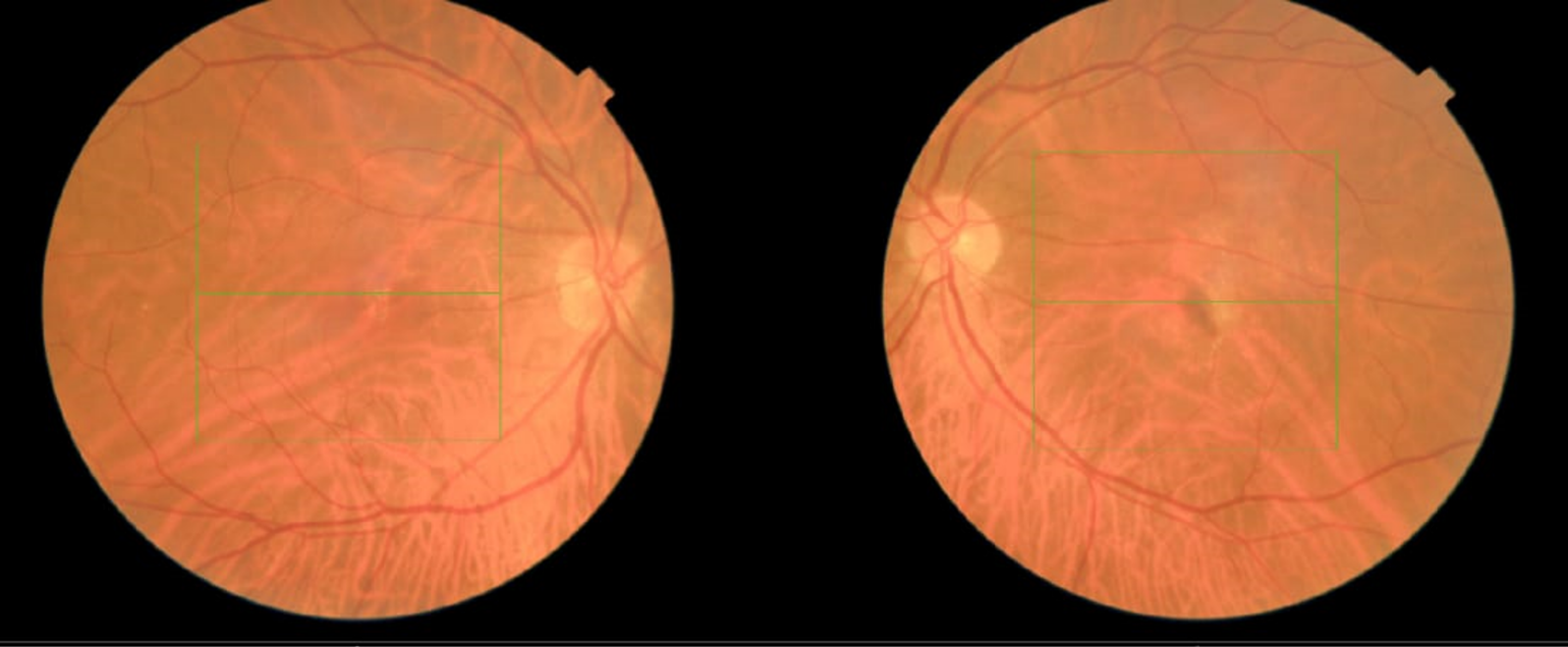
They had been referred to the university hospital for a sudden drop in visual acuity and retinal haemorrhage in both eyes.
Ophthalmological examination revealed a visual acuity of 3/10 in the right eye and 2/10 in the left for the first patient, and 2/10 in the right eye and 2/10 in the left for the second. In terms of the anterior segment, all our patients were pseudophakic in both eyes.
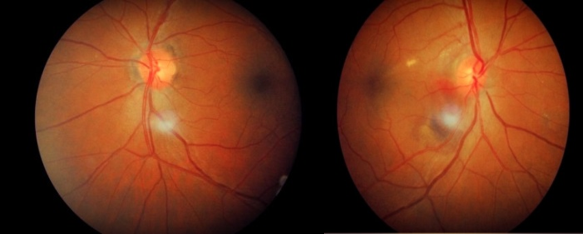
On fundus examination, the first patient showed an attenuated, irregular foveolar sheen, discrete subretinal deposits in the right eye, deep nodular lesions in the peripheral orange area, and retinal elevation with an attenuated, irregular foveolar sheen in the left eye.
In the second patient, we observed deep nodular orange lesions in the periphery, with an attenuated, irregular foveolar sheen in both eyes.
3.1. In OCT:
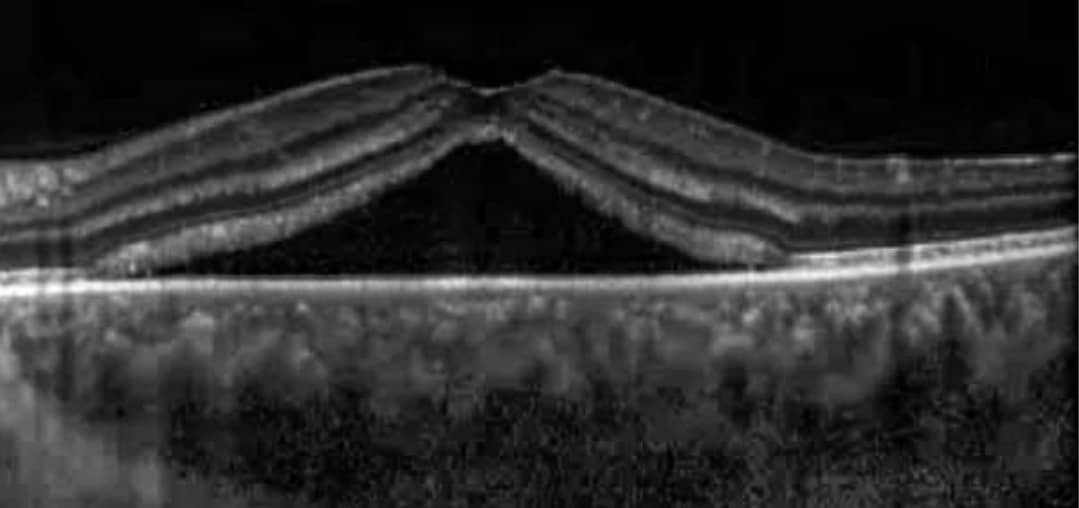
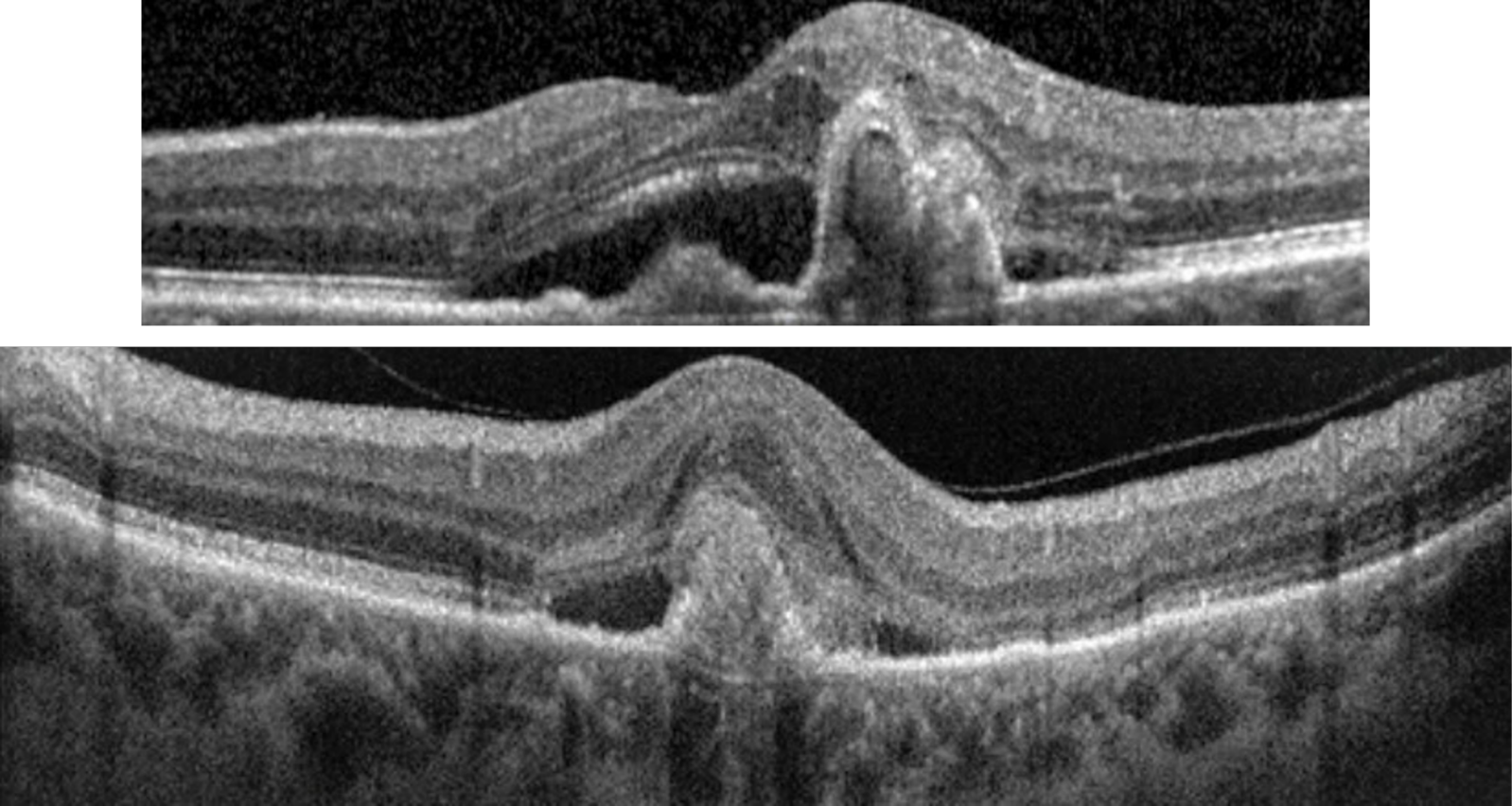
In the first patient, the right eye showed a retinal fluid bubble, reflecting a Retinal Sereous Detachment that was pushing back the foveolar depression, suggesting central serous chorioretinitis.
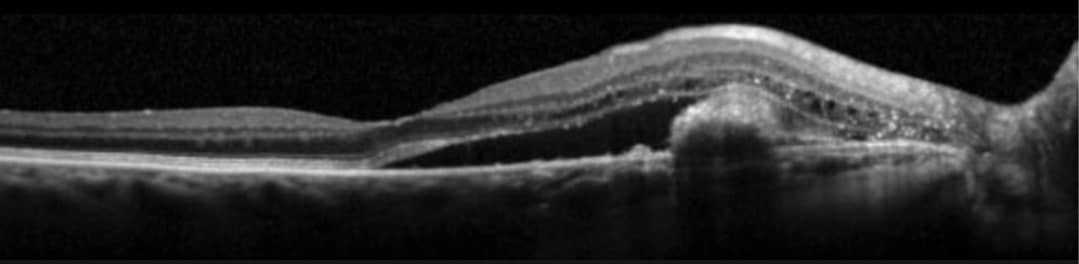
A polyp appeared in the form of a raised lesion of the retinal pigment epithelium (dome-shaped detachment of the retinal pigment epithelium) at the origin of a Retinal Sereous Detachment (RSD) pushing back the foveolar depression, raising the possibility of idiopathic polypoidal choroidal vasculopathy in the right eye.
In the second patient, we found a polyp appearing as a raised lesion in the retinal pigment epithelium, pushing back the foveolar depression, suggesting idiopathic PCV in both eyes.
3.2. In Fluorescein Angiography:
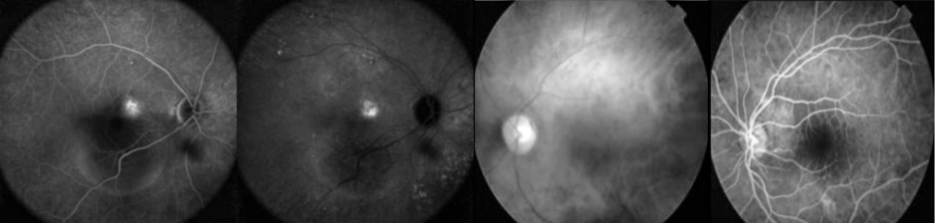
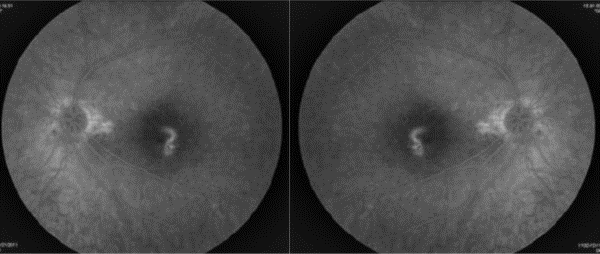
In the first patient, fluorescein angiography showed the presence of a leak point or retinal hyperpermeability in the right eye, and polyps in the peripheral choroidal and macular vascular network in the left eye at early times, with increased hyperfluoroscence at intermediate and late times.
In the second patient, we observed macular of retinal pigment epithelium alterations in both eyes, the presence of a leak point or retinal hyperpermeability associated with polyps within the macular choroidal vascular network at early times, with increased hyperfluoroscence at intermediate and late times.
3.3. What to do:
Based on international recommendations, the management of acute central serous chorioretinitis remains an observation, but in the case of chronic central serous chorioretinitis, intravitreal injections of anti-VEGF are indicated, as in the management of PCV.
Our patients received three intravitreal injections of anti-VEGF.
After monitoring the intravitreal injections, we observed the regression of Retinal Sereous Detachment (RSD) with an improvement in visual acuity, but persistent RSD in the left eye region in the first patient. And persistent RSD in both eyes for the second patient.
We indicated photodynamic therapy (PDT) with verteporfin.
4. Discussion
The pachychoroid spectrum represents a relatively recent and increasingly recognized nosological entity in retinal and choroidal diseases, encompassing a group of disorders that share common structural and functional alterations of the choroid. First described in 2013 by Bailey Freund and colleagues, this concept emerged from the need to better characterize chorioretinal conditions previously considered heterogeneous [1]. Advances in multimodal retinal imaging, particularly enhanced depth imaging optical coherence tomography (EDI-OCT), have played a pivotal role in improving the understanding of choroidal morphology and have contributed significantly to the recognition of pachychoroid-related disorders.
Pachychoroid is classically defined by a diffuse or focal increase in choroidal thickness, predominantly involving the outer choroidal layers. This thickening is associated with dilatation of large choroidal vessels, known as pachyvessels, located adjacent to Bruch’s membrane. These pachyvessels compress the overlying choriocapillaris, leading to its attenuation, as well as thinning of Sattler’s layer [1, 2]. Such structural changes are frequently accompanied by retinal pigment epithelium (RPE) dysfunction, which plays a central role in the pathophysiology of pachychoroid spectrum disorders. The resulting impairment of choroidal circulation and RPE integrity contributes to the development of serous retinal detachment, pigmentary alterations, and, in some cases, choroidal neovascularization.
Currently, the pachychoroid spectrum includes well-established entities such as central serous chorioretinopathy (CSCR) and polypoidal choroidal vasculopathy (PCV), as well as more recently described conditions including pachychoroid pigment epitheliopathy, type 1 neovascularization secondary to pachychoroid, pachydrusen, focal or diffuse choroidal excavation, and peripapillary pachychoroid. Although these entities differ in their clinical presentation and severity, they share a common choroidal phenotype, supporting the concept of a disease continuum rather than isolated conditions.
Our case series illustrates the complexity of this spectrum and highlights the diagnostic and therapeutic challenges encountered in clinical practice, particularly when multiple risk factors and overlapping entities coexist. The two patients, aged 60 and 65 years, shared several systemic and ocular characteristics that are increasingly recognized as relevant in the pathophysiology of pachychoroid-related diseases. Both were hypertensive and receiving long-term systemic corticosteroid therapy, a well-established risk factor for choroidal hyperpermeability and CSCR. In addition, both patients were pseudophakic, excluding lens opacity as a confounding factor for fundus visualization and emphasizing that pachychoroid spectrum disorders may persist or progress independently of cataract or cataract surgery.
The acute presentation with sudden loss of visual acuity and bilateral retinal hemorrhages prompted referral to a tertiary care center, reflecting the potentially aggressive and vision-threatening nature of pachychoroid-related diseases, particularly PCV. At presentation, visual acuity was markedly reduced in both patients, consistent with macular involvement and subretinal fluid accumulation. Fundus examination revealed hallmark features of the pachychoroid spectrum, including attenuated and irregular foveolar sheen, discrete subretinal deposits, and deep orange nodular lesions, especially in the peripheral retina. These orange nodules are highly suggestive of polypoidal lesions and constitute an important clinical clue for the diagnosis of PCV [5, 6].
Optical coherence tomography played a central role in characterizing the retinal and choroidal abnormalities. In the first patient, OCT of the right eye demonstrated a serous retinal detachment (SRD) displacing the foveolar depression, initially suggestive of CSCR. However, the presence of a dome-shaped pigment epithelial detachment (PED), corresponding to a polypoidal lesion at the origin of the SRD, strongly suggested idiopathic PCV. This coexistence of CSCR-like features and PCV within the same eye illustrates the concept of a pachychoroid continuum rather than clearly separated disease entities. In the second patient, bilateral dome-shaped elevations of the RPE with foveolar displacement were observed, supporting a diagnosis of bilateral idiopathic PCV.
Fluorescein angiography further corroborated these findings by revealing focal leakage points consistent with choroidal hyperpermeability, as well as early hyperfluorescent polypoidal lesions with progressive leakage at intermediate and late phases. These angiographic patterns highlight the limitations of relying solely on clinical examination or OCT, as pachychoroid-related neovascular or aneurysmal lesions may be subtle or misinterpreted, particularly in early or atypical presentations. As emphasized in previous studies, multimodal imaging including fluorescein angiography and indocyanine green angiography is essential to differentiate CSCR from PCV and other causes of serous retinal detachment [2, 3].
The bilateral involvement observed in both patients supports the systemic nature of pachychoroid spectrum disorders. Hypertension and prolonged corticosteroid therapy may contribute to choroidal vascular dysregulation, increased hydrostatic pressure, and choroidal thickening, thereby promoting the development of pachyvessels, attenuation of the choriocapillaris, and subsequent RPE dysfunction. These mechanisms likely explain the coexistence of CSCR-like features and PCV within the same patients, as observed in our series.
From a therapeutic perspective, management decisions were guided by international recommendations. Acute CSCR is typically managed conservatively, as spontaneous resolution is common. In contrast, chronic CSCR and pachychoroid-associated neovascular disorders such as PCV require active treatment, most commonly with intravitreal anti-VEGF agents [9, 10, 11, 12, 13, 14]. Both patients received three intravitreal anti-VEGF injections, resulting in partial anatomical and functional improvement, including regression of SRD and improvement in visual acuity. However, persistent SRD was observed in the left eye of the first patient and bilaterally in the second patient, highlighting the limited efficacy of anti-VEGF monotherapy in PCV.
This partial response is consistent with existing literature describing PCV as relatively resistant to anti-VEGF treatment alone, particularly in the presence of well-developed polypoidal lesions and branching vascular networks. The persistence of subretinal fluid despite repeated injections justified the indication for photodynamic therapy (PDT) with verteporfin. PDT directly targets abnormal choroidal vessels and has been shown to induce polyp regression more effectively than anti-VEGF monotherapy, especially when used in combination regimens [9, 10, 11, 12, 13, 14].
The decision to proceed with PDT after an incomplete response to anti-VEGF therapy aligns with current evidence supporting a stepwise or combined therapeutic approach. Several studies have demonstrated higher rates of polyp closure and improved anatomical outcomes when PDT is followed by intravitreal anti-VEGF injections, compared with protocols in which anti-VEGF therapy precedes PDT. This synergistic effect can be explained by complementary mechanisms of action: PDT induces selective occlusion of abnormal choroidal vasculature, while anti-VEGF agents reduce vascular permeability and suppress secondary neovascular activity.
This case series underscores the importance of recognizing pachychoroid spectrum disorders as dynamic, overlapping entities. The coexistence of CSCR-like features and PCV within the same patients highlights the necessity of meticulous multimodal imaging and individualized therapeutic strategies. Early and accurate diagnosis is essential to prevent chronic retinal damage and irreversible visual loss, particularly in patients with systemic risk factors such as hypertension and long-term corticosteroid therapy.
5. Conclusion
Our case series underscores the fact that cataract may conceal underlying pachychoroid spectrum disorders, thereby delaying diagnosis and appropriate management. It also highlights that certain forms of central serous chorioretinopathy may evolve rapidly toward polypoidal choroidal vasculopathy, reinforcing the concept of a dynamic and progressive pachychoroid continuum rather than isolated disease entities. Consequently, regular and long-term follow-up of patients diagnosed with central serous chorioretinopathy is essential, particularly in the presence of known risk factors such as systemic hypertension and prolonged corticosteroid therapy.
The distinction between central serous chorioretinopathy and polypoidal choroidal vasculopathy remains challenging, as both conditions share common morphological features on optical coherence tomography, including serous retinal detachment and retinal pigment epithelium abnormalities. Small polypoidal lesions may present only with limited serous retinal detachment or small serous pigment epithelial detachments, without overt exudative or hemorrhagic signs, increasing the risk of misdiagnosis. Conversely, advanced forms of central serous chorioretinopathy may be associated with diffuse breakdown of the blood–retinal barrier, lipid exudation, and even macular hemorrhage secondary to neovascular complications, thereby mimicking the clinical and imaging criteria of polypoidal choroidal vasculopathy.
In this context, multimodal imaging plays a pivotal role in refining the diagnosis. Indocyanine green angiography, complemented by fluorescein angiography, remains indispensable for differentiating these two entities within the pachychoroid spectrum, allowing accurate identification of polypoidal lesions and choroidal vascular abnormalities. The pachychoroid spectrum concept, which encompasses both central serous chorioretinopathy and polypoidal choroidal vasculopathy, provides a unifying framework that facilitates a better understanding of disease progression and guides appropriate therapeutic decision-making.
Based on evidence from randomized clinical trials such as EVEREST I, EVEREST II and PLANET [7, 8, 9, 10, 11, 12, 13, 14], verteporfin photodynamic therapy combined with intravitreal anti-VEGF injections currently represents the gold standard for the management of polypoidal choroidal vasculopathy associated with choroidal hyperpermeability, as well as for cases of central serous chorioretinopathy refractory to anti-VEGF monotherapy. This therapeutic strategy takes advantage of the complementary mechanisms of action of both treatments: photodynamic therapy induces selective angio-occlusion of abnormal choroidal vessels, while anti-VEGF agents exert anti-angiogenic, anti-permeability and angio-occlusive effects.
The synergistic use of verteporfin photodynamic therapy and anti-VEGF therapy may therefore lead to improved anatomical and functional outcomes, while reducing the need for repeated retreatments, lowering the incidence of hemorrhagic complications, and minimizing the risk of long-term chorioretinal atrophy. Ultimately, early recognition of pachychoroid spectrum disorders, appropriate use of multimodal imaging, and individualized combination therapy are key to optimizing visual prognosis and preserving long-term retinal integrity in affected patients.
References
- S Mrejen, A Matet, A Manassero, A Daruich, N Cassoux, F Behar-Cohen: Differential diagnoses of central serous chorioretinopathy. The Ophthalmology Notebooks 2019;n°232:49-52. Pagination pdf ¼.
- F Fajnkuchen, B Wolff, C Delahaye-Mazza, G Quentel: Multimodal imaging of polypoidal choroidal vasculopathy. . The Ophthalmology Notebooks 2012;n°162:50-5. Pagination pdf 1/6
- M. Hee et al. Optical coherence tomography of central serous chorioretinopathy Am J Ophthalmol(1995).[CrossRef] [PubMed]
- X. Burelle, C. Dot, O. Henckes, P. Wary, D. Meurie, F. May. Idiopathic choroidal polypoidal vasculopathy and therapeutic difficulties: about a case. french ophthalmology journal. Volume 30, Supplement 2, April 2007, Page 2S273[CrossRef]
- D. Hussain et al. Idiopathic central serous chorioretinopathy Indian J Ophthalmol (1998)
- K. Mitarai et al. Three-dimensional optical coherence tomographic findings in central serous chorioretinopathy and choroidal polypoidal vasculopathy Graefes Arch Clin Exp Ophthalmol(2006)[CrossRef] [PubMed]
- Koh A, Lee WK, Chen L-J, Chen S-J, Hashad Y, Kim H, et al. EVEREST study: efficacy and safety of verteporfin photodynamic therapy in combination with ranibizumab or alone versus ranibizumab monotherapy in patients with symptomatic macular polypoidal choroidal vasculopathy. Retina Phila Pa 2012;32:1453—64,[CrossRef] [PubMed]
- Oishi A, Miyamoto N, Mandai M, Honda S, Matsuoka T, Oh H, et al. LAPTOP study: a 24-month trial of verteporfin versus ranibizumab for polypoidal choroidal vasculopathy. Ophthalmology 2014;121:1151—2, http://dx.doi.org/10.1016/j.ophtha.2013.12.037.[CrossRef] [PubMed]
- Hikichi T, Higuchi M, Matsushita T, Kosaka S, Matsushita R, Takami K, et al. Results of 2 years of treatment with as-needed ranibizumab reinjection for polypoidal choroidal vasculopathy. Br J Ophthalmol 2013;97:617—21, http://dx.doi.org/10.1136/bjophthalmol-2012-302652.[CrossRef] [PubMed]
- Koh A, Lai TYY, Takahashi K, Wong TY, Chen L-J, Ruamviboonsuk P, et al. Efficacy and safety of ranibizumab with or without verteporfin photodynamic therapy for polypoidal choroidal vasculopathy: a randomized clinical trial. JAMA Ophthalmol 2017;135:1206—13, http://dx.doi.org/10.1001/jamaophthalmol.2017.4030.[CrossRef] [PubMed]
- Lee WK, Iida T, Ogura Y, Chen S-J, Wong TY, Mitchell P, et al. Efficacy and safety of intravitreal aflibercept for polypoidal choroidal vasculopathy in the PLANET study: a randomized clinical trial. JAMA Ophthalmol 2018;136:786—93, http://dx.doi.org/10.1001/jamaophthalmol.2018.1804.[CrossRef] [PubMed]
- Lee WK, Lee PY, Lee SK. Photodynamic therapy for polypoidal choroidal vasculopathy: vaso-occlusive effect on the branching vascular network and origin of recurrence. Jpn J Ophthalmol 2008;52:108—15, http://dx.doi.org/10.1007/s10384-007-0501-y.[CrossRef] [PubMed]
- Zhao M, Zhou H-Y, Xu J, Zhang F, Wei W-B, Liu NP. Combined photodynamic therapy and ranibizumab for polypoidal choroidal vasculopathy: a 2-year result and systematic review. Int J Ophthalmol 2017;10:413—22, http://dx.doi.org/10.18240/ijo.2017.03.14.[CrossRef]
- Wang W, He M, Zhang X. Combined intravitreal Anti-VEGF and photodynamic therapy versus photodynamic monotherapy for polypoidal choroidal vasculopathy: a systematic review and meta-analysis of comparative studies. PLOS ONE 2014;9:e110667, http://dx.doi.org/10.1371/journal.pone.0110667[CrossRef] [PubMed]