

Background: In the landscape of education, the decision-making process that leads students to pursue or reject nursing as a career is a multifaceted phenomenon shaped by a plethora of influences ranging from personal experiences to societal norms. Aim: To explore non-nursing students' insights on nursing education, seeking to shed light on the considerations and challenges that influence their views on nursing education. Materials & Methods: A qualitative approach using thematic analysis were utilized. Lincoln and Guba's framework for rigor and trustworthiness directed the validation process. Semi-structured interviews based on vetted questionnaires yielded the data. Results: Analysis of interviews with ten (10) non-nursing college students revealed three key themes: 1) initial insights, 2) factors influencing their insights, and 3) difficulty of nursing education. Non-nursing students view nursing education as multifaceted and rigorous, recognizing the profession's complexity but have reservations about the heavy workload, intense clinical demands, and health risks, particularly highlighted by the pandemic, which contributes to their reluctance to choose nursing as a career path. Implications: Addressing perceptions, enhancing curricula, offering mentorship, and providing emotional support, nursing education can be improved, steering more students towards a career in nursing. Conclusion: Non-nursing students respect the complexity of the nursing profession but are deterred by its demands and risks, indicating a need for educational reforms to better convey the role, value, and opportunities within nursing to encourage more students into the field.
A Different Lens: Insights of Non-Nursing Students in Nursing Education
May 12, 2024
June 28, 2024
July 15, 2024
July 16, 2024
This is an Open Access article, distributed under the terms of the Creative Commons Attribution 4.0 International License (http://creativecommons.org/licenses/by/4.0/), which permits unrestricted use, distribution and reproduction in any medium or format, provided the original work is properly cited.
Abstract
1. Highlights
What is known to the topic:
- Non-nursing students often perceive nursing as a challenging and multifaceted field, influenced by various personal and societal factors.
- The decision to pursue or reject a career in nursing is shaped by initial insights, family influences, perceived risks, and the emotional and physical demands associated with the profession.
- Nursing is seen as a profession requiring both technical skills and emotional resilience, with a significant emphasis on patient care and complex clinical responsibilities.
What this paper adds
- This paper provides a detailed exploration of non-nursing students' insights into nursing education, highlighting their respect for the profession's complexity but reluctance due to its demands and risks.
- Non-nursing students' perceptions are influenced by personal experiences, family expectations, and the perceived risks associated with nursing, particularly highlighted during the pandemic.
- Addressing these perceptions through educational reforms, mentorship, and emotional support could improve the attractiveness of nursing as a career.
2. Introduction
Nursing education stands as the backbone of the healthcare industry responsible for delivering the optimum patient care delivery. In the Philippines, nursing is considered the most pursued career making the Philippines as the largest exporter of nurses to the healthcare industry globally [1]. As society’s needs continue to develop and evolve, along with the advances in biotechnology, nursing informatics, and quality of care, the perception of nurses is also subjected to change [2]. In this age, the factors that continue to affect the trend in nursing as a profession are individual, educational, organizational managerial, and policy-making factors [3]. One of the factors that students consider when choosing their college degree is employment opportunities [4].
The social status of one person as well as the economic status of a country plays an important role in whether an individual will or will not choose a career of his own choice [5]. Because of this, even if nursing is not an individual’s choice of career, the individual is being coerced by the circumstances he is in to opt for it because of the favorable employment opportunities it poses, especially now that the COVID-19 pandemic has demanded even more number of nurses out in the field [6]. Many students rely on various ranges of insights and experiences when choosing a career. Several students claim that their families, personalities, characteristics, and expectations had an impact on their career decision-making [7].
Contemporary studies highlight a shifting paradigm, with non-nursing students increasingly recognizing the depth and complexity of nursing education. This shift can be attributed to various factors, including increased visibility of nurses in leadership roles, advocacy effects to portray nursing as a science-based discipline, and the emphasis on interdisciplinary collaboration [8]. Significant disparities in the students’ attitudes of nursing students were discovered [9]. Students’ conduct, contentment with their studies, insights of their well-being, aspirations, and academic success are all significantly influenced by the educational environment they experience [10, 11]. A study as described by the nature of nursing jobs was described by young people as having terrible working conditions, shift work, and little autonomy [12] Non-nursing students’ insight of nursing education can be formed by their exposure to educational components such as nursing courses, faculty members, and clinical rotations [13, 14].
It is essential to investigate the career paths chosen by students who participated in a variety of healthcare courses and to investigate the reasons why students who enrolled in other healthcare courses did not select nursing as their preferred career choice [15]. Although there is a growing body of literature on nursing education and perceptions of the nursing profession, the specific insights of non-nursing students—who may have different backgrounds and experiences that influence their perception—are less explored. Thus, a gap exists with a need for more comprehensive exploration of non-nursing students' views on nursing education, which includes understanding their insights, deciding factors, and challenges they associate with the profession. This study will be beneficial as it could also help educational institutions in nursing to craft strategies to attract and retain more students to choose nursing as their profession.
The main aim of this study is to determine and identify non-nursing college students' insights of nursing education. Furthermore, the purpose of this research is to shed light on misconceptions about the Nursing program, as well as reasons why aspiring nurses selected a different career path instead of pursuing Nursing. Specifically, to answer the following research questions: 1) How do non-nursing students perceive nursing education, and what insights can be gained from their perspectives? 2) What are the insights of non-nursing students regarding nursing education? 3) What are the factors that influence the non-nursing student's perception about Nursing Education? and lastly, 4) What do non-nursing students think of the academic rigor and difficulty level of nursing education?
2. Materials and Methods
2.1. Design
A descriptive qualitative research design was chosen for this study which focuses on understanding a research query as a humanistic or idealistic approach to exploring and understanding people’s beliefs, experiences, attitudes, behavior, and interactions [16]. Specifically, to determine and identify non-nursing college students' insights toward nursing education
2.2. Participants and Settings
The locale of the study was confined to the primary nursing institution of the researchers. The inclusion criteria were non-nursing students, college level, at least 18 years old, currently enrolled in the first semester of the academic year 2023-2024. who is willing to participate to provide invaluable insights towards nursing. A non-probability sampling was used to allow researchers to select participants based on specific criteria that align with the research objectives [17].
2.3. Instrumentation
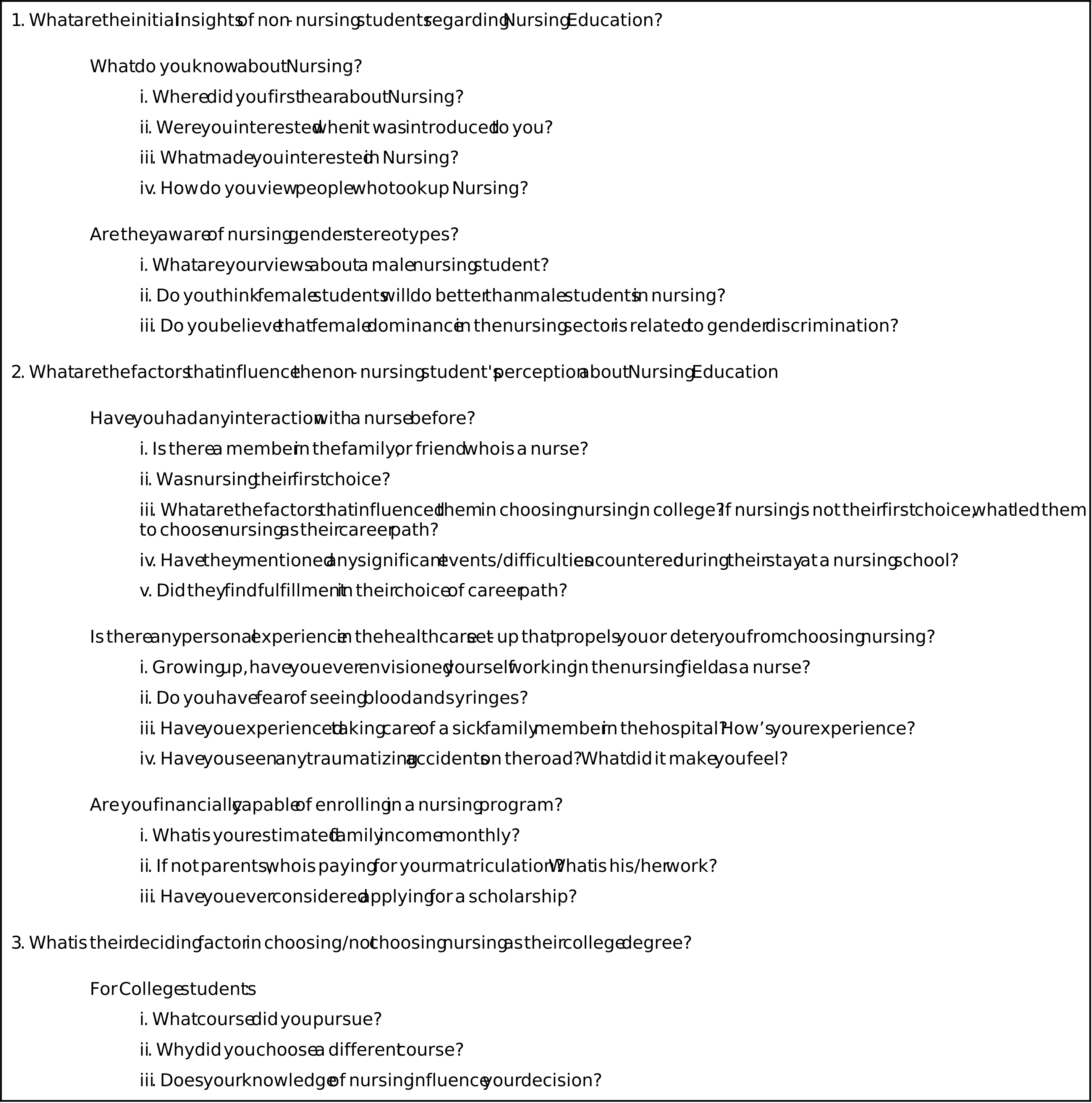
The interview tool (Appendix A) was validated by three nursing experts in qualitative. The core question for this study is: how do non-nursing students perceive nursing education, and what insights can be gained from their perspectives?
2.4 Ethical Considerations
The ethical application was approved by the Institutional Ethics Review Board Committee of the researchers’ institution. An informed consent was given to and signed by all participants before the start of the interviews explaining the risks, benefits, privacy, confidentiality, and the right to withdraw. All electronic archives, including recordings and personal information, were deleted upon the study's completion and analysis.
2.5 Data Gathering
Prior to data gathering, the interviewers had undergone training to conduct interview process facilitated by the research adviser. The researchers made a pre-qualifying form that the participants answered to ensure that they were qualified based on the criteria set by the researchers. The researchers obtained informed consent from the qualified participants, which included a clear explanation of the nature and purpose of the study. Semi-structured interviews were used, and the scheduled interviews were conducted in a private and quiet environment, with the use of open-ended questions to ask participants about their career aspirations, interests, and experiences. The interviews were conducted in Filipino and English and the conversations which lasted between 10 and 25 minutes. Voice recording was performed during the face-to-face interview with their permission while implementing the participant’s privacy. To express gratitude the researchers offered incentives as tokens of appreciation.
2.6. Data Analysis
A thematic analysis approach was employed to identify, analyze, and report patterns (themes) within the data, aiming to produce a comprehensive report. The interviews were audio-recorded using Automatic Speech Recognition (ASR) technology. The data were organized according to the sequence of the interviews (e.g., P1 for participant 1). The gathered data were translated from Filipino to English, carefully and independently read, followed by a second review of the transcriptions. Finally, a summary of the findings was created, and conclusions were drawn based on the research questions.
2.7. Rigor & Trustworthiness
The rigor was based on Lincoln and Guba (1985) [19] four criteria of trustworthiness: 1) establishing credibility by engagement with data and findings, 2) confirmability by identifying qualified participants set on the inclusion criteria, 3) dependability by use of coding systems during analysis, and 4) transferability by providing readers with evidence that the findings could apply to other contexts, situations, times, and populations.
3. Results
3.1. Characteristics of Participants
Ten (10) participants involved in this study, are non-nursing college students coming from different courses (Table 1). 2 participants from School of Pharmacy, 2 participants from School of Optometry, 2 participant from School of Medical Technology, 1 participant from School of Nutrition and Hospitality Management, 1 participant from School of Dentistry, 1 participant taking Bachelor of Arts in Communication, and 1 participant taking Bachelor of Arts in Psychology. The fields of study are diverse but largely centered on healthcare and science-based programs, apart from the student in Hospitality Management, suggesting a focus on both applied sciences and service-oriented education within this cohort of learners. In terms of age, 18 (n=1), 19 (n=2), 21 (n=1), 22 (n=5), 23 (n=1), and 24 (n=1), with the mean of 21.5 years. The students are predominantly in their early twenties, which is typical for undergraduates, except a fourth-year psychology student who is 24.
3.2. Themes
A thematic analysis on the array of interviews revealed three major themes with sub-themes, particularly: 1) initial insights, 2) factors influencing their insights, and 3) difficulty of nursing education.
3.2.1. Initial Insights
Table 2 tackles the initial insight of the Non-Nursing respondents regarding nursing education with subthemes as assistants, patient care and complexity of tasks.
3.2.1.1. Assistant
Most of the respondents stated that the nurses are Doctor’s assistants. The idea that registered nurses work as physician assistants is a common misconception. As nurses help physicians in some of their tasks, especially when it comes to patient care, people think that nurses are the Doctor’s assistants. However, nurses have specific roles and duties in a hospital differentiating them from physician assistants [20). In corroboration of this viewpoint, the researchers have documented the ensuing remarks from participants:
P1: They help doctors and patients in the hospital
P2: Typically the one who helps our doctor n the hospital and of course they also become semi-doctors when there is no doctor… like that)
P10: Mostly everyone knows that s/he is the doctor's helper)
3.2.1.2. Patient Care
Nurses serve people both in communities and hospital settings. Patient care has been one of the main roles when working as a nurse such as rendering care for injuries, medicine administrations, vital signs monitoring, performing diagnostic tests, advocating and comforting patients [21]. To support this statement, the respondents mentioned:
P4: So my idea about the nurses, they are usually the ones in charge of the patient and they are also the ones who go around with the doctors to check on the patients. And then they are also the ones who schedule the time when patients need to take medicine"
P5: Those who take care of patients and those who assist doctors in hospitals
3.2.1.3. Complexity of Task
Nurses have a variety of tasks in the hospital setting, the complexity of the nurse’s task requires knowledge, trained experience, hospitality, and stable well-being to perform their duties to provide optimal care for their patients. As stated, nurses are dedicated to providing competent and compassionate care to individuals with specialized needs [22]. While many nurses consider their work to be a "calling," nursing is a tough field that requires physical and mental effort to execute complex tasks. Reinforcing this claim, the following statements from participants were compiled:
P5: Of course, nursing is also difficult for me, since you take care of patients, you do a lot in the hospital. So it's like... that profession is also inspiring)
P6: Since that course is really hard and I think hmm they are really tired from their duty
P6: For me I think Nursing is a very hard course and I aspired to be a Nurse but I think because of the workload, duties, it became uhm, I chose to be a medtech. But aside from that, I also liked it since my family are nurses
3.2.2. Table 3 tackles the factors that influence the non-nursing respondents’ perception about Nursing Education
3.2.2.1. Fulfillment
International Career Institute (2024) stated that nursing as a job is a meaningful and fulfilling work because of the emotional rewards a nurse receives from caring for patients. Nurses can connect with their patients, thus building a wonderful relationship with them. Non-Nursing students respondents found that the people they know who chose nursing as their course experienced fulfillment in their career [23]. To substantiate this assertion, the following are excerpts of respondents' testimonies:
P2: Yes, because we also talked about how they wanted to help, what they really want is for them to be hands-on with the patients, besides, the fulfillment of the Nurses is also different when you see that your patient is doing well under your care, their satisfaction is different
P4: I think yes because uhm.. whenever I see my sister, I can see that she is passionate about her job and she is happy uhm.. Every time she talks about what she does about nursing.
3.2.2.2. Family Influence
Parental influence is common among asian households, parents believe they have an extreme sense of entitlement which leads to interfering into their child’s future decisions and career paths [24]; these are some of the following phrases that the researchers have gathered from the respondents:
P4: Because..uhm.. parent's decision is the reason because they see..they said my sister is a nurse and uhmm..why don't I take...why don't I take another pre-med course, so that's why the one i chose is pharma. And right now uhm.. I also like it as a pharmacy student.
P8: Because in our family, my mom is actually an optometrist and we already have a clinic in our province, so that's why I took up optometry as a course, so that someone can also manage our family business.
3.2.2.3. Exposure to Risk
When giving care to patients that are sick with new or emerging viruses, nurses face the risk of being exposed to contagious and infectious diseases everyday at work, leading to one of the factors why non-nursing respondents avert the decision in pursuing nursing education [25]. Reinforcing this claim, researchers compiled the following statements from participants:
P2: So that's it, as what I've said, I shifted because of the Pandemic, so I had no other choice but to shift because that's what my parents wanted. So for the peace of mind also, because they don't want me to be on the frontline because that's the time when the Pandemic is at its height, so that was 2020 so I had to make a really fast decision to shift, so even though I didn't want to, I had to.)
P4: I really liked nursing more at first, but my parents persuaded me to take pharma instead because they see the situation of nurses during covid really.. .they are really frontliners...that's why.
3.2.2.4. Physical and Emotional Demands
Studies stating that Nurses indicate difficulty balancing work and home life increases the desire to leave the job. An average nurse works 8, 10, or 12 hour shifts depending on the demand of staff and location. Full time nurses work 36 and 40 hours in a week resulting in over work, fatigue, and burnout [26]. To affirm this perspective, the following remarks have been curated from responses provided by the participants:
P2: ..They had a hard time in terms of Return Demonstration and oral revalida, you can do that, you can do that, because my friends are also Registered Nurses, they just graduated last year so that's what they had the most trouble for, they opened up to me their final task, which is oral revalida, they studied all of that and I think it was randomized.
P3: And of course as a student, the stress right, the fatigue, the lack of sleep when it comes to labs, right..all around duty, there's really no rest, and then she have to go home in Bulacan, so that's it.. That's her struggle.
P7: What I can say is they are surely having a hard time with what they went through as a nursing student, and now working abroad because of course losing your family, being far away. That's the number one thing that's really hard for them.
3.2.3. Difficulty of Nursing Education
Table 4. discusses the non-nursing student’s perception regarding the difficulty level and rigor of nursing education.
3.2.3.1. Fear
Nursing is recognized as a demanding profession due to its job demands, increased expectations, and overwhelming responsibilities. As a result, students are afraid of committing in the nursing course [27]. Most of the respondents stated they fear pursuing nursing courses since they think that nursing is challenging by nature. Handling stressful situations in a hospital setting such as wound care, dealing with blood, syringes, and injuries as well as the heavy responsibility that comes with nursing education makes it difficult for an individual to choose nursing. Underpinning this claim, the following selections represent what the researchers have extracted from the contributions of the respondents:
P5: So, it's like I said, being a nurse is difficult because, of course, it's challenging in a hospital setting, and I was also scared.
P9: I felt weak at that time, I couldn't handle it. I wanted to help, but I knew my first aid skills might not be enough to assist them. I wasn't confident in providing adequate first aid, so in those situations, I would prefer to call someone more knowledgeable or capable.
3.2.3.2. Workload
According to Carayon & Gurses (2008), workload in the nursing profession is high and causes burnout in nurses due to their heavy duties such as charting while providing patient care and medication administration [28]. Also, the overwhelming daily census requires additional time and effort from nurses. To validate this proposition, researchers have assembled the subsequent excerpts from the feedback of respondents:
P2: So, my great grandmother passed away at 99 years old last year, in 2022. I, being my mom's little helper, would go straight to taking care of her, even when I was at school, because she already had a feeding tube.
P6: Yes, maybe I was also scared of the nursing workload; it's really a lot.
3.2.3.3. Application of Skills
Amoo & Enyan (2022) emphasize that application of skills in nursing is crucial in order to provide quality patient care [29]. However, most people know how to render care and perform a certain procedure in an appropriate manner but they cannot properly execute their knowledge in real life situations in a hospital setting. Furthermore, some people lack skills when interacting with patients and are therefore unable to connect with their clients. In confirmation of this statement, highlighted below are a series of illustrative quotes sourced from the respondents by the researchers:
P2: Yes, NGT (Nasogastric Tube). She can't intake orally due to Alzheimer’s Disease, so she can't open her mouth physically. NGT is necessary, and inserting it is challenging because she cries and screams. It's also difficult to draw blood from her because of her condition. Despite the challenges, there's a unique fulfillment and satisfaction in taking care of her, as I love what I do.
P8: When my mom was hospitalized, it was also challenging because you need to constantly monitor her current situation and see if she needs anything. For me, it's a bit difficult because you really have to be focused and attentive to the patient all the time.
4. Discussion
This study's findings reveals that non-nursing students' perceptions of nursing education are influenced by a complex interplay of factors, including personal experiences, family expectations, social media, perceived professional risks, and the emotional and physical demands of the nursing field. Moreover, the non-nursing students' perception of nursing education also reveals a dichotomy between a stereotypical viewpoint of the profession as predominantly a caregiver’s role and an emerging recognition of the discipline's complexity. These students may see nursing as a field requiring a balance of technical skill, emotional resilience, and intellectual rigor, contrary to the traditional image of nurses as doctors' assistants). This acknowledgment may stem from increased visibility of nurses in advanced roles and interdisciplinary teams.
In contrast, the study of Cho et al. (2003) highlights that non-nursing students place the highest importance on "aptitude" for their chosen field of study, suggesting a career choice aligned with personal competence and interest, with "employability" being a secondary yet meaningful factor [32]. This implies that these students are inclined toward majors that resonate with their perceived innate abilities and interests and consider career prospects as a subsequent priority. Conversely, non-nursing participants in this study also weigh their innate abilities or interests more heavily in their decision-making process.
The views given by non-nursing students, over the course of their education and experiences, come to view nursing education as a hard and dynamic sector that requires a diverse range of skills. This supports the study of Watson et al. (2003) [32] wherein the view of nursing goes beyond the outdated notion of nurses as only helpers to healthcare professionals and instead highlights the roles that nurses play in sophisticated tasks. Despite the fact that there are still gaps in completely recognizing the breadth and depth of nursing education, there is a positive trend in which students who are not majoring in nursing are coming to realize the level of knowledge and holistic care that is involved in nursing [13].
Exposure to nursing educational components emerged as a crucial element in forming insights about the profession. This study supports the study of Lee &Kim (2006) [33] as non-nursing students who interacted with nursing course, having received nursing care, profession of relatives who have been hospitalized or sick developed a more profound respect for the multifaceted nature of nursing roles and responsibilities. However, despite of positive image received from the participants, this suggests that strategic inclusion of interprofessional educational experiences could foster greater recognition and appreciation of the nursing discipline.
The perceived difficulties in nursing education, including fear, workload, and the application of skills, pose significant barriers. These challenges are critical areas for nursing education programs to address - both to improve the student experience and to ensure a stable and competent nursing workforce in the future. The scrutiny of nursing education's quality in the Philippines, as suggested by our study, indicates a need to revisit educational strategies and possibly reform curricula and approaches in nursing programs.
Lastly, there's a compelling dialogue about the multifactorial considerations that non-nursing students integrate into their perceptions of nursing education. Their views are shaping an emerging paradigm where the nursing profession is increasingly being seen through a lens of complexity, skill diversity, and emotional intelligence, rather than the antiquated notion of nurses solely providing bedside care.
5. Conclusion
In conclusion, the study examining non-nursing students' views on nursing education reveals a complex tapestry of awareness and influences shaping their perceptions. Recognizing nursing's breadth, extending from patient care to tasks akin to other health sciences, students still grapple with concerns about the field's academic intensity, clinical rigors, and heightened risks – magnified amidst a global pandemic. Decisions about pursuing nursing are often intertwined with familial expectations, personal goals, and societal values, reflecting a shift toward a more nuanced appreciation of the nursing profession that still contends with knowledge gaps and underestimation of its challenges. Educational institutions and healthcare providers must therefore actively work towards presenting an authentic, comprehensive image of nursing, encouraging constructive engagement to close the gap between misconceptions and the realities of nursing, and guiding prospective students to perceive nursing as a highly rewarding and intellectually stimulating career that aligns with their unique capabilities and career goals.
6. Implications for Practice
The findings of the study have a several of implications for nursing practice and education. These include the necessity of educational outreach to clarify the scope and nature of nursing, the development of curriculum that addresses broader perceptions of rigor, and the improvement of recruitment strategies to combat misconceptions about nursing education. This highlights the significance of mentorship and faculty support in order to offer students with realistic perspectives on the nursing profession, as well as the requirement of career guidance in order to enable students to connect their interests.
7. Limitations and Recommendations
One of the most major limitations of this study is that it relied on a limited sample size from a single educational institution during its research. It is possible that the findings cannot be generalized to the larger population of students who are not majoring in nursing due to the concentration of the study. Furthermore, the study mostly collects qualitative observations, which, albeit being abundant in specifics, may not capture quantifiable data that may provide a more thorough overview of the perspectives of non-nursing students across a variety of areas or cultural backgrounds.
For future research, it would be beneficial to broaden the scope by including a larger and more diverse sample size spanning multiple educational institutions and geographic locations. Incorporating quantitative methods alongside qualitative analysis could also provide a more robust understanding of prevalent perceptions and factors influencing non-nursing students' views on nursing education. Additionally, longitudinal studies could offer valuable insights into how perceptions of nursing education evolve over time as non-nursing students progress in their respective fields and as the nursing profession continues to evolve. This comprehensive approach could inform strategies for improving nursing education's appeal and for addressing misconceptions about the profession.
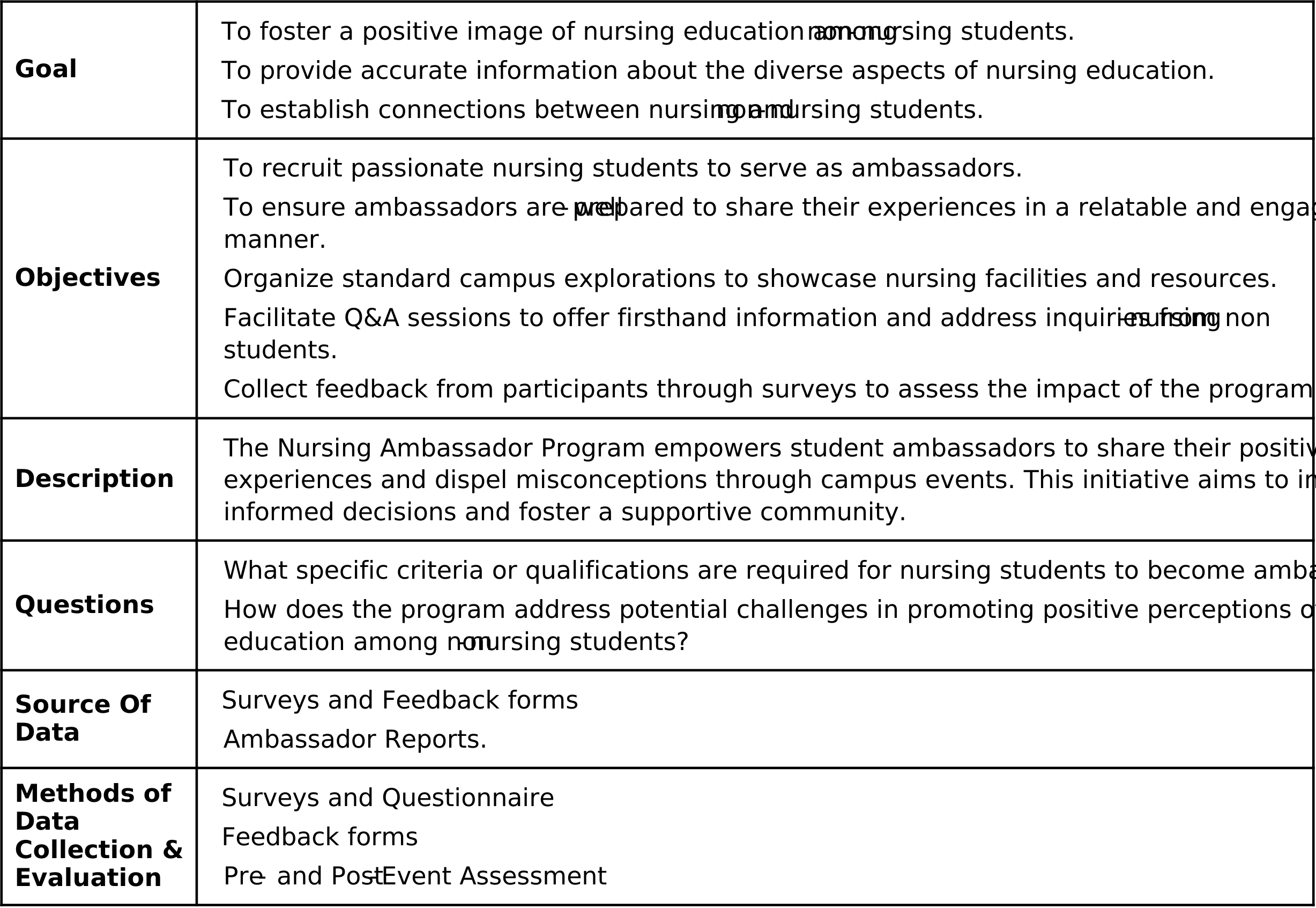
The researchers also recommend for the necessity for schools to highlight the various career paths that are available within the nursing profession. This is a noteworthy advantage that nursing programs, such as the utilization of social media platforms, the career guidance and counseling program, and the nursing ambassador program (Appendix B), have, which educational institutions may take into consideration and possibly utilize in order to attract students.
Author Contributions: SRHB, AB, KKB, CJC, NDC, RKDT, PYG, CMM, JMM, ATV: Conceptualization, Methodology, Formal analysis, Investigation, Data curation, Writing – original draft, Project administration. RAN: Conceptualization, Formal analysis, Investigation, Supervision, Validation, Visualization, Writing – review & editing,
Funding: N/A
Data Availability Statement: N/A
Acknowledgments: The researchers acknowledge the guidance and support of Centro Escolar University – School of Nursing
Conflicts of Interest: The authors declare no conflict of interest
Appendix
Appendix A: Semi-Structured Interview Tool
Appendix B: Sample Program Proposal - Nursing Ambassador Program
References
- Adhikari, R., & Plotnikova, E. (Eds.). (2023). Nurse migration in Asia: Emerging patterns and policy responses. Taylor & Francis.[CrossRef]
- Blau, A., Sela, Y., & Grinberg, K. (2023). Public Perceptions and Attitudes on the Image of Nursing in the Wake of COVID-19. International Journal of Environmental Research and Public Health, 20(6), 4717.https://doi.org/10.3390/ijerph20064717[CrossRef] [PubMed]
- Tamata, A. T., & Mohammadnezhad, M. (2023). A systematic review study on the factors affecting shortage of nursing workforce in the hospitals. Nursing Open, 10(3), 1247-1257. https://doi.org/10.1002/nop2.1434[CrossRef] [PubMed]
- Hunt, G., Verstappen, A., Stewart, L., Kool, B., & Slark, J. (2020). Career interests of undergraduate nursing students: A ten-year longitudinal study. Nurse Education in Practice, 43, 102702. https://doi.org/10.1016/j.nepr.2020.102702[CrossRef] [PubMed]
- Misran, N., Sahuri, S. N. S., Arsad, N., Hussain, H., Zaki, W. M. D. W., & Aziz, N. A. (2012). The Influence of Socio-Economic Status among Matriculation Students in Selecting University and Undergraduate Program. Procedia - Social and Behavioral Sciences, 56, 134–140. https://doi.org/10.1016/j.sbspro.2012.09.640[CrossRef]
- Bai, W., Xi, H. T., Zhu, Q., Wang, Z., Han, L., Pan, C., Cai, H., Zhao, Y., Chen, L., Ge, Z. M., Ji, M., Zhang, H., Yang, B. X., Liu, S., Cheung, T., Ungvári, G. S., An, F., & Xiang, Y. T. (2021). Changes in nursing students’ career choices following the COVID-19 pandemic in China. Frontiers in Psychiatry, 12. https://doi.org/10.3389/fpsyt.2021.657021[CrossRef] [PubMed]
- Abe, E., & Chikoko, A. (2020). Ethel Ndidiamaka, and Vitallis Chikoko. Exploring the Factors That Influence the Career Decision of STEM Students at a University in South Africa. International Journal of STEM Education, 7 (1). https://doi.org/10.1186/s40594-020-00256-x.[CrossRef]
- Risling, T. (2017). Educating the nurses of 2025: Technology trends of the next decade. Nurse Education in Practice, 22, 89–92. ttps://doi.org/10.1016/j.nepr.2016.12.007[CrossRef] [PubMed]
- Mayya, N.& Roff, G. (2016). Students’ Perceptions of Learning Nursing Education: A descriptive qualitative approach. Nurse Education in Practice, 103325. https://doi.org/1580.15724016/j.nepr.2.103325486
- Hossain, S., O’Neill, S., & Strnadová, I. (2023). What constitutes student well-being: a scoping review of students’ perspectives. Child indicators research, 16(2), 447-483. https://doi.org/10.1007/s12187-022-09990-w[CrossRef] [PubMed]
- Tripon, C., Gonța, I., & Bulgac, A. (2023). Nurturing minds and sustainability: an exploration of educational interactions and their impact on student well-being and assessment in a sustainable university. Sustainability, 15(12), 9349. https://doi.org/10.3390/su15129349[CrossRef]
- Glerean, N., Hupli, M., Talman, K., & Haavisto, E. (2017). Young peoples' perceptions of the nursing profession: An integrative review. Nurse Education Today, 57, 95-102. https://doi.org/10.1016/j.nedt.2017.07.008[CrossRef] [PubMed]
- Liaw, S. Y., Wu, L. T., Holroyd, E., Wang, W., Lopez, V., Lim, S., & Chow, Y. L. (2016). Why not nursing? Factors influencing healthcare career choice among Singaporean students. International Nursing Review, 63(4), 530-538. https://doi.org/10.1111/inr.12312[CrossRef] [PubMed]
- Girvin, J., Jackson, D., & Hutchinson, M. (2016). Contemporary public perceptions of nursing: a systematic review and narrative synthesis of the international research evidence. Journal of nursing management, 24(8), 994-1006. https://doi.org/10.1111/jonm.12413[CrossRef] [PubMed]
- Natan, M. B., & Becker, F. (2010). Israelis’ perceived motivation for choosing a nursing career. Nurse education today, 30(4), 308-313. https://doi.org/10.1016/j.nedt.2009.08.006[CrossRef] [PubMed]
- LoBiondo-Wood, G., & Haber, J. (2021). Nursing research E-book: methods and critical appraisal for evidence-based practice. Elsevier Health Sciences.
- Gill, S. L. (2020). Qualitative sampling methods. Journal of Human Lactation, 36(4), 579-581.v https://doi.org/10.1177/0890334420949218[CrossRef] [PubMed]
- Vaismoradi, M., Turunen, H., & Bondas, T. (2013). Content analysis and thematic analysis: Implications for conducting a qualitative descriptive study. Nursing & health sciences, 15(3), 398-405. https://doi.org/10.1111/nhs.12048[CrossRef] [PubMed]
- Dyar, K. L. (2022, January). Qualitative inquiry in nursing: Creating rigor. In Nursing Forum (Vol. 57, No. 1, pp. 187-200). https://doi.org/10.1111/nuf.12661[CrossRef] [PubMed]
- Potter, P. A., Perry, A. G., Stockert, P. A., & Hall, A. (2021). Fundamentals of nursing. Elsevier Health Sciences.
- Black, B. (2022). Professional nursing-e-book: concepts & challenges. Elsevier Health Sciences.
- Wakefield, M., Williams, D. R., & Le Menestrel, S. (2021). The future of nursing 2020-2030: Charting a path to achieve health equity. National Academy of Sciences.[CrossRef] [PubMed]
- Kallio, H., Kangasniemi, M., & Hult, M. (2022). Registered nurses' perceptions of their career—An interview study. Journal of nursing management, 30(7), 3378-3385. https://doi.org/10.1111/jonm.13796[CrossRef] [PubMed]
- Rasool, S. (2021). The Impact of South Asian Parental Involvement Behaviors on Children’s Academic Achievement: Instrument Development and Exploratory Factor Analysis. Eric. https://eric.ed.gov/?id=EJ1308727
- Al Thobaity, A., & Alshammari, F. (2020). Nurses on the frontline against the COVID-19 pandemic: an integrative review. Dubai medical journal, 3(3), 87-92.[CrossRef] [PubMed]
- Fukuzaki, T., Iwata, N., Ooba, S., Takeda, S., & Inoue, M. (2021). The Effect of Nurses’ Work–Life Balance on Work Engagement: The Adjustment Effect of Affective Commitment. Yonago Acta Medica, 64(3), 269–281. https://doi.org/10.33160/yam.2021.08.005[CrossRef] [PubMed]
- Sharif, F., & Masoumi, S. (2015). A qualitative study of nursing student experiences of clinical practice. BMC Nursing, 4(1). https://doi.org/10.1186/1472-6955-4-6[CrossRef] [PubMed]
- Carayon, P., & Gurses, A. (2008). Nursing Workload and Patient Safety—A Human Factors Engineering Perspective. PubMed: Agency for Healthcare Research and Quality (US).
- Amoo, S., & Enyan, N. (2022). Clinical learning experiences of nursing and midwifery students: A descriptive cross-sectional study. International Journal of Africa Nursing Sciences, 17, 100457. https://doi.org/10.1016/j.ijans.2022.100457[CrossRef]
- Işik, B., Kaya, H., & Bodur, G. (2023). Perceptions of society regarding the concept of nurse: A metaphorical study. Journal of Nursing Scholarship, 55(6), 1215-1226. https://doi.org/10.1016/j.nedt.2009.07.009[CrossRef] [PubMed]
- Cho, S. H., Jung, S. Y., & Jang, S. (2010). Who enters nursing schools and why do they choose nursing? A comparison with female non-nursing students using longitudinal data. Nurse Education Today, 30(2), 180-186. https://doi.org/10.1016/j.nedt.2009.07.009[CrossRef] [PubMed]
- Watson, R., Deary, I. J., Hoogbruin, A. L., Vermeijden, W., Rumeu, C., Beunza, M., ... & McCready, T. (2003). Perceptions of nursing: a study involving nurses, nursing students, patients and non-nursing students. International Journal of Nursing Studies, 40(2), 133-144. https://doi.org/10.1016/S0020-7489(02)00042-1[CrossRef] [PubMed]
- Lee, S. H., & Kim, J. A. (2006). Image of nurse and it's determinants among nursing students and non-nursing students. Journal of Korean Academy of Nursing Administration, 12(1), 52-62. https://koreascience.kr/article/JAKO200628835720102.page