
Abstract
A 16-year-old female patient had influenza and was treated by inhalation of an anti-influenza agent. However, two days later, she showed slight dyspnea, and massive atelectasis of the left lung with hypoxia was found. She was admitted to our hospital (Day 0) and started on antibiotics and steroids, but the atelectasis was worsend on Day 3. Therefore, bronchoscopy was performed on Day 5. After the pus in the left bronchus was removed, the atelectasis was significantly improved. Atelectasis after influenza may be a rare, but critical complication, and bronchoscopy should be considered to release the obstructive lesions.
1. Introduction
Influenza virus infection is a major respiratory infectious disease that usually induces bronchitis and can cause pneumonia with dyspnea that is sometimes fatal[1, 2]. Seasonal influenza A (H3N2) affects elderly persons and tends to lead to worse outcomes than influenza A (H1N1)[3].
In severe pneumonia, atelectasis, which is complete or partial collapse of the entire lobe of the lung due to mucus plugs, has been seen as a complication, but in influenza cases, it might be relatively rare[4, 5, 6]. In this report, an adolescent case of influenza infection with severe atelectasis of the left lung in an A/H3N2 type-dominant season that improved after bronchoscopic procedures is described.
The analysis of this case was approved by the Committee for Clinical Scientific Research of Tohoku Medical and Pharmaceutical University Hospital on April 11, 2019 (No. ID 2019-2-014), and written, informed consent was obtained from the mother of this patient. The patient's mother provided informed consent to publish the patient's case details and any accompanying images. The name of the patient was not stated for the assurance of confidentiality.
2. Case Presentation
A 16-year-old girl presented at an emergency room with a three-day history of high fever accompanied by extreme fatigue in March 2019. She had been diagnosed with influenza A/H3N2 using the Espline A&B rapid antigen test (Fuji Rebio Inc., Tokyo, Japan) of nasal swabs at a nearby clinic two days earlier (Day -2) and received laninamivir 40 mg once by inhalation. Her fever improved, but she presented to our institution with slight dyspnea (Day 0). She had a medical history of mild atopic dermatitis, and her serum IgE was 995 IU/ml, but there was no history of smoking or influenza vaccination. None of her family and colleagues had any influenza-like symptoms.
The physical examination findings were as follows: temperature 37.8 °C, blood pressure 110/72 mmHg, respiratory rate 24 breaths/min, and SpO2 93% on room air. Her consciousness status was E4V5M6 on the Glasgow Coma Scale. Small crackles (rhonchi) were found in the left lower lung fields, but respiratory sounds were decreased across the whole left lung field. Her initial white blood cell (WBC) count was 5,500/uL, and her C-reactive protein (CRP) value was 5.67 mg/dL. The rapid urine antigen test for Streptococcus pneumoniae was negative.
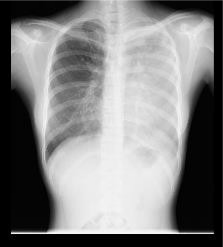
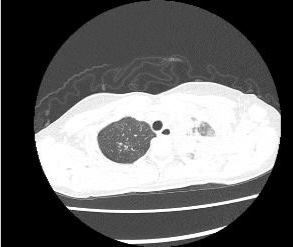
Chest X-ray and computed tomography findings suggested pneumonia with atelectasis (Figure 1A and Figure 1B). Influenza-related plastic pneumonia that was refractory to laninamivir was suspected, and her medication was switched to oral administration of the other type of anti-influenza agent baloxavir (40 mg). She was admitted to our hospital and started on oxygen at 2 L/min by nasal cannula, an antibiotic (ceftriaxone 2 g/day), and methylprednisolone 40 mg (1 mg/kg)/day intravenously.
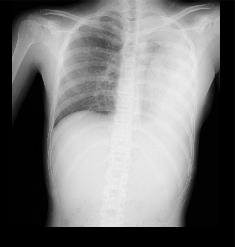
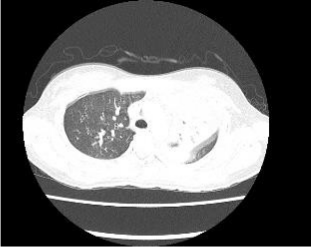
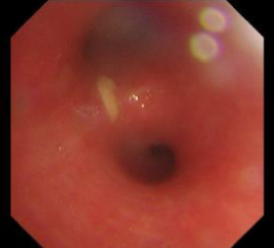
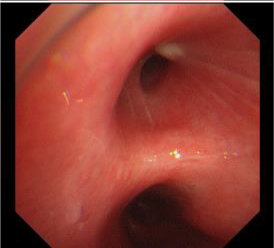
However, two days later (Day 3), her chest radiograph still suggested atelectasis, although her inflammation status was improved, since the WBC count (5,100/uL) and CRP value (0.51 mg/dL) were decreased (Figure 1C and Figure 1D). Bronchoscopy was then performed to release the obstruction of the left main bronchus (Day 5). There were no complete occlusions, but small mucus plugs were found in her left bronchus (Figure 2A and Figure 2B), and these mucus plugs and mucinous sputum were vacuumed. No bacteria or fungi were isolated from the mucinous sputum in the bronchus, but abundant lymphocytes with eosinophils were found in the tissue.
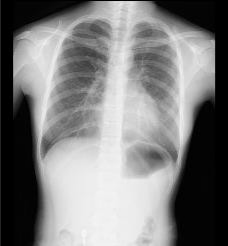
On the next day (Day 6), her atelectasis was significantly decreased on chest X-ray, and her respiratory status was improved (Figure 2C). She discharged our hospital on Day 8 and recurrent inflammation and atelectasis in the blood tests and chest X-ray were not found at the outpatient clinic on Day 15.
3. Discussion
Influenza has major health and societal impacts despite the availability of vaccines and antivirals, including neuraminidase inhibitors (NAIs) and novel cap-endonuclease inhibitors (CEIs) such as baloxavir marboxil, and the complications have been serious issues for both elderly persons and children[2, 7, 8].
The case of an adolescent influenza patient with pneumonia and atelectasis due to mucus plugs was described. She was treated with laninamivir, a type of NAI given by inhalation, but she developed pneumonia. Mucus changes have usually been found in elderly influenza patients, and they showed severe dyspnea, whereas mucus pneumonia has rarely been found in pediatric influenza patients[9]. In children, plastic bronchitis, characterized by formation of bronchial casts, has been rarely reported, and an association with inflammatory diseases of the lungs, including asthma and pulmonary infection, and the development of dyspnea and stridor has been suggested[10, 11].
In the present case, no bacteria or fungi, such as aspergillus, which are known as pathogens causing mucoid impaction in the lungs, were isolated. However, mucoid impaction in the left main bronchus included lymphocytes predominantly, and she had a history of mild atopic dermatitis. Kim et al reviewed nine cases and reported that plastic bronchitis in children was found in the left lung (67%), and 89% showed atelectasis on chest X-ray[11]. Overall, 44% had a history of allergy, such as asthma, allergic rhinitis, and atopic dermatitis. Allergic factors might be related to the production of mucoid impaction, because the present case also showed elevation of total IgE levels in serum and had a history of atopic dermatitis. Her background and immunological status might have been similar factors related to the development of atelectasis of the left lung in the process of influenza pneumonia.
As treatment, the present patient underwent bronchoscopic removal of sputum and finally showed significant improvement of atelectasis and dyspnea. Bronchoscopy might be the key procedure in this type of lung inflammation, because all nine cases in the previous review underwent bronchoscopy and finally improved[11]. They also suggested the efficacy of steroid treatment; long-term inhalation of steroid might be particularly effective to prevent recurrence of mucoid plugs because 20 (90.9%) of 22 patients who experienced a severe asthma attack during the A/H1N1 influenza pandemic did not receive long-term treatment[12]. In the present case, steroid was given by drip infusion for three days from Day 0 on admission, but mucoid release was limited. Bronchoscopy might be more effective than steroids in the acute phase in pneumonia with atelectasis due to mucoid impaction influenza in adolescents. Further investigation of the preventive effects of inhalation of steroids in atopic children in the influenza season will be needed.
Furthermore, although it is not clear whether the A/H3N2 type of influenza virus has a causal link to the development of atelectasis, A/H1N1pdm and B types of influenza can induce severe asthma attacks in atopic children who have no history of asthma, and repeated viral infections cause prolongation of airway hyper-responsiveness in atopic subjects[12, 13]. Two attacks of severe plastic bronchitis with H1N1 and influenza B infection have been also reported[11]. Influenza, including A/H3/N2, might induce prolonged bronchial hyper-responsiveness, in which a sticky inflammatory plug obstructs airways more easily and rapidly in children.
4. Conclusions
An influenza pneumonia case with massive atelectasis of the left lung in an influenza season when the A/H3N2 type was dominant was presented. This 16-year-old girl had an atopic background, and she appeared to develop prolonged and severe hyper-responsiveness to the influenza infection. Bronchoscopy procedures might be very effective to release the obstruction caused by mucoid impaction although use of anti-influenza agents and steroids, including the long-term inhalation type, should be considered.
References
- Uyeki TM, Bernstein HH, Bradley JS, et al. Clinical Practice Guidelines by the Infectious Diseases Society of America: 2018 Update on Diagnosis, Treatment, Chemoprophylaxis, and Institutional Outbreak Management of Seasonal Influenzaa. Clinical Infect Dis, 2019. 68: 895-902.[CrossRef] [PubMed]
- Seki M, Kosai K., Yanagihara K, et al. Disease severity in patients with simultaneous influenza and bacterial pneumonia. Intern Med., 2007. 46: 953-958.[CrossRef] [PubMed]
- Esposito S, M. olteni CG, Daleno C, Tagliabue C, Picciolli I, Scala A, Pelucchi C, Fossali E, Principi N. Impact of pandemic A/H1N1/2009 influenza on children and their families: comparison with seasonal A/H1N1 and A/H3N2 influenza viruses. J Infect 2011; 63: 300-7.[CrossRef] [PubMed]
- Plataras C, Tsangouri S, Bourikas D, Christianakis E. Acute appendicitis in a child with swine influenza (H1N1). BMJ Case Rep 2015; 26: doi: 10.1136/bcr-2014-208219.[CrossRef] [PubMed]
- Medrek S, Bandi V, Xu Y, Sarkar P, Guy E, Kao C. Fatal Progressive Membranous Obliterative Bronchitis: A Sequela of Influenza? J Bronchology Interv Pulmonol 2017; 24: 88-91.[CrossRef] [PubMed]
- Zhang J, Kang X. Plastic bronchitis associated with influenza virus infection in children: a report on 14 cases. Int J Pediatr Otorhinolaryngol 2015; 79: 481-6.[CrossRef] [PubMed]
- Oikawa N, Seki M., Clinical Differences in Hospitalized Adult Influenza Patients between the A(H1N1) pdm09 and the A (H3N2) Seasons in Japan. J Infect Dis Ther, 2018. 6: 1-6.[CrossRef]
- Metlay JP, Waterer GW, Long AC, et al. Diagnosis and Treatment of Adults with Community-acquired Pneumonia. An Official Clinical Practice Guideline of the American Thoracic Society and Infectious Diseases Society of America. Am J Respir Crit Care Med., 2019. 200: e45-e67.[CrossRef] [PubMed]
- Deng J, Zheng Y, Li C, Ma Z, Wang H, Rubin BK. Plastic bronchitis in three children associated with 2009 influenza A(H1N1) virus infection. Chest 2010; 138: 1486-8[CrossRef] [PubMed]
- Eberlein MH, Drummond MB, Haponik EF. Plastic bronchitis: a management challenge. Am J Med Sci 2008; 335: 163-9.[CrossRef] [PubMed]
- Kim S, Cho HI, Han DK, Choi YD, Yang ES, Cho YK, Ma JS. Recurrent plastic bronchitis in a child with 2009 influenza A (H1N1) and influenza B virus infection. J Korean Med Sci 2012; 27: 1114-9.[CrossRef] [PubMed]
- Hasegawa S, Hasegawa S, Hirano R, Hashimoto K, Haneda Y, Shirabe K, Ichiyama T. Characteristics of atopic children with pandemic H1N1 influenza viral infection: pandemic H1N1 influenza reveals 'occult' asthma of childhood. Pediatr Allergy Immunol 2011; 22: 119-23.[CrossRef] [PubMed]
- Xepapadaki P, Papadopoulos NG, Bossios A, Manoussakis E, Manousakas T, Saxoni-Papageorgiou P. Duration of postviral airway hyperresponsiveness in children with asthma: effect of atopy. J Allergy Clin Immunol 2005; 116: 299-304.[CrossRef] [PubMed]