

This study will detail the effects of computer-based graphic design on illustration in poster works. The understanding of art has evolved from ancient times to the present, giving rise to design works. With the development of the internet and computer technologies in the 20th century, the understanding of design has also changed. The impact of computer technology on the drawings in poster works will be highlighted in this study as how they began in the 1950s and 1960s and developed throughout the century. Especially in the 1990s, technological developments offered new technical possibilities to art and artists. The production of computer-aided unique designs and illustrations began. The study's evaluation portion will cover the technical aspects of the illustrations seen in the posters created by well-known historical designers. The examples presented throughout the study cover the effects of computer-based graphic design in the 20th century on the illustration in poster works.
The Effect of Computer-Based Graphic Design on Illustration in Poster Design in the 20th Century
October 09, 2022
January 05, 2023
February 07, 2023
February 09, 2023
This is an Open Access article, distributed under the terms of the Creative Commons Attribution 4.0 International License (http://creativecommons.org/licenses/by/4.0/), which permits unrestricted use, distribution and reproduction in any medium or format, provided the original work is properly cited.
Abstract
1. Introduction
Today, when technology has entered every aspect of our lives, it has also changed the fields of graphic design. Digital technology has emerged in various fields of graphic design and daily life and reshaped the traditional aspects of this field with today's conditions. It has presented it to our users in different ways in a more efficient way by using technology. With the development of digital technology, it renews itself and leaves its traditional direction to technological changes. The most important of these areas has been graphic design. The growth of the computer, one of the necessary components of digital technology, has resulted in the formation of new forms of production in the sectors of art, design, and communication, laying the groundwork for the changes to come. Designers and artists, who started to use technology and computers in line with their needs, started to give more importance to technological developments as their tendencies in this field increased.
Entering the year 2000, the rapid spread of computers in our country accelerated the development of digital illustration art. The continuous updating and development of computer hardware and software add new vitality to digital illustration. Digital illustration, which has more shapes and styles than traditional illustration, has not only attracted the public's attention but also changed the aesthetic tendency of the audience. Despite the positive effects of technological advances leading to the proliferation of illustration design, excessive interest in technology has led to a tendency to "copy," which is one of the adverse effects of digital illustration design. This study has conducted a discussion against the background that the rapid development of technology has brought change to modern illustration art. The most successful use of digital illustration in advertising is in poster design. The content of the advertising poster mainly uses the image of the product or object expressed through photographs or realistic illustrations. This kind of digital illustration can be used in banner design in various artistic ways, such as segmentation and exaggeration of color and structure comparison, which can create a better design element. Various artistic processing and filter effects provided by computer graphic design software can quickly realize the artistic processing of graphics and images. The designer represents the product and gives an exciting scene according to the purpose. The illustration is a way of using the language of visuals. Influenced by computer technology, the art of illustration has undergone tremendous changes. Its concept, mode of expression, field of application, and aesthetic feelings diverge from the past. The improvement of material and cultural life and the development of society provide favorable conditions for the development of illustrations and can also let people see the development potential and excellent prospects of the combination of illustrations and computerized image processing technology. Computerized image processing technology has given illustrations a richer formal language and emotional meaning.
People today lack the "stimulation" from patterns and colors because everyone reads visuals instead of words. Although these intricate illustration patterns first capture viewers' attention, too numerous and frequent appearances put viewers under psychological pressure. It might even make people feel uncomfortable when it occurs during a hectic time. That is why posters are more popular than other forms of design. They highlight the most fundamental features of things with a few simple touches and enable people to access the information they need quickly. Poster designers organize symbols, images, and typography to make the message they want to convey more understandable [1]. In addition to making announcements, poster designers also consider artistic concerns. Once used as a presentation tool, posters can also be found on bulletin boards. The poster is a powerful communication tool because it conveys the message to the target audience quietly and professionally [2]. In terms of graphic design, illustration has become essential in poster design. Since illustration consists of drawings, it has a more striking and impressive appearance. Illustration designs have developed and changed over time and have become increasingly popular. Different approaches have been achieved by using illustrations on posters [3].
2. Poster Design In The 20th Century
The Industrial Revolution brought technological changes to the West in the late nineteenth and early twentieth centuries, and industrial production began to shape the lives of millions of people. One of the changes brought by the Industrial Age was the decrease in the production cost of printing materials [4]. The early 20th-century movements Cubism, Futurism, Dada, Surrealism, De Stijl, Suprematism, and Constructivism, impacted graphic design. [5].
From flyers to giant billboards, the poster has developed as a continuous part of the urban fabric by forming the pictorial backdrop of the urban street decor in every change. Early twentieth-century flags were made to be viewed up close by persons walking and driving slowly during the day. In today's fast-moving traffic, billboards with 24 printed pages or enormous visual signs and graphics are instantly recognizable from a distance. In addition, the repetition of 10 medium-sized billboards two or three times on billboards in our country reflects the concern about being perceived by the receptive audience in a fast-flowing environment.
Glasgow favored more pragmatic design and provided an essential bridge to 20th-century aesthetics. The Glasgow school significantly influenced the whole of Europe, especially the Viennese style [6].
Wars, economic innovations, collapses, and political, technical, and scientific revolutions changed the course of human history and fortunes throughout the 20th Century. Due to these global events, poster designs have evolved to represent the historical processes witnessed. The value of poster design has remained constant throughout the last Century. Because institutions and organizations have always tried to communicate with the public, it seems they will continue to do so. Only the need for certain types of posters is changing. While no one type of poster has completely lost its importance, there are times when some types of posters are more necessary than others.
In conclusion, posters have at times changed how society makes decisions and behaves and the historical processes that civilization has gone through. They have even helped the development of subsequent eras. For this reason, it would be helpful to look at the important events that shaped the 20th Century because historical processes have shaped the concerns, ideas, and techniques discussed in the following subheading that impact the evolution of graphic design.
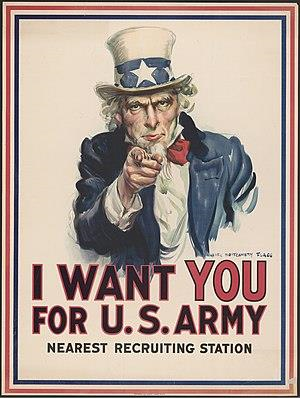
Created by James Montgomery Flagg in 1917, towards the end of World War I, the "I Want You for the United States Army" poster has since become a cult classic. Flagg is the "Uncle Sam" figure in this poster, known worldwide. The purpose of the poster is to recruit soldiers for the army. The "Uncle Sam" figure continues to represent the American people today. With this propaganda design, Flagg aimed to increase army participation and encourage the American people [7]. Uncle Sam confidently shows himself to the poster's audience and conveys his message directly. In this way, the audience that the advertisement is aiming for is directly related to America and a soldier. The colors of the American flag dominate the design. Since these are the colors of the American flag, they stand out as colors that the public recognizes and can attract their attention. The selection of color is not arbitrary; it directly affects the culture to which the public is exposed or connected [7].
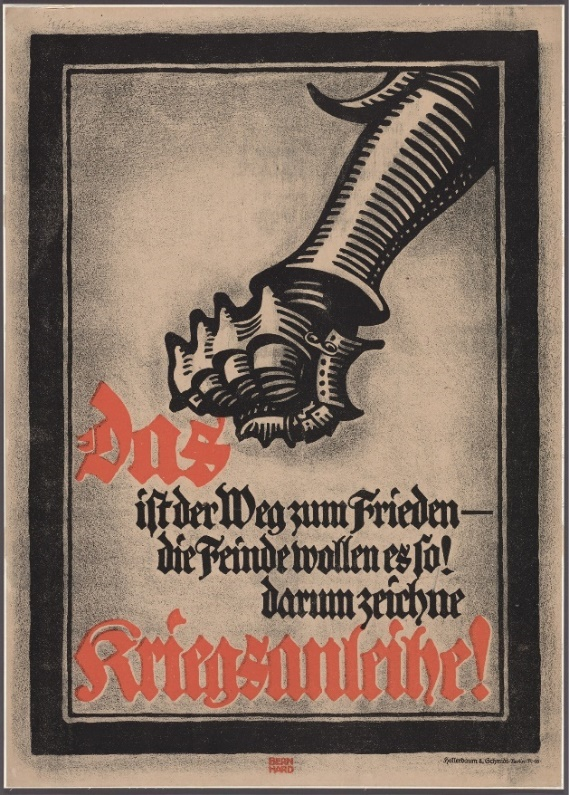
Lucian Bernhard created a poster in 1917 to raise money for the war that reflected these perspectives, featuring a clenched fist covered in armor, an image of the old German warrior spirit, and a Gothic type evoking medieval Germany. The Nazis thought that only works of traditional gothic literature could adequately capture the purity of the nation. Gothic writing was not only used by the Third Reich to convey the propaganda message; it also served as the message. One of the slogans used over their banners was "Feel German, Think German, Speak German, Even Your Writing Should Be in German."
As witnessed throughout history, all political parties need certain symbols to support their views. Political parties and party leaders often use symbols or accessories to communicate with the public or distinguish themselves from their environment. In this instance, the party that employs the most symbols almost identifies with it and is forced to embrace it. Indeed, the Roman Emperors influenced the Nazis in the early 20th Century is evident in their use of the iconography of outstretched arms and clenched fists on the chest. According to Heller & Vienne, the communists inherited the clenched fist emblem from the Paris Commune of 1871. According to cultural historian Lincoln Cushing, the fist "has always been part of something: either holding a tool, carrying a sign or in motion." [8].
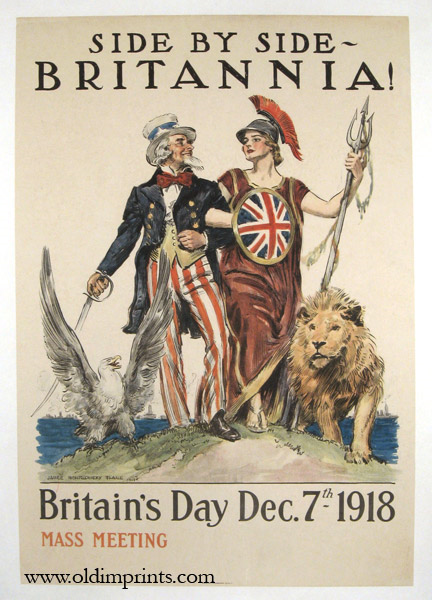
The same poster style was used to persuade the American public during World War II and came to represent an era and a nation. Nazi Germany's propaganda department also covered the walls with posters during World War II to inspire and win over the population. "Graphic design had a clear and specific purpose during and in the years following the Second World War: to create propaganda, camouflage and information design for the military and civilians". Propaganda was primarily used through posters to call for war and establish psychological superiority with the impact of two major wars in the first half of the 20th Century. In addition to propaganda, poster designers contribute to government endeavors to increase the standard of living in various countries.
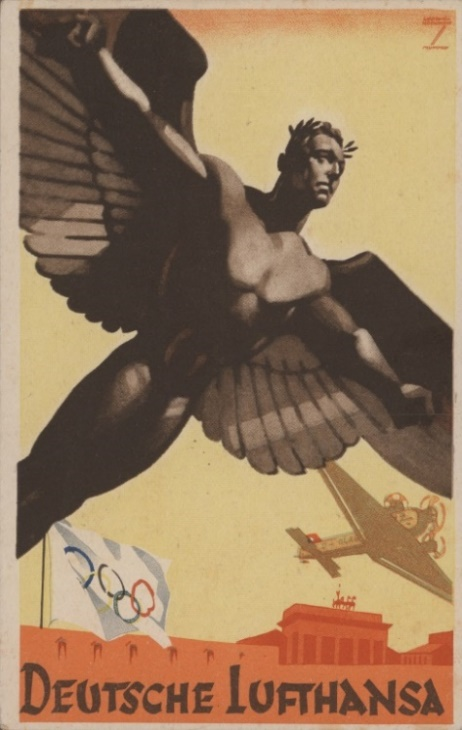
Ludwig Hohlwein's use of textural elements in wide shots lends distinction and creativity to the narrative, despite the stylistic similarities with the Beggarstaff brothers' work. According to Clark, a black soldier serving in the American armed forces served as the icon of the poster during the Second World War. The soldier is shown as a primitive vandal who took one of ancient art's most iconic artifacts, the Venus of Milo, as a trophy [9].
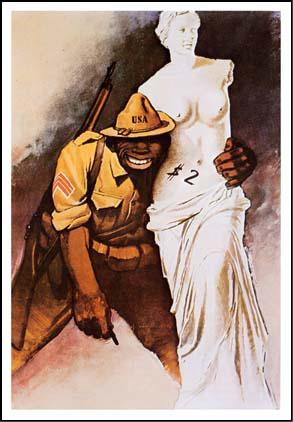
There are many parallels between World War II and World War I poster design. These similarities are due to the use of stereotypes in propaganda to influence people's attitudes, behaviors and thoughts. The most well-known are the images of spiders or octopuses, which designers widely used in their posters during the Second World War [10].
A poster is used frequently and repeatedly on the target audience to attract attention or reinforce the message. Repetition is a technique used in the visuals used in poster designs to increase the impact of these expectations. John Fiske's explanations reveal a similar tactic. Fiske contends that an artistic output will repeat itself more in form and content the more broadly accepted and accessible it is. Using quotation techniques like pastiche and parody would not be improper to create this repetition. In this way, it is possible to guarantee that the quoted work will be recognized. In this way, by referencing or quoting another work of art, a poster can speak to it, come to terms with it, or vice versa. This approach guarantees the repetition of the referenced work, keeping the viewer's attention on the vital archetypal images and maintaining the clarity of the poster's message for any poster [6].
After World War II, the poster industry entered a new era thanks to increased production, and rising and developing brands in the countries that emerged victorious from the war. Due to the promotional demands of companies, the poster became an essential form of advertising and developed as a separate art form in the 1970s. Post-modernism developed in the 1980s, and at the turn of the Century, artists were experimenting with using computer programs to create digital poster art. Today, poster art continues to revolutionize how we communicate, express ourselves, and promote ideas, belief systems, products, services, travel destinations, and more.
3. Poster And Illustration Relation
The illustration is the process of accurately transmitting ideas and messages to thetarget audience and transforming them into visual elements. The illustration is a kind of expression, interpretation, and communication that is utilized in a variety of mediums and compellingly conveys ideas. Influencing the target audience enables a concept or message to achieve good results [3]. Becer claims that illustrations are a broad term for all items that represent and interpret linguistic aspects like titles, slogans, or text. Painting, collage, and computer applications are employed in addition to the drawing and painting instruments used in the creation of illustrations [11]. Illustrations can also be used to solve problems, make comments, amuse audiences, provide knowledge, and tell stories. Given its useful characteristics, it plays a significant role in a variety of sectors [12].
The goal of illustration, a component of graphic design, is to make sure that individuals from various linguistic and cultural backgrounds can readily understand the message being sent when they view the image and are informed on the topic. These days, illustrations are a common sight in publications including books, posters, magazine and newspaper articles, and product packaging. Additionally, pictograms utilized for communication can be found in airports, motorways, and subway systems [13]. The main way that illustrations differ from paintings is that they are intended to convey information or a message. On the other hand, since paintings are done to make a work, they might not have any function. Illustrations that are unique, interpretive, and conceptually strong using an artistic language and are more powerful. According to Deliduman and Cakmak (2017), the illustrations should be in keeping with the typeface and subject matter. The Greek word "graphic" (grafikos or graphein) is used to describe writing, patterns, drawing pictures, and signs. A broad range of disciplines makes up the visual art of graphic design. It covers art management, information technology, typography, and other creative disciplines. By printing text and images that represent ideas or using other techniques, the graphic design offers an impressive visual representation. The content creates consistency with language and images so that the message can be comprehended, which facilitates communication [14]. Graphic design is the depiction of an idea through the use of techniques including painting, photography, and sketching [15]. Graphic design differs from other art forms in that it prepares design goods like posters, ads, brochures, and books for printing. With the advancement of technology, the graphic design develops a visual language of communication [16]. Graphic design's primary purpose is to spread a message and advertise a good or service. Technology has made it possible for visual materials produced with the aid of computers to take the place of printed materials as significant components of graphic design. The designer should closely follow new advances and technology because he uses materials to convey the message he wants to communicate to the target audience. Due to the yearly changes and advancements in technology [17]. Graphic designers frequently utilize posters to convey powerful messages to their target audience. Sometimes realistic, other times fantastical, are the images on the posters. The target audience is drawn to it when it is creatively crafted. Because the designer alters the visual stuff he creates to make it appear more different than it is. The illustration is utilized in children's books, packaging, brochures, labels, posters, and other graphic design projects. Children are typically drawn to illustrations because they entertain and educate them.
4. The Usage Of Illustrations In Posters
One of the effective communication tools used in the advertising industry to reach a large target audience and provide a clear message is the poster. It is described as a component of visual communication design. With the development of new communication techniques over time, posters which were initially employed to communicate announcements began to be utilized for advertising purposes. Today, cities and even neighborhoods are created using models that take into account aspects like cultural, economic, and political factors.
In the United States, the connection between a poster and an artwork dates back to 1950. American poster designs often convey a textual message and are based on fundamental commercial requirements. It departs from the European poster design strategy at this point. Due to its economic intent and the low standard it demanded, it was not thought to have artistic merit. However, several New York designers in the 1950s took a more conceptual approach to illustration, and from this point forward, illustrations in posters became fairly popular. It is regarded as the most dazzling time in illustration history.
An illustration is unified by artists like Milton Glaser, Seymour Chwast, and Reynolds Ruffins, among others.
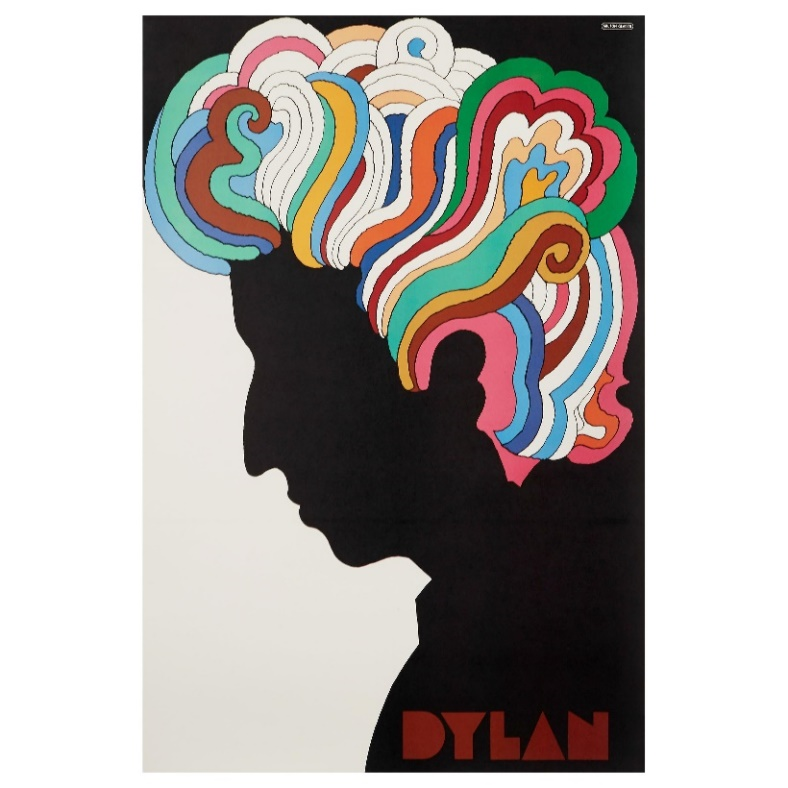
American graphic designer Milton Glaser, who was born in New York in 1929, is best known for creating the "I Love New York" logo and the "Bob Dylan" poster. He has established himself as a leading figure in illustration, typography, and decoration today.
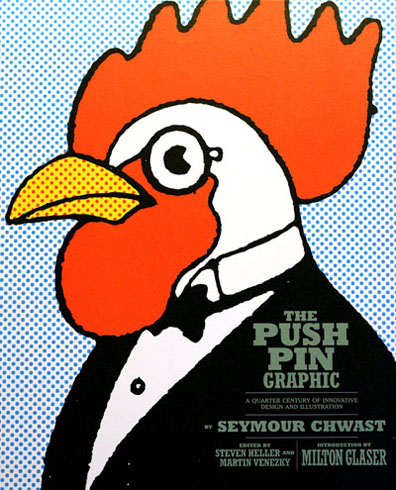
Seymour Chwast, a designer who was born in New York in 1931, gives the conventional graphic notion a fresh, modern interpretation.
Since the 1950s, illustration and posters have seen numerous technological advancements and adjustments, providing the designer with numerous chances to express his ideas. Today, a method we call digital is quite popular as an alternative to techniques like watercolor, pastel, and airbrush. Designers are free to make their designs in line with their aesthetics [18].
5. 20th-Century Computer-Based Graphic Design And The Usage Of Illustration In Posters
The illustration employed in posters has been considerably impacted by subsequent technical advancements and the increasing usage of the internet. An illustration is frequently used in poster designs today with the use of computers and other design tools. Illustrations can now be created in the digital age without being constrained by application techniques. This circumstance has helped designers establish a variety of unique and personal visual languages. As a result, illustration has grown in significance and is being used more frequently in graphic design products. Poster art has also been impacted by this condition. Numerous artists have begun to create their applications using digital or hybrid methods. They have got the chance to share the posters they have created around the entire world because of the widespread availability of the internet. The globe has already become more globalized in this day and age of widespread communication. Some claim that the popularity of poster designs has declined with time, although they are still created today. There are various types of illustration use that may be seen in poster designs if it has been decided to use an illustration.
The technique of creating illustrations has also been significantly impacted by technological advancements. The advantages offered by advances in computer technology have started to be employed more frequently in the field of illustration in addition to traditional drawing tools. The illustration is now made incredibly convenient by a variety of design tools, including drawing tablets and programs like Adobe Photoshop and Illustrator.
New illustration options, possibilities, methods, and techniques have emerged thanks to digital technology. Computers have elevated other disciplines like the illustration to a more equal position with design and given them access to a variety of technical capabilities [19]. With the help of digital technology, the illustrator now has more creative freedom. The ability to quickly evaluate alternatives for the work and make more adjustments than with traditional illustration approaches is made possible by digital illustration.
Digital illustration, which combines all illustration techniques, also provides the option for unlimited duplication and undamaged storage. The use of digital illustration is seen as a creative tool. If a designer is an adept program user and possesses creativity expertise, they can create anything they can dream of because the computer handles the technical and craftsmanship phases.

The Shutter poster was created using Illustrator, Photoshop, a photocopier, and manual effort [3].
6. Conclusion
This article examines the illustrations used in poster design, their methods, and how they relate to one another. By researching the development of posters and graphics over the course of the 20th century, from traditional to digital media. The advent of the computer at that time and the development of design-specific software contribute to this evolution. Label design gained creativity from computer-based design, and it became simple to integrate various manual and digital technologies.
The usage of graphics in illustrations, which persuade the target audience with their more spectacular and striking qualities, has increased the role of illustration in poster design. The effective use of color in the design leaves a good first impression. The placement, size, and style of the typeface should all be taken into account. Must be positioned correctly to avoid drawing attention from the crowd.
This article concludes that design has existed since antiquity and that the advancement of printing and, subsequently, computers contributed to the advancement of poster design and illustration. The use of computer-generated visuals improved the poster's design for the audience. The ease of copying in computer design harmed the creative components of this expansion, but positive aspects are what is needed.
This article presents numerous examples of poster design using various approaches and how they have changed over time from antiquity to the present, as well as how computer illustration is used in these posters.
References
- Oskouei, A. H. (2018). Etkileşimli Film Afişleri Ve Uygulamalar. Hacettepe Üniversitesi, Güzel Sanatlar Enstitüsü, Ankara.
- Deliduman, C., & Çakmak, S. (2017). Kültürel Afiş Uygulamalarında Illüstrasyon. İdil Dergisi, 6(29), 319-321.
- Gedik, M. B., & Taşçioğlu, M. (2018). Afişte İllüstrasyonun Anlatım Biçimleri. Sanat Ve Tasarım Dergisi, 8(1), 104-124.[CrossRef]
- Bektaş̧, D. (1992). Çağdaş Grafik Tasarımın Gelişimi. İstanbul: Yapı Kredi Yayınları.
- Becer, E. (2009). İletişim Ve Grafik Tasarım. Ankara: Dost Kitabevi.
- Fiske, J. (1996). İletişim Çalışmalarına Giriş. (S. İrvan, Çev.) Ankara: Ark Yayınevi.
- Kulakoğlu, O. (2019). Günümüz Sinema Filmi Tanıtım Sürecinde Üretilen Film Afiş Türleri. Gazi Üniversitesi, Güzel Sanatlar Enstitüsü, Ankara.
- Heller, S, Vienne, V. (2013). Becoming a graphic and digital designer: A guide to careers in design. John Wiley & Sons.
- Clark, T. (1997). Sanat Ve Propaganda - Kitle Kültürü Çağında Politik İmge. (E. Hoşsucu, Çev.) İstanbul: Ayrıntı Yayınları.
- Çeliker, M. (2014). Afiş Tasarımında Alıntısallık Sürecinin Işleyişi. Süleyman Demirel Üniversitesi, Güzel Sanatlar Enstitüsü, Isparta.
- Çeken, B., Çiçekli, K., & Ersan, M. (2018). Dijitalden Doğan İllüstrasyon Tekniği: Low Poly. Sanat Eğitimi Dergisi, 6 (2),
- Baldaş, B., İpek, M. (2017). “Bir İllüstrasyon Sanatçısı: Nazan Erkmen” Karadeniz Sosyal Bilimler Dergisi, Y.9, C.9, s. 225-238, Karadeniz.
- Atabey, Z. (2010). Basın İlanı Tasarımlarında İllüstrasyonlar Ve Vektörel İllüstrasyon Tekniğinin Uygulanması. Yüksek Lisans Tezi. Dokuz Eylül Üniversitesi Eğitim Bilimleri Enstitüsü Güzel Sanatlar Eğitimi Anabilim Dalı Resim-İş Öğretmenliği Programı.
- Ambrose, G., & Harris, P. (2012). Basics Design 07: Grids (Vol. 7). A&C Black.
- Arıkan, Abdülgani. (2008), Grafik Tasarımda Görsel Algı, Eğitim Akademi Yayınları, Konya.
- Odabaşi, H. A. (2006). Grafik'te Temel Tasarım. Yorum Sanat Yayınları.
- Güzel, C. (2014), Grafik Tasarımda Görsel Kültür Ve Görme Biçimleri, İstanbul Arel Üniversitesi, Sosyal Bilimler Enstitüsü, İstanbul.
- Çitav, N. (2015). Kültürler Arası İletişim Ve Afişte İllüstrasyon Kullanımı. Master's Thesis, İstanbul Arel Üniversitesi Sosyal Bilimler Enstitüsü.
- Zeegen, L., Crush. (2005). The Fundamentals Of Illustration. Lausanne, Switzerland: Ava Publishing.