

The Adventures of Sasa and Esi is a dance theatre that takes its story reference from two short Ghanaian folktale stories the Adventures of Sasa and Esi, and the Witch of the Forest which were written by Martin Otchere Owusu and directed by Johnson Kwaku Edu and Latipher Amma Osei. The production was staged at the Amu Theatre of the Department of Theatre Arts, University of Education (UEW), Winneba from the 3rd to the 6th of November, 2016. Though the play was written for children it appeals to adults due to the lessons embedded in it. Both plays were adapted by the authors to include Ghanaian folk and popular contemporary choreographed dances and theatrical special effects make-up as key theatrical elements to drive the production and to project the element of spectacle. The style of presentation was naturalism and realism. The production also served as a learning platform for the cast and crew who were students in the Department of Theatre Arts, UEW as they participated in it. Through experimentation, experiences, and concept development, the directors’ style and professional background in technical theatre and creative dance heightened the element of naturalism and realism to underscore the theme of the play, understanding, and interpretation of the play.
Directorial Interpretation of the Adventures of Sasa and Esi: An Experimentation of Theatrical Elements
January 16, 2022
June 28, 2022
September 06, 2022
December 08, 2022
This is an Open Access article, distributed under the terms of the Creative Commons Attribution 4.0 International License (http://creativecommons.org/licenses/by/4.0/), which permits unrestricted use, distribution and reproduction in any medium or format, provided the original work is properly cited.
Abstract
1. Introduction
1.1. Synopsis of the Play
According to tradition, children are expected to accept and obey every instruction given to them by their parents. The story is told of Sasa a small boy, his younger sister, Esi, and Subruku a Giant, the king of the forest. In this story, we see patam, a very wonderful dog, and Papa, the father of the two children who lived in the heart of a forest because of his occupation as a hunter. Usually, Papa leaves Sasa and Esi at home while he goes a long way into the forest to hunt and warns them to stay indoors. However, one day Sasa disobeyed his father and went out. What will happen to Sasa? As if that was not enough, one day, Sasa and Esi were sent by their father to fetch water. He gave them specific instructions to follow a certain path, but both were so playful that they missed their road and were finally entangled in a witch’s camp. Was this their destiny?
1.2. The Director’s Concept
A theatrical performance is normally influenced either by the playwright’s style, the Director’s concept, or the production approach [1]. Directors are the creators of culture, recreation of the world and have unrestricted freedom, power, and the ability to interpret reality and its rules. This idea is inextricably linked to the reinvention and exploration of envisioned thoughts. The discourse makes it clear that directing focuses on conceptualization, technique adoption, control of the stage, ability to think out of the box and make informed choices. Researchers regard directing as the art of coordinating all the activities that ultimately lead to the production of a play, and a director as that superhuman who provides a unified artistic interpretation of a particular play for a particular audience. In addition, they observe that the art of directing lies in making decisions about how to use all the means available to create a compelling theatrical encounter [2]. A good stage director is a bold director who never wavers from the goal of bringing a vision to life, no matter how completely absurd it may seem to others [3]. Even though it appears Sidiropoulou’s assertion may somehow be valid by directors having a leeway (artistic licence) of a sort, notwithstanding, they are guided by directorial principles, concepts and styles among others to stay within the scope of directorial ethics and practice. Traditional African Theatre is based on religion, folklore and mythology. It is a kind of live performance as well as an aesthetic activity with music, song, dance, and spectacle [4]. In this case, the total theatre, the Adventures of Sasa and Esi promotes such indigenous traditional elements as conceived in total African theatre.
1.3. Directorial Styles Employed
It is important to note that style is not ornamental. A study argues that style is the visible creation and expression of thoughts and emotions very significant to the development of theatre dramatic projects [5]. In reiteration, it is the way the play is acted and directed, as well as the type of costume, scenery, lighting, and sound employed, which helps to influence the style of the production to create the desired environment of action and to holistically put the play within a given genre [5].
Realism and naturalism were styles that were used by the directors of the production, the Adventures of Sasa and Esi with regard to the setting of the play and the performance demand. Naturalism and realism in drama have their routes from the modern theatre in Europe and are slightly different in meaning. These two styles believed in broadcasting what is real or true to life. “The use of a unified theatrical style to assert a thorough verisimilitude, a photographic “slice of life” on stage, became the cornerstone of modern realism in drama and theatre and of the movement called naturalism in which it began.” [6] Considering Worthen’s report, naturalism came into existence through realism. Zola argues that:
Technology of the late nineteenth-century theatre could be used to represent a more lifelike and “naturalistic” style by adopting the “objective” methods and perspective of the natural science. By filling the stage with objects, that is real doors, real walls, pictures, furniture and the fireplace, the theatre could place men and women in their “environment” rather than in the idealized “setting” of the classical theatre, and the Characters could then be seen as influenced by that material environment [6].
Considering Zola’s statement, “by filling the stage with objects” plainly means the focus of the naturalism movement is not only limited to actors being real but also the environments of the characters are important to help influence the perception of the audience that what is being performed is a reflection of the real life. Moreover, theatre being a reflection of society means, it tries to depict humanity and their lively culture on stage. Therefore, realism and naturalism are forces that try to encourage the realness of arts to create a spectacle for the audience to believe.
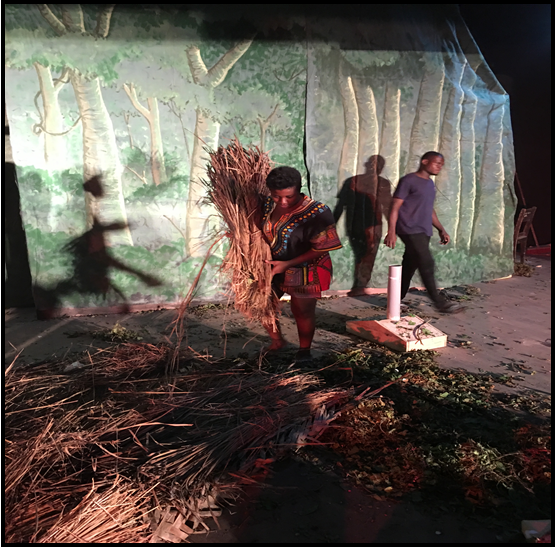
From a Realist point of view, the directors consider the forest which was a painted backdrop as representing realism. It was not an actual forest [natural] where the characters could walk through and climb trees or even hunt for animals as seen in Figure 1. But it was a kind of representational forest to depict a slice of life that looked real and it had the command to be believable by the audience present. Just like the giant Subruku’s cave, a hollow video-recorded cave was projected on a screen for the audience to see and perceive that indeed the forest exists in realism in that world. At this stage, it is significant to know that the production was a hybrid of screen and stage production. Therefore, the screen was integrated into the natural forest setting to create a flow from the established recorded forest into the natural forest on stage. These illusions were deliberately planned in the setting to underscore a sense of tourism, even though it was make-believe. Again, the Directors of the project conceptualized and adopted character costumes that were specific to Papa. Papa was a farmer so his farm costume was designed to reflect the character. The Witch and Sasa also had their costumes reflect and enhance their roles played. Subruku the giant, the dwarfs, and the Witch rather had fancy costumes to project their roles.
Dance, however, was one of the fulcrums to which the play revolved, it became a key ingredient that maintained the pace of the entire production as a slice of attraction and interest for the children present in the audience. Additionally, dance technique was part of the warm-up exercises each time the performers met for a rehearsal [1]. This was an essential part of the training because the production heavily depended on dance although it was a blend of acting and dance movements inevitably. For instance, the actor who played the role of Subruku the giant was a dance major student from the Department of theatre arts, UEW. This role was particularly reserved for a dance major student due to the enormity of dance-related movement in translating the idea of the play. Hence, the directorial concept was a driving force in the development of the entire production.
1.4. Acting Technique
With regard to the style of acting of the Directors, they employed the theoretical method of Classical Acting Technique which was the Konstantin Stanislavski approach. This acting technique trains actors in the areas of concentration, voice physical skills, emotional memory, observation, and dramatic analysis, and that was what the Directors explored [7]. The reason for the Directors choice of Stanislavski’s approach was because his method was universally applicable to all actors. Since there are several different techniques in acting, the directors used the actors’ feelings and experiences to connect with the character they were to portray. Here the actors/actresses had to put themselves in the mindset of the characters by finding common characteristics to give a more accurate portrayal of the character. In this technique, the performers focused on the internal problem the character was facing and then expressed the issue in the form of movements. Central to their method is an image of the Ideal Actor who, as a human being, is himself a two-fold instrument.
1.5. Language
Due to the nature of the story and the target audience, the Directors had to employ both English and Akan [a local Ghanaian dialect]. Also, owing to the fact that the University of Education, Winneba is situated within the Winneba township and would be appropriate to invite their patronage as the audience. Additionally, the story was adapted from one of the Ghanaian indigenous traditional stories. The use of both languages was a technique to have a wider audience gain knowledge of cultural norms and education. The performance was staged four (4) times at the Amu Theatre. The Department of Theatre Arts, University of Education, Winneba arranged for the production to be staged for primary schools within the enclave of Winneba, and each time the play was staged the Amu Theatre with a sitting capacity of 500, was full leaving some audience outside who could not gain entrance to the Amu Theatre.
Another reason for staging the play in English and Akan was to take the academic gown into the Winneba community within which the University is situated for the people to understand and appreciate the work of the academia since some of the indigenes had their children in UEW. Oral literature reveals the Winneba township as an enclave of musicians and actors. It appears that even though some of its indigenes might not have had professional qualifications in music and theatre, all the same, they acquire such skills from their cohorts, the practice-based form of education. This informal way of acquiring musical skills has turned most of their youth into musicians.
2. The Setting
The appearance of the forest setting in Figure 1 involved a realistic painted impression of a three-dimensional backdrop representing the forest. Projecting the treatment of painted trees and shrubs all executed in a perspective form to create a sense of realism. The icing of the forest scene was the interaction of stage lighting and the backdrop during the production. The village setting encapsulated a mud house roofed in thatch straw with an object on the roof and textured in an earthy painted representation with cracks and peel-off effects with painted Ghanaian symbols.
The village compound had a couple of plantain trees and pawpaw trees with some creeping grass reflecting naturalism as in Figure 2. The artificial pawpaw in Figure 2 was moulded with paper through the cut-and-paste technique and stuck to a natural pawpaw tree to assume naturalism. While the natural pawpaw fruit was hidden behind the pawpaw tree with the illusion of plucking the fake pawpaw from the pawpaw tree and exchanging it with the natural one to create the illusion of a real plucked natural pawpaw being cut open and eaten on stage per the directorial concept.
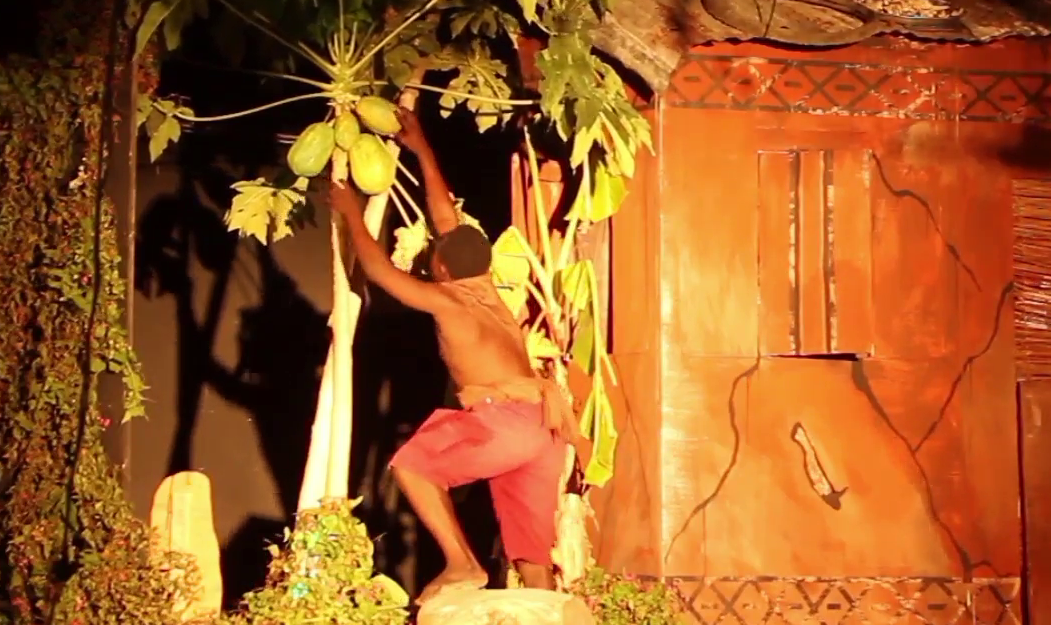
When the pawpaw swab technique is not well executed, it gives up the whole illusion. It is a film technique that confuses the eye of the observer and tends to be very magical in presentation. The use of natural plants and trees enhances the visualization of the production since the smell of the leaves in the auditorium had already given an impression of a forest feel.
Again, the focus of naturalism of the scenery for the production was clear through the use of natural plants such as the pawpaw and plantain plants, and the use of natural green leaves and natural pawpaw. The environment of Papa’s local was scattered with green leaves to give an impression of the house being situated in the heart of the forest. There was also the presence of a wooden kitchen roofed with thatch straw which gave a sense of a village kitchen as seen in Figure 3. These properties among others helped to achieve the desired setting and intents of the Directors and Designers.
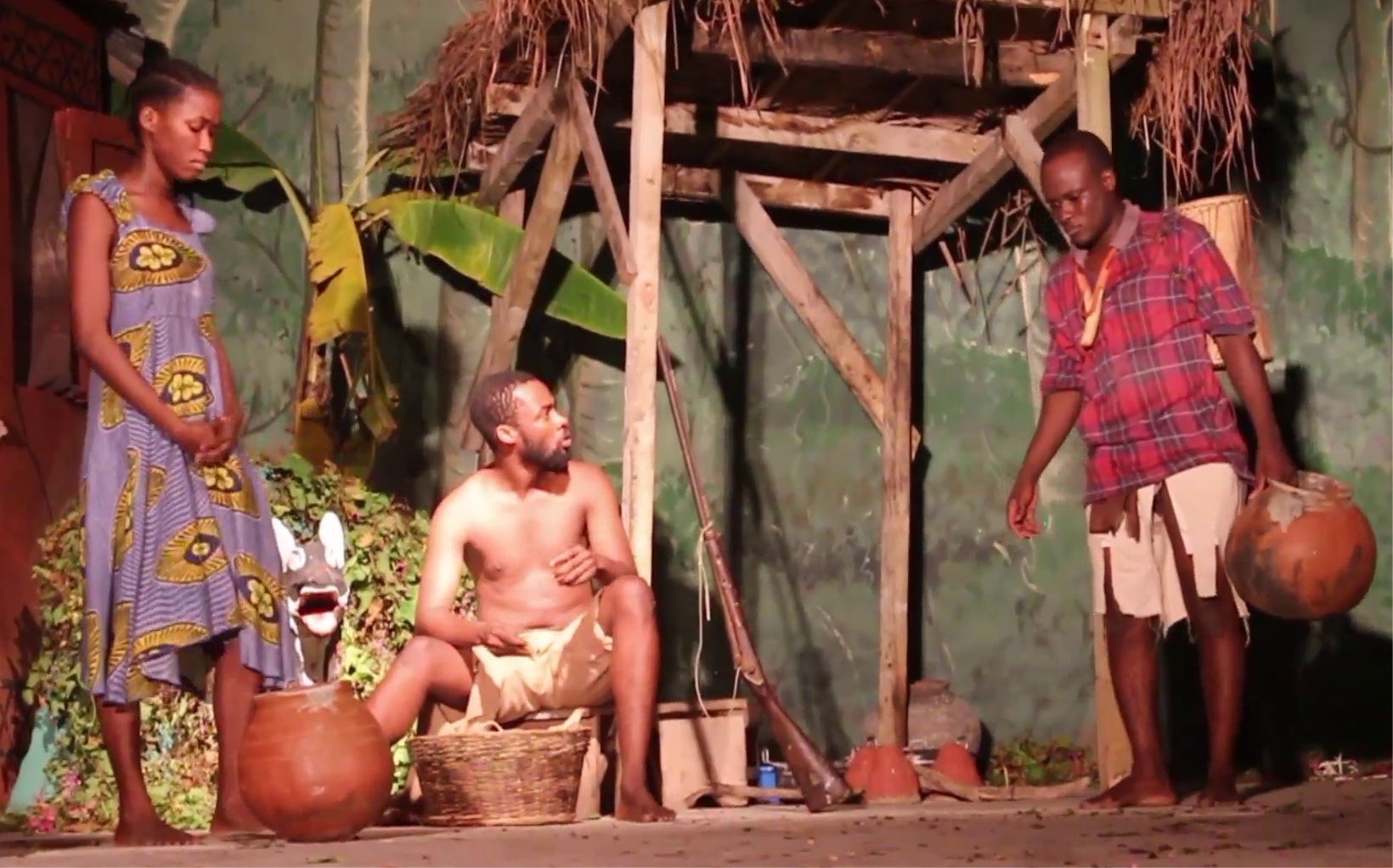
A well-structured concept of scenery should help inform the audience about the effect of the environment upon the characters, and how, the characters' personality traits affect the environment. Implications are that if the scenery is not well strategized to suit the environments of characters and their personal traits, then success regarding the scenery is not achieved. Characters in a play must feel their environment, when it is a living room, then it must feel like a living room. If a character needs to sit in a rocking chair, then a rocking chair must be provided, and every artifact to make the scenery look real to the actors and audience must be employed when dealing with naturalism and realism. The scenery of a theatrical production on the other hand improves the actor’s actions in one way or the other.
In the production, The Adventures of Sasa and Esi, the scenery for the production was created to suit the production approach to the extent that the natural leaves and trees brought on stage as plants created a feeling of a natural environment of a forest with the kind of atmospheric scent produced by the natural leaves. With this, before lights faded onto the scenery, the setting was established with the forest smell in the auditorium. D’Armini and De Lillo, write that:
“Sets then, are the “place” where actions take place, introducing the audience and telling them, often before words, the story they will watch. When the curtain raises audience focus first on the place where the play is staged or locale of action. In fact, the set is maybe the first narrative contact with the audience, the first act audience see on stage behind the grand valour (main curtain). Set design is the visual statement that underscores the text in the play and gives better interpretation to the theme” [8].
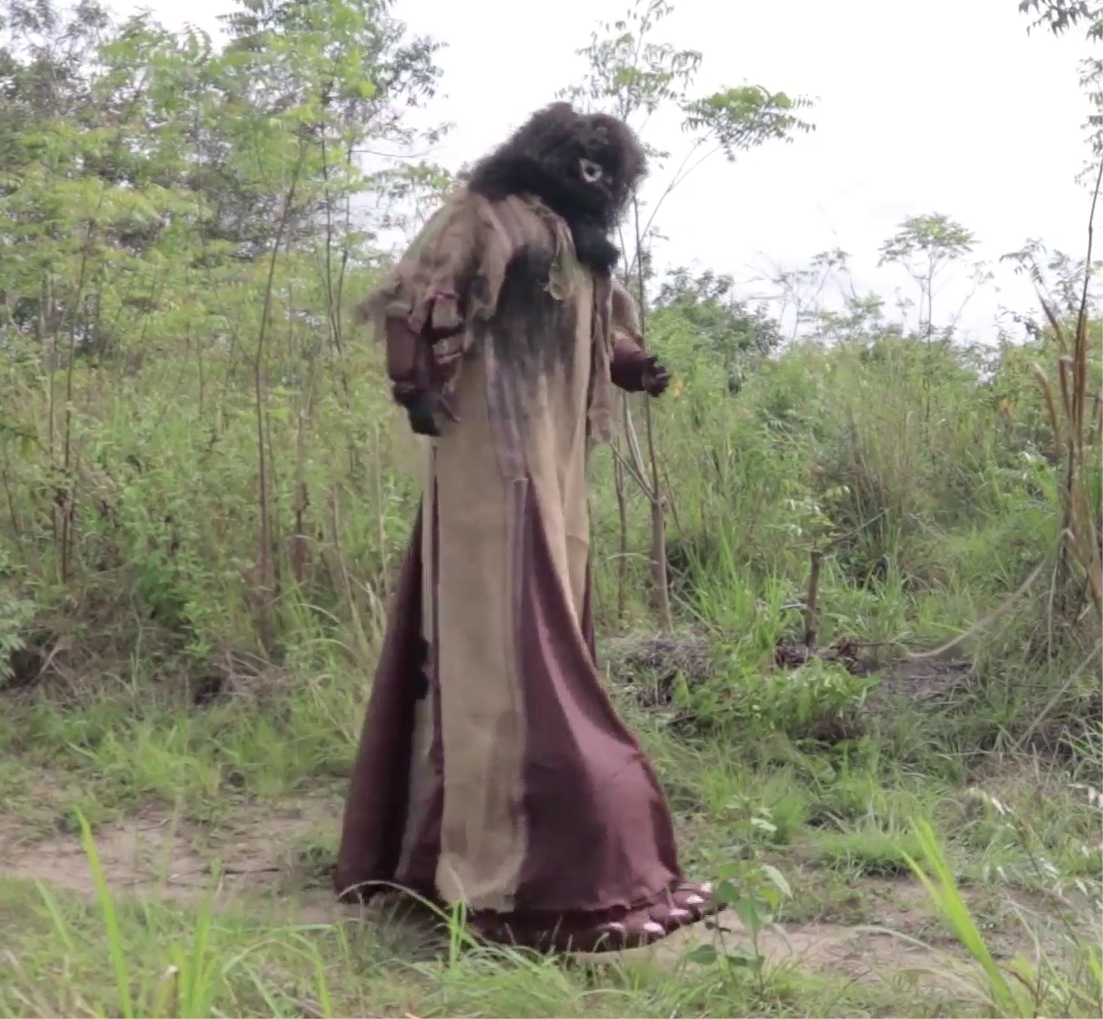
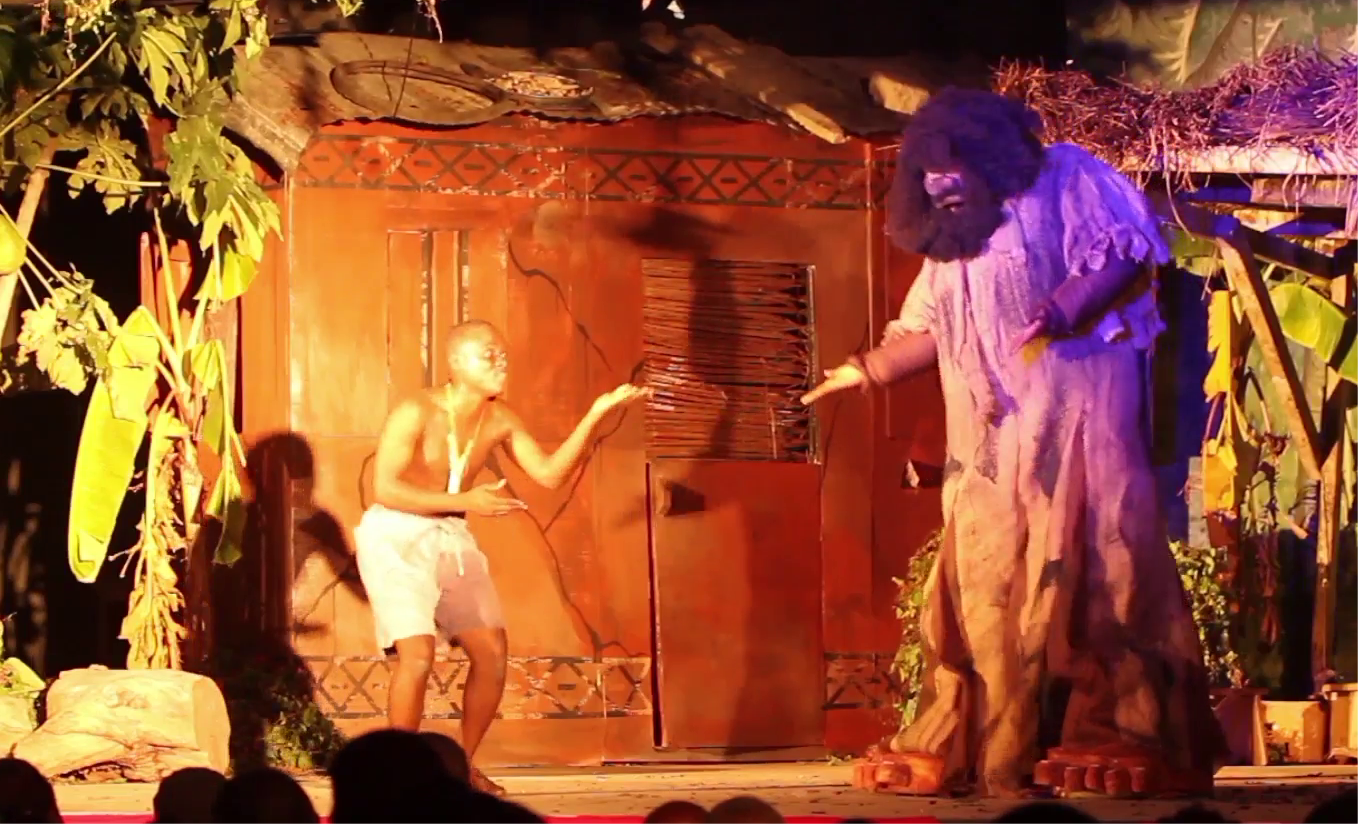
Realism in connection to the giant’s costume gave meaning and interpretation to the giant’s character and stage business. The importance of realism is to portray life as close as possible on stage without any abstractions. Whereas naturalism, on the other hand, is an extreme form of realism that tries to project life as it is on stage. Realism with respect to the giant’s locale in Figure 4 was well established through a recorded video of the giant in the forest, which was then projected onto a screen to match the giant’s entry and exit from the forest. Here we find the giant walking on screen and later appearing on stage which was patched with the element of synchronization and continuity. With this idea, the audience was able to see the giant, walking from the screen onto the stage. The whole idea of this mixed media was to extend the giant’s locale from stage to screen creating an interplay of stage and screen interaction (mixed media).
Another point to talk about with regard to realism was the dummy dog constructed out of the tier-and-paste technique in stagecraft in Figure 5, which took on the resemblance of a real dog. The manipulator of the dog engaged the facility very well and gave it the required theatrical life, voice, and effect. At the beginning of the production, most people thought it was a real dog, they hardly believed it was fake, till the point where the dog should have made a chase at the giant when the giant was harassing Sasa, in that pursuit, it was realized by some of the audience members that the dog could not move its legs at all. At that point, the audience realized it was not a real dog but a static stage prop and not physically mobile.
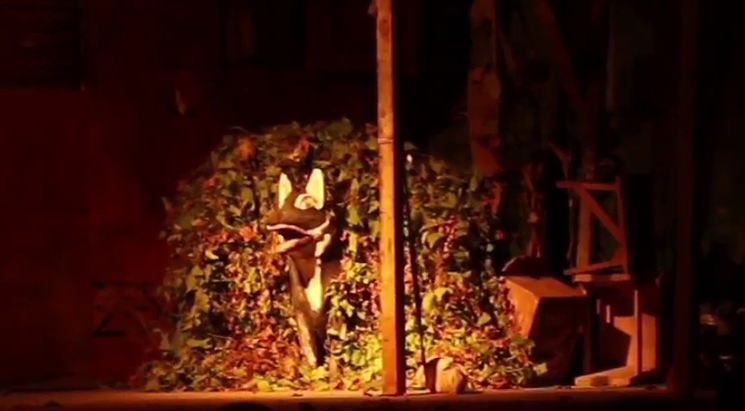
Nevertheless, to achieve the animated movement of the head and snout of the dog, an animator was positioned behind the dog, sealed off with a scenic masking board to ensure that the operational technique of the animator was not revealed to the audience to break the illusion.
“Drama is mimetic actions in imitation or representation of human behavior” [9]. Therefore, the motivation of the Directors was that if drama is an imitation or representation of human characters, then what comes together to make a human habitat must be considered in terms of representing the right image on stage for the audience to see what they know or have observed. The audience is part of the human society hence if the audience comes and they do not see things in relation to what they have at home, or their day-to-day activities, then the essential part of performing to suit reality would be lost.
To this end, naturalism and realism are very interesting theatrical ingredients that give a better understanding and interpretation of a play when combined with other theatrical devices. This is because the scene informs the audience about the nature of the characters, locale, occupation, time, season, and social strata among others regarding the play. The audience gets carried away mostly when they watch productions that have to do with naturalism, realism, and special effect. They occasionally marvelled at the extent to which a slice of life has been made possible on stage at a particular point in time. Hence, the Directors of the play used these two styles to bring into terms real-life situations with the aim of bringing into focus a better understanding of the play text. Key to these ideas was the development and emphasis on mood, atmosphere, and general aesthetic which were ingredients to the total visual statement.
3. Music and Dance in the Play
Since the play was written for children, there was a need to introduce some music and dance as an integral part of the story plot in order to sustain the interest of the children during the show. In the play Sasa sang a well-known Ghanaian song bonwire ketenwana as seen in Figure 6, composed by Ephraim Amu, a Ghanaian composer. Ironically, the theatre in which the production was staged is named after Ephraim Amu (The Amu Theatre).
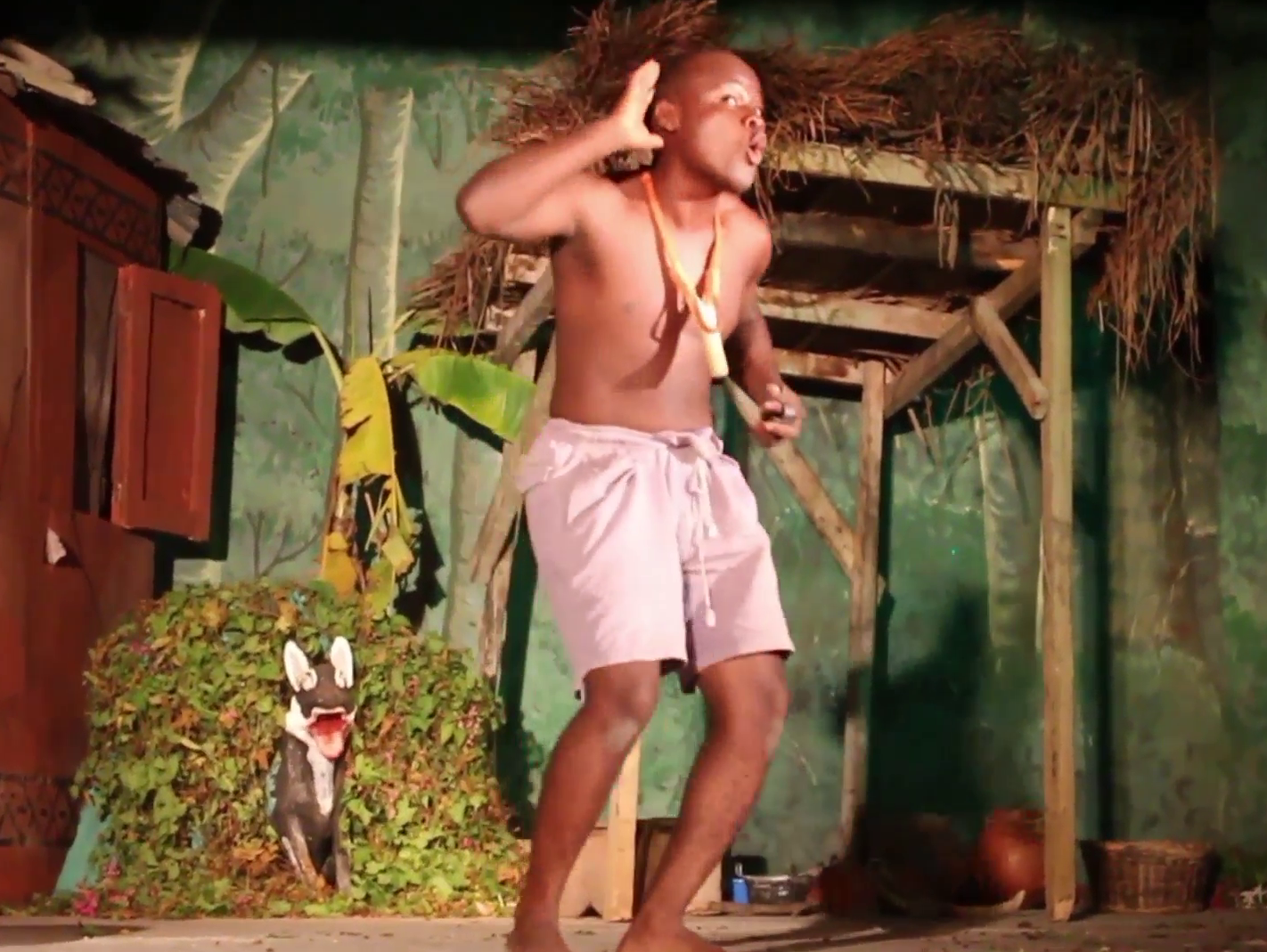
With regard to the aspect of dance, Subruku the giant and Sasa executed traditional and contemporary dance movements that were known to the children that throng the Amu Theatre during the performance. Figure 7 shows the execution of some dance steps by Sasa and Subruku the giant accompanied by the song bonwire ketenwana. The children who had the opportunity to watch the production identified with the lyrics and tune of the song that set the pace for the traditionally choreographed dance. Subruku, occasionally executed popular dance movements at the time such as Azonto and Amanda, to the same bonwire kentenwana. This got the audience really thrilled, especially the young ones who were able to relate to the dance movements.
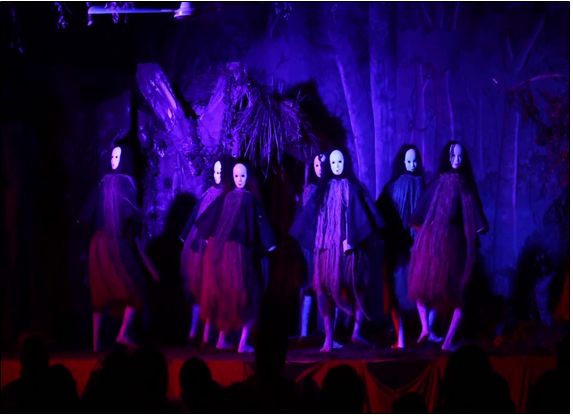
The dwarfs in Figure 8 also displayed a series of dwarf movements referenced from the Ghanaian folktale story dances to heighten the mood and ambiance created in the witch camp each time the queen of the witches throw the magical stone on the ground to invite the dwarfs for a task. Technically, the heads of the dwarfs were turned backward the opposite way in relation to their feet ensuring that their travel dance movements were backward rather than frontal. Most importantly, the interplay of traditional music, dance, and drama make the production a dance theatre within the scope of the Ghanaian theatrical presentation.
3.1. Special Effects
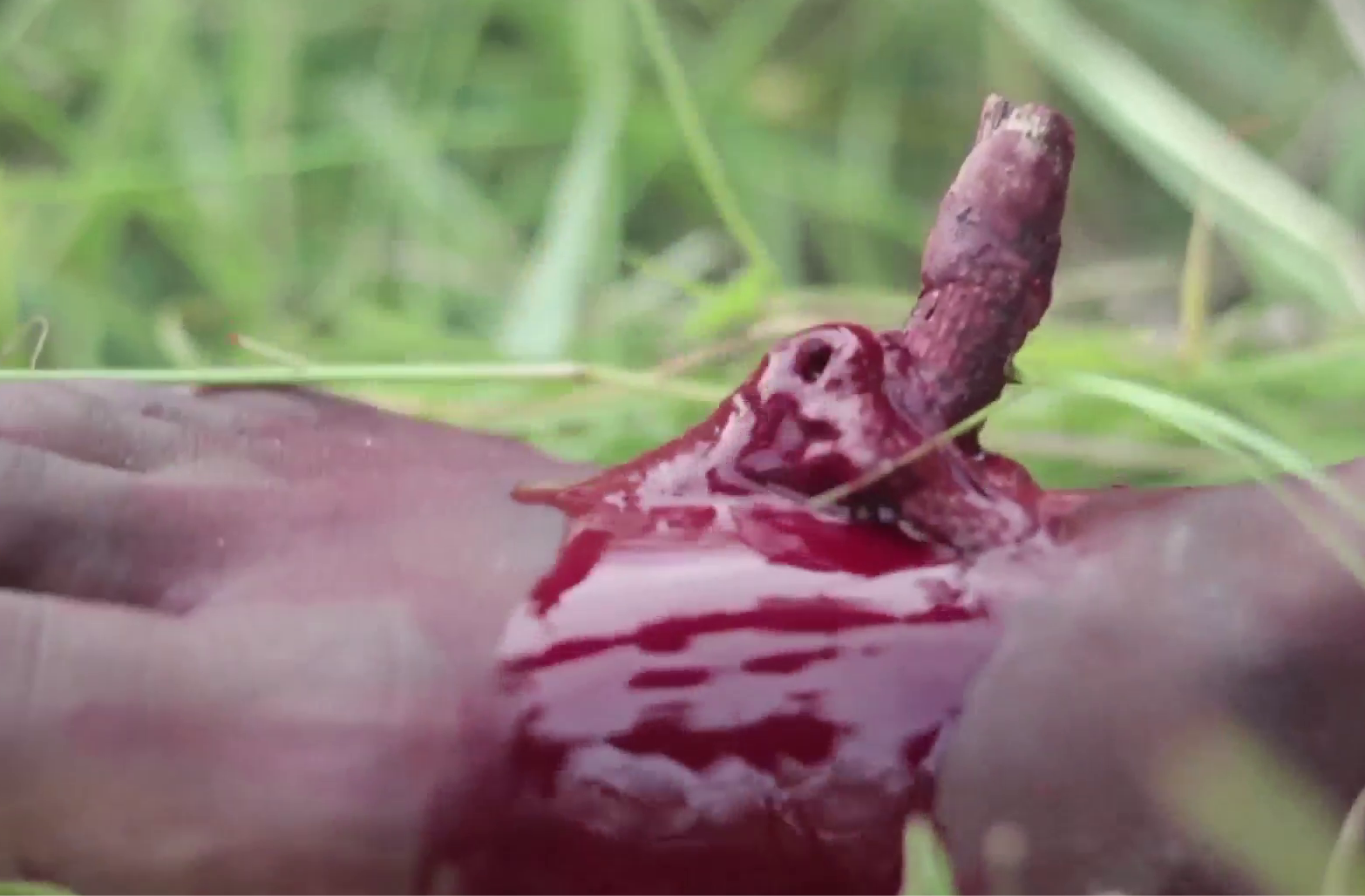
Special effects are illusions or visual tricks used in theatre, film, and in television production among others which seek to project some reality. Imagination is the key to good special effects when it is targeted at solving a dramatic challenge within the scheme of the production approach [10]. In that regard, the production concept leveraged the stylistic idea of realism and naturalism. To achieve this the directors had to bring close to reality the idea by employing visual illusion through the application of special effect techniques. The directors had to analyze the script to find out scenes or executional points that needed the application of the special effect so as to generate the impacts. According to the play text, Papa the father of Sasa and Esi sent them to the riverside to get some water and as they got deep into the forest, Esi got pierced in her foot by a loose stick which made her bleed profusely Figure 9. The special effect technique used to create the effect was the application of Ghanaian food material, fufu prepared from the boiled cassava root plants with the combination of cotton and a gush of blood through the tube sequence.
4. Conclusion
The focus of the production was to project realism and naturalism as a driving force in the interpretation and understanding of the play through the directors’ concepts performed on the Amu Theatre stage, University of Education, Winneba, Central campus. The play was an adaptation of two short children's plays; the Adventures of Sasa and Esi, and the Witch of the Forest respectively, which were written by Martin Otchere Owusu and fused together as one by the directors. Both original plays when acted lasted for fifteen (15) minutes. However, the adaptation process by the directors, which included technical nuances among others soared the length of the play to ninety (90) minutes. The idea was leveraged on keen integration of technical theatre practice and creative dance nuances as devices to uniquely project spectacle among others through experimentation, experiences, and concept development. Both directors employed the styles of realism and naturalism as driving forces in the interpretation and understanding of the play through their concepts. The style of directing was realism and naturalism which were adapted for the staging and placed the setting of the play within a village ambiance of thatch mud houses, and a painted backdrop of a thick forest embellished with fresh grass to create the illusion of the thickest of the forest as indicated by the play text. The production had elements of traditional Ghanaian choreographic dances, traditional music, and a pre-recorded Ghanaian song composed by Ephraim Amu as the performative activities that set the tone for the act.
Additionally, the element of special effect was employed to heighten the spice of make-believe (illusion). Some designed props used on set to achieve realism and naturalism were constructed papaw fruits, plantain, and some constructed stock trees. These props were designed within a two-weeks workshop session with students from the Department of Theatre Arts, University of Education, Winneba. Subruku the twelve (12) feet giant was built and fashioned along the creative development of the three-dimensional illusionary human being partially constructed out of latex foam, crepe gauze and white glue under the framework of exploratory research. To this end, the experimentation activities opened up for a workshop on props creation, special effect and set design and construction which were rare opportunities for the students who were involved in the production to learn.
Author Contributions: Conceptualization JKE and LAO; methodology, JKE and LAO; formal analysis JKE and LAO; investigation; JKE and LAO; Resources, JKE and LAO; data curation JKE and LAO; writing-original draft preparation, JKE and LAO; writing-review and editing, CFA; visualisation, JKE and LAO; supervision JKE and LAO; project administration, JKE and LAO. Authors have read and agreed to the published version of the manuscript.
Funding: “This research received no external funding”
Data Availability Statement: Data is available on request from the corresponding author.
Acknowledgments: We acknowledge respondents for their time with us.
Conflicts of Interest: “The authors declare no conflict of interest.” “No funders had any role in the design of the study; in the collection, analyses, or interpretation of data; in the writing of the manuscript, or in the decision to publish the results”.
References
- Oluwabukola, O. B. (2017). Postmodern directing styles in Segun Adefila's Wole Soyinka's Kongi's Harvest. The Performer, 19.
- Felner, M. (2013). Think theatre. Pearson Education, Inc.
- Sidiropoulou, A. (2018). Directions for directing: Theatre and method. Routledge.[CrossRef]
- Banham, M. (Ed.). (2004). A history of theatre in Africa. Cambridge University Press.
- Kolker, R. (1999). Film, form and culture. McGraw-Hill College.
- Worthen, W. B. (2004). The wadsworth anthology of drama. High Holborn House.
- Benedetti, J. (1982). Stanislavski, An Introduction. Methuen.[CrossRef]
- D’Armini, F., & De Lillo, D. (2000). Writing theatre (Vol. 1). Fedrica D’Armani.
- Esslin, M. (1977). Max Reinhardt high priest of theatricality. The Drama Review, 21(2), 3-24.[CrossRef]
- Dwivedi, A., Wilkie, D., Johnson, L., & Weerawardena, J. (2016). Establishing measures and drivers of consumer brand engagement behaviours. Journal of Brand Management, 23(5), 41-69.[CrossRef]