

The equipment used in the construction industry is usually associated with a high impact on the environment. Although sustainable design has shown to be a main player among the initiatives focused on reducing environmental impact, it has been driven by the workers and processes, leaving the equipment endeavors in more restrictive and later stages. The equipment industry has been a constant target of environmental standards and economic pressure, but the increasing technological development allows it to respond to sustainability and safety expectations while enhancing its performance. However, there are still several limitations that lead this sector to be one of the last to reach upgrading levels in terms of development. A study identified some gaps in the equipment design that require a greater effort to effectively support the workers and companies towards sustainable construction. This chapter is based on a study aiming to understand the consolidated knowledge of technologically sustainable equipment design and to identify the challenges left for its full development. The findings support the development of innovative eco-friendly equipment, taking into consideration sustainable materials and product guidelines, as well as green economy initiatives. It also supports complex system approaches and safety by design specificities to establish a corporate knowledge of sustainable equipment and align it with the new regulations of the construction industry. The chapter introduces the context of construction equipment in terms of new challenges when faced with the need to provide construction work with a greater capacity for safety, from an environmental and energy efficiency perspective, and within the paradigm of sustainability. Then, it presents the concept of sustainable equipment considering its principles, followed by a characterization of the agents involved in its life cycle.
Sustainability in Construction: Exploring the Development of Eco-Friendly Equipment
July 12, 2021
November 09, 2021
December 18, 2021
December 27, 2021
This is an Open Access article, distributed under the terms of the Creative Commons Attribution 4.0 International License (http://creativecommons.org/licenses/by/4.0/), which permits unrestricted use, distribution and reproduction in any medium or format, provided the original work is properly cited.
Abstract
1. Introduction to Sustainability in Construction
The changes in the world economy have led to a profound global concern for sustainability. This concern has been quite strong in the construction sector, given its economic and environmental impacts, as it consumes a large part of the raw materials and produces a significant amount of waste. Furthermore, construction outputs are intended to exist for a long time and involve high energy consumption due to their use and maintenance. In this way, the construction sector plays an important social role in the implementation of sustainability principles. As a consequence, the increase in the demand for environmentally friendly processes, as well as the need for waste reduction in the construction industry, has been stimulated, which ultimately has led to the development of new areas. In this context, equipment impacts not only the environmental perspective, as it helps to take steps toward economic progress based on sustainable development, but also social development, such as maintaining a good working environment. In this way, eco-friendly equipment could play an important role as described above, and the development of this type of technology cannot be forgotten [1].
1.1. Definition and Importance of Sustainability
The concept of sustainable development defines sustainable development as the development that meets the needs of the present without compromising the ability of future generations to meet their own needs. It is also known as the development that rationally uses natural resources, respecting the limits of the ecosystem. Therefore, sustainable development is a virtuous cycle that requires concern for economic, social, cultural, and environmental issues. Thus, the protection of the environment is a key point in the achievement of sustainable development.
The increasing demand for products that take these factors into account has been updating traditional manufacturing processes and the materials used. Suddenly, the concept of production has been updated to take into account processed tools and components to enhance the cycle of life of the products, to please clients with highly customized solutions that are highly efficient and economically viable, respecting historical and cultural heritage and by environmental and social norms. This concept, linked to the rapid growth of equipment and facilities interest, implemented in the majority of industries, changed the way to negotiate and produce, altering the form of organizations and technologies in response to stakeholders' needs, reducing costs and destructive effects on natural resources, which support future human generations [2].
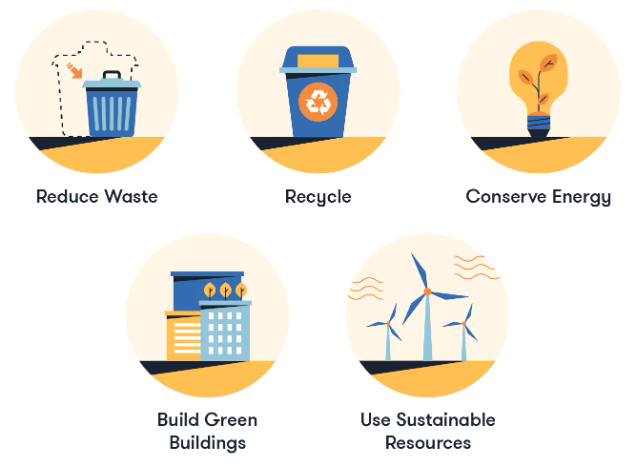
1.2. Current Challenges in the Construction Industry
The construction industry faces many challenges, some of which are induced by the complexity of the construction process, constrained physical and financial resources, inadequate workforce skills, and the use of old and outdated technologies. For these reasons, the industry typically lags behind others in improvements in performance through the application of technological advances. Such constraints cause the construction industry to be inactive in implementing sustainable development programs. Manpower and mechanical equipment management, working in difficult ground and work conditions, unknown environmental impacts of manpower, the application of unstable adhesive materials, and energy consumption by the equipment forecast negative construction designs. The requirement of minimizing the adverse impacts affecting construction operations should be one of the eventual objectives of construction design. Specifically, a building's lifetime performance should encompass economic construction, minimized environmental effects, and maximal healthy living outcomes. Moreover, with the goals of minimizing wasted resources, preventing accidents, and enhancing the probability that the finished product will contribute to its user's well-being, economic construction and suitable construction designs are also critical demands. Activities ranging from small-scale housing construction to large-scale heavy construction projects should be designed according to these patterns. Often, the construction process creates heavy burdens on the surrounding domains. The requirement of satisfying contemporary conditions for constructing a structure from its design stage has also become one of today's requirements. Enhanced construction capabilities necessitating control of greater burdens - stable properties, minimized environmental effects, economic debt reductions, healthy living moods, and improved performance [3].
2. Eco-Friendly Equipment in Construction
Research and development of eco-friendly equipment and construction sites have been made possible not only in response to the growing demand for environmental regulations and efficient energy consumption but also due to the development of recent related technologies. With the technical advancements made in these areas, the new concept of green technology through sustainable construction is increasingly being applied in the construction industry. Eco-friendly construction requires the employment of new sustainable technology and equipment, which can bring enormous protective effects on the natural environment, proper energy consumption, and a decrease in overall operational costs and long-term benefits based on various applications' potential. It has positive effects of energy conservation, waste reduction, and decreased construction operating costs based on the implementation of related technology products. Eco-friendly construction mainly focuses on minimizing the need to exhaust major non-renewable construction resources through efficient and cost-effective construction techniques and advanced materials to enable better utilization of limited resources. The concept and the overall objective are fully considered so that the construction machinery or equipment can meet and fulfill the minimum impact on the environment while assuring that high-performance standards are embraced and potential economic benefits are derived with equal attention to the end users. However, the traditional heavy-duty construction machinery and equipment used today are energy-intensive and are major contributors to carbon emissions. They create inevitable side-effect problems such as overconsumption of raw materials required, high levels of emissions, and environmental pollution from the construction process, as well as massive waste of construction materials not usually assessed and quantified within the current sustainable development concept requirements. The investigation of the construction machinery focused on the accuracy of the allowable deformations of the computational model, such as strength analysis, condition-based damage control, and global response monitoring and control design, communicating critical information arising from both numerical and experimental tests between construction elements, as well as knowledge of the mechanical properties of the construction elements themselves [4].
Equation 1: Energy Consumption (EC) of Eco-Friendly Equipment
One of the key factors in assessing the sustainability of construction equipment is its energy consumption, especially when comparing traditional machinery with eco-friendly alternatives (e.g., electric machinery or hybrid models). For eco-friendly equipment, the power rating 𝑃 would ideally be lower or derived from renewable sources (e.g., solar, wind, or bioenergy).
2.1. Types of Eco-Friendly Equipment
Classified equipment, plant, tools, vehicles, and machinery used in construction operations under four categories about ecology and the environment. The first category includes 'environmentally friendly' and 'made with sustainable or recyclable materials.' It encapsulates environment-friendly construction equipment and tools, including other machine-mounted emission monitors and engine-mounted filters. The second category consists of equipment that has monitoring systems, such as real-time data cables for the temperature inside concrete piles. The third category includes equipment that has pre-constructed features, such as eco-drones. Finally, the last category comprises equipment that has been designed for protection against hazards, such as protective gloves that help reduce risks.
There are different types of eco-friendly equipment: by vehicle type – road, off-road, rail, marine, subsea, aerospace; by equipment type – construction, powered industrial trucks, material handling, forklifts, containers, front loaders, skid steer loaders, computers, servers, print environments, copiers, and multi-function devices. In construction, all types of eco-friendly equipment are used in the construction process, such as heavy construction machinery like bulldozers, graders, scrapers, loaders, excavators, backhoe loaders, side dumpers, narrow backhoe loaders, compact excavators, articulated trucks, telehandlers, haulers, excavators, soil compactors, and articulated haulers. These are vehicles used in construction work, such as hauling vehicles and large earth-moving equipment, which can have significant corrective or preventive measures due to their direct and indirect impacts. In this category, we could include all electro-mechanical equipment and vehicles. In green construction, special and unique equipment is being used, including plants and tools used in different types of construction work. These include soil and rock drilling equipment, weatherization/plastering tools, cables and wiring, electric work boxes, and security boxes. In green construction, multi-tasking tools are used, such as black totes, security boxes, cables, and wiring boxes [5].
2.2. Benefits and Advantages of Using Eco-Friendly Equipment
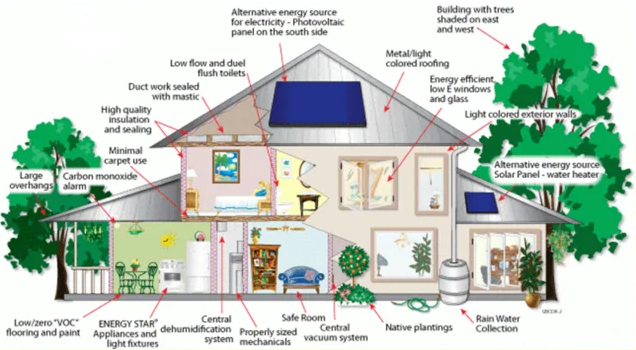
As it can also be inferred from the responses, the use of eco-efficient equipment improves the quality of construction, both in terms of its duration and its completion conditions and safety. Improved quality in terms of sustainability also affects the valuation or economic worth of the building. It is of great importance from the point of view of a building's users and their well-being. As a general rule, individuals spend between 70 and 90% of their time inside buildings and depend on the building's environment to meet their needs. Indoor air is usually more contaminated than outdoor air, and the conditions of the built environment help to alleviate or worsen that contamination. In the past, both buildings and construction processes have affected their surroundings, and the ecology of their direct or indirect environment has suffered from this influence. During the 1970s, buildings and construction activated the first environmental alarms. Today, we increasingly recognize that if buildings are considered entities, products of such a complex personal and environmental process, there are measures that can be taken to specifically improve responsiveness to environmental aspects of future buildings, increasing quality and improving the value of structures.
Consequently, professionals in the sector are pushing for higher living standards and for buildings that are less aggressive towards their surroundings. Principles of eco-management and voluntary environmental improvement systems make, for the first time, institutions and professionals directly responsible for determining environmental criteria and assessing the results of their application in buildings and on building sites. To encourage a growing sustainable construction movement, door-to-door action changes constructed insertion requirements. They insist that construction professionals defend new frontiers, incorporating performance aspects powered by operational systems developed to assess these aspects into the construction project. Large numbers of products can be used in the construction process, and they can exert a significant aggressive influence on the environment [6].
3. Technological Innovations in Eco-Friendly Equipment
Technology advances have allowed for the creation of revolutionary eco-friendly equipment and techniques. The long-term environmental impact of large construction projects often reaches far beyond the project’s duration. Landfills overflow with hundreds of wasted supplies, and the usage of diesel fuel for heavily utilized heavy-duty machines generates large amounts of planet-specific pollutants. The disastrous consequences of construction pollution are well known, but the current eco-friendly equipment development rate is gaining momentum, offering us a glimpse into some revolutionary green building solutions of tomorrow. Truly, the construction world is well on its way to proving that it can not only be as eco-friendly as one could think but also reduce pollution implemented throughout its process. In addition to renewable building materials, the recent innovation focus is development in the category of eco-friendly construction equipment. These eco-friendly tools and machines can help maintain the build process, curtail mechanical carbon pollutants, and contrive fewer harmful waste results. For instance, solar cubes provide an attractive prospect for portable environmentally friendly construction distributed electric power. The major architectural boost is the comprehensive dismantling of green building spaces, using renewable, nontoxic building materials, as well as creating portable building area gadgets like mass constructionally together with easy brick extension brackets [7].
3.1. Green Building Materials
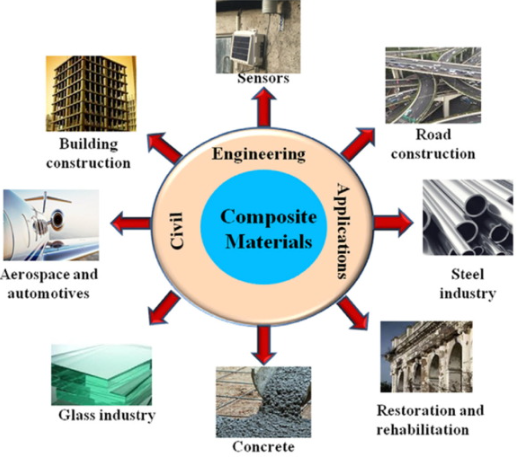
Green building materials can be classified according to their functions. Though floors, walls, and roofs are traditional components of a building, building materials refer not only to these materials but to all materials that are used within a building. Including installed and painted materials, furnishings, and finishing supplies, building materials are integrated into various aspects of the building to directly function for building users. Building material use accounts for a large portion of the impact associated with new construction or retrofit. As natural resource depletion and key environmental, social, and economic issues arising from extraction, manufacturing, and disposal of construction materials, sustainable development issues in buildings encourage the reduction, reuse, and recycling of building materials and products. For the three dimensions of sustainability, significant improvement opportunities are presented in designing, manufacturing, reusing, recycling, and disposal of building materials. Socially, using building materials that are not harmful, toxic, or carcinogenic improves human health, productivity, and comfort. Economically, risk is also reduced as doing so can provide cost savings, and the negative impacts of business-as-usual building materials can be avoided. Strong interest and trends towards green building materials have been reflected in standard development [8].
3.2. Renewable Energy Sources for Construction Equipment
As in any other context, using renewable energy instead of fossil fuels seems promising. For example, biodiesel is derived from animal fats and vegetable oils and is therefore a nonrenewable energy source. Additionally, biodiesel has limitations concerning its characteristics and blending. Thus, new sources of fuel with better properties are required. Seemingly, several algae show good potential as sustainable renewable energy sources, being moreover more efficient and more productive in comparison with other sources of biomass for biofuel production with potential for economic feasibility. Solar and biomass are considered some of the best sources of renewable energy due to being abundant and having predictable availability. Solar energy is renewable, available during the day, and can be converted into electrical energy using photovoltaic cells.
The use of these technologies as renewable sources of energy for powering construction equipment presents a few constraints but opens perspectives for coping, to a large extent, with the undesired and cautious use of natural energy resources. However, the higher costs are currently the main barriers to reaching full market potential. Yet, although there are ethical concerns related to the global consequences of solar panel production, it is important to note that the full assessment considers house energy savings, technological advances in photovoltaic panels, and the value of clean electricity. In summary, these pathways include internal combustion engines operating with renewable biofuels, fuel cells operating with hydrogen or bioethanol, and batteries [9].
Equation 2: Fuel Efficiency and Cost (FC)
For traditional construction equipment, fuel efficiency is a critical metric, and the operational cost can be calculated as:
In the case of electric equipment, the equation would focus on the electricity consumption and energy costs.
4. Case Studies and Best Practices
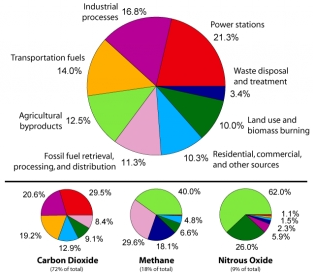
Construction processes use various types of machinery and equipment around the clock. Many of these equipment types are operated with diesel engines, which emit a substantial amount of GHG, CO2, CO, NOx, PM, HC, and SOx. Few stringent regulations have been issued to date to limit emissions from diesel engines used in non-road high-power equipment. It is a known fact that due to the characteristics of each project, the majority of the equipment is used for short periods of 6 months or less, and many more are used for very short periods of a day or less. These short-term activities, particularly those with heavy and mostly polluting equipment, can have the opposite impact compared to other environmentally friendly practices on site. The case study results supported a need to decrease the concentration of large and polluting equipment by reducing their use time with small machines. It is suggested to develop and implement feasible practices to share the cost of purchase and maintenance, and to preserve the machinery for a longer time. Some of the suggested practices to reduce and better use this equipment include using efficient equipment to reduce the number of large diesel engine tasks. The only drawback is that most of the electrical and hybrid equipment is available in a small range or is small in size. The industry has to wait for more powerful eco-friendly equipment that can perform major construction activities. Solar and wind energy provide electricity-powered equipment used during daylight and good weather conditions to avoid a decrease in cost-effectiveness due to battery banks and renewable energy systems. This practice saves electricity, reduces GHG emissions, and reduces the power loads on the power grid, especially during peak load [10].
4.1. Successful Implementation of Eco-Friendly Equipment in Construction Projects
In this regard, there is a need for improvement in motivational tools for companies to apply more sustainable construction equipment. For example, a differentiation in the contractor procurement process could be considered. It would allow positive discrimination of companies with environmentally engaged commitment to the use of certain equipment, derived from the company's projects in which the ecological machinery is certified for use. At the same time, potential incentives, such as cost savings or a higher demand for companies using such machinery, need to be considered. While interest is growing, eco-efficient equipment in construction still faces an uphill struggle for implementation. At present, the barriers to achieving sustainable construction are shaped by budget, legislation, and liability issues, high technology investment and operating costs, and a lack of knowledge and skills related to sustainable development. Companies building eco-friendly equipment are increasingly aware of the obstacles and propose stepping stones and measures towards a solution [11].
In recent years, an upsurge of interest has occurred in innovation in construction equipment. The considerable growth of the sector made it the most rapidly expanding market in Europe. Sustainable development has been defined as that which meets the needs and aspirations of the present without compromising the ability of future generations to meet their needs. This definition implies that sustainability includes economic and environmental principles. The construction sector has been traditional in using unsustainable equipment and practices [12].
Transportation was the number one activity for environmental emissions in member countries, with construction in second place and manufacturing as the third activity. Every product consumed in the world is linked to the construction industry. Measures to promote sustainable construction are widespread and have been adopted at international, member-state, and regional levels. Traditional tools for eco-efficient aims contain eco-labeling and sustainable public procurement [13].
4.2. Lessons Learned and Recommendations for Future Adoption
Through the review of previous off-site and on-site solutions, valuable conclusions have been drawn that might help others approach these construction technologies. These reflections point out the aspects that others might consider when implementing eco-friendly equipment. The following insights are the result of the lessons learned during the research process. These can act as relevant recommendations to stakeholders in the AEC industry. Firstly, collaboration among the stakeholders is key, as well as transparent communication, which is fundamental to sharing data and knowledge to reach a common understanding. Secondly, a change in the organizational culture was required, reflected in additional terms and conditions for the staff that had to familiarize themselves with the eco-friendly equipment. This posed an additional workload for the staff, as they had to allocate time and resources for the preparation and implementation of the technology. The research concerns two significant innovative solutions for sustainable mechanization in the construction process with off-site and on-site solutions. The motivation to investigate both fields lies in the fact that one does not exclude the other, as both solutions can successfully work together. Based on the achieved results, it is strongly believed that more studies should be conducted to develop an understanding. It is through this aim that the outcomes from this study will be used to drive further in-depth analyses and to discuss the risks and drivers for the future adoption and implementation of these productivity-enhancing technologies in the construction process. Taking into consideration that sustainability and sustainable development have particular attention, many architects, contractors, and developers are making an effort to respond to this and apply solutions at different stages [14].
5. Conclusion and Future Directions
In conclusion, this paper has presented an overview of the development of eco-friendly equipment in the construction industry. The literature has been thoroughly reviewed to address to what extent sustainability can be implemented in the design, material selection, manufacturing, construction, and dismantling stages of the equipment life cycle. As shown in this paper, many practitioners have started to apply energy efficiency, noise and pollution control strategies, and the use of natural ecosystems in the equipment life cycle. However, their effectiveness still falls short of satisfactory in the construction domain as compared with the equipment in other sectors. As a result, most equipment fails to protect the natural environment during its life cycle, and the purpose is thus only partially met [15].
The paper identifies several future research directions for sustainable development in construction equipment. There is still an urgent need for construction equipment to change its initial functions towards achieving the specified purpose of sustainable development. It should minimize adverse effects on the environment in both the construction process and the operation to contribute to a healthy living environment. Furthermore, we suggest new areas of research to look beyond the obstacles that the existing equipment has and lay emphasis on the application of advanced construction equipment, which can contribute satisfactorily to the construction process and the natural environment throughout its entire life cycle. For example, the development of artificial ecosystems together with the distribution of materials should be tackled regardless of its complexity. All these issues require the collective effort of the government, enterprises, and universities, and most importantly, the inclusion of sustainability in the curriculum of students to foster a new generation of engineers in sustainable construction [16].
Equation 3: Waste Management Efficiency (WME)
Construction typically generates waste, and eco-friendly equipment should facilitate waste reduction, reuse, and recycling. Waste management efficiency can be described by:
5.1. Summary of Key Findings
This text reported the findings of a study that explored the role of different business functions in promoting sustainable goods and services in three firms located in the construction industry. The role of operations, purchasing and design, marketing, and workforce education and training in promoting the existence and sales of sustainable concrete was discussed. Lastly, the findings were contextualized within two frameworks on the sustainability of emerging economies, putting forth the need for more stakeholders to work together on promoting truly sustainable goods and services within the construction industry [16].
The enabling role of different business functions in the production and sales of sustainable concrete was explored. A three-case study found that a push for change came from several angles within each construction firm. Inside the operations function, managers and employees navigated the creation of a more sustainable production process, experimenting with the right quantities of sustainable materials in their concrete mix. Inside the purchasing and design function, new product development helped overcome operational problems with the new mix and presented a flexible and long-term targeting of sustainable construction projects. Inside the marketing and workforce education and training, managers made a concrete value proposition to the broader construction market where general and subcontractors needed help understanding not only the green benefits but also the operational challenges when pouring a more sustainable mix.
5.2. Potential Areas for Further Research and Development
Given that the issue of sustainability is still relatively new in the context of construction equipment, there is substantial potential for researchers to explore how different areas of construction equipment may be further developed to make them more eco- and user-friendly. One aspect, the sustainability of reusing machinery, offers much potential but has been neglected. Thus, developing machinery that can be reused would have very positive environmental implications. In the research presented here, the Divisional Environmental Team and the Divisional Technology Group cooperated to establish the current state of knowledge and have embarked on developing low-consumption machinery thereby greening the machinery fleet. The next stage is to deep-dive into particular items of plant and the operation context [17].
In addition to developing the Principles of Optimum Fleet Management of Construction Plant as a printed guide that helps clients, project managers, and contractors enjoy and deliver sustainable outcomes from construction. Although this text sets out an overall strategy for how these may be achieved, it treats specific pieces of machinery, tools, and attachments only briefly. Machinery disuse and underuse may become particularly attractive if and when proper recycling and product take-back legislation comes into force. Some manufacturers are said to be organized for recycling at the end of the machine's life. These companies stamp vehicles with a marking indicating that all materials, especially dangerous compositions, can be recycled. As the disposal treatment costs can be high, such a process for recycling may become an overall cost-saving in the future.
References
- Vaka, D. K. “Artificial intelligence enabled Demand Sensing: Enhancing Supply Chain Responsiveness.
- Bansal, A. (2021). OPTIMIZING WITHDRAWAL RISK ASSESSMENT FOR GUARANTEED MINIMUM WITHDRAWAL BENEFITS IN INSURANCE USING ARTIFICIAL INTELLIGENCE TECHNIQUES. INTERNATIONAL JOURNAL OF INFORMATION TECHNOLOGY AND MANAGEMENT INFORMATION SYSTEMS (IJITMIS), 12(1), 97-107.
- Korada, L. (2021). Unlocking Urban Futures: The Role Of Big Data Analytics And AI In Urban Planning–A Systematic Literature Review And Bibliometric Insight. Migration Letters, 18(6), 775-795.
- Chintale, P., Korada, L., WA, L., Mahida, A., Ranjan, P., & Desaboyina, G. RISK MANAGEMENT STRATEGIES FOR CLOUD-NATIVE FINTECH APPLICATIONS DURING THE PANDEMIC.
- Pamulaparthyvenkata, S., & Avacharmal, R. (2021). Leveraging Machine Learning for Proactive Financial Risk Mitigation and Revenue Stream Optimization in the Transition Towards Value-Based Care Delivery Models. African Journal of Artificial Intelligence and Sustainable Development, 1(2), 86-126.
- Avacharmal, R. (2021). Leveraging Supervised Machine Learning Algorithms for Enhanced Anomaly Detection in Anti-Money Laundering (AML) Transaction Monitoring Systems: A Comparative Analysis of Performance and Explainability. African Journal of Artificial Intelligence and Sustainable Development, 1(2), 68-85.
- Mandala, V., & Surabhi, S. N. R. D. (2021). Leveraging AI and ML for Enhanced Efficiency and Innovation in Manufacturing: A Comparative Analysis.
- Bansal, A. (2021). INTRODUCTION AND APPLICATION OF CHANGE POINT ANALYSIS IN ANALYTICS SPACE. INTERNATIONAL JOURNAL OF DATA SCIENCE RESEARCH AND DEVELOPMENT (IJDSRD), 1(2), 9-16.
- Vaka, D. K. " Integrated Excellence: PM-EWM Integration Solution for S/4HANA 2020/2021.
- Chintale, P. SCALABLE AND COST-EFFECTIVE SELF-ONBOARDING SOLUTIONS FOR HOME INTERNET USERS UTILIZING GOOGLE CLOUD'S SAAS FRAMEWORK.
- MULUKUNTLA, S., & VENKATA, S. P. (2020). AI-Driven Personalized Medicine: Assessing the Impact of Federal Policies on Advancing Patient-Centric Care. EPH-International Journal of Medical and Health Science, 6(2), 20-26.
- Mandala, V. (2021). The Role of Artificial Intelligence in Predicting and Preventing Automotive Failures in High-Stakes Environments. Indian Journal of Artificial Intelligence Research (INDJAIR), 1(1).
- Bansal, A. (2020). An effective system for Sentiment Analysis and classification of Twitter Data based on Artificial Intelligence (AI) Techniques. International Journal of Computer Science and Information Technology Research, 1(1), 32-47.
- Mulukuntla, S., & VENKATA, S. P. (2020). Digital Transformation in Healthcare: Assessing the Impact on Patient Care and Safety. EPH-International Journal of Medical and Health Science, 6(3), 27-33.
- Vaka, D. K. (2020). Navigating Uncertainty: The Power of ‘Just in Time SAP for Supply Chain Dynamics. Journal of Technological Innovations, 1(2).
- Dilip Kumar Vaka. (2019). Cloud-Driven Excellence: A Comprehensive Evaluation of SAP S/4HANA ERP. Journal of Scientific and Engineering Research. https://doi.org/10.5281/ZENODO.11219959
- Chintale, P., Korada, L., Ranjan, P., & Malviya, R. K. ADOPTING INFRASTRUCTURE AS CODE (IAC) FOR EFFICIENT FINANCIAL CLOUD MANAGEMENT.