

The growth in demand for rail transportation systems within cities, together with high-speed and long-distance transportation running on a rail network, raises the issues of both rail safety and security. If an accident or an attack occurs, its consequences can be extremely severe. To mitigate the impact of these events, the real-time monitoring of a rail system is required. In that case, the improvements in monitoring can be achieved using artificial intelligence algorithms such as neural networks. Neural networks have been used to achieve real-time incident identification in monitoring the track quality in terms of classifying the graphical outputs of an ultrasonic system working with the rails and track bed, to predict incidents on the rail infrastructure due to transmission channels becoming blocked, and also to attempt scheduling preemptive and preventative maintenance. In terms of forecasting incidents and accidents on board the trains, neural networks have been used to model passenger behavior and optimize responses during a train station evacuation. In tackling the incidents and accidents occurring on rail transport, we contribute with two methodologies to detect anomalies in real-time and identify the level of security risk: at the maintenance level with personnel operating along the railways, and onboard passenger trains. These methodologies were evaluated on real-world datasets and shown to be able to achieve a high accuracy in the results. The results generated from these case studies also reveal the potential for network-wide applications, which could enhance security and safety on railway networks by offering the possibility of better managing network disruptions and more rapidly identifying security issues. The speed and coverage of the information generated through the implementation of these methodologies have implications in utilizing prediction for decision support and enhancing safety and security on board the rail network.
Neural Networks for Enhancing Rail Safety and Security: Real-Time Monitoring and Incident Prediction
July 22, 2022
September 05, 2022
October 17, 2022
October 29, 2022
This is an Open Access article, distributed under the terms of the Creative Commons Attribution 4.0 International License (http://creativecommons.org/licenses/by/4.0/), which permits unrestricted use, distribution and reproduction in any medium or format, provided the original work is properly cited.
Abstract
1. Introduction
Accidents and incidents are costly in terms of human life, social perception, income, and infrastructure, making it imperative for transportation agencies to ensure the safety and security of their systems so that they function properly for the agreed objectives. The significant volume of rail freight and passenger traffic and the expanding network make early capacity signaling and condition-based maintenance mandatory to use the system efficiently. The industry is moving from time-based to condition-based maintenance, and a reduction in manual operations was observed over time, including those of the methods used to monitor and control human errors and defects. Reliability, availability, and maintainability should be managed to avoid disruption in operations via human error correction. An excess of track-paralleling and alignment features accessible via unsecured interfaces that may be misconfigured may lead to loss of control. Traditional machine learning consists of hundreds of rules and equations that mimic neural connections and activity. It may be highly beneficial in risk prediction, and survivability prediction, the entire study is low-cost apart from operations. Resiliency, also using redundant networks, had performance degradation with multiple identical services. In resilience, the network has extra resources to automatically reroute the traffic in the event of failure of any node or link, and the cost may increase with added security features [1].
Safety activities handle activities that have some chance of failure, and hazards have the potential to cause injury. Turbocharging enforcement requires coordination between numerous employees and often requires the deliberate disconnection of some safety interlocks. A false positive carries the prospect of reducing safety, and a false negative has the potential to damage the engine for years. The majority of citizens rely heavily on commercial or public transportation networks to get around. Furthermore, railroads are frequently situated in high-density populations or surrounding areas, where the results of an accident may have a significant impact on public health and security. It's essential to keep rail traffic management infrastructure safe and free from malicious acts. The goal of this research is to help rail transit police use technology to manage their networks. It must build tools that rail authorities can use to address these threats rather than concentrating solely on finding new threats. To this end, we look at the present state of train traffic management infrastructure and identify the obstacles to protecting it. We address each of these problems separately. For safe, network-wide early incident detection and risk assessment, a simple, large-scale approach involving the estimation of major signal and rail distances using stationary infra-acoustical noise is effective and cost-efficient [2].
1.1. Background and Significance
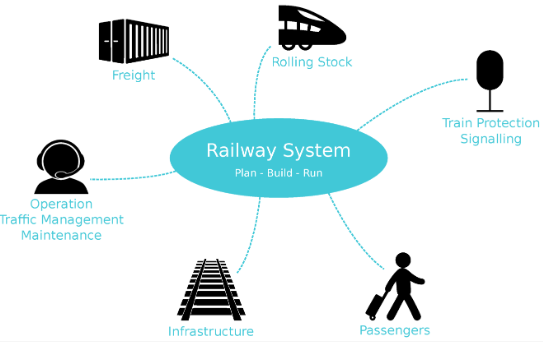
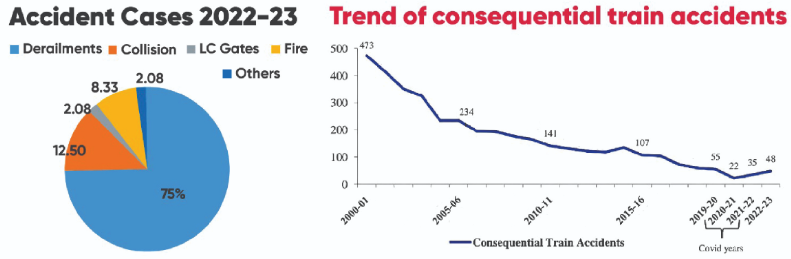
Rail industries are characterized by the transportation of huge volumes of passengers, nearly daily. This characteristic reduces accidents very critical to increase trustworthiness as well as trust concerning the system. Hence, ensuring safety is a main concern, and the public must have confidence in the existing systems and the policy strategies taken to avoid compromising economic stability. Advanced technology applied to the railway improves the system if the technology is also applied to the processes around the railway. Artificial intelligence techniques, including data mining techniques such as neural networks, could also be useful to determine various trends in the given database. The present paper proposes to review some research in the area of railway security and safety, conducted either on-board or around the train, especially based on the use of neural networks. In France, there are no less than five major accidents per year, leading to other trains being delayed. At the scale of our main European neighbors, the situation is less deadly. Spain, Sweden, Germany, and Italy all count two deaths per million inhabitants, while France observed two deaths out of a million in 2006. In 2014 and 2015, the rate fell back to 1.7. The annual average of 1.6 million accidents is stable in France. Three-quarters of transport accident victims are in the 'private and professional travel' category.The rail industry plays a crucial role in the daily transportation of vast numbers of passengers, making safety a paramount concern to maintain public trust and economic stability. With advanced technologies, particularly artificial intelligence and data mining techniques like neural networks, the potential to enhance safety and security measures both on-board and around trains is significant. In France, the rail system experiences an average of five major accidents annually, leading to delays and raising concerns about safety. Although the mortality rate has improved, with a decrease to 1.7 deaths per million in recent years, it still reflects a pressing need for continued advancements in safety protocols. Comparatively, neighboring countries like Spain, Sweden, Germany, and Italy report lower fatality rates, highlighting the importance of effective safety strategies. With three-quarters of transport accident victims categorized as 'private and professional travel,' it becomes clear that enhancing railway safety not only safeguards lives but also bolsters public confidence in the rail system [3].
1.2. Research Objectives
The development of the rail industry is relevant to the challenges of ensuring safety and security. Indeed, in the rail ecosystem, the most used measures to protect trains and infrastructures provide the authorities with information about the status of the industrial assets and the rail infrastructures. Therefore, we aim to investigate how neural networks can potentially supplement the safety and security measures already in use. The goals of this study are as follows: (1) State-of-the-art analysis with the limitations and proposals for the use of neural networks for rail security problems, (2) Propose an innovative analysis performed through the use of software to estimate the occurrence of incidents, (3) Analyze the business case in current railway systems by assessing the limitations and opportunities of real-time monitoring and modeling, (4) Propose a predictive model through the use of data relating to incidents and events that have developed, and (5) Present a deep feedforward neural network performing the predictive model by considering first the incidents that occurred on nodes and then the connections between nodes. The achieved results would provide railway operators with spatiotemporal analysis to contain or restrict the relative impacts posed by incidents involving nodes [4].
Taking into account the several incidents that occurred in the last decade and the effects developed in various railways, we aimed to investigate if the most relevant railway systems used technology to track the traffic that happens daily and if there is a way to protect and forecast incidents by considering the security and safety literature. Indeed, the provision of safety is not manageable using software or hardware; it must be attended to manually, and such a business case is not manageable. If we consider the railway from a security perspective and safety across the overall network, there is the possibility to prospect ongoing incidents and predict them. This analysis aimed to address the research gap in neural networks and the research perspective in data analytics with special inputs worldwide. An incident that we already experimentally forecasted is not possible to consider; indeed, the time to process and analyze the historical and bibliometric data acquired would take more than six months, and it is a limitation posed by COVID-19. Therefore, in this study, we disregard investigations into terroristic activities or cyberattacks [5].
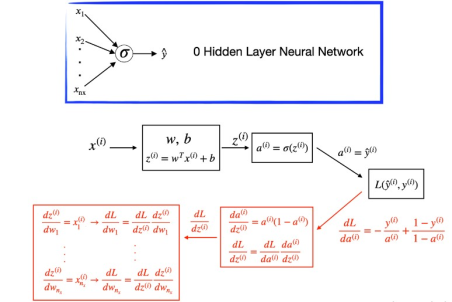
Equation 1: Stochastic Gradient Descent
2. Rail Safety and Security Challenges
Rail is the primary mode of transportation for passengers and goods. However, large numbers of accidents result from train operations, infrastructure problems, operational errors, and other failures. Additionally, several countries have reevaluated the protection of their public transport systems. Explosions in carriages, vans, or railway tracks are serious potential hazards that can be difficult to avoid altogether. In general, warning systems are established to lower the risk of train and rail chaos. However, a consistent safety requirement for rail is seldom set. Possible hazards are generally monitored in a discrete approach on an ad hoc basis. Additionally, trouble along low-traffic lines might not be immediately exposed. Railway security is also affected by an aging infrastructure. In some countries, there may even be regulatory limitations. These hazards indicate the need for systematic monitoring and control [6].
Existing rail infrastructure poses issues in implementing some of these real-time developments. In the future, there will be motion detectors, widespread video surveillance capabilities, and real-time risk and danger alert systems on rail lines. This, along with the fact that several other existing techniques do not wholly account for potential threats, has shown the need to expand the task of analyzing accessibility data for the planned use of such real-time automated reasoning in the context of the convergence of critical infrastructure protection with policy further projected research from this critical analysis, including all forms of input besides accessible data. A new method is needed to address these kinds of difficulties. This is the approach taken. The increasing reliance on rail as a primary mode of transportation highlights the urgent need for a comprehensive safety framework to mitigate the risks associated with train operations and infrastructure. Current monitoring systems often adopt a reactive, ad hoc approach, leaving low-traffic lines vulnerable and exacerbating safety challenges, especially given the aging infrastructure and regulatory constraints in many countries. To enhance rail security, future developments should incorporate advanced technologies such as motion detectors, extensive video surveillance, and real-time risk assessment systems. These innovations must be integrated into a holistic strategy that not only addresses existing vulnerabilities but also incorporates diverse forms of data analysis. By focusing on systematic monitoring and proactive risk management, we can create a more robust safety paradigm that effectively converges critical infrastructure protection with evolving policy needs, ultimately safeguarding passengers and goods against potential hazards [7].
2.1. Current Issues and Limitations
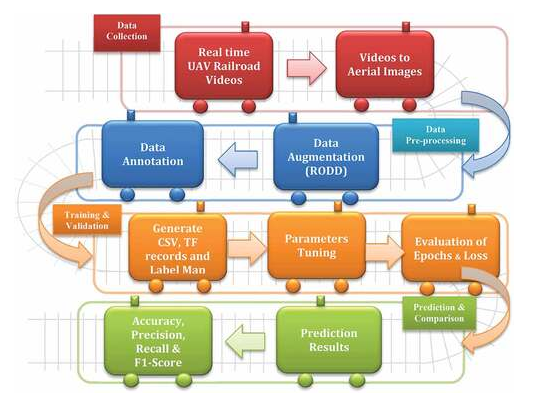
Given the number of terror and vandalism attacks against rail infrastructure and other man-made and natural disasters, regular real-time monitoring of rails represents a pressing need as both accidents and terrorism threats are interconnected. While the majority of the available rail monitoring systems could most accurately be described as outdated and have limited capabilities in terms of integrating, monitoring, and interpreting a wide variety of data, turning said data into useful information is limited due to the existing ICT infrastructure. The integration of AI technologies should counter both issues, which are based on user data analysis, alerting in case of certain trends as an input to the communication requirements between all railway stakeholders. Most legacy rail systems do not have embedded advanced data analysis in place for color-coding for adversarial maneuvers, personal overcrowding, monitoring, and alerting during terror and vandal attacks. Rail experts, from the operation to the most surface level would all benefit from this enhanced situational awareness [8].
One of the issues is the magnitude of human errors reflecting the fact that the majority of the rail incidents are committed by insiders who are electronic and cyber-related [9].
Moreover, while a significant portion of them are unconscious errors, several are the result of the lack of training of non-authorized staff. It is, therefore, of significant importance that both rail personnel and international stakeholders should benefit from the improved quality of rail safety and protection. However, fragmented legislation also holds back rail incumbents and new entrants from adopting any state-of-the-art wireless solutions because the lack of interoperability among closed technologies impedes the free movement of goods and progression of the EU rail single area puts in danger the spirit and integration of the EU, underlining the relevance of this research. Thus, railway incidents and accident investigations have shown that the segregation and the separation of humans, as well as fire and explosion risks by water, hinder the potential use of accelerating the project in both automatically saving lives and optimizing the railway freight and passenger operations. The lack of collaboration leads to non-integrated standards and protocols and missed business opportunities. Regulatory challenges include data protection. In conclusion, it is important to clearly promote innovation and also to determine how much it would cost to produce a similar approach elsewhere because IT industrial developed countries have a social structure that is at a relatively advanced stage compared to the other societies. Some might say that the signal for such a change to effective and integrated wireless telecommunications architecture represents railway safety and constitutes the phase of the social, economic, and technical organization [10].
3. Neural Networks in Rail Safety and Security
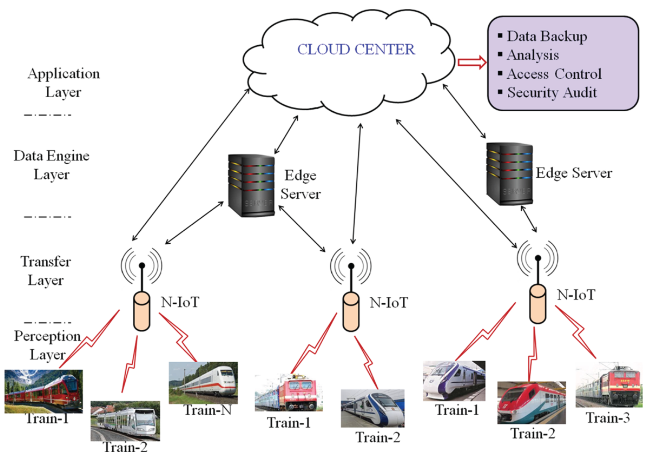
Neural networks are computational systems composed of interconnected processing elements, often working in parallel to solve specific problems. Neural networks are mainly used for purposes capable of enhancing rail safety and security. In safety-related applications, such networks are being used to implement predictive algorithms, enabling enough time to assess the situation and develop and implement the most appropriate preventative action. Shortly, while artificial intelligence (AI) systems, specifically using neural networks based on machine learning (ML) techniques, will be applied mainly for diagnostic and predictive activities, they may also be employed to make early decisions, should technology maturity and safety standards allow. A fundamental assumption is that neural networks are applied for data type analysis and machine learning, especially for predictive purposes; further disclosure on safety and infrastructure shall be focused on safety management integration and obstacle management and guidance [11].
Traditionally, rail operation has largely been based on the availability of data from data management systems and the application of data analysis, primarily for performance management. Advanced neural networks and AI systems will be able to dramatically enhance the potential of data to predict incidents, propose multidisciplinary automatic management of traffic and infrastructure, enable customized operation, and, when predictive, propose preventative measures in a more timely manner. Neural networks are an essential technology for integrating these various data types, as they can handle them in real-time, albeit with some limitations in terms of safety. The use of AI is not new: in the rail industry, it has been applied in particular in planning, and in object detection and classification [12].
3.1. Overview of Neural Networks
Artificial neural networks (ANNs), most commonly referred to as neural networks (NN), are computational models of the human brain and nervous system, especially the brain, fundamental for advanced human intelligence such as processing emotions and decision-making. ANNs are inspired by the vast network of biological neurons in the human brain and were used to model human-like computation in this context. This concept involves multi-level perceptrons, called neurons [13].
Every perception is connected to all neurons of the adjacent layers. Over time, every connection is adapted to the strength of the interactions. Diverse figurative designs and configurations of ANNs have been examined to analyze the ability to learn and generalize more complex, non-linear functions [14].
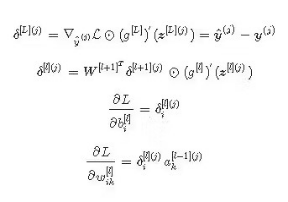
Whilst such descriptions carry philosophical connotations, in practice, neural networks are, at their essence, learning from real data. Data are systematically ingested by ANNs and learned from them to recognize patterns that allow the networks to make predictions or decisions. A key principle of developing ANNs for practical problems is that their neurons can assign different levels of accuracy to input data. Notably, the quality and quantity of data supplied for training significantly influence network performance; such networks can only extrapolate learned data to make predictions on new input observations similar to the learned data. Additional axes of descriptors are, of course, important at each step in the analysis, but first and foremost, the neural network needs high-quality, high-fidelity data. Critically, if the ANN has “seen” the noisy input variables of interest during training, then it can deal with noisy data further down the line. For rail safety monitoring and incident prediction, feedforward networks, convolutional networks, and some recent Memory Neural Encoding can be adapted to process input 1D and 2D data of, for instance, sensor activations [15].
Equation 2: Feed Forward Neural Networks
3.2. Applications in Rail Industry
Neural networks are currently applied in different fields to enhance decision-making and increase efficiency. In the rail industry, they can be used for monitoring and enhancing safety and security, which mainly fall within four categories. Some researchers used neural networks to enable predictive maintenance, while others proposed them for abnormal event detection, including intrusion and anomaly detection. The proposed neural models in both fields increase the resilience of the rail control systems. Meanwhile, an increasing number of research works propose integrating neural models to enhance safety during real-time operational processes of the rail industry and increase security measures through risk and anomaly assessment. In the rail industry, newly developed neural network architectures are proposed in different fields [16].
Researchers presented new solutions based on recurrent neural and gated feedback layers, focusing on monitoring the rail infrastructure. One group proposed using LSTM to predict the remaining useful life of sleepers, while others upgraded the traditional HMM model for rail crack detection. Additionally, predictive models were developed to detect commuters' waiting times, thus increasing the overall railway surveillance. In the domain of risk assessment and threat management, researchers developed attention-drawing and reasoning networks to capture different nuclear movements. To detect network attacks, LSTM and GRU-based neural models were developed to predict cyber threats. There are many other models presented in other domains like prediction, anomaly detection, retro-analysis, and severity analysis for construction and intelligence developed using modified or developed neural networks. Some industrial practitioners utilize biological neural models for the existing conditions of train tracks and stations. Modeling the current condition of these premises will give an overall picture of their utilities and potential deficiencies. It will provide an on-the-job idea of the pre-diagnosis of some deficiencies [17].
Thus, the proposed models will help increase the availability of railway tracks and reduce the intensity of failures. By monitoring the current condition of the tracks using a recurrent neural network and the tracks' historical data, we can increase the efficiency of the railway track's availability. Analytical results will be validated for their on-the-job accuracy that can be used for intelligence gathering. The presented section discusses the practical implications of adopting neural networks within the rail industry. Some challenges posed by the adoption of neural networks may ultimately translate into adaptations in rail safety behavioral change and thereby require a change in safety culture [18].
4. Real-Time Monitoring Systems
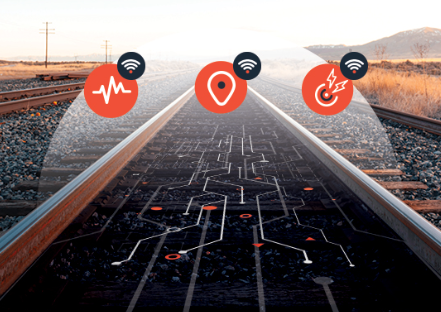
The concept of real-time monitoring and diagnostics of technical systems and infrastructure components is one of the key components in the enhancement of rail safety and security. A modern real-time monitoring system typically consists of a great number of sensing devices and instruments, also referred to as sensors, that monitor different parameters and components of a technical system, an infrastructure asset, or the environment. An integral part of this system is a data analytics platform that collects and processes data for the needs of data analyses, alert systems, and incident prediction. Due to the need to prevent incidents as much as possible, the time between the emission of a certain parameter or an incident and the availability of reliable processed data or data analytics results must be kept as short as possible. A growing number of researchers and practitioners integrate intelligent neural networks for real-time monitoring systems as they have demonstrated a lot of potential in predictive insights. Furthermore, another principal rationale for the introduction of real-time monitoring systems for rail security is to enable immediate response in case of a breach in the safety integrity of the considered technical systems and infrastructure assets. The integration of real-time monitoring systems into railway transport is not a simple task, as several difficulties and preferences should be considered. Initially, policymakers, regulatory bodies, and railway transport operators should consider possible security and privacy/data protection barriers. Another difficulty is that several stakeholders are involved in the effective operation of railway transport, and they often do not use the same or do not communicate using a similar real-time monitoring system [19].
4.1. Importance and Components
Monitoring, together with timely decision-making, is an inherent part of the rail safety concept. This concept may be expanded to also cover security issues, and a single European 'safety and security authority' could be introduced. The railway infrastructure is monitored mostly by various kinds of sensors and cameras [20].
The communication network is currently used not only for exchanging basic signaling information compatible with legacy solutions but also for monitoring and control. The nervous system, which provides input from the sensors and the control system from the decision-making process, is mainly responsible for the safety of railway systems. Raw data used for decision-making are collected from various nodes, leading to non-stop data streams being analyzed for monitoring and decision-making. Data is also accumulating in large amounts, which may become a threat in the event of an incident leaving infrastructure damaged [21].
System adaptability and extension capabilities in terms of new types of data, new functions, or nodes entering the process are additional requirements for the monitoring systems. Adequately designed monitoring systems forming the new nervous system architecture, similar to the human basic nervous system equipped with the spinal cord, would guarantee a correct reaction. Dynamic structural adaptation is nothing new and has already been introduced to neuronal networks, enabling the design of learning systems [22].
Currently, the operation of local systems has led to suboptimal decisions, as systems for monitoring many aspects of processing raw data are usually separate or do not provide fast decision-making applications over many monitoring systems; the monitoring functions are usually separated and correspond to two different worlds, namely: safety and maintenance. According to the cited reasons, new generation systems used in the monitoring network for railway infrastructure have been integrated into neural network design, converting the monitoring models into an integrated nervous network. The monitoring system data accuracy will always crucially impact decision-making; therefore, standard solutions for different monitoring systems' data are necessary to take into account not only the existing situations but also to conclude the analysis conducted in basins of models implemented in the hardware neurons. Monitoring systems influence the safety and security of the whole infrastructure [23].
5. Incident Prediction Models
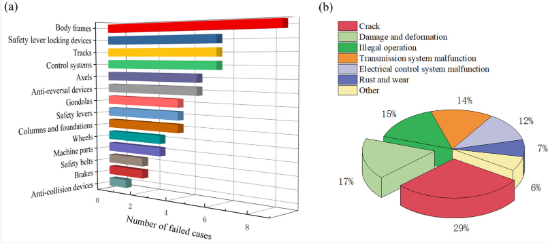
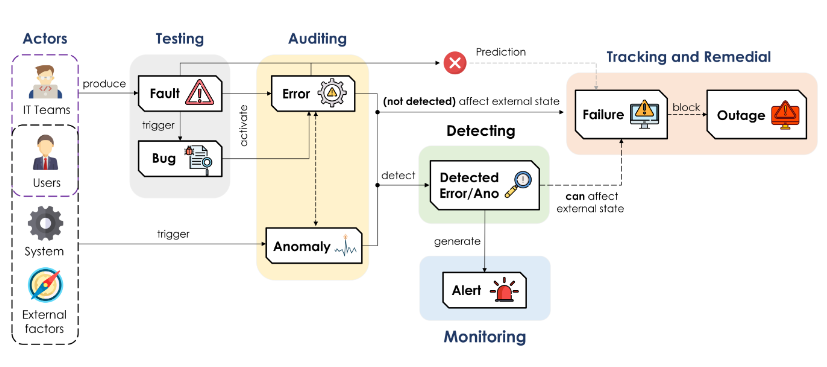
Incident Prediction Models (IPM), also known as Safety Breach Prediction Models in the context of rail safety, are widely used by practitioners for predicting in advance safety breaches using features of railway operations. Methods for determining potential railway accidents include path-finding algorithms and Bayesian network object-oriented models that stand for spatial or mathematical multi domain collaborative models. To predict track anomalies as a cause of accidents, a route anomaly searching strategy based on safety boundaries in the time-space model has been depicted as well. Supervised machine learning is commonly used for classification and to develop incident prediction models, particularly deep learning approaches using neural networks, including recurrent neural networks, convolutional neural networks, feed-forward neural networks, long short-term memory recurrent neural networks, and unsupervised learning approaches including self-organizing maps or clustering approaches to identify unique time series patterns present in one or more inputs [24].
Such models work on a large amount of historical data, and their definitions vary depending on the railway operation features. A new generic rule-based point-free train interaction model has been proposed for the assessment of signal-passing incidents' potential in its early time windows. There is also potential for neural network-based incident prediction models for validating other safety risk analysis results. It is possible to benefit from these techniques by better understanding operational risks in train network management operations or controlling and position management in railway maintenance operations.
Prediction is generally complemented with warnings, prohibitions, or certain other measures such as cordon closures, marshaling yard isolations, and limiting signals, level crossings, shunting, or work sites. Technically, model refinement provides future research opportunities to consistently include automatic monitoring algorithms and reduce false positive rates in network safety and security incident prediction models. Although high, a false positive rate – as inaccuracy-inducing in non-operating incidents – does not diminish their warning system-wide contribution to enhancing security and safety awareness and preparedness. However, security and safety predictive model improvement is necessary. They strongly elude ex-post sitting or operating risk analyses since they include intentional or male measurements, thereby making the risk assessment processes redundant. Contrarily, the fine-tuned use of predictive methods can contribute to network service protection, safety preparedness, and security awareness through precautionary steps in the end-to-end railway system. Consequently, the majority of current research on incidents and accidents of the railway system is geared at ex-ante and ex-post risk assessments based on historical data. Broadly speaking, incident prediction involves neural network safety and security enhancements for better managing and preventing future incidents. Ideally, such models include a 360-degree railway system of systems, a sociotechnical perspective, in real-time and on the global and local scales [25].
5.1. Types of Prediction Models
Incident prediction models can be classified into statistical methods that are based on the analysis of incident occurrences or machine learning approaches that develop prediction models by training on historical data. A third category might be the hybrid models that benefit from a combination of the two methods while trying to compensate for their respective weaknesses. In general, statistical models have been the most frequently used ones, being the first ones developed alongside the progress of data availability. On the other hand, machine learning approaches are attractive due to their property of not being constrained by the model distribution or the number of included variables. Nevertheless, applications of machine learning methods in modeling irregular incidents and in dealing with data fusion have only recently begun to emerge with satisfactory results, particularly in the field of predictive maintenance [26].
Incident prediction, as its scoring, has been mostly done based on the following types of prediction models. Statistical models: Poisson and Negative Binomial models utilized for analyzing track buckles and various soft computing methods combining clustering and neural networks for modeling the temporal impact of factors on the level crossing collisions. A hybrid model for burglary prediction, time series analysis using autoregressive integrated moving average models, and feed-forward neural networks for crime prediction. In some cases, one model is utilized for predicting one type of incident and another one for predicting another type of incident, and then the results are combined for various possible applications. The decision of whether to use one or many models cannot be a priori statistically guided. The selection of the appropriate prediction model for a particular application is performed on a case-by-case study since a model that is found successful in many or certain districts or systems may not work in another district or system [27].
Each of these aforementioned types of prediction models has its strong and weak points. This is illustrated in a practical description in the section below. In stations, the combination of this latter approach is a common practice where, for example, such models as neural networks have been used on data extracted from video-based systems or on the number of people detected in trains, in addition to the number of tickets sold, on one hand, and the type and variations of weather and meteorological conditions on the other. Regardless of the desired applications, rail prediction models stress the applicability to less common but still significant incidents, as well as the relevance of various other risk-related aspects. For these reasons, additional research work and knowledge have to be considered for advancing the more general public disorder and crime prediction models. Further research will focus on this aspect and the employed modeling technique. Each of the types of prediction models has its strong and weak points, although the models have in common the multidisciplinarity focused on human and infrastructure behavior that they imply. The selection of the appropriate prediction model for a particular application is performed on a case-by-case study rather than by a statistical rule [28].
5.2. Performance Metrics
The evaluation of incident prediction models requires appropriate performance metrics. Some of the most important measurements are model accuracy, precision, recall, and F1 score. Accuracy is the most common metric and is defined as the proportion of both positive and negative examples that were correctly identified. Precision measures the percentage of relevant results among the retrieved results. This metric indicates the ability of the model to classify an example as positive when it is positive. Recall measures the percentage of the total relevant results that were correctly classified by the model. It evaluates the ability of the model to identify all positive examples. In combination, precision and recall provide the F1 score, which is the harmonic mean of the precision and recall. A model with a high F1 score is generally successful.
The significance of selecting the correct metrics is highlighted by studies, which argue that choosing a different metric can yield very different results. These differences have major implications for decision-making related to model development and industry deployment. Additionally, good model performance when evaluated concerning a specific metric does not guarantee that the model will perform well in practice, particularly in the rail industry. This is due to noise in the example label data, low signal in the data, and dynamic characteristics of the data, influenced by factors such as time and location. Data quality can also change over time. As such, the monitoring strategy needs to adapt and develop with the industry. Efforts are required to maintain and continuously improve the ability to predict future train or track incidents, ensuring deployment in. A key recommendation is the execution of a stochastic search of hyperparameters and data science techniques, guided by a performance metric relevant to the domain [29].
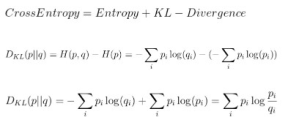
Equation 3: An Introduction to Cross-Entropy Loss Functions
6. Conclusion
The introduction demonstrates that there is a real need for this technology in the rail industry, generating excitement in the readers. Case studies illustrate how this technology is currently being implemented to deal with real-world problems. This essay aims to motivate the rail industry's concern about the sophistication of neural networks which enable the paradigm transformation of existing rail safety and security beyond ‘systems’ to ‘systems of systems’. This paper demonstrates the importance of real-time data monitoring and incident predictive accuracy and argues the necessity to address them. It is highlighted that to deal with the increased rail traffic challenges and maintain the resilience of rail operations, railways (particularly urban rail) should benefit from state-of-the-art and further sophisticated technologies for on-the-go monitoring, assessment, diagnostics, decision-making, consequence uncertainty/sensitivity analysis, and simulation, with a focus on trend prediction and incident prediction. The conclusions of this essay are twofold: At the point when this essay was written, there has been a substantial increase in published literature on the development and application of neural networks across the rail industry, particularly system safety and security. Part of this growing acceptance might be related to the semi-revolution adoption of neural networks for complex problems in other domains, and their enhanced sophistication and robustness to model the complexity and dynamics in coupled systems. This suggests that there is a need for more research to identify potential avenues for further application of neural networks for similar problem areas in the rail industry. In addition to relying on case studies that are already implemented inside organizations collaborating with the rail industry, there is also a demand to establish innovative research in the following areas: Data science, particularly predictive incident/deterioration, and big data; Engineering; Social; Biological; Legal; Physical; and Political dimensions. A recommendation for further adaptation is beyond implementation recommendations. In one way, industry practitioners and professional bodies might need to refine and develop further advanced knowledge, and design strategies to increase awareness between their members. This might be particularly relevant for promoting safety and security operations in different contexts. From a different angle, moreover, policymakers and regulators, as well as police, emergency services, and stakeholders, should continue working together to adapt the legal and development frameworks and address the social implications of this highly desirable process. Such a framework to incorporate chatbots and deep learning for RMASs should address the challenges of Awareness, acceptance/commitment and trust; Reliability; Cyber-security; Confirmation of autonomy; Safety and security; Automation; Unreliable services; and Practical and philosophical cultural/Ethical bias. These topics should be subject to mutual discussion and conceptualization, particularly between the rail industry/engineering, and the various social, legal, and political perspectives. Only through a collaborative effort can a beneficial and fair trade-off be struck for a cost-effective, reliable, and inclusive rail service [30].
6.1. Future Trends
The next decades will witness a boost in enhancing current systems through employing state-of-the-art technology extending to various disciplines such as the Internet of Things, data engineering through more advanced data analytics including big data, and advanced artificial neural networks, particularly machine learning algorithms. Moreover, the future can be marked by a larger penetration of automation in the railway system itself, and a significant improvement in the abilities and integrities of the control devices that considerably contribute to rail safety. The railway system is expected to witness more sophisticated feature additions for the railway rolling stock, better signaling systems that are more precise and well-integrated, and even newer rules and regulations that can change the way feedback is accepted against the risk [31].
The risk industry is multifaceted and addresses hypothetical, actual, and perceived risks to ensure that all the risk, cost, and human decisions are effective and fit to be used to verify a final decision. Safety is not a static parameter but rather it is constantly attaining new dimensions through research in terms of preventive measures and proactive strategies that can identify incidents and hence enhance the impact of risk management per se. This can be realized more effectively through advances in the integration of research conducted at academic institutions, and technological research with hardware solutions that can sense, understand, and predict measurements from the real world and contribute to the local history of data in the field. Equally, risk management can be enhanced by adding another level in terms of processing, tools, reality, or hybrid solutions for monitoring safety by ensuring that the fields blend perfectly to encompass predictive and prescriptive features. Regulatory changes are also a hurdle that needs to be addressed by offering innovative solutions that are engineered by standard specifications in addition to new guidelines per se. A higher degree of integration and standardization of data pairs expanding over safety and security aspects of rail will further ensure improved adaptivity in aligning safety layers more effectively to reduce the impact of risk elements. For the rail industry, having real-time access to the data analyses adds large value in terms of security and safety management characteristics, extending the safety management through informing about the real performance of the rail network. The era of rule-based constraints can be enriched even more today through the use of big data, which has been appreciated and emphasized again as it addresses learning from experience by shedding light on data that is often ignored post-system operation owing to the priorities of system users [32].
References
- Avacharmal, R. (2022). ADVANCES IN UNSUPERVISED LEARNING TECHNIQUES FOR ANOMALY DETECTION AND FRAUD IDENTIFICATION IN FINANCIAL TRANSACTIONS. NeuroQuantology, 20(5), 5570.
- Chintale, P., Korada, L., WA, L., Mahida, A., Ranjan, P., & Desaboyina, G. RISK MANAGEMENT STRATEGIES FOR CLOUD-NATIVE FINTECH APPLICATIONS DURING THE PANDEMIC.
- Mandala, V., & Mandala, M. S. (2022). ANATOMY OF BIG DATA LAKE HOUSES. NeuroQuantology, 20(9), 6413.
- Aravind, R., Shah, C. V., & Surabhi, M. D. (2022). Machine Learning Applications in Predictive Maintenancefor Vehicles: Case Studies. International Journal of Engineering and Computer Science, 11(11), 25628–25640.[CrossRef]
- Pamulaparthyvenkata, S. (2022). Unlocking the Adherence Imperative: A Unified Data Engineering Framework Leveraging Patient-Centric Ontologies for Personalized Healthcare Delivery and Enhanced Provider-Patient Loyalty. Distributed Learning and Broad Applications in Scientific Research, 8, 46-73.
- Vaka, D. K. (2020). Navigating Uncertainty: The Power of ‘Just in Time SAP for Supply Chain Dynamics. Journal of Technological Innovations, 1(2).
- Kommisetty, P. D. N. K. (2022). Leading the Future: Big Data Solutions, Cloud Migration, and AI-Driven Decision-Making in Modern Enterprises. Educational Administration: Theory and Practice, 28(03), 352-364.
- Bansal, A. (2022). REVOLUTIONIZING REVENUE: THE POWER OF AUTOMATED PROMO ENGINES. INTERNATIONAL JOURNAL OF ELECTRONICS AND COMMUNICATION ENGINEERING AND TECHNOLOGY (IJECET), 13(3), 30-37.
- Chintale, P. SCALABLE AND COST-EFFECTIVE SELF-ONBOARDING SOLUTIONS FOR HOME INTERNET USERS UTILIZING GOOGLE CLOUD'S SAAS FRAMEWORK.
- Korada, L., & Somepalli, S. (2022). Leveraging 5G Technology and Drones for Proactive Maintenance in the Power Transmission Industry: Enhancing Safety, Continuity, and Cost Savings. In Journal of Engineering and Applied Sciences Technology (pp. 1–5). Scientific Research and Community Ltd. https://doi.org/10.47363/jeast/2022(4)260[CrossRef]
- Laxminarayana Korada. (2022). Optimizing Multicloud Data Integration for AI-Powered Healthcare Research. Journal of Scientific and Engineering Research. https://doi.org/10.5281/ZENODO.13474840
- Bansal, A. Advanced Approaches to Estimating and Utilizing Customer Lifetime Value in Business Strategy.
- Dilip Kumar Vaka. (2019). Cloud-Driven Excellence: A Comprehensive Evaluation of SAP S/4HANA ERP. Journal of Scientific and Engineering Research. https://doi.org/10.5281/ZENODO.11219959
- Bansal, A. (2021). OPTIMIZING WITHDRAWAL RISK ASSESSMENT FOR GUARANTEED MINIMUM WITHDRAWAL BENEFITS IN INSURANCE USING ARTIFICIAL INTELLIGENCE TECHNIQUES. INTERNATIONAL JOURNAL OF INFORMATION TECHNOLOGY AND MANAGEMENT INFORMATION SYSTEMS (IJITMIS), 12(1), 97-107.
- Vaka, D. K. “Artificial intelligence enabled Demand Sensing: Enhancing Supply Chain Responsiveness.
- Korada, L. (2021). Unlocking Urban Futures: The Role Of Big Data Analytics And AI In Urban Planning–A Systematic Literature Review And Bibliometric Insight. Migration Letters, 18(6), 775-795.
- Bansal, A. (2021). INTRODUCTION AND APPLICATION OF CHANGE POINT ANALYSIS IN ANALYTICS SPACE. INTERNATIONAL JOURNAL OF DATA SCIENCE RESEARCH AND DEVELOPMENT (IJDSRD), 1(2), 9-16.
- Mandala, V., Premkumar, C. D., Nivitha, K., & Kumar, R. S. (2022). Machine Learning Techniques and Big Data Tools in Design and Manufacturing. In Big Data Analytics in Smart Manufacturing (pp. 149-169). Chapman and Hall/CRC.[CrossRef]
- Avacharmal, R., & Pamulaparthyvenkata, S. (2022). Enhancing Algorithmic Efficacy: A Comprehensive Exploration of Machine Learning Model Lifecycle Management from Inception to Operationalization. Distributed Learning and Broad Applications in Scientific Research, 8, 29-45.
- Chintale, P., Korada, L., Ranjan, P., & Malviya, R. K. ADOPTING INFRASTRUCTURE AS CODE (IAC) FOR EFFICIENT FINANCIAL CLOUD MANAGEMENT.
- Mandala, V. (2022). Revolutionizing Asynchronous Shipments: Integrating AI Predictive Analytics in Automotive Supply Chains. Journal ID, 9339, 1263.
- Bansal, A. (2020). An effective system for Sentiment Analysis and classification of Twitter Data based on Artificial Intelligence (AI) Techniques. International Journal of Computer Science and Information Technology Research, 1(1), 32-47.
- Perumal, A. P., & Chintale, P. Improving operational efficiency and productivity through the fusion of DevOps and SRE practices in multi-cloud operations.
- Mulukuntla, S., & VENKATA, S. P. (2020). Digital Transformation in Healthcare: Assessing the Impact on Patient Care and Safety. EPH-International Journal of Medical and Health Science, 6(3), 27-33.
- Korada, L. (2022). Low Code/No Code Application Development - Opportunity and Challenges for Enterprises. In International Journal on Recent and Innovation Trends in Computing and Communication (Vol. 10, Issue 11, pp. 209–218). Auricle Technologies, Pvt., Ltd. https://doi.org/10.17762/ijritcc.v10i11.11038[CrossRef]
- Pamulaparthyvenkata, S., & Avacharmal, R. (2021). Leveraging Machine Learning for Proactive Financial Risk Mitigation and Revenue Stream Optimization in the Transition Towards Value-Based Care Delivery Models. African Journal of Artificial Intelligence and Sustainable Development, 1(2), 86-126.
- Vaka, D. K. " Integrated Excellence: PM-EWM Integration Solution for S/4HANA 2020/2021.
- Bansal, A. (2022). Establishing a Framework for a Successful Center of Excellence in Advanced Analytics. ESP Journal of Engineering & Technology Advancements (ESP-JETA), 2(3), 76-84.
- Avacharmal, R. (2021). Leveraging Supervised Machine Learning Algorithms for Enhanced Anomaly Detection in Anti-Money Laundering (AML) Transaction Monitoring Systems: A Comparative Analysis of Performance and Explainability. African Journal of Artificial Intelligence and Sustainable Development, 1(2), 68-85.
- Chintale, P. (2020). Designing a secure self-onboarding system for internet customers using Google cloud SaaS framework. IJAR, 6(5), 482-487.
- Laxminarayana Korada, Vijay Kartik Sikha, & Satyaveda Somepalli. (2022). Importance of Cloud Governance Framework for Robust Digital Transformation and IT Management at Scale. Journal of Scientific and Engineering Research. https://doi.org/10.5281/ZENODO.13348757
- MULUKUNTLA, S., & VENKATA, S. P. (2020). AI-Driven Personalized Medicine: Assessing the Impact of Federal Policies on Advancing Patient-Centric Care. EPH-International Journal of Medical and Health Science, 6(2), 20-26.