

The growing complexity of the operating environment urges pharmaceutical innovation. This essay addresses the need for the integration of advanced technologies in the pharmaceutical supply chain. It justifies the value proposition and presents a concrete use case for the integration of deep learning insights to make data-driven decisions. The supply chain has always been a priority for the pharmaceutical industry; research and development recognizes companies' increasing investment in big data strategies, with plans for a CAGR in big data tool adoption. The work presented herein has a preliminary explorative character to recuperate and integrate evidence from partly overlooked practical experience and know-how. The practical relevance of the essay is directed toward practitioners in pharmaceutical production, supply chain management, logistics, and regulatory agencies. The literature has shown a long-term concern for enhanced performance in the pharmaceutical supply chain network. This essay demonstrates the application of deep learning-driven insights to reveal non-evident flow dependencies. The main aim is to present a comprehensive insight into deep learning-driven decision support. The supply chain is portrayed in a holistic manner, seeking end-to-end visibility. Implications for public policy are discussed, such as data equity: many countries are protecting their populations and economic growth by building resilience and efficiency to ensure the capacity to move goods across supply chains. The implementation strategy is covered. The combined reduction of variability, efficiency as matured richness, reliability (on stochastic flows and their understanding through deep learning and data), and system noise (increased dampening through the inclusiveness of all stakeholders) results in increased responsiveness of supply chains for pharmaceutical products. Future work involves the integration of external data, closing the loop between planning and its application in reality.
Enhancing Pharmaceutical Supply Chain Efficiency with Deep Learning-Driven Insights
August 28, 2020
October 12, 2020
December 20, 2020
December 27, 2020
This is an Open Access article, distributed under the terms of the Creative Commons Attribution 4.0 International License (http://creativecommons.org/licenses/by/4.0/), which permits unrestricted use, distribution and reproduction in any medium or format, provided the original work is properly cited.
Abstract
1. Introduction
Pharmaceutical logistics play a critical role in providing timely, high-quality, and safe healthcare products. However, the pharmaceutical supply chain faces several challenges, from the changing cargo recipient pool and the cost pressures on the system to the distractions of logistics suppliers due to implementing new regulations. Moreover, the fragmented and slow fulfillment processes increase the prices. They need to be driven towards more productivity. Although technological advancements can help overcome these challenges, their uptake is increasing slowly because of several existing inefficiencies in the pre-existing processes. The focus of the industry is on transactional efficiency gains rather than strategic innovation to meet changing market requirements. Our work in this paper is to present the case for investing in digital health by demonstrating the ability to derive deep learning-driven insights directly from granular data, which is unavailable to any closed method along the supply chain but has the potential to reinvent it.
Pharmaceutical markets value a life-saving product that should be sent in minimal time to the cargo owner after approval of the production batch. Yet, here the contradiction lies, logistics suppliers sell remedies and highly comparable services. At first sight, it appears that it is improbable to lose companies with such financial benefits, but restricted profits can be described by issues that market supply chains encounter. There can be very small revenue margins, from roughly 8% to 13%. Mass customization and the supply of personalized precision medicines are expected to grow and only achieve the upper maximum levels of market supply chain satisfaction and/or global peer competence.Pharmaceutical logistics is critical in ensuring timely delivery of life-saving products, yet the industry faces significant challenges that hinder its full potential. Despite the financial benefits of transporting essential remedies, logistics suppliers are often constrained by thin profit margins, typically ranging from 8% to 13%. The industry is also burdened by inefficiencies within the supply chain, such as fragmented fulfillment processes and the complexities of adapting to new regulations. These factors contribute to rising costs and limit productivity gains. The rise of mass customization and the growing demand for personalized precision medicines only add to the pressure, as these products require more sophisticated and agile supply chain models. While technological advancements, like deep learning-driven insights from granular data, have the potential to revolutionize the logistics sector, their slow adoption stems from entrenched inefficiencies in existing processes. The pharmaceutical logistics industry needs to shift from focusing on incremental transactional improvements to embracing strategic innovation that can enhance supply chain resilience and meet the evolving needs of the market.
1.1. Background and Significance
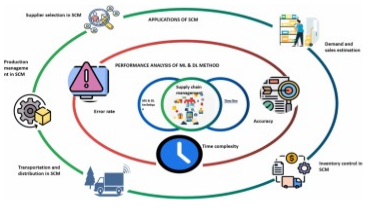
Supply chain management has for a long time been an important issue that has evolved with technological advancements. In the past, several general themes that companies focused on were inter-organizational systems, distribution network integration, e-commerce, industrial value chains, and key account management. Recently, the subject has broadened and fragmented, with research developing along industry and country-specific lines. However, there are few domain-specific and realistic models representing the core of supply chain flows, where packages of goods are delivered from suppliers to assembly plants, warehouses, or points of use. In an arena with a rapidly changing policy environment, supply chains are being required to do increasingly more for consumers and society at large. It is only now, over several generations, that technology is mature enough to provide the breakthrough in deep learning and processing of large data sets that can enable tangible real-time insights for pharmaceutical supply chains.
Lack of effective and robust supply chains can disrupt the availability of pharmaceuticals. The blockage of the Suez Canal by a container ship is widely recognized to have caused a shortage of some commonly prescribed drugs reported by pharmacies. In January 2017, a shortage of cancer drugs was reported, which put a strain on the National Health Service. This was attributed to consolidation and over-centralization of the supply chain. At a workshop of a manufacturers' forum, issues reported by pharmaceutical manufacturers and wholesalers included managing inventory when lead times are uncertain and the constraints placed on capacity by transportation, temperature-controlled environments, regulatory compliance, and the lack of visibility of movements. Finally, burgeoning value expectations from consumers (patients, clinics, and other stakeholders) are driving demand for greater visibility over the supply chain process to provide transparency, ethical sourcing, and authenticity in addition to performance parameters such as speed to market and agility to fulfill a just-in-time business model.
1.2. Research Aim and Objectives
This paper discusses the application of deep learning techniques in the field of supply chain management, with specific application to pharmaceutical logistics. The primary aim is to explore potential opportunities and challenges in the integration of real-time supply chain data to enhance visibility and business intelligence activities through the development of real-time, adaptive insights that serve to improve overall supply chain efficiency. Objectives: To deliver the primary aim, the following objectives are to be addressed through the structure of collaborative, developmental work streams. Additional objectives will be to identify and address issues in the real-time capture of data and the conversion and interpretation of this emerging, big, complex, and unstructured data in the provision of a deep learning-driven supply chain intelligence platform suitable for pharmaceutical delivery. In so doing, further objectives will be to conceptualize the roles of this platform for the provision of alerts, a decision support system, and the automation of operational activities in the context of specific healthcare supply chain networks. Research Scope: In adopting the growing trend in deep learning practice, the project seeks to bridge current knowledge gaps regarding the real-world application of the technology within supply chains. This will offer valuable insights for decision-makers and provide a platform for the development of expertise in a growing domain. Through the creation of five case studies, using the UK as a geographical base, the research aims to be innovative and demonstrate what is unique about bringing drug delivery into the conversation of supply chain management and deep learning [1].
2. Pharmaceutical Supply Chain Overview
Pharmaceutical supply chains consist of interlinked actors in charge of moving pharmaceuticals from the sites of drug production to the end users. At the center of these multi-tier supply chains lie the pharmaceutical manufacturers producing large quantities of pharmaceuticals, often found in manufacturing sites located around the world. Pharmaceutical manufacturers share the task of supplying medicine with actors such as parallel importers, who procure and distribute products outside pharmaceutical companies' intended markets. The efficient operation of supply chain processes is crucial to the desired end result of plan execution: moving goods from the site of production to the desired destination. Efficient pharmaceutical distribution takes place on the logistics level, covering transportation, delivery, and fulfillment, all of which play crucial roles in the strength and resilience of supply networks. In order to move pharmaceutical products to the end users spread all over the world, actors usually have to cross borders by complying with a host of international and local regulations. It is in these operations, which encompass logistics, distribution, and compliance, that inefficiencies in the supply chain emerge from splendid networks on paper. The pharmaceutical industry largely relies on technology to ensure the efficient distribution of products. Advances in technology, and a multitude of factors, have allowed companies to monopolize their ability to distribute based on allocated resources. Furthermore, they have resulted in the development of industry standards to service pharmaceutical customers. Pharmaceutical serialization requirements were instituted only after a series of counterfeits were discovered hidden under regulations aimed at protecting the health of the public. As such, supply chain operations are characterized by the complex, interconnected processes at play in every aspect of distribution and governance. Therefore, the global supply chain has to ensure compliance at every step of the supply network [2].
Equation 1: Demand Forecasting Model
2.1. Key Components of the Pharmaceutical Supply Chain
The supply chain for the pharmaceutical industry represents a complex network that supports the journey of a drug, starting from the manufacturer until it finally reaches the end consumer. A pharmaceutical company may have five main components in the supply chain. The first is the manufacturer, where raw materials and APIs are combined to produce final drug formulations. After manufacturing, the finished products are then stored in a warehouse or a distribution center. Next, drugs are transported by various methods to the distribution center, which can also serve as a warehouse. These centers then distribute drugs to wholesalers and retailers, who ultimately sell the drugs.
The pharmaceutical supply chain has become very important and complex due to the following reasons. The first reason is to safeguard the medicines from theft, damage, and counterfeiting, and also to provide quality medicines. Finding and removing inefficiencies also assists in better overall performance throughout the supply chain. A manufacturer must work with a characterized warehouse, which can store their products and also manage quality control checks such as testing upon the manufacturer’s request. Warehouses used for the storage of finished pharmaceutical formulations and pharmaceutical API products must be in or have a working agreement with a country that has a Mutual Recognition Agreement with India. The agreement must include reliance on compliance status. The logistics of the supply chain operation flow from the inlet process from suppliers to outlets, symmetrically embedded in organizational logistics systems that manipulate the finished goods inventory flow to the final market. For a safe and secure supply chain, logistical approaches must be applied throughout this entire supply chain. Shortages due to incorrect drug delivery are almost negligible along this route because the suppliers and the manufacturers have final control. However, if this did occur, it would be important to stop the distribution right away and ensure the safety of anyone who had received such a product. Quality crises are managed by the agencies. Production plants at the manufacturer must be inspected for compliance on an announced or unannounced basis. A manufacturer must be able to support all data at any given time, on demand of the authorities, in case a quality crisis arises.
2.2. Challenges in Pharmaceutical Supply Chain Management
The pharmaceutical supply chain is susceptible to several unique challenges in the global economy. Wide market fluctuations, high demand forecasting errors, and changing regulatory constraints further compound these challenges. Another crucial factor impacting the pharmaceutical supply chain is the growing number of product recalls. Inadequate knowledge of drug products in the field and a rising number of product liability lawsuits make pharmaceutical companies less willing to risk recalls while businesses are still held accountable for post-approval drug quality defects. The push towards a globally outsourced market has also dramatically increased competition both in terms of efficiency and reliability. Counterfeiting activities around the world have shown that present supply chains lack adequate information, which is a rapidly growing concern from a public health perspective. A combination of these factors is having a strong impact on the management of entire supply chains and pushes more and more companies and service providers to innovate in both prediction and management of logistics, risk, and risk mitigation activities. Because of this, using deep learning technology can improve current manufacturer supply chains by optimizing the facets of customer service through lead demand and customer order forecasting, thus reducing the costs of the networks.
We hope to exploit this data-driven approach not only to build a tool that does this but also to capture the depths of a supply chain with a rich technological understanding of the products, regulations, tax factors, and the supply chain process. The study provides an understanding of the many main challenges in supply chain management from the perspective of the actual supply chain as well as clients and end-users, and motivations and exploration of the potential for technological innovations that would be integrated with current company processes and help to meet the increasing trend. Reactions from practitioners to our initial studies suggest that these future technological improvements will be met with a combination of skepticism and optimism. The variety of businesses will be important to find an effective solution. More generally, this study highlights those areas where the current supply chain can be improved by providing a deep understanding of the manufacturing and supply chain processes and technologies.
3. Deep Learning in Healthcare
The evolution of robotics, internet technology, and computation has launched deep learning into healthcare—the ideal combination of computation and human-level deep learning expertise. Physicians have traditionally made decisions about patient care based on observations about how medication, medical devices, testing, and medical monitoring have affected real people over time. Deep learning provides a unique and transformative approach to this practice. Deep learning is a machine learning algorithm that is based on a combination of deep architecture for feature learning. Algorithms learn a multi-level data model or hierarchy from data. It learns to analyze data used in its logistics model to identify the pattern effectively.
The existing technology faces challenges in broad application for large-scale medical data, which is relatively complex and noisy. It requires a huge amount of computing, storage, and expertise to extract meaningful information. Most algorithms for machine learning and traditional statistics struggle with this vast set of complex medical data. A deep neural network could facilitate this massive quantity of data handling without any hassle. The technology makes it possible to analyze various data types, such as images in radiology, waveforms that one collects from intensive care unit patients, time-series data from electroencephalogram data, electronic health record data like structured and unstructured records that are collected during hospital visits and stays, and other various sorts of data that are collected as part of healthcare. It helps in analyzing data at a higher resolution; hence, prediction modeling or other data science tasks can be done more effectively. In the supply chain, deep learning can be of great use, as it usually comprises several data entities such as historical demand data, different stock levels, deliveries, and hundreds of other possible entities [3].
Equation 2: Inventory Optimization
3.1. Overview of Deep Learning
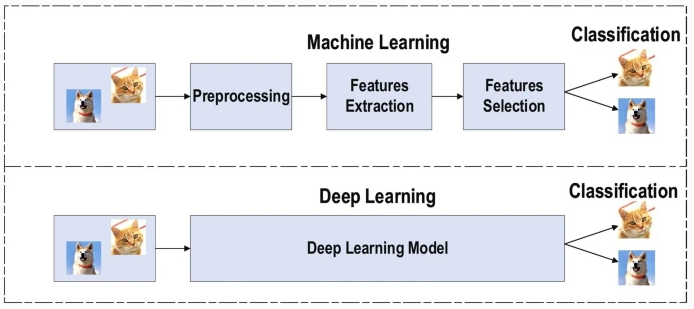
Deep learning is a subset of machine learning that generates improved outcomes in data processing and predictive modeling. It is composed of multiple neural network structures. These artificial intelligence systems consist of extensive data processing and adjusting layers based on parameters and input values, with an output signal obtained from these network layers. The neural network structures drive deeper learning based on robust methods that exploit data at lower levels, thus performing more accurately. Either a structured or unstructured dataset may be used with deep learning, and each layer's treatment of the dataset serves as the initial data for the following layer. The difference from classical algorithms in deep learning is that the full dataset is used for training, rather than a smaller division of the dataset. Data quality and availability are the major factors in favor of deep learning; a deeper model requires improved performance. Until now, traditional algorithms have been used for dealing with small dataset sizes, as the deep learning model absorbs and processes the data into multiple layers, leading to massive information flow processes. The more extensive training process, with a large number of layers, can also be achieved only with an adequate amount of computational power.Deep learning is a specialized branch of machine learning that leverages deep neural networks to process and analyze data in ways that significantly improve predictive accuracy and decision-making. Unlike traditional algorithms that rely on smaller datasets for training, deep learning models use the entire dataset to fine-tune the system across multiple layers, enabling more sophisticated feature extraction and learning at various levels. Each layer in a neural network processes data sequentially, with the output from one layer serving as the input for the next, allowing the model to capture complex patterns and relationships within the data. This iterative process makes deep learning particularly well-suited for handling large and unstructured datasets, such as images, text, and audio. However, the effectiveness of deep learning is contingent on the quality and availability of data, as well as the computational power required to train models with numerous layers. With increased data and processing capabilities, deep learning can significantly outperform traditional algorithms, especially in complex tasks that demand high levels of accuracy [4].
3.2. Applications of Deep Learning in Healthcare
At its core, deep learning refers to cutting-edge machine learning techniques, which enable computers to learn from datasets that capture complex relationships between inputs and outputs and help them make data-driven decisions. Although deep learning entered the public’s memory just this decade, its adoption in enterprise applications—and particularly in human-facing industries—has already yielded tangible and significant higher efficiencies. In this subsection, we outline the various applications of deep learning in the healthcare sector and demonstrate their significance and impact across the various verticals of the industry. Research and development in medical imaging have consistently demonstrated deep learning tools to equal and even outperform radiologists in detecting pediatric pneumonia, screening for lung cancer, differentiating between benign and malignant breast lesions, reading head CTs, and identifying atrial fibrillation, among many others. Moving away from the traditionally diagnostic applications of deep learning, a significant collection of research demonstrates the effectiveness of deep learning in predicting the trajectory of various terminal diseases and in distinguishing responses to drugs based on patient genetic and health data for the personalization and optimization of treatments. The efficacy of deep learning in decreasing costs and increasing efficiency in administrative tasks is exemplified by the capacity to automate large slices of these duties, including admission, discharge, and transfer orders, breast cancer report generation, and billing and inventory management. Of course, the significant improvements in diagnostic accuracy and health outcomes brought on by deep learning also come with their fair share of obstacles and challenges. Despite the large, growing body of research suggesting that the use of deep learning models in the medical sphere is strongly correlated with the improvement in workflows, procedures, and outcomes, adoption of patient-facing deep learning products is slow.
4. Integration of Deep Learning in Pharmaceutical Supply Chain Management
Managing a pharmaceutical supply chain efficiently is crucial not only for pharmaceutical companies but also for the entire population. Several solutions have been proposed and implemented to enhance the pharmaceutical supply chain's performance and mitigate the risks linked with the non-availability of drugs in the right quantity, at the right time, in the right conditions, and at minimal cost. However, the global pharmaceutical supply chain still confronts several operational management-related challenges. Integrating deep learning capabilities in the operations of a pharmaceutical supply chain can be a potent tool for supply chain optimization in terms of controlling and handling sophisticated operations spread over the five-stage drug supply chain. Deploying deep learning in pharmaceuticals can help manage various phases of the supply chain, such as working on demand forecasts—short-term, mid-term, and long-term, inventory management, and logistics. Also, deep learning can effectively handle real-time data generated at each stage of the drug supply chain.
In pharmaceuticals, deep learning is being adopted on a domestic level for auxiliary activities to a minor extent and is still in its infancy. But given all the possible advantages it offers, it opens a vast future in the drug supply chain due to its unpredictability and globalization of trade among pharmaceutical companies, but more significantly between pharmaceutical companies and governments of various countries. The resulting complicated supplier network has led to a variety of challenges for demand forecasting, manufacturing, and supply of drugs required in different territories under different geographical circumstances. Deep learning is a promising AI technique that can help deal with a huge volume of diverse data efficiently for making the right business and operational decisions. Over time, the integration and application of deep learning for different pharmaceutical supply chain operations can transform the pharmaceutical supply chain along the five stages including manufacturing, packaging, warehousing, logistics, and health systems. Suffice it to say that deep learning can add value within each stakeholder and between stakeholders to connect effectively with appropriate communication strategies with governments and policymakers. Challenges for integrating deep learning are the collection and preparation of a huge data set, data security, and organization of stakeholders. Additionally, testing systems using hybrid approaches beforehand are suggested to check for any transformational change.
To transform the pharmaceutical supply chain and optimize operations, deep learning can be presented at five different stages including manufacturing, packaging, warehousing, logistics, and health systems. At the policy level, it can connect health care, logistics operations, and warehousing with indigenous production. Instead of periodic clinical trials, real-time data can be shared between operations of different stakeholders to carry out personalized quality assessments. At the operational level, effective cold chain management can be done. Deep learning can be integrated from getting weather forecasts, predicting manufactured drug expiry, or random parameter prediction to ensuring precise temperature output. At the packaging stage, ease of traceability, site-specific expiry, and counterfeits are possible. As the deep learning model can learn the characteristics and then match characteristics and labels, we can prepare a training dataset to reflect different potential taxonomies of drug products for a specific target market. In warehousing, the integration of AI for physical inventory count can free up valuable human resources and redeploy them in another critical area to minimize waste and harm due to non-availability. In the end, in logistics, merely by recording data streams, one will be able to anticipate time-based drug manufacturing, expected expiry, and feint [5].
4.1. Benefits and Opportunities
The pharmaceutical supply chain takes the utmost defenses to ensure product quality and consumers' health. The application of deep learning can enhance the capacity of the pharmaceutical supply chain with improved data analytics and predictive mechanisms. The combination of both is highly desirable and acts as a big data player leading to a data-driven revolution with possible commercialization in many domains. These are useful in efficient decision-making at strategic, tactical, and operational levels for conducting and improving the outcomes of the pharmaceutical supply chain.
The incorporation of deep learning may allow pharmaceutical companies to reap a host of benefits. The major driver for this adoption is linked to efficiency and helping them predict what is coming next. This will allow for more precise demand forecasts and, as a result, bring down the cost of products that are being inadvertently overproduced, as well as reduce expenses associated with shortages. Implementing deep learning to improve forecast accuracy can decrease unnecessary expenses associated with stock-outs and overstock, reduce total inventory levels, and lower the costs of gas and oil consumed for logistics. AI and deep learning solutions deliver various advantages, and if the solutions can be personalized, the outcomes may be even more rewarding. Over the next few years, this could be a game changer.
In addition to cost benefits and reliability, deep learning can also be employed to build the foundation of quality in pharmaceuticals as well as in healthcare strategies. The applications are not only confined to the existing processes and operations in pharmaceuticals and biotech but can bring radical innovation to the product development process, enabling the reduction of time and cost for product approval and launch with reduced regulatory compliance risk without adversely affecting the quality of the product or the processes. With pharmaceutical supply chains changing like never before, a radical approach to supply chain data management is required. Companies will need to invest in technologies, particularly from the field of deep learning and artificial intelligence, to ensure the security and integrity of their data and, ultimately, their operations.
Equation 3: End-to-End Supply Chain Cost Minimization
4.2. Challenges and Limitations
Challenges and Limitations. Deep learning in the pharmaceutical business is not without its challenges. Ensuring data privacy and security is a key concern, particularly when working with patient-specific information. To be effective, deep learning models require high-quality, large datasets for training. Insufficient operational data is a common problem across pharmaceutical supply chains, and too little data may reduce the effectiveness of the models. Furthermore, integrating new systems, such as deep learning, into an existing infrastructure can be complex and time-consuming. This is not only a financial investment but also requires training staff in the technology, its outputs, and potential changes to their roles and responsibilities. Deep learning results can be difficult to interpret with direct comparison to scientific understandings, particularly in a complex, non-digital industry setting such as pharmaceutical supply chain management. Furthermore, stakeholder buy-in can be a significant challenge with any implementation of operational technology across the industry. In the pharmaceutical sector, there are potential risks and implications of relying on highly automated decision-making. While it has the potential to support more objective management, discover novel insights, and improve supply chain efficiency, there are also risks of increasingly removing subjectivity, nuance, and the potential 'human touch' from managerial decisions. Additionally, particularly in pharmaceuticals, unique knowledge and insights can stem from years of practical experience that is of significant value within the complex, unique, and heavily regulated pharmaceutical sector. Developing high-quality, large datasets can be challenging for pharmaceutical manufacturers, particularly when the relevant operational data is also business-sensitive and proprietary, if not competitively disadvantageous [6].
5. Case Studies and Examples
Real-World Deep Learning: Practical Applications for Pharmaceutical Supply Chain Efficiency On hand are several real-world examples of advanced deep learning algorithms being applied to pharmaceutical supply chain processes with phenomenal results. In these examples, the application of deep learning to the pharmaceutical supply chain has been shown to increase inventory health and merchandise flow. They shed more light on potential benefits, application best practices, challenges, and key learnings. Of these projects, it was required to integrate both domain expertise and multi-disciplinary teams drawn from tech and pharma who collaborated to implement the deep learning models to address their decision-making challenges. The current deployment of the models can be seen across areas as diverse as optimizing inventory and reducing stock loss in distribution by improving demand forecasting. Efficiency Uplift: Erpa and Global Store Optimization Over the past few years, pharma giant Erpa has used deep learning-derived duty-free store demand forecasts at a global level to reduce inventory and cut back on stock loss. By optimizing inventory and reducing stock loss, these delivery forecasts have ultimately improved merchandise flows. Erpa's duty-free business brings in pharma reimbursements worth, while the entire supply chain, logistics, and all commercial operations together generated in Best Practice: As part of the store-level insights gained, the in-house team performing the modeling work also developed deep learning-driven case fill rate transfer functions as an additional layer of sophistication that places further emphasis on quality forecasting rather than quantity forecasting. This additional layer complements the main forecasting initiative around loss reduction by accounting for certain variables at the SKU–store level that increases the chance of fulfilling a case of product through the store's supply chain.
5.1. Real-world Implementations of Deep Learning in Pharmaceutical Supply Chain
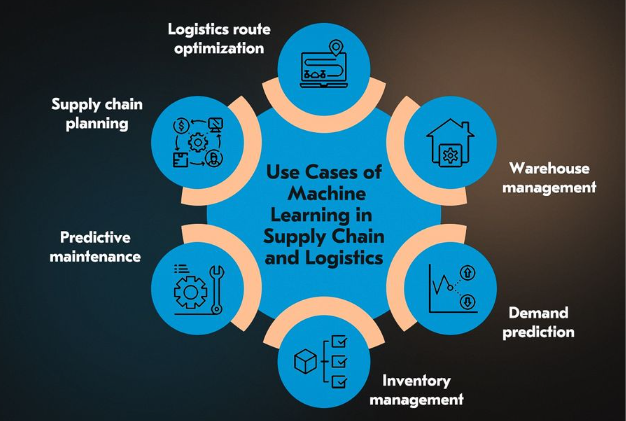
Numerous practical examples highlight the deployment of deep learning, specifically in the form of neural networks, for end-to-end improvement in the pharmaceutical supply chain. Neural networks can be used to optimize many different business operations, including demand forecasting, inventory management, manufacturing scheduling, distribution network design, and quality control. However, in practice, many pharmaceutical manufacturers have deployed deep learning for three key applications: inventory management, demand forecasting, and patient-centric supply chain optimization. The reasons for deploying deep learning in various use cases are not always shared widely. Compounded with these figures and the realization that there are many different stakeholders operating across the medical value chain, it is theoretically possible to derive insights from multiple data sources to significantly enhance the overall operation and efficiency of the entire value chain.
When deployed to manage the inventory of a wide range of oncology products across integrated hospital networks, deep learning helped to reduce stockouts from 12.8% down to 1.7% and obsolescence by 25% in an ROI-negative manner. This forecast accuracy reduction required a period of recalibration and resulted from a misunderstanding of the use of causal factors in regional and local adjustments. This learning was then fed back into the forecasting process, making improvements to the overall forecast accuracy, which was highly commended. In a Europe-wide centralized drug distribution context, the forecast accuracy of a pediatric vaccine was improved by 20%, while a reduction in the value of the extra and obsolete stock of 80% was obtained post-deployment. Variant product sales forecasts improved existing predictions by 6–14%, while logistics planning optimization reduced logistics-related costs by 6%. Subsequent integration with commercial data and advanced analytics improved SKU-level margin and portfolio optimization while providing incremental revenue generation across two functions of 1% and 2% [7].
6. Future Directions and Research Opportunities
We believe that deep learning will continue to be a new foundational technology with the potential to further reshape the pharmaceutical supply chains of tomorrow. In today’s healthcare environment, the confluence of three major trends—personalized medicine, real-world evidence, and real-time feedback loops at the point of care—presents tremendous opportunities where deep learning approaches will inevitably play an increasingly significant and extensive role. We advance several future directions and emerging research opportunities in deep learning in healthcare and pharmaceutical supply chains from the ivory tower to the oil-stained trenches occupied by the aforementioned practitioners and beyond.
Given the interdisciplinary nature of deep learning in pharmaceutical supply chain management, many knowledge gaps remain to be addressed in different research areas. These areas can be categorized into internal and external factors. The lack of data ethics and algorithmic fairness in terms of intellectual contributions, connectivity, and implications remains untapped. Collaboration between academia and industry to create a designed digital supply chain for scholars and practitioners is currently a burning issue. In the wake of business analytics in health and medicine management, smart healthcare systems, predictive health management, healthcare, automotive, and supply chain fields, new trends are attracting the research community’s attention. Deep learning is an AI-enriched computer-related area with growing links to blockchain and other AI techniques, including artificial intelligence and data mining. The integration of AI, deep learning, blockchain, and IoT in broader applications has opened new research opportunities. Scalability, deep learning in cross-chains, and integrated solutions’ challenges related to supply chain management remain unexplored.
In the near future, the implementation of deep learning and related techniques in healthcare will be fueled by the rapid growth of available data, such as electronic health records, medical imaging, laboratory and histopathological tests, advanced diagnostic systems, and wearable devices. Key stakeholders in this ecosystem, such as insurance service providers, pharmaceuticals, tech giants, and medical device and therapy providers, have proposed innovative strategies, policies, healthcare products, and treatments based on deep learning approaches to help ensure the well-being of people. It is expected that deep learning instruments will produce critical success factors in the progress of long-term contemporary vitality. The threat of confidential and sensitive data theft, weak privacy-preserving activities, potential errors in the mined and learned data, inefficient isolated information-sharing plans, and data mining attacks collectively make a smart and connected community vulnerable. Despite these uncharted territories, machine learning, artificial intelligence, and deep learning have swiftly developed an essential methodology for the benefit of society in the health and pharmaceutical industries. The integration of deep learning with blockchain and IoT can even enrich the efficiency of pharmaceutical supply chains.
7. Conclusion
To sum up, the rising threat of falsified pharmaceuticals and the inadequacy of the traditional supply chain are diagnosed. Deep learning predictive models, which can bring many advantages to the market, should be harnessed for pharmaceutical supply chains. These models, which leverage big data to predict future events accurately, excel in demand forecasting, streamlined routing, and cold chain standards. To unlock a better, deeper understanding of the pharmaceutical supply chain, we argue for more research into these technologies. The unique interplay between sequence learning and existing data mining and statistical methods, as well as the steps through which deep learning modeling could add value, are also detailed. Outlined are research implications and managerial insights about achieving data quality, process orchestrations, forecasting, and cross-organizational transformation. Particularly, data is one of the main drivers of success in deep learning; novel collaborations will enhance the security and size of available datasets for the purpose of further analysis. However, literature in these domains is scarce, practice is in early development, and there is little empirical research. Therefore, future research should benchmark deep learning outcomes in the pharmaceutical industry and, as such, conduct a detailed analysis of further potential future uses. Moreover, current research in supply chain networks or in other areas of the healthcare sector cannot be directly transferred to the pharmaceutical supply chain; these fields are very much interlinked, yet they have different focal points and make different contributions.
7.1. Future Trends
The ever-growing power of deep learning methods, as well as computing resources, is facilitating the adoption of data-driven decision-making not just in supply chain management, but at every step of the commercial, financial, and operational parts of modern pharmaceutical businesses. Consequently, an increase in forecasting and insight-sharing will be observed. Deep learning allows for very fine patterns in the data to be learned and generalized across events. Today, many areas are using a data-driven approach that ultimately tends to run a pipeline of previous events to predict the events to come and, therefore, offer decision scenario-based outcomes. Thus, personalization is an emerging trend across the drug supply chain on both the pharma industry side and the health system side. It is currently in use in areas like demand forecasting, resource planning, distribution network design, and closing financial books.
The increasing automation, driven by AI and deep learning, will acquire the next level, resulting in actions and repairs being performed automatically at the time of the incident. So, moving from just knowing and predicting an incident towards real-time intervention will be the next evolution. The connection between IoT and AI is gaining traction, especially in autoclavable pods and reagents. The volume that a site, and more specifically a logistics department within the site, now has to handle is beyond the capacity of the current paper-based system. The automatic data exchange offers a certain level of improvement, but introducing AI is a step forward and will deal with problems before they elevate. Blockchain is expected to have an impact on creating transparency in the supply chain. It is still in its embryonic stage and is expected to grow in the coming years, likely providing compliance, patient benefit, and reducing fraud and counterfeit activities. As technology and the regulatory landscape change, innovation is essential for the long-term sustainability of an enterprise. Changes can affect the business model too, and therefore, the pharmaceutical industry must be agile and adapt to these changing times. To survive and be competitive, enterprises must invest in research science and the requisite infrastructure [8].
References
- Danda, R. R. (2020). Predictive Modeling with AI and ML for Small Business Health Plans: Improving Employee Health Outcomes and Reducing Costs. In International Journal of Engineering and Computer Science (Vol. 9, Issue 12, pp. 25275–25288). Valley International. https://doi.org/10.18535/ijecs/v9i12.4572[CrossRef]
- Syed, S., & Nampalli, R. C. R. (2020). Data Lineage Strategies – A Modernized View. In Educational Administration: Theory and Practice. Green Publication. https://doi.org/10.53555/kuey.v26i4.8104[CrossRef]
- Syed, S. (2019). Roadmap for Enterprise Information Management: Strategies and Approaches in 2019. International Journal of Engineering and Computer Science, 8(12), 24907–24917. https://doi.org/10.18535/ijecs/v8i12.4415[CrossRef]
- Sarisa, M., Boddapati, V. N., Patra, G. K., Kuraku, C., Konkimalla, S., & Rajaram, S. K. (2020). An Effective Predicting E-Commerce Sales & Management System Based on Machine Learning Methods. Journal of Artificial Intelligence and Big Data, 1(1), 75–85. Retrieved from https://www.scipublications.com/journal/index.php/jaibd/article/view/1110[CrossRef]
- Gollangi, H. K., Bauskar, S. R., Madhavaram, C. R., Galla, E. P., Sunkara, J. R., & Reddy, M. S. (2020). Exploring AI Algorithms for Cancer Classification and Prediction Using Electronic Health Records. Journal of Artificial Intelligence and Big Data, 1(1), 65–74. Retrieved from https://www.scipublications.com/journal/index.php/jaibd/article/view/1109[CrossRef]
- Manikanth Sarisa, Venkata Nagesh Boddapati, Gagan Kumar Patra, Chandrababu Kuraku, Siddharth Konkimalla, Shravan Kumar Rajaram.Navigating the Complexities of Cyber Threats, Sentiment, and Health with AI/ML. (2020). JOURNAL OF RECENT TRENDS IN COMPUTER SCIENCE AND ENGINEERING ( JRTCSE), 8(2), 22-40. https://doi.org/10.70589/JRTCSE.2020.2.3[CrossRef]
- Gollangi, H. K., Bauskar, S. R., Madhavaram, C. R., Galla, E. P., Sunkara, J. R., & Reddy, M. S. (2020).Unveiling the Hidden Patterns: AI-Driven Innovations in Image Processing and Acoustic Signal Detection. (2020). JOURNAL OF RECENT TRENDS IN COMPUTER SCIENCE AND ENGINEERING ( JRTCSE), 8(1), 25-45. https://doi.org/10.70589/JRTCSE.2020.1.3.[CrossRef]
- Hemanth Kumar Gollangi, Sanjay Ramdas Bauskar, Chandrakanth Rao Madhavaram, Eswar Prasad Galla, Janardhana Rao Sunkara and Mohit Surender Reddy.(2020). “Echoes in Pixels: The intersection of Image Processing and Sound detection through the lens of AI and Ml”, International Journal of Development Research. 10,(08),39735-39743. https://doi.org/10.37118/ijdr.28839.28.2020.[CrossRef]