

Technological advances have had a transformative impact on the retail landscape. Challenges arise with guaranteeing technological changes lead to, rather than detract from, increased efficiency and positive experiences. First, integrating technology into the supply chain in an aggressive way is costly. It requires vast changes to existing systems and developments of cross-industry communication protocols. Secondly, the public is often quick to reject technological changes or slow to become users. Finally, ensuring that technological advancements do not only benefit the top few retailers and are accessible to those of any size poses a challenge, as has been seen in the fate of only a handful of radical changes in retail technology. On the other hand, an integral aspect of technology, particularly that used for big data collection and processing, is that it can account for these and other variables. It can predict the success of ventures into modernizing or developing new systems and can identify more effective and efficient ways to do so. Of course, the concerns of job loss or technological monopoly still loom. But, it would seem, the continued advancement of technology in the retail landscape is inevitable.
Transforming the Retail Landscape: Srinivas’s Vision for Integrating Advanced Technologies in Supply Chain Efficiency and Customer Experience
October 16, 2019
November 23, 2019
December 17, 2019
December 27, 2019
This is an Open Access article, distributed under the terms of the Creative Commons Attribution 4.0 International License (http://creativecommons.org/licenses/by/4.0/), which permits unrestricted use, distribution and reproduction in any medium or format, provided the original work is properly cited.
Abstract
1. Introduction
The retail scenario is increasingly characterised by the adoption of technological systems that represent a real revolution in the whole industrial system and determine profound changes: the progressively more advanced digitalisation of processes and goods, the continuous evolution and development of new innovative technologies. Initially confined to relations between producer and producer, these aspects have progressively been passed to the relations between producer and end consumer and have acquired an increasing importance there. Therefore, this project aims to deepen the new ideal scenario of the retail system based on the emerging retail revolution of Industry 4.0. Exploring and providing a focused view of the base of advanced technologies that constitute the innovative scenario of retail 4.0, especially as regards the food industry. Discussing the new landscape of innovative retailing and conjointly generate a proposed model of the target functions that might be involved in a retail scenario of industry 4.0, with particular regard to the relationship between functionalities and relevant technologies. Key areas of retailing might get advantages and consider the developing of innovative competencies. An innovative approach towards technological solutions is needed in order to allow retail competitive challenges to be faced and to keep pace with a continuously evolving retailing environment. In this direction with the spread of the global market and the extension of free-trade areas, the improvement of the efficiency of supply chain management has become fundamental in order to handle the pressure of larger distribution networks. The competition is moving not only between products but also between the chains to which they belong. The close connection between the evolution of markets and technologies leads to numerous changes in distribution strategies to follow and anticipate the dynamic market environment.
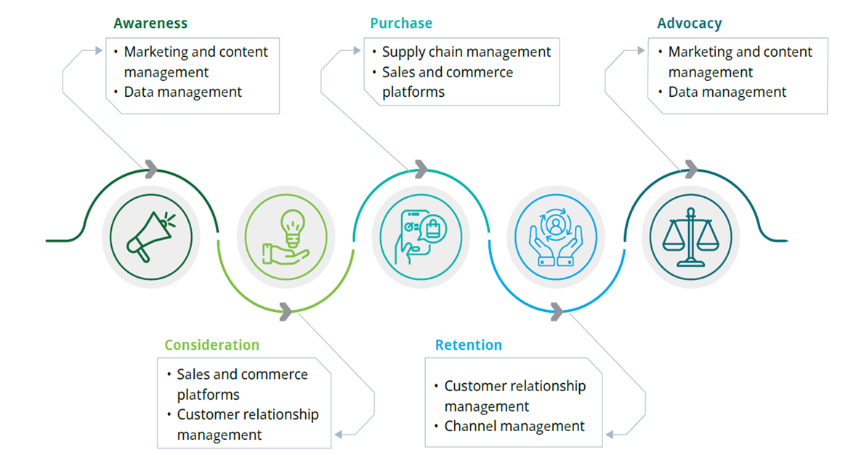
1.1. Background of the Retail Industry
The retail industry is one of the greatest evolving industries in the global marketplace and the largest consumer-driven industry concerning retail sales, as it dominates most developed and developing economies such as the United States, European Union, China, Japan, and many others. The industry dates back several centuries and has significantly evolved throughout history with the commercialization of goods that were removed from the production spot onto market shelves. The former traditional system of agoras and markets were developed through to the rise of smaller shops in the Middle Ages to modern-day department stores and supermarkets [1].
One of the major paradigm shifts in the retail industry occurred during the 1990s as globalization initiated the dismantling of trade barriers and the fostering of open inclusive trade between nations which demonstrates significant consequences on consumers, retailers, suppliers and nations. This resulted in consumers having access to advanced goods that previously might not have been obtained and the appearance of new digital and web technologies threatening the very existence of the existing brick and mortar retailing with the introduction of online retailing and digital marketing. Customer satisfaction and perceptions play a major role in this era of slowly ‘‘borderless’’ internationalization efforts due to global hyper competition.
The intense shift in consumer purchasing behavior has drawn retail industries to change their outlook where the current market situation has a considerable impact amidst saturation, rapidly changing technology, economic shifts and emerging new nontraditional competitors such as online retailers, e-commerce, and mobile shopping. E-commerce has seen rapid growth in recent years and global e-commerce is expected to reach over US$2 trillion by 2017 and it is predicted that over 50% of worldwide internet users have made at least one purchase online and that customer behaviour has dramatically shifted toward mobile shopping. In essence, mobile shopping plays an important role in transforming consumer behaviour which eventually also transforms retail systems. This desired behavior will be explored in the context of developing countries, Bangladesh being of the prime interest.
Equation 1: Transformation through Integration of Technologies
where:
1.2. Significance of Supply Chain Efficiency and Customer Experience
One of the most compelling aspects of late-stage capitalism is how well-sought strategies within different business sectors can build off one another to snowball into massive shifts within the overall market. The current trend of passing costs on to the customer has led to the establishment of many Urban Outfitters and Williamsburg boutiques – which promise unique values that are, in some ways, made possible by thrift-shop like establishments passing the real burden to their employees. This in turn increases the necessity of thrifty stores to their employees and customers who can only afford to get the same wares they’re weeding out if prices go way down. It’s essentially a hypodermic tonic for gentrification. This is one example of larger dynamics that can be observed continuously as part of the broader retail sector and makes it such a compelling area for potential research. This is especially exciting to explore as expansion of the conversation includes technology and the potential for the furthering of industrial shifts. Long having been understood as the ideal for a perfect circle between markets as the point at which they compromise to instead become inextricable from one another, the transformation of a full sphere of service to pure exhaust product is shown to be the most recent model for the Amazon economy.
While the impacts of more franchised entities like the progressing success of Starbucks despite saturation was employed, this is not meant to discredit the inherent differences in the brands and the changing face of the consumers that both will have a palpable effect upon them. Similar to how McDonald’s was used as a talking point, the comparison of Amazon to mid-priced retail stands as a touchstone to use for a baseline comparison of changing commercial landscape to the present. Rather, it should be viewed as a valuable model for understanding the ways in which a confluence of business practices, customer attitudes, and developments in retail technology together transformed it into the globally powerful giant that it is today . Shopping has always been considered a form of entertainment for those who can afford it, but under the pressure of Amazon, the department store has to offer more, not just products but a kind of brand experience. And in that context, there’s also a renewed focus on historic preservation, meaning less town to play around with and more pressure on the surface. These must somehow all be slipped past the consumer without them even noticing.
On the other side of the isle, Amazon’s entire business model is built on creating its own logistics company, and the use of Kiva robots is making that transition effectively. With its goal to reduce order-to-delivery times at an almost exponential rate, brick-and-mortar retailers are left scrambling to find a methodology that will allow them to keep up. On top of uniform time guarantees, consumer expectations have led to the need for innumerable options for delivery. With the rapid evolution of tech turning career options into obsolete industries, the notion of Amazon capturing an accessible priced, much needed public service all unto itself, is a terrifying forecast for the future of the U.S workforce. The question of whether the U.S can survive on replacement jobs alone becomes all the more chilling in this cold light. "Cyber Monday" finds that the biggest online retailer breaks yet more sales records with news resounding loudly enough to further catalyze fears in the minds of open minded conglomerates. Protectionist reactions are expected to launch on a level not seen before, and in a contrasting blowback, the recent decision proves alarming in its disinterest. Just as Facebook had the potential to force the implementation of an artificial online environment by purchasing startups in its sector, so too might new hurdles come from the hands of a grand judicial review. It is in this time of astonishing industrial transformation, that these strides of the Haves may further lever into place a make-or-break scenario for such a vast spectrum of Have-nots. Bali has potential up its sleeves that Amazon does not. To what extent are the rich insulated from the gales of US economic interference and what might that come to mean for the future of the Shutters and Kith alike? How even as retail evolves to meet the demands of an ever tech-advanced, Amazon monitored world, might the sort of cultural spectacle provided by places like the department store or lavish bazaar stand as a port of survival?
2. Srinivas and His Vision
The integration of advanced technologies in every part of the business – beginning with the supply chain and extending to the customer and the products sold – could realize transformation in efficiency and customer experience. The key tenets in the vision of successful retailing as a result of the integration of advanced technologies are: innovation is paramount; technology providers with sophisticated retailing knowledge are rare; successful integration is based on strong, trusting, long-term collaboration. It is known that the platforms may not yet exist for the technology that will be critical to the industry even a few years hence. The vision is for those firms to co-develop, and adapt their technology to retail’s changing, or entirely new needs. Among the few truths within the retail landscape is the difficulty in predicting how it will develop. Changes are rapid, some technologies will flourish and others will fail, and consumer demands are inherently disparate. Therefore, another tenet is to ensure, through usage and engagement with consumers and other market participants, that the technology’s introduction is both accurate and on time. A final key aspect of this vision for successful retailing as an intricate part of the advanced technology landscape is to look beyond traditional markets.
2.1. Biographical Information
Srinivas R. Sriram was born in Bangalore, a bustling metropolis in the South of India. As the son of a gynaecologist and the youngest of three siblings, he enjoyed a privileged upbringing that valuably balanced education, recreation and cultural experiences. A pivotal point in his formative years was his undergraduate education at Birla Institute of Technology and Science. The Engineering Physics program challenged him intellectually and allowed him to discover his affinity for systems, technologies and the raison d’être behind them.
Currently residing in San Francisco, Srinivas feels his belief in the power of chance has played prominently: an unsought invitation for participation in placement interviews during his final, and the consequential job offer. His view of the world, India, the retail industry and his career have all been greatly impacted by the decade-long tenure at a ubiquitous retailer, for which he was managing merchandise procurement across branded categories.
Srinivas feels pride and contentment reflecting on his time there. In the first four years, he was part of a team that transformed its operations and information systems capability. It was an era of significant milestones - first jewellery store launch, subsequent PAN India rollout and the initiation of the line up of brands into watches and writing instruments. There was an ethos of innovation and drive for excellence. Milestones including - the undertaking of an in depth analysis of the Lost Sales and Lost Sales Revenue and Lost Sales Non Revenue to understand the supply chain and operational inefficiencies leading to them and developing/ implementing of a system to automate resources and options allocation to salespersons based on assortment sizing and the variety of brands in the inventory mix in 491 stores. The last three years involved developing and driving the merchandise strategy and subsequently the financial performance, delivering the fastest-growing department in the business - 50%+ yearly revenue growth, 20%+ yearly increase in profitable growth and first-ever period of profitability, with post-GST prices [2].
2.2. Professional Achievements
Srinivas is a professional scholar with potential as evidenced by his slate of prior achievements in the retail industry. He has successfully designed, implemented, and integrated advanced systems in various capacities to significantly improve efficiency in the retail supply chain. These have been portrayed here as models for his vision about the comprehensive supply chain and customer experience enhancing system that could be designed if he were to return to participation in the retail industry. Currently, he owns a business that distributes apparel to over 20 stores and must work to ensure they are appropriately stocked. To improve on-shelf availability and inventory turns, a home-grown suite of systems has been designed over the past 6 years, in addition to leveraging a WMS and advanced models of retail ERP. Store replenishment is treated as a min-cost flow network each evening, discontinuously shooting inventory across stores. Perpetual inventories are summarized in a BI platform, and POS data is captured weekly to forecast volume and style size distribution. AES eliminates store classification into hubs and spokes, additional loss due to daily operation entropy, and the necessity of store-side labor responsibilities. These accomplishments have been recognized with various awards, significantly reducing lead times and costs while enhancing performance. Most recently, he was nominated for an Innovator of the Year award. Tasked with establishing the perishable supply chain at an internet grocer, he integrated a transport procurement platform with LMS to negotiate private fleets at low utilized backhauling rates. Store entrances are dynamically docked with scaffold rollers to reduce TAT, prevent bottlenecks, and optimize resource allocation. A system to prioritize and schedule appointments based on time windows, equipped trailer options, and round trip lanes negotiated to reduce wait times, dwell, and delays – enhancing utilization and OTD. For efficiently shared drop opportunities, he brokered a joint venture with the competition. For exceptional execution of these tasks, he was given an award for Excellence. Running the best DC in a network of over 300, national honors were bestowed and a capstone speaking session at the premier trade show was assigned. Of over 175 M days in a year, he has consistently handled around 1 M, with a cycle time at some facilities averaging under 15 minutes.
3. Advanced Technologies in Retail
As technology develops and more consumers move online, retail continues to look for new ways to maintain a high street presence and improve profits. This paper reviews the literature on how these technologies could be used to enhance the retail landscape. There are increasing technological influences on customer behavior and expectations in the retail environment; therefore, it is important for businesses to keep up to date to remain competitive. It is found that technological innovations often result in greater convenience and time saving for the consumer, and there is therefore opportunity for retailers to capitalize on this to improve many aspects of interaction [3].
Several technologies currently in widespread use or being tested in consumer environments are identified, and it is found that most fit into four broad categories: Automation, Artificial Intelligence, Data analytics, and Internet of Things. While automation has already brought some of the most significant changes to the retail environment, it is found that the application to the supply chain is much more reliant on man and machine working together. Technologies such as RFID tagging, drones, and smarter warehouses have been identified as future changes that could optimize retailer operations. It is also discussed how AI applications can have a significant impact on consumer shopping and buying behavior, and some are already in use or being developed. Mainstream technologies such as chatbots are discussed in more detail, along with applications of predictive analytics that could alert retailers to changes in consumer preferences or wider market forces in time to make strategic changes. The use of robotics in warehouses is proposed as a way of reducing costs and improving accuracy as even the most basic smart shelf can eliminate the time-consuming need for manual stock checking. Also, some of the most effective applications of data are explored, highlighting several companies that have harnessed the copious amounts of data they collect to personalize services. Customer location data, for example, can be used in predictive analytics to identify future locations of demand spikes and mobilize inventory accordingly. Similarly, email receipt data can be used to better profile target segments and launch hyper-targeted marketing strategies. The discussion is concluded by reflecting on the fact that while there are many possible short- and long-term uses for these technologies, the industry is still in its infancy and growth may be slow due to high costs and the requirement for wide alignment of infrastructure, regulation, or consumer preferences. There is certainly opportunity for companies to exploit these technologies early on and get a jump on the competition.
3.1. Overview of Advanced Technologies in Retail
The term ‘retail’ pertains to the selling of goods and services to a consumer through various channels of online or physical stores. The retail industry contributes substantially to many countries' GDPs, which makes it an indispensable part of worldwide economies. There are countless types of merchandise that can be retailed; consumer behaviors are constantly changing in this highly dynamic market, making longevity and sustainability of any retail enterprise heavily dependent on maintaining responsive and efficient sales channels and strategies. In the recent decade, the ebb and flow of consumer footfall in physical stores has decreased considerably whilst booming online platforms have ascended, creating an economic environment that’s highly competitive for traditional retailers. A significant cause of this is technological advancements and the willingness of consumer adoption which stems from the Millennial and Generation Z cohorts. Current retail developments are focusing on enhancing operational efficiencies, augmenting consumer experiences and establishing infrastructures for future advancements in retail. The objective behind this report is to evaluate current technological integrations within the retail industry and provide recommendations for forward processes to optimize retail efficiencies and consumer experiences.
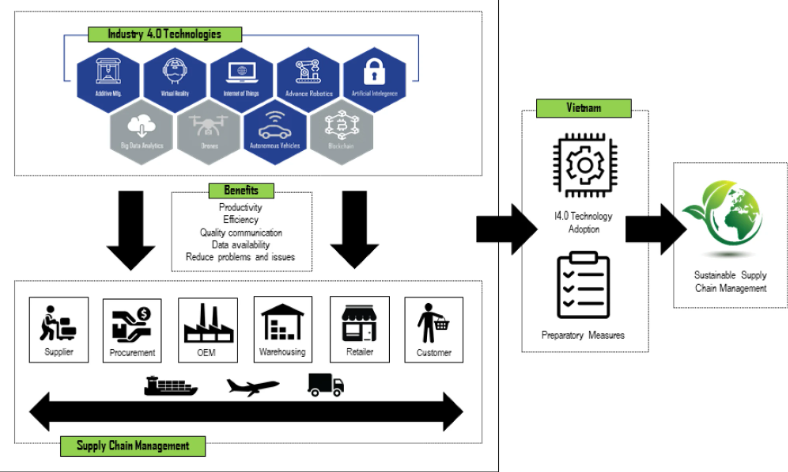
3.2. Benefits and Challenges
Today, advanced technologies are playing an increasingly pivotal role in the retail environment and enable retailers to compete at the highest level. Retailers not willing to embrace the new course of technological industry requirements continue to fight a losing battle. Among the range of technological systems is Advanced Retail Technology (ART) that comprises, but is not limited to, state-of-the-art electronic computerized systems enhancing customer information services and engagements, as well as improving the efficiency of management operations. Nevertheless, incorporating new technologies, like any substantial decisions, has both the potential of value-added impacts as well as a number of risks. This includes retail system improvements related to POS interfaces, counterfeit recognition systems, efficient software programs ensuring proper stock management, as well as exclusive customer engagement through personalized services conducted by providing interactive digital display screens and radio frequency identifications (RFID). This study adds to current understanding by providing an equal number of benefits and challenges associated with adopting the new technological retail systems.
A significant increase in the utilization of ART, online shopping, as well as sophisticated system auto-replenishment procedures has helped retailers build strong relationships between customers and the retailer, hence fostering loyal shoppers. Moreover, there has been a focus on ensuring promotional engagement of customer and retailer that is unique and exclusive, thereby avoiding the partnering of competitors. Concerns regarding the ability to queue feasibility given a limited presence of capital and expertise within management operations have in recent times been alleviated through successful partnerships between local governmental bodies and specialized deluxe marketing firms. Since the induction of such partnerships, time-pressured customers are able to instantly que up for a number of garments through any smart devices at any one of their high-street stores thereafter receiving free gift cards via email valuing £60. On the other hand, this reputed British firm is able to better utilize the non-selling floor space and increase daily profits by 42% of the garment displayed.
Equation 2: Technology ROI Equation
where:
4. Integration of Advanced Technologies in Supply Chain Efficiency
The retail landscape is rapidly being transformed by emerging technologies, and there is a vision for the industry that accommodates it. Retail has evolved significantly due to the influence of several advanced technologies, which are practical to procure and implement. There is a vision that’s likely to deliver optimal outcomes if properly executed. To conceptualize this, the prospective integration of some relevant advanced technologies focusing on enhancing the supply chain efficiency within retail is outlined.
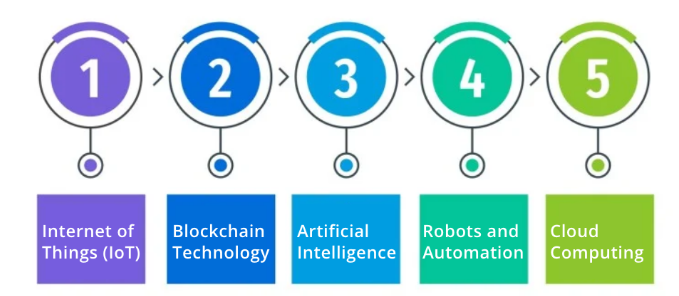
Retail inventory management longevity is bolstered by blockchain, a conglomerate digital ledger where transactions are recorded and verified across various devices. For the same reason it’s secure, it’s enhancing trust. Retail’s ills are typically due to the human element, and once logistics are fully AI-driven such setbacks will radically diminish, this is imminent. Predictive analytics applied to the enormous catalog of existing data about a company, its customers, and the economy, project outcomes and determine the optimal response. As both price and availability play somewhat equally on consumer behaviour it’s most likely their consumption is optimized. There is a firewall to technology’s penetration of retail, but for retailers willing to play ball great dividends are being seen. A significant percentage of European retailers have engaged some technological supplier, some exclusively—to others’ detriment. Successful integration is posited where both parties cohabit, where Phygital is considered the new retail. Concentrating on the challenges of the industry’s second half as of 2020, the period where the majority of retailers will have integrated is considered, the question remaining of what big steps late healers will consider. An examination is made between the histories of major retail companies since they are the advertisement companies for technology providers, with breakthroughs typically being mirrored at the rival company after an incubation period. The complexities and pragmatics are set forth, ab initio, displaying tangible results of technological integration via real-world case studies. By example challenging projects requiring engagement at the highest level, set along with a course of action must be managed, to be followed for success at this level. Characteristics of successful projects from real-world cases are contemplated, hence this may be seen as a manifest listing what must come to pass for an ideal outcome. The last examination breaks down a retail giant and provider into their core functions, and how a symphony of them was achieved is studied.
Succinctly, it’s anticipated that problems which were called out ahead of time would have been resolved within two years of technological engagement, and thereat these businesses would obtain optimal outcomes. Successful integration is taken to where both parties are cohabiting, where those retailers are seen thriving. What follows is an investigation of technology's greater integration in the 2020s, and it might be supposed as basic education set forth.
4.1. Key Technologies in Supply Chain Management
Supply Chain Management has become a key part of the success for the retail industry due to drastic improvements in technology integration. Retail’s background has always been associated with promising the right products at the right time and to the right place. Nowadays, more than ever, retailers are adopting technology as part of their SC’s efficiency strategy to comply with customers’ demands. The massive implementation of technological innovation by four big retailers in their supply chain management has set a possible scenario to be followed by future retailers that want to engage in a competitive market [4].
In order to overcome a standardized technological strategy, vision provides technology independent software systems that support different kinds of technologies in SC, such as RFID, IoT, RTLS, WMS, big data analytics and others. Stockout events disrupt the retail operation by causing disinterested customers and in consequence, retailers miss potential revenue. To overcome this issue, an ESAC (Efficient Stockout Avoidance and Count) metric estimation support to suppliers is provided. The system is supported by the integration of sensor-enabled devices and the use of the EPC network which allows the retailer to provide the most accurate information about goods that are out of stock. This information is useful either for the supplier who receives the stockout alerts or the retailer that can anticipate stockout situations. Besides the development of technology independent software systems, the technology profile for a lean and efficient retail supply chain is planned to expand RFID tracking to pallet level, utilize wireless cellular technology, enable IoT SC network cognitive ability, automate the SC by having the use of bots and drones, integration with ERP systems to automate retail - supplier interactions and levels of stock monitoring with real time visibility. POS systems are in use by retailers to perform sales registration. The EPC sales event is a middleware making the linkage between the EPCIS server and the POS systems. In this way, all sales are registered in their middleware in real time, and are then pushed to the EPCIS server for traceability purposes. This sales monitoring allows automated action to schedule the restocking process at one of their retail locations. From the industry point of view, data restocking, data freshness are potential drawbacks because it oftenly is not compiled as direct data but bought from other companies. When this happens, few retailers have access to the raw data, the organization, format and storage place of data are different and belong to everyday databases which compels the necessity to develop a sophisticated system that is able to handle different data sources in order to guarantee statistical significance.
One of the most difficult tasks in retail is managing its inventory prudently. A wide retail shop has a big variety of products, in so many colors, shapes and sizes, which make any manual inventory tracking much harder. With the RFID technology it is possible to automate the inventory management in a retail store. A RFID reader mounted on the shop ceiling, and a reader antenna attached to a shelf table. Stocked items have an RFID tag attached. From time to time the ceiling reader sends a signal to the table reader that communicates with the tags and identifies the items on a shelf. In a similar manner, it counts the item and sums up the values to the monitoring system. An excessively low amount of the item is detected and raises an alert. Nowadays, many retailers are already tracking the stocked goods thus have monitoring information in real time. This information can be used to determine which goods should be discounted, and by which rate, so that all the goods get sold before their expiration date with no losses. A tool that helps making this decision must have historical data of the sales and shape the additive quantile regression method. Big Data technologies have been applied to the retail industry, which offers the possibility of getting real insights, fasting and improving the decision-making process. This allows performing analytics of sales data, namely about the most sold items in a given time interval, which items are more likely to be bought together, and many other statistics. The engagement of such analytics can also offer the possibility for better forecasting of the demand, for instance day of week/hour of the day demand at a given location. The robots have access to WMS, and pick the objects guided by the RFL tags and GPS to know where the object is. These wheel wrenches are invented to ease the task of robotic shelf lifting, tokens are sent in the orders which are in row, and subsequently, robotic picks the shelves around. Any commands the robotic must follow arise in a way the robotic will understand. When a robot picks the wrong shelves it is scolded, if the robot insists on picking the wrong shelves, it is punished until the object is finally picked. Bots are programmed to pick objects of lower position on the shelf, this raises the upper position of the most expensive items, achieving less sales. This approach allows that expiring goods have a higher sale ratio, and that desired products are high and easily taken. In fact, the stockout avoidance is a known issue in the retail industry, causing a significant revenue loss. In advertising, customers’ buying habits (e.g. what are they more likely to buy now or what are their future intentions) are monitored in order to anticipate future production demands and shape promotions. Smart spaces have low cost sensors and actuators, the monitoring environment is aware of the context constantly, having in this way a more interactive relation with users.
The incorporation of automation, collaboration, and networking systems has brought SCM practices to a new level of excellence. Nowadays, the Retail Industry is facing significant improvements in SCM practices. Benefited by continuous technological advancement since the last decade, optimized and integrated SCM operation is now possible. Key retail players have driven the initiative of harnessing Information Systems and Technology (IT) with SCM for achieving performance excellence. Both global and local retail giants are leading the front and successfully aligning IT with SCM in attaining competitive advantage. The derivation of success is majorly selected as a topic for investigation. SCM and Retail Industry to understand the SCM practices vital in retail. Statistical study was conducted based on the analysis of publicly available references to comprehend SCM practices improve. Comprehensive tests and interviews were held on SCM experts to seek their opinion. A set of expected critical IT impacts on major SCM performance measures are identified and compared with the responses from a survey completed by the SCM/IT. Overall study findings revealed that the retail industry should go hand in hand. SCM and IT opportunity to procure competitive advantage. Information Technology brings a drastic change in the way SC is managed in the retail industry. SCM performance cardinal identified for retail industry. The SCM performance measure can be classified into import, process and export documentation in ERC nomenclature. Stand alone SCM are more profitable and safe in all the performance measures as compared to those firms who chose for only IT or neither of them, top performing Indian retail companies was established to determine and understand their adoption of performance measurement matrices.
4.2. Case Studies of Successful Integration
Several reports have identified the importance of leveraging information systems and technology for the enhanced performance of the retail sector. A recent conference paper stated the growing trend of retail companies in leveraging information systems and technology to better internally operate their branches. The use of all operation-related software and devices for over a thousand locations was to maximize performance effectiveness at all hierarchical levels. This subsection explains the progress made towards this endeavor. Through the following series of real-life case studies showcasing the on-going integration of various technologies within the supply chain retail operations present compelling evidence is the identification and adaptation of the best practice of technology integrations for strategic business operations. This can be done by harmonizing technology integrations with aligning that with trends in overall business direction.
5. Enhancing Customer Experience through Advanced Technologies
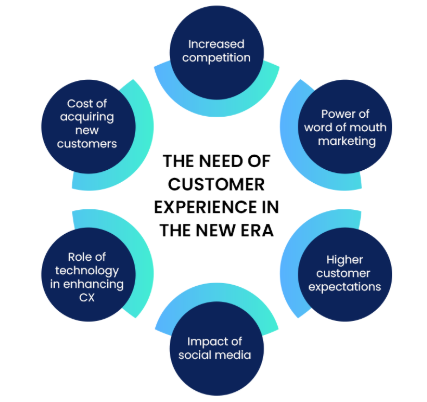
As consistently increasing trends in e-commerce now also adaptively change the customer behavior of visiting physical stores worldwide. It has been estimated that there will be a dramatic increase in e-commerce with a 25.0% CAGR worldwide in the next 5 years, while on the other hand the footfall number of the physical stores is anticipated to be decreased by 4.0 to 5.0% worldwide in the next 5 years. The combination of an increased growth in sales and a decreased customer base waiting to visit the shopping mall “around the corner” puts a lot of pressure on the physical stores to change strategy. Several small and large brick and mortar firms commonly thread online channels, while stores are still an essential part of that strategy and are considered important “touch points” with the customers.
Several trends towards the integration of the online and physical worlds have been identified that show the creation of new business opportunities, such as robotic automation. Therefore, the term AT will refer to the integration of emergent technologies into the entire retail process that gives the opportunity to the brick and mortar firms to rethink their strategies and business models. “Push and item based” realtime information regarding clothes, accessories, recommended outfits shared in a social media page can dramatically change the look perception and eventually the customer satisfaction from the favored store... this post examines and closely tracks the customer profile, identifying the retail firm sources (age, visits, feedback, in-stock availability) and the social media behavior (posts, likes, followers) and when the right moment comes and the posted clothes are directly related with the retailer firm will push an automated coupon discount or free shipping, significantly increasing the chances of a store visit. Digital mannequins increased the duration of the mannequin’s attention up to 75.0% after triggering the context aware playlist by tracking the customer journey with (99.0% accuracy). Taking also under consideration the floor traffic, the waiting time, the music level and the position of the customer as well as customers post-purchase feedback organizations are able to develop and deploy engaging next-gen mannequins.
5.1. Personalization and Customization
Personalization and customization have become vital strategies to provide customers with unique shopping experiences. Advanced technologies in industry have brought the potential for collecting significant volumes of data informing valuable information about customer behaviors, preferences, and trending products. Software automations can analyze this data in real-time in order to reveal valuable insights. A better understanding of the data can then be employed to draw customers interest in particular goods through among others personalized marketing campaigns and a system of automated custom product recommendations.
Satisfied customers that have their needs met in a convenient way are more likely to come back for repeat purchases or further interactions, effectively creating a relationship based on loyalty. Consequently, adapting a service to perfectly match the needs of each customer should be a key factor for any brand. This has led many companies to focus on personalized services, a strategy thought to “boost customer retention and create a competitive advantage”. Examples of such implementations can be noticed within the application of well-known online retail platforms, where upon login, users are prompted with various personalized suggestions and recommended products, based on previously viewed goods, item searches or a receipt history.
Products themselves can also become customized, fully tailored to the needs of the consumer, providing them with a unique shopping experience. As retail faces some tough challenges in the current market, (especially when competing against large e-commerce businesses that can afford highly sophisticated data systems and impose significant price cuts), personal connections and personalized service are things that cannot just be copied from one brand to another in the way products or prices can. Through personalization, retailers have the opportunity not only to get to know their customers better, but they can also give them reasons to be more involved with the brand, building relationships that are less likely to switch brands for the sake of saving small amounts of money. The need for brand differentiation and the importance of customer experience quality have been noticed by retailers for some time now. Major efforts have been put into enhancing visual merchandising and store design, next to loyalty schemes and well-organized complaint handling progressing into enhancing the overall shopping experience. However, it has also been noticed that customers constantly raise their expectations, compelling retailers to constantly look for new growth tactics in order to stand out. A compelling shopping experience is one that is also built on a technical level, using innovative ways to fuse sensory elements, interactions, and emotions in a freshly engaging way [5].
5.2. Omnichannel Retailing
There is no question that consumers are engaging with brands through a myriad of channels. Yet it is also undeniable that the retail high street continues to be of great importance. Although smart commercial strategies are employed by e-commerce such as recognizing that a presence on the high street is highly beneficial with the opening of various “pop-up” stores. This leads to the acknowledgment that there is a multichannel landscape in retail, utilizing various platforms to optimize consumer experience. Omnichannel retailing can be defined as a way to optimize the engagement and shopping experience of consumers across an assortment of platforms that encapsulates; physical stores, online markets, and mobile commerce. Consumers are expecting seamless, enhanced processes that will enable synchronized shopping journeys for both online and offline storefronts. Retailers in the present age, are reliant on advanced technologies to facilitate a coherent shopping experience, and to assure that consumer information is shared across all touchpoint channels. For the retailers implementing effective practices for omnichannel retailing, there lie lucrative outcomes; 287.5 billion dollars in sales resulting from the six months following said purchasing. Thorough understanding of the journey and preferences of consumers is achieved through data analytics, displaying the optimization of any interaction with consumers across all channels. Successful case studies of retailers who have embraced omnichannel strategies include who successfully drove impulse buying through a push notification application. Further, successfully attained a 10% augmentation in followers through encouraging customers to tag the business across several platforms prompting a more detailed investment in textiles. Challenges are present in the form of technological limitations, and maintaining coherence across the different channels of business. The strategic planning for a comprehensive approach to the consumer journey and retail strategy appears to be regarded as the most important consideration.
Equation 3: Overall Business Impact Equation
where:
6. Future Trends and Implications
Based on what retailers are witnessing today, there will be even more technological advancements taking place that will continue altering consumer expectations and create the need for further adjustments to retail strategies. To this effect, the evolving retail landscape will be discussed from the perspective of the anticipated future trends within the retail environment and emerging implications for the industry. Technological advancements are facilitating exploration beyond already commercialized fields and opening new opportunities for retail science. Besides new applications of hardware, like AI adopting broader roles in parameterizing products, smart home solutions are being utilized in data gathering that could optimize the product recommendation process. Enhanced personalization will likely require the implementation of new techniques demanding hardware collaborations to promote the development of smart containers. Traditional and contemporary flavor trends can be studied more effectively employing new analytical methods, like the use of digital olfaction to discriminate nanoparticulated aroma compounds widely used in current consumer products. Additionally, new e-commerce solutions are being researched which involve the development of direct feedback loops between product recommendation systems and an automated preparation of customizable products or food supplements. On the practical side, retailers can increase user engagement by implementing AR mobile applications, improving the in-store navigation process based on cartographic information and further product recommendation.
6.1. Emerging Technologies in Retail
Retail has always been at the cutting edge of adopting new technology to attract customers. From the invention of the price tag in the late 19th century to the contemporary retail landscape reshaped by online shopping, the industry has rushed headlong to discover new channels and devices. Particularly in intelligent-rich countries like the US, the UK, and Germany, the penetration of smart technology is expected to alter the way of doing business and create prosperity. Consequently, cutting-edge technologies, such as artificial knowledge (AI), machine knowledge (ML), automatic learning, IoT, and augmented reality (AR), have been developed and favored. This transforming retail industry is only the beginning, and it will continue to increase.
To comprehend the possible prospective evolution of the retail business, this subsection emphasizes the advanced technologies pivotal to the transformation, as well as providing the outlook to perceive the coming breakthrough. This involves AI, ML, and AR, highlighting what the technologies are, how they are projected to form the forthcoming retail landscape, and potential ways to react to these emergent technologies. Of the numerous retail challenges facing, the two most prominent are concerned with improving operations within the store and enhancing the customer experience. However, the merging of new technologies tends to have an influence on the means by which retail firms relate to the representation and experience of products and services, as well as on how stakeholders are engaged in these practices. Any changes can be related to well-documented impacts on various aspects of the contemporary retail sector, including accelerating deteriorations in store based activity, driving up work intensification. Though the empirical focus is on the high street, a more comprehensive view is taken of the transformations within offline transactions between consumers and retailers.
AI, ML, and AR have the potential to offer seamless shopping experiences and to improve operations, benefiting both retailers and consumers. Nevertheless, retailers who are receptive and quickly adapt to these new technologies will gain a competitive edge, leaving laggards struggling to catch up. A synthesis of anticipated developments serves to offer a structured response for innovation, which was using interviews with signed stakeholders from retail and technologies services. Collaboration between technology providers and academic business studies is positioned as pivotal to promote a more nuanced consideration of the uptake and impacts of technological innovation that will help refine policy groups so they align with the demands of a complex retail sector. In understanding the importance of supply chain management efficiency for retail stores and e-commerce and by incorporating the theoretical approaches of incentives to invest and substitutability, suggestions can be made for rational retail-labor relations in these new consumption spaces.
6.2. Potential Impact on Industry and Consumers
The estimates indicate that over the next decade 90% of the manufacturing growth will come from online sales. Furthermore, digitalization could unlock nearly three trillion dollars in value to retailers over the next decade through consumer benefits – in other words, better prices, quality goods and superior services – and cost-related business savings, such as life cycle management and tracking and predictive maintenance in from-store fulfillment warehouses. Although some price reduction benefits will be transferred to traditional consumers, the actual consumer impact of the total potential combined benefits will be approximately $1.1 trillion over the next decade, comprising about 68% of the total benefits and almost $2.3 trillion throughout the next decade. It is anticipated by the aforementioned predictive estimates that most of the consumer benefits are of new transformative business models deploying new or greater processes and new or greater technology. Such models offer consumers greater value and reduce retail costs, therefore providing win-win advantages. The potential absorbing costs of forecasting the market with such a big line move will certainly make the retail models described in the following sections essential reading as the consumer impact of digital technologies unfolds over the next decade. Among the multitude of expected transformative effects several retail models and their interaction with consumers are considered with respect to enhanced consumer value chains and consumer cost savings as those from the potential for many subsequent industrial applications to tackle the predictive complexity of ongoing digital technology waves of The Fourth Industrial Revolution (Industry 4.0).
7. Conclusion
Disruption in the global retail sector is on the horizon. New technologies that have emerged of late are transforming the way goods are supplied and the customer experience.
Srinivas believes that within 5 years time, all global trade and retail management will be driven seamlessly by intelligent algorithms and smart robots. Goods will be delivered by drones and driverless vehicles.
The key drivers Srinivas notes to success in this new retail environment will be data, more of it and better quality, and efficient, extensive communications infrastructure. This will ensure that switch-on and switch-off point signals between smart stores, autonomous delivery systems and warehouses will take only a few milliseconds to complete.
From his location selling fresh produce within the Warsaw city walls, Srinivas would also like to add that a good solution is the roll-out of attractive autonomous mobile applications that can deliver a scalable, geo-located marketing tool to actively increase marketplace visibility and potential spending. But, alas, he can currently only see huge openings such as Carrefour and Amazon with that technology. And this is a universe removed from the 13th century twin cities of Old and New Town. Alas, black merchants. Better get back to the calculations…
7.1. Summary of Key Findings
The dominating player in fashion retail business flips the whole definition of the business. Joyful fashion combined with high-quality and a great supply chain for business. Srinivas MG is the co-owner of such brands as FabIndia, Pantaloon, Big Bazar and Myntra. His integration of Artificial intelligence and Augmented Reality improved the self services with the help of an automatic retail kiosk. The present analysis can be a elixir to the problems and questions Sesara has about the venture into AI . It prominently longs to throw light on the issues such as how the integration of Artificial Intelligence (AI) and Augmented Reality (AR) improves operational efficiency as well as the way it enriches customer experience.
Srinivas’s innovation in the combination of AI and AR revolutionized the fashion retail business. The present study emphasizes that the attempt of producing objective-based AI may optimize store layout and facilitate robots during order processing and delivery to further enhance supply chain efficiency. Additionally, the synchronization of these technologies may intelligently recommend clothes to customers and build an intelligent wardrobe based on their preferences. It is a further testament of the bright future of AI and AR in the enthusiast retail market. On this trail, it should be a fresh alternative for a broader industry to push onward. Retail business worldwide must be transformed by the entrance into a joyful Fashion company that keeps up with AI, AR and other various emerging technologies. Squares in stores will get better or even bigger. But keeps the same number of staff and the very same kind of excellent customer service. Meanwhile it is taken care that the shopping experience and efficiency improves a lot. Visitors can try shorts with the try-making-kiosk. After that, the shorts go to love it, save it and share it. Then the kiosk will show the latest relevant styles of shirts and tie ups. Customers can opt in for a full stack of styling recommendations any time.
7.2. Future Trends
Retail is evolving – and fast. Only through innovations can retailers expect to compete in the ever-changing landscape which is being transformed by today’s revolutionary trends. Not embracing these trends could lead to crippling competitive disadvantages. Captivating brand loyalty is harder than ever in today’s world. To be competitive, loyalty is no longer enough: it must be intensely captivated and continually nurtured. Focus on personalization. Up your game in brand likability. Prioritize customer service. In order to captivate brand loyalty, the customer experience cannot be just good. It must be unforgettable and deeply personal. Combat shopping cart abandonment by immediately emailing customers a 10 % discount when they exit their carts before purchasing. Hire dedicated employees to get to know recurring customers by name, and fill them in about the latest deals and products. Have physical locations hand out free lattes, cappuccinos, and espressos to anyone who walks in to create a gathering spot reminiscent of Central Perk from the iconic 1990s sitcom, Friends. With all of the possibilities in customer experiences, anything that can be done should be done.
Big Data isn’t enough. A whopping 65 % of the top executives within the retail industry said their business decisions were still primarily based on “gut feelings” in the year 2019. Advanced technologies to provide mission-critical business insights obtainable solely from AI are essential to stay competitive. The transformation of modern artificial intelligence from a nifty, hi-tech buzzword into practical, believable, everyday applications is in full swing. AI is forecasted to become a $ 190.61 billion industry. The implications of this transition within the retail industry cannot be overstated. AI in retail is distinctly shifting profit margins, or lack thereof. Only retailers with AI can thrive and dominate within a several-years span, thereby fracturing the industry into two groups: 1) Abe’s, Beacon, Dillard’s, and the rest of the companies yet to adopt AI, or expecting little ROI. 2) Alibaba, Amazon, H&M, and the other AI-fortified businesses reaping billions in incremental profits from AI optimization. AI is turning into the new retail battleground.
References
- Vankayalapati, R. K., & Rao Nampalli, R. C. (2019). Explainable Analytics in Multi-Cloud Environments: A Framework for Transparent Decision-Making. Journal of Artificial Intelligence and Big Data, 1(1), 1228. Retrieved from https://www.scipublications.com/journal/index.php/jaibd/article/view/1228[CrossRef]
- Dilip Kumar Vaka. (2019). Cloud-Driven Excellence: A Comprehensive Evaluation of SAP S/4HANA ERP. Journal of Scientific and Engineering Research. https://doi.org/10.5281/ZENODO.11219959
- Chintale, P., Korada, L., Ranjan, P., & Malviya, R. K. (2019). Adopting Infrastructure as Code (IaC) for Efficient Financial Cloud Management. ISSN: 2096-3246, 51(04).
- Syed, S. (2019). Roadmap For Enterprise Information Management: Strategies And Approaches In 2019. International Journal Of Engineering And Computer Science, 8(12), 24907-24917.[CrossRef]
- Mandala, V. (2019). Optimizing Fleet Performance: A Deep Learning Approach on AWS IoT and Kafka Streams for Predictive Maintenance of Heavy - Duty Engines. International Journal of Science and Research (IJSR), 8(10), 1860–1864. https://doi.org/10.21275/es24516094655[CrossRef]