

Introduction: College education is typically associated with the ability to work in less physically demanding occupations, allowing for a later retirement age. However, research indicates that highly educated Black individuals often work in more demanding occupations, which affects their retirement age. Aim: Building on the Minorities’ Diminished Returns (MDRs) literature, we tested whether the benefit of college education on delaying the time of retirement is weaker for Black compared to White middle-aged and older adults. Methods: We utilized data from the Health and Retirement Study (HRS), which includes a 30-year longitudinal follow-up of a nationally representative sample of middle-aged and older adults in the United States. Education levels at baseline were categorized as less than college graduate (some high school, GED, high school diploma, or some college) and college graduate. The outcome was the time to retirement, measured from wave 2 to wave 15 (baseline to 30 years later). We graphed survival curves and used independent samples t-tests to assess associations between college graduation and time of retirement, overall and by race. Results: Our analysis included 6,803 White and Black participants who were employed at baseline and followed for up to 30 years. Overall, there was a positive association between college graduation and retirement timing, with individuals with higher education retiring later. However, we found significant racial differences in the retirement age of college graduates, indicating notable racial disparities in the effects of college graduation on retirement timing, disadvantaging Black college-educated individuals. Specifically, among Whites, but not Blacks, college education was associated with later retirement. Conclusion: Consistent with Minorities’ Diminished Returns theory, the positive effect of college education on retirement timing are weaker for Black than for White middle-aged and older Americans. To address racial disparities, it is insufficient to focus solely on economic disparities. While closing the educational gap is important, we must also work to equalize labor market experiences for Black and White individuals with similar educational credentials. Structural factors contributing to the diminished returns of college education for Black populations must be addressed to effectively close racial disparities.
Race, College Graduation, and Time of Retirement in the United States: A Thirty-Year Longitudinal Cohort of Middle-Aged and Older Adults
May 12, 2024
July 18, 2024
August 14, 2024
August 16, 2024
This is an Open Access article, distributed under the terms of the Creative Commons Attribution 4.0 International License (http://creativecommons.org/licenses/by/4.0/), which permits unrestricted use, distribution and reproduction in any medium or format, provided the original work is properly cited.
Abstract
1. Introduction
Education tends to sort individuals into positions with higher pay, more benefits, better promotion opportunities, and less physical demand, which in turn leads to better economic and health outcomes [95]. Those with higher education levels often work in more favorable occupations, such as white-collar jobs, and typically experience less stress [96]. As a result, considering that a significant portion of human life is spent in work, individuals with higher education tend to maintain better health throughout their careers [1]. Conversely, those in manual labor jobs face high stress and physical demands, which can result in greater wear on their health [3]. Given the impact of occupation type on well-being [2], it is crucial to equalize occupational experiences across racial groups at similar educational levels. Unfortunately, even with equivalent education, Black individuals are more likely to occupy jobs with higher physical and mental wear and tear, even when they have similar educational attainment [93].
Given the history of slavery followed by segregation and social stratification, the effects of education and occupation on economic and health outcomes are influenced by race [94]. Considering the complex, non-linear, and non-additive links between education and race on economic status [4], it is essential to compare Black and White people regarding the effects of education on work experiences and life trajectories. Due to Jim Crow laws and redlining, the U.S. experienced significant segregation of Black and White communities, contributing to divergent educational and occupational trajectories for Black and White individuals. This has influenced many aspects, including the returns on education and occupation [5]. Understanding the disparities in life conditions among racially diverse groups with similar education or occupations helps us comprehend how systemic racism, labor market discrimination, and social stratification shape the living condition differences of Black and White people with comparable credentials [6]. Results from these studies will reveal the intricate interplay between education/occupation and race in the U.S. [7].
As shown by Minorities’ Diminished Returns (MDRs) [8], the effects of educational attainment and occupation on economic status, as well as health and well-being, tend to be weaker for Black individuals compared to White individuals [9, 10, 11, 12, 13]. While several studies have shown that economic and health outcomes are worse for Black people than White people at the same educational levels (racial disparities persist across each education level) [14, 15, 16, 17], few studies have compared the diminished returns of education and occupation for Black middle-aged and older adults in the United States [18, 19, 20].
Some occupational classes, such as managerial, professional/specialty, sales, and clerical admin, are associated with lower stress and manual labor and may experience less wear and tear [21]. In contrast, occupations in service and operator roles exhibit noticeable difficulty [22]. There are more Black individuals in service and operator occupations, while White individuals are more represented in managerial, professional, and clerical/admin positions [23]. This labor market division is partly due to the lower education levels of Black people; however, a significant portion of this division results from the lower quality of education and labor market discrimination and segregation, directing Black people to service and manual labor and White people to more prestigious, lower-stress, higher-paying jobs [24]. Consequently, there is less representation of Black people with the same education in managerial, professional/specialty, and clerical admin positions, with a higher prevalence in service and operator roles, even at the same education levels [25]. This race-based occupational stratification has broader health implications, as the nature of work in these categories can contribute to different stressors and wear-and-tear on the body [26].
Systemic barriers include discriminatory hiring practices and limited access to career advancement opportunities [27]. These barriers contribute to the overrepresentation of Black individuals in service and operator positions, which often involve manual labor and are associated with higher levels of physical and psychological stress [28]. Despite the underrepresentation of Black individuals in professional/specialty and managerial roles [29], there remains a question: if Black and White individuals end up in such low-stress, higher-pay jobs, would we still see diminished health returns from occupational attainment for Black people compared to White people [18, 19, 20]?
Manual jobs, such as those in service and operator categories, are characterized by elevated stressors and wear-and-tear due to the physical demands of the work [30, 31]. This differential recruitment to various occupational classes, driven by systemic factors, may contribute to observed health disparities by race [32]. The overrepresentation of Black individuals in manual jobs may expose them to heightened health risks, potentially explaining part of the health disparities seen across racial lines. Recognizing and addressing these occupational disparities is crucial for advancing health equity, ensuring fair access to opportunities across job classes, and fostering environments where individuals of all races can thrive [33].
Labor market discrimination persists as a challenge [34, 35, 36], leading to stark occupational disparities between Black and White individuals, even when educational qualifications are comparable [37]. Deep-seated biases within hiring processes and workplace structures result in Black individuals facing barriers that funnel them into lower-status, less remunerative occupations [38]. This discrimination occurs at various stages, from hiring decisions to promotions, perpetuating racial wage gaps and socioeconomic inequalities [39, 40, 41]. Beyond economic disparities, occupational segregation reinforces social stratification, limiting access to resources and opportunities for career progression. Addressing labor market discrimination is crucial for dismantling these occupational disparities and fostering a more equitable and inclusive workforce based on merit rather than discriminatory practices [42, 43].
2. Aims
This study seeks to explore the complex interplay between race and college graduation on the timing of retirement in middle-aged and older adults. Building on the Minorities’ Diminished Returns (MDRs) framework, we argue that race, as a historical and sociological construct, significantly impacts retirement age beyond educational attainment, primarily through occupational class disparities. Black and White individuals with college degrees may not have equal access to well-paying, low-stress occupational opportunities due to historical and contemporary societal structures that perpetuate health and economic disparities by race.
We will utilize longitudinal data from the Health and Retirement Study (HRS) to investigate whether college graduation differentially influences the age of retirement for Black and White middle-aged and older individuals. This study aims to extend the existing knowledge on MDRs and elucidate why health and economic disparities persist between Black and White individuals across education levels into older age. Given that racial disparities in occupational prestige persist even among those with similar educational backgrounds, our results may have implications for dismantling these disparities in health and economic well-being over the life course, particularly for middle-aged and older adults.
It is imperative for US policymakers to develop targeted interventions and policies that address the unique needs of highly educated minority populations, promote health equity beyond education, and foster the well-being of highly educated middle-aged and older Black adults, who represent a growing segment of the United States population.
In this study, we examine the combined influences of college graduation (education) and race on the timing of retirement in a nationally representative sample of middle-aged and older adults in the United States. Utilizing 30 years of follow-up data from the Health and Retirement Study (HRS), our study may reveal new mechanisms by which college graduation yields weaker economic and health outcomes for Black populations compared to White populations, particularly in later stages of life.
3. Methods
3.1. Design and Setting
This study utilized data from all available biennial waves of the Health and Retirement Study (HRS) spanning from 1992 to 2020. The HRS gathers comprehensive data on a variety of participant characteristics, including demographic, socioeconomic, social, psychological, economic, employment, and health aspects, in addition to health behaviors and health service utilization. It also collects extensive information related to retirement, including the timing of retirement. Data collection was conducted through telephone or face-to-face interviews, with proxy interviews used when participants were unavailable. For this analysis, the publicly released RAND HRS Longitudinal File, updated in March 2023, was utilized.
3.2. Sample and Sampling
The HRS employs a cohort-based longitudinal design, with the initial cohort recruited in 1992. Participants aged 51 to 61 at the baseline in 1992 were recruited using a national area probability sample. For the current study, only the core (primary) sample recruited in 1992 was included to provide the longest follow-up period. The participants in this study were born between 1931 and 1941, representing middle-aged and older adults aged 51-61 living in US households in 1992.
3.3. Analytical Sample
The analytical sample comprised US adults aged 51-61 in 1992 who identified as either White or Black. Individuals from other racial groups were excluded from the analysis. All participants from the HRS core sample were eligible for analysis regardless of follow-up duration or time of mortality, except those who identified as retired at baseline. Therefore, the analytical sample consisted of 6803 Black or White non-retired working middle-aged or older participants at baseline, followed for up to 30 years.
3.4. Measures
3.4.1. Time of Retirement (Outcome). The primary outcome of this study was the age at the time of retirement. This was treated as a time-to-event variable, consisting of a binary event variable (0 = not retired, 1 = retired) and time to event (number of years followed until retirement occurred). Retirement was defined as a participant who reported working in a previous wave and subsequently reported not working or being retired in a following wave. The timing of retirement was measured biennially.
3.4.2. Educational Attainment (Predictor). Educational attainment was measured in five levels: less than high school, high school graduate, GED, some college, and college graduate. Given the previous research that shows college graduation generates fewer health and economic benefits for Black than White Americans, we treated education as a binary dichotomous variable, with less than college and college graduate as the levels. Lower education was the reference category. Educational attainment was self-reported at baseline in 1992.
3.4.3. Baseline Age (Control Variable). Baseline age was treated as a continuous variable, calculated based on the number of years since birth, and measured in 1992.
3.4.4. Gender (Control Variable). Gender was treated as a dichotomous variable, coded as 0 for female and 1 for male, and measured in 1992.
3.4.5. Marital Status (Control Variable). Participants reported their marital status at baseline. A dichotomous variable was used to indicate being married (coded as 1) versus any other status (coded as 0) in 1992.
3.5. Data Analysis
Data analysis was conducted using SPSS version 25.0 (IBM Corporation, Armonk, NY, USA). For univariate analyses, means (with standard deviations [SD]) and absolute/relative frequencies (n and %) were reported. Multicollinearity among the study variables was assessed and ruled out prior to running the models. For comparative analysis, we used Survival curves and Cox regression models for analysis. We also used independent t test and Analysis of Variance (ANOVA) for comparison of average time to retire. Results were reported as mean time to retire as well as standard deviation.
3.6. Ethics Statement
The Health and Retirement Study (HRS) protocol received approval from the University of Michigan Institutional Review Board. All participants provided written informed consent. The data collection, storage, management, and analysis were conducted in a fully anonymous manner. Since this study utilized fully de-identified, publicly available data, it was classified as non-human subject research according to the NIH definition.
4. Results
Table 1 provides descriptive data for the entire sample as well as by race. The analysis included 6,803 participants who were followed for up to 30 years. Among these participants, 16.7% were Black and 83.3% were White. The data showed that Black participants were less likely to be college graduates compared to White participants and tended to retire earlier than their White counterparts (Figure 1).
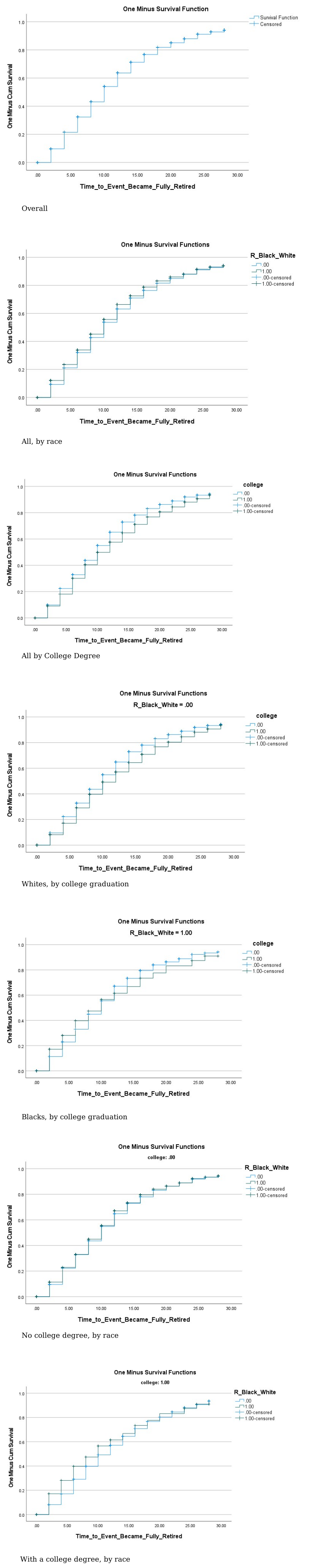
As indicated in Table 2, higher educational attainment was associated with a later age of retirement over the 30-year follow-up period. Similarly, Whites had an average later retirement age compared to Black individuals. Among people with low education, there was no significant racial difference in the average time to retirement. However, among those with a college degree, race was associated with the time to retirement, with highly educated Black individuals retiring earlier than highly educated White individuals.
5. Discussion
In this analysis of 30-year follow-up data from the Health and Retirement Study, which is a nationally representative sample of middle-aged and older Americans, there was a positive association between college graduation and time/age of retirement. However, this effect was significant for White but not Black individuals compared to White individuals.
Our first observation aligns with the role of SES indicators such as high education in enhancing economic wellbeing [1, 67, 68]. Several mechanisms may explain why people with high education can retire later and stay in the labor market longer, including working in better jobs with lower levels of wear and tear and reduced exposure to stressors [69, 70, 71, 72]. College education allows people to work in less stressful, more manageable jobs that tend to offer superior benefits, such as improved healthcare accessibility, better working conditions, and the maintenance of individual health trajectories [73]. In this way, better occupations, which allow people to retire later, connect college education to economic prosperity and health [74]. These effects may be also in part because people who are college graduated work in jobs that allow that
Our second finding supports past research on Minorities’ Diminished Returns (MDRs) [8], which posits that the economic and health advantages derived from resources like higher education are systematically weaker for Blacks compared to Whites. This theory highlights the persistence of racial health and economic disparities beyond educational credentials, driven by structural factors and racism that shape how populations utilize resources such as education to achieve better occupations [75, 76]. Attributed to racism, social stratification, and segregation, the Minorities’ Diminished Returns theory suggests that education’s contribution is least pronounced for groups facing racialization, discrimination, and blocked opportunities, even when high educational attainment is secured [9, 77].
Few studies have tested the MDRs of college graduation in middle-aged and older adults [78, 79, 80]. These limited studies suggest that MDRs can be seen in the effects of occupational classes on the health of Black middle-aged and older people in the United States [81]. In a related study within the HRS, we observed the effects of occupational classes such as professional and managerial roles on several objective and subjective mental and physical health outcomes. However, there were Black-White disparities in the impact of professional occupational class on health outcomes, with this positive effect being weaker for Black individuals compared to White individuals [97].
Historical slavery and ongoing racism, combined with segregation and social stratification, have resulted in a drastic difference in the daily experiences of Black and White people for centuries, which continues today [82]. This historical and contemporary marginalization of Black communities has blocked not only access but also the returns of resources and opportunities for Black people [83]. These lasting effects result in worse education, worse occupations, lower pay, and fewer benefits for similarly educated Black and White people [84]. Systemic discrimination has created structural barriers that increase the cost of social mobility for Black people [85]. Recognizing and addressing these deeply rooted historical, structural, and environmental challenges is essential for achieving social and economic justice for Black Americans [86, 87, 88].
5.1. Implications
The implications of our findings extend to the realms of research, policy, and practice. There is a need for targeted initiatives that address disproportionate barriers in the lives of Black people across education and occupational classes. Policymakers should develop tailored policies, programs, and interventions specifically designed to dismantle structural and institutional racism, focusing on removing barriers hindering the professional advancement of Black individuals. There might be social, environmental, and ecological barriers and challenges unique to highly educated Black people. Improving the employability of highly educated Black people and reducing labor market discrimination in Black communities and predominantly Black labor markets are crucial components of an inclusive strategy. Institutions at the government, state, and local levels should invest more in combating discriminatory practices within the labor market and educational systems, with policies crafted to account for the diminished impacts of high-prestige occupations, such as those within the professional class, on Black populations. It is imperative that endeavors to enhance occupational outcomes translate into tangible improvements in health outcomes for all, fostering a more equitable and inclusive society.
5.2. Limitations
This study is not without limitations. All data were self-reported, which is prone to measurement bias and differential validity and psychometric properties based on race. Furthermore, the dataset was limited to the original HRS cohort, consisting of middle-aged and older adults who were 51 to 61 years old in 1992. As such, the results may not be generalizable to all middle-aged and older adults from other birth cohorts. There is also a chance that this study may have biases due to unmeasured confounders and omitted variables. We dichotomized education into two categories: less than college and college graduates, which is a coarse operationalization of education. Our study solely incorporated individual-level data, lacking the inclusion of area-level variables. Therefore, the effects of broader contextual factors on the observed returns of education could not be studied.
6. Conclusion
There are Minorities’ Diminished Returns in the effects of college graduation on time/age of retirement in middle-aged and older adults. We need to address racial disparities that are not explained by education and may reflect labor market discrimination and lower quality of discrimination, in part due to segregation.
Funding
The research reported herein was performed pursuant to a grant from the US Social Security Administration (SSA) funded as part of the Retirement and Disability Research Consortium through the Michigan Retirement and Disability Research Center Award RDR23000008. The opinions and conclusions expressed are solely those of the author(s) and do not represent the opinions or policy of SSA or any agency of the Federal Government. Neither the United States Government nor any agency thereof, nor any of their employees, makes any warranty, express or implied, or assumes any legal liability or responsibility for the accuracy, completeness, or usefulness of the contents of this report. Reference herein to any specific commercial product, process, or service by trade name, trademark, manufacturer, or otherwise does not necessarily constitute or imply endorsement, recommendation, or favoring by the United States Government or any agency thereof. Part of Hossein Zare effort comes from the NIMHD U54MD000214.
Author Contributions: Funding acquisition: SA and AS, conceptualization, SA; methodology SA; validation HZ; formal analysis, SA.; resources, SA and HZ; data curation, SA; writing—original draft preparation, SA; writing—review and editing, HZ visualization, SA; supervision HZ, project administration, SA; All authors have read and agreed to the published version of the manuscript.
Ethics Approval
The HRS study protocol was approved by the University of Michigan Institutional Review Board. All HRS participants signed written consent. The data were collected, stored, managed, and analyzed in a fully anonymous fashion. As we used fully de-identified publicly available data, this study was non-human subject research, according to the NIH definition.
Consent to Participate
All participants provided written consent.
Consent for Publication
NA.
Competing Interests
The author declares no competing interests.
Data Availability
HRS data are publicly available here: .
Code Availability
NA.
References
- Fujishiro K, Xu J, Gong F. What does “occupation” represent as an indicator of socioeconomic status?: exploring occupational prestige and health. Soc Sci Med. 2010;71(12):2100–7.[CrossRef] [PubMed]
- Samuel R, Bergman MM, Hupka-Brunner S. The interplay between educational achievement, occupational success, and well-being. Soc Indic Res. 2013;111:75–96.[CrossRef]
- Rahkonen O, et al. Job control, job demands, or social class? The impact of working conditions on the relation between social class and health. J Epidemiol Community Health. 2006;60(1):50.[CrossRef] [PubMed]
- Tolnay SE, Eichenlaub SC. Inequality in the west: racial and ethnic variation in occupational status and returns to education, 1940–2000. Soc Sci Hist. 2007;31(4):471–507.[CrossRef]
- Ruef M, Grigoryeva A. Jim Crow, ethnic enclaves, and status attainment: occupational mobility among US Blacks, 1880–1940. Am J Sociol. 2018;124(3):814–59.[CrossRef]
- Chung-Bridges K, et al. Occupational segregation as a determinant of US worker health. Am J Ind Med. 2008;51(8):555–67.[CrossRef] [PubMed]
- Sokoloff NJ. Black women and white women in the professions: occupational segregation by race and gender, 1960-1980. Routledge; 2014.[CrossRef]
- Assari S. Health disparities due to diminished return among Black Americans: public policy solutions. Soc Issues Policy Rev. 2018;12(1):112–45.[CrossRef]
- Assari S. Unequal gain of equal resources across racial groups. Int J Health Policy Manag. 2018;7(1):1.[CrossRef] [PubMed]
- Assari S, Sheikhattari. Racialized influence of parental education on adolescents’ tobacco and marijuana initiation: mediating effects of average cortical thickness. J Med Surg Public Health. 2024;3:100107.[CrossRef]
- Assari S, Najand B, Sheikhattari. Household income and subsequent youth tobacco initiation: minorities’ diminished returns. J Med Surg Public Health. 2024;100063. .[CrossRef] [PubMed]
- Assari S. Diminished returns of educational attainment on life satisfaction among Black and Latino older adults transitioning into retirement. J Med Surg Public Health. 2024;2:100091.[CrossRef]
- Assari S. Minorities’ diminished returns of educational attainment on life satisfaction among Black and Latino adults in the United States. J Med Surg Public Health. 2024;100091. .[CrossRef]
- Assari S. Parental educational attainment and frequency of marijuana use in youth: Hispanics’ diminished returns. J Educ Cult Stud. 2021;5(6):47.[CrossRef]
- Assari S, BM Caldwell CH, Zimmerman MA. Diminished returns of parental educational attainment on school achievement of non-Hispanic Black high school students. Under review. 2020.[CrossRef] [PubMed]
- Assari S, et al. Education level and self-rated health in the United States: immigrants’ diminished returns. Int J Travel Med Glob Health. 2020;8(3):116–23.[CrossRef] [PubMed]
- Assari S, Farokhnia M, Mistry R. Education attainment and alcohol binge drinking: diminished returns of Hispanics in Los Angeles. Behav Sci (Basel). 2019;9(1):9.[CrossRef] [PubMed]
- Zare H, Assari S. Non-Hispanic Black Americans’ diminished protective effects of educational attainment and employment against cardiometabolic diseases: NHANES 1999-2016. Austin J Public Health Epidemiol. 2021;8(4):1109.[CrossRef]
- Assari S, Mistry R. Diminished return of employment on ever smoking among Hispanic Whites in Los Angeles. Health Equity. 2019;3(1):138–44.[CrossRef] [PubMed]
- Assari S. Life expectancy gain due to employment status depends on race, gender, education, and their intersections. J Racial Ethn Health Disparities. 2018;5(2):375–86.[CrossRef] [PubMed]
- Kawaharada M, et al. Relations of occupational stress to occupational class in Japanese civil servants-analysis by two occupational stress models. Ind Health. 2007;45(2):247–55.[CrossRef] [PubMed]
- Walker C. ‘I just don’t want to connect my life with this occupation’: working-class young men, manual labour, and social mobility in contemporary Russia. Br J Sociol. 2018;69(1):207–25.[CrossRef] [PubMed]
- Power M, Rosenberg S. Race, class, and occupational mobility: black and white women in service work in the United States. Fem Econ. 1995;1(3):40–59.[CrossRef]
- Antecol H, Bedard K. The racial wage gap: the importance of labor force attachment differences across black, Mexican, and white men. J Hum Resour. 2004;39(2):564–83.[CrossRef]
- Fossett MA, Galle OR, Kelly WR. Racial occupational inequality, 1940-1980: national and regional trends. Am Sociol Rev. 1986:421–9.[CrossRef]
- Leong FT et al. Occupational health disparities: improving the well-being of ethnic and racial minority workers. 2017. p. 239. .[CrossRef]
- Veldanda AK, et al. Are Emily and Greg still more employable than Lakisha and Jamal? Investigating algorithmic hiring bias in the era of ChatGPT. American Economic Review. 2004;94(4):991–1013.[CrossRef]
- Wolpe H. Class, race and the occupational structure. in Collected seminar papers. In: Institute of Commonwealth Studies. Institute of Commonwealth Studies; 1972.
- Maume DJ Jr. Glass ceilings and glass escalators: occupational segregation and race and sex differences in managerial promotions. Work Occup. 1999;26(4):483–509.[CrossRef]
- Ahn J, et al. Relationship of occupational category with risk of physical and mental health problems. Saf Health Work. 2019;10(4):504–11.[CrossRef] [PubMed]
- Kaikkonen R, et al. Physical and psychosocial working conditions as explanations for occupational class inequalities in self-rated health. Eur J Public Health. 2009;19(5):458–63.[CrossRef] [PubMed]
- Pebley AR, et al. Trajectories of physical functioning among older adults in the US by race, ethnicity and nativity: examining the role of working conditions. PLoS One. 2021;16(3):e0247804.[CrossRef] [PubMed]
- Landsbergis PA, Grzywacz JG, LaMontagne AD. Work organization, job insecurity, and occupational health disparities. Am J Ind Med. 2014;57(5):495–515.[CrossRef] [PubMed]
- Carneiro P, Heckman JJ, Masterov DV. Labor market discrimination and racial differences in premarket factors. J Law Econ. 2005;48(1):1–39.[CrossRef]
- Gaddis SM. Discrimination in the credential society: an audit study of race and college selectivity in the labor market. Soc Forces. 2015;93(4):1451–79.[CrossRef]
- Borowczyk-Martins D, Bradley J, Tarasonis L. Racial discrimination in the US labor market: employment and wage differentials by skill. Labour Econ. 2017;49:106–27.[CrossRef]
- Bertrand M, Mullainathan S. Are Emily and Greg more employable than Lakisha and Jamal? A field experiment on labor market discrimination. Am Econ Rev. 2004;94(4):991–1013.[CrossRef]
- Stockstill C, Carson G. Are lighter-skinned Tanisha and Jamal worth more pay? White people’s gendered colorism toward Black job applicants with racialized names. Ethn Racial Stud. 2022;45(5):896–917.[CrossRef]
- Pudney S, Shields MA. Gender and racial discrimination in pay and promotion for NHS nurses. Oxf Bull Econ Stat. 2000;62:801–35.[CrossRef]
- James EH. Race-related differences in promotions and support: underlying effects of human and social capital. Organ Sci. 2000;11(5):493–508.[CrossRef]
- Conlin M, Emerson PM. Discrimination in hiring versus retention and promotion: an empirical analysis of within-firm treatment of players in the NFL. J Law Econ Org. 2006;22(1):115–36.[CrossRef]
- Rodgers, W.M., Race in the labor market: the role of equal employment opportunity and other policies. RSF: The Russell Sage Foundation Journal of the Social Sciences, 2019. 5(5): 198-220.[CrossRef]
- Shulman S. Competition and racial discrimination: the employment effects of Reagan’s labor market policies. Rev Radical Pol Econ. 1984;16(4):111–28.[CrossRef]
- Wallace RB, Herzog AR. Overview of the health measures in the health and retirement study. J Hum Resour. 1995;30:S84–S107. .[CrossRef]
- Sonnega A, et al. Cohort profile: the Health and Retirement Study (HRS). Int J Epidemiol. 2014;43(2):576–85.[CrossRef] [PubMed]
- Juster FT, Suzman R. An overview of the Health and Retirement Study. J Hum Resour. 1995:S7–S56.[CrossRef]
- Gustman AL, Steinmeier TL. Retirement outcomes in the Health and Retirement Study. Soc Secur Bull. 2000;63(4):57–71. .[CrossRef] [PubMed]
- Fisher GG, Ryan LH. Overview of the Health and Retirement Study and introduction to the special issue. Work Aging Retire. 2018;4(1):1–9.[CrossRef] [PubMed]
- Assari S. College graduation and wealth accumulation: Blacks’ diminished returns. World J Educ Res. 2020;7(3):1–18.[CrossRef] [PubMed]
- Assari S. Income and mental well-being of middle-aged and older Americans: Immigrants’ diminished returns. Int J Travel Med Glob Health. 2020;8(1):37–43.[CrossRef] [PubMed]
- Assari S. Parental educational attainment and academic performance of American college students; Blacks’ diminished returns. J Health Econ Dev. 2019;1(1):21–31.[CrossRef]
- Assari S. Socioeconomic determinants of systolic blood pressure; minorities’ diminished returns. J Health Econ Dev. 2019;1(1):1–11.
- Assari S. Diminished economic return of socioeconomic status for black families. Soc Sci. 2018;7(5):74.[CrossRef] [PubMed]
- Sheftel MG, et al. Cognitive health disparities by race and ethnicity: the role of occupational complexity and occupational status. Work Aging Retire. 2023;waad023. .[CrossRef]
- Lahelma E, et al. Occupational class inequalities across key domains of health: results from the Helsinki Health Study. Eur J Public Health. 2005;15(5):504–10.[CrossRef] [PubMed]
- Muntaner C, et al. Occupation and (social) class refer to different social mechanisms. Occup Environ Med. 2012;69(10):770–1.[CrossRef] [PubMed]
- Son M. Occupational class and health: the differentials in mortality, morbidity and work place injury rates by occupation, education and work conditions in Korea. 2001, London School of Hygiene & Tropical Medicine.
- Wilcock AA. Occupation and health: are they one and the same? J Occup Sci. 2007;14(1):3–8.[CrossRef]
- Wilcock AA. Occupational science: bridging occupation and health. Can J Occup Ther. 2005;72(1):5–12. .[CrossRef] [PubMed]
- Wilcock AA. Occupation for health. Br J Occup Ther. 1998;61(8):340–5.[CrossRef]
- Bugliari D, et al. RAND HRS longitudinal file 2020 (V1) documentation. J Health Soc Behav. 1989;30(3):315–29.
- Benyamini Y. Why does self-rated health predict mortality? An update on current knowledge and a research agenda for psychologists. Psychol Health. 2011;26(11):1407–13.[CrossRef] [PubMed]
- Jylhä M. What is self-rated health and why does it predict mortality? Towards a unified conceptual model. Soc Sci Med. 2009;69(3):307–16.[CrossRef] [PubMed]
- Reche E, König H-H, Hajek A. Income, self-rated health, and morbidity. A systematic review of longitudinal studies. Int J Environ Res Public Health. 2019;16(16):2884.[CrossRef] [PubMed]
- Breitner JC. The telephone interview for cognitive status. Cogn Behav Neurol. 2018;31(3):159.[CrossRef] [PubMed]
- Mitnik PA, Cumberworth E. Measuring social class with changing occupational classifications: reliability, competing measurement strategies, and the 1970–1980 US classification divide. Sociol. Methods Res. 2021;50(1):265–309.[CrossRef]
- Kogevinas M, et al. The measurement of social class in health studies: old measures and new formulations. IARC Sci Publ. 1997;138:51.
- Aguirre BE, et al. Occupational prestige in the health care delivery system. J Health Soc Behav. 1989;30(3):315–29.[CrossRef] [PubMed]
- Wiggers JH, Sanson-Fisher RW, Halpin SJ. Prevalence and frequency of health service use: associations with occupational prestige and educational attainment. Aust J Public Health. 1995;19(5):512–9.[CrossRef] [PubMed]
- Creek J, Hughes A. Occupation and health: a review of selected literature. Br J Occup Ther. 2008;71(11):456–68.[CrossRef]
- Ravesteijn B, Kippersluis HV, Doorslaer EV. The wear and tear on health: what is the role of occupation? Health Econ. 2018;27(2):e69–86.[CrossRef] [PubMed]
- Tompa E, Trevithick S, McLeod C. Systematic review of the prevention incentives of insurance and regulatory mechanisms for occupational health and safety. Scand J Work Environ Health. 2007;33(2):85–95. .[CrossRef] [PubMed]
- Ravesteijn B, Van Kippersluis H, Van Doorslaer E. The contribution of occupation to health inequality, in Health and inequality. Emerald Group Publishing Limited; 2013. p. 311–32.[CrossRef] [PubMed]
- Messing K, Stellman JM. Sex, gender and women’s occupational health: the importance of considering mechanism. Environ Res. 2006;101(2):149–62.[CrossRef] [PubMed]
- Assari S, Zare H. Beyond access, proximity to care, and healthcare use: sustained racial disparities in perinatal outcomes due to marginalization-related diminished returns and racism. J Pediatr Nurs. 2022;63:e161–e163. .[CrossRef] [PubMed]
- Assari S, Caldwell CH. Racism, diminished returns of socioeconomic resources, and Black middle-income children’s health paradox. JAMA Pediatr. 2021;175(12):1287–8.[CrossRef] [PubMed]
- Assari S, Bazargan M. Unequal associations between educational attainment and occupational stress across racial and ethnic groups. Int J Environ Res Public Health. 2019;16(19):3539.[CrossRef] [PubMed]
- Cobb S, et al. Racial difference in the relationship between health and happiness in the United States. Psychol Res Behav Manag. 2020;13:481–90.[CrossRef] [PubMed]
- Assari S, Najand B. Immigration, educational attainment, and happiness in Europe. J Ment Health Clin Psychol. 2024;8(1):16–25. .[CrossRef] [PubMed]
- Assari S. Race, education attainment, and happiness in the United States. Int J Epidemiol Res. 2019;6(2):76.[CrossRef] [PubMed]
- Gorry A, Gorry D, Slavov SN. Does retirement improve health and life satisfaction? Health Econ. 2018;27(12):2067–86.[CrossRef] [PubMed]
- Gaskin DJ, Headen AE Jr, White-Means SI. Racial disparities in health and wealth: the effects of slavery and past discrimination. Rev Black Political Econ. 2004;32(3-4):95–110.[CrossRef]
- Allison KD, Chaney CD, Tillis CM. Racism and inequality in the Deep South: the health and sociocultural correlates of HIV/AIDS among African Americans and the legacy of slavery. In: Handbook of racism, xenophobia, and populism: all forms of discrimination in the United States and around the globe. Springer; 2022. p. 663–86.[CrossRef]
- Krieger N. Structural racism, health inequities, and the two-edged sword of data: structural problems require structural solutions. Front Public Health. 2021;9:655447.[CrossRef] [PubMed]
- Legha RK, et al. Teaching the legacy of slavery in American medicine and psychiatry to medical students: feasibility, acceptability, opportunities for growth. MedEdPORTAL. 2023;19:11349.[CrossRef] [PubMed]
- Williams DR, Mohammed SA. Discrimination and racial disparities in health: evidence and needed research. J Behav Med. 2009;32:20–47.[CrossRef] [PubMed]
- Brondolo E, Gallo LC, Myers HF. Race, racism and health: disparities, mechanisms, and interventions. J Behav Med. 2009;32:1–8.[CrossRef] [PubMed]
- Jones CP. Levels of racism: a theoretic framework and a gardener’s tale. Am J Public Health. 2000;90(8):1212.[CrossRef] [PubMed]
- Gallie D, Zhou Y. Job control, work intensity, and work stress. Economic crisis, quality of work and social integration: the European experience. 2013:115–41. .[CrossRef]
- Beckhusen J, et al. Living and working in ethnic enclaves: English language proficiency of immigrants in US metropolitan areas. Pap Reg Sci. 2013;92(2):305–29.[CrossRef]
- Khan TH, et al. Self-employment, work and health: a critical narrative review. Work. 2021;70(3):945–57.[CrossRef] [PubMed]
- Schram JL, et al. The influence of occupational class and physical workload on working life expectancy among older employees. Scand J Work Environ Health. 2021;47(1):5.[CrossRef] [PubMed]
- Assari S, Zare H, Sonnega A. Racial Disparities in Occupational Distribution Among Black and White Adults with Similar Educational Levels: Analysis of Middle-Aged and Older Individuals in the Health and Retirement Study. J Rehabil Ther. 2024;6(1):1-11. doi: 10.29245/2767-5122/2024/1.1141.[CrossRef]
- Hogan T, Mancia A, Ndiaye K, Rodriguez B, Najand B, Zare H, Assari S. Highly Educated Black Americans Report Higher than Expected Perceived Job Demands. J Rehabil Ther. 2023;5(2):11-17. doi: 10.29245/2767-5122/2024/2.1138. Epub 2023 Dec 26. PMID: 38742232; PMCID: PMC11089532.[CrossRef] [PubMed]
- Fouarge D, Kriechel B, Dohmen T. Occupational sorting of school graduates: The role of economic preferences. Journal of Economic Behavior & Organization. 2014 Oct 1;106:335-51.[CrossRef]
- Levels M, Van der Velden R, Di Stasio V. From school to fitting work: How education-to-job matching of European school leavers is related to educational system characteristics. Acta sociologica. 2014 Nov;57(4):341-61.[CrossRef]
- Assari S. Black Americans’ Diminished Health Returns of Professional Occupations: A Thirty-Year Follow-Up Study of Middle-Aged and Older Adults. Journal of Racial and Ethnic Health Disparities. 2024 May 28:1-2.[CrossRef]