

The supply chain ecosystem plays a very important role in the success or failure of organizations, markets, and economies. Supply chain ecosystems are broadly defined as supply chain organizations and their collaborators. Today's combined challenges of pandemic shutdowns, rising internet usage, and skyrocketing climate change concerns demand that the supply chain ecosystem better connect with customers, when and how they want, to provide products and services with high levels of availability and zero defects, yet collaboratively do this to reduce transportation and production risks, often at the same time reducing operational costs and carbon footprints. Addressing these challenges, this work explores the cloud delivery capabilities of cloud-native architectures to enable the big data integrations and analytics that are needed to grow smarter supply chain ecosystems. This work describes what smart supply chain ecosystems are and how they are planning to grow their technology and integration capabilities. Discussing the industry-leading advanced and manufacturing technology producer ecosystems, it is explained how their technology collaboration and investment plans are driven by climate change and job creation goals. With these background models, the work examines the new digital reality of customer-driven experiences and economies that are demanding cloud-native and intelligent technology partnerships to deliver climate objectives, operational responsiveness, and compatibility to avoid trading economies of scale for economies of integration. The final objectives of this paper are to share key ideas about the need to balance the growing customer service direct-to-consumer business models with those for collaborative investment by market and industry. In doing this, it hopes to promote an intelligent supply chain ecosystem foundation for helping its different participating countries survive and thrive in the digital economy.
Intelligent Supply Chain Ecosystems: Cloud-Native Architectures and Big Data Integration in Retail and Manufacturing Operations
October 30, 2020
November 29, 2020
December 16, 2020
December 18, 2020
This is an Open Access article, distributed under the terms of the Creative Commons Attribution 4.0 International License (http://creativecommons.org/licenses/by/4.0/), which permits unrestricted use, distribution and reproduction in any medium or format, provided the original work is properly cited.
Abstract
1. Introduction
The world supply chain comprises a network of interconnected goods and services, both financial enablement and physical transferring; being the most tangible and less abstracted, the physical connection of purchase, both raw materials and any other necessary sub-elements, to the final customer from manufacturer to retailer, comprises the logistic chain. The flow of goods needs to be simultaneously and continuously managed by partners and actors assessing the demand and provisioning of it. The combination of retail and manufacturing actors, as partners and actors monitoring one less, but necessary, flow of goods creates the supply chain. The efficient management of it is the premise for the successful management of both the retail and manufacturing processes. Respective partners or actors, even both, share a collaborative intelligence using their decision-making processes, data, and information secured with analytic capacity, and morphologically able to be monitored and assessed by external intelligence systems.
Retail and manufacturing operations are currently undergoing massive changes with the accelerated adoption of digital technologies. The rapid pace of technology innovations characterized by Big Data might create new challenges and opportunities for retailers and manufacturers to create and manage intelligent ecosystems. This chapter presents a description of the supply chain landscape and key challenges faced by multi-channel retailers and manufacturers. These challenges combine technology and non-technology elements that fundamentally reshape the design, planning, execution, and control of supply chain operations. Cloud-based, data-driven architectures provide a flexible infrastructure to enable seamless innovation for the future of retail and manufacturing supply chains. The chapter concludes with a brief outline of the remaining chapters.
1.1. Overview of the Supply Chain Landscape
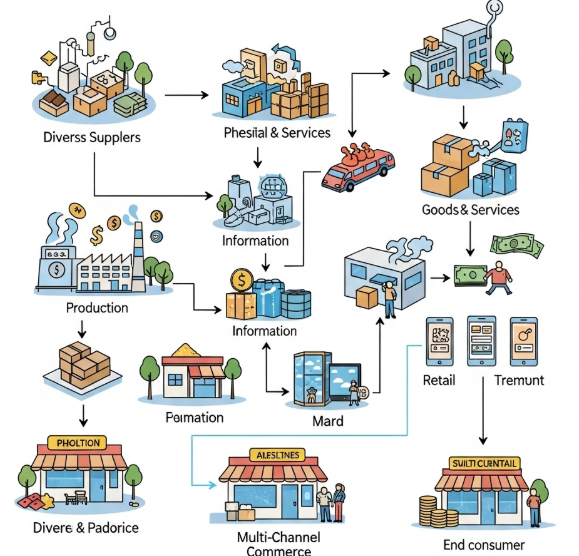
To fully understand the intelligent supply chain ecosystem, we first introduce the supply chain landscape and positioning. Broadly speaking, the supply chain involves the production and movement of goods and services from suppliers, manufacturers, transportation services, distribution centers, and wholesalers, to retailers, consumers, and end customers. The supply chain also governs the flow of money, which moves from end customers, retailers, wholesalers, distribution centers, and manufacturers, to service providers and suppliers. The supply chain is, therefore, composed of a complex set of multilateral relationships involving physical assets, money, information, and people. Each party to the supply chain helps facilitate various activities related to production and sales, the movement of goods and value between parties, and the processing of transactions. Close, collaborative relationships among supply chain parties create a synergistic effect. Today’s supply chain is no longer a simple linear relationship from producers to consumers but consists of a web of interacting services, taking advantage of specialization and economies of scale. Multi-channel commerce allows both businesses and consumers to transact by any combination of mail, phone, storefront, and e-commerce. Consequently, products and services are created in many different ways and are sold and delivered across multiple channels. Such trends in technology innovation and globalization are fundamentally transforming how businesses compete, pushing the need for increasingly intelligent supply chain ecosystems. Also causing a rethink of the supply chain landscape is the emergent disintermediation and reintermediation cycle, where intelligent e-businesses offer new models replacing traditional supply chain players with new, technology-enabled intermediaries.
2. Understanding Supply Chain Ecosystems
Supply Chain Ecosystem (SCE) refers to the set of suppliers, manufacturers, and customers that connect to form the logistics, operations, and business processes that support the flow of goods moving through value-adding nodes and link activities in support of the customers' needs, and to accomplish the goals of the supply chain service network and each of its members. As networks, SCEs accomplish flow activities, using interconnection designs with products, payments, or information transacting from one node to another. With the rapid development and deployment of cheap mobile computing and wireless communication, the SCE is evolving to include more and smaller materials suppliers at the low end of the SCE product or service offering structure, more and smaller customers who can easily enter and exit the SCE network in a short time, as well as more activity participants augmenting the demand variation and increasing the SCE business risk of all activity participants.
Besides these evolving characteristics of the SCE, major trends for the future SCE ecosystem include the increasing trends towards bi-directional process flows, utilizing and enhancing the capabilities of small manufacturers and small businesses in the SCE mix, and exploiting online information visibility to support greater allocation of SCE managerial decision making activities to its common participants. Due to its inherent benefits, including cost and cycle time reduction, risk sharing, and quality and performance improvements, companies today cannot compete on their own. A company does not exist in isolation but rather within a system of networked relationships. For firms to remain competitive, all parties in the arrangement must look to one another for synergy and the increased potential for innovative solutions and greater value offered to the end users of the industry.
2.1. Definition and Components
Today’s supply chain ecosystem is a broad term that describes the collective network of suppliers, manufacturers, logistics providers, vendors, retailers, customers, distributors, and other entities involved in manufacturing and distributing products. Understanding a supply chain ecosystem by its definition is critical to grasping the composition of an extremely complex system. A supply chain ecosystem is a confederation of business enterprise and community relationships, which include higher-order influences that are driven by overarching capabilities, traits, and resources; tangential services and products that may deliver a competitive advantage; suppliers, vendors, and third parties that may provide different types of services or products; and the end customers that sustain the existence of the ecosystem. The components are customer pull; business model; demand chain; value activities; supply chain; resource structure; and product/service.
The definition indicates the collaborative nature of a supply chain ecosystem or the relationships among the partners therein. Business subnetworks of a supply chain ecosystem are enabled by a number of techno-enabler capabilities that exist among participants and transactions flowing among partners. The basic unit of the subnetwork is the business transaction. Customers configure and place an order for a configured product/service. Partners that hold the needed capabilities and redundancies coordinate and assemble to form a sustainable capability subnetwork called a transaction capacity structure. Supply chain ecosystems are now transnational in nature and a mix of companies in the geographical proximity of focus manufacturing or services and an extended network that carry out the execution and sustain value propositions done at a different pace of time. It has also been observed that supply chain ecosystems do not have borders or traditional constraints. A product can cross borders multiple times during its production and delivery to customers.
Equation 1: Demand Forecasting Using Big Data Inputs
Where:
- : Predicted Demand
- : Previous Period Demand
- : Social Signal Data
- : External Event Data
- : Learning Weights
2.2. Importance in Retail and Manufacturing
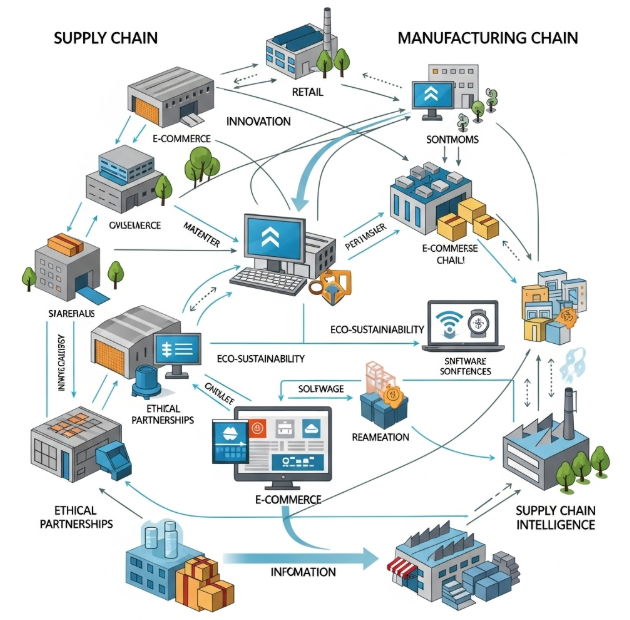
Supply chains in retail and manufacturing are frequently complex networks of connected, interrelated business processes and organizations. In many cases, these organizations span the globe. Successful physical, digital, and software supply chain mechanisms coalesce to manage this complexity and connect these business activities into integrated supply chain ecosystems. Whilst the term "supply chain" suggests a straight line from raw materials through to finished goods in the hands of the customer, the reality is somewhat different. There are many different paths through the supply chains of major retailers as incoming stock may be acquired from several countries to meet customer demand or to balance several conflicting objectives – moving product through the supply chains rapidly, ensuring low levels of stock or inventory, achieving high levels of product fill, balancing the original purpose and design for the final product. All of these factors contribute to the alignment or misalignment of the supply chains of retailers and manufacturers.
Increasingly, physical, digital, and new software supply chains are being demanded by important customers seeking to innovate from existing product portfolios, requiring in-depth collaboration between retailers and manufacturers. Innovation, product eco-sustainability, and ethical partnerships often influence supply chains by changing the balance of power along the supply chain network, and demand intelligence about the potential impacts of these factors. Supply chain intelligence is needed at every level and for many of the supply chain business processes being developed for different services and transaction activities of retailers and manufacturers, yet their distinctiveness means that new capabilities need to be constructed to provide visibility, accountability, and control to meet the intelligence and performance requirements of the supply chain ecosystem between the retailer and the associated manufacturers. This highlights the importance of supply chain ecosystems in the retail and manufacturing sectors and how their current compositional and operational structure is beginning to change.
3. Cloud-Native Architectures
Cloud-native architectures are a paradigm-shifting way of developing, deploying, and running distributed applications in a public, private, or hybrid cloud. This approach builds on decades of distributed computing theory and practice. But cloud-native applications for the first time combine several critical design principles and best practices for delivering business value faster with less risk: being microservices, container-based, and dynamically orchestrated. Cloud-native solutions are essential for the intelligent supply chain ecosystem, especially intelligent supply chain data platforms and services. Just like modern web-scale architectures made it possible to build new data-intensive applications for e-commerce, logistics, and marketing, cloud-native architectures are the way we build modern intelligent supply chain applications. Building cloud-native applications increases velocity and drastically reduces operational overhead for developers, allowing them to unlock invaluable time spent scaling and securing older systems to instead innovate and deliver new features. The process of innovation becomes continuous, as there is constant iteration and improvement of the applications themselves. Continuous delivery of new features for applications becomes an enabler for the continuous listening of customers and other participants in the ecosystem, allowing businesses to constantly refine and improve offerings and services. Orchestration automatically manages the lifecycle of the application; from provisioning and deployment to scaling and load balancing, and an on-demand basis. This relieves developers from the burden of writing a large portion of the logic that easily becomes a complex application itself and allows them to focus on delivering application functionality [1].
3.1. Characteristics and Benefits
Cloud-native architectures represent a paradigm shift in how complex integrated systems are designed and implemented. These architectures leverage new technologies, available as "as-a-service", often governmentally or even globally supported resources that had not been available for traditional enterprise information systems, even those based on minimalistic approaches such as the microservice one. Cloud-native applications are optimized to the cloud-distributed environment where they operate, addressing their specific characteristics and constraints, including elasticity, dynamically variable cost, third-party management and maintenance, and protection. Open-source projects migrating from the traditional enterprise integrated solutions overcome all of the old issues that plagued enterprise systems, going from long delivery/update cycles to a continuous versioning and deployment mechanism, from a monolithic design to a modularized one, from being meshed with ad-hoc procedural code to highly reusable components that encapsulate common functionality, from specific and often not well-defined system processes and pipeline to flexible, customizable and reusable products-defining Business Process Management Logic Models. Cloud-native architectures are particularly suitable for business ecosystems, differing from closed and vertically integrated enterprises traditionally undertaking and delivering upon the whole value creation cycle at best, whose complexities of interactions, communications, dependencies, and hierarchies of processes, business logic, data, and information have created insurmountable barriers against its broad adoption for enterprise-specific needs and requirements. Business teams could custom-develop their specific functionalities using specialized software created by cloud software vendors or even specialized digital companies that develop custom software products at the request of the business teams. These third-party developed products could support the specific business functionalities or processes definition and operation. Data would be stored in a third-party cloud provider that would maintain it on behalf of the ecosystem's participants, make it available to the specific applications, and then process it on behalf of the ecosystem participants and their partners.
3.2. Key Technologies and Frameworks
Public cloud providers have often captured the attention of CIOs. One of the advantages of such providers is what is termed as the "3 Vs of Cloud Computing" – these refer to "Virtualization-features that allow users to create and delete resources more flexibly than traditional configurations"; "Scalability-feature that allows users to easily access a great variety of computing resources (in terms of both quantity and speed)" and "Elasticity-feature that allows users to automatically trigger significant scaling-up and scaling-down of resources, in real-time and without user intervention". VPS and IaaS tools allow companies to afford cloud computing at low costs and low risks without moving sensitive data off-premises.
Platforms for business process development such as Business Process Execution Language, B-Enterprise, and SAGA address only some aspects of cloud readiness. However, such frameworks address B2B scenarios themselves within private companies or groups of companies. Current frameworks such as BPEL and SAGA allow developers simply to create B2B processes that address only domain operators. No other partners can dynamically join or leave these processes. Moreover, there are few Cloud Monitoring tools available today for Inter-Organizational processes. Cloud Monitor provides monitoring services for products and services, including those located in other regions, as well as other cloud platform products that function differently.
Cloud logs provide monitoring for other components. Aiming at providing any further monitoring functionalities besides what they already provide for Cloud resources, Cloud Monitoring and Cloud logs represent prototypes within the MBI for Clouds framework. Tailored for a specific market niche, Cloud Watch can be seen as the first specific realization of MBI for Clouds which has been achieved through the help of Data Warehousing [2].
3.3. Case Studies in Cloud Adoption
This section presents two sample case studies of successful cloud adoption, the first from the retail sector with international reach; and the second from the manufacturing and engineering design sectors, with a relevant cloud use for business performance enhancement. The objective of the cloud adoption case studies is to help clarify the breadth of cloud application services and infrastructure, the business foundations for decision-making, and the results achieved through a consistent cloud adoption strategy.
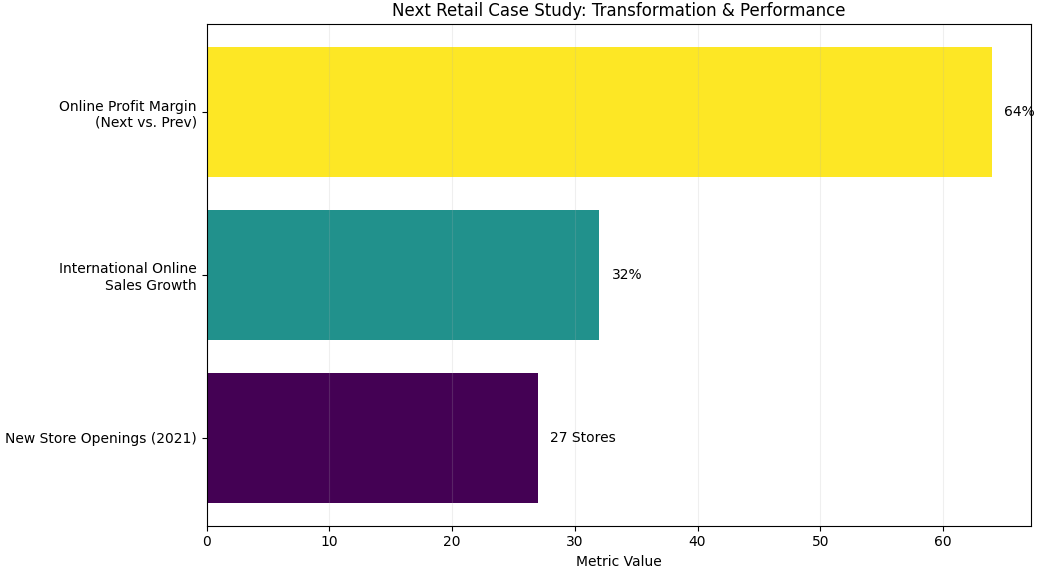
Retail Case Study: Next is a leading UK-based retailer specializing in apparel and home goods that has transformed its technology structure and market performance through cloud adoption. As a response to the growing expectation of consumers for digital engagement before, during, and after the selection and purchase of retail goods, Next took measures to effectively complete this business challenge. Through cloud services for business application implementations, Next was the first and only major UK fashion retailer to continue to open stores in 2021, with 27 new store openings compared to 2020. Next also achieved international online sales growth of 32%, propelling its higher online profit margin to 64% vs. 59%. Critical factors contributing to this cloud investment's successful business outcome achievement included a clearly defined digital transformation roadmap and cloud engagement center; the adoption of modular cloud solutions such that the agile integration of specialized services was a priority; and strategic partnerships with key cloud services providers. These business alignment pillars were later fueled by an agile performance monitoring loop, enabling key stakeholders to adjust decisions when and where needed [3].
Manufacturing Case Study: Kerto by UPM is a Finland-based company with a yearly production volume of around 1 million cubic meters of engineered wood products. The Kerto business goal is to be the pioneer of modern timber construction. Kerto’s cloud use case is for the optimization of business confidentiality, performance, and engineering data guarantee with external partners, resulting in saving valuable design time. The challenges faced by Kerto were balancing confidentiality on the design and product engineering information and service performance to allow its partners to use cloud services.
4. Big Data Integration
Big Data refers to the vast amount of data generated by a variety of sources, predominantly in the retail and manufacturing domains, that is too large to be processed and managed by existing data management tools. Big Data technologies provide a new breed of data management capabilities focusing on handling high velocity, volume, and variety of both structured and unstructured data. Big Data technologies are designed to allow organizations to store, process, and visualize huge amounts of data internally, as well as through external cloud service providers. These technologies also enable organizations to generate insights that were previously very difficult and labor-intensive to obtain. It is during the generation of these insights using Big Data analytics and intelligence, that sounds, direct time taken, temperature, location, humidity, and other types of data are combined to provide new and actionable information. This chapter discusses the variety of data sources in the operation system, the big and small data types collected from the operation systems, and the different business insights that can be generated through Big Data integration. Overall, this chapter highlights the essential requirement for data integration technologies and capabilities in an intelligent supply chain.
Recent advancements in cloud-native, IoT, smart devices, and mobile telecommunication technologies have enabled the creation of complex retail and manufacturing intelligent supply chain ecosystems. These advancements have been enabled by web and cloud technologies, which have greatly lowered the entry cost barrier for government agencies, large enterprises, tech entrepreneurs, and startups to build the required smart services and ecosystems. This has driven a ubiquitous demand for data-enabled decision-making capabilities using the data generated by intelligent supply chain ecosystem operations. The focus of the organization's data assets has been shifted to be more real-time, dynamic, and collaborative local network-driven data sources than historical, static, and widespread external enterprise database-driven data assets.
4.1. Data Sources and Types
The genesis of big data lies in the massive collection of data sourced from digital and traditional activities of consumers, customers, users, and things. For instance, shopping transactions—digital and physical—made by consumers and customers, and tracked by retail operations enterprise systems, create transaction data. Apart from the actual product details included within transactions, several additional data—such as the time and location of the transaction, payment methods used, and consumer and customer identities—associated with a transaction can also be collected. These details provide extensive information for data-based operations management and strategy using advanced technologies such as big data and artificial intelligence. In various industries, logistics and supply chain management systems that monitor and track shipments in transit, and store, warehouse, and other logistics operations manage logistics-related transaction data that can also be used for analytics.
Other than transaction data, many other types of data are available for integration created from various consumer and customer interactions with organizations through digital channels such as websites, mobile apps, and social media. Web, mobile, and social media data track events—including events triggered by consumers and customers—that help organizations understand the preferences and opinions of consumers, customers, and communities with respect to products. Many digital sources provide additional data that monitor and assess the activities of consumers, customers, users, and other stakeholders. Embedded and connected products generate usage data recorded in back-office systems; sensors installed in the developed physical and digital infrastructure continuously capture data throughout the lifecycle of users; and drones, robots, and autonomous driverless vehicles transform the infrastructure of operations by adding big data [4].
Equation 2: Latency in Cloud-Native Supply Chain
Where:
- : Total Network Latency
- : Data Volume at Node
- : Bandwidth at Node
- : Compute Delay at Node
4.2. Analytics and Insights Generation
A family of applications and technology is built into the architecture or is available around it that provides these analytics and insight-generating capabilities. Virtual dashboards generate “live” insights that are available through handhelds, as well as larger-screen displays in the operation center of a mine, utilities’ control center, highways’ maintenance centers, railways’ signal control centers, last-mile delivery operations, manufacturing operation, or retail distribution center. Desktop applications are also available for power and transportation engineering and system analysis. These applications make data accessible to virtually everyone who can contribute to the furtherance of the living-on-the-edge strategy or who can exploit data availability in their day-to-day work, engineering, operations, or enterprise management.
Visible and accessible integrated records make data available in an easy-to-use format. It supports the many-to-many integration of disparate legacy source systems by automatically generating the necessary modules. Moreover, these sharing modules can be presented in different levels of complexity, from spreadsheets with filtering and sorting capabilities for casual users to application data and processing flows for hard-core data engineers and computer scientists. Special modules support unlimited and simultaneous access to shared legacy application data by various enterprise designers, analysts, and engineers, including those engaged with enterprise architecture, operations research, manpower and organization, enterprise product structure, cost, quality, and resource management. Other modules support business process modeling- workflow automation and control, with particular attention to control system design rules.
4.3. Challenges in Data Management
Retail and manufacturing industries are built and driven by data. In the past, the focus of organizations was primarily on the management of transaction systems, i.e., Enterprise Resource Planning systems. The transactions and control processes of these systems were well-defined and closed, as they acted on a limited and known set of transaction data and supporting document flows. The shift of organizations from closed to open Intelligent Supply Chain Ecosystems has intensified business focus on the use of Big Data for decision-making. However, Supply Chain Management is a multi-dimensional collaboration and information integration in several ways: across multiple organizations, across business functions, between upper and lower levels of the decision-making hierarchy, and across companies’ functional layers. This has created a completely new set of challenges in data management [5].
The explosion of new sources and forms of Big Data has created a maelstrom of confusion for retail and manufacturing organizations. Without meeting the challenges of Big Data and with little understanding of what data to trust or use, organizations run the risk of getting lost in the ever-growing digital landscape. Avoiding a treacherous stumble requires building a new technical and organizational architecture. Such an architecture allows ready and regulated acquisition and storage of innumerable datasets in their native form while permitting developers, engineers, and analysts to blend and combine them in different ways and around any business problem statement. Thus begins the objective of this chapter: to ascertain what types and sources of Big Data support the creation of process-centric data layers for Advanced Analytics in retail and manufacturing.
5. Retail Operations Optimization
Retail and manufacturing companies operate in an intensely competitive environment that poses several challenges in effectively running their operations. For retailers, the operations involve working every minute to ensure that the right product is available at the right time, at the right place, and the right price for the customer. They also need to ensure that these operational activities are carried out efficiently, minimizing wastage and reducing costs. Keeping the customers happy, at the same time minimizing the expenses, is often the key task of retailing.
This chapter provides an overview of selected important areas of research that are concerned with the application of data science and big data analytics in optimizing retail operations. Specifically, the focus is on inventory management, demand forecasting, and customer experience management. We present different algorithms that have been proposed for solving these key operations problems in retailing and highlight their relevance in the context of intelligent supply chain ecosystems. Our goal is to provide researchers and practitioners with the necessary tools to shape the future landscape of the operational aspects of intelligent supply chain ecosystems.
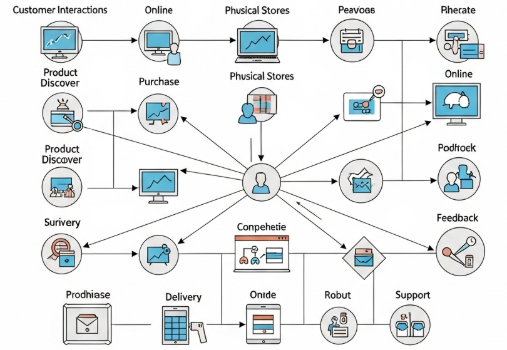
We place special emphasis on problems in inventory management and demand forecasting that can effectively utilize the potentially huge volume of data being generated in today’s digital economy. Examples of the diverse data sources available in today’s retail setting include historical demand data, other sales records available from cash registers, social media content, and other external channels. The third area of research we explore is the optimization of the customer experience, specifically using tools from customer journey analytics. These tools help retailers and brand manufacturers visualize the customer journey across various touch points in the ecosystem, analyze the different paths customers take, and optimize these paths to increase customer satisfaction and experiences.
5.1. Inventory Management Strategies
Inventory management is a method that balances supply and demand, ensures continuity of operations, minimizes storage costs and optimizes working assets. It is an internal-level area of operational activity, serves to coordinate the interests of the company with its customers and suppliers, and consists of analyzing inventory investment decisions, implementing an inventory tracking or control system, and determining the operating levels of various types of stocks. The goal of any inventory management system is to delay the time when finished goods need to be produced; minimize total inventory cost where that cost includes carrying costs, ordering costs, and cost of lost sales; minimize the risk of loss associated with inventory spoilage or physical loss due to theft or damage; ensure that the production process is not interrupted by shortages of raw materials. The four parts that comprise inventory control processes are ensuring compliance with the defined operating levels, tracking inventory, creating usage forecasts for business decision-making, and identifying usage variances.
There are three principal types of supply qualified for inventory management policies. These are cyclical inventory, which is required by production operations; speculative inventory, which is maintained to cope with unforeseen changes; and safety stock inventory, which is required by production to stabilize demand and lead times. These inventory types are associated with different levels of company management: cyclical inventory with short-term operations control, speculative inventory with strategic and tactical decision-making regarding products selected for handling, product pricing, capital investment levels and staffing plans, and safety stock with daily and weekly planning and scheduling of the production process.
5.2. Demand Forecasting Techniques
The forecast of product demand is one of the most important factors of the supply chain decision process – because stochastic variability can significantly affect service levels, breakdown costs, and even the profitability of retail and e-commerce companies. Accurate forecasts provide valuable insights to all members of a supply chain in support of operations in manufacturing, distribution, and logistics design, as well as advertising and sales force expenditures. Companies will be able to optimize their overall performance and enhance customer satisfaction, thereby gaining a sustainable competitive advantage. Specific applications of forecasts include production scheduling, spare part management, logistics and distribution optimization, purchasing decisions, inventory decisions, and revenue estimation for the upcoming budget planning period. Demand forecasting is a critical function within a company for its effective performance. In general, demand forecasting is concerned with predicting the amount, timing, and nature of customer demand. Data are available as time series observations of demand over time. Methods for forecasting demand can be classified into four categories. Causal models incorporate one or more factors outside the time series being forecast. Time series extrapolative models assume that there is a pattern in the historical time series data that can be replicated in future forecasts. Judgmental methods use subjective good decision-making tools based on the knowledge of experts, particularly when historical data is unavailable. Finally, simulation methods use model-based input-output structures incorporating both extrapolative demand patterns and external drivers of demand.
5.3. Customer Experience Enhancement
Overview of Customer Experience In the supply chain context, the customer experience refers to the customer's holistic perception of interactions with a company and its channels over time and the shared experiences with the company's offering of products and services. As such, the customer experience encompasses all marketing activities associated with a customer before, during, and after post-purchase and use. It is fueled by several antecedents, at the micro and macro levels, for example, the company’s delivery capability, the product-related and nonproduct-related service offerings, the holistic channel design and presence, and elements of surrounding sociocultural contexts. The customer experience is evaluated through observable measures, such as the customer satisfaction index and customer loyalty generation, but also through self-reported measures, such as the perceived customer experience quality.
The growing significance of the customer experience results from an evolving market environment. Due to increasing service commoditization, customers expect and demand products that meet their needs and are available at the right place, at the right time, in the right condition, and at the right price, otherwise, they shift their expectations to the post-purchase product and service offerings. Due to the increasing power of mass media, customers are more aware of the fact that their test and service experiences may differ from those of others who share them. Hence, customer experience management is of crucial importance.
6. Manufacturing Operations Enhancement
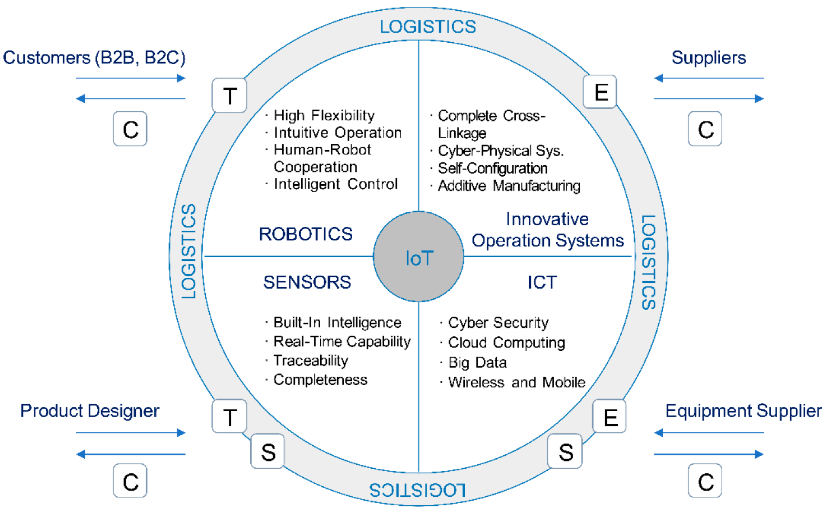
Two key operations technology trends drive enterprises to enhance the efficiency of their day-to-day ongoing operations and manufacturing infrastructure. The first element is the increasing reliance of supply chain and operations decisions on data-driven recommendations. The second is the growing importance of sensor technology developments in capturing near real-time snapshots of supply chain and operations activity. We see the Digital Transformation initiatives in firms currently embracing these two trends. Big Data from rich sources is shaping demand forecasting in a manner that has never been possible before. Companies in fashion retail are already using social sentiment analysis data feeds to update demand forecasts at very short time intervals, and an increasing number of firms are integrating automated merchant purchasing systems with forecasting to improve sales, inventory turn, and markdown strategies. However, operations processes are not quite equally receiving the same degree of focus.
In particular, the same degree of sophistication and expectations from routine day-to-day tactical decision-making is yet to be filtered down to manufacturing operations and the underlying processes. We would like to encourage more development and deployment of adopting the cloud-native, Big Data-driven architecture with the potential impact efficiency, profitability, and quality. Users now expect that their products work all the time. Operating assumptions about process efficiency have lowered considerably, and any company of size must set the necessary culture that embraces process change and risk avoidance when designing operations activity. The expectation of near-zero defects makes the task of the quality control professional even more challenging. The supply chain has the task of providing capacity flexibility and quality protection from the firm’s supply base and life-cycle risk oversight of the customer.
6.1. Production Efficiency Improvements
Today, there are multiple drivers pushing manufacturing companies to pursue newer capabilities and methods for their production cycles. Manufacturers are pursuing an omni-channeled supply chain composed of both business-to-business and business-to-consumer interactions. The traditional methods of taking an order and completing it with planned lead times are being superseded by ever-shortening customer reactions. In modern days, they simply expect faster deliveries of a wider array of products. As a strategy to satisfy their shorter lead times, companies are shortening internal production cycle times by merging operations, performing batch production of multiple products, or increasing the number of shifts and available machines to meet production demands.
Further enhancements are being pursued by incorporating visibility tools into their local operations to better react to customer demands. State-of-the-art information technology systems are allowing manufacturers to sense demand and quickly convert it into plans for execution within the manufacturing network. The polling of visibility tools combined with machine recognition systems is allowing manufacturers to shift their focus toward the factory floor, and to proactively solve issues during production. Aided by interconnected intelligent machine tools, schedule execution is being improved with tools that allow re-scheduling and the addressing of variances at the machine tool level in order to directly load machines or cells that are less busy and to divert from work-in-process bottlenecks. As a result, the potential build-up of excessive work-in-process is being kept in check. By addressing production schedule adherence at the granularity of the individual machine, localized variation attacks can reduce the natural variability that accompanies any manufacturing process. In essence, manufacturers are routing work-in-process in real time to help alleviate potential build-up problems, and also to enhance factory throughput levels.
6.2. Supply Chain Resilience
Supply Chain Resilience. "Resilience", in adaptive systems theory, matches the survival and functioning of natural ecosystems: deep pools of diverse, redundant, and spare capacity enable ecosystems to absorb and recover from external shocks; and to "bend without breaking" during stress periods. Similar provisions of excess inventory, strategic sourcing, production reserves, operational capabilities, and real-time capacity can enable supply chains to be elastic or resilient during such suspended functional periods. On corporate financial performance and stock market valuation metrics, "More resilience = More Value." Real-world integrated business process models apply dynamic collaboration capabilities, beyond static sourcing, to balance redundancy and risk-sharing among external partners.
Legal contracts still govern core business relationships. Real-time visibility, knowledge-sharing, and responsiveness create supply chain capabilities for long-term add-on value. Relationships negotiated over long periods engage external partners' commitment to invest in mutual asset-specific sunk costs, ensuring that embedded contributions of partner capabilities will remain stable and unimpaired over time. Short-term contracts focusing narrowly on cash flows for defined deliverables make supply chain partners reluctant to incur additional investments in the partnership. "Hyper-competitive" markets then generate habits of mistrust, requiring transactional cost economies. Cybernetic collaboration should motivate relational incentives to share risks and rewards equitably, while still allowing for flexible adaptation to day-to-day operating conditions. Capacity reserves. Decisions made adaptively at tactical and operational levels during short-term cycles build up over longer-term strategic levels.
Flexibility reserves to meet peak demands must be reflected in excess capacity in production, transportation, and logistical operations. Inventory reserves, of finished goods or components, must be large enough to be available during shortages (safety stocks), yet small enough to avoid excessive costs of holding capital. Resilience functions imply not only cash costs and tie-ups of invested capital; risk premiums on future costs of recovery from disruption must be modeled. Cost-benefit information technology investments capture expected rather than just narrowly focused financial returns. Cyberinfrastructure capabilities create pools of external assets for coordinated information flow, decision-making, and operational responsiveness to meet specific short-term contingencies.
6.3. Quality Control Mechanisms
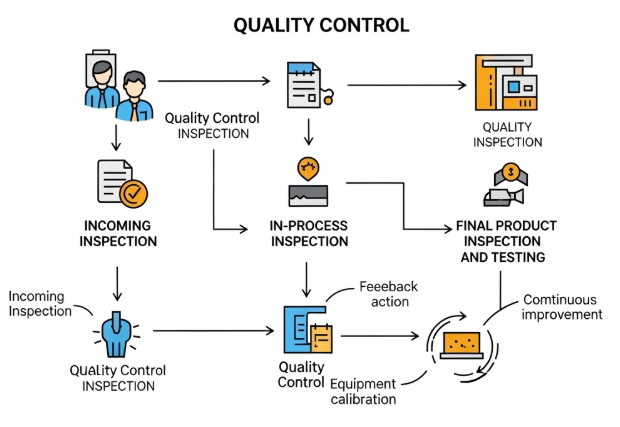
Quality control mechanisms have been an essential part of manufacturing operations for a long time. QC helps in maintaining the standard of the product or service, which in turn helps in gaining customers' trust. We will discuss the QC mechanisms and activities in this section. There are various activities associated with quality control. These are:
- – Quality Control Team
- – Incoming Inspection
- – In-Process Inspection
- – Inspection and Testing of Final Products
- – Acceptance Sampling
- – Non-Conforming Material Control
- – Corrective Action
- – Equipment Calibration
- – Quality Records
- – Quality Audits
Quality Control Team − A quality team is responsible for performing a variety of functions. It consists of quality inspectors and quality managers. Quality inspectors are responsible for doing inspection, testing, and evaluation activities. They are responsible for conducting measurements wherever required. They also assist in developing inspection plans, support other departments during audits, and approve product designs. Quality managers facilitate communication between the production team and upper management, assess training needs, coordinate third-party quality assurance, and direct the quality department’s activities.
Incoming Inspection − This is the process of inspecting a purchased material before it enters the factory. It ensures that the material brought into the factory meets the requirements defined in the specification. The purpose is to confirm that no flaws can interfere with the production step and its end product. If a defect occurs in this phase, the materials can be accepted, rejected, or resubmitted.
In-Process Inspection − This activity includes inspection of a product at various times during different phases of its manufacturing. This ensures that the product continues to meet quality standards throughout its production. Typically, the more expensive the final product is, the more in-process checks are conducted. Inspection and testing of final products include inspection and tests to ensure that the product meets specifications, and proper acceptance criteria are set.
7. Future Trends in Supply Chain Ecosystems
Supply chain ecosystems will evolve in the direction of big investments made by corporations and governments, to bring to the market products and services driven by AI-based stacks for data storage, processing, and governance, aimed primarily at the automation of several activities that require resource-intensive human intervention, both direct and indirect. Different private and public investments will be made, in order to develop innovation hubs related to sustainability, aimed at implementing activities, products, and services with low environmental impact. The development of low-consumption, long-range transport vehicles or fuel cell transport vehicles will be envisaged, to be used in stock replenishment, or, more in general, in meat-fresh, fish-fresh, fruit and vegetable supply chains. New smart vehicles will also be initiated at individual country levels, to be designed in an interconnected way, so that the loss of autonomy in charging the battery or in internal combustion engine fueling, is compensated for by the travels and waits of other vehicles within the same eco-sustainability ecosystem made up of companies, public administrations, start-ups, innovation centers, public authorities. But for the sustainable supply chain ecosystems to be able, in turn, to design, model, and support the development of business sustainability practices, including social ones, and responsible for ensuring the safety of non-EU temporary workers, these digital collaborative tools must become operational through the testing of blockchain technologies.
The ability to minimize energy waste through the collaborative management logic of supply chain ecosystems will also have repercussions on the use of innovative technologies specifically aimed at minimizing waste and depletion of the planet’s resources. The role of blockchain technologies will be fundamental to allow a technological infrastructure that supports the construction of trust relationships favoring collaborative and partnership approaches. The creation of a multidisciplinary approach to the designing of digital traceability in the exchange of information, data, and knowledge is also important in order to guarantee the quality and authenticity of the products and processes. The achievement of such objectives will require both high levels of investment and multidisciplinarity.
Equation 3: Smart Manufacturing Throughput
Where:
- : Effective Throughput
- : Production Capacity
- : Utilization Rate
- : IoT-Detected Error Rate
- : System Downtime Factor
7.1. Artificial Intelligence and Automation
Supply chain automation becomes more and more relied on to manage vast data sets required for these supply chains to operate seamlessly. Proto-supply chain AI and advanced algorithms are already controlling the flow of products into fulfillment centers in e-commerce logistics networks. For organizations that are disciplined enough to adopt new data-driven methods for supply chain and demand forecasting, the benefits will be enormous. We are yet beginning to realize how far down the supply chain operations AI impact. For example, its use could change factory floor scheduling and optimization of production planning tremendously.
The adoption of new intelligent supply chain protocols, and transparent trusted decentralized interactions made possible by decentralized data registries will require new kinds of qualified cloud-native architects and data engineers to create fully functional supply chain infrastructures. From the need for intelligent agents on the factory floor to the demand response to market influences like promotions and pricing, or even weather changes, the basis of knowing how to fulfill a valid order will be the brain and nervous system of the cloud-native supply chain of the future. Smart agents autonomously backing up a fulfillment center will create billions of real-time events. Traceability will provide another way of understanding the scope of real-time data required to manage these supply chain agents. This repository of real-time data orchestrated by decision automation of complex centralized data processing systems with built-in data contextualization into clearer signals for action is the future of supply chain decisions.
7.2. Sustainability Practices
Sustainability is one of the five components of performance objectives. Environmental transition has far-reaching effects on product, process, and business model design. Sustainable supply chains are important. Implementing the circular economy can be used to give a new life to products and guarantee their repairability. Regulations, incentives, and consumer demands related to sustainability are forcing chain partners to implement everyone-focused policies, which affect sourcing and reduce carbon discharges. These new regulations between countries are being made with greater transparency and control. Some companies are already more advanced in understanding, measuring, and reporting their social impacts, such as their owners' equitable treatment, their suppliers' healthy living, and the long-term sustainability of future generations concerning knowledge, resources, nature, and future development.
Manufacturers are being supported by retail buyers or by certificates to close the cycle for their products. Vendor partners are moving from linear to reverse and shared service logistics. Compliance with sustainability rules is being supported by technology to create digital twins or metaverses for more visualization and control. The real business opportunity is to define and monetize models where products, services, and customers together deliver a positive result, such as a sustainable and enjoyable consumption experience and social equity balance. The implementation of sustainability actions at the supply chain ecosystems level is not simple, because new coordinators with a view of the future are needed among the ecosystems involved. The analysis of data flows, physical flows, monetary results, and environmental impacts must be studied by supply chain ecosystems to align all the involved collaborative and cooperative partners.
7.3. Blockchain Technology Impacts
Blockchain technology will have revolutionary impacts on supply chain ecosystem design by reducing trust, privacy, and interoperability barriers between supply chain partners. Blockchain distributed ledger technology provides a secure, immutable repository for keeping transaction and workflow information that can be shared across multiple supply chain partners for every material handling event in the production and distribution cycle of goods. This allows for greater trust and transparency in shared transactions, as well as increased information access for supply chain partners to help facilitate the synchronization of operations, share demand and capacity information, manage logistics services, and track material flows. Blockchains provide self-governing rulesets and smart contracts that can help in automating supply chain transactions, validate the trustworthiness of partners in a supply chain network, create trusted environments for sharing confidential information, and maintain privacy for sensitive information about operations and consumers. Areas such as supply chain management use cases are possible due to the innovative features provided by blockchain designs that ensure secure, systematic, and controlled operation of self-functioning supply chain networks. The design of cloud-native architectures for intelligent supply chain ecosystems is making supply chains more integrated with business processes, and integrated with suppliers, distributors, retailers, logistics providers, financial service providers, customers, industry and product regulators, and all ecosystem support functions. Therefore, there is a new business focus on creating collaborative and symbiotic relationships across the supply chain ecosystem rather than running the supply chain as a cost center with a focus only on cost-cutting.
8. Conclusion
We proposed a "Cloud-Native" architecture operating on a Technical and Semantic Hub and a proprietary Smart Data Connector that solves many challenges bounding Big Data use in Supply Chain, Open Ecosystem Data Integration, and Market, Logistics, and Production Forecasting. The solution is generating strong traction through several Industry 4.0 Ecosystem Data integration POCs and Partners, Logistics Network Optimization, Planning, and Execution, and Producible Product Testing. The further Data-Driven Embedded Analytics, Multi-Domain Application Gallery, and Predictive Business Process solution lines are built on the Cloud-Native Hub and SDK Base.
What can happen in the future? Supply Chain Intelligence can multiply this capability, returning to the many Cities across the globe that require a focus on the Intelligent Supply Chain, an opportunity for Faster and Sustainable Economic Growth, Solidarity and Agency for Creation Tasks, and the investment and funding opportunity that emerged with the Digital Economy, Data Attraction, and Talent Attraction challenges outlined at the start. As the consequences of the Cyber-Pandemic outlined: the application of Proximity-Sourcing principles to Data, Algorithms, Artificial Intelligence, Data-Driven Business Models, Analytics, Knowledge, Agents, Products, Services, and Processes, multiply Exponential and Accelerated Sustainability, Circular Economy, Green Economy, Quality (Q), and Shareholder (SH) Value.
8.1. Key Takeaways and Future Directions
The design and implementation of supply chain ecosystems remain an exceedingly complex logistical and project management task. While, conceptually, providing visibility within and across organizations of business operations seems like an idea that every constituent would want, it raises an array of challenges including business practices fostering an atmosphere of distrust. Many stakeholders resist providing near real-time access to their transaction data for fear of sharing competitive insights and leverage. Similarly, discrepancies and mismatches in processes used to collect, categorize, and transact supply chain activities can make data integration, processing, analytics, and presentation extremely challenging bringing into question the veracity of collected information by supply chain partners and the analysis outcomes to share intelligence, insights, for decision-making. Further, the integration and management of all of the data from these processes requires sophisticated technological implementations.
In this chapter, we examined ways to help facilitate such environments through the adoption of cloud-native architectures and big data integration capabilities. The ability to minimize deployment and management costs while at the same time maximizing functional performance and flexibility makes cloud-native technological implementations a perfect match for the dynamic and fragmented world of supply chain integration – both functional and technical. The ability of retailers and manufacturers, their sales and fulfillment partners, as well as third-party supply chain service providers to execute competitive, customer satisfaction, profit contribution logistics management operations is extremely challenging and evolving. The tools and capabilities provided by cloud-native architectures and big data integration can help facilitate the logistics management functional chain and its conduits of business transformation across the supply chain ecosystem. We hope that subsequent implementations, deployments, and experiential lessons learned from such capabilities can help provide supply chain ecosystems with learnings and insights to further enhance collaborative business competency.
References
- Data Engineering Architectures for Real-Time Quality Monitoring in Paint Production Lines. (2020). International Journal of Engineering and Computer Science, 9(12), 25289-25303. https://doi.org/10.18535/ijecs.v9i12.4587[CrossRef]
- Karthik Chava, "Machine Learning in Modern Healthcare: Leveraging Big Data for Early Disease Detection and Patient Monitoring", International Journal of Science and Research (IJSR), Volume 9 Issue 12, December 2020, pp. 1899-1910, https://www.ijsr.net/getabstract.php?paperid=SR201212164722, DOI: https://www.doi.org/10.21275/SR201212164722[CrossRef]
- Vamsee Pamisetty. (2020). Optimizing Tax Compliance and Fraud Prevention through Intelligent Systems: The Role of Technology in Public Finance Innovation. International Journal on Recent and Innovation Trends in Computing and Communication, 8(12), 111–127. Retrieved from https://ijritcc.org/index.php/ijritcc/article/view/11582
- A. Ly, B. Uthayasooriyar, and T. Wang, "A survey on natural language processing (nlp) and applications in insurance," 2020.
- C. Blier-Wong, J. T. Baillargeon, H. Cossette, L. Lamontagne et al., "Rethinking Representations in P&C Actuarial Science with Deep Neural Networks," 2020.