

Ill-discipline has become a canker that threatens the moral fibre of institutions. This study aimed to explore the comprehensive counselling approaches that could be used to manage ill-discipline acts in Colleges of Education in Ghana. A qualitative discourse analysis study design was employed in the study. In all, 25 respondents were purposively selected from five colleges of education for the study using a semi-structured interview guide. Data collected were transcribed, coded, categorised and qualitatively analysed under themes that emerged from the analysis using the thematic approach. The study revealed that several ill-discipline acts exist in colleges of education, with perversion being the most prevailing ill-discipline act. The study recommended that the college council and management should put adequate measures in place to strengthen Guidance and Counselling units in the colleges of education. The study also recommended that college counsellors should be equipped to use appropriate counselling approaches and techniques to counsel students to desist from indulging in ill-discipline acts.
Counselling as a Critical Tool in Managing Ill-Discipline in Colleges of Education in Ghana
February 15, 2022
July 22, 2022
July 30, 2022
August 01, 2022
This is an Open Access article, distributed under the terms of the Creative Commons Attribution 4.0 International License (http://creativecommons.org/licenses/by/4.0/), which permits unrestricted use, distribution and reproduction in any medium or format, provided the original work is properly cited.
Abstract
1. Introduction
Education is the key to national growth and development. Therefore, every nation tries to develop her human resource base to provide solutions to her numerous problems. In Ghana, 40% of the yearly national revenue goes into the educational sector to meet the nation’s quest for development [1]. The education sector therefore is expected to produce men and women of high calibre who are scientifically, socially, economically, politically, and culturally equipped to develop the nation [2]. The teacher training colleges in Ghana have been elevated to tertiary status and referred to as Colleges of Education. The sole duty of the Colleges of Education is to train well behaved pre-service teachers who are to teach in the basic schools. The tertiarization of the colleges of education has also increased ill-discipline acts among teacher trainees in colleges of education. The draft national guidance and counselling policy in support of education stated the following.
“The goal in life is to acquire education and to use the knowledge acquired to develop the human resource of a given country. The success and wealth of every nation depends on this priority to the development of their human resource [2]”.
The policy further states that all post-basic schools in Ghana including colleges of education must have well qualified educational counsellors. Education also plays a significant role as far as the economic development of a nation is concerned. One major function of education is to equip the learner with intellectual skills, desirable attitudes that will enable him or her to earn a living and thereby contribute his quota to the economic development of the nation [3]. For every nation to achieve her educational goals, serious importance needs to be attached to discipline in schools and colleges. There is a positive correlation between discipline and academic performance. In effect, colleges of education and educational training centres are established to give moral, pedagogical, intellectual, skill and knowledge training to teacher trainees who in turn are expected to train young ones to be responsible adults in society [4]. However, almost all the colleges of education are bedevilled with the problem of ill-discipline which to a greater extent has led to poor academic performance, poor teaching practice results and lack of commitment and teaching skills among regular teachers [5]. A study that students who are disciplined, tend to do well academically [5]. It is an under estimation to claim that proper discipline leads to great academic achievements. The forms of ill-discipline may vary as it may either occur in the classroom or the out-of-class occurrences of which most at times, has a direct influence on the teaching and learning process and its outcome [5].
From a critical observation and analysis, there have been many acts of ill-discipline in schools and colleges in media reports and other publications. For examples, the Daily Graphic of March 13, 2002 reported a violent protest by the students at the Wa Secondary School in the Upper West Region of Ghana against the school authorities. According to this report, motorbikes were set ablaze, the windscreen of the school truck was smashed, a bungalow belonging to a teacher destroyed, louver blades broken, and the school administration block vandalized [6]. Other instances were acts of vandalism by students of Katanga Hall in Kwame Nkrumah University of Science and Technology [7]. These acts include burning of motorbikes of administrative staff, smashing of cars of lecturers, smashed air-conditioning set, destruction of car parks and many others which caused detrimental effects to the academic calendar. The background of this ill-discipline acts was a reaction to the news that evolved from the management of the institution that Katanga Hall was going to be converted into a mixed hall. These incidents created toxic relationship between students, lecturers, and authorities in the university. It only took the intervention of the traditional authorities in the area and the government to settle issues amicably.
Another incident on the subject of ill-discipline in schools was reported in the Daily Graphic on March 19, 2019 of which a member of the University of Education’s governing council organized a press conference to report the school’s losses with respect to the damages caused by students during a demonstration. According to him facilities such as the ATM machines, glass windows of the administration block, and vehicles among others were destroyed by students just to send their message across during their protest on campus. The background of this incident was the demand of students for some lecturers who had been dismissed from the university to be reinstated [8]. In the same vein, Citi News also reported on February 23, 2020, the damage caused to property in two halls of residence on the University of Cape Coast campus regarding a traditional clash between the halls. According to the report, students of these two halls were engaged in a fight which triggered to become a broader turmoil resulting in acts of vandalism. The authorities of the school collaborated with the Central Regional Police Command to arrest students who were involved in this violent clash which resulted in the destruction of property [9].
These acts and many more have been reported extensively across the country and has risen to become a bigger social issue as different stakeholders in the educational jurisdiction throw more light on the impact it has had on the students’ academic performance, the overall performance of the school, as well as its destructive nature to nation-building. The Daily Graphic on December 4, 2017, reports news on Dr. Mahamadu Bawumia, the Vice President of the country commenting that ill-discipline in schools lately has become a serious problem for the country. Lamenting on this, he claimed that “ill-discipline is expensive for nation-building because it is destructive and can destroy the overall performance of students and their future”. He said this in Tamale during the 23rd Speech and Prize-giving Day of Tamale Senior high school [10].
Discipline is an important aspect of tertiary education management. The university and colleges of education serve as instruments for moulding the character and behaviour of students and this prepares them to take up their future careers as well as the mantle of leadership. Also, it is generally accepted that education constitutes the single most important instrument for the acquisition of knowledge and skills that are indispensable for the building of manpower base to promote socioeconomic advancement. Indeed, discipline at the tertiary level is more important especially when education is said to be the bedrock of national development. Discipline is a prerequisite for the successful conduct of any undertaking [11]. Discipline is a necessary condition for university work and no university or tertiary institution can afford to work in an atmosphere of ill-discipline [12]. He added that discipline not only sets the tone of work but also determines the rate of achievement [12]. This issue of ill-discipline in colleges of education therefore is not a matter of concern to administrators, parents, clergy, and policy makers only but the concern of all [2]. In the words of a researcher majority of the regular students in colleges and university campuses lack sense of direction, sense of purpose and fulfilment which includes destruction of life and property. Moral decadence has entered the colleges so much so that recent trends of events related to ill-discipline is disturbing. Principals are doing their best to curtail or reduce this social canker, but the issue is rather becoming worse [13].
Counselling is a relationship bringing together the counselee who needs help and the counsellor who is professionally trained and educated to offer this help [14]. Counselling as a relationship between a professionally trained and competent counsellor and an individual seeking help in gaining greater self-understanding, improved decision making, behaviour change skills for problem solution and developmental growth. Counselling is a service that assist individuals to overcome self-defeating behaviours and take very useful decisions of life. It also assists individuals to overcome negative practices and maladaptive behaviours. Counselling provides benefits to students by addressing their intellectual, emotional, social, and psychological needs [15].
For counselling programmes to successfully meet the needs of clients, it must be developmental, preventive, and remedial rather than crisis oriented [16]. Developmental and comprehensive school counselling programmes do not only benefit students but also the parents, the school authority, the staff, and the society at large. To students, the programme increases self-knowledge and broadens knowledge about the changing environment. It also promotes effective relationship with others and to help them reach their fullest academic potential [17]. Guidance and counselling therefore might be the effective tool of reducing ill-discipline among both staff and tutors of colleges of education. Further, the prospects of the concept of guidance and counselling in itself is deemed by different authors a driving wheel in the aid of shaping a more effective school environment and to provide students with unique developing opportunities aimed at national development and subsequently international push. The service roles must evolve to meet the needs of individuals who experience it to ensure that it has a significant impact. A study predicted that beyond year 2000, the following characteristics of guidance will stand out:
- First the counsellor will go where people are; outreach will be a major strategy.
- Secondly the service will be available lifelong; the school age emphasis will have disappeared.
- Thirdly, much of the counsellor’s works will emphasize prevention while crisis help will be provided.
- Finally, the counsellor increased versatility will require a sound background in theory, research and techniques and the quality of preparation will rise [18].
These expectations will presume that all individuals across the globe will in the future be involved in rendering guidance service to others. In this case no social strata or subculture will have an edge over the other and individuals or groups will have their fair share of the guidance and counselling programme. For this reason, it is anticipated that institutions and agencies in this sector will then be able to collaborate more effectively especially in creating opportunities for guidance workers to understand well what goes into it therefore have a good relationship with their colleagues. Most of the destructive features in the environment that generate problems will be eliminated, thus changing the task of agents. Personnel capacity will be developed, gaining in-depth understanding of other cultures and the building of effective working relationships. The guidance service will therefore involve agenda which will basically rely on the effort or contribution from the community being practiced, the working world and schools where students’ progress will be based on competency. Other aspects of the role would involve legal status, ethical practices, professional organization and counsellors’ supply and demand [18].
The theoretical underpinning of this study is the Positive Teacher-Learner Relationships Theory. The Positive Teacher-Learner Relationships Theory is about the potential of creating a conducive learning environment in the classroom and how it in turn brings an atmosphere that is devoid of unruly behaviours in the entire school environment and this again will determine whether or not a learner can benefit from teaching-learning situations [19]. Teachers should be aware of the need for a positive loving relationship if learning is to take place [19]. But, if trust in the relationship between educator and learner is lacking, the educator is in the position of power instead of authority [20]. Looking at how the teacher-learner relationship could help in promoting effective classroom discipline and which could also help in keeping acts of ill-discipline minimal in the entire school environment, behaving consistently and being open and approachable will ensure a healthy relationship [19]. Studies contended that using humour, friendly greetings and non-verbal supportive behaviour may help improve such relations, but the teachers should avoid humour targeted at the learners [19, 21]. Interestingly observation has shown that most tutors of colleges of education do not practice the above theory in their teaching as they teach or lecture with no or little love or care for the weak and odd students.
Basically, the best teachers the world over are those who can maximize the learning potential of each student in their class. Such teachers understand that the key to unlocking student potential is by developing positive respectful relationships with their students beginning on the first day of school. The positivist is of the view that building relationships with your students can be both challenging and time-consuming [22]. Developing solid relationships with clients is paramount in fostering change in behaviour. In developing healthy and respectful relationship, a trusting classroom with mutual respect is a thriving classroom complete with active and engaging learning opportunities [22]. According to Positive Teacher-Learning relationship theorists like Meador, teachers can overcome a deficiency among learners by implementing a few simple strategies into their classroom daily. Some of the strategies are:
- Provision of structure in a classroom; most learners respond positively to laid-down structure in their classroom. Such structure makes them feel safe which leads to increased learning. Tutors who lack structure mostly lose valuable instructional time but often never gain the respect of their students. Tutors of colleges of education must therefore establish clear expectations and practicing class procedures which must be followed by both tutors and student-teachers.
- Ensuring positive attitude; trials and difficulties are bound to come the ways of tutors, but they must however develop positive attitudes towards their work. Their personal challenges might not in any way conflict with their delivery. To the positivist, positivity is transcending therefore if a tutor is positive, students will generally be positive. Meador (2019) has said that a teacher who is positive and uses continuous praise can have positive impact on his/her students to “run through wall” with their teacher.
- Displaying sense of humour in lessons; another strategy that tutors can use in their day to day delivery is incorporating humour in lessons. Lively teachers always make their students laugh and smile which reduces tension and stress among students. Sharing of appropriate jokes and stories related to the topic for the day can be the best practice that reduces boredom in the lesson. Allowing students to share passionate views related to content is also another good practice that erases boredom and monotony from the classroom.
- Using students and making learning fun. Every student has a passion for something, and great teachers always identify the various passion areas and use them for their advantage. To positive teacher-student relationship theorists, knowing the passion of student in a class and creating ways to draw students’ attention anytime they lose concentration is important. Knowing students’ interest is also another strategy for involving them in class delivery. Most students also develop interest in tutors who tap into their interest areas and appreciate the extra efforts of the said tutors. Besides, students may at times dislike teachers who only use lecturing and note-taking methods in teaching. Students are most likely to enjoy the lesson of teachers who are creative, engaging, participatory and activity centred in their delivery. This to a greater extent allows them to take ownership of the learning process.
- Showing interest in students’ co-curricular activities and visiting them at homes. Visiting less endowed at home to check them is a great means of motivating them to aspire higher. Developing interest in students’ extra-curricular activities is also another milestone great teachers’ cover. Giving insightful lectures on students’ passion in games, sports, vocation, and special areas is a means of encouraging them to develop their hidden talents. Teachers can visit truants in their homes to check on them and to show care. This can have positive impact on the said students which can also lead to behaviour change.
- Treating students with respect; to develop positive teacher-student relationships has positive teacher-student relationships that promote a sense of school belonging and encourage students to participate co-operatively. Students develop confidence to experiment and succeed in an environment where they are not restricted by fear of failure and disrespect by authorities. Teachers who are therefore able to treat their students with respect and assist them by giving them advice can win the said students and change their negative behaviours.
The positive teacher-students’ relationships theorists have said a good relationship between teacher-student can result to stopping a cycle of misbehaviour or ill-discipline, change classroom dynamics and improve a student’s academic performance [19, 22, 23].
A research problem is basically about the difficulties or problems that underpin the study and would usually point to the reason that motivates the study [24]. Cresswell on his part stated that by specifying the problem, the researcher limits the subject matter and focus on specific aspects of the study. A research problem therefore depicts the rationale for the study and what the individual wishes to study. The youth of today of which the colleges of education students form part shows increase in acts of ill-discipline such as misuse of drugs, drunkenness, occultism, sexual misconduct, examination malpractices, stealing, fighting among others [26] . This might depict the behaviour of teacher trainees in colleges of education in Ghana. Some students engage in indecent moral acts like perversion, not going for classes regularly, finds it difficult to do homework and assignments and dodge class presentations. The Purpose of the Study was to examine counselling as a critical tool in managing ill-discipline in Colleges of Education in Ghana. The study sought to answer research Question – (1) What ill-discipline acts prevail in Colleges of Education in Ghana? (2) What counselling approaches could be used to manage ill-discipline acts among teacher trainees in Colleges of Education in Ghana?
2. Materials and Methods
The purpose of this qualitative study is to explore the use of counselling as a critical tool in managing ill-discipline in colleges of education in Ghana. Qualitative research explores a social or human problem by building a complex holistic picture, analysing words rather than numbers and providing detailed information on the views of the participants in their natural settings [27]. Human experience is shaped in a context and this cannot be understood if removed from those contexts. Thus, qualitative research attempts to be as naturalistic as qualitative studies are shaped in their context and will be impossible to be understood if removed from that context [29]. Qualitative research sees knowledge because of human cognition that does not exist out there, it must be discovered. This implies that there must be thorough interaction between the researcher and the researched in their socio-cultural context, to gather data and interpret them to create knowledge [30]. The researcher used 25 respondents for the study using stratified and purposive sampling procedures. In all, five participants each was selected from the five zones of the Colleges in the country. These participants were the College principal, a tutor, the counsellor, students and a disciplinary committee member. A semi structured interview guide based on the research questions was used to collect data for the study.
3. Results
This section presents results on the research questions guiding the study.
Research Question One: What ill-discipline acts prevail in Colleges of Education in Ghana?
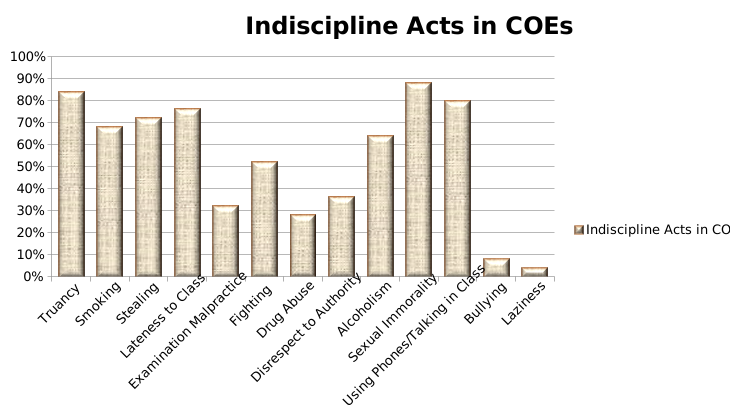
From Figure 1, 88% of the respondents mentioned perversion as the most prevalent ill-discipline act in the Colleges of Education in Ghana. This was followed by truancy where 84% of the respondents agreed as the second most common ill-discipline act in the Colleges of Education. The rest are, using mobile phones in class and talking in class 80%; lateness to class 76%; stealing, 72%; smoking marijuana 68%; alcoholism 64% and fighting 52%. Ill-discipline acts that are below 50% would be described as less prevalent in the Colleges of Education. These are disrespect to authority, 36%; drug abuse 28%; bullying 8% and laziness 4%.
Furthermore, three of the responses of the interviewees stated the following:
“In our College, there are a lot of students here. Hence the self-management acts are also many. These are truancy, stealing, perversion and smoking marijuana is key ill-disciplinary acts over here. Some students I hear run to town to drink alcohol while others too do not attend lectures at all or they come in late” (PCE Tutor)
“…. Yes, there are ill-discipline acts in our school. These activities include stealing, lateness, using mobile phones in class while teachers are teaching, sexual relationships, and at times fighting, smoking marijuana and drug abuse” (HCCoE Student)
“There are issues like truancy, stealing, smoking marijuana, perversion and lateness among students. Some tutors are into sexual relationship with female students” (ACoE Principal)
Research Question Two What counselling approaches could be used to manage ill-discipline acts among teacher trainees in Colleges of Education in Ghana?
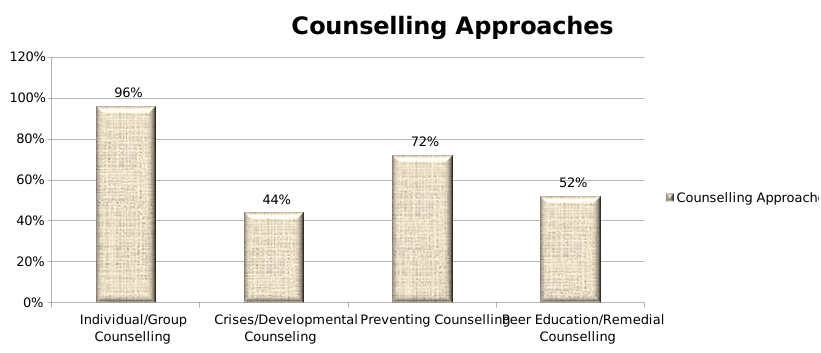
Results in Figure 2 indicated that individual and group counselling (96%) was seen as the most effective counselling approach that could be used to manage ill-discipline in Colleges of Education in Ghana. This was followed by preventive counselling 72%; peer counselling and remedial counselling 52% and crisis and developmental counselling is 44% each
Furthermore, three of the responses of the interviewees stated that.
“……I think we can adopt counselling approaches like peer educators’ group, developmental, preventive, and individual counselling to minimize ill-discipline acts in Colleges of Education in Ghana”. (HCCoE Counsellor)
“……. I am of the view that preventive, crisis, remedial, group and individual counselling approaches are effective in handling self-management acts in Colleges of Education. Peer educators’ clubs are also very effective in handling these issues”. (ACoE Disciplinary Committee Chairman)
“……. For me, preventive counselling could be used to prevent issues like smoking marijuana, stealing, truancy and other ill-discipline acts. Again, peer counselling could also be used to help students with maladjusted behaviours to refrain from such acts. Remedial and developmental counselling could also be used to help students overcome their self-management acts”. (WesCoE Tutor)
4. Discussion
4.1. Ill-discipline acts prevail in Colleges of Education in Ghana
The first research question sought to find out the prevalent ill-discipline acts in Colleges of Education. The study revealed that the most common prevalent ill-discipline act was perversion as majority of the respondents (22 out of 25 interviewees) representing 88 percent were of the view that teacher trainees indulge in perversion. Perversion among teacher trainees who are supposed to be professionals with high moral standards to mould and shape the behaviours of pupils through teaching and impartation of knowledge is disturbing. Two of the respondents in support of perversion being the most prevalent issue in the colleges of education had this to say;
“Some of the common prevalent self-management issues in our College are lateness to class and College functions, alcoholism, stealing, smoking marijuana, perversion and at times drug related issues” (ACoE tutor)“The most prevalent odd behaviour since the inception of B.Ed programme last year is indecent sexual acts on our campuses. Others may be running to town without exeat, fighting and sometimes stealing”. (Disciplinary committee chairperson from WesCOE)
A study opined that “perversion is another ill-discipline problem in educational institutions [31]. This assertion is consistent with the current study that the presence of sex hormones constitutes a very strong and powerful stimulant that reinforces sexual desires and cravings among students [32]. This implies that students who are being disturbed by these hormones are likely to indulge in perversion. However, issues likely to impact the happenings in our society on the school community ranges from drop-outs to perversion, student pregnancy, smoking marijuana or drug usage, insubordination at all levels, vandalism or damage to school property. Students sometimes indulge in perversion because of the behaviour of some teachers [33]. The previous study supported the result of the study that “Inability of some teachers to comport themselves often leads to smoking marijuana, drunkenness, improper dressing, flirting (sexually) with students and undermining fellow teachers and superiors before students’ amount to acts of ill-discipline [3].
The views of these authors confirm that perversion is prevalent in the Colleges of Education. This might be attributed to the tertiarization of Colleges of Education which students misconstrued as freedom to misbehave. This assertion is consistent with earlier studies that the issue of rights and freedom (democracy) is the root cause of ill-discipline, not only in schools and colleges, but in the society [34, 35]. Individuals of all race and age, misinterprets or sometimes overuse their understanding of the concept of democracy in any organization or a country. When this conception is misjudged, one may be on the verge of taking certain actions or inactions contrary to what the society or the constitution expects or demands from an individual in an institution [34, 35]. The researcher is also of the view that the restoration of allowance in colleges of education has given money to the students which they can spend on women. Aside perversion, the study also revealed truancy as the second major ill-discipline in the colleges of education. Two respondents had this to say on truancy.
“There are many ill-discipline acts in our College but the commonest one is truancy. Students these days are not serious at all. They are always roaming in town and do not attend lectures” (HCCoE Disciplinary Committee Chairperson)
“For our College, the upgrading of the Colleges has brought about ill-discipline among students, especially training. Our students are always in town for no good reason”. (PCE tutor reported)
A similar study confirmed the findings of the current study that ill-discipline among students come out clearly when they flout their school rules, refuse to do their assignments or fail to carry out their assigned duties, cheat in examinations, organize and participate in immoral parties outside school premises or elsewhere [36]. These assertions are line with earlier study that “Lack of professionalism could cause miserable distractions and once students know that the teacher is playing favouritism or not enforcing rules, he will lose respect and attention for rules in classroom hence truancy will be on ascendency” [37]. The researcher is therefore of the view that teacher trainees are abusing the freedom associated with tertiarization hence the indiscriminate perversion and truancy experienced in the Colleges of Education.
4.1.1. Using Phones/Talking in Class
The beauty of teaching lies in good delivery and attentiveness on the part of students, coupled with the use of teaching and learning materials. The study has however revealed that another ill-discipline act in Colleges of Education in Ghana is using mobile phones while teaching is in progress and talking in class when lesson delivery is on-going. Majority of the respondents (20 out of 25) affirmed that students use mobile phones to distract lesson delivery as others also talk to distract those who are seriously paying attention in class. On this issue, one respondent said.
“The current crop of students in Colleges of Education do not respect at all. Most of the students use mobile phones to chat when tutors are teaching. Others talk in class to disturb others. In fact, their attitudes are nothing to write home about. Others too indulge in indecent sexual activities in and outside campus” (John Bosco College Tutor)
The above assertion is in line with a late Chief Justice Mr. Justice G. K Acquah when he addressed the 94th Speech and Prize giving day of Adisadel College. He attributed the deteriorating academic standards in some Ghanaian schools to ill-discipline acts among students. He was of the view that most Ghanaian students are abusing the technology especially the use of mobile phones to engage in indecent activities instead of using it positively to learn [38]. In support of this, some girls of Ejisuman Secondary school in the Ashanti Region of Ghana used mobiles phones to make immoral comments on social media [39]. In further support of this, the former president of the Republic of Ghana, His Excellency J.A Kuffour, warned students on several occasions against acts of ill-discipline such as armed robbery, sexual promiscuity and breaking school rules and regulations such as using mobile phones in class. He further stated that “My government would not hesitate to ensure that students who violate regulations with impunity face the full wrath of the law” [40, 41]. Noise making during lessons is in line with the views of other researchers that noise or non-work related talking, not getting on with the learning activity, fidgeting and being out of one’s seat are acts of ill-discipline negatively affect smooth academic work [42, 43].
All these issues go to buttress the point that ill-discipline such as wrongful use of mobile phones and talking in class to distract attention are rampant in schools and colleges and this is a concern to all stakeholders in Colleges of Education. The researcher is of the view that these students might not know the gravity of the effects of their action.
4.1.2. Lateness to Class
It is generally believed that punctuality is the soul or hallmark of every good profession. Student-teachers are supposed to be punctual at College functions and at all lectures. Results from the study has shown that lateness to College functions and lectures is one of the prevalent ill-discipline acts in Colleges of Education. The results revealed that several the respondents (19 out of 25) representing 76 percent are of the view that lateness to College functions and lectures is a common ill-discipline act in Colleges of Education. This is consistent with two respondents who said. “In this College, we have issues like lateness to school gatherings, stealing, truancy, smoking marijuana, alcoholism and perversion” (John Bosco College Disciplinary Committee Chairperson)
“These days we have issues like truancy, lateness to College gatherings and classes, perversion, stealing, few cases of fighting and use of drugs. These were not rampant during the Diploma in Basic Education era. This negative attitude has affected the academic performance of the trainees”. (WesCOE Tutor)
This assertion is consistent with Kirby (2010) that students who are routinely late at school are more likely to fail in school examinations or even drop out of the school. This assertion is also consistent with previous study that, “frequent lateness to school by students has negative impacts on their well-being and learning [44]. The researcher is therefore of the view that the poor academic performance experienced recently in Colleges of Education could be attributed to students’ negative attitude or lateness to lectures and other College functions. College authorities must endeavour to tackle the issue of lateness to lectures with all seriousness using counselling approaches, talks and seminars.
4.1.3. Stealing
Stealing, a social vice, is not accepted in any civilized society and all major religions in the world condemn it. One of the ten Commandments in the Bible forbids man to steal: Exodus: 20:15. The research has also revealed that one of the prevalent ill-discipline acts among teacher trainees in Colleges of Education in Ghana is stealing. Some of the interviewees (18 out of 25) responded that stealing is taking place in Colleges of Education. This assertion is supported by two interviewees who said that.
“There are issues like truancy, stealing, smoking marijuana, perversion and lateness among students. Some tutors are into sexual relationship with female students. These have affected academic performance in our College and peace on campus as well (ACoE Tutor) “Yes, these activities include stealing, lateness to class, using phones in class, talking as tutors are teaching, sexual relationship among staff and students and at times fighting in dormitories” (WesCOE Student)
Previous study supports this assertion that, some parents due to economic hardship lose sight of their primary role in supporting their children hence such children may steal to survive [45]. Earlier study in support of the assertion above has opined that the rapid social and economic transformation has led to a lot of unresolved social problems that have affected child rearing. He further said economic hardship has led to partial neglect of children and as a result, children (students) look for any dubious means to fend or provide for themselves such as stealing [2]. Additionally, a similar study also identified lying, stealing, and cheating as acts of dishonesty among students. Teacher trainees are to develop good moral skills as part of their training but peer influence, economic hardship and lust for worldly things has lured some teacher trainees into stealing. This immoral act might best be handled using various counselling approaches.
4.1.4. Smoking marijuana, Alcoholism, and Drug Abuse
Smoking marijuana and alcoholism are twin-like ill-discipline acts that pervade through most of the Colleges of Education in Ghana. The result from the research has shown that some students at Colleges of Education do smoke and drink alcohol. This assertion was confirmed by several the respondents. (17 out of 25) Two of the interviewees said that.
“Any act that is negative and contradicts the rules and regulations of the school are the acts that affect students’ lives and affect academic performance. These issues are lateness, smoking marijuana, disrespect to authority, alcoholism, and others”. (John Bosco College Counsellor)
“In this College we have issues like truancy, lateness to class, smoking marijuana, alcoholism, perversion and at times fighting”. (HCCoE Principal)
These assertions agree with another study that some forms of ill-discipline commonly experienced in schools and Colleges are absenteeism, persistent or non-completion of work, fighting, smoking marijuana and alcoholism. These acts affect students’ social and academic performance negatively [47]. Further, other researchers added that acts of ill-discipline such as misuse of drugs, drunkenness, occultism, sexual misconduct, examination malpractice, stealing, fighting among others are on the increase in tertiary institutions [48].
4.1.5. Other Social Vices (Examination Malpractice, Disrespect to Authority, Bullying and Laziness)
This signifies other ill-discipline acts that are not common in colleges of education or minimally exhibited. These acts include examination malpractices disrespect to authority, bullying and laziness. This is consistent with the views of two respondents who said that;
“Ill-disciplinary acts such as disrespect to authority especially student leadership due to differences in programme, examination malpractices, bullying and laziness are sometimes exhibited among students at this College”. (HCCoE Student) “………Yes, we have negative behaviours like truancy, stealing, at times too examination malpractices, disrespect for student leadership, bullying among students”. (John Bosco Student)
In line with the above, previous study stressed that senior students bully the junior ones as a form of revenge or compensation for what perhaps they had gone through earlier [32]. Similarly, another researcher on his part identifies absenteeism, lateness, laziness, ineffective teaching, and inadequate control over subject matter as one of the categories of teacher related causes of ill-discipline among students [3]. Lack of professionalism, enforcement of rules and regulations and lack of counselling or education could result in miserable distractions and social vices. Managers of Colleges of Education must therefore act with professionalism, run orientations and seminars for students, strengthen counselling services in Colleges of Education in order to minimize the various acts of ill-discipline or self-management acts that are prevalent in Colleges of Education in Ghana.
4.2. Counselling approaches to manage ill-discipline acts in Colleges of Education in Ghana
Counselling as the development of interaction through the relationship between a trained therapist and a troubled person in a perceived temporary state of indecision, confusion, malfunction, habit disorder, distress or despair. He further explained that the process of counselling which sometimes lasts over several sessions between the counsellor and the counselee helps the counselee to resolve his own confusion, correct his behaviour disorder, evolve new habits and overcome other difficulties in life [49]. Results of the study reflects the position of these authors as most respondents see counselling as relevant in reforming recalcitrant students. They also called for the adoption of counselling approaches that could be used to curb the menace of ill-discipline in Colleges of Education. Results of the study identified preventive counselling approach; remedial and peer counselling approach; developmental and crisis counselling approach and individual and group counselling. The following discussion covers the approaches listed above.
4.2.1. Preventive Counselling Approach
Preventive counselling approach is the provision of assistance that individuals need that will enable them to avoid certain unpleasant situations or adopt behaviour that might give them problems in future. This is consistent with a similar study that “preventive counselling approach encompasses all the maladaptive behaviours that the society is trying to prevent. Some of these are drug abuse, sexual promiscuity, unwanted pregnancy, examination malpractices, smoking marijuana, alcoholism, poor study habits, excessive absenteeism, and juvenile delinquency” [14]. This is a clear evidence of the effectiveness of the preventive counselling approach as it tries to prevent ill-discipline acts in schools, colleges, and the society. This view is also consistent with the views of this interviewee that;
“…Also, I think preventive counselling approach is very good as the popular saying goes that ‘prevention is better than cure’. This approach will help students to avoid certain habits that will not help them or that can cause their suspension or outright dismissal from the College”. (PCE Tutor)
Another interviewee also said that.
“The best thing the authorities should do is to show us the way or strategies we can use to prevent these ill-discipline acts. I think this can help us not to do the wrong thing at all. I will appeal to the College authorities to consider this seriously”. (WESCoE Student)
This is a clear indication that preventive counselling approach is very essential in avoiding ill-discipline acts in Colleges of Education. It is better to prevent acts of ill-discipline than allowing them to occur and later trying to solve it. An earlier further support if this assert that, building total discipline by preventing bad behaviour from occurring, supporting discipline by implementing techniques for supportive discipline and correcting discipline problems whenever students misbehave. He further stressed that, you cannot prevent all behaviour problems, but you can prevent many of them [50]. The best way of maintaining discipline is to prevent the misbehaviour from happening [50, 51]. The researcher is of the view that this should not be limited to the counsellor only, but tutors and student leaders must be involved with proper guidance from the college counsellor. It is therefore imperative for college administration to equip counsellors to train tutors and students’ leaders to carry out this task.
4.2.2. Remedial and Peer Counselling Approaches
Remedial counselling approach involves using appropriate counselling techniques to bring to normalcy individuals involved in anti-social or unapproved behaviours. Results of the study identified remedial and peer counselling approaches as helpful in managing ill-discipline in Colleges of Education. This agrees with an earlier assertion that remedial counselling is normally employed for students involved in antisocial or unacceptable acts [14]. For example, a student involved in examination malpractices needs this type of counselling. This assertion is further supported by one of the interviewees that;
“What the students needed to me is very good counselling approach like remedial counselling. This strategy is good because counsellors will have time for clients to assist them with techniques to overcome the negative characters disturbing them. Peer counselling is also good as the good ones among them do help those with the negative characters”. (ACoE Tutor)
So long as counselling is remediating, counsellors using techniques and strategies would help student in questionable behaviours to turn a new leaf. The counsellor is expected to create conducive environment for students to access this service by showing empathy, unconditional positive regard, respect, and congruence.
4.2.3. Developmental and crisis Approach
Developmental and crisis counselling approaches assist individuals to cope up with challenges associated with the various developmental stages of life. Some of these challenges could easily lead students into crisis. Students in Colleges of Education are young adults going through the various developmental stages with their associated challenges. This counselling approach will therefore help them in overcoming such challenges. This assertion is supported by a similar scientific study that “developmental counselling is an ongoing process that occurs throughout an individual’s entire life span that focuses on helping clients to achieve positive self and personal growth at any stage of their lives” [52]. This was further supported by previous study that developmental counselling approach is the assistance given to individuals to help them to cope with problems associated with the developmental stages in life [14]. For example, adolescents need this approach of counselling to cope up with the physiological and psychological changes that occur at that stage of development. Results from the study confirmed this as some of the interviewees made various statements such as.
“We have a number of issues that are physiological and psychological in nature. I think these are developmental in nature and us do not know what to do. I think if we are taken through this type of counselling, it will help us to stop or control some of our negative behaviours, that confronts us, and we do not know what to do about them (HCCoE Student)
Additionally, to confirm this statement, one of the counsellors interviewed said.
“I think most of them are still developing and as they grow, they will face some kind of developmental challenges that they cannot control. One of such challenges is the desire for sex. Therefore, we have some issues of perversion in the College. I think we must intensify using this approach to help the students” (WESCoE Counsllor)
It could therefore be deduced that students face several developmental challenges that often lead them into crisis. Therefore, using developmental approach to assist students will be a step in the right direction. Crisis situations may be related to the thoughts of suicide, a victim of rape or sexual harassment, examination failure, loss of a beloved one or frequent disappointments in life. In line with this, another researcher said people in crisis are frustrated and disorganized. Crisis counselling approach is therefore the process of helping people to develop adaptive problem-solving mechanisms that will help them to return to the state at which they were before the crisis occurred [52]. A student respondent also confirmed this by saying that;
“We students have a number of crisis situations. At times we become pregnant and cannot concentrate on our studies. At times too, our academic work is in shambles as we have two or more papers to re-sit. Few tutors at times put pressure on us to do their ‘own thing’ with us and this is disturbing and frustrating. We need help to overcome all this”. (John Bosco Female Student)
The researcher is therefore of the view that developmental and crisis counselling will be of a great help in assisting students out of certain ill-discipline acts. Counsellors should therefore update their knowledge on reproductive health issues to assist students out of such challenges. It is advisable for college management to sponsor counsellors to attend workshops and conferences frequently to update their skills with relevant knowledge in assisting students in this light.
4.2.4. Individual and Group Counselling
The kind of approach used in counselling varies from person to person. The kind of approach to use may also depend on the nature of challenges the individual is going through. Some individuals prefer individual counselling approach while others also prefer the group approach. Results from the study show that some students are in favour of group counselling and others are in favour of individual counselling. This is consistent with an earlier study that “as a result of differences in terms of personality and the issues involved, those who are not in favour of group counselling opt for individual counselling and vice versa [53]”. This assertion is in line with the responses of the participants as one of them interviewed stated that;
“…Some of us are not interested in group counselling as everybody there will see you as a bad boy or a bad girl so some of us want individual counselling approach because we do not want anybody to see us”. (ACoE Student).
Individual counselling is time consuming and I think therefore some counsellors would prefer group approaches in order to avoid wasting time on one individual. Using individual counselling could be frequent when counsellors are detached from teaching to concentrate on counselling students only. We therefore appeal to stakeholders to detach counsellors from teaching as a way of helping them to concentrate on counselling services only.
5. Conclusion
The study revealed that several ill-discipline acts exists in colleges of education, with perversion being the most prevailing ill-discipline act. The study recommended that the college council and management should put adequate measures in place to strengthen Guidance and Counselling units in the colleges of education. The study also recommended that college counsellors should be equipped to use appropriate counselling approaches and techniques to counsel students to desist from indulging in ill-discipline acts.
Author Contributions: Conceptualization; methodology; formal analysis; investigation; Resources; data curation; writing-original draft preparation; writing-review and editing; visualisation; supervision; project administration; Author has read and agreed to the published version of the manuscript.
Funding: “This research received no external funding”
Data Availability Statement: Data is available on request from the corresponding author.
Acknowledgments: We acknowledge respondents for their time with us.
Conflicts of Interest: “The author has declared no conflict of interest.” “No funders had any role in the design of the study; in the collection, analyses, or interpretation of data; in the writing of the manuscript, or in the decision to publish the results”.
References
- Tettey, A. K. (2002, March 4th). Stop acts of indiscipline. Daily Graphic, Accra: Graphic Communications Group Ltd. p.16.
- Fia, S. D. (2011). Evaluating counselling service as an intervention strategy for managing indiscipline in schools in Ho Municipality, Ghana. Journal of Counselling, Education and Psychology. 2(2) 53-68.
- Adentwi, K. I. (2005). Curriculum development: An introduction. Ghana: WILAS Press Limited.
- Sarwah, K. K. (2005). Relationship between academic achievement and Juvenile Delinquency in Junior secondary schools in Goama District. Implication for counselling. (Unpublished project work University of Education, Winneba)
- Frimpong, D. E. (2003). Kumasi Anglican gets government fund. Retrieved online on 26-06-2020
- Abdul-Aziz, (2002, March 13th). 14 students in custody. Daily Graphic. Accra: Graphic Communication Group Limited. p. 15.
- My joyonline (2018). KNUST mayhem on campus over hall conversion. Accra: Ghana.
- Daily Graphic on March 19, 2019
- Citi News report on February 23, 2020,
- Daily Graphic on December 4, 2017,
- Bediako, A., & Adzrolo, B. (2013). Lectures, students and administrator’s perception of discipline in the facility of education, University of Cape Coast: Ghana. Sage Journals. 3(2) 12-56.[CrossRef]
- Tettey-Enyo, (1995). School discipline. CHASS Journal: The Educator, 1, 33-35.
- Muchiri, P. W. (1998). Participatory approaches used by head teachers to enhance discipline among secondary school students in Nairobi province. University of Nairobi. Unpublished M.Phil. Thesis.
- Taylor, I. A., & Buku, K. D. (2003). Basics in Guidance and Counselling. (2nd Ed.). Winneba, Ghana: University of Education.
- Pietrofesa, J. J., Hoffman, A., & Splete, H.H. (1984). Counselling an introduction (2nd Ed.). Boston, USA: Houghton Mifflin Company.
- Idowu, A. I. (2004). Guidance and counselling in education. Ilorin, Nigeria: Indemac Publication.
- Nyarko-Sampson, E. (2010). Teacher trainees’ Appraisal of Guidance and Counselling Programmes in Colleges of Education in Ghana: A study of selected colleges in the Eastern and Greater Accra zones. The Nigerian Journal on Guidance and Counselling 15(1) 95-111.[CrossRef]
- Nayak, A. K. (1998). Guidance and Counselling, New Delhi: APH Publishing Darya Ganj.
- Paul, R.M. (2006). The Teacher – learner relationship in management of discipline in public High schools. Africa education Reviews. 3(2), 150-159[CrossRef]
- Oosthuizen, I. J., Woihuter, C. C., & du Toit, P. (2003). Preventive or punitive discipline measures in South African Schools: Potchefstroom University, South Africa.[CrossRef]
- Robertson, J. (1996). Effective classroom control: Understanding teacher-student relationships. 2nd Ed. London: Hodder & Stoughton.
- Meador, D. (2019). Building positive connections with your student. Improving Students’ relationships with teachers to provide essential supports for learning. Virginia, USA: Sage Publications.
- Kirby, S. N. (2010). Teacher attrition; theory, evidence and suggested policy options. Santa Monica, CA: Rand distribution services.
- Avoke, M. (2005). 91 Special educational needs in Ghana policy, practice and research, Winneba: Department of Special Education, UEW, Ghana.
- Creswell, J. W. (2005). Educational research, planning, conduction and evaluating quantitative and qualitative research. (3rdEd.). New Jersey, NJ: Pearson Education
- Asare-Amoah, Adinkrah, Koranteng, Gyamfi-Boadi and Fosu-Ayarkwah (2018)
- Creswell, J. W. (1998). Qualitative enquiry and research decision. Cossing among five tradition: New Jersey, NJ: Sage publications.
- Verma, G. K., & Mallick, O.K. (1999). Researching Education, Perspectives and Techniques. Psychology press.
- Kincholoe, J. K. (1991). Teachers and researchers: qualitative enquiry as the path of empowerment. London: falmer.
- Spaulding, C. L. (1992). Motivation in the classroom. New York: McGraw-Hill, Inc.
- Haugaard, J. J. (2001). Problematic behaviours during adolescence. New York: McGraw-Hill Companies, Inc.
- Osarenren, N. (2002). Child development and personality, Lagos, Nigeria: Derate Nigeria Limited.
- Zaney, G. D. (2007). The Labour Act: An Avenue for Industrial peace (1). The Ghanaian Times. P. 28.
- Oyetubo, S. & Olaiya, T. (2009). The incidences of indiscipline in the school system: A challenge for school authorities. Action in Teacher research, 28(4), 4-13.
- Ampiah, V., Bordoh, A., & Otoo, K. A. (2022). Factors Inhibiting the Promotion of Democracy and Good Governance in Ghana: The Role of Non-Governmental Organisations (NGOs). Education Journal, 5(1), 163-176.[CrossRef]
- Fia, S. D. (2008). Evaluating counselling service as an intervention strategy for managing indiscipline in schools in Ho Municipality. Unpublished Mphil thesis. University of Education, Winneba, Ghana.
- Afful-Broni, A. (2005). The school is a unit. The Ghanaian perspective, Accra, Ghana: Type Company limited.
- Quaicoo, S. (2004, March 18th). Indiscipline lowers academic standards. Daily Graphic. Accra: Graphic Communications Group Ltd. p.8.
- myjoyonline.com, 2020.
- Tettey, A. K. (2002, March 4th). Stop acts of indiscipline. Daily Graphic, Accra: Graphic Communications Group Ltd. p.16.
- Owusu-Achaw, K., & Nuhhu-Billa, H. (2004, March 6th). “President bemoans acts of indiscipline”. Daily Graphic. Accra: Graphic Communications Group Ltd. p.1-3.
- Lawrence, J., Steed, D., & Young, P. (1984). Disruptive children: disruption schools? London: Croom Helm.
- Wragg, E. C., & Dooley, P. A. (1984). Class management during teaching. In E.C. Wragg (Ed.) Classroom teaching skills. London: Hodder & Stoughton.[CrossRef]
- Scott, A. (2016). Effects of tardiness on your child’s education. http://oureverydaylife.com/effects-tardiness-childs-education-256692.html
- McEwan, B. (1998). Classroom Discipline in American Schools: Problems and Possibilities for Democratic Education. New York: Albany State University.
- Milliman, H. W., Schaefer, C. E., & Cohen, J. J. (1980). Therapies for school behaviour problems: A handbook for practical interventions. San Francisco: Josey Bass Publishers.
- Verma, G. K., & Mallick, O.K. (1999). Researching Education, Perspectives and Techniques. Psychology press.
- Fosu-Ayarkwah, C., Amoah, S. A., Gyamfi-Boadi, B., Owusu, K., & Adinkrah, B. K. (2018). Indiscipline in colleges of education in Ghana causes, effects and management. International Journal of Basic Education Research and Policy. 1(2), 49-60.
- Akinade, E. A. (2012). Modern behaviour modification. Principles and practice. Apata, Ibadan, Nigeria: Brightways Oni-Adeyemo Layout.
- Charles, C. M. (1981). Building classroom discipline: From models to practice: New York: Longman Inc.
- Asiedu-Akrofi, K. (1978). School organization in modern Africa. Tema, Ghana: Ghana Publishing Corporation
- Brammer, L. M. (1973). The Helping relationship. Englewood Cliffs, NJ: Prentice Hall.
- Ackummey, M. A. (2003) Organization and administration of school guidance programme. Accra, Ghana: Media Graphics & Press Limited.