

The purpose of this study was to examine Mainstreaming Disaster Risk Reduction in the Curricular of Colleges of Education in Ghana. Mixed method approach and cross-sectional research design were employed in the study. Population of the study comprised all Social Studies teacher trainees, Principals and tutors of the Colleges of Education, officers of the Ghana Education Service and NADMO officials. Purposive sampling technique was used to select 319 Social Studies teacher trainees (99 students from St. Monicas, 67 from Berekum, 73 from Tamale and 80 from John Bosco) Eight (8 Social Studies tutors, four (4) principals, four (4) personnel from the human resource unit of GES of each district, and four (4) NADMO officials. The main instruments used for data collection were questionnaires and interview guide. The study revealed that the extent of the coverage of DRR issues in the curricula of the colleges of education was low. This development leads to a low level of usage of DRR kits and the organization of extracurricular activities on DRR for students. The study also concluded that both teacher trainees and the officials of the Ghana Education Service appreciate the low level of the coverage of DRR in the teaching curricula and the need to take pragmatic measures to address the gaps. It is recommended that, NaCCa, Universities mentoring the colleges of education in Ghana, the Ministry of Education, through the GES, should consider mainstreaming DRR in the curricula of the colleges of education by developing a full subject on DRR for students. This will give teacher trainees and the pupils they teach an in-depth knowledge about disasters and how they could be mitigated. Emphasis should also be placed on how teacher trainees will impact the knowledge to students through the use of logistics and field work.
Mainstreaming Disaster Risk Reduction in the Curricular of Colleges of Education in Ghana
April 23, 2022
July 10, 2022
September 13, 2022
February 20, 2023
This is an Open Access article, distributed under the terms of the Creative Commons Attribution 4.0 International License (http://creativecommons.org/licenses/by/4.0/), which permits unrestricted use, distribution and reproduction in any medium or format, provided the original work is properly cited.
Abstract
1. Introduction
Education for Disaster Risk Reduction (DRR) is seen as a key component to the 2005-2015 Hyogo Framework for action (HFA) which puts ‘knowledge, innovation and education’ at the heart of it goals for enabling individuals, communities and societies become better prepared for responding to the threat from disasters and to promote teaching on hazards and risk reduction in schools [1, 2, 3]. Besides damages to societies, disasters have affected university and college campuses with disturbing frequency, sometimes causing death and injury and always imposing monetary losses and disruption of the institution’s teaching, research, and public service. These losses could have been substantially reduced or eliminated through comprehensive pre-disaster planning and mitigation actions [4]. While disaster relief has been at the forefront for quite a long time, communities are increasingly looking at disaster risk reduction education as the best solution to safeguard human lives and property. In 2006, the International Strategy for Disaster Reduction (ISDR) (2007) initiated a campaign called Disaster Risk Reduction Begins at School to encourage the integration of disaster risk education into school curricula in countries vulnerable to disasters. The campaign was inaugurated in many countries, including South Africa [5]. There is now increased prominence of DRR curriculum and training in national policy across a number of countries. Over half of reporting countries report DRR being included in their national curriculum at one or more levels (primary, secondary, university, professional programs) [6]. Increasingly, and in conjunction with climate change awareness and environmental education, Ministries of Education are taking on the challenge of disaster risk reduction education [7].
Over the years, a paradigm shift worldwide has emerged in the theory and practice of disaster management. In time past, disasters were treated as one-time events with the focus on geo-physical and engineering knowledge, and without consideration of the social and developmental aspects. In recent times however, the attitude has shifted towards preparedness, with an emphasis on ‘contingency planning’ and relief supplies. Even in the most recent times, as disaster losses continue to increase, there is a further shift from a response approach to a more proactive attitude. With the new insights gained in the field, there has been the need to refocus on vulnerability reduction. Governments and their agencies responsible for managing disasters have been advocating for and ‘practising’ disaster risk reduction (DRR), which involves planning and acting in a manner designed to reduce vulnerability and work towards preventing hazards from taking the shape of a disaster [8].
In Ghana, the vision of the National Disaster Management Organisation (NADMO), the institution responsible for disaster management, resonates with this rethinking. NADMO’s vision is inter-alia: … “To reduce the risk of people, especially the poor and disadvantaged from the effects of natural, environmental and human induced hazards by coordinating the resources of Government institutions and Non-Governmental Agencies and the Private Sector and developing the capacity of individuals and communities in the Prevention, Response and Recovery from disasters” [9].
Disasters are a serious threat to both communities and schools worldwide. Schools thus have a responsibility to ensure that children are informed about potential natural disasters, and are prepared with protective strategies [10]. Schools can play a very significant role both in responding to and preventing disaster. They can offer trained professionals to help the community in the process of recovery. But in order for teachers to contribute to preventing and managing disasters, they must have a basic knowledge about what to expect [11]. Social studies is an issue oriented curriculum, used to right wrong in the contemporary Ghanaian society [12]. It was against this background that, the research conducted a study into Mainstreaming Disaster Risk Reduction in the social studies Curriculum of Colleges of Education The purpose of this study was to examine Mainstreaming Disaster Risk Reduction in the Curricular of Colleges of Education in Ghana. The study answered this research question - How can disaster issues be mainstreamed in the curricular of education?
1.1. Disaster Risk Reduction Education
Disaster risk reduction is a multi-sectoral facet and aims at reducing peoples’ vulnerability to disasters in ways that reduce poverty and provide a just society clean environment and uphold human rights. Disaster risk reduction education is the impartation of knowledge about the protection from the havoc that these disasters cause [13]. An individual’s capacity to respond to disaster events reduces disaster risks within a given locality. Therefore, there exist a direct relationship between disaster and risk. One’s ability to deal with a disaster reduces the risk associated with it if not totally eradicating it. Education, in the context of Disaster Management, is the process of enlightening mankind about the nature, extent and methods to deal with the disasters, which facilitates them in facing disaster rather than got caught without understanding how to react [14].
1.2. Importance of Disaster Risk Reduction Education
In recent times, there has been a new direction of the importance of using public education as an approach for disaster mitigation at both national and global levels. Increasingly, the connection between hazards/disaster impact and sustainable development is being highlighted in risk reduction initiatives. This relationship is especially obvious in developing countries where a single disastrous event can turn developmental gains made in several years’ upside down [15]. The undertaking of disaster loss-reduction programs in schools is being recommended as a key element in long-term DRR strategies. This is in line with the recognition that children can make contributions in reducing losses during disastrous events. Curriculum and teaching practice have now been recognised as vehicles for promoting disaster-related knowledge among children [15]. Disasters result in disruptions in school’s academic activities through loss of contact hours, high rates of absenteeism and loss of qualified personnel, due to possible migration after disaster, thereby affecting the quality of education [16]. The physical impacts of disasters on schools, school-children, and teachers provide persuasive evidence that cannot be ignored (Petal, 2008). Thus children need to be taught how to prepare, mitigate, prevent, respond to and recover from disasters [16]. Where stakeholders and communities are poorly involved in the management of natural disasters, this might lead to antagonistic short and long-term impacts on schools and the community as a whole. Therefore, there is a need to increase community awareness in reducing the risk from disasters [17].
Existing understanding of disaster risk reduction (DRR) agrees that, with the right education, children have the capability to reduce not only their own vulnerability, but also the vulnerability of others in their community [18]. A study pointed out that their children would come home with information about how to prepare for a disaster [10]. This helps the family or parent and children to make plans or prepare resources together for their home to reduce their risks levels. This presupposes that if a child learns about the nature of particular natural disasters and knows fitting safety strategies to apply before, during, and after the event, this knowledge could enable not only the child and his or her family to live through disasters, but also his or her community to survive the event and its aftermath as disaster risk reduction education allows community members to initiate pre-disaster measures at the individual level [19, 20].
Since schools are important centres of community life and directly impact not only the lives’ of teachers, students, parents and their relatives, but also the community as a whole, they can be used as mediums for DRR. Also, the majority of children spend greater part of their time at school hence the school environment can determine their future destiny [21]
Various facets about the integration of disaster risk reduction into the formal educational sector have been researched into by researchers. Researchers explored the presence and nature of DRR within the syllabi of the basic school system in Ghana, as well as the role and capacity building of school teachers in disaster preparedness and prevention used narrative-based approach to support learning, motivation and students’ engagement in disaster education [18, 22, 23]. In addition, other researchers studied whether social work education deliberately incorporates disaster risk reduction in its curriculum in Botswana to establish whether students acquire knowledge and skills in disaster risk management [22].
2. Methods and Materials
Mixed method approach and cross-sectional research design were employed in the study. Population of the study comprised all Social Studies teacher trainees, Principals and tutors of the Colleges of Education, officers of the Ghana Education Service and NADMO officials. Purposive sampling technique was used to select 319 Social Studies teacher trainees (99 students from St. Monicas, 67 from Berekum, 73 from Tamale and 80 from John Bosco) Eight (8 Social Studies tutors, four (4) principals, four (4) personnel from the human resource unit of GES of each district, and four (4) NADMO officials. The main instruments used for data collection were questionnaires and interview guide. The questionnaires were administered to students. The questionnaire had both close-ended and open-ended questions. Four Principal and tutors, officers of the GES and NAMDO officials were also interviewed on mainstreaming disaster risk reduction in the curricular of colleges of education in Ghana. The structured interview was used in gathering data from these principal actors. Quantitative data collected was analysed through descriptive statistics using percentages and frequency tables, bar graphs and bar charts in Statistical Product for Service Solution (SPSS, V 16.0) and Microsoft Excel. The transcribed data into their major themes while the interconnecting step involved making sense of the themes in relation to the study objective.
3. Results and Discussion
3.1. Mainstreaming DRR in the Curricular
The incorporation of DRR in the curricular of the Colleges of Education is key in the transfer of knowledge from professionals to students through the teacher trainees. A summary of whether or not DRR should be treated as a separate subject has been presented in Table 1. The results displayed in Table 1 show that 143(44.8%) of the students; who mainly came from St. Monicas, Tamale and John Bosco Colleges of Education, disagreed and strongly disagreed, that DRR should be integrated into the curricular of the colleges of education. Spatially, John Bosco and Tamale Colleges of Education recorded the highest percentages of students who disagreed. Similarly, the highest percentages of students who responded DRR should be integrated into the curricular of the colleges of education came from these two schools. Since they did not deem it necessary to mainstream DRR in their school curricular, 142 students (46.6%) disagreed that DRR should be taught as a subject but the majority (81%) of students in this group reported it could be integrated into existing ones.
3.2. Subjects into which DRR should be integrated
Students, who thought DRR, should be integrated into an existing subject rather than being treated as a separate course, outlined some of these subjects. Figure 1 presents a summary of the responses.
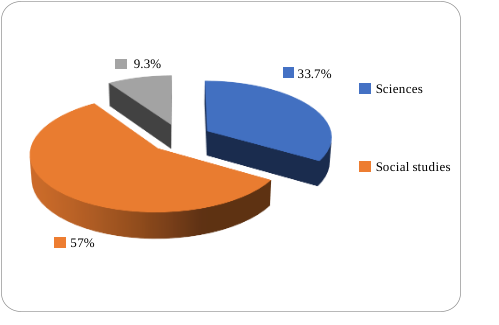
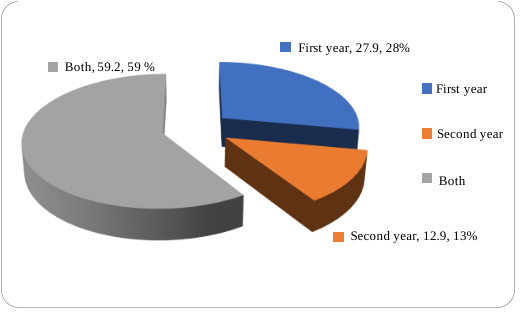
The results displayed in Figure 1 show that majority (57.0%) of the 115 (Table 1) students responded DRR should be integrated in their social studies subject. However, 33.7% believed DRR should be integrated into the science subject, with vocational skills recording the least percentage. According to 59.2% of the students, the targeted grades at which DRR could commence are first and second years. This is to ensure adequate preparation of students to mitigate disasters. In the final year, students are outside their colleges doing their service.
3.3. The Experiences of Tutors on DRR Issues
In order to explore the level of coverage of DRR in the syllables of the colleges of education, eight staff of the colleges of education were asked whether their syllables capture issues on DRR. Out of the eight, only two with one each from Berekum College and John Bosco did not respond in the affirmative. This indicates a relatively high level of perception among the selected teachers regarding the integration of DRR in their syllables. Regarding the types of disasters covered, Table 2 indicates the ones stated.
Table 2 shows that the major man-made disaster captured in the syllables of the colleges of education was fire outbreaks while flood and drought ranked high among the natural disasters. Spatially, drought as a disaster was reported in the colleges located in the northern part of the country where the physical environment makes the location prone to drought. Regarding whether the tutors have received training on DRR, only two responded in the affirmative. While one tutor from Tamale College responded he had training from the Ghana Fire Service through a video programme because the school had experienced fire outbreaks, the one from John Bosco College reported he participated in an in-service training on mitigating disasters when he was working with the Talensi District Assembly. The high proportion of tutors who responded otherwise indicates that tutors selected generally did not have practical knowledge on DRR issues. With regard to how the selected tutors rate the teaching of disaster related topics in their colleges, the eight tutors reported there is scanty coverage of DRR issues in their syllables. One of them explained in the following words in an in-depth interview:
“Because it is only a sub-topic in just one of the topics of Social Studies” (37-year-old tutor at John Bosco College of Education)
Regarding whether tutors had been involved in extracurricular activities that increased their knowledge about disaster related issues, only a tutor from the Berekum Colleges of Education reported he participated in a clean-up exercise to mitigate flooding, leading to an increased knowledge on flooding. For the specific training that will students in times of disasters, the responses provided by the tutors have been displayed in Table 3 below:
The results displayed in Table 3 indicates that tutors generally consider the training of students on mitigating disasters such as fire outbreaks and flood as important means through which students could confront the challenges posed by disasters. It was reported teacher trainees will impact the knowledge acquired in the various training programmes to the pupils they teach and be in the capacity to deal with disasters when they occur. With regard to whether or not DRR should be taken up as full subject, six tutors responded in the affirmative. While four tutors reported disasters have come to stay with humans and hence students should be adequately trained to deal with them, the other two were of the opinion that it will give students the opportunity to acquire basic skills in disaster management and help them to impart the knowledge to the wider society. One explained in the following words during an in-depth interview:
“This will go a long way to help prepare students and teachers to be able to impact the knowledge to their pupils who will in turn educate their parents and neighbours on disaster risk reduction”. (40-year-old female tutor at Berekum College)
The other two tutors were however of the view that DRR should be integrated into subjects like Catering, Social Studies and Integrated Science. Regarding the target grade for initiating the process to either take up DRR issues as a full subject or integrate them into the recommended subjects, seven of the eight tutors reported the issues should be treated in both the first and second years. This is to adequately prepare students. Only one tutor from Berekum College reported the process should commence in the second year. Since the Ministry of Education is in charge of education in Ghana, tutors were asked about the key achievement of the ministry in terms of policy formulation and implementation on DRR in schools. All the tutors reported the Ministry of Education had achieved nothing in that direction. According to them, the key deficiency of the current approach to DRR in schools is the fact the existing syllables do not adequately capture disaster issues.
3.4. The Experiences of Ghana Education Service Officials on DRR Issues
Since the Ghana Education Service is the agency responsible for the affairs of the Colleges of Education in Ghana, the study sought to find out the opinion of officials of the service about the integration of DRR in the curricula of the colleges of education in the country. Regarding the adoption of DRR as a new subject, the GES officials responded in the affirmative. This, according to them, will enable teachers educate pupils on disasters and risk management. One explained in the following words:
“It will equip the teacher trainees to have in-depth knowledge about DRR so they impact it to broader society through pupils they will teach”. (A GES official from Mampong District, 2016)
Regarding the target grades for initiating the process of teaching DRR, officials reported doing it in both first and second years will enable tutors teach the subject well for trainees to acquire the necessary skills and training. Meanwhile, it was reported by the GES officials that the process of integrating the subject of DRR in the curricula will be costly in terms of the development of curriculum, syllabus, textbooks and other teacher and learning materials and the organisation of in-service training for teachers and facilitators.
Regarding the current approach to DRR learning in the syllabus, the officials reported both teachers and pupils lack adequate knowledge about DRR under the current system. Therefore, since disasters are a national issue, it is important to embed DRR in our curricula with the basic kits and materials provided. According to the GES officials, in addition to providing detailed syllabus, text books, teacher trainee education and teaching methodology on the subject, there should also be extracurricular activities such as drama, role play, drills and film shows on DRR organised in disaster prone areas. This will help the nation deal with disaster issues early before they get out of hand.
3.5. The Experiences of NADMO Officials on DRR Issues
NADMO continues to embark on sensitization programmes at the community level to aid creating awareness and practices to mitigate the adverse effects of floods, fires, diseases and epidemics and other hazards. Community participation is being encouraged, through the Disaster Volunteer Groups (DVGs), to engage in environmental risk reduction activities including fire prevention drills and clean up exercises. Currently, Ghana is implementing the Community Resilience through Early Warning (CREW) Project under the initiative of NADMO with the sponsorship from Norwegian Government and supervision by UNDP [1]. Ghana now has a cordial relationship with Burkina Faso in managing disasters. Thus, both countries collaborate to minimize the risk of spillage of the Bagri dam which affects lots of communities, farm produce and livestock annually. By this, impact of annual flood on the local people within the vulnerable communities in savannah regions of Ghana has reduced to some extent.
In the Kumasi Metropolis, through mass media, government institutions and city authorities usually educate the public on safety and preventive measures towards disaster events including commercial fire outbreaks. Even-though it is all-year affair, emphasis is made on specifics and at appropriate times within the year. That is, while flood precautions are given during rainy seasons, fire warnings are provided in the dry seasons. Besides, the authorities make sure that the laws on disasters are enforced periodically. These strategies in a way help to reduce the incidence and impact of commercial fire disasters in the metropolis. They are therefore in line with the main objective of this study since the outcome of effective fire risk communication is being emphasized here.
3.6. Indirect Policies
In line with Ghana’s environmental protection law Act 490, 1994, various environmental protection policies have been implemented to deal with environmental pollution and degradation at all levels – the national, regional, district and community. This at least has helped to reduce (fire) disaster risks in the country. Again, the Data Protection Act (Act 842) has been made among others to protect critical databases at all levels to ensure data security [1]. By this, while the national platform has been active in establishing DRR desks in the various organizations, empowering institutions at all levels, the regional platforms are helping to draw up district level DRR management plans.
NADMO, in collaboration with other stakeholders, has held disaster management courses to help build the capacities of emergency agencies in the country over the years to make them abreast of current best practices in global disaster management. With this, institutions have been developed and strengthened with mechanisms and capabilities at all levels to help contribute to the building of resilience to disasters. The emergency responders, for instance, have been supplied with modern logistics [23]. This has helped improve their capacities and also enhanced their activities in disaster management, including commercial fire events.
The study, therefore, sought to find out the opinion of officials of the agency with regard to the integration of DRR in the curricula of the colleges of education in the country. In response to whether or not DRR should be taken up as distinct subject, the officials responded in the affirmative with the motive that it would help reduce the incidence and impacts of disasters in the country. With regard to the target grades for initiating the process of educating teacher trainees on DRR, the officials were of the view that introducing students to the subject in both first and second years will give students in-depth knowledge about disasters and how to mitigate them. In addition to developing syllabus and modules for the subject, the officials reported practical and simulation exercises should be carried out in order to build the capacity of students. Regarding the achievement of the Ministry of Education in the formulation and implementation of policy with respect to DRR in schools, the officials reported there do not exist any of such policies. However, one argued the colleges of education have rules and regulations that are meant to ensure the safety of their students.
According to the NADMO officials, the current approach to DRR education in the colleges of education do not make students pay attention to the issues of disasters and their overall consequences since the subject is not in details. According to them, a subject on DRR should provide in-depth knowledge on disasters and their occurrences, mitigation measures, preparedness and recovery efforts. This subject should be made practical and easy to comprehend with rigorous methodology that makes it easy for students to study and impact the knowledge subsequently to students. The creation of fun based extracurricular activities such as role play and simulation exercises to continuously sensitise pupils on disaster issues should also form an integral aspect of the subject. In other to fully educate teacher trainees, tutors of the subject of DRR should be educated on issues such as hazard mapping, risk identification, mitigation measures and recovery efforts.
It was reported by the NADMO officials that the organisation have a programme on DRR for the colleges of education. As part of the programme, there is periodic visitation to assess institutions and prepare documents on findings which are then made available to the institutions. Periodic awareness campaigns are also carried out to educate students on enforcement of safety regulations and preparedness measures while at the district level, emergency task force have been established to deal with recovery programmes. According the officials, the inclusion of DRR in the curricular of the colleges of education will help ensure that lives, properties and livelihoods are safeguarded.
4. Conclusions and Recommendations
The study revealed that the extent of the coverage of DRR issues in the curricula of the colleges of education was low. This development leads to a low level of usage of DRR kits and the organization of extracurricular activities on DRR for students. The study also concluded that both teacher trainees and the officials of the Ghana Education Service appreciate the low level of the coverage of DRR in the teaching curricula and the need to take pragmatic measures to address the gaps. It is recommended that, NaCCa, Universities mentoring the colleges of education in Ghana, the Ministry of Education, through the GES, should consider mainstreaming DRR in the curricula of the colleges of education by developing a full subject on DRR for students. This will give teacher trainees and the pupils they teach an in-depth knowledge about disasters and how they could be mitigated. Emphasis should also be placed on how teacher trainees will impact the knowledge to students through the use of logistics and field work.
Author’s Contributions: Conceptualization; methodology; validation; formal analysis; investigation; resources; data curation; writing—original draft preparation; writing—review and editing; visualization; supervision; project administration. All authors have read and agreed to the published version of the manuscript.
Funding: “This research received no external funding”
Data Availability Statement: Data is available on request from the corresponding author.
Acknowledgments: I acknowledge the respondents for their time and patient.
Conflicts of Interest: “The authors declare no conflict of interest.” “No funders had any role in the design of the study; in the collection, analyses, or interpretation of data; in the writing of the manuscript, or in the decision to publish the results”.
References
- HFA (2015).National progress report on the implementation of the Hyogo Framework for Action in Ghana (2013-2015) –Interim. A National HFA Monitor update published by PreventionWeb.
- Izadkhah, Y. O., & Hosseini, M. (2013). The Evolution of School Earthquake Education in Iran. Input Paper Prepared for the Global Assessment Report On Disaster Risk Reduction 2015. Accessed from https://www.preventionweb.net/english/hyogo/gar/2015/en/bgdocs/inputs/Izad khah%20and%20Hosse on 13th June, 2019.
- Wisner, B. (2006). Let Our Children Teach Us, A Review of the Role of Education and Knowledge in Disaster Risk Reduction, accessed from http:/ /unesdoc. unesco.org/images/0018/001898/189852e.pdf
- Jaradat, A., Mziu, H. and Ibrahim, J. (2015). Disaster Preparedness in Universities. International Journal of Computer Trends and Technology (IJCTT), Volume 19, 1-4.[CrossRef]
- Rambau,T.S., Beukes,L.D., & Fraser, W. (2012). Disaster Risk Reduction Through School Learners’ Awareness and Preparedness. Jàmbá: Journal of Disaster Risk Studies 4(1), 1-11.[CrossRef]
- Ronan, K. (2015). Progress Made With School Curricula, Education Material and Relevant Training in Disaster Risk Reduction and Recovery Concepts and Practices. Australian Journal of Emergency Management, Volume 30 (No. 1), 8 - 9.
- Petal, M. A., & Izadkhah, Y. O. (2008). Formal and Informal Education for Disaster Risk Reduction: A contribution from Risk RED for the International Conference on School Safety, Islamabad, accessed from http://www.riskred.org/activities/ddredislamabad.pdf .
- Oteng-Ababio, M. (2013) ‘“Prevention is better than cure”: Assessing Ghana’s preparedness (capacity) for disaster management’, Jàmbá: Journal of Disaster Risk Studies 5 (2), Art. #75, 11 pages. http://dx.doi.org/10.4102/jamba.v5i2.75[CrossRef]
- National Disaster Management Organisation (2012). Ghana’s Disaster Profile, NADMO, Accra.
- King, T. A. & Tarrant, R. A. C. (2013). Children’s knowledge, cognitions and emotions surrounding natural disasters: An investigation of Year 5 students, Wellington, New Zealand.
- Rudatsikira, E., & Hayward, B. (2004). Disaster Preparedness for Schools. Journal of Adventist Education, 21-28.
- Bekoe, S. O., Quashigah, A. Y., Kankam, B., Eshun. I. & Bordoh, A. (2014). Sense of efficacy in implementing the basic school social studies curriculum in Ghana. International Journal of Educational Research and Information Science, 1(4), 53-61.
- Mukuna, T. E. (2015). Integration of Indigenous and Scientific Technology in Disaster Risk Reduction Education in Kenya; A Framework for Sustainable Development. The International Journal of Humanities and Social Studies, Vol 3 (Issue 2), 218 – 228.
- Shimi, L., & Suresh, E.S.M. (2012). The Need for Integration of Disaster Management into Engineering Curriculum. International Journal of Modern Engineering Research, Vol.2 (Issue.6), 4524-4526.
- Clerveaux, V., & Spence, B. (2009). The Communication of Disaster Information and Knowledge to Children Using Game Technique: The Disaster Awareness Game (DAG). International Journal of Environmental Research VOL. 3 (NUM. 2), 209-222.
- Mudavanhu, C. (2014). The impact of flood disasters on child education in Muzarabani District, Zimbabwe. Journal of Disaster Risk Studies 6(1) Art. #138, 8 pages.[CrossRef]
- Haulle, E. (2012). Evaluating earthquake disaster risk management in schools in Rungwe Volcanic Province in Tanzania. Journal of Disaster Risk Studies, 4(1), 1-7.[CrossRef]
- Apronti, P. T., Osamu, S., Otsuki, K and Kranjac-Berisavljevic, G. (2015). Education for Disaster Risk Reduction (DRR): Linking Theory with Practice in Ghana’s Basic Schools. Sustainability 2015, 7, 9160-9186; doi: 10.3390/su7079160.[CrossRef]
- Ronan, K. R., & Johnston, D. (2005). Promoting Community Resilience in Disasters: The Role for Schools, Youth and Families. New York: Springer.[CrossRef]
- Shiwaku, K, Shaw, R., Kandel, R. C., Shrestha, S. N. & Dixit, A. M. (2006). Promotion of Disaster Education in Nepal:The Role of Teachers as Change Agents. International Journal of Mass Emergencies and Disasters, 24 (3), 403–420.[CrossRef]
- Ratiani, M., Kitiashvili, A., Labartkava, N., Sadunishvili, P., Tsereteli, E. & Gvetadze, N (2011). Teaching Disaster Risk Reduction with Interactive Methods, accessed from Australasian Journal of Disaster and Trauma Studies, Volume 2013–1, 17–26.
- Maripe, K. & Sinkamba, R. P (2015). Social Work Education and Disaster Risk Reduction in Botswana. Asian Journal of Management Science and Economics, 2 (1), 14-32.[CrossRef] [PubMed]
- [23] Daily Graphic (2020). Ghana needs more awareness on disaster risk management. Accessed online 24th March, 2021.