
Abstract
The purpose of this study was to examine teachers’ knowledge base in community resources used in assessing Social Studies concepts in the University of Education Practice Junior High School (JHS), Winneba. The case study design was employed as the study's qualitative methodology. The population comprised two Social Studies teachers in the University Practice JHS, Winneba. Purposive and convenient sampling techniques were used to select the teachers and school for the study. The main instrument for data collection was the interview guide. The two teachers were interviewed because they were in a position to give all the relevant information required for the research. They were also readily available at the time of the research. The study revealed that even though the Social Studies teachers were aware of community resources, they did not involve them often in their lesson delivery. However, in the only case where a teacher took the learners round the school compound to look at the various types of rocks, the learners were excited and willing to learn. The assessment results also showed that almost all learners, both low and high achievers had high scores. Evidence from the inquiry also shows that teachers used only traditional forms of assessment in Social Studies. Teachers give multiple choice and essay type of assessment items to learners. Teachers did not involve community resources in the assessment of Social Studies concepts because of challenges like inadequate time allocated for the teaching of the subject, financial constraints, bureaucratic processes involved in obtaining permission and the need to meet the requirements of external examinations. It is recommended that the Ghana Education Service (GES) should design appropriate policies to ensure that provision is made in the school academic calendar for field trips and community resource engagement for Social Studies education. Social Studies teachers should also be trained on the full range of assessment techniques suggested in the 2012 syllabus. Emphasis should be laid on authentic/alternate assessment practices. At the school level, heads of Social Studies department should organise periodic in-service training for the teachers to ensure that the curriculum, instruction and assessment practices are aligned to ensure that the subject attains its intended goals and outcomes.
1. Introduction
Everything existing and functioning in the physical and socio-cultural environment may prove to be a great source of inspiration, information, knowledge, and experience for the students. The use of community resources in connection with the education of young people is not new to educational thought. The practice reaches back several centuries in some form or other. To some extent, the field trip, which is one method of utilizing community resources, may have had its counterpart in the wandering and begging students of the Middle Ages [1].
The primary purpose of Social Studies is to help young people make informed and reasoned decisions for the public good as citizens of a culturally diverse, democratic society in an interdependent world [2]. This state of affair necessitates a departure from the conventional mode of organising the teaching-learning process [1]. Education from the community resources is not only different in nature but also a valuable supplement to formal school experiences. No society can attain sustainable development without education [3]. Despite all the efforts made by government and several researchers and workshops to promote Social Studies education, the problems of teaching and learning Social Studies are still prevailing in the country [4]. Community resources are resources (human and non-human; natural and man-made) that are located within a given community [5]. Olabode classified and characterised resources in the following manner: natural aspect or “land”, cultural aspect or “capital” and human aspect or “labour.” [3]. A researcher classified community resources into four categories: Natural, technological, human and Institutional. Natural resources are those resources coming from nature such as soil, minerals, water and climate. Technological resources refer to the tools of science and invention such as highways, cars, bulldozers, chemical analysis and the airplanes. Human resources refer to people and their potentials. Institutional resources are found in organizations like schools, churches, research foundations, business firms and science associations [6]. William and Olele gave their classification by resource groups. They are commercial, industrial, communication, transportation, government, social-welfare-health, historical, cultural, recreation and informal education, socio-civic and association [7].
There are basically two ways in which the teacher may make use of community resources. One method is to take the school to the community. The other method is to bring some portion of the community to the classroom. Every community, no matter how large or small holds cultural, natural, human and technological resources that can be utilised by the students and teachers who live there [3]. A research study by the authors revealed that schools do not use community resources. This is not good enough because the foundation of Social Studies is abundant in the community. The community can be brought to the school by inviting resource persons from different professions to interact with the students. Taking the school to the community could be done through field trips, community surveys, school camping, and others [5]. While extended field trips can be rewarding, short school yard trips can be equally valuable. [1]. Whether the school is an urban, suburban, or rural area, the environment can and should be used as a resource for classroom study. Many communities have access to the chief palace, museums as well as the social communities in higher education, and industries. These can contribute greatly to the understanding of Social Studies and encourage students to further their interests outside of school. The physical environment in and around the school can be used also as a living laboratory for the study of social phenomenon [8].
The use of resources within a community can greatly enhance and expand the school curriculum. Community resources can help teachers teach more effectively by providing motivation to students, helping students achieve learning objectives, and exposing students to positive role models and real-life situations. Community resources can provide the motivation students need to see the connection between the classroom and the “real world.” [9]. Basically, involving students in the community gives them exposure to a stimulating learning environment and to different people and perspectives and provides students with a greater sense of purpose. Often, community-based activities can help students fulfill desired learning outcomes in a manner that is more engaging than traditional textbook assignments. The use of community resources can further the goals of science education by preparing students for the real world and helping students to become scientifically literate citizens [3].
According to the Social Science Space (SSS), community resources provide opportunities for every basic activity whether it is related to the present or past. Researchers are of the view that most schools face problems in using community resources because of the following limitations; Most of the primary schools (even secondary) are overcrowded [10]. It is therefore difficult for the teacher to organise trips, he, therefore, tends to drill and encourage memorization [9]. There is very little exchange of ideas and activities between primary schools and their surrounding communities. The use of community resources requires time. Due to examination pressure and the urge to cover the syllabus, the use of community resources is neglected [11]. Despite various challenges, community-based learning offers great opportunities for learning and knowledge development among students [8].
Social Studies, a problem-oriented subject, at all levels assist students to study and understand certain contemporary issues and explore better solutions to them, it is important to engage such students in educational visits to get first- hand information [12]. This indicates that the use of community resources is contingent on the goals of Social Studies. It has also been discovered that educational experience that involves the learner physically, give concrete examples and expose the learner to real life problems are retained longer than abstract experiences such as listening to a lecture. Despite the numerous benefits community resources offer to both teachers and learners when effectively used in teaching Social Studies as a subject, majority of Social Studies teachers at the J.H.S level makes little or no use of community resources in teaching Social Studies lessons. Some teachers unquestionably accept the orderly, systematic curriculum plan handed to them by higher authority in their classrooms. Study conducted by Hendrickson revealed that, in some cases, fees and other forms of payment are demanded before schools can make use of community resources. His study revealed that the use of resource persons to some extent disrupts the timetable and also sometimes very costly as some resource persons will charge or demand payment for their services rendered [13].
The big question is, why are most teachers not using community resources effectively in teaching Social Studies? How come the few teachers who use community resources in teaching find it difficult in assessing students in Social Studies concepts at the J.H.S Level base on their Knowledge? Though there are other several studies on community resources, it seems majority of them have failed to focus much on Knowledge base of teachers in assessing students in Social Studies concepts. In Winneba, no research work has been conducted on the topic. It is in the light of this that the research work will examine teachers’ knowledge base in Community Resources used in assessing Social Studies Concepts to students in University Practice J.H.S, Winneba. The purpose of the study was to explore teachers’ knowledge base in Community Resources used in assessing Social Studies concepts in University Practice JHS, Winneba. The study sought to answer these research questions (1) What knowledge do teachers have about community resources? (2) How effective are community resources in contributing to the teaching and learning of Social Studies? (3) How do teachers use community resources in the assessment of Social Studies? (4) What are the challenges associated with community resources?
1.1. Meaning of Community Resources
Community resources are resources (human and non-human; natural and man-made) that are located within a given community. Community resources may also be perceived as various learning situations through which learners come into firsthand contact with people, places and all things around them. It includes visiting organizations, institutions and neighbourhoods or regions of the community, interviewing public officials and community leaders [14]. Community resources are resources (human and non-human; natural and man-made) that are located within a given community [7].
1.2. Teacher’s use of Community Resources in Teaching
Social Studies teachers make little or no use of community resources in teaching of Social Studies. Teachers’ lack of community resources may be accounted for the constraints which they face in using community resources. Reasons identified are lack of funds, inadequate training, lack of technological skills, and low teachers’ morale as inhibiting factors against the effective use of community resources [7]. A study on “the Application of community-based resources in promoting effective content delivery “published in Nigerian Journal of Curriculum Theorists and Education Technologist” revealed that teachers do not use community resources [7]. This is not good enough because the foundation of Social Studies is abundant in the community. There are basically two ways in which the teacher may make use of community resources. One method is to bring some portion of the community into the school and the other method is to take the school to the community. The community can be brought to the school by inviting resource persons from different professions to interact with the students. Taking the school to the community could be done through field trips, community surveys, school camping and others. While extended field trip can be rewarding, short school yard trips can be equally valuable [1]. Whether the school is urban, suburban or rural area, the environment can and should be used as a resource for study. Many communities have access to Social Studies resource centers and museums which can contribute greatly to their understanding and encourage students to further their interest outside of school. The physical environment in and around the school can be used also for the study of natural phenomenon.
Resource persons otherwise known as Guest speakers are seen as people in the community with diversified interests, talents, occupations, and accomplishments. Visits by resource persons are valuable means of bringing demonstrations and specialised information into the classroom. Guest speakers can provide the novelty needed to capture students’ attention. Their elaborations on issues often provide a different context for the content of the class. Resource persons help students to acquire and retain information [15]. Resource persons fascinate students as they get excited to see professionals like meteorologists, politicians, cartographers, experts in other fields of endeavour etc. because they motivate students, and some aspire to be like them [16]. They also provide current and authentic information which will not be available in textbooks. No community, either small or isolated is without resource people or persons who can contribute to making classroom experiences more realistic and vital [16].
Resource persons contribute to solution of the problems, they help to enrich and broaden meanings, to awaken and build worthwhile interests, acquaint students with varied aspects of their social and physical environment, develop deep sensitivity to people, their ways of living, accomplishments’ and problems [17]. Resource persons can be of any age and come from all sectors of the community. Guest speakers from the community can provide new information and experiences to students and link the school to the outside world. Field trips provide an opportunity for real experience through which to gain valid understanding. They provide an experience not available in the classroom. Theoretical concepts can be matched with real-life examples. They connect the students with the real-life experience. Students find themselves face-to-face with real-life situations that have previously only been talked about in the classroom. They enable students to get the concrete evidence necessary to build concepts [18]. Field trips arouse and create interest. Few learners fail to be motivated as they contemplate and examine things, processes and ideas. They create a background of experience that will give meaning to reading and simple research done later in the formal study situations of the school classroom and library [19]. Field trips add value to the educational experience provided by schools. They provide an experience not available in the classroom. They give the teacher an opportunity to confront students with different learning challenges, which include enhancing investigative skills, problem solving and participating in extended periods of concentrative study. Many teachers see trips as an important motivating factor, perhaps a way of overcoming barriers with students who show signs of disaffection. Field trips allow students to meet and work with experts who are not normally available in the school time [20]. If students are exposed to outside visits, learners are expected to exercise responsibility and self-control, the qualities of perseverance, initiative and self-discipline [21].
Field trips tend to be more meaningful and permit easier transfer of learning. They review and drill ideas learnt in visiting factories [22]. The idea of learning a plant and products manufactured can be better fixed in student's minds. The learners can have a positive impact on long term memory due to memorable nature of the field work setting [22]. Field trips not only enhance students understanding of the subject but also facilitate good communication and relation between the students and teachers. The relationships between teachers and students can flourish and subsequently there are huge dividends back in school [20].
Walking trips involve visiting nearby community workers, food stores plant and so on. Walking trips provide invaluable study experiences within the immediate vicinity of the school. Walking trips make it possible for pupils themselves to watch important things happen. Students are given opportunities to leave the school grounds alone or in groups to investigate and report what they have found. Special learning trips include those organised around facilities maintained for the purpose of the school District itself which include museums, government agencies etc. Community resources involve working experiences. Work experience as a sustained intellect activity of body and mind carried on for purposes which are primarily pre-vocational in nature. It is a practical activity in the production or distribution of goods or services exercised in a normal way in business, industrial, professional, and industrial fields. The aim of work experience is to help young people to acquire vocational orientation, specific skills and interests, and sustained self-discipline essential to their individual success in some vocational career. In this process, the community becomes a partner with the school [17].
Leveraging community resources and local partnerships support high-quality academic and enrichment opportunities by broadening the experiences that may be typically offered to students and by expanding access to local expertise. Better aligning and utilising these resources can also help school systems identify and access low-cost services or facilities to support learning opportunities on and off school sites. Pulling in local resources such as health and human services agencies, departments of public safety and parks and recreation, community colleges, businesses, community-based organizations, and other entities can effectively maximise opportunities for students and school systems.
Community service projects can enhance learning. These are cooperative group activities organised and carried out by students as specific contributions to civic welfare. Community projects have the capacity to link with most curriculum areas. Two specific examples of benefits stemming from this are positive gains and skills and an improved understanding of design and technology-related issues [23]. A youngster who serves his fellows as a safety patrol man or as an assistant in the library, office, or laboratory gains a feeling of personal significance, a sense of belonging, a new maturity, and finer loyalty to his school community [17]. Community resources also include documentary materials available in every community. They not only make learning more interesting and functional but also bridge the gap between the school and the community. Documentary materials can be secured from standard publishers, government officials, civic organizations, and business organizations [17].
1.3. How Effective Community Resources Contribute to Teaching and Learning of Social Studies Concepts
Community experiences, first-hand learning through immediate sensory contacts with the environment is a basic psychological learning approach. Through these contacts the pupil uses the community as a learning laboratory. "The most effective way to help students to become informed about their social and natural environment is to provide for them learning experiences which are real or lifelike and which are available to them for firsthand scrutiny, questioning and cognition" [17]. Community resources can provide the motivation some students need to see the connection between classroom and the real world. Involving students in the community gives them exposure to a stimulating learning environment and to different people and perspectives; provides students a greater sense of purpose. Relatively new, too, is awareness throughout the society that we are all in some measure responsible for the care and preservation of our environment, in towns and cities just as much as in countryside [9].
There is also an attitude of mind which needs to be fostered as increasing numbers of children and young people are encouraged to move out of the school environment into the world beyond. In particular, students need to be aware that some areas of town and country are sensitive to over-use, that some habitats are rare and precious, and that much of the world needs to be conserved and be damaged as much by overuse by those who care for it as by the more obviously destructive attitudes of developers, the thoughtlessly careless, or those whose behaviour is clearly anti-social, [24].
However, making the community to be a classroom becomes more and more important when we consider the role of the school as an agent of social change. From this point of view, education is intervention. The sole aim is to encourage learners to develop into a good citizen of his community. The traditional function of the school is to help the parents to transmit their culture, beliefs, and values to the children. Conditions have so changed educational needs that they not only have to train children to be like their parents but also to fit into current patterns of life. Learning will become more powerful and deeper if students can see continuity from classroom to outdoor experiences, from academic to non-academic domains. It is through this continuity and alignment that helps students to connect and apply their learning across disciplines in and out of the classroom [25].
This conscious effort to help students transfer their knowledge and thinking skills to non-academic contexts is a good way to facilitate transfer learning [26]. Education as a reconstruction or reorganization of experience which adds to the meaning of experience [27]. The increment of meaning corresponds to the increased perception of the connections and continuities of the activities in which we are engaged. Teachers always face the task of pulling together the diverse understanding their students bring into the classroom. The use of community resources provides a shared memory for the class. The event becomes part of the common knowledge of the class and can be referred in subsequent lessons. What is learned is, thus, reinforced and extended in later discussions as the teacher refers to field observations.
Education process should be everywhere a reflection of life experiences of society and service to the same system. A teacher talks about reality as if it is motionless, static, compartmentalised, and predictable. Or else he expounds on a topic completely alien to the existential experience of the students. His task is to "fill" the students with the contents of his narration- contents which are detached from reality, disconnected from the totality that engendered them and could give them significance. Words are emptied of their concreteness and become a hollow alienated and alienating verbosity [28]. A researcher observed that if you wish to teach a child geography, you provide him with globes, spheres and maps. What is the use of all these symbols; why not begin by showing him the real thing so that he may at least know what you are talking about [17].
Attitude development results from the students contact with his social environment. This cannot be achieved if school and community are separate environments. In order for students to make the transfer of classroom lessons to real world applications, we need to be open to all the possibilities our community offers [29]. We do not need a big city in which to teach because the resources are all around us; parents’ businesses, zoos, museums, nature centers, parks etc. We are as rich in our community resources as in our imaginations and have the opportunity to partner with the community to create meaningful relevant lessons. Social Studies teachers and students should make personal contacts and become a part of the community through active participation in its activities [29]. A Social Studies teacher's major goal is to help individuals and families live more effectively. He is thus obliged to be aware of all community forces and their influence. He must be familiar with the information about the community background, attitudes, practices and resources. A keen understanding of these aspects of community living that impose upon individuals and their families will increase the ability to put over the subject matter in such a manner that it should take.
1.4. Challenges encountered by Teachers in using Community Resources
Research was conducted by the national foundation for educational research on a review of outdoor learning in primary school pupils, secondary school students and undergraduate learners. In their findings, opportunities for outdoor learning by school students had decreased substantially in the recent years. There is evidence that fieldwork is restricted to science. Provision of outdoor learning is affected by a wide range of barriers and opportunities. These barriers include fear and concern about the health and safety of the students. Teachers did not want to take responsibilities of accidents happening to the students while they are out of the classroom. He further found out that teachers lack confidence when teaching out of the classrooms. They may not be able to control the behaviours of students, some students may be distracted. He further observed that shortage of time, resources and support were contributing factors. His final observation was wider changes within and beyond the education sector was a contributing factor [23].
Again, there was a study on the influence of teachers' variables on the use of community resources for social instructions. From the findings of her study, she made the following observations. Majority of Social Studies teachers made little or no use of community resources in enhancing their teaching. The teachers identified factors such as lack of experience with community-oriented pedagogy, inadequate time to integrate community resources, administrators’ non-support, lack of funds, inadequacy of pre-service training, low teacher morale, the school timetable and distance of needed resources to the schools as inhibiting factors against the effective use of community resources [16].
An investigation into the use of resource persons for quality control of Social Studies instruction in schools revealed that female teachers are less inclined to attend workshops and conferences where resource persons are known to present papers [30]. This is because sometimes workshops and conferences in which resource persons’ feature may be outside their station. Thus, travelling outside the station may not attract female teachers. Bola's study also revealed that Social Studies teachers in government schools are more aware of the existence of resource persons than those in community and schools. The trend is a result of the location of most government schools in townships and more importantly the ministry often supports its teachers to attend workshops and conferences where resource persons’ present papers concerning improving the quality of instruction and the education policy, held in universities whenever the need arises. Thus, it is not surprising that Social Studies teachers from government schools know that resource persons are available. Bola's study also revealed that teachers with higher academic qualification are more inclined to invite resource persons to secondary schools. They perceive resource persons as partners in progress and seek their expertise for improvement of instruction in schools [30].
Teachers continue to be doubtful about the instruction provided by members of the community who may well be themselves "uneducated" as well as unskilled in the art of teaching [31]. Learners remain unwilling to give the due respect to such instructors and the local instructors who have often found their work uncongenial and have tended to be unreliable and fall away. He further observed that teachers of Social Studies area who wish to take their classes out of school to visit a museum or post office, for instance, may not find it easy to persuade their colleagues to allocate sufficient block of time on the timetable for the purpose or to give up their own claims on the school bus or lorry [31]. Teachers face administrative problems among them are scheduling, transportation, expenses and liability [17]. Teachers encounter many problems in using community resources. Many educational systems practice strict schedules that are not flexible enough to allow planning for an extended visit [32]. This rigidity has left teachers with no time to use community resources. He further observed that financial problems are very dominant because no funds are allocated for this purpose. Azeb found out that many teachers had negative attitudes towards the use of community resources because this gives them extra responsibilities. He noted that parents feel that the use of these resources in a particular area tend to base education on the needs of the particular community and this means students will be trained for life within the community only. The findings pointed out that head teachers fear that students will perform poorly in examinations if they are offered experiences outside materials assigned by the ministry of education [32].
A study on the use of community resources for teaching Social Studies in primary schools and her observations were that planning educational trips for students has been hindered by a number of factors such as lack of time for good preparation or opportunity for a trip itself. Also, the biggest task seems to be getting students and teachers to establish good attitudes towards such endeavour. She further observed that use of resource persons is not without problems. Resource people or persons are sometimes not taken seriously by students, and this makes them unwilling to turn up when invited again. Others are suspicious that they were not invited in good faith. Very superior resource people are too busy with their occupations that they are not reliable. There are also some resource persons who need payment which is normally not forthcoming [33].
Moreover, duration of lessons is also too short to allow adequate use of such people. Also another study on use of community resources in primary schools, made the following findings, that use of resources is affected by lack of articulation of need for utilization of resources in the educational objectives and policies at the national curricular and instructional levels. Teachers and administrators felt that the classes were too large in terms of enrolment. Large classes in terms of enrolment negatively affected the incorporation of community resources and community-oriented activities since teachers were influenced to design lesson delivery systems and strategies that suited overcrowding conditions of their classes. Another constraint observed was lack of guidelines for acquisition and utilisation of community resources. It was found out that some schools used the official school syllabi as guideline for selection and utilisation of resources even though such documents were not sufficiently oriented to the communities surrounding the school [34].
A study conducted on an inquiry into the use of community resources in teaching of secondary schools revealed that textbooks, charts and specimens were instructional resources used by most teachers. Even though resources found in the local environment were used in the teaching of Social Studies, it was limited. Resource persons, field trips, factories/industries, forests just to mention a few played a limited role in teaching and learning of the subject. He observed that lack of finance and support from administration accounted for the inadequacy of most community resources [35]. A research conducted on use of community resources in secondary schools revealed in her findings that 75% of the respondents indicated that community resources were available even though they were inadequate. Community resources are inexpensive materials which can be found within the schools. The study came out with measures to encourage teachers to make use of community resources while teaching [36].
1.5. Theoretical Framework
This study is based on constructivism theory of learning. Constructivism draws on the developmental works of Piaget, Dewey among others. For Dewey, knowledge emerges only from situations in which learners have to draw them out of meaningful experiences. Dewey suggested that people learn through authentic experience and reflection. He believed that learning is propelled by cognitive dissonance rather than reinforcement [37]. Dewey also believed teaching using lecture, reinforcement or other externally imposed methods lead to less personally and socially meaningful learning. He felt real –world, practical problems lead to more experiential and lasting learning. In his theory of contemporary experiential education, he believed that learning through direct experience was the strongest form of learning, with an outcome that also builds a sense of community with the learner [38].
Students cannot learn by means of rote memorization; they can only learn by "direct living" where concrete activities are combined with theory. The obvious implication of Dewey's theory is that students must be engaged in meaningful activities that induce them to apply the concepts they are trying to learn. A productive constructivist learning consists of learner-centered active instruction. In such learning, the teacher provides students with experiences that allow them to hypothesise, predict, manipulate objects, pose questions, etc. By using community resources, learners are exposed to study experiences that they have already discussed in the classroom. Community resources bring out realism and they apply the new knowledge and skill to previous learning. This helps create a restructuring of thought [37]. Social Studies being a job-related subject should relate theory to practice. It is the teacher's role to provide the relevant real-world experiences and facilitate the whole process of learning.
1.6 Conceptual framework
Conceptual framework shows the relationship between variables in the study graphically or diagrammatically.
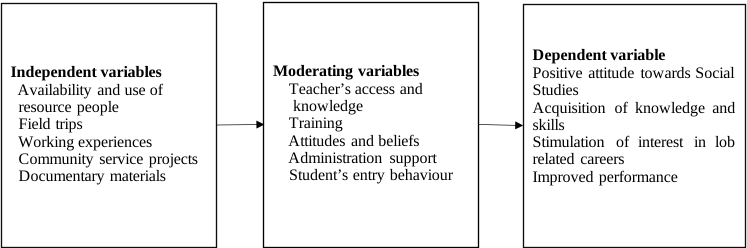
Author’s construct
The conceptual framework above explains the use of community resources and their effects on learning. The framework explains how teachers use community resources through field trips to assist learners acquire knowledge. The independent variables are community resources such as resource persons or people, field trips, etc. Moderating variables are teachers’ workload and nature of teaching tasks, teachers’ attitudes and beliefs, access and knowledge of community resources, school culture, and leadership support in community resource integration. Dependent variables include a positive attitude towards Social Studies, acquisition of knowledge and skills stimulation of interests in related careers, and improved performance.
2. Methodology
2.1. Research Approach
The study employed the qualitative approach to probe teachers’ knowledge base in community resources in assessing Social Studies concepts [39]. The approach allows for a thick description of the issue context as an important component in building a robust understanding of the topic and, unpacking the meanings that participants ascribe to their views [40]. Therefore, the employment of the qualitative approach enables the researcher to get in-depth understanding of the issues.
2.2. Research Design
The research design employed is the case study design. A case study is a strategy for doing research that involves an empirical investigation of a particular contemporary phenomenon within its real-life context using multiple sources of evidence [41]. As Yin (2019) espouses, the case study provides an opportunity for an in-depth understanding of a case, its processes, and interactional dynamics.
2.3. Sources of Data
Two main sources of data were used in order to achieve the main and the specific objectives; of the primary and secondary sources of data, this is because the two sources (primary and secondary sources) complement each other, and since the main aim is to achieve minimal flaws; it will therefore be prudent to use both of them to achieve maximum results.
2.4. Primary Data
The primary data essentially contained first-hand information which was collected from the Social Studies teachers in the University Practice JHS through interviews specifically designed to answer the research questions. This data was analysed to draw a decisive conclusion and recommendations.
2.5. Secondary Data
Secondary information was essentially acquired from already existing documents on the research topic which is largely on the internet, specifically through the “Google Scholar” search engine. They consist of academic articles, journals, and books written on community resources.
2.6. Population
The population of the study refers to all the members of the real or hypothetical set of people, events, or objects to which a researcher wishes to generalise the result of research [42]. The population for the study included all Social Studies teachers at University Practice JHS, Winneba for which they were three in number. The research considered the population towel-placedaced in providing relevant information to the study on the issue.
2.7. Sample and sampling Techniques
The researcher used the non-probability sampling technique and as result of the nature of the study used purposive and convenience sampling techniques to include Social Studies teachers who have the required information and were willing to share with the researcher, specifically Social Studies teachers at University Practice, Winneba [43]. Purposive sampling enables the researcher to select a critical or typical case sample of people who can provide the best data to achieve the objectives of the study [39]. Purposive technique has been generally recommended in social science research as it focuses directly on the area intended for the study [44]. The study focused on all Social Studies teachers at the University Practice JHS, Winneba, hence, the researcher resorted to the use of purposive and convenient sampling techniques to arrive at two teachers as the sample size for the study.
2.8. Data Analysis
The data were analysed using interpretative lens and themes.
3. Findings and Discussions
This section presents findings and discussion on the use of community resources in the assessment of Social Studies concepts.
3.1. Teachers Knowledge of Community Resources
The two respondents were asked whether they had knowledge of what community resources are. Both respondents responded in the affirmative regarding the knowledge of community resources. A further probe to solicit their views on what they understood by community resources revealed that they both had very minimal knowledge of what these resources entail. The respondents were also asked whether they used any of the community resources in their lesson delivery and in the assessment of Social Studies concepts. Their responses showed that they hardly involve these community resources in their lessons. One of the respondents said:
“Because of the numerous challenges associated with the use of the community resources, I do not use them in my lesson delivery. It was only once that I took the students round the school compound to look at the various types of rocks. Since then, we never went anywhere to study” (Source: Data from fieldwork, 2022)
The findings also suggest that even though the respondents had knowledge about what community resources are, they did not involve any of the community resources in their teaching and assessment practices [45, 46, 47]. The implication of this finding is that Social Studies teachers do not employ strategies and approaches that present the learners with real-life situations and conditions. This also means that the subject may not attain its intended outcome of training learners who will acquire relevant knowledge and skills to become aware of their environment and solve personal and societal problems. When asked whether they had invited any resource person to help deliver any lesson in the school, one respondent responded in the affirmative whiles the other responded in the negative. However, the respondent who agreed to have invited a resource person could not remember the topic for which the person was invited to help teach.
3.2. The Effectiveness of Community Resources in the Teaching and Learning of Social Studies
The study also sought to investigate the effectiveness of community resources in the teaching and learning of Social Studies in the school. In view of that, the respondents were asked to describe the behaviour of the learners during the use of community resources in lesson delivery.
Even though both respondents said they do not use the community resources in their lesson delivery, one of them said the learners were once taken to see the rocks on the school compound. He asserted that:
“The only time that I took the learners round the school compound to have a look at the types of rocks, I realised they were very eager to learn. Even those who are dormant in class were very active on that day.” (Source: Data from field work, 2022)
When asked whether he realised that the learners were willing to learn on that day, he responded in the affirmative. He said:
“Yes, they were very enthusiastic and willing to learn. They actually were curious and wanted to know much about the types of rocks. I believe students must have fun whiles learning and going out of the class to the community will provide them with the opportunity to have the fun as they learn.” (Source: Data from field work, 2022)
The responses suggest that learners were happy when they were presented with learning experiences which were real or lifelike which were available for firsthand scrutiny and cognition [9]. This observation is further corroborated by an earlier study that community resources provide the motivation to students to see the connection between classroom and the real world [48]. The implication of this finding is that, when teachers incorporate community resources in their lesson delivery, students will be motivated to learn. They will also acquire relevant knowledge that will help solve personal and societal problems.
The respondent was further asked if he assessed the learners after taking them round the school compound to have a look at the various types of rock. He responded in the affirmative. When asked to comment on the performance of the learners after the assessment, he said:
“Almost all the students, including the low achievers were able to score high marks in the assessment after the only field trip we embarked upon abound the school premises. I realised that most of the students performed better in the assessment than in the previous ones. I am sure they remembered everything they saw on the field and were able to write them accordingly.” (Source: Data from field work, 2022).
The outcome of the alternate/authentic assessment given to the learners proves that learners always perform better when presented with assessment tasks in real life situations [49, 50]. This means that if the teachers want their students to perform well in assessment tasks, they should present them with real life situations where the learners can interact with the environment. The respondent added that the walking trip round the school compound made his teaching work very easy on that day. He maintained that he did not have to talk much as the students could see everything for themselves [51].
3.3. Teacher’s Usage of Community Resources in the Assessment of Social Studies Concepts
In order to verify whether the respondents use community resources in the assessment of concepts in Social Studies or not, they were asked to indicate the nature of assessment items given to their learners. The findings revealed that the respondents gave only two categories of assessment items to the learners. These assessment types are multiple choice and essay type test items. This means that the respondents modeled their assessments along the path of Basic Education Certificate Examination (BECE) standard. The students were being taught and prepared for their final external BECE examinations [52].
Researchers described authentic assessment as the soul, heart and spine of the Social Studies curriculum [49, 53]. This suggests that assessment in Social Studies should be based on real-life situations that will help learners solve their personal and societal problems. However, the study has revealed that the learners were only being taught and assessed in the cognitive domain. The implication being that the subject may not bring about the needed attitudinal change as stipulated in the goals of the 2020 Common Core Programme Curriculum for Social Studies for Junior High Schools in Ghana. The respondents were asked whether they gave problem-based project work that will require the learners to interact with community-based resources. They both responded in the negative. One respondent however said he gave the learners individual home assignment that required that they draw the administrative map of Ghana. He however added that:
“I have never given them any project that will require that they go to the community to interact with the resources and write a report. I cannot ask them to go to the field to do anything. If there is any problem, I may be in trouble.” (Source: Data from field work, 2022).
The findings reveal that the Social Studies teachers did not engage in authentic assessment practices in the schools [53]. This means that the teachers did not relate their assessment practices to the goals and objectives of Social Studies. The implication of not engaging the learners in problem-based project work is that, they may not learn core values and competencies like critical thinking, problem solving, tolerance, cooperation and collaboration. These survival skills or core competencies are very essential for every citizen in the 21st century.
3.4. Challenges Associated with the Use of Community Resources
The respondents were asked whether it is a good idea to use community resources in the teaching and assessment of Social Studies concepts or not. They both responded in the affirmative. They believe it is good the learners go to the field to see the real problems and suggest how to solve them.
In order to ascertain the challenges encountered in the use of these community resources, the respondents were asked to mention the reasons why they do not use these resources in the assessment of Social Studies concepts. Their responses are summarised below.
- The school timetable does not make provision for taking students outside the campus for studies [16].
- The time allocated for the teaching of Social Studies is not enough. Teachers only have one hour for the lesson and therefore cannot use part of this time to take the learners out for educational tour.
- The bureaucratic procedure involved in seeking permission from the education directorate before embarking on the educational tour is also a setback.
- The fear of an accident or any misfortune happening during field trips because the teacher may be held responsible [54].
- Most parents are not willing to allow their wards to go to the communities for the studies because they are afraid their wards may engage in immoral practices or there may be accident occurring.
- The financial constraints in organising the educational trips. Most parents are not willing to pay for anything concerning the education of their wards. Because of government directives that the students should not pay any fees, it is difficult to request for any money from them [16].
- Whenever education officers from the Municipal Directorates visit the school, they are only interested in the number of exercises given to the students but not the impact you made in their lives [52, 53]. Teachers are judged based on the number of assessment items administered. One respondent stated that:
“I could remember we had an open day forum in the school and some parents wanted to know the number of exercises given to their wards. Teachers who gave four exercises in the month were chastised and labeled as non-performers. Because of that, we also concentrate on what they want.” (Source: Data from field work, 2022).
The respondents however maintained that the school is always ready to give them introductory letters whenever the need arises that they engage any community resource.
3.5. Relationship between the Theoretical Framework and Findings of the Research
The research was guided by the Constructivist Theory of Learning. Constructivism draws on the developmental works of Piaget, Dewey among others who suggested that people learn through authentic experience and reflection. For constructivists, learning is propelled by cognitive dissonance rather than reinforcement [37]. Teaching using lecture, reinforcement or other externally imposed methods lead to less personally and socially meaningful learning. On the contrary, practical problems lead to more experiential and lasting learning. In view of that, teaching and assessment of concepts should be based on real world situation where the learners can interact with the environment to construct learning and solve personal and societal problems.
The research revealed that even though the Social Studies teachers were aware of community resources, they hardly integrate them in their teaching and assessment practices. This implies that the students may not acquire authentic learning which is based on real world situations. When this continues, the subject may not achieve its intended learning outcome of bringing attitudinal change in the learners. However, in the only situation where a respondent sent the students for a walking trip around the school premises to have a look at the types of rocks, the learners were seen to be very excited. The assessment scores after the walking trip were also very impressive as almost all the students scored high marks. Thus, authentic learning was seen to have taken place as the students could relate their experiences on the field to the assessments tasks that were given them.
It is therefore the submission of the researcher that teaching, learning and assessment practices in Social Studies should be based on real life or world situations. Teachers should create a constructivist classroom where students can interact with the community resources to construct learning. This can be done by either bringing the resources to the classroom or by sending the students to the resources in the community. With this, the students will acquire relevant knowledge and competencies needed to survive in the 21st century.
4. Conclusion
In order for Social Studies to achieve its intended goals and educational outcomes of training learners who are reflective, participatory and willing to solve personal and societal problems, the use of community resources will play an integral role in the whole educational process. The curriculum, instruction and assessment processes must be properly aligned to ensure that learners acquire relevant knowledge, skills and attitudes to be able to solve personal and societal problems.
From the study, it is revealed that even though Social Studies teachers have some knowledge about community resources, they still employ traditional means of assessment in the classroom when assessing their learners learning outcomes. The assessment regime employed by the teachers does not relate to the overall goals and educational outcomes of Social Studies. As a subject based on the philosophy of social constructivism, it is imperative that a comprehensive assessment system is designed to measure all the domains of learning in order to bring about attitudinal change of the learners.
Recommendations
As a result of the numerous challenges identified by the researchers regarding the reasons why teachers do not use community resources in the assessment of Social Studies concepts in schools, the following measures are recommended:
- The Ghana Education Service (GES) should design appropriate policies to ensure that provision is made in the school academic calendar for field trips and community resource engagement for Social Studies education.
- Educational administrators from the office should be sensitised on comprehensive and authentic assessment. They should look out for the impact made by the lesson on the students and not only the exercises that teachers give to the students.
- Government should allow the parents to support the schools in the organisation and funding of field trips. Because everything is free now, they may grow up and expect everything to be free for them. They may not even pay taxes since they are not used to paying money.
- Ghana Education Service should organise a national workshop for all Social Studies teachers to explain to them the philosophy and rationale for the teaching of the subject.
- Specifically, Ghana Education Service should train all Social Studies teachers on the full range of assessment techniques suggested in the 2020 Common Core Programme Curriculum for Social Studies. Emphasis should be laid on authentic / alternate assessment practices.
- A comprehensive assessment regime should be designed by the National Council for Curriculum and Assessment (NaCCA) to measure the cognitive, affective and psychomotor domains of learning.
- At the school level, heads of Social Studies department should organize periodic in-service training for the teachers to ensure that the curriculum, instruction and assessment practices are aligned to ensure that the subject attains its intended goals and outcomes.
Author Contributions: Conceptualization, methodology; validation; formal analysis; investigation; resources; data curation; writing—original draft preparation; writing—review and editing; visualization; supervision; project administration; Author has read and agreed to the published version of the manuscript.
Funding: “This research received no external funding”
Data Availability Statement: Data is available on request from the corresponding author.
Acknowledgments: I acknowledge the participants used for this study.
Conflicts of Interest: “The author declares no conflict of interest.” “No funders had any role in the design of the study; in the collection, analyses, or interpretation of data; in the writing of the manuscript, or in the decision to publish the results”.
References
- Thoothukudi, T. (2014). Utilization of community resources in teaching science. Indian Journal of Applied Research 4 (6), 153-170.
- National Council for Social Studies (2022) National Curriculum Standards for Social Studies: Executive Summary https://www.socialstudies.org
- Olabode, D. S. (2016). Utilization of community resources for effective sustainability. International Journal of Science and Research 2 (6) 120-130.
- Nwaokoro, P., Sanwo, O., Toyo, O., Akpan, U., Nwanja, E., Elechi, I., ... & Bateganya, M. (2022). Achieving HIV epidemic control through integrated community and facility-based strategies: Lessons learnt from ART-surge implementation in Akwa Ibom, Nigeria. Plos one, 17(12), e0278946.[CrossRef] [PubMed]
- Williams, C & Olele, C. N. (2018). The Application of community-based resources in promoting effective content delivery. Nigerian Journal of Curriculum Theorists and Education Technologist 1 (1), 1-14.
- Abolade, A. O. (2014). Learning and Instructional Resources. Television and Community Resources. University of Ilorin Press.
- Adetayo, A. J., & Williams-Ilemobola, O. (2021). Librarians’ generation and social media adoption in selected academic libraries in Southwestern, Nigeria. Library Philosophy and Practice (e-journal), 4984, 1-22.
- Akpan, M., & Umoh, S. W. (2018). Utilization of Community Resources to Bridge The Gap Between Teaching And Research In Science Education In Secondary Schools.
- Ciffone, E. (1998). Using community resources in environmental education http://www.elink.net/eetap/info34.pdf.
- Social Science Space, (2017) Community resources for Teaching social science in school education. https://jagandhere.wordpress.com/2017/05/22/community-resources-for-teaching-social-science-in-the-school-education/
- Poole, C. N. (2014). How can schools use community resources? https://ascd.org/;/el]97504.Poole.pdf
- Kweku Bassaw, T., Ato Tabil, F., Takyiwaa Donkor, S., & Bordoh, A. (2022). Teachers’ Use of Field Trip to Evaluate Social Studies Lessons in the Senior High Schools of Ghana. Universal Journal of Social Sciences and Humanities, 2(4), 219–233. Retrieved from https://www.scipublications.com/ journal/index.php/ujssh/article/vi ew/558[CrossRef]
- Hendrickson, L. (2017). Community study. ERIC Digest no. 28 ERIC Clearinghouse for Social Studies Social Science Education boulder Co.
- Wittich, A. W. (2017). Instructional Technology; its Nature and Use. Harper and Row
- Senyametor, F., Amponsah, M. O., Nutifafa, B., & Edjah, K. (2020). Predictability of instructional quality on teacher effectiveness in the preparation of teachers at the College of Distance education University of Cape Coast. Journal of Education and Practice, 4(2), 1-19.)[CrossRef]
- Taiwo, H. (2017,). Influence of Teachers Variables on the Use of Community Resources for Social Studies Instructions in Ilorin metropolitan Environment. Department of Arts and Social Sciences Education. Ilorin Nigeria. Ilorin Journal of Education, Vol (27)11-18.
- Olsen, G. (2015). School and the Community. Prentice Hall. Ornstein, A. C. &Hunkins, F. P. (2018). Curriculum: Foundations, principles, and Issues (7th ed.) (Global Edition). London: Pearson Education Limited.
- Dale, E. (1959). Instructional Materials in Community Education. Teachers College Record, 60(9), 283-304.[CrossRef]
- Gavouyere, B., Houtekier, C., & Wittich, W. (2019). A community of practice for deafblindness to exchange knowledge and rehabilitation practices. Journal of Visual Impairment & Blindness, 113(4), 366-371.[CrossRef]
- Leader, A. (2013). Tips for Trips. London/New York. Continuum.
- Green, T. L. (2018). School as community, community as school: Examining principal leadership for urban school reform and community development. Education and Urban Society, 50(2), 111-135.[CrossRef]
- Kerubo, O. P. (2015). Availability and use of community resources for teaching business studies in secondary schools in Ruiru District Kiambu County, Kenya. Unpublished Thesis School of Education Kenyatta University.
- Filinson, R., & Maigret, M. (2017). Supporting People as They Age in Community: Information and Service Access.
- Abramsohn, E. M., Paradise, K. M., Glover, C. M., Benjamins, M., Douglas, L., Jerome, J., ... & Lindau, S. T. (2022). CommunityRx: Optimizing a community resource referral intervention for minority dementia caregivers. Journal of Applied Gerontology, 41(1), 113-123.[CrossRef] [PubMed]
- Akrofi, K. A. (2018). The Living Classroom. London George Allen and Urwin Ltd.
- Peto, T. J., Tripura, R., Davoeung, C., Nguon, C., Nou, S., Heng, C., ... & Cheah, P. Y. (2018). Reflections on a community engagement strategy for mass antimalarial drug administration in Cambodia. The American journal of tropical medicine and hygiene, 98(1), 100.[CrossRef] [PubMed]
- Dewey, J. (2015). Democracy and education (p. 88). Brooklyn, NY: Sheba Blake Publishing.
- Freire, P. (1972) Pedagogy of the Oppressed, Penguin, London.
- [29] Mensah, O. R., Swanzy-Impraim, E., Marfo, D., & Babah, A. P. (2023) Incorporation of community resources in teaching social studies in junior high schools: A case in the adentan district of the greater accra region of Ghana, Cogent Education, 10:1, DOI: 10.1080/2331186X.2023.2206337[CrossRef]
- Bola, D. (2015). An investigation Into the Use of Resource Persons for quality control of Science Instruction in Kwara State Secondary Schools. Unpublished Thesis University of Ilorin, Nigeria.
- Chatterjee, H. J., Camic, P. M., Lockyer, B., & Thomson, L. J. (2018). Non-clinical community interventions: a systematised review of social prescribing schemes. Arts & Health, 10(2), 97-123.[CrossRef]
- Azeb, D. (2018). An Investigation of Utilization of Community Resources in Elementary Schools in Ethiopia to Provide Relevant Education. Unpublished Dissertation, Ohio, university.
- Awino, O. (2018). A Survey of Resources Used in Teaching Social Studies in Nairobi Primary Schools. Unpublished M.E.D. Thesis Kenyatta University.
- Waigera, J., Mweru, M., & Ngige, L. (2020). Relationship between Teachers’ Attitudes and the Utilization of Instructional Materials in Pre-Primary Schools in Kenya. East African Journal of Education Studies, 2(1), 92-104. https://doi.org/10.37284/eajes.2.1.189[CrossRef]
- Aryeh-Adjei, A. A. (2021). Community Participation in the Management of Ghanaian Schools. 10, (SI), 79-95
- Wanza. K. (2018). Implementation of Business Studies Curriculum in Public Secondary Schools in Machakos Central Division of Machakos District, Machakos County, Kenya. Unpublished Masters of education thesis Kenyatta University Kenya.
- Daniel, J., Quartz, K. H., & Oakes, J. (2019). Teaching in Community Schools: Creating Conditions for Deeper Learning. Review of Research in Education, 43(1), 453–480. https://doi.org/10.3102/0091732X18821126[CrossRef]
- Ewert, A. Gilbertson. K. Bates. T. Mclaughlin. T. (2015). Outdoor Education methods and strategies. Human Kinetics Champaign.
- Cohen, L., Manion, L. & Morrison, K. (2018). Research Methods in Education. https://doi.org/10.4324/9781315456539.Routledge[CrossRef]
- Leavy, P. (2017). Research Design: Quantitative, Qualitative, Mixed Methods, Arts-Based, and Community-Based Participatory Research Approaches. The Guilford Press. https://doi.org/10.1111/fcsr.12276[CrossRef]
- Robson, C. (2002). Real World Research: A Research for Social Scientists and Practitioner- Researcher (2nd ed.). Blackwell Publishers Ltd
- Borg W.R., & Gall M.D. (2019). Educational Research: An introduction. Longman Education.
- Yin, R. K. (2019). Case Study Research: Design and Methods (4th ed.). Sage Publications.
- Kothari, C. R. (2021). Research Methodology. Wishwa Prakashan.
- Mupa, P. & Tendeukai Isaac Chinooneka, C. T. (2015). Factors contributing to ineffective teaching and learning in primary schools: Why are schools in decadence? Journal of Education and Practice, 6 (19), 125-132
- Eshun, I., Bordoh, A., Bassaw, T. K., & Mensah, M. F. (2014). Evaluation of social studies students’ learning using formative assessment in selected Colleges of Education in Ghana. British Journal of Education, 2(1), 39-48.
- Bordoh, A., Bassaw, T. K., & Eshun, I. (2013). Social Studies tutors’ cognition in formative assessment in colleges of education in Ghana. Development Country Studies, 3(11), 1-11.
- Othoo, A. H.,. Olel, A. M.,& Gogo, J. (2019). Teaching and Learning Resources as Determinants of Academic Performance in Public Secondary Schools in Kuria East and Kuria West Sub-Counties, Kenya. American Journal of Social Sciences and Humanities, 4(3): 448-460.[CrossRef]
- Bordoh, A., Eshun, I., Quarshie, A. M., Bassaw, T. K., & Kwarteng, P. (2015). Social Studies Teachers’ Knowledge Base in Authentic Assessment in Selected Senior High Schools in the Central Region of Ghana. Journal of Social Sciences and Humanities, 1(3), 249-257.
- Osman, S., Bordoh, A., & Eshun, I. (2021). Basic School Teachers’ Conceptions of Assessment in The Sissla East Municipality. International Journal of Research and Innovation in Social Science, 5(3), 311-324.[CrossRef]
- Koh, Y. S., Koh, G. C. H., Matchar, D. B., Hong, S. I., & Tai, B. C. (2021). Examining the influence of social interactions and community resources on caregivers’ burden in stroke settings: A prospective cohort study. International journal of environmental research and public health, 18(23), 12310-12329.[CrossRef] [PubMed]
- Bekoe, S. O., Attom, L. E., & Eshun, I. (2017). Evaluation of the impact of science, technology and modernization in Social Studies curriculum on university students. British Journal of Education, 5(10), 22-39
- Kankam, B., Bordoh, A., Eshun, I., Bassaw, T. K., & Fredrick Yaw Korang, F. Y. (2014). Teachers’ perception of authentic assessment techniques practice in Social Studies lessons in Senior High Schools in Ghana. International Journal of Educational Research and Information Science, 1(4), 62-68.
- Torrance, H. (2015) Introduction, in: Torrance, H. (Ed). Evaluating authentic assessment. Buckingham: Open University Press.