

The effects of climate change are already being felt in several parts of the World. Variability of changing rainfall intensity, drought and weather patterns contribute to determining the vulnerability of many human activities such as agriculture. In the next future, climate change considerations will depend on having appropriate strategies such as strengthen implementation agencies working in a coordinated manner and with a data-driven approach in order to ensure monitoring, reporting and data verification. In this context, national and regional meteorological Services are facing with high demand for timely and quality information, services and products. A web-based interactive application with the aim of disseminating meteo-hydrological information at regional scale is described in this paper. The web application is built on a relational database and client-side programming has been used for implementing the user interface and controlling the web page behavior. The combination of PHP (Hypertext Preprocessor, a general-purpose scripting language, especially suited to server-side web development) and JavaScript (high-level object-oriented scripting language, nowadays the dominant client-side scripting language of the Web) has been chosen for this reason, since such software is free to use for everyone. The SOL system, developed on behalf of Marche region, Italy, was chosen as a case study, due to its multi-source data framework and because of the processing and public dissemination of several ad-hoc data elaborations.
Dissemination and Exploitation of Regional Meteo-Hydrological Datasets through Web-based Interactive Applications: The SOL System Case Study
November 10, 2021
December 10, 2021
December 14, 2021
December 15, 2021
This is an Open Access article, distributed under the terms of the Creative Commons Attribution 4.0 International License (http://creativecommons.org/licenses/by/4.0/), which permits unrestricted use, distribution and reproduction in any medium or format, provided the original work is properly cited.
Abstract
1. Introduction
The main aim of the present work is to present a web-based interactive application, which provides publicly and free of charge meteo-hydrological data related to Marche region, located in Central-Eastern Italy (https://www.italyheritage.com/regions/marche). The territory on which our attention has focused for this study extends over an area of about 10,000 square kilometers of the central Adriatic slope between Emilia-Romagna to the North and Lazio and Abruzzo to the South, Tuscany and Umbria to the West, the Adriatic Sea forming the entire eastern boundary. Most of the territory is mountainous or hilly, the main features being the Apennine chain along the internal boundary and an extensive system of hills descending towards the sea. The mountains do not exceed 2400 m, two thirds of the region are covered by the hilly area interrupted by wide gullies with several rivers and by alluvial plains perpendicular to the principal chain. Climate of Marche region is temperate and in particular, it is Mediterranean by the sea and continental in the mountainous areas with cold and often snowy winters.
Civil Protection Service of Marche Region manages the regional meteorological and hydrological monitoring network (acronym SIRMIP in Italian) [1]; data and elaborations are distributed through a web application named SOL (Sirmip On Line) [2], publicly available and described in detail in the present paper.
The objective of the SOL system is providing meteo-hydrological raw data and numerical elaborations to expert and non-expert users in the simplest way possible and in several file formats.
2. Materials and Methods
This paper aims to present the SOL system, a web-based application developed to disseminate Marche region meteorological and hydrological data and elaborations to scientists, researchers, professional users such as geologists, engineers and surveyors as well as amateurs and non-expert users.
Main web and login page of the SOL system, publicly available at http://app.protezionecivile.marche.it/sol/indexjs.sol?lang=en, is shown in Figure 1.
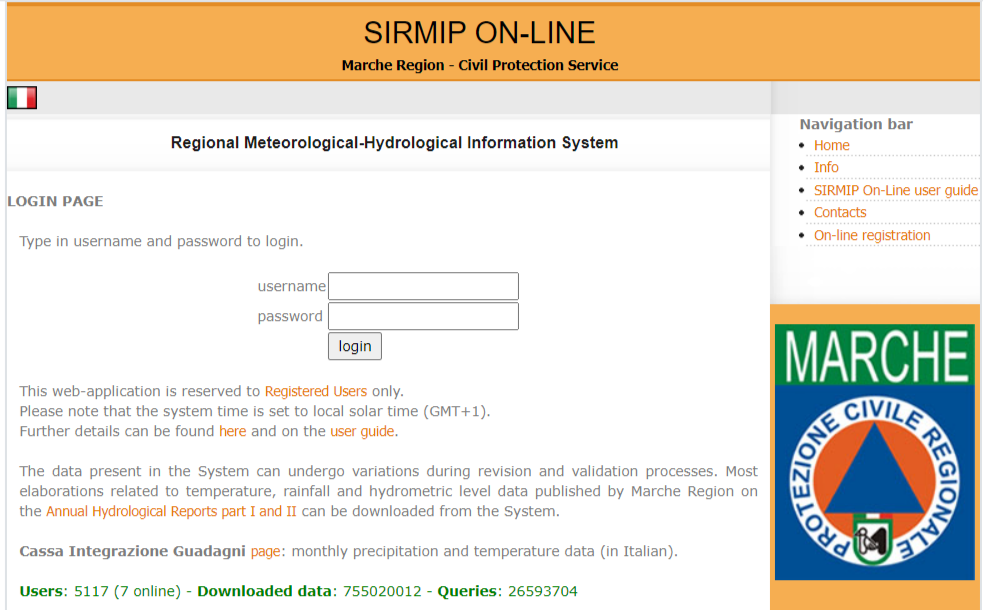
The application is available both in English and in Italian and users can choose their preferred language at main web page. SOL application is reserved to registered users only; in order to access the system, users have to provide username, name, surname and a valid email address to successfully terminate the registration process. Free registration can be easily done at http://app.protezionecivile.marche.it/sol/registrazione.sol?lang=en. A random generated password will be sent to the e-mail address provided during registration process. Once the user has successfully registered and logged into SOL, the system allows the choice of the meteorological, hydrological or environmental data of interest.
Marche region monitoring network is composed of a mechanical (labelled as RM) and a telemetric (RT) sensing system. Since 1916 RM consists of temperature sensors and rain gauges whose number, period of operation and position have changed during years; temperature sensors were always about 20, whereas the number of rain gauges decreased from about 150 during 1950s to 90 in 2000.
Until 2001, RM was managed by the Italian Hydrographic Department and Maritime Service (acronym SIMN in Italian); complying with Regional Law no. 2748/2001, from 2002 Marche Region was instructed to perform SIMN tasks. Implementing the program for expanding regional meteorological and hydrological monitoring networks (Italian Law no. 267/1998), since 2000 Marche Region financed and developed a telemetric sensing system. In March 2009, when SOL system was first released, RT had 53 thermometers, 77 rain and 13 wind gauges, 15 atmospheric pressure sensors, 30 relative humidity, 16 solar irradiance and 7 snow-level sensors. There were also 70 ultrasound water-level sensors, most of them equipped with a staff gauge for the water-level calibration. Starting from year 2005, the stage-discharge relationship related to several hydrometric sections has been estimated and yearly updated.
To date, the system offers the selection of data relating to the following types of quantities:
- hydrometry (104 sensors among mechanical, ultrasound and microwave hydrometers);
- precipitation (235 sensors among mechanical recorders and digital tipping bucket rain gauges);
- barometric pressure (16 sensors);
- relative humidity (100 sensors);
- temperature (143 sensors among min-max mechanical recorders and digital thermometers);
- snow (12 snow gauges);
- solar irradiance (17 sensors);
- wind (20 anemometers measuring direction, maximum and average wind velocity).
In addition to the main types of sensor listed above, through SOL system is also possible selecting data from a few sensors measuring surface water and groundwater characteristics.
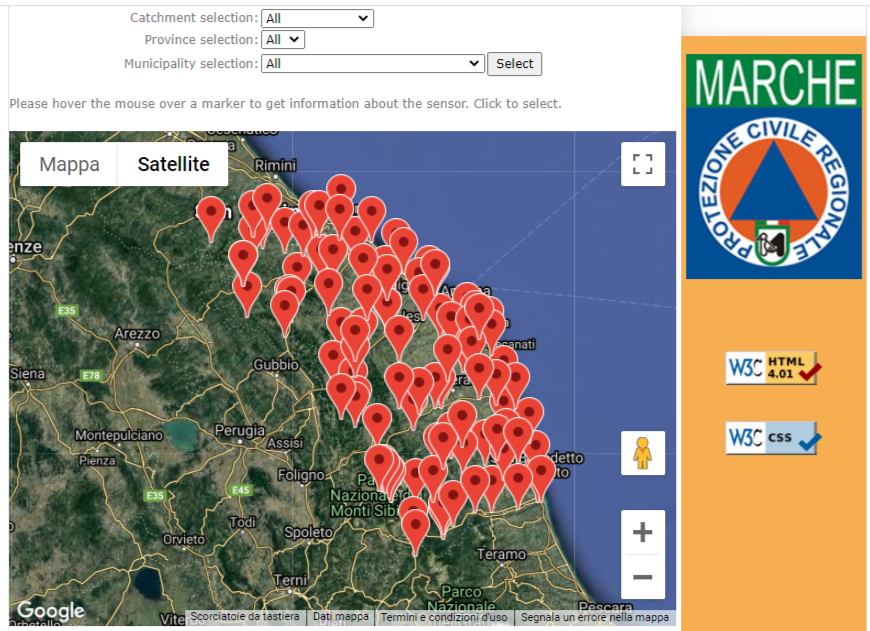
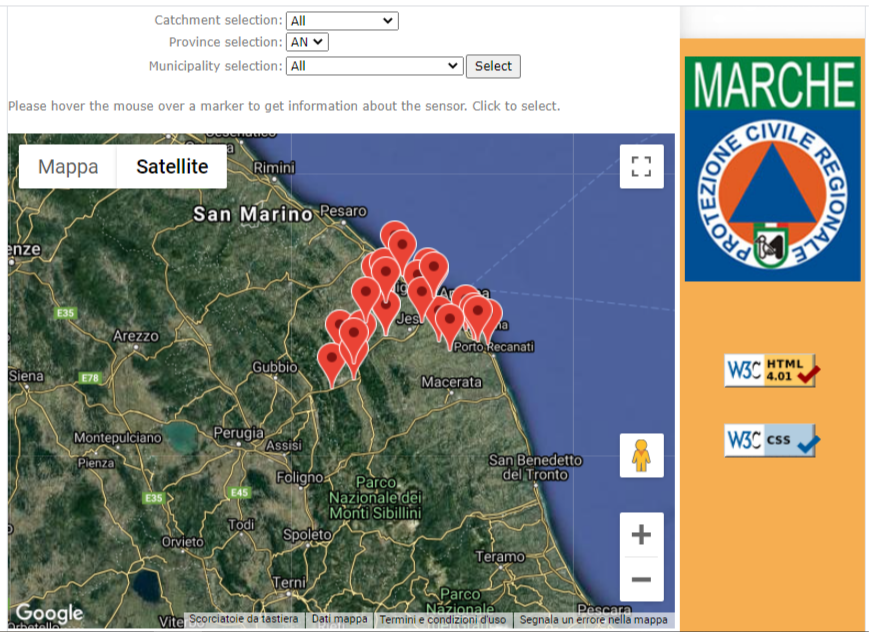
By means of an interactive map created using the Google application programming interface (API, https://cloud.google.com/apis/docs/overview), the system offers the possibility to select a set of sensors based on the catchment, the Province and the Municipality of interest. An example related to the selection of all hydrometers is reported in Figure 2, while the selection related to the only sensors present in the Ancona Province area (labelled as AN) is shown in Figure 3.
Once the user has selected the sensors of interest for his own purposes, SOL system offers two data types: original and validated data; the former represents data as measured by the sensor without any verification, whereas validated data have undergone to an automated check but they are not official. Data present in the system can undergo variations during revision and validation processes; most elaborations related to temperature, rainfall and hydrometric level data published by Marche Region on the official Annual Hydrological Reports [3] can be downloaded from SOL.
All typologies of sensor have 30-minutes sampling time, except wind gauges (10 minutes) and rain gauges (15 minutes); mechanical thermometers provided the minimum and maximum daily values.
In the following main raw data and elaborations present in SOL system will be described.
2.1. Precipitation data
Rainfall section allows user selecting static data such as quote and coordinates of the sensor and some raw data: rain and maximum rain rate provided in mm and in mm minute–1, respectively.
SOL system can also calculate on-the-fly cumulative rainfall in a given period of time using an incremental time-step provided by the user or cumulative seasonal rainfall, paying attention to the starting day of a meteorological season: March 1st, June 1st, September 1st or December 1st.
The system also provides some elaborations useful for extracting data present in the official Annual Hydrological Reports, i.e., intense precipitations at 15 and 30 minutes, intense precipitations at 1, 3, 6, 12 and 24 hours and intense precipitations at 1, 2, 3, 4 and 5 days.
2.2. Hydrometry
The hydrometry section allows user selecting hydrological characteristics of the sensor and some raw data: the hydrometric level provided in meters, the minimum and maximum levels in the chosen time period for selected sensors and the hydrometric level at noon, provided in centimeters and useful for generating the official Annual Hydrological Reports.
Starting from cumulative rainfall data present in the system, for some selected hydrometers yearly and monthly mean areal precipitation have been calculated, interpolating rain gauge data on a regular grid representing the catchment related to the hydrometer.
If a stage-discharge relationship is defined for a hydrometer, SOL allows calculating discharge and some quantities such as maximum discharge in a period of time, daily, monthly or yearly average discharge. Discharge values calculated on-the-fly by the system are provided in m3 s–1.
2.3. Air temperature
Temperature section provides values in Celsius degrees and allows user selecting air temperature. Elaborations provided by the system include minimum, average and maximum temperature values in a given period of time using an incremental time-step provided by the user, seasonal minimum, average and maximum temperature and decadal average and extreme temperature values paying attention to the starting day of a decade: day 1, 11 or 21 within a month.
Furthermore, SOL allows calculation of human-perceived temperature. In particular, the system calculates two values using relative humidity data present in the database: the New Summer Simmer Index (NSSI) [4], described at http://www.summersimmer.com, and the Apparent Temperature (Tapp) [5, 6].
2.4. Output data
Based on user’s selection and requirements, SOL system can provide output data in several file formats. In particular, most of the raw data and elaborations can be extracted in a text file format (comma separated values, CSV), in a spreadsheet file that is compatible with major office solutions or in a Portable Document File (PDF) format.
Unlike text and spreadsheet format, PDF file extracted from SOL system is provided with the digital signature of the Office Responsible (authentic signature omitted in accordance with art. 3 of Italian Legislative Decree n. 39/1993). The PDF file is marked with a timestamp and saved by the SOL system as a backup copy. In case of discrepancy between the User’s file and the backup copy, e.g., in a judicial dispute, the backup copy represents the reference document.
SOL system can finally extract information from database returning it in a graphical form; in Figure 4, raw air temperature data over 2021, August 30, in Ancona City is reported.
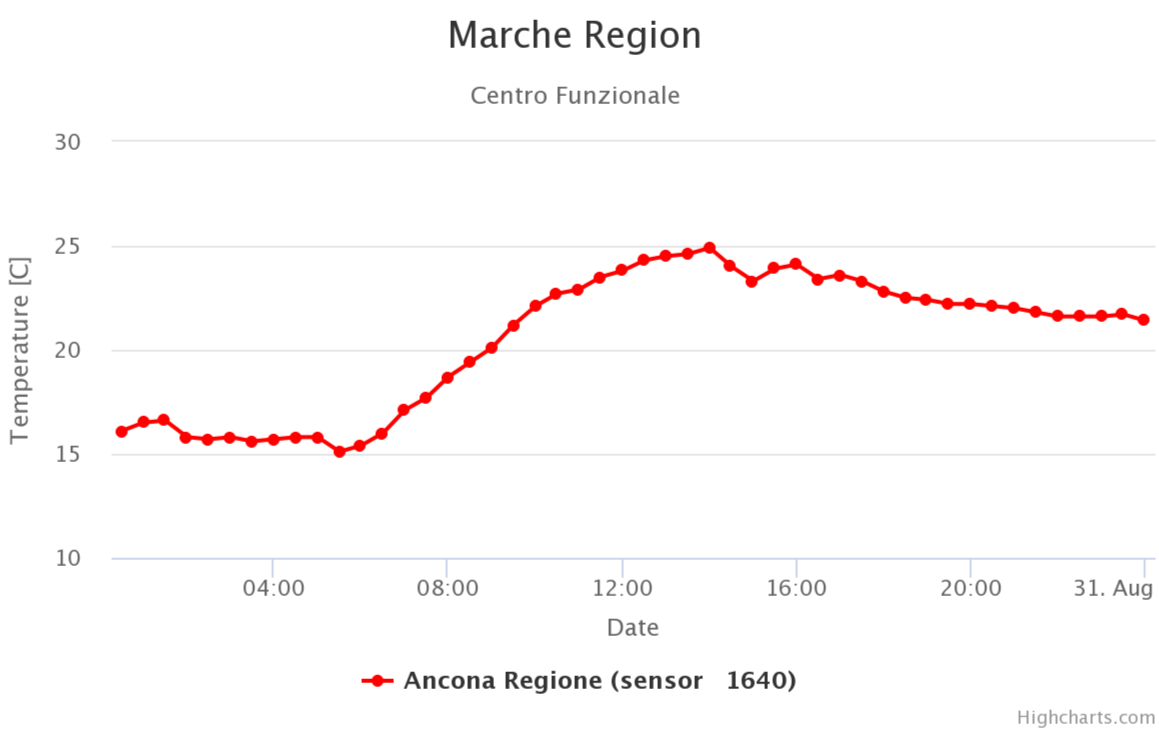
Plot on Figure 4 has been generated using Highcharts, interactive Javascript charts library available at https://www.highcharts.com. By means of Highcharts, SOL system can provide graphics in image format (PNG, JPG), PDF format or as SVG vector image.
In the following, some examples of ad-hoc hydrometric data elaborations available through SOL system are reported and described. Stage-discharge relationship related to the hydrometric sections located in correspondence with the main Marche Region waterways are constantly updated and saved on the main database. Daily average discharge data related to four different sensors belonging to Metauro river catchment and calculated on-the-fly via the stage-discharge relationship during October 2019 are shown in Figure 5.
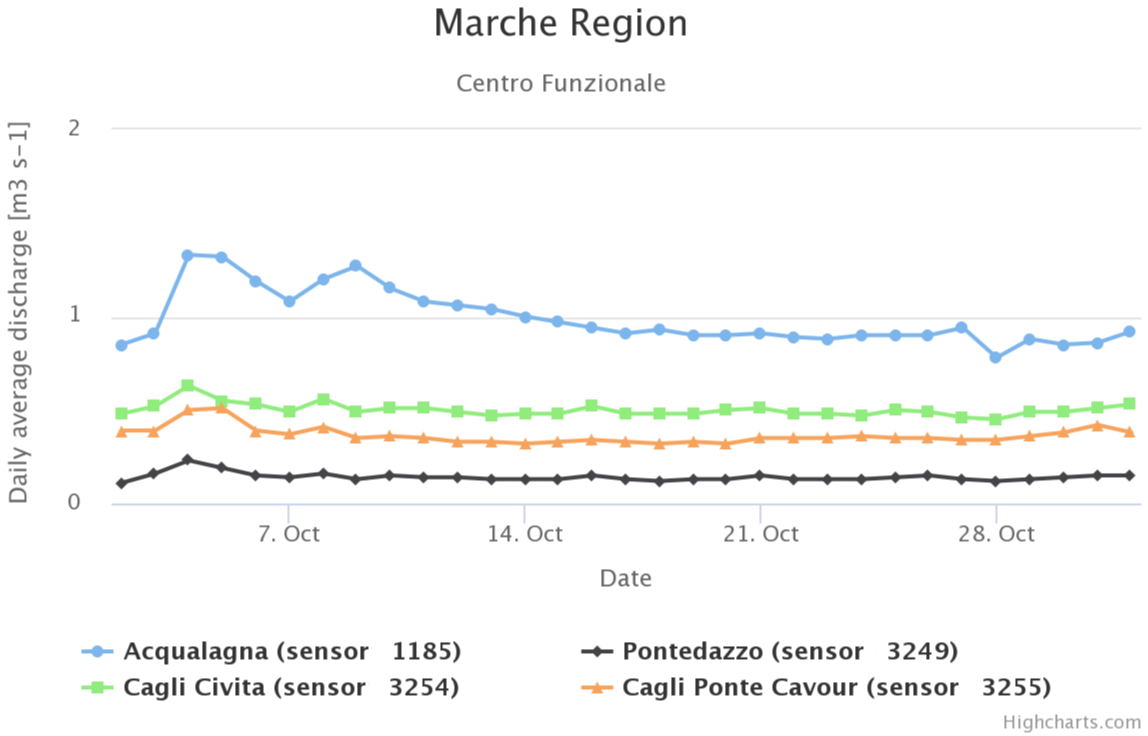
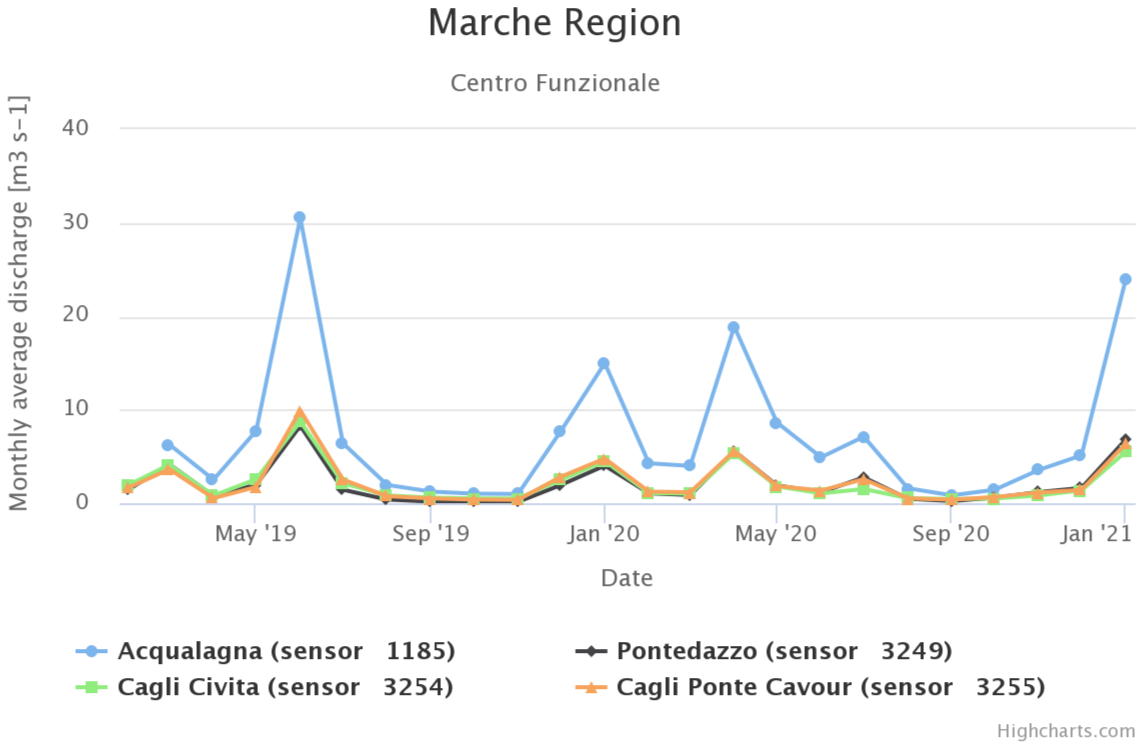
Figure 6 reports monthly average discharge data related to the same hydrometric level sensors as in Figure 5 from January 2019 to December 2020; as one can see, Acqualagna sensor (database code 1185) presents a missing data for the month of January 2019.
Missing data are clearly reported in all output formats available on SOL system. As an example, an excerpt from the first few lines of the CSV file related to the same query used to extract data of Figure 6 is shown in Figure 7.
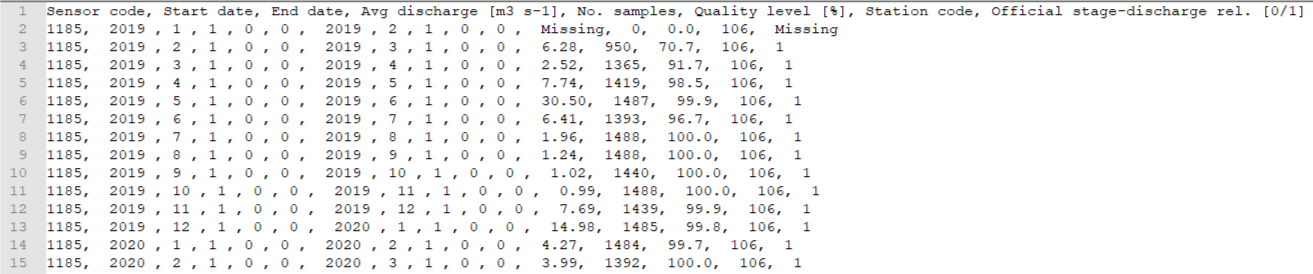
Text file for discharge data consists of several columns including the database sensor code, time window over which data were processed, averaged discharge expressed in m3 s–1, the number of data found on database for a given period and the percentage related to the expected number of data. In this case, no valid data were found on database for January 2019 resulting in a missing discharge data with 0% quality level.
3. Discussion
This paper aims to present a web-based interactive application which was created using all available current technology, with the purpose of spreading Marche region meteo-hydrological data widely.
Data from SOL system have already been used for several reasons and studies. In the present section, main references to the usage of data extracted from SOL system are reported and reviewed.
In order to understand the hydrological behavior of an instrumented catchment and then obtain a significant calibration of the basin model, it is necessary to analyze several flood events occurred within a relevant time interval. Such analysis could therefore be a fair amount of work, dealing with decades—long time series or dam releases. Discrete wavelet transform (DWT) combined with artificial intelligence (AI) has been employed in order to develop an unsupervised method for fast detecting, localizing, and classifying flood events in real-world stage-discharge data time series [7]. The method, tested on a discharge dataset obtained through the SOL system, does not require any a priori information such as catchment characteristics or alert flood thresholds.
One of the critical issues that electronic engineers have to face in designing hydrometric level sensors is the energy consumption during the sensor startup phase preceding the level measurement. Pellegrini et al. [8] proposed a methodology to reduce the consumption by dynamically self-adapt the sensor sampling rate when no flood events are occurring. The method effectiveness has been tested on a stage-discharge dataset taken from SOL system.
After the major events occurred during 2016–2017 Central Italy seismic sequence, seventeen mud volcanoes erupted around Monteleone di Fermo village (Marche region). Maestrelli et al. [9] concluded that seismic shaking represents the dominant driver for these eruptions. Rainfall data used for this study came from SOL system.
The primary aim of the study of Ilari et al. [10] was to analyze the efficiency of heating systems focusing attention on the consistency between the estimated consumption based on the declarations made by greenhouse operators and the estimation model, and the amounts of fuel officially assigned by the public body. Air temperature values used for this analysis were collected from SOL.
The main events occurred during the seismic sequence recorded in central Italy in 2016–2017 caused several observed changes in groundwater dynamics; changes include spring discharge variation, water-table anomalies and river discharge alteration in different basins located up to 100 km from the epicentral zone [11]. Authors concluded that the abrupt and sustained variations of spring discharge and groundwater levels, observed in carbonate fractured aquifers in central Italy by a wide selection of water points during the 2016–2017 central Apennine seismic sequence have to be related to the earthquakes. For this study, part of collected hydrometric data came from SOL system.
In their work, Bisci et al. [12] aimed to classify and represent natural hazards and resources influencing the quality of land and of life, using publicly available data. In order to make as schematic and simple as possible the classification procedure, authors adopted a methodology based upon available thematic maps, using only three levels of hazard and two levels of resources. The proposed representation aims at simplifying the interpretation of the resulting map, where both the hazard and resources levels are displayed using full colors and hatchings, respectively. Climatic records used for this study were collected from SOL.
Montelpare et al. [13] aimed to suggest a numerical approachable to select the most useful building orientation with respect to the local wind in complex urban areas. They showed that a mesoscale-microscale numerical approach is able to predict local flow patterns for building designers. The city of Ancona was selected to analyze wind patterns over complex orography in presence of buildings and anemometric data over Ancona were selected from SOL.
In order to provide the scientific community with regional-scale data related to a temperate climate area useful for climate change studies, a set of annual and monthly spatially distributed maps of precipitation and air temperature has been generated [14] over Marche region starting from SOL validated data.
Understanding the groundwater flow in carbonate aquifers represents a challenging aspect in hydrogeology, especially when they have been struck by strong seismic events [15]. Large earthquakes change springs hydrodynamic behavior showing transitory or long-lasting variations; this is the case of Sibillini Massif in central Italy which has been hit by the 2016–2017 seismic period. The study aimed to combine time-series analysis and tracer tests; although limitations have been identified in both cases, results obtained by such combined approach provided the chance to statistically explain the tracer path within the aquifer. Precipitation and snow thickness daily data were selected from SOL.
The 30 October 2016, seismic sequence in Central Italy produced an abrupt increase in Nera River discharge, which lasted for several months. Based on the discharge data, computed by using stage-discharge relationship present in SOL system and representing the whole hydrogeological system feeding the Nera River, the findings reported by Di Matteo et al. [16] contributed to understand processes and dynamics of fractured carbonate aquifers located in geologically and climatically complex regions, which are useful for water management.
4. Conclusions
In this work, a web-based interactive application with the aim of disseminating meteo-hydrological information at regional scale was described. The initial concern in developing such an application was about choosing the kind of technology that should be usable and easily accessible. Server-side programming was developed using PHP while Javascript has been used for creating client-side user interface and controlling web page behavior. Information can actually be extracted from SOL system in text format, spreadsheet format, PDF and graphical form.
Since its first release in 2009, data selected from SOL system have been used for several studies: among others, electronics and data processing, climate change, industrial engineering, hydrology, geophysics and environmental sciences.
Author Contributions: Conceptualization, methodology, software design, development and testing, investigation, writing—original draft preparation, writing—review and editing, M.P. All authors have read and agreed to the published version of the manuscript.
Data Availability Statement: Regional Meteorological-Hydrological Information System (acronym SIRMIP in Italian) is managed by the Civil Protection Service of Marche Region, Italy; data and ad-hoc elaborations are distributed through a web application named SOL (Sirmip On-Line) and publicly available online: http://app.protezionecivile.marche.it/sol/indexjs.sol?lang=en.
Acknowledgments: The author is thankful to Centro Funzionale Multirischi – Civil Protection Service of Marche Region, Italy.
Conflicts of Interest: The author declares no conflict of interest.
References
- Protezione Civile (Civil Protection in English). Available online: http://www.regione.marche.it/Regione-Utile/Protezione-Civile (accessed on 11 November 2021).
- Marche Region - Regional Meteorological-Hydrological Information System. Available online: http://app.protezionecivile.marche.it/sol/indexjs.sol?lang=en (accessed on 11 November 2021).
- Protezione Civile > Progetti e Pubblicazioni > Annali Idrologici (in Italian). Available online: https://www.regione.marche.it/Regione-Utile/Protezione-Civile/Progetti-e-Pubblicazioni/Annali-Idrologici (accessed on 11 November 2021).
- Pepi W.J. The New Summer Simmer Index. International audience at the 80th annual meeting of the American Meteorological Society (AMS) at Long Beach, California, on 2000, January 11.
- Michelozzi, P., de’ Donato, F.K., et al. Surveillance of Summer Mortality and Preparedness to Reduce the Health Impact of Heat Waves in Italy. Int. J. Environ. Res. Public Health 2010, 7, 2256-2273.[CrossRef] [PubMed]
- Kalkstein, L.S., Barthel, C.D., Green, J.S., Nichols, M.C. A New Spatial Synoptic classification: application to Air Mass Analysis. Int. J. Climatol. 1996, 16, 983-1004.[CrossRef]
- Pellegrini, M., Sini, F., Taramasso, A.C. Wavelet-based automated localization and classification of peaks in streamflow data series. Computers & Geosciences 2012, 40, 200-204.[CrossRef]
- Pellegrini, M., De Leone, R., Maponi, P., Ferretti M. Reducing Power Consumption in Hydrometric Level Sensor Networks using Support Vector Machines. In Proceedings of the 3rd International Conference on Pervasive Embedded Computing and Communication Systems (PECCS-2013), SCITEPRESS (Science and Technology Publications, Lda.), 229-232, 2013.
- Maestrelli, D., Bonini, M., Delle Donne, D., Manga, M., Piccardi, L., Sani, F. Dynamic triggering of mud volcano eruptions during the 2016–2017 Central Italy seismic sequence. Journal of Geophysical Research: Solid Earth 2017, 122.[CrossRef]
- Ilari A., Duca D., Toscano G., Ventura G., Foppa Pedretti E., Luciani R. Energy consumption of nurseries in Ancona district and investigation on production systems, Chemical Engineering Transactions 2017, 58, 817-822.
- Petitta, M., Mastrorillo, L., et al. Water-table and discharge changes associated with the 2016–2017 seismic sequence in central Italy: hydrogeological data and a conceptual model for fractured carbonate aquifers. Hydrogeology Journal 2018, 26, 1009–1026. https://doi.org/10.1007/s10040-017-1717-7.[CrossRef]
- Bisci, C., Gentili, B., et al. Clean and Healthy – Natural Hazards and Resources. In: Quality of Life in Urban Landscapes. The Urban Book Series. Springer, Cham 2018. https://doi.org/10.1007/978-3-319-65581-9_16.[CrossRef]
- Montelpare, S., D’Alessandro, V., Lops, C., Costanzo, E., Ricci, R. A Mesoscale-Microscale approach for the energy analysis of buildings. Journal of Physics: Conf. Series 1224, 2019.[CrossRef]
- Pellegrini, M. Annual and Monthly Spatial Distribution of Rainfall and Average Air Temperature in a Temperate Region: A Dataset of Twenty Years (2000-2019) for Climate Change Studies. New Insights into Physical Science Vol. 1 Chapter 1, 2020.[CrossRef]
- Fronzi, D., Di Curzio, D., Rusi, S., Valigi, D., Tazioli, A. Comparison between Periodic Tracer Tests and Time-Series Analysis to Assess Mid- and Long-Term Recharge Model Changes Due to Multiple Strong Seismic Events in Carbonate Aquifers. Water 2020, 12(11), 3073. https://doi.org/10.3390/w12113073.[CrossRef]
- Di Matteo, L., Capoccioni, A., Porreca, M., Pauselli, C. Groundwater-Surface Water Interaction in the Nera River Basin (Central Italy): New Insights after the 2016 Seismic Sequence. Hydrology 2021, 8, 97. https://doi.org/10.3390/hydrology8030097.[CrossRef]