

Eating at home remains very much ingrained in Ghanaian culture but rapid urbanization coupled with busy lifestyle and advancement in technology has greatly changed the way of life of many Ghanaians. These changes have altered the tradition of cooking and eating at home. The study focused on the determinants of consumer patronage of street foods in the Koforidua Metropolis. The target population comprised customers that patronize the street foods in Koforidua Metropolis. From the target population, 197 consumers were selected using convenience. A structured self-administered questionnaire was utilized to gather the required data. The data collected were coded and analyzed with the help of SPSS-23. The findings revealed that food characteristics and social status determines consumers patronage of street food. It became evident that age (r=0.261, p<0.01), age (r=-0.318, P<0.01), educational level (r=0.144, P<0.05) and occupation (r=-0.477, P<0.01) of consumers has a significant influence on the decision and patronage of street food. The study concluded that food characteristics and social factors are major determinants of consumers patronage of street foods. It is recommended that Food and Drug Authority (FDA), other stakeholders, and street food vendors work cooperatively to establish laws that capture the distinctive and diverse foods sold on the street and their various preparation, storage, and sale methods in order to ensure that food preparation and sales are safe and hygienic.
Street Foods in Urban Spaces: Analyzing the Determinants of Consumer Patronage in the Koforidua Metropolis
August 10, 2025
September 26, 2025
October 10, 2025
October 17, 2025
This is an Open Access article, distributed under the terms of the Creative Commons Attribution 4.0 International License (http://creativecommons.org/licenses/by/4.0/), which permits unrestricted use, distribution and reproduction in any medium or format, provided the original work is properly cited.
Abstract
1. Introduction
Street food consumption is rising, and it is one of the quickest emerging food categories globally (Tugli, Essuman, Kortei, Nsor-Atindana, Nartey & Ofori, 2019) [1]. Street foods are ready to each meals that are prepared or sold in the open air or other public place for consumption either immediately or at a later time without further processing or preparation (WHO, 2006). Due to its low prices and rapid, accessible service, street food has evolved into a “home away from home” for breakfast, lunch and supper (FAO, 2018) [2]. Although dining at home is still deeply established in Ghanaian tradition, increased urbanization, hectic lifestyles, and technological advancements have significantly altered many Ghanaians' way of life. The custom of preparing food and dining at home has changed as a result of these developments. Ghanaians are increasingly relying on street cuisine since it allows them to have a convenient, quick, and relaxed meal.
Street food is frequently cooked in Ghana on busy street corners and sold at lorry stations and other public locations. These locations are typically outside or within temporary structures. eating typical Ghanaian foods like "waakye," "fufu," "kenkey," "banku," and fried yams. Others include "kelewele" and "konkonte" (Baidoe, Ananga, & Nyinaku, 2020) [3]. Over the past several decades, street food sellers' activities in the Ghana have increased dramatically. Consumers are forced to rely on street meals since they are more accessible and handier due to the inflow of working people and students, the majority of whom commute considerable distances between their workplaces/ schools and dwellings (Baidoe et al., 2020) [3].
Safety concerns about the setting in which street meals are made and served, however, have been brought up (Hiamey & Hiamey, 2018) [4]. Street food safety entails safeguarding the supply from potential microbiological, chemical, and physical risks that may arise prior to, during, and after food preparation. In other words, food should not hurt people after they eat it. Since street vendors normally lack the essential service infrastructure and equipment, such as; storage facilities, food reheating devices, fridges and disposal spaces for waste, street meals have been viewed as a food safety risk to customers (Rane, 2011) [5] but consumers' preferences for these foods are frequently unaffected by their lack of trust in the safety of street foods (Asiegbu et al., 2016) [6].
2. Literature Review
2.1. Consumer patronage of street foods
For many years, street food has been a crucial component of urban life, providing citizens with food, nutrition, and work (Stutter, 2017) [7]. According to estimates, 2.5 billion people consume street food every day, mostly due to its accessibility and inexpensive price (Fellows & Hilmi, 2012) [8]. For instance, the Street Food Sector (SFS) directly employs almost one million people in the South American nations of Brazil and Mexico. Additionally, according to Fellows & Hilmi (2012) [8], almost 3 million individuals in India work directly in the street food industry.
Street food is often consumed in Ghana's metropolitan centers, including Kumasi, Accra, and Koforidua (Arthur, Lah, Turkson & Anane, 2022) [9]. As they work in the city or pass through it on their way to other regions of Ghana and the West African sub-region, these commercial companies and workers, travelers, and consumers use street meals as a source of readily available nourishment (Feglo & Sakyi, 2012) [10]. Due to this, the Metropolis now has a sizable number of street food vendors working there. Across all food categories, customers were found to purchase street food at least once per week, according to Baidoe et al. (2020) [3]. It is significant to note that dishes made of porridge are virtually often consumed regularly. The survey confirmed that porridge meals, rice and stew, banku, waakye, and kenkey are the most popular street foods that customers commonly eat.
2.2. Determinants of consumer patronage of street foods
Street food sellers are becoming more and more well-liked and prevalent in Ghana as a result of globalization. The quantity, variety, and preferences of customers have all risen. The factors that influence a customer's decision to choose or patronize a street food vary from nation to country and from area to region due to regional differences in socioeconomic status, environment, and culture. According to Kasu et al. (2021) [11], people typically eat street food due to time restraints and handy places. According to a study by Haleegoah et al. (2020) [12], street food consumption has been positively impacted by food qualities (such as safety, nutritional value, affordability, convenience, and proximity to the vendor), socioeconomic status (including age, educational attainment, and employment status), and cultural factors (such as consumer origin and eating since infancy).
2.2.1. Food characteristics
Consumer intake of street meals is significantly influenced by food factors such as price, safety, nutritional content, affordability, convenience, and vendor proximity (Haleegoah et al., 2020) [12]. One of the most important aspects of a dining experience, according to Namkung and Jang (2007) [13], is the quality of food. According to Clark and Wood (1999) [14], the choice of restaurant is mostly influenced by the quality of the meal. According to Mill (2017) [15], the cost of a restaurant is still another consideration for customers. They will probably to have a poor opinion of the eating experience if they believe that the value is less than the money spent. Furthermore, one of the factors that favorably impacts the patronage of vendors' retail locations, particularly among low-income consumers, is pricing. In several research that looked into it, menu pricing played a significant role in choosing a food selling outlet (Atinkut et al., 2018) [16].
2.2.2. Cultural Factors
Customers' intake of street meals is influenced by cultural variables such as where they are from and how long they have been eating. At both the national and international levels, marketing and consumer behavior disciplines have paid some attention to the impact of culture on consumption and consumer behavior. Every aspect of behavior is said to be influenced by culture, and as everyone is a product of society and culture, it is possible that culture is everything and everyone is culture (Awa, Kalu, & Awara, 2010) [17]. Additionally, Pieniak, Verbeke, Vanhonacker, Guerrero, and Hersleth (2009) [18] revealed that familiarity with the menu or meal plays a key impact in determining customer preference for street food. Additionally, Alonso, Cockx and Swinnen (2018) [19], said that food consumption patterns and behaviors are cultural traits that have a significant impact on the dietary choices people make. Similar to this, unfamiliar ingredients and methods of preparation make it difficult for people to accept cuisines from different cultures (Trafialek, Drosinos, & Kolanowski, 2017) [20].
2.2.3. Social status
Social factors including gender, age, education, and employment may have an impact on how much street food is consumed. The study by Mensah, Aidoo and Teye (2013) [21] showed that low income groups spend a greater percentage of their income on food. Additionally, it was discovered experimentally that wealth, household size, and educational attainment all had significant relationships with street food consumption that were negative at 1% each. At the 1% level, there was a substantial positive association between street food intake and gender and the amount of time spent away from home. Ayo et al. (2012) [22] also discovered a strong relationship between education level and street food intake. Males (particularly those who are single) may cook less frequently at home because they lack the necessary skills or because they do not have the time. Females also tend to be more conscious of their eating habits due to concerns about their beauty, self-esteem, and the avoidance of being overweight (Steyn et al., 2013) [23].
3. Methodology
Since the purpose of the research was fact-finding, survey research design was used. In addition to providing an analysis and aiding in the interpretation of data for the direction of the future course of action, this assists the researcher in analyzing and interpreting the current condition of the study participants. According to Kothari (2004) [24], the survey research design involves studying (questioning or observing) a sample of the population to identify its features or relationship, and then assuming that the population has the same qualities or connection.
The population of the study included consumers that patronise street foods in Koforidua Metropolis. Multi-stage sampling technique was employed for this study. A census was conducted to obtain the list of street food at the five major towns (i.e. Benton, Srodae, Effiduase, Asokore, Adweso) at Koforidua Metropolis in the Eastern Region. A proportional sample size was determined for each town and the street food joints were randomly selected from each town using random table. Ten (10) street food joints were randomly selected for the study comprising 2 street food joints from each major town. Convenience sampling method was used to select 280 customers comprising 28 customers from each 10 street food joint selected at Koforidua metropolis.
Based on the nature of the study period and the study's goals, the questionnaire, which served as the primary research tool, was a suitable choice. Five options on a Likert-type scale were utilized. The research questions were scaled from 1-5, 1=strongly disagree; 2=Disagree; 3=Uncertain; 4=Agree; 5=Strongly agree. Before processing the answers, the completed questionnaire was revised, coded, and entered into SPSS software, version 23.0 for Windows, for the analysis of quantitative data. The data was subjected to descriptive statistical techniques, including frequencies, percentages, mean, and standard deviation, to derive key insights. Correlation Analysis (CA) was conducted to ascertain the influence of demographics on determinants and street food patronage.
4. Results and Discussion
4.1. Demographic Characteristics of the Respondents
Demographic characteristics of the respondents was sought; the researcher deemed it necessary to look into demographic characteristics of the respondents because they make a person who he or she is.
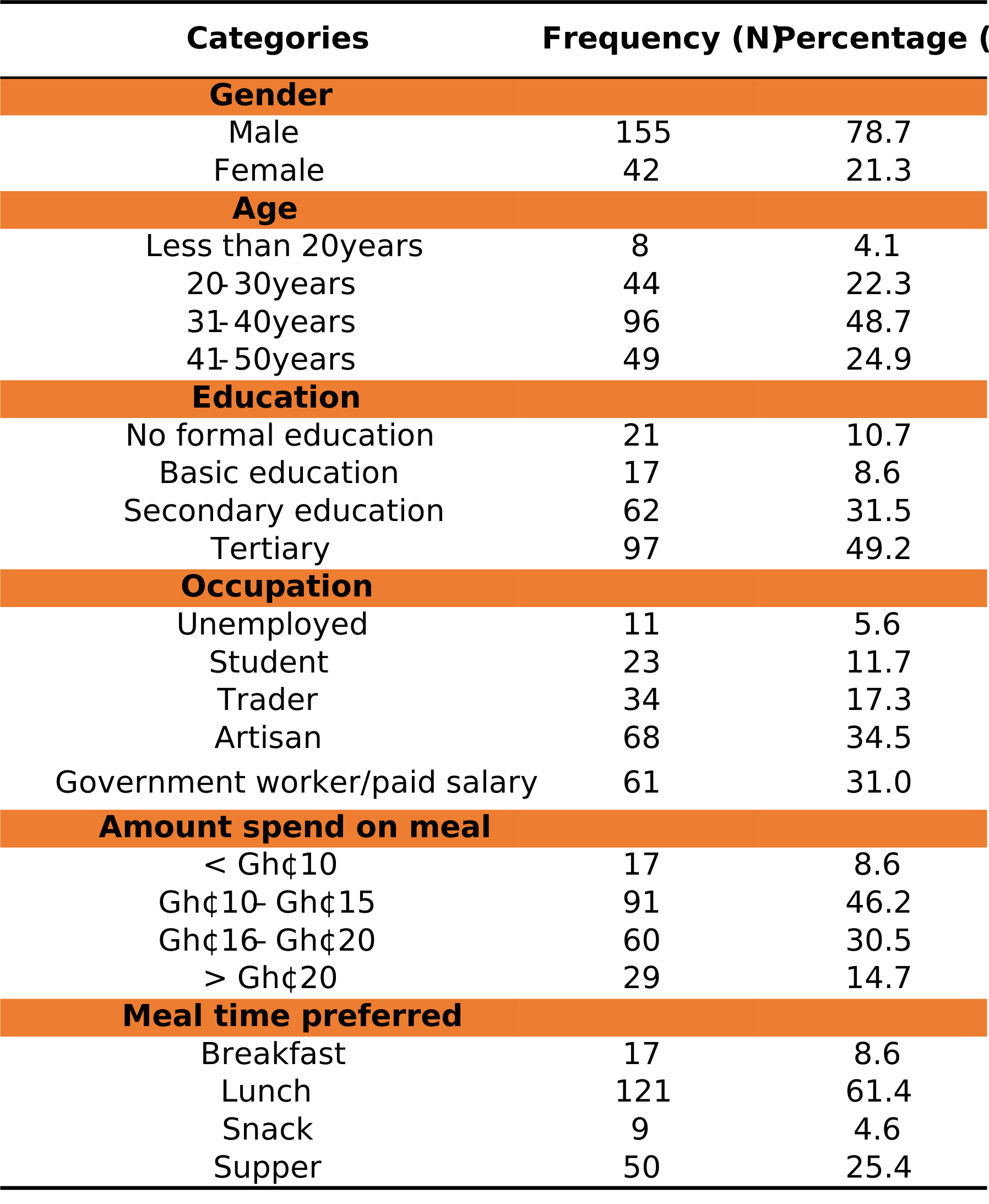
As shown in Table 1, 78.7% of consumers were males compared to 21.3% of females. This suggests that male customers are more likely than female consumers to purchase street foods. In addition, 4.1% of the customers identified were under 20 years old, while 22.3% of the consumers fell into the 20 to 30 years age range. However, 24.9% of respondents were between the ages of 41 and 50, whereas 48.7% of customers were in that age range. This suggests that the bulk of those eating street food were in their 20s to 40s. The results showed that, in terms of the highest level of education reached by customers of street fast food, 10.7% of them had no formal education, 8.6% had just a basic education, and 31.5% had a secondary education. In addition, 49.2% of the consumers had completed at least a Tertiary degree of education. The results showed that tertiary education was most prevalent among those who buy meals on the street. This demonstrates that consumers of street food products have solid educational backgrounds. On the occupation of the respondents, 5.6% of the consumers were unemployed, 31.0% were government worker/paid salary and 17.3% of the consumers were traders. In addition, the consumers include in the study were artisans, whereby the remaining 11.7% of the consumers were students. This indicates that majority of the consumers are workers and may not always get the time cook food for themselves or for the family.
Table 1 further reveals that 46.2% of customers spend between Gh¢10 - Gh¢15 on eating street foods, compared to 8.6% of consumers who spend less than Gh¢10. Additionally, 30.5% of customers spend between Gh¢16 and Gh¢20 on street foods, with the remaining 14.7% of customers who consume street foods spending more than Gh¢20. This suggests that the bulk of customers who visit the several street food joints in the Koforidua Metropolis spend between Gh¢10 and Gh¢20 on meals. According to Table 1, 8.6% of customers typically prefer to eat street food for morning, whereas 61.4% prefer to eat it at lunch. In addition, 4.6% of customers said they prefer to have a snack at a street vendor. Additionally, 25.5% of the customers said they like to go to street food vendors for dinner. This suggests that the bulk of customers frequent the street food vendors at lunch.
4.2. Determinants of consumer patronage of street foods
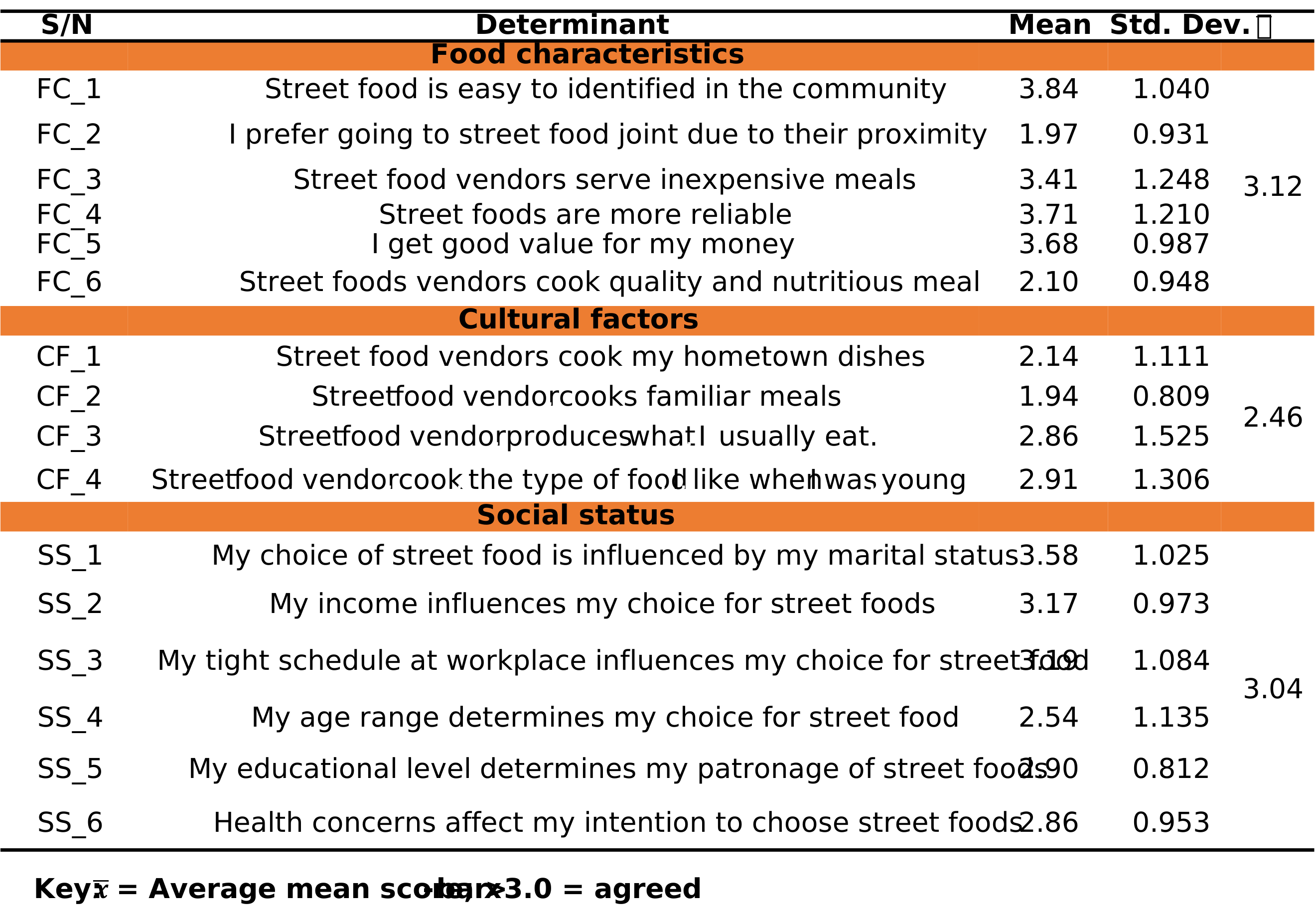
The determinants were grouped into three categories i.e. food characteristics, cultural factors, and social status and were measured with mean and standard deviations and the significant mean level was fixed at 3.0. Table 2 presents the results generated.
4.2.1. Food characteristics
From Table 2, it became obvious that the fact that street food is easy to identified in the community. This statement had a mean of 3.84 and a standard deviation of 1.040. The claim that meals sold by street vendors are affordable, however, had a mean score of 3.41 and a standard deviation of 1.248. This suggests that consumers' preference for street eateries is determined by the low cost of the meals they offer. Consumers reported that street meals are more reliable with a mean score of 3.71 and a standard deviation of 1.210. This suggests that customers' eating habits are influenced by the reliability of street food. In addition, a mean score of 3.68 and a standard of 0.987 were obtained for the claim that customers receive excellent value for their money. This suggests that the cost of the street food is justified, which influences their decision to buy. The patronage of street food in Koforidua Metropolis is demonstrated by an average mean of 3.12, which indicates that food characteristics are important in determining consumers patronage of street foods.
4.2.2. Cultural Factors
From the Table, it emerges that cultural factors are not critical determinants of consumers patronage of street foods in Koforidua Metropolis. On the issue that street food vendors cook hometown dishes, a mean score of 2.14 and a standard deviation of 1.111 was attained. This implies that consumers of street foods are not determine by hometown dishes prepared. On the statement street, food, vendor, cooking familiar meals influence consumption of street food, a mean of 1.94 and a standard deviation of 2.86 was attained. This indicates that consumers patronage of street food is not determine by familiar food being cooked by the vendor. Again, with a mean score of 2.86 and a standard deviation of 1.525, the consumers disagreed that street, food, vendor, producing food they usually eat determines their consumption pattern. On the other hand, the consumers disagreed that street, food, vendor, cooking, the type of food, they, like when they were, young determines their consumption pattern. This statement reflected a mean of 2.91 and a standard deviation of 1.306.
4.2.3. Social Status
In Table 2, the consumers indicated that the choice of street food is influenced by their marital status. This statement had a mean score of 3.58 and a standard deviation of 1.025. Additionally, on whether income influences consumer choice for street foods, a mean score of 3.17 and a standard deviation of 0.973 was attained. This implies that consumers patronage of street food is determine by their income level. Again, on whether tight schedule at workplace influences consumer choice for street, a mean of 3.19 and a standard deviation of 1.084 was attained. The mean score attained shows that tight schedule of the consumers is a major reason why they consume street foods. On the issue that age range determines consumer choice for street food, a mean of 2.54 and a standard deviation of 1.135 was attained. This implies that age range of the consumers is not a major factor influencing consumer choice of street foods. However, on the issue that educational level determines consumer patronage of street foods, a mean of 2.90 and a standard deviation of 0.812 was achieved. This indicates that educational level is not the determinant of consumers patronage of street food. Conversely, majority of the consumers disagreed that their health concerns affect their intention to choose street foods. This statement reflected a mean of 2.86 and a standard deviation of 0.953.
4.3. Influence of demographics on determinants and street food patronage
The demographic characteristics of the consumers were compared with the determinants and street food patronage. Table 3 depicts the association between the demographic characteristics (i.e. gender, Age, education, and occupation) of respondents and determinants and patronage street food.
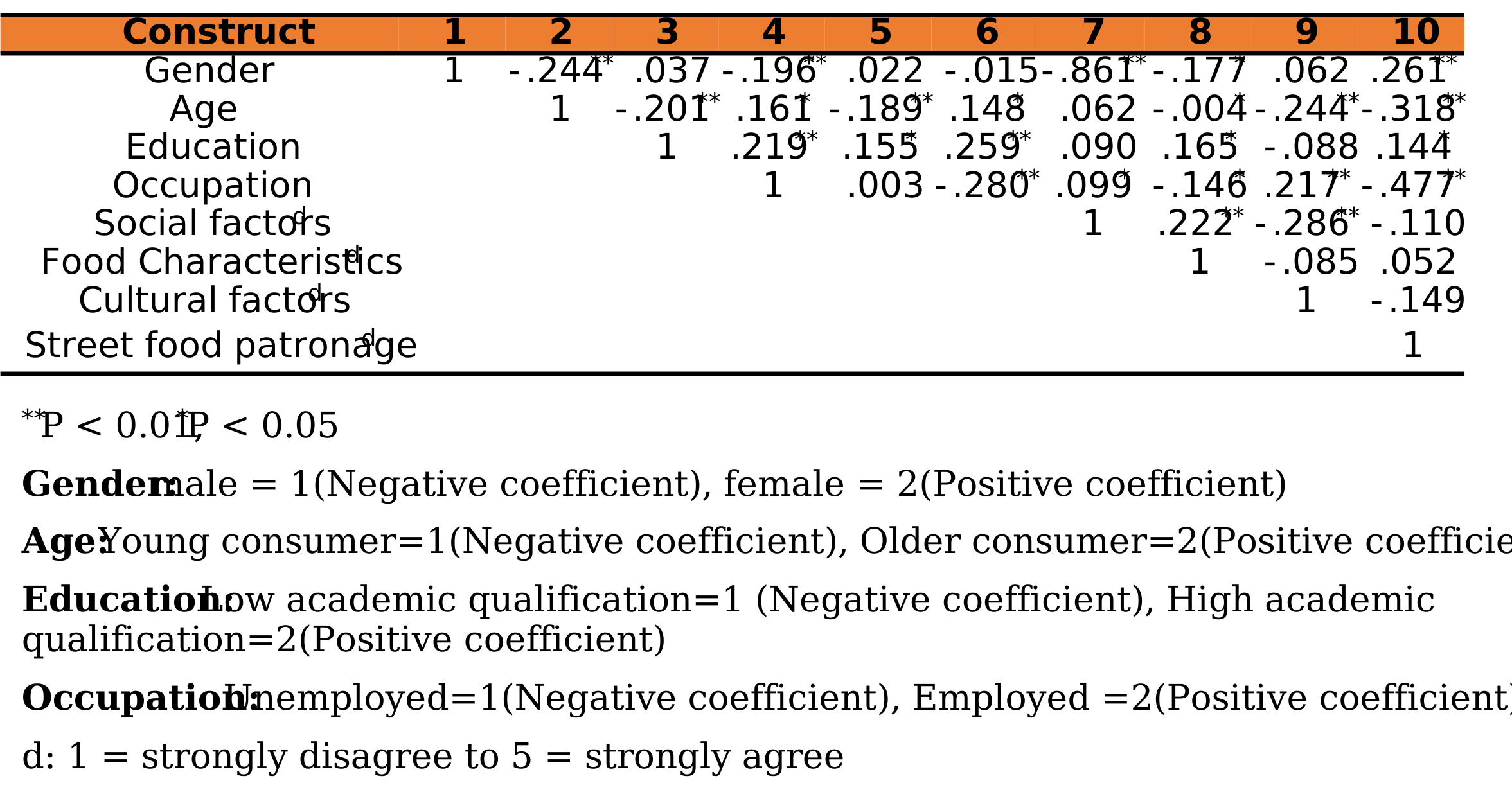
As depicted in Table 3, there is a significant association between age of the consumers and street food patronage (r=0.261, p<0.01). However, male consumers who patronize street vended food believe that social factors (r= -0.861, P<0.01), and food characteristics (r= -0.177, P<0.05) determines their preference and consumption of street vended foods as sex associated negatively. However, female consumers believed that cultural factors (r=0.062, P>0.05) has a great influence on their preference and consumption of street vended foods as sex associated positively. According to the study, age has a significant association with street food patronage (r=-0.318, P<0.01). Young consumers are of the view that food Characteristics (r = -0.004, P<0.05), and cultural factors (r= -0.244, P<0.01) are the factors that influence their decision with regards to patronizing street vended foods as age associated negatively. However, the older consumers affirmed that (r=-0.062, P>0.05) social factors influence their consumption of street vended foods as age associated positively.
The educational level of the consumers had a significant influence street food patronage (r=0.144, P<0.05). However, Educational level of respondents correlated positively with social factors (r=0.090, P>0.05), and food characteristics (r=0.165, P<0.05). This is an indication that consumers with higher academic qualifications are mostly influenced by social factors, and food characteristics. In addition, educational level of consumers associates negatively with cultural factors (r=244, P<0.01). This implies that lower academic qualifications of consumers are mostly influenced by cultural factors. The finding shows a significant association between consumers occupation and street food patronage (r=-0.477, P<0.01). Conversely, it was evident that employed consumers are influence by social factors (r= 0.099, P<0.05), and cultural factors (r=0.217, P<0.01) as the association was negatively related. Meanwhile unemployed consumers are significantly influence by food characteristics (r=0.217, P<0.01) as the association was positively related.
5. Discussions of Results
The study delved into the determinants influencing street food patronage, revealing that food characteristics play a significant role in consumer choices. It was found that the easy identification of street food in the community, the affordability of street food options, the reliability of street food vendors, and the perception of getting good value for money were key factors driving consumers to patronize street food vendors. These findings resonate with previous research by Haleegoah et al. (2020) [12], which highlighted convenience, individual tastes, and social factors as influential in the decision to purchase fast food items. Moreover, Sahay and Kumar (2011) [25] emphasized the cost-effectiveness of street meals compared to dining at fine restaurants, further supporting the notion that affordability is a critical factor in street food patronage. O'Dougherty et al. (2006) [26] also identified convenience and flavor as primary factors influencing street food consumption, aligning with the current study's findings.
The research emphasized the significance of social factors in driving street food consumption patterns, noting that variables such as marital status, financial constraints, and hectic work schedules influence consumer preferences for street cuisine. These findings echo previous studies by Haleegoah et al. (2020) [12] and Clark and Bagdan (2019) [27], highlighting the impact of social status on the intake of street-vended local foods. Additionally, the study revealed that demographic variables, including gender, age, education level, and income, influence street food patronage decisions. Consistent with findings by Mensah et al. (2013) [21], socioeconomic status was identified as a significant determinant of consumer purchasing habits, with household size, educational level, and income levels playing crucial roles. However, the results conflicted with a study by Obi-Nwosu et al. (2013) [28], suggesting that factors beyond sociodemographic characteristics may also influence street food consumption.
6. Conclusion and Recommendations
Street food are becoming more and more well-liked and prevalent in Ghana as a result of globalization. The quantity, variety, and preferences of customers have all risen. The factors that influence a customer's decision to choose or patronize a street food vary from nation to country and from area to region due to regional differences in socioeconomic status, environment, and culture. It was evident that food characteristics determines consumers patronage of street food. An assessment of the food characteristics reveals that easy identification of street foods at the community, inexpensive meal served by the street food, reliability of street food, and deserving cost of street food determines consumers purchase intention of street foods. According to the study, social factors are key determinants of consumers patronage of street foods. The result indicated that marital status, income, and tight schedule at workplace influence consumers patronage of street foods. The study concluded that gender, age, educational level, occupation, and income level of consumers has a significant influence on the decision and patronage of street food. In Koforidua Metropolis, consumers may get affordable, convenient, and frequently enticing street foods that is acceptable culturally. It is recommended that Food and Drug Authority (FDA), other stakeholders, and street food vendors work cooperatively to establish laws that capture the distinctive and diverse foods sold on the street and their various preparation, storage, and sale methods in order to ensure that food preparation and sales are safe and hygienic.
References
- Tugli, L. S., Essuman, E. K., Kortei, N. K., Nsor-Atindana, J., Nartey E. B. & OforiAmoah, J. (2019). Bioactive Constituents of Waakye: A Local Ghanaian Dish Prepared with Sorghum bicolor (L.) Moench Leaf Sheaths. Scientific African, 3, 1-9.[CrossRef]
- FAO. (2018). Guidelines for the design of control measures for street vended foods in Africa. FAO. Retrieved from http://www.fao.org/docrep/W6419E/w6419e05.htm. Accessed: June, 19, 2023.
- Baidoe, E. W., Ananga, K. M. & Nyinaku, K. E. (2020). Pattern and Extent of Street Food Consumption in Hohoe, Volta Region, Ghana: A Community-Based Cross-Sectional Survey. Journal of Food Quality, 1: 1-8[CrossRef]
- Hiamey, S. & Hiamey, G. A. (2018). Street food consumption in a Ghanaian Metropolis: The concerns determining consumption and non-consumption. Food Control, 92:1-12.[CrossRef]
- Rane, S. (2011). Street vended food in developing world: hazardanalyses,” Indian Journal of Microbiology, 51(1): 100–106.[CrossRef] [PubMed]
- Asiegbu, C.V., Lebelo, S.L. and Tabit, F.T. (2016). The food safety knowledge and microbial hazards awareness of consumers of ready-to-eat street-vended food. Food Control, (60), 422- 429.[CrossRef]
- Stutter, N. (2017). The social life of street food: exploring the social sustainability of street food in Hanoi, Vietnam (Doctoral dissertation, Cardiff University).
- Fellows, P. & Hilmi, M. (2012). Selling street and snack foods, Rome. Retrieved from: http://www.fao.org/docrep/015/i2474e/i2474e00.pdf. Accessed: June, 19, 2023.
- Arthur, P., Lah, E. S., Turkson, R., & Anane, M. (2022). Knowledge Base on Food Borne Diseases and Hygiene in Ghana: Appraisal of Food Vendors in Oguaa Koforidua. Open Journal of Food and Nutrition.[CrossRef]
- Feglo, P. and Sakyi, K. (2012). Bacterial contamination of street vending food in Kumasi, Ghana. Journal of Medical Biomedical Science, 1(1):1-8.
- Kasu, S.E., Letsa, T., Yeboah O., Habib, A., Pani, A., Agbokpe, D. & Abdulaziz, M. (2021). Investigation of Foodborne Illness Caused by Chlorpyrifos among Two Families in a Community in South Tongu District of Ghana. Journal of Food: Microbiology, Safety and Hygiene, 7(1), 11-21.
- Haleegoah, S. A. J., Akuoko, O. K., Dwumah, P., Marfo, A. K., Forkuor, B. J., Frimpong, N. B., Asante, O. B. & Brobbey, L. (2020). Factors Influencing Consumption of Street Vended Local Foods (SVLFS) In Urban Ghana. African Journal of Food Science, 14(11): 395-406.
- Namkung, Y. and Jang, S. (2007). Does Food Quality Really Matter in Restaurants? Its Impact on Customer Satisfaction and Behavioral Intentions. Journal of Hospitality & Tourism Research, 31, 387-409.[CrossRef]
- Clark, M.A., & Wood, R.C. (1999). Consumer loyalty in the restaurant industry: A preliminary exploration of the issues. British Food Journal, 101, (4), 317–326.[CrossRef]
- Mills, S., Brown, H., Wrieden, W., White, M., & Adams, J. (2017). Frequency of eating home cooked meals and potential benefits for diet and health: cross-sectional analysis of a population-based cohort study. The international journal of behavioral nutrition and physical activity, 14(1), 109. https://doi.org/10.1186/s12966-017-0567-y[CrossRef] [PubMed]
- Atinkut, H. Tingwu, Y., Etea, B., Shengze, Q., Abebe, K., Wubetie, B., Melese, T., Tadesse, S. & Abate, T. (2018). Factors influencing consumers' choice of street-foods and fast-foods in China. Journal of Marketing Management, 10:28-39.[CrossRef]
- Awa, H. O., Kalu, S. & Awara, N. (2010). An Empirical Investigation of Cultural Factors and Consumption Patterns Correlates in the South-South Geopolitical Zone of Nigeria. International Journal of Marketing Studies, 2:186-196[CrossRef]
- Pieniak, Z., Verbeke, W., Vanhonacker, F., Guerrero, L. & Hersleth, M. (2009). Association between traditional food consumption and motives for general food choice in Europe. Appetite, 53:101–108.[CrossRef] [PubMed]
- Alonso, E. B., Cockx, L., & Swinnen, J. (2018). Culture and food security. Global food security, 17, 113-127.[CrossRef]
- Trafialek, J., Drosinos, E.H. & Kolanowski, W. (2017). Evaluation of street food vendors’ hygienic practices using fast observation questionnaire. Food Control, 80(1),350-359[CrossRef]
- Mensah, O. J., Aidoo, R. & Teye, N. A. (2013). Analysis of Street Food Consumption Across Various Income Groups in the Kumasi Metropolis of Ghana. International Review of Management and Business Research, 2(4): 951-962.
- Ayo, S. A., Bonabana-Wabbi, J. 1. and Sserunkuuma, D. (2012). Determinants of fast food consumption in Kampala, Uganda. Africa Journal of Food, Agriculture, Nutrition and Development, 12(5): 6567-6581.[CrossRef]
- Steyn, N. P., Mchiza Z., Hill, J., Davids, Y. D. & Venter, I. (2013). Nutritional contribution of street foods to the diet of people in developing countries: a systematic review. Public Health Nutrition, 17: 1363-1374.[CrossRef] [PubMed]
- Kothari, C.R. (2004) Research Methodology: Methods and Techniques. 2nd Edition, New Age International Publishers, New Delhi.
- Sahay, A. & Kumar, Y. (2011). Customer perceptions of restaurant cleanliness: A cross cultural study. Unpublished master's thesis, Virginia Polytechnic Institute and State University, Blacksburg.
- O’Dougherty, M., Harnack, L. J., French, S. A., Story, M., Oakes J. M. & Jeffery, R. W. (2006). Nutrition labelling and value size pricing at fast-food restaurants: a consumer perspective. American Journal Health Promotion, 20(4):247–50.[CrossRef] [PubMed]
- Clark, L. F. & Bogdan, A. (2019). The Role of Plant-Based Foods in Canadian Diets: A Survey Examining Food Choices, Motivations and Dietary Identity. Journal of Food Products Marketing, 25(7):1-23.[CrossRef]
- Obi-Nwosu, S. I., Stanley, H. O., & Okerentugba, P. O. (2013). Occurrence, types and location of calcium oxalate crystals in Vernonia amydalina Del (Asteraceae). Int. J. Sci. Nat, 4(3), 533-537.