

The concept of the green economy is one of the global strategies to face contemporary societies' economic and environmental crises. Methodologically, the conceptualization, objectives, implementation, and criticism of various sectors of society to this new economic paradigm are addressed. It was found that authors and civil organizations have great expectations in the face of the challenges and challenges of this global strategy that has within its objectives sustainability, the eradication of poverty, and the inclusion of vulnerable social sectors. It is concluded that the green economy can contribute to maintaining a healthy environment and the proper use of ecosystem services, both for the present generation and for future generations.
Article
Open Access
September 23, 2021
Green Economy: A Necessary Decision to be Taken
1
Department of Energy Engineering and Physics, Amirkabir University of Technology (Tehran Polytechnic), 424 Hafez Avenue, PO. Box 15875-4413, Tehran, Iran
Page(s):
3-12
Received
August 19, 2021
August 19, 2021
Revised
September 16, 2021
September 16, 2021
Accepted
September 22, 2021
September 22, 2021
Published
September 23, 2021
September 23, 2021
Creative Commons
This is an Open Access article, distributed under the terms of the Creative Commons Attribution 4.0 International License (http://creativecommons.org/licenses/by/4.0/), which permits unrestricted use, distribution and reproduction in any medium or format, provided the original work is properly cited.
Copyright: Copyright © The Author(s), 2021. Published by Scientific Publications
Abstract
1. Introduction
The last decade has brought a series of inconveniences for humanity, problems such as climate change, environmental scarcity, the crisis in sectors of vital importance for development such as fuels, food, and water, and finally to the financial system and the whole of the world economy [1, 2, 3]. The economic and environmental crises come from the same origin and are mutually reinforcing due to the current economic model seeks short-term benefits without considering ecosystems as scarce goods, nor the consequences generated on the environment and society [4, 5].
In response to the problems currently being faced, a new trend in the economy arises, the green economy, which has undoubtedly been favored by the difficulties faced by the prevailing economic paradigm due to the crisis and market failures that were generated during this first decade of the 21st century [6, 7], in particular the financial and economic crisis of 2008. However, at the same time, there is evidence of a better way forward [7, 8], a new economic paradigm in which obtaining material wealth must not be obtained at the cost of increased environmental risks, ecological scarcity, or social inequality [9].
This new economic thinking seeks strategies to solve the various crises that hampered the development of world society in recent years [10, 11]. The consequences of climate change, the food crisis, the recent economic and financial crisis, and the low rates in the fight against poverty were important factors in defining the Green economy concept to which the United Nations contributed through the program for the environment - UNEP. At the Rio +20 summit, the concept of green economy sought to generate a change to the general political primacy of sustainable development, formulated in 1992 in Rio de Janeiro, in a concrete multidimensional strategy whose central element is structural economic change [12].
The concept of the green economy does not replace that of sustainable development, but today it is recognized that to achieve sustainability, it is necessary to change the brown economy model, where wealth was achieved without taking into account takes into account problems such as social inequality or the depletion of resources [13, 14]. Sustainability remains a vital long-term goal, and achieving it requires greening the economy [15].
2. Green Economics
The concept of Green Economy is not new, it was introduced in 1984 by Pearce, Markandya, and Barbier in their book “Blueprint for a Green Economy”. And there they defined the Green economy as "a system of economic activities related to the production, distribution, and consumption of goods and services that result in improvements in human wellbeing in the long term, without committing future generations to significant environmental risks and ecological scarcity" [16, 17]. However, no official and global introduction was not made until Rio + 20 in which this concept was officially introduced [18].
The economy and the environment currently achieve a high degree of interaction due to the environmental awareness of society, taking into account the damage that productive activities cause to the natural environment [19, 20]. These activities cause pollution processes in water, air, soil, and biodiversity resources, affecting social dynamics [21, 22]. This awareness has allowed more sustainable and environmentally responsible alternatives to be sought [23], in the sense of achieving a series of actions and regulations by the state and social initiatives to control, minimize, correct, and prevent the harmful effects of economic activities on the natural system. This activities process is known in the media as the green economy [24, 25].
The concept of the green economy is related to that of "ecological economy," a term that arises from the Spanish translation of "green economy" [26]. In this way, the green economy was presented by the United Nations Environment Program - UNEP, at the end of 2008, as a comprehensive and practical working mechanism, which seeks through the analysis and support of investment policies to encourage green sectors and change the hostile economic sectors with the environment [27, 28]. Currently, the green economy is described as an economy that seeks to improve human wellbeing and achieve social equity [29, 30, 31] by significantly reducing environmental risks and using sustainable ecological services. The economy seeks development with low carbon emissions, efficient resources, and being socially inclusive [31, 32].
This concept does not have a clear definition [33, 34]. In Spain, there are definitions such as the Fundació Fòrum Ambiental de Catalunya, where the green economy is assumed as the set of companies and economic activities dedicated to prevention –before-, mitigation –during- and/or correction –after- of the problems generated to natural systems by anthropic activities. However, it is necessary to consider that the concept of a green economy derives from a series of speeches by organizations worldwide, among which those shown in Table 1 stand out.
Finally, according to Carfi & Schilirò, a green economy relies on three main strategies: reducing carbon emissions, greater energy efficiency and the use of natural resources, and preventing the loss of biodiversity and its ecosystem services. To implement these strategies, support through investments at the public and private levels is necessary and political reforms and regulatory changes [32]. Therefore, it is essential to preserve, strengthen and, when required, rebuild natural capital as an economic asset and of public benefit, on which some sectors of society depend for their development [33].
3. Goals of the green economy
Before addressing the objectives of the green economy, it is important to review the context of world order, where global environmental problems, such as climate change, can generate irreparable consequences for humanity [34, 35]. In that order of ideas, at an economic level, there is currently an increase in the price of renewable fuels, food prices, and raw materials [36, 37]. The increase in energy demand (predicted by the International Energy Agency-IEA) shows that dependence on the use of oil and other fossil fuels will continue for a long time [38, 39]. At a general level, food security has not dimensioned the problem; for this reason, alternative solutions are not being generated to feed a population of nine billion people in 2050 [40, 41]. Freshwater scarcity is a global problem, and forecasts indicate that by 2030 there will be a greater imbalance between the annual demand and the renewable supply of freshwater [41, 42, 43, 44]. Concerning social dynamics, according to UNICEF & WHO, for basic sanitation services, it is evidenced that approximately 663 million people in the world are without access to drinking water. All these problems represented in the current crises affect the ability to sustain prosperity throughout the world and achieve the Millennium Development Goals - MDGs - to eradicate extreme poverty.
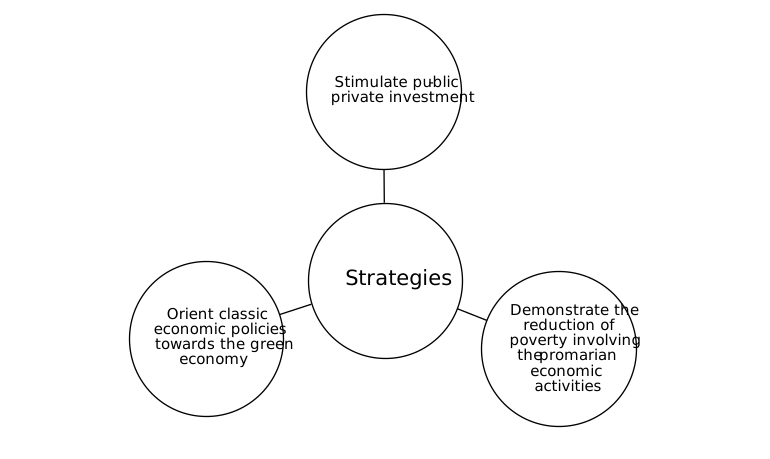
One of the main actions that the green economy seeks in sustainable development is eradicating poverty so that a better quality of life is guaranteed without affecting natural resources [45, 46]. For this reason, spreading the concept of the green economy without considering the needs of vulnerable groups and natural deterioration is a mistake, considering that recovery of environmental and social dynamics is not guaranteed in the short, medium, and long term [47, 48]. According to Biswas & Roy, the strategies proposed to achieve these objectives are shown in Figure 1.
The UNEP Green Economic Report –GER- contrasts with the “Brown Economic,” whose growth engine is physical-technological and financial capital, or built capital, whose wealth is produced at the cost of excessive dependence on fossil fuels, depletion of natural resources, and environmental losses. On the other hand, the green economy is sized towards natural capital, which can reach growth and jobs similar to those of the brown economy and surpass it in the medium and long term, ensuring greater environmental and social benefits in its implementation [49, 50].
To achieve the transition towards the green economy, eight main sectors of the economy were considered with the capacity to: reduce poverty, invest in natural capital and its recovery, generate jobs and improve social equity, encourage renewable energy and energy efficiency. Growth and jobs similar to those of the brown economy and overcome it in the medium and long term, ensuring greater environmental benefits. Based on the UNEP document, "towards a green economy," it is observed that its energy objectives, mobility, and sustainability urban [51], a summary of these sectors can be seen in Table 2.
They lead to low carbon emissions, use of natural resources efficiently, and be socially inclusive. The economic sectors of production that directly impact the environment should be encouraged through viable and reasonable alternatives by the public sector in general [52, 53], as expressed in Figure 2.
4. Implementation of the green economy
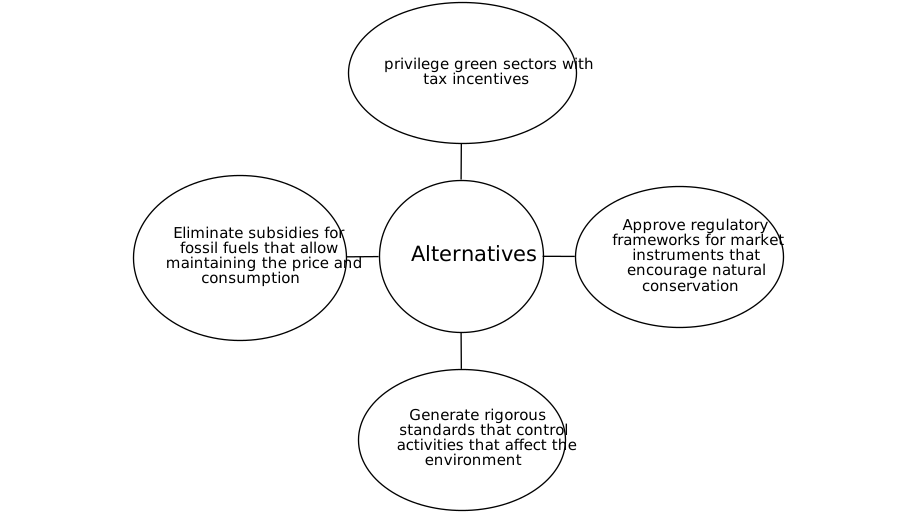
To optimize the implementation of this model, taking into account the above and studies carried out by UNEP in the report Towards a Green Economy: Pathways to Sustainable Development and Poverty Eradication, to potentiate and achieve a green economy requires an annual investment on 2% of global GDP, which would allow maintaining the current rate of economic growth and in turn achieving changes towards sustainable processes [54]. Additionally, the States must promote fiscal incentives, command and control measures, and economic instruments that help to conserve natural resources [55, 56]. All investments, together with political reforms, must promote the transformation of the sectors involved in the green economy to acquire a competitive position in the long term [57, 58].
The reconfiguration of the economy towards the framework of sustainability can lead to eco-efficiency, that is, to the more efficient use of natural resources and benefits to society, such as the generation of “green jobs,” and at a macro-level to reduce poverty, minimize income inequalities, and thus achieve an economy with inclusive growth [59]. To achieve this end, the options are wide and varied, including from the direct generation of green jobs, access to environmental goods and services by marginalized communities, the structuring of specific conditional cash transfer strategies, direct subsidies to certain industrial sectors, and the restructuring of the national public procurement policy [60, 61].
Yeyanran & Qiang state that in addition to the proposed investments, it is necessary to consolidate aspects such as solid regulatory frameworks, limiting spending in areas that deplete natural resources, applying taxes and market-based instruments that allow modifying the preferences of the consumers and stimulate green investment and innovation, investment in training and capacity building, as well as strengthening governance processes at all levels[62].
Also, Saikku proposes the need for regulatory or standardization schemes in the field of environmental law aimed at sectors such as:
Energy-efficient construction.
Increase in emission standards for vehicles.
The percentage increase in the energy matrix of countries with renewable energies.
The economic management of waste and recycling.
Planned urban development and transportation, where alternative means are taken into account.
The eco-labeling of mass consumer products.
Other important considerations to achieve the transition to a green economy are found at the international level in multilateral environmental agreements [63], where legal and institutional frameworks are established to address global environmental challenges [64]. These agreements include the United Nations Framework Convention on Climate Change (UNFCCC) and the renewal of a post-Kyoto agreement for carbon [65, 66]. But in the same way, all these considerations cannot be addressed indistinctly for all countries, but a differential way must be proposed in terms of the approach to the green economy, for which it is proposed to divide the countries into three groups with certain characteristics [67, 68], but at the same time with some degree of responsibility, as follows:
Developed countries have a pioneering role and are obligated to modify their production and consumption patterns.
Developing countries: with the possibility of achieving their objectives within the schemes of sustainability.
Industrialized countries: which must guarantee financial and technological aid to developing countries.
5. Criticisms of the green economy
Civil society groups and governments have criticized the transition to a green economy, taking into account that it does not adequately or address social, economic, and ecological aspects, pillars of sustainable development [69], but, on the contrary, it can become a new framework for sustainable development, replacing the three pillars mentioned [70]. The United Nations Environment Program states that “the achievement of sustainability depends considerably on the adequacy in the economy,” making it necessary to examine the concept of a green economy and how it would be promoted in economic, ecological, and social terms sustainability within it.
Another criticism that appears is the economic nature of the green economy, which, although it is based on the production of more sustainable sectors that allow reducing environmental problems, continues to have accumulation and infinite growth as an economic pattern [71, 72]. For Droste overcoming the current economic order would imply the need to convert economic production to physical terms so that the finite capacity of natural resources and assimilation of the waste of anthropic activity on the planet becomes evident. Unmüßig and Diyar affirm that the green economy is an inappropriate term, scientific and philosophical mistake, with which sustainable development and the eradication of poverty will not be achieved. Montefrio & Dressler also add that it was built from ambiguities without scientific or philosophical support. On the contrary, it will legitimize the opening of markets, creating more tension with the ecological and cultural diversity of the planet and humanity.
In the ethical debate, it is pointed out that the green economy is framed in neoliberal fundamentalism, a model of anthropocentric vision [73], for which, therefore, the need to address other forms of relationship between beings arises. Humans with their environment [74] explore the meaning of other worldviews and/or cultural patterns based on recognizing the rights of nature, exposed by some Latin American societies [75, 76]. From radical social sectors, the green economy is nothing more than the prevailing model with the name of green, distant from the current paradigm, which has domination of nature to extract the greatest possible benefits for business and the market [77]. It does not look for another paradigm of the economy of preservation, conservation, and sustainability of all life [78, 79].
6. Conclusions
The green economy becomes a model that promotes growth, the creation of income and jobs, “green jobs,” which seeks to change the interaction between economic progress and environmental sustainability, particularly if wealth is measured by taking natural assets into account and not just productivity. Along with the above, it also contributes substantially to reducing social inequality between countries and eradicating poverty in the world. In the same way, it is necessary to address ways that manage to nullify the ideas of market liberalization and promote trade relations on equal terms between the North and the South.
It should be noted that the implementation of the green economy can achieve technological changes that allow the adoption of environmentally sustainable strategies, which make responsible use of natural resources, and that the waste from its activity can be reincorporated into the production process reducing this forms the causes of pollution. But to achieve the objectives proposed by the green economy, the proposed alternatives must be accepted and developed by both developed and developing countries through the allocation of necessary economic resources, greater rigor in environmental regulations, the creation of subsidies, to friendly activities with the environment and the optimization of the planning processes of the territory. Likewise, it is necessary to create a new economic framework that allows countries to agree on the same level without losing sight of the fundamental premises of sustainable development.
Finally, the green economy seeks within its objectives the eradication of poverty and the inclusion of vulnerable social sectors to achieve economic development within parameters of sustainability, that is, the maintenance of a healthy environment and the proper use of resources. Ecosystem services, both for the present generation and for future generations.
Supplementary Materials: “Not applicable.”
Author Contributions: "Conceptualization, NN; methodology, NN; software, NN; validation, NN; formal analysis, NN; investigation, NN; resources, NN; data curation, NN; writing—original draft preparation, NN; writing—review and editing, NN; visualization, NN; supervision, NN; project administration, NN, All authors have read and agreed to the published version of the manuscript."
Funding: "This research received no external funding."
Data Availability Statement: “Not applicable.”
Acknowledgments: “Not applicable.”
Conflicts of Interest: "The authors declare no conflict of interest."
References
- Milani, B. Designing the Green Economy: The Postindustrial Alternative to Corporate; Rowman and Littlefield Publishers, Inc.: Oxford, UK, 2000.
- Organisation for Economic Co-Operation and Development (OECD). Environmental Taxes and Green Tax Reforms; OECD: Paris, France, 1997; Available online: https://www.oecd.org/sd-roundtable/papersandpublications/39372634.pdf (accessed on 21 August 2020).
- Jalilian, H.; Kirkpatrick, C.; Parker, D. The Impact of Regulation on Economic Growth in Developing Countries: A Cross-Country Analysis. World Dev. 2007, 35, 87–103.[CrossRef]
- World Bank. Doing Business in 2004: Understanding Regulation; World Bank: Washington, DC, USA, 2004.
- Bovenberg, A.L.; van der Ploeg, F. Environmental policy, public finance and the labour market in a second-best world. J. Public Econ. 1994, 55, 349–390.[CrossRef]
- Barbier, E. The policy challenges for green economy and sustainable economic development. Nat. Resour. Forum 2011, 35, 233–245.[CrossRef]
- Bailey, I.; Caprotti, F. The Green Economy: Functional Domains and Theoretical Directions of Enquiry. Environ. Plan. A Econ. Space 2014, 46.[CrossRef]
- Li, J.; Lin, B. Green Economy Performance and Green Productivity Growth in China’s Cities: Measures and Policy Implication. Sustainability 2016, 8, 947.[CrossRef]
- Aldieri, L.; Vinci, C.P. Green Economy and Sustainable Development: The Economic Impact of Innovation on Employment. Sustainability 2018, 10, 3541.[CrossRef]
- Khoshnava, S.M.; Rostami, R.; Zin, RM; Štreimikienė, D.; Yousefpour, A.; Strielkowski, W.; Mardani, A. Aligning the Criteria of Green Economy (GE) and Sustainable Development Goals (SDGs) to Implement Sustainable Development. Sustainability 2019, 11, 4615.[CrossRef]
- Vukovic, N.; Pobedinsky, V.; Mityagin, S.; Drozhzhin, A.; Mingaleva, Z. A Study on Green Economy Indicators and Modeling: Russian Context. Sustainability 2019, 11, 4629.[CrossRef]
- Vuola, M.; Korkeakoski, M.; Vähäkari, N.; Dwyer, B.M.; Hogarth, J.N.; Kaivo-oja, J.; Luukkanen, J.; Chea, E.; Thuon, T.; Phonhalath, K. What is a Green Economy? Review of National-Level Green Economy Policies in Cambodia and Lao PDR. Sustainability 2020, 12, 6664.[CrossRef]
- Guo, M.; Nowakowska-Grunt, J.; Gorbanyov, V.; Egorova, M. Green Technology and Sustainable Development: Assessment and Green Growth Frameworks. Sustainability 2020, 12, 6571.[CrossRef]
- Bostan, I.; Burciu, A.; Condrea, P. Trends of the communitarian cohesion policies and advertising for eco-investments. Environ. Eng. Manag. J. 2010, 9, 847–851.[CrossRef]
- Bostan, I. Pro sustainable development: The influence of the law of entropy on economic systems. Environ. Eng. Manag. J. 2016, 15, 2429–2432.[CrossRef]
- Porter, M.E.; Vanderlinde, C. Toward a new conception of the environment competitiveness relationship. J. Econ. Perspect. 1995, 9, 97–118.[CrossRef]
- Hamdouch, A.; Depret, M.-H. Policy integration strategy and the development of the ‘green economy’: Foundations and implementation patterns. J. Environ. Plan. Manag. 2010, 53, 473–490.[CrossRef]
- Hu, W.; Wang, D. How does environmental regulation influence China’s carbon productivity? An empirical analysis based on the spatial spillover effect. J. Clean. Prod. 2020, 257, 1–9.[CrossRef]
- Bostan, I.; Burciu, A.; Condrea, P.; Durac, G. Involvement of legal responsibility for severe acts of pollution and noncompliance. Environ. Eng. Manag. J. 2009, 8, 469–473.[CrossRef]
- Zhao, M.; Liu, F.; Song, Y.; Geng, J. Impact of Air Pollution Regulation and Technological Investment on Sustainable Development of Green Economy in Eastern China: Empirical Analysis with Panel Data Approach. Sustainability 2020, 12, 3073.[CrossRef]
- United Nations Framework Convention on Climate Change—UNFCCC. Paris Agreement on Climate Change 2015. Available online: https://unfccc.int/process-and-meetings/the-paris-agreement/the-paris-agreement (accessed on 22 August 2020).
- United Nations General Assembly. UN 2030 Agenda for Sustainable Development 2015. Available online: https://sustainabledevelopment.un.org/topics/sustainabledevelopmentgoals (accessed on 8 August 2020).
- Hayek, F. The Use of Knowledge in Society. Am. Econ. Rev. 1945, 35, 519–530.
- Stiglitz, J. Private uses of public interests: Incentives and institutions. J. Econ. Perspect. 1998, 12, 3–22.[CrossRef]
- La Porta, R.; Lopez-de-Silanes, F.; Shleifer, A.; Vishny, R. Legal determinants of external finance. J. Finance 1997, 52, 1131–1150.[CrossRef]
- La Porta, R.; Lopez-de-Silanes, F.; Shleifer, A.; Vishny, R. Investor protection and corporate valuation. J. Financ. 2002, 57, 1147–1170.[CrossRef]
- Cuomo, F.; Mallin, C.; Zattoni, A. Corporate Governance Codes: A Review and Research Agenda. Corp. Gov. Int. Rev. 2016, 24, 222–241.[CrossRef]
- Kiviaho, J.; Nikkinen, J.; Piljak, V.; Rothovius, T. The comovement dynamics of European frontier stock markets. Eur. Financ. Manag. 2014, 20, 574–595.[CrossRef]
- Claessens, S.; Yurtoglu, B.B. Corporate governance in emerging markets: A survey. Emerg. Mark. Rev. 2013, 15, 1–33.[CrossRef]
- Parker, D. Regulation of privatised public utilities in the UK: Performance and governance. Int. J. Public Sect. Manag. 1999, 12, 213–235.[CrossRef]
- Szyja, P. The role of the state in creating green economy. Oecon. Copernic. 2016, 7, 207–222.[CrossRef]
- Kaufmann, D.; Kraay, A.; Mastruzzi, M. Governance Matters IV: Governance Indicators; World Bank: Washington, DC, USA, 2005.[CrossRef]
- Howel, LD. Political Risk Services. In International Country Risk Guide; PRS Group, Inc.: New York, NY, USA, 2002.
- World Bank. Inclusive Green Growth: The Pathway to Sustainable Development; Technical Report; World Bank Publications: Washington, DC, USA, 2012.
- Ekins, P. Economic Growth and Environmental Sustainability: The Prospects for Green Growth; Routledge: London, UK, 2002.[CrossRef]
- Hallegatte, S.; Heal, G.; Fay, M.; Treguer, D. From Growth to Green Growth—A Framework; The World Bank: Washington, DC, USA, 2011.[CrossRef]
- Bowen, A.; Hepburn, C. Green growth: An assessment. Oxf. Rev. Econ. Policy 2014, 30, 407–422.[CrossRef]
- Smulders, S.; Toman, M.; Withagen, C. Growth theory and green growth. Oxf. Rev. Econ. Policy 2014, 30, 423–446.[CrossRef]
- Fouquet, R. Handbook on Green Growth; Edward Elgar Publishing: Northampton, MA, USA, 2019.
- Mealy, P.; Teytelboym, A. Economic complexity and the green economy. Res. Policy 2020.[CrossRef]
- ADB. Low-Carbon Green Growth in Asia: Policies and Practices; Technical Report; Asian Development Bank: Mandaluyong, Philippines, 2013; Available online: https://www.adb.org/sites/default/files/publication/159323/adbi-low-carbon-green-growth-asia-policies-and-practices-executive-summary.pdf (accessed on 21 July 2020).
- AfDB. African Development Report 2012: Towards Green Growth in Africa; Technical Report; African Development Bank: Mandaluyong, Philippines, 2013; Available online: https://www.greengrowthknowledge.org/sites/default/files/downloads/resource/African%20Development%20Report%202012_4.pdf (accessed on 21 July 2020).
- EBRD. Green Growth. Transition Report 2017–2018: Sustaining Growth; European Bank for Reconstruction and Development: London, UK, 2017.
- Kuznets, S. Economic growth and income inequality. Am. Econ. Rev. 1955, 45, 1–28.
- Bilan, Y.; Streimikiene, D.; Vasylieva, T.; Lyulyov, O.; Pimonenko, T.; Pavlyk, A. Linking between Renewable Energy, CO2 Emissions, and Economic Growth: Challenges for Candidates and Potential Candidates for the EU Membership. Sustainability 2019, 11, 1528.[CrossRef]
- Ambec, S.; Cohen, M.A.; Elgie, S.; Lanoie, P. The Porter Hypothesis at 20: Can Environmental Regulation Enhance Innovation and Competitiveness? Discussion Paper 11–01; Resources for the Future: Washington, DC, USA, 2011.[CrossRef]
- FSUNEP Collaborating Centre for Climate & Sustainable Energy Finance. Delivering the Green Economy through Financial Policy—2014; FSUNEP: Frankfurt, Germany, 2014; Available online: http://unepinquiry.org/wp-content/uploads/2014/05/141017_UNEP-Inquiry-Green-Economy-through-Financial-Policy-3.pdf (accessed on 21 July 2020).
- Organisation for Economic Co-Operation and Development (OECD). Reducing the Risk of Policy Failure: Challenges for Regulatory Compliance—2000; OECD: Paris, France, 2000; Available online: https://www.oecd.org/gov/regulatory-policy/1910833.pdf (accessed on 11 September 2020).
- Repetto, R.; Magrath, W.; Wells, M.; Beer, C.; Rossini, F. Wasting Assets: Natural Resources in the National Accounts; World Resources Institute: Washington, DC, USA, 1989.
- Giannetti, B.F.; Agostihno, F.; Almeida, CMVB; Huisingh, D. A review of limitations of GDP and alternative indices to monitor human wellbeing and to manage ecosystem functionality. J. Clean. Prod. 2015, 87, 11–25.[CrossRef]
- Hamilton, K. Green adjustments to GDP. Resour. Policy 1994, 20, 155–168.[CrossRef]
- Hicks, J.R. Value and Capital, 2nd ed.; Oxford University Press: Oxford, UK, 1946.
- Yu, Y.; Yu, M.; Lin, L.; Chen, J.; Li, D.; Zhang, W.; Cao, K. National Green GDP Assessment and Prediction for China Based on a CA-Markov Land Use. Sustainability 2019, 11, 576.[CrossRef]
- Xu, L.; Yu, B.; Yue, W. A method of green GDP accounting based on eco-service and a case study of Wuyishan, China. Procedia Environ. Sci. 2010, 2, 1865–1872.[CrossRef]
- Liu, X. China CO2 control strategy under the low-carbon economy. Procedia Eng. 2012, 37, 281–286.[CrossRef]
- Kunanuntakij, K.; Varabuntoonvit, V.; Vorayos, N.; Panjapornpon, C.; Mungcharoen, T. Thailand Green GDP assessment based on environmentally extended input-output model. J. Clean. Prod. 2017, 167, 970–977.[CrossRef]
- United Nations; European Commission; International Monetary Fund; Organization for Economic Cooperation and Development; World Bank. Handbook of National Accounting—Integrated Environmental and Economic Accounting 2003; (SEEA 2003); Final draft edition; The Statistical Commission of the United Nations: New York, NY, USA, 2003.
- Kaya, Y.; Yokobori, K. Environment, Energy and Economy: Strategies for Sustainability; Bookwell Publications: Delhi, India, 1999; Volume 1, pp. 114–123.
- Meng, M.; Niu, D.X.; Gao, Q. Decomposition analysis of Chinese provincial economic growth through carbon productivity analysis. Environ. Prog. Sustain. Energy 2014, 33, 250–255.[CrossRef]
- Meng, M.; Niu, D. Three-dimensional decomposition models for carbon productivity. Energy 2012, 46, 179–187.[CrossRef]
- Hu, X.; Liu, C. Carbon productivity: A case study in the Australian construction industry. J. Clean. Prod. 2016, 112, 2354–2362.[CrossRef]
- Lu, J.; Fan, W.; Meng, M. Empirical research on China’s carbon productivity decomposition model based on multidimensional factors. Energies 2015, 8, 3093–3117.[CrossRef]
- Li, S.; Wang, S. Examining the effects of socioeconomic development on China’s carbon productivity: A panel data analysis. Sci. Total Environ. 2019, 659, 681–690.[CrossRef] [PubMed]
- Aidt, TS Green Taxes: Refunding Rules and Lobbing. J. Environ. Econ. Manag. 2010, 60, 31–43.[CrossRef]
- Liu, Y.; Dong, F. Haze pollution and corruption: A perspective of mediating and moderating roles. J. Clean. Prod. 2021, 279, 123550.[CrossRef]
- Sinha, A.; Gupta, M.; Shahbaz, M.; Sengupta, T. Impact of corruption in public sector on environmental quality: Implications for sustainability in BRICS and next 11 countries. J. Clean. Prod. 2019, 232, 1379–1393.[CrossRef]
- Candau, F.; Dienesch, E. Pollution Haven and Corruption Paradise. J. Environ. Econ. Manag. 2017, 85, 171–192.[CrossRef]
- European Commission. EUROPE 2020. A European Strategy for Smart, Sustainable and Inclusive Growth 2015. Available online: https://ec.europa.eu/eu2020/pdf/COMPLET%20EN%20BARROSO%20%20%20007%20-%20Europe%202020%20-%20EN%20version.pdf (accessed on 29 June 2020).
- European Commission. 2020. Available online: https://ec.europa.eu/info/business-economy-euro/economic-and-fiscal-policy-coordination/eu-economic-governance-monitoring-prevention-correction/european-semester/european-semester-your-country/romania/europe-2020-targets-statistics-and-indicators-romania_en#share-of-renewable-energy (accessed on 8 September 2020).
- World Bank. World Bank Open Data 2020. Available online: https://data.worldbank.org/ (accessed on 2 September 2020).
- Barro, R.J. Economic growth in a cross section of countries. Q. J. Econ. 1991, 106, 407–433.[CrossRef]
- Barro, R.J. Inequality and growth in a panel of countries. J. Econ. Growth 2000, 5, 5–32.[CrossRef]
- Mankiw, N.D.; Romer, P.; Weil, D. A contribution to the empirics of economic growth. Q. J. Econ. 1992, 107, 407–437.[CrossRef]
- Islam, N. Growth empirics: A panel data approach. Q. J. Econ. 1995, 110, 1127–1170.[CrossRef]
- Heritage Foundation. Index of Economic Freedom. 2020. Available online: https://www.heritage.org/index/?version=756 (accessed on 3 August 2020).Author 1, A.; Author 2, B. Title of the chapter. In Book Title, 2nd ed.; Editor 1, A., Editor 2, B., Eds.; Publisher: Publisher Location, Country, 2020; Volume 5, pp. 154–196.
- Norouzi, N. The Pahlev Reliability Index: A measurement for the resilience of power generation technologies versus climate change. Nuclear Engineering and Technology. 2021, 53(5),1658-63.[CrossRef]
- Norouzi, N., Kalantari, G., Talebi, S. Combination of renewable energy in the refinery, with carbon emissions approach. Biointerface Res. Appl. Chem. 2020,10(4),5780-6.[CrossRef]
- Fani, M., Norouzi, N. Using Social and Economic Indicators for Modeling, Sensitivity Analysis and Forecasting the Gasoline Demand in the Transportation Sector: An ANN Approach in case study for Tehran metropolis. Iranian Journal of Energy. 2020, 23(2), 71-91.
- Norouzi, N., Bashashjafarabadi, Z., Meybodi, S.M. An Economic Evaluation of the use of Wind Farms in Iran, Taking into Account the Effect of Energy Price Liberalization Policy. Universal Journal of Business and Management. 2021 ,1(1),49-61.[CrossRef]