
Abstract
In today’s world of a globalized economy and ubiquitous digital transactions, businesses are hungry for ways to increase transaction efficiency and security. In the real economy, solutions that scale to fit transaction volume or velocity are equally valuable. This is true for clearing and settlement and for the day-to-day needs of buyers and sellers alike. Clever observers of both cash and digital transactions can spot cases where technology that supports transaction security or safety can strengthen consumer-borrower ties, mitigate default risks, and reduce recidivism. In general, a cloud solution for payment processing and merchant services solves two major barriers to optimum business technology: lack of scalability and lack of security [1]. The extension of current practice has its advantages, but new solutions unlock significant opportunities for both consumers and financial institutions [2]. The focus of this work is on the provisioning of cloud-based payment processing and merchant services to financial institutions and established global organizations, although the options available with these services mean they are potentially applicable to a wide range of group entities, including non-trading organizations, pension administrators, and group treasurers. With the increased attention to cybersecurity, a mass of data is available to assist the IT departments of the major payment processors, merchants, and acquirers to get cybersecurity on the radar of C-level executives [3]. The case is put forward for the increased targeting of and reporting to the Board’s Audit, Risk, and Liability Committees of publicly held payment processors and merchants to reduce fraud losses and mitigate the reputation and class action lawsuit risk due to data breaches. The progress of technology in the payment sector requires all stakeholders to have a collective approach in order to mitigate fraud and cybersecurity-related risks in new products and services to enhance consumer confidence and the proportion of retail cashless transactions [4].
1. Introduction
The cloud-based payment processing realm is growing with rapid speed. Ever since the digital age began and gained momentum, millions of people worldwide have been conducting online transactions: buying and selling goods and services and paying and being paid [5]. People who conduct digital transactions, such as eCommerce and point-of-sale, expect numerous and timely payment options, are cognizant of their online security and privacy rights, and favor seamless and fast transaction processing. The evolution of consumer expectations and demands complicates the merchant services landscape [6]. Merchants now confront a crucial business decision that poses several challenging questions: when will we fully outsource to the cloud; what type of legacy technology do we have that presents an obstacle; is our network agile and scalable to compete on a global basis; how can we keep up with new, cloud-based processing technologies and still remain affordable; how do we integrate the cloud with our ongoing organizational business processes securely [7]?
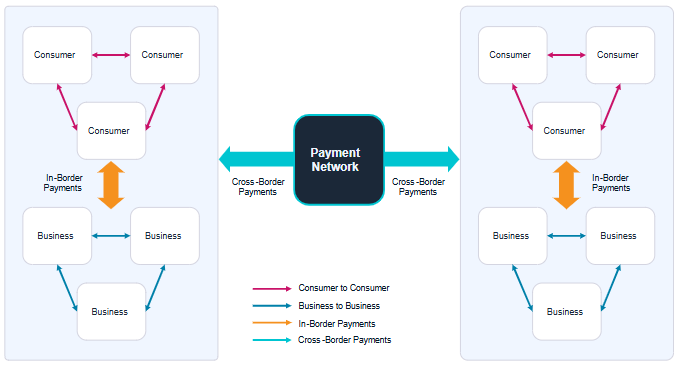
World commerce increasingly has become global in nature with the majority of transactions initiated via digital platforms. The traditional methods by which businesses checked and processed inbound and outbound online digital payments have become inadequate for both security professionals and e-businesses [8]. The sum value of the merchandise exchanged is substantial: ninety-five percent of the goods sold are represented by business-to-business and business-to-consumer markets. International and domestic, few, if any, are purely domestic. As the cost of doing business worldwide increases, few merchants will have the luxury of not exploiting global markets for their goods and services. Universal commerce by its very nature is digital and requires secure global processing [9]. Because the first three categories are inextricably intertwined, to best and thoroughly understand the economic implications of technology and security used in global electronic payment channels, a cross-disciplinary approach is essential. This paper attempts to provide such an approach [10].
1.1. Background and Significance
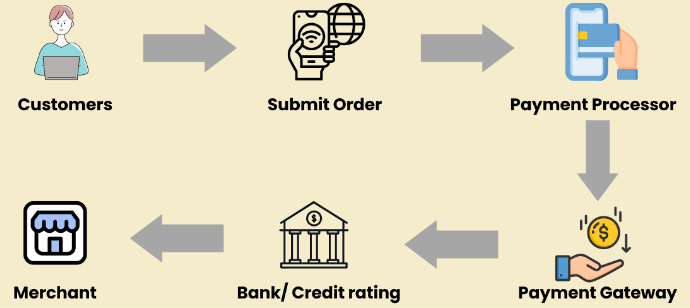
In the early days of commerce, bartering was an appropriate solution for everyday transactions [11]. This simplistic payment infrastructure quickly evolved to a broad variety of payment systems including cash in all its forms, checks, drafts, credit cards, cryptocurrency, and more. Today, the undeniable and ever-growing trend is for all of these systems to move from paper or traditional physical form to electronics-based fast and low-cost digital methods [12]. Most decisions on payment methods are made in an instant at the cashier, so any complications in the investigation of payment balance or even slow credit card transactions may be a deciding factor for immediate sales and guaranteed loss of customers. Cloud-based technologies can offer services that can grow along with digital transactions as well as businesses in a more secure and easily scalable framework to provide near real-time merchant services such as a service and wire transfers to customers [13].
Equation 1: Transaction Success Rate (TSR)
Where:
- = Number of successful transactions
- = Total number of transactions
2. Cloud Computing in Payment Processing
Cloud computing is an on-demand service model for allowing convenient access to a shared pool of computing resources. It features a few important constituent characteristics consistent with the nature of electronic payment processing [14]. These include self-service resource provisioning, broad network access, rapid elasticity or expansion, and dynamic, metered service. Electronic payment processing is a complex and mission-critical application that can benefit from a cloud computing-based approach. Cloud solutions for payment systems promise improved performance, flexibility, and cost reduction. Issues involving digital transactions should be addressed in terms of flexibility, processing capacity, the cost of deployment and local support, and acceptable security measures. The use of cloud computing in payment processing can significantly impact deployment, operations, and security investments [15].
Cloud computing is a conceptually oriented area of computing that is crucial for understanding the ongoing evolution of transaction processing in e-commerce [16]. The possibility of carrying out payments in electronic channels or using the digital medium has removed temporal boundaries and made potential markets more global than ever before. Today’s payment mechanisms show a strong trend: services rely less on paper such as checks and forms and more on digital services such as electronic funds transfer and real-time payment protocols. Cloud computing alleviates the need for creating local infrastructures for software and hardware and could allow those needing processing support to extend their payment systems capacity and resources with more flexible, external, and elastic on-demand services [17]. Cloud computing describes a distinction for payment processing due to the important benefits of self-service or rapid injection and expansion of resources and metering by the consumer. The infrastructure can be operated by the consumer or a third party. Significantly, the cloud provides the illusion of infinite capacity and a pay-as-you-go billing model [18].
2.1. Definition and Basics
Cloud infrastructure offers businesses a range of paid and free services in the form of software, platforms, and infrastructure. Payment processing applications executed through these services offer enhanced capacity, better protection, and an infrastructure for greater ease and effectiveness of use. Even before choosing a cloud service that suits their environment, cloud computing has a dramatic and continuing effect on online, in-store, and mobile payment processing [19]. Decision makers involved in operating financial services, credit processing companies, or economies that use them will benefit from becoming familiar with and staying informed on the current technology solutions within the cloud computing sector and their use. This section offers a variety of useful details that pertain directly to and complement any inquiry on cloud-based payment processing [20]. Available resources enable the study of both cloud systems and the economic fundamentals that drive them head-on. Subdivided into IaaS, PaaS, and SaaS sections, this initial section introduces basic cloud technologies and the technical terms central to this investigation [21].
Modern technology configurations of various sorts allow remote-access data storage for companies [22]. Any service provided is done as a rental using remote servers for data commerce instead of onsite systems or solitary servers enabling certain transactions and supplying dependability in declaring limits on program operation. Because of data cloud accessibility and lack of physical equipment, this majority-service cloud technology does not explicitly allow rapid access to hiring virtual services. In simple conceptual terms, the cloud has an unseen data hold offering up different ranges of usage perspectives catering to arts and visual software programs, available data storage, legal databasing, and many other basic services [23].
2.2. Benefits and Challenges
Cloud-based payment processing has multiple benefits. Key among these is that it can be easily scaled up or down based on fluctuating amounts of transactions. This presents an excellent opportunity to reduce, or perhaps even consolidate computational and administrative overheads, saving valuable resources while reducing risks associated with them. For payment processors, payment acceptance providers, and traditional bank and credit union merchant services, cloud offerings lower the barrier to entry for a highly localized business or merchant who only somewhat recently was able to offer digital payment options [24]. Furthermore, cloud-based merchant services represent a chance to significantly change and disrupt how digital payments are handled, making such solutions ultimately greater than the sum of their parts. Challenges that cloud-based options face are almost all par for the course for generic cloud-based services [25]. Some involve the intricacies and perils of the cloud itself while more spring from existing digital payment public concerns. These include the privacy and security issues most businesses and organizations have faced following a cyber attack or successful and malicious hacking of sensitive information that flows through private and public sector payment gateways. Cybersecurity has been evolving at an extremely fast pace, with the complexity and level of threat evolving along this path as well [26]. As credit card security became better through the use of technology such as the Chip and PIN system, traditional brick-and-mortar stores became less attractive to criminals. The upshot is a migration of potential victims to the convenience of internet shopping and a greater number of online service providers. With this, cybersecurity incidents proliferated [27]. For instance, there were numerous cyber breaches recorded, with data breach incidents in the financial and insurance industry resulting in significant losses. However, these are static figures: the landscape and the threats may have evolved dramatically between then and now [28].
3. Security Considerations in Cloud Based Payment Processing
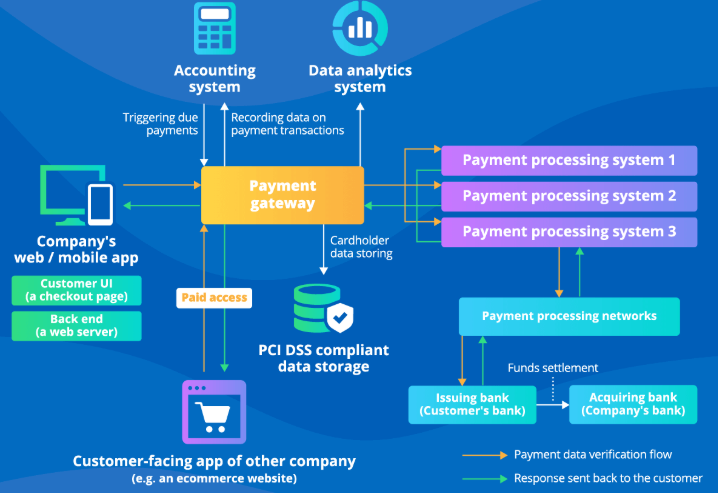
The entire gamut of cloud-based functionalities strives to harness core technology to drive completely or partially the tech side of the firms through pay-as-you-use service flows [29]. It attracts fintech businesses, which additionally launched domain-specific services such as payment processing, gateway services, digital merchants, and settlement systems. To cater to the requirements of these services, one often mandates working either with card issuing or card acquiring institutions [30]. The information that revolves around these services often proves confidential and dynamic. One can also comprehend the dynamics of information being received, transmitted, and stored as the life cycle of the transaction. Additionally, real-time financial transactions and the future of commerce induce a genuine need to maintain data integrity. Hence, it is vital to develop and offer secure payment processing as merchants allow financial account linking. However, the safety of the storage mediums and the data stored there is a key issue that evokes skepticism in approving person-to-person transactions over the cloud amidst privacy and security laws [31].
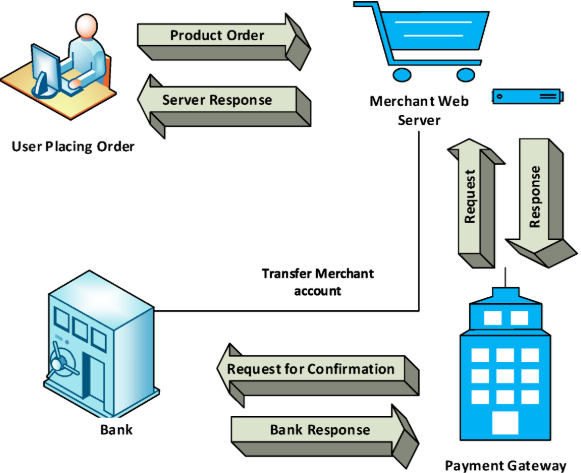
The advantageous multi-functional capabilities of cloud services are swaying away the current infrastructure-based systems, but to implement payment-processing abstractions, such as encryption, credential validation, and data lineage analysis, it is essential to still harness the features that are in compliance with the Payment Card Industry Data Security Standard norms [32]. Encryption, website isolation, rack space, and secure deletion are some of the features that any cloud service provider needs to integrate with their infrastructure system to meet PCI requirements, in addition to common cloud certification norms. Authentication, including before entering personal information, needs to ensure a user is authorized to conduct transactions on a specific account. Cloud service providers must offer APIs that enable the website to integrate both with existing security services offered by organizations and multi-layer security in the network connection [33]. Consequently, web merchants now focus on the deployment of a secure payment processing framework instead of installing dedicated systems, which many times might not suffice, especially during the annual or seasonal vacations. Many of the security services tend to be offered via API by payment service providers [34]. Hence, a merchant adopting the current payment service can involve themselves in reducing the overhead of regulatory acts, more specifically maintaining PCI norms on their side. A payment gateway is also seen lately to be acting as an application thresholding middle line for data transfer [35].
3.1. Authentication and Authorization
One of the important security services in payment systems is authentication, which assures that the systems and the users are genuine. In a cloud-based payment processing environment, the users of the system (or more specifically remote users) and the systems connected should authenticate each other. Authentication is the process of confirming or recognizing the identity, either based on the knowledge a user possesses, or what the user has, or who the user is (by means of multiple factors including knowledge, biometric, hardware tokens, smart cards, etc.) [36]. Various methods or principles are practiced that are flexible, but have their own strengths and limitations. Nevertheless, among the popularly used practices that can be reviewed for cloud-based payments are certificate-based authentication, biometric signature recognition, digital signatures, biometric solutions, multi-factor (biometric options), API key-based authentication, password policy settings, and single sign-on [37].
However, some of the top popular and user-friendly methods used for cloud-based applications are multi-factor (biometric options), biometric solutions, and certificate-based authentication [38]. For example, in such applications, biometric authentications can be carried out using voice recognition, retina scanning, fingerprint, etc. Authorization is the mechanism of verifying or validating what is expected to perform based on the identified truth that may be a person, a group, or a system, etc [39]. This is mostly based on their roles and responsibilities, classification, etc. The way this process works varies from system to system and also depends on the characteristics of the resources or the transactions under consideration. In most modern firms or in their information systems, employees are given certain rights to access facilities, including the information system, based on their roles [40].
The role of authorization is different from the role of authentication since the former grants specific access rights to an authenticated party based on particular operations, whereas the latter verifies the validity of the party for these operations. On the other hand, if the party and the access rights match, the authorization process will pass the access request and deny authorization if no party has been authenticated; they are different [41]. Deciding on authenticating and authorizing tasks and creating methods or methodologies that are effective, efficient, or suitable is not enough to make a security system complete. These tasks should be accomplished in the best way to prevent and resist various types of prevailing cyber attacks. In real-life practices, most firms and governmental bodies alike are increasingly facing more challenges associated with these tasks, which may limit the usage of the systems or the access control rights to specific facilities, hindering the smooth running of operations of the firms as well as in providing user-friendly systems [42].
3.2. Data Encryption and Compliance
Data Encryption Encryption is a fundamental component of the modern concept of secure data transmission and, in the context of cloud-based payment systems, is used to ensure sensitive payment card information is protected from unauthorized persons. There are two distinct models of data encryption utilized today. The first model is symmetric-key or private-key encryption. In this method, there is only one key shared between the sender and the receiver. The one key is used to both encrypt and decrypt the data [43]. Examples of symmetric-key encryption algorithms used in the payment card industry are the Data Encryption Standard and Triple DES. Asymmetric-key or public key encryption, on the other hand, uses one key to encrypt data and a second key to decrypt it. The public key, as its name implies, is used to encrypt data and is known to everyone, while data can be decrypted only by a corresponding private or secret key owned by the receiver. Compliance Thorough coverage of the impact of failure to comply with major statutory or regulatory requirements in this area could provide a valuable introduction to the overall security approach that needs to be taken [44]. In the area of payment card transactions, one particular set of standards that have emerged in this regard is the Payment Card Industry Data Security Standards. These standards are set by a single security council to provide a comprehensive set of security standards [45]. Regulations such as the Gramm-Leach-Bliley Act and the Health Insurance Portability and Accountability Act also require detailed data protection and encryption methods to be used to protect privacy information in transit and data at rest. The consequences of a CDE breach that is determined to be the result of the business entity failing to adhere to the prescribed procedures can be significant. For a Level 1 retailer, the potential financial implications of non-compliance are tiered. It is not sufficient for a retailer to push compliance responsibility onto a third-party payment gateway provider, as the example illustrated [46].
Equation 2: Fraud Detection Rate (FDR)
Where:
- = Number of fraudulent transactions detected
- = Total number of transactions processed
4. Scalability and Flexibility in Cloud Based Payment Systems
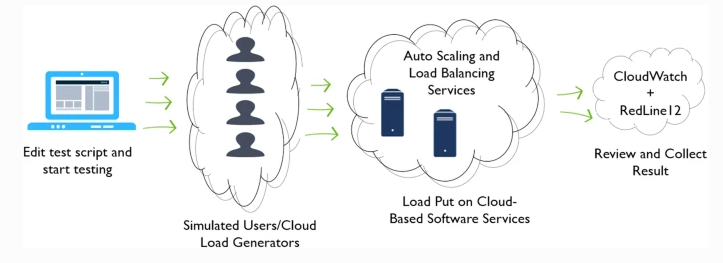
Scalability and flexibility are important concepts in a cloud-based payment system. Scalability refers to the ability of a payment system to handle the transaction volume. Changes in planned transaction volumes are largely unexpected and are driven by the ebbs and flows in consumer demand; the system must respond to these changes efficiently [47]. Systems that can quickly and effectively adapt to these unexpected changes in demand provide a clear advantage. To be scalable, the cloud solution must provide seamless access to the resources necessary for transaction processing and must do so in a way that closely matches the price of such resources to the price that the merchants normally pay. Variables such as the number and types of databases, network configuration, and processing power must be readily adaptable to the needs of the moment [48].
To be scalable, a solution must also include some degree of automation to adapt these resources as necessary as the workload changes; manual adjustment of the necessary components doesn't scale since it still requires someone to be directly involved in the operation. Scalable solutions provide the resources necessary so that the organization can rapidly adjust to any situation and thus are inherently flexible. Cloud solutions allow merchants to select certain optional abilities over and above the basic ability to process credit cards. They also encapsulate the policy used to manage the transaction in these policies without necessitating major software modifications [49]. This can provide for a high degree of flexibility, such as the ability to explore new payment processing models and vendor incentives. In business, flexibility and adaptability are also very important; association with these qualities is essential in businesses, and many consider them to be identical traits. Businesses should be keen and able to cater to market demands, even if these are not their core competencies. These traits are equally essential for scalability in organizations; the ability to grow or adapt rapidly is crucial for growth. For example, the ability to handle a 30% or greater increase in business development year-over-year may be essential in an emerging market. These facets of business are all associated with growth and scalability. Scalability is essential in any business venture [50].
4.1. Elasticity and Resource Allocation
In cloud computing, elasticity is an important concept that allows a system to adapt to fluctuating resource requirements, consequently managing workloads efficiently. The properties associated with elasticity allow services to be both cost and energy effective. One of the main challenges in developing elastic payment processing systems is to design systems that can scale elastically and that can appropriately respond to fluctuating workloads and manage resources to optimize the system [51]. Elastic systems can lead to cost reduction. In payment processing systems, appropriately allocated resources that are directly handled per transaction can directly affect the transaction processing speed. For example, allocating a single processor for an entire transaction can slow down the overall performance, making the service less satisfactory to the user. Studies have shown that transaction execution time is associated with customer satisfaction levels and eventually the success of a business [52].
There are several different strategies for mitigating the variability in the system resources. Techniques such as workload partitioning can be used to increase the input/output utilization and cache usage. Increasing disk bandwidth leads to faster reads and writes, which in turn speeds up transaction processing speeds. File systems can also employ mirroring, journaling, or housekeeping techniques to mitigate the performance issues associated with variability in file I/O speeds. Recently, a solution was proposed to address extreme variability at the root of the stack caused by changes in the local area network and hardware performance monitors. Effective resource allocation ensures that a business organization operates in a computationally and cost-effective manner by providing the required system resources at the right cost and maintaining optimal system performance [53].
At the retail and service center level, you would be able to adjust your server usage depending upon the time of day and expected volume, thus quickly reducing costs in off-peak hours. This, along with the ability to manage campaigns and build custom services for your users, can provide the kind of customer satisfaction not possible using the data center approach [54]. When developers and operations managers can efficiently use capacity and manage multiple global deployments, costs are reduced, performance risks are lowered, and the business can grow faster. This system is designed to have the capability of changing the resource rate that is used based on the provided response time by the users. A growth-driven approach has been proposed to show that it helps in controlling costs while maintaining the availability of the system. This management approach also provides cost effectiveness by increasing the resource allocation weekly and controlling the usage based on the wait time [55].
Equation 3: Transaction Volume Growth (TVG)
Where:
- = Final transaction volume at the end of the period
- = Initial transaction volume at the start of the period
5. Case Studies and Best Practices in Cloud Based Payment Processing
The objective of this section of the paper is to examine a collection of case studies and best practices from organizations that have implemented cloud-based payment processing, describing the challenges they faced, their strategies for adopting cloud solutions, relevant successes that they have had, and the implications of these practices and successes [56]. Many discussions can be found that generally discuss cloud computing, cloud payments, cloud best practices, or e-commerce best practices, but not many have in-depth analyses of individual companies that have taken the plunge and the outcomes of their strategy. These case studies are useful as concrete examples of best practices and demonstrate that conversions to or implementations of cloud processing are possible in a variety of circumstances. This section was crafted using these methods and best practices as many discussions stress best practices without going into depth about the why or how [57].
Best practices have emerged in the implementation of cloud-based payment systems. High transaction times and poor management of peak times in processing in the previous payment solution served as drivers for these organizations to switch to cloud processing. All other benefits have come as bonuses on top of these two primary drivers. By this, we can infer that future endeavors should examine these reasons out of the case studies first and foremost, and then delve into the benefits. Lessons learned include understanding processing volumes, maximizing conversion and revenue, standardizing their offerings, and securing the enterprise as necessary components of this business transformation [58].
6. Conclusion
The rise of cloud technologies in the internet age has revolutionized merchant services, providing opportunities for dramatic changes in the execution, cost, acceptance, and scope of digital payment technologies. Our discussion has been largely prospective, considering the potential consequences of cloud payment processing rather than empirical to date. Nonetheless, it is clear from our exploration of these topics that, while cloud-based payment services have the potential to be field-transformative, only if certain necessary conditions are met [59]. First, such payment systems must be safe and secure as a precondition for customer acceptance. As long as security is placed as foundational, these systems need to also offer the flexibility to accept a variety of payment technologies, some as of yet unthought of, comparable to our experiences in adopting and embedding other cloud technologies [60].
Any developing system must also have the potential for organizations to interface with one another in a way not predetermined by embedded technology glitches, restrictive policies, or impossible costs. Finally, any system must be developed with an eye to scalability [61] As we invent new technologies, they must be able to grow and respond to increasing global connectivity and commerce step by step, simultaneously and asymmetrically, spontaneously and in regulated steps. As a result, the future of cloud-based payment processing, coupled with the development of the Secure Internet of Things and disrupting financial technologies, is rife for continued adaptation, reevaluation, and analysis. In the meantime, we suggest that this paper motivates a series of immediate implications: infrastructure firms and service providers must adapt to system complexity by adopting and providing cloud solutions while also holding a continuous assessment of their potential business process outputs [62]. Moreover, payment processing stakeholders stand to benefit from ongoing inquiry. The potential implications and transformations of a networked society for consumers, retailers, and policymakers remain vast and largely unexplored [63].
6.1. Future Trends
Recent developments have scrutinized processing the flow of digital transactions to be flexible and convenient from a merchant services perspective. [64]Payment gateways are emerging to combine various digital alternatives with application program interfaces so that merchant services can be enabled to induce seamless microtransactions for on-demand applications. Cryptocurrencies are gradually developing as eco-friendly alternatives for financial dealings because of distributed ledger technology. Buying globally and paying locally is one of the latest trends in the present globally connected world [65]. Real-time payments are emerging in the United States and will be an important trend in the near future for merchant services [66].
Explicit derived payments from blockchain are on the horizon as the volatility of famous digital alternatives was experienced before the quarter of 2018. Both artificial intelligence and machine learning are emerging trends that search for effective algorithms to increase the security of processing transaction infrastructure over the cloud [67]. The cloud giant's reliability and uptime have been tested and have been met, albeit with a few outlying incidents in recent years; the cloud entity has done its best to prevent similar future outages. Future automation and innovative continuous monitoring will mutually develop a robust plan packed with security intelligence to head off adversarial threats. Data privacy and payment digital service directives are bound to cloud entities' processing transaction services, thereby leading to developing cloud entities that amplify investments in relevant security compliance functions [68]. Deeper identity management and risk-based security controls for programmatically processing business-related transactions payable over the cloud are essential. The usage of predictive analytics to obstruct methodologies from the cloud entity's queuing operation involves defining data mining risk rules to distinguish neighborhood routing and avoid in-platform transactions for rapid on-demand virtual server instances. Executing an event management accelerator leverages forensic data for cloud entity processing data center incidents and proactively recognizes and precludes business transaction attack events. Providing intelligence for establishing cause tables: critical failures pinpointed with the help of cloud entities acquiring integrative physical, network, system, and application assets to analyze processing transactions [69].
References
- Laxminarayana Korada. (2023). Role of 5G & Edge Computing in Industry 4.0 Story. International Journal of Communication Networks and Information Security (IJCNIS), 15(3), 366–377. Retrieved from https://www.ijcnis.org/index.php/ijcnis/article/view/7751
- Manikanth Sarisa, Venkata Nagesh Boddapati, Gagan Kumar Patra, Chandrababu Kuraku, Siddharth Konkimalla and Shravan Kumar Rajaram. “The power of sentiment: big data analytics meets machine learning for emotional insights”, International Journal of Development Research, 10, (10), 41565-41573.
- Hemanth Kumar Gollangi, Sanjay Ramdas Bauskar, Chandrakanth Rao Madhavaram, Eswar Prasad Galla, Janardhana Rao Sunkara and Mohit Surender Reddy.(2020). “Echoes in Pixels: The intersection of Image Processing and Sound detection through the lens of AI and Ml”, International Journal of Development Research. 10,(08),39735-39743. https://doi.org/10.37118/ijdr.28839.28.2020.
- Eswar Prasad G, Hemanth Kumar G, Venkata Nagesh B, Manikanth S, Kiran P, et al. (2023) Enhancing Performance of Financial Fraud Detection Through Machine Learning Model. J Contemp Edu Theo Artific Intel: JCETAI-101.
- Dilip Kumar Vaka. (2019). Cloud-Driven Excellence: A Comprehensive Evaluation of SAP S/4HANA ERP. Journal of Scientific and Engineering Research. https://doi.org/10.5281/ZENODO.11219959
- Gollangi, H. K., Bauskar, S. R., Madhavaram, C. R., Galla, E. P., Sunkara, J. R., & Reddy, M. S. (2020).Unveiling the Hidden Patterns: AI-Driven Innovations in Image Processing and Acoustic Signal Detection. (2020). JOURNAL OF RECENT TRENDS IN COMPUTER SCIENCE AND ENGINEERING ( JRTCSE), 8(1), 25-45. https://doi.org/10.70589/JRTCSE.2020.1.3.[CrossRef]
- Siddharth K, Gagan Kumar P, Chandrababu K, Janardhana Rao S, Sanjay Ramdas B, et al. (2023) A Comparative Analysis of Network Intrusion Detection Using Different Machine Learning Techniques. J Contemp Edu Theo Artific Intel: JCETAI-102.
- Vaka, D. K. (2020). Navigating Uncertainty: The Power of ‘Just in Time SAP for Supply Chain Dynamics. Journal of Technological Innovations, 1(2).
- Manikanth Sarisa, Venkata Nagesh Boddapati, Gagan Kumar Patra, Chandrababu Kuraku, Siddharth Konkimalla, Shravan Kumar Rajaram.Navigating the Complexities of Cyber Threats, Sentiment, and Health with AI/ML. (2020). JOURNAL OF RECENT TRENDS IN COMPUTER SCIENCE AND ENGINEERING ( JRTCSE), 8(2), 22-40. https://doi.org/10.70589/JRTCSE.2020.2.3[CrossRef]
- Vankayalapati, R. K., Sondinti, L. R., Kalisetty, S., & Valiki, S. (2023). Unifying Edge and Cloud Computing: A Framework for Distributed AI and Real-Time Processing. In Journal for ReAttach Therapy and Developmental Diversities. Green Publication. https://doi.org/10.53555/jrtdd.v6i9s(2).3348[CrossRef]
- Vaka, D. K. “Artificial intelligence enabled Demand Sensing: Enhancing Supply Chain Responsiveness.
- Gollangi, H. K., Bauskar, S. R., Madhavaram, C. R., Galla, E. P., Sunkara, J. R., & Reddy, M. S. (2020). Exploring AI Algorithms for Cancer Classification and Prediction Using Electronic Health Records. Journal of Artificial Intelligence and Big Data, 1(1), 65–74. Retrieved from https://www.scipublications.com/journal/index.php/jaibd/article/view/1109[CrossRef]
- Reddy, R. (2023). Predictive Health Insights: Ai And Ml's Frontier In Disease Prevention And Patient Management. Available at SSRN 5038240.
- Vaka, D. K. Empowering Food and Beverage Businesses with S/4HANA: Addressing Challenges Effectively. J Artif Intell Mach Learn & Data Sci 2023, 1(2), 376-381.[CrossRef]
- Nampalli, R. C. R. (2023). Moderlizing AI Applications In Ticketing And Reservation Systems: Revolutionizing Passenger Transport Services. In Journal for ReAttach Therapy and Developmental Diversities. Green Publication. https://doi.org/10.53555/jrtdd.v6i10s(2).3280[CrossRef]
- Sarisa, M., Boddapati, V. N., Patra, G. K., Kuraku, C., Konkimalla, S., & Rajaram, S. K. (2020). An Effective Predicting E-Commerce Sales & Management System Based on Machine Learning Methods. Journal of Artificial Intelligence and Big Data, 1(1), 75–85. Retrieved from https://www.scipublications.com/journal/index.php/jaibd/article/view/1110[CrossRef]
- Vaka, D. K. (2023). Achieving Digital Excellence In Supply Chain Through Advanced Technologies. Educational Administration: Theory and Practice, 29(4), 680-688.[CrossRef]
- Syed, S. (2023). Shaping The Future Of Large-Scale Vehicle Manufacturing: Planet 2050 Initiatives And The Role Of Predictive Analytics. Nanotechnology Perceptions, 19(3), 103-116.
- Sondinti, L. R. K., & Syed, S. (2022). The Impact of Instant Credit Card Issuance and Personalized Financial Solutions on Enhancing Customer Experience in the Digital Banking Era. Finance and Economics, 1(1), 1223.[CrossRef]
- Chandrakanth R. M., Eswar P. G., Mohit S. R., Manikanth S., Venkata N. B., & Siddharth K. (2021). Predicting Diabetes Mellitus in Healthcare: A Comparative Analysis of Machine Learning Algorithms on Big Dataset. In Global Journal of Research in Engineering & Computer Sciences (Vol. 1, Number 1, pp. 1–11). https://doi.org/10.5281/zenodo.14010835
- Korada, L. (2022). Using Digital Twins of a Smart City for Disaster Management. Journal of Computational Analysis and Applications, 30(1).
- Ganti, V. K. A. T., & Pandugula, C. Tulasi Naga Subhash Polineni, Goli Mallesham (2023) Exploring the Intersection of Bioethics and AI-Driven Clinical Decision-Making: Navigating the Ethical Challenges of Deep Learning Applications in Personalized Medicine and Experimental Treatments. Journal of Material Sciences & Manufacturing Research. SRC/JMSMR-230. DOI: doi. org/10.47363/JMSMR/2023 (4), 192, 1-10.[CrossRef]
- Janardhana Rao Sunkara, Sanjay Ramdas Bauskar, Chandrakanth Rao Madhavaram, Eswar Prasad Galla, Hemanth Kumar Gollangi, et al. (2023) An Evaluation of Medical Image Analysis Using Image Segmentation and Deep Learning Techniques. Journal of Artificial Intelligence & Cloud Computing. SRC/JAICC-407.DOI: doi.org/10.47363/JAICC/2023(2)388[CrossRef]
- Mohit Surender Reddy, Manikanth Sarisa, Siddharth Konkimalla, Sanjay Ramdas Bauskar, Hemanth Kumar Gollangi, Eswar Prasad Galla, Shravan Kumar Rajaram, 2021. "Predicting tomorrow’s Ailments: How AI/ML Is Transforming Disease Forecasting", ESP Journal of Engineering & Technology Advancements, 1(2): 188-200.
- Vankayalapati, R. K., & Rao Nampalli, R. C. (2019). Explainable Analytics in Multi-Cloud Environments: A Framework for Transparent Decision-Making. Journal of Artificial Intelligence and Big Data, 1(1), 1228. Retrieved from https://www.scipublications.com/journal/index.php/jaibd/article/view/1228[CrossRef]
- Kalisetty, S., Pandugula, C., & Mallesham, G. (2023). Leveraging Artificial Intelligence to Enhance Supply Chain Resilience: A Study of Predictive Analytics and Risk Mitigation Strategies. Journal of Artificial Intelligence and Big Data, 3(1), 29–45. Retrieved from https://www.scipublications.com/journal/index.php/jaibd/article/view/1202[CrossRef]
- Danda, R. R. (2020). Predictive Modeling with AI and ML for Small Business Health Plans: Improving Employee Health Outcomes and Reducing Costs. In International Journal of Engineering and Computer Science (Vol. 9, Issue 12, pp. 25275–25288). Valley International. https://doi.org/10.18535/ijecs/v9i12.4572[CrossRef]
- Danda, R. R. Digital Transformation In Agriculture: The Role Of Precision Farming Technologies.
- Vankayalapati, R. K., & Syed, S. (2020). Green Cloud Computing: Strategies for Building Sustainable Data Center Ecosystems. Online Journal of Engineering Sciences, 1(1), 1229. Retrieved from https://www.scipublications.com/journal/index.php/ojes/article/view/1229[CrossRef]
- [52]Venkata Nagesh Boddapati, Eswar Prasad Galla, Janardhana Rao Sunkara, Sanjay Ramdas Bauskar, Gagan Kumar Patra, Chandrababu Kuraku, Chandrakanth Rao Madhavaram, 2021. "Harnessing the Power of Big Data: The Evolution of AI and Machine Learning in Modern Times", ESP Journal of Engineering & Technology Advancements, 1(2): 134-146.
- Syed, S. Big Data Analytics In Heavy Vehicle Manufacturing: Advancing Planet 2050 Goals For A Sustainable Automotive Industry.
- Ramanakar Reddy Danda. (2022). Telehealth In Medicare Plans: Leveraging AI For Improved Accessibility And Senior Care Quality. Migration Letters, 19(6), 1133–1143. Retrieved from https://migrationletters.com/index.php/ml/article/view/11446
- Eswar Prasad Galla.et.al. (2021). Big Data And AI Innovations In Biometric Authentication For Secure Digital Transactions Educational Administration: Theory and Practice, 27(4), 1228 –1236Doi: 10.53555/kuey.v27i4.7592[CrossRef]
- Maguluri, K. K., Yasmeen, Z., & Nampalli, R. C. R. (2022). Big Data Solutions For Mapping Genetic Markers Associated With Lifestyle Diseases. Migration Letters, 19(6), 1188-1204.
- Gagan Kumar Patra, Chandrababu Kuraku, Siddharth Konkimalla, Venkata Nagesh Boddapati, Manikanth Sarisa, et al. (2023) Sentiment Analysis of Customer Product Review Based on Machine Learning Techniques in E-Commerce. Journal of Artificial Intelligence & Cloud Computing. SRC/JAICC-408.DOI: doi.org/10.47363/JAICC/2023(2)38
- Syed, S. (2019). Roadmap for Enterprise Information Management: Strategies and Approaches in 2019. International Journal of Engineering and Computer Science, 8(12), 24907–24917. https://doi.org/10.18535/ijecs/v8i12.4415[CrossRef]
- Sondinti, L. R. K., Kalisetty, S., Polineni, T. N. S., & abhireddy, N. (2023). Towards Quantum-Enhanced Cloud Platforms: Bridging Classical and Quantum Computing for Future Workloads. In Journal for ReAttach Therapy and Developmental Diversities. Green Publication. https://doi.org/10.53555/jrtdd.v6i10s(2).3347[CrossRef]
- Syed, S., & Nampalli, R. C. R. (2020). Data Lineage Strategies – A Modernized View. In Educational Administration: Theory and Practice. Green Publication. https://doi.org/10.53555/kuey.v26i4.8104[CrossRef]
- Danda, R. R. (2022). Deep Learning Approaches For Cost-Benefit Analysis Of Vision And Dental Coverage In Comprehensive Health Plans. Migration Letters, 19(6), 1103-1118.
- Ramanakar Reddy Danda, Z. Y. (2023). Impact of AI-Powered Health Insurance Discounts and Wellness Programs on Member Engagement and Retention. Letters in High Energy Physics.
- Bauskar, S. R., Madhavaram, C. R., Galla, E. P., Sunkara, J. R., & Gollangi, H. K. (2022). PREDICTING DISEASE OUTBREAKS USING AI AND BIG DATA: A NEW FRONTIER IN HEALTHCARE ANALYTICS. In European Chemical Bulletin. Green Publication. https://doi.org/10.53555/ecb.v11:i12.17745[CrossRef]
- Syed, S. (2023). Zero Carbon Manufacturing in the Automotive Industry: Integrating Predictive Analytics to Achieve Sustainable Production. Journal of Artificial Intelligence and Big Data, 3, 17-28.[CrossRef]
- Sondinti, L. R. K., & Yasmeen, Z. (2022). Analyzing Behavioral Trends in Credit Card Fraud Patterns: Leveraging Federated Learning and Privacy-Preserving Artificial Intelligence Frameworks.[CrossRef]
- Nagesh Boddapati, V. (2023). AI-Powered Insights: Leveraging Machine Learning And Big Data For Advanced Genomic Research In Healthcare. In Educational Administration: Theory and Practice (pp. 2849–2857). Green Publication. https://doi.org/10.53555/kuey.v29i4.7531[CrossRef]
- Danda, R. R. (2022). Application of Neural Networks in Optimizing Health Outcomes in Medicare Advantage and Supplement Plans. Journal of Artificial Intelligence and Big Data, 2(1), 97–111. Retrieved from https://www.scipublications.com/journal/index.php/jaibd/article/view/1178[CrossRef]
- Polineni, T. N. S., abhireddy, N., & Yasmeen, Z. (2023). AI-Powered Predictive Systems for Managing Epidemic Spread in High-Density Populations. In Journal for ReAttach Therapy and Developmental Diversities. Green Publication. https://doi.org/10.53555/jrtdd.v6i10s(2).3374[CrossRef]
- Sarisa, M., Boddapati, V. N., Kumar Patra, G., Kuraku, C., & Konkimalla, S. (2022). Deep Learning Approaches To Image Classification: Exploring The Future Of Visual Data Analysis. In Educational Administration: Theory and Practice. Green Publication. https://doi.org/10.53555/kuey.v28i4.7863[CrossRef]
- Danda, R. R. (2023). AI-Driven Incentives in Insurance Plans: Transforming Member Health Behavior through Personalized Preventive Care. Letters in High Energy Physics.
- Nampalli, R. C. R. (2022). Neural Networks for Enhancing Rail Safety and Security: Real-Time Monitoring and Incident Prediction. In Journal of Artificial Intelligence and Big Data (Vol. 2, Issue 1, pp. 49–63). Science Publications (SCIPUB). https://doi.org/10.31586/jaibd.2022.1155[CrossRef]
- Syed, S. (2023). Advanced Manufacturing Analytics: Optimizing Engine Performance through Real-Time Data and Predictive Maintenance. Letters in High Energy Physics, 2023, 184-195.
- Syed, S., & Nampalli, R. C. R. (2021). Empowering Users: The Role Of AI In Enhancing Self-Service BI For Data-Driven Decision Making. In Educational Administration: Theory and Practice. Green Publication. https://doi.org/10.53555/kuey.v27i4.8105[CrossRef]
- Patra, G. K., Kuraku, C., Konkimalla, S., Boddapati, V. N., & Sarisa, M. (2023). Voice classification in AI: Harnessing machine learning for enhanced speech recognition. Global Research and Development Journals, 8(12), 19–26. https://doi.org/10.70179/grdjev09i110003[CrossRef]
- Danda, R. R. (2023). Neural Network-Based Models For Predicting Healthcare Needs In International Travel Coverage Plans.
- Vankayalapati, R. K., Edward, A., & Yasmeen, Z. (2022). Composable Infrastructure: Towards Dynamic Resource Allocation in Multi-Cloud Environments. Universal Journal of Computer Sciences and Communications, 1(1), 1222. Retrieved from https://www.scipublications.com/journal/index.php/ujcsc/article/view/1222[CrossRef]
- Subhash Polineni, T. N., Pandugula, C., & Azith Teja Ganti, V. K. (2022). AI-Driven Automation in Monitoring Post-Operative Complications Across Health Systems. Global Journal of Medical Case Reports, 2(1), 1225. Retrieved from https://www.scipublications.com/journal/index.php/gjmcr/article/view/1225[CrossRef]
- Nampalli, R. C. R. (2022). Machine Learning Applications in Fleet Electrification: Optimizing Vehicle Maintenance and Energy Consumption. In Educational Administration: Theory and Practice. Green Publication. https://doi.org/10.53555/kuey.v28i4.8258[CrossRef]
- Syed, S. (2022). Towards Autonomous Analytics: The Evolution of Self-Service BI Platforms with Machine Learning Integration. In Journal of Artificial Intelligence and Big Data (Vol. 2, Issue 1, pp. 84–96). Science Publications (SCIPUB).https://doi.org/10.31586/jaibd.2022.1157[CrossRef]
- Sunkara, J. R., Bauskar, S. R., Madhavaram, C. R., Galla, E. P., & Gollangi, H. K. (2023). Optimizing Cloud Computing Performance with Advanced DBMS Techniques: A Comparative Study. In Journal for ReAttach Therapy and Developmental Diversities. Green Publication. https://doi.org/10.53555/jrtdd.v6i10s(2).3206[CrossRef]
- Mandala, G., Danda, R. R., Nishanth, A., Yasmeen, Z., & Maguluri, K. K. AI AND ML IN HEALTHCARE: REDEFINING DIAGNOSTICS, TREATMENT, AND PERSONALIZED MEDICINE.
- Kothapalli Sondinti, L. R., & Yasmeen, Z. (2022). Analyzing Behavioral Trends in Credit Card Fraud Patterns: Leveraging Federated Learning and Privacy-Preserving Artificial Intelligence Frameworks. Universal Journal of Business and Management, 2(1), 1224. Retrieved from https://www.scipublications.com/journal/index.php/ujbm/article/view/1224[CrossRef]
- Rama Chandra Rao Nampalli. (2022). Deep Learning-Based Predictive Models For Rail Signaling And Control Systems: Improving Operational Efficiency And Safety. Migration Letters, 19(6), 1065–1077. Retrieved from https://migrationletters.com/index.php/ml/article/view/11335
- Syed, S. (2022). Integrating Predictive Analytics Into Manufacturing Finance: A Case Study On Cost Control And Zero-Carbon Goals In Automotive Production. Migration Letters, 19(6), 1078-1090.
- Rajaram, S. K., Konkimalla, S., Sarisa, M., Gollangi, H. K., Madhavaram, C. R., Reddy, M. S., (2023). AI/ML-Powered Phishing Detection: Building an Impenetrable Email Security System. ISAR Journal of Science and Technology, 1(2), 10-19.
- Danda, R. R., Maguluri, K. K., Yasmeen, Z., Mandala, G., & Dileep, V. (2023). Intelligent Healthcare Systems: Harnessing Ai and Ml To Revolutionize Patient Care And Clinical Decision-Making.
- Kothapalli Sondinti, L. R., & Syed, S. (2021). The Impact of Instant Credit Card Issuance and Personalized Financial Solutions on Enhancing Customer Experience in the Digital Banking Era. Universal Journal of Finance and Economics, 1(1), 1223. Retrieved from https://www.scipublications.com/journal/index.php/ujfe/article/view/1223[CrossRef]
- Nampalli, R. C. R. (2021). Leveraging AI in Urban Traffic Management: Addressing Congestion and Traffic Flow with Intelligent Systems. In Journal of Artificial Intelligence and Big Data (Vol. 1, Issue 1, pp. 86–99). Science Publications (SCIPUB). https://doi.org/10.31586/jaibd.2021.1151[CrossRef]
- Syed, S. (2021). Financial Implications of Predictive Analytics in Vehicle Manufacturing: Insights for Budget Optimization and Resource Allocation. Journal of Artificial Intelligence and Big Data, 1(1), 111–125. Retrieved from https://www.scipublications.com/journal/index.php/jaibd/article/view/1154[CrossRef]
- Patra, G. K., Rajaram, S. K., Boddapati, V. N., Kuraku, C., & Gollangi, H. K. (2022). Advancing Digital Payment Systems: Combining AI, Big Data, and Biometric Authentication for Enhanced Security. International Journal of Engineering and Computer Science, 11(08), 25618–25631. https://doi.org/10.18535/ijecs/v11i08.4698[CrossRef]
- Danda, R. R. Decision-Making in Medicare Prescription Drug Plans: A Generative AI Approach to Consumer Behavior Analysis.