
Abstract
For years, risk assessment and financial calculations have been based on mathematical, statistical, and actuarial studies of existing and historical data. The manual process of building datasets, processing data, deriving trends, identifying periodicities, and analyzing diagnostics is extremely expensive and time-consuming. With the automation and evolution of data science technologies, organizations are now bringing in niche data, such as unstructured data, which contain more disruptive and precise signals for decision-making—thereby making predictions and derivative valuations more robust. This discussion highlights how investment decision-making and financial ecosystem activities are set to be transformed with the power of technical automation, data, and artificial intelligence. A noted trend in the financial investment sector is that financial valuations are highly predictive and highly non-linear in long-term occurrences. To understand these robust evolving signals and execute profitable strategies upon them, the investment management process needs to be very dynamic, open, smart, and technically deep. However, with current manual processes, reaching a high-end asset prediction still seems like a shot in the dark. In parallel, open and democratically developed financial ecosystems query relatively riskless premium opportunities in high-finance valuation and perception. The process of evolving financial ecosystems or the use of automated tools and data to move to unique frontiers could make high-yield profiting opportunities very safe and entirely riskless. Financial economic theories and realistic approximation models support this.
1. Introduction
Recent court cases have shown that tax optimization approaches followed by multinationals face an increasing risk of producing a good portion of the core marketing intangibles, and to go more accurately, the generation of the associated returns is driven by business models of new disruptive digital economy players. Only companies that entered into technology-sharing agreements could render the active conduct of a business part more genuine and deliver this quality of the core marketing machine world-class for daily, delivery stability and safety reasons. However, the last years also have shown that tax authorities have stepped up their audit activities and investigations into these delicate gaps in business models whose implementation speed and impacts client satisfaction with niche to evergreen digital services globally differentiated impress [1].
The consequences of determining that the core marketing machine is outsourced have to prioritize competitiveness, adjust quarterly street returns, and sorority, almost quarter after quarter, favor more fiscally aggressive businesses in their discussions with tax authorities as regards sales value creation. This support becomes increasingly important since clients expect the outsourcer to respect confidentiality and integrity, fronting the press with suitable security and control standards.
1.1. Background and Importance
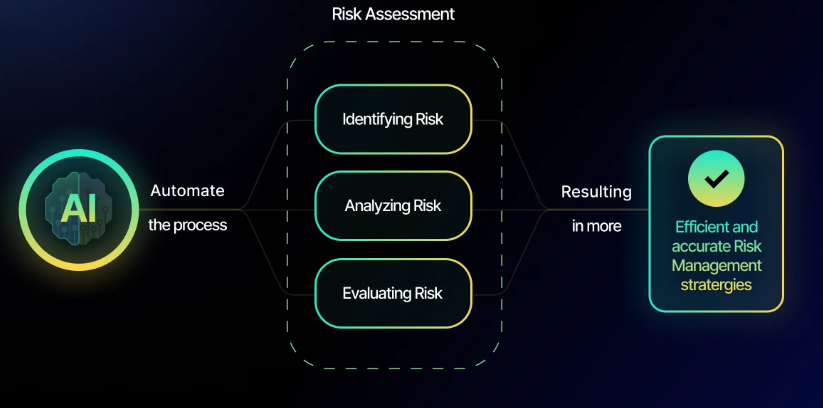
A strategic area in business, economics, life sciences, and management decision-making is to model and measure risk using data and mathematical tools. Financial enterprises are in the business of redistributing and mitigating risk, providing solutions in a wide variety of areas from insurance, reinsurance, asset management, rating, credit rating, brokerage, and capital markets in many jurisdictions. To survive and preserve solvency, financial enterprises need to appropriately measure and mitigate the risks they transfer and/or retain via solvency and financial regulation. After the financial crisis, it was clear that not only banks and insurance companies that deal with complex products and long-lasting policy challenges, but also institutional investors require more stable and durable mathematical tools without naive assumptions.
From classical areas like actuarial mathematics to financial and economic modeling, portfolio theory, and modern regime-switching models for real options, risk measures, capital adequacy, solvency assessments, and jumping processes, among others, a common practice to solve problems arising from financial business is to use advanced mathematical tools. One such tool is Monte Carlo simulation, which is an essential technique for price derivatives due to its generality, versatility, and ease of programming. However, the successful implementation of exact and efficient Monte Carlo procedures in high-dimensional Bayesian non-Gaussian models has become a challenging exercise. Another recent approach is the use of deep learning, often referred to as 'smart automaton,' as a new computational paradigm to solve complex problems in finance that involve extensive panel datasets. Informatics, big data, and computational algorithms, in conjunction with machine learning, deep learning, and deep reinforcement learning, among others, allow the treatment of complex high-frequency, multivariate, high-dimensional, non-Gaussian, non-stationary sequential data, financial nonlinear models, and the acceleration of parameter estimation and risk-effect estimation in systemic dynamic analyses. Deep learning is one of the main chapters represented in different challenges set out by the Insurance Supervision Authority on 'New Technologies'.
1.2 Fundamental Frameworks
Technology and data innovations are playing a larger role in mitigating risk and monitoring financial stability. The global financial system is built on a foundation of trust that is enabled by the pervasive belief that institutions have delivered tangible improvements in efficiency, rewards, predictability, and stability through the effective, competent, and ethical management of risk to deliver rewards to stakeholders. Active and prudent risk management is immediately rewarded through reputation and future profitability. This confidence enables value-enhancing risk pools, such as insurance contracts and bank deposits, to become part of everyday life. Trust can rapidly evaporate into loss and tragedy if a transformative risk event occurs, forcing each deeply interconnected part of the financial ecosystem to work toward the common goal of protecting stakeholders from loss, essentially uniting in a common cause to enhance life, liberty, and the pursuit of happiness.
IT automation simplifies and accelerates the development of new methods to assess risk and price value by cost-effectively reducing data noise, testing theories, quickly predicting the combination and intensity of large, rare events that can overwhelm individual institutions, understanding and reducing widespread risks in real-time with understandable outputs that enable transparent stress tests to strengthen goodwill and confidence, and creating living catalogs of fast and sustainable risk-mitigation ideas that individual commercial entities can immediately use to refine marketplace value. Today's technologies are capable of more, and demand for these innovations is very healthy, especially following a long hiatus after the financial industry technology bubble burst. Many living conversations across the industry reflect both excitement about potential solutions and dread about potential massive costs if transformative events occur and change is not forthcoming. The risk industry is downstream from the resulting debris. At the core of this technology revolution is a burning frontier problem: optimal acceptance and rejection [2].
Equation 1: AI-Driven Risk Assessment Model
Where:
- = Risk score,
- = Weight of risk factor
- = Value of risk factor
- = Number of risk factors
2. Understanding Risk Assessment
Risk and financial modeling is complex detective work. Predicting the future is an awesome challenge. Only high levels of skill should be able to apply their knowledge to real-world problems with direct economic consequences. Financial modeling is a way to predict the future that is used for a wide array of decision-making activities. Situations with a large number of data, where that data can be formed into meaningful patterns or signals that complement human judgment, can become an area of relative strength for a model. The challenge is to build a credible, user-friendly model using sound rational methods and skillfully influence human decision-making. Adding big data to smart automation in business, financial modeling for predictive decision-making can become exceptional storytelling.
This section outlines a basic introduction to risk and financial econometric techniques using some sample financial and economic data. The approaches are basic; there are relatively few equations and no complex invariant mathematical proofs. However, for smart automation development, the underlying methods are very sound. Models can vary in construction details and their output data form. Simple RM or statistical linear regression models are presented, with an example of their econometric applications. Other applications in financial econometrics are simple time series data. Finally, we consider a first attempt to include financial high-frequency data; a few hurdles need to be leaped on the journey. These applications are the prototype for complex modern modeling methodology [3].
2.1. Definition and Importance
Risk assessment is the process of determining potential positive or negative impacts from specific future events, and the course of action based on situation analysis, as well as the set of management techniques used to understand, assess, disclose, and address decision risk. The primary benefit of managing risks includes a better awareness of opportunities and threats. Risk intelligence can provide a more effective use of capital by considering risks concerning potential return impacts. This concept relates to an improved forecast of earnings quality for shareholders and requires only the consideration of risks. Effective risk assessment requires a continual strategic and fundamental reassessment of operating risk and the development of flexible decisions. The necessity to adequately assess risks is significant for many business processes, including decision-making, market and legal securities, insurance, and financial institutions, as well as for individual activities. Knowledge of operational risks allows investors to protect their investments better and use capital more effectively. In organizations, appropriate assessment in operational risk management makes it possible to better foresee the impact of emergencies. For representatives, knowing the nature of operational risks is essential. Accountability for personal or corporate liabilities or other financial actions necessitates an understanding of current or even possible activities and decisions.
2.2. Traditional Risk Assessment Methods
Traditional approaches used to mitigate credit, market, and operational risks generally employ models that are programmed with a list of predefined forecast criteria. The forecasting criteria are then used to allot risk scores, percentages, or thresholds to provide trigger warnings. These conventional risk assessment methodologies are extensively used by banks, insurance companies, investment companies, and financial institutions worldwide, predominantly to accomplish regulatory stipulations. Even though these risk assessment methodologies are functional, there are several limitations. To start with, the present-day models are characterized by a multitude of false-positive signals, creating a distinct possibility of missing out on the actual risk or otherwise falling prey to the issues of alert fatigue. Not only are these conventional approaches lagging, but they are also complex, inflexible, and purely based on historical information and statistical patterns. The promise of the subsequent era in the domain of financial risk is to uncover hidden opportunities in risk data. The upcoming financial launches and market spaces are explicit about utilizing predictive analytical methods and techno-financial acuteness for superior risk evaluation and crafting successful existing market ecosystems for advancing financial conveniences. Smart automation coupled with big data allows financial firms to articulate more sophisticated methods for corporate decision-making. By empowering analytics throughout the process, smart automation considerably enhances the excellence, performance, and naturalness of models in conjunction.
2.3. Limitations of Conventional Approaches
The limitations of the existing methodologies stem mainly from the following factors:
- Constrained Perspective: Most of the data is structured and from traditional, structured sources. Even limited ESG data is typically built into financial reports, thus repeating similar metrics, causing information overload, especially for low-frequency data. The focus is almost compulsively narrow, being largely economic, and market participants typically have a short-term horizon. The existing knowledge about business transformation in a rapidly changing world is often harnessed via traditional approaches of expert interviews and surveys, neither of which are by any means automated nor scalable. The data is often rearview and not real-time, leaving significant vulnerabilities for rapid risks and opportunities. The risk assessment procedures are particular to the type of risk. Consequent policy formulation and management interventions are often uncoordinated among different stakeholders within the financial sector. The calculations are usually simple statistics; more complex models can struggle to scale, and their complex outputs can be difficult to interpret. All of which leads to the next point.
- Vital Unmet Needs: Despite the continuously growing availability of unstructured and passive data, providing information on several different dimensions of entrepreneurial risk-taking, capturing the activities in the real and the virtual space as well as a series of new financial and other products or phenomena, there is a noticeable gap in models and methods for integrating this data into macroprudential surveillance supporting the financial ecosystem.
A key factor limiting the successful use of more sophisticated models might be the demand for traditional and thus traditionally justified and developed macroprudential surveillance models at the national or local level. So far, only case studies of models have neither general frequency nor general meaning, so they are hardly instructive for policymakers. The situation is likely to continue deteriorating, especially if these models are under discretionary monetary control.
Some algorithms have been trained and optimized to predict the dishonesty and quality of entrepreneurial activities and the other models at the firm or new company level, as well as at the level of the whole and particular coexisting platforms and even cross-sectoral virtual space factor footprints in real space and macroeconomic-relevant levels of systemic importance and interconnections underlying sectoral policies and the financial sector. However, some aspects have not yet been properly addressed, such as taking into account the potentially heterogeneous policy preferences of decision-makers and not ignoring or pressing all specific knowledge and uncertainty regarding important institutional and technological developments, thus creating both privacy and interpretation concerns and theoretical limitations of firm valuation premia and investor heterogeneity from firm and cross-sectoral diversification as well as from using machine learning techniques based mostly on publicly available data.
3. The Role of Smart Automation
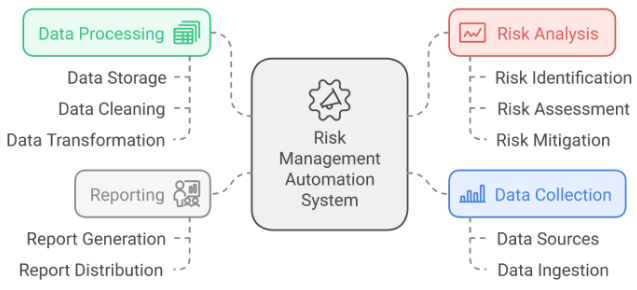
The AIM clients can be thought of as those "who get it," meaning they understand and are implementing solutions of intelligent automation to completely revolutionize themselves or their industries. RPA's earliest adopters and loyal fans began in finance and accounting, streamlining and de-risking processes such as cash application, and bank reconciliation, and pervasive rules-driven activities such as data migration. In the heart of banks and insurance businesses, RPA provides a proven gateway toward the larger promise of smart automation. This perfect breeding ground is excellent not just for RPA, but also for cognitive technologies, which include natural language processing, speech recognition, computer vision, and machine learning, both large sprawling labeled data and curated chaotic data. Cognitive platforms have organic relationships and oceans of data, business rules, and analytics, which often means that RPA is both a transatlantic cable and a nearby lighthouse to operationalize the advanced algorithms.
Revolutionizing risk assessment and financial ecosystems with smart automation, the broad concept of smart RPA or smart automation can be a powerful force when combined with other technologies. Drastically better risk surveillance can be incremental. We regularly receive proof requests for smart automation, but stating flatly, as though their automation in mind turns the risk assessment activity into a risk monitoring solution, that's our business! All too often, risk across business segments or more opaque dimensions such as alert evaluation timing, age, dispersion, ineffective first-line threshold tuning, etc. These kinds of controls depend not just on standard transactional monitoring of alerts and trades, but also on a clearer lay of the enterprise data landscape, inline appeals or proposals, and occupational facts such as stress or shyness, as delivered via an articulate customer call or compliant social media statement [4].
3.1. Overview of Smart Automation
The post-financial crisis of 2007 had lasting impacts in many ways in the field of financial risk management. Regulating for such instances and foreseeing the eventuality of such crises is therefore of interest to anyone engaged in risk management in the financial industry. Traditional models and their associated practices are unable to cope with the vast variety of instruments and practices present today and cannot also move with the rapidly changing financial landscape. It is here that we note smart automation providing a sea change in the speed, quality, and future development of risk management in financial organizations. In moving towards a FAR approach, smart automation plays a key role. This chapter will outline the basics of smart automation, before delving into the practical nature and use of this vital approach in financial risk management and the other domains that depend on computers for their daily duties.
Smart automation is a perception towards automating computer applications development processes, coined especially keeping the complexities of the real world in consideration. It addresses designing self-organizing processes. The applicability of this concept is extremely high because most of the global industrial processes are quite distinct and complex. These elements pointed towards a new development approach and mechanism, which is free from the drawbacks of different methodologies. This approach is tagged as smart automation, a leading step toward the theory of hypersystems. The current methodologies largely depend on software engineering practices and aim for business process synchronization and automation. However, with the smart automation concept, automatic discovery and design of the true nature of a business can be achieved, which has self-regulating and self-developing capabilities. This leads to highly adaptive software, which is capable of self-optimizing, self-structuring, and implementation at the level, resulting in high-quality, flexible, and cost-effective solutions.
3.2. Benefits of Automation in Risk Assessment
Management of risks in the financial market has already reached a new height, but it can be optimized even further to the point where the risks can be minimized. Similarly, smart automation in lending can ease the financial flow, making it essential for consumers to receive money timely from banks or NBFIs. Through smart devices with algorithms to process data directly from the device, the assessment for lending can be fully or partially automated. One of the main approaches is to provide smart device-based technologies for the automation of financial data generation. Afterward, the SSA is applied to determine the optimal number of wavelets to decompose the targeted financial data, and then ML algorithms are attached to monitor and seamlessly provide recommendations or help automate financial risk management.
In theory, transforming large-volume data during credit assessment to CFGM can not only lower the possibility of randomness in risk management but also make the parameter search problem on the risk model feasible. In the real world, risk management would not target CFGM before risks could be estimated instantly and decisions could be made with a reliable and trusted reference. This optimization operation of smart automation is exactly the purpose. Then, while discussing the problems related, it reviews current technologies, models, and envisioned challenges in financial risk management in the subsequent section. Lastly, conclusions and future work are provided.
3.3. Case Studies of Successful Automation Implementation
In particular, we illustrate the successful implementation in three major financial institutions operating at a global scale. We provide insights into the challenges and roadblocks in the process, as well as the necessary design, development, and testing steps. With over a decade of monitoring and a wide range of user feedback, we conclude that the automated approach and its delivered smart components have been highly beneficial in reducing the approval lead time, freeing human labor from tedious repeatable tasks, reducing model risk, and increasing the visibility to users and regulators on the behavior and reliability of the end-to-end model. More importantly, they increase the overall agility and speed to market in the institutions' decision-making process. This paper studies the case where a set of black box models already exists that needs to perform scoring for a specific function, but their outputs come with their decision-making risk. The study applies an end-to-end decision rationalization that delivers a stamped score outcome call for the black boxes. The rationalization is smart because it is also a post hoc test for the trustworthiness of the black box outputs that incorporates human subject matter expertise and its constraints as an integral part of the black box decision-making. As the rationalization proceeds, bad candidates are found, and the stampers rule out these candidates and accept risks for the remaining candidates. From a broad perspective, the study complements the growing effort to construct or regulate decision-rationalizable models, which require the overall system to be transparent, explainable, or interpretable [5].
4. Secure Digital Solutions
When embarking on building a secure digital solutions organization, what are the types of security challenges that arise? In the financial arena, where risk is a key management factor, financial companies are unique in needing to address distinct risks. Internal and external threats must be managed and validated time and again; due diligence must be performed at regular intervals, and through the delivery process, commissions and fees have to rely on an auditable workflow and decision-making process. Risk-based systems have become more complex. To fully reach a solution, automation, and open systems can address these challenges in production and then need to be replicated end-to-end in any deployment, scalable for future performance enhancements. One can turn on the complexity required of a system like a risk-based decision management system. It’s all under the hood to solve complex issues that arise because of the globally diverse data. It is a system capable of making recommendations and managing compliance and governance, exposing its decisions and reasoning as an adjunct to the transaction management system.
Security protective measures should achieve the risk-factor reduction objectives without undermining related goals of compliance or eliminating the capacity to do business. Such measures should safeguard the capabilities of the system’s security against the system’s concomitant threats. They are implemented to substantiate or effectuate stated security policy and ethical data technology, authorization requirements, application systems requirements, and cryptographic methods. This establishes trust in the data’s accuracy, protection against unauthorized intrusion and unnecessary disclosure, and resistance to unauthorized denial of creator access, transmission, data, and other transactions. Over the last 25 years, this risk assessment framework has been adjusted and refined with positive results, and being familiar with the idiosyncrasies of security ranking risks, they are extremely capable of giving clients data confidence. With it, clients can rely on results—solutions tailored to the specific goals of every organization.
Equation 2: Financial Ecosystem Stability Index
Where:
- = Stability index (%),
- = Total liquid assets,
- = Total assets.
4.1. Importance of Security in Financial Ecosystems
Increasing economic interdependence spurs efforts to harden financial ecosystems against financial risk through the enhancement of existing institutions, the provision of robust security for economic relations on a global scale, and the establishment of efficient liability structures to prevent systemic financial crises. The enhanced security stance revolves around better financial risk assessment in the form of risk evaluation and information support, allowing systemic models to track vulnerabilities even in the absence of fluctuating financial markets. Such efforts, however, remain displaced vis-à-vis current risk sources. Currently developed financial risk assessment methods are unable to detect the incipient phase of booming economic bubbles. This poses the greatest difficulty, even though it is within this very phase that long-term macroeconomic and systemic effects of bursting or imploding bubbles materialize.
In today's technological world, we live in fear of newer forms of security risks. Many of them emerge from technological advances and are novel. Moreover, their impact on financial markets is becoming increasingly felt, and the resulting costs are expanding in measurable terms, especially in the innovation-intensive yet ill-understood area of asset-backed securities and derivative markets. The situation has effectively alerted us to the vital necessity of addressing the growing vulnerabilities of financial systems to these types of threats. Judging from the increase in the depth and variety of financial market risk-transfer products and their market share in global financial markets, the existence of unresolved financial security risks, or more specifically, the intensity of such risks defies standard quantitative financial risk management models promising use in financial risk signaling.
4.2. Technologies for Secure Transactions
Before discussing the transition of customer identification, it is important to discuss some of the technologies leveraged to control or prevent secure transactions. Knowledge-based customer inquiries have been in existence for about two decades. Several challenges have limited authentication protection, including the open availability of records related to the names of individuals compromised through data breaches or social engineering activities, increased access to the dark web, and expanding access to public and exclusive databases. These records can facilitate confidence in the identity of the client and their counterparts. The implementation of regulations in the EU and similar moves to catch up in other regions is helping to enhance security. The execution was slow initially, as not all organizations strictly followed the rules. However, their attention will strengthen regulation and empower individuals to control their data by allowing them to access, adjust, and delete it [6].
The good news is that businesses are already embracing customer data privacy for financial advantage. They can learn about their customers in new ways, tailor their goods and services, collaborate with third parties to develop sustainable data rotation strategies and inspire their customers to trust and interact with truth, transparency, and respect for existence. Compliance can be expensive and risky. The use of supervisory technology to monitor industry compliance can minimize risk and reduce costs. For instance, a market intelligence supervision platform enables financial institutions to retain, sustain, and develop product and service care, making compliance simpler and safer. The regulations changed the personal identification business in the EU forever. It sent shockwaves through our sector and our upper customers' homeland security and police customers. The business evolved, not without friction or judgment, but swiftly and inevitably, as any digital entity in any jurisdiction would have needed to operate in compliance with the rules set out in the regulations.
4.3. Challenges in Implementing Secure Solutions
Digital technologies have generated unprecedented opportunities but also created huge, diverse, complex, and ever-evolving challenges for public and private enterprises. Transforming into secure digital enterprises in a continuously changing defense landscape is crucial for standing out among the competition. However, implementing and consolidating IT security governance to secure automated solutions and SDx-powered business agility usually takes years and follows their SDS roadmaps. Financial institutions, in particular, experience significant difficulties, especially due to the stringency and ever-increasing complexity of national and international security regulations, severe penalties for non-compliance, and the impact of incorrectly working solutions on increased risk and/or weakened financial markets. As a result, emerging digital risk platforms are attracting attention by promising to mitigate risks from this point of view, including new forms of risk. Nonetheless, these solutions exist as silos of wisdom. They may indeed increase business security agility in the future, and their presence can effectively complement existing security penetration tests, audits, and control techniques.
Truly revolutionizing assessments call for not only searching for multidimensional risk patterns but also climbing the security challenge triangle. It would be great to see trustful SDS benchmarks to compare their world of product performance across various proposed numerical criteria, as well as more shared threat intelligence information. Open-sourcing features of emerging solutions should be considered. Compilers should be a part of larger assemblies! This text reveals some detailed design principles and security guidelines for more secure and high-quality results of the next generation of security tools. To ensure a secure tomorrow, the ideas promoted need to be recognized by the international community through commonly accepted and evolving open standards [7].
5. Advanced Analytical Frameworks
The advent of big data and modern artificial intelligence technologies such as deep learning have enabled organizations to develop very sophisticated analytical models, rewrite the related rule sets and decision management infrastructure, and push the boundaries of what is feasible. The most prominent new AI frontier is automated machine learning, known among practitioners as AutoML, and dimensionality reduction techniques. These are now being used in a full step-by-step pipeline, if not also at the model and even feature engineering level. We will assess the feasibility of these new tools and the impact they could potentially have in developing highly accurate, fully transparent, and efficiently implemented credit default prediction, rating offline classification, and scoring models. Also, unlike the prior analytically challenging creditworthiness models, the futuristic models utilize the entire banking system data for a 12-year time window, from 2006 to 2018.
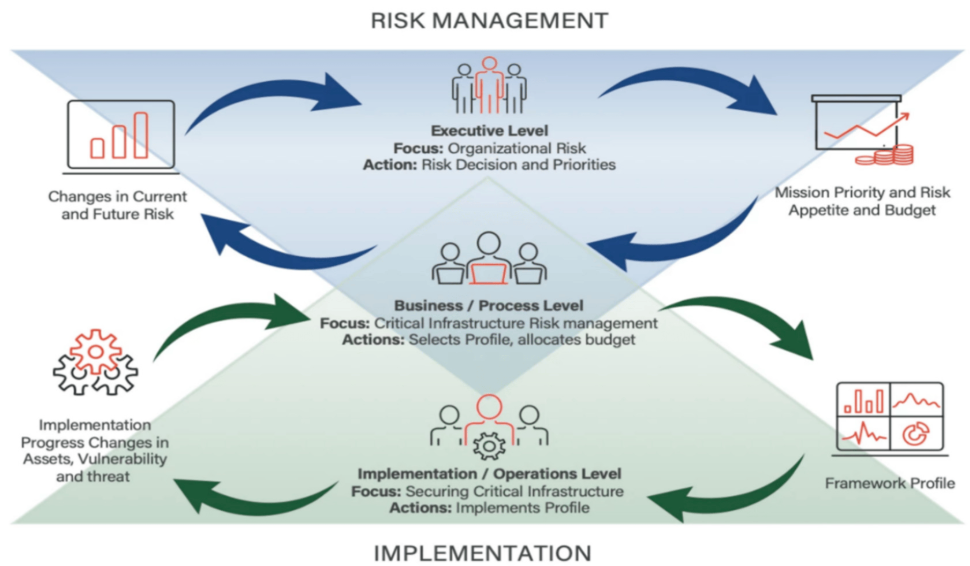
Our AI models significantly outperform the traditional logistic regression and CART models. Yet, as opposed to the existing proprietary banks' internal models that are based on the same or similar AI techniques, but lack full implementation transparency and cannot be openly scrutinized by the regulators, it is impossible to tell what's inside or pinpoint potential issues. The models developed in our study produce the much-needed model transparency. This is critical for a sound credit risk assessment, as it allows the bank to know the odds of a borrower being rated incorrectly by the Basel II IRB model and the loan scoring models, and to adjust the model spreads accordingly to stay within a given capital allocation and default probability range. On the flip side, the model transparency permits the regulator to see how credit risk management is done and form its view about it. It opens up the possibility of deposing the local models' feature utility and copula relationships with the macro risk factors. The AI interpretability features are critical, as they provide a good clue about the causes of credit defaults if they were to occur, and what may happen if the borrowers find themselves in financial distress. Finally, our algorithms generate predictive signals for debanked segments and locally unimplementable portfolios. They come in handy in financial policy analysis and stress testing.
5.1. Data Analytics in Risk Management
Risk management, in its elemental form, is an enumeration of procedures to identify, quantify, assess, and prioritize risks. This induced the evolution of numerous risk management frameworks, standards, and legislative guidelines. Financial business risk management has been dragging the rest in the process of managing the variety, velocity, and volume of real-time information from numerous and diverse sources. Regulatory risk and increasing legislative exposures have led to the development of flexible, cost-effective, and reliable risk models. The watershed point was the Advanced Measurement Approach that allowed banks to use their in-house models, giving them the flexibility of using all risk model choices regardless of the risk assessment used in the process of measurement of credit and operational risk. The process is iterative as institutions learn from the process themselves and from others, also following the principles of developing dynamic feedback, responsive establishing trust and nurturing cooperative environments. Smart automation yields financial businesses significant enhancement in speed, reliability, consistency, and quality of services and decreases risks by promoting idea-driven operations. The future of financial services will not only be shaped by sound restructuring, consolidation, recapitalization, and re-engineering of business models, enhanced regulatory or re-regulation frameworks, and stable political environments. In their quest for increased services, financial businesses will have to focus on the development of smart business services using flexible algorithms of AI for the automation of decisions. AI predictive modeling, natural language processing, reasoning tools, and cloud computing infrastructures will be the cornerstones of the smart economy and over time will promote innovative business and operations models.
5.2. Machine Learning and AI Applications
The advent of machine learning algorithms that sift through vast amounts of data not only made it possible to detect customers' behaviors and patterns that are too complex for individuals to tease out but also made it available at commercially viable costs. The credit card industry represents a natural area of improvement. Currently, credit card companies use basic rules to flag dubious transactions, such as an overseas charge that is exceptionally large, or multiple modest charges in a distant location in quick succession. There are limitations to this approach. Most fraudulent charges are hardly distinctive. To pick up the more ambiguous signs often requires a complex interplay of transactions, such as which credit card was used to buy what from which supplier and when. Furthermore, most transactions flagged as dubious are legitimate; needed verification costs credit card firms considerable administrative time and effort. If the problem doesn’t exist, however, reviewing hundreds of transactions is like looking for a needle in a haystack.
Fraud analysis has represented a niche market for providers of software. These vendors offer relatively minor improvements on the procedures currently employed by credit card firms by sifting through large datasets to identify unusual or suspicious transactions. This requires sophisticated data modeling, which hasn’t been straightforward to do reliably in the past. While credit card firms themselves could, in theory, have harnessed such technology, none of them were able to leverage the transaction data of various banks and merchants as effectively as the software providers. In particular, they cannot handle private billing and address data. Such information cannot comply with the constraints that purify data in advance and rank suspected fraudulent transactions in relative terms, according to their likelihood of being dubious.
5.3. Predictive Analytics for Financial Decision-Making
Predictive analytics models are based on cutting-edge machine learning algorithms that empirically identify underlying regularities in data, explained by historical performance data using a suitable model selection process and hyperparameter tuning. These models can be applied to specific decision-making problems to predict the future performance of intangible business resources, supporting better business decisions. In the financial domain, these models are developed to predict performance indicators such as internal credit ratings and default rates of financial institutions. The quality of these models is ensured through extensive empirical accuracy assessments and cross-validation techniques. The outcome of these algorithms can be greatly enhanced through big data and data management solutions, preparing large corporate data sets for data analytics with the latest technological standards. Data can come in any form, both structured and semi-structured, from internal and external sources with necessary procedures for data quality and data unification [8].
Predictive analytics need to be handled with great care, especially in financial decision-making if these models are built around manipulated data or biased input variables, choosing unsuitable algorithms or enforcing incorrect regulatory mandates. Models must be tailored to the specific use case and the regime for which they are being deployed. An inaccurate model that misrepresents the underlying risk or loss function will amplify the weaknesses of the underlying assumptions and inputs and lead to a biased predictive outcome. Risk amplification arises not only from the increased volume of model output but often due to dangerous feedback loops that can arise when disseminating negative information simultaneously to many firms in the same geography. During the financial crisis, rating infrastructures were found to amplify the significance of the negative signals because similar securities were simultaneously affected by the outlook signal in similar magnitudes and directions. This cognitive bias was spread to the financial decision-making process of a large number of institutions through the dynamics of an arbitrary sales trigger rule.
6. Integrating Automation with Analytical Tools
The risks identified by these tools include market, liquidity, counterparty, credit, and operational, as well as being highly interconnected by incorporating complex interactions and feedback loops among multiple and diverse business units, major bank subsidiaries, and risk types. If one risk gets triggered in the financial network, it can potentially trigger other risks by creating a complex chain of interactions and amplifying the initial shock. Since these tools involve complex computations and need substantial raw data in real-time, some traditional tasks executed manually and on an ad-hoc basis in many financial institutions are currently incorporated into batch jobs or data generated and formally submitted to regulatory authorities.
It is beneficial to embed the automation of risk tools into the enterprise service bus to constantly update and enhance models, compute complex risk measures, self-generate regulatory reports without delays, draw accurate conclusions, and provide timely feedback to the institution and regulatory bodies. The complexity and physical volume of these systems, as well as the need to navigate through the maze of hundreds of competing data and user interfaces or manually reconcile the data, do not yet lend themselves to fully robotized touchless processing. Many analysts generate, comb through, adjust, and approve the output manually before presenting it to senior management or submitting it to the regulatory authorities. Achieving a significant level of automation thus represents a secondary goal that is beneficial and feasible and depends on successfully handling the previously discussed technical challenges.
6.1. Synergies between Automation and Analytics
First, we must clarify the nature of automation in the context of risk assessment and financial ecosystems. This can be characterized by the use of specialized smart algorithms for simulating and predicting the future state of economic systems, financial networks, or the behavior of businesses and society in general. These algorithms are specialized in that they deal not with nominal theoretical abstractions, for example, supply and demand curves in a pure economic environment; they must deal with data: incomplete, large, and transactional, as produced by various components of the system under consideration. Additionally, the algorithms must be embedded within organizational structures, and these must respect legal, ethical, and other rules established by society for business practices. In its basic form, big data is a key driver of the need for smart automation. As axes of development, we offer a set of generic aspects that we believe must be shared among tools and models if they are to be consistent with the demands of business and with acceptable societal constraints.
An essential aspect of the methodology that we advocate is the requirement that algorithmic-based and automation-prone models of behavioral systems, including especially their risk characteristics, should be pursued in synergy with next-generation tools of statistical bioinformatics. Indeed, the ambition is to revolutionize the functionalities for assessing the risk of leveraging individual financial products and institutions, particularly in economies with a high proportion of highly volatile small, medium, and micro businesses. At the same time, the model seeks to revolutionize the governance capabilities necessary to protect and stimulate the development of such businesses as a main lever to fight unemployment and sustain increases in economic welfare and social well-being.
6.2. Framework for Integration
What we have outlined and demonstrated are the possible benefits of merging the fields of business architecture and predictive modeling to provide firms with an integrated and systematic way to link their architecture to predictive analytics so that they can augment their risk assessments with diagnostics, as well as with management and control capabilities. Not only could this lead to providing a better means of comprehending firm activities, but it could provide a systematic logical means for concluding specific processes that would better match how those types of issues are intuitively considered.
As businesses strive to meet the demands of new regulatory changes, compete in the current economy, and manage globalization, we have witnessed a groundswell of support for more integrated management systems in firms. This also attempts to frame predictive modeling's value in clear measurable ways to join in the academic and commercial discussions around eliciting detailed business processes and business architecture and may help others see predictive modeling as a tool for linking business processes to indicators of how the firm is operating and how it might perform—to help stitch together disparate measures and lead to more precise diagnostics [9].
6.3. Impact on Efficiency and Accuracy
The natural assumption would be that the focus on accuracy has adverse impacts on operational efficiency. However, the contrary is true. The drive to develop and maintain an accurate library of scenarios is the key tool that promotes the consistent automation of processes that technology is now capable of enabling. The time is now right to retire the adage "garbage in, garbage out."
Before the advent of modern, powerful technology, there was always the tension between trying to derive scenarios with some meaningful calibration and the use of them in analyses and models. This was because, with the available weak processing speed, the validation of meaningful scenarios was all too often a luxury that was easy to cut. There was also the significant constraint of having to have the results only on a "need by" basis, to propagate the scenario results further down the risk assessment chain in the financial organization, typically substituting internally developed scenario results with outputs from black-box models. This tension created effort wastage—effort during the scenario creation phase and effort during the model replacement phase, fruitfully serving to decouple the risk assessments business from the underlying reasons for its existence. The scenarios being passed were typically top-level ones. There were questions compared to the impact of "fresh" scenarios. Are the assessments reflective of the true risks around possible catastrophic tail risks? Are the testing protocols sufficiently rigorous and well thought through? Are the right model tools being used?
When a significant validation effort has been put into the scenarios being worked on, the residual scenario assessments that will be part of that tree and worked down will likely have a much higher intrinsic value. There will still be valid concerns about model risk estimations, but the scenarios fed to the model engines will be claimed with the appropriate degree of conviction. They should be of a nature that would allow the user to trace back and correlate these to other risk assessments. With a much better understanding and ownership of the library of scenarios, both the operational efficiency and model risk questions are starting to be addressed. The value of this scenario library is that it harmonizes the risk assessment business, rather than serving an internal group or function's demands. These will indeed be challenges for the operational model owners to demonstrate and prove, but an increasing interest in this space is almost certainly sure to be fostered.
7. Regulatory Considerations
In fulfilling all these promises of technologically driven compliance, consideration must be given to the regulatory burdens facing all systemic tech enhancements. In an uncertain world where past misdeeds cast long shadows, new powers are praiseworthy only when used wisely. Society today acclaims the advance of AI-powered capabilities but is also deeply aware of endless possibilities for misuse, unethical behavior, and simple error. We all hold front-row seats watching a parade of mobile phone tracking, minor technical deployment of facial recognition systems, and more. Neither financial transaction analysis nor derivative trading systems enjoy the luxury of unrestricted freedom in their deployment—so many different bureaus echo the demands for checks for money laundering, phony securities scams, securities fraud, and insider trading.
Where the current 'rest and reliance' positions often enforce burdens of exact equivalences on all actors, many within financial markets will hold that responsible deployment of advanced analytical systems that match the issue's difficulties offers a better construct for assessing behavior. Issues such as varying degrees of comparison between regulatory payments, personal transactions, and business uses of trade require greater international coherence than their opposed compliance regime doctrines. Yet today, no straight-line path exists for moving ahead with the praiseworthy goals of accurately seeking out both under and over-reporting of securities market transactions, in concert with several variants of regulatory challenges. What does exist is the fundamentally inappropriate 'all or nothing' bar examination that cuts no slack. In contemplating our brave future, this text doesn't pretend to lay out concrete options. Instead, we offer general observations that markets might meditate deeply.
7.1. Overview of Financial Regulations
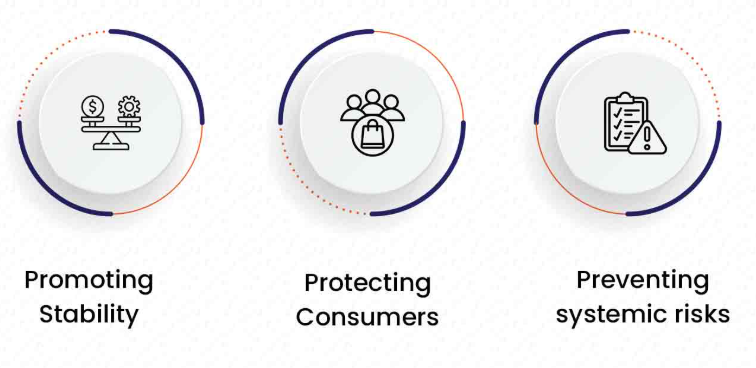
The third issue, financial regulation, is about the control of that complexity to achieve the larger purpose. This issue is of more recent origin than corporate accountability and has many fewer rules. As recently as twenty-five years ago, people wrote about banking saying there was no need for regulation – banks naturally looked after themselves. This view collided with facts in the 1970s and 1980s. Today we have a lively debate about how to control the risks that banks and systemically important non-bank financial institutions take [10].
The complexity of modern financial institutions is daunting. Each has a mix of both banking and non-banking activities. We don’t just have banks and insurance companies anymore: in addition, we have hedge funds and proprietary trading operations. Rating agencies use complex models to measure complex financial products. Central banks no longer just set the price of credit: they also provide banking services to their whole financial systems. We have supervisors of highly leveraged institutions, and web-based portfolios of stocks, bonds, and swaps. We have complex links between financial institutions, as well as between financial institutions and the real economy. And companies from all sectors use a complex mix of direct and intermediated finance to fund themselves.
7.2. Compliance Challenges with New Technologies
New technologies have become so important that they now require their section in U.S. bank regulatory reports. The challenge with FinTechs, RegTechs, and other new technologies is coping with the unknown since new technologies often evolve in ways that may not be predictable. Regulatory compliance has evolved from banking innovation. International trade, international investment, national financial portfolio availability, and the widespread deployment of existing technologies all depend on it. The U.S. does not monopolize the development of new technologies and must be sensitive to the possibilities they or any supervening necessity offer for evasion, illegality, and fraud.
Post-September 11 legislative responses: loss of privacy for some; no new debt, fraud, or money laundering controls for others. Additionally, regulatory compliance is one of the most expensive components of any financial institution's budget. Even in organizations where compliance is a priority, compliance personnel must spend a good deal of time recording and reporting data that currently has not been or cannot be algorithmically recorded or reported. Such data often pertains to rigidly formatted reports, varying data field quality expectations from different audience preferences, and information related to four separate and often independent internal and external reporting times. Their suggestions are very similar to the treatment of risk in the outsourcing of data processing service activities in countries. Specifications are very detailed, leaving very little latitude for efficient smart automation. They may instead explicitly disallow it while specifying a significant authority level for existing and future regulations. Can anything still be done to clarify the regulatory uncertainty surrounding smart automation?
7.3. Future Regulatory Trends
The umbrella over these five enabling levers is the area of regulatory optimization and harmonization where we see more and more central banks looking to harmonize regulations across industries, even if that means first addressing the great disconnects within their organizations between micro and systemic risk regulation and supervisory bodies. So, let us take each one and address where we believe the disruption points are to free up capital for industry rejuvenation. First, financial services industries are poorly regulated, not by the simplicity of the framework but by the different, and often duplicative nature of that intelligence.
A look at what we consider typical mission statements of prudential supervisors yields the conclusion that such institutions are dedicated to the establishment and enforcement of regulation, and for the most forward-looking, the prevention of bad, illicit, or unsustainable practices through oversight and light-touch regulation. Such mission statements give insight into the type of society each supervisor operates within and the general and macro-policy rather than the micro and specific purview of the supervised financial ecosystem that operates within each geography. They are guided and motivated by the psychology of oversight and not insight, and this mandates the application of robust processes designed to address threats and corresponding man-made vulnerabilities. Now that the largest six banks are all part of the same global commission distribution network that is consecutive to the worldwide networking distribution of still commissionaires, the allocations for these key influencers should consider far more global influences with recurring risk assessments from a global perspective [11].
8. Market Trends and Innovations
Revolutionizing risk assessment procedures through the use of modern computational tools is essential to properly addressing the challenges posed by vastly expanded volumes and data types of entities of interest in any of a range of financial ecosystem applications. In today's increasingly complex, competitive, and time-sensitive financial services marketplace, highly accurate and efficient automation that leverages the data explosion and the massive computational capabilities of contemporary technology is increasingly essential for reliable, competitive, and robust monitoring and assessment of financial services providers. The categories of providers, actors, counterparties, and market data involved across the various application areas encompassed within the data-driven regulatory structure have no industry data-digital divide: insurance, banking, securities, clearinghouses, as well as those from outside of the traditional financial sector, such as accounting firms, law firms, or other companies or business entities. Over the past year, insurtech has become one of the not-so-new-anymore buzzwords in the digital industry that promise to reshape our insurance world. The proliferation of insurtech startups and their increasing popularity among venture capitalists underscore the technological advances that are shaping the Fourth Industrial Revolution. At a time of sustained low-yield environment and pressures from new entrants such as financial technology companies, insurance companies are under intense pressure to innovate and contain costs. The insurance industry has been slower to evolve compared with banking, but the growth of some startups is promoting the sector with innovative business models, the ability to manage data and operate with greater efficiency and customer-centric agility.
8.1. Current Trends in Financial Technology
Several significant trends have emerged with the adoption of financial technologies that focus on modernizing financial institutions and the banking industry. The trends observed are the growing interest in smart contract-based interest through digital platforms, the use of innovative technologies that revolutionize certain banking systems, trusts, or the issuance of banking and cash functions, the need for open banking to enhance banks and increase their value, the importance of data security, and the need to create value for financial institutions through investment management. The growing interest in the use of the Internet to promote financial services has become widely popular in the financial industry and stock markets and is considered an example of a market for new and emerging businesses looking to capitalize on technology and innovate in a variety of fields.
Fintech is a mixture and integration of financial platforms and innovative business models, the use of mobile technologies, the distribution of services, and investment in technology. This concept has reached great heights with the development of cutting-edge technologies such as artificial intelligence or machine learning, the collection and consolidation of big data, blockchain, distributed ledger, cloud sharing, automation of services, and robo-advice, fintech platforms, and other personalized financial services. These include non-performing loans, non-performing loan transactions, and capital and capital formation activities. Each of these types of operations allows for specific goals, such as providing payment security in a cloud environment to prevent the distribution of potential liquidity problems in a single setting, like the cloud. Past, current, and future work typically requires independent technologies to be used. All of these technologies are quite novel.
8.2. Emerging Innovations in Risk Assessment
The fundamental purpose of risk assessment or categorization is to discriminate between "good" risks and "bad" risks. Good risks are those that meet an entity's risk appetite and tolerance thresholds and for which expected returns are sufficient. "Bad" risks are consequences that are beyond the ambition of an entity to achieve and which, if they materialize, will jeopardize the entity's survival. The categorization of risk into "good" and "bad" risk domains is often called "risk grading." This is just the broadest of classifications and covers the full spectrum of potential risk gradings. However, in practice, sophisticated financial institutions support many other discriminations because additional comments and internal precautions can reduce the exposure to an event or lessen its impact.
Effective risk modeling relies on high-quality real-time operational processing with low-latency access to accurate risk data. The primary challenge in this context is the efficient curation of real-time operational processing, which is gaining broad consensus among market participants that the ongoing evolution of increasingly stringent regulatory requirements has the potential to greatly impede more traditional risk-taking business models. This has brought about an acceleration of innovative, tech-led solutions to deliver new, agile, and more flexible alternatives. The emergence of smarter, more flexible risk classification algorithms commissioned within re-engineered e-trading applications has also helped to propel these changes to reduce increasing market costs and operational risks through automation. It is well known that most cases of financial fraud are also associated with manual intervention in the processing model or software applications [12].
8.3. Impact of Fintech on Traditional Financial Ecosystems
In addition to solving some long standing problems in finance, fintech models empowered by advanced technologies like AI, machine learning, big data analytics, robotic process automation, quantum computing, and blockchain also ensure a much more fair, transparent, and inclusive financial ecosystem for nations, particularly for the financially underprivileged section, which today remains out of reach. The key reasons for the revolutionary impact of fintech on traditional financial ecosystems include the following: fintech ensures a much-needed boost to financial inclusion. By dramatically lowering the costs and risks of expanding traditional banking to the unbanked and underbanked, fintech becomes a prominent tool to fight economic inequality both between and within nations.
Fintech solutions not only satisfy the increased demand for serving low-income segments, including migrants, refugees, remote rural communities, and areas struck by major crises, but fintech can dramatically improve the quality of financial services to these markets by offering insurance, payment processing, lending solutions with minimum requirements, investment, and savings account openings, as well as microcredit to capitalize on new business opportunities. The revolutionary impact of fintech extends to lowering access and regulatory compliance barriers for the global digital community, connected and borderless, the ever-growing freelance and small business working segment, which is waiting for its opening in the international market arena. Digital finance brings not only benefits but also challenges with increased risks. Alternative flow analytics powered by advanced machine learning and big data analytics mechanisms solve a host of fraud and conventional money laundering risks that traditional banks are exposed to.
9. Challenges and Barriers to Adoption
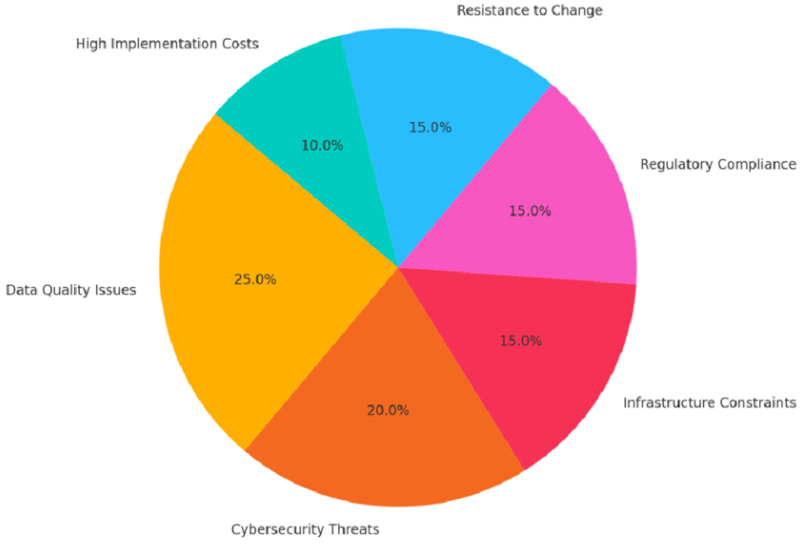
Just as undoubtedly as new technologies will be developed and adopted, the process of innovation carries within it the challenge of overcoming barriers to entry of new technologies in the marketplace. While CPAs and CAs are embracing automation and helping lead that transformation in their firms and organizations, their small-stage clients and businesses very likely will be impacted in matching the strides being made by their larger competitors. Automation is also a disruptive force and presents a huge threat to firms and practitioners unwilling to embrace it. Because of the more complex IT ecosystem at an enterprise level, companies face many IT challenges in the deployment of their automated solutions. While the migration process is simpler at a user level, creating the paradigm shift needed for a major makeover will be even harder. We have an onerous task in front of us of ensuring that businesses are not 'technology laggards', as these organizations would miss out on the enhanced productivity and job creation opportunities that come with smart automation. Collectively, we need to create an ecosystem of stakeholders to reinforce the subject of smart automation in business models and planning, educating business leaders, equipping workers with the tools and resources they need, and enabling smart policies that support, rather than hinder, the economic impacts of smart automation.
Equation 3: Smart Automation Cost Efficiency
Where:
- = Cost efficiency improvement,
- = Manual processing cost,
- = Automated processing cost.
9.1. Cultural Resistance to Change
Those who live through change can often experience different emotional states associated with different change elements. At one level, there is a change that has been planned and expected and, to some extent, anticipated. Then there is an unexpected change that occurs unanticipated. The nature of and participation in the automation project naturally changes people’s job roles and responsibilities and realigns the hierarchy of different job roles. The individuals who experience high levels of anxiety and resistance to change are therefore also expected to undergo stress and loss through changes in job roles and responsibilities, and concern about potential redundancy or redeployment. Furthermore, individuals may also experience panic about the immediate research climate within their organizational unit, which drives academics’ everyday priorities and sense of intellectual purpose. Personnel naturally feel a lack of control over the project initiation and implementation and a lack of perceived personal benefit to the project. When deployment occurs—undertaking the work associated with the new system—the intensive demands and pressure associated with the fast-track program, work overload, inadequate resources, and required level of coping all lead to additional states of stress and resistance. At the completion stage, when the organization implements the new system, individuals may begin to fathom the potential positive future held within the system, driving acceptance, acclimatization, commitment, and support for the task at hand. Nonetheless, there will be a segment of the organization that was perhaps habitually or structurally ill-equipped to handle the change; individuals who face long-term effects of changed job roles and realignment of the hierarchy and, with increased anxiety, reinforcing resistance primarily due to negative experiences as a result of the automation [13].
9.2. Financial Constraints and Investment
In this section, we discuss investment activity as a function of the firm’s internal resources, for example, cash flow, and the accessibility of external funds, for example, from banks, and the stock market. There are several constraints on investment that firms may face. The firm may be borrowing constrained, that is, not able to obtain all of the funds that it requires from the bank. Only firms with access to the capital market will be able to finance investment up to the level of retained earnings if they do not have access to a bank loan. Alternatively, the firm’s divergent behavior from optimism to pessimism may lead to the question of when the pessimism sets in and when the firm becomes borrowing-constrained.
The firm may also be internally constrained by financing constraints of an agency nature generated by the consequences of the separation of ownership and control of the firm, the financial structure of the firm, or the number of customers of the bank. The decision on the level of working capital is also related to the risk position of the firm. The bank and the competition between the banks are very influential and important factors of constraints and their alleviation. The existence of a bank loan is a signal of the non-financing constraint status and that the bank can mitigate the problems of asymmetric information regarding external financing. In the interim period between the evidence of two actions and/or indicators, the firm’s value is associated with a lower level of liquidity and another level of SKU. It might lead to a higher grade of divergence for investing with and without liquidity. The past and the present constraints may also be associated with a country line or industry line effect. A higher level of mean saving and hence a higher level of liquidity will make the firm more attractive to the banks.
9.3. Technological Limitations
Finally, in the era of technology, we should discuss any limitations of our technology model. Today, the theory implies that machine learning cannot satisfy the condition of limited rationality, as it permits robots to predict future events from the past. But for many situations, we must know what relevant previous events are to analyze non-equilibrium interactions between different and partially interacting social-ecological systems. More broadly, humans can process any amount of data relative to a problem. On the contrary, the amount of really good data used in practice is not large. However, the quality of the data adopted is really important for the accuracy of the models formulated [14].
Alleging that our methods allow an easy redefinition of the concept of uncertainty is a source of misunderstandings too. Although modern technologies have produced many innovations in increasing the expansion of capabilities in risk management, we must realize that the expansion of resources proved to be heterogeneous, and many other constraints persist. They are far more numerous than the alternative controls of the financial ecosystem able to reduce these tensions. Moreover, the plural controls of the system described have to look for several objectives that can be different and even opposite over time. But we cannot avoid committing errors in explaining reality. Then, limits to predictions are derived from limits to explanations. The enhanced timetable, quantum theory, relativity, and DNA, just to mention iconic discovery paths, are examples of the social construction of real society. Economics is not museum economics; economic reality continues as viewers eliminate illusions from established falsification criteria. There is no longer a frontier in the field of known knowledge; when something is invented, ignorance emerges. The real economy evolves. We only regard understandable and predictable phenomena.
10. Future Directions
Future Directions. In this paper, we have explored the deployment of risk assessment applications to automate financial institutions, particularly banks, to enable them to validate and analyze the risk associated with their customers during the application, underwriting, and monitoring cycle of the life events associated with a financial product, such as auto loans, residential mortgages, and commercial real estate mortgages, as well as complex credit products associated with large, middle market, and small commercial loans. The home of the Toolkit is the cloud-based, next-generation financial ecosystem that stores customer, account, financial product, and transactional information for financial institutions. More globally, the financial ecosystem is conceived of as a "big data lake" that stores critical "corporate memory" for factories, service centers, assembly lines, and call centers. The Toolkit is easily accessible to skilled subject matter experts, data scientists, risk officers, and financial technologists tasked with using logistic regression and decision tree machine learning technologies to respond to the real-time dynamic formation of the business strategy. The Toolkit lowers risk by making the bank's response to the business strategy formation dynamic. The Toolkit uses as input frame-space, tabular data that meet stringent integrity constraints. The Toolkit will become increasingly powerful as data complexity increases. We are using the Toolkit to eliminate data complexity through the development and deployment of the AI Tabulator.
Future work on the Toolkit will focus on making the models used more AI-oriented. That is, models that self-tune, self-learn, and self-deliberate, and which require only some level of rational learning or understanding, such as tuning, truth, or machine learning/deep neural networks. This work will take 5-10 years. The slowing down of the Toolkit post-integration is due to, about 5-10 years ago, it has been very difficult with traditional data processing and knowledge discovery technologies to work with very large high-dimensional complex information with a need for high cleansing, replication, and official statistics, such as in the big data lake. The result needed was to work with smaller approximate data, and although we made use of all the sophisticated traditional statistical data and machine learning analytic methodologies that we had at our disposal, AI models were only feasible for some restricted tasks, such as credit scores or credit application fraud. These restricted tasks were valuable and have been delivered and integrated into business as usual.
We are now at a turning point; as AI-oriented models that self-tune, self-learn, and self-deliberate are becoming feasible for an acceptable number of banking applications, the current Toolkit is not able to turn to using these models and is at risk of being partially disintermediated by other AI-oriented models. The AI-oriented models can process more information about the problem space faster, cheaper, and more accurately; in the long term, the lack of access to these AI-oriented models could be a strategic threat to the Toolkit in multi-service financial conglomerate banks. In turn, driven banks; ' business model would evolve from social local branch bundles to social local global branch stakeholders, representing the bank's clients.
10.1. Predictions for Risk Assessment Evolution
Within the next couple of years, we predict that risk assessment technology will move from systems and platforms that provide centralized and vertically integrated software functionality and features to a modular, plug-and-play cloud ecosystem of horizontally specialized services and solution frameworks, implemented according to industry-standard data tailored to major applied risk domains. Data security, intelligent operation features, multidimensional regulatory and compliance facts, and operational automation capabilities will need to keep up with ever-shifting threats and opportunities. The software technology underlying the internet economy is evolving towards post-browser, web-scale web services. The visualization technologies will evolve towards port and mobile-fluid services. This includes a range of industry-specific risk assessment solution stacks, including data, processes, and rock-solid vaults implementing flexible, continuous, intelligent operation services on a mature commercial and regulatory software evolution and automation tower of Babel of commercial and legal constructs and solutions.
Organizations need to get beyond historical and near-neighbor data patterns to embed intelligent, automated, plug-and-play risk assessment operation automation on all tiers of incentive and feedback circuits. Efficient management of desirable and changing operational risk is essential to the dynamic adaptation capabilities of organizations. In a new, rapidly evolving arena that goes beyond data accuracy and predictive power of small blocks, platforms, and essentials of building robust, smart, quantitative elements of client and enterprise, top-down, bottom-up, continuous, and in-depth sector ranking modules and underlying fact structures, predictably managed quantitative changes can enhance both institutional development and business robustness in the face of unique financial and economic opportunities, as well as shocks, tiering, and restructuring potentials. Dynamic operational contexts are likely to be connected to cyber and geopolitical risk aspects for the near future; and with institutional value at risk, compliance materiality triggers more than just financial contaminations and extreme fatigue moments for investors trying to quantify and calibrate precision of qualitative, instant-standard evolution in risk management dimensions.
10.2. Potential Impact of Quantum Computing
Quantum computing will be a significant game changer if it truly scales to a few hundred qubits with low error correction and qubit decoherence, allowing for real computing applications in sectors like material science, financial services, drug discovery, aerospace, and defense. Difficult combinatorial optimization problems that involve scenarios when quantum systems are in a superposition of states in search of the least cost solution can be solved exponentially faster. They can be modeled in terms of highly complex physics like the wave function and coherent superposition, and be used to minimize the energy of molecular bonds in chemical reactions, identify arbitrage opportunities, minimize the credit default swap modeling errors, or optimize balance sheet usage under various risk scenarios using Monte Carlo simulations for life insurance reserves, among many other applications. The ability to solve linear algebra functions like transforming from a discrete to a more continuous probability distribution permits a speedup of classical machine learning and Bayesian techniques, or leveraging the Heston model as a continuous differential equation solution for Black-Scholes equations [15].
Quantum error correction tactics for qubit coherence dilemmas will likely generate certain finite circuits, yet the ability to shine a light on the relative effectiveness of specific error correction algorithms and the quantum fault tolerance threshold is at the edge of current psychological understanding. Only limited computing overhead can be reserved for error correction, and adding too many more qubits for error correction programs can eat away at the computational advantage, so it is still quite uncertain to ascertain the tipping point when quantum outperforms classical computing. Nevertheless, mid-term quantum advantage and scalable error correction that extends for a few days or weeks of computing remain highly uncertain, given likely errors in fault tolerance and ensemble averaging needed to erase the errors. Practical large-scale general-purpose quantum technology is likely to take about a decade from now.
10.3. Long-Term Vision for Financial Ecosystems
Financial ecosystems is a new concept that integrates many aspects of behavioral finance and complex systems. Financial risk management can improve not only our economic systems but also the social systems for stable prosperity. This chapter presents the long-term vision for future societies where AI and big data are not antagonists but protagonists to drive and maintain large-scale systems to be sustainable and prosperous. Here we pose a new concept of financial ecosystems that integrates finance, regulatory science, information markets, human resource management, and all other components that people often refer to as behavioral finance combined with complex systems. Financial risk management can improve not only our economic systems for stable prosperity but also the social systems.
Financial risk management based on mathematical and computational sciences can improve not only our economic systems for sustainable and stable prosperity for each individual’s success but also workforce management, corporate governance, regional revitalization, aging society’s social security systems, health management, education, etc. for social prosperity. The observers are amazed by the price fluctuations. They tend to associate these with some economic factors such as labor statistics, personal consumption reports, or consumer confidence indices. However, if a prediction model uses these economic factors, many financial experts who are economically or politically influential would already know.
11. Conclusion
Smart automation is revolutionizing various business processes across different industries in numerous ways. It is dramatically redefining activities, operations, and enabling businesses to work more efficiently and save costs. For risk assessment processes in the financial industry, smart automation increases the level of accuracy in the decision-making process by ensuring that finance and accounting professionals deal with exceptions rather than the usual routines, and also provides a secure, reliable, and compliant framework to handle client’s financial data professionally, ensuring confidentiality is never compromised. Embracing the Smart Automation roadmap will not happen overnight, but the future of Risk and Compliance is inevitable. Today, our financial ecosystems revolve around smart automation tools that help us accelerate our financial processes and control tasks, leading to more accurate, comprehensive, secure, and efficient financial practices that can be implemented across any sector or size of the entity that will benefit from avoiding the run-up of adverse interest rates that have ultimately characterized professional capacity, partnerships, and proprietary and trading organizations’ long-lasting financial arrangements. Furthermore, finance and accounting professionals have peace of mind thanks to this smart risk tool that keeps our economy rolling and healthy. In a tech-driven future, staying relevant also means doing the right thing, working alongside and supporting smart risk automation. This will most certainly fortify us and play an essential role in any futuristic financial ecosystem.
References
- Kalisetty, S., & Ganti, V. K. A. T. (2019). Transforming the Retail Landscape: Srinivas’s Vision for Integrating Advanced Technologies in Supply Chain Efficiency and Customer Experience. Online Journal of Materials Science, 1, 1254.[CrossRef]
- Sikha, V. K. (2020). Ease of Building Omni-Channel Customer Care Services with Cloud-Based Telephony Services & AI. Zenodo. https://doi.org/10.5281/ZENODO.14662553[CrossRef]
- Siramgari, D., & Korada, L. (2019). Privacy and Anonymity. Zenodo. https://doi.org/10.5281/ZENODO.14567952[CrossRef]
- Maguluri, K. K., & Ganti, V. K. A. T. (2019). Predictive Analytics in Biologics: Improving Production Outcomes Using Big Data.[CrossRef]
- Sondinti, K., & Reddy, L. (2019). Data-Driven Innovation in Finance: Crafting Intelligent Solutions for Customer-Centric Service Delivery and Competitive Advantage. Available at SSRN 5111781.[CrossRef]
- Siramgari, D., & Korada, L. (2019). Privacy and Anonymity. Zenodo. https://doi.org/10.5281/ZENODO.14567952[CrossRef]
- Polineni, T. N. S., & Ganti, V. K. A. T. (2019). Revolutionizing Patient Care and Digital Infrastructure: Integrating Cloud Computing and Advanced Data Engineering for Industry Innovation. World, 1, 1252.[CrossRef]
- Somepalli, S. (2019). Navigating the Cloudscape: Tailoring SaaS, IaaS, and PaaS Solutions to Optimize Water, Electricity, and Gas Utility Operations. Zenodo. https://doi.org/10.5281/ZENODO.14933534[CrossRef]
- Ganti, V. K. A. T. (2019). Data Engineering Frameworks for Optimizing Community Health Surveillance Systems. Global Journal of Medical Case Reports, 1, 1255.[CrossRef]
- Somepalli, S., & Siramgari, D. (2020). Unveiling the Power of Granular Data: Enhancing Holistic Analysis in Utility Management. Zenodo. https://doi.org/10.5281/ZENODO.14436211
- Pandugula, C., & Yasmeen, Z. (2019). A Comprehensive Study of Proactive Cybersecurity Models in Cloud-Driven Retail Technology Architectures. Universal Journal of Computer Sciences and Communications, 1(1), 1253. Retrieved from https://www.scipublications.com/journal/index.php/ujcsc/article/view/1253[CrossRef]
- Vankayalapati, R. K. (2020). AI-Driven Decision Support Systems: The Role Of High-Speed Storage And Cloud Integration In Business Insights. Available at SSRN 5103815.
- Somepalli, S. (2021). Dynamic Pricing and its Impact on the Utility Industry: Adoption and Benefits. Zenodo. https://doi.org/10.5281/ZENODO.14933981[CrossRef]
- Yasmeen, Z. (2019). The Role of Neural Networks in Advancing Wearable Healthcare Technology Analytics[CrossRef]
- Satyaveda Somepalli. (2020). Modernizing Utility Metering Infrastructure: Exploring Cost-Effective Solutions for Enhanced Efficiency. European Journal of Advances in Engineering and Technology. https://doi.org/10.5281/ZENODO.13837482[CrossRef]