

Through a digitally connected ecosystem, the innovative realm of fintech significantly enhances human capabilities across various dimensions. AI-based fintech solutions are increasingly proving to be invaluable by providing effective enforcement of regulations that ensure compliance and protect stakeholders involved. Numerous expert investigations conducted in the arena of high-technology litigation have reinforced both the pressing need and the immense value of enforced compliance in today's fast-paced digital landscape. Open banking APIs have boldly pioneered this critical regulatory enforcement role, allowing broader access and improved services for consumers. Predictive AI certainty, facilitated through sophisticated validation systems, represented a fundamental evolution in their rule-based legal formulations that govern many aspects of financial transactions. These advanced products were deployed within global legislative codes, allowing for standardized practices, and consequently, all market sectors quickly adopted them to ensure they remain competitive and compliant. During the latest of these professionals' encouraging comments, it became clear that awareness of the inception of these groundbreaking innovations must be convened into a steadfast commitment to continue launching natural language processing products that can refine consumer interaction. Since this pivotal point, the increasing dependency of the financial expert community on these incisive factors underscores the paramount importance they now hold for their clients and end users alike, shaping the future of finance in profound ways [1].
Innovative Financial Technologies: Strengthening Compliance, Secure Transactions, and Intelligent Advisory Systems Through AI-Driven Automation and Scalable Data Architectures
September 07, 2021
October 22, 2021
December 12, 2021
December 27, 2021
This is an Open Access article, distributed under the terms of the Creative Commons Attribution 4.0 International License (http://creativecommons.org/licenses/by/4.0/), which permits unrestricted use, distribution and reproduction in any medium or format, provided the original work is properly cited.
Abstract
1. Introduction
Despite the obviousness and ease of modern-day technological advances, there are considerable challenges that impede banks from using the most advanced computing technology to fully achieve their compliance, fraud prevention, and business intelligence objectives. This paper begins with a general discussion on the dichotomy between the rapid advances in cloud computing and futuristic data architectures, on the one hand, and the outdated financial technology infrastructure with which banks are equipped to address their enormously complex, vast, and growing data sets for which they are responsible. The objectives of this paper are twofold. We set out the basic principles underpinning the innovative technologies that are in use in the most advanced industries responsible for protecting and nurturing the accurate use, dissemination, and analysis of data. Focusing completely on the end-to-end set of operations that commercial and investment banks must confront with their data will lead to vastly more useful uses of data, directed specifically toward compliance, fraud prevention, and comprehensive business intelligence.
The first focus of this part of the paper will be on the transition that must occur with business objectives concerning "big" data and advanced financial technologies. The second objective of this paper is to examine how big data and data analytics are used (and can be adapted for use) across financial services, and to highlight ongoing projects to make big data analytics solutions more widely available. The introduction of this paper will provide a brief overview of how "big data" is a technology framework that accommodates new business strategies fostered by the exploitation of a company's database. These databases have become increasingly massive, detailed, enriched, and diversified and, as a result, become far more valuable.
1.1. Context and Significance
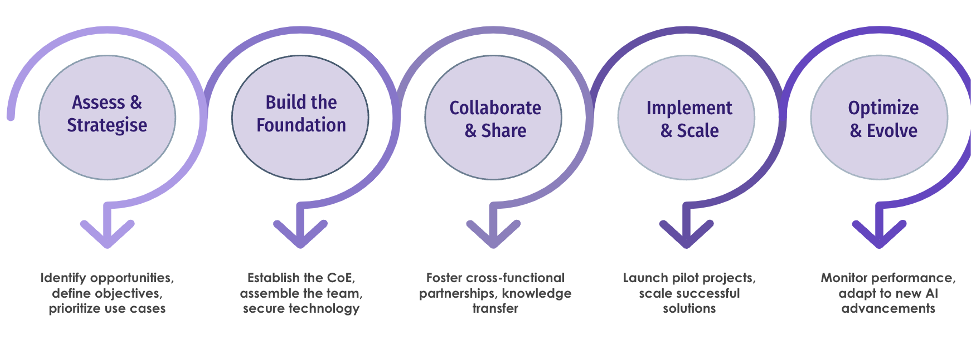
This introductory chapter presents the context and significance of our forthcoming lecture volume by outlining the core problems, objectives, and methods of our suggested practical research. The current chapter ends by providing an enumeration of contributions regarding each of the chapters. The following chapter provides an introduction to firms, policies, and data, contextualizing the role of firms and public policies in generating, allocating, and protecting data while shaping its use. A brief review of the chapters is also presented. The overall volume is organized into five sections. The first section concentrates more individually on the issue surrounding whether manual regulations can still cope with automated technologies as long as each includes self-learning capabilities. The second section introduces the concept of big data, scrutinizing it primarily from the standpoint of volume and other characteristic descriptors. The third section shifts the interest towards automation and new technologies in finance, first narrating its history and its most meaningful stages, and finally deducing their main impacts on organizations and higher-level decision-making, at the same time as regulations. The fourth section explores the relationship between big data and systemic risk. The fifth and final section concentrates on firms, policies, and data.
2. Overview of Financial Technologies
In the transition to a digital economy, everything, everywhere becomes connected with communications technology, applications, and storage on or near the moving life and business that it informs, and the society - industrial, resource, and infrastructure groups that increasingly depend on it. The emerging convergence of technologies is enabling mobility – technology and access to change places in the increasingly complex interaction of people living with, working with, and increasingly depending on machinery. FinTech is changing the way financial services are operated and used. FinTech will enhance financial inclusion, including enabling more broad-based access to financial services for the community who are new to formal banking, underbanked, or unbanked. FinTech will change the way financial services are operated and used, from the back office to the customer front office, bringing down costs and increasing product efficiencies. This new offering relies on seamless, secure, scalable, and reliable service technologies that easily come together to help scale and promote a broad frontier and support the everyday convenience and perceived intelligence behind the personal and business financial services that were first commonly offered. The secure financial transactions and policies are made scalable and cost-effective by technology–financial engineering, or Technological Financial Engineering, and the innovations are advanced based on financial engineering agreed on data agreement operations, or Finance Data and Artificial Intelligence. The fact that this is implemented based on the blockchain's Block Provide Secure Virtual Network Record, in which contracts are embedded in their virtual network, guarantees the accuracy of operations. AI-driven FinTech makes the new collaborative human-coordinate operations of reimagining the future within the computer a means of advancing our larger human purposes. AI-driven FinTech disrupts existing cyberfinance hallmarks, for example: institution immutability; governance increase; intelligent payments; and secure insurance [2].
2.1. Definition and Scope
In recent years, artificial intelligence (AI), machine learning (ML), and robotic process automation (RPA) solutions have found ever-widening application scenarios within the highly regulated financial services industry. Regulatory agencies make compliance mandatory for all financial institutions and businesses offering financial services. Faced with potential sanctions, fines, or removal of special certifications to conduct certain high-impact business activities, financial institutions must respond to these mandates and are held to account for the integrity, transparency, veracity, and reliability of their operations.
At the same time that compliance risk in financial services has grown, the industry has been able to benefit from the rise of digital channels and intelligent data platforms to improve efficiency, lower costs, and reduce time to revenue through enhanced automation capabilities. Organizations have emerged to deliver disruptive innovations in money movement, wealth management, insurance, regulatory compliance, audit and control, and technical support. At the center of this technological revolution, we have witnessed the application of intelligent algorithms engineered to recognize and train on specific patterns defined by the experts on a given subject. The strength of the association of this triad—compliance, intelligent automation, and scalable data architectures—represents an opportunity for financial institutions to improve ROI, customer experience, and impact and establish new sources of competitive advantage [3].
Equation 1: AI-Driven Fraud Detection in Transactions
Where:
- = Fraud detection score,
- = Weight assigned to transaction feature ,
- = Transaction feature value,
- = Error term,
- = Number of transaction features.
2.2. Historical Development
A brief review of history in the technology domain is required. In this field, the earlier technologies that were known for aiding in financial transactions included the implementation of Electronic Funds Transfer using leased lines. This was one of the first technologies, and many banks implemented it to enable customers to access their funds anytime and anywhere. Over some time, the market expanded with the Apple II and IBM PC devices on which several banking services were developed. However, this mostly involved text. Then came the era of the graphical user interface, where Windows and Macintosh-based personal computers came into play. These were followed by ATMs, which consisted of the GUI and specialized functions. Subsequently, wireless internet enabled many financial services on smart devices.
After the year 2008, with the financial crisis and several other factors in play, several technologies became available, and financial service organizations started implementing innovative financial technologies. These technologies include modern database systems, advanced analytics, and artificial intelligence techniques. AI includes such techniques as neural networks, deep learning, machine learning, expert systems, natural language processing, decision management, and robotics process automation. Therefore, modern systems are equipped with utilizing these technologies to provide a myriad of financial services to customers, such as banking, insurance, lending, stock trading, exchange of funds, and other services. How these technologies are being used and what they facilitate are the main objectives of this chapter.
2.3. Current Trends and Innovations
Notwithstanding the challenges and vulnerabilities arising from the rapid rise of innovative financial technologies, FinTech convergence is expected to create new potential benefits through innovative applications that leverage the complex interrelationships among technological change, macroeconomic variables, financial structures, and policy interactions. Illustrating the state of near-term open innovation, this section examines a proposed convergence of innovative financial regulatory automation data architectures and various types of intelligence and decision frameworks, including decision logic supported by advanced big data engineering in virtual computing environments.
Leveraging these types of next-generation capabilities, financial institutions could potentially transform their current operations, reducing transactional costs while also supporting intelligent, real-time decision-making by enhancing their regulatory compliance and advisory systems, boosting growth in the still underserved and marginalized near-customer edges of the market. Increased competition and the interconnected relationships among established and nontraditional financial institutions may enable discretionary financial arrangements where the benefits, costs, and risks fall upon the parties predominantly involved, and also where the associated effects upon transparency and adverse selection do not exacerbate systemic risks. In the realignment and reconceptualization of proprietary and sponsored FinTech research prototype demonstrations into operational supportive functions, we posit that thoughtful management and transversal regulatory compliance architecture innovation and advancements can mitigate the actual strains upon the critical secretarial functions within valuation and governance systems.
3. AI-Driven Automation in Finance
AI-driven automation in finance can contribute to compliance, secure transactions, and intelligent advisory systems. AI-driven automation can ensure control and compliance. Moreover, it can secure transactions and can even transform today’s debit cards into systems with superpowers, where technology can lead to hyper-automation and decrease the total complexity of the enterprise with value-focused and people-centered cognitive systems [4]. It combines different AI-related technologies, such as artificial intelligence, robotic process automation, intelligent process automation, smart process automation, machine learning, conversational AI, optical and cognitive recognition, and workflow orchestration enhanced by low-code development.
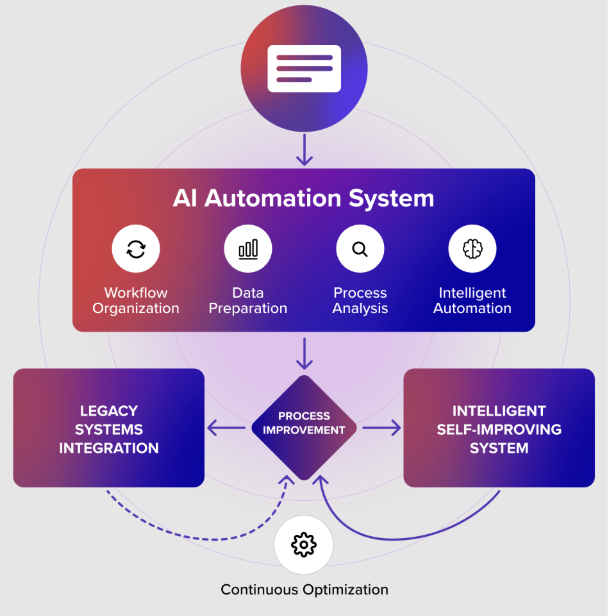
In an era where AI-driven automation will increase competitiveness and build better performance by increasing the focus on regulatory compliance, fraud and cybersecurity challenges continue to grow. Indeed, all processes, systems, and technologies will become easy targets for criminals looking for data, money, or access to strategic assets. AI-driven automation can combat these issues by securing transactions through advanced and powerful cybersecurity solutions, capturing information to recognize sounds and communication patterns, monitoring emotions and personality traits, tracking signals and image factors, and capturing behavioral data to train and power the next best action at all touchpoints along the customer's journey with advanced cognitive effort and technology driven by data and security privacy preservation [5].
3.1. Machine Learning Applications
Machine learning is a subfield of computer science that developed its own set of methods and techniques. The main purpose of machine learning is to build systems that can process data-driven knowledge and use it to continuously improve the system's performance. Machine learning offers the ability to identify individuals or objects using features, which are specific data attributes that characterize those individuals or objects. Learning occurs when a machine learning system processes data with its features to create a prediction model that can be applied accurately to a dataset. It refers to the ability to provide decision-making capabilities to the system so that it can perform a specific task with minimal human intervention. There are various types of machine learning, including supervised learning, unsupervised learning, semi-supervised learning, and self-learning, as well as reinforcement learning, online learning, and transfer learning.
Supervised learning is a method derived from example input-output data. The training process is performed using the training data to develop a generalized function, which then explains new data. Unsupervised learning is used when the output data is not labeled. Semi-supervised learning occurs when datasets contain a small number of labeled instances and a large number of unlabeled instances. Reinforcement learning learns to produce a sequence of decisions by following a trial-and-error process. In transfer learning, a machine learning algorithm uses its knowledge of one task to make predictions in another task. Online learning offers functionalities to systems that learn in real time from a continuous data stream, and the model is updated when new data comes in. In the AI economy, retailers, realtors, hedge funds, and many other businesses strive to make and support predictions, attributing existence to their decisions. Making predictions, over and over again, is one of the main reasons that the AI industry has been a highly profit-generating sector.
3.2. Natural Language Processing in Financial Services
Natural Language Processing (NLP) for financial business processes can be classified into three categories: Language for Regulation, Financial Documents for Compliance, and Intelligent Support. The main objective of NLP in compliance is detecting potential compliance risks in financial documents, and reducing compliance and operational risks. Furthermore, NLP for business support can generate substantive advice in clear, sophisticated process descriptions and during the initial phase of a specific business process. NLP for compliance plays a significant role in generating compliant data for the development of scalable data architectures and intelligent support.
This paper examined NLP technologies applied to scalable financial domains and cases related to each category of financial NLP. The intelligence for the combination of tools, techniques, and services with efficient methods is still needed in future research for scalable and robust NLP applications in financial services, which require strong domain expertise. These scalable technologies use financial domain expertise techniques for future business applications. In subsequent updated research, NLP for financial services will become an ultimate solution, integrated and scalable. The techniques involved will be presented in comprehensive future research. Financial industries should take intelligent and scalable NLP as a more proactive approach to reduce compliance, mitigate operational risks, and rationalize compliance costs [6].
4. Compliance with Financial Technologies
As compliance is driven by the regulatory and legal environment, studies identify the relevant regulatory areas in the financial industry: anti-money laundering, anti-fraud detection and protection, fraud investigation, supervisory authorities, regulation and reporting, corporate lending, and credit rating. In the following, I will provide a brief overview of these regulatory areas and their relevance for FinTech innovations and compliance. Knowing customer and counterparty identities and corresponding risk classifications is the basis of financial relationships. Investors have to take anonymous issuers’ information at face value. The same is true for corporate banking. Basel III corresponds with the importance of accurate credit ratings [7].
FinTech services and products bear the potential to improve identification and risk classification significantly. Recently, the European Union started the exertion of a FinTech action plan that tackles legislative changes to improve anti-money laundering and combating the financing of terrorism. This move was widely expected to push the development of more efficient solutions. In this context, trial politics has to be observed by either strict separation in the financial services market or in the development of more sophisticated digital identification technologies. Data usage – compared to manual efforts – reduces false positives when analyzing transaction strings for expected operational patterns of entities.
4.1. Regulatory Frameworks
The creation and implementation of regulations about financial services have manifestly increased as the usage of financial services has grown across the globe. Regulatory frameworks, when appropriately managed and enforced, can produce an ecosystem of healthy and thriving financial services. However, they can also lead to issues such as diminished competition as well as decreased social inclusion and growth when regulations are taken too far. Regulatory frameworks can also increase the cost of compliance, the level of complexity, and the reduced agility of executives to make bottom-line-advancing decisions. In this vein, the increased attention given to abnormal compliance costs and compliance management has elevated the role and necessity for human compliance officers, at least for the near term.
As compliance has grown increasingly complicated, enterprises have increasingly turned to outside parties to help with their compliance duties. Furthermore, as the pace of business has quickened, the hiring of individuals with narrow expertise specific to compliance has become the new norm for managing issues with compliance. Despite these efforts, many organizational executives see the current system in place for compliance as a system that is burdensome, complex, and not always satisfying. This leads us to an interesting dilemma: how can intelligent systems, pathway technologies, and agile automation combined with AI help businesses sustain compliance commitments while benefiting from new industry capabilities, technologies, and business necessities?
4.2. Challenges in Compliance
Machine learning algorithms can help improve the detection and prediction of non-compliant activities in different channels, including, for example, internal controls. Due to the large number of transactions issued by large financial organizations, executives often have difficulty understanding the particularities of each transaction. On the other hand, auditors are risk averse, choosing a restricted number of transactions to perform an audit procedure. One way to optimize this process is to use techniques based on massive databases or real-time controls. In a study conducted on a sample of companies, it is shown that machine learning models can improve the detection and prediction of non-compliant transactions. In the detection model, the results were coherent; the receiver operating characteristics can reach up to 88.15% predictive power for warning calls and 9.21% for false positives, with an accuracy of 89.76%. At the same time, the prediction model finds an area of 84.39%, with 10.32% for false positives, and an accuracy of 88.06%. Considering the high level of false positives inherent in real-world data, but with the presented results, it is possible to adapt the process to prioritize the most important transactions in the financial audits, assigning a risk index to each transaction.
The set of strengths presented is essential and attractive, but for organizations to receive investments with so much potential, it is necessary for financial institutions and authorities to seek to understand, plan, and supervise the launch of these innovative applications. Regulations in one country or region can stimulate local initiatives. In addition, international uniformity should be facilitated for global enterprise entities. Such regulations must include flexible prudential and accounting regulations to fully exploit the technological capabilities of banks and must cover third-party interactions, data management, and consumer data privacy [8]. The high potential of FinTechs is consistent with the breadth and potential diversity in the range of challenges that need national and international cooperation. They require changes in the perspectives related to business, transaction, and regulatory use. This future can be achieved, but it is necessary to enable an ecosystem that allows excellent financial innovation management and encourages innovative activities. Such innovations are capable of contributing to the accelerated growth and progress of society. The potential of these innovations just needs to be properly cultivated.
4.3. AI Solutions for Compliance Management
Risk and compliance management is becoming increasingly important across the financial services industry. This is due to the growing number and complexity of regulations and sanctions. In addition to the international governance requirements, each organization specifically needs to avoid regulatory mismatches by their specific country along with adhering to sanctions from international agencies. We have designed and worked on several compliance and risk management solutions to address the regulatory aspects of banking and financial services clients. Our approach is to map government rules to a customer’s specific risks and compliance processes. This approach unites both the data as well as the process elements. We have seen significant improvements in compliance and managing the risk-based compliance management systems [9].
In the context of the banking industry, the effective running of these algorithms can enhance financial trust, security, capital allocation, and cost of equity. The health index will also help the central bank monitor corporations in real time and conduct comprehensive and targeted supervision more accurately. These results can provide new empirical evidence for the application of AI in compliance at the country level. In the future, we will explore cross-observations in more jurisdictions and use different explanatory variables to analyze how the application of AI in compliance can affect the firm’s financial health and the real economy of different countries in more depth. This paper contributes to the compliance literature by documenting the impact of an AI-driven compliance management system in the context of public corporate groups. It indicates the ability to use AI in compliance management. It also contributes to financial sustainability by offering policymakers a robust signal to monitor firms in the capital market era.
5. Secure Transactions Through Technology
Customer satisfaction and customer experience define interaction on the modern transactional platform. However, a quantum of risk represents a potential disruption of secure transactions. This study focuses on the readiness of consumer and business markets for robust financial frameworks in the age of technology investments to foster secure, risk-averse business ecosystems. Addressed are niche literature gaps that provide insight into applying the latest financial technologies in migrating from centralized, single points of failure, and 'one-size-doesn't-fit-all' traditional transaction processing platforms to transaction agents' ecosystems. The research findings suggest that on an aggregated scale of positive and negative technology movement toward the identified niche gaps, current digital market readiness to continuously innovate by applying technology investments in customer experience and designated secured transaction layers does not have sustained market share traction.
The contributions of this study include: spot validation of transaction participants' trust factors in designating cost elements in the identified secured transactions framework for the identification of what, how, and when financial risks intercompany settlement participants of a multi sided market increase system liquidity risk in the retarded transaction interface with the real economy; heuristic rules of thumb added to: (1) design reusable technology investment scenario planning methodologies that identify lowered proprietary trading and potential improved investment policy contributions to long-horizon investor liquidity risk in sustaining real global financial markets; and (2) determinants of expected future fund liquidity in non-crisis times. These findings are designed to optimize multi-agent managed secure marketable claims transfer at an optimal anti-herding speed rate [10].
5.1. Blockchain and Cryptography
Blockchain and distributed ledger technologies are breakthrough innovations that promise to revolutionize a wide array of industries by providing easy, fast, and secure data transfer, storage, and management methods that are particularly efficient whenever there is an absence of trust between the involved parties. Used in conventional financial services, blockchain technology eliminates the need for many types of intermediaries, including banks and central banks, which results in efficiency gains in the banking sector. In the real economy, blockchain cuts administrative costs in trade finance by trillions of U.S. dollars. The technology underpinning much of the blockchain systems is homomorphic cryptography, which allows computing on encrypted data without decryption, a fundamental ability for securing artificial intelligence-based systems' sensing and data processing capabilities, all while ensuring complete privacy and compliance.
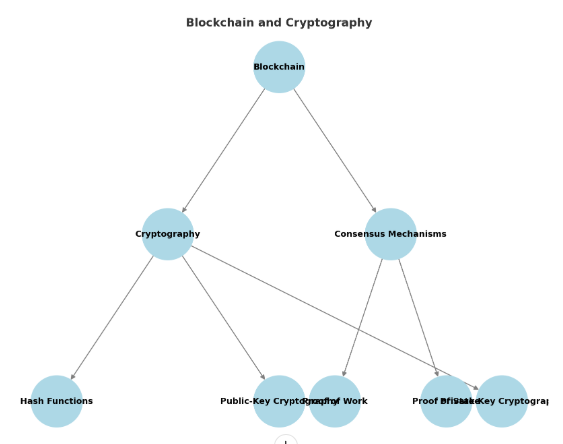
Homomorphic cryptography makes it possible to analyze or compute certain things without having to decrypt the data. Teaming this up with blockchain, it is possible to transfer and store the encrypted version of data without its decryption. When the data is needed by another party, it will not have to be re-encrypted at all; it can be simply encrypted using a different symmetric key. Over the years, several techniques have been proposed, implemented, and tested. During the last couple of years, startups and academic researchers have made significant progress in implementing homomorphic encryption for popular programming-related tasks [11].
5.2. Fraud Detection Systems
Fraud Detection System Financial institutions rely on networks of rules to detect signs of fraudulent behavior. For example, a large purchase evokes an investigation to confirm that the card was not stolen. However, manual review is costly, and financial institutions must balance customer service with loss prevention. Lowering expectations can reduce both false positives and the costs associated with otherwise genuine transactions. Determining whether a transaction is genuine is a binary valuation problem, and AI, leveraging both contemporary data architecture and GPUs, is leveling the playing field. Financial institutions can invest in a deep learning model that evaluates the similarity of each transaction to others in previous authorized and unauthorized transactions. If the model determines a level of similarity above a defined threshold, it is marked as genuine.
There are various models to detect fraud using deep learning-based AI. CNNs, RNNs, and LSTMs can all support this process. The problem is typically framed as a binary classification problem, requiring that actual genuine transactions are validated through manual review. Repositories of past transactions are utilized to provide the necessary contextual information to support the model development. However, as the dataset is typically imbalanced while also sporadically densely available, data augmentation can be used to balance the training set. The final model should be tested for blind validation. If multiple models are deployed, ensemble learning can combine their results. The approach ensures that both too many legitimate transactions and too many illicit transactions are not allowed to pass. It also provides financial institutions with the means to eliminate legacy rules, to provide a more secure and better service environment for their customers.
Equation 2: Compliance Monitoring Efficiency
Where:
- = Compliance efficiency (%),
- = Number of compliant transactions,
- = Total transactions monitored.
5.3. Data Protection Mechanisms
In commissioning a service, the processing of data is inevitable. Usually, the data includes personal and confidential information. The fintech company employing data protection mechanisms seeks to win over the trust of sophisticated customers and to avoid risks such as gross misuse of data, illegal storage, or transmission of information that could lead to penal and reputational consequences. The data processing is based on knowledge, secure authentication, and secured communication using encryption, authorization to access and use specific information, logging, events processing, and audit activities to document information service processing.
The control of data access is vital in preserving privacy and ensuring the security of sensitive information. Sensitive information can arise from two entities or parties. The control of data access must therefore comply with regulations to provide a degree of security that is consistent with the level of data sensitivity or trust level associated with party rights to access the data. If this access control system allows the participation of a large audience of users, then access may be auditable such that events from the access control system are capable of being used to generate an audit log. The data protection provided by the access control system can be improved if the enforcement of access decisions uses encryption or decryption of the stored message and the application of the system denies decryption to access requests that do not satisfy the access structure requirements.
6. Intelligent Advisory Systems
Recent technological advances can help reflect the vision of the financial industry as a space for negotiation and exchange where risks and returns do not make all decisions speculative. This chapter discusses how to scale an advisory service without compromising the quality of the service and discusses the use of AI techniques for carrying it out. Presenting both technological solutions and the organizational technology design required for implementing a fully autonomous high-quality advisory system, the chapter unveils how modern data architectures can be built and used to coordinate the management of the groups of people working at each stage of the system. This chapter talks about AI-driven intelligent advisory systems for wealth management, which can enhance user investments in several ways. This chapter discusses AI techniques and explains why AI is an important ingredient in such systems. After studying available information, financial advisors set up an investment strategy that is then made possible through financial products, which can be bought or sold with a direct action performed by the advisor. However, to perform their tasks, financial advisors have to interact not only with the retail investors that outsource their decisions, but also with each other, financial analysts with buy or sell analysts, and asset managers with different financial portfolios aimed at generating different returns compared to the level of risk at which they are set [13].
6.1. Robo-Advisors
The ecosystem of financial services, which largely operates within the traditional economy, has experienced significant impacts associated with technology. Therefore, it can be argued that in no other sector is there a technological presence as large and as deeply connected, in a critical way, as in the financial technology sector. By 2019, more than 600 fintech companies were listed in the stock market with a capitalization of over $9 trillion. One of the most disruptive technologies of late is artificial intelligence, particularly in robo-advisor applications, which have contributed to considerable expansion in the business of wealth management. Robo-advisors use data science, supervised learning, and other AI functionalities to optimize the effectiveness of artificial intelligence in financial products. During 2019, the wealth management business managed assets of $85 trillion, of which more than $300 billion had been used by robo-advisors or approximately 30% of the world's total population.
Robo-advisors are investment algorithms that automatically select low-cost and diversified portfolios that best-fit client profiles, such as income, wealth, financial objectives, investment periods, and tolerance of risk, costs, and taxation. Interest in robo-advisors is growing among investors because they offer professional asset management services at much lower costs than those charged by private planning agents and traditional wealth managers. Solutions include behavioral analysis tools, which have been proven to avoid investment errors in actively managed funds with a certain level of success by accurately timing market strata. These algorithms that compete through time-frame and unique adoption of sophisticated methodologies to avoid investment mistakes are based on AI; a process of unsupervised learning from a suitable dataset of structured and unstructured data. These databases include: (1) financial instruments selected to form its portfolio; (2) their availability on the investment platforms used by AI-based robo-advisors; (3) target asset allocation, both by type and geographically diversified; (4) return assumptions, volatility, and correlation separated; and (5) probabilities of exceeding risk-adjusted returns. AI-based robo-advisors modernize the investment management sector by making decisions more rational, judicious, transparent, effective, agile, and in greater flux.
6.2. Personalized Financial Planning
Numerous companies have websites that provide various forms of personal financial planning. A segment of these is well-capitalized media, publishing, and engagement platforms. There is considerable venture capital backing for FinTech start-ups that aim to disrupt traditional financial advisory businesses. We anticipate a market shakeout, with a few of these cases becoming very significant. Financial planning companies using AI-driven automation and big data should optimize better solutions. The key factors that clients seeking personalized financial guidance will value are the ability of the financial planning vehicle to collect and organize a maximum amount of financial information about the client, to have real-time updating, curation of the information, and to provide frequent engagement with the client. Key factors will include intelligent summaries that answer the client's key concerns in painless and rapid, entertaining interactions about goals. Suitable user interfaces have to be provided so that non-technical clients are comfortable using the vehicles. Participants will value being able to discuss concerns with personal experts or being able to gain intuitive and immediate access to other professionals.
The personal financial planning FinTech business faces high-stakes regulatory hurdles. Protecting the public from misinformation is important for many products and services, but the stakes seem particularly high for personalized financial planning advice. The more a client trusts his or her personalized financial planning, the greater the impact on their behavior from the information and recommendations provided. As so many of the stated goals of the personalized financial planning clients are based on a modicum of self-improvement - finding a better job, spending less on a bad habit, holding fewer unproductive assets, turning savings into retirement income, saving for retirement, buying a home, sending junior to a good college - we anticipate increased demand for the ability to discuss - virtually or in person - concerns, goals, and advice. With the potential value of providing good advice very high, there is a disproportionate burden on FinTech companies to establish user interfaces and education systems for clients that are helpful enough to give customers the confidence to take their reasonable advice. Consumers aware of the powerful rationalizations that affect private decision-making should be especially appreciative of trustworthy advice that ensures trustworthy influences on personal and corporate decisions.
6.3. Client Interaction and Engagement
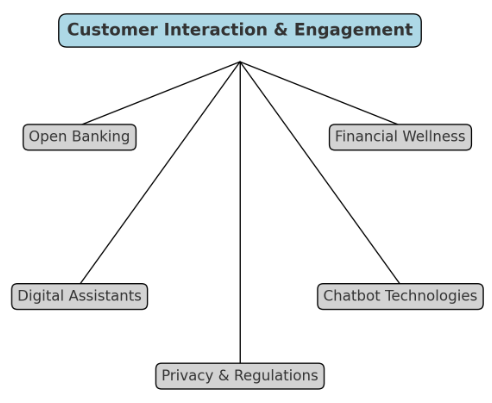
Customer interaction and engagement must move beyond traditional "method – question and answer" lists and become "financial wellness" interactions from the customer’s first contact. The emergence of the open banking standard will drive new services and capabilities that will significantly increase the level of customer interaction within their overall financial health experience. It is an exciting time for all customers as they garner the benefits of technology that is being built into advanced services to help them better manage their financial wellness and feel more in control of their future lives. Open banking has already produced a paradigm shift in enabling more organization types to participate in the digital ecosystem. Inclusive participation has been a vital driver of digital success, and open banking has the potential to vastly increase the diversity of the digital ecosystem, creating an environment where every organization can flourish alongside traditional financial services providers.
Interest in robotics and chatbot technologies is rapidly increasing. Digital assistants are focused on more precise tasks, like calendar, email, and home control, managing complex business tasks, including bank tasks, balance inquiries, etc. These digital assistants help customers navigate complex, dynamic, regulatory environments using extremely complex simulations, provide verification and validation evidence for all kinds of financial communications, conversations, and decisions, and ensure auditable processes through intelligent enterprise virtual assistants with unique digital shell advantages. Open banking will induce additional regulations and privacy protections, becoming more simplified to ensure its adoption and benefits. Most digital assistants integrate powerful technologies, like chat and voice interaction processing, project management, program management, issue management, and analytics with conversational language processing, including both deep and natural neural networks, as initial customer journeys quickly involve customers around distracting questions.
7. Scalable Data Architectures
The volume is used to operate on large amounts of data to display results. Such data includes customer queries, market and transaction data, as well as social media and publicly available sources. Although systems usually work on time slices or windows, users are usually interested in time series, with a fixed interval to display information. The cases of averaging to build a chart are examples of such processing. As computational speed and network bandwidth evolve, data volumes double every couple of years [14].
At the same time, financial firms that need these facilities have massive historical volumes. Overnight, a bank can add a billion new lines of data just by handling balance sheet data. Storage and access to that information create constant cost pressures and operational idiosyncrasies.
As costs cover information lifecycle management-driven processes, new data is typically stored in large interconnected groups, which implies a massive redundancy of first-pass processing at the time of storage. The more information, the stronger disk file architectures that distribute data in data storage levels across multiple disks for big parallel processing, creating an R-DB. The multiple read-out levels are used to query the distributed virtual databases. DP-DBs are in turn deployed on further specialized disk read-out arrays to improve query parallelism. Even then, data remains optimized for repetitive queries, rendering first and development passes inefficiently. It is sensible to minimize the use of pure data, size- and performance-wise, employing big data approaches when information is unstructured. As all information is copied and stored at these read-out levels, processing efficiency, low data compression, and highly efficient query parallels all maintain. In new faster and cheaper storage components, higher-pass read-out terms can further eliminate data redundancy.
7.1. Big Data in Finance
Financial institutions can leverage big data technologies to use real-time risk assessments of potential or existing creditors, to develop better business models covering the risks of corporations of all sizes, to grant small credit restoration or home improvement loans, and to monitor new or existing credit with greater precision. Big behavioral data increasingly allows firms to build comprehensive credit profiles across multiple institutions and to identify more precisely moments and circumstances that have plagued bad credit choices made during a single life. More sophisticated predictive algorithms draw on broader returns data to better predict the cumulative probability that a new credit will be unserviceable given its size, maturity, and interest rate conditions.
As the global financial crisis showed, banks currently lack the comprehensive credit information necessary to properly set prices and control supply. To avoid over-focusing their resources on categories that do not directly correlate with repayment probability, banks imposed weighting functions on easy-to-obtain sample characteristics. The effect of these thresholds is to reduce the regulatory-induced cost of increasing concentration. This strategy contrasts sharply with the other strategy for managing loan risk that we elaborate on below: greater precision in the identification and monitoring of such risk involves no loss of efficiency and ultimately benefits that can be monopolized by regulatory authorities. For that reason, international bankers and business people involved in optimizing credit supply do not monolithically share the assumption that market concentration induced by public capital requirements benefits buyers [15].
7.2. Cloud Computing Solutions
Given the capital-intensive nature of a cloud computing network, it is the larger, diversified technology giants that can robustly enter this new field. Early large investments, a dominant presence in various software computing areas, and numerous data centers enable the larger software vendors to scale sponsored networks. Large hosting providers are utilizing thousands of computers with various sophisticated processing capabilities to offer high-end performance at very competitive unit processing costs. The topology of their fast-growing data networks and the use of software to manage load balancing give these cloud applications considerable scale efficiencies.
Apart from the enterprise providers and the champions of low-cost processing, enterprise customers are also committed to their own data warehouse and back-office applications. Data and processing security aside, the performance of the software tailored to customer applications suggests that proxies such as Internet access to the cloud computing offering are either not possible or at too great a cost in terms of storage and pipeline delays. Nevertheless, as the agility and cost savings of cloud computing are widely acknowledged, many companies have and will outsource certain processing loads to these sponsors where the processing benefits are large and other issues do not intervene.
7.3. Data Analytics and Insights
Financial service firms are increasingly capturing and storing expansive data sets to later turn these data assets into actionable insights and predictions, and to strengthen their understanding of their clients and their broader markets. Text mining on clients and expert networks, insight services from unstructured filings, footnotes, communications and transcripts, credit ratings and rating agencies for corporate finance, financial reporting, fraud detection, and risk, securities ratings for structured products, structured securities ratings, analyst consensus estimates or forecasts databases, and other forecasts or estimates of financial variables consistent with security analysis are also used for developing new insights or for enhancing structured risk models. Other data states to capture, map, and utilize to drive firm decision support and insights regarding nearby support coordinated as part of an open innovation strategy, or the state or characteristics used to identify and analyze the other deployed communications routed for a task or collaborative computation.
Big data architectures are central to these financial technology trends. Financial service providers use large-scale, data-intensive, high-performance, cloud-based applications and data and infrastructure services for a range of purposes: to store, and search large structured and unstructured data sets for relevant information, to track people and resource movements, to support the preservation, pre-processing, and knowledge sharing about important resources and workflows, to extract user experience or feature-level information that they refine to build enhanced information models, and to infer analytical assertions about the underlying data. Many firms use microservice work decoupling supporting high elasticity, high frequency, high volume, high throughput, and extremely dynamic and agile development models to create, refine, and/or repurpose continuously deployed applications.
8. Case Studies
This case study explains the underlying components necessitating the use of innovation and technology in the current lexicon for global financial services, to address the changing aspects of compliance and regulation within the age of analytics, digitalization, and automation. Simply adopting a component-driven digital strategy, via a set of disparate digital initiatives, does not promise business growth. On the other hand, merging the need for scale and speed, brought about by business and technology shifts, requires the bringing together of the full complement of digital assets into the philosophy of total digital at global financial firms.
Bajaj Finance, a diversified consumer service company, offers loans, asset management, and insurance services, among others. Known as BFL, the lender has deployed what it calls the 'Divide and Conquer' gaming philosophy to win good customers and prevent present and future NPAs. Nimava has a policy guideline and a corresponding AI-ML-driven recommendation engine that tells employees what to convey to customers and when to 'up-sell' a new financial product from its multiple services through its growing distribution network. The AI-ML system is currently being used in cross-selling businesses for more advanced behavior for quick penetration. They collect data through multiple sources and want to use customer purchases to sell consumer durables to predict their loan needs. They also want to automate more financial and advisory services. BFL is serious about reducing the cost of customer acquisition and engagement and wants to capture a bigger chunk. They intend to automate credit approvals and expect it to increase to 70% from the current 45% of their business. BFL collects all interactions in 15 categories and a thousand data points and uses an engagement engine to classify customers. The insurer and provider of household, motor, and health insurance are finding ways to supplement income through new products such as travel insurance and services using digital platforms, digital interaction analysis, and propensity models.
8.1. Successful Implementations of AI in Finance
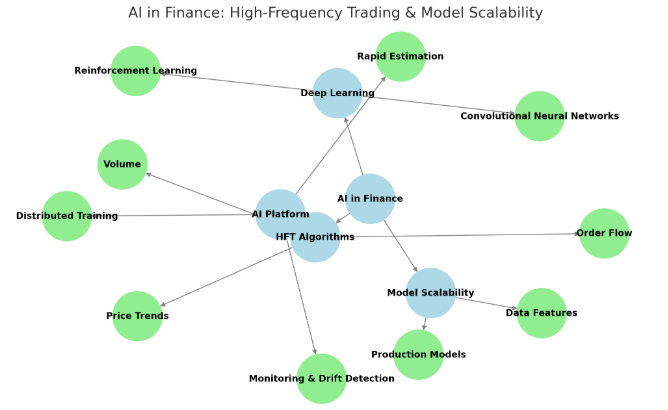
The key to successful applications of AI in finance often lies in turning cutting-edge research into scalable, accurate production models. In many high-frequency trading applications, agents tackle the informational inefficiencies of modern markets by applying simple statistical models to features such as order flow, price trends, and volume. As these trading methods become increasingly widespread, agents in these business models often experience diminishing returns, and richer sets of data features become necessary to maintain competitive advantage. However, by turning to recent work in deep learning, especially for models such as convolutional neural networks and reinforcement learning, we anticipate the potential to dramatically scale even today’s most advanced HFT algorithms should sufficient data be made available.
Capitalizing on the latest advancements in AI then demands the ability to rapidly prototype, deploy, and adapt production models. However, the inefficiencies of traditional software development often make the rapid re-estimation of even relatively simple models seem infeasible. In response to this challenge, we designed an open-source, extensible, full-stack AI system that combines several leading scientific and mathematical libraries with a model management platform. Albeit in its early stages, our platform has been designed to facilitate the rapid estimation, distributed training and evaluation, deployment, and ongoing monitoring and drift detection of deep learning models, which, critical for their acceptance in a regulated financial industry, tend to be more transparent and interpretable compared to traditional, black-box models in the HFT space.
8.2. Comparative Analysis of Technology Adoption
Drawing on the comprehensive understanding provided in the prior section, four major digital technologies are selected for use in comparative analysis. These are AI-driven automation, scalable data architectures, distributed ledger technologies, and predictive analytics. The latter, standard in the field, would function as a benchmark for comparison. The aforementioned technologies are selected as they are widely recognized and increasingly adopted within the financial services industry. Over the years, they have been taking over conventional rules-based decision-making, allowing for highly specialized analysis of vast, disparate, and difficult-to-understand data to enable valuable insight and perhaps solutions.
9. Future Directions in Financial Technologies
Optical spin control of the Dzyaloshinskii–Moriya interaction in a ferromagnetic layer. Financial technologies leverage new computational technologies to transform financial services. Recent advances in financial technologies use machine learning and blockchain technologies. Future financial technology directions involve the use of artificial intelligence techniques and concepts from causal inference to develop compliance reinforcement systems capable of interpreting regulation and monitoring the overall compliance as a function of events in financial organizations—specifically, detecting violations, enhancing policies, and evaluating the effectiveness of enforcement actions and organizational changes. Additionally, AI-driven automation of middle and back office processes goes well beyond robotic processes as intelligent workflows enhance architectural accuracy, reduce errors, and optimize processes—strengthening compliance and promoting a new era of innovations helping to transform business processes. Decentralized finance provides more democratic investment opportunities and has popularized these solutions over the past two years. On the trading side, high-frequency systemic trading has become more important over the past 45 years. Building intelligent applications that address proprietary trading and market intelligence systems in near real-time, or developing other speculative trading financial services is proving to be profitable in this era. Ambitious organizations may want to utilize AI and cryptocurrency-based financial techniques to generate massive returns from a variety of opportunities. Regulatory technology applies technological innovations to analyze and monitor risk and compliance with financial policies, including compliance with Know Your Customer and Anti-Money Laundering controls. An evolving subset of regtech called supervisory technology works to assist regulators in improving their oversight of the financial sector. Such technologies help understand how institutions operate, what new risks are emerging, and how to improve compliance enforcement effectiveness. Addressing these problems leads to developments in visualization, natural language processing, and smarter model development techniques using big data and federated learning methods. The future of artificial intelligence-based financial technology applications promises to automate trust, making us more productive, fair, and rewarded.
9.1. Emerging Technologies
Innovations are constantly transforming business processes in the finance industry, with a revolution of novel software and integrated hardware systems updating traditional business advice, financial management, and expert systems. Evolving technology includes data analytics and neural network-based AI that are integrated within wired financial systems; IoT enabled by personalized real-time credit and contractual agreements; expert AI for use in management and for private users; and high-dimensional scalable APIs channeling AI access on a multitude of business and economic applications. Intelligence revolution: AI that is media-fed, data-driven, and control system optimized from multi-million-parameter objectives that learn from varied critical experiences has contributed immensely, directly and indirectly, to high-stakes decision-making in diverse spheres, such as economic and financial processes. The technological synergy governed by the activities of the upper and working classes manifests in different degrees of intellectual capacity, demographic, and financial autonomy, thereby requiring a technology that encapsulates intelligent wizardry. Given a set of representative samples, some subsets of AI perform a myriad of complex tasks, given varying input that results in varying outputs, such as functions and relations over vertically high-dimensional data. In contrast, given high-dimensional interactively discriminative representative samples, another subset of AI formulates laws and constraints that best support uniform and antagonistic ethical policies, such as taxing the upper classes for the benefit of the working class to equalize economic opportunities. With specially designed wired interfaces to adaptive intelligence, firms and newswires can take advantage of the above-mentioned and similar transformational AI that is capable of the creativity found in high-stakes consulting and meld these successes into rigorously observable, unbiased results.
9.2. Potential Impacts on the Financial Sector
The future of AI and the financial sector is both bright and challenging. Bright, as by transforming the sector's operations, internal procedures, and external relations, greatly increased benefits are not only anticipated but already, in many respects, have come to pass. And challenging, as these benefits have to be nurtured under a framework that the legal and regulatory order requires. DLT, along with other innovative financial technologies, complements AI. They are used to ensure that vast amounts of variegated data are processed in real-time, especially in the globe's largest financial centers. A global financial framework was thus able to act fast in deploying loans to help mitigate the losses in income for private financial and sectoral agents, which the sudden pandemic crisis caused, thereby decisively contributing to preserving the stability of the world economy and its growth prospects.
Hence, our proposal has AI-DLT as a lifeline for national fiscal and economic policies. AI-aided supervision of financial transactions at a global level by public agents, central banks, regulatory institutions, and private agents seeks to ensure their smooth and effective conduct and to protect them from danger and damage. The growth patterns for the rest of the economic sectors will be conditioned by the capacities that innovative financial technologies grant to the financial sector and to the economies in which they operate. Thus, it is important to describe how AI/DLT should also augment the performance of so-called intangibles that, regarding the financial sector, are synonymous with the processes of creation, transmission, and reception of all kinds of data.
10. Challenges and Risks
Recent regulatory changes have continued to put pressure on the financial sector. Several technologies are beginning to establish themselves in the financial sector, making it possible to drive significant changes in the value chain. All these changes require strong data management, capable of dealing with the current data volume, variety, and speed, and sharing data assets between applications without suffering substantial information loss or being affected by administrative constraints. Consequently, we come across the need to invest in flexible and scalable data architectures, capable of connecting heterogeneous data sources and diverse systems, benefiting from artificial intelligence to automate and validate more complex requirements. Moreover, these resources also enable the democratization of business intelligence, empowering internal users to create their specific reviews and analyses. In short, speed and precision in the construction of the information system are transcendental in a regulatory context to generate value and respond to the requirements in the set deadlines.
Innovative and unforeseen risks across all business sectors from the implementation of critical IT applications put the relevant department on red alert. That is one of the reasons why a significant percentage of IT projects go over the initial budget and schedule, reconfirming the fragility of the delivered artifacts and their capacity to support regulatory compliance. The implementation of AI-driven intelligent automation in projects aiming for the digital transformation of the financial system might contribute to mitigating these risks. The potential use cases are diverse but relevant for a pragmatic approach to compliance while balancing the entire information system with concrete results [12].
10.1. Ethical Considerations
Automation and artificial intelligence (AI) solutions are critical for the development and deployment of scalable, intelligent systems that can secure transactions and minimize opportunities for cyber exploitation. Few questions the value brought by these emerging technologies optimized for efficient processing and rapid decision-making that mimics or surpasses human capabilities. However, it has been stated frequently and increasingly that as these technologies develop and demand continues for the expansion of these operational capabilities, it will be essential that ethical considerations persist and accompany these rapid advances. Decision-making within the intelligence, defense, finance, and commerce sectors holds significant economic, policy, and legal implications, often with the potential for maximized benefit or significant destruction. Organizations and society at large would desire a process that inherently and deliberately guides the research and design goals so that even as expanded capabilities emerge, individual privacy and security in the public and private sectors must not be ignored.
Key ethical areas that prompt concern about these powerful and potentially transformative technologies and their uses include workforce transformation (including inherent policies to mitigate displacement), algorithmic transparency, informed consent and non-biased problem formulation, and national security. These societal and global security topics converge with IT growth, with significant implications for jobs, privacy, and national and global security. The rapidly growing capability embedded within IT products designed to perform cognitive and automation functions is reshaping the workforce across all economies with the potential for positive change through decision-making augmentation, which affects financial and business outcomes. These benefits can be at odds with the existing economic status of the current workforce due to potentially adverse impacts on current salaries and job availability. Developers should proceed with these large-scale issues, seeking solutions to avoid the deleterious economic impact that would subtract from societal advantages.
Equation 3: Scalable Data Processing Throughput
Where:
- = Data processing throughput (transactions/sec),
- = Total data processed (GB),
- = Computation time (seconds).
10.2. Cybersecurity Threats
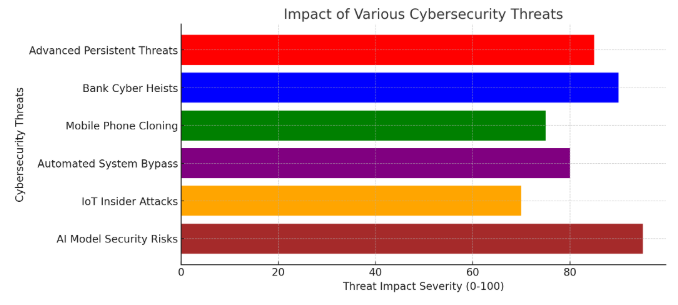
Cybersecurity threats are very hard to foresee due to the rate at which cybercrime evolves. New and high-impact security threats are constantly being reported, including advanced persistent threats and other types of advanced cyber threats. In the monetary field alone, there are the recent occurrences of the theft of more than $80 million from a central bank, and in Brazil, groups attacked and cloned mobile phones with the objective of emptying accounts or taking out credit in the name of the business owner.
However, other types of attacks easily bypass automated systems, including manipulated sensor locations and purposefully using a signal timing attack in a way that is not indicative of fraud. In particular, the attacks that carefully balance the right level of distortion applied to each sensor can be specifically designed with the sole purpose of avoiding detection by automated systems. In the world of IoT, other newly identified classes of insider attacks have been noticed, including reconnaissance attacks, data manipulation, and theft. In the presence of a large-scale data cycle that supports AI-driven innovation processes, the problem of security for embedded AI models will become crucial.
10.3. Regulatory Compliance Risks
- The business principles of both responsible banking and investment conducive to sustainable economic growth and development make the issue of regulatory compliance during financial transactions particularly relevant. Thus, banks must necessarily deal with a large volume of regulations, mandatory standards, and internal rules. In case of violations, a regulated organization can face fines up to the extreme situation of revocation of the license to perform such types of activity. That is why more and more financial organizations, based on their professional judgment and market experience, use integrated bank regulatory compliance solutions due to increasing regulatory risks associated with meticulous control over these operating environments.
- Conventional technologies require many hours for the manual collection and analysis of rules and controls to develop frameworks of applications for enabling regulatory compliance. At the same time, to address the issues of anti-money laundering and rapidly evolving international industry standards, banks should focus on the development of transaction processing systems that operate solely based on what functionality rules state should be enabled. Such functionality includes the recording of all customer transactions, customer verification, transactions of a nature that would not reasonably be expected of a customer, real-time verification of transactions against watch lists, and the operative analysis of risk or rules that would highlight transactions. Concepts of modern information technology tools can be expressed with AI technologies. With them, it becomes possible to encourage market developments for the benefit of supervisory authorities and institutions working in this area. AI tools themselves range from very simple analysis of texts, chatbots, and self-learning programs used to assist departments dealing with compliance issues to neural networks with programmable structures that allow for decision-making and then execute payments without banking system user involvement.
11. Conclusion
This chapter discussed how Fintech, the most advanced application of AI, is being used to address increasing challenges in finance. Within Fintech, DM is a niche that is gaining increased attention. Listing some leading practices from large firms may give readers further guidance. We then argue for greater coverage in educational programs and discuss the challenges inherent in obtaining such greater coverage. With such guidance helping produce citizens better able to address these economic transformations, and assuming that the latter are handled in a way to produce sufficient political consensus, the future of finance may be very bright indeed.
The potential of Fintech innovations is large, as applications can enable greater compliance, faster detection, and more secure transactions with smaller human effort. Scalable data architectures lay the foundation for this innovation, allowing for paths to automation in financial services, greater operational efficiencies, and intelligence services such as automated, intelligent advisory systems. We note that considerable differences in tenor and content exist in regulatory actions addressing Fintech across the globe. Finally, Fintech has entered the realm of ethical issues, and no doubt this will only continue to increase. In conclusion, firms intending to remain afloat in the changing competitive landscape need to keep Fintech's potential in mind and prepare well to harness it. With the vast body of data available from the finance sector and the continuous improvements in AI, it is only a matter of imagination and determination that limits its capability and output.
References
- Kalisetty, S., & Ganti, V. K. A. T. (2019). Transforming the Retail Landscape: Srinivas’s Vision for Integrating Advanced Technologies in Supply Chain Efficiency and Customer Experience. Online Journal of Materials Science, 1, 1254.[CrossRef]
- Sikha, V. K. (2020). Ease of Building Omni-Channel Customer Care Services with Cloud-Based Telephony Services & AI. Zenodo. https://doi.org/10.5281/ZENODO.14662553[CrossRef]
- Siramgari, D., & Korada, L. (2019). Privacy and Anonymity. Zenodo. https://doi.org/10.5281/ZENODO.14567952[CrossRef]
- Maguluri, K. K., & Ganti, V. K. A. T. (2019). Predictive Analytics in Biologics: Improving Production Outcomes Using Big Data.[CrossRef]
- Sondinti, K., & Reddy, L. (2019). Data-Driven Innovation in Finance: Crafting Intelligent Solutions for Customer-Centric Service Delivery and Competitive Advantage. Available at SSRN 5111781.[CrossRef]
- Siramgari, D., & Korada, L. (2019). Privacy and Anonymity. Zenodo. https://doi.org/10.5281/ZENODO.14567952[CrossRef]
- Polineni, T. N. S., & Ganti, V. K. A. T. (2019). Revolutionizing Patient Care and Digital Infrastructure: Integrating Cloud Computing and Advanced Data Engineering for Industry Innovation. World, 1, 1252.[CrossRef]
- Somepalli, S. (2019). Navigating the Cloudscape: Tailoring SaaS, IaaS, and PaaS Solutions to Optimize Water, Electricity, and Gas Utility Operations. Zenodo. https://doi.org/10.5281/ZENODO.14933534[CrossRef]
- Ganti, V. K. A. T. (2019). Data Engineering Frameworks for Optimizing Community Health Surveillance Systems. Global Journal of Medical Case Reports, 1, 1255.[CrossRef]
- Somepalli, S., & Siramgari, D. (2020). Unveiling the Power of Granular Data: Enhancing Holistic Analysis in Utility Management. Zenodo. https://doi.org/10.5281/ZENODO.14436211
- Pandugula, C., & Yasmeen, Z. (2019). A Comprehensive Study of Proactive Cybersecurity Models in Cloud-Driven Retail Technology Architectures. Universal Journal of Computer Sciences and Communications, 1(1), 1253. Retrieved from https://www.scipublications.com/journal/index.php/ujcsc/article/view/1253[CrossRef]
- Vankayalapati, R. K. (2020). AI-Driven Decision Support Systems: The Role Of High-Speed Storage And Cloud Integration In Business Insights. Available at SSRN 5103815.
- Somepalli, S. (2021). Dynamic Pricing and its Impact on the Utility Industry: Adoption and Benefits. Zenodo. https://doi.org/10.5281/ZENODO.14933981[CrossRef]
- Yasmeen, Z. (2019). The Role of Neural Networks in Advancing Wearable Healthcare Technology Analytics[CrossRef]
- Satyaveda Somepalli. (2020). Modernizing Utility Metering Infrastructure: Exploring Cost-Effective Solutions for Enhanced Efficiency. European Journal of Advances in Engineering and Technology. https://doi.org/10.5281/ZENODO.13837482[CrossRef]