

This research is conducted with main aim of assessing the economic consequences of Covid-19 pandemic in Western Ethiopia. Primary data is collected through questionnaire and interview from 320 respondents living in three zones of Western Ethiopia. The study areas (zones) are selected purposively from Oromia region; however, the respondents are sampled by employing random sampling technique. The respondents were stratified as community members, daily laborer, business owners, government sector and NGOs employees. Exploratory research design was adopted to achieve the research objectives. Simple descriptive statistics and ordinary least square regression model are used to analyze and interpret the collected data. The study results disclose that majority of community have good awareness about the pandemic and social interaction is reduced due to social distancing. Majority of respondents realize the negative impact of Covid-19 on their economy; reduction of office services; and reduced access to market; and absence of strong support from the government. The great severity of Covid-19 impacts is failed on daily laborers. The regression result shows that sales, experience in business, education level in years, employment status of the respondent, number of workers in the business and work hours per week are positively and significantly influencing daily income of business owner before and after the pandemic outbreak. It is advised the stakeholders to give frequent follow-up and support particularly for daily laborers and small business holders to reduce the future socio-economic impacts of Covid-19 pandemic.
Economic Consequences of Covid-19 in Western Ethiopia: Challenges and Opportunities
August 20, 2022
October 30, 2022
November 07, 2022
November 09, 2022
This is an Open Access article, distributed under the terms of the Creative Commons Attribution 4.0 International License (http://creativecommons.org/licenses/by/4.0/), which permits unrestricted use, distribution and reproduction in any medium or format, provided the original work is properly cited.
Abstract
1. Introduction
After the first infection detected at the end of 2019, the corona virus disease (Covid-19) has continued to spread across the world. It is declared as a pandemic on 11 March, 2020. Covid-19 has become a global emergency, given its impact on the entire world population and the economy. In Ethiopia, the first corona virus case is confirmed on March 13, 2020 and the total number of Covid-19 cases is rising from time to time [4, 15].
The Covid-19 pandemic has had far-reaching consequences beyond the spread of the disease and death of thousands of people by causing in a steep fall of economic activities (both microeconomic and macroeconomic) and then severe recession (may be the largest global recession in history). Various studies attest to this fact. For instance, [29], found that the Covid-19 pandemic and the associated economic crisis are imposing huge challenges and raising many uncertainties and posing wrenching trade-offs. Using preliminary studies, the study concluded that the pandemic is collapsing the global supply chain by creating the supply and demand shock, financial instability, gender violence and social crises [28].
The International Monetary Fund (IMF) predicted that global economy could fall at least by 0.5% in the first quarter of the year 2020 considering the direct and indirect effects of the crisis on several growth components as the supply and demand shocks, commodity slump, fall in tourism arrivals and etc. [26]. A report by University of Cambridge indicated that Covid-19 is driving supply disruptions, operational risks and demand shocks across different sectors of the economy both at macro and micro levels. Macro-risks driven by Covid-19 for example are economic and financial instability, volatile currency exchange rates, price instability, export/import restrictions, travel disruptions and business closures [10].
According to [12], the crisis has already transformed into an economic and labor market shock, impacting not only supply (production of goods and services) but also demand (consumption and investment). All businesses, regardless of size, are facing serious challenges, with a real threat of significant declines in revenue, insolvencies and job losses. Sustaining business operations will be particularly difficult for Small and Medium Enterprises (SMEs).
Some key sectors of the African economy such as tourism, air transport, and the oil sector are visibly impacted as a result of the pandemic [2]. Similarly, the pandemic resulted in the partial unemployment in Africa. However, invisible impacts of Covid-19 are expected in 2020 regardless of the duration of the pandemic. Another study conducted by Danish Refugee Council [8] explains that the pandemic has a ripple effect on economic activities, livelihoods and food security in Eastern African countries and the great lakes. In addition, the study found that the Covid-19 pandemic has immediate impact on economic activities in the Eastern Africa.
In fears of a major outbreak, the government of Ethiopia announced a series of sweeping measures to slow the spread of Covid-19, the highly infectious disease caused by the virus. It shut land borders and suspended most air travel, except cargo flights. She also asked government institutions, businesses and companies to allow staff to work from home, "with the exception of employees working in critical or essential services". These actions inevitably reduced economic and social interactions among people which lead to decline in production and spending that exacerbates business owners’ losses, unemployment and economic hardships to the households and businesses caused by the pandemic [25].
The government of Ethiopia has tried to provide a series of stimulus packages to minimize the mounting economic damage and respond to the health crisis. Aside from financial injections to keep the banking and corporate balance sheets on relatively stable footing, the critical measures to avert contractions of economic activity include government spending (particularly on health care), extended unemployment benefits through enforcing all private sectors to pay full salary of their workers while they are staying at home [27].
Later on the government declared state of emergencies following the increase in the number of confirmed cases and spread of Covid-19 outside of the capital city Finfine (Addis Ababa). UNICEF Ethiopia report on socio-economic impacts of Covid-19, indicated following state of emergency measures, many workers cannot move to their places of work or carry out their jobs, which has knock-on effects on incomes, particularly for informal and casually employed workers. Consumers in many economies are unable or reluctant to purchase goods and services. Given the current environment of uncertainty and fear, enterprises are likely to delay investments, purchases of goods and the hiring of workers [30].
As a result, Ethiopian economy is not free from being affected because of the pandemic as the case for all world economies. For instance, as per the United Nations Economic Commission for Africa [29], Ethiopia's economic growth will cut off by 2.9% for fiscal year 2020 because of Covid-19. In addition, the report issued by African Union reveals a significant drop in selling price of crude oil by 55.22% from 67 per barrel to below 30 per barrel due to Covid-19 outbreak in worldwide. The aviation, travel and tourism sectors are encountering similar challenge from Covid-19outbreak. The aviation and travel industry in Africa might incur about 113 billion losses. As a result of restriction imposed on national and international traveling, social distancing and closing of borders, the tourism industry faces a declining in tourism revenue between 300-450 billion in Africa [21].
The spread of the virus encouraged social distancing lead to the shutdown of financial institutions, corporate offices, businesses and events. The exponential rate at which the virus was spreading, and the restricted measures taken to control the pandemic heightened uncertainty about how bad the situation could get, lead to danger in consumption and investment among consumers, investors and international trade partners [11]. Ethiopia also declared state of emergency on April 8, 2020 for five simultaneous months to get control over the spread of the virus [15]. The state of emergency has imposed different restrictions and measures on people activities and travels. Public and private transportation services in urban and rural areas are enforced to reduce the number of passengers by half. This travel ban slowdowns the economic and social interaction among people which may result in dramatic liquidity crisis followed by economic depression. This is the current consequence of Covid-19 outbreak [18].
This is the present expectation regarding to the virus impacts on economic and social scenarios. However, there is no clear cut about the current and future consequences of the virus on business and economic development. For instance, we are not quite sure about the impacts of Covid-19 on public revenues, private income, taxation, trade, inflation, investment, employment, remittance, hotel services, etc. [17]. Even less likely this pandemic could bring us good opportunity. The culture of helping each other, for example, is incredible at the time of the pandemic than before its outbreak. Thus, we are exercising magnificent humanitarian aid and good business ethic during this pandemic than ever. This might be the positive consequence of Covid-19. But still we are not sure whether the pandemic is with extreme bad or good consequences from economic perspectives [18].
This study will be conducted in Western Ethiopia region zones in order to solve the confusions. The main objective of the study was to provide detail analysis on economic consequences of Covid-19 on business and economic activities in the study areas.
2. Objectives of the study
The general objective of this study was to assess the economic consequences of Covid-19 in Western Ethiopia.
The specific objectives of the study were:
- To examine the consequences of Covid-19 on public revenue, employment and income
- To examine the consequences of Covid-19 on formal and informal business activities
- To examine the consequences of Covid-19 on demand and supply of consumption and investment goods.
3. Literature Review
3.1. Covid-19 Virus and Global Economic Activities
The Novel Coronavirus pandemic is a global challenge that requires coordinated efforts from governments, individuals, business owners, and various stakeholders. The world economy is experiencing a historic and unprecedented shocks as the pandemic triggers a number of shocks simultaneously including health, supply, demand and financial shocks [24].
The ongoing Novel Coronavirus disease outbreak affects both the developed and the developing countries’ economy through different channels, including sharp declines in domestic demand, lower tourism and business travel, trade and production linkages, supply disruptions, public revenue decline, public expenditure raise, and health effects. The extent of the economic impact will depend on how the outbreak evolves, which remains highly uncertain. Rather than focusing on a single estimate, it is important to explore a range of scenarios, assess the impact conditional on these scenarios materializing, and to update the scenarios as needed [32].
Because of reduced economic activity, states will undoubtedly see declines in both income and sales tax revenues in the coming months. Predicting the magnitude of these losses is extremely difficult given the rapidly evolving situation. The current situation is unique as the US has not experienced service-sector disruptions because of federally mandated travel restrictions and state-mandated closures of certain entities such as schools, bars, restaurants, stadiums, gyms, and theaters [1].
According to Lucy Dadayan, the global pandemic caused by the novel coronavirus outbreak will dramatically affect state tax revenues over the next months and possibly years. Looking forward, state economic and revenue performance will be significantly affected by three emerging factors. First and foremost, the global pandemic will significantly hurt state budgets and economies. Economic activity for many businesses and services has been abruptly curtailed, inevitable layoffs are on the horizon, and stock markets and oil prices are declining; all will undoubtedly translate into lower state tax revenue collections [14].
3.2. Novel Corona Virus and Public Revenues
The coronavirus (COVID-19) pandemic has created major disruptions in the economy and the life of businesses, whether or not they are able to continue their operations. These disruptions are creating a wide range of impacts on companies and many of them are struggling financially. The COVID-19crisis has also exposed major vulnerabilities in company operations and supply chains linked to conditions of work and disaster preparedness [19].
The fall in global and domestic economic activity affects all major sources of tax revenue. Estimates on tax buoyancy suggest that tax revenues could contract more strongly than economic output. Lower corporate profits, declining consumption and increases in unemployment will, respectively, cause declines in revenue from corporate income taxes, goods and services taxes and personal income taxes [5]. The decline in international trade, travel and domestic consumption will suppress revenue from consumption taxes on which the majority of low- and middle-income countries rely. The World Trade Organization projects global merchandise trade could decline by 13-32% in 2020. According to the World Tourism Organization, international tourist arrivals could fall by 60-80% in 2020 compared to 2019. Shifting consumption during recessions towards goods that are often subject to reduced rates or exemptions could further decrease consumption tax revenue [21].
Many resource-rich countries that derive a high share of tax and non-tax revenues from commodities and natural resources will be particularly affected by the significant drop in global commodity prices [17]. The pandemic will affect public revenues in different economies differently and the timing of the impact may also vary. In addition to the nature and extent of the novel corona virus impact, and of confinement measures to address it, the structure of a country’s economy, exposure to international flows including trade and tourism, sources of public revenues, and the measures it takes to cushion firms and households from the economic impact of the pandemic, will all be significant.
Revenue data for the first months of calendar 2020 give some indication of the impact. For example, initial reports from Japan indicate a fall in revenues of 9.2% in the year ending March 2020 [19], and in Korea, revenues for 1st quarter 2020 declined by 8.5 trillion relative to the 1st quarter of 2019 (a fall of approximately 11%) .The economic changes associated with Covid-19will also affect tax types in different ways, even before taking into account the measures to mitigate the consequences of the crisis. Corporate income tax (CIT) revenues, which are typically most responsive to economic cycles, are likely to decrease by more than the fall in economic activity. A reduction in employment and in wages will likely translate into lower personal income tax (PIT) revenues and social security contributions [9].
Revenues from consumption taxes, especially from valued-added taxes (VAT), are also likely to fall due to the impact of lockdowns and lower consumer confidence, as well as a potential shift towards the consumption of staple goods, which are often taxed at reduced or zero rates. The structure of tax revenues in Asian and Pacific economies may render them more vulnerable due to their high reliance on CIT, which accounted for 19.0% of total tax revenues in 2017 in the countries included in this publication, on average, compared to 9.3% for OECD countries [18].
The pandemic’s impact is likely to be more immediate and severe on some local governments’ finances than on others, depending on their mix of revenue sources. The closure of retail and entertainment venues and the decline in gasoline prices have already begun to have a major impact on sales tax revenues. Property taxes provide revenue stability for local governments, but the tax cap and other constraints will likely limit their use to shore up local revenues. Most State aid to local governments was held flat or reduced in the recent State budget. Some local governments have already had to face significant mid-year reductions in State aid. Much of the recent federal aid to localities, while helpful, is targeted to a small subset of municipalities and does not address the larger issue of budget stress caused [17].
Governments are implementing a range of tax measures to lessen the burden on taxpayers and keep continuous flows of businesses activities at the expense of lower public revenue, at least for the short-term. Measures include deadline extensions, payment deferrals and accelerated tax refunds (OECD/FTA, 2020). As of mid-April 2020, 104 countries (including 46 ODA-recipients) had implemented tax relief measures [16].
Taken together, these mechanisms could drastically lower domestic resource mobilization in developing economies. For Sub-Saharan Africa, World Bank (2020) calculations suggest that government revenues could decline by 12% to 16% compared to a non-COVID-19baseline scenario. As a consequence, fiscal deficits could deteriorate by about 2.7 to 3.5 percentage points of GDP. First evidence from monthly data supports this impression. In Peru, tax revenue decreased by 40% year-on-year in April 2020, while in Jordan, overall government revenue decreased by 49% year-on-year in April 2020 [31].
Other domestic resources beyond public revenue will be affected, too. Domestic private investment is likely to decline due to the high degree of economic uncertainty, contraction of economic output, and binding liquidity constraints. The effect of the 2020 crisis on domestic savings depends on the relative change in consumption to that of national income. As one point of reference, gross domestic savings as a share of GDP had declined after the financial crisis in 2008 [22]. However, given that the novel coronavirus pandemic and its economic impact are still evolving, it is difficult to extrapolate from these initial indications. In addition, it is difficult to disentangle the causes of revenue declines (and their respective magnitudes): the direct impact on tax receipts associated with declining economic activity and emergency fiscal response measures may be augmented by the deferral of tax payments. Finally, the nature and depth of the crisis is unprecedented, limiting the ability to predict revenue impacts on the basis of already available information and estimates based on historical data [23, 17].
3.3. Covid -19 and Consumption
[20] Scrutinized the consequence of Covid-19pandemic on the consumer behavior with the main objectives of pinpointing whether the old traditions will reappear or perish. The study linked the lockdown and physical distancing commands that affected the consumers’ habits just as an opening insight at the globe level. The study found that some consumer practices will endure with value-added technology while other activities will nevertheless perish as consumers favor to return to the original conduct of consumption.
[13] Investigated the influence of Covid-19pandemic on consumption and incidental tax of Ireland economy. Using household budgetary valuation method, they found that the economy of the country is exceedingly affected by Covid-19under three scenarios comprising the second upsurge of the pandemic. More specifically, it was found that household consumption in the Ireland was 20% lower than the consumption in the normal time (no Covid-19 time). The conclusion of the study also revealed that the incidental tax collection capacity abridged due to Covid-19in the country. The unintended tax collected from the household during Covid-19was 32% slighter than the period of no Covid-19time.
[8] Examined the consequences of Covid-19on economy of Namibia. The study found that the economy of the country is extremely pretentious by the Covid-19pandemic especially after the eruption of Covid-19in Africa. Their study concluded that the damage on the economy of the country is because of amplified unemployment in the country, vanished job is by businesses, reduced private and public consumption, and dwindled public and private investment. To the specific, the economy of Namibia lost nearly 7.5 billion dollar during the Covid-19pandemic up May 2020. The policy implication derived from their study is that the administration of Namibia should device fiscal provocations to reassure the squeezed economy [4, 7].
4. Research Method and Data
4.1. Sources of data and methods of collection
In this study primary sources of data were used to achieve the study objectives. The primary data was collected through questionnaire and key informant interview in sampled areas of the study. Government offices such as anti COVID-19 committee office and zonal finance bureaus were interviewed for additional primary data maintains purpose.
4.2. Sampling and sampling techniques
The study was conducted in Western Ethiopia reginal state, Ethiopia. Multi-stage sampling technique was employed to select the sample unit from the study areas for the primary data collection purpose. In the first stage, three zonal towns such as East Wollaga Zone (Nekemte), West Wollega Zone (Gimbi) and Horo Guduru Woellaga Zone (Shambu) were purposively selected. In the second stage stratified sampling approach was used by stratifying the respondents into daily laborer, business owners (investors), public office employee and the community. In the third stage, the stratified respondents were sampled randomly without giving double chance for selection if particular respondent is probably found in two strata at the same time. At the final stage, key representatives from Covid-19 task force committee and public office officials were purposively selected for the data collection via interview.
4.3. Sample size of the study
The sample size for this research was determined based on population size living in the selected zones of the study areas. The total number of population living in each zone was obtained from the official web site of central statistics agency of Ethiopia. The agency’s report on population size for Oromia region reveals that West Wollega Zone hosts 1,350,415, East Wollega Zone hosts 1,213,503 and Horo Guduru Wollega Zone hosts about 570,040 of the region’s population. The proposed sample size expected to be reached by this study was 560, however, we could collect data from 320 respondents from the three zones which is 57% of the sample. The questionnaire returned is sufficient to proceed to the data analysis. The sample size was determined proportionally based on the population size of each zone as presented below in table.
Table 1 above, shows that 320 respondents were participated in this study of which 115 were from West Wollega Zone, 123 were from East Wollega Zone and 82 were from Horo Guduru Zone
4.4. Model specification of the study
This study employed multiple regression models due to the fact that it performs better when several factors are included in determining the economic consequences of covid-19 in the study area. Further, multiple linear regression model is superior over the other as it capture complex relationships requiring more consideration in the study [3]. Accordingly, the study has specified two models to achieve the objectives of the study.
Model 1 to analyze determinants of daily income before Covid-19is stated as:
Model 2 to analyze determinants of daily income after Covid-19is stated as:
Where:
= the natural logarithm of daily income before/after Covid-19 outbreak
= the natural logarithm of sales in Birr before/after Covid-19 outbreak.
= gender of respondent (1 if male, 0 otherwise)
= experience of respondent in business in years
= education level in year
= family size of respondent
= current employment status of respondent (1 if gov’t employee, 2 if NGO employee, 3 if private employed)
= number of workers on job in the business before/after Covid-19 outbreak.
= missed job
= work hour before/after Covid-19 outbreak
= benefit received during Covid-19 pandemic (1 if benefit received, 0 otherwise)
5. Results and Discussions
This section discusses the results of the study. First, it discusses the demographic characteristics of the respondents and then it proceeds to discussions of econometric results.
5.1. Age distribution of the respondents
The age distribution of the respondents is important in at least two different aspects; the first is, very old respondents will be less productive in businesses than the younger respondents unless they have enough resources to employ labor. Also, the younger respondents will be more energetic and willing to diversify into more lucrative income generating activities during the Covid-19 crisis. The distribution of the respondents according to age is shown in figure 1 below.
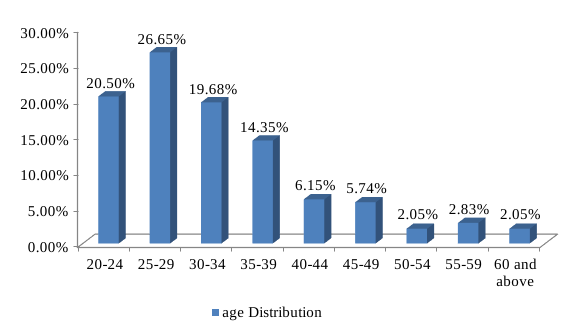
The figure 1 above indicates that 81.18 percent of the respondents are within the age interval of 20-39 years with 20.5, 26.65, 19.68 and 14.35 percent of the respondents within the age intervals of 20-24, 25-29, 30-34 and 35-39, respectively. Those within the ages of 40–44, 45–49, 50–54, 55-59, and 60 and above constituted 6.15 percent, 5.74 percent, 2.05 percent, 2.83 percent and 2.05 percent, respectively. This implies that, the age of the respondents lies within the productive stage. And as such, these respondents are more likely to participate in income generating activities. This age brackets will enable them to try new daily activities with higher daily returns.
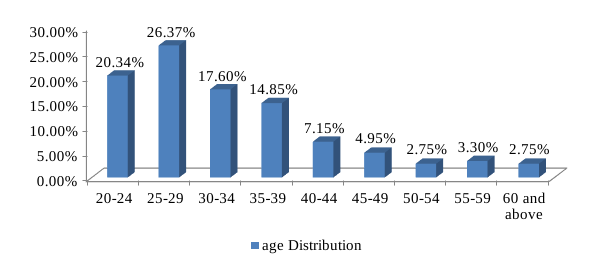
Figure 2 above indicates the accumulated returns will be in turn invested in other businesses of their choice to generate higher daily income for their livelihoods. It is expected that respondents will take rationale investment decisions that will not affect the entire households in terms of choice of activities. On the other hand, excluding respondents not participating in business activities, the age distribution for business participants shows that 79.16 percent of the business participant respondents are within the age interval of 20-39 years with 20.34 percent, 26.37 percent, 17.60 percent and 14.85 percent of the respondents within the age intervals of 20-24, 25-29, 30-34 and 35-39, respectively. Of the total business participant respondents, 7.15 percent, 4.95 percent, 2.75 percent, 3.3 percent and 2.75 percent are within the ages of 40–44, 45–49, 50–54, 55-59, and 60 and above, respectively. This therefore suggests that majority of the business running respondents are young (within the productive age). Smith (2000) noted that it is the younger households members who business activities or income earning opportunities.
5.2. The Level of education among the respondents
Formal education is well established in the study area. The relevance of the years of schooling of the respondent lies in the improvement of their productivity, production efficiency and subsequently higher levels of income that leads to increased savings that translate into diversification of income strategies for the matter of livelihoods. The distribution of level of education is presented in figure 3 below.
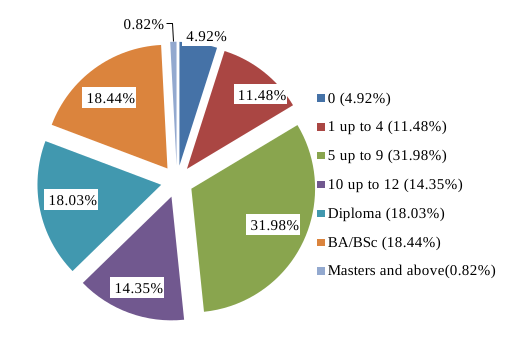
Figure 3 above indicates respondents’ educational background goes a long way to positively or negatively influence their choice of business and their degree of participation in selected income generating activities. Further it shows that 95.08 percent of the respondents are literate, that is 57.81 percent attained up to secondary level of education (grades 1-12) and 42.19 percent are diploma and above holders. Thus, the survey result shows that the 95.08 percent of the respondents can read and write and are able to accept new technologies because; according to Islam (1997) secondary school and above education stimulates business activity. However, this level of education may have a limiting effect on respondents’ adaptation to risk and uncertainties involved in business activities. The figure also shows that 11.48 percent of the respondents attained grades 1-4, while 31.98 percent, 14.35 percent completed grades 5-9 and 10-12, respectively. Furthermore, 18.03 percent, 18.44 percent and 0.82 percent completed diploma, BA/BSc and MA/MSc, respectively. This also may reduce the negative effect of Covid-19on household’s income.
5.3. The level of education among the business running respondents
Education is investment in human capital which may be able to lift the creative abilities and qualities of skills of man, narrow his information gaps and increase his allocate efficiency that leads to more productive performance even during challenging times like Covid-19 pandemic.
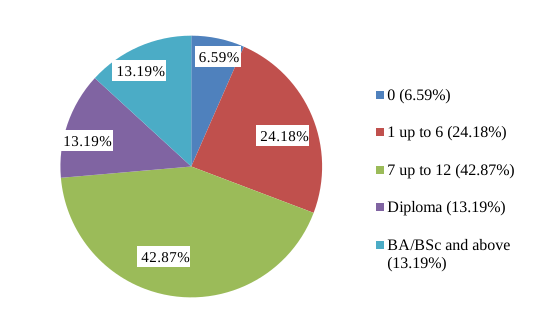
The figure 4 indicates that 42.87% of the business runners attained up to secondary level of education (grades 7-12). According to Schwarz, (2004), it is likely that the basic literacy is important to accept new technologies, allocate more resources efficiently to their business activities as a strategy to generate income. The figure showed that 24.18 percent of the participants in business activities had primary level of education. Again 26.38 percent of the participants in business attained diploma and above level of education and only 6.59 percent are illiterate.
This suggest that respondents who do not own businesses are likely to have been employed in the business activities as high education have been reported to be closely correlated with other variables that also improve access to higher income employment. According to Islam (1997) education enhances the productivity of the work force and stimulates entire activities and entrepreneurs are better equipped to train the employers on the job. Besides, education has positive effect on income generation.
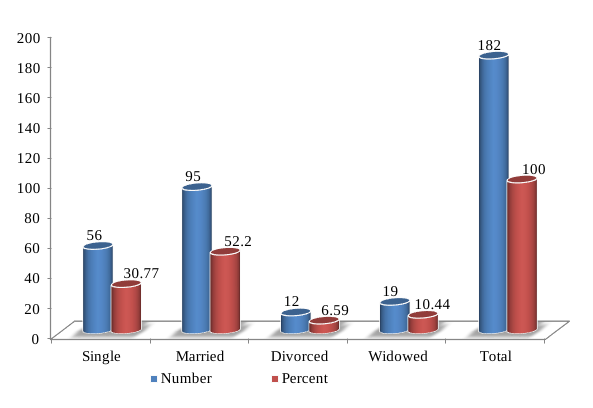
5.4. Marital status of the respondents
The ability of the households to supply the needed labor in the business activities depends to a large extent on the marital status of the households. The marital status of the households is presented in figure 5. This shows that 30.74 percent of the respondents are not married. This group of household members may include the government employees, business owners, those employed in businesses who are the majority of the household members. Those who are marred constituted 55.33 percent of the respondents. Widows and divorcees constituted 13.94 percent of the respondents. Of the total 182 business owners/runners 30.77 percent are single and 52.2 percent are married. Widows and divorcees constituted 17.03 percent of the business owner respondents. Overall, the widows and divorcees are high for business owners.
5.5. Consequences on community
The collected data from communities and community leaders using a field survey and interviews brought us different implications. After analyzing these results, we found different perspectives of different respondents. Below are the details of the survey result that is collected from the community. From 31 respondents/community data, 22.58 percent were male and rest 77.42 percent was female. The survey data from community shows that, 38.71 percent were not married while the rest 61.29 percent were married and 96.77 percent were public employees while only 3.23 percent were self-employed.
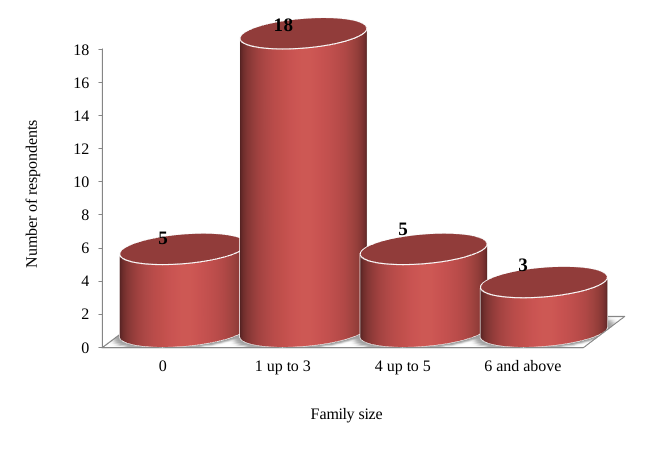
Figure 6 above shows that 18 respondents have family size within 1-3, while 5 respondents have zero family size and 8 respondents have above 4 family sizes. This group of household members may include the majority of government employees and only one self-employed.
6. Econometric Analysis
Covid-19 has significantly affected private investment via direct and indirect effects. Investment is affected through three channels. Federal Direct Investment is lower, fiscal deficit creates a crowding-out, and savings have declined reducing the total investment. Public investment is maintained exogenous during Covid-19 and only varies with the investment price index.
6.1. Model result on determinants of daily income
The F test for the overall significance of the model is Prob > F= 0.0000, suggesting that the explanatory variables (natural logarithm of sales in Birr before Covid-19, Experience in business, education level in years, family size of the respondent, employment status of the respondent, number of workers in the business before Covid-19, whether a respondent has missed a job due to Covid-19 or not and work hours per week before Covid-19) together, have an effect on the dependent variable (ln daily income) with an adjusted R2 of about 80.34% ( see Table 2 above ). This implies that the significant explanatory variables together explain about 80.34% of the variation in the dependent variable, daily income.
The model result shows that, natural logarithm of sales in Birr before Covid-19, Experience in business, education level in years, employment status of the respondent, number of workers in the business before Covid-19 and work hours per week before Covid-19 are positively and significantly influencing daily income of the household while whether a respondent has missed a job due to Covid-19 or not is statistically significant with negative sign.
Natural logarithm of sales in Birr before Covid-19 (β = 0.435), the results indicate there will be an 43.5% increase in daily income if sales before Covid-19 increases by 1%, holding all the other variables constant.
An extra year of education (β = 0.025) increases a household’s daily income by almost 2.5%, ceteris paribus. If respondent’s experience in business (β = 0.046) increases by one year daily income will increase by 4.6% point, ceteris paribus. Employment status before Covid-19 (β = 0.151): for those who are employed in public or private sectors, their daily income is likely to increase by 15.1% point, ceteris paribus. This is mainly because of many of the employed respondents are teachers having per time work before Covid-19 outbreak and others have been working in more than two businesses (in shift).
Number of Workers in the business before Covid-19 (β = 0.095): an additional worker in business before Covid-19, increases daily income by about 9.5%, other variables assumed to be constant. For an employee who has missed his/her job before Covid-19 (β = -0.21), daily income decreases by 21% point, ceteris paribus. Finally, an additional work hour spent on business before Covid-19 (β = 0.011) results in an increase in daily income of the household by 1.1% point, ceteris paribus.
On the other hand, the regression result for determinants of daily income after Covid-19 indicates the F test for the overall significance of the model is Prob > F= 0.0000, signifying that the explanatory variables (natural logarithm of sales in Birr after Covid-19, gender of a respondent, Experience in business, education level in years, family size of the respondent, employment status of the respondent, number of workers in the business after Covid-19, whether a respondent has missed a job due to Covid-19 or not and work hours per week after Covid-19) together, have an effect on the dependent variable (ln daily income) with an R2 of about 81.6% (Table 3). This implies that the significant explanatory variables together explain about 81.6% of the variation in the dependent variable, daily income after Covid-19.
The model result shows that, natural logarithm of sales in Birr after Covid-19, employment status of the respondent, number of workers in the business after Covid-19 and work hours per week after Covid-19 are positively and significantly influencing daily income of the household after the outbreak of Covid-19 while whether a respondent has missed a job due to Covid-19 or not is statistically significant with negative sign.
Natural logarithm of sales in Birr after Covid-19 (β = 0.457), the results indicate there will be 45.7% increase in daily income if sales after Covid-19 increases by 1%, holding all the other variables constant. Employment status before Covid-19 (β =0.304) for those who are employed in public or private sectors after Covid-19, their daily income is likely to increase by 30.4% point, ceteris paribus. Number of workers in the business after Covid-19 (β = 0.211): an additional worker in business after Covid-19, increases daily income after Covid-19 by about 21.1%, other variables assumed to be constant. For an employee who has missed his/her job after Covid-19 (β = -0.998), his/her daily income decreases by 99.8% point, ceteris paribus. Finally, an additional work hour spent on business after Covid-19 (β = 0.022) results in an increase of daily income of the household by 2.2% point, ceteris paribus.
6.2. Test for multicollinearity and correlation
In running Model one a Variance Inflation Factor (VIF) test, was undertaken to test for the presence of multicollinearity problem. The VIF test for multicollinearity shows tolerance levels higher than 0.1 and VIF coefficients less than 10. The mean VIF of Model one is 1.335 which is less than 10, hence it can be concluded that there is no multicollinearity between the variables (Wooldridge, 2013). If there is multicollinearity problem: standard errors are inflated (creates very large standard errors), sign of the coefficients may be opposite of hypothesized direction. Thus, the existence of serious problem of multicollinearity among the variables is examined by the help of Variance inflation factor (VIF) for the continuous variables and the values of contingency coefficient (CC) for the dummy variables. For the continuous variables the VIF greater than ten reveals strong correlation and measures inflation in variance in due to multicollinearity and the value of contingency coefficient is a chi-square based measure of association where a value of 0.75 and above shows the existence of strong multicollinearity problem. Based on the results of VIF, the data had no serious problem of multicollinearity. This is because, for all continuous explanatory variables, the values of VIF are by far less than 10. Therefore, these continuous explanatory variables were included in the model (As shown in Table 4).
Similarly, the CC results showed absence of strong association between different hypothesized discrete explanatory variables, since the respective coefficients were very low (less than 0.75). Therefore, the dummy variables were included in the model. It is provided in the table 5 below.
6.3. Test for heteroskedasticity and normality
In regression analysis, one has to check whether the variances associated with the predicted variables tend to be the same. If the spread of the residuals at each level of the predictor variable is unequal, then the regression is said to suffer from heteroskedasticity. To check for heteroskedasticity, the Breusch-Pagan/Cook-Weisberg test is used. The results of the Breusch-Pagan/Cook-Weisberg test for heteroskedasticity has a p-value of 0.000, which is less than the critical value of 0.05; hence one rejects the null hypotheses of homoscedasticity and concludes that there is heteroskedasticity present in the data. Therefore, researchers have used the robust standard errors to correct heteroskedasticity. Hence, a second regression is run.
One of the assumptions of CLRM is that error terms have a normal distribution with zero mean and constant variance. Three graphs will help us check for normality in the residuals: kernel density, normal probability plot and quintile normal plot. Using the kernel density plot, the graph shows absence of non-normality, i.e., error terms are normally distributed as depicted on the following figure 7 below.
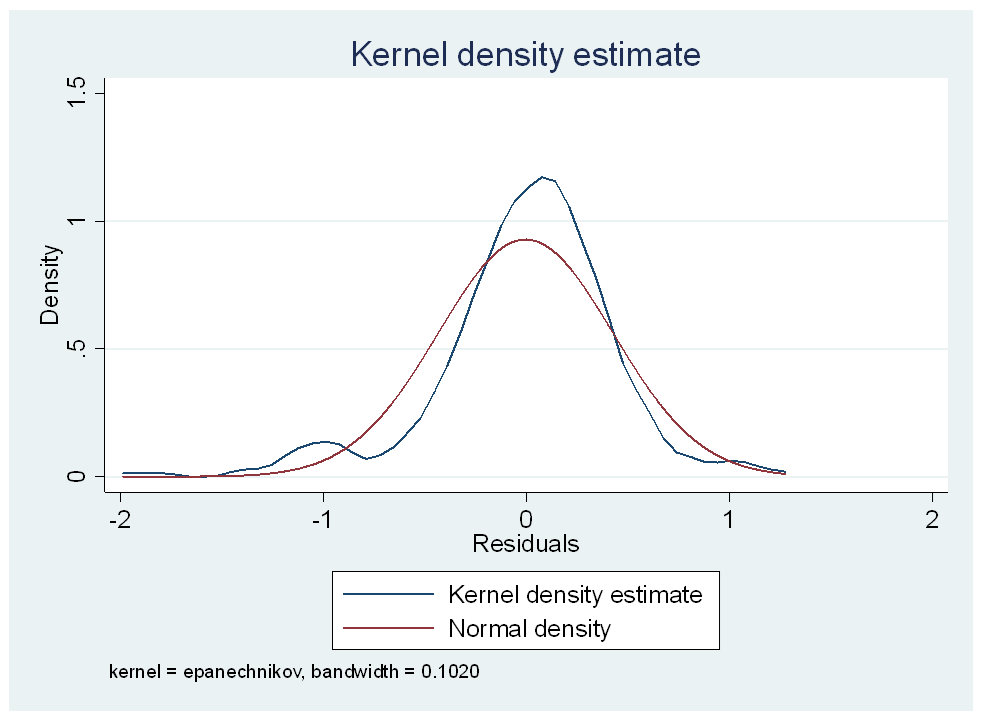
Figure 7 above shows a Kernel density plot produces a kind of histogram for the residuals, the option normal overlays a normal distribution to compare. If residuals do not follow then you should check for omitted variables, model specification, linearity, functional forms. Using the normal probability plot, the figure shows error terms are normal. This is used to check for normality in the middle range of residuals. From figure 8 below error terms are normal showing the reliability of our model.
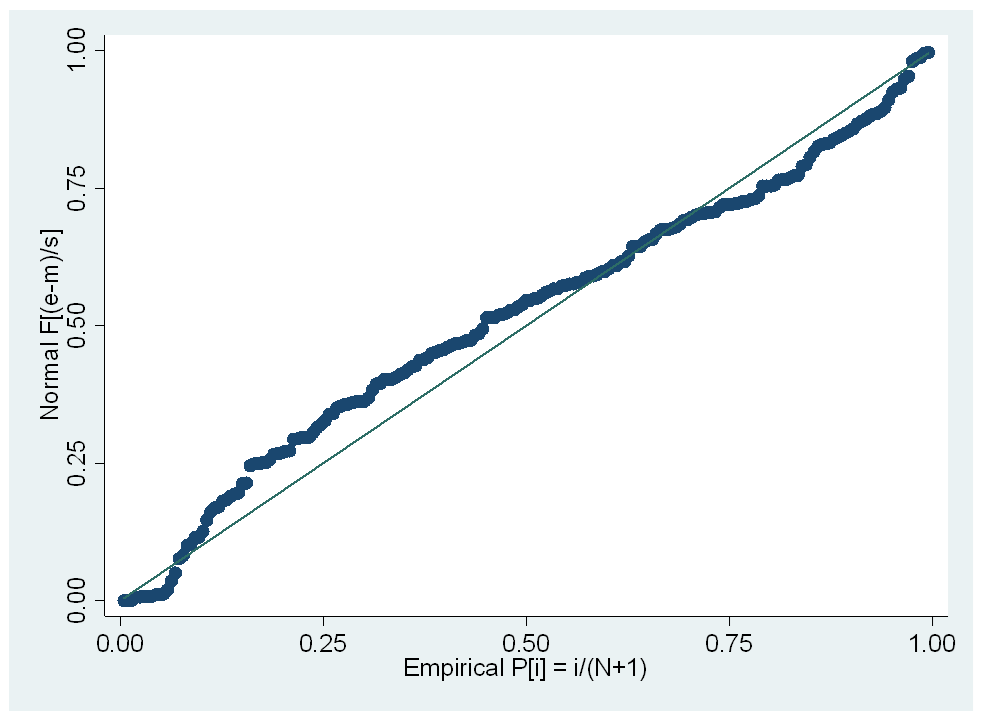
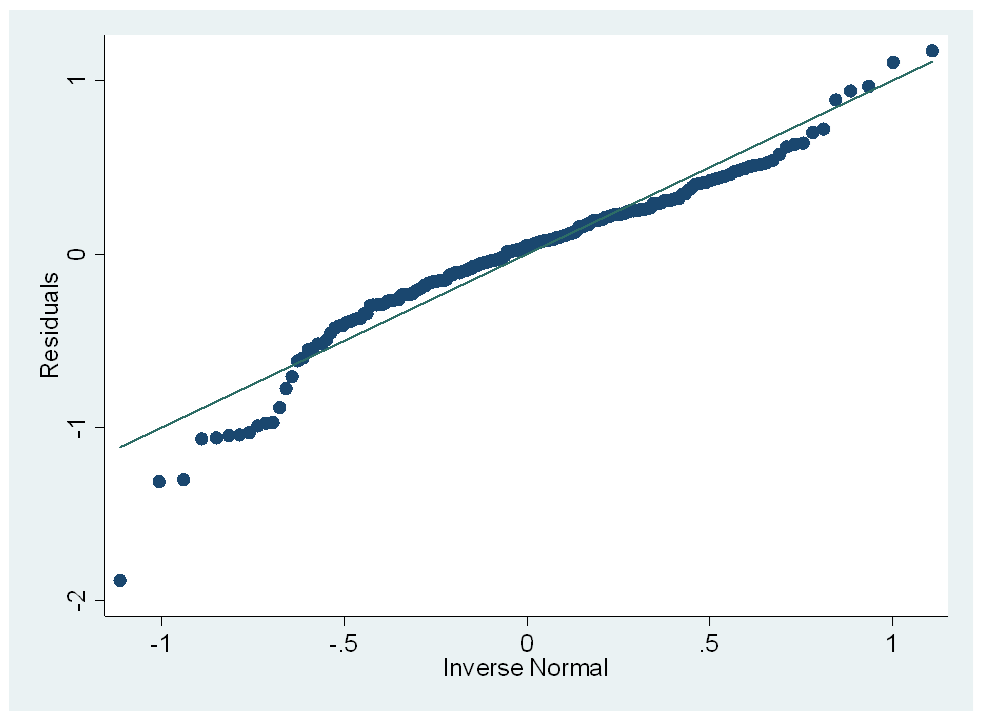
Figure 8 in part and shows this. The third way of checking normality of error terms is using Quintile-normal plots can also check for non-normality in the extremes of the data (tails). It plots quintiles of residuals versus quintiles of a normal distribution.
7. Conclusions and Recommendations
7.1. Conclusion
As reported by the descriptive and econometric results of the survey, the outbreak of Covid-19 has severely affected the lives of the people and the economy throughout the world and the case is worst in developing countries like Ethiopia. The deliveries of materials and services essential for the community are currently challenging because of the outbreak of Covid-19 crises.
In this study both descriptive and econometric analysis we can conclude that, though the outbreak is affecting the whole parts of the society, particularly those their lives are dependent on their daily activity (the low-income societies, the daily laborers, those self-employed individuals (in small businesses as MSE), students, investors and public serves institutions and etc.) are disproportionately affected following the lockdown of activities and movement restrictions (measures taken to control the outbreak, such as school closures and physical distancing measures) imposed by the government fearing the spread of the pandemic. Its economic impacts (directly on production, on supply chain and market disruption and financial impacts on firms and financial markets) are leading to unprecedented disruption.
Through widespread job losses (labor market disruptions) and disturbances especially in early stages of business formations, the Covid-19 pandemic plays a far more prominent role in the collapse of business formation. However, some parts of the community those employed either by government, privates and NGO’s are relatively unaffected since the government has pushed them not to fire or reduce the wage earnings of their workers from the level during normal situation. The study also revealed that the spread of the pandemic has resulted in sever public reaction in which local authorities or people themselves decide on extremely strict measures in a given area could create significant economic costs. If exceptional measures are not taken, we will observe at the worsening of the situations concerning the lives of the people and furthermore, economic growth will be jeopardized.
7.2. Recommendations
The outbreak of the pandemic has affected mainly small business owners, casual laborers and other poor peoples in the community who are already vulnerable due to socio-economic exclusion or those who have very limited daily income are particularly at risk. Businesses were disproportionately affected due to the Covid-19 outbreak, especially by school closures and physical distancing measures. Furthermore, the employments, businesses’ day to day activities and profits as well as public revenues were jeopardized as a result of Covid-19 outbreak.
Based on the survey result, Covid-19 crisis has also a disproportionate effect on certain parts of the community in the study area: persons with underlying health conditions and older people are most at risk of developing serious health issues, working age persons, already unemployed and underemployed, are more exposed to decreasing labor demand, unprotected workers, including the self-employed, casual and daily laborers/workers have missed their jobs due to Covid-19.
Therefore, special attention needs to be paid to prevent and minimize negative consequences of the pandemic on the community as much as possible and as a result we forwarded the following recommendations:
Government and businesses should pay especial attention to the very poor categories of the community by offering all basic needs (those with limited access to food outlets) in case of absence due to health and movement restrictions. Government should increase the monitoring of compliance of the Covid-19 protocols put in place. Involve youths in this attempt and facilitate ease of doing businesses through start up grants, subsidized credits and other means of undertaking activities. Create emergency fund for scaling up social protection, especially targeting informal workers who do not have social protection and may be heavily impacted by the crisis. Take economic and financial measures to support enterprises, SME and individuals as a response to temporary jobs cut to safeguard economic activities, such as guarantees to private sector debt.
Acknowledgements
We would like to thank Wollega University for financing our study and collaborating with us during the lockdown in Ethiopia due to covid-19. Particularly, the contribution of office of vice president for research and community service of Wollega University is immense in beautifying this study. Thank you so much. The great appreciation also goes to all staffs of college of business and economics, Wollega University for their unreserved supports in all aspects.
References
- ADB (African Development Bank). (March6, 2020) The Economic Impact of the COVID-19 Outbreak on Developing Asia, ADB Briefs No.128 [Article]
- AU (2020) Impact Of The Coronavirus (Covid 19) On The African Economy:[Article]
- Benoit, K.(2011). Linear regression models with logarithmic transformations.
- Card,D.,(1999).Thecausaleffectofeducationonearnings.Handbookoflaboreconomics,3, 1801-1863[CrossRef]
- Cervantes, F. M. (2020, March 17). Corporate social responsibility sought amid Covid-19crisis. Retrieved February 21, 2021, from Philippine News Agency website: [Article]
- Cherrayil, N. K. (2020, March 17). Challenges and opportunities posed by Covid-19on enterprises and remote work. Retrieved February 21, 2021, from TechRadar pro website: [Article]
- Chi, R. (2020, October 6). Covid-19 and deglobalization have created new opportunities in emerging markets. The Globe and Mail. Retrieved from https://www.theglobeandmail.com/investing/investment-ideas/article-Covid-19-and-deglobalization-have-created-new-opportunities-in/[Article]
- Danish Refugee Council et al. (2020) The ripple effect of COVID-19on economic activities, livelihoods and food security in East Africa and the Great Lakes
- Eun-joo, L. (2020), “S. Korea’s Q1 tax revenue shrinks $6.9 bn, fiscal deficit hits record high by March”,Pulse by Maeil Business News Korea and mk.co.kr, https://pulsenews.co.kr/view.php?year=2020andno=466629 (accessed on 7 May 2020).[Article]
- Harvard Business Review. (2020, April 1). Coronavirus is putting corporate social responsibility to the test. Harvard Business Review. Retrieved from https://hbr.org/2020/04/coronavirus-is-putting-corporate-social-responsibility-to-the-test[Article]
- He, H., and Harris, L. (2020) The impact of Covid-19pandemic on corporate social responsibility and marketing philosophy Journal of Business Research, 116, 176–182[CrossRef] [PubMed]
- ILO (18 march 2020) Covid-19and the world of work: impact and policy responses
- Innovation, development and COVID-19: Challenges, opportunities and ways forward. (n.d.). Retrieved February 21, 2021, from Oecd.org website: http://www.oecd.org/coronavirus/policy-responses/innovation-development-and-Covid-19-challenges-opportunities-and-ways-forward-0c976158/[Article]
- Lucy Dadayan April 2, 2020; State Revenue Forecasts before Covid-19and Directions Forward; Tax Policy Center | Urban Institute and Brookings Institution
- NDRMC - ETHIOPIA: COVID-19Humanitarian impact Situation Update No. 2, As of 13 April: https://www.google.com/search?client=firefox-b-dandq=ETHIOPIA%3A+COVID-19+Humanitarian+impact+Situation+Update+No.+2%2C+As+of+13+April[Article]
- OECD (2020), Global Revenue Statistics Database, http://www.oecd.org/tax/tax-policy/global-revenue-statistics-database.htm[Article]
- OECD (forthcoming), Global Outlook on Financing for Sustainable Development 2021, OECD Publishing, Paris, http://www.oecd.org/dac/financing-sustainable-development/[Article]
- OECD (forthcoming), Impact of the COVID-19and the global oil prive shock on oil-exporting developing countries, OECD Publishing, Paris.
- Reuters (2020), “Japan tax collections fall most since June, more drops seen as virus bites”, Reuters, https://www.reuters.com/article/us-health-coronavirus-japan-tax/japan-tax-collections-fall-most-since-june-more-drops-seen-as-virus-bites-idUSKBN22J1JX (accessed on 7 May 2020).[Article]
- Shah, S., Diwan, S., Kohan, L., Rosenblum, D., Gharibo, C., Soin, A., … Provenzano, D. A. (2020). The technological impact of COVID-19 on the future of education and health care delivery Pain Physician, 23(4S), S367–S380[CrossRef]
- Steel, I. and D. Phillips (2020), How tax officials in lower-income countries can respond to the coronavirus pandemix, Overseas Development Institute (ODI), London, https://www.odi.org/sites/odi.org.uk/files/resource-documents/200304_tax_corona_lt_ec_0.pdf.[Article]
- Thomas P. Dinapoli, July 2020 under Pressure: Local Government Revenue Challenges During the COVID-19Pandemic; New York State Comptroller
- Transparency Market Research (2021, February 8). Outbreak of Covid-19and integration of IoT and wireless technologies to create growth opportunities for the global humidity meter market: TMR. Retrieved February 21, 2021, from PR Newswire website: https://www.prnewswire.com/news-releases/outbreak-of-Covid-19-and-integration-of-iot-and-wireless-technologies-to-create-growth-opportunities-for-the-global-humidity-meter-market-tmr-301223809.html.[Article]
- Triggs, A. and Kharas, H. (2020) The triple economic shock of COVID-19 and priorities for an emergency G-20 leaders meeting Available at: https://www.brookings.edu/blog/future-development/2020/03/17/the-triple-economic-shock-of-Covid-19-and-priorities-for-an-emergency-g-20-leaders-meeting/[Article]
- UN (2020, March 12). Coronavirus disease COVID-19 pandemic Retrieved February 21, 2021, from UNDP website: https://www.undp.org/content/undp/en/home/coronavirus.html[CrossRef]
- UNCTAD (2020), Special edition, counting the economic costs of corona virus, 12 March 2020, Geneva (Switzerland).
- UNCTAD (2020), The Covid-19shock to developing countries: Towards a “whatever it takes” programme for the two-thirds of the world’s population being left behind, https://unctad.org/en/PublicationsLibrary/gds_tdr2019_covid2_en.pdf?user=1653[CrossRef]
- UNDP (2020): the Social and Economic Impact of COVID-19in the Asia-Pacific Region. Position Note prepared by UNDP Regional Bureau for Asia and the Pacific. Bangkok: United Nations Development Programme
- UNECA (2020) Economic Impact of the Covid-19on Africa, Economic Commission for Africa, Addis Ababa, Ethiopia
- UNICEF Ethiopia (2020), Socio-economic impacts of COVID-19, Update - 14th May 2020
- Warwick McKibbin and Roshen Fernando (2020) The Global Macroeconomic Impacts of COVID 19: Seven Scenarios- Working paper https://www.google.com/search?client=firefox-b-dandq=The+Global+Macroeconomic+Impacts+of+COVID+19%3A+Seven+Scenarios-+Working+paper.[CrossRef]
- ZogliL.J.(2017). Informal economic activities in Ghana: A case study of slums in Kumasi and Accra, University of Kwa Zulu Natal, South Africa.