

The study sought to examine the socio-economic and cultural factors that affect women’s participation in local level governance in selected districts in the Central Region of Ghana. The qualitative approach was employed for this study, and an interview guide was used to gather data from 11 women assembly members and two of their husbands, making a total of 13 participants. The participants were sampled using purposive, snowball and convenient sampling techniques. The data was analysed thematically. The study identified lack of self-confidence, limited funds, unsupportive family, abuse and harassment, political affiliations in the Assembly and unsupportive religious organizations as the socio-economic and cultural barriers to women participation in local level governance in Agona West, Gomoa West and Gomoa Central Districts in the Central Region of Ghana. The findings showed that despite the barriers, some of the women were able to surmount such challenges and became successful in the District Assembly elections. The study recommended that special fund should be set up by the government to support Assembly women to perform their roles and responsibilities within their communities regularly. Such funds may help them fulfil their campaign promises, which may encourage them to seek re-election in the District Assemblies. Also, female politicians should mentor potential female politicians. The mentors may support them to build the confidence required to engage in local level politics and to aspire higher positions in political office.
Socio-Economic and Cultural Barriers that Affect Women’s Participation in Local Level Governance in the Central Region of Ghana
January 21, 2022
June 29, 2022
August 15, 2022
December 09, 2022
This is an Open Access article, distributed under the terms of the Creative Commons Attribution 4.0 International License (http://creativecommons.org/licenses/by/4.0/), which permits unrestricted use, distribution and reproduction in any medium or format, provided the original work is properly cited.
Abstract
1. Introduction
Ballington et al, posit that, women’s position in the political sphere was invoked by women activists in the United States as early as 1848, when they convened the first women’s rights Convention in Seneca Falls, New York. [1]. The Activists created a Declaration of Sentiments, demanding equality and called for women’s suffrage because women contribute to the development of society [1]. Since then, political participation of women in governance systems have been one of the major issues in the international community.
International advocacy for gender equality increased to reduce gender differences, particularly when the United Nations organized conferences on women. In the early days of the activism, the international conferences were held every 5 years and then every 10 years in selected countries, including Mexico in Mexico City, in 1975; Denmark, Copenhagen, in 1980; Kenya, Nairobi in 1985; and China, Beijing in 1995 [2].
Since the 1980s, there have been constant calls to address gender inequality and the need to achieve equal status between women and men in political representation in local and national governments [3]. Each international conference has been larger and more significant. For instance, the first World Conference on Women (WCW) that took place in Mexico in 1975 occurred at the same time with the International Women’s Year celebrations, and the United Nations Celebration of the Decade for Women [2]. It was during the first of such conference in 1975 that the organizers opened a global dialogue on gender equality, and thereby launched a new era in global efforts to promote the advancement of women [1]. As a result, the UN General Assembly’s aim to ensure gender equality recognised three key objectives: the elimination of discrimination; increasing the participation of women in development; and increasing the contribution of women to world peace.
During its conferences on women held in 1975, 1980 and 1985, the UN also mandated governments of member countries to formulate national strategies to promote equal participation of women in all facets of life. After the UN designated 1976-1985 as the Decade for Women, 127 Member States responded by establishing some form of political machinery, through institutions to deal with the promotion of related policy, research and programmes. This initiative was broadened on 18 December 1979, when 189 member states signed the United Nation’s Convention on the Elimination of All Forms of Discrimination against Women (CEDAW) to comply with the UN conventions on gender equality [4]. CEDAW was a landmark international agreement which continues to be a valuable vehicle for each country to use to achieve progress for women and girls in all areas of society to advance female’s empowerment [4]. Hence, women’s leadership and effective participation have increasingly been on the agenda of governments, bilateral and multi-lateral agencies, and nongovernmental organizations such as feminist movements and women’s rights groups [5].
Evidence from programmes and research indicates the vital role women play as key actors and decision makers in the development process across a wide range of sectors [5]. However, in most countries, political space for women’s participation have been circumscribed. In the political sphere in particular, there is a growing momentum among governments to foster and ensure women’s participation and leadership in governance structures. Establishing quotas for women’s representation at different levels of governance has been a strategic tactic in achieving this goal in many countries. The possibility for citizens to participate in the management of public affairs is at the very heart of democracy. In the majority of countries however, the political arena remains largely dominated by men, and is even an exclusively male bastion in some countries [5]. This neglects a fundamental principle of democracy, which the Inter-Parliamentary Union which adopted the Universal Declaration of Democracy incorporated in the document. The declaration indicates that the achievement of democracy presupposes a genuine partnership between men and women in the conduct of the affairs of society in which they work in equality and complementarity, drawing mutual enrichment from their differences. Political participation could be influenced by many factors such as sex, caste, social status, education, income, age and family background [5]. It has been observed that the process of development has failed to improve the social position of the underprivileged section in general and women in particular [5]. Greater participation in development is, therefore, considered as an important factor in reversing the ongoing trend that signifies unequal social, economic and political position of men and women [5].
There have been several efforts by international organizations to boost women’s participation in politics. For instance, the Beijing Conference agreement, known as the Platform for Action, dubbed women in power and decision-making, is one of the vital areas of concern. It made two essential commitments to change. First, it called for measures that would ensure women’s equal access to, and full participation in power structures and decision-making. Political quotas or positive measures are examples of these. Second, the Platform urged states to increase women’s ability to participate. Training on leadership, public speaking and political campaigning, for instance, can embolden women to compete, win and be good leaders who can inspire others [5].
Representation and participation of women in political positions vary within and among countries. In its decision on the Universal Declaration on Human Rights and Women’s Rights, the United Nations incorporated in their goals, conventions, resolutions and treaties, tasking member countries to ensure gender equality by having fair representation of women in decision-making positions and governance systems. Improvement in women’s political status and representation at all levels of decision-making is also seen as fundamental for the achievement of both transparent and accountable government and sustainable development in all areas of life. The role of women has become discernible in every sphere of life. In Sweden and Rwanda, for example, there is a remarkable progress when it comes to women’s representation and participation in governance [6]. In fact, equal representation of men and women in decision-making bodies in the local level administration of countries can be used to measure the country’s level of development [7]. According to Kurebwa, fair representation of women and men in the local government system is also very important to ensure potential development change among the people at the grassroots level administration [7].
In Ghana, the call to enhance gender equality in political decision-making began in the 1960s when the first President of the First Republic, Dr. Kwame Nkrumah, through the passage of the Representation of the People’s Act (Women Members), Act No. 8 of June 1960 elected 10 females into the National Assembly [8]. By the 1980s and early 1990s, the call for an increase in women’s representation had been intensified in the whole of sub-Sahara Africa [9]. However, gender inequality across all elected and appointed positions persisted [10]. After one and half centuries since women’s rights convention in Seneca Falls in the United States, women’s representation in the decision-making process in many parts of the world is still dismal. For example, in Saudi Arabia, after four years of the granting of equal voting rights, which was in September, 2011, it was only in 2015 that the women in the country were allowed to register to vote for the first time [11]. This implies that women were under represented in the decision-making processes during the period when women were not elected into political positions [10]. In an African country such as Senegal, women have not realized the same gains in political decision-making positions as has been observed in Rwanda, Mozambique and South Africa [12]. Similarly, in Ghana, women are not equally or fairly represented in the District Assemblies even though they constitute a majority of the population [13, 14]. The under representation of women in governance is a matter of critical concern. For instance, the 2010 District Assembly elections in Ghana recorded 412 (7.95%) female representatives, which is not even up to ten percent of the total number of 6,093 persons elected into the 216 District Assemblies [15].
Efforts have been made at international conferences to rectify the situation by calling on all nations to bring gender equity into all decision-making bodies. Ghana has been active in this regard and has been a signatory to many of the international conventions which call for increased participation of women in decision-making at all levels. In compliance, therefore, programmes have been developed to promote women’s involvement in the decision-making process. For example, the then National Commission on Women and Development (NCWD) was set up in 1975 to ensure that the objectives of the International Women’s Year and those of the UN Decade for Women were achieved in Ghana. Thus, between 1975 and 1986, Ghana initiated programmes, projects and activities to increase the level of women’s participation in public life at the local and national levels, to enhance their access to formal education and professional training, to improve upon their standard of living and their status in society by increasing their income earning capacity. These programmes were aimed at generating in women, the confidence in their own capabilities; enhancing their self-esteem by making them participate actively in and contribute effectively to the development of their individual communities [16].
Although few women have been elected to the District Assemblies, there is limited literature on the barriers to the participation of women in governance at the district assemblies when it comes to how different women are. Earlier researchers have tended to concerntrate on obstacles to women’s participation in local and national politics to the neglect of the heterogeneity of women and their diverse needs. Although there is enormous literature on the causes of women’s low representation in national and local governance by scholars such as Ballington , and Brenya and Akuamoah, this current study attempts to make a contribution by presenting and analyzing lived experiences of women with different socio-economic backgrounds, cultural and religious prejudice they sometimes face [1, 5]. But, in particular, this current study focused on women who have contested and won District Assembly elections, those who have contested and lost and past members of District Assemblies in the study area, specifically Agona West, Gomoa West and Gomoa Central Districts. The study looked at the challenges the women encounter as females in a political sphere usually dominated by men, and how they navigate the adversities and challenges to fulfil their personal aspirations as well as make contribution to the development of their communities.
Statistically, population census around the world show that there are more women than men in many countries. The most recent population census in Ghana for example, revealed that women constitute 50.7% of the total population [17]. Besides, there is greater visibility for women now as their roles have become increasingly public, thereby, increasing the proportion of women in the labour force. This development is attributable to many factors, but the most prominent is the fact that women have better and increasing educational opportunities now than ever before [5]. Nevertheless, women make up just under half of the civil and public services, despite their educational opportunities and potential to make meaningful contributions to the social, economic and political development of the country [18]. This awareness has engendered efforts by governments, Civil Society Organizations (CSOs), Non-Governmental Organizations (NGOs), multilateral institutions and individuals at the micro and macro levels, to actualize those potentials [5]. In fact, the quest for equal participation and creation of gender-sensitive policies in local governance and decision-making processes can only be realized through greater access to resources, opportunities and empowerment of women. Unfortunately, women are under-represented in politics, and they constantly face a number of obstacles that range from cultural exclusions to the resistance of key political institutions and mechanisms creating gender imbalanced local administrations [5].
While some works have already been done on limited access of women to political office, we know less about limited access of women from different social, economic, cultural and religious background taking into accounts women from diverse religious background, married women as against unmarried and literates as against illiterates [1, 19]. People see women as homogeneous group, but women are heterogeneous in nature and, therefore, what may be a barrier to a Muslim woman may not be a barrier to a Christian woman and vice versa [5]. There is, therefore, the need to look at the barriers that affect women’s representation and participation in local governance, taking into consideration the heterogeneity of women in the Agona West, Gomoa West and Gomoa Central Districts in the Central Region.
The purpose of this study was to examine socio-economic and cultural barriers of women’s participation in local level governance in selected districts in the Central Region of Ghana. The study was guided by the following research questions: What are the socio-economic factors that affect women’s participation in local level governance in the Central Region of Ghana?, and What are the cultural barriers that affect women’s participation in local level governance in the Central Region of Ghana?
1.1. Local Government System in Ghana
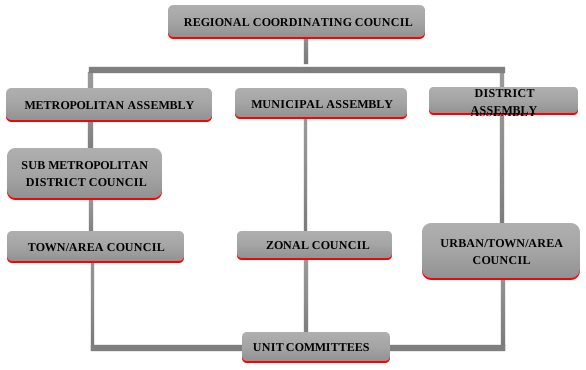
Various commissions and committees from 1949 to 1982 reformed the local government system and made recommendations that underscored the importance attached to ensuring women’s participation, empowerment and capacity building at the local level. These reforms in the local government systems resulted in the promulgation of the Local Government Law 1988, PNDC Law 207. Parliament amended the local government law 1988 (PNDC Law 207) in 1993, resulting in the passing of Act 462, 1993. The Act 462, 1993 continued to be strongly influenced by the PNDC Law 207 aimed at ensuring more equitable participation of ordinary people in governance at the local level [20]. The Act 462, 1993 was also influenced, to a large extent, by Ghana’s 1992 Constitution. Thus, Article 240 of the 1992 Constitution established the Local Government System. For instance, the Article 240 (1) of the Constitution directs the State to have a system of Local Government Administration which should, as far as practicable, be decentralized. The provisions stated in Article 240 of the 1992 Constitution and Act 462 of 1993 were discussed by the government to indicate how they impacted on development at the local level. Consequently, section 10, 1-3 of Act 462 sanctioned the district assemblies, which were the highest administrative authorities at the local government level, to be responsible for the overall development of the communities through the exercise of deliberative, legislative and executive powers [21]. The Assemblies in all the regions of the country were to perform specific functions including planning, financing, budgeting, infrastructural development and internal security. As a result, people’s habitation, markets, food, essential services, sanitation, environments, social interactions and even civic duty became the business of the District Assembly [22]. However, there is unequal representation of women in the decision-making processes associated with the business of the assemblies. The 16 administrative regions of Ghana, comprise Ashanti, Central, Eastern, Greater Accra, Northern, Upper East, Upper West, Volta, Savannah, Oti, Ahafo, Western North, Bono, Bono East, North East and Western. Each region has a Coordinating Council that is the highest regional administrative body. The regions are divided into metropolitan, sub-metropolitan, municipal and district assemblies (MMDAs) [23]. Unless expressly stated, the mention of a district in this study means either Metropolitan, Municipal or District [24]. As at 2017, the number of districts was 216 to function under the local government system. The President of Ghana appoints the Regional Minister to head the Regional Coordinating Council (RCC) to be responsible for the coordination and harmonization of plans and programmes of MMDAs under the local government system. The local government system and structure are directly linked to the central government in an intricately balanced five-tier system of public administration and the allocation of functions [24].
The President in consultation with traditional authorities in various elected areas appoints 30 percent of members of the District Assemblies [25]. Half of the 30 percent appointed positions are to be reserved for women, which does not happen all the time as no legal instrument backs the directives. The remaining 70 percent of members of MMDAs are directly elected by universal adult suffrage during Metropolitan/Municipal/District Assembly Elections (DAEs) for a four-year term in office. The government, in consultation with the Ministry of Local Government and Rural Development (MLGRD) establishes a Metropolitan Assembly in each urban area with a population over 250,000 and a Municipal Assembly with a population of 95,000 or more. The local government structure is outlined in Figure 1.
1.2. Socio-Economic Factors that affects Women’s Participation in Local Level Governance
In the 1992 Constitution of Ghana, women are recognized as having equal rights with men in all spheres of life. The Constitution prohibits discrimination on the grounds of sex, religion, gender and ethnicity. However, the cultural norms of the Ghanaian society do not favour the inclusion of women in the political arena. Patriarchal practices and the current socio-economic status of women do little to encourage women’s active participation in the political arena. These to some extent explained the difficulties women experience in accessing higher education and economic resources, and the resistance they sometimes face from men and other women in their own communities. Consequently, many women are disempower from effective political participation. In many countries, traditions continue to emphasize women’s primary roles as mothers and housewives and to restrict them to those roles. A traditional strong, patriarchal value system favours sexually-segregated roles, and traditional cultural values militate against active participation and advancement of women in any political process. In addition, in some countries, men even tell women how to vote. This is the environment, in which a certain collective image of women in traditional, apolitical roles continue to dominate, which many women face [26].
One other socio-economic limitation is the monetization of political elections since women rarely have the same personal economic advantages that men do. According to Evertzen, women's often heavy workload of paid and unpaid work is a barrier to their ability to take part in decision-making. The main aim of Ghana’s District Assembly concept is to bring political governance to the doorsteps of the people [27]. However, in 2002, only 341 of the 4,583 elected District Assembly members, representing 7 percent, were women. At the local level, many consider women to be better suited to focus on the concerns of children, the family, community and the environment. Specifically, they can address issues such as girl-child education, child labour, rape, teenage pregnancy, HIV/AIDS and domestic violence.
However, these issues are not on the developmental agenda, because women are not part of the decision-making bodies [22]. Local government has an important role to play in providing affordable, professional and safe care services for children, older people and people with disabilities. As many women participate in organisations at the local level, it is often thought that decentralization is in the interest of women. But decentralization makes the local level more important, and with the growing of importance, the male interest in it is growing as well. Some legal pronouncements and instruments seem to have contributed significantly to the slow pace of progress made over the years. For instance, the constitutional provision which requires that majority of Ministers must be Members of Parliament (Article 78 of the 1992 Constitution of Ghana) also impede women representation and involvement in decision-making. The import is that, until there are representations of women in parliament, women may not occupy ministerial positions, as such, may not be involved in national policy development [28]. Now, if at the national level, things are strict and not paving way for the needed equality, how much more at the local governance level?
1.3. Cultural Barriers that affect Women’s Participation in Local Level Governance
The limited number of female representatives in positions of responsibility in government results from the unequal gender power relations in the Ghanaian society [29]. The public space, hitherto primarily reserved for men was as a result of the gender construction in society. Gender can be understood as a socially constructed relationship between males and females, which is shaped by culture, norms, customs, values and social relations [30]. Gender construction is, therefore, a process of nurturing and influencing individuals with the social norms, rules and values, and the allocation of gendered responsibilities or roles in society [31].
Social construction of gender roles and status (gender construction), patriarchal systems and structures have disadvantaged women and perpetuated gender inequality in the society. These concepts in the social structures describe how gender inequality is enforced, probably because of the associations of the cultural systems (beliefs and practices). There are clear links between the socio-cultural practices and gender construction where the connection relates to the historical legacy of patriarchal forces and agents (e.g. family, marriage, cultural practices, religion, social norms and values). Subsequently, culture and cultural systems, patriarchy and patriarchal agents are presented to surmise how they contribute to the disadvantaged position of women in Ghana.
1.3.1. Culture
Culture is a complex whole, including beliefs, art, religion, values, norms, ideas, laws, knowledge, and customs, which are socially shared among people in the society and passed on through either an ethnic group, clans or families of the generations [32]. For example, the culture of individuals is the totality of their experiences acquired through the transmission of heritage from one generation to another, about how to learn, eat, drink, behave, walk, dress and work. Consequently, people are born in the environment of culture and, therefore, shared values are accumulated, integrated, responsive, changing, which continuously make it the memory of their human race. The cultural practices of each ethnic group feature patriarchal systems that uphold male’s notional superiority and advantages [29].
In the traditional Ghanaian society, traditions continue to emphasize women’s primary role as mothers and housewives and to restrict them to those roles. A traditional strong, patriarchal value system favours sexually segregated roles and traditional cultural values which militate against active participation and advancement of women in any political process. In the words of Kassa, “societies all over the world are dominated by an ideology of a woman’s place” [26]. According to this ideology, women should only play the role of working mother; which is generally low paid and apolitical. Cultural ideas about women can affect their level of representation throughout the political process, from an individual woman’s decision to engage in politics, to party selection of candidates and to the decision made by electorates on the day of elections. According to Kassa, these cultural ideas about women make them to face prejudice as leaders because people tend to think that leadership is a masculine trait [26]. Even in situations where women have made gains in employment or education, they still face cultural barriers to their participation in politics.
1.3.2. Patriarchy
Patriarchy, a word derived from the Greek language means "the rule of the father” as a father or the patriarch holds authority over women and children [33]. Initially, in the nineteenth century, Weber used the concept of patriarchy and referred to it as a patrimonialism where the concentration was on the father (patriarch) dominating the households [29]. However, patriarchy as a concept was maintained in the twentieth century to signify men rather than fathers specifically and can be attributed to the developments in feminist thought, women’s studies and gender studies [34]. Also, patriarchy is a system of government where older and younger men ruled society through their position as household heads [35]. Adibi defined patriarchy as males (fathers, husbands and brothers) having precise control over women and family; in this instance, referring to how women relied on men for survival as wives, sought permission from husbands, male partners or fathers before engaging in politics and any public activities [36]. Further explanations of patriarchy by Adibi indicated that, patriarchal societies have endured throughout history, and were surviving in the economic, political and religious changes, which sustained gender differences [36]. These deep-rooted patterns of socio-cultural practices and patriarchal agents, including the family system, marriage, religion, and funeral ceremonies are inclined to privilege men over women and perpetuate gender differences and inequality [37].
1.3.3. Family system
The family system formed through a male and female uniting, creates a strong bond between people, and it is the primary source of an individual’s culture, identity, loyalty, recognition, status and responsibility. The Ghanaian culture is a collective one where families share any loss or achievement or honours, including political achievements, but men are at the advantage side [32]. The families also facilitate gender construction, resulting in the socially constructed gender power relations and roles.
Two types of family lineages (i.e. matrilineal and patrilineal family inheritance) are recognized in Ghana, which reveal two major types of succession and inheritance rights among various ethnic groups. These succession types are linked to the legacy systems, which share two features: a distinction between family and individual property; and for male siblings as heirs, who are entitled to inherit family property than female children or nieces [38]. As a result, the two systems of inheritance rights become privileges of the male against the female in a family or a clan. For instance, with the patrilineal type of inheritance, heirs who are mostly males are chosen from the paternal lineage to inherit property, whereas, in the matrilineal form of succession, male heirs who are often nephews are chosen above daughters and nieces from the maternal lineage to inherit property. Also, among the matrilineal Akan families, members’ right to inheritance of an estate, farms and bank accounts in the first instance, goes to the oldest surviving brother of either a deceased male or female. The beneficiaries to the inherited properties, typically men, can increase their wealth through investing in inherited assets, which further enhances their relative economic, political and social status to the disadvantage of women in the family [39]. As a result of biases in the allocation of capital resources, inheritance and assets, females’ opportunities to gain financial resources to engage in any public activities tend to be impeded [40]. The diverse cultural practices mark the sub-divisions in the ethnic groups in Ghana, but each group shares a common cultural heritage, history, origin and language as well as marriage [13, 38].
1.3.4. Marriage
Marriage, as a universal social institution has been an individual’s rite of responsibility. Among the ethnic groups in Ghana, the rites happen within the families of a male and a female. This rite of passage also determines the Ghanaian status of a lifetime achievement within their families [41]. Thus, an unmarried matured person or a divorcee may find it difficult to occupy an elected political position or a throne of traditional governance; that makes marriage a societal responsibility among many Ghanaians. The marriage types in Ghana include the customary or traditional system of marriage, which involves the families of the couple and it is characterized by polygamous relationship, hence, a man could marry more than one wife. The other type of marriage is the ordinance marriage that requires registration in court after the traditional marriage, and it forbids any form of polygamy of which the offence attracts fines, court settlement or divorce. It is the ordinance marriage that some religious sects or churches organize wedding ceremonies for the Christian couple, which indicates the people’s religiosity.
1.4. Theoretical Framework
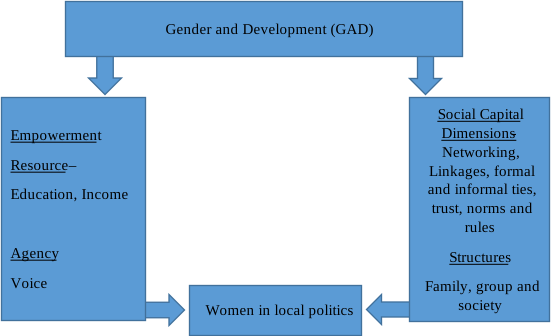
The theories that underpinned this study are the Gender and Development (GAD) Theory, the Concept of Empowerment and the Social Capital Theory. The GAD theory gives an understanding of the various aspects of societal structures, including gender construction, gender relations, leadership, equity, justice and economic empowerment [29]. Gender theories of development connote that women’s political development is to bring about equal participation in politics, which could be enhanced through empowerment and their social capital to resist the obstructing factors in society. Getting access to political power requires long-term investment in relationships, building constituencies and creating supporters who would not only vote but would also take the initiatives, and address the concerns of a candidate [43]. Many approaches have been proposed to explain political participation, and one is the Agency Theory, which focuses on traditional mobilising of organisations in civic society. Putnam’s account of political participation emphasized the role of social capital, which falls into agency theories regarding social networks and active citizenships including parties, unions, and voluntary associations [43].
The idea of the Social Capital Theory can be traced to the eighteenth and nineteenth centuries and has been in use for over a century [44]. The theory was first published in a book in 1916 in the United States. Lyda Judson Hanifan (1879-1932) has been credited with the introduction of social capital as a concept and theory [45]. As a result of the writings of Coleman and Putnam, the Social Capital Theory has gained popularity [46, 47]. Putnam, a political scientist discussed social capital and its development within political sociology, emphasizing civic responsibility, participation and associational life for the health of democracies [47]. Putnam’s concept is regarded as having contributed to a revival of intellectual interest in civil society. The practice and ideas behind the use of the theory as discussed in her work described how in some part of the United States, neighbours commonly worked together for social benefits, including supervising community schools so that their children could attend and acquire an education [48].
Concerning its origin and contemporary situation, the Social Capital Theory combines the very modern language of networks with a much older register of a community. As a key concept in the social sciences, social capital is subject to competing definitions [49]. Lollo asserted that when examining major definitions of social capital, the same ideas reoccurred across time but also reflected their timing [50]. Although different authors approached social capital with varied explanations, the focuses remained on relationships, social networking, links, norms, rules, shared values, trust, understanding and community. Social capital can be the resources available in, and through personal and business networks, and relationships [51]. The resources also include information, ideas, tips, clues, leads, business opportunities, financial capital, power and influence, emotional support, goodwill, trust and cooperation. Moreover, due to different explanations assigned to the theory, there have been disagreements about the use of the term ‘capital,’ as being a capital resource in a social relationship [52].
Walters posited that the concept of social capital portrays an individual’s networks and a community level phenomenon, where at the community level, the concept is a property (capital) of relations between the people in the community taken as a whole [49]. Baker suggested that ‘social’ as in ‘social capital,’ meant that this ‘capital’ resource was not a personal asset and that no single person owned it because the resource resided in networks of relationships [53]. Macke and Dilly defended the social capital concept and refined it to include ‘collective capital’ and ‘personal gains’ [54]. Thus, according to Macke and Dilly (2010), social capital is the set of characteristics of a human organisation that encompasses the relations between individuals or groups; the standards of social behaviour; and the mutual reciprocity that makes actions possible because they were based on collaborative processes [54].
Based on different characteristics and functions, literature have classified social capital into different groups. The most common forms of social capital in literature include structural and cognitive social capital; bonding, bridging, and linking social capital; strong and weak social capital; and horizontal and vertical social capital [55]. Structural social capital is related to the pattern of social networks and other structures such as associations, clubs, cultural groups, and institutions supplemented by the rules, procedures and precedents that govern them. Cognitive social capital consists primarily of a set of shared norms, values, attitudes, and beliefs of individuals relating to trust, reciprocity, and cooperation [56]. The objective and externally-observable structural social capital facilitates mutually beneficial collective actions through established roles and durable social networks supplemented by rules, procedures and precedents [56]. The structural social capital provides certain benefits to actors, such as finding a job, obtaining information or accessing resources [57]. The subjective and intangible cognitive social capital predisposes people towards mutually beneficial collective action through shared values and attitudes [56]. Putnam argued that participation in social networks and voluntary organisations forms habits of cooperation, solidarity, and civic-mindedness [47]. Besides, it fosters development and spread of trust. Social capital is, thus, understood both as a structural and a cognitive dimension [58]. These structural and cognitive forms are often interconnected and reinforcing [56].
From a social cohesion perspective, recent literature puts social capital into three important forms, namely bonding, bridging and linking social capital [59]. Bonding social capital denotes ties among people who are very close and known to one another, such as immediate family, close friends and neighbours. Often people in bonding networks are alike on key personal characteristics (e.g., class, race, ethnicity, education, age, religion, gender, and political affiliation). It is more inward-looking, protective, and exercising close membership, and therefore good for under-girding specific reciprocity and mobilising informal solidarity [58]. Bonding promotes communication and relationships necessary to pursue common goals. Moreover, it influences creation and nurturing of community organisations, like self-help groups and local association.
Bridging social capital refers to more distant ties of likeminded persons, such as loose friendships and workmates. Often people in bridging networks differ on key personal characteristics. Bridging is more outward-looking, civically engaged, narrows the gap between different communities and exercising open membership, and is, therefore, crucial to organising solidarity and pursuing common goals [58]. Bridging is crucial for solving community problems through helping people to know each other, building relationships, sharing information and mobilising community resources.
Linking social capital is the ties and networks among individuals and groups who occupy very different social positions and power. Linking social capital may involve networks and ties of a particular community with states or other agencies. These different forms of social capital can serve different functions. Bonding with closely-knit people can act as a social support safety net; bridging ties with people across diverse social divides can provide links to institutions and systems and enable people and communities to leverage a wide range of resources than are available in the community. Bonding generates ingrown and thick trust that is useful for ‘getting by’ in life, as opposed to the bridging of expansive and thin trust that may be useful for ‘getting ahead’ [60]. In practice, social ties may constitute ‘bonding’ in one respect and ‘bridging’ in another. This distinction is helpful because of the types of social relationships among people in the community and their likely differential outcomes [61].
According to Boateng, society is characterized by gender power relations where individual actors have privileged positions and power over others concerning how institutional rules, norms and conventions are interpreted, and how they are put into effect [29]. As victims of inequality in society, women need to use their voice, power and, capacity to act to access resources and make choices to better their lives. Hence the need for women empowerment.
The concept of empowerment can be explored through three closely interrelated dimensions, namely resources (conditions), agency (voice or process) and achievements (outcomes) [40]. Agency is one of the central pillars of empowerment, which relates to people’s ability to make strategic life choices in a situation where this ability was previously denied to them [40]. Agency, thus deals with how choice is put into effect and actively exercised to challenge power relations. It is, therefore, exercised through the mobilisation of valued resources such as education, economic opportunities and decision-making positions, which are the means of power distributed through the various institutions and relationships. Consequently, when the distribution of resources and agency is skewed in society, it builds only some people’s capabilities and influence their potentials to enjoy meaningful lives. The outcomes of agency and resources are ‘achievements.’ Achievement is the extent to which individual’s potentials are realised or failed to be realised. Thus, an outcome of individual’s efforts, which can only be assessed with initial conditions (resources) and agency (process) is an achievement [40]. For instance, a woman’s ability to achieve political empowerment will occur because she uses her agency (voice, power, capacity to act) to access the available resources such as education, income and decision-making positions. According to Zimmerman, through the empowerment construct, individual’s strength and competencies, natural helping systems and proactive behaviours can be harnessed for effective social policy and social change [62].
1.5. Conceptual Framework
The study’s conceptual framework was developed by examining the objectives and research questions of the study to identify the theories that have the best fit to answer the research questions. This study’s conceptual framework shows the interconnectedness between theories and concepts. The Gender and Development theory provides an understanding of the various facets of societal structures. In applying the concept of empowerment, this study argues that marginalised women could gain power through resources and agency to resist the patriarchal systems that hinder them from politics. Also, the Social Capital Theory explains how individual women can take advantage of the dimensions and structures of social capital to harness and build constituencies to compete for a political position. Thus, when women are empowered and make efficient use of their social capital to create linkages, networks and build connections, they could resist and overcome the socio-cultural, economic and political structures that marginalise them from political participation and representation at the district levels.
2. Materials and Methods
This study adopted the qualitative research approach underpinned by the view that knowledge is socially-constructed by individual actors who interact with their world (Merriam, 2002). A descriptive case study design was adopted to examine the socio-economic, and cultural factors that affects women’s participation in local politics in Agona West, Gomoa West and Gomoa Central in the Central Region of Ghana. Yin characterized case study research as empirical inquiry that investigates a contemporary phenomenon within its real-life context; when the boundaries between phenomenon and context are not clearly evident [63].
Data was collected from three districts in the Central Region of Ghana. The districts were the Gomoa Central, Gomoa West and the Agona West. The Gomoa Central District is one of the 260 Metropolitan, Municipal and District Assemblies in Ghana, and forms part of the 20 (MMDAs) in the Central Region. With its capital as Afransi, the District was carved out of the then Gomoa District in 2008 by the Legislative instrument 1883, and became operational on 29th February, 2008. It occupies an area of 539.69 square kilometres and it is located in the south-eastern part of the Central Region. It is bordered to the north-east by the Agona East District, south-west by the Gomoa West District, east by the Awutu Senya East Municipal and the Ga South Municipal in the Greater Accra Region and to the south by Effutu Municipal. The Atlantic Ocean borders the south-eastern part of the District. The population of the District according to the 2021 population and housing census stood at 83,610 with 39,101 males and 44,509 females [17]. Data was collected from the Aboso Electoral Area.
Gomoa West District was established in July, 2008 by Legislative Instrument (LI) 1896, following the division of the former Gomoa District into two, Gomoa West and Gomoa East Districts. Apam is its District capital. Gomoa West District stretches from Gomoa Antseadze in the west to Gomoa Bewadze in the east. It shares boundaries on the west with the Ekumfi District, North-West by the Ajumako-Enyan-Essiam District, North by the Agona East and the Gomoa East Districts and East by the Effutu Municipal, as well as the Atlantic Ocean in the south. The population of the district, according to 2021 Population and Housing Census stood at 129,512 with 59,420 males and 70,092 females [17]. Data was collected from the Apam Nsuakyir / Abura, Gomoa Tarkwa, Ankamu/Ajumako Sinbrofo and Ayipe Electoral Areas.
The Agona West Municipality is one of the 20 political and administrative districts in the Central Region of Ghana. It was created out of the former Agona District on 25th February, 2008 by LI 1920 [14]. It is situated in the eastern corner of the Central Region. It has a total land area of 316.16 square kilometer, with its capital as Swedru. It is bordered to the north by Agona East District, to the south by Gomoa East District and to the northwest and west by Asikuma-Odoben-Brakwa and Ajumako-Enyan-Essiam Districts respectively. According to the 2021 Population and Housing Census, the total population of the municipality stood at 136,882 made up of 65,502 males and 71,380 females [17]. Data was collected in the Asesem Abronye, Maahodwe, Otedukrom and Anafo Adansi Electoral Areas.
The population of the study encompassed all Assembly women and those who contested Assembly elections in the three districts in Central Region, past and present and some significant others which comprised of all the husbands of the assembly women. This study employed purposive, snowball and convenient sampling techniques in selecting the participants. A total number of 13 participants were sampled for the study. Out of the 13 participants, eight were former Assembly women, two had contested and lost a District Assembly election and one won, but could not go to the Assembly due to ill-health. Two husbands of the former Assembly women were conveniently selected to constitute significant others. The reason for selecting the significant others was to examine the role they played in the political lives of their wives. The researchers chose 13 participants because of the principle of data saturation. Moreover, Crouch and McKenzie proposed that less than 20 participants in a qualitative study help researchers build and maintain a close relationship and, thus improve the “open” and “frank” exchange of information [64].
Interview guide was employed to collect and generate qualitative data from the participants. The interview guide was a set of semi-structured in-depth interviews. The interview was a face-to-face discourse between the researchers and the participants, out of which data was gathered for the study [65]. The interviews were all transcribed and the researchers went through them and looked for words, patterns of behaviour and experiences, ways of thinking and events that repeated. Following the observation of such instances of repetition, the researchers employed selective coding by integrating and refining categories representing the main themes of the research. A coding system called ‘coding categories’ was developed in which the transcripts were read to look for regularities and patterns, and words or phrases were written down to represent the pattern. These phrases were then interpreted into understandable meanings and discussed.
The researchers ensured trustworthiness in the form of credibility, dependability, transferability, and confirmability. To ensure that the data satisfy the principle of credibility, the researchers relied on a tape recording of the interviews as well as participants’ validation. The recorded interviews were played to participants for them to authenticate the responses. Dependability was ensured as the researchers involved the significant others to check consistency of the findings that were obtained. The researchers enhanced transferability by detailing the research methods, providing explanations of the research setting and individuals. Clear procedure for the applicability of the findings in other contexts were also provided. Confirmability that is objectivity of the researchers while carrying out the study was also evaluated. The combination of these four form conventional pillars for qualitative methodology [66].
Ethically, each of the participant was given a consent form which showed their willingness to freely participate in the study. The researchers asked permission from the participants to audio record the face-to-face interview. The participants were informed about their right to quit their participation, as the study was a voluntarily project.
3. Findings and Discussion
3.1. Background Information of Respondents
The data gathered on participants’ age, level of education, occupation, religion, marital status, number of children and the current status in terms of district assembly elections is presented in Table 1.
As shown in Table 1, the ages of the participants ranged from 30 to over 70 years. Two (18%) of them were between 30 and 50 years; 8 (73%) were between 51 and 70 years and 1 (9%) was above 70 years. Their educational background was also varied. Of the eleven women, 1 (9%) person had primary education, 4 (36%) were middle school leavers, 2 (18%) of them had secondary education, 1 (9%) completed commercial school, 2 (18%) had National Vocational and Technical Istitute (NVTI) education and 1 (9%) person had diploma. With regard to occupation, 2 (18%) out of the eleven women worked in the formal sector (one was a teacher and the other worked with the Gomoa Central District Assembly) while the remaining 9 (82%) work in the informal sector (two of them were business women, four were traders, one was a beautician, one was a medical counter assistant (sold drugs at the drug store) and the other was a farmer).
On religious backgrounds of the respondents, 9 (82%) of the women were Christians and 2 (18%) of them were Muslims. Regarding marriage, 7 (64%) out of the eleven women were married, 2(18%) of them were single, 1 (9%) was divorced and 1 (9%) widowed. One (9%) of them had one child, 5 (45%) of them had two children each, 2 (18%) had four children each, 2 (18%) of them had five children each and 1 (9%) of them had seven children. Out of the eleven women, 8 (73%) of them were former assembly members, 1 (9%) won but could not go to the Assembly because of ill-health and 2 (18%) person contested, but lost the elections. In order to facilitate the discussion of the views of the participants, they were anonymously personified with code names that ranged from R1 to R11, H1 and H2. The Districts of the participants are presented in Table 2.
Table 2 shows the districts of the participants. As there were more females who involve themselves in local politics in the Agona West District, there were less females in the Gomoa Central as compared to Agona West and Gomoa West Districts. H1 and H2 were the husbands of two women Assembly members. H1 and H2 were used because of anonymity in order to facilitate the discussion and insertion of some of their views.
The participants were asked whether the background information gathered from them had any negative influence on them. With regard to their levels of education, almost all of them (10 out of 11) indicated that it had no adverse influence on their participation in local level politics. R1, for example, noted: “No, my level of education does not influence me negatively. In the assembly concept, if you are not formally educated you can contest for the Assembly elections. We know some Assembly members who are not formally educated, some cannot even write their names, but they have the zeal and the will power to work, they are good organisers and have home sense. It is when it comes to writing that they will suffer, but when it comes to working on the field and in the community, they can do it. So, education is not a challenge. But if you have a little education it is good because it will help you read and understand document presented to you at the Assembly meetings because the documents are written in English Language. Also, it will help you go far in your political career”.
R4 also added, “No. if I want to write a letter, I call my children to help me and I edit it.” The remaining eight participants just said “no”. R7 who was of a different view said, “For my education, they talked about it. One of the two men I contested with was highly educated but I was better than the other one.”
The point then is that although most of the women had low educational backgrounds, it did not prevent them from participating in local level politics. It is obvious, however, that education is critical if they wished to be effective local politicians because it would enhance their ability to read and understand the documents presented to them at the Assembly. R1 exemplifies the foregoing with her curt advice, “Education will help one go far in one’s political career.”
On the occupation of the participants, all the respondents said that their occupations did not have any adverse effect on their ability to participate in local level politics or perform well as Assembly Members. R1, R2, R3, R4, R5, R7, R8, R10 and R11 were all employed in the informal sector, but this did not have negative effect on their participation in local level politics. More specifically, R1 said, “My occupation did not influence me negatively.” R2 stated, “Because it is my own business, it didn’t have any effect.” R3 also added, “I don’t work for someone so it did not affect me.” R5 also said, “No, we were informed about meetings with letters so I planned for them. They didn’t have any negative effect on my work at the District Assembly.” R6 and R9 were both employed in the formal sector and they also said their occupation did not have an adverse effect on them. R6 said, “No, it didn’t have any negative effect. My staff even helped me.” R9 also added “No, I did my campaign after work.”
From their views, it can be said that, the occupation of the participants did not have any negative effect on their participation in local level governance, which means that no matter one’s occupation, whether one is employed in either the formal or informal sector, one can also engage in politics. With regard to the number of children and the effects it had on the respondents’ participation in politics, ten out of the eleven respondents said that the number of children had no negative effect on their participation while one respondent said though it was difficult, she was able to combine taking care of her children and her political career. R6 said “When my husband died, I was with two children, one was two years and the other was three months old, but by the grace of God, I was able to pass through all the problems and I made it”. R1 said, “No, the number of children I have, did not influence me negatively”. R4 also said, “No, my children are grown-ups so it did not affect me.” R10 said, “No, I have siblings so they helped me to cater for my children.” Similar expressions were made by the two husbands that the number of children they had did not affect their wives in the performance of their roles as assembly members. Apparently, maternal responsibilities of child-caring, regardless of the number they had did not hamper their participation in local level governance or the success of their political careers. While it seems challenging to combine parental responsibilities and politics, it was not an insurmountable barrier.
With regard to age, almost all the participants discounted it as a challenge to their participation. However, R3 who was 55 years said, “Yes, some people said I was too old so I should rest.” It may, therefore, be discerned that in their case, as long as one has attained the statutory age of 18 years that makes her an adult, and has the physical and mental capabilities to engage in local politics, age poses no barriers.
3.2. Socio-Economic Factors
Socio-economic barriers of women participation in local governance in the study area were analysed. A rationale for increasing women’s representation in local politics is that they are likely to be more abreast with the issues affecting females and, therefore, could play constructive roles in responding to their developmental needs. But in Ghana, as in many other places around the world, women face many barriers in their quest to participate in politics. This section presents the findings and discussion of the socio-economic barriers of local female politicians in the three District Assemblies. The socio-economic barriers the participants discussed include lack of self-confidence, limited funds and unsupportive assembly.
3.2.1. Lack of self confidence
A lack of self-confidence was a theme that was unanimously identified by the participants as a barrier to women’s political participation. Self-confidence is the belief in one’s ability to perform or undertake an activity or a job. Benabou and Tirole asserted that one’s ability to engage in social interaction shows his or her self-confidence [67]. In the context of this study, confidence relates to women trusting themselves to break through the glass ceiling efficiently and, interact, network to engage others and to perform executive roles and duties.
In this respect, R3 noted, “When you do not believe in yourself, you cannot enter into politics.” According to R6, “If you are a woman and you do not have the zeal and believe in yourself, you cannot enter into politics.” R9 reiterated: “I have the zeal and I believe that I can do it. If you are a woman and you don’t have confidence in yourself, you cannot enter into politics. We should not listen to what the people will say against us. When you contest and lose for the first time, try again. It is better to try and fail than to fail to try”.
Others such as R1, R2 and R7 lamented the lack of self-belief and fear restrains many women from venturing into politics. More specifically, R1 shared this view, “Some women will say, hmm can I really contest for the position? If you say that then it means you do not have confidence in yourself”. R5 revealed, “Some women are afraid to enter into politics because they are afraid that people will laugh at them when they lose”.
In this respect, R10 added, “When you believe in yourself that you can do it you will do it. When we say we cannot do it, then we cannot do it” R11 said “Let us not be dull, let us push forward and believe that what the men will do, we the women can do it and do it better. When we have confidence, we can do it”. The low level of confidence most of the participants had may be attributed to the roles they are socialised into right from their infancy as females. The highly patriarchal Ghanaian society prioritises males in many aspects of society, for example in education, gender roles, allocation of resources and power to make decisions. However, Evertsson and Nermo, for example, argued that when women’s level of education and their social status are increased, their self-confidence improves and their share in house work decreases [68]. There may be two-way effects as the women’s social status, and self-confidence may urge them to develop the interest to engage in local politics, not to mention their relative freedom from time and energy consuming domestic chores. According to Benabou and Tirole, people’s self-confidence affects their social interaction [68]. Obviously, one of the attributes that could urge an individual to develop confidence is to interact with other social beings. Besides, political ambition contributes to a decision to engage in the local government system and take up a role as an assembly member in Ghana. In effect, persons with strong self-confidence are likely to engage in politics. Politics is an endeavour, which persons with confidence could easily engage in as with the social interaction, they would be building constituencies to harness political support. This is one of the tenents of the social capital theory.
3.2.2. Limited Funds as a Barrier to Women’s Participation in Local Level Politics
Another barrier identified by the women in this study was the lack of financial resource. R2, said:
“We are in the Agona West District and all the six women who contested lost because they had no money to give to the electorate to vote for them. In the eight years I contested and won, I never used money, but now people invest money into it as if there is some huge financial benefit in the District Assembly work...”
R6 also stated:
“When I contested, I incurred a lot of debt. I had to borrow from people. I had to pay for the food the people ate. When you don’t share money people will not vote for you. So, as I was sharing five cedis other opponents were also sharing ten cedis and over. There was no support from my family too, but because I was determined to help my area, I tried hard and won. So, what I can say is that, the government should support the women financially”.
The narratives from both R2 and R6 bear their origins from the perceived vote buying in politics in the country today where many people do not see any direct benefits from the government, but assume that those in power are able to enrich themselves through their engagement in politics. The people develop a quid pro quo mentality and potential voters literally sell their votes to the highest bidder. H1 supported the above statement and hinted:
“Politics has now turned into money. If you do not give the electorate money to vote, they will not vote for you despite the good intentions and plans the person may have for the people and the electoral area. My wife spent a lot of money”.
Besides, in order to demonstrate some amount of empathy with them, physical resources necessary to facilitate minimum livelihoods or to enable them to operate has to be provided even if the local government has no means or are unwilling to do that. In this respect, R7 noted, “The District Assembly will not give you shovel and other tools for clean-up campaigns in the community so I had to use my own money to buy such tools.” R1 also said, “Campaigning in the district level electorate involves a lot of money for printing of poster and feeding your campaign team. This is a huge financial burden…”
The huge financial burden in local politics, according to the participants, therefore, discourages many females from venturing into it, because as women, they are already financially disadvantaged. According to H2, financial burden is a major challenge:
“Lack of money prevents women from entering into politics and those already in the District Assembly also suffer because people will not look at the good works they have done but rather want money”.
The pressure to meet the demands of the electorate could push some of the Assembly women into financial ruin. R8 recounted her experience and said this when she added:
“Even the men with more financial strength than the women face a lot of financial problem. So financial problem is a strong barrier to women’s participation in politics. Most women are not financially sound and this affects them. They have to borrow money for campaigns”.
Engaging in politics requires some finance on the part of an aspiring candidate to get campaign programmes running. It involves a lot of money for printing of poster, feeding of your campaign team and other expenses. Consequently, the call for women to enter public life in terms of politics is hampered because most women start with less financial resources as compared to men. So, if women are not sponsored and helped out, they would not succeed in their political careers.
3.2.3. Unsupportive Family
Familial support is very important for a political candidate because family defines the identity of an individual [32]. While the majority of participants in the study were supported by their families, others who did not get that backing felt somehow deterred from seeking public office at the local level. R6 in particular lost the political contest because her family was against the idea and therefore did not give her the requisite support. R6 shared her experience and said:
“For my family it was a lot of issues. I had problems with my parents so they ejected me from the house. I lost the second time partly because of my mother. The person I was contesting with used such issues as an opportunity to create problems for me. He went to my mother and held her hands to the polling station and she voted against me. Some people were saying that even my family members do not support me so they shouldn’t vote for me”. (R6)
Sometimes, it becomes difficult for the prospective female politician to choose between her decision and that of the family. Perhaps, as a result of the sexist insults and the stigmatization. Ofei Aboagye states “families are reluctant to have their women in the public eye” [22]. A woman who attempts or ventures into politics is judged according to the dogma that ‘good’ women do not indulge themselves in public spheres [69]. R1 recounting her experience stated: “Sometimes, personal courage must be involved to override the pessimism of family members. Some members of my family told me to take my rest because there are a lot of insults in politics. Some even said that we do not contest with our physical eyes but what I always say is that if someone has been able to do it and it wasn’t a machine that did it, then so far as I am a human being I can also do it”.
Apart from R1 and R6, all the other female participants said they had support from their families. The two husbands also confirmed their support. For example, R2 opined, “My family was in full support. My husband, children and my siblings were all in support”. H2 also said: “I supported and encouraged my wife to contest”. R8 maintained, “My family members are not in this town, but when they heard about my involvement in local level politics, they were happy and supported me”; while R10 maintained “family members were so happy when I won. They really jubilated”.
It is clear from the data that some of the women had familial support while others did not. Those who did not get support from their families lost in their first attempt. This shows that familial support is very crucial in the success stories of women in politics, hence women who are not supported by their families may be discouraged from entering into politics, even at the local level where competition for votes is not as intense as at the national level. The women are from families, and therefore, needed the family support as they perform their triple roles of reproduction, production and community responsibilities. Engaging in politics is the period in the women’s political career that needed emotional and financial assistance from these close relations including spouses, siblings, mothers, fathers and grown-up children.
The Family as an institution plays a role to make the social capital function. For instance, Heffron identified the family as a structure that establishes bonding capital or bonding links as far as social capital is concerned. Bonding capital or bonding relationships are based on a sense of shared identities, shared culture or ethnicity with family, close friends and people with similar backgrounds [70]. The understanding and support from some family members gave the women courage to engage in their political activities successfully. In the social capital discourse family, therefore, should have been the significant bonding network that the female aspirants could benefit as the principal supporting factor. Heffron noted that bonding links are with the family and close friends who could be committed to drawing up campaign strategies with aspiring contestants to compete in the District Assembly elections [70]. The support from the family reflects Putnam’s reference to the social capital concept, where he argued that the individual felt belonged to the family where they have a collective identity. The women gained support because of the social bonding and commitment, and the close relationships they had with their families, that is, the social resources [47]. According to the order of importance, the family could have been the most significant social capital because of the associated thick trust or bonding relation. However, due to the patriarchal nature of the Ghanaian society, some family members continue to perceive that a woman’s place is the home. Therefore, unsupportive family is a barrier to women’s participation in local level governance.
3.3. Cultural Barriers
Cultural barriers of women participation in local governance in the study area was also analysed. Cultural beliefs and practices are the norms, values, customs, marital and religious practices, which are imbibed through socialisation. In the process, there is some amount of gendered construction that pushes males and females to assimilate them differently. Hence, the assimilation of Ghanaian cultural beliefs and practices have led to differentiated gender roles for women in politics. Ghana’s socialisation processes, just like many other societies in the world, tend to emphasise particular roles as what women should play. These gendered roles are influenced by their cultural values, beliefs and practices. As Iwanaga indicated, the lack of interest to participate in local politics is linked to the nature of gender construction which tends to restrict and psychologically hinder women from aspiring to public office [71]. In other words, the internalisation of the cultural beliefs and practices from childhood through to adulthood largely determine the nature of activities and jobs men and women do. In the traditional Ghanaian society, traditions continue to emphasize women’s primary role as mothers and housewives and to restrict them to those roles. A traditional strong, patriarchal value system favours sexually-segregated roles and traditional cultural values which militate against the participation and advancement of women in any political process. Kassa lamented on this issue by asserting that “Societies all over the world are dominated by an ideology of a woman’s place” [26]. According to this ideology, women should only engage in duties associated with a working mother which is generally low paid and apolitical.
Cultural ideas about women can affect their level of participation throughout the political process. According to Kassa, these cultural ideas about women make them face prejudice as leaders because people tend to think that leadership is a masculine trait. In this respect, all the participants noted that cultural beliefs and practices are obstacles to women’s desire to involve themselves in local politics [26]. For example, in some traditional Ghanaian homes, females are socialised and encouraged to marry early and give birth to a large number of children to expand the family lineage. In contrast, fewer men are encouraged into early marriage, and their capacity to engage in public life is less constrained by nurturing children. As further evidence of how the cultural beliefs and practices had influenced the thoughts and behaviours of the Ghanaian society, participants R4 and R5 asserted that members of their communities hold the belief that men cannot stand by for women to lead them. Thus, the notion that men ought to be leaders has been a product of gender roles and socialisation, which have resulted in men and women developing different attitudes and behaviours toward the socio-economic and political activities and jobs [72]. Besides, R9 asserted that society sees women as belonging to the kitchen and, therefore, they should leave politics for men. She said:
“Our forefathers pushed the men and left the women behind and it made life difficult for women. They believed the office of the woman is the kitchen. But when both men and women move together it will make life easy.”
H2 added, “I know some men are sometimes not happy when women compete with them. But I believe women can be good leaders” R8 recounted, “We were made to believe that home activities such as cooking, washing and taking care of children belong to women whilst outside home activities belong to men but because of education that has changed.”
Women are overburdened with different household activities like cooking, washing, sweeping and caring for children, among others. All these activities make women busy in the house, and thus impede their involvement in politics. According to Kassa, a study conducted by Gidudu on “Socio-cultural factors that hinders women’s access to management positions” revealed that women have to do house duties, gardening and washing while men go for duty and further studies outside the home [26]. Culturally, there is a belief that women are supposed to be led but not to lead. In fact, stereotyped notions about women constitute a major barrier.
3.3.1. Abuse and Harassment
Violence against women in politics not only obstructs women from participating in politics, but also challenges the concept of good governance [73]. Some women, including R2, R3, R6, R8 and R9 revealed that abuse and harassment deter some women from participating in local politics. Specifically, the women described some of the abusive and harassing comments as coming from members of their communities. For example, R2 said: “Some people even said that women who engage in politics are prostitutes.”
R3 also reinterated: “Women who involve themselves in politics are sometimes accused of being prostitutes, most especially when they are seen often with men. They are accused of snatching people's husbands from them. The wives of the men normally start circulating such rumour.”
According to R8, in her bid to become a female politician, she was tagged as ‘obaa akokonini’ (female cock) and was told “politics is a game that belongs to males.” Participant H1 corroborated and said: “Some people insult and make mockery of women who contest for political positions”. Participant 9 recounted, “People insulted and gave me a lot of names but that did not discourage me.” The abuse, especially verbal abuse against women who try to engage in politics in order to contribute their quota to national development is really a strong barrier that discourages less courageous women from entering into politics. When other women observe the treatment female politicians endure, they are deterred from following suit. Most of the participants apparently endured challenges relating to insults and personal attacks in their communities, but they worked hard to break those psychological barriers as well.
3.3.2. Political Affiliations in the Assembly
In principle, the Local Assemblies in Ghana are supposed to be non-partisan, hence people make themselves available because they believe in doing something positive for the common good of their society without regard to any political party. However, the partisan nature of the Assemblies implies that Assembly members and their constituents ascribe Assembly members’ actions and inactions to one political party or the other. Participants, R1, R3 and H2 shared their views in a varierty of ways.
R1 shared her experience and said:
“What discourages me is the partisan nature of the District Assembly elections. We all know that the elections are non-partisan, but because of the politics they do, at times party A and party B may not agree on issues and this makes working in such an atmosphere very difficult. This discourages me”.
According to R3:
“The partisan nature of the Assembly is a big problem. When you do not belong to the ruling government, it is very difficult for your request to be granted and because of that assisting developing your electoral area becomes very difficult. When you are not able to bring any developmental project to your electoral area too people will not vote for you when you decide to contest again. So, when you are a woman and you do not have money to do something for your Electoral Area without depending on the Assembly then, you cannot win in the next elections if you contest”.
H2 also said:
“Political parties sometimes influence the District Assemble elections in order to control the affairs at the assembly when they are in power. If your party is not in power, they will not support you. All the women who contested last four years lost because the District Assembly didn’t help them.”
In Ghana, the law that established the local government system ruled out partisan politics, and therefore, local level politics is non-partisan, where the involvement of a political party in local elections is considered illegal. For Ghanaian women, the significant effect of the local government reforms was the flexibility and its non-partisan nature that offered them the opportunity to participate in politics at the local level [74]. The partisan nature of the District Assembly affected the relationships among Assembly members and this impacted on the Assembly women constituents’ relationships, which adversely affected the women’s chances for re-election. For instance, when an Assembly woman was perceived to belong to a party and those constituents were not affiliated with the same party, they did not commit themselves to assist the member to undertake cooperative activities and projects.
4. Conclusions
Women in the Gomoa West, Agona West and the Gomoa Central Districts in the Central Region of Ghana faced socio-economic barriers which include, lack of self-confidence, limited funds and unsupportive family. Despite all these barriers, some of the women were able to surmount such challenges and became successful in the District Assembly elections.
The culture of the people, abuse and harassment were the cultural factors that affected women’s participation in local level governance in the Gomoa West, Agona West and the Gomoa Central Districts in the Central Region of Ghana. Though the women faced these challenges, some of them were able to overcome them to be successful in the District Assembly elections.
5. Recommendations
It is therefore, recommended that, special fund should be set up by the government to support Assembly women to perform their roles and responsibilities within their communities regularly. Such funds may help them fulfil their campaign promises, which may encourage them to seek re-election that may maintain the few elected Assembly women in the District Assemblies. Also, female politicians should mentor other women. As the potential female politicians avail themselves, the mentors may support them build the confidence required to engage in local level politics and to aspire higher positions in the political office.
Also, the persistence of some cultural beliefs and practices that make it difficult for many females to engage in local level governance should be dealt with through education on the need to include women in decision-making. The education should be offered by the District Assemblies, Non-Governmental Organisations interested in gender issues and various stakeholders in the districts. The idea of quota system should be supported, hence the Affirmative Action Bill should be passed into law and seats reserved for women to participate in governance and other decision-making processes.
Author Contributions: Conceptualisation AKA and LEA; methodology, AKA and LEA; validation, AKA and LEA; formal analysis, AKA and LEA investigation, AKA and LEA.; resources, AKA and LEA.; data collection, AKA and LEA; writing—original draft preparation, AKA and LEA; writing—review and editing, AKA and LEA.; visualization, AKA and LEA; supervision, AKA and LEA.; project administration, AKA and LEA; All authors have read and agreed to the published version of the manuscript.
Funding: “This research received no external funding”
Data Availability Statement: Data is available on request from the corresponding author.
Acknowledgments: we acknowledge the participants in this study.
Conflicts of Interest: “The authors declare no conflict of interest.” “No funders had any role in the design of the study; in the collection, analyses, or interpretation of data; in the writing of the manuscript, or in the decision to publish the results”.
References
- Ballington, J., Davis, R., Reith, M., Mitchell, L., Njoki, C., Kozma, A., & Powley, E. (2012). Empowering women for stronger political parties: A guidebook to promote women’s political participation. United Nations Development Programme.
- Horn, J. (2013). Gender and social movements overview report. IDS.
- Boex, J., & Simatupang, R. (2015). A comparative overview of local governance systems in selected countries. Retrieved from http://www.localpublicsector. net/docs/LPSI_WP_LG_Systems_Sep2015.pdf on 11/12/2020.
- Njogu, K., & Orchardson-Mazrui, E. (2013). Gender inequality and women’s rights in the great lakes: Can culture contribute to women’s empowerment? UNICEF policy document.
- Brenya, E., & Akuamoah, O. (2015). Women participation in local governance: A case study of Kumasi Metropolitan Assembly. International Journal of Advances in Social Sciences and Humanities, 3(3), 1-9.
- Inter-Parliamentary Union (2013). Proportion of seats held by women in National Parliaments Retrieved from The World Bank. Retreievd from http://data.worldbank.org/indicator/SG.GEN.PARL.ZS ON 5/11/2020
- Kurebwa, J. (2014). Rural women’s representation and participation in local governance in the Masvingo and Mashonaland Central Provinces of Zimbabwe. Nelson Mandela Metropolitan University.[CrossRef]
- Dohu, R. Q. (2007, August 23). Movement to increase women’s participation in governance. Daily Graphic, p. 17
- Manuh, T. (2011). Towards Greater Representation of Women in National Governance. Governance Newsletter. Institute of Economic Affairs, 17(6).
- Paxton, P., Kunovich, S., & Hughes, M. M. (2007). Gender in politics. Annual Reviews of Sociology, 33, 263-284.[CrossRef]
- Al-Yami, A. (2015). First Saudi women register to vote. Retrieved From http://www.aljazeera.com/news/2015/06/saudi-women-register-vote150621081535058.html on September, 2020
- Bauer, G., & Britton, H. E. (2006). Women in African parliaments. Lynne Rienner Publishers Inc.[CrossRef]
- Baah-Ennumh, T., Owusu, S., & Kokor, J. (2005). Participation of women in local governance in Ghana: a case study of Ashanti region. Journal of Science and Technology, 25(1), 95-107.[CrossRef]
- Ghana Statistical Services (GSS) (2012). 2010 Population and Housing Census Summary Report of Final Results. Ghana Statistical Service.
- Yobo, D. A. (2012). Women's place in the Ghana government. Retrieved from http://www.fosda.net/db/what-we-do/gender/72
- Awumbila, M. (2001). Women and gender equality in Ghana. In D. Tsikata (Ed.). Gender training in Ghana politics, issues & tools. Woeli Publishing Services.
- Ghana Statistical Service (2021). Ghana 2021 Population and Housing Census General Report Volume 3A, Population of Regions and Districts. Retrieved from https://statsghana.gov.gh/gssmain/fileUpload/pressrelease/2021%20PHC%20General%20Report%20Vol%203A_Population%20of%20Regions%20and%20Districts_181121.pdf
- Abdul-Razak, A., Prince, A. & Illiasu, I. (2014). Examination of barriers to women participation in local governance in Savelugu/Nantong Municipality, Ghana. International Journal of Economics, Commerce and Management, 2(4), 2014.
- Cracknell, R., Groat, R., & Marshall, J. (2014). Women in Parliament and government. House of Commons, July, 1-18.
- ABANTU for Development. (2003). Positioning women and their Concerns in Governance Processes: Experiences of District Assemblywomen in Ghana (A. f. Development Ed.). ABANTU for Development.
- Boateng, J. S., & Kosi, I. (2015). Women’s representation and participation in district assemblies in Ghana: Analysis of supply-side and demand-side framework. International Journal of Scientific and Research Publications, 5(10), 6.
- Ofei-Aboagye, E. (2000). Promoting the participation of women in local governance and development: The case of Ghana. European Centre for Development Policy Management Maastricht.
- AU (2012). Country profile Ghana. Retrieved from http://www.auelections.org/countryprof/Country%20Profile%20Ghana.pdf www.au.int on January, 2020
- Ahwoi, K. (2010). Rethinking decentralisation and local government in Ghana proposals for amendment. The Institution of Economic Affairs.
- Institute of Local Government Studies (2010). A Guide to District Assemblies in Ghana (F.-E.-S. Ghana Ed.). Friedrich-Ebert-Stiftung Ghana.
- Kassa S (2015) Challenges and opportunities of women political participation in Ethiopia. J Glob Econ 3: 162. doi:10.4172/23754389.1000162[CrossRef]
- Evertzen, A. (2001). Gender and local governance. Netherlands Development Organisation.
- Constitution of Ghana (1992). The 1992 Fourth Republican Constitution. Government of Ghana
- Boateng, J. S. (2017). Women in District Assemblies in Ghana: Gender construction, resistance and empowerment. Retrieved from https://ro.ecu.edu.au/theses/ 2048 on 25/07/2020
- Flores, N. (2005). Gender and biodiversity. Retrieved from https://www.cbd.int/gender/doc/fs_cbd_biodiversity.pdf on 7/8/2020
- Britwum, A. O. (2009). The gendered dynamics of production relations in Ghanaian coastal fishing. Feminist Africa, 12(2).
- Umar, F. (2011). What is culture, definition, features and characteristics of culture? Retrieved from http://www.studylecturenotes.com/socialsciences/ sociology/112-what-is-culture
- Kay, S. C. (2005). Encyclopedia of women’s autobiography Pakistani women’s autobiography, Vol. 1. V. Boynton & J. Malin (Eds.), Patriarchy (pp. 609). Greenwood.
- Jóhannsdóttir, N. K. (2009). Patriarchy and the subordination of women from a radical feminist point of view. Retrieved from https://skemman.is/bitstream/ 1946/3017/1/Nina_Katrin_Johannasdottir_fixed .pdf
- Duncan, S. (1994). Theorising differences in patriarchy. Environment and Planning A, 26(8), 1177-1194.[CrossRef]
- Adibi, H. (2006). Sociology of masculinity in the Middle East. Paper presented at the Social Change in the 21st Century Carseldine Campus, Queensland University of Technology.
- Dako-Gyeke, M., & Owusu, P. (2013). A qualitative study exploring factors contributing to gender inequality in rural Ghana. Mediterranean Journal of Social Sciences, 4(1), 481-489.
- Schwimmer, B. (2006). Countries and their cultures. Ghana. Retrieved, from
- Prah, M. (2004). Chasing illusions and realising visions: Reflections on Ghana’s feminist experience. In: Arnfred, S. Et al. Gender Activism and Studies in Africa. CODESRIA Gender Series 3. CODESRIA Books, London.
- Kabeer, N. (2002). Citizenship and the boundaries of the acknowledged community: Identity, affiliation and exclusion. University of Sussex, Institute of Development Studies.
- Nyarko, K. (2013). Parenting accross cultures: childrearing, motherhood and fatherhood in non-western cultures H. Selin (Ed.) Science Across Cultures: The History of Non-western science. Springer Nethalands[CrossRef]
- Birch, T. L. (2003). Access to power: Building political clout for the arts. The Nasaa Advocate, 7 (1), 7-16.
- Norris, P. (2002). Democratic phoenix: Reinventing political activism. Cambridge University Press.[CrossRef]
- Adam, F., & Rončević, B. (2003). Social capital: recent debates and research trends. Social Science Information, 42(2), 155-183.[CrossRef]
- Kreuter, M. W., & Lezin, N. (2002). Social capital theory, emerging theories in health promotion practice and research, Strategies for Improving Public Health, 15, 228.
- Coleman, J. S. (1988). Social capital in the creation of human capital. American Journal of Sociology, 94, S95-S120.[CrossRef]
- Putnam, R. D. (1993). The prosperous community. The American Prospect, 4(13), 35-42.
- Keeley, B. (2007). Human Capital. OECD Publishing.[CrossRef]
- Walters, W. (2002). Social capital and political sociology: Re-imagining politics? Sociology, 36(2), 377-397.[CrossRef]
- Lollo, E. (2012). Toward a theory of social capital definition: Its dimensions and resulting social capital types. Paper presented at the 14th World Congress of Social Economics. Available at: http:/socialeconomics. orgPapersLollo1C. pdf.
- Muir, C. (2000). Achieving success through social capital. (Book Review). The Journal of Business Communication, 40(1), 86-92.
- Kilpatrick, S., & Falk, I. (1999). Benefits for all: How learning for farming can build social capital in communities. Centre for Research and Learning in Regional Australia.
- Baker, W. (2000). Achieving success through social capital: Tapping the hidden resources in your personal and business networks. Jossey Bass.
- Macke, J., & Dilly, E. K. (2010). Social capital dimensions in collaborative networks: The role of linking social capital. International Journal of Social Inquiry, 3(2), 121-136.
- Humnath, J., & Kumi, Y. (2009). What is social capital? A comprehensive review of the concept. Asian Journal of Social Science, 37(3), 80-510,[CrossRef]
- Uphoff, N., & Wijayaratna, C. M. (2000). Demonstrated benefits from social capital: the productivity of farmer organizations in Gal Oya, Sri Lanka. World Development 28: 1875-1890.[CrossRef]
- Tsai, W., & Ghoshal, S. (1998). Social capital and value creation: The role of intra-firm networks. Academy of Management Journal, 41(4), 464−476.[CrossRef]
- Van Oorschot, W., Arts, W., & Gelissen, J. (2006). Social capital in Europe: measurement and social and regional distribution of a multifaceted phenomenon. Journal of the Nordic Sociological Association: Special Issue on Social Capital, 49(2), 149−166.[CrossRef]
- Woolcock, M. (2001). The place of social capital in understanding social and economic outcomes. Canadian Journal of Policy Research 2(1): 1−17.
- Anheier, H., & Kendall, J. (2002). Interpersonal trust and voluntary associations. British Journal of Sociology, 53, 343-362.[CrossRef] [PubMed]
- Field, J. (2003) Social capital. Routledge.[CrossRef]
- Zimmerman, M. A. (1995). Psychological empowerment: Issues and illustrations. American Journal of Community Psychology, 23(5), 581-599.[CrossRef] [PubMed]
- Yin, R. K. (1989). Case Study Research Design and Methods. Sage Publications.
- Crouch, M., & McKenzie, H. (2006). The logic of small sample in interview-based qualitative research. Social Science Information, 45(4), 18-29.[CrossRef]
- Harrell, M. C., & Bradley, M. A. (2009). Data collection methods. Semi-structured interviews and focus groups. Retrieved from http://www.dtic.mil/dtic/tr/full text/u2/a512853.pdf
- Phillimore, J., & Goodson, L. (2004). Qualitative research in tourism. Routledge & Francis group.
- Benabou, R., & Tirole, J. (2003). Self-knowledge and self-regulation: An economic approach. The Psychology of Economic Decisions, 1, 137-167.
- Evertsson, M., & Nermo, M. (2007). Changing resources and the division of housework: A longitudinal study of Swedish couples. European Sociological Review, 455-470.[CrossRef]
- Castillejo, C. (2009). Women’s political participation and influence in Sierra Leone. Working Paper. Fundación para las relaciones internacionales yel diálogo exterior (FRIDE).
- Heffron, J. M. (2000). Beyond community and society: The externalities of social capital building. Policy Sciences 33, 477-494.[CrossRef]
- Iwanaga, K. (Ed.) (2008). Women’s political participation and representation in Asia: Obstacles and challenges. NIAS Press.
- Crespi, I. (2004). Socialization and gender roles within the family: A study on adolescents and their parents in Great Britain. MCFA Annals.
- Erturk, Y. (2008). Promotion and protection of all human rights civil political economic social and cultural including the right to development. Report of the Special Rapporteur on violence against women its causes and consequences Yakin Erturk. Addendum: Mission to Ghana. Advance edited version.
- Allah-Mensah, B. (2005). Women in politics and public life in Ghana. Friedrich Ebert Foundation.