

Introduction: The purpose of this study was to describe epidemiological and histopathological features of ocular tumors in Bukavu in the Democratic Republic of the Congo. Methods: it is a cross-sectional descriptive study of the analysis of 103 consecutive anatomical pieces taken after tumor removal from two ophthalmology services in Bukavu city from January 2018 to December 2020. Results: Children accounted for 40% of patients and ocular tumors were unilateral in 84.5% of cases. The most common locations were the retina (34.8%), conjunctiva (33.7%) and eyelids (22.8%). Benign tumors predominated (51.4%), followed by malignant tumors (37.9%), and undetermined tumors (15.5%). The main histological forms found were retinoblastoma (34.8%), conjunctival nevus (20.6%), and palpebral granuloma (16.3%). Conclusion: Ocular tumors are common in Bukavu. Histopathological examination remains essential to guide management to reduce the risk of recurrence and related complications.
Epidemiological and Histopathological Features of Ocular Tumors in Bukavu, Democratic Republic of the Congo
July 11, 2022
August 10, 2022
August 22, 2022
August 24, 2022
This is an Open Access article, distributed under the terms of the Creative Commons Attribution 4.0 International License (http://creativecommons.org/licenses/by/4.0/), which permits unrestricted use, distribution and reproduction in any medium or format, provided the original work is properly cited.
Abstract
1. Introduction
Ocular tumors are neoplasms developed at the expense of the eyeball, its adnexa, and orbit. They may be benign, pre-malignant, or malignant, occurring without distinction of race, sex, or age [1]. Ocular tumors are rare and their hospital frequency varies considerably from one study to another. Ocular tumor disease is more common in Africa than in developed countries [1, 2].
Malignancies compromise the functional prognosis of the eye and the life-threatening prognosis of the affected patient. Their early diagnosis is essential, based on histopathological examination for appropriate management [3]. Diagnosis of malignancies is most often difficult, especially in developing countries, where they are clinically and histologically confusing. Histopathology is the standard of excellence for diagnosis, however, it is not without difficulties, as diagnosis can often vary from one pathologist to another [4]. A regular anatomical-clinical confrontation, involving pathologists, ophthalmologists, radiotherapists, and oncologists is essential for optimal diagnostic accuracy and therapeutic management [5].
While benign nature remains the most common of ocular tumors, some of them have a risk of malignant transformation [6], therefore, a good knowledge of their clinical and pathological characteristics is necessary in order to detect suspicious lesions and to offer a suitable treatment without compromising the patient's vital, functional and aesthetic prognosis. This practice implies a rigor in order not to treat benign lesions excessively and above all not to treat malignant lesions by default, with the risk of putting at risk the functional and vital prognosis of the patient [7]. In most cases, diagnosis is based on the clinical picture(less reliable), mainly because there is a shortage of histopathology services in most developing countries. However, even in countries where these services are available, about half of lesions are not histopathologically tested [4]. Indeed, some common ocular tumors are well known; some rather exceptional ones pose a number of diagnostic and therapeutic problems in many ophthalmology services in developing countries for several reasons [5] including: late consultation at a time when tumors are already threatening the patient’s functional and even vital prognosis, lack of infrastructure, lack of qualified personnel, lack of adequate diagnostic and therapeutic means, as well as the poverty of the population which makes paraclinic investigations and expensive treatment financially inaccessible.
In a study conducted in Dakar (Senegal), retinoblastoma was found more frequently, accounting for 66.6% of all oculo-orbital tumors and 95.45% of tumors in the eyeball []. Benign tumors are more frequently located at the ocular surface, compared to malignant tumors, represented by squamous cell carcinoma, lymphoma, and melanoma. Among the palpebral tumors, basal cell carcinoma is by far the most common, compared with epidermoid and muco-epidermoid carcinoma, sebaceous carcinomas and Merkel cell carcinomas [10].
The objective of this study was to describe epidemiological and histopathological features of ocular tumors observed in two ophthalmology departments in Bukavu, in the Democratic Republic of the Congo (DRC).
2. Materials and methods
2.1. Study setting and design
This is a prospective descriptive study of consecutive biopsies taken from patients with ocular tumors in the ophthalmology department of the General Referral Hospital of Panzi and the ophthalmological clinic CELPA-CBM in Bukavu city (in the Democratic Republic of the Congo), over a three-year period from January 2018 to December 2020.
2.2. Study population
This study included all biopsies from the two ophthalmology services listed above during the study period; 103 biopsies were examined. The analysis data were collected on a sheet prepared for this purpose.
2.3. Pathological analysis of biopsies
2.3.1.Macroscopic examination
Biopsy samples were classified into two categories: enucleation pieces with suspicion of retinoblastoma and all other biopsies. All biopsy samples collected were fixed in 10% formalin solution. They were then systematically subjected to macroscopic examination and microscopic examination according to an established protocol.
The enucleation pieces, taken in case of suspicion of retinoblastoma, were received in the laboratory, preferably in the fresh state and oriented with sutures. The sample was weighed, measured by large and small diameter. The segment of the optic nerve was examined and measured. The fixation was carried out using a 10% formalin solution. For the attachment of the intra-orbital compartment components, 1 ml of intraocular fluid was removed with a syringe and replaced with an equivalent volume of 10% formalin solution. The duration of fixation was 24 hours to 48 hours maximum.
The first sample fragment was a terminal section slice of the optic nerve that was completely included in a cassette. Then, a posterior sagittal section of the eyeball from the optic nerve to the cornea was formed to maintain a ratio between the optic nerve and the tumor and expose the tumor. The tumor was endophytic in nature when it developed towards the optic nerve. It was exophytic in nature when it developed posterior with optic nerve invasion; and it was diffuse as it invaded in both directions. The size, color, size, consistency, and location of the tumor were specified. The detachment of the retina was sought.
All enucleation was included in full and at least 10 cassettes were prepared.
Other biopsy samples, other than enucleation, were received in the laboratory, fixed in 10% formalin solution, and generally oriented with suture. The macroscopic examination examined the size (in all three dimensions), shape, consistency and color of each piece. The internal macroscopic examination examined the section slice and specified the color and existence of outbreaks of hemorrhage, necrosis or other alterations. Samples of 2 mm thick biopsy sections were taken and placed in coating cassettes. These sections were dehydrated in a series of alcohol baths, thinned with xylol, impregnated in paraffin heated to 57 °C, and then included in paraffin blocks. Microtomous sections of 3-5 µm thick strips were then made. These ribbon segments were then mounted on object-carrying blades previously coated with albumin. After drying in the oven, preparations were subjected to the basic coloration, hemalin-eosin.
2.3.2. Microscopic examination
All histological sections were subjected to double reading by optical microscope, by two experienced pathologists, first at 5X and 10X magnification for a focus and a panoramic view of the microscopic field; and then at 40X magnification for finding and describing lesions.
For enucleation pieces with suspicion of retinoblastoma, the positive microscopic diagnosis was based on the presence of small-undifferentiated round cells with cytonuclear atypies and mitoses. The presence of rosettes in the form of Flexner-Wintersteiner and Homer-Wright bodies made it possible to specify the degree of differentiation. Necrosis and calcification sites were sought. Histoprognostic elements were infiltration of the choroid (superficial or deep), sclera or optic nerve and its meningeal sheaths, subretinal space, iris, lens, ciliary body, or anterior chamber.
For other biopsy pieces, the microscopic description of lesions was made and the conclusion was consistent with the diagnosis that was recorded on a previously established data sheet.
2.4. Data Analysis
Data entry and analysis were done on the SPSS software version 16. Analysis and interpretation used the calculation of the proportion.
3. Results
Out of 103 patients who consulted for ocular tumors, 39.8% were aged 15 or less and 24% were over 45 years old. Females were predominant (51.5%). Ocular tumors were unilateral in 84.5% of the cases and the left eye was the most affected (47.6%) (Table 1).
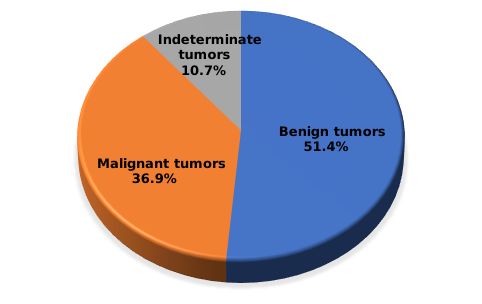
Figure 1 shows the distribution of ocular tumors according to their histological nature and it is apparent that, among the 103 biopsy samples analyzed, 39 (37.9%) corresponded to malignant tumors and 53 (51.4%) were benign.
In terms of anatomical location, retinal tumors predominated (34.8%) followed by conjunctival tumors (33.7%) and palpebral tumors (22.8%). Among benign tumors, conjunctival tumors accounted for 54.7%. In addition, retinal tumors accounted for 82% of all malignant tumors (Table 2).
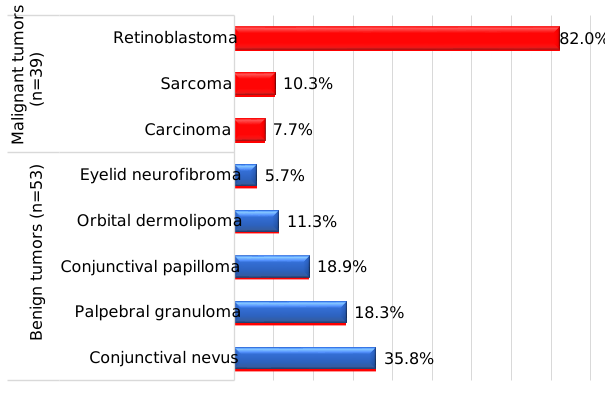
Of the total of 92 tumors, retinoblastoma was the most represented tumor (32/92 or 34.8%), followed by conjunctival nevus (19/92 or 22.8%) and palpebral granuloma (15/92 or 16.3%). Conjunctival nevus (35.8%) and palpebral granuloma (28.3%) were the most common histological types of benign tumors. Retinoblastoma (82%) was the most common type of malignant tumor (Figure 2).
Malignant tumors predominated in children (82.1%), while benign tumors were distributed in all age groups at proportions below 27% (Table 3).
4. Discussion
This study described the demographic characteristics of 103 patients with ocular tumors in Bukavu (in the DRC). Females predominated and accounted for 51.4% of patients with a female-to-male ratio of 1.1. Similarly, Levecq et al. [6], in a study carried out in Belgium, had found female predominance. Contrary to our results, several authors found male predominance without any explanation [2, 5]. This observed sex difference is due to the difference in sampling techniques used in these studies.
Children aged 0-15 were the majority, accounting for 39.8%. The same is true of results of earlier studies which found that ocular tumors are more common in subjects aged 0 to 15 years and that within the same age group, those under 10 years are more affected [11].
The present study had shown that in 84.5% of the cases, ocular tumors were unilateral and they were located on the retinal gland (34.8%), the conjunctiva (33.7%), the eyelid (22.8%), and the orbit (8.7%). Kasongo et al. [11], in their study conducted in Lubumbashi (in the DRC) mentioned the preponderance of unilateral tumors (86.5%) and the retina was the most affected anatomical site (41.9%) followed by conjunctiva (37.8%). The same is true in Antanonarivo (Madagascar) where Volamarina et al. [12], had shown that 93% of ocular tumors were unilateral and that palpebral localization was noted in 60% of cases. Annexal localization (conjunctival and palpebral) was reported in several studies [2, 4, 5, 13, 14]. Sylla et al. [15] showed a predominance of bilateral lesions.
Of the 103 biopsy specimens analyzed in our study, 53 (51.4%) were benign tumors, 39 (37.9%) were malignant tumors and 11 (10.7%) were indeterminate tumors. This predominance of benign tumors was also reported by Nkodo et al. [2] in Yaoundé (Cameroon) which had 61.1% benign tumors. This finding is contrary to that reported by several authors who recorded a predominance of malignant tumors between 49.5% and 62.2% [4, 5, 11, 15]. Discrepancies observed between our results and those in the literature could be explained not only by a biopsy recruitment bias; but also by the existence of a not insignificant proportion of indeterminate tumors (10.7%), a consequence of histological inaccuracies.
Conjunctival nevus (35.8%) and palpebral granuloma (28.3%) were the most common histological types of benign tumors in this study. The most common benign tumors appear to vary by author. Some authors had found a predominance of inflammatory pseudotumors [1, 2], for others it was pterygion [11, 16], hemangiomas [4], or conjunctival nevus [17]. These differences may be due to biopsy recruitment bias.
In our study, retinoblastoma (82%) was the most common histological type of malignancies. Many authors unanimously present retinoblastoma as the most common malignant tumor ranging from 30 to 85% [1, 2, 4, 5, 11, 16, 17].
In our series, malignant tumors predominated in children (82.1%). Our results emphasize that retinoblastoma is a tumor almost exclusively of the child (0-5 years) and extremely rare in adults and are consistent with those of the literature [18, 19, 20].
5. Conclusion
This study provided valuable information on ocular tumors in Bukavu. The most common locations were the retina, conjunctiva and eyelids. Benign tumors predominated (51.4%), followed by malignant tumors (37.9%), and indeterminate tumors (15.5%). Major histological forms found were retinoblastoma, conjunctival nevus, and palpebral granuloma. However, histological precision of indeterminate tumors would provide more detail. This is why histological analyzes should be made available for better management orientation, in order to reduce the risk of recurrence and related complications.
References
- Jouhaud F, Lefaou T, Vingtain P. Pathologie tumorale orbito-oculaire au Mali. Bulletin des sociétés d'ophtalmologie de France 1986; 86(3): 319-322.
- Nkodo JMM, Kagmeni G, Okono ACK, Epée E, Mvogo CE, Oyono JLE. Aspects Morpho-Épidémiologiques Des Tumeurs Oculo-Orbitaires Au Chu De Yaounde–Cameroun. Health Sciences and Disease, 2014; 15(1) : 1-6.
- Moussala M, Missipo NO, Keutchemou P. La pathologie oculaire dans l’ouest – Cameroun. Médecine d’Afrique Noire 1989; 36(11) : 857-860.
- Kaya GG, Makita B, Gombe Mbalawa C, et al. Profil histopathologique des tumeurs oculaires au CHU de Brazzaville dans médecine d’Afrique noire.2006 ; 5305 : 277-283.
- Kansaye A. Les tumeurs orbito-oculaires à l’I.O.T.A. Thèse de doctorat en Médecine, Université de Bamako, 2003.
- Leveck L, De Potter P, Guagnini A-P. Epidémiologie des lésions oculaires et orbitaires adressées à un centre d’oncologie oculaire. Journal français d'ophtalmologie 2005; 28: 840-844.[CrossRef]
- Traoré M. Etude épidémiologique et histopathologique des tumeurs de l’œil et de ses annexes: 63 cas. Thèse de doctorat en Médecine, Université de Bamako; 2010.
- Lasudry J. Prise en charge des tumeurs palpébrales: considérations générales. Journal français d'ophtalmologie 2011; 34(10): 741-754. Doi : 10.1016/j.jfo.2011.07.010[CrossRef] [PubMed]
- Desjardins L. Tumeurs oculaires et des annexes. EMC - Traité de Médecine Akos 2012; 7:1-9. Doi : 10.1016/S1634-6939(12)58928-3[CrossRef]
- Pisella PJ, Baudouin C, Hoang-Xuan T. Rapport 2015 - Surface oculaire. Société Française d’Ophtalmologie. Elservier-Masson : Paris ; 2015.
- Kasongo D, Abial SI, Luyingila GK, Ngoy VM, Borasisi CG. Les tumeurs oculaires: diagnostic et traitement aux Cliniques Universitaires de Lubumbashi, RDC. Journal de la Société Marocaine d’Ophtalmologie. 2021; 30(1): 22-26.
- Volamarina RF, Raobela L, Randrianarisoa HL, Rakotoarisoa RTR, Bernardin PL, Andriantsoa V. Aspects épidémio-clinique, anatomopathologique, thérapeutique des tumeurs palpébrales opérées au CHU Joseph Ravoahangy Andrianavolona. Médecine d'Afrique noire 2011; 58: 301-309.
- Berete CR, Desjardins L, Kouassi LJ, Coulibaly F, Kouakou KS, Gbe K, Fanny A. Relationship between human immunodeficiency virus (HIV-AIDS) and conjunctival squamous cell carcinoma: A clinical epidemiological study of 26 cases in the ophthalmology department of the university hospital of Treichville-Abidjan (Abidjan-Côte d'Ivoire). Journal Francais D'ophtalmologie, 2016; 39(5): 467-473.[CrossRef] [PubMed]
- Bra’ Eyatcha Bimingo, Dohvona VA, Njoya Mare J, Bella AL, Ebana Mvogo. Clinical and therapeutic aspects of the eyes and adnexa oculi tumors in the North of Cameroon: a report of 70 cases. Health Sciences & Disease. 2022; 23 (2 Suppl 1): 73-76.
- Sylla F, Kamaté B, Traoré CB, Traoré M, Diallo D, Malle B, Sissoko SB, Théra JP, Traoré J. Etude épidémiologique et histopathologique des tumeurs de l’œil et de ses annexes : à propos de 63 cas. Revue SOAO 2016; 1: 45-50.
- Akpe B A, Afekhide E O, Efearue T. Histopathology of Ocular Tumor Specimens in Benin City, Nigeria. Journal of Ophthalmic and Vision research 2009; 4(4): 232-237.
- Bella AL, Evina TA, Eballe AO. Les tumeurs oculaires primitives de l’enfant: aspects épidémiologiques et histopathologiques à l'hôpital gynéco-obstétrique et pédiatrique de Yaoundé. Cahiers d'études et de recherches francophones / Santé 2010; 20(3):139-141.[CrossRef] [PubMed]
- Aloni MN, Kazadi AL, Kadima BT, Ekulu PM, Ngiyulu RM, Gini JLEK. Rétinoblastome à Kinshasa, République démocratique du Congo: 20 ans d’expérience. Revue d’Épidémiologie et de Santé Publique 2012; 60: S104.[CrossRef]
- Lukamba RM, Yao JA, Kabesha TA, Budiongo AN, Monga BB, Mwembo AT, Bey P, Chenge GB, Desjardins L, Luboya ON, Doz F, Stefan CD. Retinoblastoma in Sub-Saharan Africa: Case Studies of the Republic of Côte d'Ivoire and the Democratic Republic of the Congo. J Glob Oncol. 2018; 4:1-8.[CrossRef] [PubMed]
- Diatewa BM, Maneh N, Domingo AS, et al. [Retinoblastoma at the Campus-University Teaching Hospital in Lomé, Togo, from 2014 to 2018]. Journal Francais D'ophtalmologie. 2022 Jun: S0181-5512(21)00592-1.