

PLCs, or programmable logic controllers, are essential parts of contemporary industrial automation systems and are responsible for managing and keeping an eye on a variety of operations. PLC reliability is critical to maintaining industrial systems' continuous and secure operation. A wide range of reliability strategies were used to improve the reliability of Programmable Logic Controllers, and this article methodically looks at them all. The evaluation classified PLC reliability techniques into Root Cause Analysis (RCA), Reliability Centered Maintenance (RCM), Hazard analysis (HA), Reliability block diagram (RBD), Fault tree analysis (FTA), Physics of failure (PoF) and FMEA/FMECA, after thoroughly reviewing the body of literature. The proportion of reviewed papers using either RCA, RCM, FMEA/FMECA, FTA, RBD, RCM, PoF, or Hazard analysis to increase the reliability of PLCs showed that RCA, which makes up 20% of the publications reviewed, has been used the most to increase the reliability of the PLC, followed by HA, RCM, RBD, FTA, and PoF, which account for 17%, 16%, 16%,13%, 10%, and 8% of the articles reviewed, respectively. The paper discusses new developments and trends in PLC reliability, such as the application of machine learning (ML) and artificial intelligence (AI) to fault detection and predictive maintenance.
A review of reliability techniques for the evaluation of Programmable logic controller
March 30, 2024
May 10, 2024
May 12, 2024
May 14, 2024
This is an Open Access article, distributed under the terms of the Creative Commons Attribution 4.0 International License (http://creativecommons.org/licenses/by/4.0/), which permits unrestricted use, distribution and reproduction in any medium or format, provided the original work is properly cited.
Abstract
1. Introduction
The foundation of contemporary industrial automation systems is programmable logic controllers, or PLCs, which orchestrate intricate processes and guarantee the smooth operation of a wide range of manufacturing and control applications. PLC reliability is critical as companies depend more and more on automation for accuracy and efficiency. The robustness, efficiency, and profitability of industrial processes are directly impacted by these controllers' capacity to tolerate failures and disturbances.
With a focus on the various issues that arise in the deployment of PLCs, this paper attempts to thoroughly examine the landscape of reliability strategies used with PLCs. PLCs are vulnerable to a variety of threats due to the increasing need in industrial systems for increased functionality and connectivity. Software bugs, hardware malfunctions, and communication problems can all have serious repercussions, from compromising safety procedures to causing production to stop.
This paper aims to give a thorough analysis of the different reliability tactics and methodologies that have been created to strengthen PLCs against possible malfunctions. Through a comprehensive review of the literature, we hope to provide a unified knowledge of the cutting-edge methods used to improve the reliability of these controllers.
2. Techniques in Reliability
The term "reliability technique" refers to the various instruments used to evaluate the reliability of a system, component, or device. The methods used to assess the reliability of engineering systems include the ones listed below:
2.1. Root Cause Analysis (RCA)
Root cause analysis (RCA) is the primary technique maintenance and reliability engineering specialists employ to tackle issues that affect an organization's capacity to achieve strategic goals. Managers, engineers, supervisors, operators, and technicians use RCA as a methodical process to get rid of persistent issues that have an impact on a company. Not simply for equipment breakdowns, RCA is the ideal method for resolving several issues (Reliability, 2021) [1]. With the advent of the Toyota production system and the lean manufacturing methodology, root cause analysis has gained popularity as a problem-solving technique.
With the active assistance of the Petroleum Safety Authority, Vinnem et al. (2010) [2] presented a study conducted as part of ongoing research aiming at identifying significant risk-influencing elements for major hazard risk in the Norwegian petroleum business. Marquez et al. (2010) [3] demonstrated how time-to-failure distributions may be modelled and reliability analysis of complicated systems can be carried out in a straightforward, unified manner using new Bayesian network (BN) methods. Mello et al. (2010) [4] provided an example of a qualification failure. A method for enhancing the identification of the root cause of electrical component failures through the application of a system-related failure anamnesis approach was presented by Jacob (2015) [5]. Reliability provisioning is pursued by Alirezaeyan et al. (2015) [6], using the first replication strategy (i.e., concurrent transmission).
A technique for evaluating the reliability of systems when failure events can be explained by time-variant parallel and/or series systems was introduced by Savage & Kap Son (2011) [7]. Yao et al. (2011) [8] introduced a self-consistent approach that takes the influence of skin effect into account when designing a two-level Cu interconnect structure for high-frequency dependability. A succinct analysis of the failure modes and mechanisms of electronic assemblies under various loading scenarios was conducted by Mattila & Paulasto-Kröckel (2011) [9]. Larcher & Padovani (2010) [10] went into great detail about the technological alternatives that were suggested to get over the scaling limits of Flash memory devices. These proposals included the addition of a charge-trapping layer and high-κ materials in both the bottom and top dielectric stacks.
Tiwari & Roy (2013) [11] used the Cox proportional hazard model to assess the failure rate and its causes. Chan et al. (2013) [12] used a semiconductor device with fault latency to verify the efficacy of the Environmental Stress Screening (ESS) approach. Roesch (2012) [13] examined the relationship between conventional quality indicators and early life failures that are not detectable or predictable by the customarily smaller sample sizes used in life testing. To assist in efficiently allocating resources, Chang et al. (2012) [14] provided an extensive overview of industry and scholarly research on the dependability and failure mechanisms of light-emitting diode (LED) technologies to LED inventors and end-product makers. The programming procedures, failure mechanisms, and anti-fuse structures of anti-fuse Field Programmable Gate Arrays (FPGAs) were covered by Patil et al. (2013) [15].
The core reason for a high resistance issue caused by changes in the fabrication process and mismatched design criteria was examined by Naoe et al. (2012) [16]. The objective of Chen et al. (2013) [17] was to evaluate the growing reaction of the Ni3Sn4 intermetallic compound (IMC) during the bonding process and its dependence on the Cu/Ni/SnAg micro-joints' thermal-cycling reliability under accelerated thermal cycling (ATC) loading in an advanced 3D chip stacking package. To determine why the defects occurred at such a later stage of development, Silva et al. (2017) [18] presented a root cause analysis of 1070 defects discovered in four space software projects during Independent Software Verification and Validation (ISVV). They did this by using an improved Orthogonal Defect Classification (ODC) taxonomy and looking at the defect types, triggers, and impacts.
Transient thermal testing was used and improved upon by Elger et al. (2016) [19] to track the LED modules' structural integrity during accelerated stress testing. Based on plant experiences, Kim et al. (2017) [20] presented a workable framework to statistically quantify the levels of socio-psychological PSFs using data on human error. Thermal impedance analysis was employed by Magnien et al. (2017) [21] to track solder joint fatigue during an applied supply switching test (SST). A better definition of a prime implicant was created by Tyrväinen (2016) [22] to meet the requirements of dynamic reliability analysis.
Analogue circuit simulation was used by Boostandoost et al. (2017) [23] to support the PFI (Physical Fault Isolation) to shed light on the failure processes and the device's operation when it was malfunctioning. An improved Weibull-Corrosion Covariate model was presented by Okaro & Tao (2016) [24] to assess the reliability of a system under operational stress. The thermo-mechanical stress that axial lead fuses, which are utilized in power electronics, undergo was examined by Bahman et al. (2017) [25]. To supplement the current approaches, Mohammadnazar et al. (2019) [26] introduced a proactive, qualitative approach that is independent of fault data.
A novel approach to reliability analysis of coherent systems susceptible to random external shocks and internal breakdowns was presented by Huang et al. (2019) [27]. The excellent reliability of the power semiconductor was demonstrated in Stiasny et al. (2018) [28] summary of test results from accelerated testing, quality monitoring results over many years, reliability data from evaluated field failure rates, and analysis of devices that were in service for 15 years under well-known load. Low et al. (2018) [29] focused on reliability problems resulting from IC design flaws. They presented a case study of a 28 nm input/output (I/O) circuit reliability failure and demonstrated a full workflow, beginning with failure analysis (FA) and Final Test (FT) to identify the root cause of the problem and concluding with design retrofit to fix it.
The Markov/CCMT search engine platform framework for dynamic system reliability modelling and analysis was introduced by Yang et al. (2019) [30]. To measure the risk and performance of big, complex systems with dynamic behaviours, Penttinen et al. (2019) [31] created an Open Modelling approach for the Availability and Reliability of Systems (OpenMARS). Peng et al. (2018) [32], presented a novel model for recurrent data of repairable systems with misuse-induced failures and normal-operation failures, based on a non-homogeneous Poisson process (NHPP) and a trend renewal process.
The implementation of the factor framework supporting the quantification module of the Commission Error Search and Assessment (CESA-Q) technique was given by Podofillini et al. (2021) [33]. Ding et al. (2021) [34] presented a novel method based on fault tree analysis (FTA), fuzzy Bayesian network (FBN), and failure mode and effect analysis (FMEA) for the reliability assessment of the residual heat removal system (RHRS) for the Hualong Pressurized Reactor 1000 (HPR1000). 345 passenger car recalls that were submitted to the National Highway Traffic Safety Administration were examined by Chi et al. (2020) [35].
The extended Phoenix approach was employed by Chen et al. (2021) [36] for qualitative analysis. To determine the primary cause, Sun et al. (2021) [37] examined the failure mechanism. A thorough investigation using the evidentiary network was conducted by Mi et al. (2022) [38] for the reliability analysis of complex systems with mixed uncertainty and common cause failures. In Xu et al. (2022) [39], metallographic observation, cupping tests, and tensile testing were used to assess the quality and dependability of the flash butt welding (FBW) junction of a 50JW800 silicon steel strip.
Zhang et al. (2022) [40] describe how an underground gas storage firm employed a bimetallic composite pipe that failed as a gas transmission conduit. A load-sharing man-machine system with multiple man-machine units (MMUs) that is vulnerable to random shocks, human error, and machine degradation was examined by Che et al. (2022) [41]. A unique approach to handling missing data was presented by Morais et al. (2022) [42] and involved the use of intervals that included the lowest and highest potential probability values. A broad hierarchical ensemble-learning framework (ELF) with three phases and two-layer models was presented by Zhou et al. (2022) [43] for reliability analysis.
To enable a methodical examination of the satellite communication system's dependability, Chen et al. (2023) [44] first modelled it using a Markov Bayesian Network in combination with a non-working reserve system. In a complicated procedure involving ongoing learning, Arias Velásquez (2020) [45] presented a unique paradigm for autonomous root-cause defect investigation. A data-refined, physics-guided architecture for fault root cause tracing (FRCT) was proposed by Xu et al., (2023) [46]. Arias Velásquez & Mejía Lara (2020) [47] suggested a clever neural network classifier for transformer defects that was tweaked using an intelligent genetic algorithm.
It helps manufacturing businesses with their ongoing efforts to reduce production costs, productivity, quality, and maintenance (Bhamu & Sangwan, 2014) [48]. There has been some research on the use of RCA in reliability analysis, such as the presentation by Ito et al. (2022) [49] of the obstacles and facilitators found in recent research relating to the various phases of root cause analysis. RCA prioritization of production disturbances was studied by Soares et al. (2022) [50]. The writers used a series of interviews to research the current state of manufacturing companies.
In addition, a series of seminars involving experts in the field, including practitioners and academics, identified the stakeholders and factors affected by production interruptions. Reid & Smyth-Renshaw (2012) [51] looked into the mechanics of root cause analysis (RCA) and the viability of the "5W + 1H" (what, why, when, where, who, how) technique, which is employed by many managers to comprehend a problem and identify its fundamental cause. Because of the differences brought on by asking "why," the 5W + 1H methodology is insufficient for determining the core cause. Although catastrophic failures were frequently the result of misinterpreting the "why" question, the study shows that some exceptional RCA was achieved by changing the approach of the 5W+1H methodology.
As a result, the article identifies a new domain that may be included in projects that follow the conventional RCA and Six Sigma methodologies. Abdelrahman & Keikhosrokiani (2020) [52] studied historical data for two assembly line machines to detect anomalies and their root causes; future work can focus on predicting when these anomalies will occur rather than just focusing on when they occurred, which could lead to faster and more effective decision-making. Singh & Jagannath (2016) [53] demonstrate how to use Root Cause Analysis to reduce product defects within a Gloves Manufacturing Unit.
Mousavinia et al. (2020) [54] investigated the cause of a severe failure in bolts in an oil and gas production plant's low-pressure (LP) section of a gas turbine. Bolt failure was reported alongside massive failures of turbine blades in the second stage of the turbine's hot section. To demonstrate the advantages of this methodology for improving engineering design and plant operation reliability, Nascimento et al. (2013) [55] used two actual accidental situations from a multinational air separation company. They used a systematic and organized RCA methodology. To forecast unpredictable behaviour, Mohammadnazar et al. (2019) [26] suggested a strategy that depends on finding inconsistencies between development practices and development circumstances.
To enhance the effectiveness of root cause analysis, Ma et al. (2021) [56] created a big data-driven root cause analysis system. To determine the root reasons for failure and suggest workable alternatives, Viveros et al. (2014) [57] suggested a novel fusion of RCA with the notion of imaginative problem-solving. For enterprises to successfully perform RCA in a networked and data-intensive Quality 4.0 environment, Barsalou (2023) [58] compiled information about Quality 4.0 and guided on what upgrades to implement. Using a strategy for a literature review, Papageorgiou et al. (2022) [59] reported the most recent developments in Root Cause Analysis (RCA) for Zero-Defect Manufacturing (ZDM).
2.2. Reliability Centered Maintenance (RCM)
Reliability Centered Maintenance (RCM) is a broad strategy for managing complex systems' maintenance and reliability requirements (Deepak & Jagathy, 2015) [60]. With the main objective of guaranteeing that the equipment is capable of running as necessary and generating the anticipated outcome, the reliability-centred maintenance methodology is a very effective and useful methodology for carrying out plans of preventive and predictive maintenance chores (Sifonte & Reyes-Picknell, 2017) [61].
The two most common types of maintenance are corrective and preventive. Corrective maintenance is any maintenance performed after a system has failed. Preventive maintenance is performed while the system is in operation, with the primary goal of avoiding unexpected failures (Luo et al., 2015) [62]. Its purpose is to reduce the likelihood of failure or to improve equipment performance. Preventive maintenance is also classified as predictive, Total Productive Maintenance (TPM), or Reliability-Centered Maintenance (RCM) (Niu et al., 2010) [63].
A unique condition-based maintenance system was introduced by Niu et al. (2010) [63]. It optimizes maintenance costs through the use of reliability-centred maintenance mechanisms and uses a data fusion technique to improve prognostics, health assessment, and condition monitoring. A modelling methodology based on reliability analysis was presented by Macchi et al. (2012) [64] to aid the maintenance management of railway facilities. A comparison analysis is presented by Das Chagas Moura et al. (2011) [65] to assess the efficacy of the Support Vector Machine (SVM) in predicting the reliability and time-to-failure of manufactured components using time series data.
The fatigue reliability of a fixed jacket offshore wind turbine at a sea depth of 70 meters, intended for a northern North Sea location, is examined by Dong et al. (2012) [66]. Using monitored strain data from crawl tests, Okasha et al. (2012) [67] devised and demonstrated a method for upgrading the lifetime reliability of ageing bridges. Without the need for simulations, Guan et al. (2012) [68] introduced an effective analytical Bayesian strategy for upgrading system response and dependability. A probabilistic computational framework for the Pareto optimization of preventative maintenance applications to bridges in a highway transportation network was described by Bocchini & Frangopol (2011) [69].
Martorell et al. (2010) [70] introduced an expansion of RAM+C models that incorporates the impact of both people and material resources. A reliability-centered predictive maintenance plan was presented by Jiang et al. (2015) [71] for an Inertial Navigation System (INS) with multiple redundant components and a complex structure. Rhayma et al. (2013) [72] introduced a novel approach to examining the behaviour of railroad tracks. A reliability study based on a general data-driven framework was proposed by Lin et al. (2015) [73] to demonstrate how degradation data can be modelled and analyzed to flexibly determine reliability during the formulation of preventive maintenance strategies. The study used both classical and Bayesian semi-parametric degradation approaches.
For the life-cycle maintenance of structural systems, Barone & Frangopol (2014) [74] examined probabilistic techniques based on the yearly reliability index, annual risk, and lifetime distributions. Song et al. (2014) [75] investigated the reliability of multi-component systems with different shock sets that are susceptible to dependent competing risks of wear degradation and random shocks. Reliability analysis and vulnerability analysis are two methods for gathering information needed to comprehend and enhance essential infrastructures, and Johansson et al. (2013) [76] compared and contrasted them. A Bayesian model updating method (BMUA) was introduced by Peng et al. (2013) [77] for the life cycle dependability assessment of innovative products.
Chamseddine et al. (2014) [78] tackled the issue of optimal dependability in systems with excessive actuators. With reference to several classes of distribution system assets, Dashti & Yousefi (2013) [79] concentrated on asset management in electrical distribution systems. To guarantee prompt operation and maintenance (O&M) services, Si et al. (2022) [80] proposed an agile maintenance framework in which technician assignment and maintenance schedules were coordinated. Si et al. (2022) [80] creatively presented a workable and efficient method for real-time precision reliability prediction of the worm drive system backed by digital twin. To evaluate the dependability of a multi-parameter monitoring system for Intensive Care Units (ICUs), de Araujo et al. (2022) [81] created a modular and parametric model.
A strategy based on Bayesian networks (BNs) was put forth by Fan et al. (2022) [82] to maximize the gas supply reliability in networks of natural gas pipelines. For time-dependent reliability analysis, Mathpati et al. (2023) [83] presented a novel model-agnostic data-driven reliability analysis paradigm. By utilizing the ideas of the well-known multifactorial evolutionary algorithm, Chowdury et al. (2023) [84] utilized the ideas of the well-known multifactorial evolutionary algorithm (MFEA) to present a novel method for evolutionary multi-task optimization in the reliability redundancy allocation problem. Li et al.'s (2023) [85] evaluation of the high-speed rail (HSR) ballastless track structure's service dependability took into account the influence of the irregularities' wavelength distribution characteristics.
The suitability of the Reliability Centered Maintenance (RCM) approach for evaluating reliability concerns and maintenance requirements for unmanned cargo ships was investigated by Eriksen et al. (2021) [86]. Bressi et al. (2021) [87] presented an approach designed to assist in the development of the best preventive maintenance plans that may preserve a railroad track bed's acceptable quality level while lowering the life cycle maintenance expenditures' current value. A modeling and simulation methodology was proposed by Li et al. (2021) [88] to assess a cloud data center's service reliability from the three perspectives of connectivity, performance, and service.
Ma et al. (2020) [89] looked into the methodologies for maintenance optimization and reliability analysis of a two-unit warm standby cooling system. A human reliability analysis method tailored for railway applications was suggested by Catelani et al. (2021) [90] to create a time-dependent model of the chance of human mistake during a work shift. Chen, et al. (2021) [91] developed a performance margin-based reliability study for an airplane lock mechanism that takes wear and multi-source uncertainties into account, based on the principles of reliability science. A novel reliability model for systems with clusters of dependent component degradation paths was presented by Yousefi et al. (2020) [92], and the gamma process was selected for the stochastic degradation modelling.
A framework for analyzing product reliability using data from online consumer evaluations was presented by Pan et al. (2020) [93]. Colombo et al. (2020) [94] used machine learning techniques to address the downhole safety valve reliability estimation challenge. A two-stage shock model with a self-healing mechanism was presented by Zhao et al. (2018) [95] as an expansion of the cumulative shock and delta-shock models. The SMP (Semi-Markov Process) was used by Li et al. (2018) [96] to address the issue that non-exponential distributions govern the lifetime of the components in dynamic systems. An innovative approach for integrated maintenance decision-making based on operational conditions data, theoretical reliability estimation, and condition monitoring data of belt conveyor systems was presented by Liu et al. (2019) [97].
A triple-level network opportunistic maintenance (NOM) approach for multi-location production lines was presented by Si et al. (2019) [98]. The goal of RCM is to develop a maintenance strategy that reduces total operating costs while increasing system reliability (David et al., 2017) [99]. Diego et al. (2016) [100] developed a multi-objective genetic algorithm-based approach for reliability-centred maintenance programs in electric power distribution systems. Ahmad (2017) [101] investigated a framework for the application of reliability-centred maintenance in the lead oxide production system. Tamer et al. (2016) [102] presented the implementation of failure mode and effect criticality analysis (FMECA) and fishbone techniques in reliability-centred maintenance planning.
Fuentes-Huerta et al. (2021) [103] assessed the reliability of the RCM methodology using a combination of Fuzzy Numbers and the Maximum Entropy Method. Using failure modes and effect analysis (FMEA) as a tool, Okwuobi et al. (2018) [104] provide information on the steps and procedures to identify critical components of the Individual Section-forming Machine (ISM) using the reliability data of the equipment's functional components to develop an ideal and effective maintenance program. The traditional and simplified RCM models were used to create a recommended model that will be effective and efficient, focusing on the system's primary operations to prevent or eliminate unnecessary maintenance actions and find beneficial maintenance chores (Afefy et al., 2019) [105].
2.3. Physics of failure (PoF)
The physics of failure is a reliability design technique that uses knowledge and comprehension of the mechanisms and processes that cause failure to forecast reliability and enhance product performance. The life of a product under its intended use conditions is estimated using the physics-of-failure (PoF) approach to reliability, which makes use of an understanding of the mechanisms and processes that cause product degradation (Hendricks et al., 2015) [106]. To increase system reliability, researchers have proposed various PoF techniques. For example, Temsamani et al. (2017) [107] proposed a methodology that will enhance reliability estimation and enable a gradual transition from a prediction handbook-based approach to a PoF-based reliability assessment.
Kostandyan & Sørensen (2012) [108] developed the physics of failure approach for electrical components owing to temperature loading. To forecast the reliability life of electronic devices, Jiao et al. (2019) [109] created a simulation scheme that combines heat analysis, vibration analysis, and reliability simulation. Using this scheme, they then analyzed a control circuit board in an Inertial Navigation System (INS). To evaluate complicated electronic systems, Sun et al. (2021) [110] presented a novel method that combines the copula Bayesian network and the physics of failure (PoF) method. An overview of the planning and implementation of power converter reliability testing, together with a look at in-field health management, was provided by Martino et al. (2023) [111].
A methodology for estimating the dependability of offshore wind turbine blades with high availability and cost-effectiveness was presented by Zhang et al. (2023) [112] by integrating the direct probability integral method (DPIM) with transfer learning (TL). Based on the Physics-of-Failure (PoF) theory, Mulenga et al. (2022) [113] presented a methodology for forecasting the emergence of a fracture in corroded structures. Gu et al. (2023) [114] introduced a new framework for creep-fatigue reliability assessment of high-temperature components, in which the engineering damage mechanics technique is used to integrate the physics of failure and monitoring data into the natural degradation process.
Jiang et al. (2021) [115] developed the subset active subspace method (SASM), a unique supervised dimension-reduction strategy, for estimating the high-dimensional reliability problem with an exceptional failure event. Based on uncertainty theory, Chen et al. (2021) [91] investigated the epistemic uncertainties in the reliability assessment of the system with trigger effect. Mi et al. (2020) [116] introduced a methodical approach to reliability assessment that utilizes the notion of survival signature to evaluate the dependability of intricate systems that consist of several component kinds. A thermal modeling-driven method for characterizing the effects of hot solder dipping on electronic components is described in detail by Stoyanov et al. (2013) [117].
For qualification and lifetime evaluation of electronic devices, such as super capacitors, Temsamani et al. (2018) [118] used the Physics-of-Failure (PoF) methodology. Using experiments and Finite Element (FE) simulations, Yongle et al. (2020) [119] examined the physics of die-attach joint failure in Insulated Gate Bipolar Transistors (IGBTs) based on the evolution of micro-defects in materials under accelerated ageing. Fu et al. (2018) [120] suggested a method based on PoF models to forecast the lifespan of a System-in-Package (SiP). The power module, DC-link capacitors, and control circuitry are the three main subsystems that are the focus of Squiller et al. (2014)’s [121] PoF-based system-level reliability assessment process.
The authors presented examples of ways to increase subsystem reliability based on the evaluation approach, and they also described the primary failure types and processes for each subsystem. Chookah et al. (2011) [122] used a mechanistic superposition model as a benchmark to develop a simple empirical PoF model to describe the degradation of X-70 carbon steel structures as a function of physical parameters. Zhu et al. (2016) [123] developed a probabilistic Physics of Failure-based framework, for fatigue life prediction of aircraft gas turbine discs operating under uncertainty. Using piezoelectric cells, Kamara et al. (2010) [125] examined problems related to the design of a small vibration test apparatus. An integrated application of many numerical analytical techniques and related analysis tools for damage prediction and design optimization in electronics packages and microsystems was reported by Xue et al. (2011) [125].
The framework takes into account the overall uncertainties that arise during a structural integrity assessment. Shao et al. (2014) [126] discussed the design and analysis method of physics-of-failure-based reliability and introduced the development of physics-of-failure-based reliability technology from the demands of equipment development. Sakurahara et al. (2019) [127] initiated a research line that combines renewal process modelling with probabilistic models of underlying mechanisms associated with physical degradation and maintenance. The author's methodology combined Markov modelling with Probabilistic Physics-of-Failure (PPoF) degradation models, while maintenance was handled using a data-driven approach.
2.4. Fault Tree Analysis (FTA)
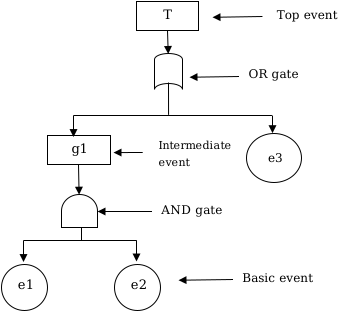
Fault Tree analysis converts a physical system into a logical diagram, making it one of the industry's most popular methods for calculating reliability and safety. It can also change the configuration of a system to make it less vulnerable and sensitive (Ruijters & Stoelinga, 2015) [128]. Fault trees can also evaluate the impact of proposed design changes or corrective actions (Yong & Ba, 2010) [129]. The top-down deductive analysis is used to determine the causes of an event. A fault tree analysis is made up of "events" and "logic gates," which connect the events to determine the cause of the top unwanted event. The completed fault tree is evaluated in light of the analysis goals.
Zixian et al. (2011) [130] evaluated time-independent and dependent components jointly by combining a fault tree with Markov models. Abdul Rahman et al. (2013) [131] created a new technique that uses customer-weighted values of component failure frequencies and downtimes to forecast the customer reliability of a distribution power system using the fault tree approach. In addition to developing numerous new measures for fault diagnostics, system failure intensity, system failure count, and configuration control, Vaurio (2010) [132] demonstrated an effective order for computing important measures.
A new technique for analyzing large coherent fault trees was described by Contini & Matuzas (2011) [133]. This technique can be used to an advantage when working memory is insufficient for creating Binary Decision Diagrams (BDD). The application of a Bayesian network (BN) in accident occurrence probability estimate and updating in light of new information was demonstrated by Khakzad et al. (2011) [134]. Chiacchio et al. (2013) [135] presented a composition algorithm that addressed the generalization of the hierarchical technique for the reliability evaluation of dynamic fault trees. The formalism known as generalized FT (GFT) was developed by Codetta-Raiteri (2011) [136] by integrating the primitives from three pertinent Fault Tree (FT) extensions: parametric, dynamic, and repairable FT.
The General Dependency Model (GDM), which models the probabilistic dependencies between components using a Bayesian network, was proposed by O’Connor & Mosleh (2016) [137]. Son et al. (2016) [138] offered a methodical way to assess the dependability of intricate fault-tolerant systems by streamlining the Markov model using system failure rate and system unavailability rate. Zhai et al. (2018) [139] proposed a novel combinatorial approach that enables the efficient reliability analysis of large-scale redundant Phased-mission systems (PMSs) with dynamic demand requirements. This approach involves the construction of a unified aggregated binary decision diagram (ABDD) model that takes into account all mission phases.
To improve wearer comfort and safety, Yu et al. (2018) [140] introduced a sequential time-dependent reliability analysis method that takes into account the temporal sequence and correlation of failure processes for the lower extremity exoskeleton under uncertainty. According to Chen et al. (2018) [141], failure mechanisms (FMs) can be categorized into three types: combination load-triggered (C-type), operational load-triggered (O-type), and environmental load-triggered (E-type) FMs. Sahu & Palei (2022) [142] used generated sensor data and 28-month logbook records to provide a data-driven method for fault analysis of drag systems utilizing an inference-based Bayesian network (BN). An effective combinatorial approach is presented by Wang et al. (2022) [143] for the reliability study of smart home sensor systems (SHSSs) that are susceptible to competition between the propagated sensor failures and the local gateway failure.
The evaluation is divided into several stages: listing minimum cut sets, grading minimum cut sets, calculating probabilities, and so on. FTA is very useful when there is quantitative data on the likelihood of events, but qualitative analysis is also possible (Ruijters & Stoelinga, 2015) [128]. Other risk analysis approaches are less effective than fault trees at detecting flaws. Its visual representation of failure causes makes identifying a single failure that leads to a complete system failure simple. A fault tree is frequently normalized to a given interval, and the probability of an event is determined by the relationship between the event risk function and this interval. The reliability is computed using a gate sequence that takes into account the probabilities of the outputs of a set of Boolean logic operations.
It can also be used to evaluate the effects of recommended remedial actions or design improvements (Yong & Ba, 2010) [129]. Monte Carlo simulation and deterministic algorithms are two important techniques for establishing minimal cut sets for fault trees. Figure 1 illustrates a fundamental fault tree topology. The literature claims that FTA is utilized in the HEMM fault analysis. In the previous five years, several studies utilizing SFT and DFT have been published. From the prior work, it can be shown that FTA is used to make decisions on optimal maintenance intervals, qualitative and quantitative fault analysis, and equipment dependability assessments using both descriptive and numerical data mixed with Boolean algebra (Ali et al., 2014) [144].
FTA was useful in determining Risk Priority Number (RPN), equipment value, and influence on value. It also helped to discover fundamental failure-causing events and construct mathematical models by logically linking the events. To comprehend the consequences of each component or subsystem of a dragline on its reliability and to get insight into an efficient maintenance plan, Tuncay & Demirel (2017) [145] performed a fault tree analysis. The probability distribution that most accurately characterized the data for each dragline subsystem was found. The effect of each component's reliability on a dragline was then determined by combining the acquired distributions with a fault tree for describing the system.
Most failures are anticipated to be caused by dragging rope within a year, although the motors and generators will have the longest downtime. Probability values were also helpful in determining which components require attention and when. Patil et al. (2019) [147] employed fault tree analysis to identify CNC turning centre faults. The failure tree (FT) diagram and the machine's governing reliability model were both evaluated using Boolean algebra. To pinpoint the essential parts and subsystems of a CNC turning centre, qualitative and quantitative analysis is used.
The findings include an evaluation of the CNC machine's dependability after one year of the warranty period and a count of failures during this time. The failures connected to the mine cage conveyance were examined by Iyomi (2021) [148] using fault tree analysis, which also demonstrated the various failure-causing events' potential branches and the order of criticality for the various connected components. The effectiveness of the mine cage conveyance as a system was affected by failures related to one or more components, so efforts were made to manage the essential components identified in this study by assessing the current maintenance plans and creating more effective techniques.
Based on the impact on production, impact on value, availability standby, and equipment value, Relkar (2021) [149] developed a methodology to identify the company's critical machine. This machine was then thoroughly analyzed using failure mode and effect analysis and fault tree analysis to determine its risk priority number (RPN). The severity rating, chance of occurrence, and probability of detection combine to form the Risk Priority Number (RPN) (Li et al., 2021) [150]. Twenty-seven (27) fundamental events lead to hydraulic failure in the hydraulic system, with oil pollution being the most important basic event, according to a case study that employed a fault tree for a hydraulic system on a heavy-duty machine.
If uncertainties are not resolved, there is a potential that inaccurate results may be obtained since the accuracy of the numerical data utilized in the analysis completely determines the conclusion of quantitative analysis. As a result, many approaches mostly based on fuzzy numbers were suggested to deal with the problem of ambiguous failure data in FTA. Only static systems can have their dependability evaluated using Standard Fault Trees (SFTs). Many dynamic failure characteristics, including functional dependent events and failure event priority, result from a system's dynamic nature.
SFTs are frequently used for dependability analysis, although they cannot capture dynamic data. Dynamic fault trees (DFTs), state event faults, and stochastic hybrid fault trees are a few ways that SFTs have been extended to help with dynamic dependability analysis. The DFT covers sequence-dependent behaviour, component behaviour that is dependent on function, and event priority, making it one of the most often used dynamic extensions of the SFT (Kabir, 2017; Jiang et al., 2021) [151, 152]. Jiang et al. (2021) [152] suggested a technique for configuring a road header's dynamic fault tree.
The fault tree was divided into dynamic and static states using the modular technique; the static state was examined using a binary decision tree, and the dynamic module was evaluated using the logical relationships between faults. For an electric haulage shearer, Wang et al. (2012) [153] created a dynamic fault tree employing a binary decision tree and the Markov method in a modular way. According to the analysis, the shearer's defects were primarily caused by improperly installed first shaft bearings, a cage of the first shaft bearing, damaged cutting motors, and poor-quality lubricating oil (Ruijters & Stoelinga, 2015) [128]. Although numerous fault tree extensions have been suggested, each one has several drawbacks.
Many investigations require a sizable amount of manual labour, even when technological tool assistance is available. To make dependability analysis simpler, academics have concentrated on approaches to automate the synthesis of dependability information from system models. Hence, the discipline of "Model-Based Dependability Analysis" (MBDA) has developed (Ruijters & Stoelinga, 2015) [128]. Several methods and tools for automating the creation of dependability analysis, including fault trees, have been created as part of MBDA. The analyses in MBDA can be iterated because they are based on formal models, which helps to produce additional results and new results if the system architecture changes.
This process is quicker and less expensive than manual methods, and because it is more structured, there is less likelihood of providing inaccurate or incomplete results during the study. Moreover, the MBDA approaches provide a higher level of reusability by allowing portions of an existing system model or libraries of previously examined components to be reused (Ruijters & Stoelinga 2015; Yong & Ba 2010) [128, 129]. The Irrelevance Coverage Model (ICM) was expanded by Zhou et al. (2022) [154] to Dynamic Fault Trees (DFTs) with Priority-AND (PAND) gates.
Ding et al. (2021) [34] developed a novel method based on Failure Mode and Effect Analysis (FMEA), Fault Tree Analysis (FTA), and Fuzzy Bayesian Network (BN) (FBN) approaches for the reliability assessment of the Residual Heat Removal System (RHRS) for Hualong Pressurized Reactor 1000 (HPR1000). The design-phase safety analysis of vehicle guidance systems is taken into account by Ghadhab et al. (2019) [155]. An approach for modelling the uncertainty propagation in fault trees was presented by Yılmaz et al. (2023) [156]. Bhattacharyya & Cheliyan (2019) [157] offered a technique for improving the cost and dependability of a system represented by a fault tree.
2.5. Hazard analysis
It is common practice to accomplish system safety by methodically examining dangers through the process of "hazard analysis," which is a strategy for detecting potentially dangerous system components (Jung et al., 2020) [158]. The reliability of the system has been the subject of a variety of research projects on hazard analysis, such as the creation of a new Proportional Hazard (PH) model with the degradation trend and environmental component as covariates, which was suggested by Zheng et al. (2021) [159]. The degradation trend was initially represented using the Wiener process, after which the temperature and degradation trend were utilized as covariates to create the PH model, and finally, a closed form of dependability was established using the Taylor approximation.
A reliability-based study for determining essential tool life in machining processes was provided by Patiño & Gilberto (2010) [160]. Al-Dabbagh & Lu (2010) [161] provided an example of how the Dynamic Flowgraph Methodology (DFM) is used to describe Networked Control Systems (NCSs). A multi-component system CBM policy based on the proportional hazards model (PHM) put out by Tian & Liao (2011) [162]. Jin et al. (2011) [163] illustrated its application in a Markov model and covered some significant modelling concerns for Safety instrumented system (SIS) reliability performance quantification. Marquez et al. (2010) [3] demonstrated how time-to-failure distributions may be modelled and reliability analysis of complicated systems can be carried out in a straightforward, unified manner using new Bayesian network (BN) methods.
A framework outlining a broad approach to Failure Process Modeling (FPM) was introduced by Regattieri et al. (2010) [164]. A method for designing or retrofitting interface topologies to reduce cascading failures in urban infrastructure systems was presented by Ouyang & Dueñas-Osorio (2011) [165]. The Recursive Decomposition Algorithm (RDA) is the foundation of a non-simulation-based network reliability analysis method developed by Kim & Kang (2013) [166] for risk assessment of generic networks whose operation is defined by the connections of many initial and terminal node pairs. A methodology for assessing human reliability based on the Bayesian Belief Network (BBN) was published by Martins & Maturana (2013) [167].
This method was then applied to the operation of an oil tanker, with a particular emphasis on the risk of collision accidents. Within the framework of a vulnerability assessment, Zio & Golea (2012) [168] conducted a study of an electrical transmission network system to determine its important components. Nascimento et al. (2012) [169] presented a methodical approach to investigating the risks involved in complicated jobs, especially in situations where risk data is scarce. A method to improve the decision-making process for ordering replacement parts when businesses need to guarantee a reliability level constrained by a lead time was presented by Godoy et al. (2013) [170]. An integrated probabilistic approach to blackout analysis was proposed by Henneaux et al. (2012) [171].
This approach can handle the coupling between events in a cascade failure and the dynamic response of the grid to stochastic starting disturbances. A structural reliability technique was used by Kostandyan & Sørensen (2012) [108] to provide a more thorough explanation of the reliability and to incorporate all pertinent uncertainty. A quick reliability estimation technique was presented by Kang & Kliese, (2014) [172] for node-pair connection analysis in lifeline networks, particularly in cases where there is a statistical correlation between the network's constituent parts. The non-deterministic dynamic analysis and reliability evaluation of structures with constrained but uncertain parameters under stochastic process excitations were presented by Do et al. (2014) [173].
Barabadi et al. (2014) [174] used a case study to illustrate how to apply the available reliability models with variables in the field of spare part forecasts. An applied approach to calculate the inter-urban transportation systems' connection reliability and vulnerability to network disturbances was made available by Muriel-Villegas et al. (2016) [175]. A novel approach to measuring the dependability of complex systems was introduced by Dunn & Wilkinson (2017) [176], utilizing methods from network graph theory. A comprehensive Bayesian modelling framework was presented by Li & Liu (2016) [177] for statistical hazard modelling of latent heterogeneity in lifetime data.
A basic class of bivariate reliability function based on usage rate was introduced and several bivariate reliability characteristics were examined for warranty claims data by Kumar et al. (2017) [178]. Using field return data, Altun & Comert (2016) [179] developed an accurate reliability prediction model for complicated electrical products with high volume sales. Yoo et al. (2016) [180] built a water supply system reliability evaluation model that takes seismic hazards and current methods to improve the hydraulic reliability of the design into account. A framework for the best possible maintenance of wood poles exposed to non-stationary hurricane hazards and deterioration was introduced by Salman et al. (2017) [181].
The latest developments in the assessment of the fragility of vital transportation infrastructure exposed to various geotechnical and climatic hazards were examined by Argyroudis et al., (2019) [182]. According to Valdez Banda et al. (2019) [183], a comprehensive and methodical hazard analysis must be developed from the very beginning of an autonomous vessel's design process. The probability propagation method (PrPm), a newly developed approximation analytical technique, is presented by Tong & Tien (2019) [184] as a means of estimating the dependability of generic complex networks. A logical dependability assessment of ship constructions under various threats across their lifetime was presented by Liu & Frangopol (2018) [185].
Liu et al. (2018) [186] suggested a reliability analysis method for modelling and inferring monotonic degradation using a Bayesian model averaging approach. Bensaci et al. (2023) [187] looked into the viability of using intricate multi-mobile robotic systems in hazardous and dynamic settings, such as laboratories and industrial plants, where people are present. Zhou et al. (2022) [188] introduced a novel approach that employed the hazard rate matrix and Markovian approximation to simulate the deterioration and reliability of multi-function complex systems.
Li et al. (2023) [189] provided a system for simulating the stochastic seismic response of real structures using the probability density evolution technique (PDEM). Consecutive-k-out-of-r-from-n subsystems: F balanced system with load sharing was presented by Wu et al. (2022) [190], taking into account both linear and circular architectures. A Kriging-based probabilistic framework was proposed by Bi et al. (2023) [191] to assess the multi-hazard performance of structures. The framework is applied to a transmission tower-line system (TTLS) that is subjected to combined wind and rain loads, taking into account the directionality and dependency effects of variables related to wind and rain.
A unique system hierarchy-based model that could provide steady bathtub hazard rates (BHRs) and rising hazard rate functions (HRFs) was put forth by Du & Sun (2022) [192]. A unique approach to handling missing data was presented by Morais et al. (2022) [42] and involved the use of intervals that included the lowest and highest potential probability values. Modeling tools for precise dynamic reliability evaluations of systems with independent and non-identical discrete phase-type (DPH) distributions for component lifetimes were proposed by Alkaff (2021) [193]. Byun & Song (2021) [194] introduced a generalized framework that uses a junction tree (JT) to create a Bayesian network (BN) for system reliability analysis (SRA).
The most recent reliability forecast was made available in real-time to help with the health management of products and systems based on deterioration data collected in the actual environment. Researchers have utilized hazard analysis to assess the dependability of systems and individual components. For example, Sulaman et al. (2014) [195] described their experiences using the System Theoretic Process Analysis (STPA) approach to conduct hazard analysis on a forward collision avoidance system. The author's goals were to analyze the effectiveness of the researched method in terms of the quantity and quality of recognized dangers and time efficiency in terms of the required efforts.
Systems-Theoretic Process Analysis (STPA), a novel hazard analysis technique presented by Ishimatsu et al. (2014) [196], can detect potentially dangerous design defects such as incorrect software and system architecture and unsafe interactions between various system components. Field Programmable Gate Array (FPGA) software is the new objective, so Jung et al. (2020) [158] suggest a modified procedure and guiding phrases at the software requirement analysis phase in NUREG/CR-6430, adapted for the new target. For a prototype version of an FPGA-based controller in Korea, the authors conducted a hazard analysis on the FPGA software to demonstrate the viability of the improved procedure and suggested guiding words.
The safety analysis of PLD (Programmable Logic Device)-based safety systems has been the subject of practical methodologies proposed by Da Silva Neto et al. (2018) [197] & Vismari et al. (2015) [198]. To undertake a safety study on the PLD, they employed HDL descriptions written in a hardware description language (HDL). The evaluation of threshold-based Early Warning Systems (EWS) for natural hazards was provided in a framework by Martina et al. (2015) [199]. The Probability of Detection (POD) and Probability of False Alarms (PFA) were the traditional measures of system reliability. The authors showed how the POD and PFA might be used to establish the EWS efficacy, a measure of risk reduction.
Using feedback transmission for manual Control Action (CA) generation, Shin et al. (2021) [200] suggested a method to analyze Instrumentation & Control (I&C) system dangers and evaluate the relative relevance of system components. An opportunistic maintenance strategy was suggested by Najafi et al. (2021) [201] for sustaining mechanical systems made up of two economically dependent series unit series units that are economically dependent. For Units 1 and 2, age data and condition monitoring, respectively, are accessible. Condition monitoring data are used to determine the hazard rate of unit 1's stochastic degradation using the Proportional Hazards Model (PHM). Unit 1's stochastic deterioration is described by a gamma process.
As a function of their performance during and after the multi-hazard, Cheng et al. (2021) [202] discussed the resilience quantification of engineered systems and Critical Infrastructures (CIs). To account for the uncertainty of the hazard and recovery resource availability, stochastic performance metrics such as availability and recovery time are investigated across time and adopted to quantify resilience as a piecewise function. Regarding system reliability measures, the quality of resilience is carefully examined. Zheng et al.(2021) [203] conceptually presented a reliability-based methodology for constructing new buried pipes or appraising existing pipes deployed in fault zones. Bensaci et al. (2023) [187] explore the capacity to employ complicated multi-mobile robotic systems in dangerous and dynamic contexts, such as industrial plants and laboratories, with the human factor present.
2.6. Reliability Block Diagrams (RBD)
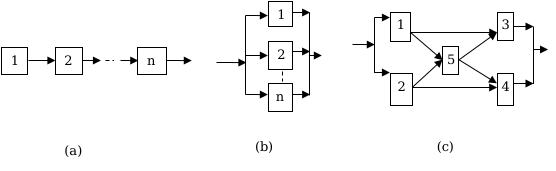
A reliability block diagram is a network of system elements connected by their logical reliability relationships. Each component is represented by a box that can either be considered to be functioning or to be malfunctioning. As shown in Figures 2, 3, 4 and 5, which illustrate RBDs for series, parallel, and "bridge" systems, respectively, this model enables the examination of the impact of component failures on various system topologies (De Vasconcelos et al., 2018) [204]. The reliability block diagram (RBD), which considers the physical placement of the system's components, is frequently used to study the impact of item failures on system availability (Vanderley et al., 2019) [205].
To analyze the reliability of binary cold-standby systems, Wang et al. (2012) [206] proposed an approximation model based on the central limit theorem. An algorithm for assessing the performance distribution of intricate series-parallel multi-state systems with common cause failures brought on by the propagation of system element failures was presented by Levitin & Xing (2010) [207]. An enhanced single-pass method for digital combinational circuit reliability analysis was introduced by Seyyed & Mohammadi (2011) [208]. LV et al. (2012) [209] presented a framework for conducting analogue reliability simulations, enabling reliability to be addressed as early as the design phase.
They also proposed a statistical model of Negative bias temperature instability (NBTI), which encompasses all the fluctuations resulting from circuit use conditions. A strategy for "Design for Reliability" in solid-state lighting (SSL) was presented by Tarashioon et al. (2012) [210]. The foundation for comprehending LED supply chain dependability challenges was laid by Chang et al. (2012) [14]. The thermal shock test, electrical service life test, and isothermal ageing test were carried out using small outline transistor (SOT) devices manufactured by Tian et al., (2011) [211] using commercial epoxy moulding compound (EMC) encapsulation and fine copper wire bonding technology. System reliability assessment (SRA) was formulated as a Bayesian network (BN) problem by Zhong et al. (2010) [212], considering parameter uncertainty.
A model to evaluate the reliability of helicopter MGB lubrication systems was presented by Rashid et al. (2015) [213]. A multi-physics reliability simulation technique for solid state lighting (SSL) electrical drivers was presented by Tarashioon et al. (2014) [214]. Li et al. (2015) [215] presented a novel use of percolation theory to examine a network's reliability. A reliability database is required to apply a model-based description of the failure modes and dysfunctional behaviours of components, as stated by Cressent et al. (2013) [216]. An approach for evaluating the dependability of sensors in multi-sensor control systems was presented by Łęczycki et al. (2015) [217]. An approach for modelling the reliability of systems with correlated identical components—i.e., components that have the same reliability and share a failure correlation parameter—was proposed by Fiondella & Xing (2015) [218].
Fink et al. (2014) [219] suggest the application of multilayer feed-forward neural networks based on multi-valued neurons (MLMVN), a particular kind of complex-valued neural network, to time series-based reliability and degradation prediction problems. To shorten correction times and increase field programmable gate array (FPGA) reliability, a unique built-in error correction code (ECC) employing encode-and-compare of the data and parity bits was developed by Ahilan & Deepa (2015) [220]. Johansson et al. (2013) [76] aimed to compare and contrast vulnerability analysis and reliability analysis, two methods for analyzing key infrastructures and the kinds of findings they produce.
Using Petri net modelling, Liu & Rausand (2013) [221] investigated the effects of the three testing methodologies on a safety-instrumented system (SIS) subsystem consisting of two identical channels that receive a 1-out-of-2 vote, under varying demand rates. The integrated importance measure (IIM) was expanded by Si et al. (2013) [222] to quantify the impact of a component residing at a particular state on the overall performance of the multi-state systems. Zhu et al. (2014) [223] concentrated on substrate charge injection, a novel line of inquiry into leakage current.
The difficulties in forecasting the dependability of power electronics converter systems were discussed by Schuderer et al., (2023) [224], who also offered suggestions. A virtual qualification-based methodology for System-in-Package (SiP) reliability assessment was presented by Guan et al. (2023) [225]. Hsieh et al. (2023) [226] look into and offer a machine error tolerance-based approach for reliable evaluation and cost-effective memory protection for machine learning systems. To evaluate the dependability of a multi-parameter monitoring system for Intensive Care Units (ICUs), de Araujo et al. (2022) [81] created a modular and parametric model.
Binary decision diagrams (BDDs) are used by Feng et al. (2022) [227] to assess the dependability of a signal unmanned aerial vehicle (UAV) from the standpoint of system composition. A wind turbine fitted with a 2 MW direct-drive permanent magnet synchronous generator (PMSG) was used as a case study by Ye et al. (2020) [228]. Chen et al. (2020) [229] proposed a hierarchical model based on the binary decision diagram (BDD) to integrate four types of damage accumulation rules into PMS reliability modelling, including the inhomogeneous failure mechanisms that have the same damage effect in one phase or different phases and the homogeneous failure mechanisms that have a combinational profile or phase constant stress. Mi et al. (2020) [116] introduced a methodical approach to reliability assessment that utilizes the notion of survival signature to evaluate the dependability of intricate systems that consist of several component kinds.
To analyze the reliability of binary cold-standby systems, Wang et al. (2012) [153] proposed an approximation model based on the central limit theorem. An algorithm for assessing the performance distribution of intricate series-parallel multi-state systems with common cause failures brought on by the propagation of system element failures was presented by Levitin & Xing (2010) [207]. An enhanced single-pass method for digital combinational circuit reliability analysis was introduced by Seyyed & Mohammadi (2011) [208]. LV et al. (2012) [209] presented a framework for conducting analogue reliability simulations, enabling reliability to be addressed as early as the design phase. They also proposed a statistical model of Negative bias temperature instability (NBTI), which encompasses all the fluctuations resulting from circuit use conditions.
A strategy for "Design for Reliability" in solid-state lighting (SSL) was presented by Tarashioon et al. (2012) [210]. The foundation for comprehending LED supply chain dependability challenges was laid by Chang et al. (2012) [14]. The thermal shock test, electrical service life test, and isothermal ageing test were carried out using small outline transistor (SOT) devices manufactured by Tian et al., (2011) [211] using commercial epoxy moulding compound (EMC) encapsulation and fine copper wire bonding technology. System reliability assessment (SRA) was formulated as a Bayesian network (BN) problem by Zhong et al. (2010) [212], considering parameter uncertainty.
A model to evaluate the dependability of helicopter MGB lubrication systems was presented by Rashid et al. (2015) [213]. A multi-physics reliability simulation technique for solid state lighting (SSL) electrical drivers was presented by Tarashioon et al. (2014) [214]. Li et al. (2015) [215] presented a novel use of percolation theory to examine a network's reliability. A reliability database is required to apply a model-based description of the failure modes and dysfunctional behaviours of components, as stated by Cressent et al. (2013) [216]. An approach for evaluating the dependability of sensors in multi-sensor control systems was presented by Łęczycki et al. (2015) [217]. An approach for modelling the reliability of systems with correlated identical components—i.e., components that have the same reliability and share a failure correlation parameter—was proposed by Fiondella & Xing (2015) [218].
Fink et al. (2014) [219] suggest the application of multilayer feed-forward neural networks based on multi-valued neurons (MLMVN), a particular kind of complex-valued neural network, to time series-based reliability and degradation prediction problems. To shorten correction times and increase field programmable gate array (FPGA) reliability, a unique built-in error correction code (ECC) employing encode-and-compare of the data and parity bits was developed by Ahilan & Deepa (2015) [220]. Johansson et al. (2013) [76] aimed to compare and contrast vulnerability analysis and reliability analysis, two methods for analyzing key infrastructures and the kinds of findings they produce.
Using Petri net modelling, Liu & Rausand (2013) [221] investigated the effects of the three testing methodologies on a safety-instrumented system (SIS) subsystem consisting of two identical channels that receive a 1-out-of-2 vote, under varying demand rates. The integrated importance measure (IIM) was expanded by Si et al. (2013) [222] to quantify the impact of a component residing at a particular state on the overall performance of the multi-state systems. Zhu et al. (2014) [223] concentrated on substrate charge injection, a novel line of inquiry into leakage current.
The difficulties in forecasting the dependability of power electronics converter systems were discussed by Schuderer et al., (2023) [224], who also offered suggestions. A virtual qualification-based methodology for System-in-Package (SiP) reliability assessment was presented by Guan et al. (2023) [225]. Hsieh et al. (2023) [226] look into and offer a machine error tolerance-based approach for reliable evaluation and cost-effective memory protection for machine learning systems. To evaluate the dependability of a multi-parameter monitoring system for Intensive Care Units (ICUs), de Araujo et al. (2022) [81] created a modular and parametric model. Binary decision diagrams (BDDs) are used by Feng et al. (2022) [227] to assess the dependability of a signal unmanned aerial vehicle (UAV) from the standpoint of system composition.
A wind turbine fitted with a 2 MW direct-drive permanent magnet synchronous generator (PMSG) was used as a case study by Ye et al. (2020) [228]. Chen et al. (2020) [229] proposed a hierarchical model based on the binary decision diagram (BDD) to integrate four types of damage accumulation rules into PMS reliability modelling, including the inhomogeneous failure mechanisms that have the same damage effect in one phase or different phases and the homogeneous failure mechanisms that have a combinational profile or phase constant stress. Mi et al. (2020) [116] introduced a methodical approach to reliability assessment that utilizes the notion of survival signature to evaluate the dependability of intricate systems that consist of several component kinds.
Kaczor et al. (2016) [230] proposed an application of Monte Carlo simulation and Reliability Block Diagram (RBD) methods for a comparative examination of the safety integrity level. Signoret et al. (2013) [231] address the graphical features of Petri Nets (PNs) and first suggest some incredibly basic tips and guidelines organize and enhance the drawing of typical PNs. It describes how predicates and assertions enable constructing modules (i.e., generic sub-PNs) to construct PNs in a modular manner.
Using a Reliability Block Diagram (RBD) to model system degradation, Ding et al. (2017) [232] suggested a novel method for Safety Integrity Level (SIL) verification of Safety-Related Systems (SRS) with diversified redundancy. Using RBD and FT methodologies, Vanderley et al. (2019) [205] conducted reliability evaluations of Emergency Diesel Generators (EDGs) of Nuclear Power Stations (NPPs). There are many different qualitative and quantitative assessments possible because each technique has advantages and downsides. Hasan et al. (2015) [233] presented a succinct overview of the various RBD analysis approaches that are currently available and compare them in terms of accuracy, user-friendliness, and processing requirements.
For Category 1 equipment, Childs et al. (2018) [234] created a brand-new reliability technique based on the Reliability Block Diagram (RBD) and Petri Net. The RBD focuses on demonstrating how various component failures could impact the equipment's subsystems and how those failures could result in a system failure overall. Mohsenian et al. (2023) [235] investigated the impact of acceleration-sensitive non-structural components on the overall seismic reliability of the structure. Jia et al. (2019) [236] suggested a new solution approach based on a Dynamic Uncertain Causality Graph (DUCG) and added a common cause failure block to the Dynamic Reliability Block Diagram (DRBD). Rechena et al. (2021) [237] built and analyzed the RBD for the Collective Thomson Scattering (CTS) front-end, both in terms of function and impact on ITER tokamak operations.
2.7. Failure Modes and Effects Analysis (FMEA) and Failure Mode, Effects and Criticality Analysis (FMECA)
FMEA (Failure Modes and Effects Analysis) and FMECA (Failure Modes, Effects and Criticality Analysis) are procedures created to pinpoint probable failure modes for a process or product before issues arise and to evaluate the risk. Although performing an FMEA on already-existing items or processes might be beneficial, it is ideal to do so during the product design or process development stages (Lipol & Haq, 2011) [238]. Several articles have been written about choosing a maintenance strategy, including literature reviews by Shafiee (2015) [239] and Velmurugan & Dhingra (2015) [240], both of which highlight the reliability- centered approach as one of the most widely utilized methods.
In an experimental study, Mattila et al. (2012) [241] assessed the effects of package temperature on the drop reliability of electronic assemblies using the finite element approach. A method that uses a cascade diagram to look at interdependencies along with reliability and contingency analysis (power flow) of power systems was presented by Kjølle et al. (2012) [242]. A framework for establishing a broad approach to Failure Process Modeling (FPM) was introduced by Regattieri et al. (2010) [164]. Yang et al. (2012) [243] developed a new approach for predicting long-term reliability that uses a new linear elastic parameter, dw/dT. A multi-objective, multi-dimensional mixed 0-1 knapsack model and a broad framework for preventing child injuries were created by Bas (2011) [244] to ascertain the best time to implement preventative measures against child injuries.
Zaghloul et al. (2011) [245] examined the state-of-the-art understanding of the dielectric charging and stiction critical failure processes in electrostatic micro- and nano-electromechanical systems (MEMS and NEMS). Chen et al. (2012) [246] suggested an electrical analysis-based detecting approach for the manufacturing of valveless peristaltic lead zirconate titanate (PZT) micropump. The impact of epoxy moulding compound (EMC) curing throughout its lifetime on package reliability was examined by Noijen et al. (2010) [247]. Stochastic Petri nets (SPN) were applied to determine the availability of safety-critical on-demand systems by Kleyner & Volovoi (2010) [248]. Vaurio (2010) [132] presented an effective ranking system for important measurements and created several new metrics about configuration control, fault diagnostics, system failure count, and system failure intensity.
Karppinen et al. (2012) [249] looked into the loading conditions created on handheld device component boards during both product-level and board-level drop testing. According to Kim et al. (2013) [250], a mission-critical system, like a nuclear, aeronautical, or chemical system, can benefit from a reliability allocation problem in its early stages of development. Jacob (2015) [5] presented a method for enhancing the identification of the underlying cause of electronic component failures through the application of a system-related failure analysis technique. Wang et al. (2015) [251] proposed a multiphysics modelling approach to assess the interactive effects of failure mechanisms on actuators. The process involves pre-analyzing potential failures through the FMMEA (Failure Modes, Mechanisms, and Effects Analysis) tool, which guides the electro-thermo-mechanical-reliability modelling process.
Yadav & Zhuang (2014) [252] examined the shortcomings of the current methodologies and suggested a modified criticality measure for assigning subsystems to system-level reliability improvement objectives. A succinct reliability analysis of network security deriving from queuing, reliability, and stochastic modelling theories was presented by Kondakci (2015) [253]. An approach for evaluating reliability that takes into account the correlativity of failure mechanisms—which include accumulation, competition, acceleration, inhibition, and trigger—was given by Chen et al. (2015) [254]. According to Musallam et al. (2014) [255], under anticipated in-service and qualification test settings, the wear-out rates and life consumption for the primary failure mechanisms were quantified by combining a reduced-order thermal model with life models based on the physics of failure.
The classic FMECA (Failure Modes, Effects and Criticality Analysis) approach was extended by Oguz et al. (2018) [256] to take human aspects into account while analyzing accessibility/repairability, contact likelihood, and degree of contact. To address the epistemic uncertainty that frequently affects input evaluations on risk parameters, Certa et al. (2017) [257] presented the Dempster-Shafer Theory (DST) of evidence as an appropriate mathematical framework. A stress and deformation analysis was presented by Li et al. (2018) [258] to investigate the failure mode of the suspended inductors under shock. A general model explaining the functional relationship between the three risk priority number (RPN) elements was proposed by Kim & Zuo (2018) [259]. Failure Mode and Effect Analysis (FMEA) is one of the most popular methodologies for identifying the causes and effects of failures.
Catelani et al. (2018) [260] focused on failure analysis using two techniques developed from FMEA: Failure Mode, Effect and Criticality Analysis (FMECA) and Failure Modes, Mechanisms and Effect Analysis (FMMEA). According to Abrahamsen et al. (2016) [261], the conventional Healthcare Failure Mode and Effect Analysis (HFMEA) has to be modified in a few ways. In their assessment of the major failure reasons of Micro-electro-mechanical System (MEMS) goods, Li et al. (2016) [262] suggested a novel correlative model for assessing the dependability of MEMS products. The dependability of a flexible spacecraft's attitude control subsystem (ACS) in low earth orbit (LEO) was examined by Damircheli et al. (2020) [263].
Tsai et al. (2016) [264] compared the experimental findings with the finite element simulation related to measurements of aluminium nitride (AlN) strength and the thermal deformation of Cu/AlN bi-material plate to assess the dependability of the through-aluminium-nitride-via (TAV) substrate. To assess the state-probability and reliability of a multi-state system, Li et al. (2017) [265] offered a combination method that makes use of both a binary decision diagram (BDD) and a multi-state multi-valued decision diagram (MMDD) model, while also accounting for the failure mechanism correlation. The study conducted by Oberhoff et al. (2016) [266] investigated the use of high-frequency scanning acoustic microscopy in the examination of Micro-electro-mechanical System (MEMS) sensors.
An & Sun (2017) [267] created a reliability model for a complex system that undergoes several interdependent competitive failure processes when shock loads beyond a specific threshold; only shock loads exceeding this threshold in magnitude can cause abrupt degradation increments. Thermal Laser Stimulation (TLS) applies to failure analysis in powered devices by Helfmeier et al. (2016) [268], who also highlight its significant advantages. A ceramic NTC (negative temperature coefficient) thermistor's possible weak areas were described, and Jeong et al. (2017) [269] estimated how long the part will last in a laser printer.
Yaqun et al. (2020) [270] offered a reliable and effective method for assessing the thrust chamber reliability of reusable rocket engines. They also measured the significance ranking of geometrical dimensions, material properties, and working loads for chamber reliability. This information offers important insights into the reliability-based design and optimization process for reusable rocket engines. A time-variant reliability solution utilizing a Kriging model was proposed by Qian et al. (2020) [271] for an industrial robot rotate vector (RV) reducer with numerous failure sources. Kowal & Torabi (2021) [272] objective was to determine how frequently the High-Temperature Engineering Test Reactor has unscheduled outages as a result of Electrical Facility problems.
A consensus and opinion evolution-based FMEA strategy was presented by Zhang et al. (2021) [273] for reliability management in uncertain situations and social networks. The standard ways of creating aluminium nitride (AlN) ceramic substrates—thin-film, thick-film, and directly bonded copper approaches—were examined and contrasted by Hung & Chen (2019) [274]. A new sliding window mechanism with two failure criteria was creatively proposed by Lu et al. (2019) [275]. A modified accelerated reliability growth model was presented by Wang et al. (2019) [276] for newly repairable devices that are offered with a two-dimensional warranty. Different strategies were suggested by Eslami Baladeh & Taghipour (2022) [277] to deal with the unpredictability of working situations in redundancy allocation difficulties.
The reliability assessment technique for electromagnetic relays was examined by Xiang et al. (2023) [278]. To identify critical failures of floating offshore wind turbines with linked failures, Sun et al. (2023) [279] introduced a novel failure mode and effect analysis schedule called correlated-Failure Mode and Effect Analysis (FMEA). Sajaradj et al. (2019) [280] identified the failure mode and effect analysis as one of the key frameworks used in reliability - centred maintenance in their literature review that only addresses this topic. The core of the dependability techniques is the examination of various failure modes and their potential repercussions. The majority of reliability-centred approaches may be linked back to the FMEA approach, even if the specific technique utilized by maintenance workers does not go by the name of FMEA (Sajaradj et al., 2019) [280].
Scheu et al. (2019) [281] and Lipol & Haq (2011) [238], respectively, summarize the addition of a criticality analysis to the FMEA in their articles. The maintenance team can respond to the most upsetting failures first thanks to the so-called failure mode, effects and criticality analysis (FMECA), which ranks the identified failure modes according to failure rate and severity. Before reaching the failure analysis, the FMEA or FMECA often includes a preparation phase and a structure and function analysis. Each potential failure mode's detection rate, effect severity, and chance of occurrence are all defined in the failure analysis (McDermott et al., 2013) [282]. Often the detection rate is not taken into consideration while making maintenance plan decisions (Lopez & Kolios, 2022) [283]. Each failure mode's occurrence, severity, and detection are individually represented by an ordinal scaled value that, when multiplied, yields the failure mode's risk priority number.
The method's various advancements are outlined in Sharma & Srivastava's (2018) [284] literature analysis on FMEA implementations. Only one of the 67 publications examined discusses the possibility that failure probability can vary over time. Another state-of-the-art study on FMEA/FMECA from 2017 summarizes recommendations for addressing widespread criticism in Spreafico et al. (2017).'s [285] report. Peyghami et al. (2019) [286] suggested the failure Mode, Effects and Criticality Analysis (FMECA) method assess the significance of converters in Power Electronic based Power Systems (PEPSs). A power system risk measure predicts the failure modes' impacts and uses contingency analysis to categorize them.
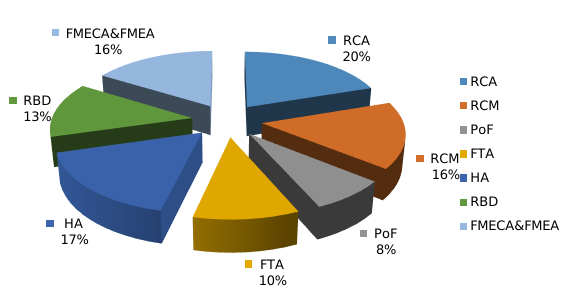
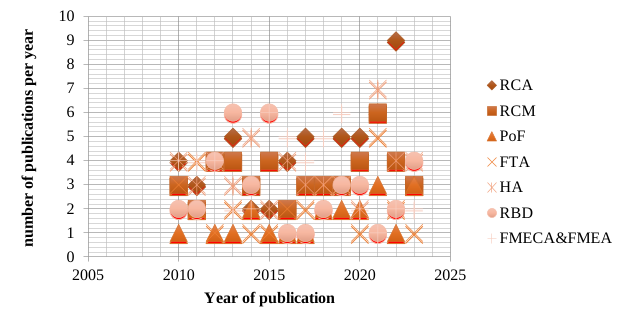
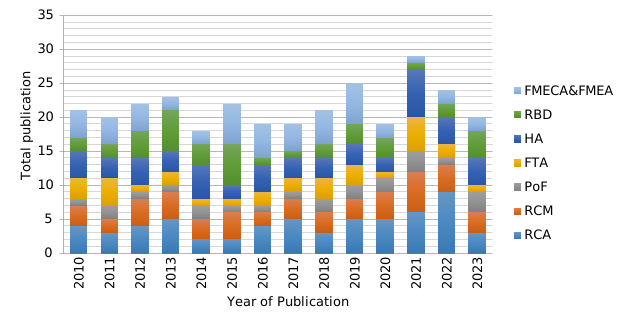
3. Conclusion
The proportion of reviewed papers using either RCA, RCM, FMEA/FMECA, FTA, RBD, RCM, PoF, or Hazard analysis to increase the reliability of PLCs. RCA, which makes up 20% of the publications analyzed, has been used the most to increase system reliability, followed by HA, RCM, RBD, FTA, and PoF, which account for 17%, 16%, 16%,13%, 10%, and 8% of the articles reviewed, respectively. A scatter chart depicts the development of reliability techniques from 2010 to 2023. The use of RCA, HA, (FMECA and FMEA) and RCM is on the rise.
This upward trend can be attributed to the fact that RCA is the primary method used by maintenance and reliability engineering specialists to address problems that affect an organization's capacity to achieve strategic goals and is a method for identifying potentially dangerous system components, while HA assists in methodically locating and recording possible risks or modes of failure that could jeopardize a system's dependability. It enables a thorough analysis of the system, taking into account numerous variables that could cause problems. (FMECA and FMEA) are procedures designed to identify likely failure modes for a product, and RCM is a highly effective and useful methodology for carrying out plans of preventive and predictive maintenance tasks.
In addition, alternative methods with lower percentages have advantages as well, such as RBD, which takes into account the physical arrangement of the system's components and is widely used to analyze how item failures affect system availability. FTA transforms a physical system into a logical diagram, making it one of the industry's most well-liked techniques for calculating safety and reliability, while PoF uses knowledge and comprehension of the mechanisms and processes that cause failure to forecast reliability and improve product performance, while. Using stacked bars, the annual total number of reliability approach publications from 2010 through 2023. It was evident that RCA has been most frequently utilized to enhance system reliability analysis.
References
- Reliability, A. (2021). The Basics of Root Cause Analysis.
- Vinnem, J. E., Hestad, J. A., Kvaløy, J. T., & Skogdalen, J. E. (2010). Analysis of root causes of major hazard precursors (hydrocarbon leaks) in the Norwegian offshore petroleum industry. Reliability Engineering & System Safety, 95(11), 1142–1153. https://doi.org/https://doi.org/10.1016/j.ress.2010.06.020[CrossRef]
- Marquez, D., Neil, M., & Fenton, N. (2010). Improved reliability modeling using Bayesian networks and dynamic discretization. Reliability Engineering & System Safety, 95(4), 412–425. https://doi.org/https://doi.org/10.1016/j.ress.2009.11.012[CrossRef]
- Mello, D., Ricciari, R., Aiello, M., & Astuto, M. (2010). Case study: Failure analysis for metal corrosion induced by pressure pot test. Microelectronics Reliability, 50(9), 1436–1440. https://doi.org/https://doi.org/10.1016/j.microrel.2010.07.098[CrossRef]
- Jacob, P. (2015). Failure analysis and reliability on system level. Microelectronics Reliability, 55(9), 2154–2158. https://doi.org/https://doi.org/10.1016/j.microrel.2015.06.022[CrossRef]
- Alirezaeyan, J., Yousefi, S., & Doniavi, A. (2015). Adaptive reliability satisfaction in wireless sensor networks through controlling the number of active routing paths. Microelectronics Reliability, 55(11), 2412–2422. https://doi.org/https://doi.org/10.1016/j.microrel.2015.08.002[CrossRef]
- Savage, G. J., & Kap Son, Y. (2011). The set-theory method for systems reliability of structures with degrading components. Reliability Engineering & System Safety, 96(1), 108–116. https://doi.org/https://doi.org/10.1016/j.ress.2010.07.009[CrossRef]
- Yao, M., Zhang, X., Zhao, C., & Ma, J. (2011). Self-consistent design issues for high frequency Cu interconnect reliability incorporating skin effect. Microelectronics Reliability, 51(5), 1003–1010. https://doi.org/https://doi.org/10.1016/j.microrel.2010.12.011[CrossRef]
- Mattila, T. T., & Paulasto-Kröckel, M. (2011). Toward comprehensive reliability assessment of electronics by a combined loading approach. Microelectronics Reliability, 51(6), 1077–1091. https://doi.org/https://doi.org/10.1016/j.microrel.2011.03.022[CrossRef]
- Larcher, L., & Padovani, A. (2010). High-κ related reliability issues in advanced non-volatile memories. Microelectronics Reliability, 50(9), 1251–1258. https://doi.org/https://doi.org/10.1016/j.microrel.2010.07.099[CrossRef]
- Tiwari, A., & Roy, D. (2013). Estimation of reliability of mobile handsets using Cox-proportional hazard model. Microelectronics Reliability, 53(3), 481–487. https://doi.org/https://doi.org/10.1016/j.microrel.2012.10.008[CrossRef]
- Chan, S. I., Kang, J. H., & Jang, J. S. (2013). Reliability improvement of automotive electronics based on environmental stress screen methodology. Microelectronics Reliability, 53(9), 1235–1238. https://doi.org/https://doi.org/10.1016/j.microrel.2013.07.037[CrossRef]
- Roesch, W. J. (2012). Using a new bathtub curve to correlate quality and reliability. Microelectronics Reliability, 52(12), 2864–2869. https://doi.org/https://doi.org/10.1016/j.microrel.2012.08.022[CrossRef]
- Chang, M.-H., Das, D., Varde, P. V, & Pecht, M. (2012). Light emitting diodes reliability review. Microelectronics Reliability, 52(5), 762–782. https://doi.org/https://doi.org/10.1016/j.microrel.2011.07.063[CrossRef]
- Patil, N., Das, D., Scanff, E., & Pecht, M. (2013). Long term storage reliability of antifuse field programmable gate arrays. Microelectronics Reliability, 53(12), 2052–2056. https://doi.org/https://doi.org/10.1016/j.microrel.2013.06.016[CrossRef]
- Naoe, T., Komoda, H., Ikeuchi, T., & Yokoyama, K. (2012). Via high resistance failure analysis of LSI devices induced by multiple factors related to process and design. Microelectronics Reliability, 52(12), 2975–2981. https://doi.org/https://doi.org/10.1016/j.microrel.2012.07.023[CrossRef]
- Chen, W.-H., Yu, C.-F., Cheng, H.-C., Tsai, Y., & Lu, S.-T. (2013). IMC growth reaction and its effects on solder joint thermal cycling reliability of 3D chip stacking packaging. Microelectronics Reliability, 53(1), 30–40. https://doi.org/https://doi.org/10.1016/j.microrel.2012.06.146[CrossRef]
- Silva, N., Cunha, J. C., & Vieira, M. (2017). A field study on root cause analysis of defects in space software. Reliability Engineering & System Safety, 158, 213–229. https://doi.org/https://doi.org/10.1016/j.ress.2016.08.016[CrossRef]
- Elger, G., Müller, D., Hanß, A., Schmid, M., Liu, E., Karbowski, U., & Derix, R. (2016). Transient thermal analysis for accelerated reliability testing of LEDs. Microelectronics Reliability, 64, 605–609. https://doi.org/https://doi.org/10.1016/j.microrel.2016.07.094[CrossRef]
- Kim, Y., Park, J., & Jung, W. (2017). A quantitative measure of fitness for duty and work processes for human reliability analysis. Reliability Engineering & System Safety, 167, 595–601. https://doi.org/https://doi.org/10.1016/j.ress.2017.07.012[CrossRef]
- Magnien, J., Mitterhuber, L., Rosc, J., Schrank, F., Hörth, S., Goullon, L., Hutter, M., Defregger, S., & Kraker, E. (2017). Reliability and failure analysis of solder joints in flip chip LEDs via thermal impedance characterisation. Microelectronics Reliability, 76–77, 601–605. https://doi.org/https://doi.org/10.1016/j.microrel.2017.07.052[CrossRef]
- Tyrväinen, T. (2016). Prime implicants in dynamic reliability analysis. Reliability Engineering & System Safety, 146, 39–46. https://doi.org/https://doi.org/10.1016/j.ress.2015.10.007[CrossRef]
- Boostandoost, M., Gräfje, D., & Pop, F. (2017). Circuit simulation assisting Physical Fault Isolation for effective root cause analysis. Microelectronics Reliability, 76–77, 194–200. https://doi.org/https://doi.org/10.1016/j.microrel.2017.07.074[CrossRef]
- Okaro, I. A., & Tao, L. (2016). Reliability analysis and optimisation of subsea compression system facing operational covariate stresses. Reliability Engineering & System Safety, 156, 159–174. https://doi.org/https://doi.org/10.1016/j.ress.2016.07.018[CrossRef]
- Bahman, A. S., Iannuzzo, F., Holmgaard, T., Nielsen, R. Ø., & Blaabjerg, F. (2017). Reliability-oriented environmental thermal stress analysis of fuses in power electronics. Microelectronics Reliability, 76–77, 25–30. https://doi.org/https://doi.org/10.1016/j.microrel.2017.06.089[CrossRef]
- Mohammadnazar, H., Pulkkinen, M., & Ghanbari, H. (2019). A root cause analysis method for preventing erratic behavior in software development: PEBA. Reliability Engineering & System Safety, 191, 106565. https://doi.org/https://doi.org/10.1016/j.ress.2019.106565[CrossRef]
- Huang, X., Jin, S., He, X., & He, D. (2019). Reliability analysis of coherent systems subject to internal failures and external shocks. Reliability Engineering & System Safety, 181, 75–83. https://doi.org/https://doi.org/10.1016/j.ress.2018.09.003[CrossRef]
- Stiasny, T., Quittard, O., Waltisberg, C., & Meier, U. (2018). Reliability evaluation of IGCT from accelerated testing, quality monitoring and field return analysis. Microelectronics Reliability, 88–90, 510–513. https://doi.org/https://doi.org/10.1016/j.microrel.2018.07.079[CrossRef]
- Low, Y. C., Tan, P. K., Tan, S. L., Zhao, Y. Z., & Lam, J. (2018). Solving 28 nm I/O circuit reliability issue due to IC design weakness. Microelectronics Reliability, 88–90, 246–249. https://doi.org/https://doi.org/10.1016/j.microrel.2018.06.082[CrossRef]
- Yang, J., Zou, B., & Yang, M. (2019). Bidirectional implementation of Markov/CCMT for dynamic reliability analysis with application to digital I&C systems. Reliability Engineering & System Safety, 185, 278–290. https://doi.org/https://doi.org/10.1016/j.ress.2018.12.024[CrossRef]
- Penttinen, J.-P., Niemi, A., Gutleber, J., Koskinen, K. T., Coatanéa, E., & Laitinen, J. (2019). An open modelling approach for availability and reliability of systems. Reliability Engineering & System Safety, 183, 387–399. https://doi.org/https://doi.org/10.1016/j.ress.2018.11.026[CrossRef]
- Peng, W., Shen, L., Shen, Y., & Sun, Q. (2018). Reliability analysis of repairable systems with recurrent misuse-induced failures and normal-operation failures. Reliability Engineering & System Safety, 171, 87–98. https://doi.org/https://doi.org/10.1016/j.ress.2017.11.016[CrossRef]
- Podofillini, L., Reer, B., & Dang, V. N. (2021). Analysis of recent operational events involving inappropriate actions: influencing factors and root causes. Reliability Engineering & System Safety, 216, 108013. https://doi.org/https://doi.org/10.1016/j.ress.2021.108013[CrossRef]
- Ding, R., Liu, Z., Xu, J., Meng, F., Sui, Y., & Men, X. (2021). A novel approach for reliability assessment of residual heat removal system for HPR1000 based on failure mode and effect analysis, fault tree analysis, and fuzzy Bayesian network methods. Reliability Engineering & System Safety, 216, 107911. https://doi.org/https://doi.org/10.1016/j.ress.2021.107911[CrossRef]
- Chi, C.-F., Sigmund, D., & Astardi, M. O. (2020). Classification Scheme for Root Cause and Failure Modes and Effects Analysis (FMEA) of Passenger Vehicle Recalls. Reliability Engineering & System Safety, 200, 106929. https://doi.org/https://doi.org/10.1016/j.ress.2020.106929[CrossRef]
- Chen, S., Zhang, L., & Qing, T. (2021). A human reliability analysis methodology based on an extended Phoenix method for severe accidents in nuclear power plants: Qualitative analysis framework. Reliability Engineering & System Safety, 214, 107750. https://doi.org/https://doi.org/10.1016/j.ress.2021.107750[CrossRef]
- Sun, Z., Yu, T., Pang, H., & Song, B. (2021). Failure mechanism and reliability analysis of the rear cargo door lock of transport aircraft. Engineering Failure Analysis, 122, 105182. https://doi.org/https://doi.org/10.1016/j.engfailanal.2020.105182[CrossRef]
- Mi, J., Lu, N., Li, Y.-F., Huang, H.-Z., & Bai, L. (2022). An evidential network-based hierarchical method for system reliability analysis with common cause failures and mixed uncertainties. Reliability Engineering & System Safety, 220, 108295. https://doi.org/https://doi.org/10.1016/j.ress.2021.108295[CrossRef]
- Xu, Y., Yang, B., Shi, Y., Feng, X., Li, J., Feng, C., & Volodymyr, K. (2022). Quality reliability analysis of flash welding joint of cold-rolled 50JW800 silicon steel strip. Engineering Failure Analysis, 138, 106292. https://doi.org/https://doi.org/10.1016/j.engfailanal.2022.106292[CrossRef]
- Zhang, S., Ma, Q., Xu, C., Li, L., Wang, M., Zhang, Z., Wang, S., & Li, L. (2022). Root cause analysis of liner collapse and crack of bi-metal composite pipe used for gas transmission. Engineering Failure Analysis, 132, 105942. https://doi.org/https://doi.org/10.1016/j.engfailanal.2021.105942[CrossRef]
- Che, H., Zeng, S., Li, K., & Guo, J. (2022). Reliability analysis of load-sharing man-machine systems subject to machine degradation, human errors, and random shocks. Reliability Engineering & System Safety, 226, 108679. https://doi.org/https://doi.org/10.1016/j.ress.2022.108679[CrossRef]
- Morais, C., Estrada-Lugo, H. D., Tolo, S., Jacques, T., Moura, R., Beer, M., & Patelli, E. (2022). Robust data-driven human reliability analysis using credal networks. Reliability Engineering & System Safety, 218, 107990. https://doi.org/https://doi.org/10.1016/j.ress.2021.107990[CrossRef]
- Zhou, C., Zhang, H., Valdebenito, M. A., & Zhao, H. (2022). A general hierarchical ensemble-learning framework for structural reliability analysis. Reliability Engineering & System Safety, 225, 108605. https://doi.org/https://doi.org/10.1016/j.ress.2022.108605[CrossRef]
- Chen, Z., Zhang, H., Wang, X., Yang, J., & Dui, H. (2023). Reliability Analysis and Redundancy Design of Satellite Communication System based on a Novel Bayesian Environmental Importance. Reliability Engineering & System Safety, 109813. https://doi.org/https://doi.org/10.1016/j.ress.2023.109813[CrossRef]
- Arias Velásquez, R. M. (2020). Root cause analysis for inverters in solar photo-voltaic plants. Engineering Failure Analysis, 118, 104856. https://doi.org/https://doi.org/10.1016/j.engfailanal.2020.104856[CrossRef]
- Xu, J., Wang, R., Liang, Z., Liu, P., Gao, J., & Wang, Z. (2023). Physics-guided, data-refined fault root cause tracing framework for complex electromechanical system. Reliability Engineering & System Safety, 236, 109293. https://doi.org/https://doi.org/10.1016/j.ress.2023.109293[CrossRef]
- Arias Velásquez, R. M., & Mejía Lara, J. V. (2020). Root cause analysis improved with machine learning for failure analysis in power transformers. Engineering Failure Analysis, 115, 104684. https://doi.org/https://doi.org/10.1016/j.engfailanal.2020.104684[CrossRef]
- Bhamu, J., & Sangwan, K. S. (2014). Lean manufacturing: Literature review and research issues. International Journal of Operations and Production Management, 34(7), 876–940. https://doi.org/10.1108/IJOPM-08-2012-0315[CrossRef]
- Ito, A., Hagström, M., Bokrantz, J., Skoogh, A., Nawcki, M., Gandhi, K., Bergsjö, D., & Bärring, M. (2022). Improved root cause analysis supporting resilient production systems. Journal of Manufacturing Systems, 64(July), 468–478. https://doi.org/10.1016/j.jmsy.2022.07.015[CrossRef]
- Soares, I. A., Ylipää, T., Gullander, P., Bokrantz, J., & Skoogh, A. (2022). Prioritisation of root cause analysis in production disturbance management. International Journal of Quality and Reliability Management, 39(5), 1133–1150. https://doi.org/10.1108/IJQRM-12-2020-0402[CrossRef]
- Reid, I., & Smyth-Renshaw, J. (2012). Exploring the fundamentals of root cause analysis: Are we asking the right questions in defining the problem? Quality and Reliability Engineering International, 28(5), 535–545. https://doi.org/10.1002/qre.1435[CrossRef]
- Abdelrahman, O., & Keikhosrokiani, P. (2020). Assembly line anomaly detection and root cause analysis using machine learning. IEEE Access, 8, 189661–189672. https://doi.org/10.1109/ACCESS.2020.3029826[CrossRef]
- Singh, K., & Jagannath, S. (2016). Defects Reduction Using Root Cause Analysis Approach in Gloves Manufacturing Unit. International Research Journal of Engineering and Technology, 3(7), 173–183. https://www.irjet.net/archives/V3/i7/IRJET-V3I733.pdf
- Mousavinia, M., Bahrami, A., Rafiaei, S. M., Rajabinezhad, M., Taghian, M., & Seyedi, S. J. (2020). Root cause analysis of failure of bolts in the low pressure section of a gas turbine in an oil and gas production plant. Engineering Failure Analysis, 115, 104675. https://doi.org/10.1016/j.engfailanal.2020.104675[CrossRef]
- Nascimento, C. F., Fernando, P., & Frutuoso, F. (2013). A Root Cause Analysis Method for Industrial Plant Reliability Improvement and Engineering Design Feedback The Use of a Root Cause Analysis Method for Industrial Plant Reliability Improvement and Engineering Design Feedback. January. https://doi.org/10.3303/CET1331079
- Ma, Q., Li, H., & Thorstenson, A. (2021). A big data-driven root cause analysis system: Application of Machine Learning in quality problem solving. Computers & Industrial Engineering, 160, 107580. https://doi.org/https://doi.org/10.1016/j.cie.2021.107580[CrossRef]
- Viveros, P., Zio, E., Nikulin, C., Stegmaier, R., & Bravo, G. (2014). Resolving equipment failure causes by root cause analysis and theory of inventive problem solving. Proceedings of the Institution of Mechanical Engineers, Part O: Journal of Risk and Reliability, 228(1), 93–111. https://doi.org/10.1177/1748006X13494775[CrossRef]
- Barsalou, M. (2023). Root Cause Analysis in Quality 4.0: A Scoping Review of Current State and Perspectives. TEM Journal, 12(1), 73–79. https://doi.org/10.18421/TEM121-10[CrossRef]
- Papageorgiou, K., Theodosiou, T., Rapti, A., Papageorgiou, E. I., Dimitriou, N., Tzovaras, D., & Margetis, G. (2022). A systematic review on machine learning methods for root cause analysis towards zero-defect manufacturing. Frontiers in Manufacturing Technology, 2(October), 1–16. https://doi.org/10.3389/fmtec.2022.972712[CrossRef]
- Deepak, P. P., & Jagathy, R. V. P. (2015). An evaluation of alternative approaches to reliability centered maintenance. International Journal of Applied Engineering Research, 10(19), 40350–40359.
- Sifonte, J. R., & Reyes-Picknell, J. V. (2017). Reliability Centered Maintenance-Reengineered. In Reliability Centered Maintenance-Reengineered. https://doi.org/10.1201/9781315207179[CrossRef]
- Luo, M., Yan, H. C., Hu, B., Zhou, J. H., & Pang, C. K. (2015). A data-driven two-stage maintenance framework for degradation prediction in semiconductor manufacturing industries. Computers and Industrial Engineering, 85, 414–422. https://doi.org/10.1016/j.cie.2015.04.008[CrossRef]
- Niu, G., Yang, B.-S., & Pecht, M. (2010). Development of an optimized condition-based maintenance system by data fusion and reliability-centered maintenance. Reliability Engineering & System Safety, 95(7), 786–796. https://doi.org/https://doi.org/10.1016/j.ress.2010.02.016[CrossRef]
- Macchi, M., Garetti, M., Centrone, D., Fumagalli, L., & Piero Pavirani, G. (2012). Maintenance management of railway infrastructures based on reliability analysis. Reliability Engineering & System Safety, 104, 71–83. https://doi.org/https://doi.org/10.1016/j.ress.2012.03.017[CrossRef]
- das Chagas Moura, M., Zio, E., Lins, I. D., & Droguett, E. (2011). Failure and reliability prediction by support vector machines regression of time series data. Reliability Engineering & System Safety, 96(11), 1527–1534. https://doi.org/https://doi.org/10.1016/j.ress.2011.06.006[CrossRef]
- Dong, W., Moan, T., & Gao, Z. (2012). Fatigue reliability analysis of the jacket support structure for offshore wind turbine considering the effect of corrosion and inspection. Reliability Engineering & System Safety, 106, 11–27. https://doi.org/https://doi.org/10.1016/j.ress.2012.06.011[CrossRef]
- Okasha, N. M., Frangopol, D. M., & Orcesi, A. D. (2012). Automated finite element updating using strain data for the lifetime reliability assessment of bridges. Reliability Engineering & System Safety, 99, 139–150. https://doi.org/https://doi.org/10.1016/j.ress.2011.11.007[CrossRef]
- Guan, X., He, J., Jha, R., & Liu, Y. (2012). An efficient analytical Bayesian method for reliability and system response updating based on Laplace and inverse first-order reliability computations. Reliability Engineering & System Safety, 97(1), 1–13. https://doi.org/https://doi.org/10.1016/j.ress.2011.09.008[CrossRef]
- Bocchini, P., & Frangopol, D. M. (2011). A probabilistic computational framework for bridge network optimal maintenance scheduling. Reliability Engineering & System Safety, 96(2), 332–349. https://doi.org/https://doi.org/10.1016/j.ress.2010.09.001[CrossRef]
- Martorell, S., Villamizar, M., Carlos, S., & Sánchez, A. (2010). Maintenance modeling and optimization integrating human and material resources. Reliability Engineering & System Safety, 95(12), 1293–1299. https://doi.org/https://doi.org/10.1016/j.ress.2010.06.006[CrossRef]
- Jiang, X., Duan, F., Tian, H., & Wei, X. (2015). Optimization of reliability centered predictive maintenance scheme for inertial navigation system. Reliability Engineering & System Safety, 140, 208–217. https://doi.org/https://doi.org/10.1016/j.ress.2015.04.003[CrossRef]
- Rhayma, N., Bressolette, P., Breul, P., Fogli, M., & Saussine, G. (2013). Reliability analysis of maintenance operations for railway tracks. Reliability Engineering & System Safety, 114, 12–25. https://doi.org/https://doi.org/10.1016/j.ress.2012.12.007[CrossRef]
- Lin, J., Pulido, J., & Asplund, M. (2015). Reliability analysis for preventive maintenance based on classical and Bayesian semi-parametric degradation approaches using locomotive wheel-sets as a case study. Reliability Engineering & System Safety, 134, 143–156. https://doi.org/https://doi.org/10.1016/j.ress.2014.10.011[CrossRef]
- Barone, G., & Frangopol, D. M. (2014). Reliability, risk and lifetime distributions as performance indicators for life-cycle maintenance of deteriorating structures. Reliability Engineering & System Safety, 123, 21–37. https://doi.org/https://doi.org/10.1016/j.ress.2013.09.013[CrossRef]
- Song, S., Coit, D. W., & Feng, Q. (2014). Reliability for systems of degrading components with distinct component shock sets. Reliability Engineering & System Safety, 132, 115–124. https://doi.org/https://doi.org/10.1016/j.ress.2014.06.020[CrossRef]
- Johansson, J., Hassel, H., & Zio, E. (2013). Reliability and vulnerability analyses of critical infrastructures: Comparing two approaches in the context of power systems. Reliability Engineering & System Safety, 120, 27–38. https://doi.org/https://doi.org/10.1016/j.ress.2013.02.027[CrossRef]
- Peng, W., Huang, H.-Z., Li, Y., Zuo, M. J., & Xie, M. (2013). Life cycle reliability assessment of new products—A Bayesian model updating approach. Reliability Engineering & System Safety, 112, 109–119. https://doi.org/https://doi.org/10.1016/j.ress.2012.12.002[CrossRef]
- Chamseddine, A., Theilliol, D., Sadeghzadeh, I., Zhang, Y., & Weber, P. (2014). Optimal reliability design for over-actuated systems based on the MIT rule: Application to an octocopter helicopter testbed. Reliability Engineering & System Safety, 132, 196–206. https://doi.org/https://doi.org/10.1016/j.ress.2014.07.013[CrossRef]
- Dashti, R., & Yousefi, S. (2013). Reliability based asset assessment in electrical distribution systems. Reliability Engineering & System Safety, 112, 129–136. https://doi.org/https://doi.org/10.1016/j.ress.2012.11.019[CrossRef]
- Si, G., Xia, T., Gebraeel, N., Wang, D., Pan, E., & Xi, L. (2022). A reliability-and-cost-based framework to optimize maintenance planning and diverse-skilled technician routing for geographically distributed systems. Reliability Engineering & System Safety, 226, 108652. https://doi.org/https://doi.org/10.1016/j.ress.2022.108652[CrossRef]
- de Araujo, M. S., da Silva, L. D., Sobrinho, Á., Cunha, P., & Montecchi, L. (2022). Reliability analysis of multi-parameter monitoring systems for Intensive Care Units. Reliability Engineering & System Safety, 226, 108638. https://doi.org/https://doi.org/10.1016/j.ress.2022.108638[CrossRef]
- Fan, L., Su, H., Wang, W., Zio, E., Zhang, L., Yang, Z., Peng, S., Yu, W., Zuo, L., & Zhang, J. (2022). A systematic method for the optimization of gas supply reliability in natural gas pipeline network based on Bayesian networks and deep reinforcement learning. Reliability Engineering & System Safety, 225, 108613. https://doi.org/https://doi.org/10.1016/j.ress.2022.108613[CrossRef]
- Mathpati, Y. C., More, K. S., Tripura, T., Nayek, R., & Chakraborty, S. (2023). MAntRA: A framework for model agnostic reliability analysis. Reliability Engineering & System Safety, 235, 109233. https://doi.org/https://doi.org/10.1016/j.ress.2023.109233[CrossRef]
- Chowdury, M. A. M., Nath, R., Shukla, A. K., Rauniyar, A., & Muhuri, P. K. (2023). Multi-Task Optimization in Reliability Redundancy Allocation Problem: A Multifactorial Evolutionary-Based Approach. Reliability Engineering & System Safety, 109807. https://doi.org/https://doi.org/10.1016/j.ress.2023.109807[CrossRef]
- Li, Z.-W., Zhou, Y.-L., Liu, X.-Z., & Abdel Wahab, M. (2023). Service reliability assessment of ballastless track in high speed railway via improved response surface method. Reliability Engineering & System Safety, 234, 109180. https://doi.org/https://doi.org/10.1016/j.ress.2023.109180[CrossRef]
- Eriksen, S., Utne, I. B., & Lützen, M. (2021). An RCM approach for assessing reliability challenges and maintenance needs of unmanned cargo ships. Reliability Engineering & System Safety, 210, 107550. https://doi.org/https://doi.org/10.1016/j.ress.2021.107550[CrossRef]
- Bressi, S., Santos, J., & Losa, M. (2021). Optimization of maintenance strategies for railway track-bed considering probabilistic degradation models and different reliability levels. Reliability Engineering & System Safety, 207, 107359. https://doi.org/https://doi.org/10.1016/j.ress.2020.107359[CrossRef]
- Li, X.-Y., Liu, Y., Lin, Y.-H., Xiao, L.-H., Zio, E., & Kang, R. (2021). A generalized petri net-based modeling framework for service reliability evaluation and management of cloud data centers. Reliability Engineering & System Safety, 207, 107381. https://doi.org/https://doi.org/10.1016/j.ress.2020.107381[CrossRef]
- Ma, X., Liu, B., Yang, L., Peng, R., & Zhang, X. (2020). Reliability analysis and condition-based maintenance optimization for a warm standby cooling system. Reliability Engineering & System Safety, 193, 106588. https://doi.org/https://doi.org/10.1016/j.ress.2019.106588[CrossRef]
- Catelani, M., Ciani, L., Guidi, G., & Patrizi, G. (2021). An enhanced SHERPA (E-SHERPA) method for human reliability analysis in railway engineering. Reliability Engineering & System Safety, 215, 107866. https://doi.org/https://doi.org/10.1016/j.ress.2021.107866[CrossRef]
- Chen, Y., Li, S., & Kang, R. (2021). Epistemic uncertainty quantification via uncertainty theory in the reliability evaluation of a system with failure Trigger effect. Reliability Engineering & System Safety, 215, 107896. https://doi.org/https://doi.org/10.1016/j.ress.2021.107896[CrossRef]
- Yousefi, N., Coit, D. W., & Song, S. (2020). Reliability analysis of systems considering clusters of dependent degrading components. Reliability Engineering & System Safety, 202, 107005. https://doi.org/https://doi.org/10.1016/j.ress.2020.107005[CrossRef]
- Pan, X., Wang, H., You, W., Zhang, M., & Yang, Y. (2020). Assessing the reliability of electronic products using customer knowledge discovery. Reliability Engineering & System Safety, 199, 106925. https://doi.org/https://doi.org/10.1016/j.ress.2020.106925[CrossRef]
- Colombo, D., Lima, G. B. A., Pereira, D. R., & Papa, J. P. (2020). Regression-based finite element machines for reliability modeling of downhole safety valves. Reliability Engineering & System Safety, 198, 106894. https://doi.org/https://doi.org/10.1016/j.ress.2020.106894[CrossRef]
- Zhao, X., Guo, X., & Wang, X. (2018). Reliability and maintenance policies for a two-stage shock model with self-healing mechanism. Reliability Engineering & System Safety, 172, 185–194. https://doi.org/https://doi.org/10.1016/j.ress.2017.12.013[CrossRef]
- Li, X.-Y., Huang, H.-Z., & Li, Y.-F. (2018). Reliability analysis of phased mission system with non-exponential and partially repairable components. Reliability Engineering & System Safety, 175, 119–127. https://doi.org/https://doi.org/10.1016/j.ress.2018.03.008[CrossRef]
- Liu, X., He, D., Lodewijks, G., Pang, Y., & Mei, J. (2019). Integrated decision making for predictive maintenance of belt conveyor systems. Reliability Engineering & System Safety, 188, 347–351. https://doi.org/https://doi.org/10.1016/j.ress.2019.03.047[CrossRef]
- Si, G., Xia, T., Zhu, Y., Du, S., & Xi, L. (2019). Triple-level opportunistic maintenance policy for leasehold service network of multi-location production lines. Reliability Engineering & System Safety, 190, 106519. https://doi.org/https://doi.org/10.1016/j.ress.2019.106519[CrossRef]
- David, L., Král, V., Stanislav, R., & Radomír, G. (2017). Software Solution Design for Application of Reliability Centered Maintenance in Preventive Maintenance Plan. December. https://doi.org/10.1109/EPE.2017.7967354[CrossRef]
- Diego, P., Bíscaro, A. A. P., Leão, F. B., & Mantovani, R. S. (2016). A new approach for reliability-centered maintenance programs in electric power distribution systems based on a multiobjective genetic algorithm. Electric Power Systems Research, 137, 41–50. https://doi.org/10.1016/j.epsr.2016.03.040[CrossRef]
- Ahmad, N. (2017). A Framework for Application of Reliability Centered Maintenance in the Lead A Framework for Application of Reliability Centered Maintenance in the Lead Oxide Production System. Applied Mechanics and Materials, December 2016. https://doi.org/10.4028/www.scientific.net/AMM.860.123[CrossRef]
- Tamer, M. E.-D., Ahmed, M. E.-A., Islam, H. A.-A., & Ahmed, A. E.-B. (2016). Implementation of FMECA and Fishbone Techniques in Reliability Centred Maintenance Planning. International Journal of Innovative Research in Science, Engineering and Technology, 5(11). https://doi.org/10.15680/IJIRSET.2016.0511001
- Fuentes-Huerta, M. A., González-González, D. S., Cantú-Sifuentes, M., & Praga-Alejo, R. J. (2021). Fuzzy reliability centered maintenance considering personnel experience and only censored data. Computers and Industrial Engineering, 158(June), 1–6. https://doi.org/10.1016/j.cie.2021.107440[CrossRef]
- Okwuobi, S., Ishola, F., Ajayi, O., Salawu, E., Aworinde, A., Olatunji, O., & Akinlabi, S. A. (2018). A Reliability-Centered Maintenance Study for an Individual Section-Forming Machine. Machines. https://doi.org/10.3390/machines6040050[CrossRef]
- Afefy, I. H. A., Mohib, A., El-kamash, A. M., & Mahmoud, M. A. (2019). A New Framework of Reliability Centered Maintenance. Jordan Journal of Mechanical and Industrial Engineering, December.
- Hendricks, C., George, E., Osterman, M., & Pecht, M. (2015). Physics-of-failure (PoF) methodology for electronic reliability. In Reliability Characterisation of Electrical and Electronic Systems. Elsevier Ltd. https://doi.org/10.1016/B978-1-78242-221-1.00003-4[CrossRef] [PubMed]
- Temsamani, A. B., Kauffmann, S., Descas, Y., Vandevelde, B., Zanon, F., & Willems, G. (2017). Improved and accurate physics-of-failure (PoF) methodology for qualification and lifetime assessment of electronic systems. Microelectronics Reliability, 76–77, 42–46. https://doi.org/10.1016/j.microrel.2017.06.047[CrossRef]
- Kostandyan, E. E., & Sørensen, J. D. (2012). Physics of failure as a basis for solder elements reliability assessment in wind turbines. Reliability Engineering & System Safety, 108, 100–107. https://doi.org/https://doi.org/10.1016/j.ress.2012.06.020[CrossRef]
- Jiao, J., De, X., Chen, Z., & Zhao, T. (2019). Integrated circuit failure analysis and reliability prediction based on physics of failure. Engineering Failure Analysis, 104, 714–726. https://doi.org/https://doi.org/10.1016/j.engfailanal.2019.05.021[CrossRef]
- Sun, B., Li, Y., Wang, Z., Yang, D., Ren, Y., & Feng, Q. (2021). A combined physics of failure and Bayesian network reliability analysis method for complex electronic systems. Process Safety and Environmental Protection, 148, 698–710. https://doi.org/https://doi.org/10.1016/j.psep.2021.01.023[CrossRef]
- Martino, E., Fairbrother, A., Ghosh, R., & Schuderer, J. (2023). Data-driven and physics-based reliability tests to failure of a power electronics converter. Microelectronics Reliability, 150, 115063. https://doi.org/https://doi.org/10.1016/j.microrel.2023.115063[CrossRef]
- Zhang, X., Zhang, K., Yang, X., Fazeres-Ferradosa, T., & Zhu, S.-P. (2023). Transfer learning and direct probability integral method based reliability analysis for offshore wind turbine blades under multi-physics coupling. Renewable Energy, 206, 552–565. https://doi.org/https://doi.org/10.1016/j.renene.2023.02.026[CrossRef]
- Mulenga, K., Wang, W., Li, C.-Q., & Xie, M. (2022). Time-dependent reliability assessment of corroded metal structures based on Physics of Failure (PoF): With a case study of cast iron pipe. Engineering Failure Analysis, 141, 106710. https://doi.org/https://doi.org/10.1016/j.engfailanal.2022.106710[CrossRef]
- Gu, H.-H., Wang, R.-Z., Tang, M.-J., Zhang, X.-C., & Tu, S.-T. (2023). Creep-fatigue reliability assessment for high-temperature components fusing on-line monitoring data and physics-of-failure by engineering damage mechanics approach. International Journal of Fatigue, 169, 107481. https://doi.org/https://doi.org/10.1016/j.ijfatigue.2022.107481[CrossRef]
- Jiang, Z., Feng, D.-C., Zhou, H., & Tao, W.-F. (2021). A recursive dimension-reduction method for high-dimensional reliability analysis with rare failure event. Reliability Engineering & System Safety, 213, 107710. https://doi.org/https://doi.org/10.1016/j.ress.2021.107710[CrossRef]
- Mi, J., Beer, M., Li, Y.-F., Broggi, M., & Cheng, Y. (2020). Reliability and importance analysis of uncertain system with common cause failures based on survival signature. Reliability Engineering & System Safety, 201, 106988. https://doi.org/https://doi.org/10.1016/j.ress.2020.106988[CrossRef]
- Stoyanov, S., Bailey, C., Alam, M. O., Yin, C., Best, C., Tollafield, P., Crawford, R., Parker, M., & Scott, J. (2013). Modelling methodology for thermal analysis of hot solder dip process. Microelectronics Reliability, 53(8), 1055–1067. https://doi.org/https://doi.org/10.1016/j.microrel.2013.02.018[CrossRef]
- Temsamani, A. B., Kauffmann, S., Helsen, S., Gaens, T., & Driesen, V. (2018). Physics-of-Failure (PoF) methodology for qualification and lifetime assessment of supercapacitors for industrial applications. Microelectronics Reliability, 88–90(June), 54–60. https://doi.org/10.1016/j.microrel.2018.06.084[CrossRef]
- Yongle, H., Yifei, L., Fei, X., Binli, L., & Xin, T. (2020). Physics of failure of die-attach joints in IGBTs under accelerated aging: Evolution of micro-defects in lead-free solder alloys. Microelectronics Reliability, 109(February), 113637. https://doi.org/10.1016/j.microrel.2020.113637[CrossRef]
- Fu, G., Su, Y., Guo, W., Wan, B., Zhang, Z., & Wang, Y. (2018). Life prediction methodology of system-in-package based on physics of failure. Microelectronics Reliability, 88–90(June), 173–178. https://doi.org/10.1016/j.microrel.2018.06.119[CrossRef]
- Squiller, D., Greve, H., Mengotti, E., & McCluskey, F. P. (2014). Physics-of-failure assessment methodology for power electronic systems. Microelectronics Reliability, 54(9–10), 1680–1685. https://doi.org/10.1016/j.microrel.2014.07.123[CrossRef]
- Chookah, M., Nuhi, M., & Modarres, M. (2011). A probabilistic physics-of-failure model for prognostic health management of structures subject to pitting and corrosion-fatigue. Reliability Engineering and System Safety, 96(12), 1601–1610. https://doi.org/10.1016/j.ress.2011.07.007[CrossRef]
- Zhu, S. P., Huang, H. Z., Peng, W., Wang, H. K., & Mahadevan, S. (2016). Probabilistic Physics of Failure-based framework for fatigue life prediction of aircraft gas turbine discs under uncertainty. Reliability Engineering and System Safety, 146, 1–12. https://doi.org/10.1016/j.ress.2015.10.002[CrossRef]
- Kamara, E., Lu, H., Bailey, C., Hunt, C., Di Maio, D., & Thomas, O. (2010). A multi-disciplinary study of vibration based reliability of lead-free electronic interconnects. Microelectronics Reliability, 50(9), 1706–1710. https://doi.org/https://doi.org/10.1016/j.microrel.2010.07.152[CrossRef]
- Xue, X., Bailey, C., Lu, H., & Stoyanov, S. (2011). Integration of analytical techniques in stochastic optimization of microsystem reliability. Microelectronics Reliability, 51(5), 936–945. https://doi.org/https://doi.org/10.1016/j.microrel.2011.01.008[CrossRef]
- Shao, J., Lu, F., Zeng, C., & Xu, M. (2014). The Principle and application of physics-of-failure based reliability technology. Proceedings of 2014 Prognostics and System Health Management Conference, PHM 2014, 75–78. https://doi.org/10.1109/PHM.2014.6988136[CrossRef] [PubMed]
- Sakurahara, T., O’Shea, N., Cheng, W. C., Zhang, S., Reihani, S., Kee, E., & Mohaghegh, Z. (2019). Integrating renewal process modeling with Probabilistic Physics-of-Failure: Application to Loss of Coolant Accident (LOCA) frequency estimations in nuclear power plants. Reliability Engineering and System Safety, 190(December 2018), 106479. https://doi.org/10.1016/j.ress.2019.04.032[CrossRef]
- Ruijters, E., & Stoelinga, M. (2015). Fault tree analysis: A survey of the state-of-the-art in modeling, analysis and tools. Computer Science Review, 15, 29–62. https://doi.org/10.1016/j.cosrev.2015.03.001[CrossRef]
- YONG, B., & BA, Q. (2010). SUBSEA ENGINEERING HANDBOOK. In Textbook (Important). Gulf Professional. www.huyett.com
- Zixian, L., Xin, N., Yiliu, L., Qinglu, S., & Yukun, W. (2011). Gastric esophageal surgery risk analysis with a fault tree and Markov integrated model. Reliability Engineering & System Safety, 96(12), 1591–1600. https://doi.org/https://doi.org/10.1016/j.ress.2011.08.004[CrossRef]
- Abdul Rahman, F., Varuttamaseni, A., Kintner-Meyer, M., & Lee, J. C. (2013). Application of fault tree analysis for customer reliability assessment of a distribution power system. Reliability Engineering & System Safety, 111, 76–85. https://doi.org/https://doi.org/10.1016/j.ress.2012.10.011[CrossRef]
- Vaurio, J. K. (2010). Ideas and developments in importance measures and fault-tree techniques for reliability and risk analysis. Reliability Engineering & System Safety, 95(2), 99–107. https://doi.org/https://doi.org/10.1016/j.ress.2009.08.006[CrossRef]
- Contini, S., & Matuzas, V. (2011). New methods to determine the importance measures of initiating and enabling events in fault tree analysis. Reliability Engineering & System Safety, 96(7), 775–784. https://doi.org/https://doi.org/10.1016/j.ress.2011.02.001[CrossRef]
- Khakzad, N., Khan, F., & Amyotte, P. (2011). Safety analysis in process facilities: Comparison of fault tree and Bayesian network approaches. Reliability Engineering & System Safety, 96(8), 925–932. https://doi.org/https://doi.org/10.1016/j.ress.2011.03.012[CrossRef]
- Chiacchio, F., Cacioppo, M., D’Urso, D., Manno, G., Trapani, N., & Compagno, L. (2013). A Weibull-based compositional approach for hierarchical dynamic fault trees. Reliability Engineering & System Safety, 109, 45–52. https://doi.org/https://doi.org/10.1016/j.ress.2012.07.005[CrossRef]
- Codetta-Raiteri, D. (2011). Integrating several formalisms in order to increase Fault Trees’ modeling power. Reliability Engineering & System Safety, 96(5), 534–544. https://doi.org/https://doi.org/10.1016/j.ress.2010.12.027[CrossRef]
- O’Connor, A., & Mosleh, A. (2016). A general cause based methodology for analysis of common cause and dependent failures in system risk and reliability assessments. Reliability Engineering & System Safety, 145, 341–350. https://doi.org/https://doi.org/10.1016/j.ress.2015.06.007[CrossRef]
- Son, K. S., Kim, D. H., Kim, C. H., & Kang, H. G. (2016). Study on the systematic approach of Markov modeling for dependability analysis of complex fault-tolerant features with voting logics. Reliability Engineering & System Safety, 150, 44–57. https://doi.org/https://doi.org/10.1016/j.ress.2016.01.014[CrossRef]
- Zhai, Q., Xing, L., Peng, R., & Yang, J. (2018). Aggregated combinatorial reliability model for non-repairable parallel phased-mission systems. Reliability Engineering & System Safety, 176, 242–250. https://doi.org/https://doi.org/10.1016/j.ress.2018.04.017[CrossRef]
- Yu, S., Wang, Z., & Zhang, K. (2018). Sequential time-dependent reliability analysis for the lower extremity exoskeleton under uncertainty. Reliability Engineering & System Safety, 170, 45–52. https://doi.org/https://doi.org/10.1016/j.ress.2017.10.006[CrossRef]
- Chen, Y., Wang, Z., Li, Y., Kang, R., & Mosleh, A. (2018). Reliability analysis of a cold-standby system considering the development stages and accumulations of failure mechanisms. Reliability Engineering & System Safety, 180, 1–12. https://doi.org/https://doi.org/10.1016/j.ress.2018.06.022[CrossRef]
- Sahu, A. R., & Palei, S. K. (2022). Fault analysis of dragline subsystem using Bayesian network model. Reliability Engineering & System Safety, 225, 108579. https://doi.org/https://doi.org/10.1016/j.ress.2022.108579[CrossRef]
- Wang, C., Liu, Q., Xing, L., Guan, Q., Yang, C., & Yu, M. (2022). Reliability analysis of smart home sensor systems subject to competing failures. Reliability Engineering & System Safety, 221, 108327. https://doi.org/https://doi.org/10.1016/j.ress.2022.108327[CrossRef]
- Ali, N. G., Mokhtarei, A., Khodayarei, A., & Ataei, M. (2014). Fault tree analysis of failure cause of crushing plant and mixing bed hall at Khoy cement factory in Iran. Case Studies in Engineering Failure Analysis, 2(1), 33–38. https://doi.org/10.1016/j.csefa.2013.12.006[CrossRef] [PubMed]
- Tuncay, D., & Demirel, N. (2017). Reliability analysis of a dragline using fault tree analysis. Madencilik, 56(2), 55–64.[CrossRef]
- Kang, J., Sun, L., & Guedes Soares, C. (2019). Fault Tree Analysis of floating offshore wind turbines. Renewable Energy, 133, 1455–1467. https://doi.org/10.1016/j.renene.2018.08.097[CrossRef]
- Patil, R. B., Mhamane, D. A., Kothavale, P. B., & Kothavale, B. (2019). Fault Tree Analysis: A Case Study from Machine Tool Industry. SSRN Electronic Journal, January. https://doi.org/10.2139/ssrn.3382241[CrossRef]
- Iyomi, E. P. (2021). Managing the Integrity of Mine Cage Conveyance using Fault Tree Analysis. International Journal of Engineering Research & Technology, 10(06), 743–747.
- Relkar, A. S. (2021). Risk Analysis of Equipment Failure through Failure Mode and Effect Analysis and Fault Tree Analysis. Journal of Failure Analysis and Prevention, 21(3), 793–805. https://doi.org/10.1007/s11668-021-01117-7[CrossRef]
- Li, S., Yang, Z., Tian, H., Chen, C., Zhu, Y., Deng, F., & Lu, S. (2021). Failure analysis for hydraulic system of heavy-duty machine tool with incomplete failure data. Applied Sciences (Switzerland), 11(3), 1–18. https://doi.org/10.3390/app11031249[CrossRef]
- Kabir, S. (2017). An overview of fault tree analysis and its application in model based dependability analysis. Expert Systems with Applications, 77, 114–135. https://doi.org/10.1016/j.eswa.2017.01.058[CrossRef]
- Jiang, G. J., Li, Z. Y., Qiao, G., Chen, H. X., Li, H. Bin, & Sun, H. H. (2021). Reliability Analysis of Dynamic Fault Tree Based on Binary Decision Diagrams for Explosive Vehicle. Mathematical Problems in Engineering, 2021. https://doi.org/10.1155/2021/5559475[CrossRef]
- Wang, W., Zhang, D., Cheng, G., & Shen, L. (2012). The dynamic fault tree analysis of not-cutting failure for MG550/1220 electrical haulage shearer. Applied Mechanics and Materials, 130–134, 646–649. https://doi.org/10.4028/www.scientific.net/AMM.130-134.646[CrossRef]
- Zhou, S., Ye, L., Xiong, S., & Xiang, J. (2022). Reliability analysis of dynamic fault trees with Priority-AND gates based on irrelevance coverage model. Reliability Engineering & System Safety, 224, 108553. https://doi.org/https://doi.org/10.1016/j.ress.2022.108553[CrossRef]
- Ghadhab, M., Junges, S., Katoen, J.-P., Kuntz, M., & Volk, M. (2019). Safety analysis for vehicle guidance systems with dynamic fault trees. Reliability Engineering & System Safety, 186, 37–50. https://doi.org/https://doi.org/10.1016/j.ress.2019.02.005[CrossRef]
- Yılmaz, E., German, B. J., & Pritchett, A. R. (2023). Optimizing resource allocations to improve system reliability via the propagation of statistical moments through fault trees. Reliability Engineering & System Safety, 230, 108873. https://doi.org/https://doi.org/10.1016/j.ress.2022.108873[CrossRef]
- Bhattacharyya, S. K., & Cheliyan, A. S. (2019). Optimization of a subsea production system for cost and reliability using its fault tree model. Reliability Engineering & System Safety, 185, 213–219. https://doi.org/https://doi.org/10.1016/j.ress.2018.12.030[CrossRef]
- Jung, S., Yoo, J., & Lee, Y. J. (2020). A practical application of NUREG/CR-6430 software safety hazard analysis to FPGA software. Reliability Engineering and System Safety, 202(May), 107029. https://doi.org/10.1016/j.ress.2020.107029[CrossRef]
- Zheng, H., Kong, X., Xu, H., & Yang, J. (2021). Reliability analysis of products based on proportional hazard model with degradation trend and environmental factor. Reliability Engineering and System Safety, 216(March), 107964. https://doi.org/10.1016/j.ress.2021.107964[CrossRef]
- Patiño, R. C. E., & Gilberto, F. M. de S. (2010). Reliability concepts applied to cutting tool change time. Reliability Engineering & System Safety, 95(8), 866–873. https://doi.org/https://doi.org/10.1016/j.ress.2010.03.005[CrossRef]
- Al-Dabbagh, A. W., & Lu, L. (2010). Reliability modeling of networked control systems using dynamic flowgraph methodology. Reliability Engineering & System Safety, 95(11), 1202–1209. https://doi.org/https://doi.org/10.1016/j.ress.2010.05.005[CrossRef]
- Tian, Z., & Liao, H. (2011). Condition based maintenance optimization for multi-component systems using proportional hazards model. Reliability Engineering & System Safety, 96(5), 581–589. https://doi.org/https://doi.org/10.1016/j.ress.2010.12.023[CrossRef]
- Jin, H., Lundteigen, M. A., & Rausand, M. (2011). Reliability performance of safety instrumented systems: A common approach for both low- and high-demand mode of operation. Reliability Engineering & System Safety, 96(3), 365–373. https://doi.org/https://doi.org/10.1016/j.ress.2010.11.007[CrossRef]
- Regattieri, A., Manzini, R., & Battini, D. (2010). Estimating reliability characteristics in the presence of censored data: A case study in a light commercial vehicle manufacturing system. Reliability Engineering & System Safety, 95(10), 1093–1102. https://doi.org/https://doi.org/10.1016/j.ress.2010.05.001[CrossRef]
- Ouyang, M., & Dueñas-Osorio, L. (2011). An approach to design interface topologies across interdependent urban infrastructure systems. Reliability Engineering & System Safety, 96(11), 1462–1473. https://doi.org/https://doi.org/10.1016/j.ress.2011.06.002[CrossRef]
- Kim, Y., & Kang, W.-H. (2013). Network reliability analysis of complex systems using a non-simulation-based method. Reliability Engineering & System Safety, 110, 80–88. https://doi.org/https://doi.org/10.1016/j.ress.2012.09.012[CrossRef]
- Martins, M. R., & Maturana, M. C. (2013). Application of Bayesian Belief networks to the human reliability analysis of an oil tanker operation focusing on collision accidents. Reliability Engineering & System Safety, 110, 89–109. https://doi.org/https://doi.org/10.1016/j.ress.2012.09.008[CrossRef]
- Zio, E., & Golea, L. R. (2012). Analyzing the topological, electrical and reliability characteristics of a power transmission system for identifying its critical elements. Reliability Engineering & System Safety, 101, 67–74. https://doi.org/https://doi.org/10.1016/j.ress.2011.11.009[CrossRef]
- Nascimento, F. A. C., Majumdar, A., Ochieng, W. Y., & Jarvis, S. R. (2012). A multistage multinational triangulation approach to hazard identification in night-time offshore helicopter operations. Reliability Engineering & System Safety, 108, 142–153. https://doi.org/https://doi.org/10.1016/j.ress.2012.06.019[CrossRef]
- Godoy, D. R., Pascual, R., & Knights, P. (2013). Critical spare parts ordering decisions using conditional reliability and stochastic lead time. Reliability Engineering & System Safety, 119, 199–206. https://doi.org/https://doi.org/10.1016/j.ress.2013.05.026[CrossRef]
- Henneaux, P., Labeau, P.-E., & Maun, J.-C. (2012). A level-1 probabilistic risk assessment to blackout hazard in transmission power systems. Reliability Engineering & System Safety, 102, 41–52. https://doi.org/https://doi.org/10.1016/j.ress.2012.02.007[CrossRef]
- Kang, W.-H., & Kliese, A. (2014). A rapid reliability estimation method for directed acyclic lifeline networks with statistically dependent components. Reliability Engineering & System Safety, 124, 81–91. https://doi.org/https://doi.org/10.1016/j.ress.2013.11.015[CrossRef]
- Do, D. M., Gao, W., Song, C., & Tangaramvong, S. (2014). Dynamic analysis and reliability assessment of structures with uncertain-but-bounded parameters under stochastic process excitations. Reliability Engineering & System Safety, 132, 46–59. https://doi.org/https://doi.org/10.1016/j.ress.2014.07.002[CrossRef]
- Barabadi, A., Barabady, J., & Markeset, T. (2014). Application of reliability models with covariates in spare part prediction and optimization – A case study. Reliability Engineering & System Safety, 123, 1–7. https://doi.org/https://doi.org/10.1016/j.ress.2013.09.012[CrossRef]
- Muriel-Villegas, J. E., Alvarez-Uribe, K. C., Patiño-Rodríguez, C. E., & Villegas, J. G. (2016). Analysis of transportation networks subject to natural hazards – Insights from a Colombian case. Reliability Engineering & System Safety, 152, 151–165. https://doi.org/https://doi.org/10.1016/j.ress.2016.03.006[CrossRef]
- Dunn, S., & Wilkinson, S. (2017). Hazard tolerance of spatially distributed complex networks. Reliability Engineering & System Safety, 157, 1–12. https://doi.org/https://doi.org/10.1016/j.ress.2016.08.010[CrossRef]
- Li, M., & Liu, J. (2016). Bayesian hazard modeling based on lifetime data with latent heterogeneity. Reliability Engineering & System Safety, 145, 183–189. https://doi.org/https://doi.org/10.1016/j.ress.2015.09.007[CrossRef]
- Kumar, G. S., De, S., & Chatterjee, A. (2017). Some reliability issues for incomplete two-dimensional warranty claims data. Reliability Engineering & System Safety, 157, 64–77. https://doi.org/https://doi.org/10.1016/j.ress.2016.08.015[CrossRef]
- Altun, M., & Comert, S. V. (2016). A change-point based reliability prediction model using field return data. Reliability Engineering & System Safety, 156, 175–184. https://doi.org/https://doi.org/10.1016/j.ress.2016.07.024[CrossRef]
- Yoo, D. G., Kang, D., & Kim, J. H. (2016). Optimal design of water supply networks for enhancing seismic reliability. Reliability Engineering & System Safety, 146, 79–88. https://doi.org/https://doi.org/10.1016/j.ress.2015.10.001[CrossRef]
- Salman, A. M., Li, Y., & Bastidas-Arteaga, E. (2017). Maintenance optimization for power distribution systems subjected to hurricane hazard, timber decay and climate change. Reliability Engineering & System Safety, 168, 136–149. https://doi.org/https://doi.org/10.1016/j.ress.2017.03.002[CrossRef]
- Argyroudis, S. A., Mitoulis, S. Α., Winter, M. G., & Kaynia, A. M. (2019). Fragility of transport assets exposed to multiple hazards: State-of-the-art review toward infrastructural resilience. Reliability Engineering & System Safety, 191, 106567. https://doi.org/https://doi.org/10.1016/j.ress.2019.106567[CrossRef]
- Valdez Banda, O. A., Kannos, S., Goerlandt, F., van Gelder, P. H. A. J. M., Bergström, M., & Kujala, P. (2019). A systemic hazard analysis and management process for the concept design phase of an autonomous vessel. Reliability Engineering & System Safety, 191, 106584. https://doi.org/https://doi.org/10.1016/j.ress.2019.106584[CrossRef]
- Tong, Y., & Tien, I. (2019). Analytical probability propagation method for reliability analysis of general complex networks. Reliability Engineering & System Safety, 189, 21–30. https://doi.org/https://doi.org/10.1016/j.ress.2019.04.013[CrossRef]
- Liu, Y., & Frangopol, D. M. (2018). Time-dependent reliability assessment of ship structures under progressive and shock deteriorations. Reliability Engineering & System Safety, 173, 116–128. https://doi.org/https://doi.org/10.1016/j.ress.2018.01.009[CrossRef]
- Liu, D., Wang, S., Zhang, C., & Tomovic, M. (2018). Bayesian model averaging based reliability analysis method for monotonic degradation dataset based on inverse Gaussian process and Gamma process. Reliability Engineering & System Safety, 180, 25–38. https://doi.org/https://doi.org/10.1016/j.ress.2018.06.019[CrossRef]
- Bensaci, C., Zennir, Y., Pomorski, D., Innal, F., & Lundteigen, M. A. (2023). Collision hazard modeling and analysis in a multi-mobile robots system transportation task with STPA and SPN. Reliability Engineering & System Safety, 234, 109138. https://doi.org/https://doi.org/10.1016/j.ress.2023.109138[CrossRef]
- Zhou, D., Sun, C. P., Du, Y.-M., & Guan, X. (2022). Degradation and reliability of multi-function systems using the hazard rate matrix and Markovian approximation. Reliability Engineering & System Safety, 218, 108166. https://doi.org/https://doi.org/10.1016/j.ress.2021.108166[CrossRef]
- Li, J.-Y., Lu, J., & Zhou, H. (2023). Reliability analysis of structures with inerter-based isolation layer under stochastic seismic excitations. Reliability Engineering & System Safety, 235, 109222. https://doi.org/https://doi.org/10.1016/j.ress.2023.109222[CrossRef]
- Wu, C., Zhao, X., Wang, S., & Song, Y. (2022). Reliability analysis of consecutive-k-out-of-r-from-n subsystems: F balanced systems with load sharing. Reliability Engineering & System Safety, 228, 108776. https://doi.org/https://doi.org/10.1016/j.ress.2022.108776[CrossRef]
- Bi, W., Tian, L., Li, C., & Ma, Z. (2023). A Kriging-based probabilistic framework for multi-hazard performance assessment of transmission tower-line systems under coupled wind and rain loads. Reliability Engineering & System Safety, 240, 109615. https://doi.org/https://doi.org/10.1016/j.ress.2023.109615[CrossRef]
- Du, Y.-M., & Sun, C. P. (2022). A novel interpretable model of bathtub hazard rate based on system hierarchy. Reliability Engineering & System Safety, 228, 108756. https://doi.org/https://doi.org/10.1016/j.ress.2022.108756[CrossRef]
- Alkaff, A. (2021). Discrete time dynamic reliability modeling for systems with multistate components. Reliability Engineering & System Safety, 209, 107462. https://doi.org/https://doi.org/10.1016/j.ress.2021.107462[CrossRef]
- Byun, J.-E., & Song, J. (2021). A general framework of Bayesian network for system reliability analysis using junction tree. Reliability Engineering & System Safety, 216, 107952. https://doi.org/https://doi.org/10.1016/j.ress.2021.107952[CrossRef]
- Sulaman, S. M., Abbas, T., Wnuk, K., & Höst, M. (2014). Hazard analysis of collision avoidance system using STPA. ISCRAM 2014 Conference Proceedings - 11th International Conference on Information Systems for Crisis Response and Management, 424–428.
- Ishimatsu, T., Leveson, N. G., Thomas, J. P., Fleming, C. H., Katahira, M., Miyamoto, Y., Ujiie, R., Nakao, H., & Hoshino, N. (2014). Hazard analysis of complex spacecraft using systems-theoretic process analysis. Journal of Spacecraft and Rockets, 51(2), 509–522. https://doi.org/10.2514/1.A32449[CrossRef]
- Da Silva Neto, A. V., Vismari, L. F., Gimenes, R. A. V., Sesso, D. B., De Almeida, J. R., Cugnasca, P. S., & Camargo, J. B. (2018). A Practical Analytical Approach to Increase Confidence in PLD-Based Systems Safety Analysis. IEEE Systems Journal, 12(4), 3473–3484. https://doi.org/10.1109/JSYST.2017.2726178[CrossRef]
- Vismari, L. F., João, B. C. J., Antonio, V. da S. N., Ricardo, A. V. G., & Paulo, S. C. (2015). A Practical Analytical Approach to Increase Confidence in Software Safety Arguments. IEEE Systems Journal, 12(4), 3473–3484. https://doi.org/10.1109/JSYST.2017.2726178[CrossRef]
- Martina, S., Bründl, M., & Straub, D. (2015). Reliability and effectiveness of early warning systems for natural hazards: Concept and application to debris flow warning. Reliability Engineering and System Safety, 142, 192–202. https://doi.org/10.1016/j.ress.2015.05.003[CrossRef]
- Shin, S.-M., LEE, S. H., SHIN, S. K., JANG, I., & PARK, J. (2021). STPA-Based Hazard and Importance Analysis on NPP Safety I&C Systems Focusing on Human–System Interactions. Reliability Engineering and System Safety, 213, 107698. https://doi.org/10.1016/j.ress.2021.107698[CrossRef]
- Najafi, S., Zheng, R., & Lee, C. G. (2021). An optimal opportunistic maintenance policy for a two-unit series system with general repair using proportional hazards models. Reliability Engineering and System Safety, 215(June), 107830. https://doi.org/10.1016/j.ress.2021.107830[CrossRef]
- Cheng, Y., Elsayed, E. A., & Chen, X. (2021). Random Multi Hazard Resilience Modeling of Engineered Systems and Critical Infrastructure. Reliability Engineering and System Safety, 209(January), 107453. https://doi.org/10.1016/j.ress.2021.107453[CrossRef]
- Zheng, Q., Liu, X., Zhang, H., Gu, X., Fang, M., Wang, L., & Adeeb, S. (2021). Reliability evaluation method for pipes buried in fault areas based on the probabilistic fault displacement hazard analysis. Journal of Natural Gas Science and Engineering, 85, 103698. https://doi.org/https://doi.org/10.1016/j.jngse.2020.103698[CrossRef]
- De Vasconcelos, V., Soares, W. A., & Marques, R. O. (2018). Integrated engineering approach to safety, reliability, risk management and human factors. In Springer Series in Reliability Engineering (Vol. 0, Issue 9783319623184). https://doi.org/10.1007/978-3-319-62319-1_4[CrossRef]
- Vanderley, de V., Soares, W. A., da Costa, A. C. L., & Raso, A. L. (2019). Use of reliability block diagram and fault tree techniques in reliability analysis of emergency diesel generators of nuclear power plants. International Journal of Mathematical, Engineering and Management Sciences, 4(4), 814–823. https://doi.org/10.33889/IJMEMS.2019.4.4-064[CrossRef]
- Wang, C., Xing, L., & Amari, S. V. (2012). A fast approximation method for reliability analysis of cold-standby systems. Reliability Engineering & System Safety, 106, 119–126. https://doi.org/https://doi.org/10.1016/j.ress.2012.06.007[CrossRef]
- Levitin, G., & Xing, L. (2010). Reliability and performance of multi-state systems with propagated failures having selective effect. Reliability Engineering & System Safety, 95(6), 655–661. https://doi.org/https://doi.org/10.1016/j.ress.2010.02.003[CrossRef]
- Seyyed, M. S. J., & Mohammadi, K. (2011). Improved single-pass approach for reliability analysis of digital combinational circuits. Microelectronics Reliability, 51(2), 477–484. https://doi.org/https://doi.org/10.1016/j.microrel.2010.08.011[CrossRef]
- LV, Z., Milor, L., & Yang, S. (2012). Statistical model of NBTI and reliability simulation for analogue circuits. Microelectronics Reliability, 52(9), 1837–1842. https://doi.org/https://doi.org/10.1016/j.microrel.2012.06.039[CrossRef]
- Tarashioon, S., Baiano, A., van Zeijl, H., Guo, C., Koh, S. W., van Driel, W. D., & Zhang, G. Q. (2012). An approach to “Design for Reliability” in solid state lighting systems at high temperatures. Microelectronics Reliability, 52(5), 783–793. https://doi.org/https://doi.org/10.1016/j.microrel.2011.06.029[CrossRef]
- Tian, Y. H., Hang, C. J., Wang, C. Q., Ouyang, G. Q., Yang, D. S., & Zhao, J. P. (2011). Reliability and failure analysis of fine copper wire bonds encapsulated with commercial epoxy molding compound. Microelectronics Reliability, 51(1), 157–165. https://doi.org/https://doi.org/10.1016/j.microrel.2010.06.004[CrossRef]
- Zhong, X., Ichchou, M., & Saidi, A. (2010). Reliability assessment of complex mechatronic systems using a modified nonparametric belief propagation algorithm. Reliability Engineering & System Safety, 95(11), 1174–1185. https://doi.org/https://doi.org/10.1016/j.ress.2010.05.004[CrossRef]
- Rashid, H. S. J., Place, C. S., Mba, D., Keong, R. L. C., Healey, A., Kleine-Beek, W., & Romano, M. (2015). Reliability model for helicopter main gearbox lubrication system using influence diagrams. Reliability Engineering & System Safety, 139, 50–57. https://doi.org/https://doi.org/10.1016/j.ress.2015.01.021[CrossRef]
- Tarashioon, S., van Driel, W. D., & Zhang, G. Q. (2014). Multi-physics reliability simulation for solid state lighting drivers. Microelectronics Reliability, 54(6), 1212–1222. https://doi.org/https://doi.org/10.1016/j.microrel.2014.02.019[CrossRef]
- Li, D., Zhang, Q., Zio, E., Havlin, S., & Kang, R. (2015). Network reliability analysis based on percolation theory. Reliability Engineering & System Safety, 142, 556–562. https://doi.org/https://doi.org/10.1016/j.ress.2015.05.021[CrossRef]
- Cressent, R., David, P., Idasiak, V., & Kratz, F. (2013). Designing the database for a reliability aware Model-Based System Engineering process. Reliability Engineering & System Safety, 111, 171–182. https://doi.org/https://doi.org/10.1016/j.ress.2012.10.014[CrossRef]
- Łęczycki, P., Andrzejczak, A., Pietrzak, P., Pękosławski, B., & Napieralski, A. (2015). Extended Sensor Reliability Evaluation Method in multi-sensor control systems. Microelectronics Reliability, 55(3), 671–678. https://doi.org/https://doi.org/10.1016/j.microrel.2014.11.016[CrossRef]
- Fiondella, L., & Xing, L. (2015). Discrete and continuous reliability models for systems with identically distributed correlated components. Reliability Engineering & System Safety, 133, 1–10. https://doi.org/https://doi.org/10.1016/j.ress.2014.08.004[CrossRef]
- Fink, O., Zio, E., & Weidmann, U. (2014). Predicting component reliability and level of degradation with complex-valued neural networks. Reliability Engineering & System Safety, 121, 198–206. https://doi.org/https://doi.org/10.1016/j.ress.2013.08.004[CrossRef]
- Ahilan, A., & Deepa, P. (2015). Design for built-in FPGA reliability via fine-grained 2-D error correction codes. Microelectronics Reliability, 55(9), 2108–2112. https://doi.org/https://doi.org/10.1016/j.microrel.2015.06.075[CrossRef]
- Liu, Y., & Rausand, M. (2013). Reliability effects of test strategies on safety-instrumented systems in different demand modes. Reliability Engineering & System Safety, 119, 235–243. https://doi.org/https://doi.org/10.1016/j.ress.2013.06.035[CrossRef]
- Si, S., Levitin, G., Dui, H., & Sun, S. (2013). Component state-based integrated importance measure for multi-state systems. Reliability Engineering & System Safety, 116, 75–83. https://doi.org/https://doi.org/10.1016/j.ress.2013.02.023[CrossRef]
- Zhu, Y. Q., Qian, H., Wang, L. F., Wang, L., & Tang, J. Y. (2014). Measurement and analysis of substrate leakage current of RF mems capacitive switches. Microelectronics Reliability, 54(1), 152–159. https://doi.org/https://doi.org/10.1016/j.microrel.2013.07.011[CrossRef]
- Schuderer, J., Bühler, R., & Delincé, F. (2023). Reliability prediction of a 30 kW power electronics converter. Microelectronics Reliability, 150, 115083. https://doi.org/https://doi.org/10.1016/j.microrel.2023.115083[CrossRef]
- Guan, S., Wan, B., Zhong, J., Fu, G., & Wang, X. (2023). A reliability assessment methodology of system-in-package based virtual qualification. Microelectronics Reliability, 150, 115212. https://doi.org/https://doi.org/10.1016/j.microrel.2023.115212[CrossRef]
- Hsieh, T.-Y., Tsai, C.-Y., Hou, S.-J., & Chao, W.-J. (2023). Cost-effective memory protection and reliability evaluation based on machine error-tolerance: A case study on no-accuracy-loss YOLOv4 object detection model. Microelectronics Reliability, 147, 115039. https://doi.org/https://doi.org/10.1016/j.microrel.2023.115039[CrossRef]
- Feng, Q., Liu, M., Dui, H., Ren, Y., Sun, B., Yang, D., & Wang, Z. (2022). Importance measure-based phased mission reliability and UAV number optimization for swarm. Reliability Engineering & System Safety, 223, 108478. https://doi.org/https://doi.org/10.1016/j.ress.2022.108478[CrossRef]
- Ye, S., Zhou, D., & Blaabjerg, F. (2020). System-level reliability assessment for a direct-drive PMSG based wind turbine with multiple converters. Microelectronics Reliability, 114, 113801. https://doi.org/https://doi.org/10.1016/j.microrel.2020.113801[CrossRef]
- Chen, Y., Li, Y., Kang, R., & Ali, M. (2020). Reliability analysis of PMS with failure mechanism accumulation rules and a hierarchical method. Reliability Engineering & System Safety, 197, 106774. https://doi.org/https://doi.org/10.1016/j.ress.2019.106774[CrossRef]
- Kaczor, G., Młynarski, S., & Szkoda, M. (2016). Verification of safety integrity level with the application of Monte Carlo simulation and reliability block diagrams. Journal of Loss Prevention in the Process Industries, 41, 31–39. https://doi.org/10.1016/j.jlp.2016.03.002[CrossRef]
- Signoret, J. P., Dutuit, Y., Cacheux, P. J., Folleau, C., Collas, S., & Thomas, P. (2013). Make your Petri nets understandable: Reliability block diagrams driven Petri nets. Reliability Engineering and System Safety, 113(1), 61–75. https://doi.org/10.1016/j.ress.2012.12.008[CrossRef]
- Ding, L., Wang, H., Jiang, J., & Xu, A. (2017). SIL verification for SRS with diverse redundancy based on system degradation using reliability block diagram. Reliability Engineering and System Safety, 165(114), 170–187. https://doi.org/10.1016/j.ress.2017.03.005[CrossRef]
- Hasan, O., Ahmed, W., Tahar, S., & Hamdi, M. S. (2015). Reliability block diagrams based analysis: A survey. AIP Conference Proceedings, 1648(March). https://doi.org/10.1063/1.4913184[CrossRef]
- Childs, L., Jenab, K., & Moslehpour, S. (2018). A petri net based reliability block diagram model for category I medical devices reliability analysis. Management Science Letters, 8(11), 1159–1168. https://doi.org/10.5267/j.msl.2018.8.008[CrossRef]
- Mohsenian, V., Gharaei-Moghaddam, N., Mariani, S., & Hajirasouliha, I. (2023). Assessment of the effects of non-structural components on the seismic reliability of structures via a block diagram method. Structures, 47, 2050–2065. https://doi.org/https://doi.org/10.1016/j.istruc.2022.12.024[CrossRef]
- Jia, L., Ren, Y., Yang, D., Feng, Q., Sun, B., & Qian, C. (2019). Reliability analysis of dynamic reliability block diagram based on dynamic uncertain causality graph. Journal of Loss Prevention in the Process Industries, 62, 103947. https://doi.org/https://doi.org/10.1016/j.jlp.2019.103947[CrossRef]
- Rechena, D., Infante, V., Henriques, E., Korsholm, S. B., Larsen, A. W., Gonçalves, B., Vale, A., & Luís, R. (2021). RAMI analysis of the Collective Thomson Scattering system front-end – Part2 – reliability block diagram analysis. Fusion Engineering and Design, 171, 112593. https://doi.org/https://doi.org/10.1016/j.fusengdes.2021.112593[CrossRef]
- Lipol, L. S., & Haq, J. (2011). Risk analysis method: FMEA/FMECA in the organizations. International Journal of Basic & Applied Sciences, 11(5), 74–82.
- Shafiee, M. (2015). Maintenance strategy selection problem: An MCDM overview. Journal of Quality in Maintenance Engineering, 21(4), 378–402. https://doi.org/10.1108/JQME-09-2013-0063[CrossRef]
- Velmurugan, R. S., & Dhingra, T. (2015). Maintenance strategy selection and its impact in maintenance function: A conceptual framework. International Journal of Operations and Production Management, 35(12), 1622–1661. https://doi.org/10.1108/IJOPM-01-2014-0028[CrossRef]
- Mattila, T. T., Li, J., & Kivilahti, J. K. (2012). On the effects of temperature on the drop reliability of electronic component boards. Microelectronics Reliability, 52(1), 165–179. https://doi.org/https://doi.org/10.1016/j.microrel.2011.07.085[CrossRef]
- Kjølle, G. H., Utne, I. B., & Gjerde, O. (2012). Risk analysis of critical infrastructures emphasizing electricity supply and interdependencies. Reliability Engineering & System Safety, 105, 80–89. https://doi.org/https://doi.org/10.1016/j.ress.2012.02.006[CrossRef]
- Yang, S. Y., Kwon, W.-S., & Lee, S.-B. (2012). Chip warpage model for reliability prediction of delamination failures. Microelectronics Reliability, 52(4), 718–724. https://doi.org/https://doi.org/10.1016/j.microrel.2011.11.013[CrossRef]
- Bas, E. (2011). An investment plan for preventing child injuries using risk priority number of failure mode and effects analysis methodology and a multi-objective, multi-dimensional mixed 0-1 knapsack model. Reliability Engineering & System Safety, 96(7), 748–756. https://doi.org/https://doi.org/10.1016/j.ress.2011.03.005[CrossRef]
- Zaghloul, U., Papaioannou, G., Bhushan, B., Coccetti, F., Pons, P., & Plana, R. (2011). On the reliability of electrostatic NEMS/MEMS devices: Review of present knowledge on the dielectric charging and stiction failure mechanisms and novel characterization methodologies. Microelectronics Reliability, 51(9), 1810–1818. https://doi.org/https://doi.org/10.1016/j.microrel.2011.07.081[CrossRef]
- Chen, B.-L., Huang, P.-C., Jang, L.-S., & Chen, M.-K. (2012). Electrical failure analysis of peristaltic micropumps fabricated with PZT actuators. Microelectronics Reliability, 52(6), 1080–1085. https://doi.org/https://doi.org/10.1016/j.microrel.2012.01.004[CrossRef]
- Noijen, S., Engelen, R., Martens, J., Opran, A., van der Sluis, O., & van Silfhout, R. (2010). Prediction of the epoxy moulding compound aging effect on package reliability. Microelectronics Reliability, 50(7), 917–922. https://doi.org/https://doi.org/10.1016/j.microrel.2010.02.025[CrossRef]
- Kleyner, A., & Volovoi, V. (2010). Application of Petri nets to reliability prediction of occupant safety systems with partial detection and repair. Reliability Engineering & System Safety, 95(6), 606–613. https://doi.org/https://doi.org/10.1016/j.ress.2010.01.008[CrossRef]
- Karppinen, J., Li, J., Pakarinen, J., Mattila, T. T., & Paulasto-Kröckel, M. (2012). Shock impact reliability characterization of a handheld product in accelerated tests and use environment. Microelectronics Reliability, 52(1), 190–198. https://doi.org/https://doi.org/10.1016/j.microrel.2011.09.001[CrossRef]
- Kim, K. O., Yang, Y., & Zuo, M. J. (2013). A new reliability allocation weight for reducing the occurrence of severe failure effects. Reliability Engineering & System Safety, 117, 81–88. https://doi.org/https://doi.org/10.1016/j.ress.2013.04.002[CrossRef]
- Wang, J., Zeng, S., Silberschmidt, V. V, & Guo, J. (2015). Multiphysics modeling approach for micro electro–thermo–mechanical actuator: Failure mechanisms coupled analysis. Microelectronics Reliability, 55(5), 771–782. https://doi.org/https://doi.org/10.1016/j.microrel.2015.02.012[CrossRef]
- Yadav, O. P., & Zhuang, X. (2014). A practical reliability allocation method considering modified criticality factors. Reliability Engineering & System Safety, 129, 57–65. https://doi.org/https://doi.org/10.1016/j.ress.2014.04.003[CrossRef]
- Kondakci, S. (2015). Analysis of information security reliability: A tutorial. Reliability Engineering & System Safety, 133, 275–299. https://doi.org/https://doi.org/10.1016/j.ress.2014.09.021[CrossRef]
- Chen, Y., Yang, L., Ye, C., & Kang, R. (2015). Failure mechanism dependence and reliability evaluation of non-repairable system. Reliability Engineering & System Safety, 138, 273–283. https://doi.org/https://doi.org/10.1016/j.ress.2015.02.002[CrossRef]
- Musallam, M., Yin, C., Bailey, C., & Johnson, C. M. (2014). Application of coupled electro-thermal and physics-of-failure-based analysis to the design of accelerated life tests for power modules. Microelectronics Reliability, 54(1), 172–181. https://doi.org/https://doi.org/10.1016/j.microrel.2013.08.017[CrossRef]
- Oguz, E., Kubicek, M., & Clelland, D. (2018). Failure modes and criticality analysis of the preliminary design phase of the Mars Desert Research Station considering human factors. Reliability Engineering & System Safety, 178, 247–254. https://doi.org/https://doi.org/10.1016/j.ress.2018.06.023[CrossRef]
- Certa, A., Hopps, F., Inghilleri, R., & La Fata, C. M. (2017). A Dempster-Shafer Theory-based approach to the Failure Mode, Effects and Criticality Analysis (FMECA) under epistemic uncertainty: application to the propulsion system of a fishing vessel. Reliability Engineering & System Safety, 159, 69–79. https://doi.org/https://doi.org/10.1016/j.ress.2016.10.018[CrossRef]
- Li, Y., Li, J., & Xu, L. (2018). Failure mode analysis of MEMS suspended inductors under mechanical shock. Microelectronics Reliability, 85, 38–48. https://doi.org/https://doi.org/10.1016/j.microrel.2018.03.041[CrossRef]
- Kim, K. O., & Zuo, M. J. (2018). General model for the risk priority number in failure mode and effects analysis. Reliability Engineering & System Safety, 169, 321–329. https://doi.org/https://doi.org/10.1016/j.ress.2017.09.010[CrossRef]
- Catelani, M., Ciani, L., & Venzi, M. (2018). Failure modes, mechanisms and effect analysis on temperature redundant sensor stage. Reliability Engineering & System Safety, 180, 425–433. https://doi.org/https://doi.org/10.1016/j.ress.2018.08.013[CrossRef]
- Abrahamsen, H. B., Abrahamsen, E. B., & Høyland, S. (2016). On the need for revising healthcare failure mode and effect analysis for assessing potential for patient harm in healthcare processes. Reliability Engineering & System Safety, 155, 160–168. https://doi.org/https://doi.org/10.1016/j.ress.2016.06.011[CrossRef]
- Li, Y., Sun, Y., Hu, W., & Wang, Z. (2016). A novel correlative model of failure mechanisms for evaluating MEMS devices reliability. Microelectronics Reliability, 64, 669–675. https://doi.org/https://doi.org/10.1016/j.microrel.2016.07.016[CrossRef]
- Damircheli, M., Fakoor, M., & Yadegari, H. (2020). Failure assessment logic model (FALM): A new approach for reliability analysis of satellite attitude control subsystem. Reliability Engineering & System Safety, 198, 106889. https://doi.org/https://doi.org/10.1016/j.ress.2020.106889[CrossRef]
- Tsai, M. Y., Lin, C. H., Chuang, K. F., Chang, Y. H., Wu, C. T., & Hu, S. C. (2016). Failure and stress analysis of through-aluminum-nitride-via substrates during thermal reliability tests for high power LED applications. Microelectronics Reliability, 67, 120–128. https://doi.org/https://doi.org/10.1016/j.microrel.2016.11.005[CrossRef]
- Li, Y. Y., Chen, Y., Yuan, Z. H., Tang, N., & Kang, R. (2017). Reliability analysis of multi-state systems subject to failure mechanism dependence based on a combination method. Reliability Engineering & System Safety, 166, 109–123. https://doi.org/https://doi.org/10.1016/j.ress.2016.11.007[CrossRef]
- Oberhoff, S., Goetz, K., Trojan, K., Zoeller, M., & Glueck, J. (2016). Application of high frequency scanning acoustic microscopy for the failure analysis and reliability assessment of MEMS sensors. Microelectronics Reliability, 64, 656–659. https://doi.org/https://doi.org/10.1016/j.microrel.2016.07.108[CrossRef]
- An, Z., & Sun, D. (2017). Reliability modeling for systems subject to multiple dependent competing failure processes with shock loads above a certain level. Reliability Engineering & System Safety, 157, 129–138. https://doi.org/https://doi.org/10.1016/j.ress.2016.08.025[CrossRef]
- Helfmeier, C., Friess, E., & Glueck, J. (2016). Static logic state analysis by TLS on powered logic circuits: Three case studies for suspected stuck-at failure modes. Microelectronics Reliability, 64, 306–309. https://doi.org/https://doi.org/10.1016/j.microrel.2016.07.111[CrossRef]
- Jeong, J.-S., Lee, W., Lee, C., & Choi, J. (2017). Lifetime and failure analysis of perovskite-based ceramic NTC thermistors by thermal cycling and abrasion combined stress. Microelectronics Reliability, 76–77, 112–116. https://doi.org/https://doi.org/10.1016/j.microrel.2017.07.080[CrossRef]
- Yaqun, Q., Ping, J., Ruizhi, L., Sheng, Z., & Guobiao, C. (2020). Dynamic reliability analysis for the reusable thrust chamber: A multi-failure modes investigation based on coupled thermal-structural analysis. Reliability Engineering & System Safety, 204, 107080. https://doi.org/https://doi.org/10.1016/j.ress.2020.107080[CrossRef]
- Qian, H.-M., Li, Y.-F., & Huang, H.-Z. (2020). Time-variant reliability analysis for industrial robot RV reducer under multiple failure modes using Kriging model. Reliability Engineering & System Safety, 199, 106936. https://doi.org/https://doi.org/10.1016/j.ress.2020.106936[CrossRef]
- Kowal, K., & Torabi, M. (2021). Failure mode and reliability study for Electrical Facility of the High Temperature Engineering Test Reactor. Reliability Engineering & System Safety, 210, 107529. https://doi.org/https://doi.org/10.1016/j.ress.2021.107529[CrossRef]
- Zhang, H., Dong, Y., Xiao, J., Chiclana, F., & Herrera-Viedma, E. (2021). Consensus and opinion evolution-based failure mode and effect analysis approach for reliability management in social network and uncertainty contexts. Reliability Engineering & System Safety, 208, 107425. https://doi.org/https://doi.org/10.1016/j.ress.2020.107425[CrossRef]
- Hung, S.-W., & Chen, T.-K. (2019). Disclosing AlN ceramic substrate process failure mode and effect analysis. Microelectronics Reliability, 103, 113508. https://doi.org/https://doi.org/10.1016/j.microrel.2019.113508[CrossRef]
- Lu, S., Shi, D., & Xiao, H. (2019). Reliability of sliding window systems with two failure modes. Reliability Engineering & System Safety, 188, 366–376. https://doi.org/https://doi.org/10.1016/j.ress.2019.03.042[CrossRef]
- Wang, Y., Liu, Y., Li, X., & Chen, J. (2019). Multi-phase reliability growth test planning for repairable products sold with a two-dimensional warranty. Reliability Engineering & System Safety, 189, 315–326. https://doi.org/https://doi.org/10.1016/j.ress.2019.05.006[CrossRef]
- Eslami Baladeh, A., & Taghipour, S. (2022). Reliability optimization of dynamic k-out-of-n systems with competing failure modes. Reliability Engineering & System Safety, 227, 108734. https://doi.org/https://doi.org/10.1016/j.ress.2022.108734[CrossRef]
- Xiang, S., Zhao, C., Hao, S., Li, K., & Li, W. (2023). A reliability evaluation method for electromagnetic relays based on a novel degradation-threshold-shock model with two-sided failure thresholds. Reliability Engineering & System Safety, 240, 109549. https://doi.org/https://doi.org/10.1016/j.ress.2023.109549[CrossRef]
- Sun, Y., Li, H., Sun, L., & Guedes Soares, C. (2023). Failure Analysis of Floating Offshore Wind Turbines with Correlated Failures. Reliability Engineering & System Safety, 238, 109485. https://doi.org/https://doi.org/10.1016/j.ress.2023.109485[CrossRef]
- Sajaradj, Z., Huda, L. N., & Sinulingga, S. (2019). The Application of Reliability Centered Maintenance (RCM) Methods to Design Maintenance System in Manufacturing (Journal Review). IOP Conference Series: Materials Science and Engineering, 505(1). https://doi.org/10.1088/1757-899X/505/1/012058[CrossRef]
- Scheu, M. N., Tremps, L., Smolka, U., Kolios, A., & Brennan, F. (2019). A systematic Failure Mode Effects and Criticality Analysis for offshore wind turbine systems towards integrated condition based maintenance strategies. Ocean Engineering, 176(March), 118–133. https://doi.org/10.1016/j.oceaneng.2019.02.048[CrossRef]
- McDermott, R. E., Mikulak, R. 1., & Beauregard, M. R. (2013). THE BASICS OF The Basics of FMEA.
- Lopez, J. C., & Kolios, A. (2022). Risk-based maintenance strategy selection for wind turbine composite blades. 8, 5541–5561. https://doi.org/10.1016/j.egyr.2022.04.027[CrossRef]
- Sharma, K. D., & Srivastava, S. (2018). Failure Mode and Effect Analysis (FMEA) Implementation: A Literature Review. Journal of Advance Research in Aeronautics and Space Science J Adv Res Aero SpaceSci, 5(2), 2454–8669.
- Spreafico, C., Russo, D., & Rizzi, C. (2017). A state-of-the-art review of FMEA/FMECA including patents. Computer Science Review, 25, 19–28. https://doi.org/10.1016/j.cosrev.2017.05.002[CrossRef]
- Peyghami, S., Davari, P., F-Firuzabad, M., & Blaabjerg, F. (2019). Failure mode, effects and criticality analysis (FMECA) in power electronic based power systems. 2019 21st European Conference on Power Electronics and Applications, EPE 2019 ECCE Europe, November. https://doi.org/10.23919/EPE.2019.891506[CrossRef]