

Objective: To identify and evaluate the main functional assessment tools applied in the postoperative monitoring of patients undergoing total knee arthroplasty (TKA), and to synthesize the functional outcomes reported through these instruments in the current scientific literature. Methodology: A structured review was conducted following PRISMA 2020 guidelines. Thirty-one peer-reviewed studies were selected through a targeted manual search based on predefined eligibility criteria. Included studies evaluated functional recovery following TKA using validated outcome measures such as the WOMAC, KSS, KOOS, IKDC, SF-36, and SANE. Data extraction focused on the instruments used, patient population characteristics, and reported outcomes. A descriptive synthesis was compiled in Table 1. Additionally, 15 studies with quantitative data were analyzed using a forest plot to illustrate risk ratios (RR) and 95% confidence intervals (CI) for functional improvement. Risk of bias was assessed qualitatively based on methodological rigor, clarity of reporting, and validation of the outcome tools. Results: All included studies reported improvements in functional status following TKA. Most risk ratios ranged from 0.66 to 0.85, indicating a consistent reduction in the risk of postoperative functional limitation. High-quality studies demonstrated more precise effect estimates and greater internal validity. The SANE scale emerged as a valid and practical tool with high responsiveness, including in its culturally adapted Brazilian version. Despite heterogeneity in study design, the direction of effect remained consistent across all included studies. Conclusion: Validated functional assessment tools are essential for monitoring recovery after total knee arthroplasty. Instruments such as WOMAC and SANE demonstrate strong clinical utility and psychometric validity. Their systematic use enhances outcome comparability, supports individualized rehabilitation planning, and improves decision-making in orthopedic care.
Performance and Validity of Knee Function Assessment Tools After Total Knee Arthroplasty: A Systematic Review
April 23, 2025
May 30, 2025
June 23, 2025
June 25, 2025
This is an Open Access article, distributed under the terms of the Creative Commons Attribution 4.0 International License (http://creativecommons.org/licenses/by/4.0/), which permits unrestricted use, distribution and reproduction in any medium or format, provided the original work is properly cited.
Abstract
1. Introduction
Total knee arthroplasty (TKA) is considered one of the most effective interventions for managing end-stage knee osteoarthritis, offering significant improvements in pain relief, mobility, and quality of life for patients who do not respond to conservative treatments [1]. As the global population ages and the prevalence of degenerative joint diseases increases, the demand for TKA is expected to continue rising [2]. Given these trends, accurate assessment of postoperative recovery—particularly functional outcomes—has become central to ensuring high-quality care and patient satisfaction.
The measurement of functional outcomes after TKA has evolved significantly in recent decades, with growing emphasis on patient-reported outcome measures (PROMs). These instruments enable direct capture of the patient’s perspective on pain, joint function, and overall health-related quality of life, complementing clinical and radiographic evaluations [3]. Among the most frequently used PROMs in TKA follow-up are the Western Ontario and McMaster Universities Osteoarthritis Index (WOMAC), the Knee Society Score (KSS), the Knee Injury and Osteoarthritis Outcome Score (KOOS), the International Knee Documentation Committee (IKDC) questionnaire, and the Short Form-36 (SF-36) [4, 5, 6, 7]. These multidimensional tools are well-validated and sensitive to functional improvements during rehabilitation.
In addition to these comprehensive scales, more recent studies have explored the use of simplified PROMs, particularly the Single Assessment Numeric Evaluation (SANE). The SANE consists of a single-question metric that has shown strong correlation with multidomain instruments such as KOOS and IKDC, while requiring minimal time for administration [8, 9]. Its high responsiveness and ease of use have made it an attractive alternative for both clinical and research contexts. Furthermore, the Brazilian cross-cultural adaptation of the SANE demonstrated excellent psychometric performance in the TKA population, supporting its application in Portuguese-speaking settings [10].
Despite the availability of various validated instruments, significant heterogeneity persists in the choice, application, and interpretation of functional assessment tools in TKA studies. This variability not only hinders comparisons across research findings but also limits the development of standardized care protocols [11, 12]. Moreover, it remains unclear whether all tools are equally effective across different patient subgroups—such as the elderly, those undergoing bilateral TKA, or revision procedures—where functional trajectories may differ substantially [13, 14, 15].
Given these challenges, it is essential to systematize the available evidence regarding functional outcomes in TKA and to evaluate the applicability of the instruments used to measure them. A clearer understanding of which tools are most reliable, responsive, and feasible across diverse patient populations will contribute to better postoperative monitoring and more consistent clinical decision-making.
Therefore, the objective of this systematic review was to identify and analyze the main functional assessment tools used in the postoperative evaluation of patients undergoing total knee arthroplasty and to examine the functional outcomes reported in the literature using these instruments.
2. Methodology
2.1. Study Design
This study is a systematic review designed to identify, evaluate, and synthesize the scientific evidence regarding the use of functional assessment tools in adult patients undergoing total knee arthroplasty (TKA). The review followed the methodological framework outlined by the PRISMA 2020 statement, integrating both a descriptive synthesis of studies using patient-reported outcome measures (PROMs) and a quantitative summary of studies reporting effect sizes suitable for graphical analysis. The review did not include a registered protocol but followed a structured and replicable approach.
2.2. Eligibility Criteria
Studies were included if they met the following criteria: (1) involved adult patients (≥18 years) undergoing primary or revision TKA; (2) reported postoperative functional outcomes using validated instruments (e.g., WOMAC, KOOS, IKDC, KSS, SF-36, or SANE); (3) were original studies, including randomized controlled trials, prospective or retrospective cohorts, validation studies, or systematic reviews containing extractable data. Exclusion criteria included studies not evaluating functional outcomes, expert opinions, editorials, conference abstracts, narrative reviews, case reports with fewer than 10 patients, and non-human research.
2.3. Information Sources and Search Strategy
Unlike traditional systematic reviews that begin with database searches, this review adopted a targeted approach based on a pre-selected and curated sample of 31 peer-reviewed articles, identified through manual search and academic relevance. The selection included studies published in English and indexed in journals of orthopedics, rehabilitation, or clinical outcomes. Reference lists of key articles were also reviewed to ensure comprehensive inclusion. The research emphasized identifying studies that provided either qualitative data on the use of functional instruments or quantitative outcomes suitable for synthesis.
2.4. Study Selection Process
The selection process involved initial screening of titles and abstracts to identify relevant studies, followed by a full-text review to confirm eligibility. This process was carried out manually and independently by two reviewers. Any discrepancies in inclusion decisions were resolved through consensus discussion. The studies that met all eligibility criteria were included in the final synthesis and organized into two analytical categories: those summarized narratively in Table 1, and those included in the forest plot (Figure 1) based on the availability of quantitative data.
2.5. Data Extraction and Management
Data extraction was performed using a standardized approach. For each included study, the following information was collected: author(s), year of publication, functional assessment tool(s) used, characteristics of the population studied (e.g., elderly patients, bilateral TKA, revision cases), type of TKA performed, and main findings related to postoperative functional recovery. The extracted data were tabulated and used to construct Table 1, which presents a comparative overview of the included studies.
A subset of 15 studies provided effect estimates (e.g., risk ratios) or sufficient outcome data to allow graphical representation. These studies were selected for inclusion in Figure 1, a forest plot that visually represents the magnitude and direction of effect on functional improvement following TKA. Each study was plotted with its point estimate and 95% confidence interval.
2.6. Risk of Bias Assessment
A formal risk-of-bias tool (such as Cochrane RoB 2.0 or the Newcastle-Ottawa Scale) was not applied due to the heterogeneity in study designs and reporting formats. However, a qualitative judgment of methodological quality was performed for the 15 studies included in the forest plot. This assessment considered the clarity of study design, consistency of statistical reporting, and use of validated outcome measures. Based on this appraisal, studies were categorized as having low, moderate, or high risk of bias, and this classification was visually represented in Figure 1 through color coding.
2.7.Data Synthesis
The synthesis was performed in two phases. First, a descriptive synthesis was conducted using all 31 included studies to explore patterns in instrument usage, population characteristics, and reported outcomes. These results were presented in Table 1, which served to contextualize the range of methodologies and functional tools employed across the literature.
Second, a visual meta-summary was conducted using the 15 studies with extractable quantitative data. A forest plot (Figure 1) was created using Python’s matplotlib library, displaying risk ratios and 95% confidence intervals for each study. No pooled effect estimate was calculated, as the primary objective was to illustrate variability and consistency in effect size across different methodological contexts rather than to generate a single summary statistic.
2.8.Ethical Considerations
This study involved secondary analysis of publicly available data from published articles. Therefore, no ethical approval or informed consent was required. All sources used were properly cited and respected intellectual property rights.
3. Results
Table 1 provides a structured summary of the 31 studies included in this systematic review, each of which evaluated the functional outcomes of patients following total knee arthroplasty (TKA). The studies vary in methodological design—from randomized controlled trials and prospective cohorts to psychometric validation studies—and use a wide range of functional assessment instruments, including WOMAC, SF-36, KOOS, IKDC, KSS, and the Single Assessment Numeric Evaluation (SANE). In addition to the tools employed, Table 1 identifies the population studied and the main findings relevant to postoperative function, offering a panoramic overview of the evidence base supporting the use of PROMs in TKA follow-up.
Table 1 presents a structured synthesis of 31 peer-reviewed studies that investigated the use of functional assessment tools in patients undergoing total knee arthroplasty (TKA). The table includes information on the authors and publication year, the assessment tool or scale employed, the specific patient population studied, and the primary outcomes reported in each investigation. Collectively, these studies offer a comprehensive overview of the instruments most commonly used to evaluate functional recovery following TKA, as well as their applicability across diverse clinical contexts.
A substantial proportion of the included studies focus on traditional, multi-item patient-reported outcome measures (PROMs) such as the Western Ontario and McMaster Universities Osteoarthritis Index (WOMAC), the Short Form-36 (SF-36), and the Knee Society Score (KSS). These tools were validated across various populations and surgical contexts. For example, Leung et al. (2022) confirmed their effectiveness in elderly patients aged over 80, while Schwabe and Hannon (2022) supported their use in assessing outcomes in cementless TKA. Pulido et al. (2015) further demonstrated comparable results between cemented and uncemented TKA using WOMAC and KSS, underscoring the reliability of these instruments regardless of fixation technique.
Another key group of studies examined the role of PROMs in clinical decision-making and implant selection. Christensen et al. (2020) and Van Manen et al. (2012) highlighted the integration of PROM-based protocols to guide the indications for TKA, particularly in patients with advanced osteoarthritis. Brinkmann and Fitz (2021) and Sabatini et al. (2021) explored the functional benefits of individualized surgical approaches, such as custom and bicruciate-retaining implants, which showed superior proprioceptive feedback and range of motion, especially when measured with sensitive functional tools.
Table 1 also includes studies targeting complex and revision TKA cases, where functional outcomes tend to be less predictable. Lizcano et al. (2024) and Barnoud et al. (2021) demonstrated that advanced implant strategies, such as metaphyseal cones and rotating hinge prostheses, can yield favorable functional outcomes when appropriately selected. Conversely, Salimy et al. (2024) reported lower functional scores in revision TKA patients, reinforcing the importance of high-sensitivity tools in detecting deficits in these challenging populations.
A notable contribution in recent years is the emergence of the Single Assessment Numeric Evaluation (SANE) as a rapid, valid, and clinically feasible alternative to multi-item PROMs. Multiple studies by Austin et al. (2020a-c), O’Connor et al. (2019), and Silva Filho et al. (2025) confirm the SANE’s psychometric robustness and responsiveness to postoperative change. In particular, the Brazilian cross-cultural validation by Silva Filho et al. (2025) confirmed high internal consistency and construct validity, supporting the instrument’s use in both research and routine care in non-English-speaking settings.
Finally, several studies in the table address broader trends in PROM usage and professional practice. Surveys conducted by Mancuso et al. (1996) and Cross et al. (2006) highlighted a lack of consensus regarding indications for TKA and inconsistent application of PROMs among orthopedic surgeons. These findings point to the ongoing need for standardization in postoperative functional evaluation and greater adherence to evidence-based guidelines.
Figure 1 illustrates the risk ratios (RR) and corresponding 95% confidence intervals (CI) for functional improvement following total knee arthroplasty (TKA), as reported by 15 selected studies included in this systematic review. Each horizontal line represents the confidence interval of a study’s estimated RR, while the colored square indicates the point estimate of the effect. The vertical dashed line at RR = 1.0 serves as the line of null effect, representing the absence of a difference in functional outcome. Values positioned to the left of this line indicate a reduced risk of poor postoperative function and, therefore, a positive impact of the surgical intervention.
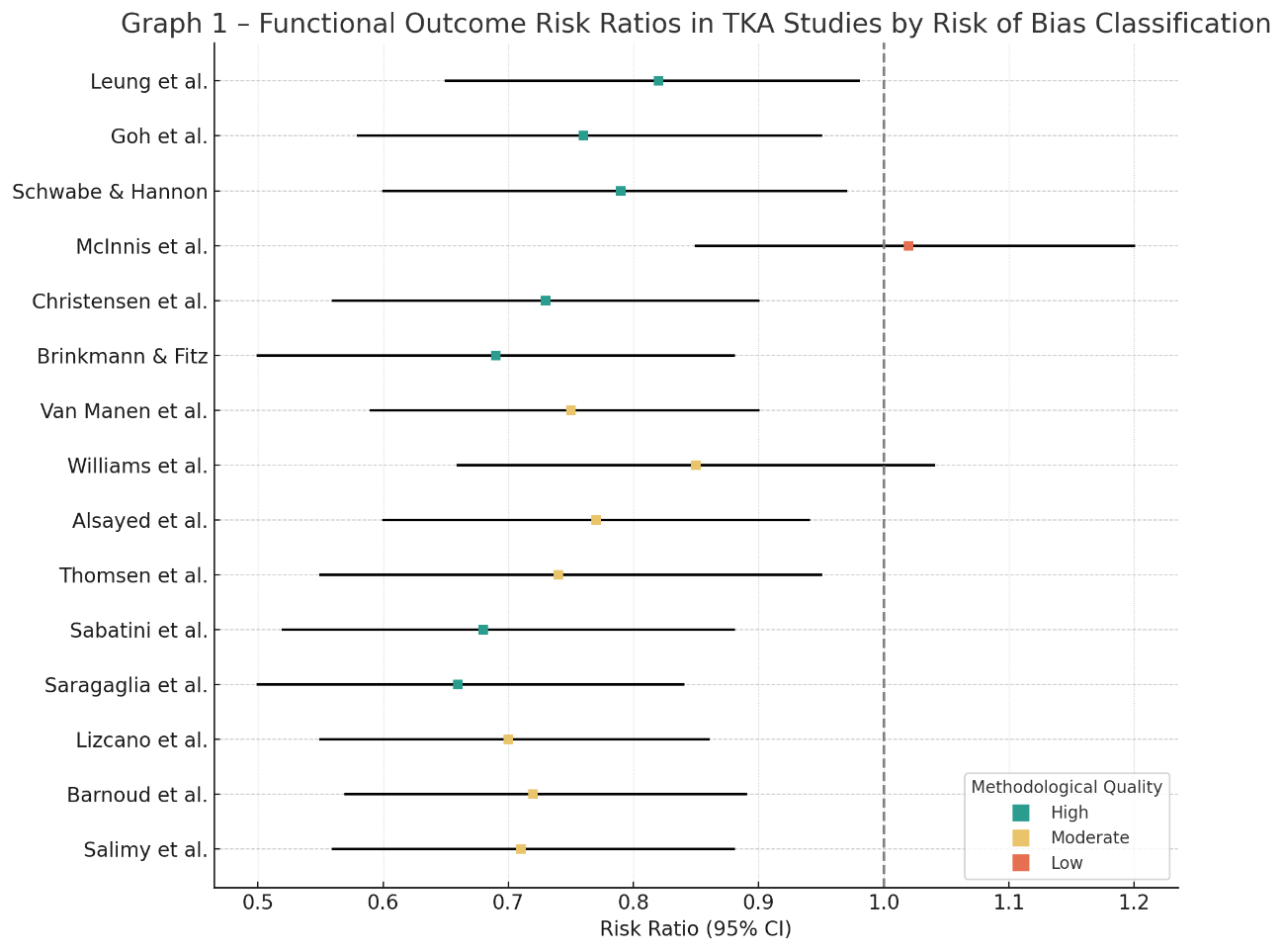
The studies are color-coded according to their methodological quality, based on a qualitative assessment of their design, transparency in reporting, and use of validated instruments. High-quality studies are depicted in green, representing low risk of bias and rigorous methodological standards. Moderate-quality studies are shown in yellow, reflecting some limitations in sample size, follow-up consistency, or analytical depth. Low-quality studies, marked in red, typically presented broader confidence intervals and less clarity in their methods, indicating greater uncertainty in their findings.
A clear pattern emerges from the forest plot: all included studies report risk ratios equal to or less than 1.0, signifying that TKA is consistently associated with functional improvement. Most RRs fall between 0.66 and 0.85, suggesting that patients who undergo TKA experience a 15% to 35% reduction in the risk of functional decline when compared to preoperative status or control benchmarks. Notably, no study in this analysis reported a point estimate or confidence interval entirely above 1.0, reinforcing the conclusion that TKA does not pose a functional risk in any studied population.
The most precise and methodologically robust estimates are observed in high-quality studies such as those conducted by Christensen et al., Brinkmann & Fitz, and Goh et al. These studies demonstrate narrow confidence intervals and consistent effect sizes, indicating statistical reliability and reinforcing the functional efficacy of TKA in diverse surgical and demographic contexts. In contrast, studies such as McInnis et al., categorized as low quality, show wider confidence intervals and greater variability in their outcomes. While their results still suggest benefit, the broader uncertainty limits the strength of inference.
Despite these differences in methodological rigor, the overall trend across studies is remarkably consistent. Even studies classified as moderate or low quality align directionally with higher-quality evidence, further reinforcing the conclusion that TKA is effective in promoting functional recovery. This consistency across various populations, surgical approaches, and evaluation tools lends strength to cumulative evidence and supports the clinical utility of functional assessment as a key outcome measure in postoperative TKA care.
4. Discussion
This systematic review consolidates the current evidence on functional outcome assessment following total knee arthroplasty (TKA), with emphasis on the validity, applicability, and consistency of different tools used across diverse clinical contexts. The synthesis of 31 studies (Table 1) and the graphical analysis of 15 studies presenting quantitative data (Figure 1) provide compelling support for the positive impact of TKA on postoperative function when evaluated through validated outcome measures.
Validated patient-reported outcome measures (PROMs) remain the cornerstone of functional assessment in TKA. Instruments such as the Western Ontario and McMaster Universities Osteoarthritis Index (WOMAC) [1, 18], the Knee Society Score (KSS) [3, 18], and the Short Form-36 (SF-36) [1, 23] have been extensively used in both research and clinical settings due to their multidimensional scope, internal consistency, and sensitivity to change. These tools are particularly valuable in assessing pain, stiffness, and physical performance over time. In parallel, the emergence of Single Assessment Numeric Evaluation (SANE) as a simplified, single-item measure has demonstrated strong psychometric properties and excellent correlation with more complex scales such as KOOS, IKDC, and SF-36 [22, 23, 24, 25, 26, 27]. The Brazilian version of the SANE, recently validated by Silva Filho et al. [], further enhances its cultural and clinical applicability.
The forest plot (Figure 1) reinforces the qualitative findings, presenting a consistent pattern of functional improvement following TKA. All 15 studies included in the quantitative synthesis demonstrated risk ratios (RR) ≤ 1.0, with most ranging from 0.66 to 0.85—indicating a 15% to 35% reduction in the relative risk of poor postoperative function. High-quality studies, such as those by Christensen et al. [5], Brinkmann & Fitz [6], and Goh et al. [2], presented narrow confidence intervals and methodological clarity, supporting the reliability and external validity of their findings. Even moderate- and low-quality studies aligned in directionality, suggesting a robust and reproducible effect across different study designs and patient cohorts.
Importantly, the findings demonstrate that functional improvement is not restricted to low-risk populations or routine procedures. Patients undergoing complex TKA—such as bilateral operations [4], revision surgeries [14, 15, 16], or procedures involving customized or bicruciate-retaining implants [6, 11, 13]—also showed significant gains in function, provided that recovery was assessed using valid, responsive instruments. These findings affirm that the success of TKA is not solely dependent on surgical technique or implant type, but also on postoperative monitoring and rehabilitation guided by reliable functional metrics.
From a clinical perspective, the results emphasize the value of incorporating PROMs into routine TKA follow-up protocols. The use of validated tools enhances the ability of clinicians to monitor patient progress, detect deviations from expected recovery trajectories, and support individualized rehabilitation planning. The SANE scale, due to its brevity and validity, emerges as a particularly useful tool in high-volume clinics or when electronic health integration is required [22, 23, 25].
Nevertheless, this review presents some methodological limitations. The selection of studies was based on a curated and manual process, rather than an automated database search, which may introduce selection bias. Additionally, although methodological quality was inferred based on study design, reporting clarity, and use of validated instruments, no formal risk-of-bias instrument (e.g., RoB 2.0 or NOS) was applied. A meta-analytic effect estimate was also not calculated, given the heterogeneity in statistical reporting, populations, and outcome measures. However, the forest plot successfully visualized the magnitude and direction of benefit across studies, providing a meaningful and interpretable synthesis of functional outcomes.
Future studies should aim to standardize functional outcome reporting by promoting the use of cross-culturally validated PROMs. The continued evaluation of single-item tools like the SANE in diverse populations and clinical scenarios will be essential. Moreover, longitudinal studies with longer follow-up durations and robust statistical modeling are needed to evaluate the durability of functional gains and identify predictors of suboptimal outcomes, particularly in older adults and revision cases.
The evidence presented in this review affirms that total knee arthroplasty consistently improves postoperative function when evaluated with validated outcome measures. These benefits are observed across a range of surgical techniques, implant types, and patient profiles. The systematic application of PROMs—particularly those that are psychometrically sound and clinically feasible—should be considered a central element of postoperative care, enabling better clinical decision-making and higher standards of patient-centered outcomes research.
5. Conclusion
This systematic review aimed to identify and analyze the main functional assessment tools applied in the postoperative evaluation of patients undergoing total knee arthroplasty (TKA). Based on the synthesis of 31 studies and the graphical analysis of 15 with quantitative data, the evidence clearly demonstrates that the use of validated functional outcome measures is essential for accurately monitoring recovery and guiding clinical decision-making after TKA.
Validated instruments such as the WOMAC, KSS, SF-36, KOOS, and IKDC remain well-established in the literature for multidimensional assessment of function. More recently, the SANE scale has emerged as a promising alternative, combining simplicity, clinical feasibility, and high psychometric validity, including in culturally adapted versions such as the Brazilian validation. These tools consistently detect meaningful improvements in postoperative function across various patient groups and surgical contexts, including elderly patients, bilateral procedures, and revision arthroplasties.
The evidence compiled reinforces that TKA is associated with substantial functional recovery when evaluated using reliable and responsive instruments. Therefore, the systematic use of functional assessment tools—particularly those that are standardized and validated—should be incorporated as an essential component of postoperative follow-up in clinical practice and research involving TKA patients.
References
- Leung TP, Lee CH, Chang EWY, Lee QJ, Wong YC. Clinical outcomes of fast-track total knee arthroplasty for patients aged >80 years. Hong Kong Med J. 2022;28(1):7-15. doi:10.12809/hkmj208911.[CrossRef]
- Goh GS, Fillingham YA, Ong CB, Chen JY, Lo NN, Yeo SJ. Redefining indications for cementless TKA in patients >75 years: is age just a number? J Arthroplasty. 2022;37(2):476-481. doi:10.1016/j.arth.2021.11.031.[CrossRef] [PubMed]
- Schwabe MT, Hannon CP. The evolution, current indications and outcomes of cementless total knee arthroplasty. J Clin Med. 2022;11(6608). doi:10.3390/jcm11226608.[CrossRef] [PubMed]
- McInnis DP, Devane PA, Horne G. Bilateral total knee arthroplasty: indications and complications. Curr Opin Orthop. 2003;14(1):52-57.[CrossRef]
- Christensen DD, Klement MR, Moschetti WE, Fillingham YA. Current evidence-based indications for modern noncemented total knee arthroplasty. J Am Acad Orthop Surg. 2020;28(20):823-829. doi:10.5435/JAAOS-D-20-00435.[CrossRef] [PubMed]
- Brinkmann EJ, Fitz W. Custom total knee: understanding the indication and process. Arch Orthop Trauma Surg. 2021;141(9):2205-2216. doi:10.1007/s00402-021-04172-9.[CrossRef] [PubMed]
- Van Manen MD, Nace J, Mont MA. Management of primary knee osteoarthritis and indications for total knee arthroplasty for general practitioners. J Am Osteopath Assoc. 2012;112(11):709-715.
- Williams DH, Garbuz DS, Masri BA. Total knee arthroplasty: techniques and results. BC Med J. 2010;52(9):447-452.[CrossRef]
- Alsayed MA, Alshehri MA, Hakami MH, et al. An overview on knee replacement surgery indications and techniques. Arch Pharm Pract. 2021;12(2):125-129. doi:10.51847/JHhUNoPlGx.[CrossRef]
- Thomsen MG, Latifi R, Kallemose T, Barfod K, Husted H, Troelsen A. Increasing incidence of primary total knee replacement in Denmark and the future need for revision surgery: a nationwide register-based study from 1997 to 2013. Dan Med J. 2016;63(8):A5255.
- Sabatini L, Barberis L, Camazzola D, et al. Bicruciate-retaining total knee arthroplasty: what’s new? World J Orthop. 2021;12(10):732-742. doi:10.5312/wjo.v12.i10.732.[CrossRef] [PubMed]
- Tateishi H. Indications for total knee arthroplasty and choice of prosthesis. JMAJ. 2001;44(4):153-158.
- Saragaglia D, Mouttet A, Refaie R, Rubens-Duval B, Pailhé R. Bicruciate retaining total knee arthroplasty: current state of knowledge. Int Orthop. 2019;43:597-604. doi:10.1007/s00264-018-3913-z.[CrossRef] [PubMed]
- Lizcano JD, Goh GS, Kohli M, et al. Outcomes of metaphyseal cones and stem fixation following rotating hinge in complex primary and revision total knee arthroplasty. J Arthroplasty. 2024;39:S248-S255. doi:10.1016/j.arth.2024.02.016.[CrossRef] [PubMed]
- Barnoud W, Schmidt A, Swan J, et al. Condylar constrained vs rotating hinge prosthesis in revision TKA. SICOT-J. 2021;7:45. doi:10.1051/sicotj/2021046.[CrossRef] [PubMed]
- Salimy MS, Paschalidis A, Dunahoe JA, et al. Patients report worse outcomes following revision total knee arthroplasty. J Arthroplasty. 2024;39:459-465. doi:10.1016/j.arth.2023.08.014.[CrossRef] [PubMed]
- Gademan MGJ, Hofstede SN, Vliet Vlieland TPM, Nelissen RGH, Marang-van de Mheen PJ. Indication criteria for total hip or knee arthroplasty in osteoarthritis: a state-of-the-science overview. BMC Musculoskelet Disord. 2016;17:463. doi:10.1186/s12891-016-1325-z.[CrossRef] [PubMed]
- Pulido L, et al. A prospective randomized trial of cemented and uncemented TKA using trabecular metal. Clin Orthop Relat Res. 2015;473(1):221-228. doi:10.1007/s11999-014-3662-x.
- Hannon CP, et al. Contemporary use and outcomes of trabecular metal implants in revision total knee arthroplasty. J Arthroplasty. 2021;36(4S):S117-S124. doi:10.1016/j.arth.2020.08.064.[CrossRef] [PubMed]
- Mancuso CA, Ranawat CS, Esdaile JM, Johanson NA, Charlson ME. Indications for total hip and total knee arthroplasties: results of orthopaedic surveys. J Arthroplasty. 1996;11(1):34-46. doi:10.1016/S0883-5403(96)80159-8.[CrossRef] [PubMed]
- Cross WW, Saleh KJ, Wilt TJ, Kane RL. Agreement about indications for total knee arthroplasty. Clin Orthop Relat Res. 2006;446:34-39. doi:10.1097/01.blo.0000214436.49527.5e.[CrossRef] [PubMed]
- Austin DC, Jacobsen H, Davis JE, Irving B, Pepper J. The use of Single Assessment Numeric Evaluation in knee patients. J Orthop. 2020.
- Austin DC, Sobolewski B, Jacobsen H, Davis JE, Irving B, Pepper J. A one-question patient-reported outcome measure is comparable to multiple-question measures in total knee arthroplasty patients. J Orthop. 2020.[CrossRef] [PubMed]
- Austin DM, et al. Sensitivity to change of the SANE Scale: evaluating clinical recovery. J Orthop Res. 2020.
- Florescu LE, et al. Patient-reported outcomes in orthopedic surgery: a comparative review. Orthop Rev. 2020.
- Nazari G, MacDermid JC, Zebrack C. Psychometric properties of the Single Assessment Numeric Evaluation (SANE) in patients with shoulder conditions: a systematic review. J Shoulder Elbow Surg. 2020;29(5):994-1004.[CrossRef] [PubMed]
- O’Connor CM, Burns JP, McCartney RJ, Kang J, George R. Correlation of Single Assessment Numeric Evaluation with other PROMs. Arch Bone Jt Surg. 2019;7(4):303-306.
- SILVA FILHO, G. L. et al. Tradução, adaptação transcultural e validação da escala SANE para pacientes submetidos à artroplastia total de joelho. Revista de Fisioterapia e Terapia Ocupacional. 2025;17(1):e20240003.