
Abstract
This study aimed to examine students' perceptions of the usefulness of formative feedback in mathematics lessons at Sagnerigu Municipality in the Northern Region of Ghana. Quantitatively, this study employed a descriptive non-experimental survey design. The population comprises all pupils of public Junior High Schools in the Sagnerigu Municipality. A purposive sampling technique was used to select the Junior High School students for the study. The criterion purposive sampling technique was used to select 518 final-year students for the 2022 Basic education certificate examination from 14 schools in Sagnerigu Municipality. The chosen schools comprised 291 students from high-performing schools and 227 students from low-performing schools. The primary tool for the study was the Student Feedback Perception Questionnaire (SFPQ), administered to the student participants. The Descriptive statistical tool was used to analyse the mean and standard deviation of the data. The study's examination of students' perceptions of feedback revealed a moderate level of perceived usefulness. This emphasises the importance of feedback as a tool for student growth and development. However, the findings also suggest the need for further support and guidance to optimise the impact of feedback on student learning outcomes. The findings also suggest that students value feedback that helps them improve their skills and strategies in Mathematics and keeps them on track to succeed. It also highlights the importance of providing different types of feedback to cater to the diverse learning needs of students. Educators can create a conducive environment that promotes student engagement and achievement by equipping teachers with effective feedback techniques, emphasising constructive comments and avoiding grades.
1. Introduction
Feedback is a critical component of effective teaching and learning, as it provides students with information on their progress and areas for improvement [1]. This implies that teachers use effective feedback to assist in revision purposes, assess learners' understanding levels, and evaluate concepts taught in class to diagnose learners' strengths and weaknesses, acting as a benchmark to prepare for the next lesson [2]. However, research has shown that students' perceptions of feedback can vary significantly based on various factors, including their socioeconomic background and school quality [3, 4, 5]. The article "Maturational differences in undergraduate medical students’ perceptions about feedback" explores the differences in perception of feedback among medical students of different age groups. The study was conducted on undergraduate medical students in their clinical years and divided into two age groups: younger students (under 25 years) and older students (25 years and above). The study found that younger students were more likely to perceive feedback as critical, whereas older students viewed feedback more positively and used it to improve their learning. Younger students tended to have a more fixed mindset. They saw feedback as a reflection of their abilities, while older students had a growth mindset and viewed feedback as an opportunity to develop [6].
One key factor that can impact students' perceptions of feedback is their engagement and motivation [7]. Students who are more engaged and motivated are generally more receptive to feedback and are more likely to use it to improve their performance. However, students in low-performing schools may be less engaged and motivated because of social and academic challenges [8]. Another factor that can impact students' perceptions of feedback is the quality and consistency of teacher feedback [2, 9]. Research has shown that teachers in low-performing schools may face various challenges that can make it difficult to deliver effective feedback to their students [10]. For example, teachers in these schools may have larger class sizes, fewer resources, and more diverse student populations, which makes it challenging to provide targeted and meaningful feedback to individual students. Students' perceptions of feedback can vary significantly based on various factors, including their engagement and motivation, the quality of their school, and the consistency and effectiveness of teacher feedback. As such, educators and policymakers need to consider these factors when designing and implementing feedback practices in schools.
Moreover, formative assessment significantly contributes to cultivating metacognitive prowess, empowering students to engage in profound introspection regarding their learning strategies and effectuating adaptive modifications necessary for optimal educational advancement [11, 12]. Given the assessment's substantial impact on instruction, any limitation imposed on the former inevitably entails a corresponding limitation.
Formative assessment has been an essential aspect of classroom instruction in many educational settings [13, 14]. This implies that teacher assessments are mainly influenced by external factors such as the nature and demand of the West Africa Examination Council (WAEC) [15, 16]. Most of the literature on formative assessment in Ghana has focused on secondary and tertiary educational settings [2, 13, 14, 15, 16, 17]. Consequently, there exists a noteworthy gap within this domain that the present study endeavours to address by investigating the formative feedback practices of mathematics teachers in junior high schools within Sagnerigu Municipality. This research endeavours to bridge the existing research gap by investigating the formative feedback methodologies employed by mathematics teachers at the Junior High School level in Sagnerigu Municipality. This study intends to explore students' perceptions regarding the usefulness of different types and levels of feedback provided by their mathematics teachers. The purpose of this study was to examine Students' Perceptions of the Usefulness of Formative Feedback in Mathematics Lessons in Sagnerigu Municipality in the Northern Region of Ghana -the study sought to answer the research question - What are students' perceptions of the usefulness of the various types of feedback?
1.1. Students' Perception of Feedback Usefulness in the Learning Process
Feedback is an integral part of the learning process and crucial for improving student learning outcomes. The literature has explored feedback from various perspectives, including teachers, institutional, and students’ perspectives. This review focuses on the literature that explores students' perspectives on feedback. The review aimed to identify common themes and patterns in the literature and highlight the factors influencing students' perceptions of feedback.
One common theme that has emerged from the literature is that students value timely, specific, and actionable feedback. Effective feedback should provide information on improving performance and focusing on learning goals [1]. This implies that teachers will have the best planning and preparation, instructional skills, classroom management, communication skills, and assessment skills to foster effective classroom discussions and learning tasks in formative assessment [18, 19]. Students prefer feedback on their specific learning goals and provide clear guidance for improving their work [19, 20]. Additionally, students appreciate feedback by acknowledging their efforts and highlighting their strengths [21].
Another common theme in the literature is that students value feedback that is given in a supportive and non-judgmental manner. Research has shown that students are more likely to engage in feedback when they perceive it as constructive and helpful [2, 21]. Feedback delivered in a critical or negative tone can demotivate and discourage students from seeking feedback in the future [20]. This posits that teachers acquire the relevant knowledge and requisite skills needed to effectively implement the formative assessment practices in the educational curriculum [22]
The literature also highlights the importance of students' involvement in feedback processes. Students appreciate opportunities to engage in feedback and reflect on their learning [21]. Feedback is a dialogic process involving both the teacher and student [2, 23]. Students value the opportunity to discuss their work with their teacher and receive feedback tailored to their needs. Factors influencing students' perceptions of feedback include the context in which feedback is provided, the type of feedback, and the teacher's feedback practices. For example, students are more likely to engage with feedback when they perceive it as relevant to their learning goals and when it is timely [21]. Additionally, students' perceptions of feedback can be influenced by their prior experiences with feedback and cultural background [20].
Knowing how students understand and respond to feedback is important for formative assessments to help them learn. This includes both the psychological states and perceptions. Students will only learn better from feedback if they change the way they think [24]. Most current research on feedback focuses on improving teachers' feedback practices. Less is known about how students receive, absorb, and use feedback. This study addresses this gap.
A study revealed that New Zealand's 9th and 10th grade students said their teachers often gave them encouragement and positive feedback. Most students, though, wanted honest and helpful feedback. They pointed out that feedback often told them what they needed to improve but not how to make those changes. Students acknowledged dismissing criticism, especially when a grade accompanied it since they perceived the grade to be more transparent and honest than the accompanying comments. Nonetheless, minority viewpoints were expressed in the focus groups, with some students opting for high marks and positive comments regardless of the quality of their work. Even though the students in the focus groups talked about what they wanted and needed from feedback, there was no evidence that they used feedback information to set goals or control themselves [25].
Some of the few studies that look at how students feel about the feedback given in the classroom to help them learn show that much of this information is poorly received and is rarely used when revising work. It can be challenging for students to use teacher feedback to enhance their learning because it is sometimes imprecise and unreasonable [26]. In contrast, the findings of "students' perceptions of classroom feedback on teacher assessment practices in the central region of Ghana" revealed that students have a reasonable opinion of feedback. According to their findings, the most common level at which teachers provide feedback to students is the process level. This feedback serves as a cue, guiding learners to a more efficient information search and use of task strategies [27].
A researcher interviewed fourteen seventh- through eleventh-grade students on their perceptions of the usefulness of dialogue, cooperative learning, and teacher-to-student feedback. The teacher was seen as an expert, explained tasks to the students, supported them in comprehending the objectives, pointed out their faults, and provided direction. Occasionally, feedback is used to assist students in comprehending and advancing their thinking. The teacher was in charge of the feedback from teacher to student (e.g. timing and content). Still, the students liked working with others because they could talk about the work and help each other when they got stuck [28]. Students perceive assessment for learning (AfL) as incorporated in and facilitated by interactions with peers and teachers [29]. Cowie discovered that 7th to 10th-grade students who focused on learning goals perceived AfL as a shared duty between instructor and student. When attempting to comprehend concepts, students preferred instructor feedback in the form of recommendations because it allowed them to participate in the process actively. Students with performance objectives regarded assessment as the primary duty of the instructor and did not perceive any role for themselves in seeking assistance to expand their learning. They preferred comments on performing the assignment and saw the instructor's efforts to elicit information about their thoughts as ineffective since they took time away from completing the task [29].
The atmosphere in the classroom could change how students understand and use feedback. If there is a lack of trust and mutual respect in a classroom, students might be less likely to answer questions that reveal what they think out of fear of getting hurt [29]. "The climate of the classroom is important, especially if students are to welcome and use negative and corrective feedback at any level" [1]. According to Cowie's study, students who interact with teachers and peers in the classroom experience these interactions as having multiple and frequently competing cognitive/academic, affective, and social relationship purposes and consequences that they experience as inextricably intertwined [29]. Students prefer classrooms where peers assist and support one another, involvement is encouraged, and teachers provide aid [30, 31]. Considered to be the best sources of support are well-intentioned peers and reliable instructors. According to the students, appraisal influences how they are perceived and treated as students and experts in the classroom. In addition, appraisal influences how individuals regard themselves as learners and experts and the ideas and activities they come to value [29].
Students regard feedback retention and confidentiality as critical factors in feedback utilisation [32, 33]. Feedback can be daunting and its effectiveness (utility) generates a unique perceptual dimension that varies among students. Students are more responsive to corrective feedback from their teachers and more likely to report their benefits. However, feedback should not be viewed merely as information; it is necessary to consider its different effects on learning and learners when prescribing large amounts of feedback. Learners interpret feedback based on their relatively stable and potent systems of beliefs about subject areas, learning processes, relationships, and learning products. Increasing the number of students who perceive feedback as valuable is essential, and educators should endeavour to enhance its usefulness. When providing feedback, it is essential to consider the diverse impacts on both the learning process and the individual learners [32]. Rather than simply delivering a large quantity of feedback, it is essential to acknowledge that learners often interpret feedback based on their personal beliefs and perceptions about the subject matter, learning methods, interpersonal connections, and educational outcomes ([34, 35]. The importance of feedback in learning and teaching is well established, but there is limited knowledge of how students understand and interpret feedback. To better understand this, the current research also focuses on exploring Junior High School students’ perception regarding the feedback they receive from their math teachers.
Feedback helps students think about their role in an instruction context, and they can use it as a "feedforward" in their learning [13, 36]. Good feedback from classroom-based formative assessment helps students learn and do better on tasks. Students' progress toward a goal can be evaluated through feedback on assignments and interactions with students. It often helps pupils achieve learning objectives. It must be highlighted that feedback from either the student or the teacher does not promote learning independently; instead, learning is boosted only when students actively embrace and act upon it [36]. In essence, the entire purpose of feedback in Education is fulfilled when either the teacher or the student concludes. Teachers may determine where students are struggling by providing sufficient feedback and adjusting their teaching methods to help them catch up [37, 38]. It is also emphasised that acting on feedback helps learners advance since it serves as a feedforward mechanism in the form of a student's learning guide.
The literature suggests that students value timely, specific, and actionable feedback that is given in a supportive and non-judgmental manner. Students appreciate opportunities to engage with feedback and reflect on their learning, and they value feedback tailored to their individual needs. The factors influencing students' perceptions of feedback include the context in which feedback is given, the type of feedback, and the teacher's feedback practices. The findings of this review highlight the importance of considering students' perspectives when designing feedback practices and policies.
1.2. A Model of Feedback by Hattie and Timperley (2007)
The feedback emphasises three key questions to guide effective feedback practices [1]. The first question, "Where am I going?" focused on clarifying the learning intentions and success criteria of students. This question helps students to understand what they are expected to learn and how they will be assessed. The second question is "How am I going?" which focuses on providing feedback that helps students understand their current progress concerning learning goals. This question allows students to identify areas where they are doing well and areas where they need to improve. The third question, "Where to next?" focuses on providing specific guidance and suggestions for enhancing students' learning. This question helps students identify concrete steps to move forward and progress towards their learning goals. Hattie and Timperley's model emphasises the importance of providing timely and specific feedback focused on learning goals and supporting student self-regulation and improvement.
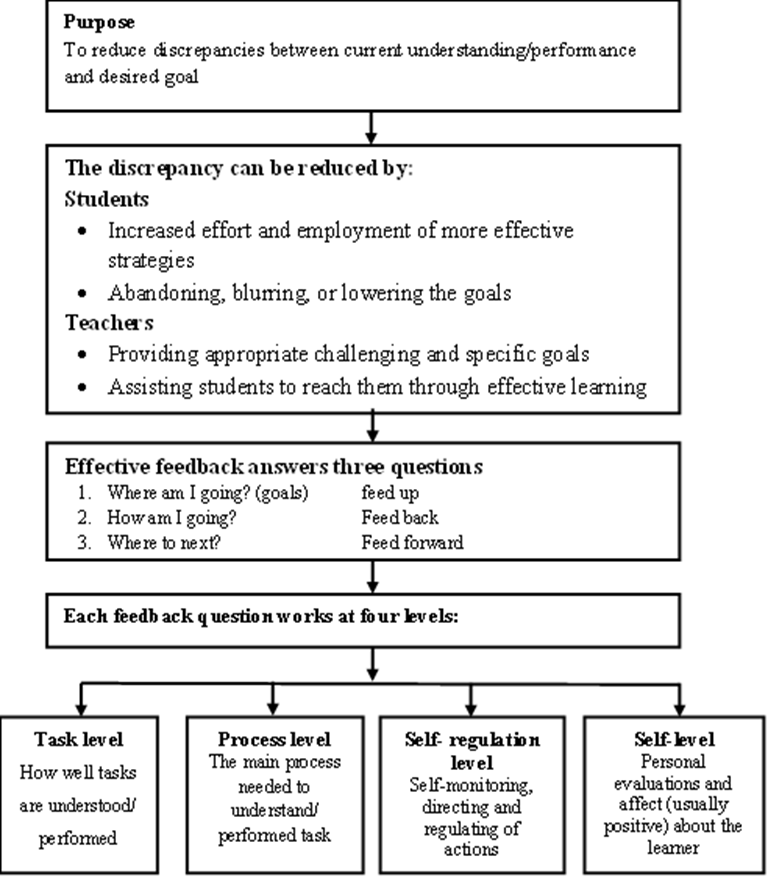
The model contains three distinct feedback questions from the learner's standpoint. These questions are as follows: Where am I going? (Feeding up) How am I doing? (Feeding back); and what comes next? (Feeding forward) The learner is expected to respond to these questions in order for the feedback to be helpful [1]. Additionally, the model is based on the concept of visible learning [39]. Visible learning involves providing students with an explanation of the learning purpose, objectives, and success criteria to be considered as active participants in the learning process. Hattie and Timperley’s model uses feedback questions such as "Where am I going?" so that students' learning intentions and success criteria can be explicitly defined. These feedback questions provide the foundation for pupils to develop self-regulation habits in their educational pursuits. Visible learning occurs when teachers use students' work samples and responses to gauge their progress toward the learning target and their instructional efficacy. This feedback helped teachers improve their instructional practices [39].
Studies have revealed that the most effective feedback is delivered from the student to the instructor [40, 41]. This kind of feedback provides concrete evidence for teachers to evaluate their influence on students' learning and encourages them to modify their instruction and feedback methods. The feedback model offers various levels of feedback that can be tailored to meet the specific needs of each student [1]. Four levels of feedback are available for each question: task, process, self-regulation, and self-level. Feedback at the task level focuses on learning outcomes, particular task needs, and specific requirements of the task. Feedback at the process level focuses on the procedures, skills, methods, and reasoning students need to execute the task. Self-regulatory level feedback requires the learner to use deep learning concepts, such as relational thinking and self-monitoring, to evaluate and change their work according to the standards they ask for. Because there is evidence that it hinders learning [40], self-level feedback, often linked with praise, was excluded from this study.
This feedback model provides a comprehensive framework for delivering effective feedback to learners. The model emphasises the importance of setting clear learning goals and expectations, providing specific and actionable feedback, and helping learners to take responsibility for their learning. Using this model, teachers can provide meaningful and relevant feedback to learners, leading to improved learning outcomes [1]. Incorporating Hattie and Timperley's Formative Feedback Model into the study establishes a crucial link between the model's framework and the investigation of formative assessment practices among mathematics teachers in the Sagnerigu Municipality. This model places significant emphasis on the provision of effective feedback to students, highlighting three fundamental questions that should guide feedback practices: "Where am I going?", "How am I going?" and "Where to next?" [1]. By considering this model, this study aims to delve into students' perceptions of the usefulness of different types of feedback. It seeks to understand how students perceive the feedback provided by their mathematics teachers, and how it influences their overall learning experience and academic growth. By exploring this aspect of the study, researchers can contribute to understanding the impact of feedback on students' motivation, engagement, and achievement in mathematics.
The study recognises the significance of feedback in formative assessment practices and acknowledges Hattie and Timperley's model as a guiding framework for investigating this aspect. By integrating this model into the study, researchers gained insights into students' perspectives on the feedback they received from their mathematics teachers. The model's three guiding questions provide a lens through which researchers can examine how feedback is designed and delivered in a classroom. This helps researchers explore whether students perceive the feedback as clear and informative regarding their learning progress (i.e., "Where am I going?"), whether they can assess their current level of understanding and performance (i.e., "How am I going?"), and whether they receive guidance on improving and moving forward in their learning (i.e., "Where to next?").
Incorporating Hattie and Timperley's Formative Feedback Model contributes to the understanding of the role of feedback in students' learning outcomes. By exploring students' perceptions of the usefulness of feedback, this study sheds light on how feedback affects their motivation, engagement, and achievement in mathematics. It provides valuable insights into the effectiveness of different types of feedback. It provides recommendations for mathematics teachers in the Sagnerigu Municipality to enhance their feedback practices to optimise student learning and growth. By considering Hattie and Timperley's Formative Feedback Model, this study investigated students' perceptions of feedback in the context of formative assessment practices among mathematics teachers. It explores the impact of feedback on students' motivation, engagement, and achievement, ultimately contributing to the understanding of how feedback can be effectively utilised to enhance students' learning outcomes in mathematics.
2. Materials and methods
Quantitatively, this study employed a descriptive non-experimental survey design. This design was chosen to gather valuable data regarding students' perceptions of the effectiveness of feedback provided by their mathematics teachers. The population comprises all students of public Junior High Schools in the Sagnerigu Municipality. A purposive sampling was used to select Junior High School students for the study. Census sampling was used to select the schools' mathematics teachers. The criterion purposive sampling technique was used to select 14 schools in Sagnerigu Municipality. The chosen schools comprise 518 final-year students, with 291 from high-performing schools and 227 from low-performing schools. The primary tool for the study was the Student Feedback Perception Questionnaire (SFPQ), administered to the student participants. The data were analyzed using descriptive statistical methods to calculate the mean and standard deviation.
3. Results
This section presents the results of the research question - What are students' perceptions of the usefulness of the various types of feedback? This research question aimed to secure enough data to provide a reasonably large sample of Junior High School students' perception of the usefulness of feedback received from their mathematics teachers. The data collected to answer this research question involved the administration of the student feedback perception questionnaire to a sample of 518 Junior High School pupils across 14 purposively selected schools in the Sagnerigu Municipality. The Student Perception Feedback Questionnaire categorised items into three sections: feeding up, feeding back and feeding forward. The three feedback types correspond to the following questions: "Where am I going? Where am I headed? What is my next move?" [1].
Students were expected to indicate if the feedback is "1 = not helpful", "2 = slightly helpful", "3 = somewhat helpful", "4 = moderately helpful", "5 = mostly helpful", "6 = constructive" and "7 = extremely helpful". The findings of the questionnaire are presented below. From Table 1, all the feedback responses on feeding up show that it is moderately helpful to students, with a mean range of 3.62 to 4.37 and a standard deviation of 1.43 to 1.78. Regarding feedback, item 12, showing students' progress in Mathematics, has the lowest mean score of 3.65. item 22, showing how helpful comments from the teacher help keep students on track to succeed in Mathematics, has the highest mean score of 4.45. All the remaining items on feeding back have a mean range between 3.65 and 4.45, indicating that feeding up is moderately helpful to the student in their mathematics achievement learning process.
As indicated in Table 1, feeding forward responses had a mean range of 3.73 to 4.58. Item 30: "How helpful is it when you are asked what your next improvement step would be on the marking guide?" All the items on feeding forward were perceived to be moderately helpful to students except item 28, which has the highest mean score of 4.58, mainly indicating “helpful feedback” in helping students attain their learning outcomes.
Table 1 presents the students' perception of feedback responses for various items. A total of 518 students were surveyed, and each item's mean and standard deviation (SD) are presented. Under the category of feeding up, the items included feedback that tells students what they are learning (WALT statement), exemplars showing success, marking guides, feedback on what the teacher is looking for in the student's work, feedback explaining the key ideas, feedback on questions to find out more about the topic, feedback on skills needed to complete the task, feedback on strategies to complete the task, and feedback asking about what the student thinks they are learning, the focus of their writing, and their goals for their writing. Under the category of feeding back, the items included feedback on pre-assessments, feedback on drafts, feedback on work in class that tells students if their writing matches what the teacher is looking for, feedback during class discussions about their ideas, thinking of concepts, skills in mathematics, and strategies in working on mathematical problems, and feedback asking if the student thinks they are on track to succeed, how their workings match the marking guide, and if they are on track to achieving their goal. Finally, under the category of feeding forward, the items included feedback on a draft/rough copy, feedback on what to focus on to improve, feedback on improving ideas, thinking, mathematics skills, and mathematics strategies, and feedback asking what to do to improve, what the next improvement step would be on the marking guide, and how to achieve their goal.
The mean scores for each item ranged from 3.62 to 4.58, with most items receiving scores above 4.0, indicating that students found the feedback helpful. The standard deviations ranged from 1.24 to 1.78, indicating some variability in student perceptions of the helpfulness of the feedback.
The study examined junior school students' perceptions of different types of feedback in mathematics. The data in Table 2 show the mean and standard deviation of the students' responses to three types of feedback: feeding up, feeding back, and feeding forward. The results show that students perceive all three types of feedback as helpful, with the highest mean score of 4.12 for feeding forward, followed by 3.98 for feeding back and 3.95 for feeding up.
In terms of specific feedback items, the data in Table 1 shows that feedback that highlights the skills and strategies needed to complete a task, feedback that tells students how to improve their mathematics strategies and feedback that helps keep students on track to succeed in Mathematics received the highest mean scores. On the other hand, feedback on the focus of writing and feedback on pre-assessments received the lowest mean scores. The standard deviations of the responses for all three types of feedback were relatively high, indicating a wide range of responses among the students. This suggests that while most students found the feedback helpful, some may not have found it as useful or relevant to their learning.
4. Discussion on Students' Perceptions of Feedback Usefulness
Feedback is a critical component of effective teaching and learning, as it provides students with information about their performance and helps them identify areas for improvement. The findings of this study suggest that feedback is moderately helpful for students, indicating that it has significant benefits for student learning and achievement. One of the primary benefits of feedback is that it helps students understand how well they are performing and what they need to do to improve. Specific, timely, and actionable feedback helps students identify their strengths and weaknesses and develop an improvement plan [24]. This is particularly important for students struggling with a particular subject or skill, as feedback can provide guidance and support they need to succeed.
The findings of this study also suggest that feedback is helpful across various feedback subscales: feeding up, feeding forward, and feeding back. Feeding up feedback helps students understand learning goals and expectations, while feeding forward feedback helps students identify the next steps and opportunities for improvement. Feedback helps students review and reflect on their performance, providing a sense of closure and encouraging further learning. The findings of this study on students' perception of feedback are in tandem with those of the previous study, which showed that students have a good perception of feedback [27]. However, the current study indicates the magnitude at which students perceive the usefulness or goodness of feedback, which was not inherent in the study [27]. The findings indicate that students have, at best, moderate opinions regarding the quality and value of feedback. In receiving feedback on their performance, students should be encouraged to reflect on their learning and identify areas for improvement. This helps them to become more self-aware of their strengths and weaknesses and better equipped to take ownership of their learning.
The classroom atmosphere may affect how well students comprehend and apply feedback. Students may be less likely to respond to questions that reveal their opinions if classmates lack trust and respect out of fear of being hurt [29]. This may explain why students do not have a high rating for the usefulness of feedback. This study provides an eye-opener for mathematics teachers to understand that feedback can only be effective in enhancing student learning outcomes when it is geared towards altering students' mindsets towards utilising feedback as a tool for learning. The findings of this study provide insight to mathematics teachers on how students' perception of feedback could adversely affect their learning and performance. It can be challenging for students to use teacher feedback to enhance their learning since it is sometimes imprecise and unreasonable [26]. Teachers must provide specific and reasonable feedback to ensure students have a positive mindset about the usefulness of the various feedback types. When students perceive feedback nicely, they act on it, which helps them learn and do better. Feedback acknowledging students' efforts and highlighting their successes can boost their confidence and encourage them to continue working hard [42]. Similarly, feedback that identifies areas for improvement and provides specific suggestions can inspire students to take action and work towards their goals [2, 43].
5. Conclusion and Recommendation
The study's examination of students' feedback perceptions revealed a moderate level of perceived usefulness. This emphasises the importance of feedback as a tool for student growth and development. However, the findings also suggest the need for further support and guidance to optimise the impact of feedback on student learning outcomes. The findings also suggest that students value feedback that helps them improve their mathematical skills and strategies and keeps them on track to succeed. It also highlights the importance of providing different types of feedback to cater to the diverse learning needs of students. Educators can create a conducive environment that promotes student engagement and achievement by equipping teachers with effective feedback techniques, emphasising constructive comments and avoiding grades.
Author’s Contributions: Conceptualisation; methodology; validation; formal analysis; investigation; resources; data curation; writing—original draft preparation; writing—review and editing; visualisation; supervision; project administration. All authors have read and agreed to the published version of the manuscript.
Funding: "This research received no external funding."
Data Availability Statement: Data is available on request from the corresponding author.
Acknowledgements: I acknowledge the respondents for their time and patience.
Conflicts of Interest: "The author declares no conflict of interest." "No funders had any role in the study's design; in the collection, analyses, or interpretation of data; in the writing of the manuscript, or in the decision to publish the results".
References
- Hattie, J., & Timperley, H. (2007). The power of feedback. Review of educational research, 77(1), 81-112.[CrossRef]
- Bordoh, A. (2022). Teacher Trainees Use of Feedback in Assessing Student Learning in Social Studies Lessons in Basic Schools in Ghana: A Study of Selected Colleges of Education in Western and Northern Regions. Social Educator, 7(1), 27-43.
- Ahea, M. M. A. B., Ahea, M. R. K., & Rahaman, I. (2016). The Value and Effectiveness of Feedback in Improving Students' Learning and Professionalizing Teaching in Higher Education. Journal of Education and Practice, 7(16), 38-41.
- Sortkær, B. (2019). Feedback for everybody? Exploring the relationship between students' perceptions of feedback and socioeconomic status. British Educational Research Journal, 45(4), 717-735.[CrossRef]
- Kankam, B., Bordoh, A., Eshun, I., Bassaw, T. K., & Fredrick Yaw Korang, F. Y. (2014). Teachers’ perception of authentic assessment techniques practice in Social Studies lessons in Senior High Schools in Ghana. International Journal of Educational Research and Information Science, 1(4), 62-68.
- Murdoch‐Eaton, D., & Sargeant, J. (2012). Maturational differences in undergraduate medical students’ perceptions about feedback. Medical Education, 46(7), 711-721.[CrossRef] [PubMed]
- Gan, Z., An, Z., & Liu, F. (2021). Teacher feedback practices, student feedback motivation, and feedback behaviour: How are they associated with learning outcomes? Frontiers in Psychology, 12, 697045.[CrossRef] [PubMed]
- Flippo, R. F., Gehsmann, K., & Halladay, J. (2021). Assessing readers: Qualitative assessment and student-centred instruction. Routledge.[CrossRef]
- Pokorny, H. (2016). Assessment for learning. Enhancing teaching practice in Higher Education, 69-90.
- Lee, H., Chung, H. Q., Zhang, Y., Abedi, J., & Warschauer, M. (2020). The effectiveness and features of formative assessment in US K-12 education: A systematic review. Applied Measurement in Education, 33(2), 124-140.[CrossRef]
- Earl, L. M. (2013). Assessment as learning: Using classroom assessment to maximise student learning. Corwin Press.
- Shepard, L. A. (2019). Classroom assessment to support teaching and learning. The ANNALS of the American Academy of Political and Social Science, 683(1), 183-200.[CrossRef]
- Bordoh, A. (2023). Efficacy of Formative Assessment Practices in Social Studies Instructions: A Case Study of Holy Child College of Education in Ghana. Asian J. Educ. Soc. Stud., 49(4), 409-419. https://doi.org/10.9734/ajess/2023/v49i41219[CrossRef]
- Eshun, I., Ochour, K. B., & Bordoh, A. (2024). Factors Influencing Formative Assessment Practices of Junior High School Social Studies Teachers. Innovare Journal of Education, 12(1), 48-54. DOI: https://doi.org/10.22159/ijoe.2024v12i1.49794[CrossRef]
- Kankam, B., Bordoh, A., Eshun, I., Bassaw, T. K., & Fredrick Yaw Korang, F. Y. (2014). Teachers’ perception of authentic assessment techniques practice in Social Studies lessons in Senior High Schools in Ghana. International Journal of Educational Research and Information Science, 1(4), 62-68.
- Ntim, W. N., Annan-Brew, R. K., Asamoah-Gyimah, K., Owusu-Amoako, J., Adzrolo, B., & Adobah, E. (2023). Handling Formative Assessment for and as Learning: The Role of Classroom Teachers. Psychology, 14(8), 1260-1267.[CrossRef]
- Bordoh, A., Bassaw, T. K., & Eshun, I. (2013). Social Studies tutors' cognition in formative assessment in colleges of Education in Ghana. Development Country Studies, 3(11), 1-11.
- Bordoh, A., Nyantakyi, F., Otoo, K. A., Boakyewaa, A., Owusu-Ansah, P., & Eshun, I. (2021). Effective teaching of Social Studies concepts in Basic Schools in Ghana. Universal Journal of Social Sciences and Humanities, 1(1), 46-53.[CrossRef]
- Eshun, I., Bordoh, A., Bassaw, T. K., & Mensah, M. F. (2014). Evaluating social studies students' learning using formative assessment in selected Colleges of Education in Ghana. British Journal of Education, 2(1), 39-48.
- Tannant, M., Mckie, A., & Wright, S. (2014). A place of my own: reflective, formative spaces for learning, teaching and assessment.
- Carless, D., & Winstone, N. (2023). Teacher feedback literacy and its interplay with student feedback literacy. Teaching in Higher Education, 28(1), 150-163.[CrossRef]
- Eshun, I., Bordoh, A., & Opoku-Afriyie, P. (2024). An Evaluation of Implementing the Social Studies Curriculum in Ghana: A Case Study of the Asante Akim North District. Asian Journal of Education and Social Studies, 50(5), 381-402.[CrossRef]
- Molloy, E. K., & Boud, D. (2014). Feedback models for learning, teaching and performance. Handbook of research on educational communications and technology, 413-424.[CrossRef]
- Sadler, I., Reimann, N., & Sambell, K. (2023). Feedforward practices: a systematic review of the literature. Assessment & Evaluation in Higher Education, 48(3), 305-320.[CrossRef]
- Brown, G. T., Peterson, E. R., & Yao, E. S. (2016). Student conceptions of feedback: Impact on self‐regulation, self‐efficacy, and academic achievement. British Journal of Educational Psychology, 86(4), 606-629.[CrossRef] [PubMed]
- Mayer, R. E. (2018). Educational psychology’s past and future contributions to the science of learning, science of instruction, and science of assessment. Journal of Educational Psychology, 110(2), 174.[CrossRef]
- Annan-Brew, R., & Cobbinah, A. (2020). Gender-related differential item functioning of 2015 WASSCE core Mathematics results in Southern Ghana using Logistic Regression procedure. European Scientific Journal, 16(16), 188-198.[CrossRef]
- Carnell, E. (2007). Conceptions of effective teaching in higher Education: extending the boundaries. Teaching in Higher Education, 12(1), 25-40.[CrossRef]
- Cowie, B. (2005). Pupil commentary on assessment for learning. Curriculum Journal, 16(2), 137-151.[CrossRef]
- Waldrip, B. G., Fisher, D. L., & Dorman, J. (2009). Identifying exemplary science teachers through students’ perceptions of their learning environment. Learning Environments Research, 12, 1-13.[CrossRef]
- Bordoh, A., Brew, E., Otoo, K. A., Owusu-Ansah, P., & Yaw, O, E (2021). Use of Teacher’s Profile Dimensions to Assess Social Studies Student’s Learning Outcomes at The Senior High Schools in Ghana. Innovare Journal of Education, 9(4), 14-21.[CrossRef]
- King, P. E., Schrodt, P., & Weisel, J. J. (2009). The instructional feedback orientation scale: Conceptualizing and validating a new measure for assessing perceptions of instructional feedback. Communication Education, 58(2), 235-261.[CrossRef]
- Eshun, I., Zuure, D. N., Brew, E., & Bordoh, A. (2019). Implications of teachers’ knowledge of social studies profile dimensions in teaching and learning in senior high schools. Journal of Social Sciences and Humanities, 5(3), 209-221.
- Andrade, H. L. (2010). Students as the definitive source of formative assessment: Academic self-assessment and the self-regulation of learning. In Handbook of formative assessment (pp. 90-105). Routledge.[CrossRef]
- Boadu, K., Bordoh, A., Eshun, I., & Kweku Bassaw, T. (2014). Social Studies teachers' content knowledge impacts students in the Senior High Schools in Ghana.
- Brookfield, S. D. (2017). Becoming a critically reflective teacher. John Wiley & Sons.
- Sato, M., & Loewen, S. (2019). Evidence-based second language pedagogy. New York, NY: Routledge.[CrossRef]
- Osman, S., Bordoh, A., & Eshun, I. (2021). Primary School Teachers' Conceptions of Assessment in the Sissla East Municipality. International Journal of Research and Innovation in Social Science, 5(3), 311-324.[CrossRef]
- Hattie, J. A., & Yates, G. C. (2014). Using feedback to promote learning. Applying the science of learning in Education: Infusing psychological science into the curriculum, 45-58.[CrossRef] [PubMed]
- Hattie, J. O. N. H. (2016). Know thy impact. On Formative assessment: Readings from educational leadership (EL Essentials), 36.
- Bordoh, A., Kwarteng, P., Osman, S., Bakar, A., Brew, E., Ibrahim, W. A., & Bassaw, K. T. (2018). Evaluation of background knowledge of teachers using techniques and strategies in assessing Social Studies concepts in Ghana. Open Science Journal of Education, 6(1), 1-9.
- Black, P., & Wiliam, D. (1998). Assessment and classroom learning. Assessment in Education: principles, policy & practice, 5(1), 7-74.[CrossRef]
- Bekoe, S. O., Eshun, I., & Bordoh, A. (2013). Formative assessment techniques tutors use to assess teacher-trainee in Social Studies in Colleges of Education in Ghana. Research on Humanities and Social Sciences, 3(4), 20-30.