

Emerging smart medical instruments combined with advanced smart industrial equipment facilitate the collection of vast volumes of critical data. This data not only enables significantly more accurate and cost-effective diagnosis and maintenance but also enriches the datasets available for AI algorithms, leading to improved insights and outcomes. The integration of high-speed and ultra-reliable telecommunications infrastructure is crucial, as it supports the cloud model. This model allows for off-device aggregation in the cloud, which effectively offloads infrastructure demands and provides an extended runway for future technological improvements before the deployment of the next generation of devices. However, in certain scenarios, latency and bandwidth limitations present significant challenges. These limitations require that a substantial amount of AI and machine learning processing is conducted directly on the transmitted data, which places rigorous demands on both the processing subsystems and the communications links themselves. The current project directly addresses the accelerator side of this multifaceted issue. It will carry out comprehensive end-to-end demonstrations leveraging pilot 5G networks and telemedicine facilities, collaborating closely with major industry participants to showcase the capabilities and potential of this innovative technology. This collaborative effort is essential to pushing the boundaries of what is possible in smart medical instruments and industrial applications [1].
Advancements in Smart Medical and Industrial Devices: Enhancing Efficiency and Connectivity with High-Speed Telecom Networks
September 02, 2021
October 26, 2021
November 30, 2021
December 27, 2021
This is an Open Access article, distributed under the terms of the Creative Commons Attribution 4.0 International License (http://creativecommons.org/licenses/by/4.0/), which permits unrestricted use, distribution and reproduction in any medium or format, provided the original work is properly cited.
Abstract
1. Introduction
With the advent of 5G and the work towards 6G technologies, vast opportunities for not only better communications but also the need to spatially and temporally exchange information have presented themselves. In addition to traditional terminals such as mobile phones and access points, users of the accessible network infrastructure have recently started to include many augmented humans, IoT devices, industrial robots, drones with many capabilities, mission-critical communication systems, broadcast systems, satellite connections, and many others. The fifth generation of cellular wireless technologies aimed to support such enhanced connectivity. Efforts towards 6G have already started, and the vision for the future ten years, i.e., towards 2030 and beyond, is being shaped. We will focus on wireless connectivity with special emphasis on smart medical devices for use with the human body [2].
1.1. Definition and Framework
Over the past two decades, we have been experiencing a significant technological shift in the definition of 'real-world' objects. Indeed, with the advances in low-power advanced computing, autonomy, microelectromechanical systems, wireless connectivity, and finite energy resources, the definition of an entity, whether it belongs to the living or non-living world, undergoes a significant evolution where digital is increasingly becoming integrated. A device is a named unit of equipment that is capable of performing a specific task. It can be made of electronic or material components. It can be either part of a large system or stand-alone. Moreover, based on its functionalities or capability to implement computations, we can divide devices into smart and simple. The evolution of digital technology leads to the development of smarter and smarter devices, capable of exchanging information with the surrounding environment, collecting huge amounts of data, and performing specific application-oriented functionalities to support, optimize, and enhance intended applications.
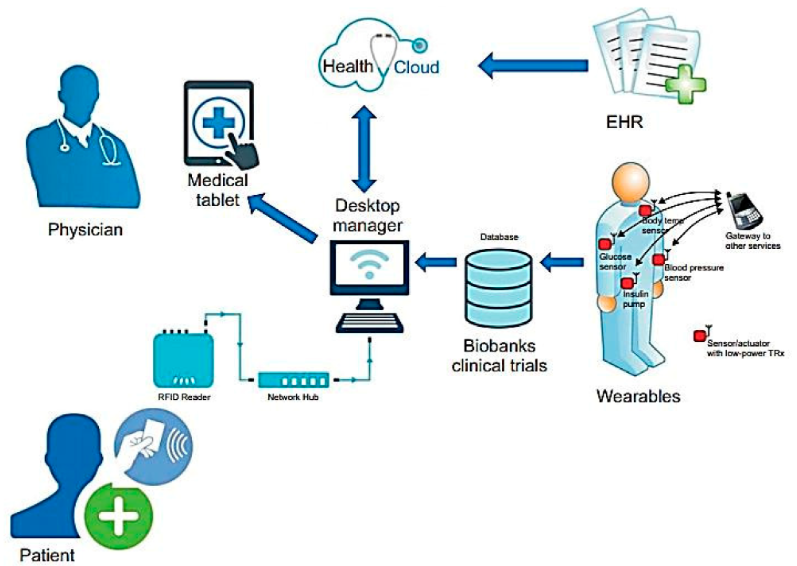
Smart devices represent a significant subset of devices. The only requirement is that they exchange information with their environment. We can, indeed, have smart components. These are meant as technological implementations of smart functional requirements of another entity. For example, wheel tire pressure and temperature sensors are meant as smart components for a car. We can also have smart living beings that are entities that exist and behave in the physical world and even exhibit intelligence when performing specific tasks. Finally, we have a precise and practical definition of smart medical and industrial devices. These are specialized entities equipped with telecommunications infrastructure that implement wide functionalities ranging from health monitoring, therapy delivery, and indoor localization. The main enabler of technology enhancement that moves smart institutions from expensive equipment to smaller, cheaper, energy-efficient, and portable devices is the increasing speed and effectiveness in the management of medical activities permitted by greater broadband services in the health sector.
Equation 1: Data Transmission and Latency Optimization in 5G Networks
Where:
= Total data processing time,
= AI processing time on the device,
= Data transmission time over 5G,
= Edge computing processing time.
1.2. Structure of Organizational Systems
The proposed architecture of an organizational information system aims to support the enterprise's functioning at all levels by supporting the processes related to managerial decision-making. Though the importance of processes that function at the lower management levels has been repeatedly highlighted, the organizational information system would support all object-related processes at all levels. The top-level structure of the organizational information system is composed of collections of components of the systems for supporting collaborative information systems, which represent the organizational processes related to group, collective, and team operation, and enterprise information systems, which support interpersonal communication.
Support for groups, collectives, and teams is particularly important for answering the increasingly diversified public and market needs. Efficient solutions to the pressing problems associated with culture, dynamic change, masterminding, decision-making processes, and group-member attribute transfers require that work on the collaborative information system components be expanded. The pertinent collaborative information system components might respond to these problems because they are designed to help people use the advanced and specialized capabilities of information and telecommunications tools, intellectually assimilating information resources, and solving collective problems related to the information and telecommunications tools used by a collective and the tasks completed with this equipment [3].
2. Overview of Smart Devices
This section provides background information on smart medical and industrial devices, including their design principles, application scenarios, and example implementations. These details not only help depict the unique features of the next-generation devices but also lay the foundation for our analysis and discussion in subsequent sections. The introduction of the overview ends with a summary highlighting the challenges in enabling such smart devices and the benefits to be derived in the context of future high-speed telecom networks. Smart devices route or control chemicals to accomplish specific physical, chemical, or biomedical functions in the human body or industrial process control or energy applications. The need for smartness arises from the user's need for an increased amount of functionality and user-friendliness obtained from smaller tools. In this section, we classify smart devices based on their fundamental function of enabling basic chemical functions. We distinguish between passive and active smart devices. Passive smart medical and industrial devices do not place additional active components in their structure to provide additional functions beyond their chemical template or structure. Active smart medical and industrial devices are used for a wide range of diagnostic, therapeutic, energy, environmental, and materials applications. We will provide detailed descriptions of the principles of active smart medical and industrial devices and the usage of these devices in critical applications throughout this report. Smart medical and industrial devices reduce the amount of user intervention required to accomplish a specific task [4].
2.1. Definition and Scope
The emergence of a new generation of high-speed telecom networks is providing new possibilities for establishing a new layer of communication, association, and the distribution of information or networked intelligence. The Internet of Things requires redefining the road to the evolution of wireless telecommunication technologies. The strategies for these networks point to this specific field. The need for improving energy savings, reliability, autonomy, scalability, and the integration of the IoT with existing and upgraded infrastructures will force innovations in network and wireless technologies, as well as in the devices that comprise the IoT.
The latest development in wireless networks, designed to provide the capability to ensure the future successful deployment of the IoT, mainly relies on a new generation of wavelengths, which are planned to connect an increasing number of wireless devices. Connecting different types of devices with a network that provides a range of achievable data rates, device control, and power consumption with variable dimensions aims to improve network performance, ensuring the efficient and flexible use of network infrastructure and allowing the simultaneous support of services with different quality of services. The IoT fully realizes its potential when integrated with technologies and innovations that strongly derive from these networks. As the number of connected devices in a telecommunication network increases, the demand for power supply increases, mainly because of the increased number of small base stations and the massive transmitters involved in these new telecommunication infrastructures. This corresponds to a swift increase in operating expenses, in particular the energy bill for the amount of energy to be supplied to the network. In these networks, the waiting time between wake/traffic information frame slots of low-power users is significantly higher than that of high-power users.
2.2. Categories of Smart Devices
Smart devices such as wearable health-monitoring devices and industrial smart sensors are broadly used in a wide range of applications. These smart devices are gaining popularity due to their efficiency and connectivity. As these devices become more sophisticated, the speed at which they communicate can, however, become a bottleneck. High-speed telecommunications networks can collect data from a large number of smart devices, distribute the data, and analyze the data. Nonetheless, the smart devices themselves are not usually considered part of telecommunications networks. There are also many categories of smart devices. Two prominent categories, smart medical devices, and smart industrial devices, are the focus of this paper. Smart medical devices include wearable and implantable devices for chronic health monitoring that can be used for the early detection and prevention of illness. Smart industrial devices include intelligent manufacturing systems that perform the functional monitoring, control, and adjustment of industrial processes.
Smart devices are broadly used in a wide range of applications, from wearable health-monitoring devices used for informed decision-making regarding personal health and wellness to the many types of industrial sensors used for automated process control and environmental monitoring. These devices are defined by their enhanced built-in intelligence, comprising various advanced functions that allow them to perform independently of the need for human intervention. With the development of technology, these advanced functions have grown more sophisticated, leading to increasing data generation. The nearly inflexible power budgets for the integrated energy storage units of these devices can, however, result in more frequent communication, now a performance bottleneck for many categories of smart devices.
3. High-Speed Telecom Networks
The current high-speed telecom networks in most cases support speeds up to 1 Gb/s, but transport distances are limited to a few hundred meters. This is mainly for data center interconnections and in some areas of commercial districts. However, the signaling rates of 10 Gb/s and beyond are only feasible for limited distances, usually within communication nodes. A quick and easy distribution system, such as optical fiber networks for general applications in a commercial or residential environment, is an ever-evolving challenge for the industry [5].
To provide the highest amount of available bandwidth by optical fiber, network operators have embraced wavelength division multiplexing, going from a small combination of carriers to at least 96 total carriers. This is known as an optical spectrum. Optical signaling rates can be up to 100 Gb/s per carrier, usually occupying a full optical spectrum, although its data rates do not represent physical limitations. It has become commonplace to have a group communication system in which carriers at multiples of 10 Gb/s are supported at a minimum, utilizing the optical spectrum.
Nowadays, the overall industry goal is the widescale implementation of WDM PON, in replacement of the current time-divisioned PONs. This initiative has been undertaken mainly by standards bodies and interested equipment, components, and network operators, with some institutional support and pressure mainly from developing countries.
Despite the headlong rush into the transfer of high data rates through optical chips or silicon substrates, the transfer of data at general modulating rates, including UHD visual data and signals from many new smart or ultraconvenient devices in development, is still dependent on the signaling requirements of an overall augmentation of the telecom network [6].
3.1. Evolution of Telecom Technologies
In recent years, a dramatic increase in internet bandwidth quality and coverage has been made available to an increasing number of international users. Internet users have grown by more than one order of magnitude, but what is most striking is that the huge increment is achieved in a very recent period of a few years. Another striking aspect is the increase of "always connected" users accessing very high-speed data services, fostering applications at the dawn of the so-called "broadband global society." The pervasiveness of broadband access is currently taken as the reference for end-to-end services and is serving as a platform on which to build business models and support a wide range of new services. The current evolution toward "IP everywhere" represents the application of a well-established concept—locomotion—to telecommunications infrastructure. As an example, historically, vehicles have traveled a few kilometers per hour. In the information and technology era we live in, due to much better connectivity, ideas, and information can travel thousands of kilometers per hour.
The significant data traffic growth that has been experienced leads us to predict that this trend will continue for the years to come. This growth is expected to reach all segments of the world at different rates, but simply no continent or country is exempt from this. As expected, the trend towards individual mobility and increasing dominant use of place-independent access both share responsibility for developing the data access market. These influences fixed-line services but also cite opportunities for mobile access growth in the years to come.
3.2. 5G and Beyond
Recognizing the mission-critical and time-sensitive requirements of a broad portfolio of targeted IoT applications spread across various industry sectors, 5G was developed with the vision of extending its core capabilities. After the launch of Release 15 in 2018, massive machine-type communication capabilities have been enhanced significantly in Release 17 through industrial perspective requirements. The study of next-generation and beyond-5G technologies such as 6G, expected to have a service enablement period of 2029 and onwards, is ongoing, accompanied by public metrics aimed towards futuristic communication goals like user throughputs and uplink transmission for drones.
The future interconnected world of higher connecting nodes can be enabled, in part, by the creation of shared industrial and telecommunication platforms that might require spectrum utilization, technology convergence, and vertically dedicated network slices. Corporately executable network slicing avoids QoS competition between the factory machine and mobile subscriber in the context of the previous coexistence of both using subscription-sharing features. Other coherent and complementary aspects are allowed to be exploited, inclusive of the edge cloud and the core network. Efforts to standardize different aspects should be made towards enabling the necessary technologies for an optimal factory-5G network system configuration. Such conditions can include exploiting the non-public sharing of spectrum among vertical users relevant to 5G, technically implementable spatial segmentation management of multidirectional cellular communications, benchmark test setups for further development, and security-ensured assets connection [7].
4. Impact on Medical Devices
The development of faster, more secure, and more efficient medical devices and systems designed to be used in hospitals, medical offices, and even private homes has been in progress for many years. Modern instrumentation systems would more easily interface with the Internet and World Wide Web telecommunication facilities when higher-speed networks become more generally available. The capabilities of healthcare providers situated at a distance from each other or from patients will in this way become more interlinked. The need for remote monitoring of patients' vital signs and other health-related information will become less dependent on patient relatives, hospital staff, or the patients themselves. Less obvious are the consequences for patient health and privacy when the ability to remotely monitor health-related conditions can extend beyond hospitals, medical offices, and patient homes to permit continuous surveillance of entire populations [8].
The range of medical devices that could employ high-speed telecommunication facilities is vast and multifaceted. They can be classified into four different categories, measured by their degree of sophistication, technical complexity, and ultimate cost. Based on the broadest definition, the first category encompasses healthcare systems that make use of high-speed telecommunication. The second category includes the specialized instrumentation systems that make continuous or frequent use of high-speed telecommunication. Non-specialized support equipment often used by lay operators comprises the third category, and the most restricted and limited in scope are the non-technical medical device applications in the fourth category. Only examples of the first three categories will be treated in this section. The fourth category is deliberately excluded from this review, as it does not exploit innovative telecommunications or telehealthcare technology for health monitoring at a distance.
4.1. Telemedicine and Remote Monitoring
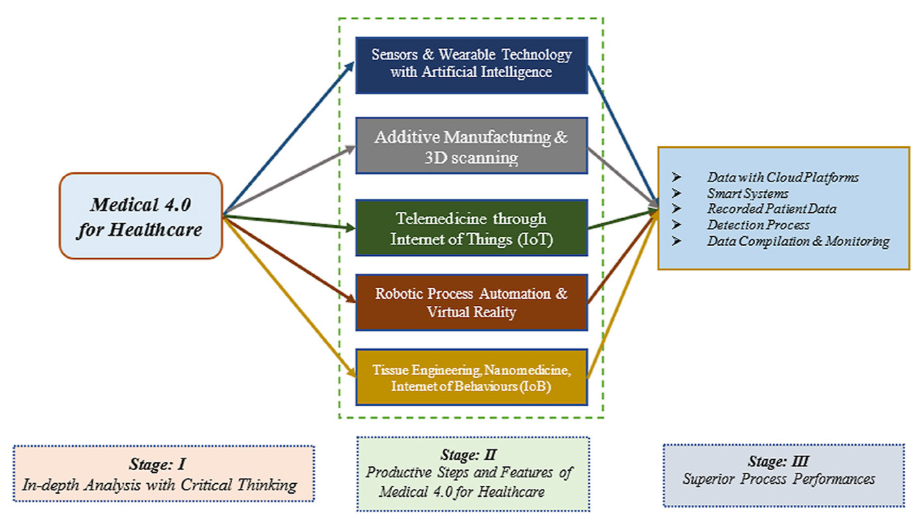
Telemedicine is a key area where advancements in healthcare can be offset by advancements in high-speed telecom networks to deliver many advanced healthcare applications. With the global shortage of physicians and specialists, patients often have long waiting lists for procedures or experience early hospital checkouts to free up space to accommodate other patients. Telemedicine solutions offer great potential to access healthcare services remotely, but their delivery depends heavily on a high-speed telecom infrastructure that allows for the transmission of a large volume of high-definition images and simultaneous discussions between patient and physician. Remote monitoring of a patient’s health status and condition is also increasingly becoming an important tool in modern healthcare, as it can alert health professionals about emergencies before they get out of hand, theoretically avoiding most of the health-related complications that account for the majority of total healthcare costs. With the increasing patient admissions and reduced human resources to look after the sick, remote monitoring can assist health professionals in delivering timely care to patients when help is most needed.
The use of high-definition videoconferencing allows a physician in an office to see many patients in several hospital rooms during virtual rounds, increasing productivity and patient access in a hospital and lowering costs. For patients in remote areas with limited access to healthcare professionals, telemedicine can deliver timely access to much-needed medical expertise in situations where immediate action can have life-changing results. Real-time evaluation of patients should improve patient care while bringing the benefit of shortening the long-lasting diagnostic odyssey characteristic of visiting specialists in a hospital since this videoconference-based physician should be able to issue any hospital-ordered diagnostic to assess the pre scheduled patients. Remote monitoring can be of great importance in any chronic condition, in particular diabetes, congestive heart failure, chronic obstructive pulmonary disease, and hypertension, and in any condition that needs frequent monitoring and continuous assistance, such as dementia, obesity, allergies, or substance addiction.
These conditions involve many of the most expensive patients in the healthcare system and require careful management and frequent follow-ups to keep the patients out of the high-cost hospital environment. Remote monitoring devices provide an early glimpse into patients’ health conditions, thus allowing for early intervention that may prevent further patient deterioration, some catastrophic events, and readmissions to a hospital. Low-latency networks could also create the potential for reliable remote surgery, as seen in a demonstration of robotic surgery where doctors hundreds of miles away operated a robot to demonstrate the ability of remote surgery without experiencing the detrimental effects of any network glitches. Preventive health is another attractive model for remote monitoring [9].
Advancements in smart medical and industrial devices: enhancing efficiency and connectivity with high-speed telecom networks. As part of preventive care, sensors, and networking devices can provide real-time data about diet, exercise, and behavior to help patients maintain a healthy lifestyle, be fit, and avoid chronic diseases at an early stage. With the ability to track vital medical data, including heart rate variability and skin temperature, or physical parameters such as calories burned and activity, real-time analysis, and deep learning algorithms can predict potential health conditions by accounting for environmental conditions and food consumption. In this framework, networks and devices can be used to remotely deliver a sinusoidally time-varying tactile sensation to the small bones in the middle ear via a magnetic transducer to mitigate distracting tinnitus for the patient without surgery.
4.2. Smart Wearables in Healthcare
The use of wearable devices in daily life activities is becoming a new trend. The advanced compatibility between electronic gadgets and wearable devices brings forth a size reduction, making electronic gadgets highly compact and easy to carry. Health care encompasses smart wearables and smart medical devices. They are used for monitoring various parameters in daily life such as pulse monitoring, stress monitoring, body temperature monitoring, and step counting. The devices allow the user to perform aerobic tasks without carrying the smartphone. Blood glucose monitoring has been one of the methods to manage and monitor diabetes in such wearables and is often referred to as "invisible pain" as it requires the patient to extract blood samples. The vibration of the display before the needle penetrates the skin yields pain. Non-invasive skin-gating optical lenses and algorithms, as well as the machine learning algorithm for a significantly higher correlation coefficient, are used to determine blood glucose levels [10].
These wearables help patients with diabetes to monitor blood glucose levels without any form of pain, thereby reducing the total number of deaths resulting from diabetes per year, estimated to increase from the recorded figures. These smart wearables also include skin ailment detection using electrochemical biosensor textiles for healthcare and have been designed for wearables with the capacity to provide efficient, biocompatible, and non-invasive electrical management of potassium measurements near the skin surface. These are classified as fully functional biosensors due to their reference potential design, which enables the electrical characterization near the interface of a functionalized, two-electrode version of the biosensor, where the construction of the biosensor is associated with compliance found in biocompatible devices for electrical stimulation.
4.3. Data Security and Privacy Concerns
The integration of the specialized functionalities of a multi-core fiber-based network with portable health and modern industrial devices introduces serious data security challenges regarding interception, control, errors, and unauthorized manipulation. Next, we present a brief analysis of open security issues at the intersection of high-speed telecommunications and these relevant application domains. By definition, a smart medical device often contains or is closely connected to a data interface that stores or processes large amounts of data linked to a patient’s electronic health record. Confidential patient data, such as personal characteristics, patient health history, and treatment, collected by a connected smart medical device, can be appealing to a wide range of adversaries.
Such data are not only stored, processed, and transmitted in the hospital environment, where doctor-patient confidentiality agreements secure most clinical test results, but also at other levels of the health service provision chain, such as insurance companies, data analytics service providers, and personal data brokers. As a majority of smart medical devices not only collect, store, or process patient data, they largely use wireless communication through different networking interfaces, and thus become prone to attacks by malicious hackers or cyber criminals, particularly vulnerable in scenarios where the terminal is embedded in locations with low-security levels, such as inside the home of a patient with little IT knowledge.
5. Impact on Industrial Devices
The deployment of 5G networks is a game changer for key industries and the overall competitiveness and innovative ecosystem of Europe. For industrial applications, 5G presents the opportunity to enable smarter factories, providing flexible production, low-cost digitalization, and therefore increased productivity in what is called the digital transformation of industry. Content-rich applications and real-time data processing will be enabled by 5G, thanks to the increase in speed and reduction in latency. For this reason, interest in 5G industrial applications is growing, and many demonstration activities have been presented. The most advanced prototypes are the result of the collaboration between stakeholders and the joint empowerment achieved by such a convergence. These advancements leverage common telecom technology solutions, which are the core competence of current networking players. By complementing functionalities with new features and flexible use of the technology, the industry will benefit the most from 5G, allowing a cost-reduction approach in the development and deployment of working services [11].
We foresee a variety of use cases with different needs that will require a highly tailored approach in terms of trade-offs between costs and per-service KPIs. The possibility of enhancing the functionality of their products and developing an extensive level of optimization in the different steps of the production chain can be achieved by taking advantage of the 5G telecom technology. This discussion covers the status of the evolution of the 5G ecosystem, with particular attention to the devices that are expected to be used in the industrial environment. After the regulatory update, which represents one of the critical foundations for the development of the market, we focus on the way to make the factories smart. Finally, we show examples of preliminary experiences developed by companies operating in the electronic equipment, machinery, and metallurgical consumables sectors.
5.1. IoT in Manufacturing
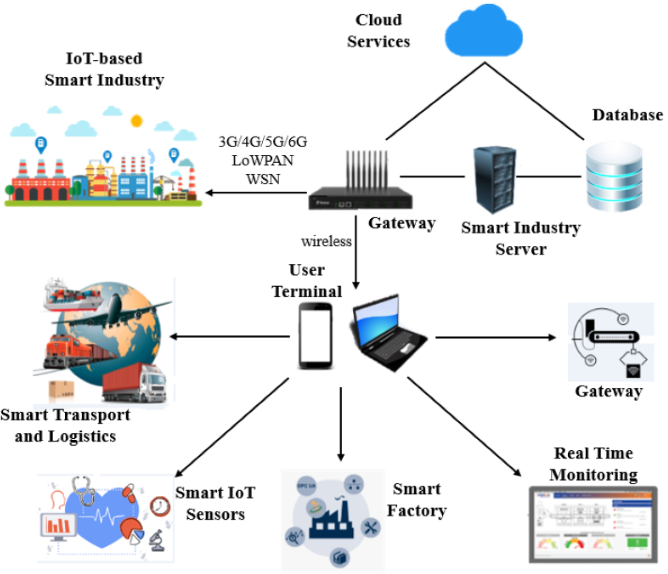
The application of IoT in manufacturing represents an example where the final implementation will readily leverage advancements in 5G infrastructure technology. Known as the Industrial Internet of Things (IIoT), within this segment, increasing digitization and connection of everything from machines to complete operating lines are driving substantial efficiency gains. In a modern factory, each machine or connection, including digital twinning, contributes to management improvements by providing direct data access over the complete operational life cycle of the asset. Currently in the deployment phase, these systems rely on a series of control and information solutions over industrial Ethernet networks. However, these networks were sized to manage a typical periodic control in small mills, while they are now being overloaded due to the continual peak demand for real-time information.
For now, a large part of the potential advantages have been demonstrated through on-premises private 4G or private 5G networks. In these cases, commercial LTE or 5G systems are specifically designed to bring the benefits of cellular connectivity indoors and also enable local operators to provide specific services directly to the manufacturing plant, while limiting the connections to the company intranet. As 5G deployment intensifies, many industries envisage 5G systems developing an integrated solution that would recombine part of the offer of currently separate networks, propose Performance Level Agreements, and explore the advantages of end-to-end native services. In the medium to long term, federative solutions connecting 5G networks and private indoor services could allow plants located on campuses in each country to benefit from unique and uniform service offerings and operating models.
Equation 2 : AI-Driven Predictive Maintenance for Smart Medical Devices
Where:
= Probability of device failure over time,
= Failure rate derived from AI analytics,
= Time elapsed since last maintenance.
5.2. Predictive Maintenance
Predictive maintenance is a well-understood and documented application of machines with an accompanying field deployment. The practice of replacing parts of machines before failure seems incredibly wasteful, yet it can often serve as a net win, as failed parts can often wreck the rest of the machine. Worse yet, many customer-facing systems can appear to work fine right up until the moment they fail terribly. Our society is now built on the backs of machines that can only run for a few hours. In the event of many failures (ordered by incident volume), little will be reported except for the same simple replacement procedure over and over again. DeepTOP also allows for novel business models that would previously be unaffordable. While it's true that some devices will cost the same in maintenance and associated replacement parts as the fully destructive capacity faults, it's also true that some will not. These would spend significantly longer times in active service if they could be affordably designed. Likewise, knowledge of how machines fail could also enable the construction of rules that prevent the most expensive behaviors and corresponding potential breakages in the first place. Furthermore, professionals, particularly emergency services and municipal employees, need to maintain and repair their equipment under difficult circumstances. Deployment platforms are not necessarily the best in class and can often be a loss leader or only used for a short time.
Safety One of the main constraints in building deployments for optimization is some mode of accessing the machines that need overhauls. Sometimes the face of a device is no more than two inches long and deep inside a nuclear reactor [12]. Typically, the solution is to assign the task to humans, who in turn require handheld equipment, general purpose (within a reasonable subset of use cases), and capable of operation while wearing thick gloves. Data applications can also help greatly improve the efficiency and effectiveness of these workers who already have a perilous job. However, typical modern modes and means of getting relevant data from these deep-inset machines can fall quite short of actual requirements. Not only is there the cost of sending workers into what could very well be a dangerous situation, but there is also the danger and cost of sending several times as many trained sets of eyes, as well as the communications infrastructure required for implementing a continuous repair process.
5.3. Supply Chain Optimization
The approach to dealing with a global supply chain has changed, and the share in the public hub for this purpose has grown during recent decades. The customer order cycle time and costs can be reduced by improving transportation and inventory management, and operations in the public hub in particular play a big role in this. The relation between tenant location within a hub, order cycle time, and supply chain costs is investigated. The proposed model also takes into account other possible objectives that the company may be interested in, such as responsiveness to high-value customer orders, effectiveness and satisfaction, energy efficiency for logistics operations, and vehicle emissions reduction.
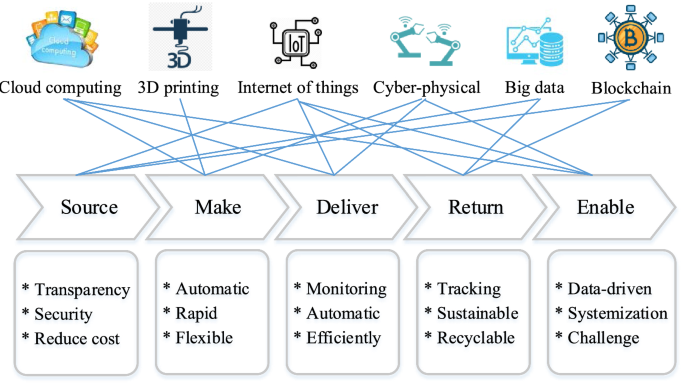
Most companies have been implementing a new round of inventory centralization and hypotheses on logistics growth due to the global supply chain's impact on the involved processes. As a result, numerous logistics real estate market players have been investing in the development of mega distribution centers known as hubs. These buildings may serve as a commercial hub on top of serving as a transportation hub. They are situated at existing intermodal nodes including railways, air, and/or seaports, and interlock the most and few certain locations and capacities, allowing tenants to consolidate [13].
6. Case Studies
Case studies are carefully documented real-life examples that allow researchers to apply theoretical concepts to actual situations. They demonstrate concepts in realistic settings and provide a durable way to evaluate various projects and strategies. Thus, in this section, a few case studies have been presented to accelerate theoretical learning and solidify solutions based on the unique applications enabled by emerging 5G telecom networks. In healthcare IoT, we have worked on an edge-based data analytics framework where medical images are processed after completing the image acquisition of specific body parts. The real clinical use is validated by solving two challenging problems – one from the neurosciences branch and the other from dermatology. Quantitative gradients were computed and verified by completing an analysis of the relevant data. Further, in industrial applications, we have developed quality assurance for footwear using multimodal data and also increased energy efficiency in HVAC systems by controlling them adaptively.
In this chapter, we would like to highlight that emerging fifth-generation (5G) telecom networks will be extremely beneficial in offering efficient and high-quality services to both healthcare and limited-energy industrial cyber-physical systems. Besides enhancing ease in projects and processes, we likely experience savings in terms of time, money, and high reliability. We have worked on a few unique problem-solving projects including illness detection, measuring cognitive workload, and even an IoT for footwear degradation assurance. These case studies involve a 5G small cell assisted infrastructure where we encounter high efficiency and connectivity in the real world. With such positive results, along with the understanding that some IoT devices already have the requirement of high data upload speed, we strongly believe that the advent of 5G will surpass all current smart device expectations.
6.1. Smart Medical Device Implementation
This paper attempts to explore the potential impacts of 5G and beyond 5G communications in the area of smart devices. Smart medical and industrial devices are in high demand due to the real-time surveillance they offer in securely managing health and manufacturing. The emergence of the fifth generation of mobile networks addresses real-time and high-speed telecommunication requirements. The availability of high data rate networks that guarantee higher bandwidth, reliability, low latency, and secure connectivity contributes to the realization of lightweight, portable, and wearable devices. Earlier discussions have addressed various aspects and impacts of 5G communication systems. However, the advent of medical devices and, more generally, smart devices, has not been fully utilized.
The operation of these devices is presented, and their performance is measured in a typical 5G downlink scenario. That performance analysis suggests possible enhancements in future communication networks. These devices, which include a smart insole and a smart hand brace, are equipped with sensors and various communication algorithms to support IoT connectivity. These IoT-enabled smart devices can monitor user information in real time and are capable of providing the data to consulting physicians to support necessary healthcare decisions. Further, this mobile assistance in hand and smart insole can support real-time user guidance that assists in providing resources and health management. Overall, the implementation of smart medical and IoT devices can provide cost-effective, real-time medical device surveillance. These findings demonstrate the usability and feasibility of data transfer between medical devices.
6.2. Industrial IoT Success Stories
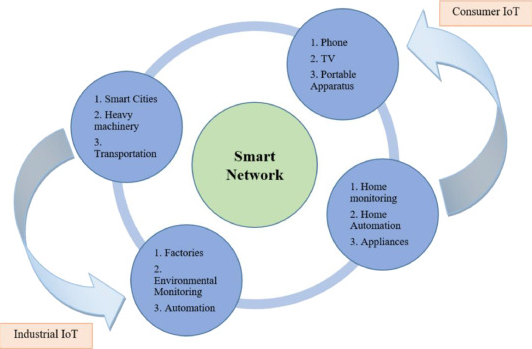
We start with some early success stories that chose to use LTE for remote connectivity of their IoT device, as it is capable of delivering high performance. Still, it is the most cost-effective communication method compared to alternative technologies since it is available in mass production. Then we give an industrial use case, including the automation and control of a digital township with a private LTE network operating in 5 GHz bands. Our primarily industrial-associated staff was working on multiple projects and products in parallel, so whenever we saw some synergy and the possibility to decrease product development time, we used it for the betterment of more departments with the same solution. We first developed our town watch traffic camera 5 years ago, long before this year when the commercial market started to provide production-ready solutions for the city. What makes the product appealing to the city security service is its low cost and the possibility of placing it everywhere, attracting intruders who are not aware that they are being supervised.
This flexibility costs more money and deployment time to install analog cameras for temporary events like fairs and cultural manifestations, so we started to go through the necessary steps of smartening the products to run on LTE using only mobile points of presence. In this process, we started to industrialize the product as much as we could, which is a professional maker challenge just as big as we had with the development of the scalable inter-building backhaul ring together with our partners. In the end, we were designing our LTE-enabled unit with the new features that we were adding at the same time in the big-end version of our product. By the time of the validation of our non-compact solution, we engaged with a combat-proven deployment that reassured us and validated our findings and the engineering path that we walked. With all the knowledge we learned, we successfully industrialized the product [14] .
7. Challenges and Limitations
This chapter reviewed several smart medical devices for biological signal acquisition, physiological parameter analysis, and health monitoring. Many of these devices have properties in common, such as compact size, lightweight, low power consumption, high accuracy, fast response, real-time data processing, secure data protection, and interconnectivity. However, the integration of more functions on a single chip may result in interference between analog and digital circuits, leading to potential cross-domain effects, such as in energy supply, transformation, filtering, A/D conversion, and digital processing. Additionally, the practical connection of these devices through wearable or implantable sensors may cause movement artifacts and electrode polarization, leading to potential distortion of the collected biosignal and the detection of incorrect physiological parameters. Furthermore, secure storage, transmission, and processing of high-volume and high-resolution healthcare data in real-time require parallel low-latency and high-speed data connections at both the sensor and controller ends, especially for real-time diagnosis or surgical intervention during emergencies. Currently, both wired and wireless communication technologies pose limitations for practical application.
In practical life, the blood and neural interfacing with electronic devices, including the test, control, treatment, and monitoring of living tissues, cells, and DNA, generally involve bio-safety concerns related to both the sensor materials and electrical energy supply. In some cases, especially for long-term implantation or therapeutic evaluation, custom-designed packaging and remotely controlled operation are necessary. Potential solutions were presented with methodologies and implementation notes. These precautions are essential for eventual commercialization. Above all, the final development, evaluation, and approval require cooperation among multidisciplinary team members.
7.1. Infrastructure and Deployment Issues
In this section, we detail deployment challenges for RideNet and Off-the-Fiber, two promising use cases for proximity communication. Assuming a target distance between the indoor router and AP of 10 km as representative of the range and steered beams with a 20° half-angle width, both systems are evaluated for potential coverage in different building blocks of a large European capital, i.e., central, suburban, and peripheral, considering three fiber topologies: a star, a ring, and a tree, where the aggregation switch is located in the center of the star and the root of the ring and tree. The comparison shows that all types of buildings are open to proximity communication regardless of the topology and the geographical position of backhaul network fibers. Hence, complementing a public fiber network using indoor feeder links in a unique data plane represents an attractive opportunity with limited costs. On the other hand, fiber roll-out decisions taking into account other fiber services and access technologies, and especially new integrated services enabled by smart cities, will help plan large cells, view a possible dramatic increase in average spectral efficiency, and reduce the electronic limitations in both on-board and AP equipment.
Information and physical requirements point out that proximity communication should be implemented on board high-capacity APs, eventually tunable in different parts of the RF spectrum, but also on the router’s side so that the space continuum exchanged data can be treated properly by the backhaul infrastructure. The large cell infrastructure should resolve adjacent APs coexistence and the smallest cells within the Ka-band challenges in a massive deployment of expensive optics on board small cells. The current lack of industrial chains for producing at low cost many small units performing aggregation of data flows from/to different access networks – the aggregation function moved toward edges with the spread of virtualization technologies – together with the power constraints in the use of active systems or optical amplifiers would help realize the harvesting properties of both on-board bands and optical communication technologies. However, dematerialization technologies pursue a simplification in the manufacturing, installation, and maintenance processes, and a physical data plane may facilitate the development of large coverage, high-capacity edge networks.
7.2. Interoperability Challenges
The principle of interoperability of devices and data means that all devices for a given application can understand and share data. In the home, a smart washing machine should be able to tell the smart electricity meter what it needs to know to optimize the use of time-varying electricity prices. Devices should be able to work together, reducing the need for the user to configure everything from scratch. Much attention has been paid to the communication standards needed to achieve interoperability and security at all levels. These are traditionally regarded as the classic problems for ensuring the 'end-to-end' or 'perimeter-to-perimeter' nature of communications. They require standards for communications and data definitions that are understood and adhered to by all devices and platforms within the health ecosystem.
For the last 50 years, research on the development of the Internet has relied on the idea of the modular decomposition of networking into multiple layers or stacks. The Internet of Things (IoT) subsumes all applications in which the physical world becomes an information system. It is a wider subset of all present elements, such as radio frequency identification systems, sensors, actuators, mobile and pervasive devices, wireless communications, machine-to-machine, wireless sensor networks, near-field communication devices, and artificial intelligence. The IoT network allows everyday objects to find and send information about themselves to others. As a universal network, which provides a unique ubiquitous perspective and offers a global connection with their menu and APIs, IoT has an impact according to the monitoring framework and intelligent decisions, added to the devices, as well as users and systems.
7.3. Regulatory and Compliance Hurdles
Not all IoT-enabled technologies are currently regulated by the FDA. For example, telehealth tools are regulated by the U.S. Department of Health and Human Services, the Office of the National Health Information Technology Coordinators, and each state’s medical board. As more people rely on IoT to manage their health and provide service equipment, the FDA will need to play a greater role in protecting public health by ensuring the safety and effectiveness of these medical devices. Thus, greater regulation by the FDA will likely increase the investment in cybersecurity in these sectors, particularly as cyber preparedness is not currently addressed in the premarket submission format at this time.
However, FDA regulation is not the only regulatory authority that smart medical and industrial IoT device developers will have to contend with in the future. Other agencies are involved in the approval of information technology, including the Federal Communications Commission, which is responsible for regulating radiation emissions from electronic devices, including cell phones and computers. The Federal Trade Commission also has a role in protecting personal and private information collected and disseminated by these devices by enforcing existing federal laws and providing the public with information about the privacy policies and practices of device manufacturers and service providers. As early as 2013, the FTC issued a report recommending best practices for medical industry devices, which warned of liability if protected health information data stored by such devices was not adequately secured. The Department of Homeland Security Cybersecurity is concerned with securing DHS staff and devices. Finally, the National Institute of Standards and Technology is actively involved in the development of intelligent medical devices by issuing a guide specifically for the industry.
8. Future Trends
As demands for smart devices accelerate and their applications continue to evolve, the need for connectivity and communication will become ubiquitous. Adoption and adaptation of high-speed communication technologies will enable more effective and efficient use of these medical, industrial, and autonomous vehicular systems, thus maximizing their potential in various applications. With the advent of fifth-generation cellular technology, we foresee significant advances as increasingly interconnected standards and communication mediums are developed. High-frequency and millimeter-wave transmission media are considered particularly advantageous for compact portable dosimeters, implantable sensing devices, as well as robotic and autonomous vehicular systems. Our team has been actively pursuing research and development in these rapidly evolving areas. The following sections present emerging trends in these components and communication devices for high-speed telecom applications.
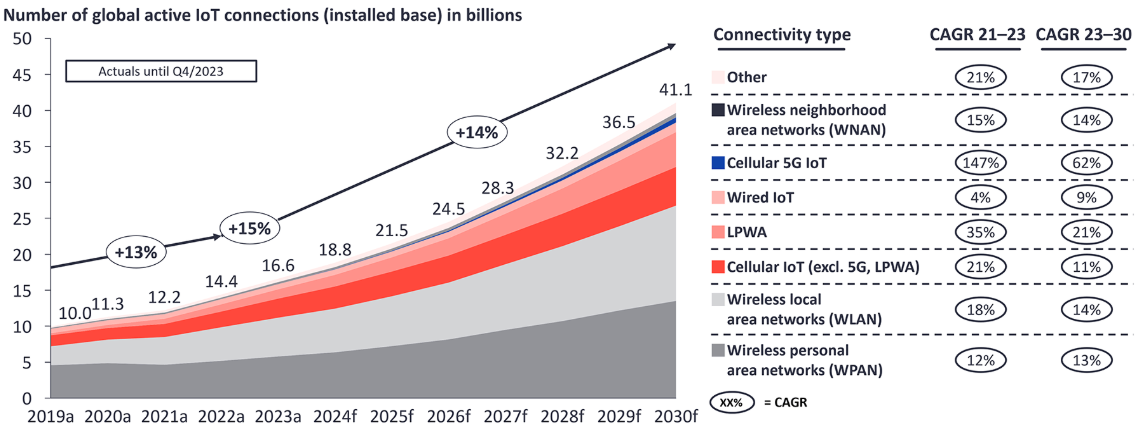
With a tremendous increase in the number of smart electronics and wireless communication devices relying on the Internet of Things, cloud services and 5G communication systems are expected to meet the increasing requirements and demands of IoT devices of the future. In addition to cloud services and data centers, 5G is expected to support the varied high-data-rate and telecommunication requirements of medical, industrial, and autonomous vehicular applications. These different 5G applications suggest the use of various communication bands from sub-6 GHz or even lower frequencies to support the propagation of high-speed communication links from external traffic to the physical layer of IoT devices. This indicates the importance of high-frequency, millimeter-wave, and terahertz communication technologies in bringing 5G to IoT and related applications to promote the day-to-day demands of 5G technology. In addition to characterizing the propagation path loss and multipath reflections in complex environments, it is necessary to develop communication-based radios and antennas with low mass and small physical footprints for the deployment of IoT devices. Prefabricated microwave and millimeter-wave modules and ultracompact THz radios and antennas are capable of meeting the physical size and extraterrestrial communication requirements of IoT devices. With the technical advancement of these modules, high degrees of customization and flexibility of radio and antenna components along with communication-based functions and performances will be facilitated in the future development of low-cost IoT devices. These new technologies should be used to develop a cost-effective and deployable communications infrastructure for the next generation of IoT devices, exploring experimental and pre-commercial applications with low current densities and low power consumption [15].
8.1. Artificial Intelligence Integration
The key advance towards larger-than-small cell phones is the integration of artificial intelligence hardware. Large IC arrays of GPU cores embody associative memory techniques and are the fulcrum between external human or machine intelligence sources to manipulate high video or volumetric pixel clouds. Image ACV atomic layers support control of distributed read/write operations, especially enabling sparse system operation, potentially beneficial for dealing with uncooperative devices at distant edges that scale from gate-level to multi-MW. These can therefore mimic natural intelligence operations, such as feature similarities of recognizable objects within a multi-dimensional photo cloud, which is an example of high complexity, or facial or emotion recognition. Atomic operations may include the ability to utilize hierarchical cell constructs that can locally perform feedback in image AI systems that could stop processes or parse data streams through tapes.
Intelligence augmentation operations can tail devices that handle high-power spectral mapping of the cloud domain, potentially associated with severe medical prognostics. There are also network administration potentials; for example, holographic imaging segmentation layers can form 3D personal space maps or augmented virtual worlds. AI systems will evolve and ultimately become self-referential – at least within operator-selected areas of pre-known behaviors, resulting in fully closed-loop system operation that might participate in neuromorphic computations. Devices may be gate-level ordered by upper-layer AI functions at the network edge, with network control endpoints allocated within intelligent MAC addresses. Accompanying these simple mappings will be assertions of wisdom implementation for the mainly convolutional and recurrent networks used today, and of probability gates, and set membership. Simultaneously, mechanism-based self-awareness and operational controllers that combine across phylum will evolve to meet scaling system requirements, as already foreseen since network physical-behavior test systems were initiated in 1992. Next-generation IC devices can evolve into controlling a local sub-network, a local system, and/or an end nodal interface. Devices might also recognize the specificity of programs, control termination of progress on established principles or per predetermined behavior, or delegate autonomy.
8.2. Edge Computing in Smart Devices
In conventional cloud computing, computing and data storage are taken out of the devices and managed by a remote data center. Cloud computing provides a virtual engine to execute tasks beyond device capability, which improves the efficiency and performance of smart devices. Due to the costly and heavy data delivery overhead, latency limitations, privacy concerns, and regulatory compliance requirements, cloud computing cannot suit the requirements of emerging fog and edge computing applications. In the IoT and IoMT heterogeneous environment, the interpretation, extraction, and processing of data contents need to be housed as close to the edge as possible, not only to improve performance but also to work within existing capacity constraints. In edge computing, the processing boundaries of intermediate network gateways are defined, and computational processing at the edge of the network is served without extra routing to reduce delays and save bandwidth.
Despite the ability to offload the cloud and deal with various limitations in the network, edge computing still has some challenges and potential weaknesses. In the exploration of the balance between local processing and cloud services, the ability of smart devices to leverage edge cloud services integrated into public telecommunication ultra-fast networks cannot be overlooked. Abundant edge node resources supported by 5G and 6G networks can provide a better response time than local processing, especially for complex analyses. The edge cloud also provides privacy benefits by quickly and securely isolating data. In the implementation of edge computing, the collective advantage of telecom ultra-fast network resources has the potential to enable machine-type communication at the level of smart devices, which is critical in the control of real-time cyber-physical interaction systems.
Equation 3: Bandwidth Allocation for Real-Time AI Processing
Where:
= Required bandwidth allocation,
= Data required for real-time AI analysis,
= Maximum acceptable processing delay.
8.3. Sustainability and Energy Efficiency
The main source of energy for the operation of ICT devices is electricity generated by the burning of fossil fuels serving different kinds of network infrastructures. Reports claim that the carbon footprint of ICT networks is comparable to that of the aviation industry. The use of ICT in smart medical and industrial sectors needs mitigation of the associated carbon footprint for long-term sustainability. A significant point to note is that the medical industry deals with numerous industrial tasks including manufacturing, supply chain, transportation, storage, and recycling tasks. Similar to any other industry, it is important to innovate using ICT technologies from a good economics point of view by mitigating carbon footprints from a sustainability point of view. While it is possible to generate electricity from renewable energy sources, the deployment may not eliminate the carbon footprint. However, the energy needs of the ICT infrastructure are not completely covered by renewable energy sources despite the multiple efforts of the community.
Sustainability and energy efficiency of ICT are two dimensions of the same problem, which address maintaining the existing digital divide and reducing and minimizing the digital divide for future technological advancements. The deployment of renewable energy sources in the network infrastructures must be ensured. There is a need to create need-based load demand and supply by rerouting the network operation, which generally operates statically when the network infrastructure is designed. There are prospects for network optimization for greening effects concerning time, modulation, and wavelengths in the optical networking domain. In addition to solving the focus on energy, various other concerns like inertia, lithiation, and anode material that limit battery research can be addressed to solve the operational and environmental aspects of energy storage technologies. To supplement renewable energy sources, energy efficiency technologies such as centers of excellence, new light sources, energy-efficient optical amplifiers, and reconfigurable radio over fiber for wired and wireless networks can be deployed. Circular economy and life cycle assessment of electronics are essential to bring the miniaturization prospects, smart device connectivity, etc., in the smart medical and industrial devices. The network infrastructure should therefore be planned to accommodate new hardware and software functionalities that consider critical technologies like the double-edged sword for the environment.
9. Conclusion
The following are the conclusions of the work presented in this chapter:
- High-speed telecom services are advancing at an alarming rate. In addition to telecom, bandwidth and connection speeds for fixed and mobile networks have significantly improved to deliver high upload and download speeds. Also, reliable low-latency channels are now commonly deployed in cellular networks.
- The improvement is a great enabler, a game-changer—with future implications that are beyond today’s horizon. Devices such as medical and industrial machines will improve built-in sensitive and fast signal processing capabilities, using low-latency high-speed telecom services. Encoding and transmission of high-data-rate images and real-time diagnostic data information is highly efficient from multiple sensors.
- Additional work will answer whether or not to simply deploy very high-speed telecom channels to be connected in one large hospital or factory building; or can several higher-throughput medical or industrial services be aggregated into one low-latency broadband connection between the devices and the large central hospital or factory complex?
References
- Kalisetty, S., & Ganti, V. K. A. T. (2019). Transforming the Retail Landscape: Srinivas’s Vision for Integrating Advanced Technologies in Supply Chain Efficiency and Customer Experience. Online Journal of Materials Science, 1, 1254.[CrossRef]
- Sikha, V. K. (2020). Ease of Building Omni-Channel Customer Care Services with Cloud-Based Telephony Services & AI. Zenodo. https://doi.org/10.5281/ZENODO.14662553[CrossRef]
- Siramgari, D., & Korada, L. (2019). Privacy and Anonymity. Zenodo. https://doi.org/10.5281/ZENODO.14567952[CrossRef]
- Maguluri, K. K., & Ganti, V. K. A. T. (2019). Predictive Analytics in Biologics: Improving Production Outcomes Using Big Data.[CrossRef]
- Sondinti, K., & Reddy, L. (2019). Data-Driven Innovation in Finance: Crafting Intelligent Solutions for Customer-Centric Service Delivery and Competitive Advantage. Available at SSRN 5111781.[CrossRef]
- Siramgari, D., & Korada, L. (2019). Privacy and Anonymity. Zenodo. https://doi.org/10.5281/ZENODO.14567952[CrossRef]
- Polineni, T. N. S., & Ganti, V. K. A. T. (2019). Revolutionizing Patient Care and Digital Infrastructure: Integrating Cloud Computing and Advanced Data Engineering for Industry Innovation. World, 1, 1252.[CrossRef]
- Somepalli, S. (2019). Navigating the Cloudscape: Tailoring SaaS, IaaS, and PaaS Solutions to Optimize Water, Electricity, and Gas Utility Operations. Zenodo. https://doi.org/10.5281/ZENODO.14933534[CrossRef]
- Ganti, V. K. A. T. (2019). Data Engineering Frameworks for Optimizing Community Health Surveillance Systems. Global Journal of Medical Case Reports, 1, 1255.[CrossRef]
- Somepalli, S., & Siramgari, D. (2020). Unveiling the Power of Granular Data: Enhancing Holistic Analysis in Utility Management. Zenodo. https://doi.org/10.5281/ZENODO.14436211
- Pandugula, C., & Yasmeen, Z. (2019). A Comprehensive Study of Proactive Cybersecurity Models in Cloud-Driven Retail Technology Architectures. Universal Journal of Computer Sciences and Communications, 1(1), 1253. Retrieved from https://www.scipublications.com/journal/index.php/ujcsc/article/view/1253[CrossRef]
- Vankayalapati, R. K. (2020). AI-Driven Decision Support Systems: The Role Of High-Speed Storage And Cloud Integration In Business Insights. Available at SSRN 5103815.
- Somepalli, S. (2021). Dynamic Pricing and its Impact on the Utility Industry: Adoption and Benefits. Zenodo. https://doi.org/10.5281/ZENODO.14933981[CrossRef]
- Yasmeen, Z. (2019). The Role of Neural Networks in Advancing Wearable Healthcare Technology Analytics[CrossRef]
- Satyaveda Somepalli. (2020). Modernizing Utility Metering Infrastructure: Exploring Cost-Effective Solutions for Enhanced Efficiency. European Journal of Advances in Engineering and Technology. https://doi.org/10.5281/ZENODO.13837482[CrossRef]