

Background: Vascular thrombotic events such as pulmonary embolisms have been frequently reported in the course of SARS-Cov-2 infection. However, sagittal sinus thrombus is extremely rare, and patients may lack other appealing Covid-19 infection symptoms. Case report: 46-year-old female with past medical history of Hyperlipidemia, Hypertension presented to Emergency room with headache, chest pain, vomiting. SARS-CoV-2 IgG Antibodies were reactive. Except for elevated PTT-Lupus Anticoagulant at 50 Sec, Hypercoagulable workup was negative. The MRI venogram findings were consistent with the Dural thrombus of superior sagittal sinus. Patient subsequently developed chest pain, and Computed tomography angiography found pulmonary emboli within segmental branches of the right lower lobe pulmonary artery. Patient was managed in the ICU with Heparin and switched to Coumadin for discharged. Conclusion: The incidence of Cerebral Venous Sinus thrombus (CVST) among Covid-19 patients is inferior to 0.02%. And most of the patients lack typical Covid-19 presentations such as pneumonia. The lack of symptoms may promote the insidious course of pre-thrombotic events that lead to CVST. However more Retrospective studies are necessary to established consistent odd ratios. Due to the higher mortality associated with CVST and the ongoing of Covid-19 pandemic, we recommend a higher level of clinical suspicion.
A Case Report of Sagittal Sinus Thrombosis and Pulmonary Embolism in an Asymptomatic SARS-CoV-2 Infection
April 24, 2022
June 18, 2022
June 26, 2022
June 28, 2022
This is an Open Access article, distributed under the terms of the Creative Commons Attribution 4.0 International License (http://creativecommons.org/licenses/by/4.0/), which permits unrestricted use, distribution and reproduction in any medium or format, provided the original work is properly cited.
Abstract
1. Introduction
Secondary hypercoagulable states with thrombotic events are known as complications of a course of proven Covid-19 Pneumonia. For instance, between March 2020 and April 2020, in a study of 184 patients admitted to ICU observed for a median duration of 7 days, the incidences of arterial thrombus and venous thrombus event were 3.7 and 27 precents respectively. Also, most venous thrombus events present as Lower extremity thrombosis or pulmonary embolism [1].
When the typical context indicative of Covid-19 pneumonia is not apparent, and the presentation of the case consists of central nervous system symptoms, a clinical suspicion of Covid-19 related thrombotic event become challenging [2]. We present a case of simultaneous sagittal sinus thrombosis and pulmonary embolism in a young female who was unvaccinated for Covid-19 at time of presentation.
2. Case Presentation
A 46-year-old female without Covid-19 vaccination and known history of hypertension and hyperlipidemia who presented to the Emergency Department with acute encephalopathy, left sided weakness, headaches and two episodes of vomiting. On admission Vital signs were as follow: temperature: 36.7°C, heart rate: 68 bpm, blood pressure: 187/98 mmHg, and oxygen saturation: 100% on room air. On physical exam, patient was alert but disoriented, with right sided gaze deviation and left sided hemiparesis. Laboratory testing found: Hemoglobin: 12.3 g/dL, 37.0 %, platelets count: 328 10x3/uL, Prothrombin Time: 12.6 sec, INR: 1.10, and Partial Thromboplastin Time: 32.9 sec, Serum comprehensive metabolic within normal limits and positive SARS-CoV-2 IgG
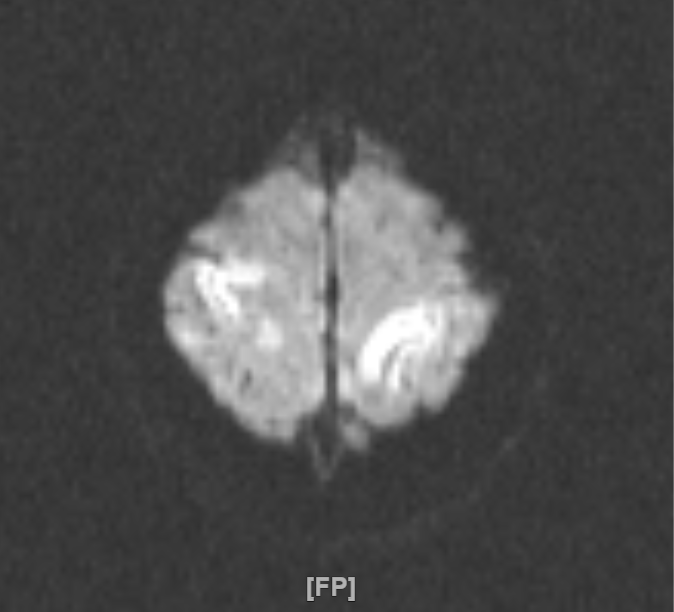
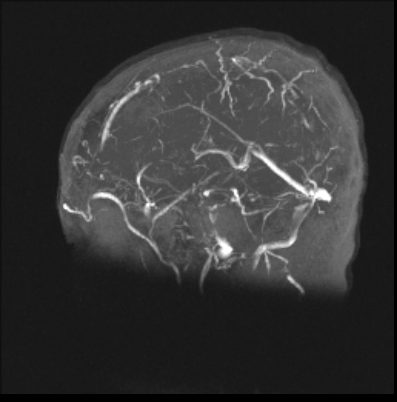
Stroke Code was activated, and initial Computed Tomography Head (CTH) and Computed Tomography Angiography (CTA) Head and Neck were negative for any acute pathology. Repeat CTH the following day was notable for abnormal low density in both the parietal lobe, representing either bilateral edema from posterior reversible encephalopathy syndrome or bilateral parietal lobe infarct (Figure 1a). Magnetic Resonance Imaging (MRI) of the Brain with and without contrast were significant for restricted diffusion signal along the upper parietal lobe cortex bilaterally at nearly the symmetric location with corresponding cortical and subcortical edema reflective of ischemia secondary to venous infarct (Figure 1b). There was absence of normal flow signal within the majority of the superior sagittal sinus which may reflect a venous sinus thrombus. MRI venogram was also done, showing superior sagittal sinus findings consistent with Dural sinus thrombus corresponding to previous imaging findings.
Patient also complained of chest pain, and the physical exam findings significant for radial pulse deficits and > 20 mmHg difference in diastolic blood pressure, as well as neurologic deficits with raised the suspicion of Acute aortic dissection. CTA Chest CT Chest Abdomen Pelvis did not find indication of acute aortic change, aneurysm or dissection. However, findings were significant for pulmonary emboli within segmental branches of the right lower lobe pulmonary artery (Figure 2). Echocardiogram showed grade 2 diastolic dysfunction and was otherwise unremarkable, no evidence of right heart strain.

Given the concurrency of cerebral venous sinus thrombosis and pulmonary embolism, the concern for common etiology of primary and secondary hypercoagulable states remained high. Patient denied use of oral contraceptives or other over the counter or offending medications. HIV testing was nonreactive, urine drug toxicology screen was negative. The hypercoagulable work-up was found ANA was positive with titer 1:320, PTT-Lupus Anticoagulant was elevated at 50 sec, with the rest of the hypercoagulable work-up (including Beta-2 Microglobulin Blood, Protein C & S, antithrombin activity, Factor V Leiden, Antiphospholipid Ab panel,) negative. Additionally, prothrombin gene analysis was done, and G20210 A variant mutation was not detected. With these findings, the possibility the patient’s otherwise asymptomatic SARS-CoV-2 infection contributed to a hypercoagulable state leading to the development of cerebral venous sinus thrombosis and pulmonary embolism was considered.
3. Discussion and Conclusion
The common incidence of thrombotic event during Covid-19 infection even in patient receiving regular anticoagulant suggests that multiple mechanisms are involved in Covid-19 related coagulopathy. The study of elevated biomarker of coagulation during Covid-19 endothelial injury mostly in lungs and hyperinflammation
The incidence of Cerebral Venous Sinus thrombus (CVST) among Covid-19 patients is extremely rare and inferior to 0.02%2. Comorbidities includes hypertension, hyperlipidemia and diabetes mellitus. Headache is present in 3 of 4 patients however alteration of consciousness is present only in 1 patient over 8. Most of the Covid-19 patients with CVST lack the typical Covid-19 presentations2. In our case, the patient was asymptomatic. The lack of symptoms may promote the insidious course of pre-thrombotic events that lead to CVST. However more Retrospective studies are necessary to established consistent odd ratios. Due to the higher mortality associated with CVST and the ongoing of Covid-19 pandemic, we recommend higher level of clinical suspicion.
References
- Abou-Ismail MY, Diamond A, Kapoor S, Arafah Y, Nayak L. The hypercoagulable state in COVID-19: Incidence, pathophysiology, and management [published correction appears in Thromb Res. 2020 Nov 26;]. Thromb Res. 2020; 194: 101-115. doi:10.1016/j.thromres.2020.06.[CrossRef] [PubMed]
- Mehta OP, Bhandari P, Raut A, Kacimi SEO, Huy NT. Coronavirus Disease (COVID-19): Comprehensive Review of Clinical Presentation. Front Public Health. 2021; 8: 582932. Published 2021 Jan 15. doi:10.3389/fpubh.2020.582932[CrossRef] [PubMed]
- Abdalkader M, Shaikh SP, Siegler JE, et al. Cerebral Venous Sinus Thrombosis in COVID-19 Patients: A Multicenter Study and Review of Literature. J Stroke Cerebrovasc Dis. 2021; 30(6):105733. doi:10.1016/j.jstrokecerebrovasdis.2021.105733.[CrossRef] [PubMed]