

Baloxavir marboxil (BXM) is a novel anti-influenza agent that developed in Japan and inhibit the cap endonuclease specifically, and suggested the more clinical effectiveness in influenza. BXM reduces viral shedding more than do neuraminidase inhibitors (NAIs), and its clinical efficacy is equivalent to that of NAIs but is superior to that of NAIs in the case of type B influenza. BXM does not demonstrate any issues with safety, and treatment with BXM reduces the incidences of complicating sinusitis and bronchitis. Prophylactic administration of BXM inhibits intrafamilial transmission of influenza although low susceptible viruses with a PA/I38X substitution are isolated with a certain frequency following administration of BXM. Finally, In influenza treatment for patients aged 12−19 years and for adult outpatients, BXM can be used with the same recommendation level as oseltamivir.
Cap-dependent endonuclease inhibitors for adult patients with influenza: the use of baloxavir marboxil
December 01, 2023
December 31, 2023
January 03, 2024
January 04, 2024
This is an Open Access article, distributed under the terms of the Creative Commons Attribution 4.0 International License (http://creativecommons.org/licenses/by/4.0/), which permits unrestricted use, distribution and reproduction in any medium or format, provided the original work is properly cited.
Abstract
1. Introduction
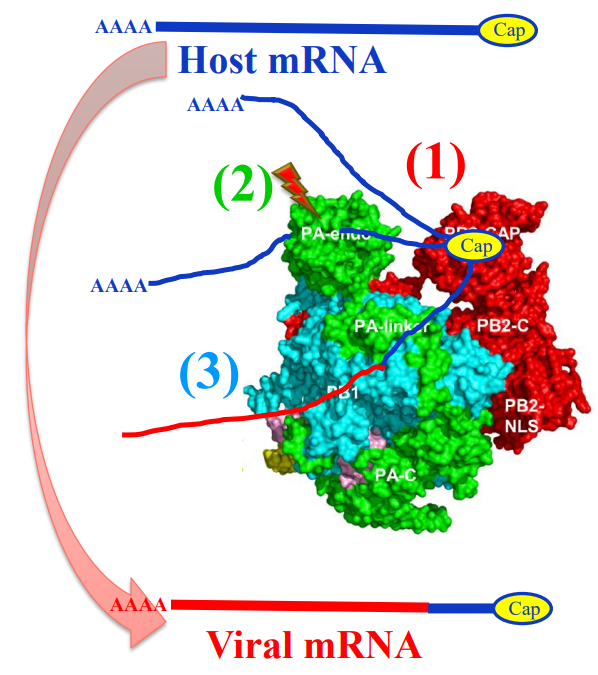
Baloxavir marboxil (BXM) exerts an excellent antiviral effect by inhibiting influenza virus mRNA transcription at an early stage (Figure 1)[1, 2]. However, during treatment in some cases, a variant is isolated in which isoleucine, the 38th amino acid of cap-dependent endonuclease and the molecular target of baloxavir, which resides in the PA subunit of RNA polymerase and is essential for viral mRNA transcription, is substituted with another amino acid such as methionine, threonine, or aspartic acid (this variant, which is indicated to have low susceptibility, is hereafter referred to as “PA/I38X”); therefore, in Japan, the use of BXM have been involved uncertain recommendations[3, 4].
The world is currently experiencing an influenza epidemic for the first time in three seasons after COVID-19 pandemic, including Japan; in week 44 of 2023, more than 20 cases per sentinel site were reported. From fall to winter in 2023-2024 season, an increasing number of patients require early diagnosis and rapid treatment. The present mini review introduces Japanese views for the world on the use of BXM with reference to published clinical and epidemiological findings.
2. Mini Review
2.1. Clinical efficacy (time to alleviation of symptoms) and antiviral efficacy
In a randomized controlled trial (RCT) conducted with 2,184 patients aged 12−65 years or older with influenza (H3N2 48%, H1N1 7%, B 42%, mixed/unidentified 3%) which included patients at high risk of severe influenza, treatment with BXM shortened the time to alleviation of symptoms to the same degree as oseltamivir in comparison to a placebo in analysis of all patients and patients with type A (H3N2) influenza. In a sub-analysis of type B viral infection, BXM significantly shortened the time to alleviation of symptoms compared to oseltamivir (median 74.6 hours vs 101.6 hours) [5].
Japanese post-marketing surveillance of 3,094 patients (2,198 patients aged ≥ 12 years) confirmed that BXM rapidly improved clinical symptoms and was safe regardless of age group or virus type [6]. Other Japanese studies have also found that the times to resolution of fever and the improvement of clinical symptoms were faster with BXM than with NAIs [7, 8].
In a meta-analysis [1, 5, 9] of three RCTs conducted with a total of 3,771 patients (including one RCT which included 173 pediatric patients aged < 12 years), compared to oseltamivir, baloxavir shortened the symptomatic period (difference not significant) in addition to significantly reducing post-administration viral titer and RNA volume regardless of age group. In addition, adverse events occurred less frequently along adolescents/adults who were treated with BXM (OR 0.82, 95% CI: 0.69−0.98) [10].
In a network meta-analysis (NMA; a technique which uses relative effect assessment of results from multiple studies to analyze comparisons between two drugs indirectly when direct comparisons are unavailable) of a high-risk group and of a low-risk group of patients without complications, BXM demonstrated a clinical efficacy equivalent to that of oseltamivir and all other NAIs, and it was superior to all NAIs in terms of viral titer reduction in the high-risk group[11].
In an analysis of the therapeutic effects of single-dose treatment with BXM, peramivir, and laninamivir via NMA of 12 RCTs, the times to symptom improvement and resolution of fever were shortest with peramivir and BXM, respectively, while BXM yielded the greatest reduction in viral shedding at 24 and 48 hours [12].
In a recently reported Japanese systematic review and meta-analysis, in two RCTs conducted with outpatients, BXM produced significant reductions in viral titer and RNA volume, a reduction in adverse events, and a trend towards shorter disease duration than did oseltamivir [13].
2.2. Post-exposure preventive effects and inhibition of transmission of viruses with low susceptibility to NAIs
In a multicenter double-blinded study of preventive effects in 752 participants exposed to 545 index cases living in the same households as them, the influenza incidence rate by day 10 post-exposure was 1.9% in the BXM group versus 13.6% in the placebo group, thus demonstrating a marked preventive effect (86% onset prevention effect) [14].
Among 25 patients (median age 13 years, range 1−25 years) in a cluster of influenza cases caused by the A(H1N1)pdm09NA/H275Y variant that continuously occurred during prophylactic administration of oseltamivir in a long-term nursing care pediatric ward, changing to BXM resolved the cluster infection, and 13 of the patients demonstrated rapid resolution of fever [15].
2.3. Inhibition of onset of related complications
In the previously-cited RCT conducted with high-risk patients [5] and a meta-analysis of 21 RCTs [16], BXM significantly inhibited complicating sinusitis and bronchitis compared to a placebo. Hospitalizations and complicating pneumonia also decreased in both analyses, but these differences were not significant.
2.4. PA/I38X substitutions
PA/I38X-substituted strains are unlikely to greatly diminish the clinical efficacy of BXM. However, In an analysis of patients who were treated with baloxavir during the 2018/19 season (n = 81, ages 9−87 years) conducted by the Japan Physicians Association, PA/I38X substitutions were detected 3−4 days after administration in 6.2% of patients with A/H3N2, but the presence of this substitution did not affect time to resolution of fever [17]. In addition, the spread of PA/I38X-substituted strains has not yet been observed in the community [18].
3. Conclusions
As the above shows, BXM exerts a therapeutic effect equivalent to that of NAIs in cases of type A influenza virus infections among adolescents (age ≥ 12 years) and adults, is highly likely to have a superior therapeutic effect on type B influenza, and demonstrates antiviral activity superior to that of NAIs in all studies examined here. These data suggests that BXM can be recommended at the same level as oseltamivir as a therapeutic for influenza in adolescents (age 12−19 years) and adults.
Conflict of Interest: The authors have no competing interests to disclose.
Funding: This research received no specific grant from any funding agency in the public, commercial, or not-for-profit sectors.
References
- Hayden FG, Sugaya.N., Hirotsu N, Lee N, de Jong MD, Hurt AC, et al. Baloxavir Marboxil for Uncomplicated Influenza in Adults and Adolescents. N Engl J Med. 2018. 379: 913-923.[CrossRef] [PubMed]
- Pflug A, Guilligay D, Reich S, Cusack S. Structure of influenza A polymerase bound to the viral RNA promoter. Nature. 2014. 516(7531): 355-60.[CrossRef] [PubMed]
- Seki M, Sakai-Tagaya Y, Yasuhara A, Watanabe Y. Adult influenza A (H3N2) with reduced susceptibility to baloxavir or peramivir cured after switching anti-influenza agents. IDCases. 2019. 18: doi: 10.1016/j.idcr.2019.e00650. eCollection 2019.[CrossRef] [PubMed]
- Kamioka Y, Kashiwagura S, Seki M. Reduced Prescription of Baloxavir After Suspected Prevalence of a Baloxavir-Resistant Influenza Virus Strain and the Emergence of SARS-CoV-2 in a Tertiary Hospital in Japan. Clin Pharmacol, 2020. 12: 131-4.[CrossRef] [PubMed]
- Ison MG, Portsmouth S, Yoshida Y, Shishido T, Mitchener M, Tsuchiya K, et al. Early treatment with baloxavir marboxil in high-risk adolescent and adult outpatients with uncomplicated influenza (CAPSTONE-2): a randomized, placebo-controlled, phase 3 trial. Lancet Infect Dis. 2020. 20: 1204-14.[CrossRef] [PubMed]
- Nakazawa M, Hara K, Komeda T, Ogura E, Safety and effectiveness of baloxavir marboxil for the treatment of influenza in Japanese clinical practice: A post marketing surveillance of more than 3000 patients. J Infect Chemother, 2020. 26: 729-35.[CrossRef] [PubMed]
- Yoshii N, Tochino Y, Fujioka M, Sakazaki H, Maruyama N, Asai K, et al. The comparison of the efficacy of baloxavir and neuraminidase inhibitors for patients with influenza A in clinical practice. Intern Med 2020. 59: 1509-13.[CrossRef] [PubMed]
- Yoshino Y, Kitazawa T, Ota Y. Clinical efficacy of baloxavir marboxil in the treatment of seasonal influenza in adult patients: a prospective observational study., Clinical efficacy of baloxavir marboxil in the treatment of seasonal influenza in adult patients: a prospective observational study. Int J Gen Med, 2020. 13: 735-41.[CrossRef] [PubMed]
- Baker J, Block SL, Matharu B, Macutkiewicz LB, Wildum S, Dimonaco S, et al. Baloxavir marboxil single-dose treatment in influenza-infected children. A randomized, double-blind, active controlled phase 3 safety and efficacy trial (miniSTONE-2). Pediatr Infect Dis J 2020. 39: 700-5.[CrossRef] [PubMed]
- Kuo Y, Lai CC., Wang YH, Chen CH, Wang CY, Clinical efficacy and safety of baloxavir marboxil in the treatment of influenza: a systematic review and meta-analysis of randomized controlled trials. J Microbiol Immunol Infect 2021. 54: 856-75.[CrossRef] [PubMed]
- Taieb V, Ikeoka H, Wojciechowski P, Jablonska K, Aballea S, Hill M, et al. Efficacy and safety of baloxavir marboxil versus neuraminidase inhibitors in the treatment of influenza virus infection in high-risk and uncomplicated patients - A Bayesian network meta-analysis. Cur Med Res Opin 2021. 37: 225-44.[CrossRef] [PubMed]
- Zhao Y, Huang G, He W, Sun Q, Zhao X, Li D, et al. Efficacy and safety of single-dose antiviral drugs for influenza treatment: A systematic review and network meta-analysis. J Med Virol 2022. 94: 3270-302.[CrossRef] [PubMed]
- Shiraishi C, Kato H, Hagihara M, Asai N, Iwamoto T, Mikamo H. Comparison of clinical efficacy and safety of baloxavir marboxil versus oseltamivir as the treatment for influenza virus infections: A systematic review and meta-analysis. J Infect Chemother 2023. Oct20: S1341-321X(23)00262-3. .[CrossRef]
- Ikematsu H, Hayden FG, Kawaguchi K, Kinoshita M, de Jong MD, Lee N, et al. Baloxavir marboxil for prophylaxis against influenza in household contacts. New Engl J Med 2020. 383: 309-20.[CrossRef] [PubMed]
- Fujita M, Matsumoto H, Inafuku Y, Toyama J, Fujita J. A retrospective observational study of the treatment of a nosocomial infection caused by oseltamivir-resistant influenza virus A with baloxavir marboxil. Resp Investig 2020. 58: 403-8.[CrossRef] [PubMed]
- Tejada S, Tejo AM, Peña-López Y、Forero CG, Corbella X, Rello J. Neuraminidase inhibitors and single dose baloxavir are effective and safe in uncomplicated influenza: a meta-analysis of randomized controlled trials. Expert Rev Clin Pharmacol 2021. 14. 901-18.[CrossRef] [PubMed]
- Ikematsu H, Kawai N, Iwaki N, Kashiwagi S, Ishikawa Y, Yamaguchi H, et al. Duration of fever and other symptoms after the inhalation of laninamivir octanoate hydrate in the 2016/17 Japanese influenza season; comparison with the 2011/12 to 2015/16 seasons. J Infect Chemother 2018. 24: 718-24.
- Ntional Institute of Infectious DIseases. Infectious Diseases Weekly Report (IDWR): Influenza Surveillance in Japan. 2023: https://www.niid.go.jp/niid/ja/influ-resist.html.